Primary Product Dependency and YED
 Studied by 0 people
 Call with Kai
 Learn
Learn Practice Test
 Spaced Repetition
 Match
Match Flashcards
 Knowt Play
1/6

There's no tags or description
Looks like no tags are added yet.
Name | Mastery | Learn | Test | Matching | Spaced | Call with Kai |
|---|
No study sessions yet.
7 Terms
What is the elasticity of primary products like sugar?
The price elasticity of supply, price elasticity of demand and income elasticity of demand for primary products are all inelastic. Supply and demand don’t respond much to a change in price and demand doesn’t respond much to a change in income.
What is the likely income elasticity of demand for manufactured products ?
The income elasticity of demand for manufactured products is likely to be elastic, which means that a change in income will lead to a more than proportionate change in demand.
As world income grows, what will happen to the terms of trade for countries who import manufactured products and export primary products ?
As world income grows, demand for primary products will only increase a bit, while demand for manufactured products will increase a lot. This means that the price of manufactured products will increase by much more than the price of primary products.
This means that the denominator (bottom) of the terms of trade fraction will be increasing by more than the numerator (top).This will decrease or worsen the terms of trade as you are dividing by a bigger number.
More intuitively, if you are receiving less money for your exports and payingmore money for your imports then you will be worse off.
= The Prebisch-Singer Hypothesis
What will occur as a developing country’s terms of trade deteriorates?
As their terms of trade deteriorates, the money that developing countries earn from their primary product exports will be able to buy fewer imported capital goods.
The chains of reasoning here are:
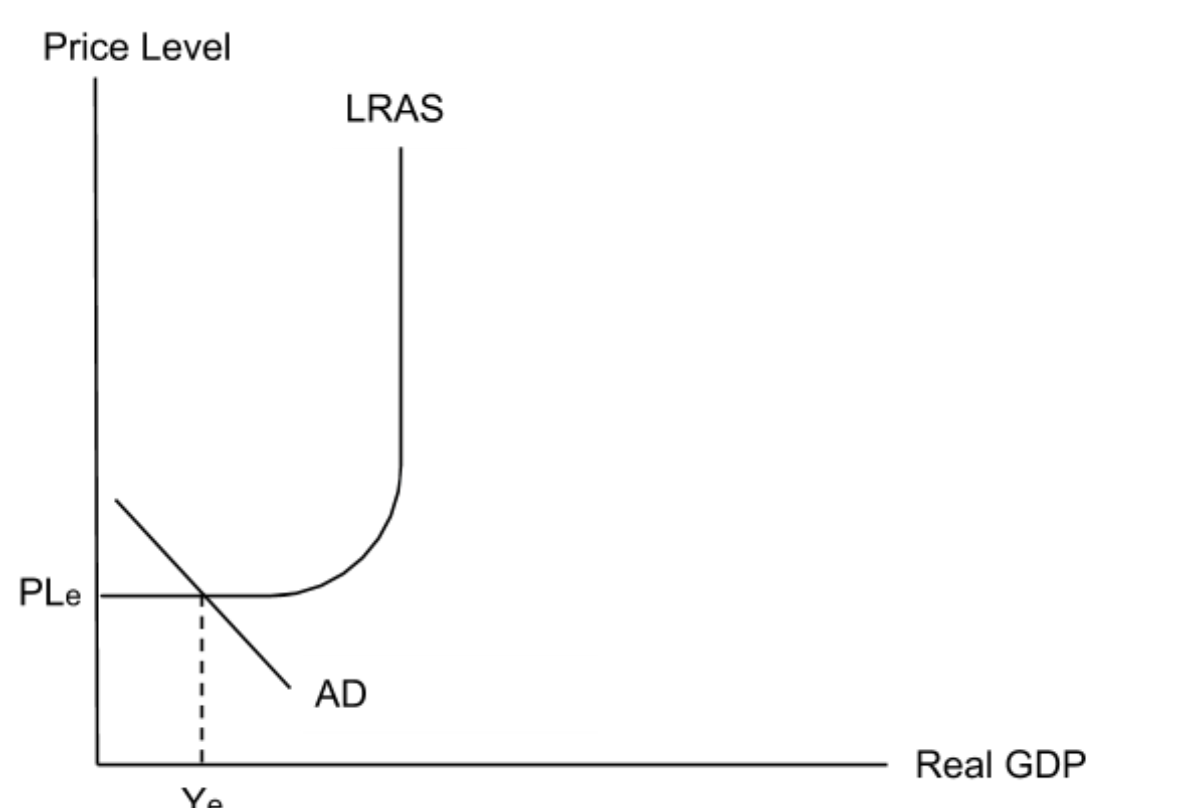
Worsening terms of trade → Can afford fewer capital imports → Low levels of investment → Keeps AD left → Limits real GDP → Limits economic development
Worsening terms of trade → Can afford fewer capital imports → Low levels of investment → Decreases productivity → Left shift of LRAS → Decrease real GDP → Limits economic development
What is the Lewis model?
there might only be one manufacturing firm in a developing country. Because that firm is the only employer, they are a monopsony. This means that they can pay very low wages.
With very low wages, firms can make supernormal profit, which is where there is extra profit above the opportunity cost.
Investing will increase the demand for labour, which will lead to an increase in wages
What is Industrialisation?
Where the main industry in a country shifts from agriculture to manufacturing.
What is the evaluation of industrialisation?
Industrialisation may not lead to development if firms use transfer pricing to avoid paying corporation tax.
 Note
Note  Flashcards (83)