narcolepsy
 Call Kai
 Learn
Learn Practice Test
 Spaced Repetition
 Match
Match Flashcards
 Knowt Play
1/19

There's no tags or description
Looks like no tags are added yet.
Name | Mastery | Learn | Test | Matching | Spaced | Call with Kai | Chat |
|---|
No analytics yet
Send a link to your students to track their progress
20 Terms
what is narcolepsy
rare neurological disorder where individual has many daytime sleep episodes despite adequate night sleep
why is narcolepsy unique among sleep disorders
represents abnormalities in wake/sleep generators
what are the main symptoms of narcolepsy
excessive daytime sleepiness
cataplexy
hypnagogic/hypnopompic hallucinations
sleep paralysis
what is cataplexy
sudden brief muscle weakness triggered by emotions
symptoms of cataplexy
eye sagging
head dropping
knees buckling
how long does cataplexy episodes last
seconds to minutes
true or false: cataplexy can precede to excessive daytime sleepiness (EDS)
true - attacks can occur suddenly
what is hypnopompic hallucination
vivid dreamlike hallucination that occurs as one is waking up
what is hypnagogic hallucination
hypnagogic hallucinations occur when one is falling asleep
transition from wakefulness to sleep
what is difference between hypnagogic and hypnopompic hallucinations
Hypnagogic: occur at sleep onset
Hypnopompic: occur when waking
what is sleep paralysis
when REM atonia sets in sooner than usual, before the person is fully asleep or persists longer than usual after the person has fully woken up
what happens during hypnagogia hallucinations
dreams
can be narrative
often frightening
auditory hallucination
what neurotransmitter system is involved in narcolepsy
orexin system
how does orexin system cause narcolepsy
loss of orexin neurones or receptor dysfunction
posterior hypothalamus damage promotes hypersomnolence
what treatments are used for narcolepsy
Amphetamine derivatives
Antidepressants (for cataplexy)
Benzodiazepines
Modafinil
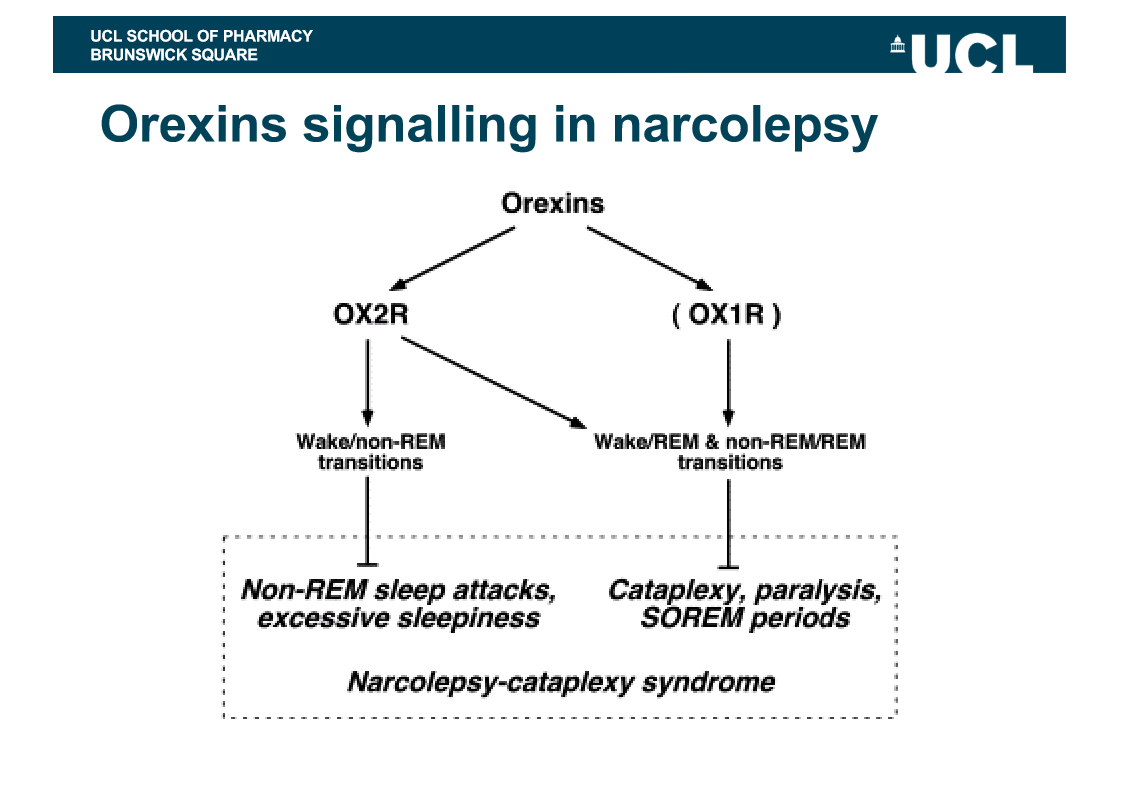
difference between orexin type 1 and type 2 receptor signalling in narcolepsy
the absence of both Orexin Type 1 (OX1R) and Orexin Type 2 (OX2R) receptor signaling leads to distinct, yet complementary, dysregulations of the sleep-wake cycle
OX2R Loss: Triggers uncontrolled daytime sleepiness (inability to stay awake).
Both Lost: Triggers the inability to inhibit REM sleep during the day (cataplexy, sleep paralysis, hallucination).
what drugs are used to manage excessive daytime sleepiness
methylphenidate
dextroamphetamine
methamphetamine
modafinil
name some drugs used to treat cataplexy
fluoxetine
clompirpamine
protriptyline
name some drugs used to treat distrupted night sleep
zolpidem
gamma-hyroxybutyrate
what is Modafinil and why is it contraversional
cognitive enhancer used for EDS; evidence for improving attention or memory is weak