Pharmacology- Antitubercular and Antivirals Drugs- EXAM 3
 Call Kai
 Learn
Learn Practice Test
 Spaced Repetition
 Match
Match Flashcards
 Knowt Play
1/30

There's no tags or description
Looks like no tags are added yet.
Name | Mastery | Learn | Test | Matching | Spaced | Call with Kai |
|---|
No analytics yet
Send a link to your students to track their progress
31 Terms
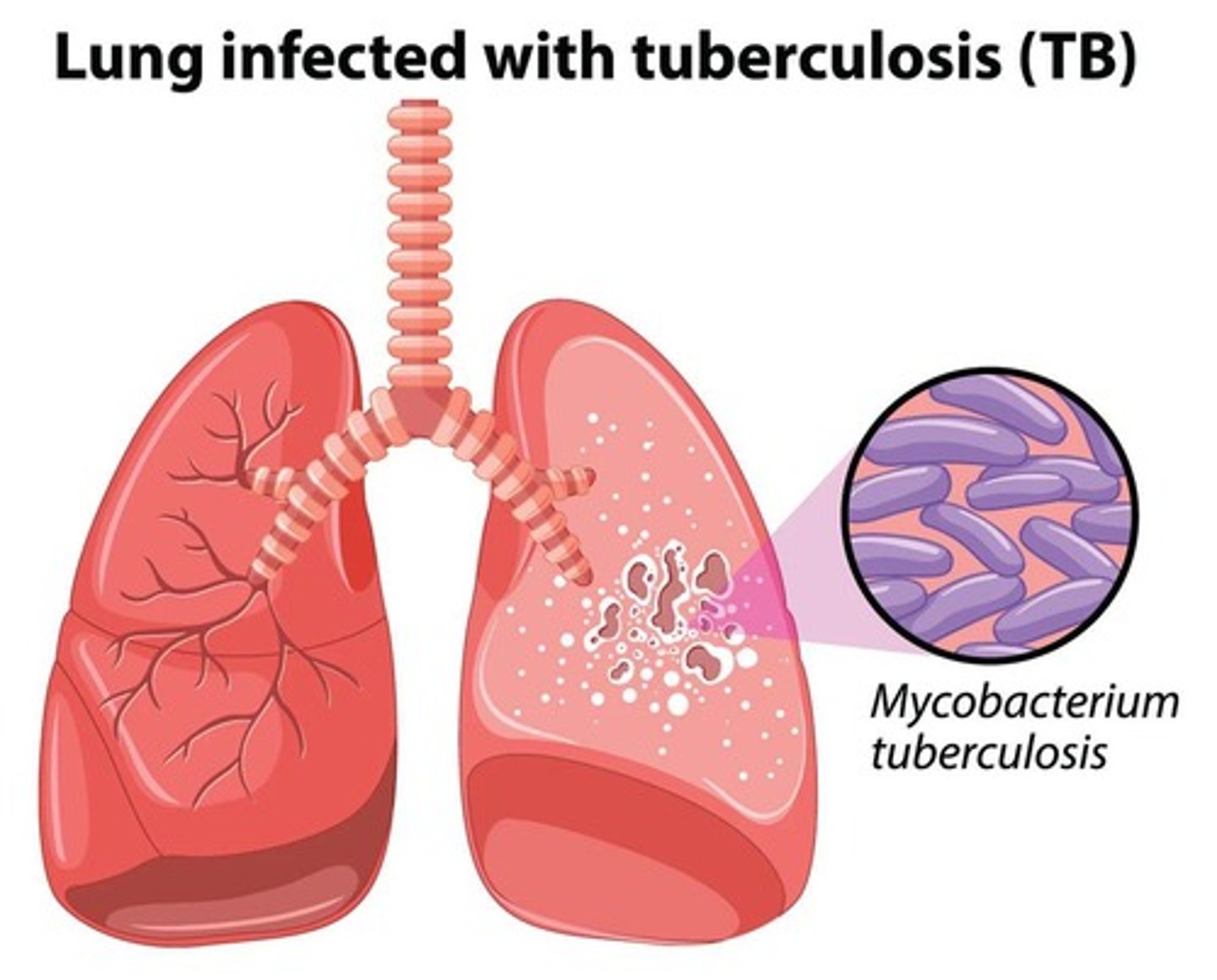
what is tuberculosis?
-infectious disease caused by bacillus mycobacterium tuberculosis
-AIRBORNE! only need one single micro droplet to contract it
-occurs mainly in lungs but can spread to other organs
-primarily affects lungs (can spread to kidneys, spine, brain)
what is latent tuberculosis?
-someone who is infected but do not have an active infection
-occurs during reactivation of dormant bacilli
*ONLY people with active tb can spread the infection to others
what are the antimycobacterials for TB?
-isoniazid
-pyrazinamide
-ethambutol
what is isoniazid (INH)?
-a TB drug that kills actively growing mycobacteria outside the cells and inhibits the growth of dormant bacteria
-used for both active and latent TB and is typically first line for latent TB
-bacteriocidal and tx is a 6-9 months (daily pills)
how does isoniazid work for latent TB?
-only isoniazid used daily for 6-9 months
-isoniazid with rifapentine taken once weekly for 3months
how does isoniazid work for active TB?
-several anti-mycobacterial drugs (to decrease resistance)
-usually four-drug regimen (often including isoniazid and rifapentine)
what is pyrazinamide?
-a TB drug that can effectively kill organisms residing within the very acidic environment
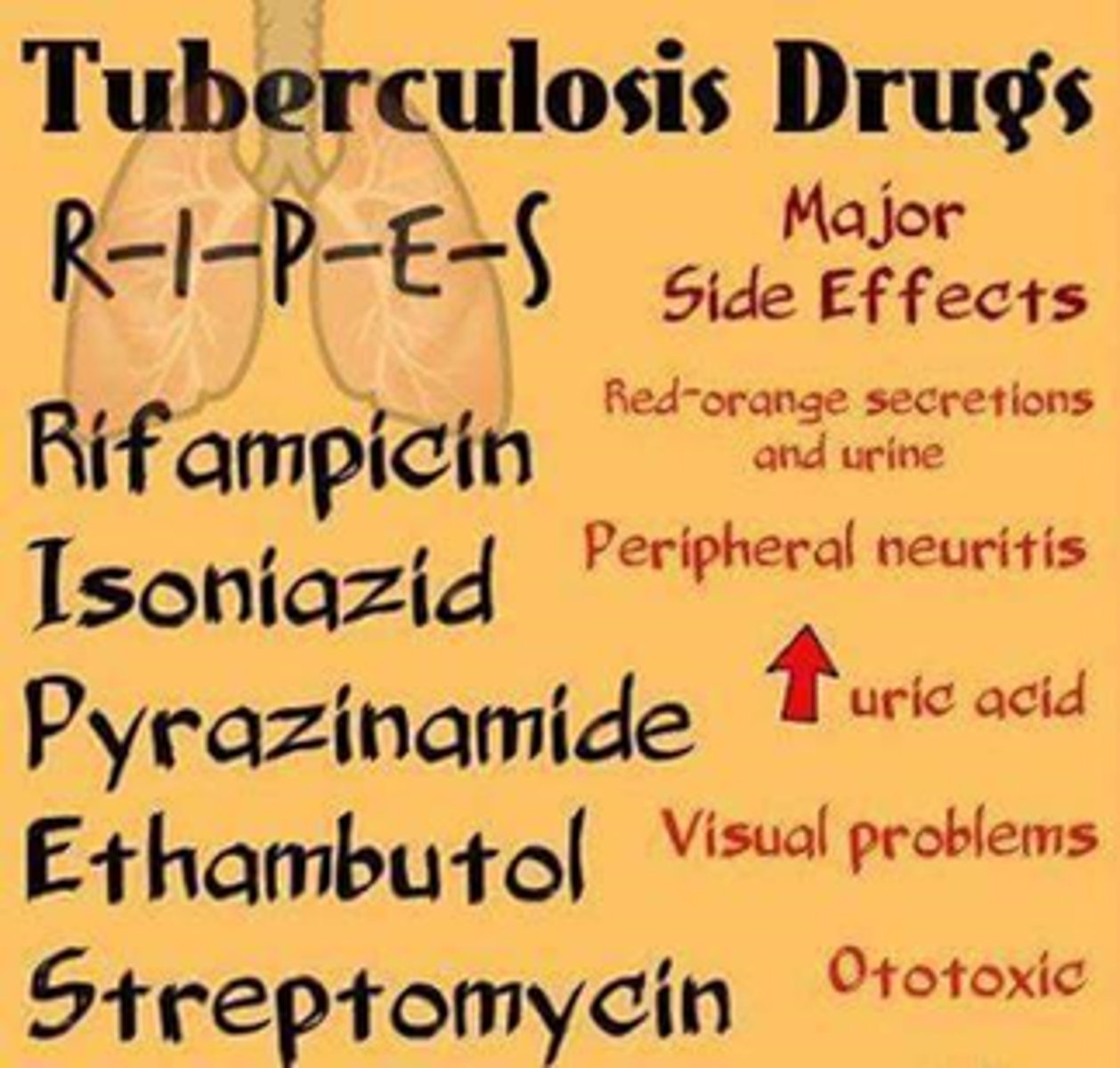
-increases uric acid
what is ethambutol?
-a TB drug that inhibits bacterial RNA synthesis
-side effects: can lead to blindness so any complaints of visual disturbances NEED TO BE followed up
what are the complications of isoniazid?
-peripheral neuropathy
-hepatotoxicity
-neuritis (aka inflammation of the nerves)
what supplement helps reduce symptoms of neuritis in patients taking isoniazid?
B6 supplements
in what population is isoniazid contraindicated in?
-patients with liver disease
*must monitor LFT's before and during medication and educate patient to be on the look out for liver damage symptoms
can patients on TB drugs drink any alcohol?
-absolutely NOT no alcohol at all!
what are the interactions of isoniazid?
-isoniazid inhibits metabolism of phenytoin
-concurrent use of tyramine food (aged cheese, cured meats), alcohol, rifampin, pyrazinamide INCREASES RISK OF HEPATOXICITY
what are the nursing administration factors for antimycobacterials?
-usually given PO
-if IM, warm to room temperature and inject deeply into a large muscle like vastus lateralis or ventricular glutealis
-for active, direct observation is done to ensure adherence (DOT) + must be started at the very beginning of therapy
what are patient education factors for antimycobacterials?
-consider a second form of birth control
-take isoniazid 1hr before or 2 hr after meals with full glass of water
-isoniazid is best on a empty stomach but can be taken with food to mitigate GI distress
-complete full course
what is rifampin?
-a TB drug that kills slower growing organisms
-bactericidal as a result of inhibition of protein synthesis
-can expect an orange-reddish staining of the skin and fluids
how do we use rifampin for treating TB?
-given in combination with at least one other antitubercular drug to help prevent antibiotic resistance
what are the complications associated with rifampin?
-discoloration of body fluids (red/orange color)
-hepatoxicity
-mild GI discomfort
-pseudomembranous colitis aka CDIFF
what are the contraindications/precautions for rifampin?
-use cautiously in patients who have liver dysfunction
-non-hormonal form of birth control should be used
-cannot use contacts while on rifampin
what are the drug interactions of rifampin?
-rifampin accelerates metabolism of warfarin, oral contraceptives, and NNRTI's used as tx for HIV
-concurrent use with isoniazid and pyrazinamide INCREASES RISK of hepatotoxicity
what are the nursing administration factors for rifampin?
-administer PO or by IV route
-PO- 1 hr before or 2 hr after meals with full glass of water
-monitor kidney and liver function prior to and during treatment
what are patient education factors for rifampin?
-use non-hormonal contraception
-body fluids may have a red-orange color (expected and non-harmful)
-complete full course
-avoid alcohol (increase risk of liver damage)
how do we evaluate medication effectiveness for TB antimycobacterials?
-improvement of tuberculosis manifestations like clear breath sounds, no night sweats, increased appetite, no afternoon rises of temperature
-three negative sputum cultures for tuberculosis (usually takes 3-6 months to achieve because these cultures need to have time apart)
-chest x-ray
what is RIPES?
-guideline for major TB drugs (antimycobacterials)
what are antivirals?
-most act by altering viral reproduction
-only effective during viral replication
-ineffective when virus is dormant
- used to treat herpes/ Varicella and Influenza
what is acyclovir?
-antiviral used to herpes simplex and varicella
-prevents the reproduction of viral DNA and interrupt cell replication
-all antivirals end in -vir
what are the complications associated with acyclovir?
-phlebitis and inflammation at the site of infusion
-nephrotoxicity
-nausea, HA, diarrhea
-gingival hyperplasia
what are nursing administration factors for acyclovir?
-administer IV slowly over 1 hr or longer
-healed herpetic lesions should continue to use condoms
-we want to start treatment as early as possible to give the virus less time to replicate
-ensure to rotate IV sites
what is oseltamivir (tamiflu)?
-antiviral that shortens flu symptoms and decreases the release of the virus from infected cells
-should be taken 24-48 hours within getting flu like symptoms
what are the complications of oseltamivir?
-N/V/D
-self-injury and delirium (BLACK BOX WARNING) we try not to use these in pediatrics
what are the nursing administration factors for oseltamivir?
-should be taken within 48 hours of flu symptoms
-not substitute for influenza vaccines just helps prevent serious complications associated with the flu

