P12 Waves
 Studied by 0 people
 Call with Kai
 Learn
Learn Practice Test
 Spaced Repetition
 Match
Match Flashcards
 Knowt Play
1/96

There's no tags or description
Looks like no tags are added yet.
Name | Mastery | Learn | Test | Matching | Spaced | Call with Kai |
|---|
No study sessions yet.
97 Terms
How do waves transfer energy?
Waves transfer energy without transferring matter; through particles that oscillate about a fixed point.
What is a wavefront?
an imaginary surface that connects all the points in a wave that are in the same phase.
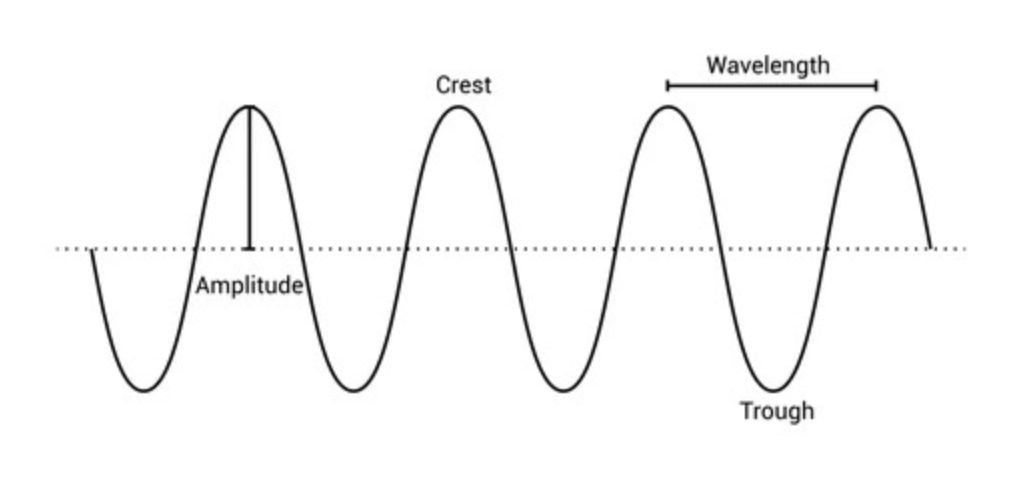
What is the amplitude?
the distance from the equilibrium position to the maximum displacement
What is the wavelength?
the distance between two consecutive points on a wave that are in the same phase
What is the frequency?
the number of complete waves that pass a single point per second. Measured in Hertz (Hz) so 1 Hz equals to 1 wave per second
What is the equation for frequency?
Frequency (Hz) = 1 / time (seconds)
What is the wave speed?
the distance travelled by a wave each second
What is the equation for the wave speed?
velocity (m/s) = frequency (Hz) x wavelength (m)
V=fλ
What is the time period?
the time taken in seconds for one complete wave to pass a point
What is the equation for the time period?
Time period (seconds) = 1 / frequency (Hz)
What are the two types of waves?
Transverse and longitudinal waves
What are transverse waves? + oscillations
A type of wave where the particles of the medium move perpendicular to the direction of the wave.
-oscillations are up and down
What are some examples of transverse waves?
Electromagnetic waves (light waves, microwaves, etc), Seismic S-waves
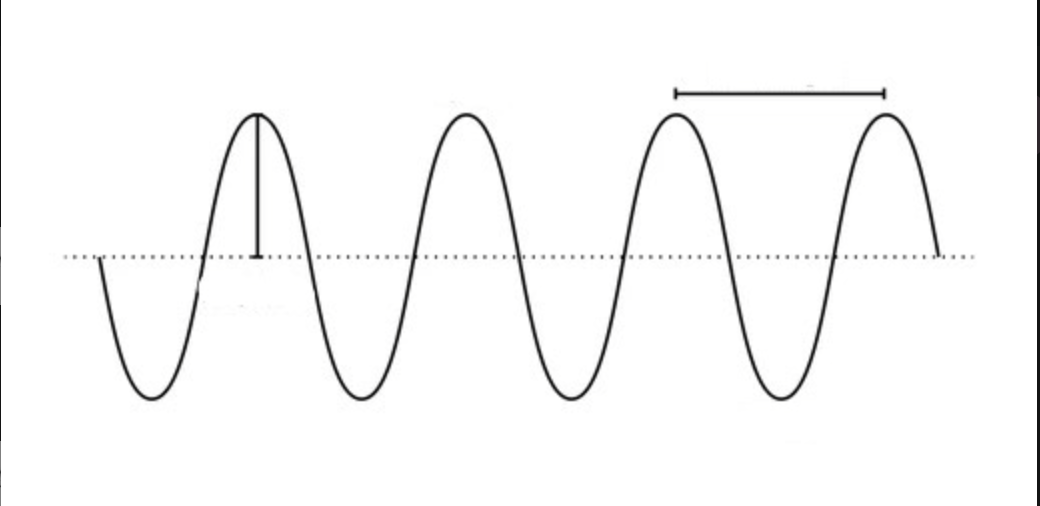
Label this transverse wave
What are longitudinal waves? + oscillations
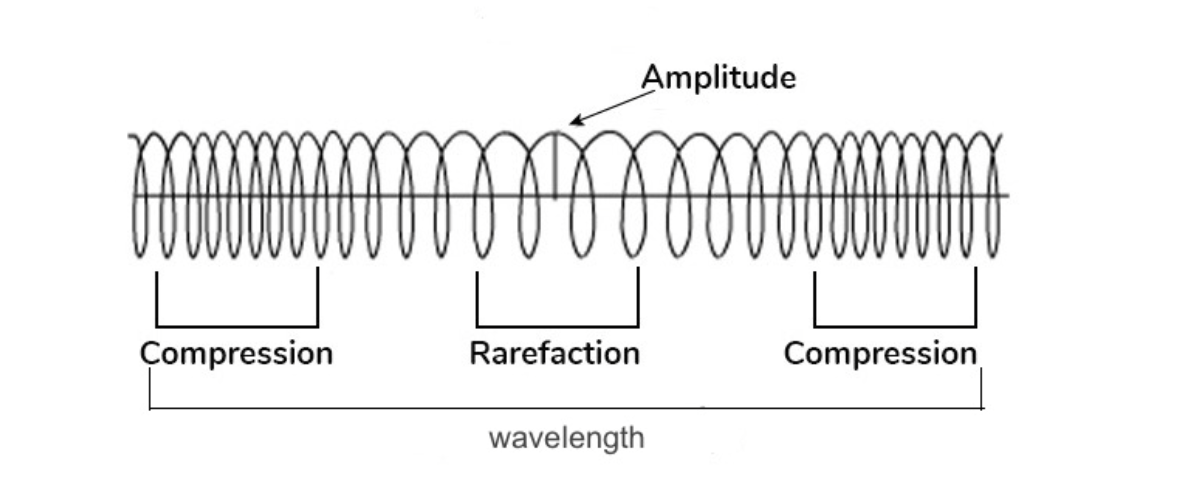
A type of wave where the particles of the medium move parallel to the direction of the wave.
-oscillations are side to side
What are some examples of longitudinal waves?
Sound waves, Ultrasound waves, Seismic P-waves
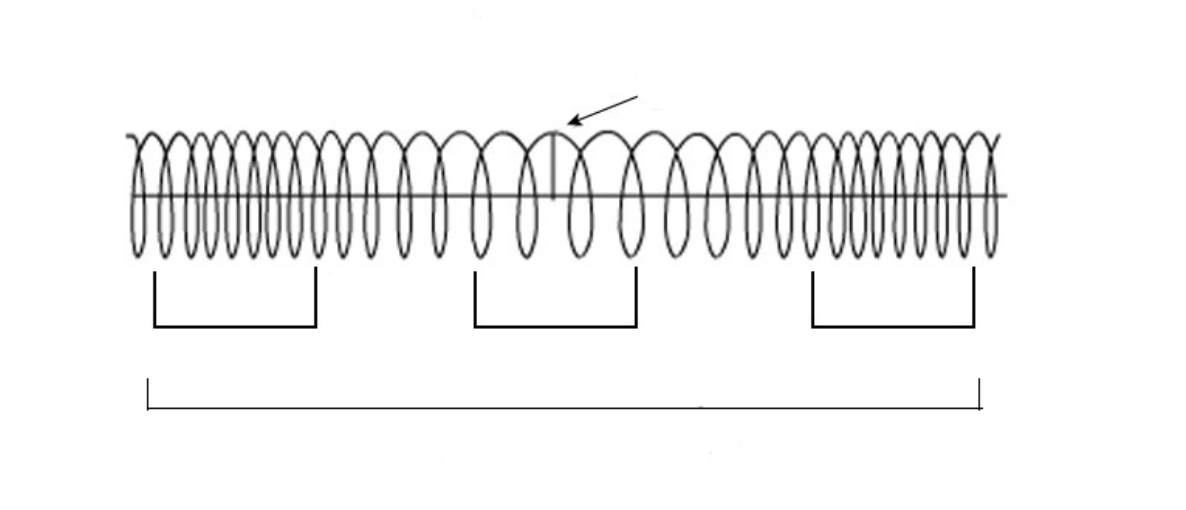
Label this longitudinal wave
What are sound waves?
Sound waves are longitudinal waves created by vibrating sources. A medium is needed to transmit sound waves (such as air).
What is the link between amplitude and sound waves?
The greater the amplitude of a sound wave, the louder it is.
What is the link between frequency and sound waves?
The greater the frequency of a sound wave, the higher its pitch.
What is the range of audible frequencies for a healthy human ear?
20 Hz to 20000 Hz/20 kHz
What are the two methods of measuring sound waves?
1)Microsecond Timer
The timer starts when sound is detected by the closest microphone and stops when sound is detected by the further microphone.
Speed = distance between mics / time taken between travel
2)Using echoes
make a noise at a known, large distance from a solid wall and record the time for the echo to be heard
Speed = distance / time
Why does sound travel faster through a solid?
The sound wave is passed on by collisions between particles, so the speed the wave moves depends on the density of the particles. Sound travels fastest through a solid because the particles are closer together. This means vibrations are more easily passed from one particle to another.
What is ultrasound?
sound with a frequency higher than 20 kHz
What are the uses of ultrasound?
Nondestructive testing of materials, Medical scanning of soft tissue tissues without using ionising radiation, Sonar to measure water depth or locate underwater objects
Explain nondestructive testing of materials
The waves reflect from boundaries between materials or defects, identifying issues. Example: cracks in metal or plastic
Explain medical scanning of soft tissue tissues without using ionising radiation
The waves reflect at boundaries between different tissues, forming an image. Example: organs or a fetus during pregnancy
Explain sonar to measure water depth or locate underwater objects
A pulse of ultrasound is sent underwater and the time taken for the echo to return is measured. Example: locating submarines, fish
Depth Equation: Depth or Distance = (Speed of Sound x Time taken for echo) / 2
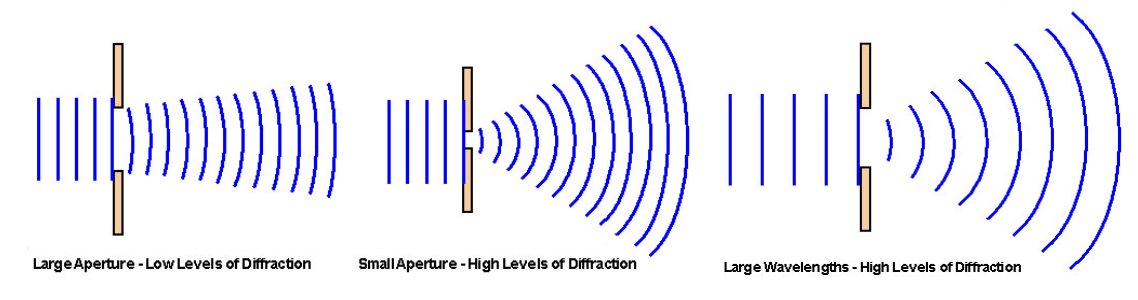
What is diffraction?
the bending and spreading of waves as they pass through a gap or around an obstacle
Does frequency, wavelength or speed change in diffraction?
No
How to increase diffraction?
The narrower the gap or the greater the wavelength, the more the diffraction
What is reflection?
the bouncing back of light waves when they hit a surface and change direction, staying in the same medium.
How do waves reflect off smooth vs rough surfaces?
-Waves reflect off smooth, plane surfaces rather than getting absorbed
-Rough surfaces scatter the light in all directions, so they appear matte and unreflective
Does frequency, wavelength or speed change in reflection?
No
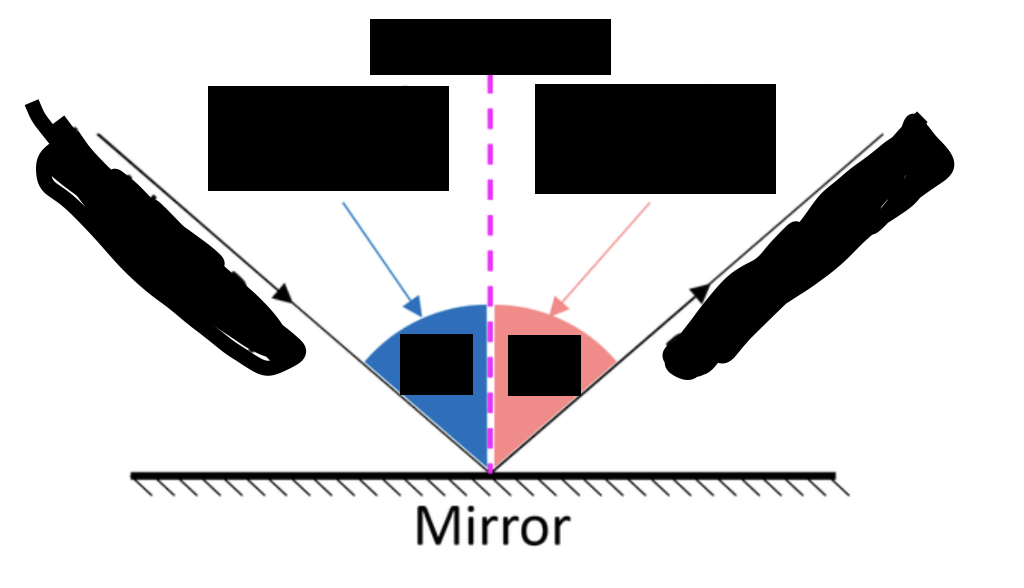
Label this diagram
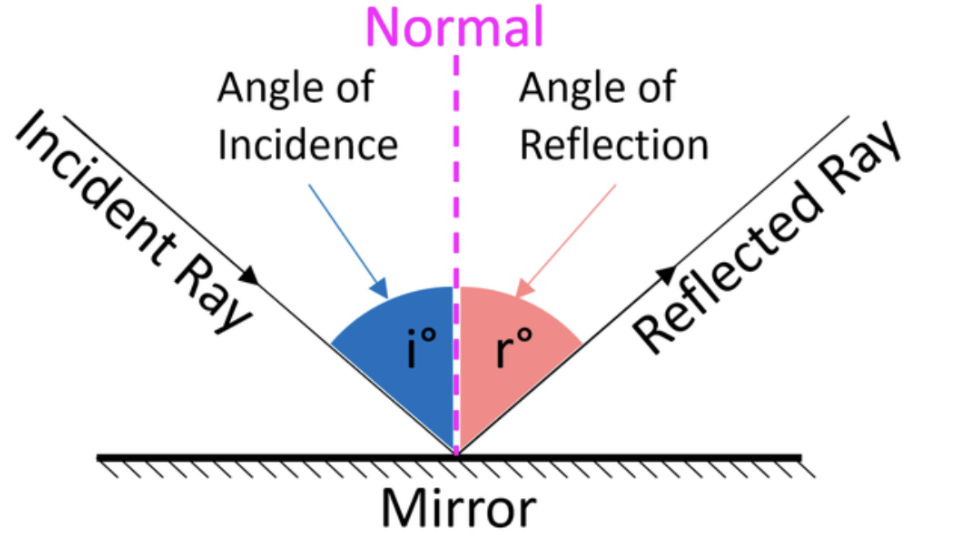
What is the normal?
A line perpendicular to the reflecting surface at the point where the light ray strikes.
What is the angle pf incidence?
The angle between the incident ray and the normal
What is the angle of reflection?
The angle between the reflected ray and the normal
What are the characteristics of the image formed by a plane mirror?
Same size as the object.
Same distance behind the mirror as the object is in front.
Virtual: The image cannot be projected onto a screen.
Laterally inverted: Left and right are reversed.
What are the three main things that can happen when light strikes a material?
Transmission – light passes through the material
Absorption – light energy is taken in by the material
Reflection – light bounces off the surface

What determines whether a material is transparent, translucent, or opaque?
The balance between absorption and transmission
How does light react to transparent materials?
Transparent materials allow most light to be transmitted through them with little absorption or scattering. Examples: clear glass, clean water, air
Transmission
Light passes through almost unchanged in direction
Rays remain mostly parallel
Objects can be seen clearly through the material
Absorption
Very little light energy is absorbed
The material does not significantly heat up
How does light react to translucent materials?
Translucent materials allow some light to be transmitted, but the light is scattered in many directions. Examples: frosted glass, tracing paper, thin fabric
Transmission
Light passes through partially
Rays are scattered, so they lose their original direction
Objects appear blurred or unclear
Absorption
Some light energy is absorbed
Less light exits than enters
How does light react to opaque materials?
Opaque materials do not transmit light. Examples: wood, stone, metal
Transmission
No light passes through the material
Absorption
Light is mostly absorbed, converting light energy into thermal energy
Dark materials absorb more light than light-colored materials
Reflection
Some light may be reflected
Shiny opaque materials reflect more
Dull opaque materials absorb more
What is refraction?
the bending of waves as they pass from one medium to another due to a change in speed
What happens a wave enters a more optically dense medium?
its speed decreases and it bends towards the normal
What happens a wave enters a less optically dense medium?
its speed increases and it bends away from the normal
Does frequency, wavelength or speed change in refraction?
frequency stays the same but the wavelength changes
What does the refractive index measure?
a measure of how much the wave slows down
What does a substance with a large refractive index mean?
it will slow down the ray more and cause the ray to bend through a larger angle.
What are the two definitions of refractive index?
The ratio between the speed of light in a vacuum and the speed of light in the medium.
The ratio of the speeds of a wave in two regions of different optical densities.
What are the three equations of refractive index?
Refractive index = speed of light in a vacuum / speed of light in the medium
n = c/v
Refractive index = (sin x incident angle) / (sin x refracted angle)
n = sini / sinr
Refractive Index of medium 1 x (sin x incident angle) = Refractive Index of medium 2 x (sin x refracted angle)
n1sinθ1 = n2sinθ2
What are some possible errors in a refraction practical?
Thick pencil lines leads to
Uncertainty in where the ray actually is
Slightly different angle readings each time
Scatter in points on the sini/sinr graph
Human error when reading the protractor
Small variations in measured angles
Less precise gradient and refractive index
Protractor consistently misaligned with the normal
All angle measurements too large or too small
Gradient gives an incorrect refractive index
Centre of curved edge marked inaccurately
Light does not always enter at the true centre
Refraction angles are consistently wrong
What are some possible improvements in a refraction practical?
Use a thin pencil or laser ray to reduce uncertainty in ray position
Carefully align the protractor with the normal for every measurement
Take multiple readings at each angle and calculate a mean to reduce random error
Increase the number of readings beyond seven to improve the reliability of the line of best fit
What are some possible extensions in a refraction practical?
Repeat the experiment with different transparent materials and compare refractive indices
Use different wavelengths (colours) of light to investigate how refractive index depends on wavelength
What is dispersion?
When white light is passed through a glass prism, it splits up into its constituent colours. This happens because the different colours travel at different speeds in the glass as they have different wavelengths, so they refract by different amounts.
What are the seven colours in order of decreasing wavelength?
red, orange, yellow, green, blue, indigo and violet
How is wavelength related to refractive index?
The shorter the wavelength, the slower the speed in glass and the greater the refractive index.
Red is refracted the least and violet the most
What does monochromatic mean?
light of a single frequency
What is the critical angle?
the minimum angle of incidence at which total internal reflection occurs in a boundary between two different optical media. It is the angle of incidence that produces a 900 angle of refraction
What is the equation for the critical angle?
n = 1 / sinc
refractive index = 1/sin(critical angle)
What is total internal reflection?
a specific case of internal reflection that occurs when:
light travels from a denser medium to a less dense medium
all the light is reflected back inside the denser medium
no light is refracted out
happens when the angle of incidence is greater than the critical angle
Why can light entering a denser material not be totally reflected?
it bends towards the normal, not away from the normal
What is total internal reflection used for?
Optical fibres used in telecommunications and medical endoscopes
Prisms in periscopes and binoculars
Sparkle of diamonds due to repeated total internal reflection inside the crystal
What are optical fibres?
a long thin rod of glass surrounded by cladding which uses total internal reflection to transfer information by light, even when bent
What are the uses of optical fibres?
Medicine
used in endoscopes which allow doctors to see inside the body without major surgery
Telecommunications
used to transmit telephone calls, internet data, and television signals
allows data to travel long distances very quickly with little loss of signal
What are the advantages of optical fibres? 5
Higher capacity as thinner fibres mean more can fit in a cable
Longer distances as there is less signal loss meaning signals can travel further without needing repeaters
Less interference as it is immune to electromagnetic interference
Thin and flexible so it’s easy to install and requires less space and effort
More secure as it is more difficult to tap into compared to electrical cables
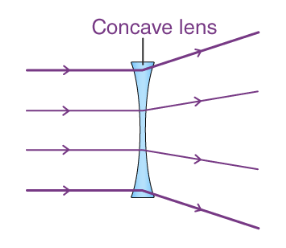
What does a concave lens look like?
Thinner in the middle, thicker at the edges
What does concave lens do to light? + drawing
When light passes from air into glass, its speed changes
Because the lens is thinner in the middle, light slows down less at the centre and more at the edges
This difference in bending causes refraction away from the centre
Parallel light rays diverge and appear to come from a virtual focal point behind the lens
Used to spread light
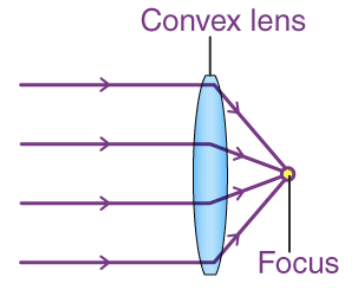
What does covex/converging lens do to light? + drawing
When light passes from air into glass, its speed changes
Because the lens is thicker in the middle, light slows down more at the centre than at the edges
This difference in bending causes refraction towards the centre
Parallel light rays converge and meet at the focal point in front of the lens
Used to focus light
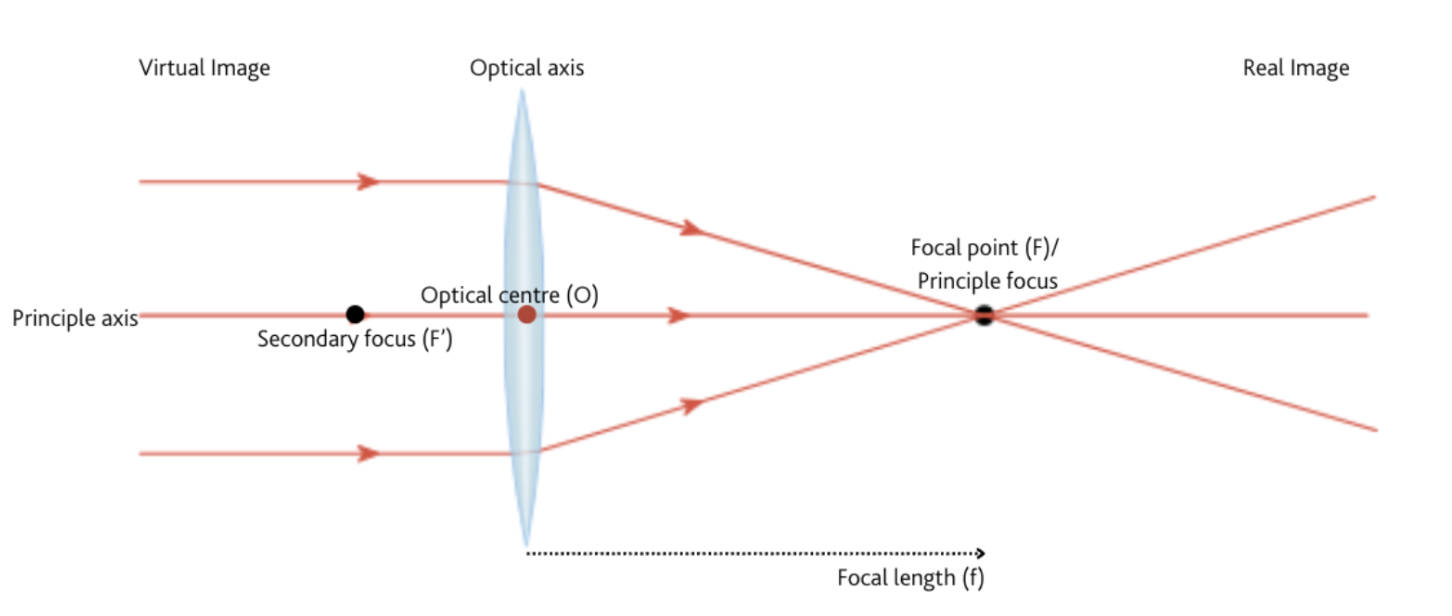
What are the 3 rules for ray diagrams?
Rays through the centre do not refract
Rays parallel to the principle axis refract through the focal point
Consider rays from the top of the object
What are real images?
Light rays physically converge at a point. Image can be projected onto a screen
What are virtual images?
Light rays diverge, but appear to originate from a point behind the mirror/lens when traced backward. Image cannot be projected onto a screen.

Label this ray diagram
Draw a ray diagram for an object between lens and F
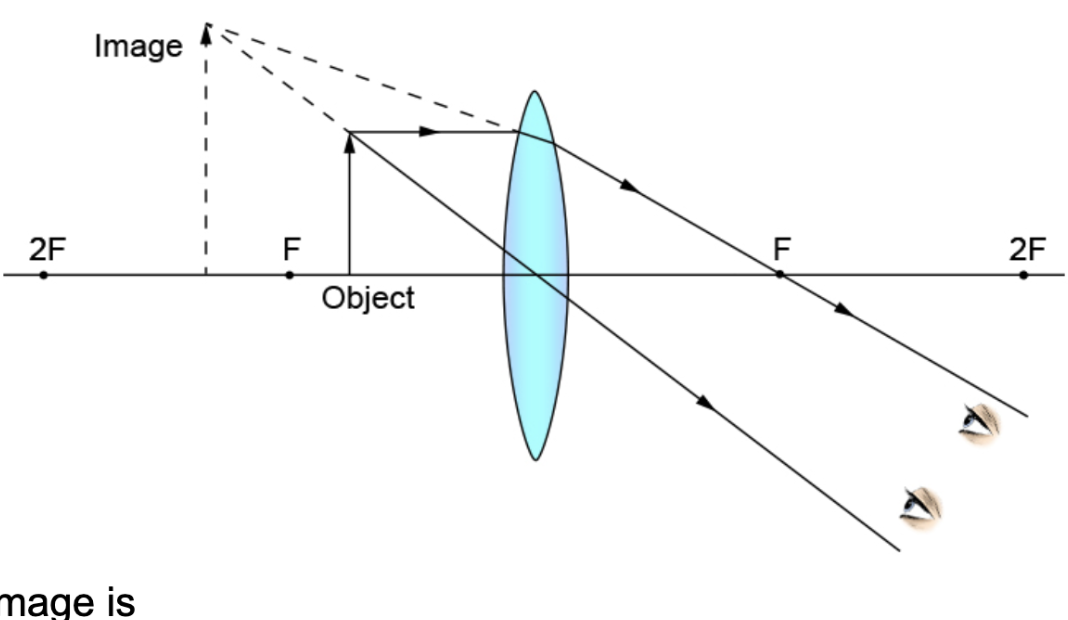
Properties of an object between lens and F
Virtual
Upright
Larger
Located on the same side of the lens as the object
Draw a ray diagram for an object at F
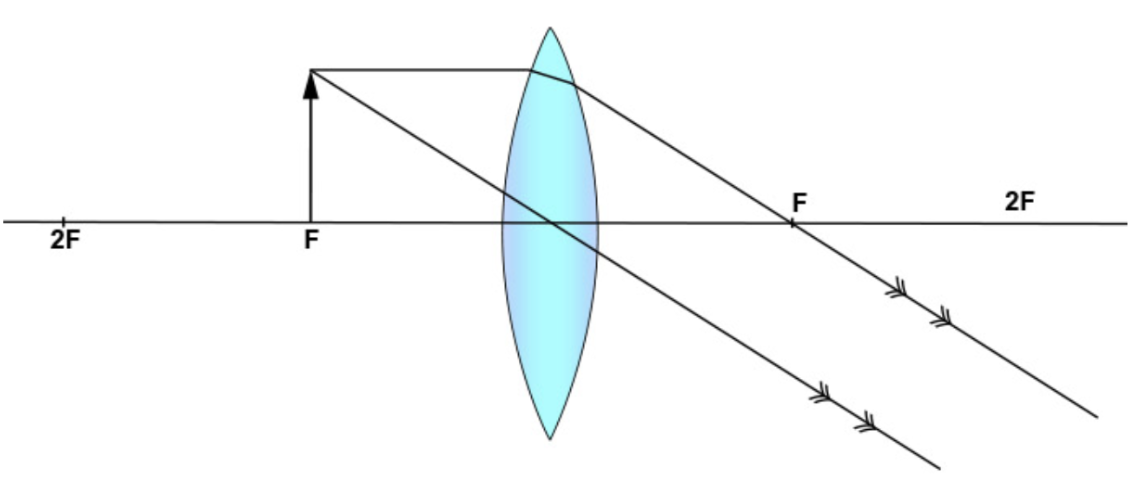
Properties of an object at F
No image is formed
Draw a ray diagram for an object between F and 2F
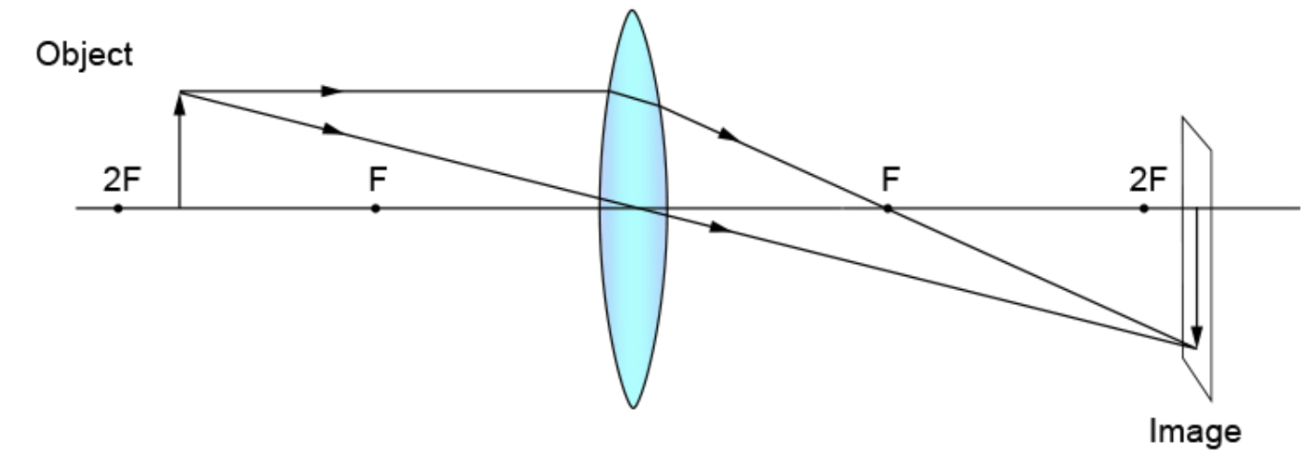
Properties of an object between F and 2F
Real
Inverted
Larger
Located beyond 2F on the opposite side of the lens
Draw a ray diagram for an object at 2F
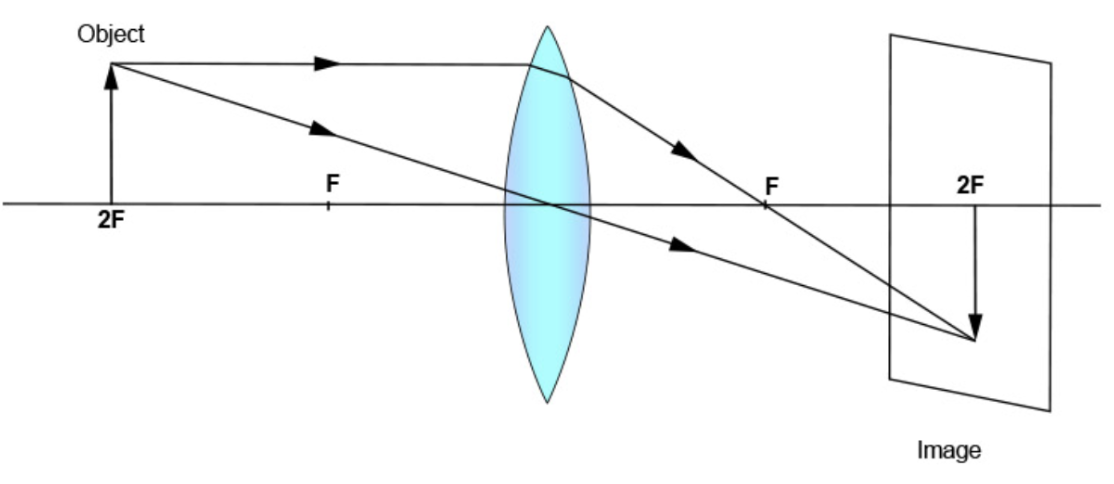
Properties of an object at 2F
Real
Inverted
Same size as the object
Located at 2f on the opposite side of the lens
Uses of lenses for humans
Eyeglasses
Microscopes
Telescopes
Cameras
Explain eyeglasses
Correct vision by adjusting how light is focused on the retina
Convex lenses help long-sightedness
Concave lenses help short-sightedness
Extends the limit of human vision
Explain microscopes
Use multiple convex lenses to magnify very small objects like cells
The objective lens forms a magnified image of a very small object
The eyepiece lens further magnifies this image for the eye
Explain telescopes
Uses two convex lenses to observe distant objects like stars
The objective lens gathers light and forms an image
The eyepiece lens magnifies the image so it can be seen clearly
Explain cameras
Use convex lenses to focus light onto a film or digital sensor
Adjusting the lens position changes where the image is focused
The focused light forms a real image on the sensor
Help record and share visual information
What are electromagnetic waves?
● Transverse waves
● Do not need a medium
● All travel with the same speed of 3.0 x 10⁸ ms-1 in a vacuum and approximately the same speed in air
Arrange electromagnetic waves in order of wavelength (shortest to longest)
gamma rays, X-rays, ultraviolet, visible light, infrared, microwaves, and radio waves
Arrange electromagnetic waves in order of frequency (shortest to longest)
radio waves, microwaves, infrared, visible light, ultraviolet, X-rays, and gamma rays
Uses for radio waves
Used for radio, television communications, radar
Have a long wavelength, travel long distances and are reflected by the ionosphere.
Uses for microwaves
Used for satellite communication, microwave ovens
Pass through the ionosphere and penetrate deep into food, heating it up
Uses for for infrared
Used for remote controllers for television, thermal imaging
Carries signals over short distances and detects heat difference in objects
Uses for visible
Used for vision, photography
Can be detected by eyes and captured by cameras to produce images
Uses for ultraviolet
Used for detecting fake bank notes, tanning bed
makes special security markings glow, revealing hidden patterns on fake bank notes and stimulates skin to produce vitamin D, causing tanning
Uses for xrays
Used for medical scanning, security scanners
Can penetrate through soft tissue easily but are absorbed by dense materials like bone or metal, creating clear images.
Uses for gamma rays
Used for detection of cancer and its treatment
Penetrate tissues deeply and kill cancer cells effectively
 Note
Note  Flashcards (58)