Final Lab Exam
 Call Kai
 Learn
Learn Practice Test
 Spaced Repetition
 Match
Match Flashcards
 Knowt Play
1/66

There's no tags or description
Looks like no tags are added yet.
Name | Mastery | Learn | Test | Matching | Spaced | Call with Kai |
|---|
No analytics yet
Send a link to your students to track their progress
67 Terms
upper epidermis
palisade mesophyll
spongey mesophyll
lower epidermis
Layers in a leaf, top to bottom [4]
within spongey mesophyll
within the vascular bundles is xylem and phloem
structure of vascular bundles:
xerophyte
plants adapted for dry environment, lives in desert
adapted to prevent water loss
have crypts with epidermal hair
xerophyte adaptations
hydrophyte
plants adapted to grow in water
plant has to float.
has large chambers in spongey mesophyll that gives buoyancy
hydrophyte adaptation
parts of stem that are reall hard. has papery layer on the outside
describe corms
made up of leaves. e.g., onion, daffodil, tulip
describe bulbs an give three examples
same material throughout. spread by eyes
describe tubers
reproduces by throwing out clones of itself.
spider plant reproduction:
wind
water
animal
propulsion
how can fruits be dispersed? [4]
the loss of water due to evaporation from leaves and other aerial portions of the plant
define transpiration
Transpiration is also responsible for the upward movement of water through the xylem by exerting a pull from above on the continuous column of water within the xylem tubes extending from the roots to the leaves
besides water loss, transpiration is also responsible for what?
guard cells that protect the stoma
rate of transpiration is controlled how?
As water is lost from the leaf (via evaporation =transpiration) it will be replaced by water from the xylem which in turn will draw water up from the roots/pipette. If the potometer is operating correctly, you will see in the air bubble being drawn slowly up the pipette.
describe how a potometer works:
The amount of water drawn up through the pipette is equal to that lost via transpiration
how to measure water lost with potometer
Artery brings warm blood down, deep vein brings cold blood back. If the body is too warm, it doesn’t go back through heat vein. Goes through surface vein to cool body down.
describe countercurrent exchange in the arm:
seeds
fruit
the products of sexual reproduction in flowering plants
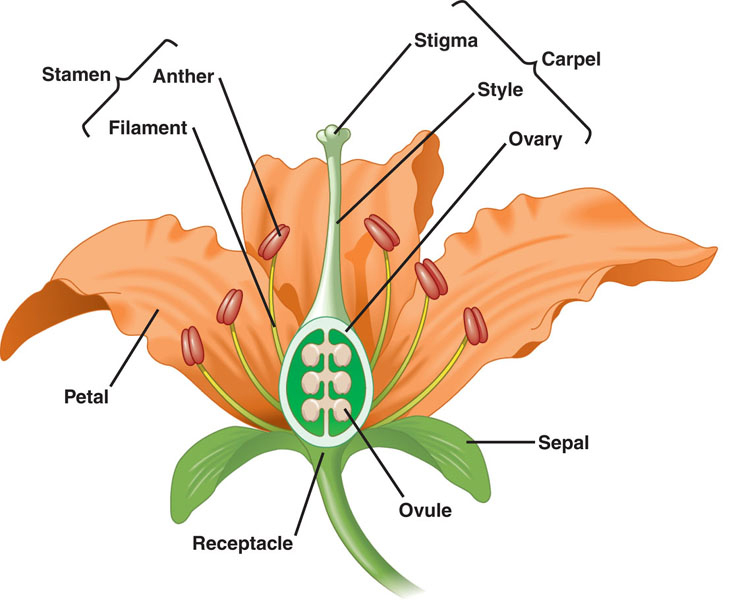
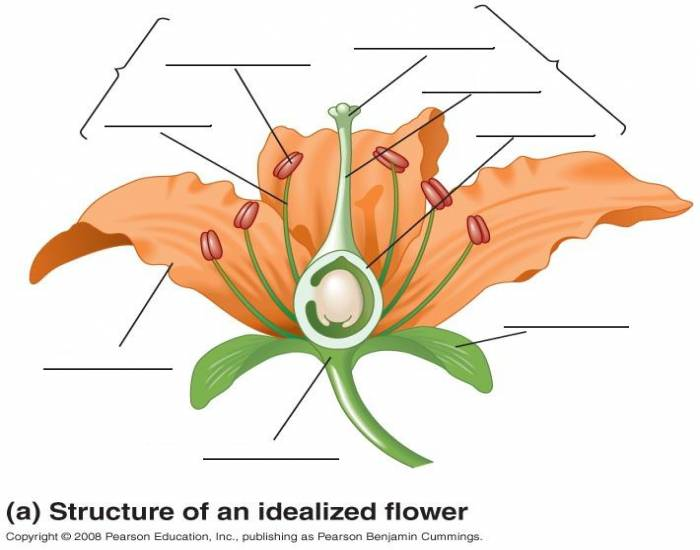
Label this flower
place a piece of rubber tubing and a 2.0 mL pipette in a container ofwater and force all air out of them.
Place the stem of a plant cutting in the water and recut the
stem underwater (this will remove any air bubbles which may have entered and blocked the vascular system of the plant).
Force the rubber tubing over the cut end of the stem and place this on the retort stand with the end of the pipette in a petri dish of water.
how to set up potometer: [3]
radial
Hydra symmetry
tissue level
hydra level of organization
hydrostatic skeleton
hydra support:
Aquatic (freshwater)
hydra habitat:
diffusion across epidermis and gastrodermis
Hydra gas exchange:
diffusion and fluid in gastrovascular cavity
hydra internal transport (circulation)
diffusion from cells to exterior or into fluid of GVC
product: ammonia
Hydra excretion and product:
Organ
Earthworm level of organization
bilateral
worm symmetry
alternating contraction of circular and longitudinal msuscles of body wall. muscles contract against the fluid in the colon.
worm support and movement
feeds on organic matter in soil
food is processed in digestive tract
worm feeding and digestion
terrestrial (soil)
worm habitat
diffusion against necessarily damp epidermis
worm gas exchange
closed circulatory system
worm internal transport (circulatory)
nephridia
urea or urine
worm excretion and product
bilateral
crayfish symmetry
organ system
crayfish organization
exoskeleton
jointed appendages
crayfish support and movement
mouth and stomach
crayfish feeding and digestion
aquatic (Freshwater)
crayfish habitat
respiration through gills
crayfish gas exchange
closed circulatory system
crayfish internal transport
green glands
product: ammonia
crayfish excretion
aquatic (freshwater)
Perch habitat:
organ system
perch organization
bilateral
perch symmetry
feeds on immature insects, larger bottom living invertebrates, and juveniles of other species of fish.
perch feeding and digestion
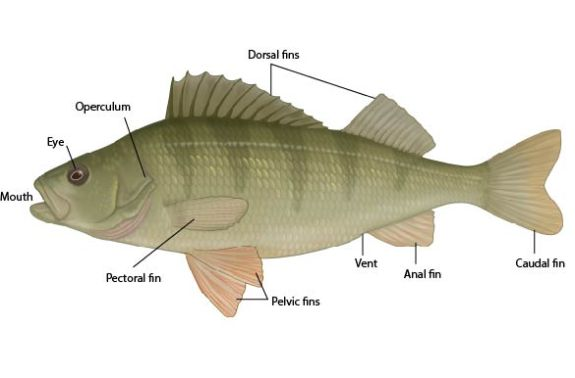
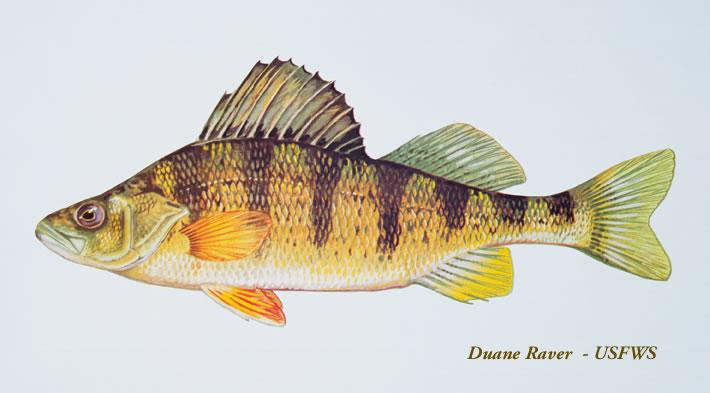
fish.
label the caudal fin, anal fin, two dorsal fins, paired pectoral fins, and paired pelvic fins of a yellow perch
countercurrent exchange of O2 and CO2 via gills
perch gas exchange
internal skeleton
muscles are v-shaped and repeat the whole length if the fish.
perch support and movement
lateral line
line going down back of perch
operculum
flap that covers the gills
enters sinus veinosus
goes to atrium
goes to ventricle
enters bulbus arteriosis
exits through ventral aorta
dogfish circulation in order: [1-5]
2
how many chambers in perch heart
outer: cortex
inner: medulla
inner and outer parts of pig kidney
ventral
if rat is belly UP (lying on its back) position is:
dorsal
if rat is backside UP (lying on its stomach) position is:
one lung is visible, other is in behind the heart
where are rat lungs once you cut it open:
cecum
large pouch at end of rat large intestine
Bowman’s capsules
large white circles in cross-section of pig kidney when under microscope
glomeruli
dark spots within bowman’s capsules:
maseters
muscles in rat cheeks
pectoralis
muscles in rat chest
liver
largest rat organ
kidneys
remove stomach and liver and see these organs underneath
3: two atria, one ventricle
how many chambers in frog heart?
four
how many chambers in mammal heart?

