Lab 14 - the digestive system
 Call Kai
 Learn
Learn Practice Test
 Spaced Repetition
 Match
Match Flashcards
 Knowt Play
1/92

There's no tags or description
Looks like no tags are added yet.
Name | Mastery | Learn | Test | Matching | Spaced | Call with Kai |
|---|
No analytics yet
Send a link to your students to track their progress
93 Terms
digestive tract
tube that begins at the mouth and ends at the anus
accessory organs
teeth, tongue, salivary glands, liver, gallbladder, pancreas
gingiva
tissue surrounding the teeth and covering the jaw
hard palate and soft palate
roof of the mouth
adult dental formula
I 2/2, C 1/1, P 2/2, M 3/3
infant dental formula
I 2/2, C 1/1, P 0/0, M 2/2
Incisors
Chisel shaped for cutting
canines (cuspids)
single cusp, high point used for tearing food
premolars (bicuspids)
broad crowns with rounded cusps used to grind or crush
molars (tricuspids)
multiple cusps are well adapted for drinking food into fine pieces
how may teeth are in the adult mouth?
32 (including wisdom)
How many teeth are in the primary dentition?
20
crown
Visible part of the tooth
alveolus
a bony socket in the alveolar ridge that holds a tooth
parotid gland
salivary gland within the cheek, just anterior to the ear
submandibular gland
a salivary gland inside the lower jaw on either side that produces most of the nocturnal saliva
sublingual gland
small, salivary gland under the tongue
purpose of saliva
Moisten, bind, lubricate food
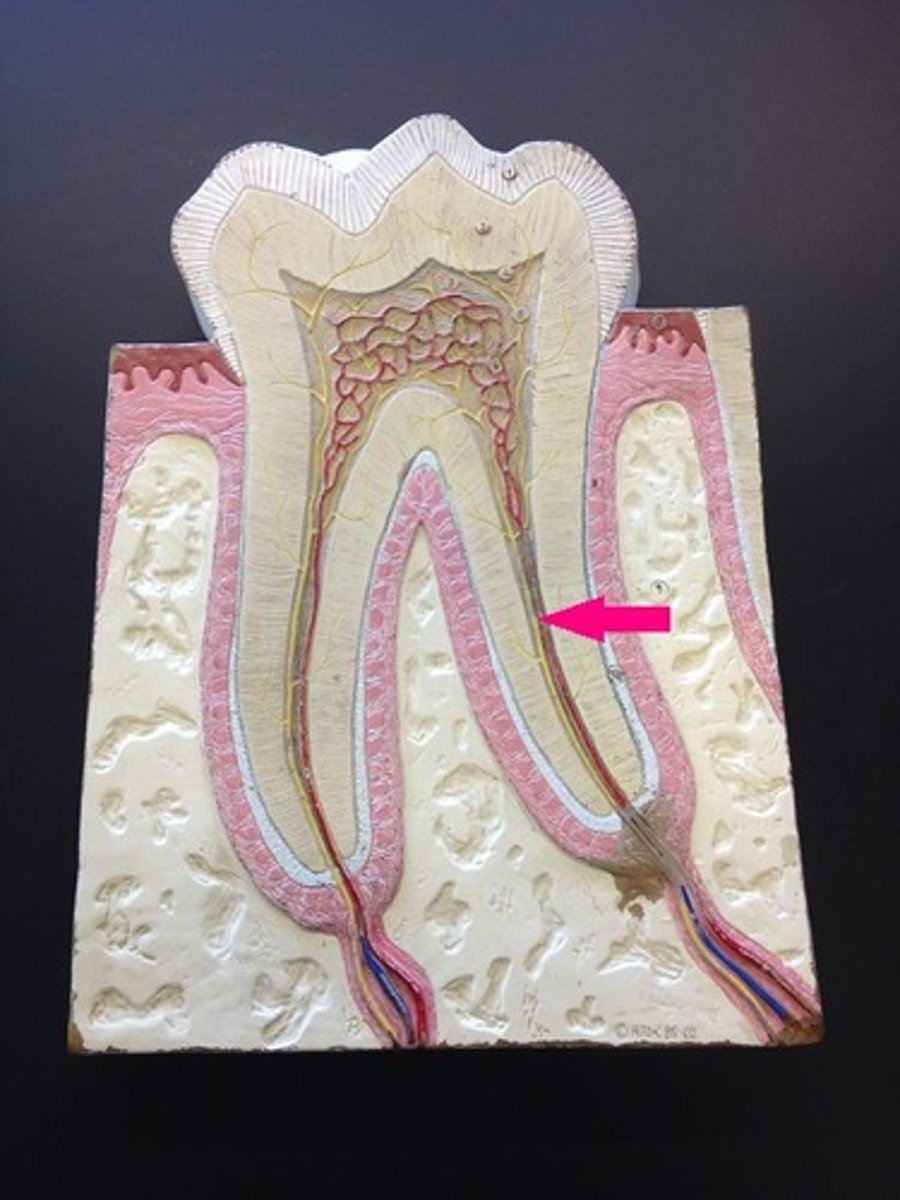
enamel
hard, outermost layer of a tooth
dentin
Dense tissue forming the bulk of a tooth.
pulp cavity
contains blood vessels and nerves
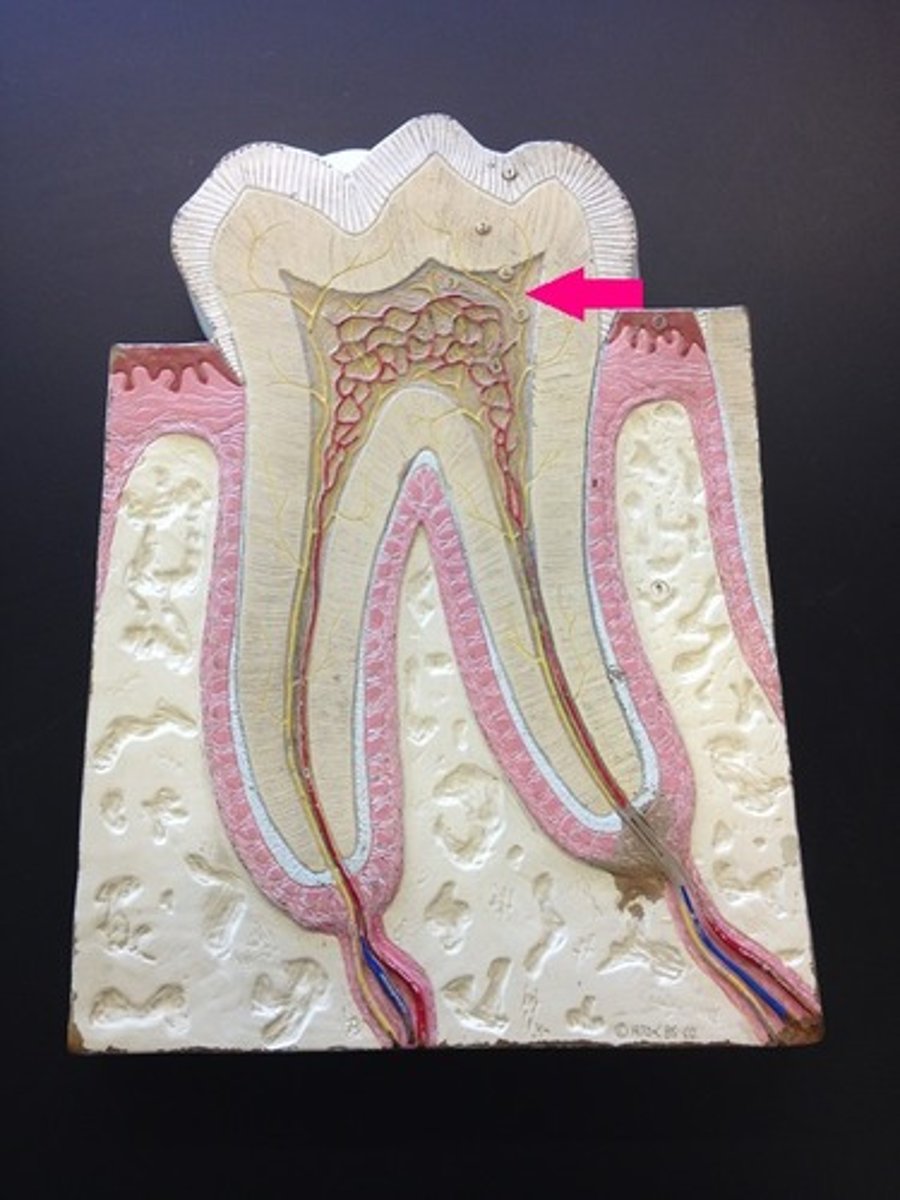
periodontal membrane
membrane surrounding a tooth
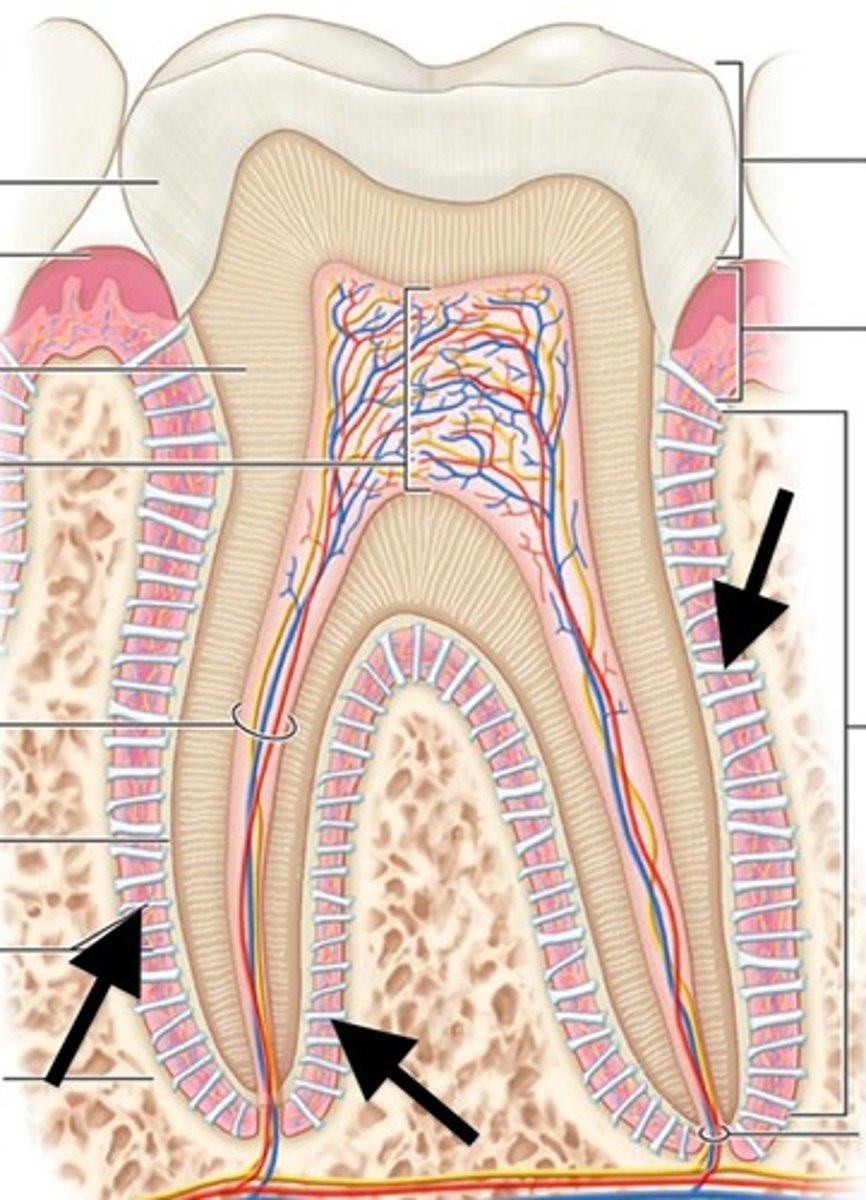
cementum
material covering the tooth root
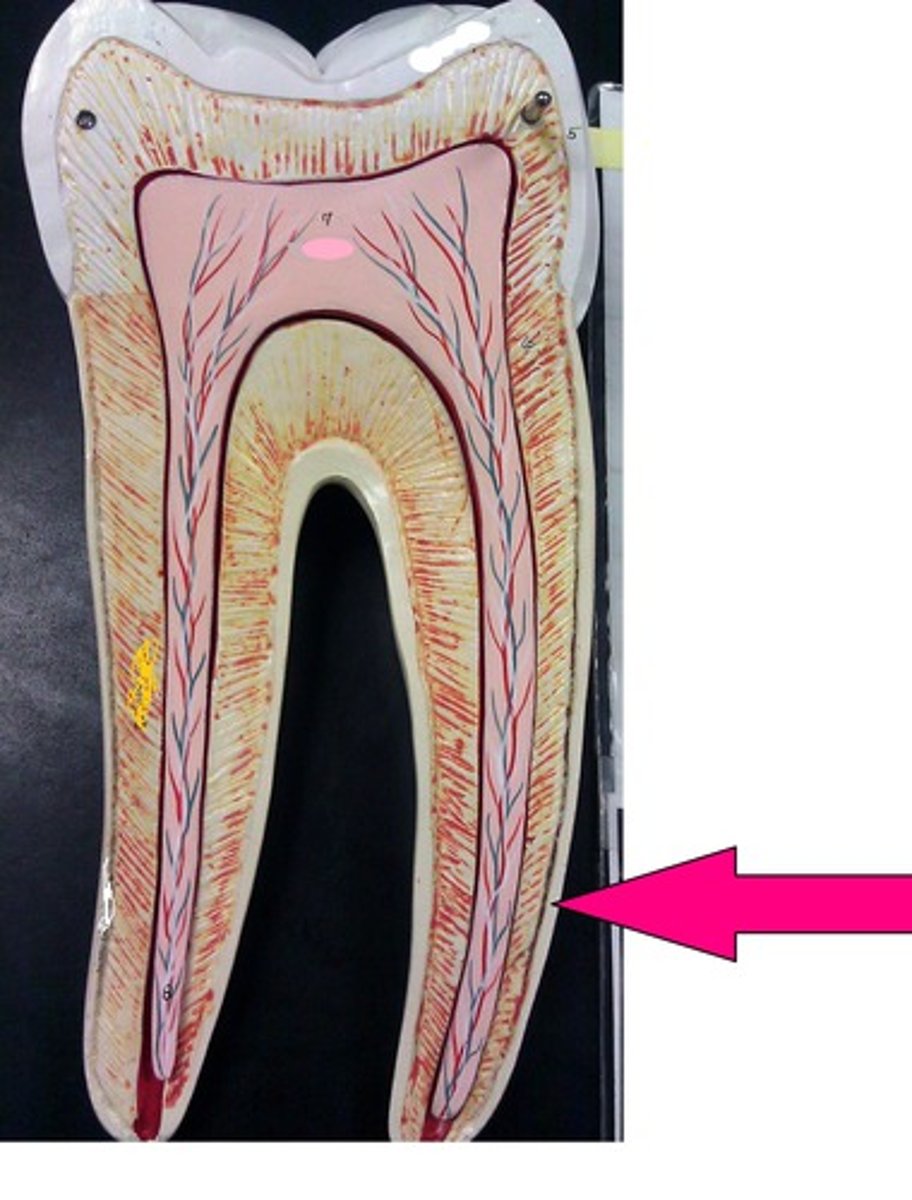
alveolar bone
bone that supports and encases the roots of teeth
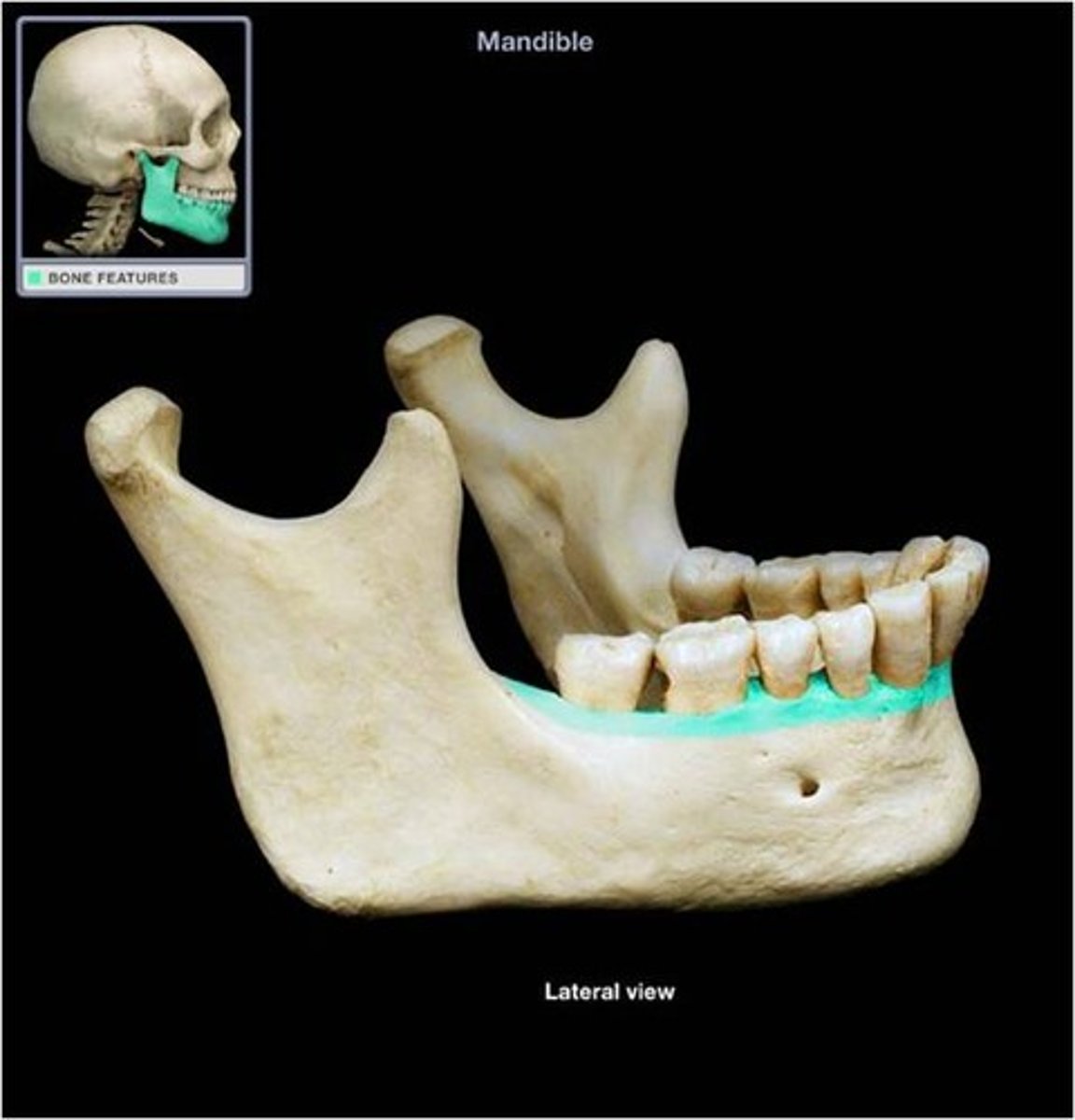
root canal
the pulp-filled cavity in the root of a tooth
oropharynx
central portion of the pharynx between the roof of the mouth and the upper edge of the epiglottis
laryngopharynx
the third division of the pharynx, is shared by both the respiratory and digestive systems
Esophagus
A muscular tube that connects the mouth to the stomach.
stomach
large, crescent-shaped organ located in the abdominal cavity; chemical digestion begins in the stomach
small intestine
The part of the digestive system in which most chemical digestion takes place.
parts of the small intestine
duodenum, jejunum, ileum
large intestine
Absorbs water and forms feces
parts of large intestine
cecum, colon, rectum, anal canal
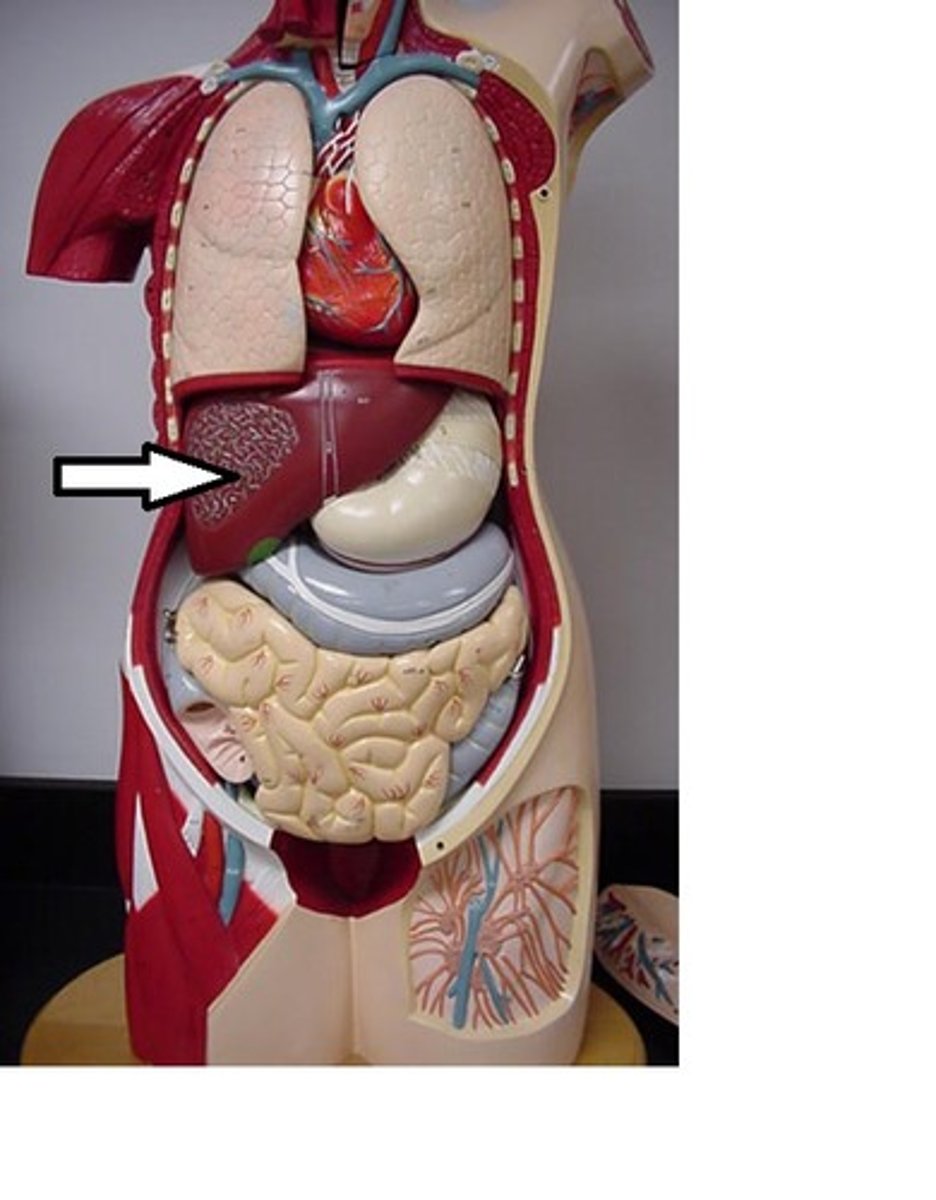
liver
located in the upper right quadrant of the abdominal cavity; produces bile
lobules
functional units of the liver
hepatocytes
cells of the liver, make bile
central vein
drains blood from sinusoids and out of liver
bile
A substance produced by the liver that breaks up fat particles.
bile canaliculi
ducts between hepatocytes that collect bile
portal triad
portal vein, hepatic artery, bile duct
sinusoids
capillaries in the liver located between the hepatocytes
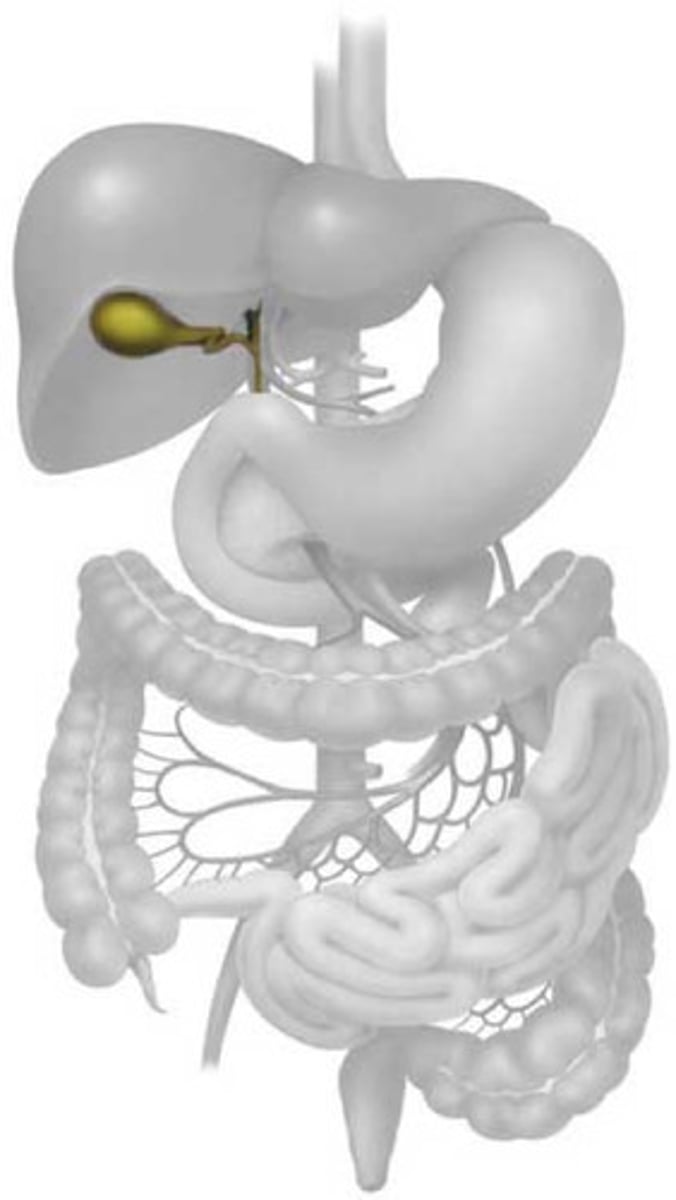
gall bladder
green coloured muscular sac attached to the ventral surface of the liver
stores and concentrates bile
Pancreas
lies between the stomach and duodenum
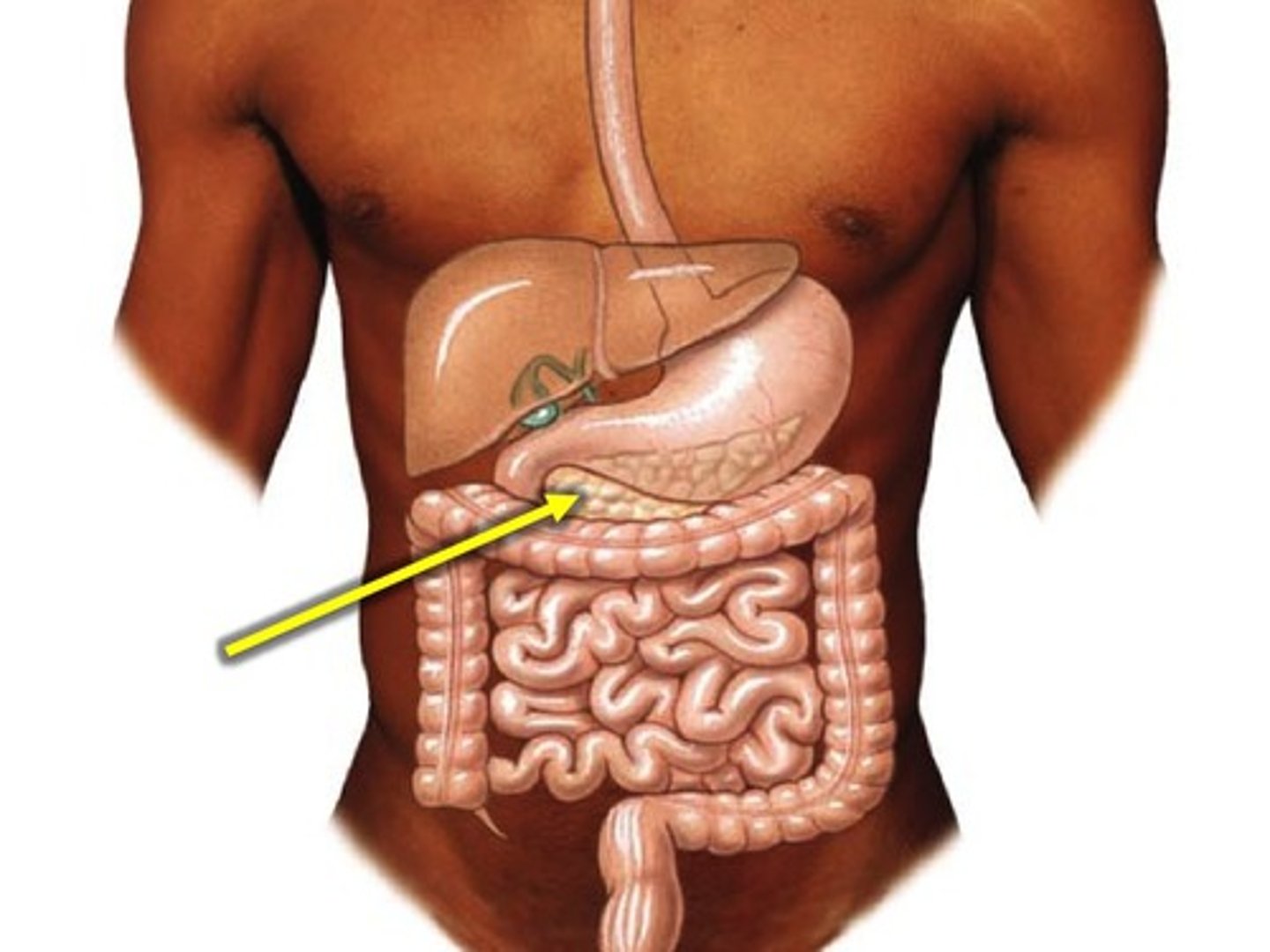
2 types of glandular tissue in pancreas
Exocrine glands - 98%
endocrine tissue - 2%
peritoneum
membrane that lines the abdominal cavity
visceral peritoneum
covers abdominal organs
parietal peritoneum
lines the body wall
mesenteries
membrane made up of folds of the peritoneum which hold the digestive organs in pace and contain blood vessels, lymphatic vessels and nerves
omentum
a mesentery which hangs free in the abdominal cavity or connects organs to each other
greater omentum
doubled walled peritoneal sac that extends from the inferior border of the stomach over the small and large intestine
spleen
Organ near the stomach that produces, stores, and eliminates blood cells
lesser omentum
attaches stomach to liver
falciform ligament
attaches liver to anterior abdominal wall and diaphragm
mesentery proper
connects different parts of the small intestine together
Mucosa
inner lining of the digestive tract
Submucosa
external to the mucosa; infiltrated with blood vessels and nerves
muscularis (externa)
lies beyond the submucosa and usually consists of 2 layers of smooth muscle arranged in an inner circular layer
serosa
outermost layer, visceral peritoneum
adventitia
layer of fibrous connective tissue, covers external muscle layer and connects the esophagus to surrounding structures
epithelium of esophagus
stratified squamous
epithelium of stomach
simple columnar
gastric pits
shallow depressions that open onto the gastric surface
gastric glands
exocrine glands in the stomach wall that secrete gastric juice into the stomach
rugae
when the stomach is empty, mucosa lies here
oblique layer
smooth muscle
epithelium of small intestine
simple columnar
Microvilli
projections that increase the cell's surface area
goblet cells
produce mucus
intestinal glands/crypts
between the villi; deep indentations
Circular folds (plicae circulares)
deep folds of mucosa and submucosa
major movement of the digestive tract
peristalsis
purpose of vili in small intestine
nutrient absorbtion
digestive enzymes
special proteins that are secreted by various accessory glands; catalyze chemical reactions
salivary amylase
Enzyme in saliva that breaks down starch
Benedicts + starch + saliva
Precipitate - yes; saliva breaks down starch
benedicts + starch
precipitate - no ; no saliva
benedicts + water + saliva
precipitate - no ; no starch
iodine + starch + saliva
colour - clear - saliva broke down starch
iodine + starch
blue - iodine turned starch blue
iodine + water + saliva
clear - no starch
pepsin
protein digesting enzyme
pepsinogen
inactive form of pepsin
hydrochloric acid
substance produced by the stomach; necessary for digestion of food
Has any digestion if the fibrin occurred in test tube A (fibrin + pepsin + HCL)
yes - pepsin denatures the fibrin; only works in acidic environments
Has any digestion of fibrin occurred in test tube B (Fibrin + pepsin + water)
no, pepsin is inactive in water
has any digestion of fibrin occurred in test tube C (Fibrin + HCL + water)
no, there was no pepsin to denature the fibre
what is the chemical nature of fibrin after digestion
amino acids
in what part of the digestive tract is protein digestion occur
stomach
what other enzymes are required for protein digestion
trypsin - chops up proteins
bile salts
compounds in bile that aid in emulsification
pancreatic lipase
digestion of lipids into fatty acids and glycerol
epinephrine effect on intestinal smooth muscle
decrease activity
Acetylcholine effects on intestinal smooth muscle
increase activity

