Chapter 16 - Animal Structure
 Call Kai
 Learn
Learn Practice Test
 Spaced Repetition
 Match
Match Flashcards
 Knowt Play
1/36

There's no tags or description
Looks like no tags are added yet.
Name | Mastery | Learn | Test | Matching | Spaced | Call with Kai |
|---|
No analytics yet
Send a link to your students to track their progress
37 Terms
Radial Symmetry
arranged around central axis, bisected into two equal halves
Bilateral Symmetry
body has right and left halves that are mirror images
3 ways bilateral symmetry can be sectioned into 3 planes:
Front/Coronal - separates front and back
Transverse - cross-section of a stem
Saggital - divides left from right
midsaggital plane - left and right sides are mirror images
Most small unicellular organisms get nutrients through …
diffusion
Cell size is constrained by …
surface area-to-volume ratio
Larger organisms don’t have larger cells, they just have ___ cells
more
Basal Metabolic Rate
average amount of energy used by an organism in a non-action state
Excess energy is given off as…
heat
Metabolic Rate
amount of energy expanded by an animal over a specific time
Ectotherms
dependent on environment for body heat
Endotherms
maintain a relatively constant body temperature (fat, hair, feathers)
In Endotherms:
smaller organisms have a higher basal metabolic rate
active animals have a higher basal metabolic rate
Acclimatization
changes in one organ system to maintain a set point organ system
Positive Feedback Loop
maintains and potentially strengthens the response to stimulus
Negative Feedback Loop
counteracts internal changes (reverses the direction of the change)
Most biological systems are on ….
negative feedback loops (temperature, glucose, pH, and blood calcium levels)
Hypothalamus job
controls thermoregulation
4 ways temperature is maintained:
radiation - heat released
convection - fan o rbath (air/water removing heat)
conduction - heat transfer from surface (warm/cool rock)
evaporation - sweating
Parazoa
lack of defined tissues and organs, can diseggregate and aggregtae their cells
Eumetazoa
have distinct and well defined tissues, irreversible differentiation of most cell types
4 types of animal tissues
connective tissues
epithelia
muscles
neurons
Connective tissues
together, provide support (consists of cells, fibers, and gel-liek substance)
Epithelia
cover outside of organs and structures, classified by number of layers and shape of the cell
Muscles
generate movement
Neurons
generate and send electrical signals
Squamous Epithelial
simple: lung alveoli, capillaries
stratified: skin, mouth, vagina
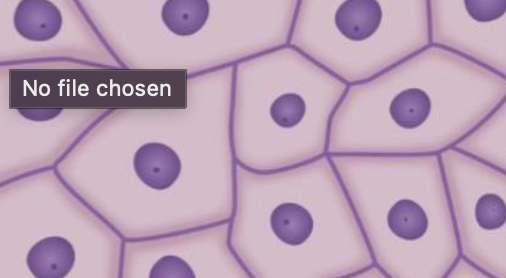
Simple Squamous
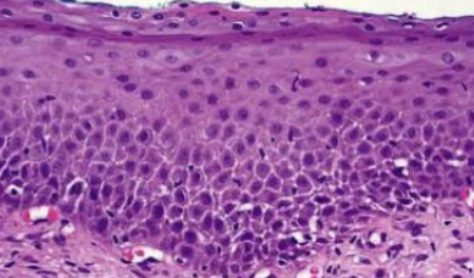
Stratified Epithelial
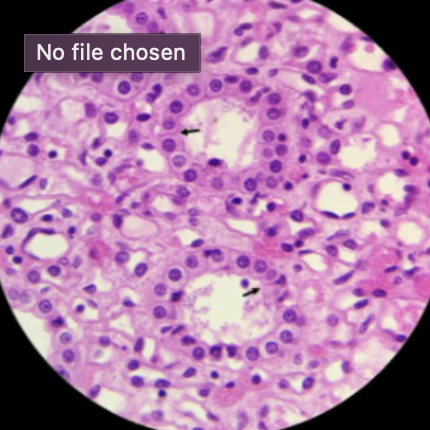
Simple Cuboidal
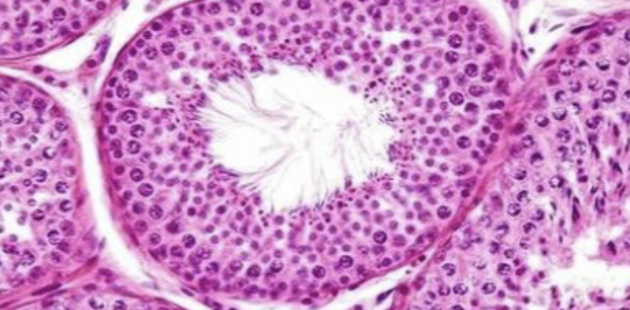
Stratified Cuboidal in testis
Cuboidal Epithelial where is it found?
glands and renal tubes (kidneys)
Columnar Epithelial where is it found?
digestive tract, respiratory tract
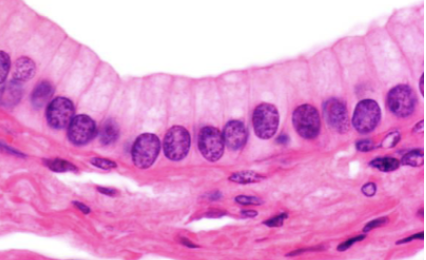
Simple Columnar
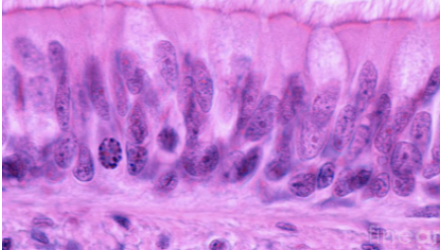
Stratified Columnar
3 types of muscle tissues
skeletal - voluntary, striated, multinucleate
smooth - involuntary, no striations
cardiac - involuntary, striated, intercalated discs
Gilal Cells (neuroglia)
supporting cells of the nervous system
Projections from the cell body are either:
dendrites (specialized in receiving input)
a single axon (specialized in transmitting impulses)

