Microbio Exam #1 Review
 Studied by 0 people
 Call with Kai
 Learn
Learn Practice Test
 Spaced Repetition
 Match
Match Flashcards
 Knowt Play
1/314

There's no tags or description
Looks like no tags are added yet.
Name | Mastery | Learn | Test | Matching | Spaced | Call with Kai |
|---|
No analytics yet
Send a link to your students to track their progress
315 Terms
What are the characteristics of prokaryotic cells?
Lack organelles
No nucleus
What are the characteristics of eukaryotic cells?
Contains organelles(nucleus, ER, golgi, lysosomes, mitochondria, chloroplast)
Where does bacteria fall in relationship to size of other cells?
Bacteria is VERY small compared to eukaryotes, but larger than viruses
How do differences in eukaryotic vs prokaryote relate to antibacterial targets?
Prokaryotes are antibiotic sensitive while Eukaryotes are not
What is the size of bacteria?
0.2 to 2.0 micrometer diameter
2 to 8 micrometer long
What are the shapes of bacteria?
Coccus
Bacillus
Spiral
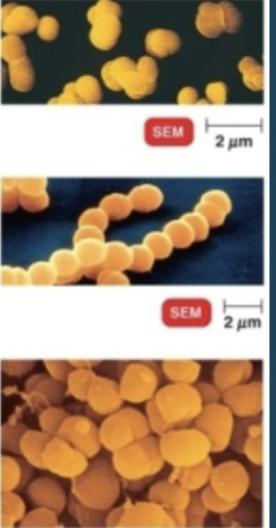
Coccus
-Spherical
-Low surface to volume ratio
-resists drying
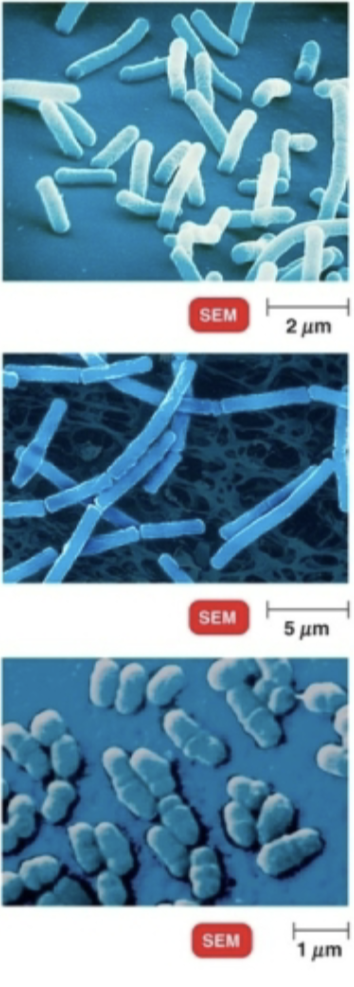
Bacillus
-Rod-shaped bacteria
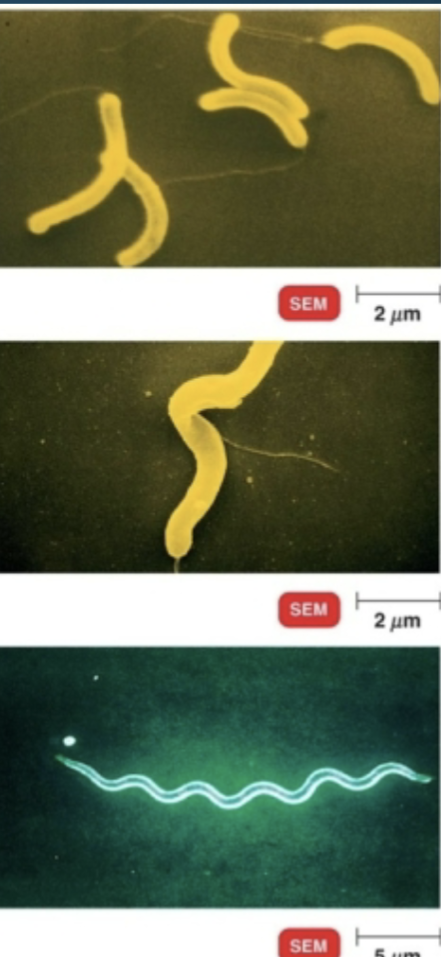
Spiral
-Spiral-shaped
-Do not survive long
-High S/V
What is the difference between Staph and Strep?
Strep=chain
Staph=Cluster
How is the shape of bacteria determined? What is monomorphic? Pleomorphic?
-Shape is determined by genetics
-Monomorphic: One shape
-Pleomorphic: Multiple shapes
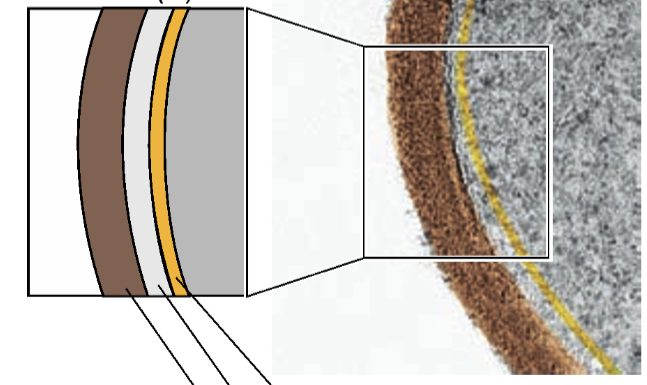
What is this a photo of?
Gram positive bacteria
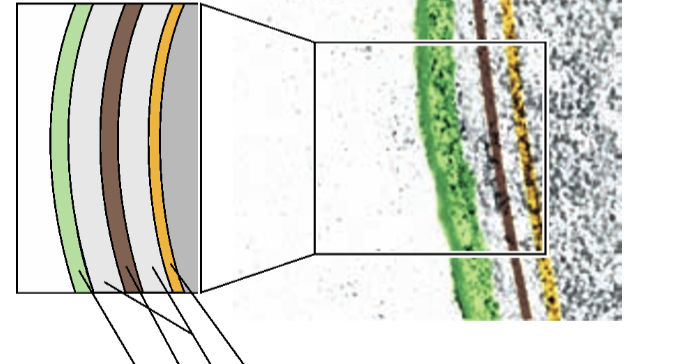
What is this a photo of?
Gram Negative Bacteria
What are differences between Gram (+) and Gram (-) ?
Gram +: Gram -:
-Thicker cell wall -Thinner cell wall
-No outer membrane -Has an outer membrane
-more penetrable -less penetrable
-One major layer -extensive periplasmic space
-narrow periplasmic space -Two major layers
What are the similarities between Gram (+) and Gram (-) ?
They both contain peptidoglycan, periplasmic space, a cell membrane, and membrane proteins
Describe the cell envelopes of gram positive and gram negative bacteria
Gram + has a thick cell layer wall with teichoic acids while Gram - has a thin cell layer wall between inner and outer membrane
How is a Gram stain performed differently for a Gram (+) than a Gram (-)
Gram + is stained more easily because of its thick cell wall and stains as purple.
Gram - is stained less easily because of this cell wall, which requires more steps to stain. It stains as pink.
What are characteristics of Gram (+) ?
Has a cell envelope compose of inner membrane surrounded by thick cell wall
The cell wall is made of peptidoglycan with teichoic acids anchored to them on the surface.
Inner membrane only
What are characteristics of Gram (-) ?
Contains both an inner and outer membrane
The inner membrane promotes fluidity due to phospholipids
The outer membrane is assymetrical(inner side contains phospholipids and the outer side contains phospholipids, lipopolysaccharides, and 60% protein).
Techoic Acid
Function: Promotes stability of the cell envelope and evasion of host
Two types of teichoic acids in gram + bacteria:
Wall Teichoic Acid: Anchored to peptidoglycan
Membrane Teichoic Acid: Anchored to the outer leaflet of the inner membrane’’
Makes up 50% of cell wall
What is the prototype for Gram (+) cells?
Bacillus Subtilis
What is the prototype for Gram (-) cells?
E. Coli
Porins
Protein
Found in gram - bacteria
Make up major part of outer membrane
Assist in passive transport of molecules across the outer membrane into the periplasmic space in gram negative bacteria
Lipopolysaccharide
Divided into 3 segments:
O-side chain: Major antigen
Core oligosaccharide: Usually inner and outer core but can vary
Lipid A: Brings lipopolysaccharides into the hydrophobic region of the outer membrane. Very toxic.
How do penicillin binding proteins contribute to cell wall synthesis.
Penicillin-binding proteins (PBPs) are essential bacterial enzymes that catalyze the final stages of peptidoglycan synthesis, responsible for building and maintaining the bacterial cell wall.
Describe the structure and function of the bacterial cell wall
Typically made of peptidoglycan
Describe the methodology and importance of the acid-fast stain for mycobacteria.
Since mycobacteria has a waxy coat covering the cell wall made of mycolic acid, gram staining is prevented. Therefore, acid-fast stain must be used in order to categorize non acid fast bacteria as brilliant green and acid fast bacteria with carbol fuchsin(pink)
Glycocalyx
component of Extracellular membrane
A coat/layer surrounding bacterial cell made of polysaccharides and/or polypeptides
Two types:
-Capsule: firmly attached to cell wall
-Slime layer: loosely attached to cell wall
Flagella
long appendages for motility
rotates like a propellor, clockwise or counter clockwise
Propels bacteria through a series of runs and then tumbles
not all bacteria produce Flagella
extracellular mebrane
Fimbrae vs Pilli
Both: short-haired like appendages used for attachment or conjugation, gram neg only, composed of protein pilin, extracellular membrane
Fimbriae: Polar position OR over whole surface, few to 100 per cell, main function is adherence. For example, Gonorrhea cannot colonize genital tract without fimbrae
Pilli: Longer than fimbriae, only 1-2 per cell, main function is transort of DNA from one bacteria to another during conjugation AKA sex pilli
Cytosol
Intracellular structure
substance inside plasma membrane
80% water
thick
semitransparent
elastic
What is the difference between chromosomes in prokaryotes vs eukaryotes
Prokaryotes contain a single chromosome while eukaryote has multiple chromosomes
Plasmids
small, circular, extrachromosomal DNA
In the cytoplasm
replicate independently of chromosomes
can be transferred by conjugation(via pilli)-fertility plasmid
Carry antibiotic resistance genes, metabolism genes
Ribosomes
In the cytoplasm
Site of protein synthesis
10,000/cell
composed of rNA AND Protein
two subunits
Good target for antibiotics
What is a cross bridge?
Provides structural stability
Few cross links are used in gram - bacteria
More than half of cross bridge bonds are formed in gram +
Endospores
In the cytoplasm
“resting” cell unique to bacteria
Cells detect an environmental change and form endospores to survive environmental stress
not a form of sexual reproduction(1 cell=1 spore)
What components make up intracellular bacteria?
cytosol, chromosome, plasmids, ribosomes, and endospores
What structures make up extracellular bacteria?
fimbriae, pili, flagella, porins and capsules
Describe the impact of environmental factors (pH) on microbial growth.
Bacteria are mostly neutrophiles
Cellular metabolism produces acids that inhibit bacterial growth
Bodily pH is an innate host defense against invading microorganisms(stomach,skin)
Describe the impact of environmental factors (temperature,) on microbial growth
Each organism has a Maximum growth temperature, Minimum growth temperature, and Optimum growth temperature
Describe the impact of environmental factors (osmolarity, ) on microbial growth.
Isotonic: Concentration inside and outside cell are equal, no net movement
Hypotonic: Inside of cell has lower concentration than outside, so water diffuses INTO cell
Hypertonic: Inside of cell has higher concentration than outside, so water diffuses OUT of the cell
The higher the osmotic pressure = decrease in bacterial growth because of dehydration
What are the growth phases of bacteria?
Lag Phase
Log Phase
Stationary Phase
Death Phase
Lag Phase
Little or no cell division
Period of synthesis
Log Phase
Exponential growth
Cells are most metabolically active
Most sensitive to antibiotics
Stationary Phase
Nutrients are all utilized, pH change
Constant Number of Cells
Division Rate=Death Rate
Death Phase
Death Rate>Division Rate
No nutrients due to extreme pH
What phase of growth bacteria are most susceptible to antibiotics.
The Log Phase
Aerobic Respiration
Oxygen is the final electron acceptor
Produced the most ATP compared to Anaerobic Respiration and Fermentation
Anaerobic respiration
Has less efficient nonoxygen electron acceptors such as nitrate and sulfate.
Has a lower yield of ATP compared to aerobic conditions, but still more than fermentation
Fermentation
Necessary for bacteria growing under Aerobic and Anaerobic conditions to recycle NADH back to NAD+
An organic molecule is the final electron acceptor and the max amount of ATP produced is 2.
What is the difference between respiration and fermentation?
Fermentation yields a low ATP value and only includes glycolysis and some fermentative pathways. On the other hand, Respiration yields a high ATP value via an electron transport chain.
Describe the impact of environmental factors ( oxygen) on microbial growth.
Oxygen can serve as an essential nutrient for SOME bacteria, a toxic substance for others, and a modulator for many
Obligate Aerobes
Require oxygen for bacterial growth
Test tube (bacteria at top)
Facultative Anaerobes
Growth occurs both with and without the presence of oxygen, but more growth where there is more oxygen
Obligate anaerobes
Bacteria dies in the presence of oxygen, so bacteria growth occurs only where there is no oxygen
Aerotolerant Anaerobes
Oxygen has no effect on growth
Microaerophiles
Growth occurs only where there is low concentrations of oxygen
Psychrophiles
Cold loving
Mesophiles
Moderte temperature
Thermophiles
Heat loving
Extreme Thermophiles
Organisms that thrive in extremely hot environments
Ex: Archaea
Acidophiles
Acid loving
Neutrophiles
Neutral loving
Alkalophiles
Base loving
Overview of Endospores
Dehydrated
Durable spore coat
contains DNA of cell
Dipicolinic Acid(coating)
No metabolic reactions
What is the function of capsule Glycocalyx?
Protects cell from phagocytosis
Attachment to tissue
Food source
What is the function of slime layer Glycocalyx?
Trap nutrients
Prevent dessication
Mycobacteria Spp.
Bacteria that causes Tuberculosis
Single cell membrane
Contains a cell wall made of peptidoglycan
Waxy coat of mycolic acid covers the cell wall
Monotrichous
single flagellum
Amphitrichous
tuft of flagella at each pole
Lophotrichous
tuft of flagella from one pole
Peritrichous
flagellum over the whole surface
infection
persistence of an organism in or on the host
infectious disease
colonization or invasion of the host resulting in tissue damage
pathogenicity
the ability or potential for an organism to cause disease
virulence
the degree or intensity of an organism’s pathogenicity
Virulence factors
Any component of an organism that contributes to:
Invasion
Evasion or subversion of host defenses
Tissue damage
.Primary pathogen:
A microorganism that causes disease even in healthy hosts
Ex: Bacillus anthracis, varicella(flu)
Opportunistic pathogen:
A microorganism that normally causes disease only in hosts that are compromised in some waye
Ex: C. diff, pneumonia,
What are the 5 steps required for microorganisms to produce an infectious disease
Adherence
Replication
Invasion
Evasion of host defense
Tissue damage
Adhesins
microbial surface structures that attach to a host cell receptor(integrin)
Integrins
Host cell receptors that bind to microbial adhesins
Host tropism
The presence of integrins determine which hosts can be infected
Tissue tropism
Presence of integrins determines which tissues within a host can be infected
Pili (fimbrae) Adherins
Hair like projections that are on the surface of bacteria, typically gram negative bacteria
What is an example of pili adherence
Adherence of uropathogens to the mucosal surface of the bladder
Non-pili adhesins
Adhesins of gram positive bacteria
What is an example of non-pili adhesins?
Protein F of strep bacteria, binds to fibronectin on mucosal surface
Replication
Microbes typically have to replicate to cause infectious disease
What are the sites of replication within a host?
Extracellular growth: Outside of host cell
Intracellular growth: Growth inside of a host cell
Facultative Intracellular Pathogens:
Bacteria that can grow both inside and outside of host cells.
Ex: Salmonella
Why does bacteria Invade a host cell?
Strategy for survival and replication
What are the benefits of invading a host cell?
Evasion of host defenses
Source of nutrients
Less competition
Access to host cell machinery
What happens to a microorganism after they invade a host cell?
They must escape and invade a new host cell
Some bacteria like Listeria and Shigella proper damaged host cells into healthy adjacent host cells
What are examples of microbial defense against host complement?
Coat themselves: Coat surface with circulating IgA antibodies(prevents them from being recognized by other antibodies). This is something bacteria had adapted.
Inactive complement components: Secret enzymes that will chop components of host complement
Capsules
IgA
Found in mucosal surfaces
IgD
Antigen receptor on B cells
IgE
Binds to allergens and to parasitic worms
IgG
Provides the majority of anti-body based immunity to pathogens
IgM
Expressed on B-cell surface, can be secreted
 Note
Note  Flashcards (74)