Module 6 cloning and biotechnology
 Call Kai
 Learn
Learn Practice Test
 Spaced Repetition
 Match
Match Flashcards
 Knowt Play
1/133

There's no tags or description
Looks like no tags are added yet.
Name | Mastery | Learn | Test | Matching | Spaced | Call with Kai |
|---|
No analytics yet
Send a link to your students to track their progress
134 Terms
what is meant by cloning?
The process of using an organism to produce genetically identical cells / organisms.
How can cloning occur
Naturally ( Asexual reproduction)
Artificially
How do plants produce natural clones?
Vegetative propagation
what is Vegetative propagation?
Production of plant clones from non-reproductive tissues
what type of reproduction is Vegetative propagation?
Asexual
what are the natural Vegetative propagation methods used by a plant?
Bulbs
Rhizomes
Stolon’s
Suckers
Tubers
what are Rhizomes and stolons
stem structures that grow horizontally away from parent plant
nodes where new shoots and roots develop
example of plant that uses rhizomes
bamboo
difference between stolon/ runners and rhizomes
stolons → grow above the ground
rhizomes → grow underground
example of plant with stolons/ runners
strawberries
what are suckers ?
shoots that grow from sucker buds on shallow roots of a parent plant
Example of plant with suckers
Elm trees
what are Tubers
underground structure that acts as food stores in plants
covered in eyes → sprouts and form new plant
example of plant with tubers
potatoes
what are bulbs
underground food stores used by plants
new bulbs develop from old bulb → form new individual plants
what are the methods of Artificial Vegetative propagation
Take cuttings
Grafting
layering
Grafting method
join the shoot of a plant to a growing stem and root of another plant
layering method
bending the stem of a growing plant downwards → enters soil and grows into new plant
risk assessment of producing clones from cuttings
be careful with sharp tools
some plants may cause irritation on skin so wear gloves
How to produce clone from cutting ( Image)
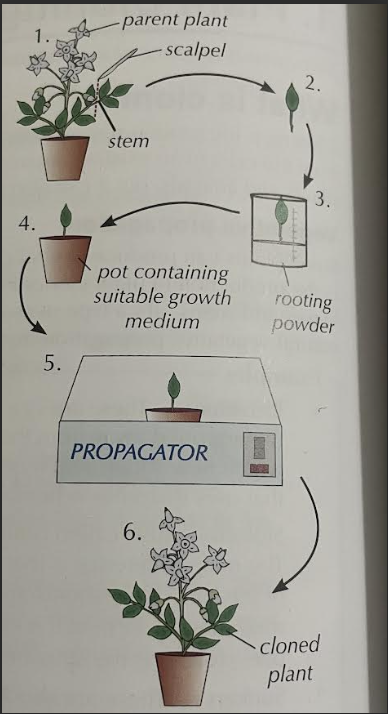
How to produce a clone from cutting method
use scalpel to take a cutting from end of stem of parent plant
cutting should have only 1 leaf at tip ( remove rest) ( Reduce transpiration rate)
dip lower end of cutting in rooting powder ( contains hormones that promote root formation) ( Auxins)
place cutting in a pot with growth medium
cutting needs a warm / moist environment → propagator
when cutting has formed roots → plant it elsewhere to continue growing
In clone cutting experiment how to provide cutting with warm environment ?
Cover the pot with plastic bag or put in propagator
what are the artificial and Natural way of cloning a plant
Artificial Vegetative propagation ( man made)
Natural Vegetative propagation
method of using tissue culture to produce clone
stem cells are taken from stem / root tips from parent plant
cells are sterilised then placed on culture medium ( containing glucose + amino acids + plant hormones)
carried out under aseptic conditions → cells divide into a mass of undifferentiated cells
when cells grow into plant → take out of medium and plant in soil
develop into genetically identical plants to parent
method of using tissue culture to produce clone (Image)
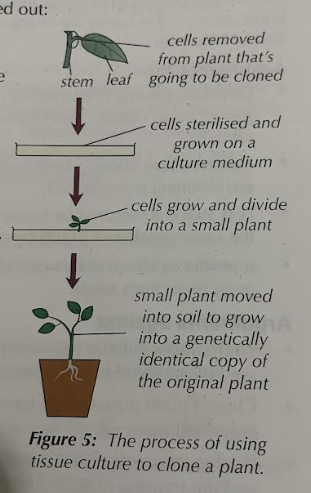
Why are cells sterilised in tissue culture
To kill any microorganisms → fungi and bacteria compete with cells for nutrients decreases growth rate
why is tissue culture used?
clone plants that don’t readily reproduce
endangered
rare
grow whole plants from GE plant cells
Uses of micropropagation ?
produce fields full of GE pest-resistant crop
what is micropropagation?
tissue culture is used to mass produce clone plants quickly
Micropropagation ( Image)
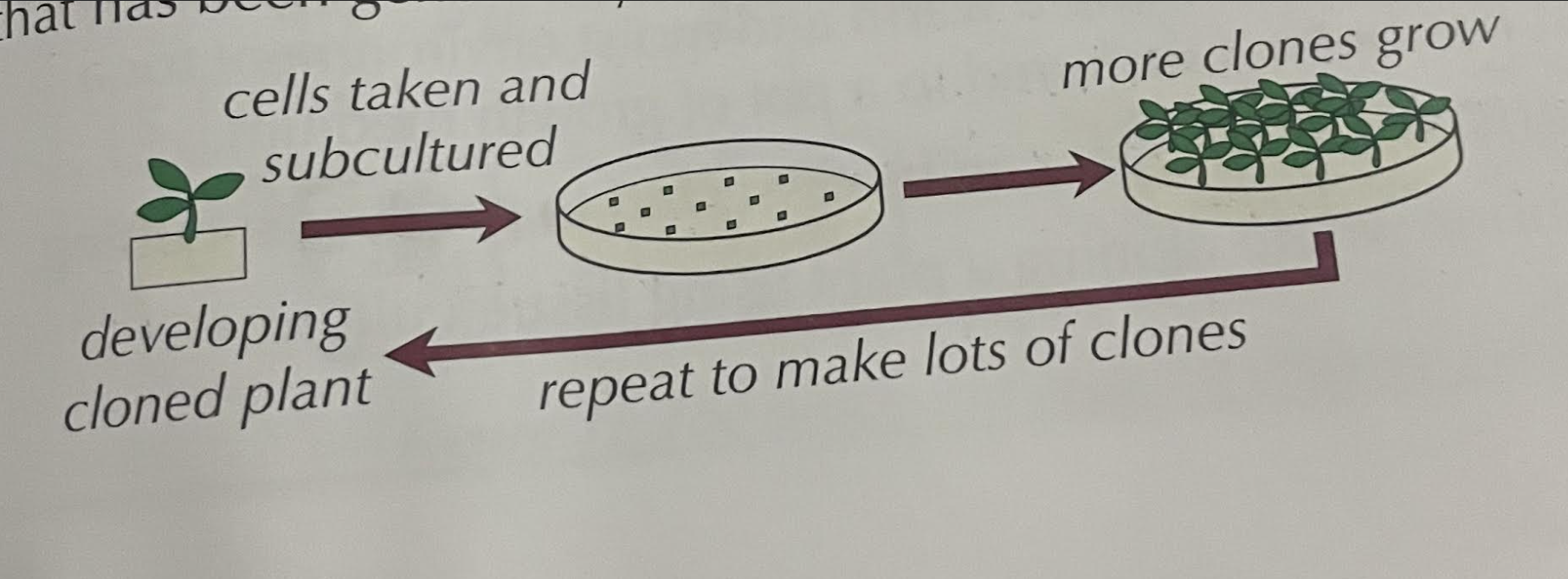
Disadvantages of Artificial plant cloning
No genetic variation → can be killed by single disease
expensive due to high energy use
unfavourable genetic characteristics are passed on to clone
tissue culture can be contaminated → loss of plant being cultured.
Advantages of Artificial plant cloning
Produces plants quicker
favourable genetic characteristics are passed on to clone
plants reproduce in any season
requires less space
How are natural clones produced by animals
embryos splits early into development → produces genetically identical offspring ( identical twins)
what are the techniques to artificially clone animals
Artificial embryo twinning
somatic cell nuclear transfer ( SCNT)
Artifical embryo twinning ( Image)
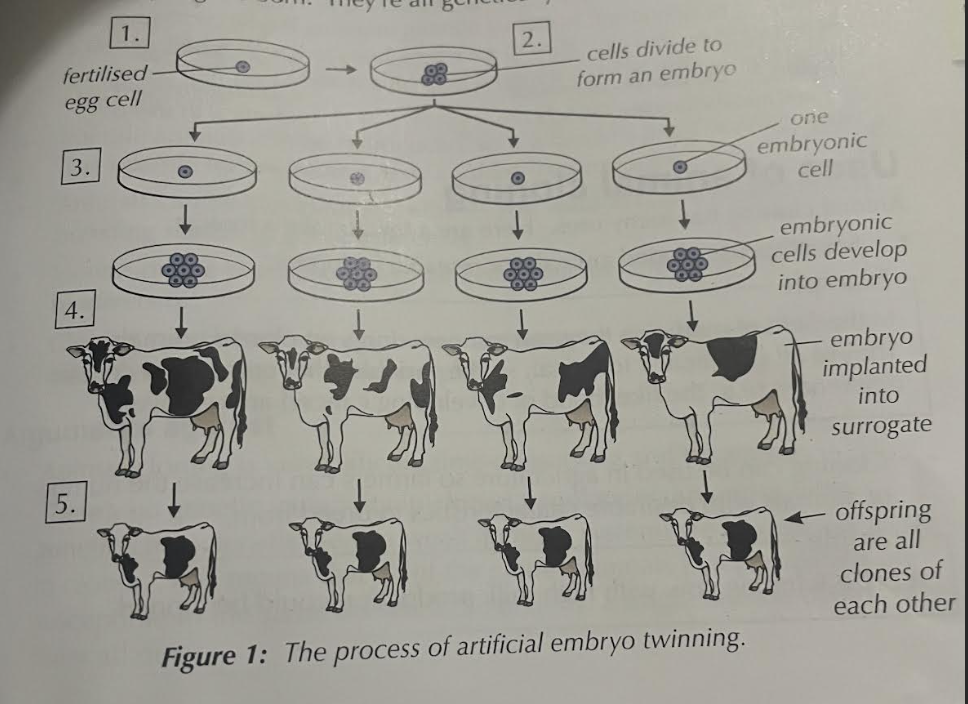
Artificial embryo twinning method
extract egg cell then fertilise in a Petri dish
fertilised egg → divides forming a embryotic cells ( in vitro)
embryotic cells are separated into a petri dish → develops into embryo
embryo are implanted into surrogate mother
embryos develop inside mother → genetically identical offspring are born
similarities between SCNT and artificial embryo twinning
Both involve surrogate mother
both create genetically identical clones
SCNT method
somatic cell is removed from animal A → extract nucleus
An oocyte ( immature egg cell) is taken from animal B → remove nucleus to form an enucleated oocyte
insert nucleus from A into enucleated oocyte → they fuse and divide → embryo
embryo implanted to surrogate mother.
what are some of the uses of animal cloning
Research purposes → test new drugs
Agriculture → increase number of animals with favourable characteristic
Save endangered animals from extinction
SCNT ( Image)
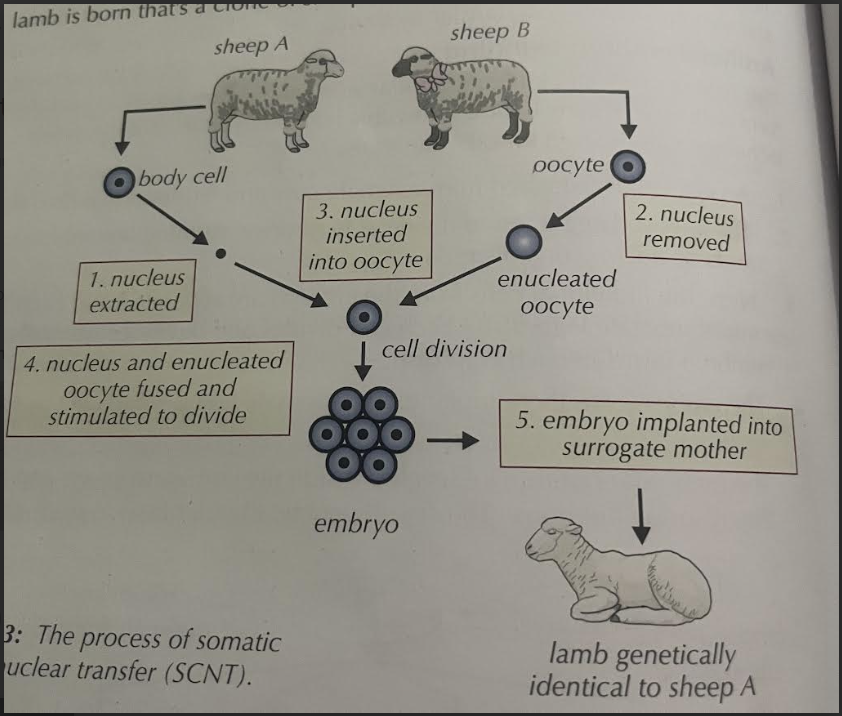
How can scientists use cloning to replace damaged tissues
Clone embryonic stem cells → totipotent
replace damaged tissues
Genetically identical to patient → don’t get rejected by immune system
Advantages of animal cloning
Develop new disease treatment → less chronically ill people
Favourable genetic characteristic is passed on → cow with lots of milk → calves lots of milk
increase population of endangered species → preserve biodiversity
Animals can be cloned at any time → dont have to wait till breeding season
disadvantages of animal cloning
Time-consuming and expensive
no genetic diversity → all susceptible to same disease
unethical → clones live shorter then natural offspring and involves destroying embryos
What is biotechnology ?
industrial use of living organisms to produce food, drugs and other products
why are micro-organisms mainly used in biotech ?
can be grown any time of the year
Can be grown on inexpensive material → economical to use
Ideal growth conditions are easily produced
short life cycle → grow quickly
what are the organisms used in biotechnology
microorganisms → fungi and bacteria
enzymes
what are the different types of enzymes used in biotech
Intracellular enzymes → enzymes are contained within cells
extracellular enzymes → enzymes are naturally secreted
isolated → enzymes that aren’t contained within cells
Disadvantages of intracellular enzymes
Expensive to extract the enzymes
what are the food industries / prodcution that use microorganisms
Baking
Brewing ( making beer)
Cheese making
Yoghurt production
Brewing ( making beer) process biotech
yeast ( saccharomyces cerevisiae) added to grain
yeast anaerobically respires using glucose from grain ( produces CO₂ + ethanol)
Baking process biotech
Yeast alcoholic fermentation → CO₂ makes bread rise
cheese making process biotech
Rennet’s contain the enzyme chymosin which clots the milk
chymosin can be obtained from GM yeast cells to produce enzymes
Lactic acid bacteria convert lactose in milk → lactic acid
helps cheese solidify
Yoghurt production
lactic acid bacteria → clots the milk and causes it to thicken
what are the uses of micro-organisms in medicine production
Penicillin production
insulin production
how is penicillin produced in biotech
the fungus (Penicillium chrysogenum) grown under stress in industrial fermenters
produce the antibiotic penicillin → kills bacteria, stops them competing for resources
penicillin produced is collected and processed
which products use industrial fermenters
Insulin production
Penicillin production
how is Insulin produced in Biotech
made by GM bacteria with gene for human insulin inserted in their DNA
bacteria is grown in industrial fermenter → insulin produced is collected and purified
What is bioremediation ?
Process of using organisms to remove pollutants from contaminated sites
Break down pollutants into less harmful products
How is bioremediation used naturally ?
pollutant- removing bacteria are given extra nutrients and enhanced growing conditions to allow maximum multiplication.
Example of microorganism used to make single-celled protein
The fungus Fusarium venenatum used to make Quorn
Advantages of using micro-organisms in food production
Micro-organisms can be grown quickly and easily → inexpensive
microorganisms can be cultured anywhere → used to tackle malnutrition in developing countries
single-cell protein is a healthier alternative to animal protein
more ethical → doesn’t involve animals dying
disadvantages of using micro-organisms in food production
single-cell protein has different flavour and texture to animal meat
easily contaminated by unwanted bacteria → conditions are ideal for other micro-organisms
people wont eat food grown using waste products
single- cell protein is dangerous when consumed in high amounts
What is meant by a culture ?
Population of one type of microorganism grown under controlled conditions
where are cultures grown
fermentation vessels
what are the methods of culturing micro-organisms
Batch fermentation → grown in individual batches in fermentation vessel
Continuous fermentation → microorganism are continually grow.
differences between batch and continuous fermentation
Batch → closed culture, waste products aren’t removed and extra nutrients are added
Continuous → Open culture, nutrients are added and waste products are removed at a constant rate
Fermentation vessel ( Image)
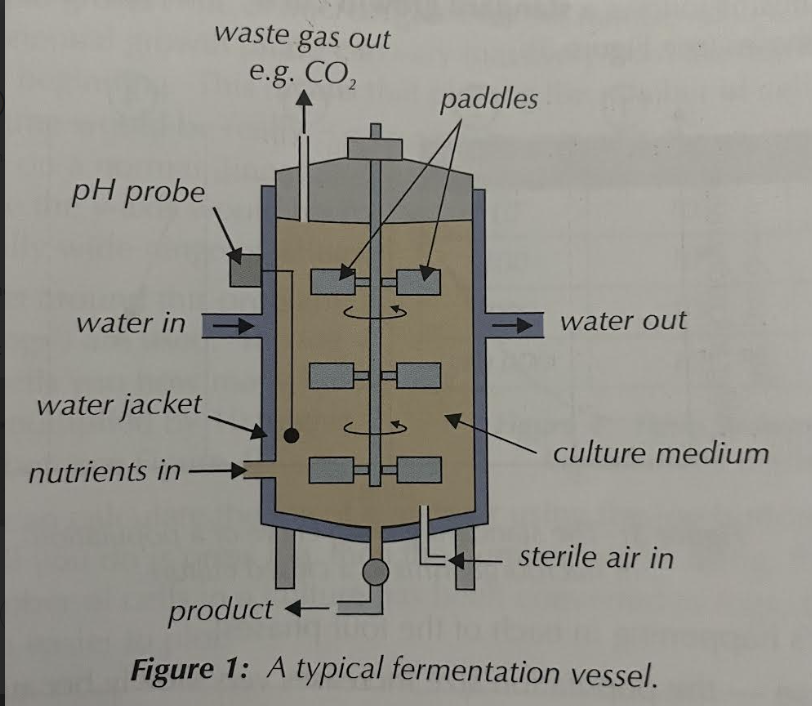
control variables in fermentation vessel
pH
Temperature
O₂ supply
Nutrients concentration
contamination
Function of pH probe in fermentation vessel
monitors pH → optimum pH → highest product yield as optimum enzyme activity
fastest rate of reaction
Function of water jacket in fermentation vessel
keeps temperature at optimum → highest product yield as optimum enzyme activity
fastest rate of reaction
Function of sterile air in fermentation vessel
keeps the volume of O₂ at optimum for respiration → increases product yield as microorganisms can respire to provide energy for growth
Function of paddles in fermentation vessel
Stir the culture ensures mixing of nutrients/ O₂→ increases product yield as microorganisms have constant access to nutrients needed for growth.
why are fermentation vessels sterilised?
sterilised with superheated steam to kill any unwanted microorganisms → stops contamination
increases product yield as microorganisms aren’t competing with other organisms
What is a closed culture
Growth occurs in a vessel that is isolated from the external environment → extra nutrients aren’t added and waste products aren`t removed
Examples of a close culture
Batch fermentation
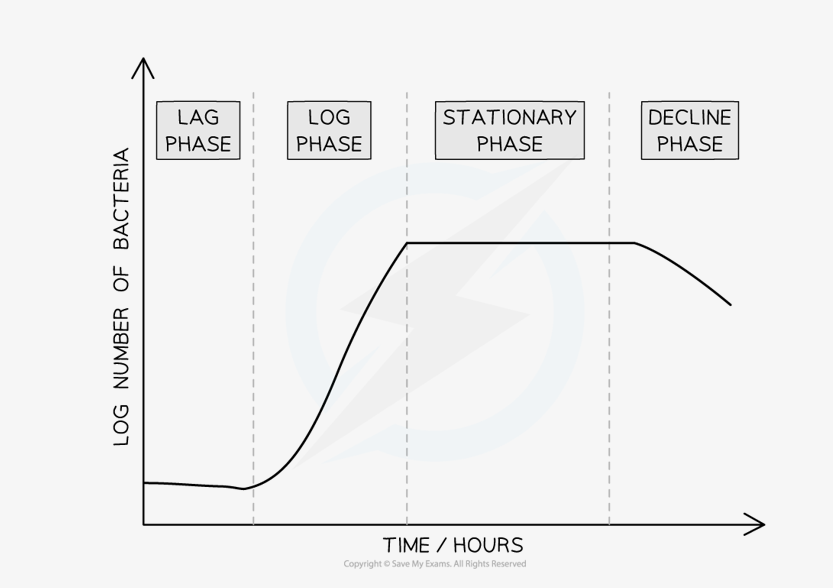
What are the four phases of a standard growth curve
Lag phase
Log phase
Stationary phase
Decline phase
Standard growth Curve
Growth curve for continuous fermentation ( Image)
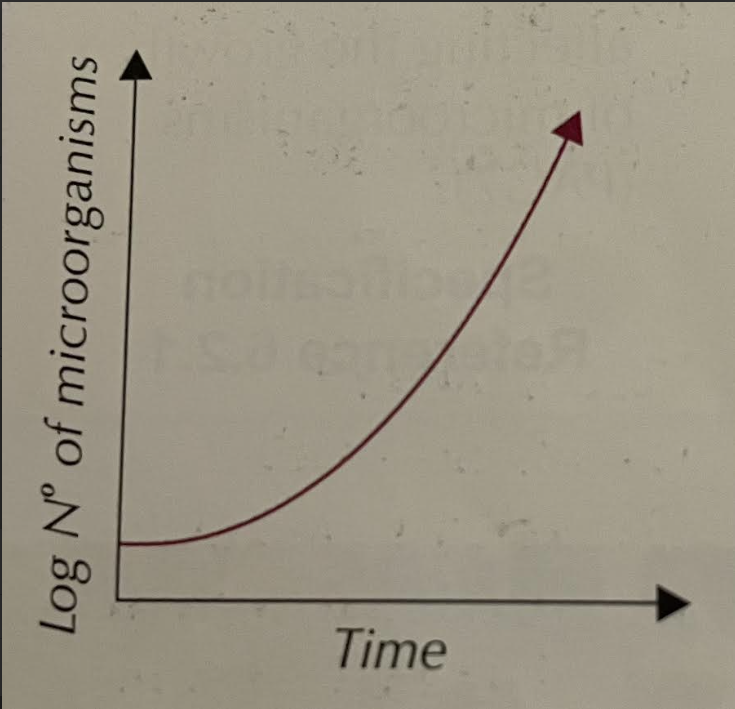
Growth curve continuous fermentation features
No stationary and decline phase → Open culture
nutrients are constantly being added and waste is constantly being removed
waste can`t build up to toxic levels
closed culture growth curve ( Lag phase)
population size increases slowly → microorganism have to make enzymes and other molecules before they reproduce
reproduction rate is low
closed culture growth curve ( Log phase)
Population size increases quickly → favourable culture conditions for reproduction ( lots of food and little competition)
number of microorganisms more than doubles at regular intervals
closed culture growth curve ( stationary phase)
population size stay level → micro-organism death rate = reproductive rate
micro-organisms die → toxic waste products build up and lack of food
closed culture growth curve ( decline phase)
population size decreases → death rate is greater then reproductive rate
toxic waste products increases + food is limiting
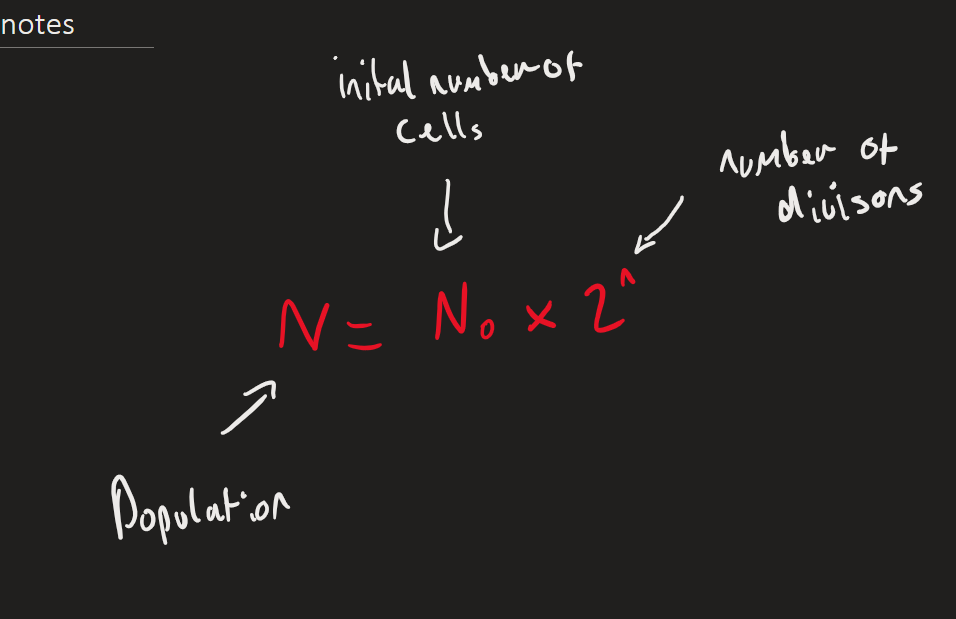
equation to work out cell population
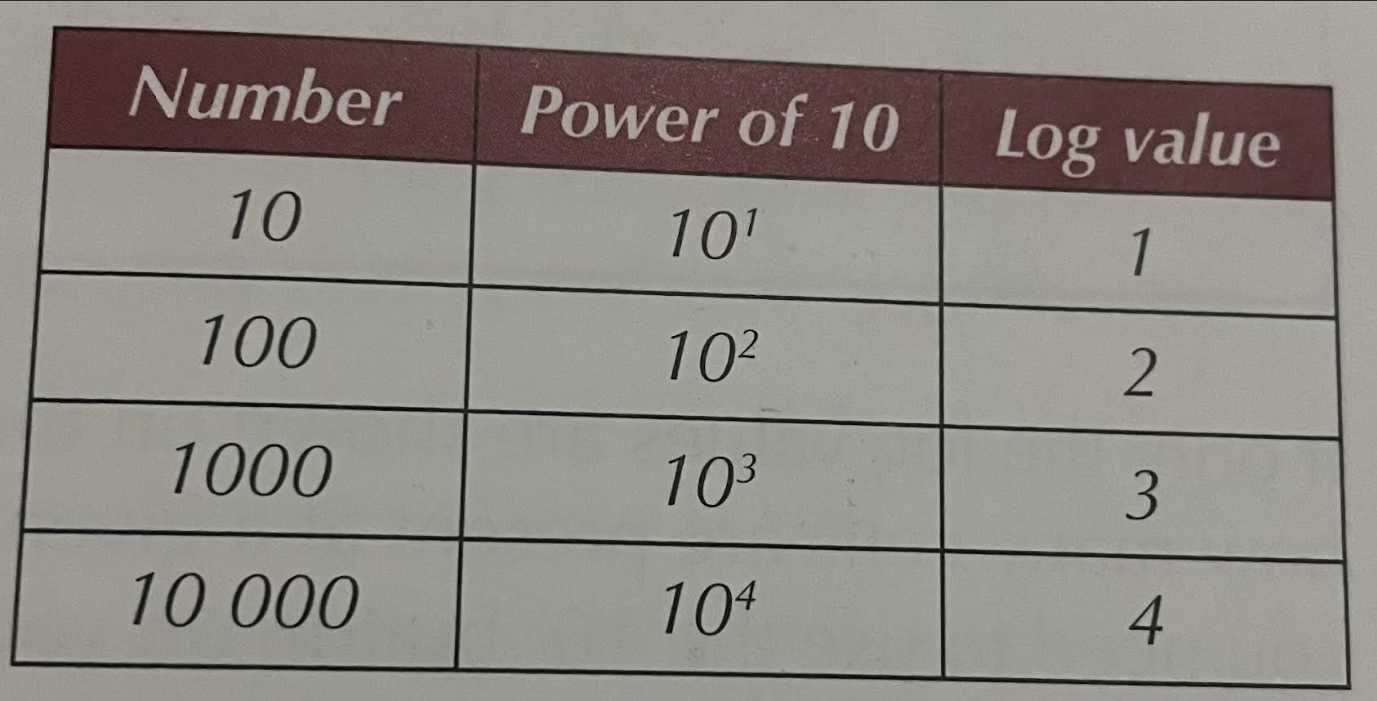
what does Log show
How many times a 10 has been x 10
Log values (image)
How to work out rate of growth during time period on micro-organism time graph
work out gradient between the 2 time periods
How to convert log number of cells into actual number of cells
10ⁿ
n = log number of cells
how to culture micro-organism in lab
Use a Agar plate (sterile Petri dish)
how to improve growing conditions when culturing micro-organisms
Add nutrients
what are the ways to culture microogranisms
In a Agar plate
in a Broth
how are micro-organisms provided in when culturing
In a liquid broth ( distilled water + nutrients)
Differences between culturing micro-organism in a broth and Agar plate
Agar plate → culture medium is solid
Broth → culture medium is liquid
Advantages using broth and Agar plate when culturing
Agar plate → allows isolation and separation of microorganism → easier to study individual colony
Broth → Supports fast microorganism growth in large volumes
Apparatus used when culturing micro-organisms
pipette
incubator → micro-organism can grow
glass spreader ( sterile) → spreads on whole surface of Agar
wire inoculation loop → transfer sample on the plate
what are Aseptic techniques and function
Prevent contamination of culture by unwanted micro-organisms
unwanted microorganisms → health risks , affect growth of micro-organism cultured, experiment gives in accurate results
Examples of aseptic techniques when culturing
sterilise all apparatus used after and before transfer of culture ( heating with flame for 5 seconds)
minimise the time Agar plate is open, put lid on ASAP → prevents airborne microorganisms from contaminating culture
Pass broth container through flame after opened and closed → causes air to move out → preventing unwanted organisms from falling in
Control variables when culturing
Temperature
pH
O₂ supply
nutrients levels
Why are Agar plates incubated inverted in culturing?
Stops any condensation formed on the lid from entering the agar
What to do if colonies overlap and you cant count them when culturing
Serial dilution of micro-organism on broth
plate on agar

