2. ENZYMES, DIET AND DIGESTION
 Call Kai
 Learn
Learn Practice Test
 Spaced Repetition
 Match
Match Flashcards
 Knowt Play
1/44

Name | Mastery | Learn | Test | Matching | Spaced | Call with Kai |
|---|
No analytics yet
Send a link to your students to track their progress
45 Terms
What is a biological catalyst?
a substance that speeds up a reaction without being used up
Why does digestion occur?
To break down large, insoluble molecules into small, soluble ones so they can be absorbed into the blood stream
Where does absorption take place?
Small intestine
What is an enzyme?
a protein that speeds up the rate of digestion
What are the three enzymes we have studied?
amylase, protease and lipase
What is a substrate?
a molecule on which enzymes act, forming products
What is the substrate of amylase?
starch
What is the substrate of protease?
protiens
What is the substrate of lipase?
fats
Where are carboydrase enzymes, like amylase, produced?
Salivary glands, pancreas, small intestine
Where are protease enzymes produced?
Stomach, pancreas, small intestine
Where are lipase enzymes produced?
Pancreas, small intestine
What are the products of starch digestion?
Sugars
What are the products of protein digestion?
Amino acids
What are the products of fat digestion?
Fatty acids and glycerol
Where does amylase digestion occur?
Mouth and small intestine
Where does protease digestion occur?
Stomach and small intestine
Where does fat (lipid) digestion occur?
Small intestine
Which organ produces bile?
Liver
Which organ stores bile?
Gall bladder
Describe 2 roles of bile.
Emulsifies fats creating a larger surface area for lipase enzymes to act
Is an alkali so neutralises the acidic contents from the stomach providing the optimum pH for lipase
Why does increasing temperature increase the rate of enzyme activity?
Enzyme and substrate molecules have more kinetic energy so move faster and collide more frequently. More enzyme-substrate complexes are formed as a result.
What happens when an enzyme is denatured?
The active site changes shape so that the substrate no longer fits
What is the optimum temperature for enzymes in the human body?
37°C
Which acid is found in the stomach?
Hydrochloric acid
How does hydrochloric acid in the stomach help digestion?
Provides optimum pH for protease enzymes
Which enzyme works best in acidic conditions?
Protease
Which enzyme works best in alkaline conditions?
Lipase
What provides alkaline conditions in the small intestine?
Bile
Describe how to test for starch.
Add iodine solution to sample and it will turn from orange-brown to blue-black if starch is present
Describe how to test for proteins.
Add Biuret solution to the sample and it will turn from blue to lilac if protein is present
Describe how to test for glucose.
Add Benedict's reagent to the sample and heat/boil it. It will turn from blue to brick red if glucose is present
Describe how to test for fats.
Add ethanol to food sample and mix. Then add water and if a white emulsion forms fat is present.
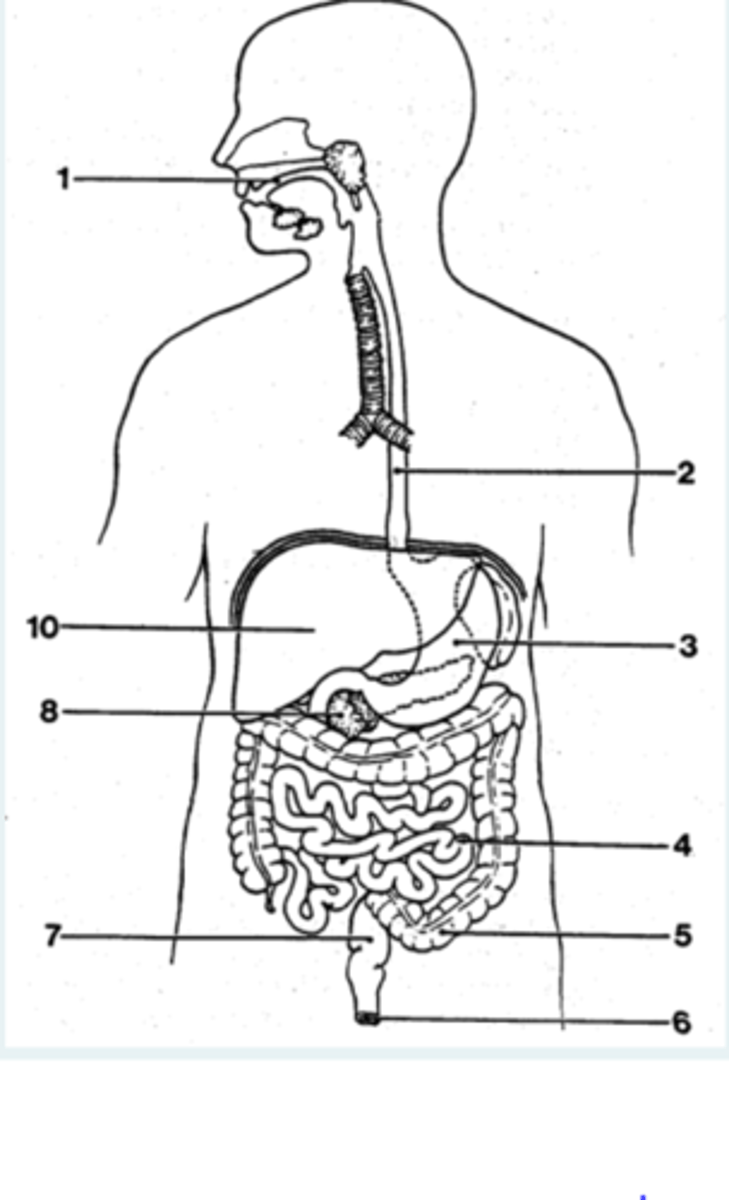
Which organ produces bile?
liver
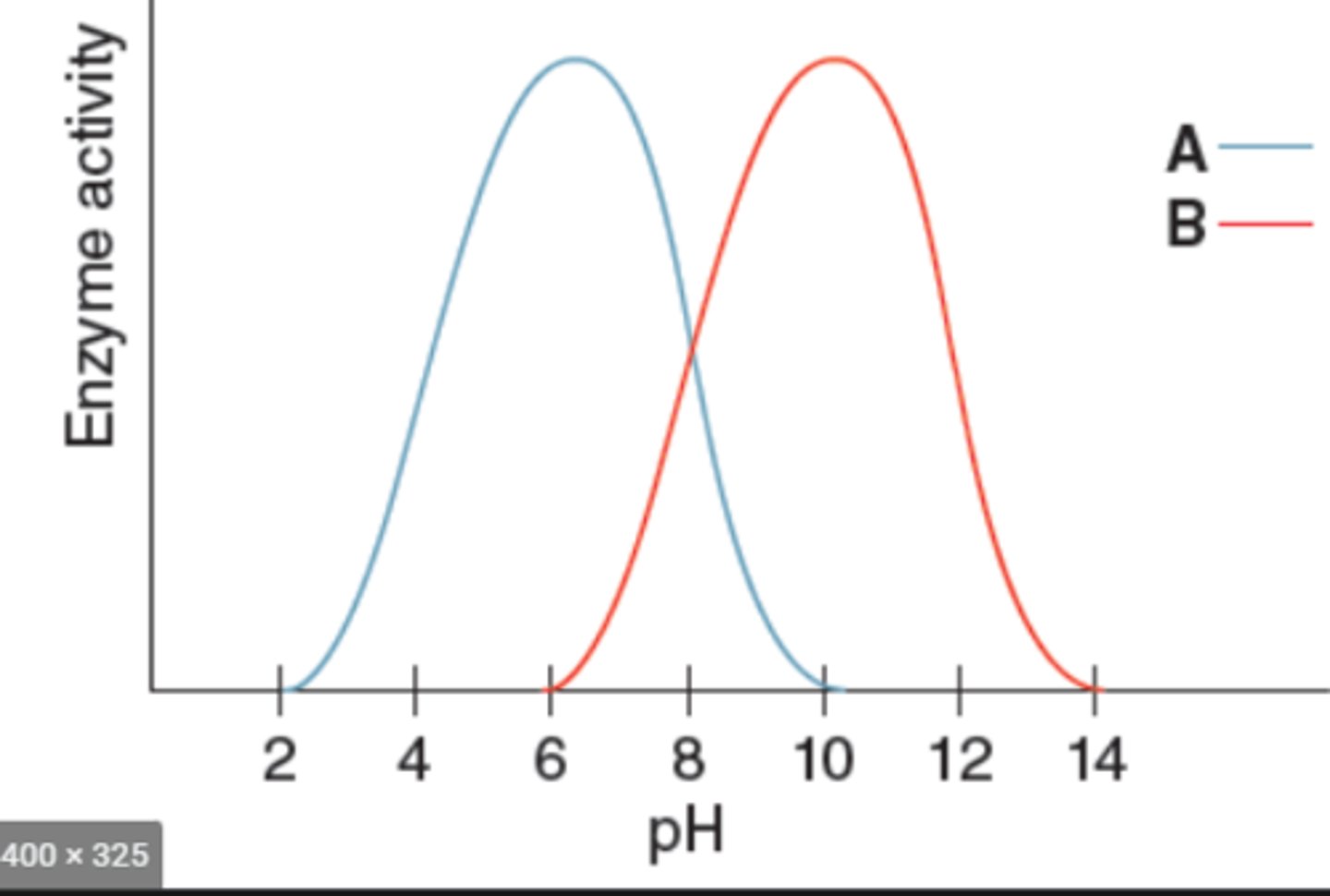
Which enzyme (A or B) would most likely be found in the small intestine?
B (slightly alkaline optimum pH)
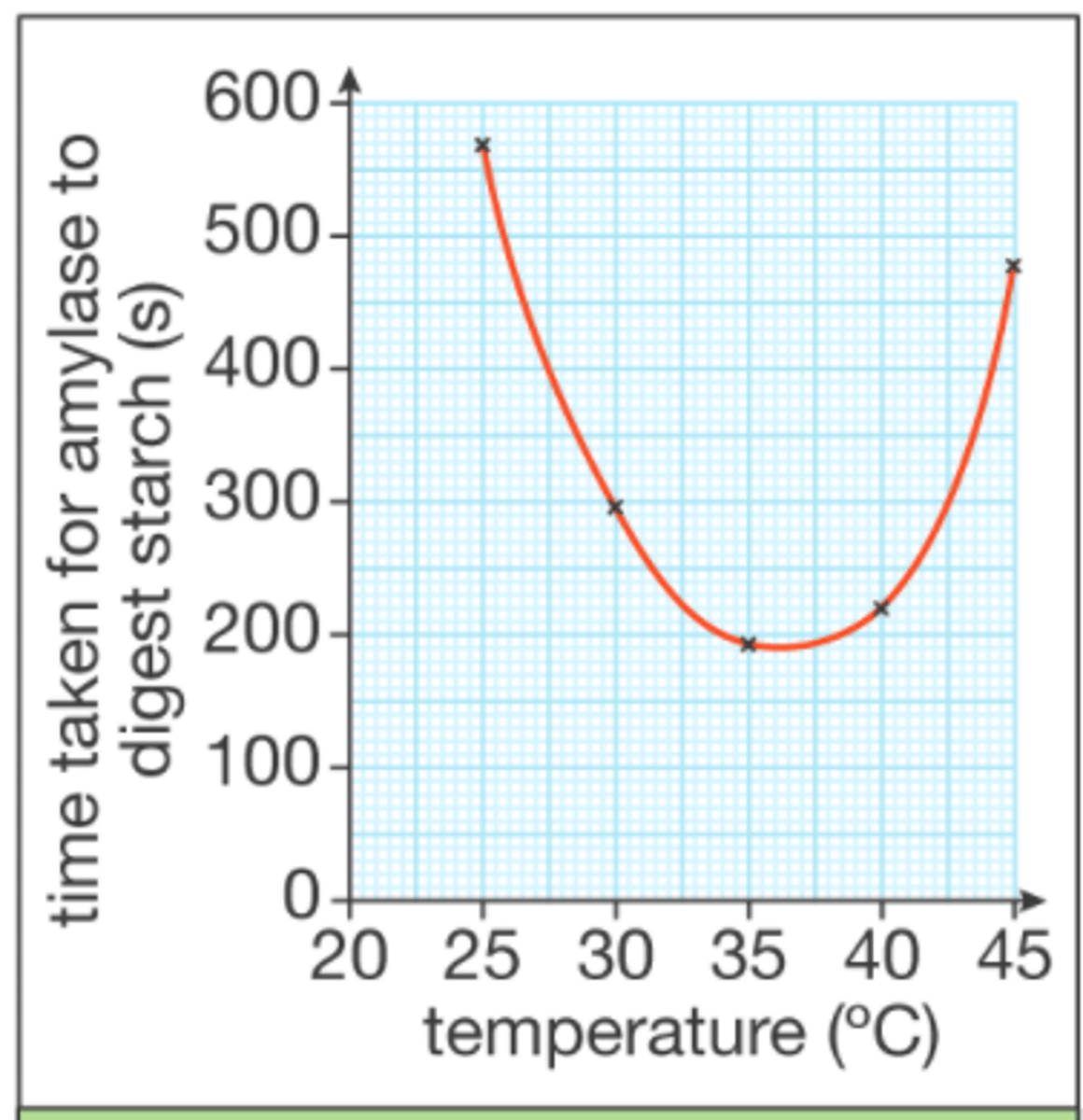
What is the optimum temperature for amylase activity based on the graph?
35C
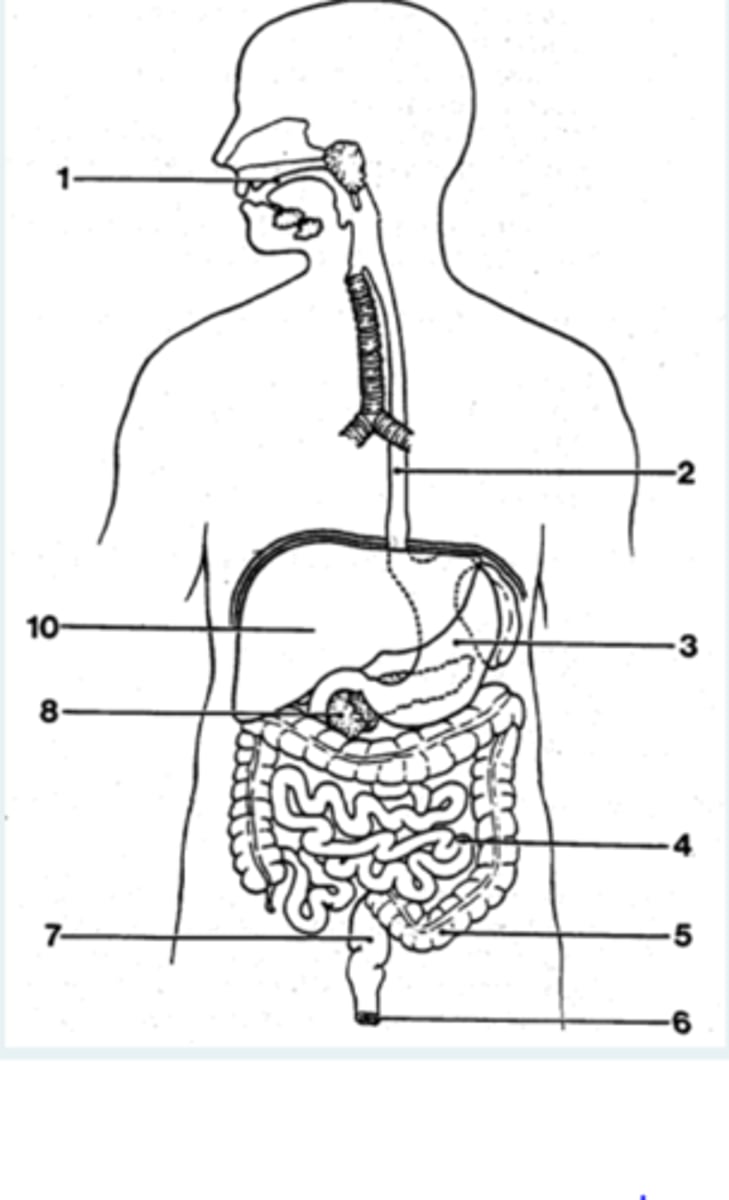
DEFINITION
Identify organ 10
TERM
Liver
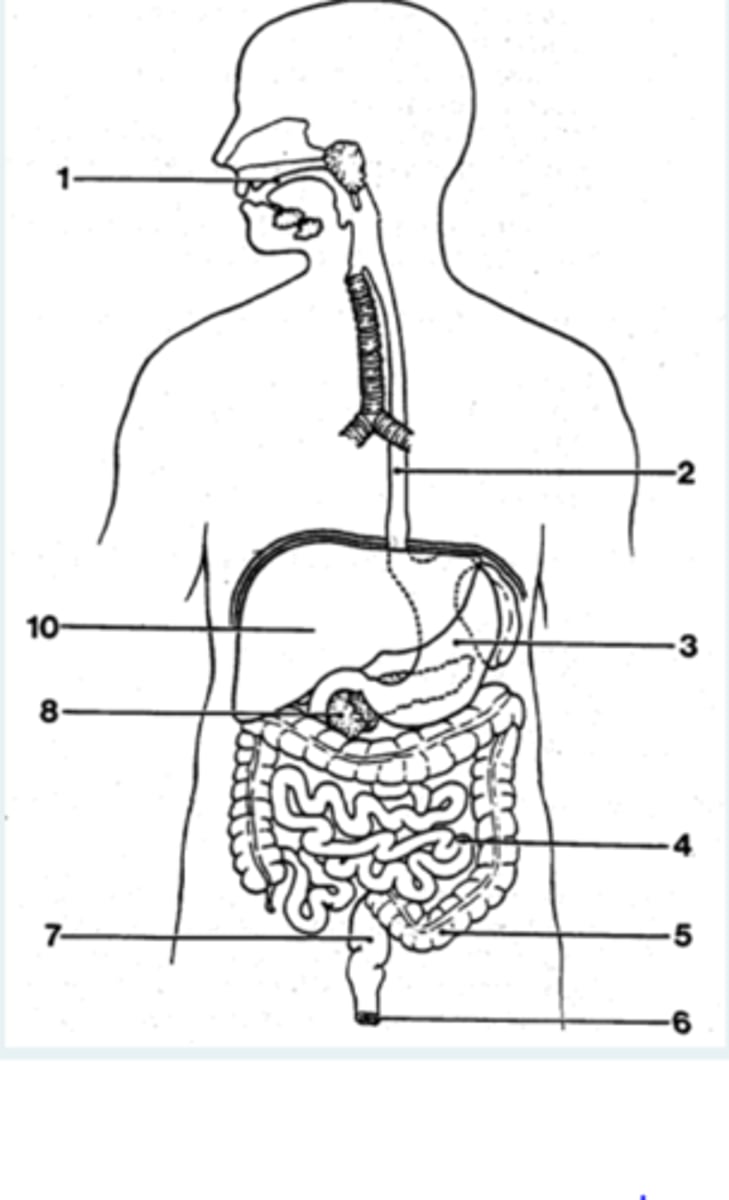
DEFINITION
Identify organ 8
TERM
gall bladder
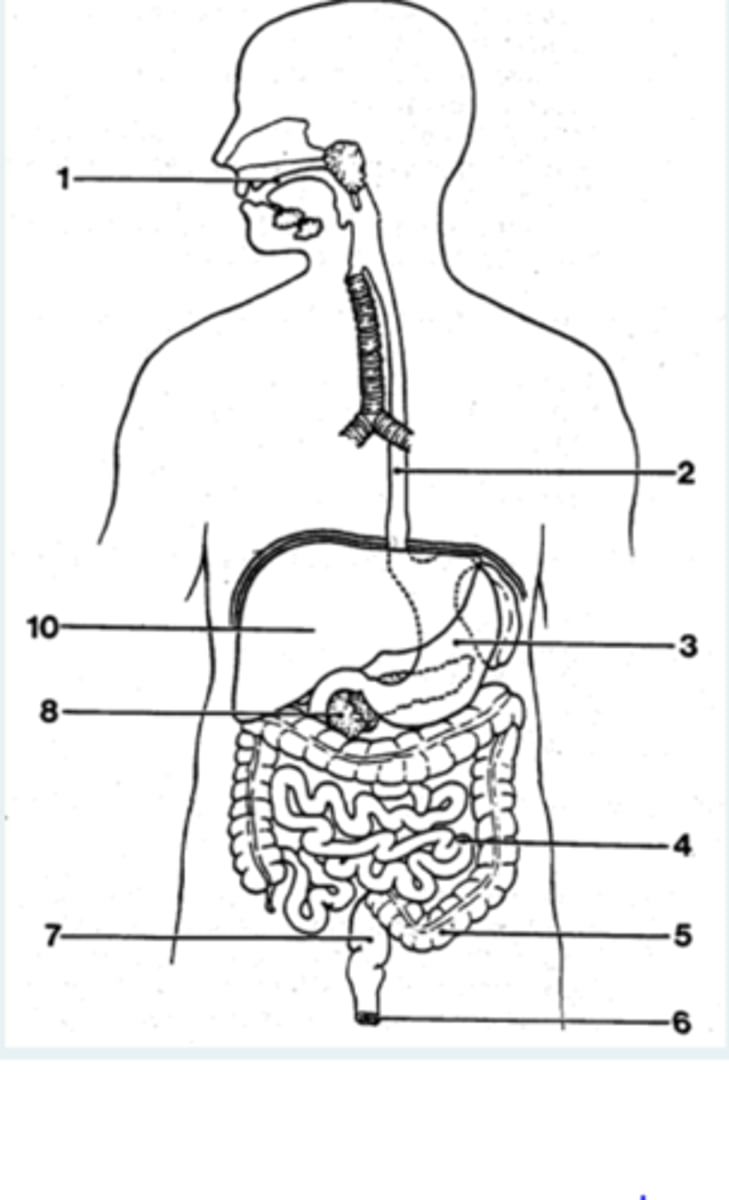
DEFINITION
identify organ 3
TERM
stomach
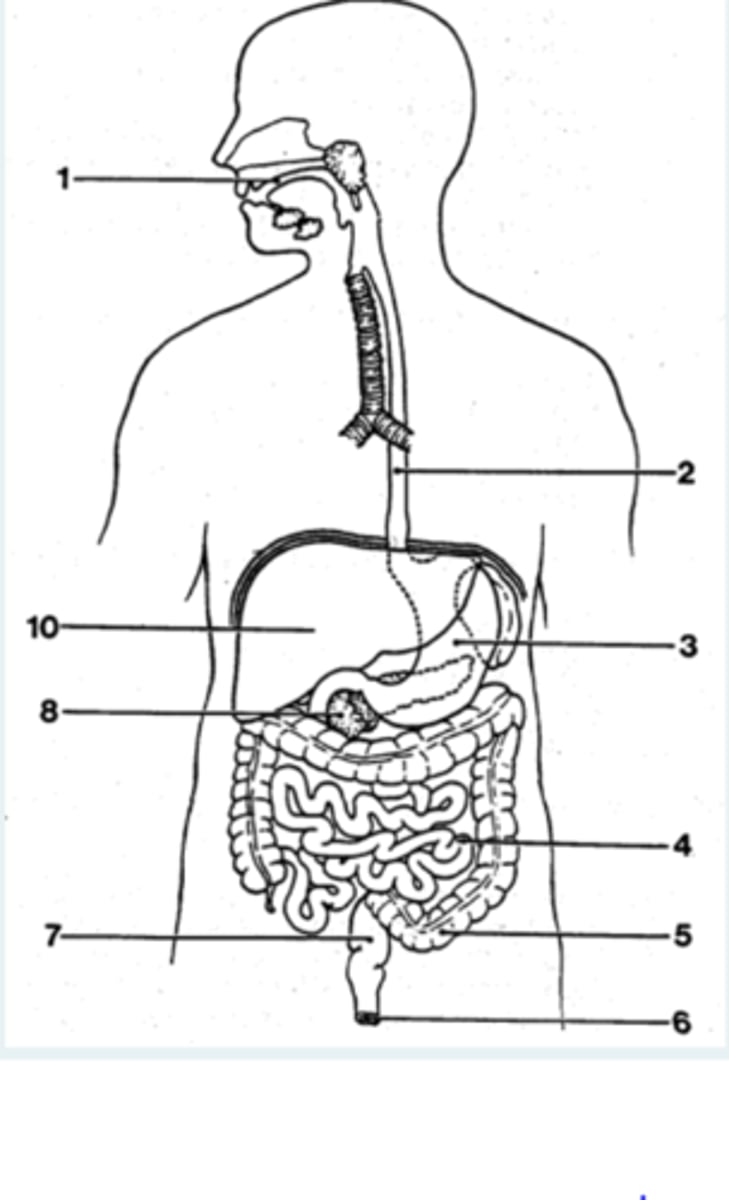
DEFINITION
identify organ 4
TERM
small intestine
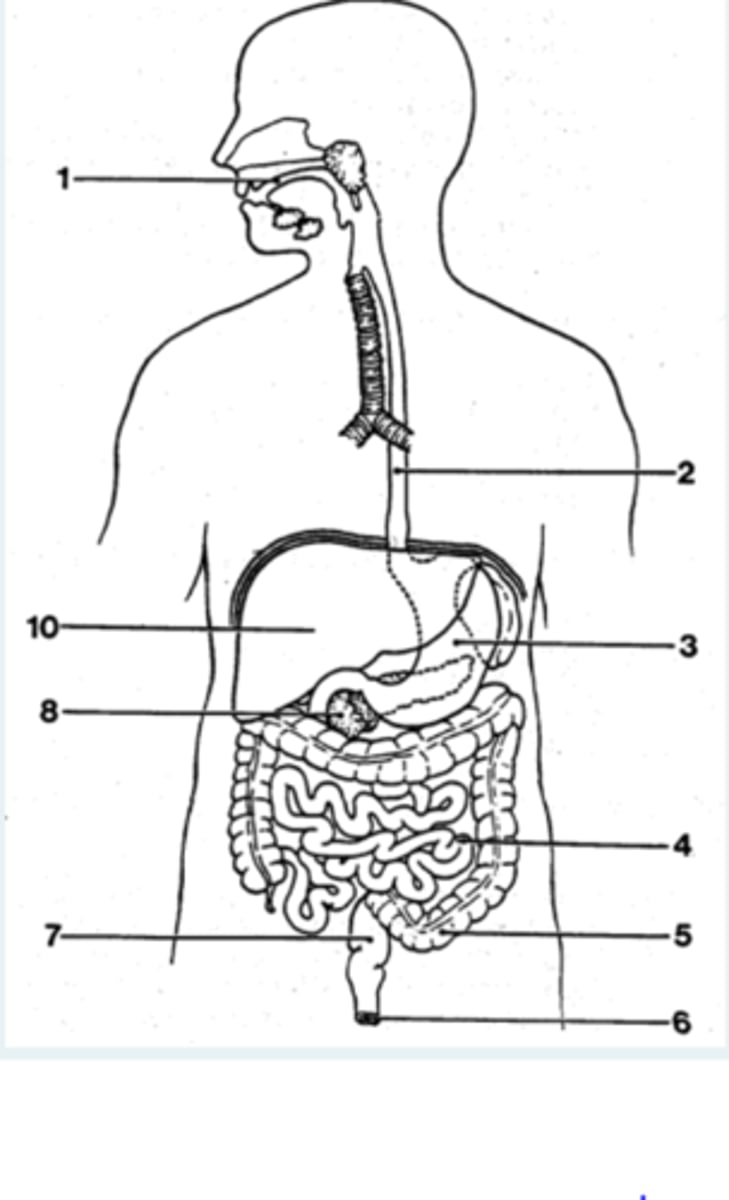
DEFINITION
identify organ 5
TERM
large intestine
Explain what is meant by the lock and key therory.
substrate has a complementary shape to the enzyme's active site so will bind to it to form an enzyme-substrate complex then the substrate is broken down into products which are then released.
What type of enyzme is amylase?
A carbohydrase enzyme
Why are enzymes described as specific?
Each active site has a specific shape that fits only one type of subtrate
Describe how the villi in the small intestine are adapted for their function.
Many villi/microvilli which provide a large surface area for absorption
one cell thick so provide a short diffusion distance
good blood supply which maintains a steep concentration gradient
contain many mitochondria to provide energy for active transport.
Explore top notes

