Unit 2: 12 + 13
 Call Kai
 Learn
Learn Practice Test
 Spaced Repetition
 Match
Match Flashcards
 Knowt Play
1/111

There's no tags or description
Looks like no tags are added yet.
Name | Mastery | Learn | Test | Matching | Spaced | Call with Kai |
|---|
No analytics yet
Send a link to your students to track their progress
112 Terms
when is implantation
6-10 days after conception
how long does pregnancy last
40 wks or 280 days
what is the critical period
day 15 - week 8
at the end of 8 weeks
baby looks human and organ systems and external structures are present
teratogens
any substance that causes abnormal development
most harmful during the critical period
the three germ layer
by 4 weeks, the ectoderm, mesoderm and endoderm from
ectoderm
outer most layer, from nervous system and skin
mesoderm
middle layer, form;
muscle, cartilage ad skeletal
kidneys
reproductive system
cardiovascular system
when do cardiac anomalies happen
3-5 weeks
endoderm
middle layer, forms:
endocrine gland
respiratory system,
GI tract
liver and pancreas
when is the fetal heart beating
5 weeks , it is the first system to develop
ovum period
conception - 14 days
embryo period
15 days - 8 weeks
fetal period
9 weeks and beyond
chorion
outer membrane of the amniotic sac
becomes fetal side of the placenta
has major umbilical vessels that branch to the placenta
amnion
inner membrane of the amniotic sac
becomes the covering of the umbilical cord
as fetus grows, amnion gets bigger to accommodate baby
amniotic fluid
98-99% water
increases weakly
what volume should the amniotic fluid be
by 8 wks 10ml
by 15 wks 250 ml
at 32 weeks it stabilizes at 800 mL
oligohydraminos
less than 300mL and 32 weeks or more
indicates fetal renal impairment
polyhydraminos
over 2 liters @ 32 weeks or more
indicates GI
functions of amniotic fluid
thermoregulation for baby
fluid/electrolyte homeostasis
oral fluid and storage for waste
musculoskeletal development - freedom of movement
contains immunoglobulins and has antibacterial factors
keep baby untangled with umbilical cord and amniotic bands
yolk sac
cavity on the other side of the developing embryonic disc
transfers maternal nutrients and oxygen for the first 5-6 weeks
umbilical cord
2 arteries that carry deoxygenated blood from baby back to placenta
1 vein that carries oxygenated blood to baby
40-70cm @ term
knots can prevent perfusion
Whartons jelly
gel in cord to keep it patent and prevent compression
placenta uses
all waste products and CO2 are sent back to maternal blood via placenta
O2 and other nutrients sent to baby via placenta
acts as our fetus’s lungs
also stores nutrients baby needs
placenta growth
begins forming @ implantation, complete by week 12, grows until 20 weeks\
covers ½ of uterine wall by 20 weeks
maternal-placenta embryonic circulation is in place by ?
day 17 - also when baby’s heart beats, but we cannot hear it yet
Placenta hormones
HCG
Progesterone
hCS
progesterone
HCG
detected in 8-10 days in maternal blood
max levels at 60-70 days then drops
signals ovaries to keep progesterone high which keeps our uterine lining from shedding and nutrient rich
progesterone
decreases contractility of smooth muscle (including uterus)
maintains endometrium
stimulate maternal metabolism
stimulates development of brats alveoli
women who lack progesterone …
are unable to keep a pregnancy bc the uterus will contract without it causing miscarriages and pre-term labor
can be given PO or vaginally
Estriol
form of estrogen
produced by placenta at wk 7
measured to determine placenta function
increases by the end of pregnancy
what maternal factors can affect placental perfusion
hypertension
hypotension
low cardiac output
hemorrhage
cocaine
teratogens
viability
capability of fetus to survive outside the uterus
fetal hemoglobin
has a much higher affinity for O2
carries 20-30% more O2 than maternal hemoglobin
baby has 50% more hmg than mom
baby will take iron form mom wether she has enough or not, she may likely end up anemic
supine hypotension
when mom lies on back, pressure from baby compresses vena cava
diminishes blood return and lowers BP
mom can get faint and nauseas
mom should lie on her Left side and upper body elevated
umbilical vein
carries oxygenated blood to the fetal liver to perfuse hepatic portal vein and to ductus venosus
ductus venosus
located in liver
majority of blood is shunted to inferior vena cava
blood enters right atrium
foramen ovale
located between right and left atrium
shunts blood from right atrium to the left atrium (bypasses the right ventricle & lungs)
ductus arteriosus
after the blood goes to the left atrium and ventricle, it goes to pulmonary artery
connects pulmonary artery to the aorta
bypasses lungs and brings blood straight to aorta to perfuse the rest of the fetus
2 umbilical arteries
carry deoxygenated blood from descending aorta back to placenta
some deoxygenated blood will enter back into heart via inferior vena cava
how are the shunts able to function in utero
the high pressure from fluid filled lungs
after birth when the lungs are clear of fluid, the pressure lessens and the foramen ovale is not able to function and closes off
how does the ductus arteriosus close off after birth
when umbilical is cut, the prostaglandins decrease which closes the shunt
in the first 24 hours after birth
shunts can still be heard as a murmurs
usually means nothing in first 24 hours unless accompanied by other issues
GI system
matures by 38 weeks
gastric emptying and peristalsis at month 5
baby produces meconium with peristalsis in utero
if baby has a BM in utero?
if baby has a BM in utero meconium could go to lungs and lead to aspiration
usually won’t happen unless baby is under stress
greater chance if baby is not delivered by term
Hepatic system
liver and biliary tract form by week 4
glycogen storage by wk 9-10
glycogen storage is double than an adult @ term bc they need more energy storage under stress
iron stores iron to last 5 months post birth
what could put a baby under stress
being cold
respiratory problems
hypoxia
bilirubin in utero
fetus liver doesn’t process bilirubin , placenta does
after birth, baby needs to process bilirubin
predisposed to hyperbilirubinemia → jaundice
Coagulation factors
can’t be synthesized in fetal liver bc of lack of vitamin. K
vitamin k given @ birth
respiratory system
starts to develop @ wk 4
fully develops at wk 17
wk 24 - term: surfactant is secreted
when does baby have sufficient surfactant levels
32 weeks
renal system
kidneys form @ wk 5
function @ wk 9
urine secreted into amniotic fluid
cortisol levels rise as due date approaches
newborns need to void in 24 hours after birth
nuerologic system
spinal cord develops from long end of neural tube
@ term fetal brain is ¼ size of an adult brain
eyelids are fused until 24-26 wks
thyroid develops @?
wks 3-4
reproductive system
characteristic appear at 9 weeks
fully differentiated at 12 weeks
girls are born with total supply of ova (eggs)
musculoskeletal system
bones and muscles start to develop at wk 4
integumentary system (vernix & lanugo)
vernix is thick @ 24 wks and is scant by term
leave the vernix once baby comes out
lanugo - covered @ 20 wks , scant by term
integumentary system (hair and nails)
eyebrows @ wk 12
nails @ 10 wks
do not cut nails in hospitals, fingers are very vascular
immunologic systen
IgG crosses placenta
fetus makes IgM
IgA found in colostrum
dizygotic twins
fraternal
2 different ova → 2 different babies
70% of all twins
risk increases with age, parity and ART
more common in black women
monozygotic
identical & same sex
1 ova that divides → 2 babies
0.4% of all pregnancies
babies that share the same sac and placenta are at a higher risk of umbilical twisting than babies with their own sac and placenta
conjoined twins
splitting is not complete and occurs late
always from monozygotic twins
what hormones cause the changes to anatomy and physiology in pregnancy
high levels of estrogen and progesterone
how does the uterus weight change during pregnancy
from 4-70g to 1200g @ term
how does the uterus volume and shape change during pregnancy
from 10 ml to 5 liters @ term
goes from pear shaped to globular
at 7wks, 10 wks and 12 weeks, how big is the uterus
7 - hen gg
10 - orange 2x original size
12 wks - grapefruit
when does the uterus rise to the abdominal cavity
12 weeks
when do women show?
14 weeks, may be earlier in multiparity
where is the uterus palpated at 12-14 weeks vs 20-22 weeks vs term
symphysis pubis , then umbilicus , will go up to typhoid process by term
lightening
between 38-40 weeks, fundal height decreases to just below zyphoid proccess
happens 2 weeks before birth in nulliparity
multiparty: 2 wks or right before before labor
Hagars sign
assesses compressibility and softening of isthmus(Lower utuerus) while cervix is firm
bimanual exam by practitioner
@ 6 wks
Braxton hicks
intermittent contraction felt after mo. 4
not labor, not painful
feels better as women move around
preterm labor is often missed bc women think its Braxton hicks
how does uteroplacental blood flow change in pregnancy
increases by 10 fold bc of estrogen
1/6 of entire maternal blood in in uterine vasculature
uterine contractions can decrease blood and O2 to baby
bellottement
passive movement of unengaged fetuss
palpates uterus and baby moves
recognized at 16-18 weeks
quickening
14-18 weeks (earlier in multiparty)
firs recognition of baby movement
"flutter” feeling
cervix changes in pregnancy
firm closed structure to maintain pregnancy
may become for friable (easy to bleed after exam/ sex)
in labor, it become elastic, dilates and eface (shortens)
Goodall sign
softening of cervical tip
probable sign of pregnancy @ 6th week
due to increased vascularity and hyperplasia
operculum
formation of mucus plug
barrier for bacteria (contains endocervical cells and immunoglobulins)
cycle changes during pregnancy
no ovulation or menstruation
suppressed FSH and LH
increased estrogen and progesterone
vagnial and vulva changes
enlarges
increases sensitivity
edema
varicosities
Chadwick sign
increased vascularity makes mucosa and cervix violet blue
@6-8 weeks
leukorrhea
white/ gray discharge with fainty odor
should not be green or have a foul odor
from stimulation of cervical cells
ph of vagina changes
becomes more acidic (3.5-6)
prevents infection that lead to preterm labor
makes mom more vulnerable to candidiases
breast changes
fullness
increases sensitivity (may be painful)
increased pigmentation
stretch marks
increased vascularity
lactogenesis stage 1
estrogen stems growth and proliferation of milk ducts
progesterone - development of mammary lobes
prolactin - production of colostrum
HPG - produces colostrum in 2nd trimester
blood volume changes
increases 40-50%
peaks @ 32 weeks
rapidly rises during 1st half
protective and hydration factors
dependent edema: swelling in feet when they are not elevated
cardiac output
increases 30-50% during pregnancy
peaks @ 25-30 weeks, declines 20% @ 40 wks
blood pressure changes
how much does HR increase
10-20 beats/min
vena cava / supine hypotensions syndrome
when mom lies on back her inferior vena ova is compressed and decreased blood flow to heart
BP drops
mom should lay on L side with elevated head
structural cardiac changes
heart is elevated and rotated forward to the left
apical pulse is found higher and more lateral 1-1.5cm
blood component changes
increase in RBCs
decreases H & H , anemia
5-6X more at risk for thromboembolic issues
higher risk if there is more blood loss in labor
structural changes of respiratory system
O2 consumption increases by 20-40%
chest breathing replaces abdominal breathing (diaphragm pushed up)
may have dyspnea, gets better with lightening
nasal congestion due to vasodilation
functional respiratory changes
tidal volume increases by 40%
chronic mild hyperventilation
rate will not change
GI changes
nausea/ vomiting @ 4-12 wks (peaks @ 9)
epulis - red nodule on gums
pytalism - excessive slaivation
pyrosis - heartburn (progesterone effects heart smooth muscle)
constipation (progesterone effects heart smooth muscle)
microbiome changes
iron absorbed more readily
abd discomfort - round ligament pain
gallbladder and liver changes
may get gallstones from thicker bile
decreased emptying time
GU changes
pressure on bladder from enlarging uterus
kidneys enlarge
ureter dilates
increase in voiding
irritability of bladder mimicking UTI
GFR increases by 50%
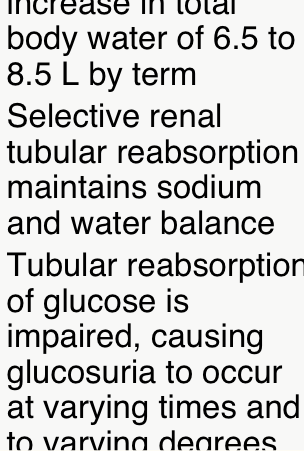
fluid and electrolyte changes changes
integumentary system changes
hyperpigmentation of alveoli, nipple, vulva, axilla, stimulated by melanotropin
hair/ nail growth
acne changes
melasma / cholasma
“mask of preganancy“
blotchy dark spots of cheeks , nose forehead
more likely in darker skin
16th week and on
increases until term, fades after birth
intensified by sun

