LECTURE 1 - MICROBIAL EVOLUTION
 Call Kai
 Learn
Learn Practice Test
 Spaced Repetition
 Match
Match Flashcards
 Knowt Play
1/20

There's no tags or description
Looks like no tags are added yet.
Name | Mastery | Learn | Test | Matching | Spaced | Call with Kai |
|---|
No analytics yet
Send a link to your students to track their progress
21 Terms
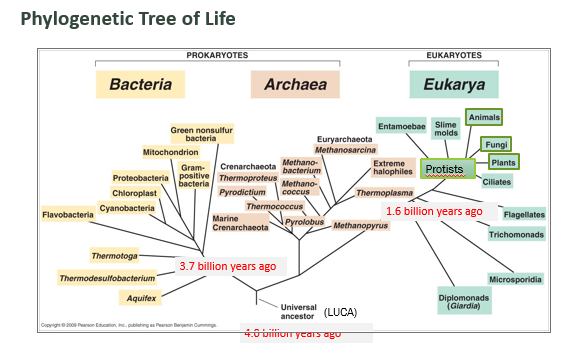
Phylogenetic Tree of Life labelled
Diagram.
Shows/proves what?
BY Carl Woese with George Fox
Diverged bacteria and archaea.
Euk cells diverge from archaeal cells, evidence theory at one point archaeal diverge from bacteria etc?
If not animal fungi or plant, often just
Said to be protist.
Has a list of all the phyla = phylogenetic tree
16S rRNA gene sequencing
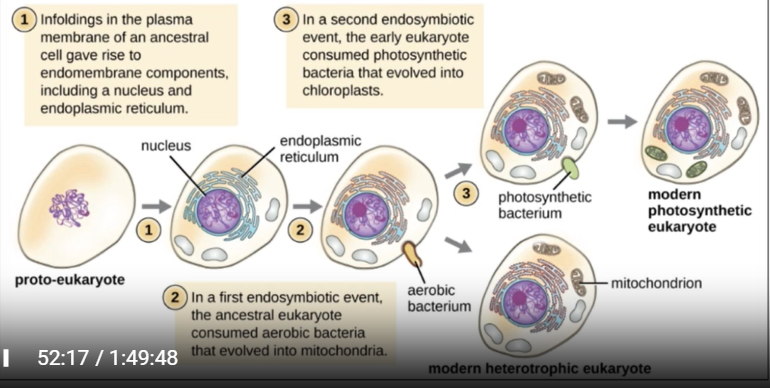
Endosymbiosis?
ne cell engulfs another leading to symbiotic relationship, benefits both organisms. = how prokaryotes gave rise to first eukaryotic cells. BY LYNN MARGULIS in 19060s
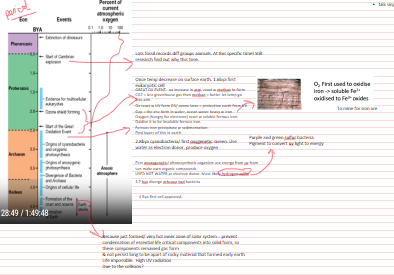
stages/evolution of life on earth. (from 4.5bya)
Proof cyanobacteria responsible for production of oxygen
Stromatolites - IN AUSTRALIA/ SOUTH AFRICA. microbial mats from 2.5bya. Layers cyanobacteria cover w sedimentation. Cyanobacteria grow, metabolise the CO2, use for photo to fix the carbon from CO2.
SO pH increases = precipitation of calcium carbonate, w sediment
Layer cyanobacteria grow, cover w sedimentation, form new layer
DATE the bacteria inside the rock = see when occured
Prokaryotes main inhabitor for how long?
WHY microbes important?
From 1.6-4bya sole inhabitant of earth. = lots time to evolve/ diversify.
SO microbes improtant for earth survival/ major oxidation event/ formation rocks/ recycle of all elements- due to limited elements at beginning of earth. Elements needed to be recycled by microbes!!!
Microbes biomass on earth?
15% biomass on earth. (Water is 75%. Humans 0.01%)
Hypothesis on the origin of cellular life? n.o 1
HYPOTHESIS 1:
Submarine Mound Hypothesis
First cells formed in hydrothermal vent, between tectonic plates.
Form compartments, where chem reactions happened, protect from outside env.
All elements needed for life (essential biomolecules) were present in this vent:
Carbon provided by methan, cyanoxide?. Polysaccharide chain of hydrocarbon.
Phosphate from hydrogen sulfate from waters
Nitrogen from ammonium etc
Phospholipid
React w eachother to from a cell.
Hypothesis on the origin of cellular life? n.o. 2

Why do we think genetic info
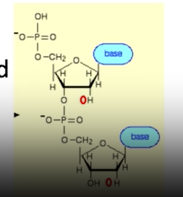
Start w RNA not DNA
RNA more active. Due to extra oxygen/ hydroxyl group. And oxygen is very reactive
FOR EXAMPLE Ribozyme born from RNA folding around other RNA molecules
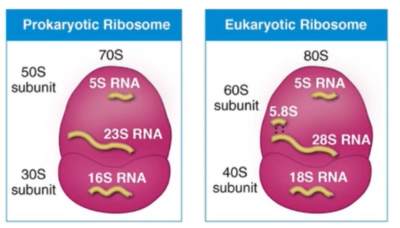
STRUCTURE OF RIBOSOMES.
EUKARYOTIC vs PROKARYOTIC
SSU = small SUBUNIT ribosomal RNA/ key for RNA molecule forming
PROKARYOTIC: 16S rRNA SSU
70S Ribosome size
EUKARYOTIC: 18S rRNA SSU
80S Ribosome size
Subunit role
For binding. / formation new amino acids
Fold into complex secondary/ tertiary struc w multiple domains. Domains facilitate mRNA decoding and tRNA positioning at ribosomal A P E sites for accurate TRANSLATION.
Which subunit rRNA Is used in
Phylogenetic studies? How?
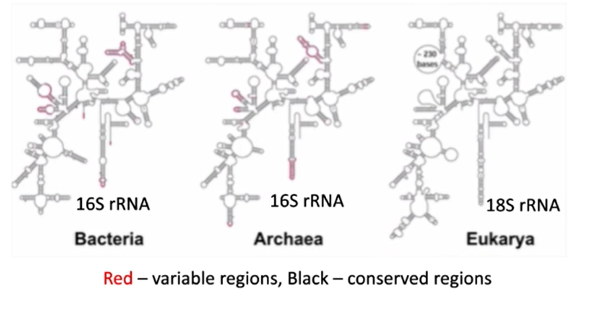
16S rRNA. Due to being highly conserved between diff species bacteria/ archaea. ALSO:
All cells have ribosome
All perform same role, so evolution rate slow
Ribosomal RNA conserved binding sites/ funct
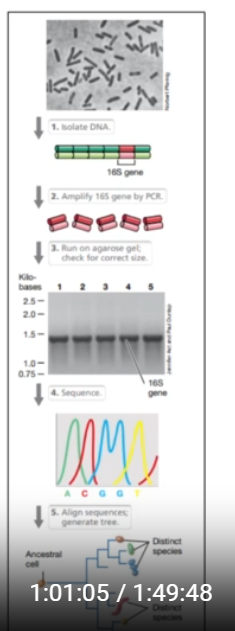
How to identify bacteria?
Isolate DNA
Amplify 16S RNA gene
Gel make sure amplify right product
Sequencing
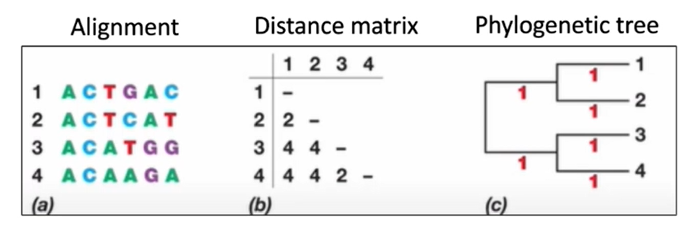
Computer power, align all sequences from isolate
Computer build distance matrix/ compare alignments = see differences in nucleotide
SO COMPUTER builds phylogenetic tree.
In the example picture, 1 2 3 4 have common ancestors
Unrooted phylogenetic tree?
Shows relationship but not evolutionary path
Internal nodes represent?
Ancestors and where diverged into two entities
House keeping genes?
Important for function of cell to evolve very SLOWLY.
i.e. 16S rRNA
MLST?
Multiple housekeeping genes can be targeted to identify bacteria = MULTILOCUS SEQUENCE TYPING (MLST)
Shotgun Metagenomics?
Shotgun Metagenomics = instead of PCR, sequence whole genome = more information instead of just use 16S gene.
Genotypic classification?
Entire genome sequence, instead one gene.= longer analysis. More expensive. Not commonly used in diagnosis labs
Phenoytpic classification
Used around the 19th century. Didn’t extract DNA/ PCR.
Grow microbes on plate, classify based on morphology/ physiology/ biochemical/ metabolism = what sugar they eat. (Change of colour = metabolise that certain sugar.)
Bergey's Manual of Systematic Bacteriology - published 1923. charactersie bact by observable traits.
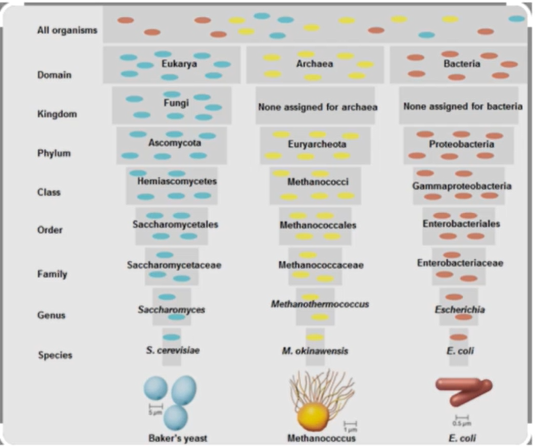
How do we name Microbes?
Don’t
Keep
Ponds
Clean
Or
Frogs
Get
Sick
Write scientific name:
| |||
| |||
| Genus species | ||
|