L2: M/o in medical / pharma assays
 Call Kai
 Learn
Learn Practice Test
 Spaced Repetition
 Match
Match Flashcards
 Knowt Play
1/17

There's no tags or description
Looks like no tags are added yet.
Name | Mastery | Learn | Test | Matching | Spaced | Call with Kai |
|---|
No analytics yet
Send a link to your students to track their progress
18 Terms
What are some examples of how m/o are used in medical/ pharmaceutical assays?
Antibiotic assays
Agar diffusion assay, where a filter paper with a specifc conc. of an antibiotic is place on a plate and the organisms susceptibility is tested → MIC
Vitamin/amino acid assays via titration used to asses B12 vitamins in pharmaceuticals
Absent from medium (basal) initially & added in progressively larger concentrations
Greater microbial growth → proportional to amount of nutrient added to basal medium
Removal of antibiotics from pharmaceutical preparations
β-lactamase, produced by certain bacteria & inactivates penicillin (as it targets beta-lactam ring
What is PKU (phenylketonuria)?
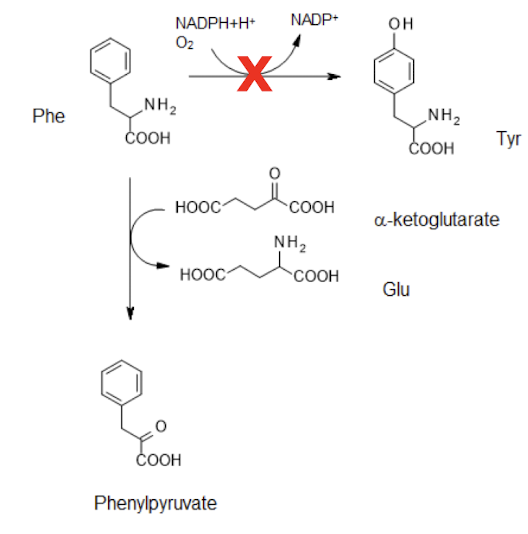
Inborn error of metabolism where there is an inactive phe hydroxylase which converts Phe → Tyr
Loss of this results in a transamination between Phe and ⍺-ketoglutarate
Forming PPVA (phenylpyruvate plus Glu)
Controlled by restricting Phe in diet
How are m/o used in PKU testing?
Guthrie test
Heel prick
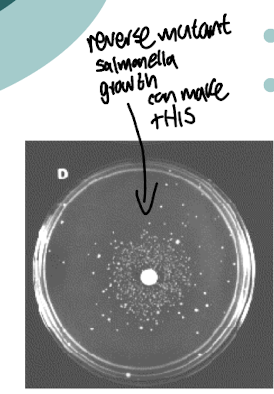
Uses Phe-requiring Bacillus subtilis grown in minimal medium containing inhibitor β-2-thienylalanine which detects elevated levels of Phe in a newborn's blood sample.
If the blood sample has high levels of phenylalanine (indicative of PKU), it overcomes the inhibition, causing a large, visible ring of bacterial growth around the blood spot.
Inhibition alleviated in presence of PPVA or Phe
What is the Ames test?
Used to evaluate the mutagenic potential of chemical compounds by observing their effects on non-pathogenic strains of bacteria, often His -strain of Salmonella typhimurium.
Inoculated onto medium containing no His plus a potential mutagen of interest
It measures the rate of mutation to histidine independence in the presence of potential mutagens.
What does growth of S. typhimurium indicate in the Ames test?
Growth of a His- S. typhimurium on a histidine-free medium indicates that there are revertants
Mutated back to wild type (His +), suggesting the compound is a mutagen
Rat liver homogenate can be also incorporated into the test
Determines if a chemical is transformed into a mutagen after transformation in the liver
What is an example of using m/o as a model of mammalian drug metabolism?
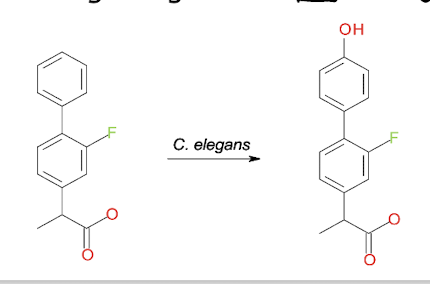
E.g. Cunninghamella elegans
Fungus that has similar detoxification enzymes to mammals
e.g. Cytochromes P450, conjugative enzymes (add sugar residues to make compounds more water soluble + hydrophilic)
Identical metabolites detected e.g. Flurbiprofen, both mammals and C. elegans generate 4’- hydroxyflurbiprofen as a metabolite which helps in studying the metabolism of pharmaceuticals and their effects on human health.
What are early methods of finding industrially valuable m/o?
Enrichment culture as developed by Beijerinck to isolate specific microorganisms from natural samples by providing selective growth conditions, thereby promoting the growth of desired organisms while inhibiting others.
Serendipitous discoveries e.g. discovery of penicillin in P. notatum by Fleming, which were achieved by chance encounters with useful microorganisms: P. chrysogenum was later found by screening to be 200x more productive
What is the crowded plate technique?
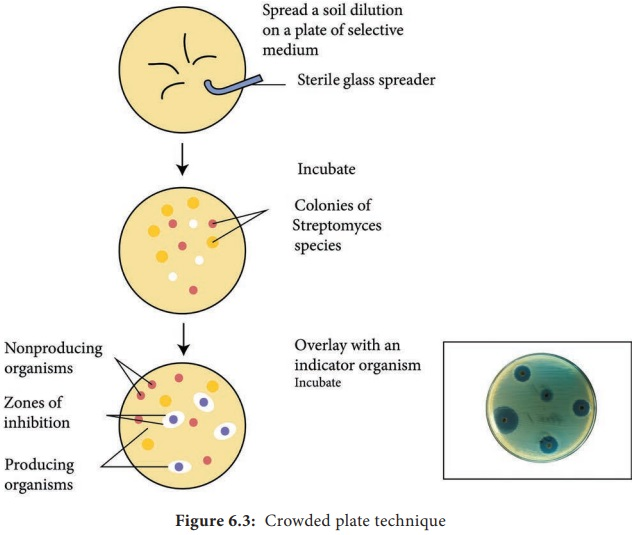
A method used to isolate microorganisms by spreading a diluted sample on a solid growth medium i.e. a soil sample allowing colonies to develop
making it easier to identify and select specific organisms, i.e. by inspecting zones of clearing and isolating single colonies
What are advantages and disadvantages of the crowded plate technique?
Advantages: Demonstrably effective, straightforward, relatively quick, inexpensive
Disadvantages:
Limited to easily cultivated strains in known lab/media conditions
High rate of re-discovery due to limited conditions
Un-natural growth conditions, not indicative of the organisms natural environment as they are often overfed with the best combination of nutrients so only the organisms that thrive in these conditions are isolated.
How can we screen for antibiotic producing m/o that are otherwise uncultivable?
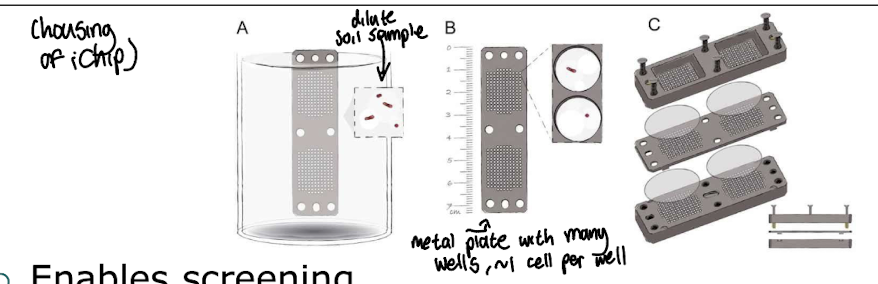
Using iChip technology which enables screening of hard to cultivate m/o by using culture conditions that are similar to their environment in situ, allowing researchers to identify antibiotic producers directly from environmental samples.
How does iChip technology work?
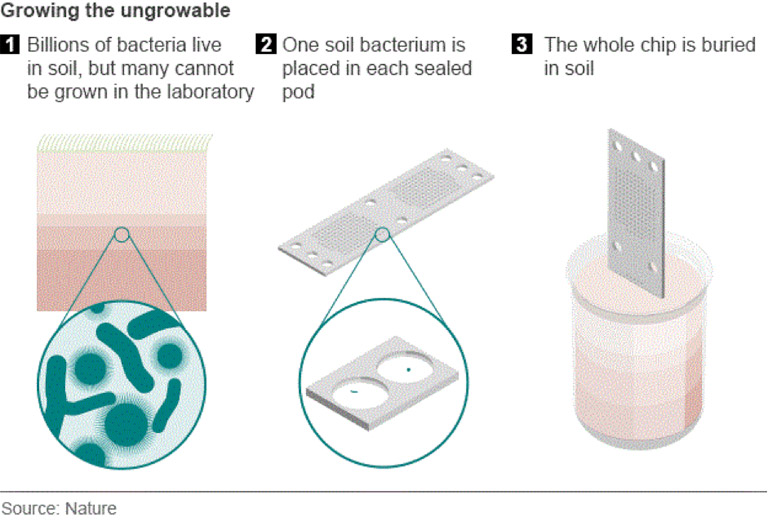
Short for ‘isolation chip’ it’s composed of a central plate with many holes acting as mini growth chambers
It works by sorting individual bacterial cells harvested from soil into single chambers, after being filled with a diluted environmental sample
The device is then buried back in the ground/ the original environment the sample was taken from.
Cells are seperated which allows slow-growing species time to grow and reduces effects of competition from other bacteria as seen in normal petri dishes → allows them to show their full potential
Several molecules in that environment are able to diffuse into the iChip, allowing the bacteria to thrive in a more natural setting than a petri dish.
What antibiotic class was discovered thanks to iChip technology?
Teixobactin, which produced by a previously undescribed soil microorganism provisionally named Eleftheria terrae
Has activity against Gram-positive (but not Gram-negative) organisms e.g. Methicillin resistant S. aureus (MRSA) and mycobacteria and a novel mode of action inhibiting peptidoglycan biosynthesis
What are applications of microbial enzymes?
Food processing i.e. amylases used for starch hydrolysis, proteases in cheese production, pectinases for fruit juice clarification, and lipases in the production of dairy products.
Healthcare/pharma i.e. antibiotic production, enzyme replacement therapy, and diagnostics.
Detergents i.e. lipases/ proteases for stain removal
Biocatalysis/fine chemicals i.e. lipases, esterases and oxidoreductases which catalyse specific chemical reactions in the synthesis of pharmaceuticals and other fine chemicals.
How are the best microbial enzymes for industry discovered?
Traditional screening approaches (isolating microbes from natural sources)
Non-culturing approaches i.e. Metagenomics → direct analysis of all of the genetic material (DNA/RNA) in an environmental sample, with the aim of finding m/os that produce known genes linked with encoding enzymes of interest
What are traditional methods of screening for enzymes?
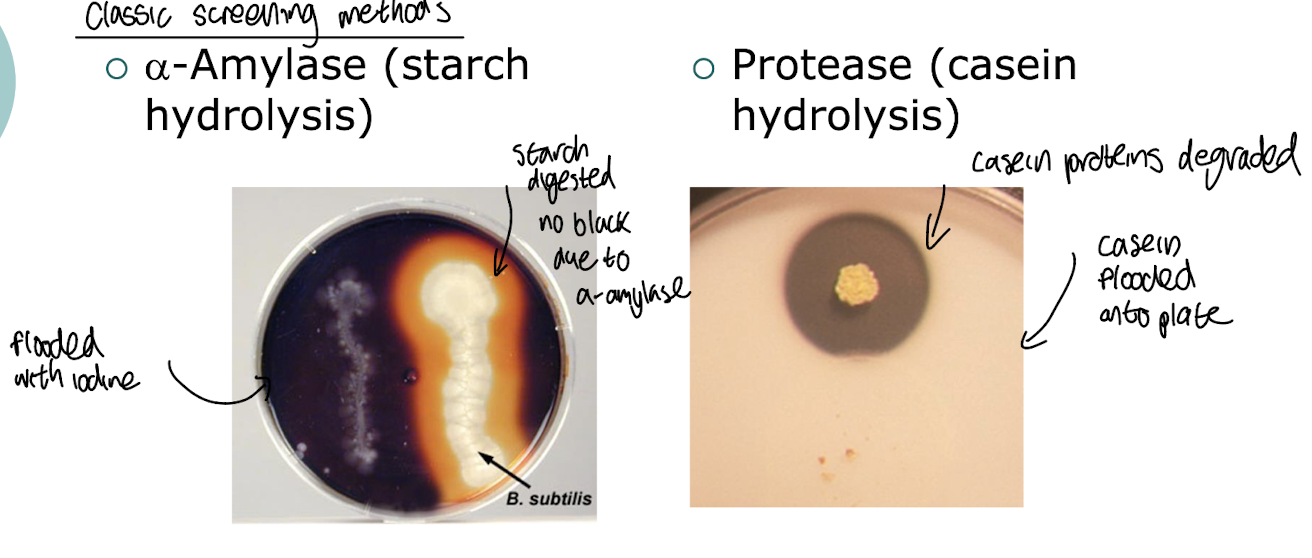
Screening on plates coated with starch and stained with iodine i.e. for ⍺-amylase activity, where if a m/o produces the enzyme, there will be a clear zone distinct from the darkened staining around the colony (blue-black) indicating the enzymatic breakdown of starch.
For protease activity, m/os are plated onto a medium containing casein proteins i.e. milk, where digestion of proteins is visible as a clear halo around the colonies
What are features of an effective screen of microbes for a compound of interest?
Easily detectable screening i.e. visual differences on a plate such as colour changes or clear zones indicating metabolic activity
The ability to test multiple samples simultaneously to increase throughput i.e. via Miniaturisation using microtitre plates
Lowered cost and time efficiency, enabling rapid identification of microbial candidates.
How can we summarise the steps of traditional screening?
Choose appropriate environment as source of microbes
Crude primary screen
Solid medium; easily detectable response
Zone of clearing, colour change
Isolate strains of interest
Secondary screening
Cultivate strains in liquid culture
Quantify activity
Isolation of product for characterisation
Optimisation/Scale up if successful in secondary screening, economically, physically viable and stable
How can non-culturable m/o be used to produce valuable enzymes?
Access this potential via molecular methods
Extract DNA directly from environment
Clone, sequence
Identify genes through sequence homology
Metagenomics/bioprospecting