conflicts between SSPs
 Call Kai
 Learn
Learn Practice Test
 Spaced Repetition
 Match
Match Flashcards
 Knowt Play
1/9

There's no tags or description
Looks like no tags are added yet.
Name | Mastery | Learn | Test | Matching | Spaced | Call with Kai |
|---|
No analytics yet
Send a link to your students to track their progress
10 Terms
trade off between economic growth
there will be a increase from AD1 TO AD2 BUT there’s a time lag
trade off between lower unemployment
-education would improve people going to work BUT there’s capital labour substitute, education and training could be poor quality
trade off between low and stable inflation
-increase Q2 of factor of production will boost productivity BUT takes time for policies to occur
trade off between CA (net exports)
-can improve productivity and reduce costs, if firms are more productive they can decrease their prices so UK goods are now more competitive so improves it BUT only work if training is good, R&D is effective
trade off between low inequality
-SSPs helps get better jobs, high wages BUT labour market can trap people in low paid jobs, increased immigration may pressure public services and undercut wages
trade off between improved fiscal position
-may not improve due to SSPs being very expensive BUT if theres more people in work then theres more tax rev
trade off between development
-SSPs improve health, education so improve development BUT if SSPs involves in reducing benefits the poor will suffer
-also poorly policies wont reduce development
what does SR philips curve show
trade off between employment and inflation
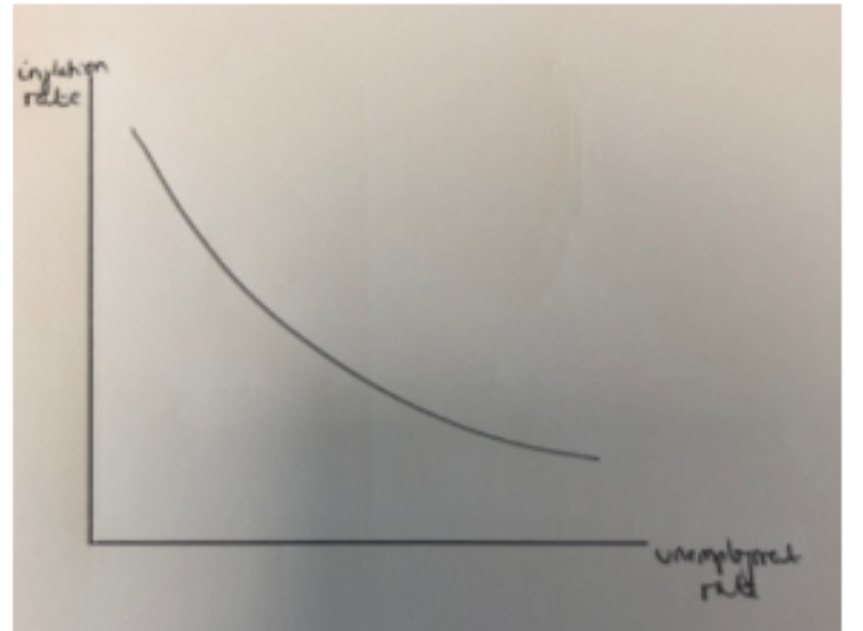
what does SR philips curve mean
An increase in AD causes wages to rise, increasing firms’ costs of production and the PL. Wages are the biggest factor in the firms cost of production BUT gov can’t achieve low inflation and high levels of employment simultaneously
what’s the long run philips curve
in the LR there’s no trade off between unemployment and inflation because workers eventually adjust to expectations of inflations so its now more expensive to hire workers so goes back to natural rate of unemployment (NRU).

