Meiosis & Reproduction
 Call Kai
 Learn
Learn Practice Test
 Spaced Repetition
 Match
Match Flashcards
 Knowt Play
1/32

There's no tags or description
Looks like no tags are added yet.
Name | Mastery | Learn | Test | Matching | Spaced | Call with Kai |
|---|
No analytics yet
Send a link to your students to track their progress
33 Terms
Meiosis
special form of cell divison that creates gametes
Gametes
sex cells (ex. eggs, sperm)
Asexual Reproduction
mitosis creates two identical organisms from one individual
Sexual Reproduction
meiosis in diff. individuals in a population creates gametes which combine to make a new organism (egg + sperm = you)
Gene
individual unit of genetic info., a section of DNA that codes for something (one protein) ex. p53, Ras (old def. one gene —> one trait)
Allele
a specific version of a gene
# of genetic material that adult has
half (23 chromosomes in egg + 23 chromosomes in sperm)
Homologous Chromosomes
contain the same genes in the same location (humans have 23 homologous pairs of chromosomes)
Homologous Chromosomes lvl 2
contain same genes, but not identical and may/may not have same alleles
Chromosomes
DNA genes that tell you how to make proteins (analogy: cookbooks: recipes tell you how to make food)
Ploidy
how many distinct copies each chromosome in a cell has, determined by #
Haploid
no homologous chromosomes, only one
Diploid
homologous chromosomes, 2 unique copies per
Chromosome Number (n)
number of unique chromosomes a cell/organism has (humans n=23, haploid=1, diploid = 2n)
Human Life Cycle
egg + sperm cell (haploid gametes) —> FERTILIZATION —> diploid zygote —> MITOSIS —> multicellular diploid adults —> MEIOSIS —> etc.
Human Life Cycle in Chromosome Number (n)
haploid gametes n = 23 —> diploid zygote 2n = 46 —> multicellular diploid adults 2n = 46 —> back
Aneuploidy
irregular ploidy, not having equal amount of chromosomes in each n
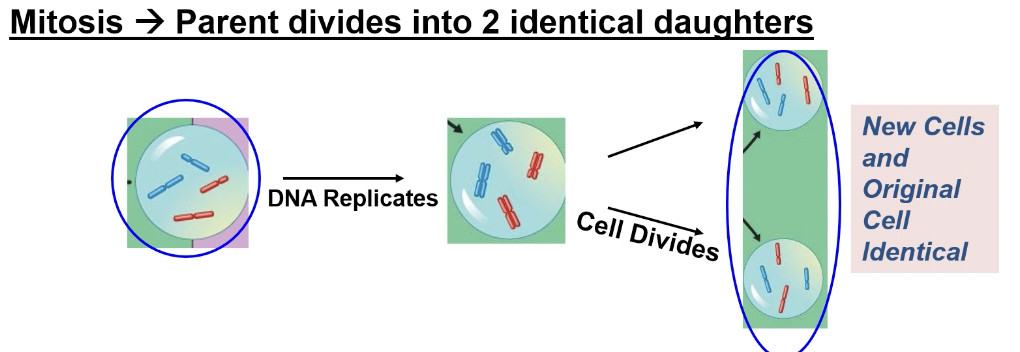
Mitosis
parent divides into 2 identical daughters (2 —> 4)
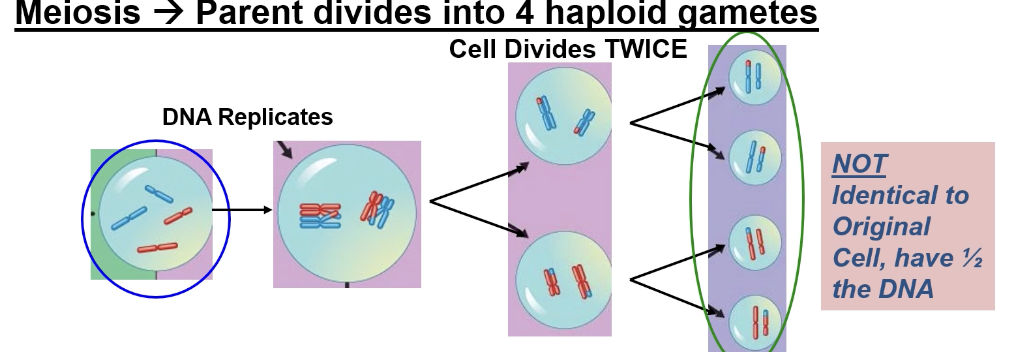
Meiosis
parent divides into 4 haploid gametes (cell divides TWICE —> 4 has ½ of DNA)
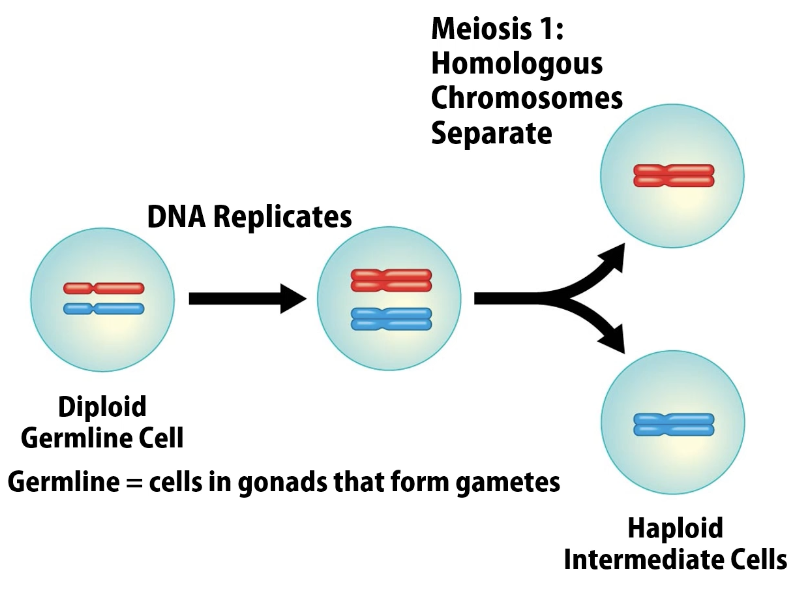
Diploid Germline Cell
cell in gonads that form gametes (meiosis starts w/ these then replicates)
Meiosis 1
homologous chromosomes separate into haploid intermediate cells (there’s one X)
Metaphase I
duplicated chromosomes (put into homologous pairs) line up in middle of cell @ centromere
Anaphase I
the homologous chromosomes pulled to opposite ends of the cell, sister chromatids remain attached
Meiosis 2
identical to mitosis; chromosomes line up in middle of the cell, identical sister chromatids from each chromosome are pulled to opposite ends of cell
Meiosis Products
creates 4 daughter cells, all w/ half as many chromosomes as the parent cell
Independent Assortment
each chromosome pairs splits during m eiosis 1 randomly and independently of other pairs
Crossing Over
they have similar DNA sequences, homologous chromosomes exchange part of their DNA during meiosis 1
Crossing Over lvl 2
process serves as a checkpoint to make sure each chromosome is paired up before the chromosomes
When is Homologous Recombination Triggered?
double strand breaks, induced by Spo11 Topoisomerase homoloh
Random Fertilization
one random sperm will encounter one random egg, genetics do no affect fertilization

