BIOC 4331 Lecture 3

0.0(0)
Studied by 0 people
call kaiCall Kai
learnLearn
examPractice Test
spaced repetitionSpaced Repetition
heart puzzleMatch
flashcardsFlashcards
GameKnowt Play
Card Sorting

1/44

flashcard set

Earn XP

Description and Tags

Last updated 4:32 PM on 4/6/26
Name
Mastery
Learn
Test
Matching
Spaced
Call with Kai

No analytics yet

Send a link to your students to track their progress

45 Terms

1
New cards

What are stereoisomers?

Molecules with the same chemical bonds but different configurations.
<p>Molecules with the <strong>same chemical bonds </strong>but <strong>different configurations</strong>.</p>
2
New cards

What two features give rise to stereoisomers?

Double bonds (no free rotation) and chiral centers
<p><strong>Double bonds </strong>(<strong>no free rotation)</strong> and <strong>chiral centers</strong></p>
3
New cards

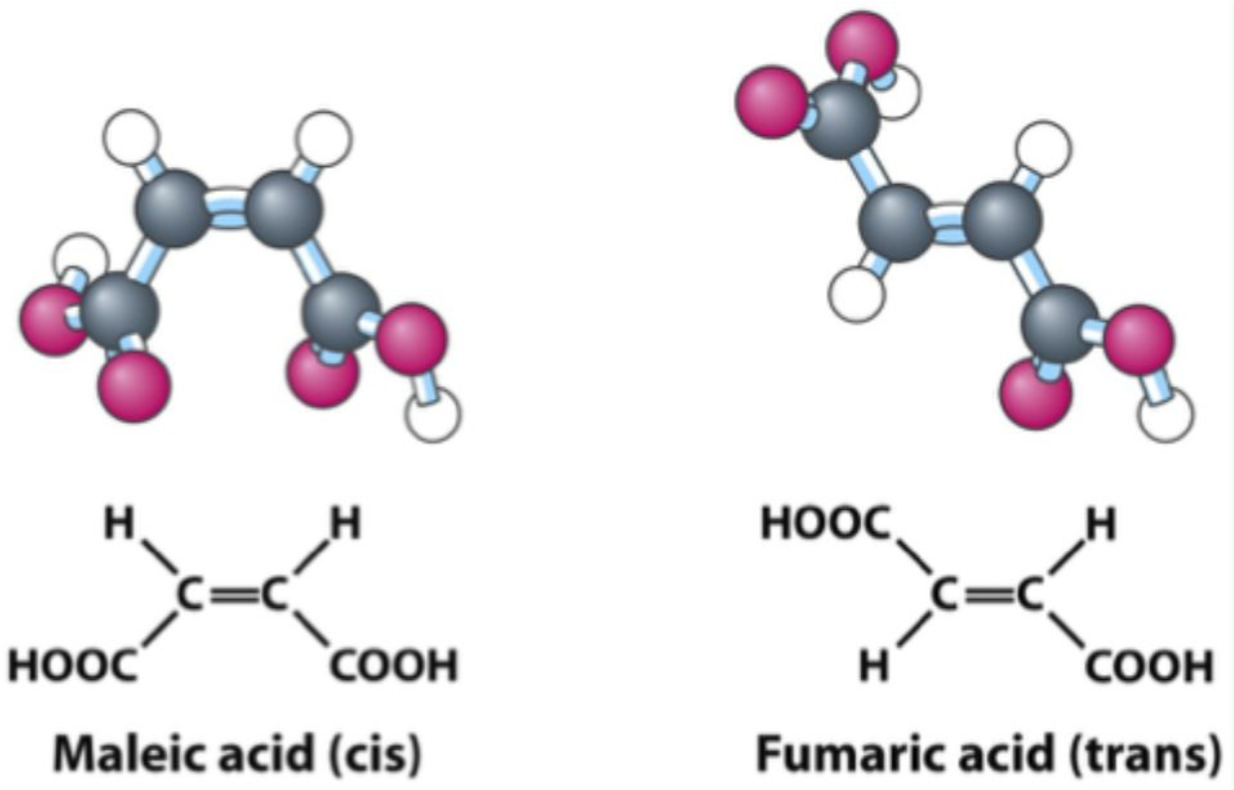
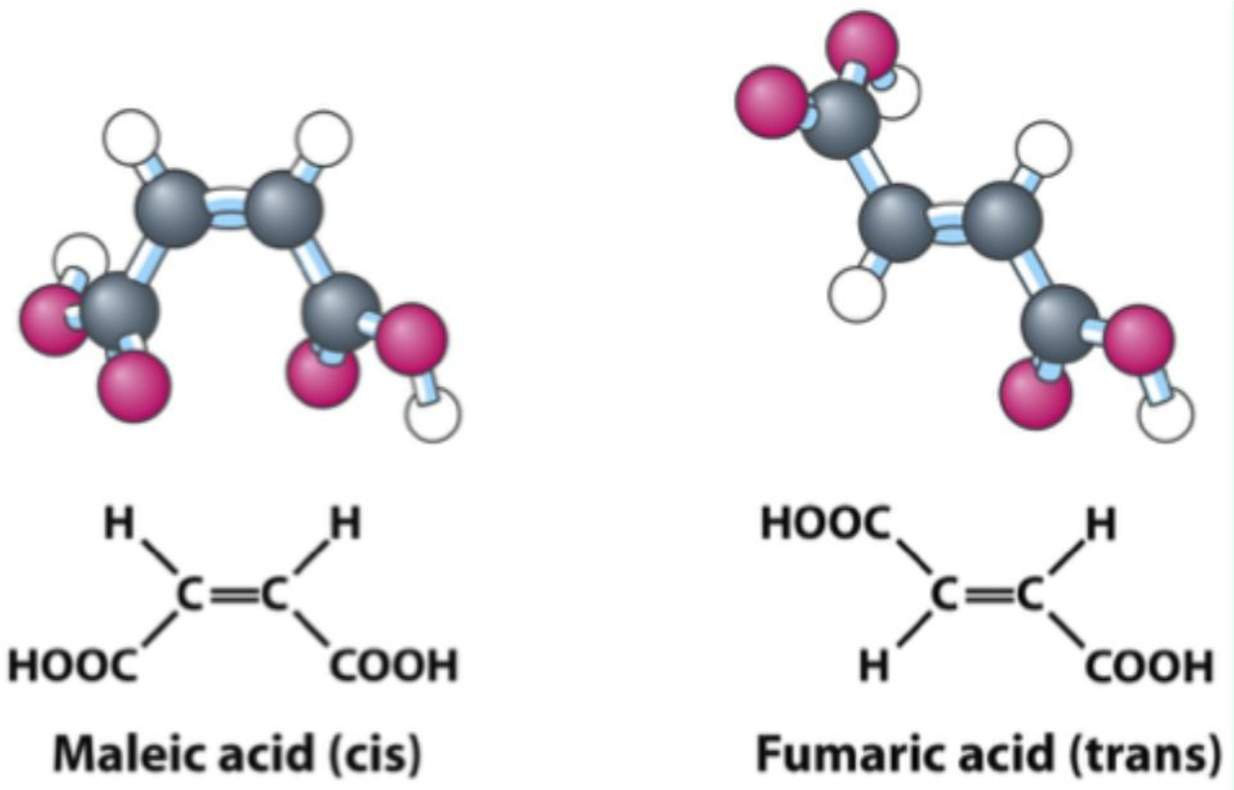
What are geometric (cis-trans) isomers?

Stereoisomers that differ in substituent arrangement around a non-rotating double bond.
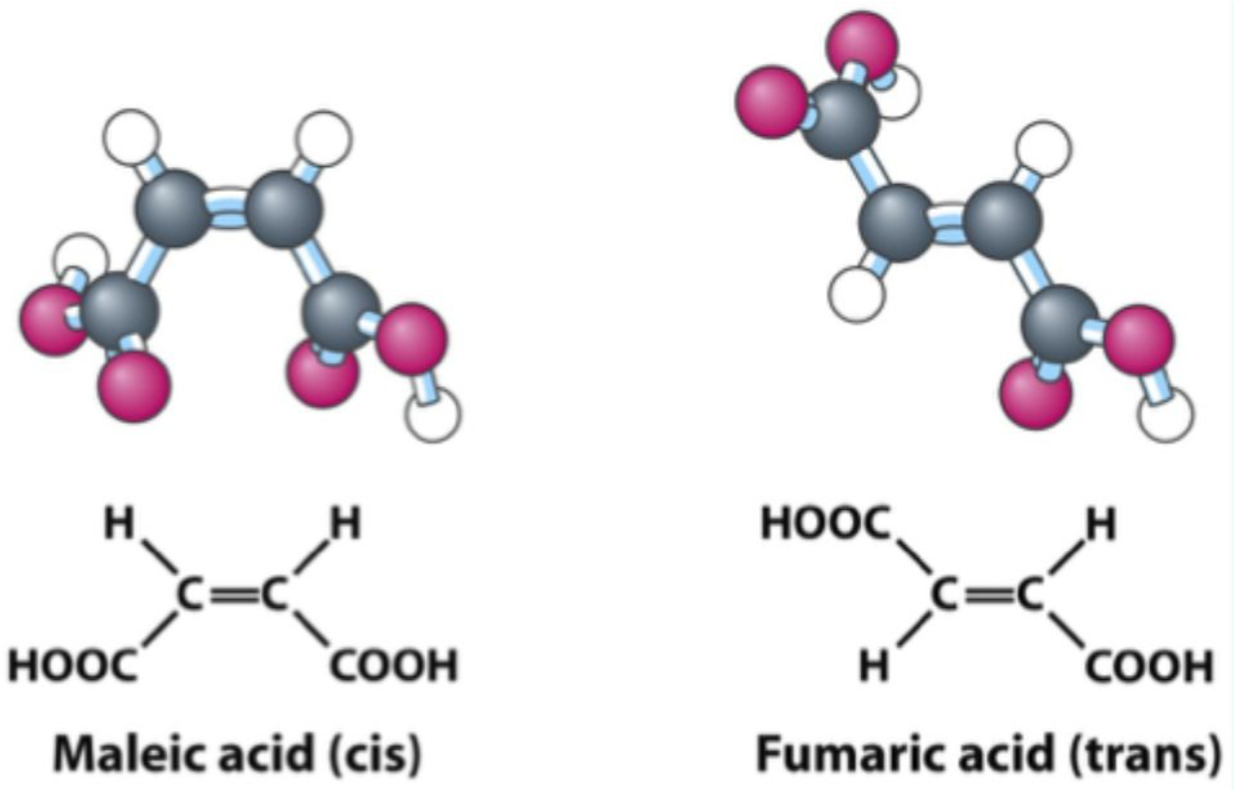
<p>Stereoisomers that <strong>differ in substituent arrangement</strong> around a <strong>non-rotating double bond</strong>.</p>
4
New cards

What is a chiral center and what makes a molecule chiral?

A carbon with four different substituents and it cannot be superimposed on its mirror image.
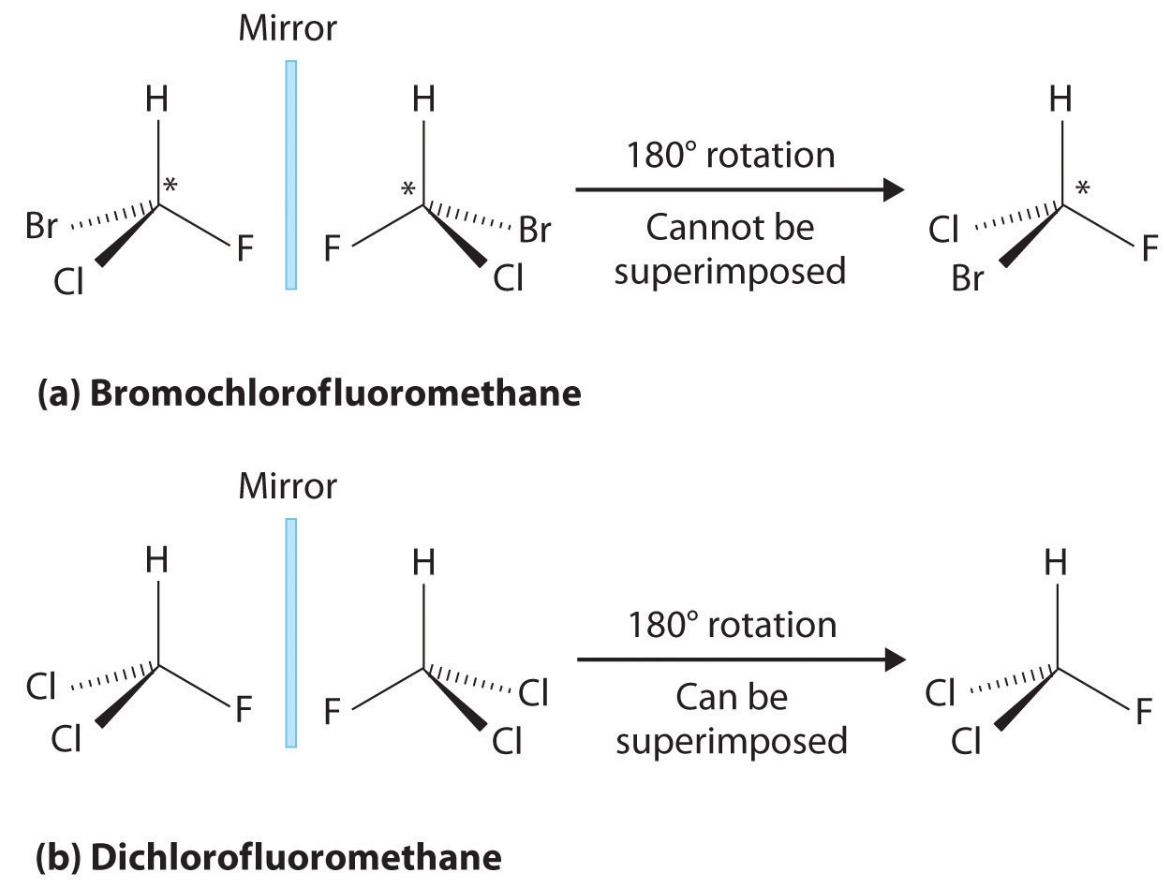
<p>A carbon with <strong>four different substituents</strong> and it <strong>cannot be superimposed</strong> on its mirror image.</p>
5
New cards

What are the differences between enantiomers and diastereoisomers?

Enantiomers are mirror-image stereoisomers, while diastereoisomers are not mirror images of each other.
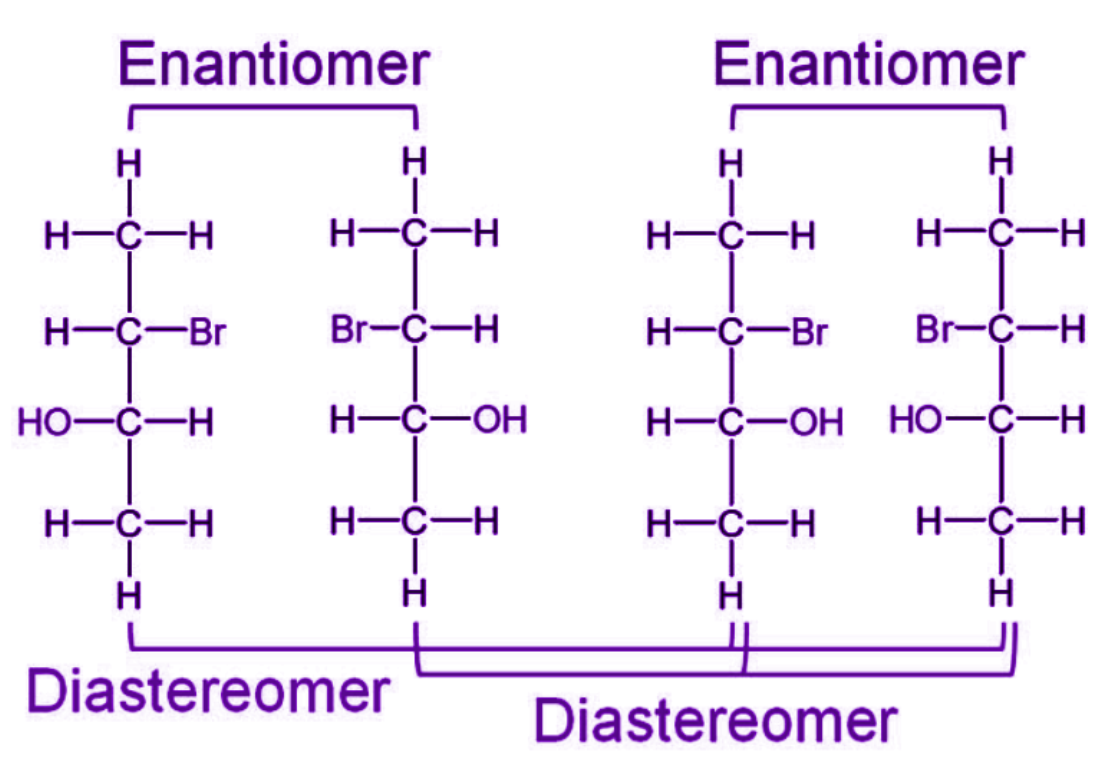
<p>Enantiomers are <strong>mirror-image stereoisomers</strong>, while diastereoisomers are <strong>not mirror images </strong>of each other.</p>
6
New cards

What four groups are attached to the α-carbon of amino acids?

Amino group, carboxyl group, hydrogen, R group (side chain).
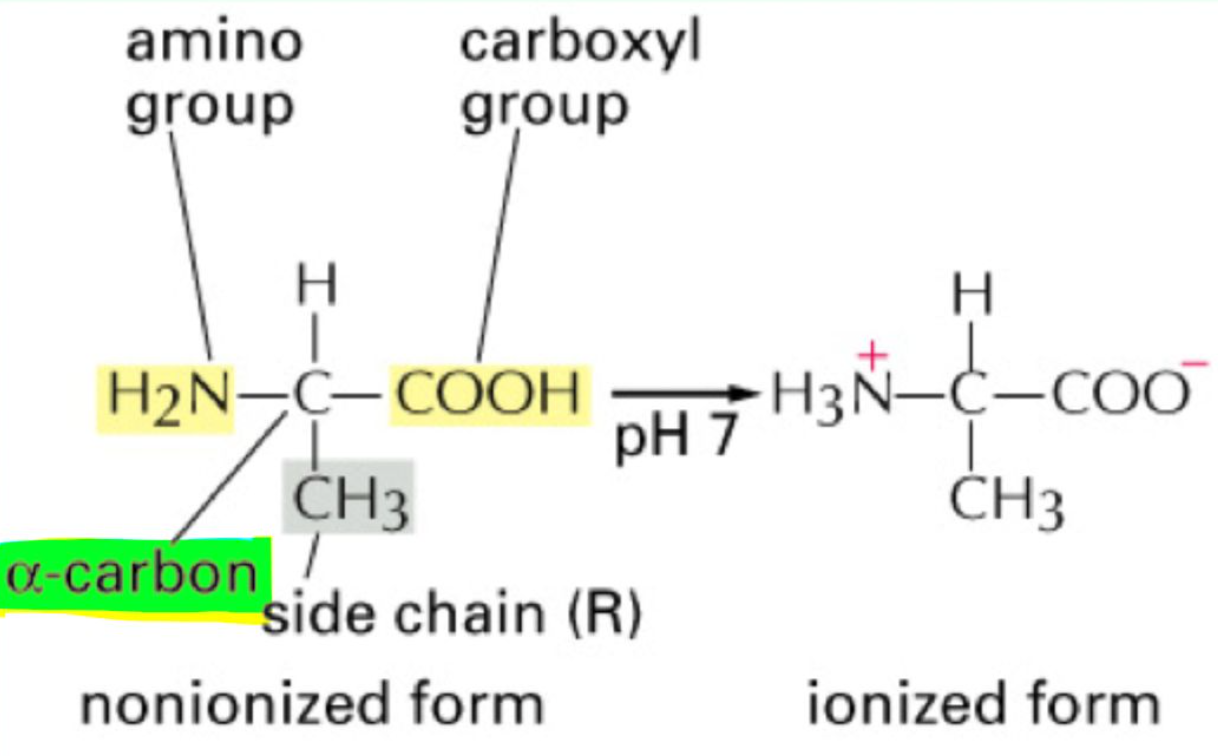
<p><strong>Amino</strong> group, <strong>carboxyl</strong> group, <strong>hydrogen</strong>, <strong>R</strong> group (<strong>side chain</strong>).</p>
7
New cards

At neutral pH (~7), what form do amino acids exist in?

Zwitterion (both amino and carboxyl groups are ionized).
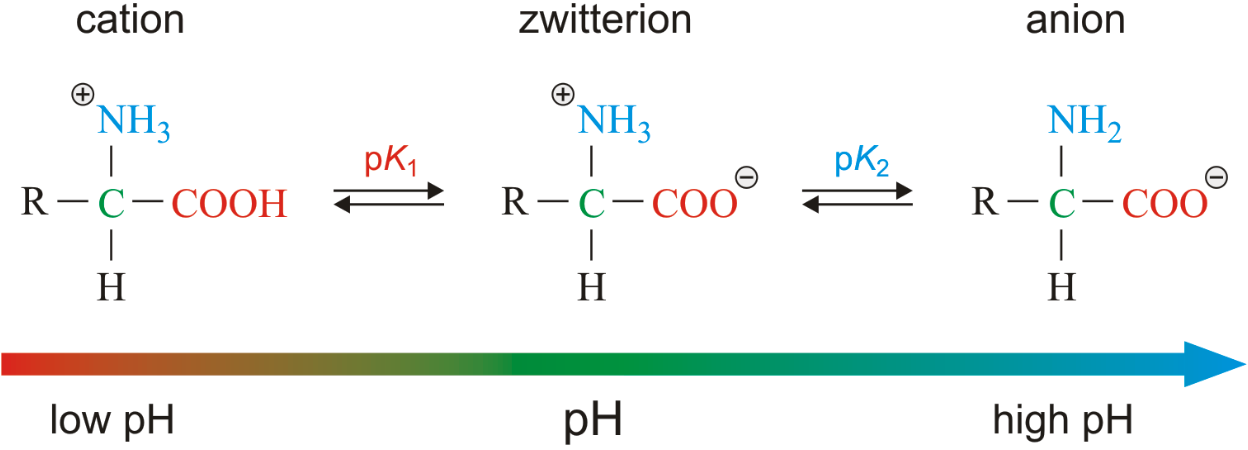
<p><strong>Zwitterion</strong> (both amino and carboxyl groups are ionized).</p>
8
New cards

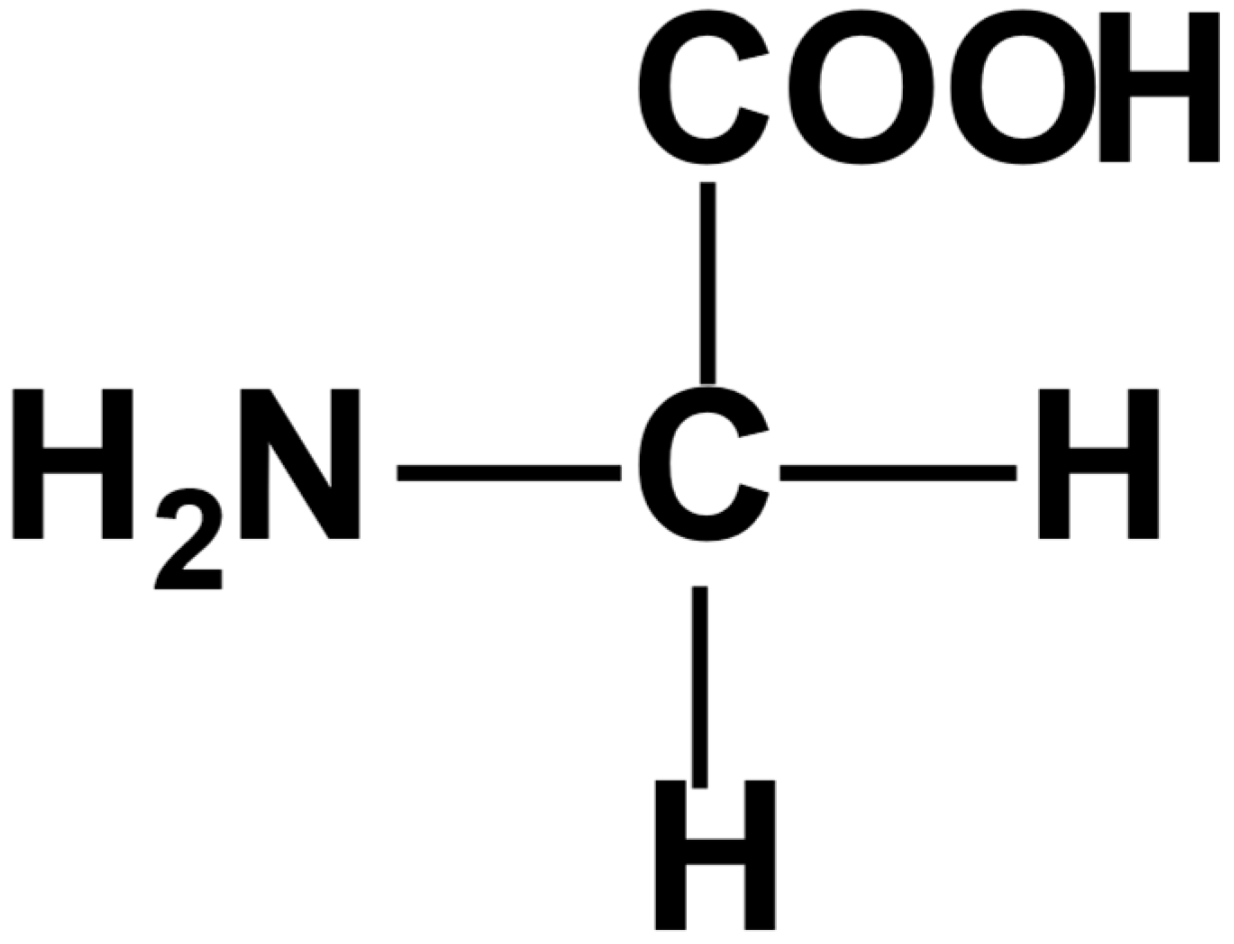
Which amino acid is achiral?

Glycine

<p>Glycine</p>
9
New cards

Which amino acid configuration is used in proteins?

L-amino acids only
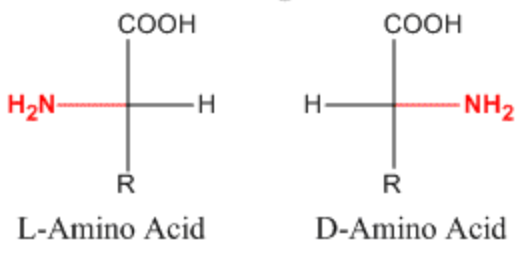
<p><strong>L</strong>-amino acids only</p>
10
New cards

How can enantiomers usually be distinguished experimentally?

By interaction with plane-polarized light (optically active).
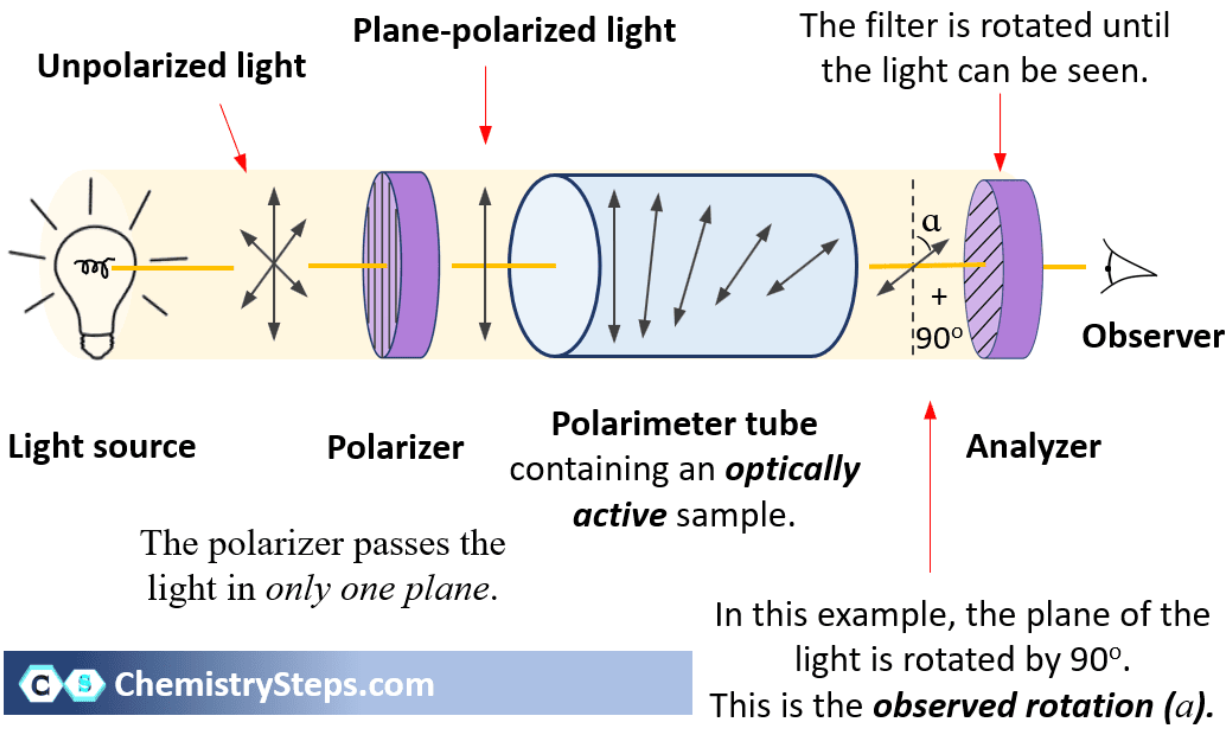
<p>By interaction with plane-polarized light (<strong>optically active</strong>).</p>
11
New cards

What convention is used to define L and D amino acids?

Comparison to glyceraldehyde.
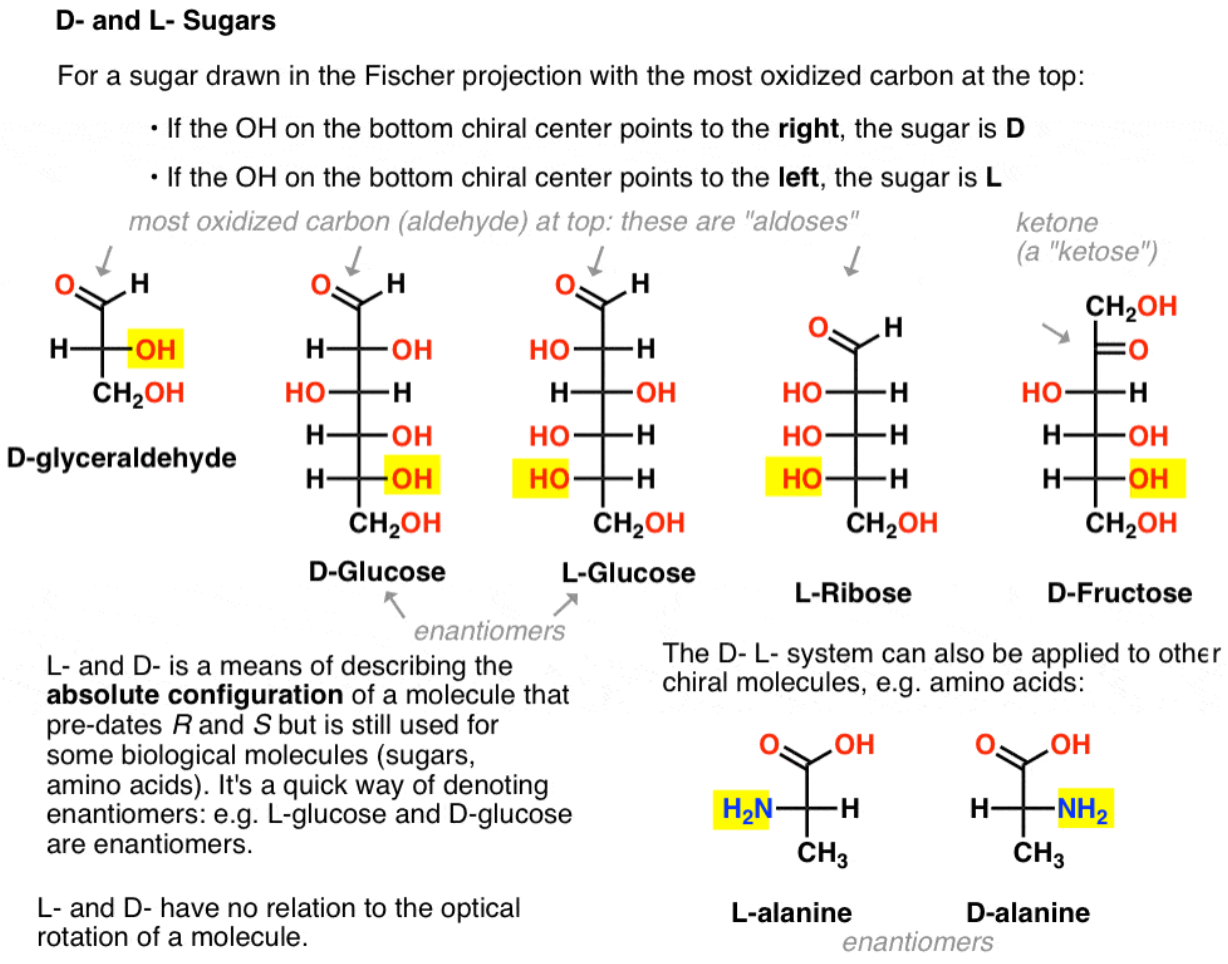
<p>Comparison to glyceraldehyde.</p>
12
New cards

How do you determine L vs. D configuration using the CORN rule?

  1. Look down the H-Cα bond

  2. If CO -> R -> N (CORN) goes clockwise, it's L configuration.
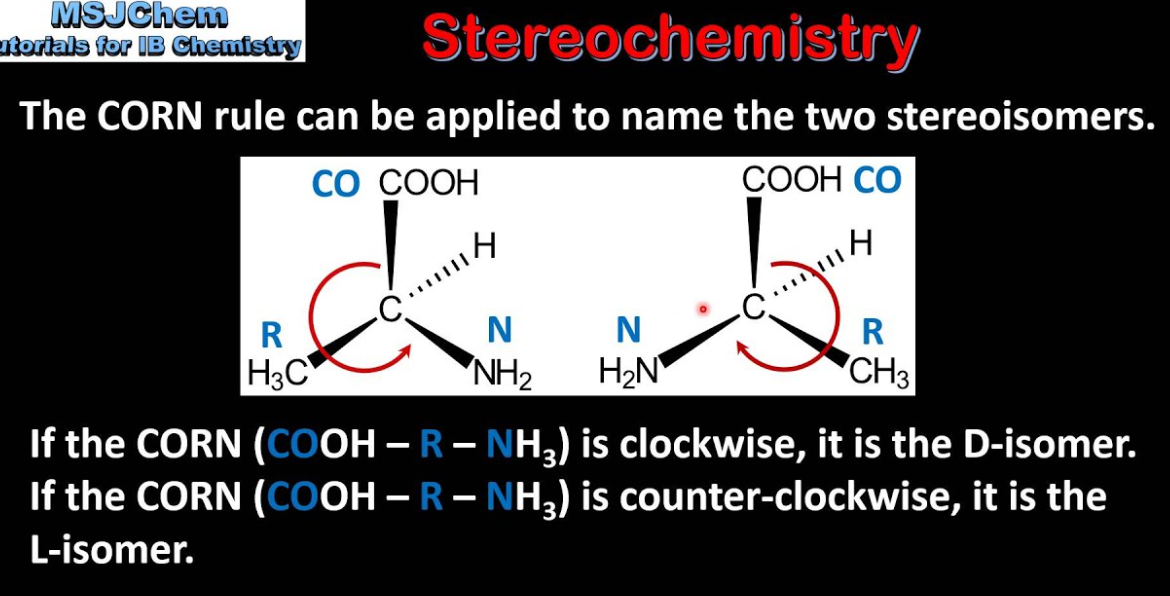
<ol><li><p>Look down the <strong>H-C<sub>α</sub></strong> bond </p></li><li><p>If <strong>CO -&gt; R -&gt; N </strong>(CORN) goes clockwise, it's<strong> L</strong> configuration.</p></li></ol><p></p>
13
New cards

In a Fischer projection, which substituents point behind the page?

Vertical substituents
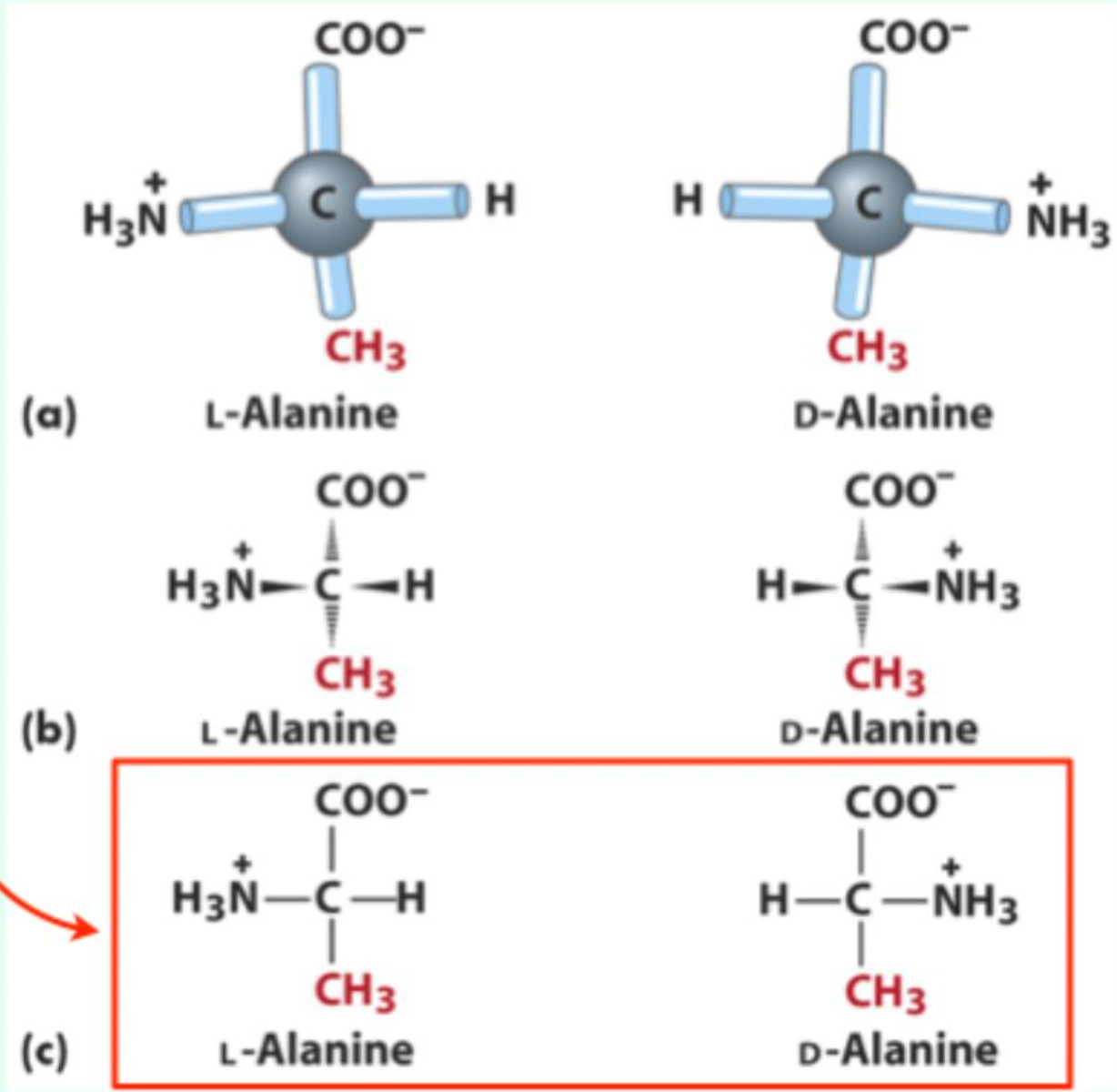
<p><strong>Vertical</strong> substituents</p>
14
New cards

In a Fischer projection, which substituents point out of the page?

Horizontal substituents
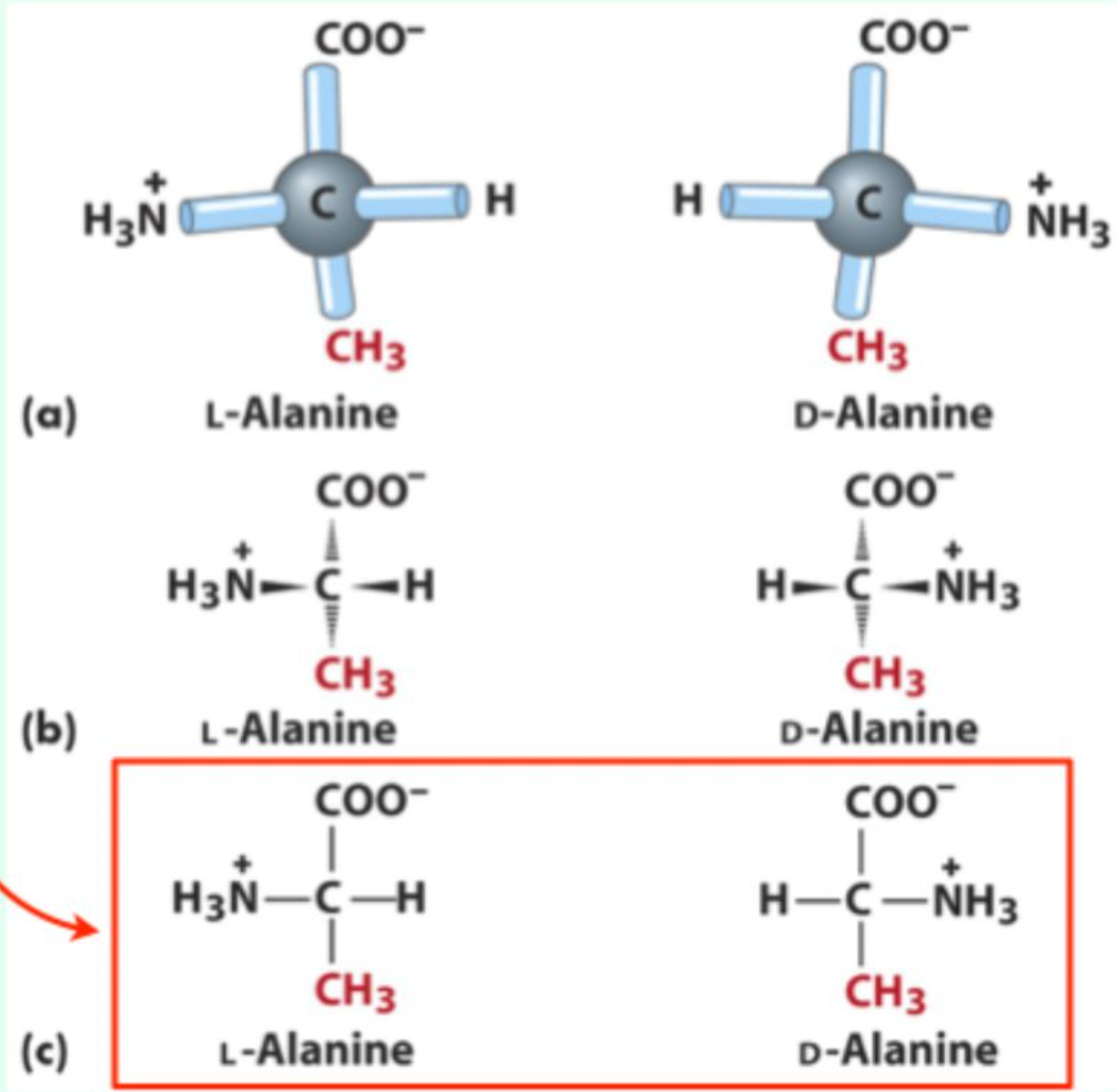
<p><strong>Horizontal</strong> substituents</p>
15
New cards

Where can D-amino acids be found?

Bacterial cell walls and some peptide antibiotics.
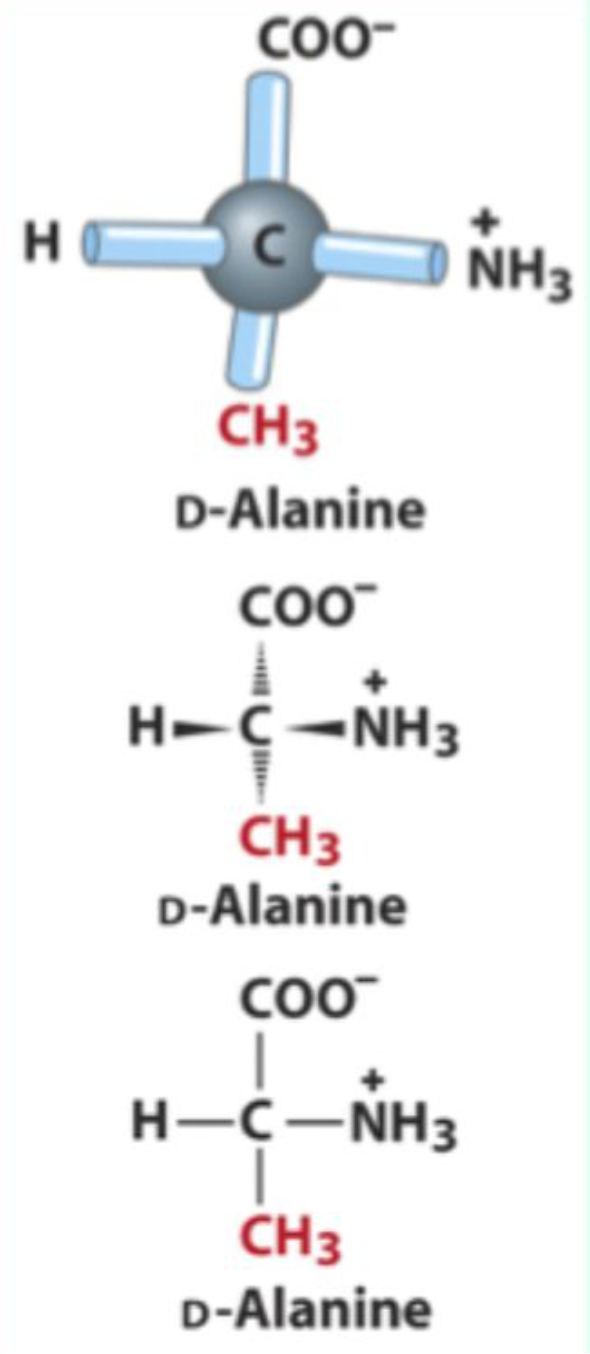
<p>Bacterial cell walls and some peptide antibiotics.</p>
16
New cards

What bond links amino acids together?

Peptide bonds
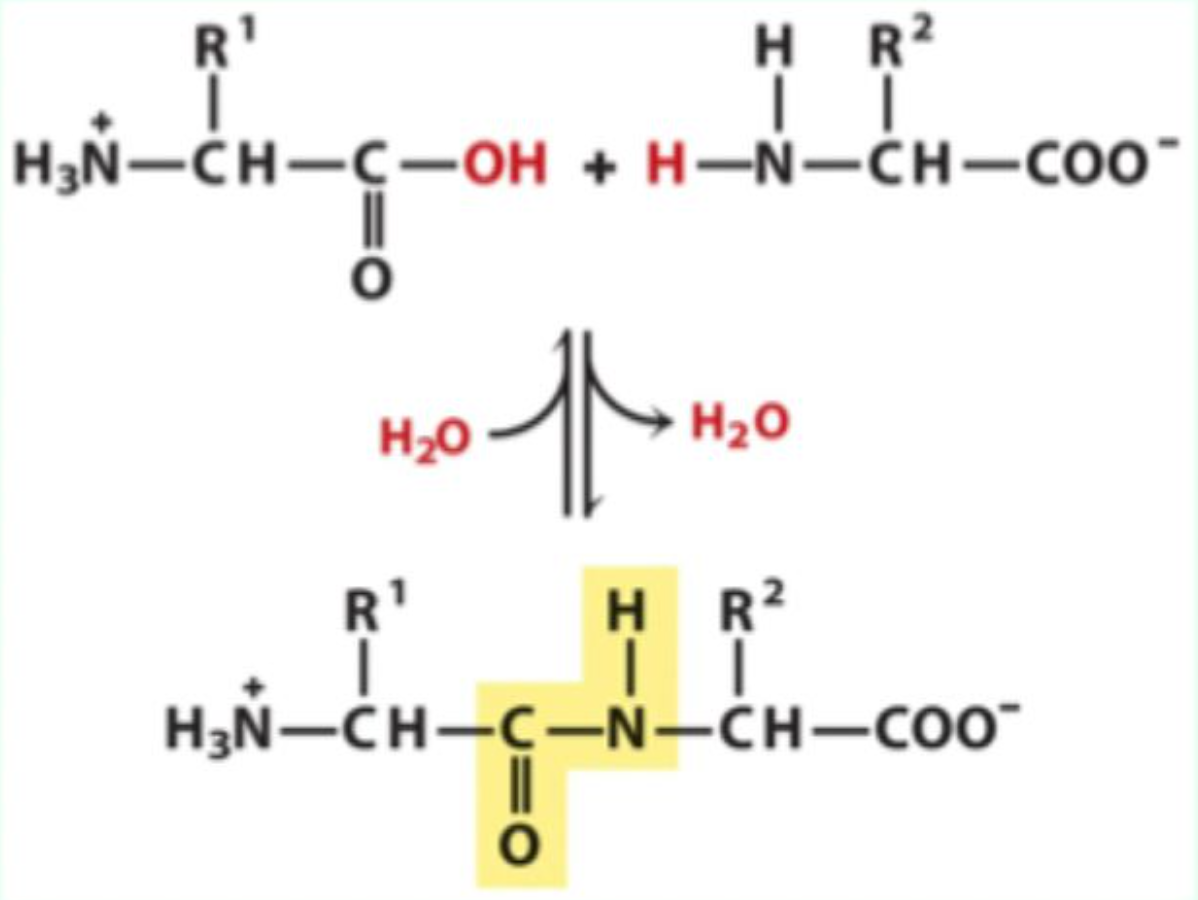
<p>Peptide bonds</p>
17
New cards

What is the protein backbone?

The repeating main chain, excluding side chains.
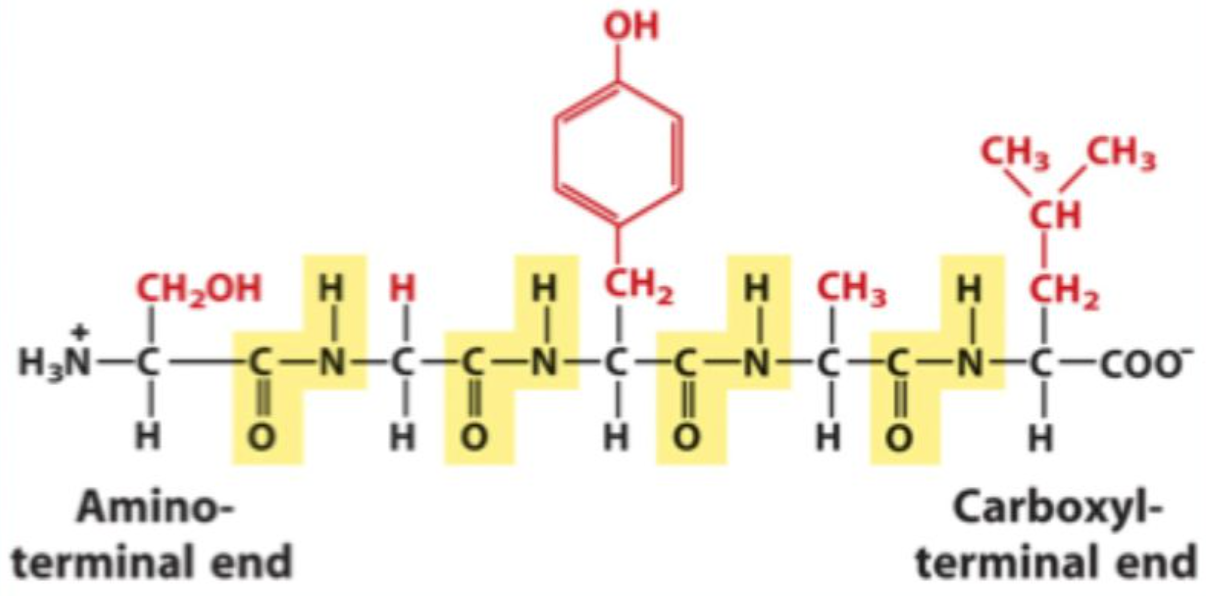
<p>The <strong>repeating main chain</strong>, excluding side chains.</p>
18
New cards

What are residues?

Amino acids after incorporation into a peptide.
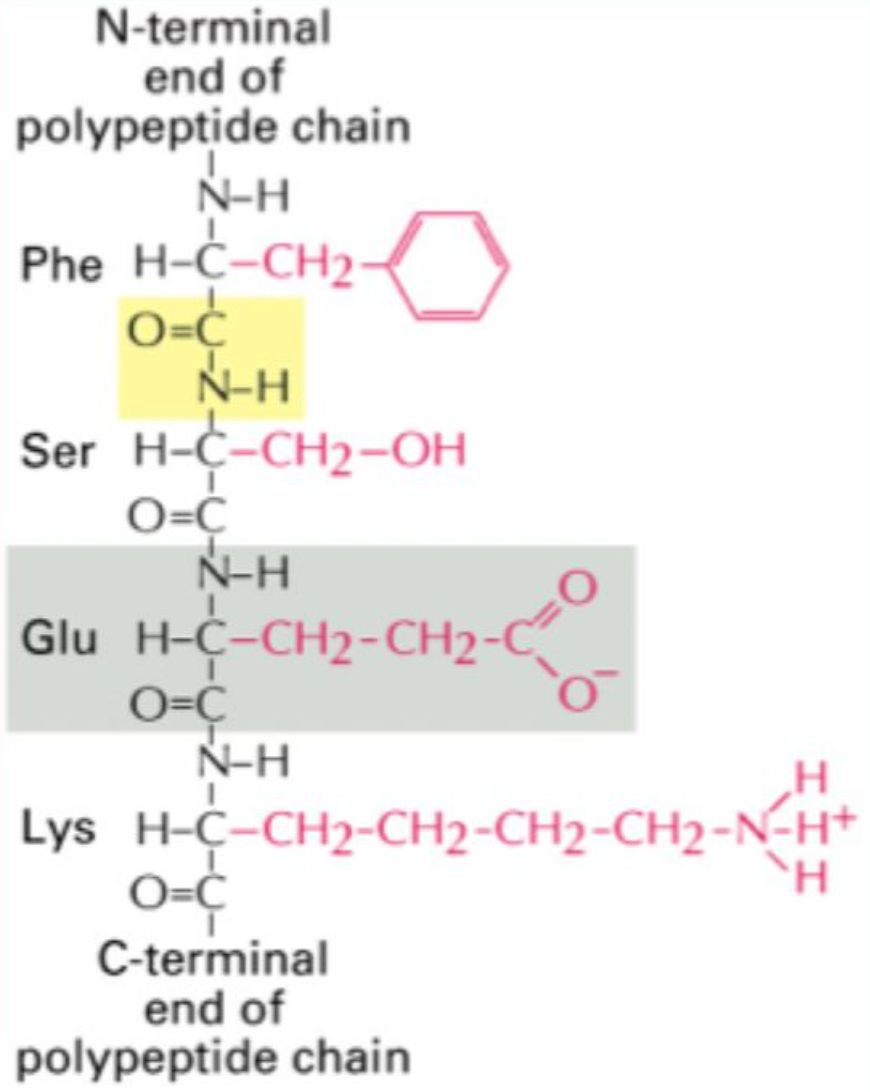
<p>Amino acids <strong>after incorporation into a peptide</strong>.</p>
19
New cards

What is the average mass of an amino acid in a protein?

~110 Da

20
New cards

Which amino acids have charged side chains at physiological pH? And what are their pKas?

Arg = 12.5
Lys = 10.5
His = 6.0
Asp/Glu = 4.0
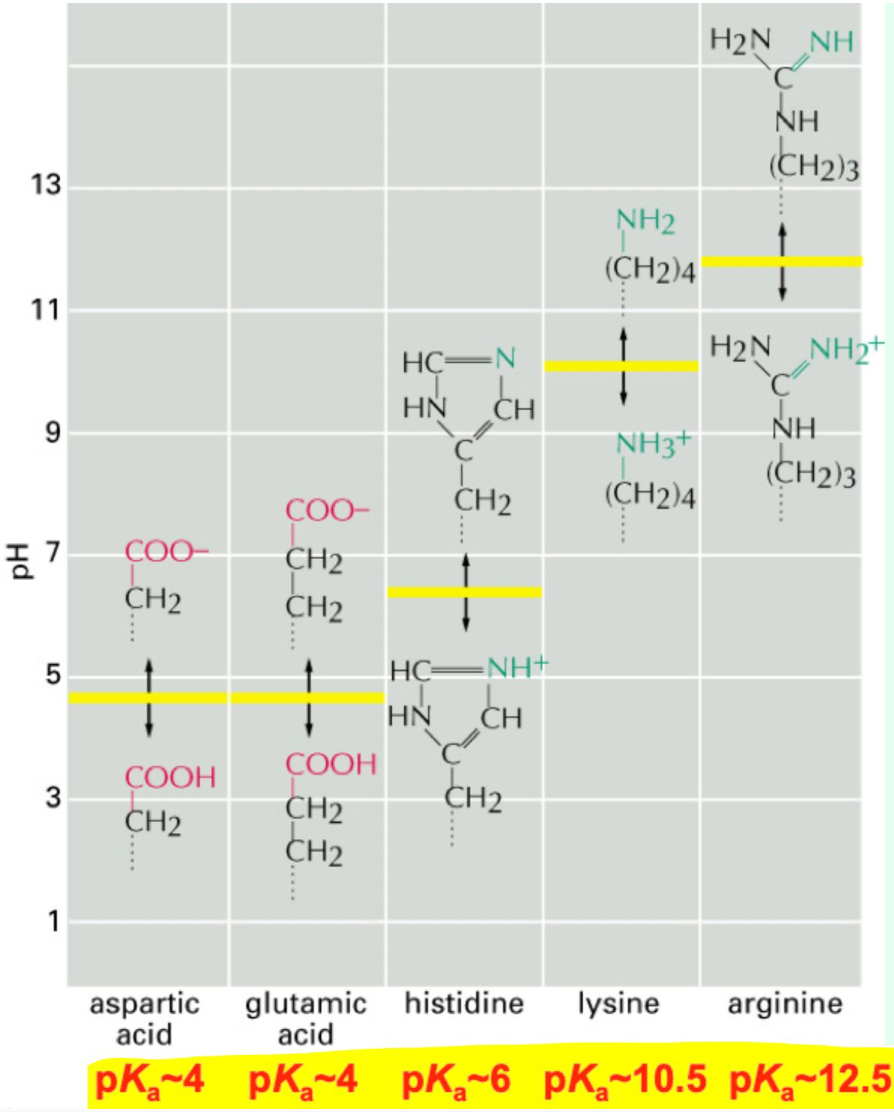
<p><strong>Arg</strong> = 12.5 <br><strong>Lys</strong> = 10.5 <br><strong>His</strong> = 6.0 <br><strong>Asp/Glu</strong> = 4.0</p>
21
New cards

How do uncommon amino acids usually arise in proteins?

By post-translational modification

22
New cards

What are the special properties of proteins made from post-translational modification?

Structural (4-hydroxyproline and 5-hydroxylysine (found in collagen))
Involved in catalysis (2,4,5-trihydroxyphenylalanine quinone (in copper amine oxidase))
Metabolites (Ornithine and citrulline)
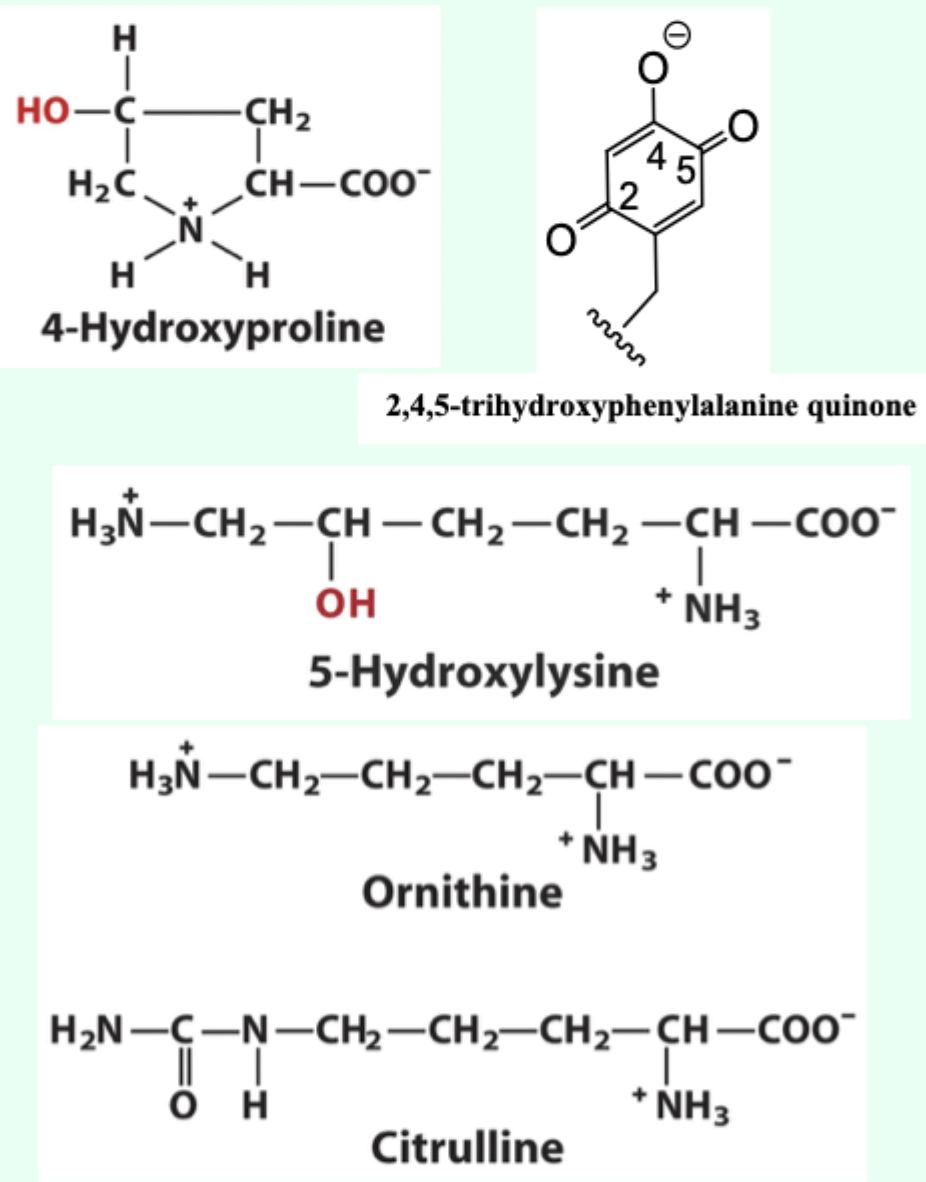
<p><strong>Structural</strong> (4-hydroxyproline and 5-hydroxylysine (found in collagen))<br><strong>Involved in catalysis</strong> (2,4,5-trihydroxyphenylalanine quinone (in copper amine oxidase)) <br><strong>Metabolites</strong> (Ornithine and citrulline)</p>
23
New cards

What does delocalize mean and what causes electrons to delocalize?

π-electrons are not confined to one bond or atom but are spread out over several atoms in a molecule. Electrons delocalize when double bonds are separated by only a single bond, allowing π-electrons to spread over the entire conjugated system.

24
New cards

What is a conjugated system?

A chain of atoms with alternating single and double bonds that allows π-electrons to delocalize across the system.

25
New cards

What structural feature do conjugated systems have?

They are planar and cannot freely rotate because of electron delocalization.

26
New cards

What are the four levels of protein structure?

Primary, secondary, tertiary, quaternary.
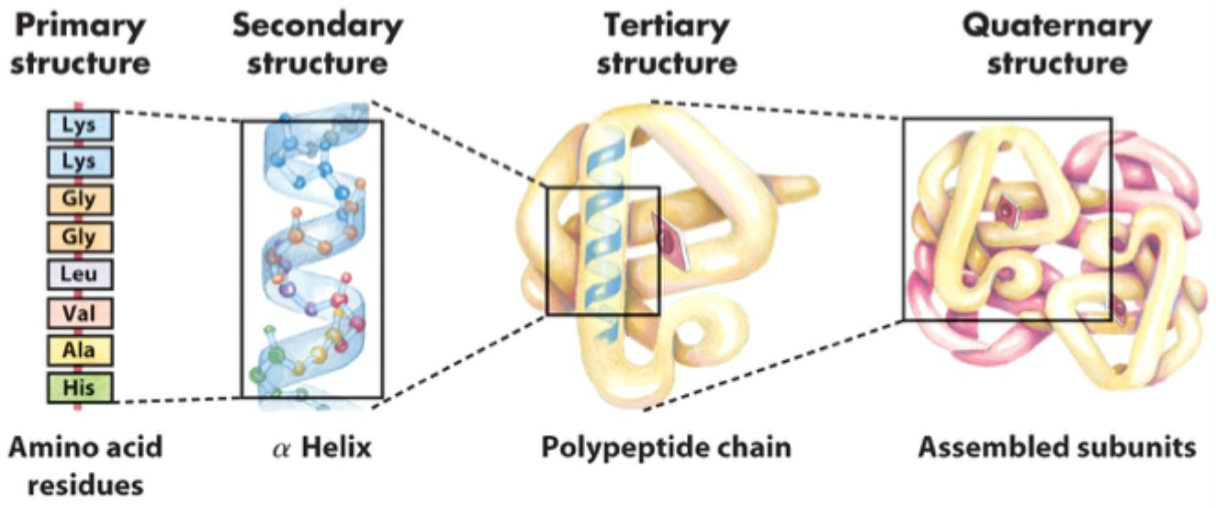
<p><strong>Primary</strong>, <strong>secondary</strong>, <strong>tertiary</strong>, <strong>quaternary</strong>.</p>
27
New cards

What is primary protein structure?

The covalent structure of the protein.

<p>The <strong>covalent</strong> structure of the protein.</p>
28
New cards

What does primary structure include ?

The amino acid sequence and all chemical modifications, including disulfide bonds.

<p>The <strong>amino acid sequence</strong> and <strong>all chemical modifications</strong>, including <strong>disulfide bonds</strong>.</p>
29
New cards

What is the difference between an interchain disulfide bond and an intrachain disulfide chain?

Inter: Linking two different polypeptide chains.
Intra: Within the same polypeptide chain.

<p><strong>Inter</strong>: Linking two <strong>different</strong> polypeptide chains. <br><strong>Intra</strong>: Within the <strong>same</strong> polypeptide chain.</p>
30
New cards

Which functional group of cysteine forms disulfide bonds?

-SH (thiol/sulfhydryl) group
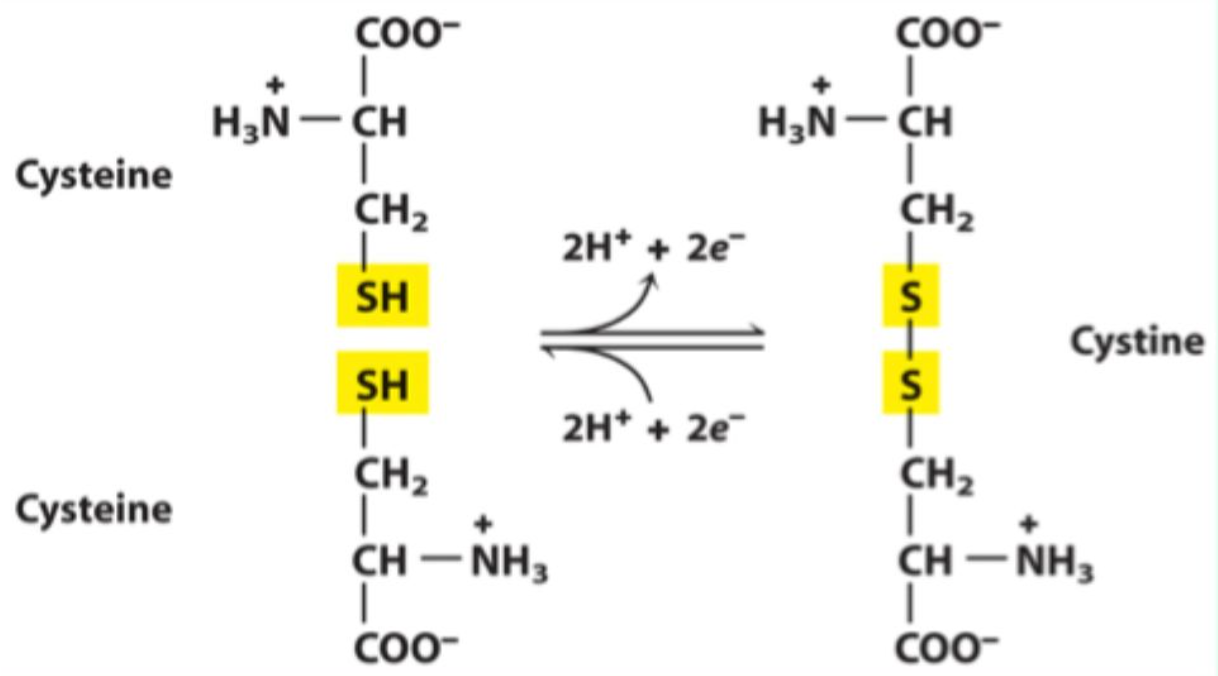
<p><strong>-SH</strong> (thiol/sulfhydryl) group</p>
31
New cards

What reaction forms a disulfide bond?

Oxidation
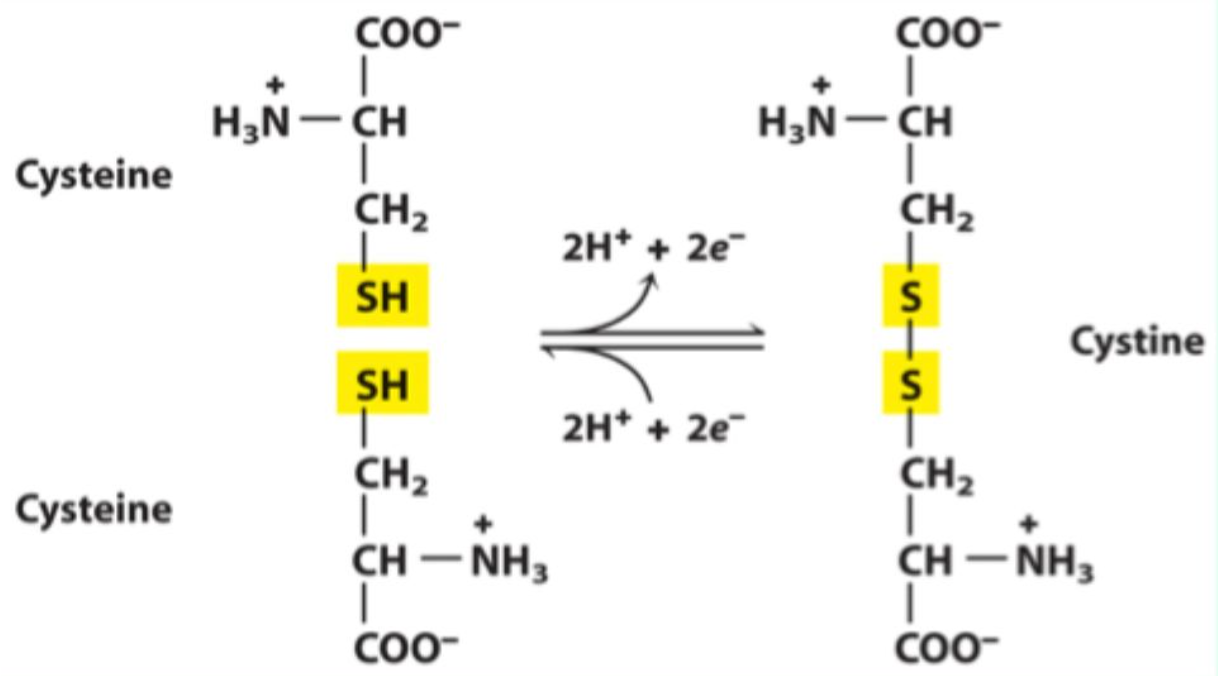
<p>Oxidation</p>
32
New cards

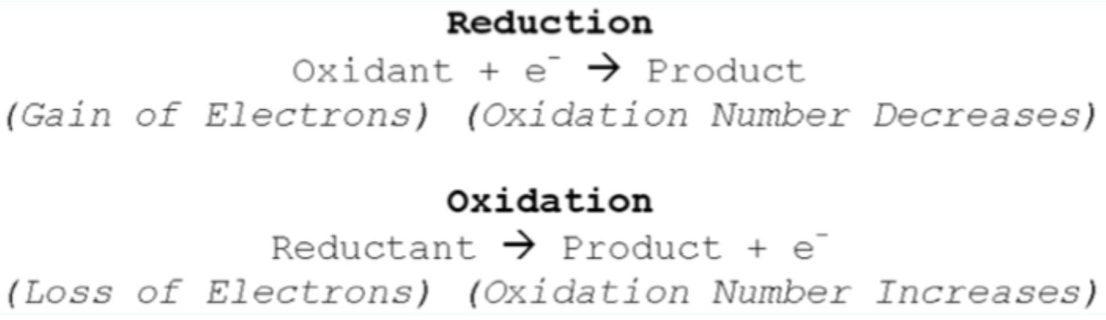
What is oxidation?

Loss of electrons

<p><strong>Loss</strong> of electrons</p>
33
New cards

What is reduction?

Gain of electrons
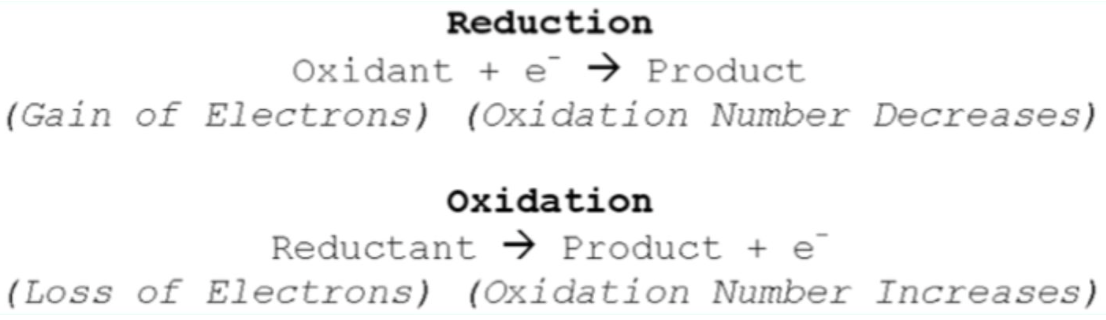
<p><strong>Gain</strong> of electrons</p>
34
New cards

What is an oxidant?

The species that causes oxidation and is itself reduced.
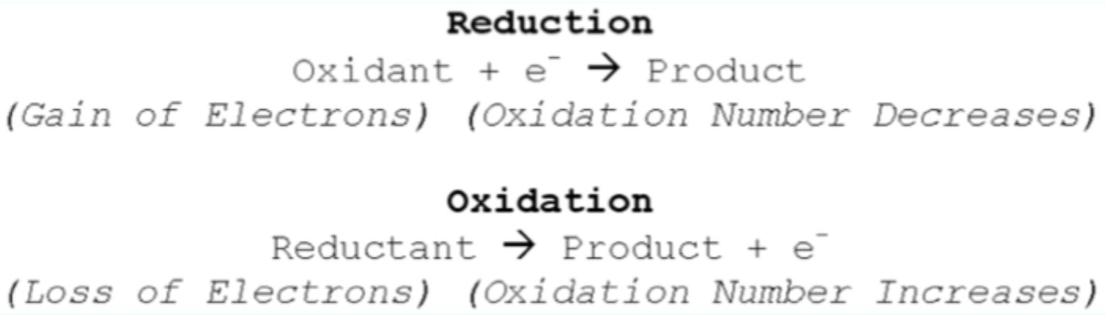
<p>The species that <strong>causes oxidation</strong> and is <strong>itself reduced</strong>.</p>
35
New cards

What is a reductant?

The species that causes reduction and is itself oxidized.
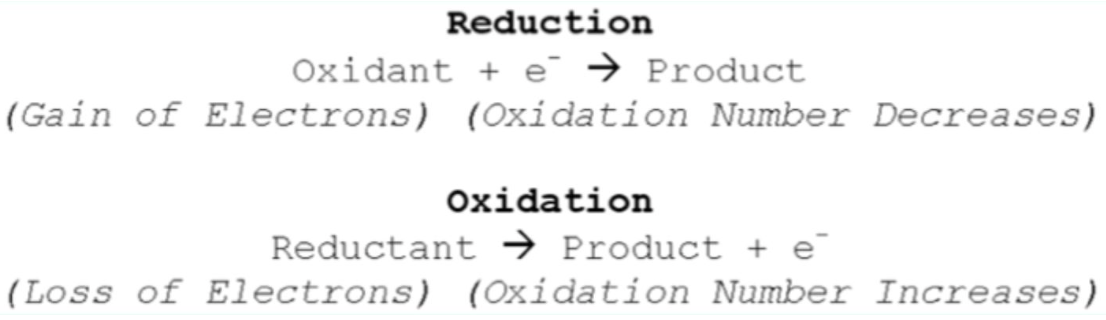
<p>The species that <strong>causes reduction</strong> and is <strong>itself oxidized</strong>.</p>
36
New cards

What are post-translational modifications (PTMs)?

Covalent modifications added after protein translation.

37
New cards

Name common PTMs

Glycosylation, methylation, phosphorylation, acetylation, membrane anchors (GPI, fatty acids, prenyl groups)

38
New cards

What is glycosylation?

The addition of sugars (carbohydrates) to proteins.
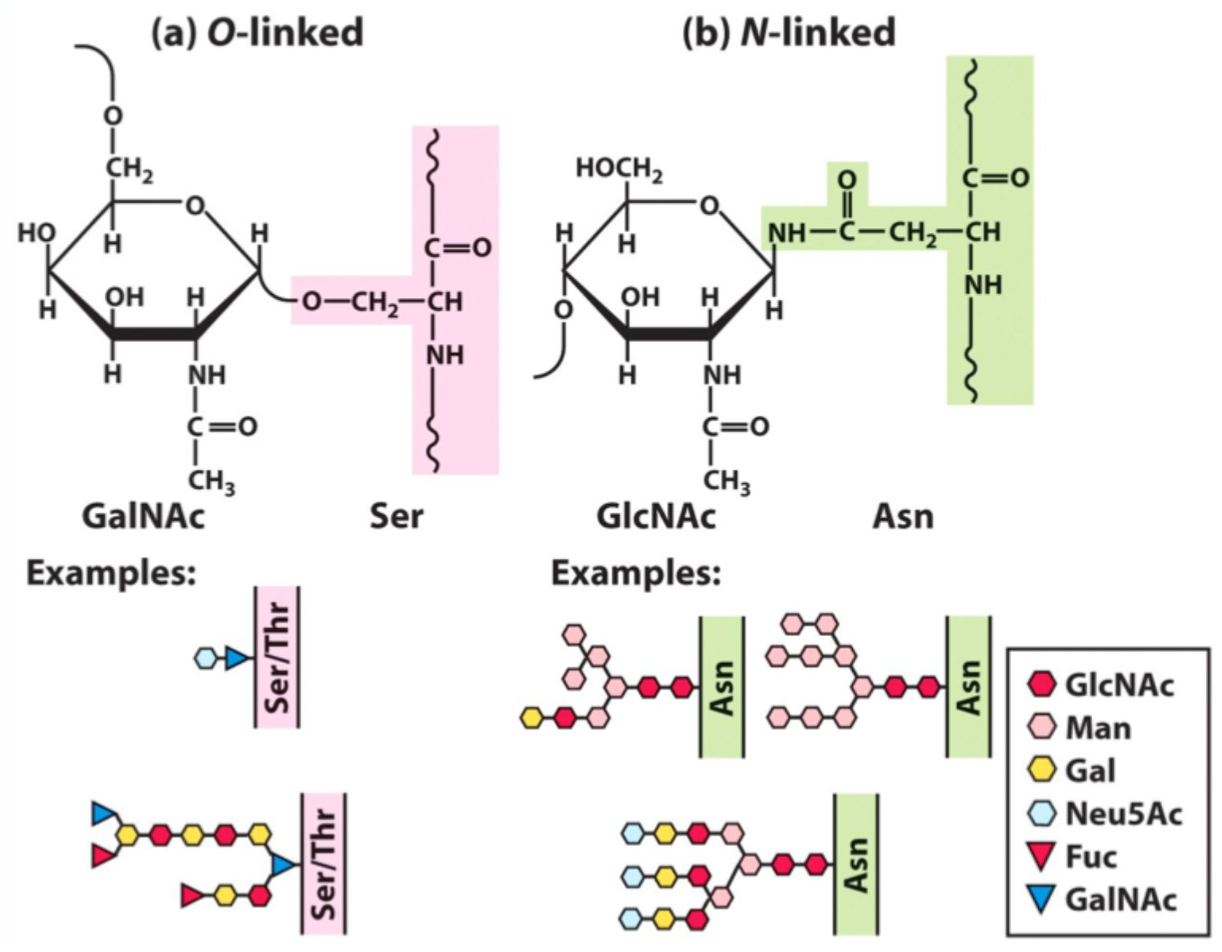
<p>The <strong>addition of sugars</strong> (carbohydrates) to proteins.</p>
39
New cards

Which amino acids are initially glycosylated?

Ser, Thr, and Asn
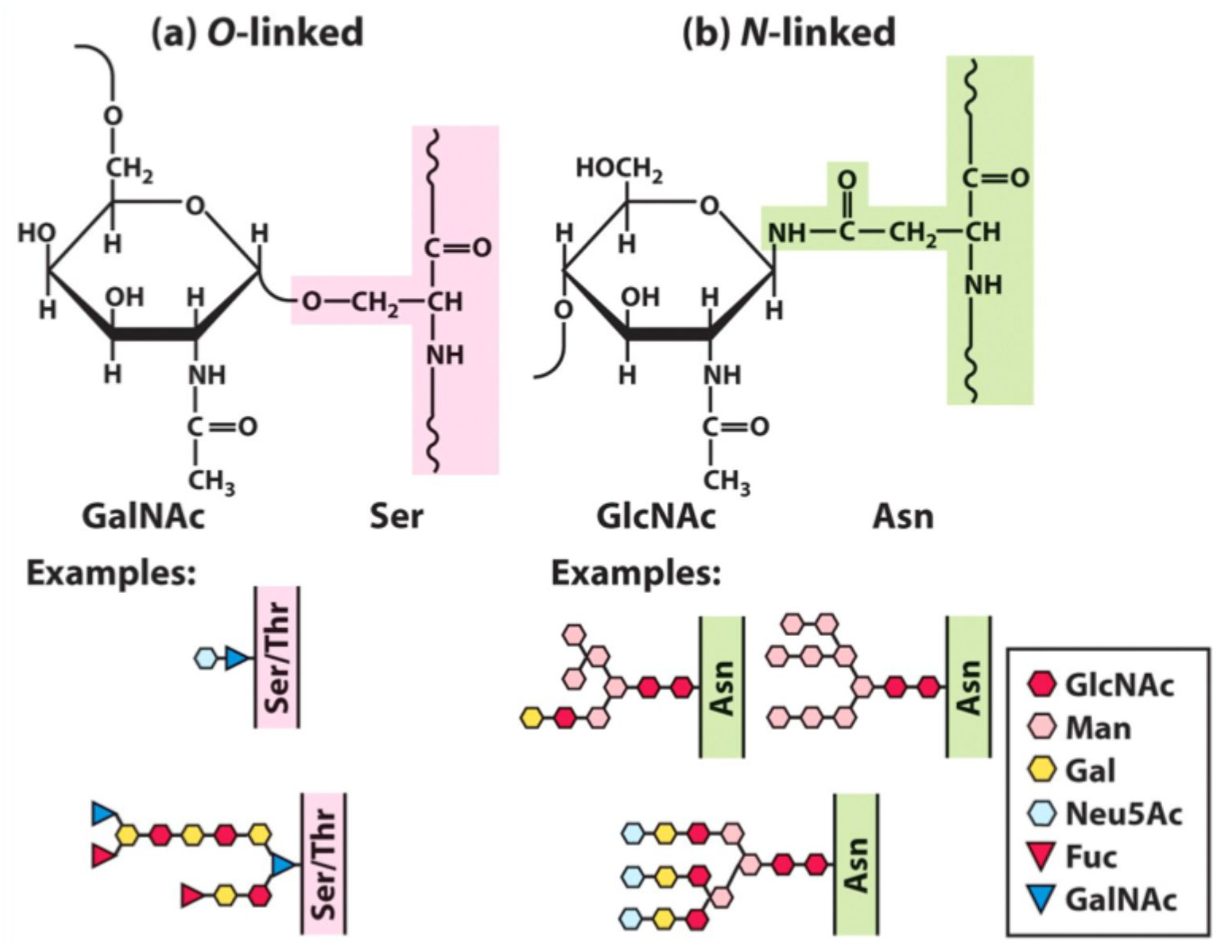
<p>Ser, Thr, and Asn</p>
40
New cards

What is O-linked glycosylation?

Glycosylation via Ser or Thr hydroxyl groups.
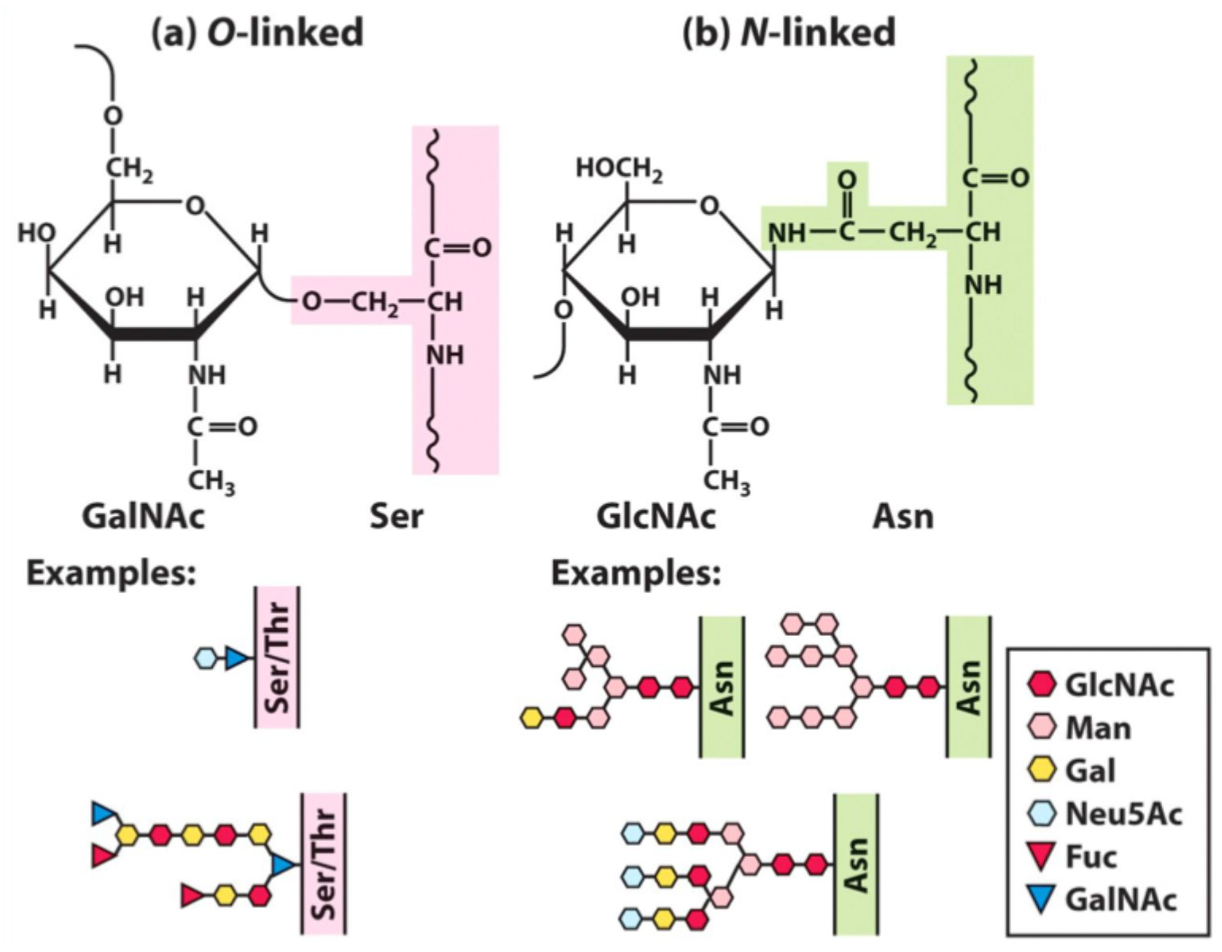
<p>Glycosylation via Ser or Thr <strong>hydroxyl</strong> groups.</p>
41
New cards

What is N-linked glycosylation?

Glycosylation via Asn amine group.
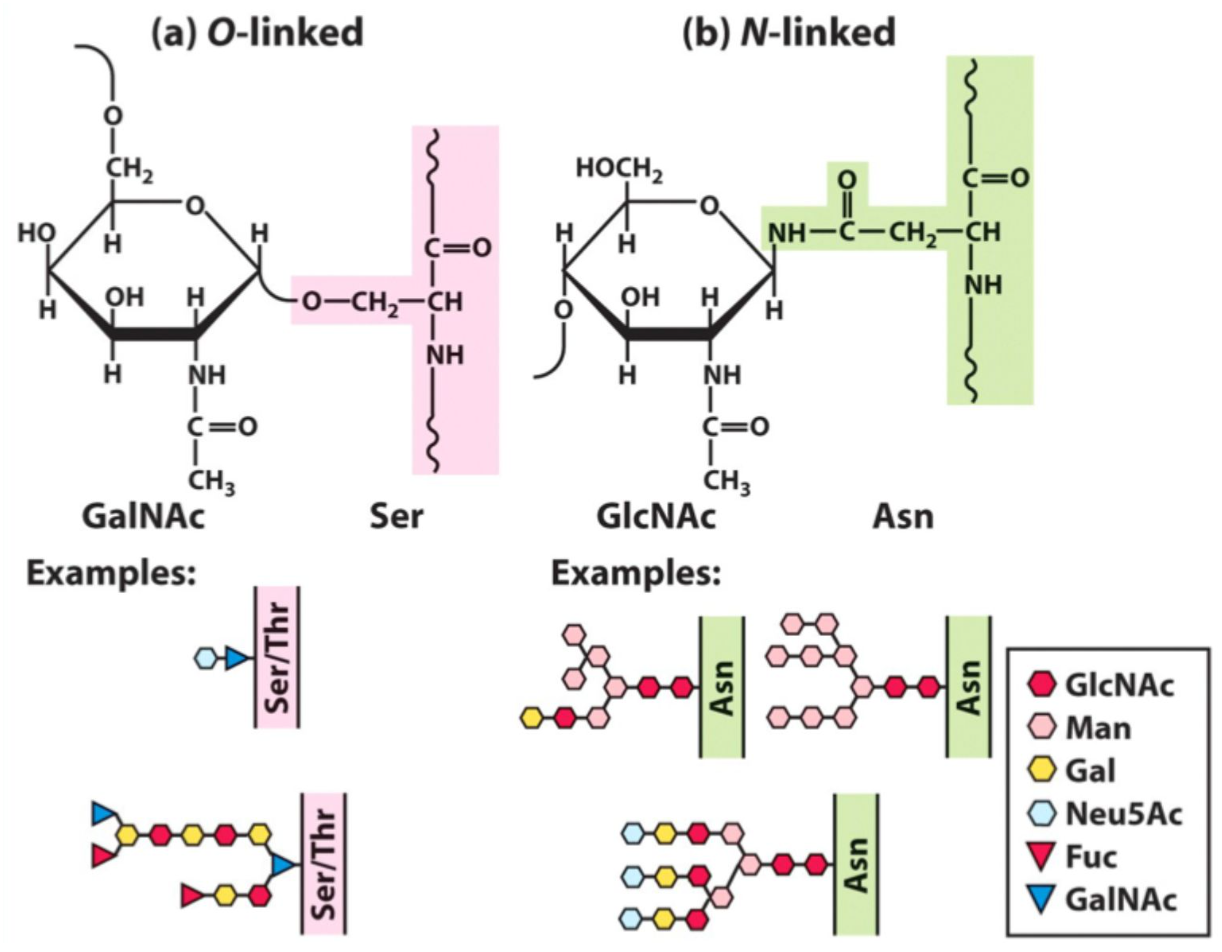
<p>Glycosylation via Asn <strong>amine</strong> group.</p>
42
New cards

What is the structure of most glycan chains?

Branched oligosaccharides, often charged.
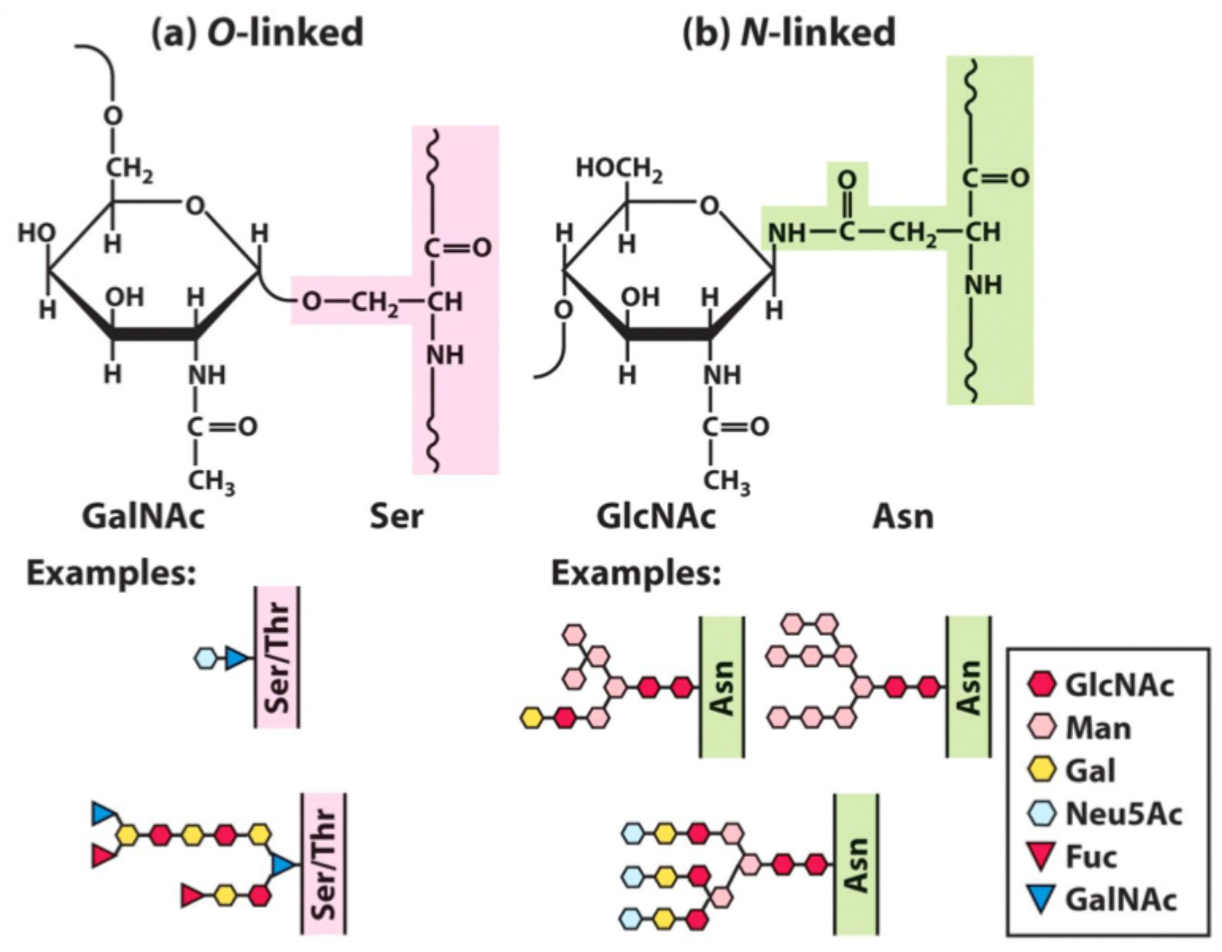
<p>Branched oligosaccharides, often charged.</p>
43
New cards

What are glycoproteins?

Proteins with covalently attached carbohydrates.

44
New cards

Most proteins in the blood are what?

Glycoproteins

45
New cards

What is the most important example of acetylation?

Histone acetylation

Explore top notes

note
Excretory system
Updated 713d ago
0.0(0)
note
Module 1.5a Sleep: Consciousness
Updated 187d ago
0.0(0)
note
Chapter 14-Natural Resources
Updated 1040d ago
0.0(0)
note
Napoleon
Updated 1169d ago
0.0(0)
note
AP World Unit 2
Updated 349d ago
0.0(0)
note
Excretory system
Updated 713d ago
0.0(0)
note
Module 1.5a Sleep: Consciousness
Updated 187d ago
0.0(0)
note
Chapter 14-Natural Resources
Updated 1040d ago
0.0(0)
note
Napoleon
Updated 1169d ago
0.0(0)
note
AP World Unit 2
Updated 349d ago
0.0(0)

Explore top flashcards

flashcards
Así se dice 2 Cap. 2
51
Updated 1006d ago
0.0(0)
flashcards
List 1B
86
Updated 934d ago
0.0(0)
flashcards
Chapter 9- Management
91
Updated 1105d ago
0.0(0)
flashcards
Key Terms ITI Exam 2
58
Updated 784d ago
0.0(0)
flashcards
Exam 1
89
Updated 1149d ago
0.0(0)
flashcards
Economics
61
Updated 894d ago
0.0(0)
flashcards
Así se dice 2 Cap. 2
51
Updated 1006d ago
0.0(0)
flashcards
List 1B
86
Updated 934d ago
0.0(0)
flashcards
Chapter 9- Management
91
Updated 1105d ago
0.0(0)
flashcards
Key Terms ITI Exam 2
58
Updated 784d ago
0.0(0)
flashcards
Exam 1
89
Updated 1149d ago
0.0(0)
flashcards
Economics
61
Updated 894d ago
0.0(0)