[DEV] CH 14: Socioemotional Development in Early Adulthood
 Studied by 8 people
 Call with Kai
 Learn
Learn Practice Test
 Spaced Repetition
 Match
Match Flashcards
 Knowt Play
1/50

There's no tags or description
Looks like no tags are added yet.
Name | Mastery | Learn | Test | Matching | Spaced | Call with Kai |
|---|
No study sessions yet.
51 Terms
stability and change from childhood to adulthood
Revolves around adaptively integrating our emotional experiences into enjoyable relationships with others
First 20 years of life are not meaningless in predicting an adult’s socioemotional well-being
Common finding; the smaller the time intervals over which we measure socioemotional characteristics, the more similar an individual will look from one measurement to the next
temperament
individual’s behavioral style and characteristic emotional responses
Early adulthood; show fewer emotional mood swings than in adolescence, more responsible and engage in less risk-taking behavior
[temperament] easy and difficult temperaments
Easy temperament -> well adjusted as young adults
Difficult temperament -> not well adjusted
[temperament] inhibition
Higher levels of inhibition at 14 months became more reserved and introverted adults with lower social functioning with friends and family at age 26
Higher risk of developing anxiety and depression problems
Increasing trajectory of shyness -> social anxiety, mood disorders, and substance use in adulthood
[temperament] emotion regulation
Emotionality was associated with depression in emerging adulthood
attachment
Romantic partners fulfill some of the same needs for adults as parents do for their children
Securely attached infants -> use caregiver as a secure base from which to explore the environment
Securely attached in adult romantic relationships
More stable relationships
Weakened by stressful and disruptive experiences such as the death of a parent or instability of caregiving
developmental cascade model
involves connections across domains over time that influence developmental pathways and outcomes
Hazan and Shvaer’s measure of adult attachment
secure attachment
avoidant attachment
anxious attachment
[Hazan] secure attachment
positive views of relationships, not overly concerned with relationships
[Hazan] avoidant attachment
hesitant about getting involved in romantic relationships and distance themselves
[hazan] anxious attachment
demand closeness, less trusting, more emotional
general trends in attachment
Prefer securely attached partner
Well-integrated sense of self-acceptance, self-esteem, and self-efficacy
Control their emotions
Optimistic and resilient
Somewhat stable in adulthood, but adults have the capacity to change their attachment thinking and behavior
Makes only a moderate contribution to relationship functioning
love
vast and complex territory of human behavior, spanning a range of relationships that includes friendship, romantic love, affectionate love, and consummate love
hallmarks of intimacy
self-disclosure and the sharing of private thoughts
intimacy
Adolescents have an increased need for intimacy
Central task of adulthood; intimacy, identity, independence
Higher relational intimacy online
Erikson’s identity and identity confusion
Pursuing who we are, what we are all about, and where we are going in life
Enter intimacy vs. isolation
Intimacy; finding oneself while losing oneself in another person and it requires a commitment to another person
Identity development in adolescence is a precursor to intimacy
true intimacy
one’s capacity for security in aloneness that gives intimacy its base makes genuine intimacy possible
difficulty in intimacy
For people who have a difficult time finding intimacy, they may isolate themselves or find themselves in a relationship with improbable partners or partners who do not match them.
Erikson argues that some relationships ened because of unresolved conflicts in the earlier stages. A line like "I need to find myself first" - 1) What stage do you think is this person trying to resolve?
friendship
Adulthood brings opportunities for new friendships as individuals move to new locations and may establish new friendships in their neighborhood at work
long lasting
romantic love
Passionate love or eros
Strong components of sexuality and infatuation
Berscheid: sexual desire is the most important ingredient of love
Source of anguish, which can lead to depression
online romance and dating
Use online dating services
Resource-acquisition ability; level of education and income
Gender difference occurring in every country
Singles indicated that they were making more time for their romantic search, refining what they wanted in a partner, and rethinking how and where they would search for love
[online dating] critics
Critics: lose interpersonal connection, whereas others emphasize that the internet may benefit shy or anxious individuals who find it difficult to meet potential partners in person
Misrepresent their characteristics
affectionate love
Also called companionate love
Type of love that occurs when someone desires to have the other person near and has deep, caring affection for the person
consummate love
based on Sternberg’s triarchic theory of love
strongest, fullest form of love
Sternberg’s triarchic theory of love
can be thought of as a triangle with 3 main dimensions
passion
intimacy
commitment
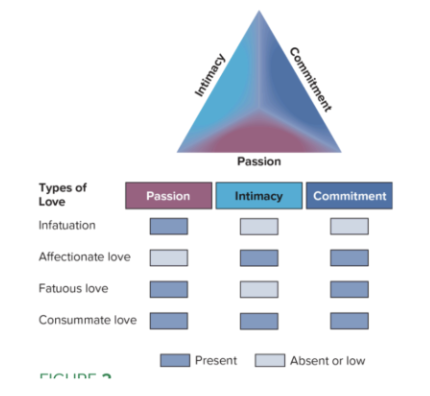
[Sternberg] Passion
physical and sexual attraction to another person
[Sternberg] Intimacy
relates to the emotional feelings of warmth, closeness and sharing in the relationship
[Sternberg] Commitment
cognitive appraisal of the relationship and the intent to maintain the relationship even in the face of problems
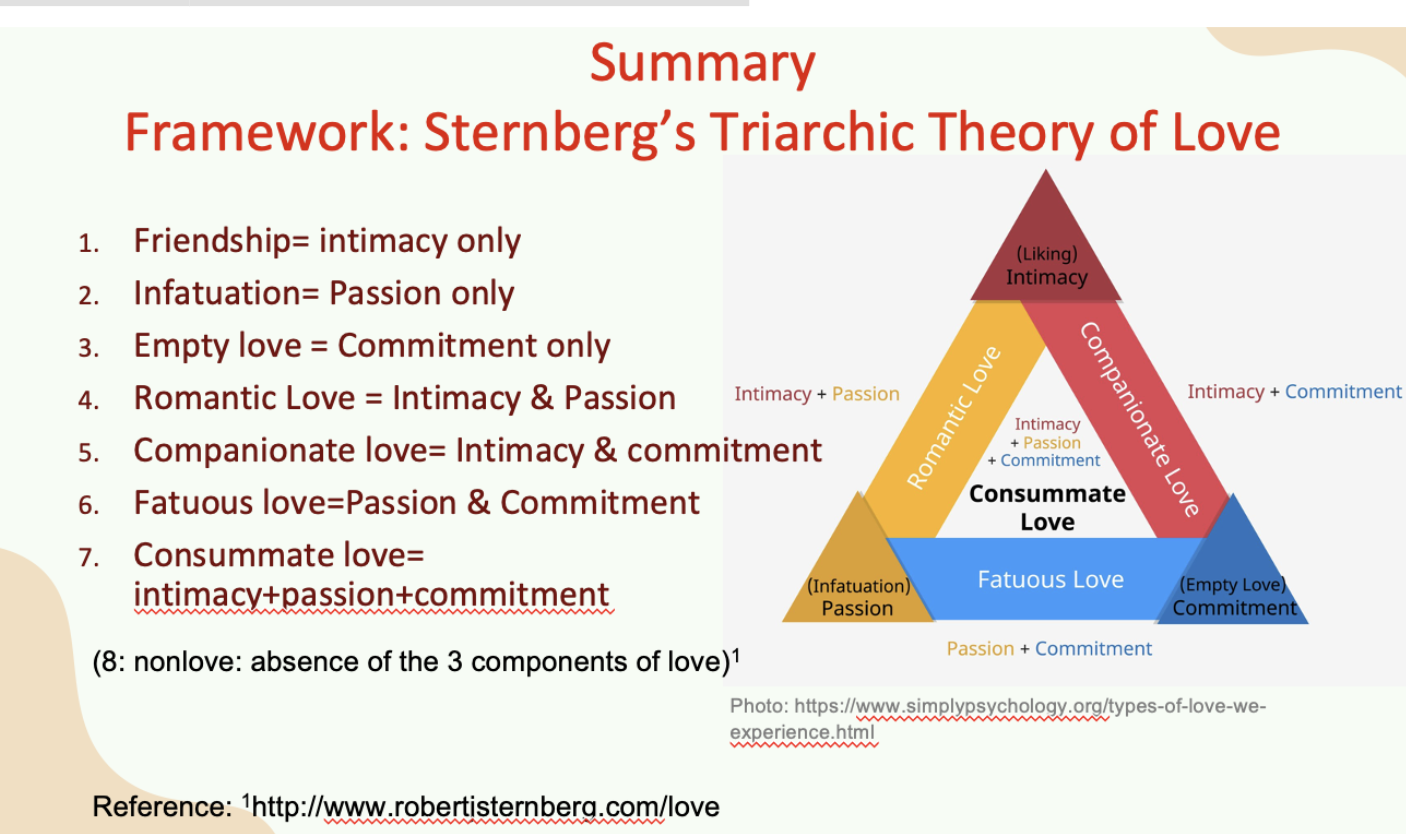
If only passion
infatuated -> fling or affair
if only intimacy and commitment
affectionate love
if passion and commitment
fatuous love -> one person worships another from distance
empty love
Commitment Only. Think arranged marriages.
nonlove
none of the 3 elements
summary of sternberg’s love
collectivist countries: romantic relationships
China and Korea
Intimacy is more diffused in love because of the strong group emphasis on connections outside of romantic love relationship
Feelings of commitment are stronger
individualistic countries: romantic relationships
United States and European
Intensified because of an individual’s social network is likely to be smaller and less group-oriented
Japan: romantic relationships
Marriage rate is declining so rapidly
Argentina: romantic relationships
Romantic interest is much stronger than in Japan
Sexual and romantic flirtation is a way of life
France: romantic relationships
interest in passionate love is strong
Extramarital affairs
Qatar: romantic relationships
casual dating is forbidden and public displays of affection can be punished with prison time
Way: coed parties in hotel rooms
falling out of love
Being in love when love is not returned can lead to depression, obsessive thoughts, sexual dysfunction, health problems, inability to work effectively, difficulty in making new friends, and self-condemnation
Thinking unclear: colored by arousing emotions
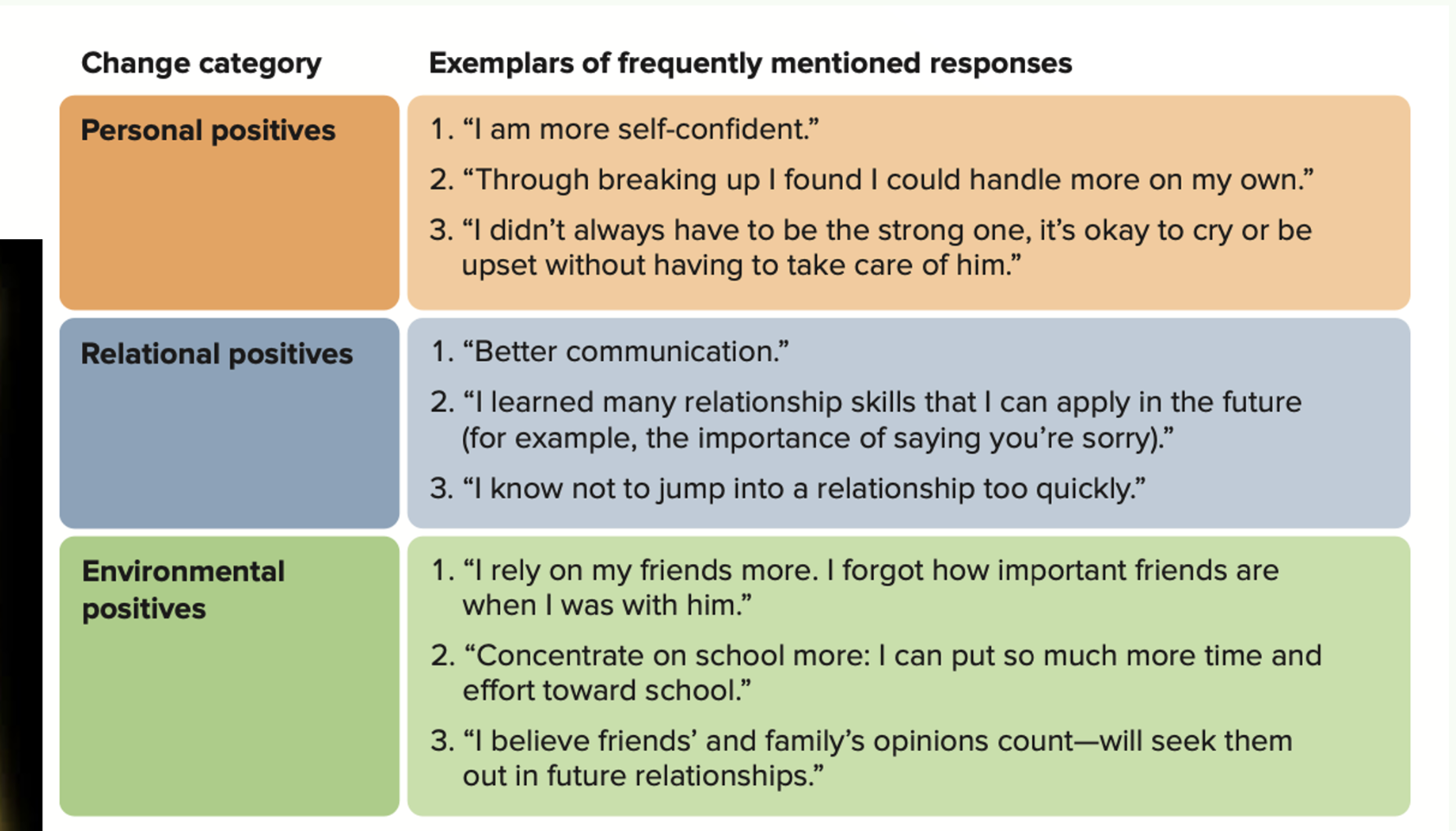
positive changes brought about by breakups
might lead to positive change
Focused on factors that can improve adjustment and produce positive outcomes
Higher optimism, self-esteem, and grit
not all produce this outcome
lowered self-esteem effect disappeared after 1 year
Gottman’s marriage
Gottman: studying married couple’s lives for a number of decades
History, philosophy, view of marriage
Physiological measures; heart rate, blood flow, blood pressure, immune functioning
Checks back every year
Love is not something magical and through knowledge and effort couples can improve their relationship
Gottman’s ways of making marriage work
establish love maps
nurture fondness and admiration
turn toward each other instead of away
let your partner influence you
solve solvable conflicts
overcome gridlock
create shared meaning
[Gottman] establish love maps
Willing to share their feelings with each other
Express understanding but also fondness and admiration
[Gottman] Turn toward each other instead of away
see each other as friends
[Gottman] let your partner influence you
A willingness to share power and to respect the other;s view is a prereq to compromising
[Gottman] solve solvable conflicts
Perpetual; type that don’t go away and may include disagreements about weather have children and how often to have sex
Solvable problems; can be worked out and may include things as not helping each other reduce daily stresses and not being verbally affectionate
It is about negotiating and accommodating each other
[Gottman] create shared meaning
Speak candidly and respectfully with each other, the more likely it is that they will create shared meaning in their marriage
Sharing goals with each other and working together to achieve each other’s goals
successful relationships
Forgiveness and commitment are important aspects of a successful marriage
Self-repair processes in healthy relationships
May in times of conflict sacrifice their personal self-interest for the benefit of marriage
strong commitment: When a couple is not happily married and can help them get through hard times with the hope that the future will involve positive changes in the relationship
Personality traits also affect
sexual aspect of marriage
frequency of sexual intercourse is linked with marital satisfaction (so the more satisfied, the more sexual intercourse) BUT a satisfying sex life and a warm interpersonal relationship were more important than the frequency
Strategies for remarried couples
Have realistic expectations
Develop new positive relationships within the family
Create new traditions
Allot time
Counter set relationship patterns or ghosts
Patterns or ghosts: continue to haunt the individual unless he works to change them
 Note
Note  Flashcards (39)