1.4 Test Activities, Testware & Test Roles (Quizzes I through VII)
 Studied by 0 people
 Call Kai
 Learn
Learn Practice Test
 Spaced Repetition
 Match
Match Flashcards
 Knowt Play
1/220

Earn XP
Description and Tags
Quizzes I, II, III, IV, V, VI, & VII of ISTQB Section 1.4
Name | Mastery | Learn | Test | Matching | Spaced |
|---|
No study sessions yet.
221 Terms
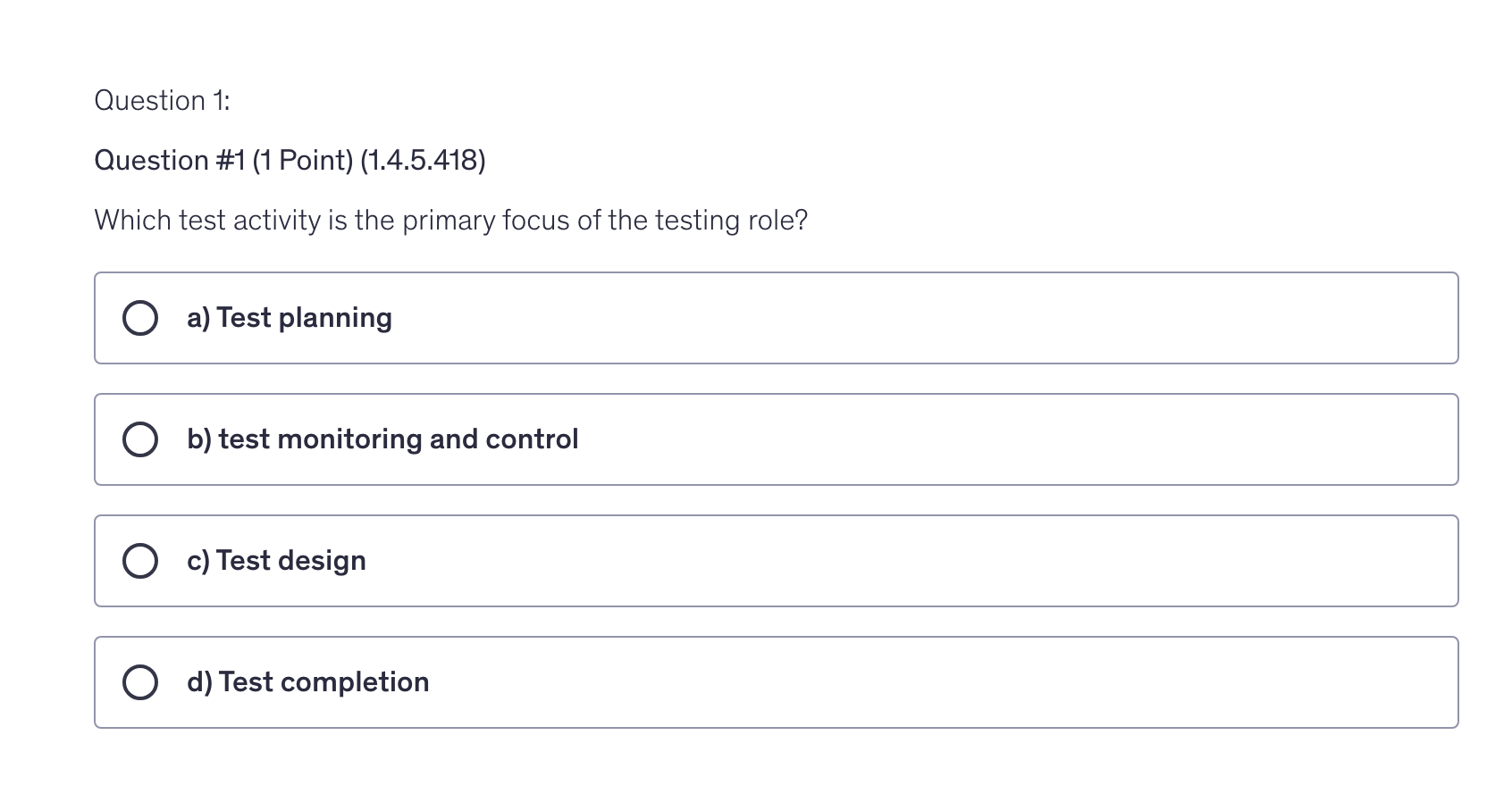
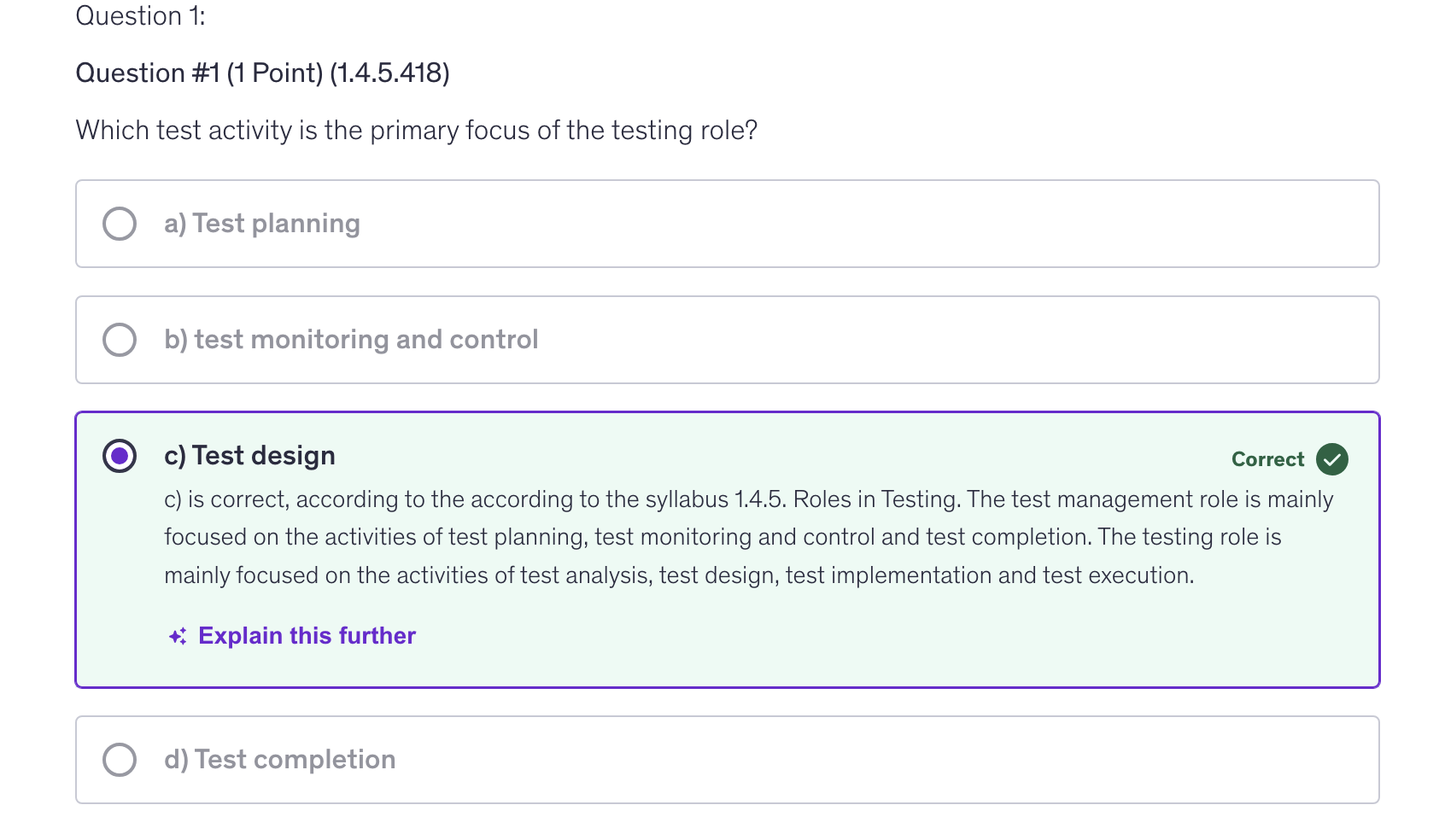
Which test activity is the primary focus of the testing role?
c) Test Design
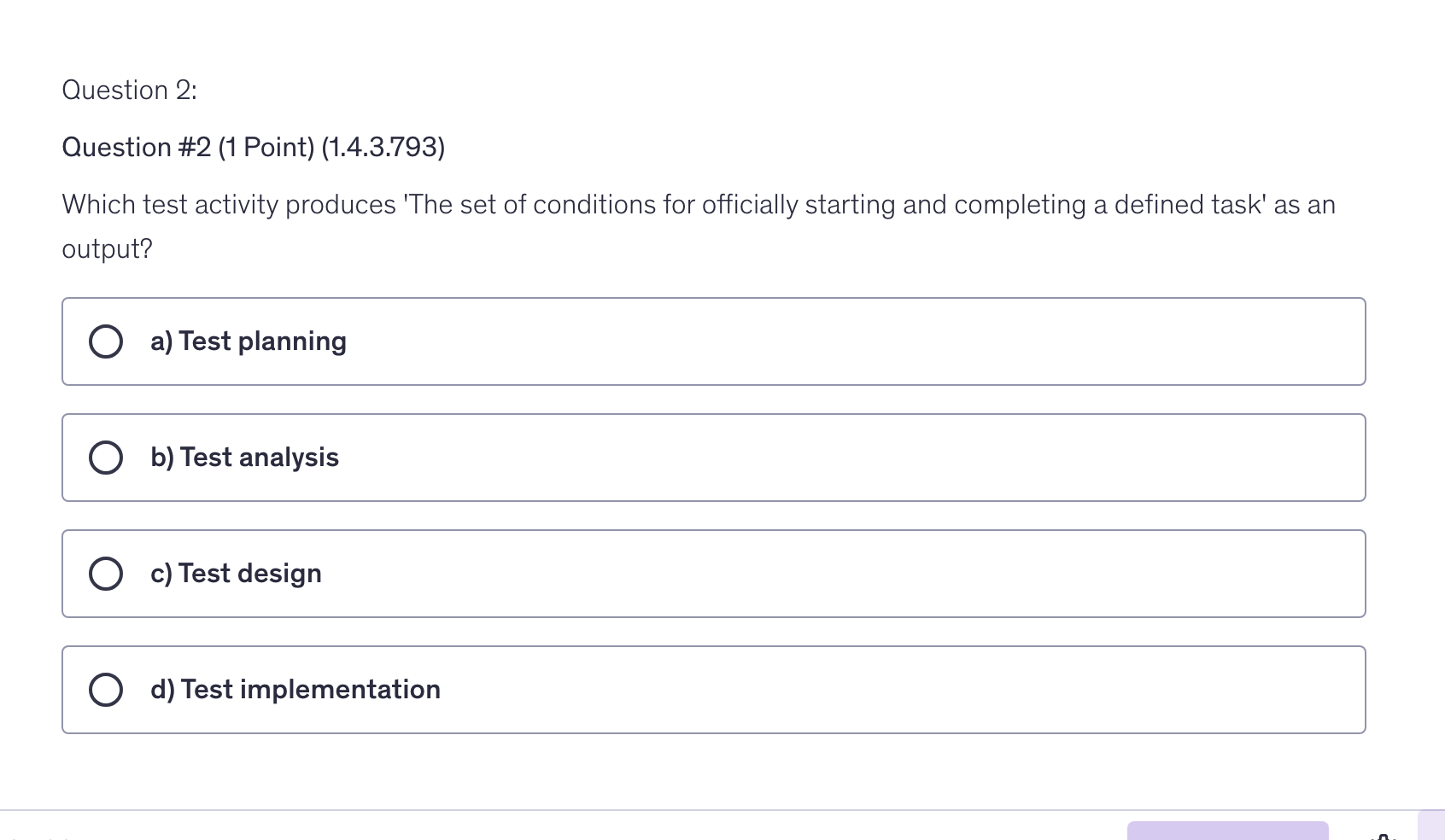
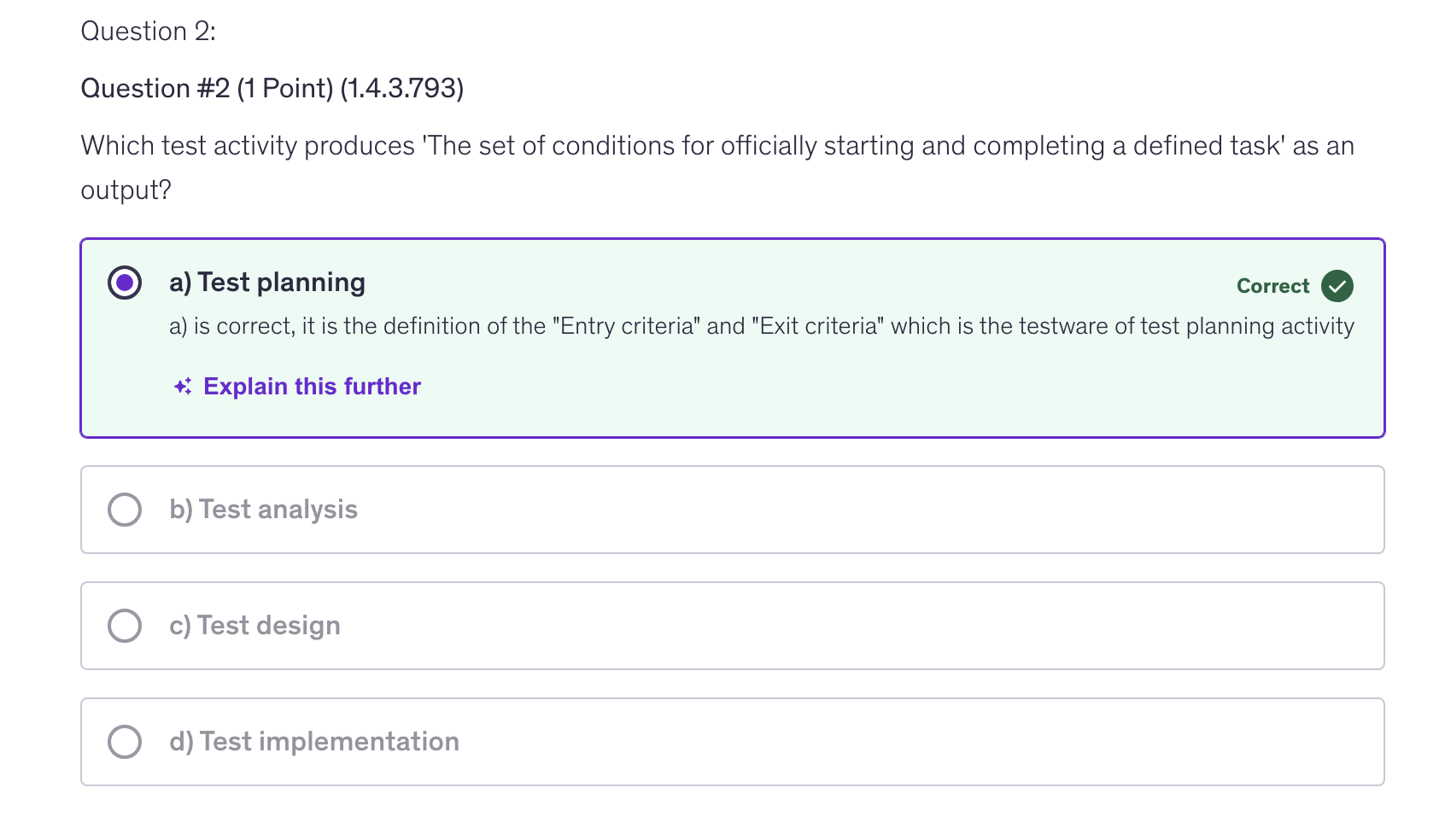
Which test activity produces 'The set of conditions for officially starting and completing a defined task' as an output?
a) Test planning
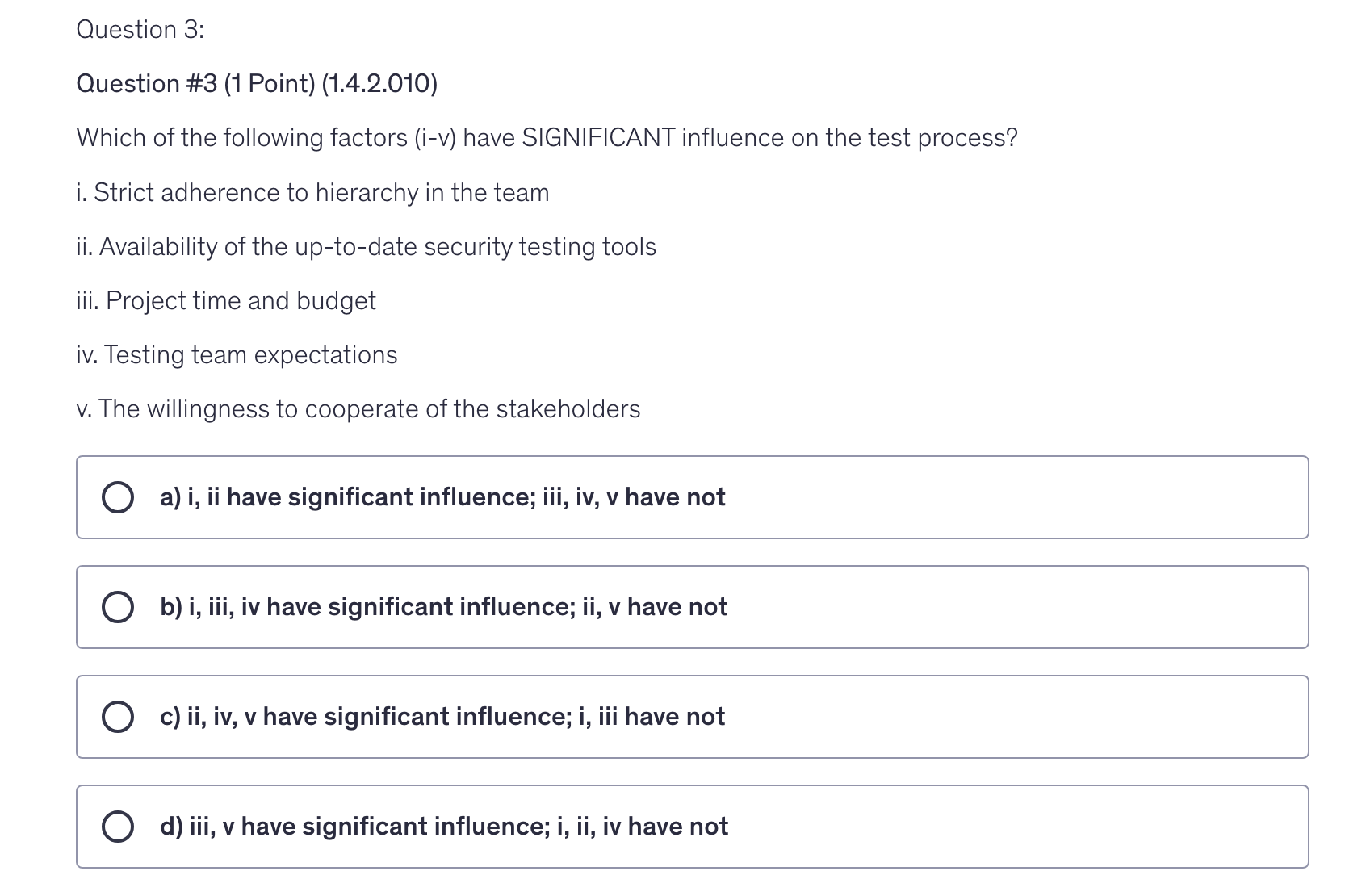
Which of the following factors (i-v) have SIGNIFICANT influence on the test process?
i. Strict adherence to hierarchy in the team
ii. Availability of the up-to-date security testing tools
iii. Project time and budget
iv. Testing team expectations
v. The willingness to cooperate of the stakeholders
d) iii, v have significant influence while i, ii, and iv have not
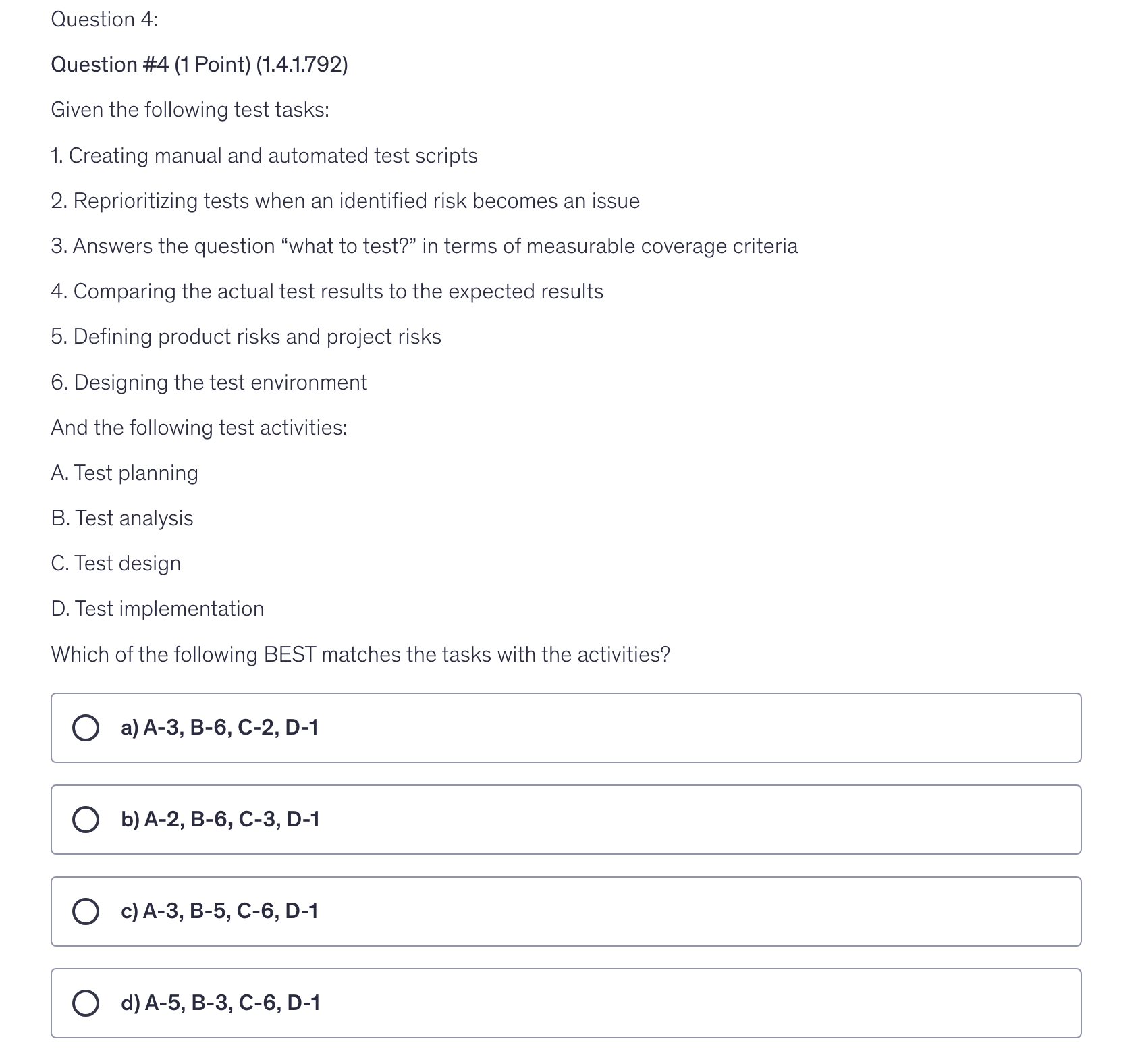
Given the following test tasks:
1. Creating manual and automated test scripts
2. Reprioritizing tests when an identified risk becomes an issue
3. Answers the question “what to test?” in terms of measurable coverage criteria
4. Comparing the actual test results to the expected results
5. Defining product risks and project risks
6. Designing the test environment
And the following test activities:
A. Test planning
B. Test analysis
C. Test design
D. Test implementation
Which of the following BEST matches the tasks with the activities?
d) A-5, B-3, C-6, D-1
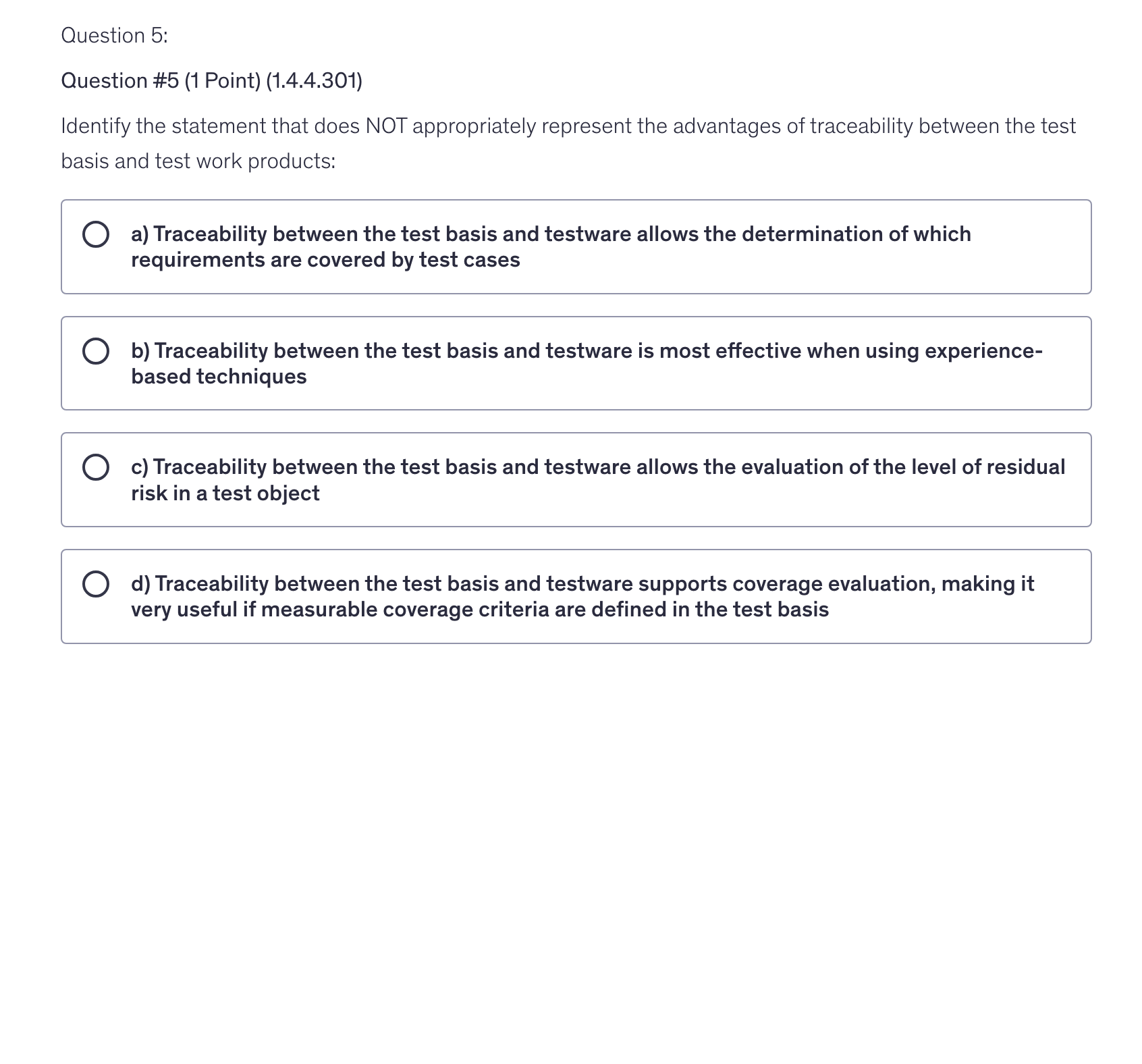
Identify the statement that does NOT appropriately represent the advantages of traceability between the test basis and test work products:
b) Traceability between the test basis and testware is most effective when using experience-based techniques
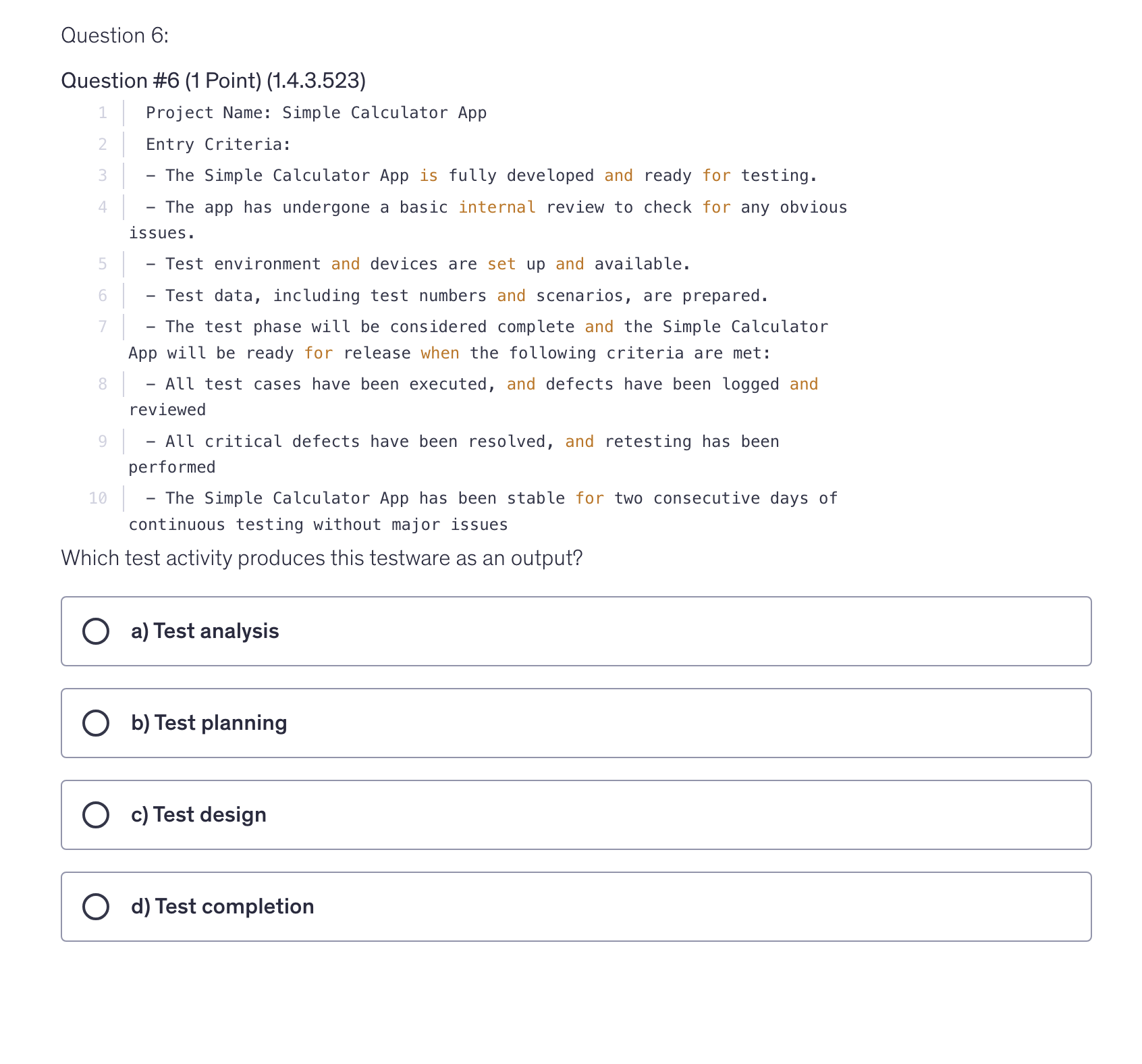
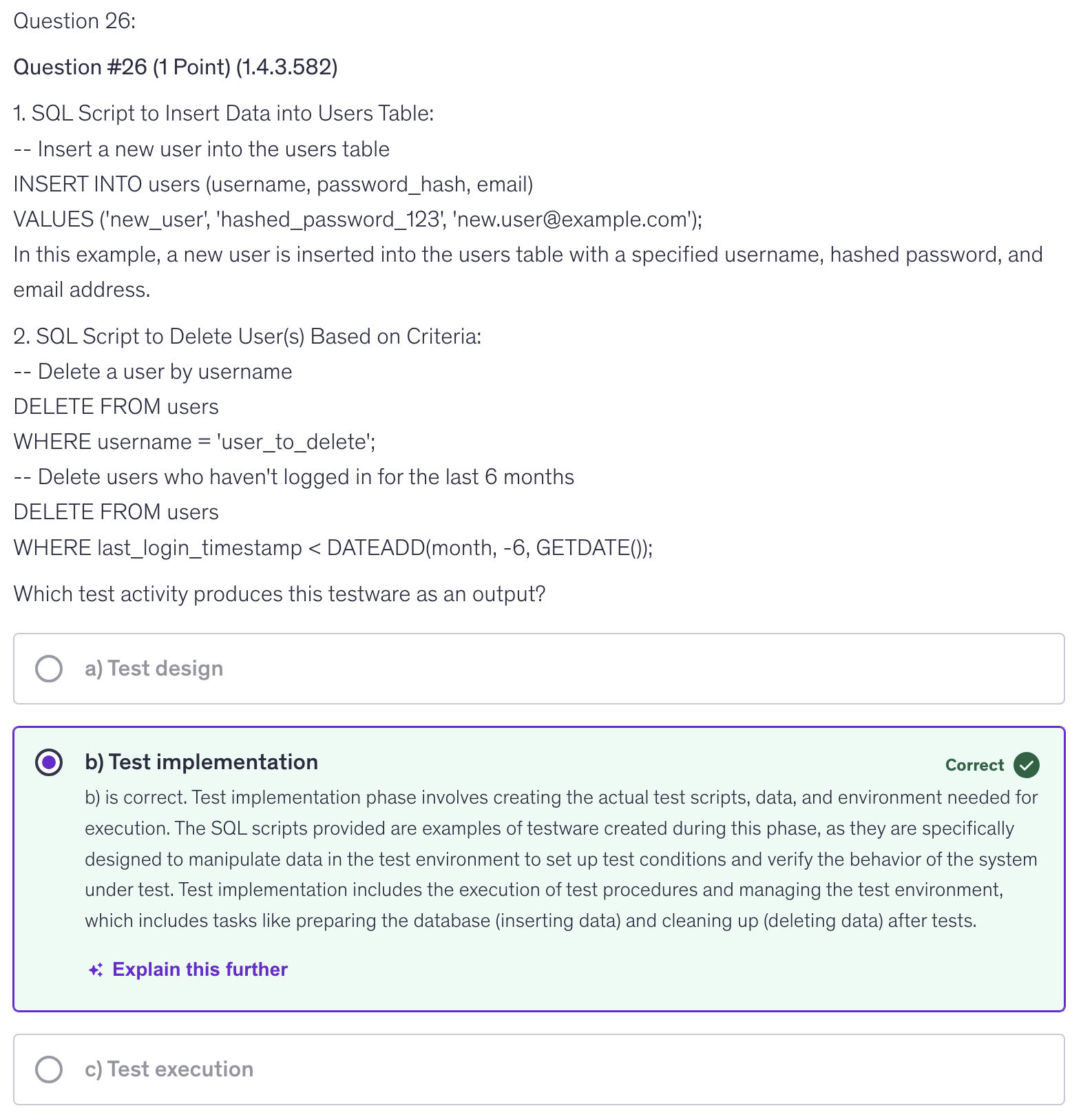
Which test activity produces this testware as an output?
b) Test planning
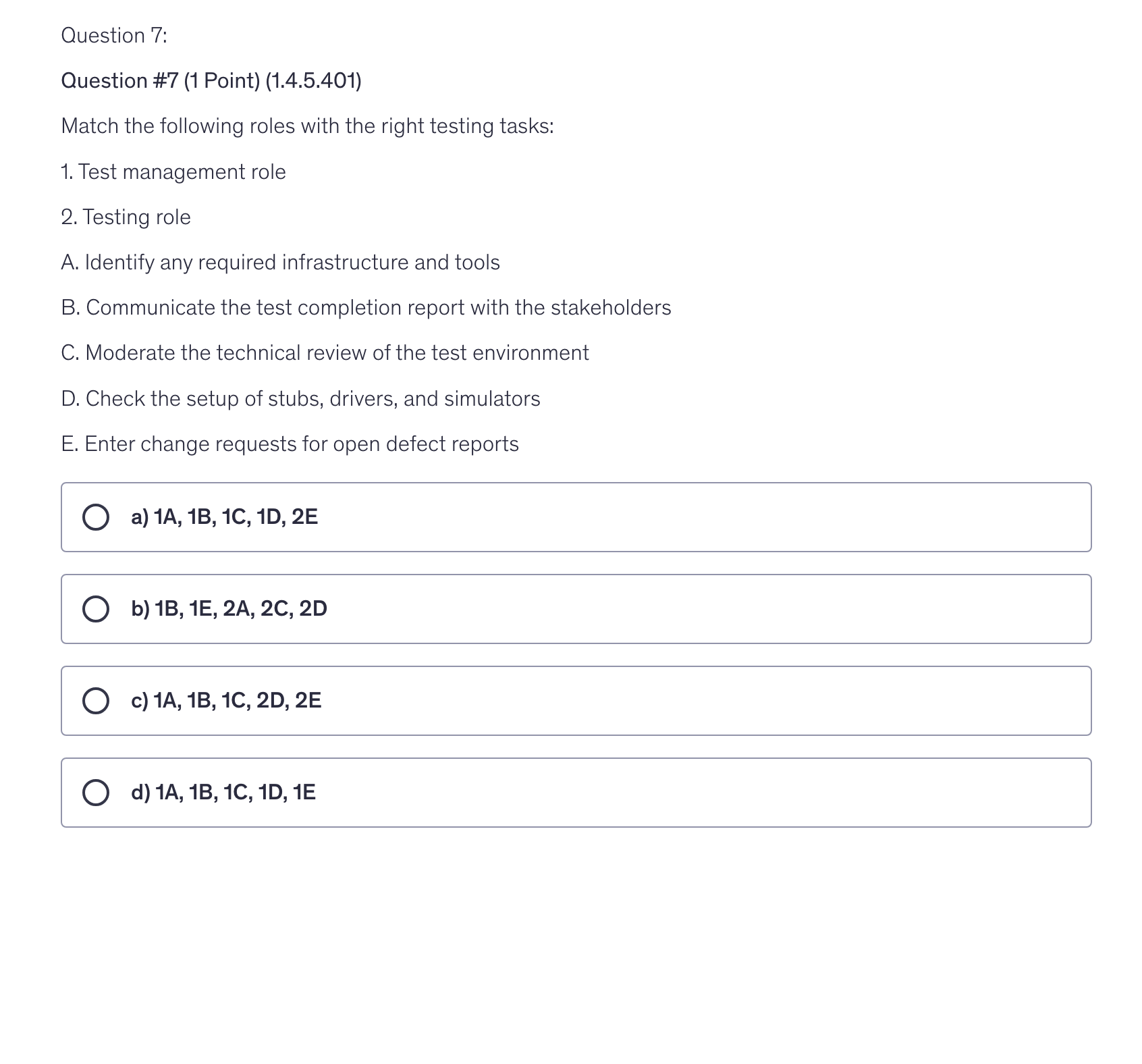
Question #7 (1 Point) (1.4.5.401)
Match the following roles with the right testing tasks:
1. Test management role
2. Testing role
A. Identify any required infrastructure and tools
B. Communicate the test completion report with the stakeholders
C. Moderate the technical review of the test environment
D. Check the setup of stubs, drivers, and simulators
E. Enter change requests for open defect reports
b) 1B, 1E, 2A, 2C, 2D
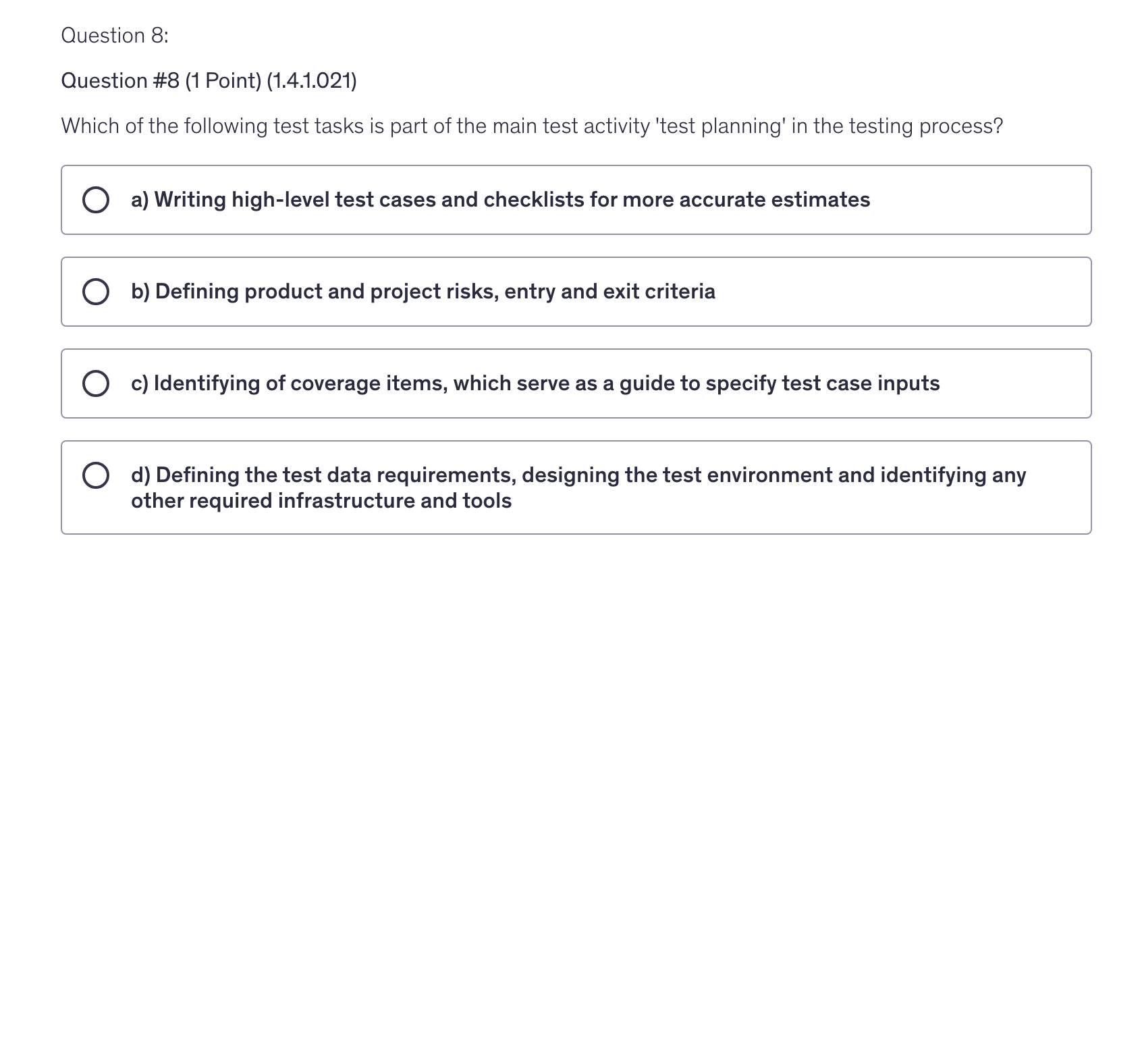
Which of the following test tasks is part of the main test activity 'test planning' in the testing process?
b) Defining product and project risks, entry and exit criteria
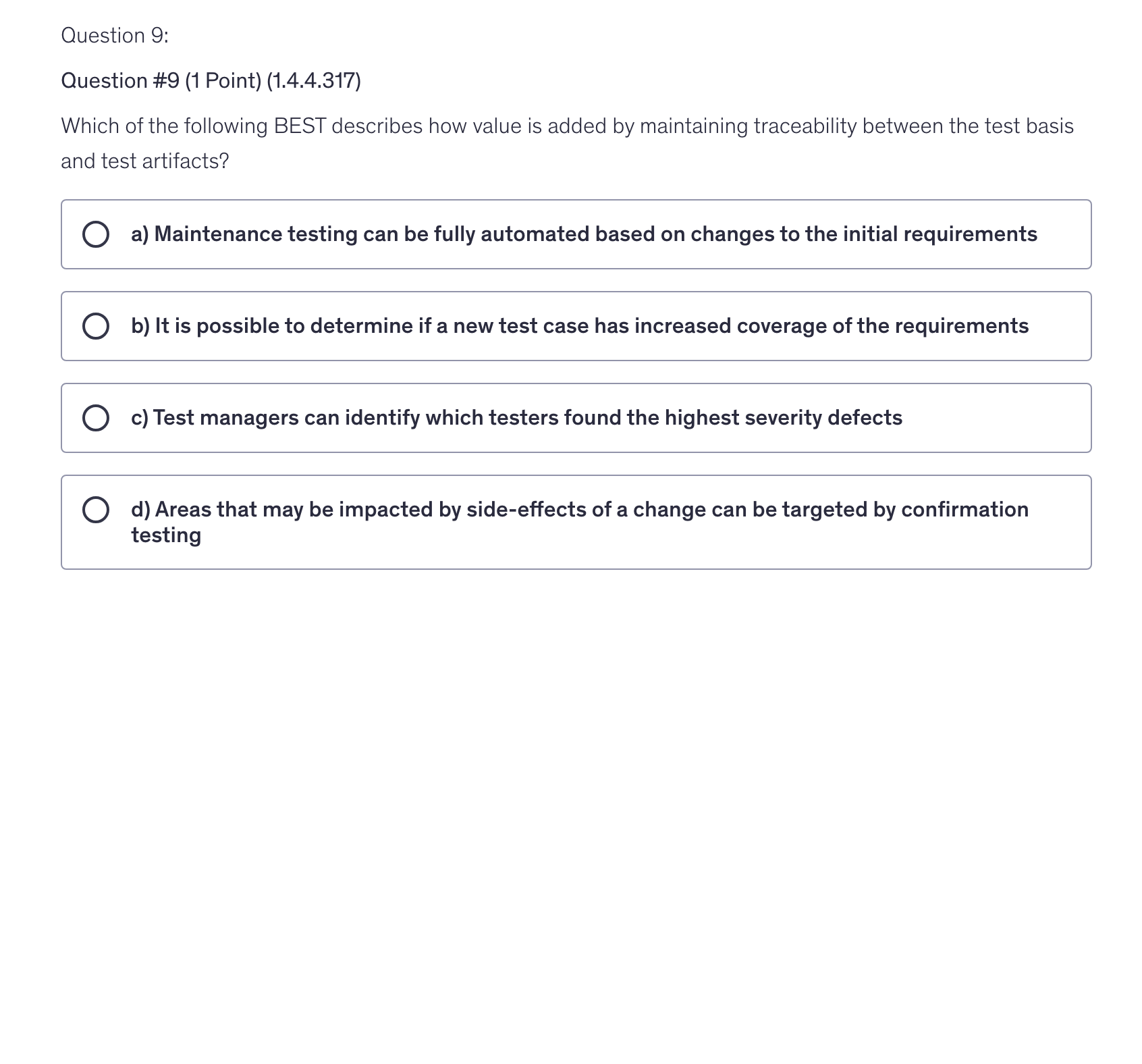
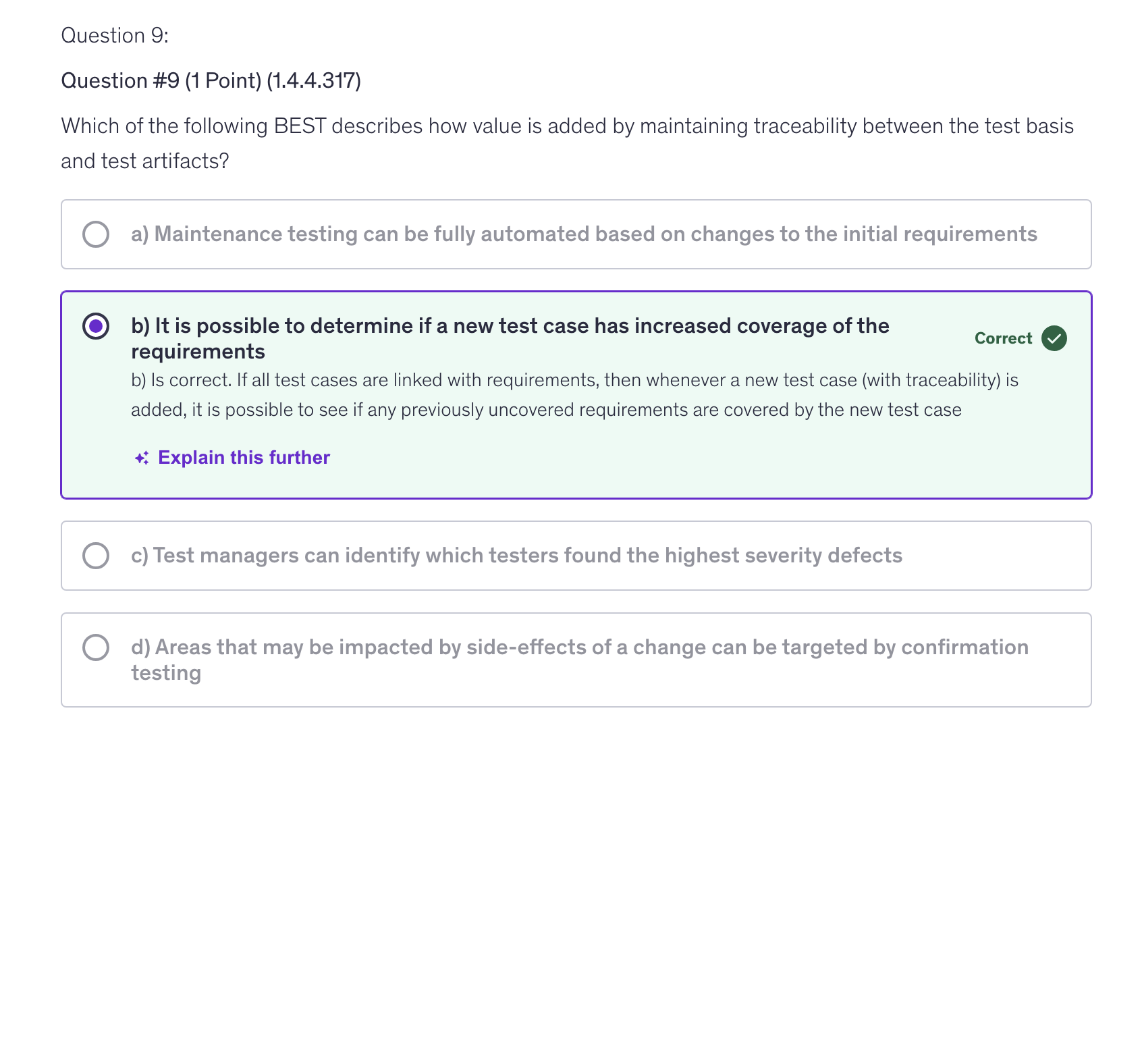
Which of the following BEST describes how value is added by maintaining traceability between the test basis and test artifacts?
b) It is possible to determine if a new test case has increased coverage of the requirements
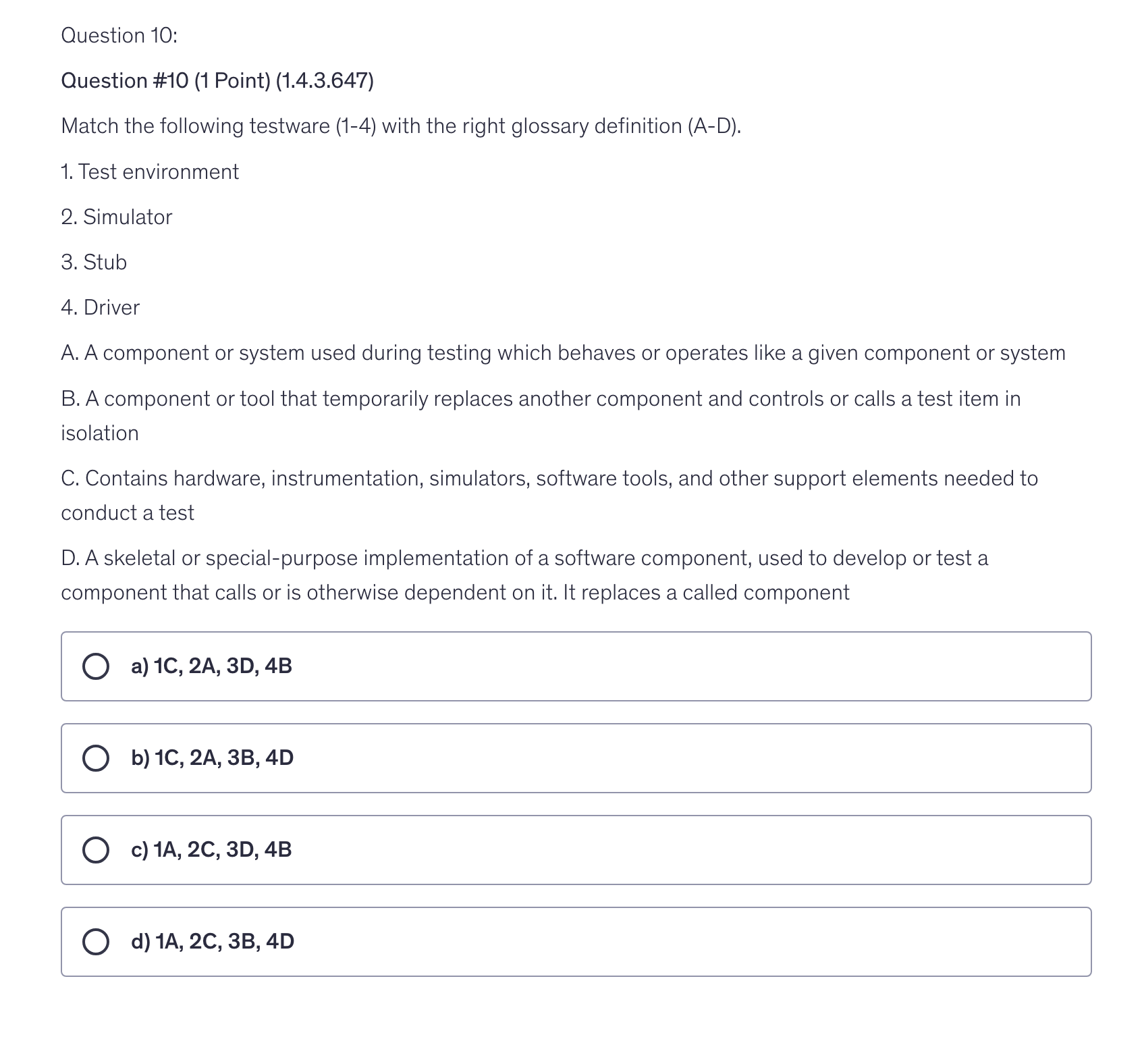
Match the following testware (1-4) with the right glossary definition (A-D).
1. Test environment
2. Simulator
3. Stub
4. Driver
A. A component or system used during testing which behaves or operates like a given component or system
B. A component or tool that temporarily replaces another component and controls or calls a test item in isolation
C. Contains hardware, instrumentation, simulators, software tools, and other support elements needed to conduct a test
D. A skeletal or special-purpose implementation of a software component, used to develop or test a component that calls or is otherwise dependent on it. It replaces a called component
a) 1C, 2A, 3D, 4B
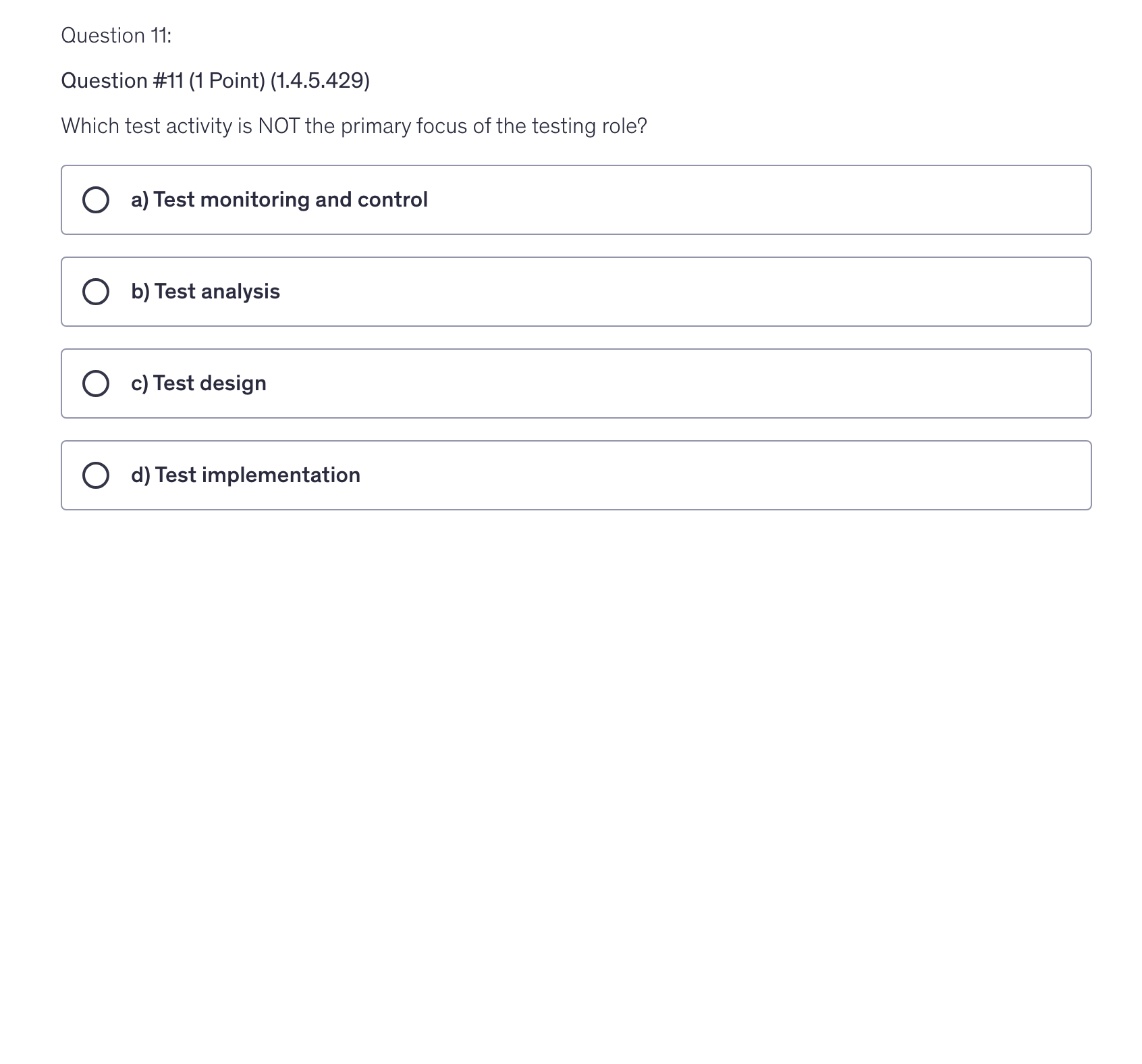
Which test activity is NOT the primary focus of the testing role?
a) Test monitoring and control
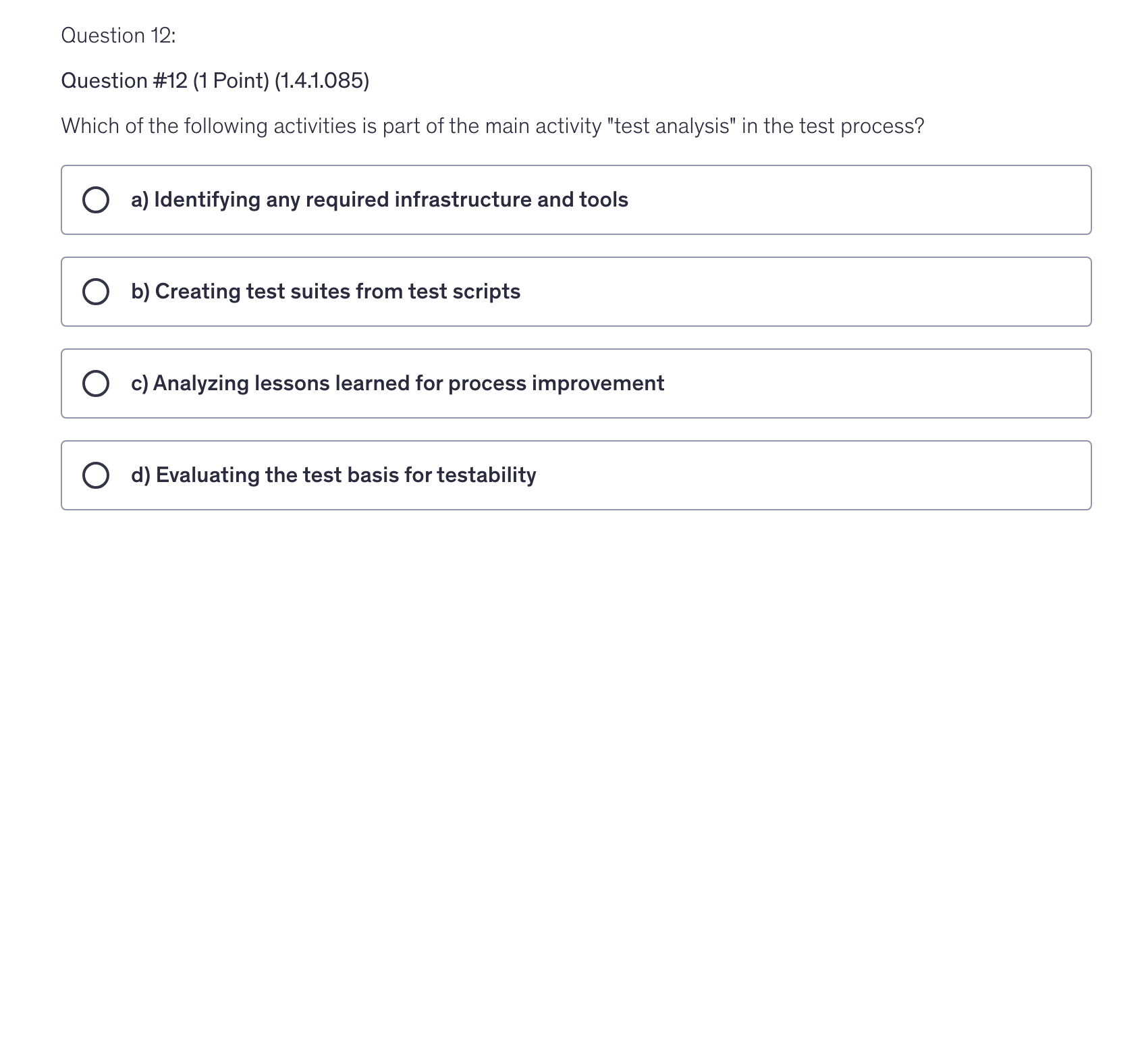
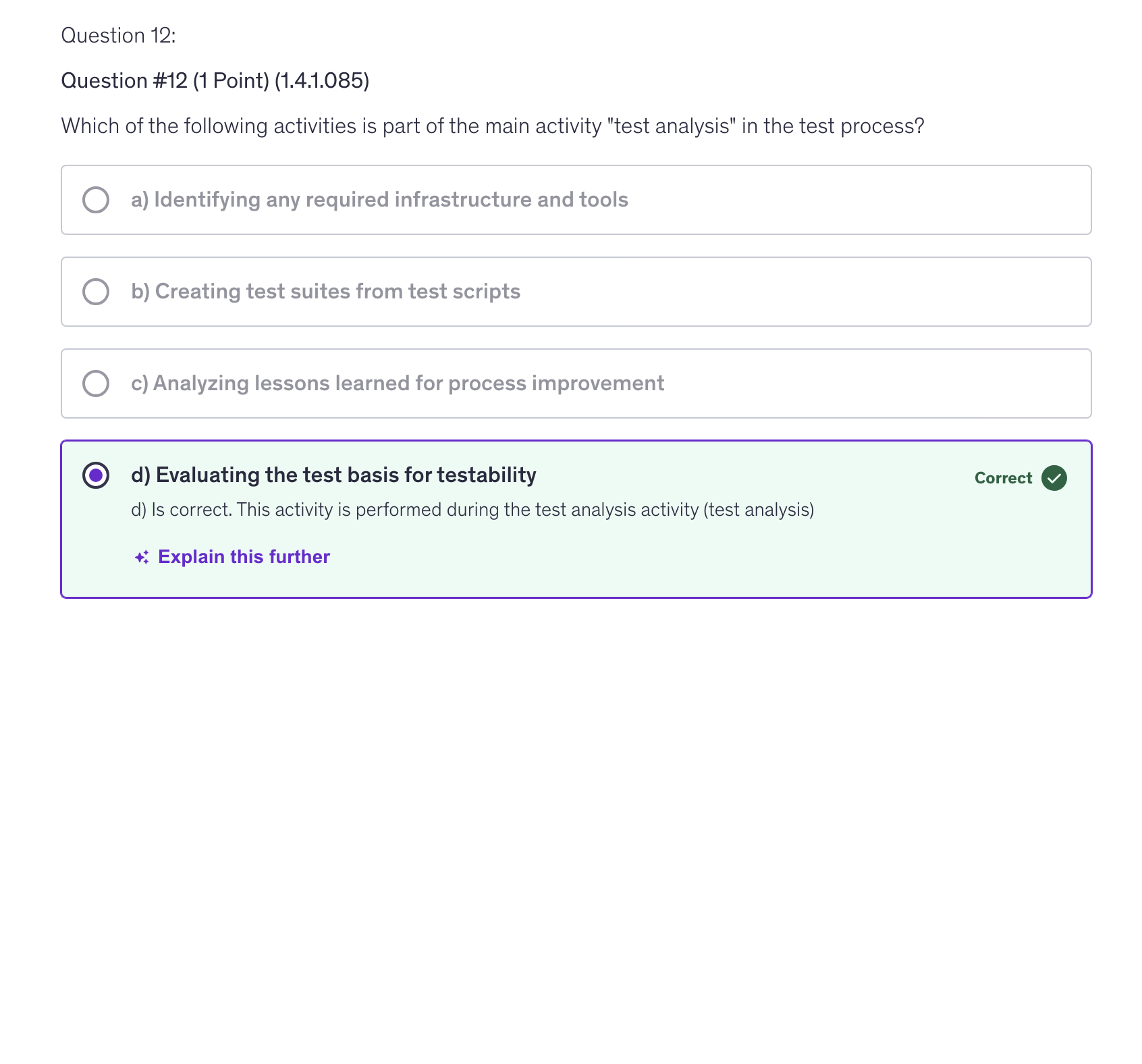
Which of the following activities is part of the main activity "test analysis" in the test process?
d) Evaluating the test basis for testability
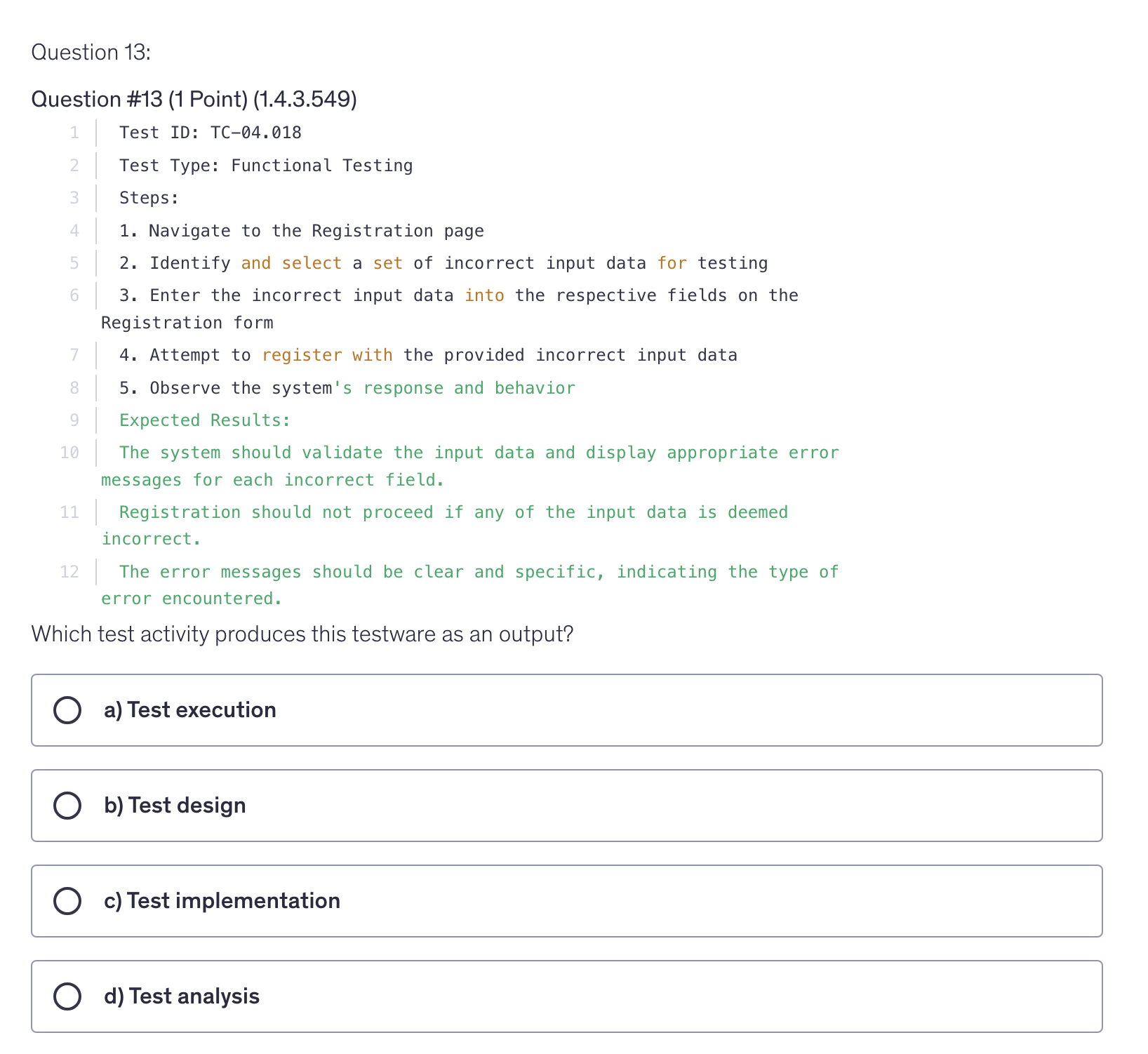
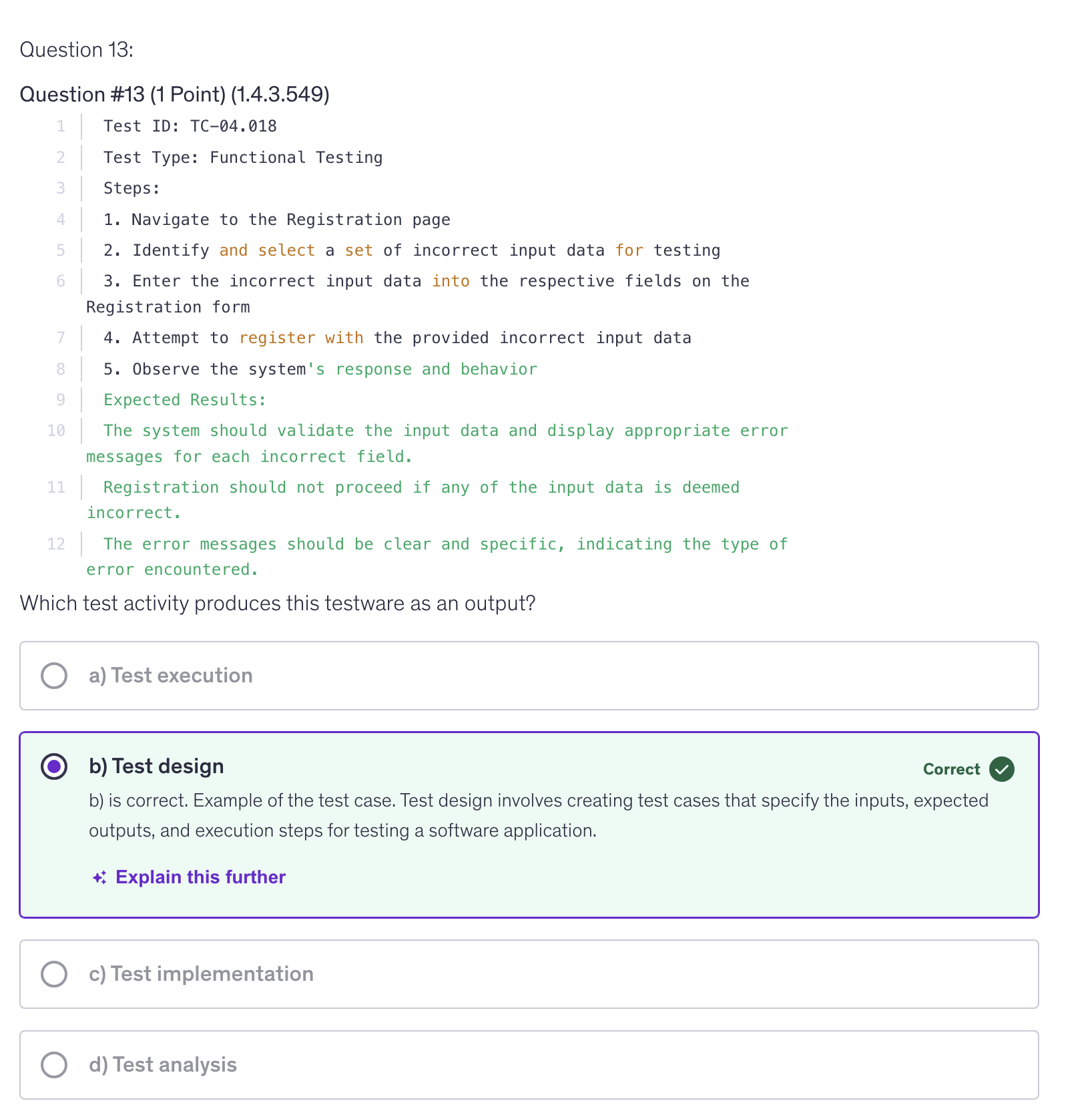
Test ID: TC-04.018
Test Type: Functional Testing
Steps:
1. Navigate to the Registration page
2. Identify and select a set of incorrect input data for testing
3. Enter the incorrect input data into the respective fields on the Registration form
4. Attempt to register with the provided incorrect input data
5. Observe the system's response and behavior
Expected Results:
The system should validate the input data and display appropriate error messages for each incorrect field.
Registration should not proceed if any of the input data is deemed incorrect.
The error messages should be clear and specific, indicating the type of error encountered.
Which test activity produces this testware as an output?
b) Test Design
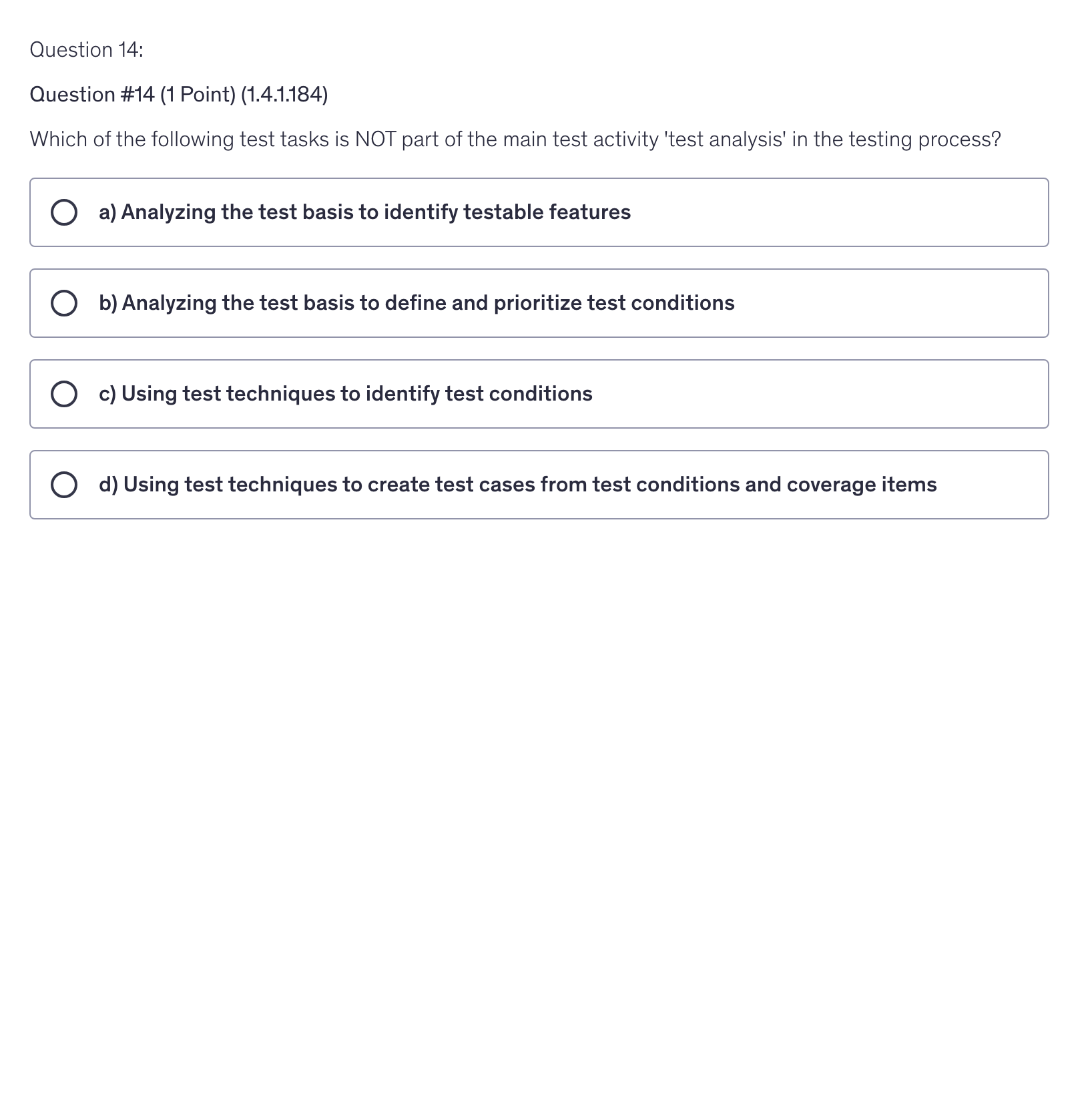
Which of the following test tasks is NOT part of the main test activity 'test analysis' in the testing process?
d) Using test techniques to create test cases from test conditions and coverage items
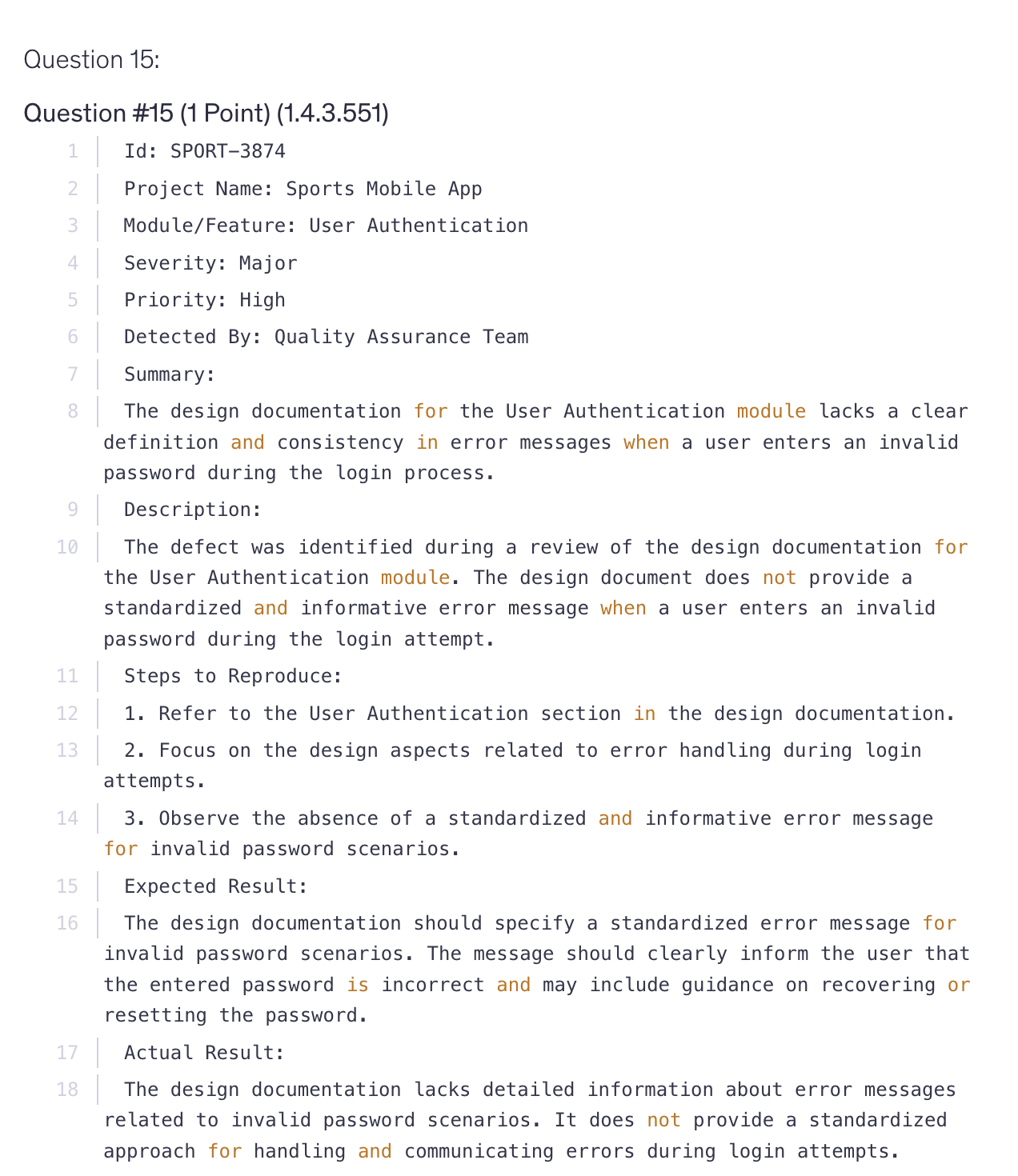
Which test activity produces this testware as an output?
a) Test Analysis
b) Test Design
c) Test Implementation
d) Test Execution
a) Test Analysis
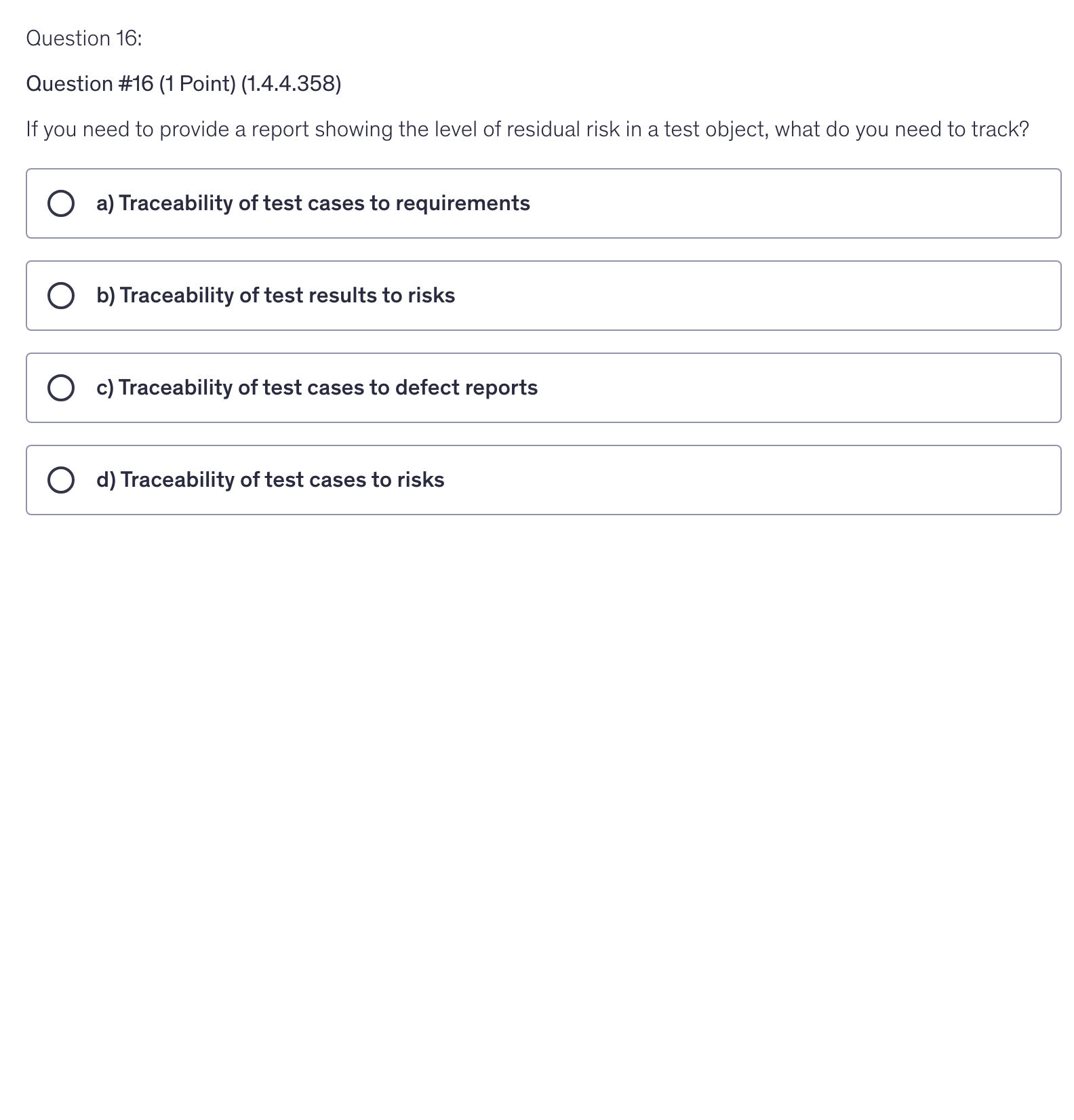
If you need to provide a report showing the level of residual risk in a test object, what do you need to track?
b) Traceability of test results to risks

In the 'Test implementation' activity, what testware is NOT produced as the output?
c) Documentation of the goal or objective for a test session
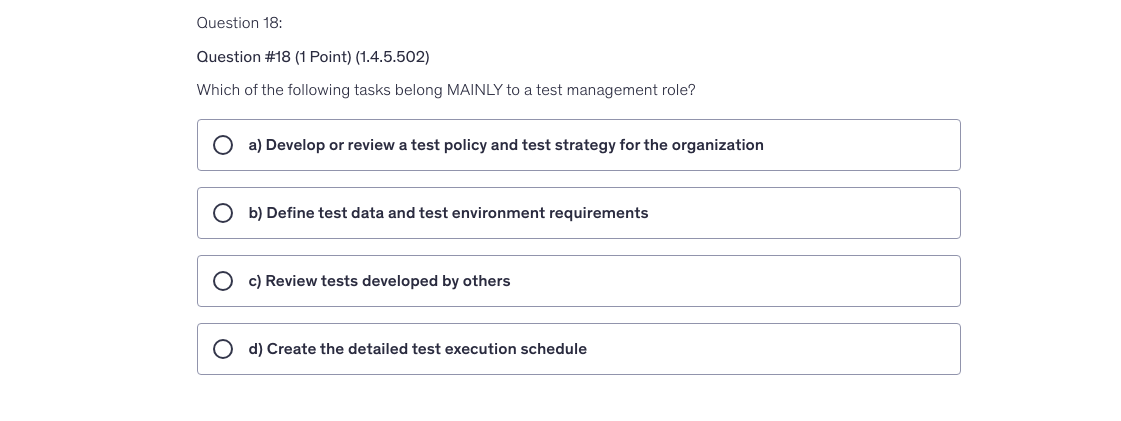
Which of the following tasks belong MAINLY to a test management role?
a) Develop or review a test policy and test strategy for the organization
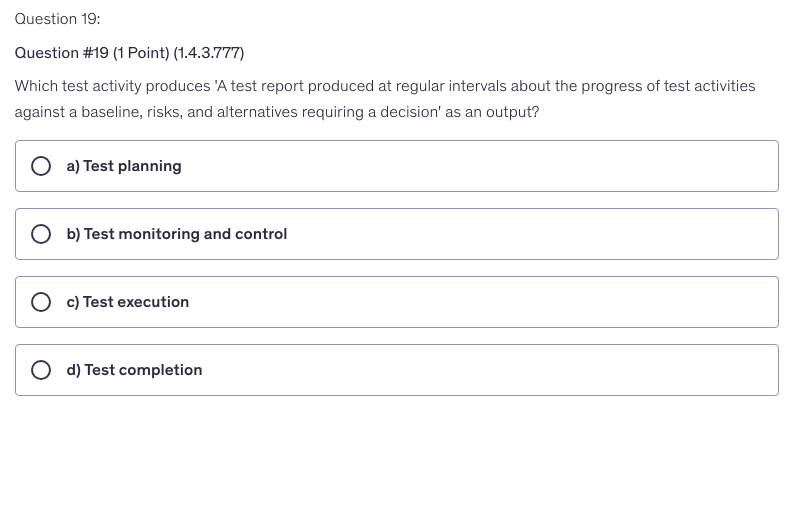
Which test activity produces 'A test report produced at regular intervals about the progress of test activities against a baseline, risks, and alternatives requiring a decision' as an output?
b) Test monitoring and control
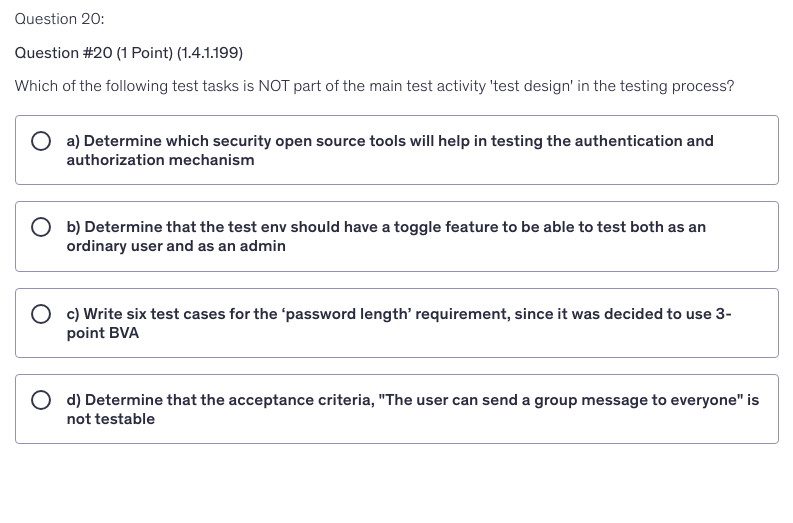
Which of the following test tasks is NOT part of the main test activity 'test design' in the testing process?
d) Determine that the acceptance criteria, “The user can send a group message to everyone” is not testable
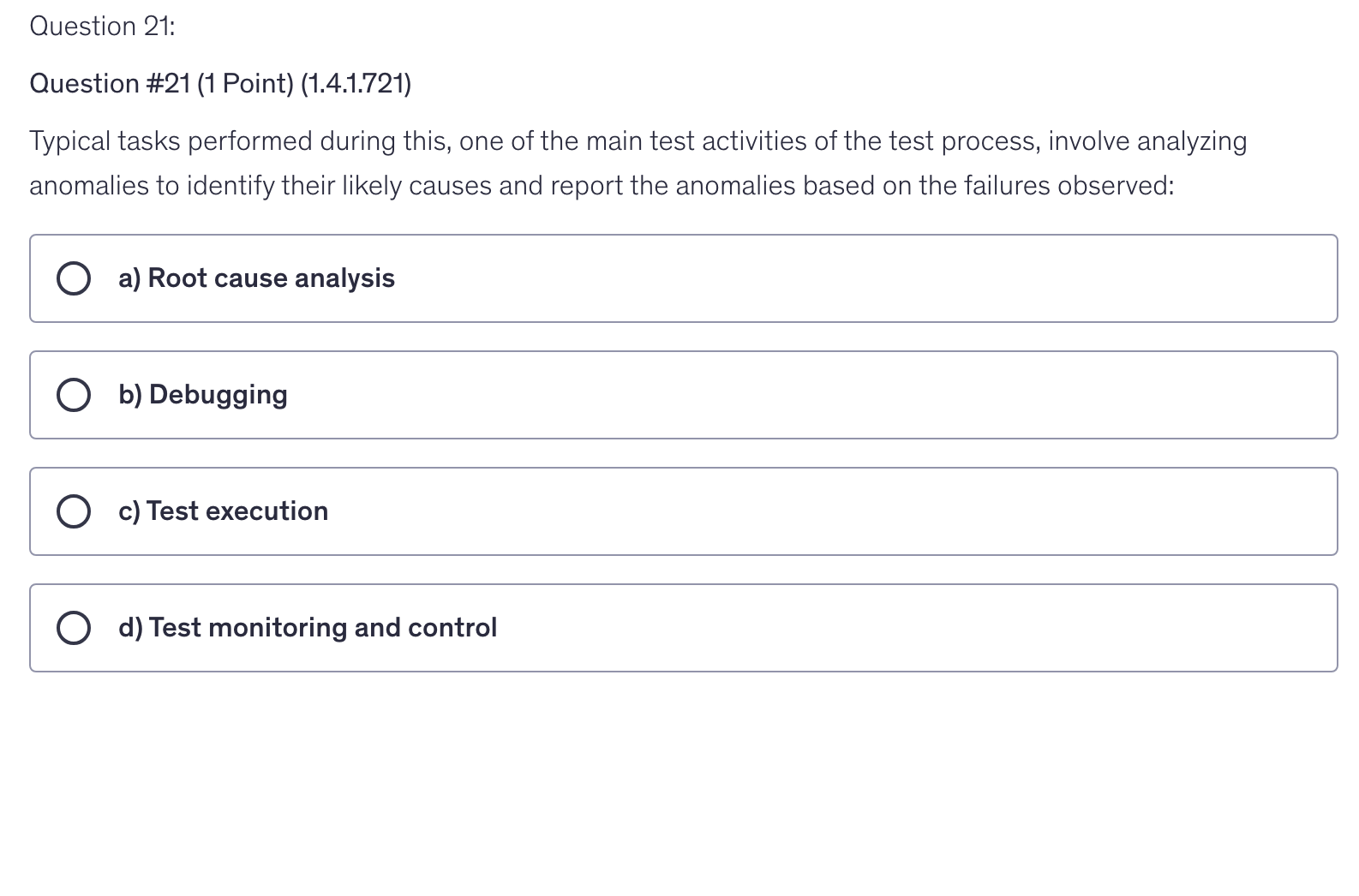
Typical tasks performed during this, one of the main test activities of the test process, involve analyzing anomalies to identify their likely causes and report the anomalies based on the failures observed:
c) Test execution
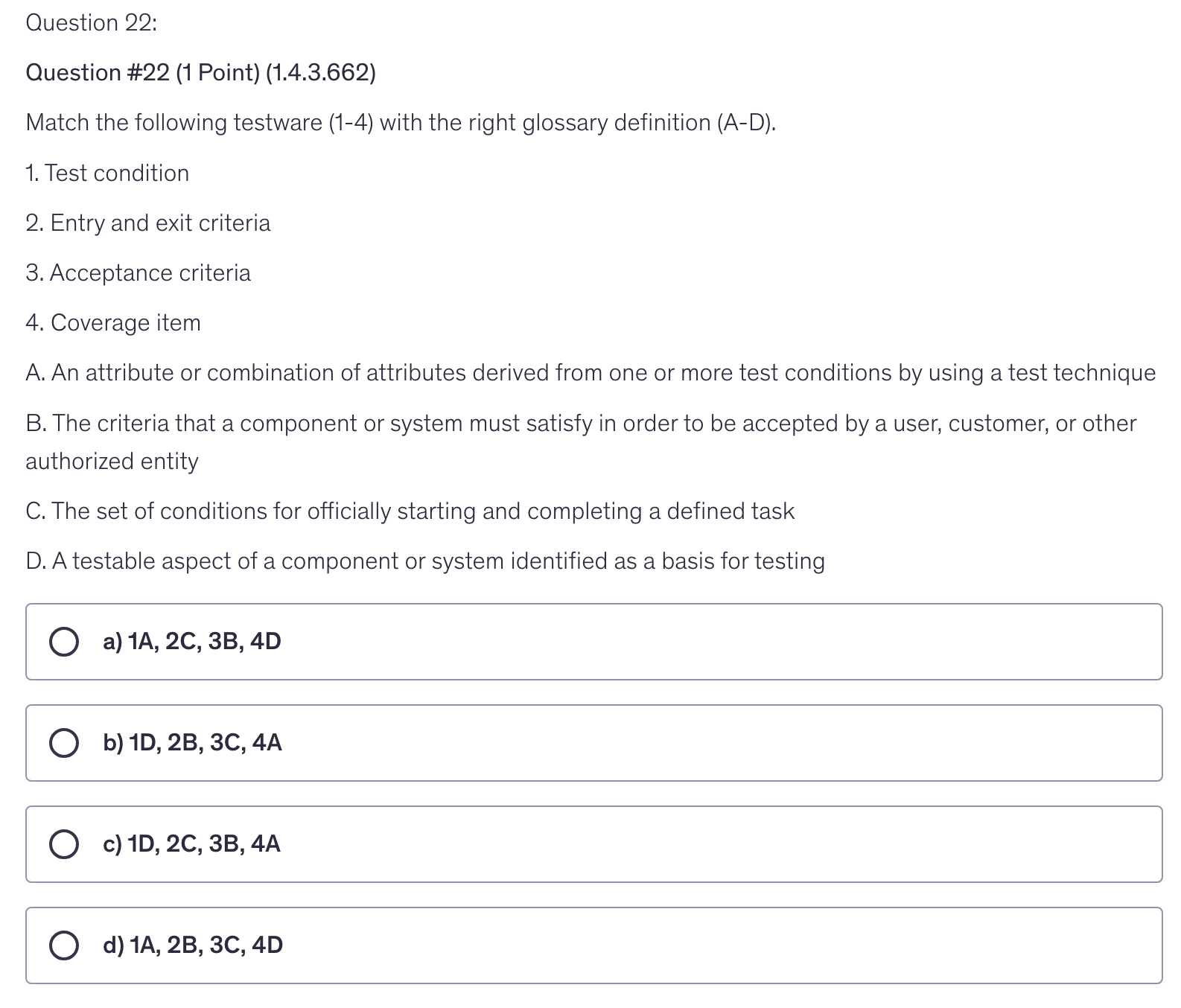
Match the following testware (1-4) with the right glossary definition (A-D).
1. Test condition
2. Entry and exit criteria
3. Acceptance criteria
4. Сoverage item
A. An attribute or combination of attributes derived from one or more test conditions by using a test technique
B. The criteria that a component or system must satisfy in order to be accepted by a user, customer, or other authorized entity
C. The set of conditions for officially starting and completing a defined task
D. A testable aspect of a component or system identified as a basis for testing
c) 1D, 2C, 3B, 4A
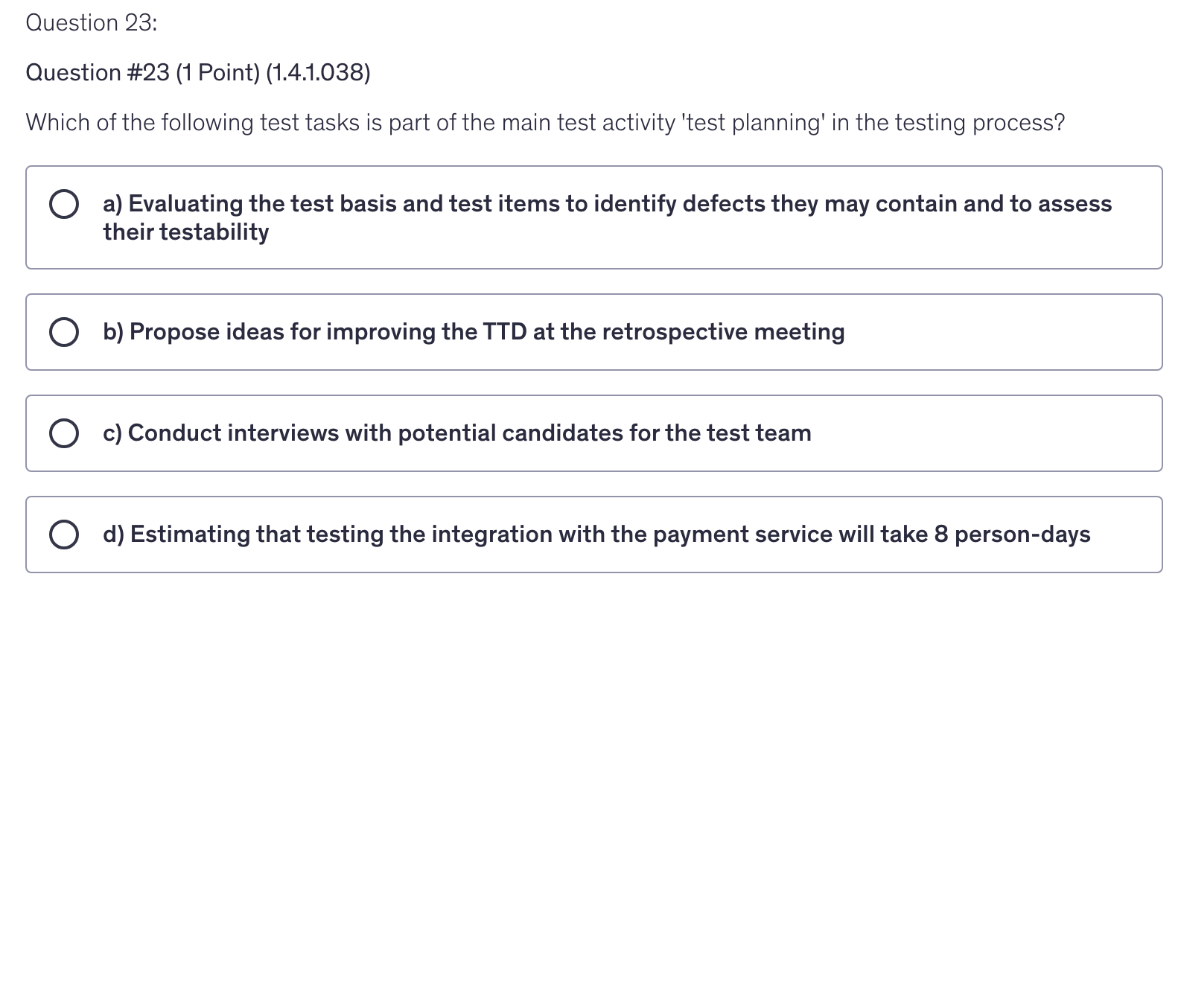
Which of the following test tasks is part of the main test activity 'test planning' in the testing process?
d) Estimating that testing the integration with the payment service will take 8 in-person days
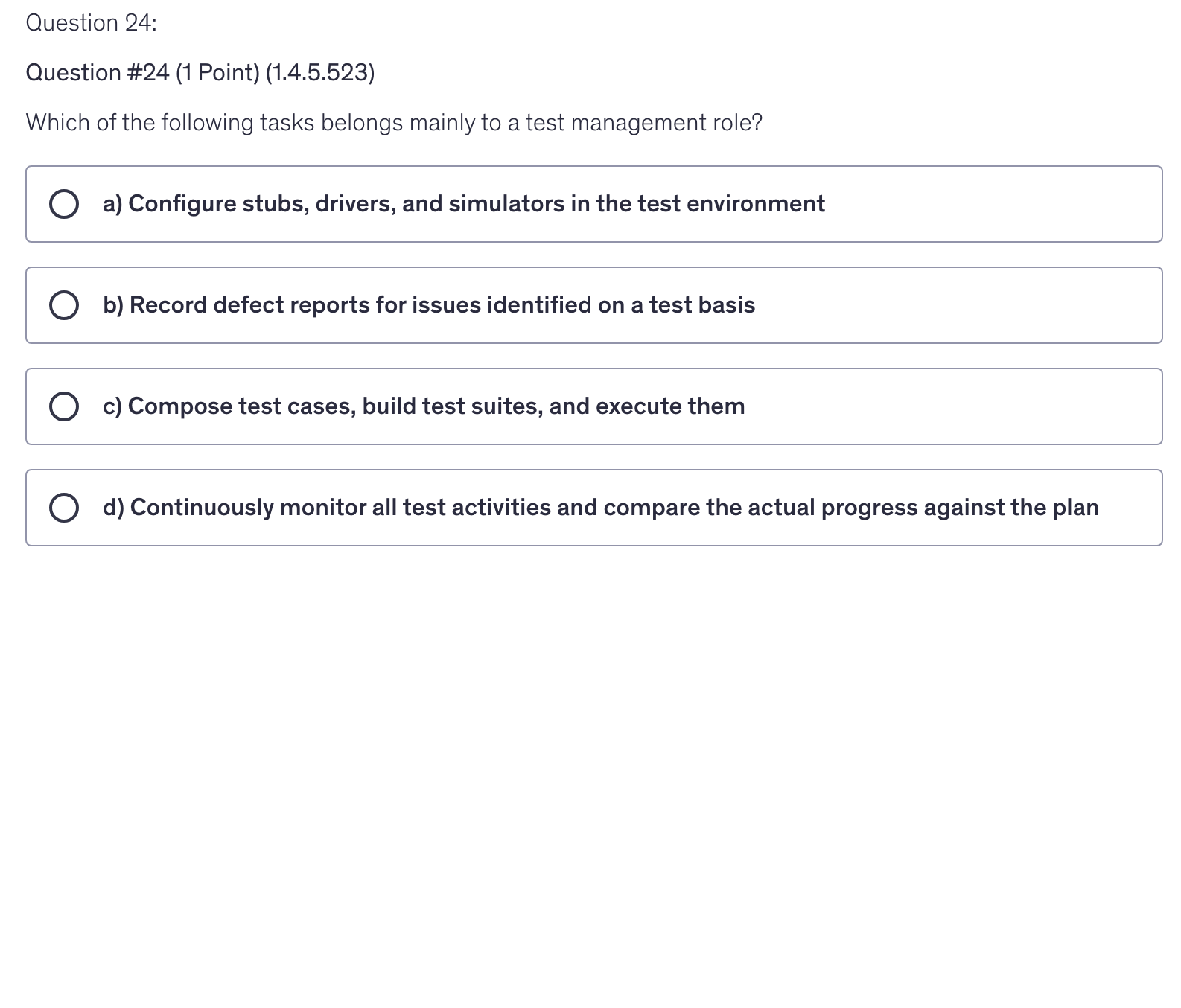
Which of the following tasks belongs mainly to a test management role?
d) Continuously monitor all test activities and compare the actual progress against the plan
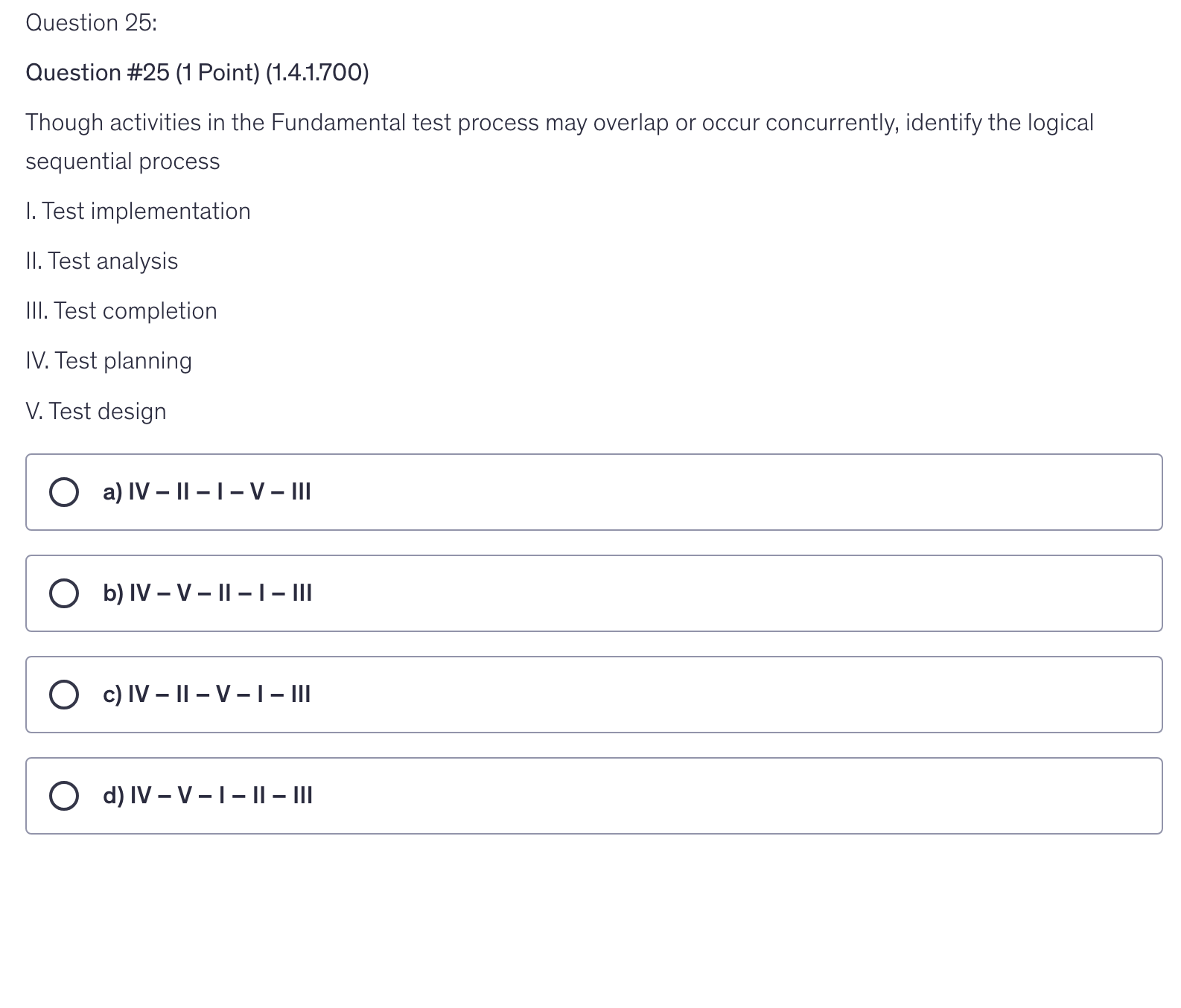
Though activities in the Fundamental test process may overlap or occur concurrently, identify the logical sequential process
I. Test implementation
II. Test analysis
III. Test completion
IV. Test planning
V. Test design
c) IV - II - V - I - III
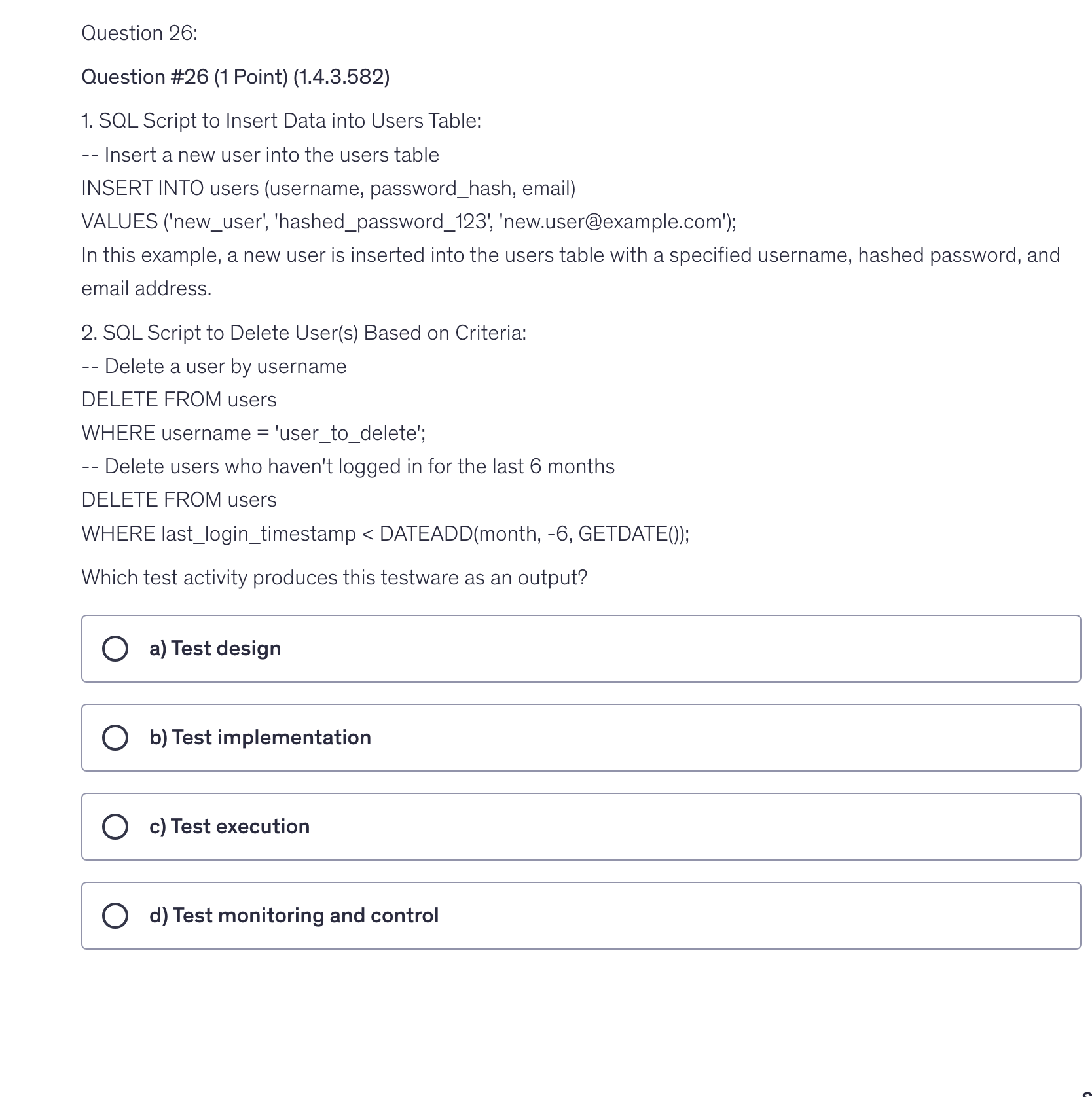
Which test activity produces this testware as an output?
b) Test Implementation
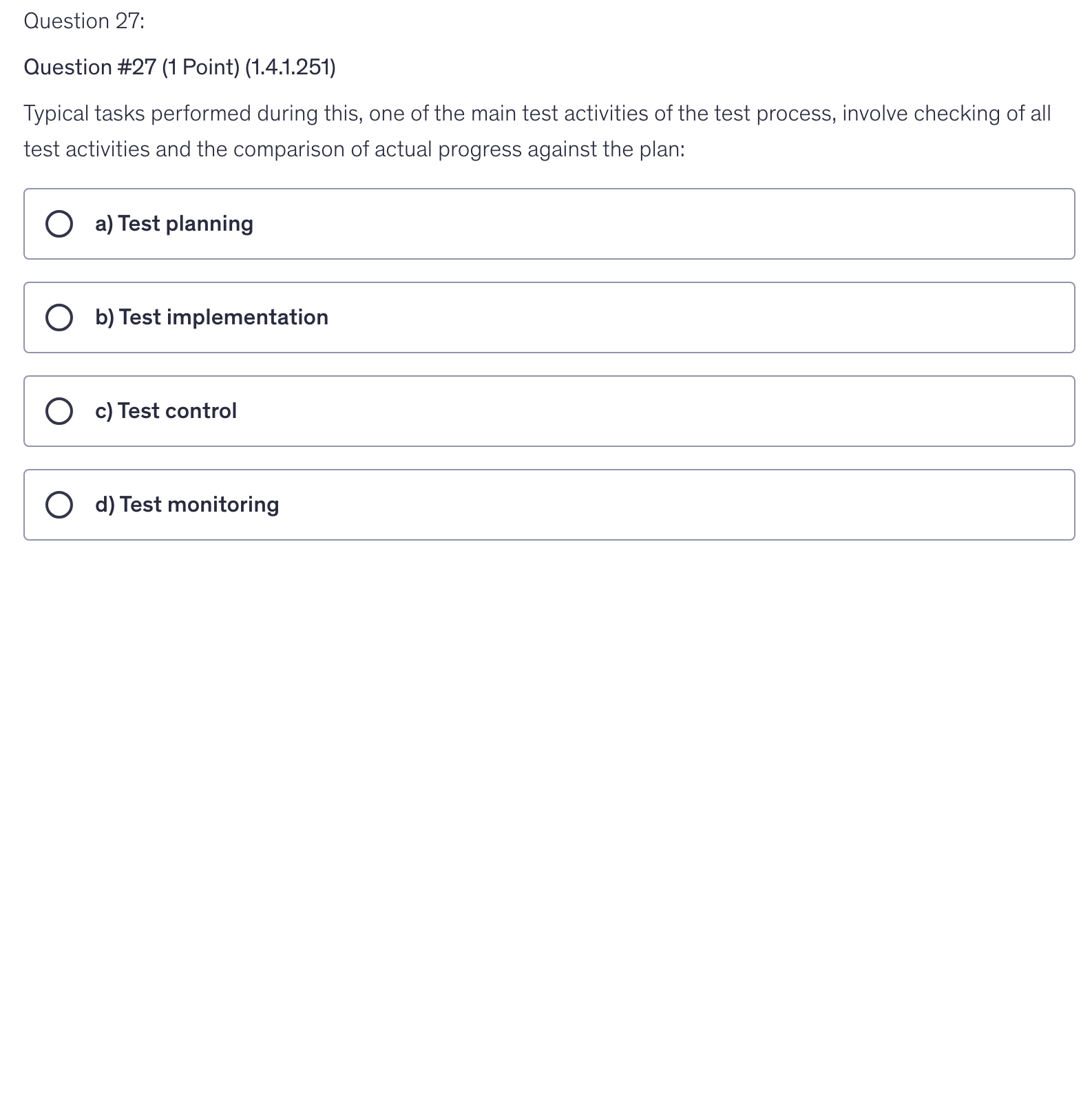
Typical tasks performed during this, one of the main test activities of the test process, involve checking of all test activities and the comparison of actual progress against the plan:
d) Test monitoring
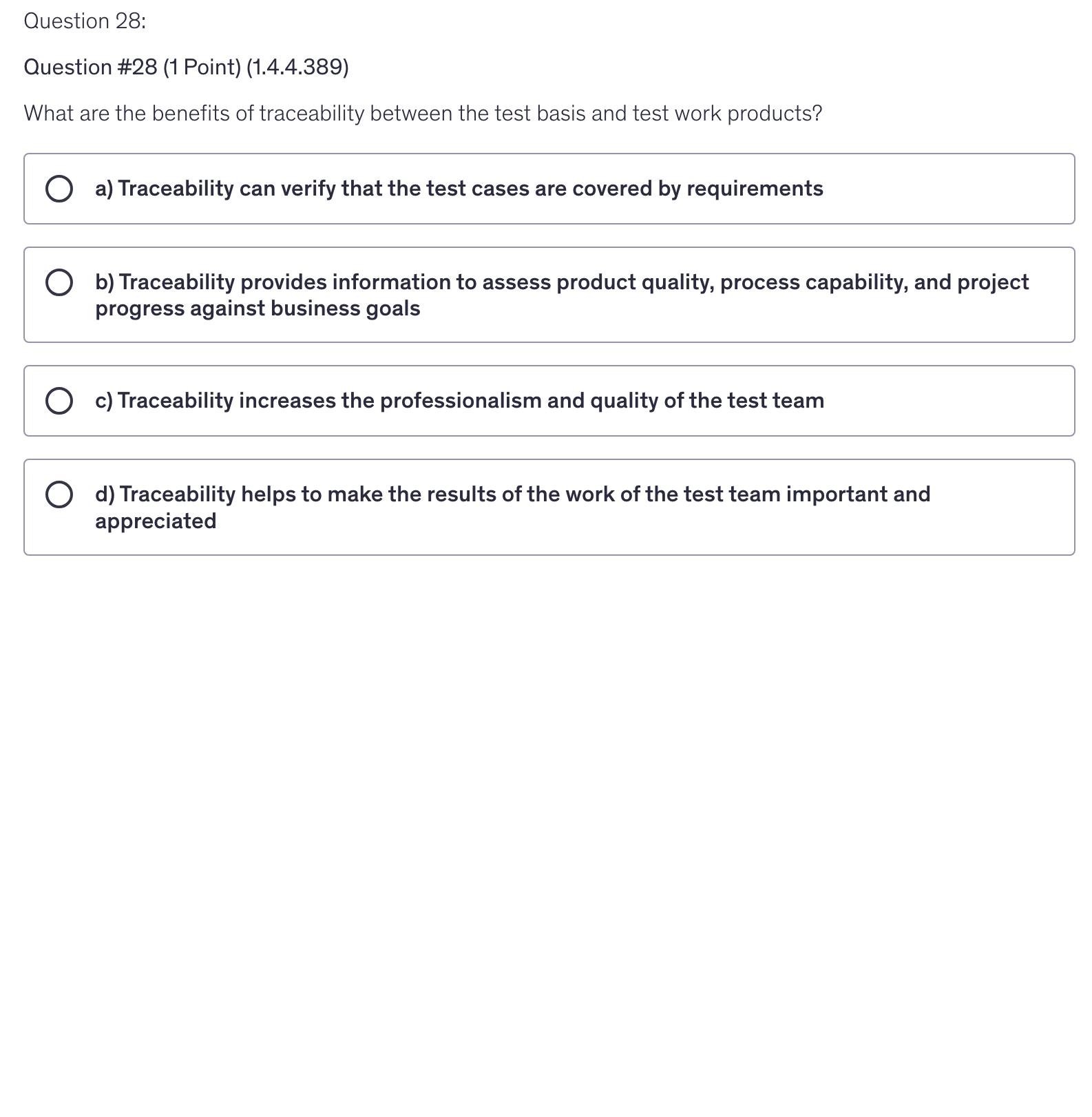
What are the benefits of traceability between the test basis and test work products?
b) Traceability provides information to assess product quality, process capability, and project progress against business goals
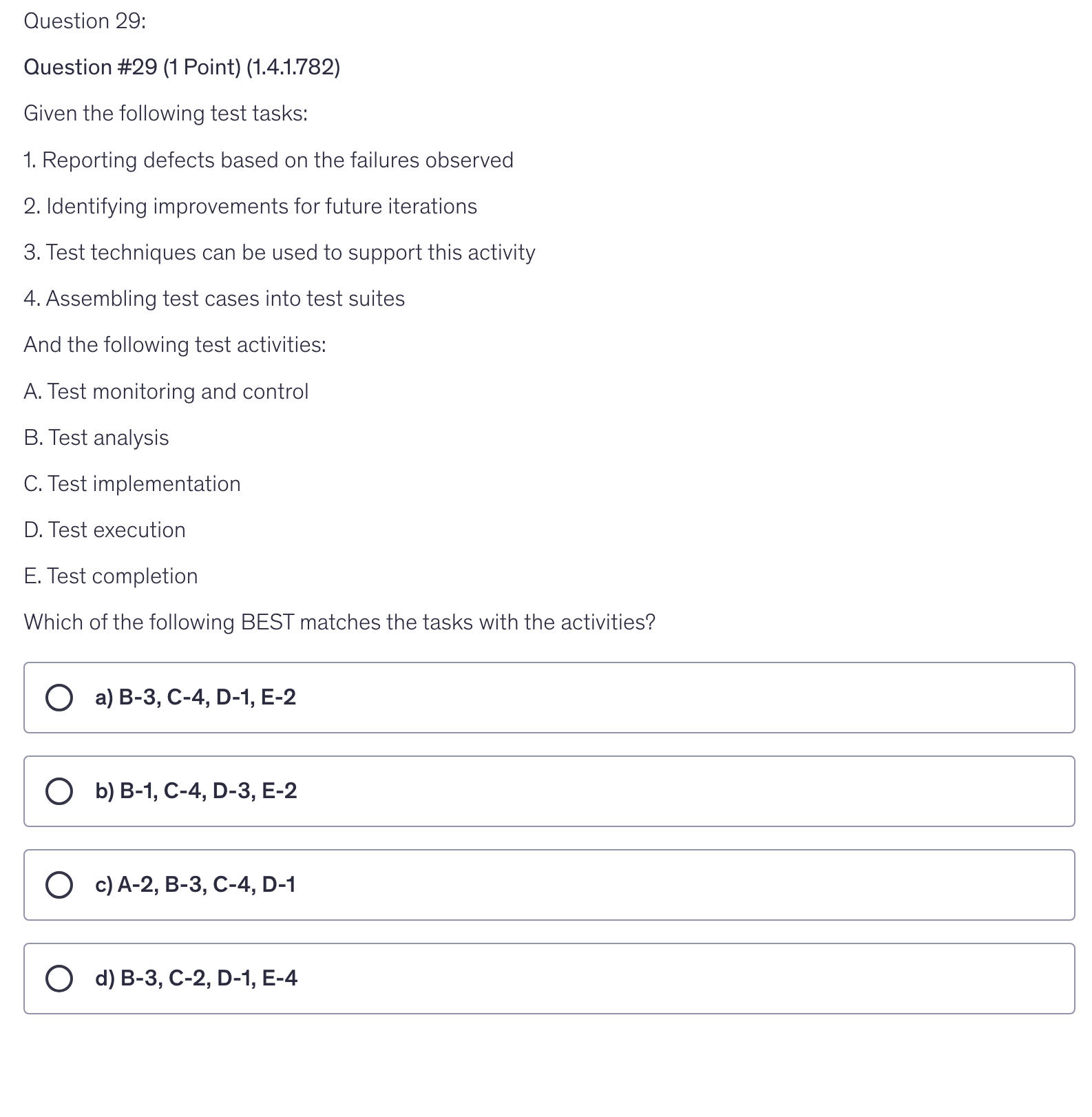
Given the following test tasks:
1. Reporting defects based on the failures observed
2. Identifying improvements for future iterations
3. Test techniques can be used to support this activity
4. Assembling test cases into test suites
And the following test activities:
A. Test monitoring and control
B. Test analysis
C. Test implementation
D. Test execution
E. Test completion
Which of the following BEST matches the tasks with the activities?
a) B-3, C-4, D-1, E-2
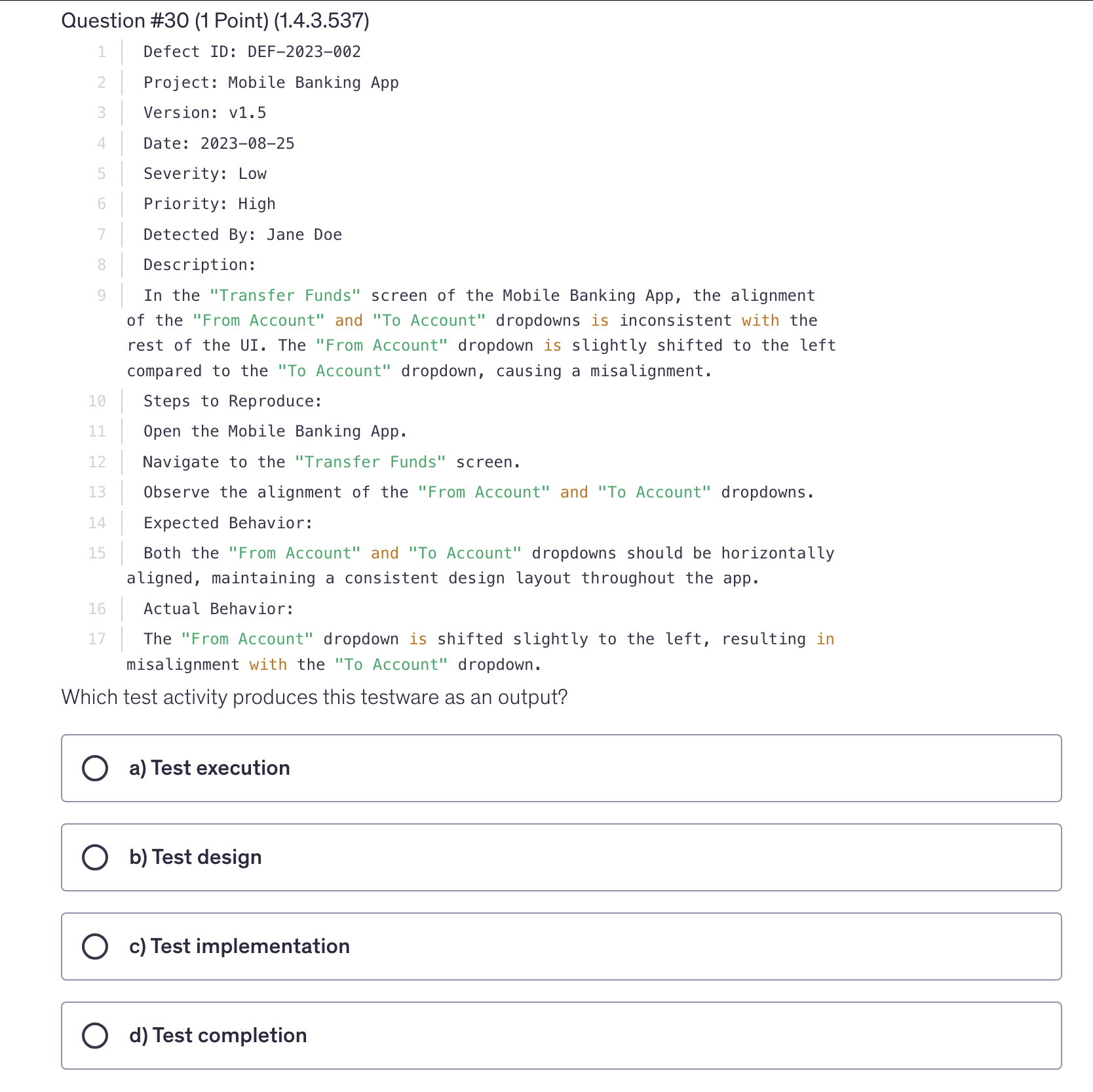
Which test activity produces this testware as an output?
a) Test execution
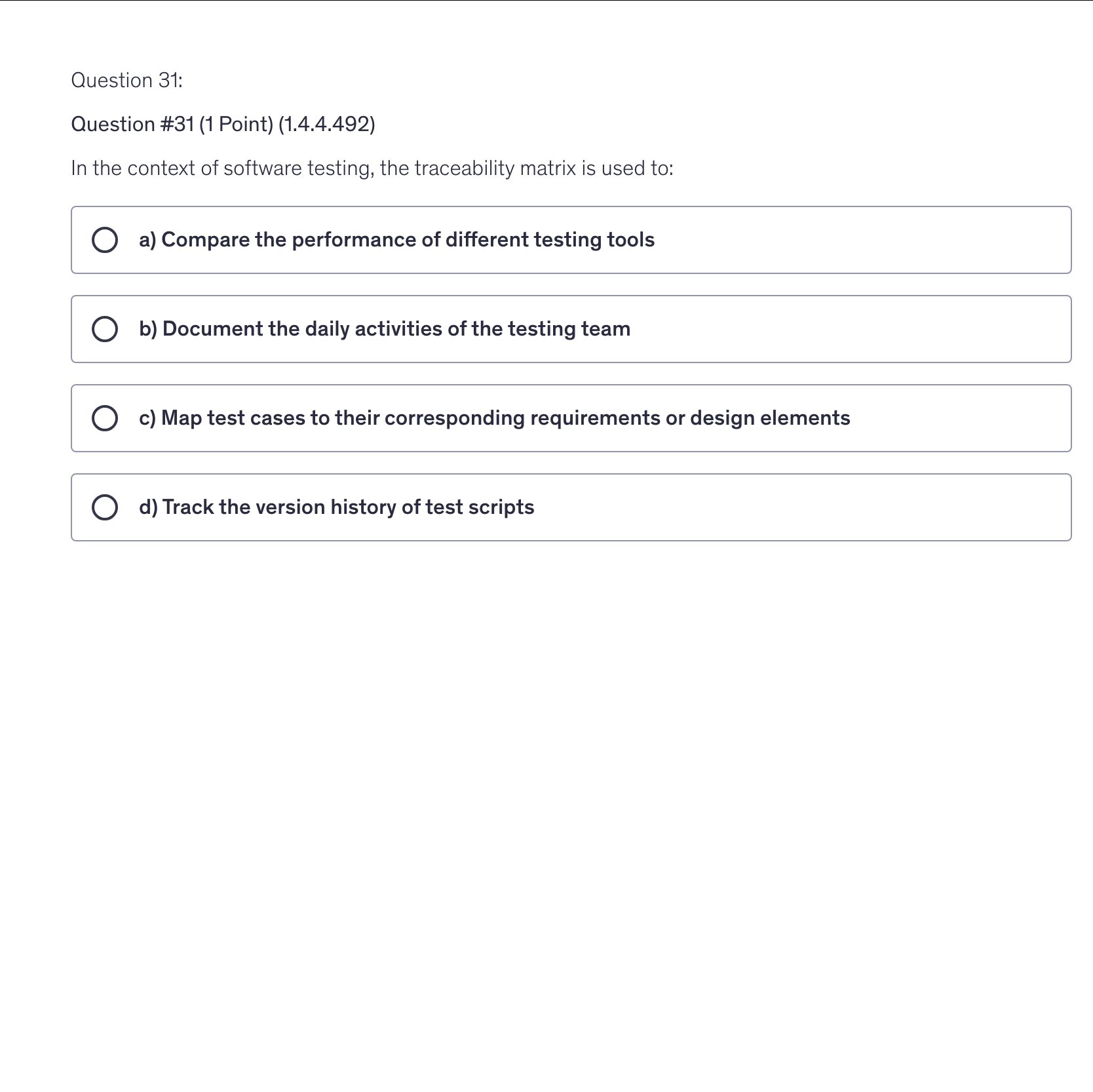
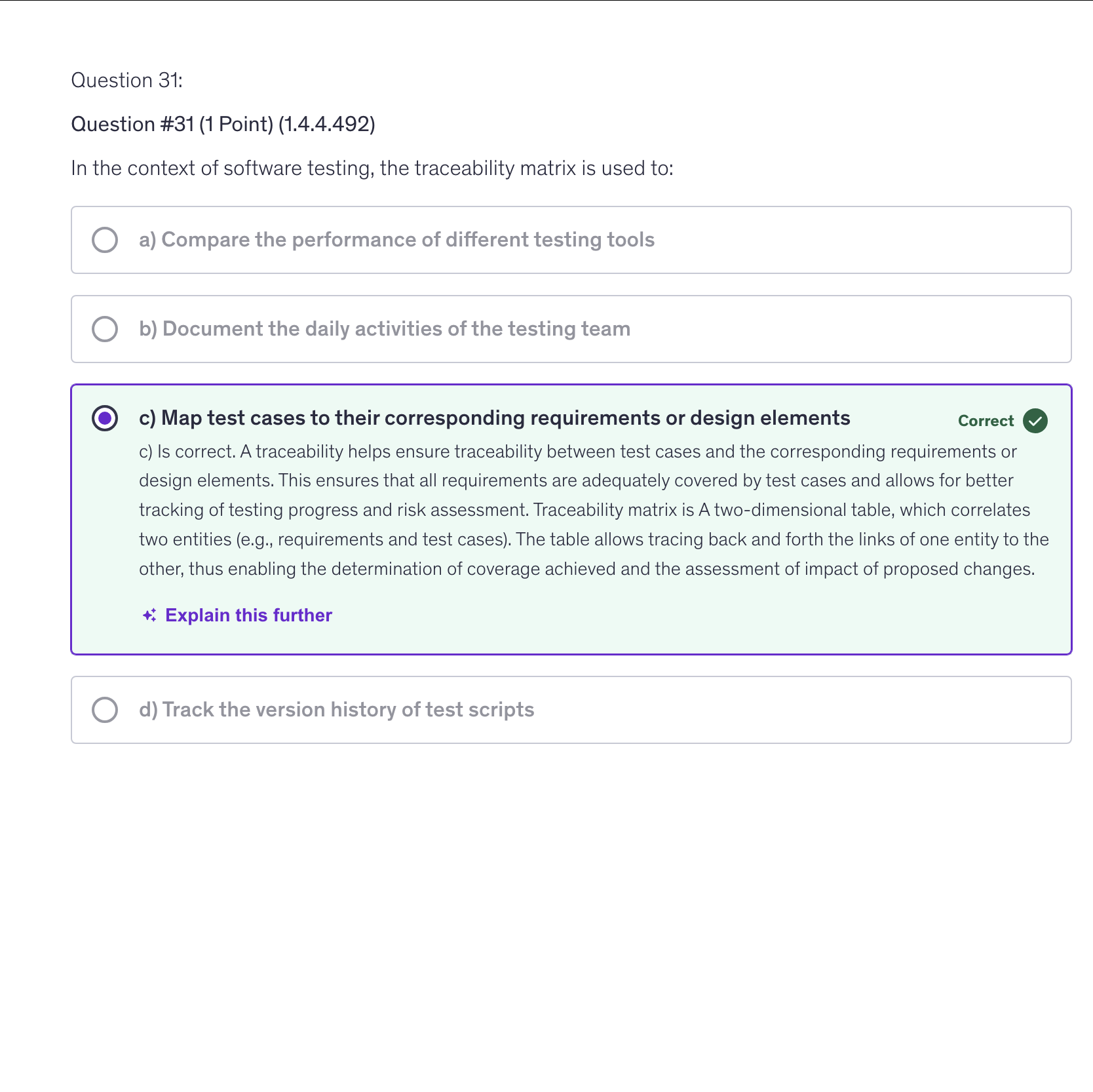
In the context of software testing, the traceability matrix is used to:
c) Map test cases to their corresponding requirements or design elements
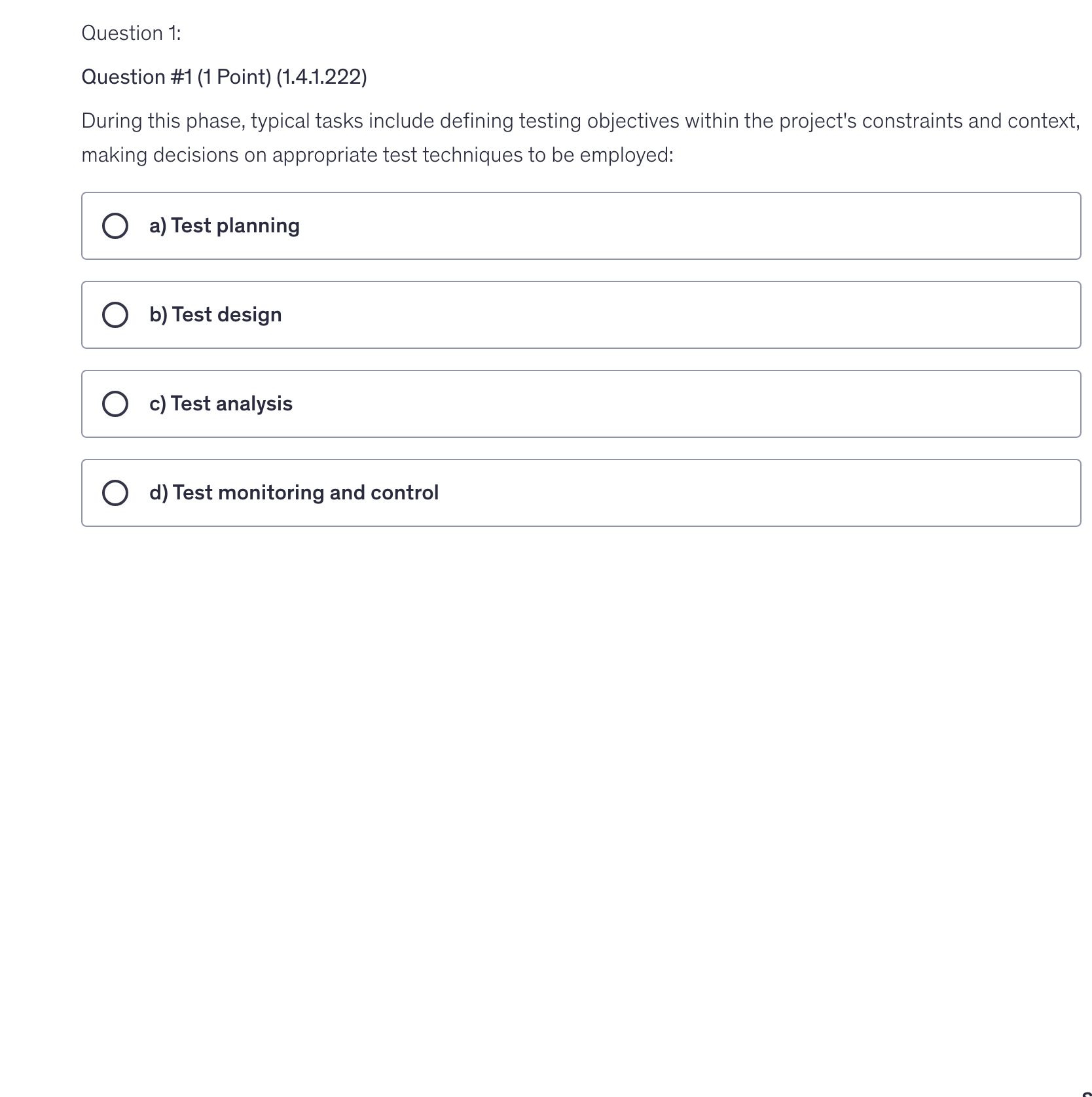
During this phase, typical tasks include defining testing objectives within the project's constraints and context, making decisions on appropriate test techniques to be employed:
a) Test planning
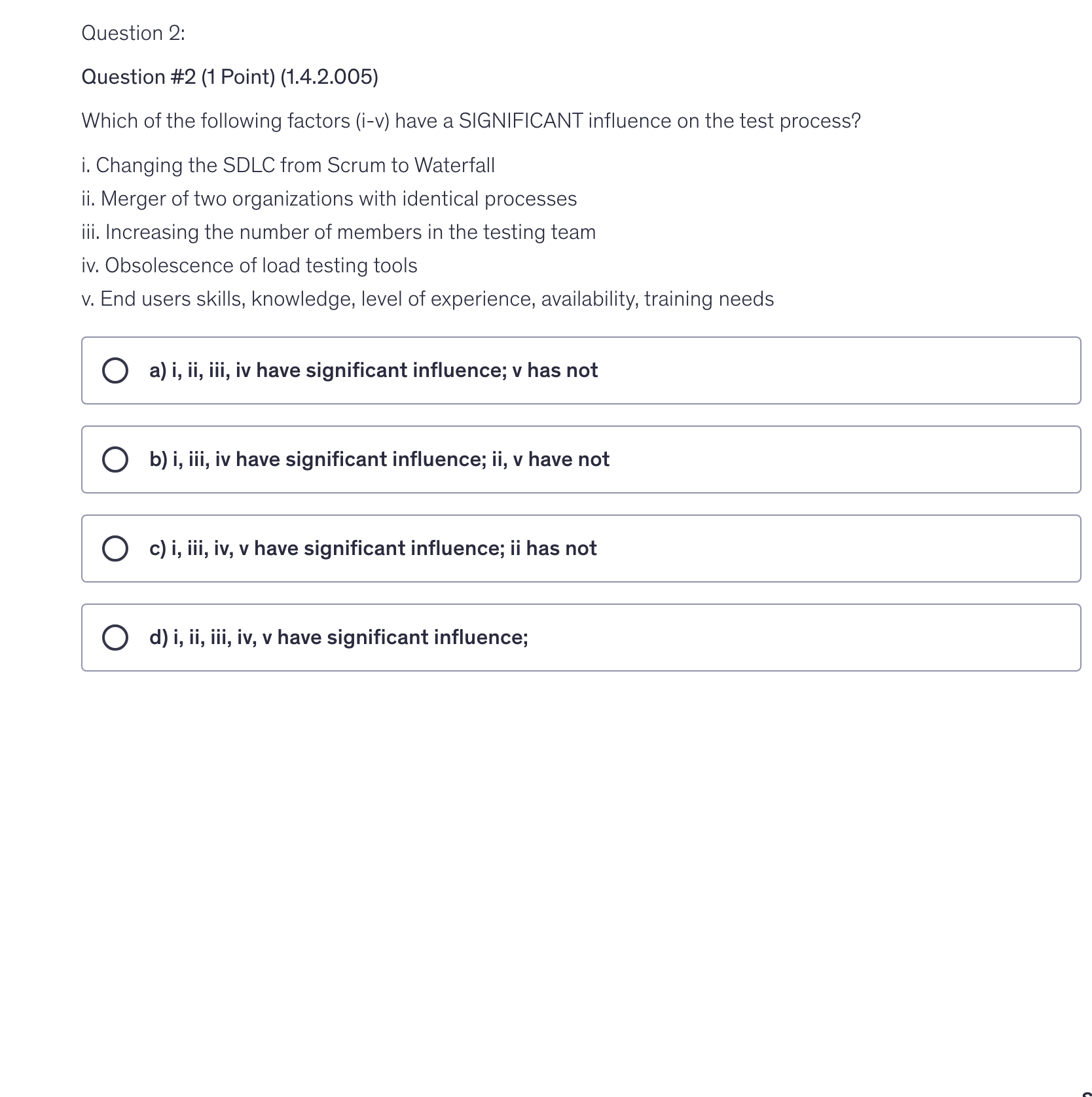
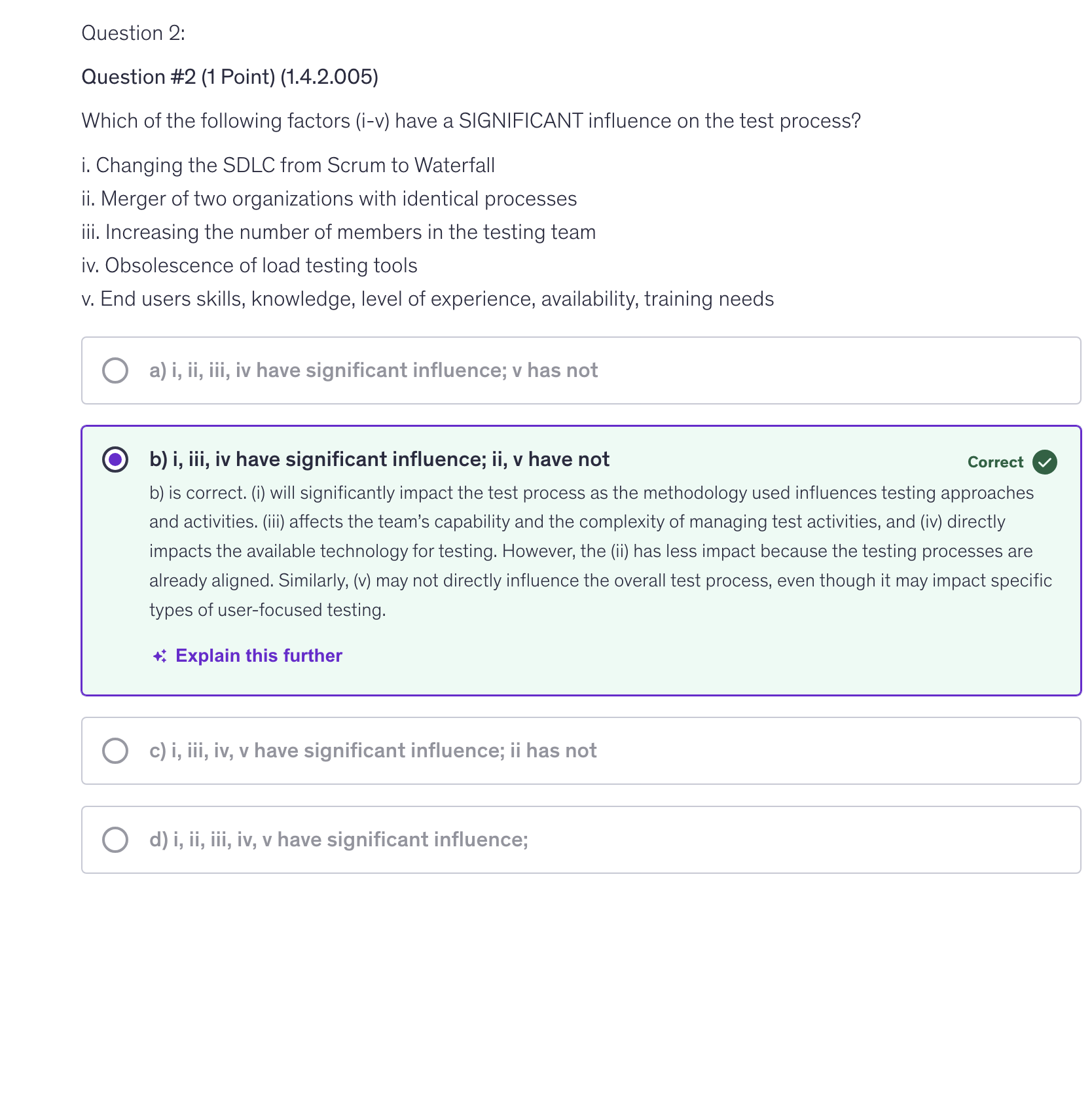
Which of the following factors (i-v) have a SIGNIFICANT influence on the test process?
i. Changing the SDLC from Scrum to Waterfall
ii. Merger of two organizations with identical processes
iii. Increasing the number of members in the testing team
iv. Obsolescence of load testing tools
v. End users skills, knowledge, level of experience, availability, training needs
b) i, iii, iv have significant influence; ii and v do not
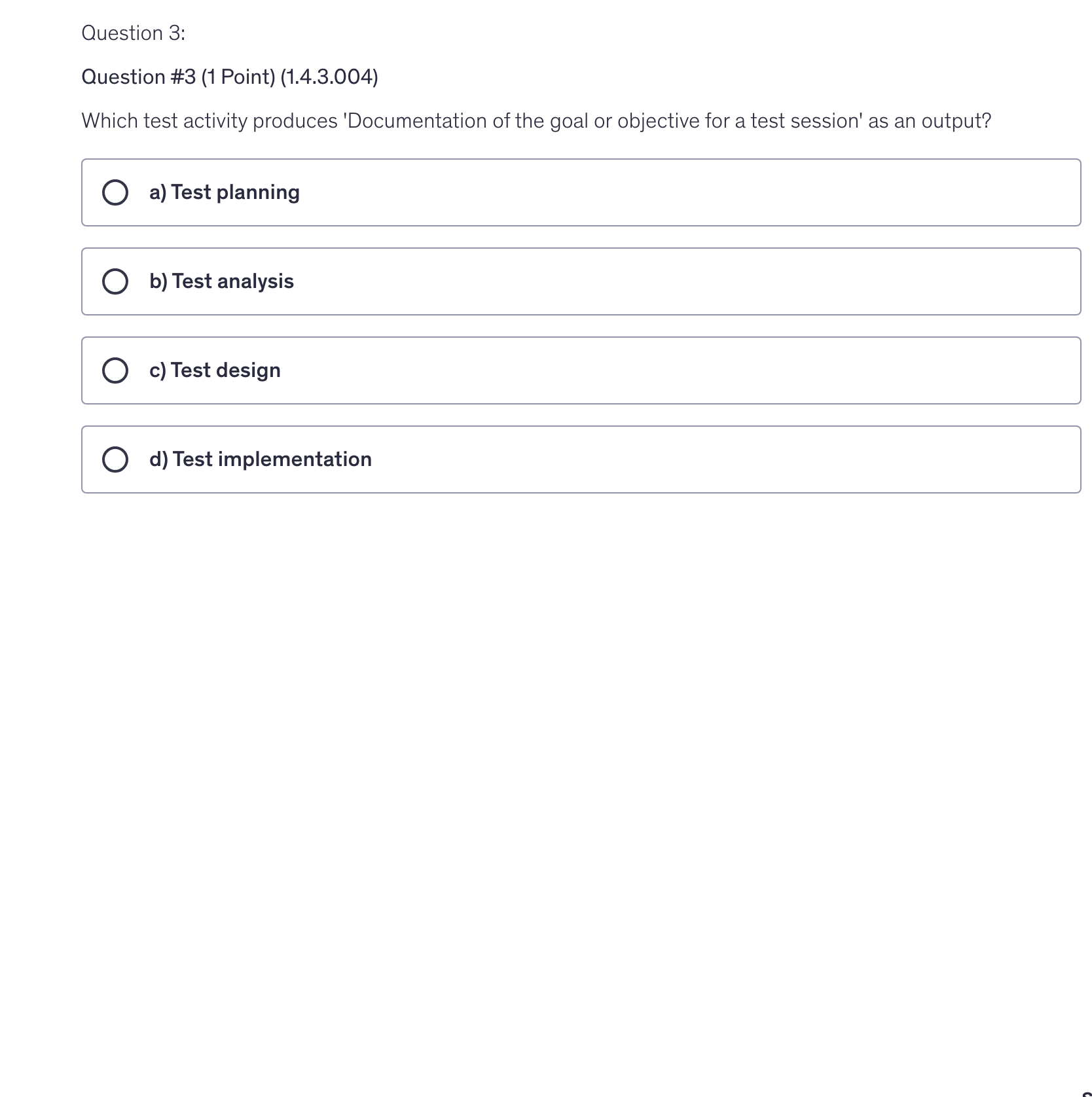
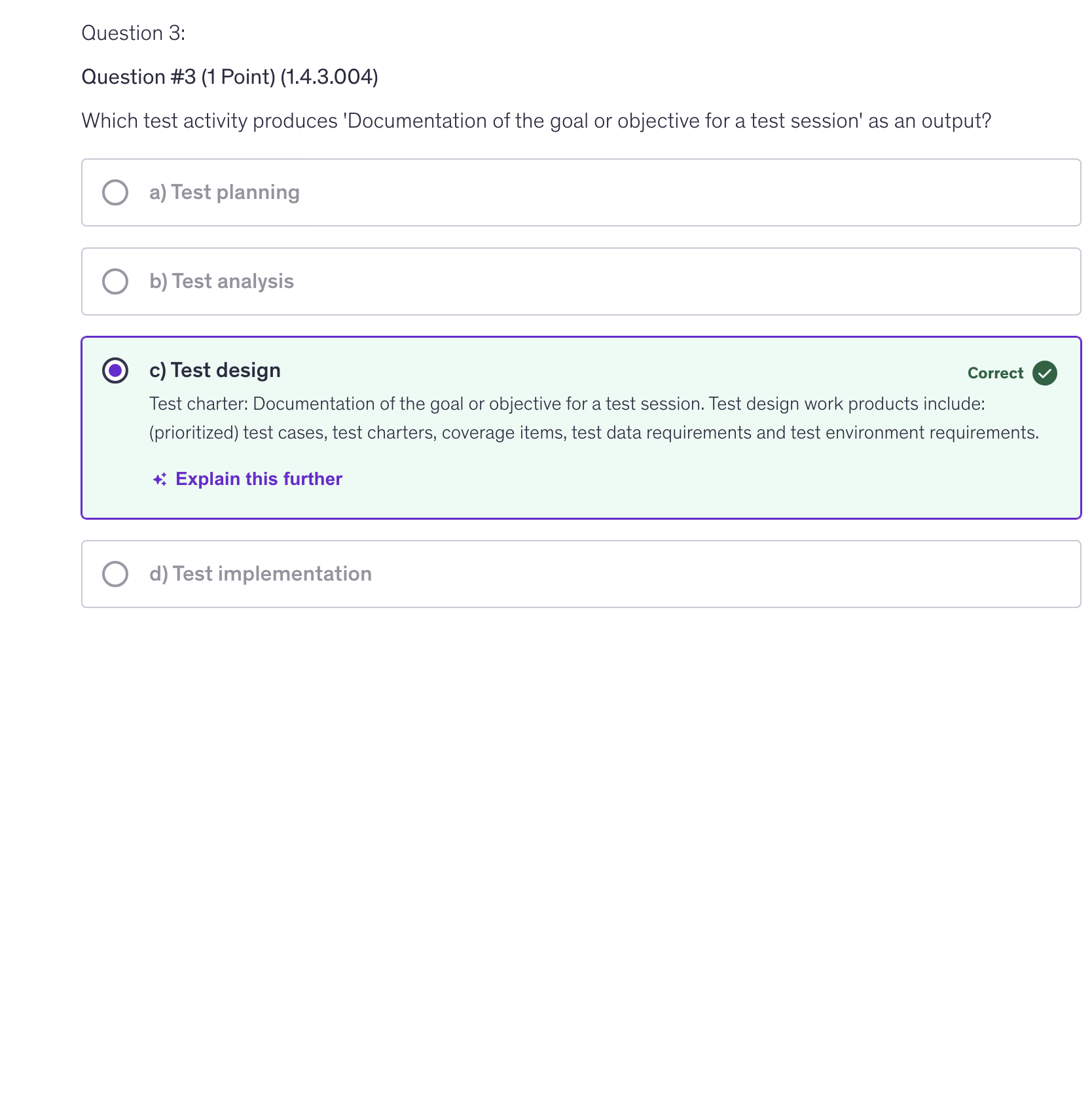
Which test activity produces 'Documentation of the goal or objective for a test session' as an output?
c) Test design
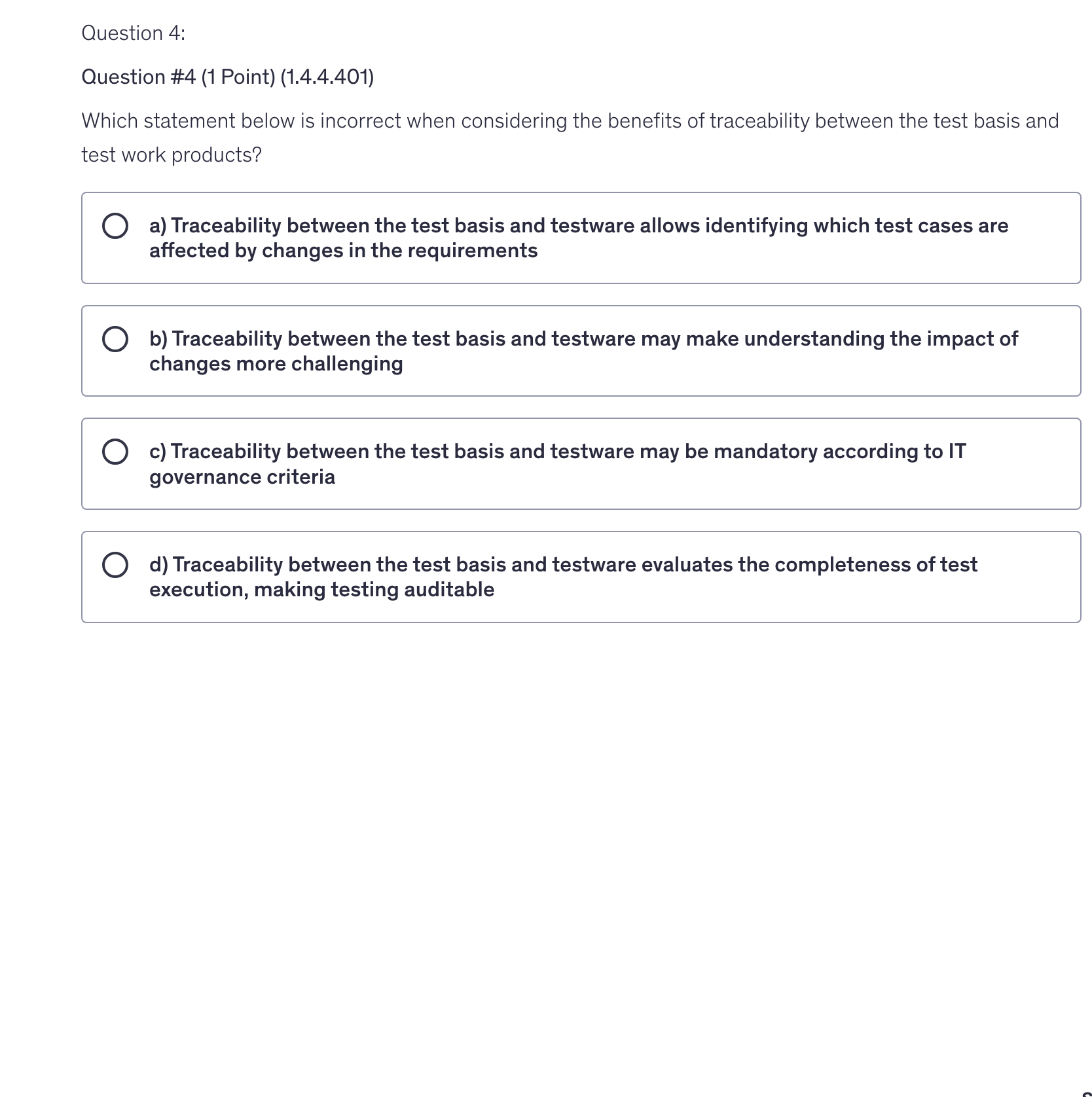
Which statement below is incorrect when considering the benefits of traceability between the test basis and test work products?
b) Traceability between the test basis and testware may make understanding the impact of changes more challenging
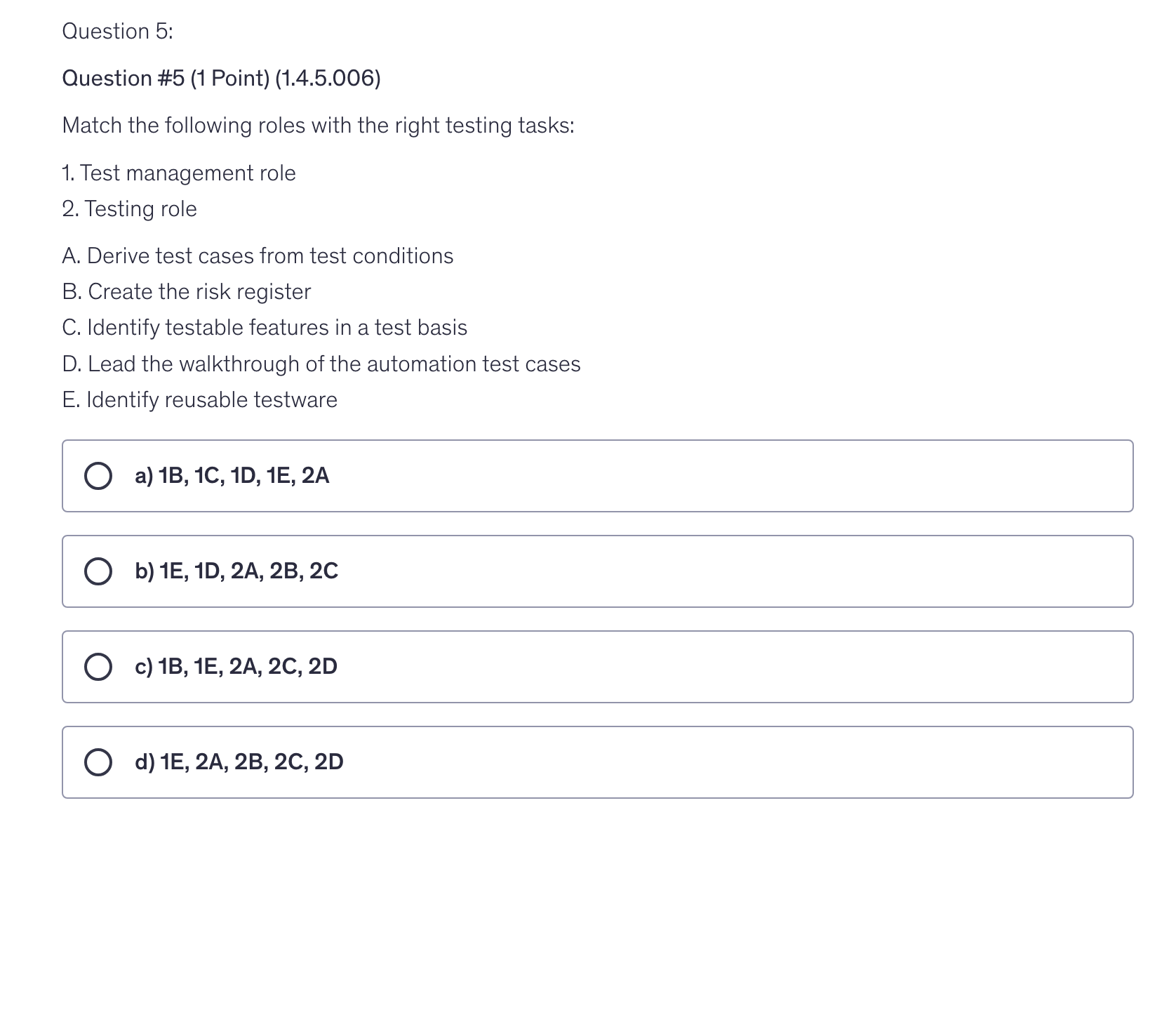
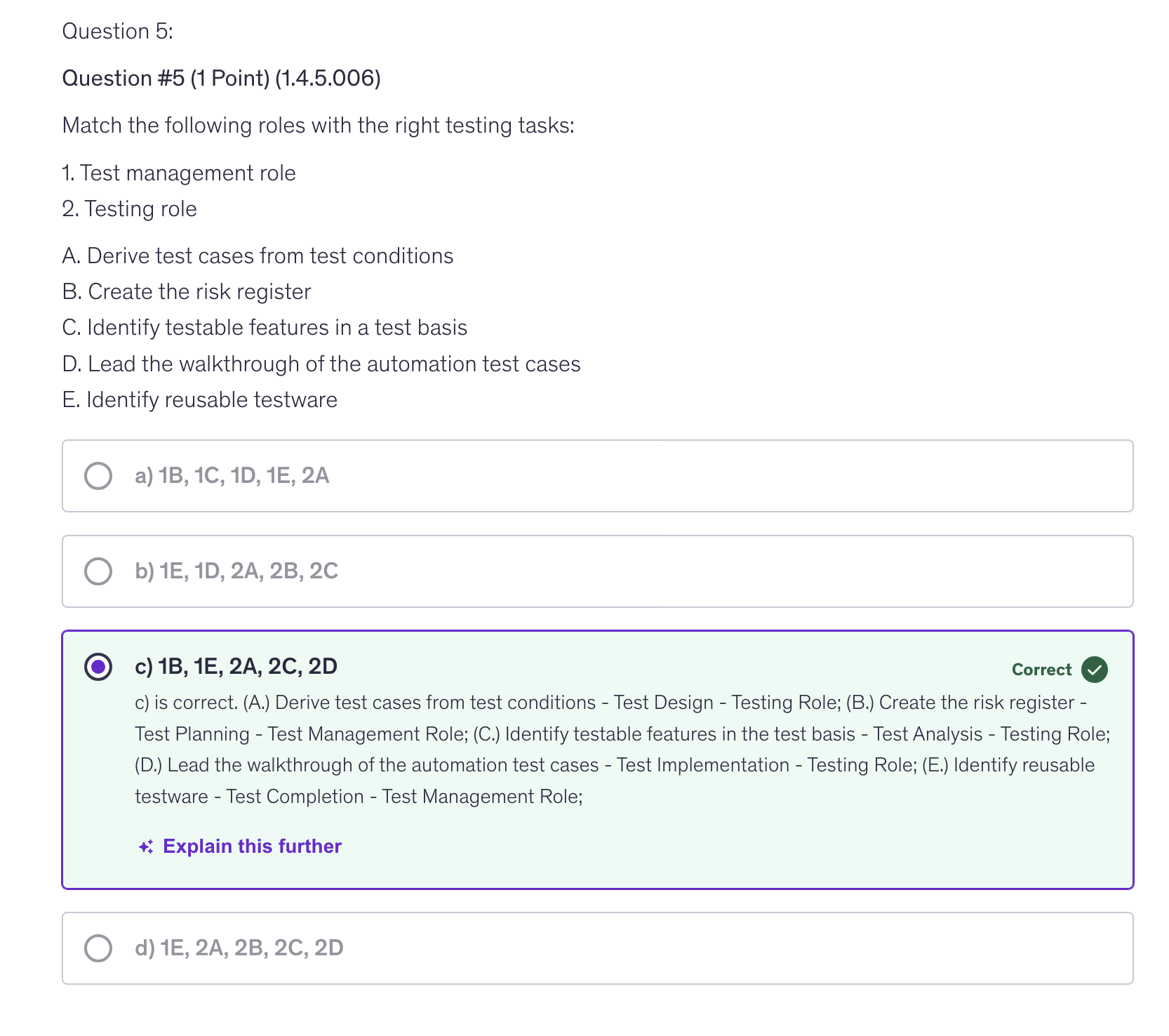
Match the following roles with the right testing tasks:
1. Test management role
2. Testing role
A. Derive test cases from test conditions
B. Create the risk register
C. Identify testable features in a test basis
D. Lead the walkthrough of the automation test cases
E. Identify reusable testware
c) 1B, 1E, 2A, 2C, 2D
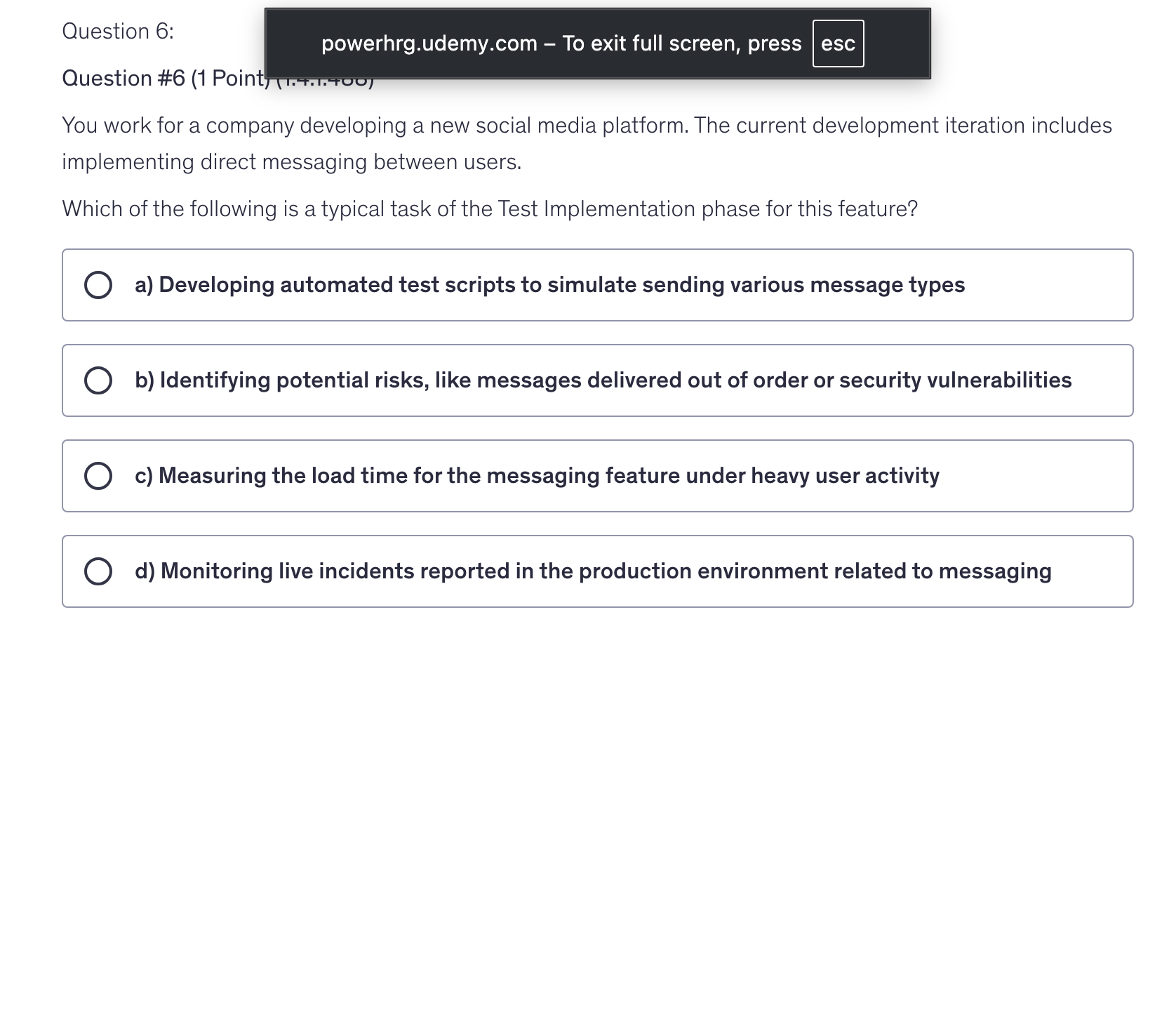
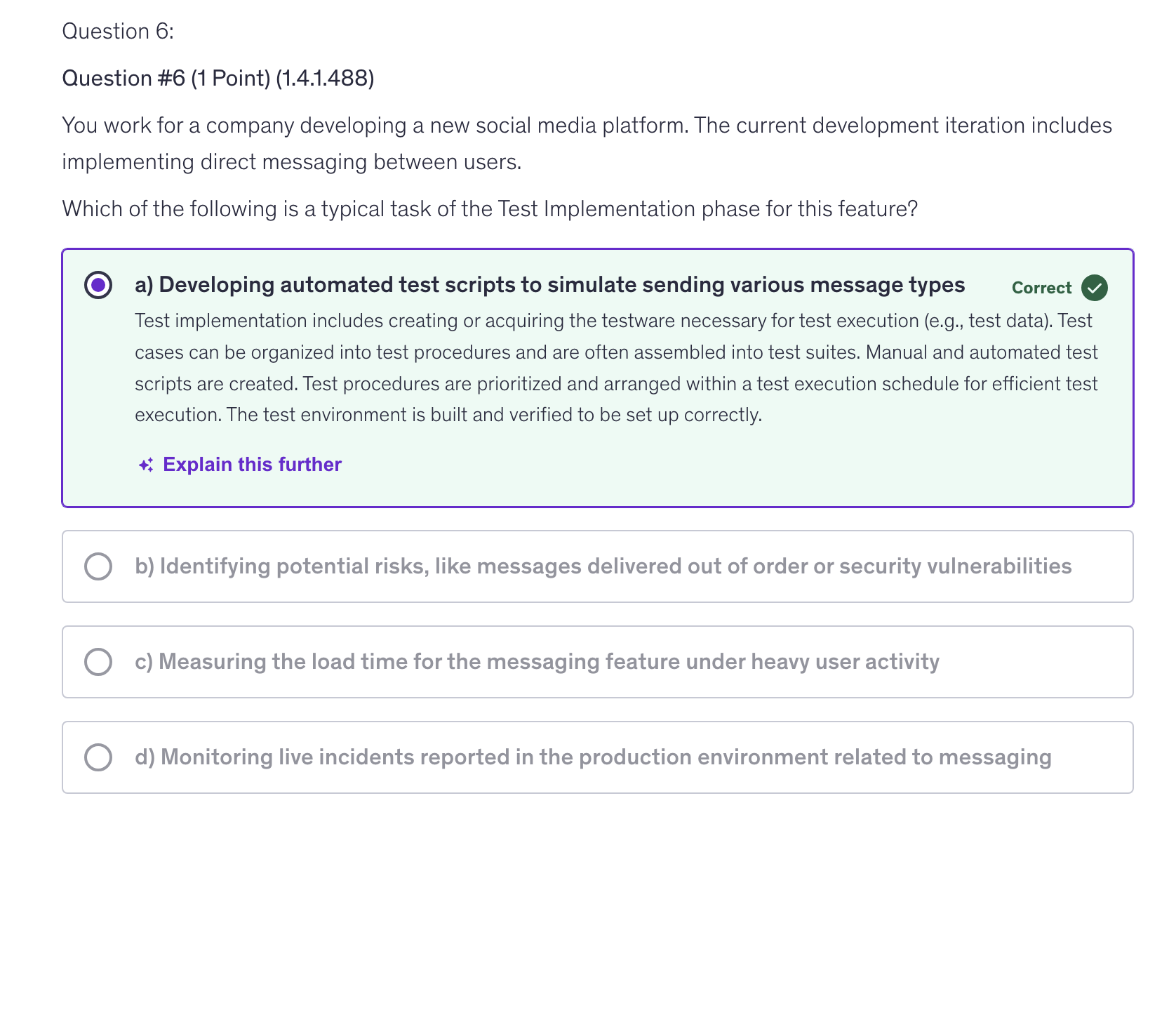
You work for a company developing a new social media platform. The current development iteration includes implementing direct messaging between users.
Which of the following is a typical task of the Test Implementation phase for this feature?
a) Developing automated test scripts to simulate sending various message types
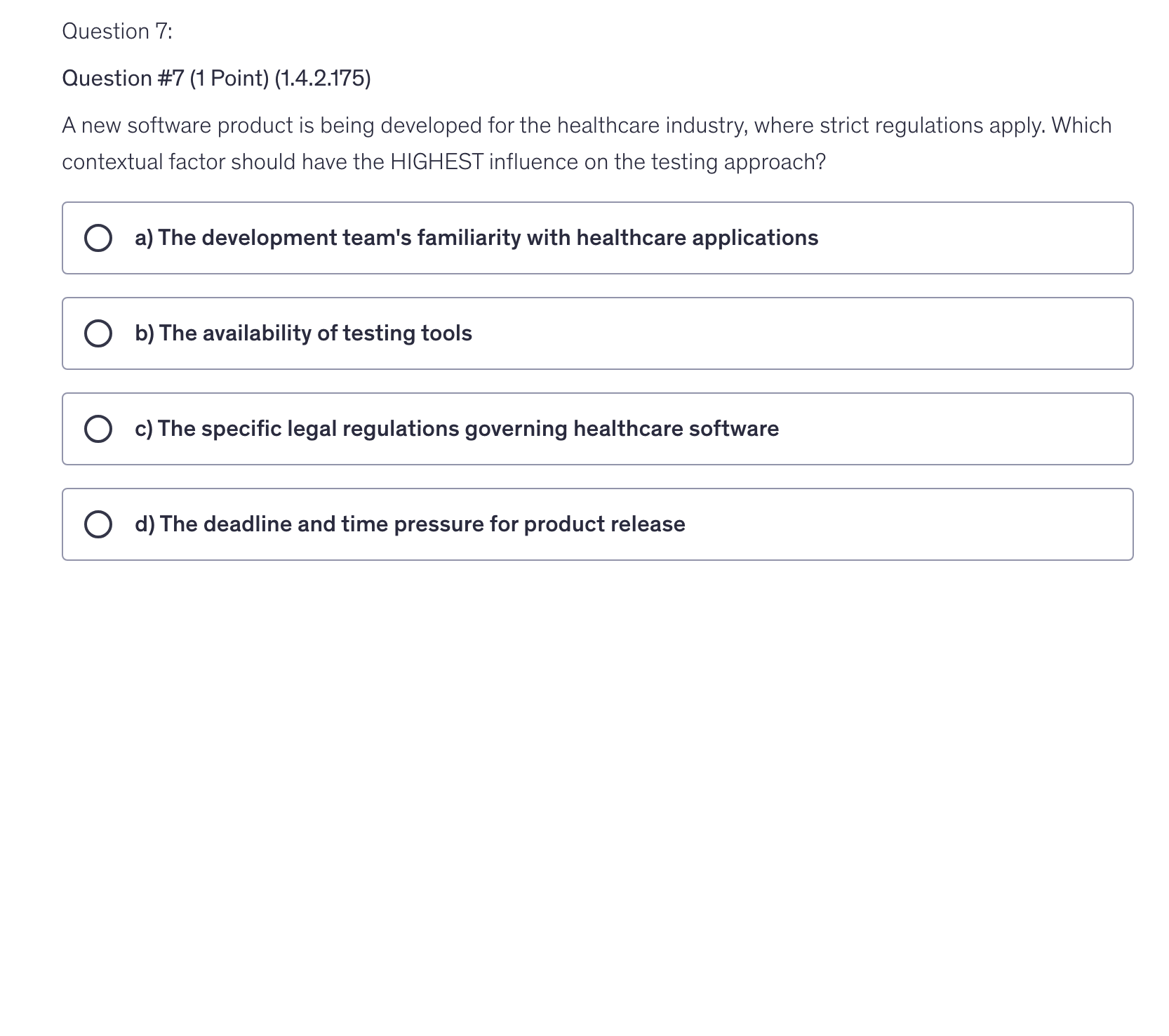
A new software product is being developed for the healthcare industry, where strict regulations apply. Which contextual factor should have the HIGHEST influence on the testing approach?
c) The specific legal regulations governing healthcare software
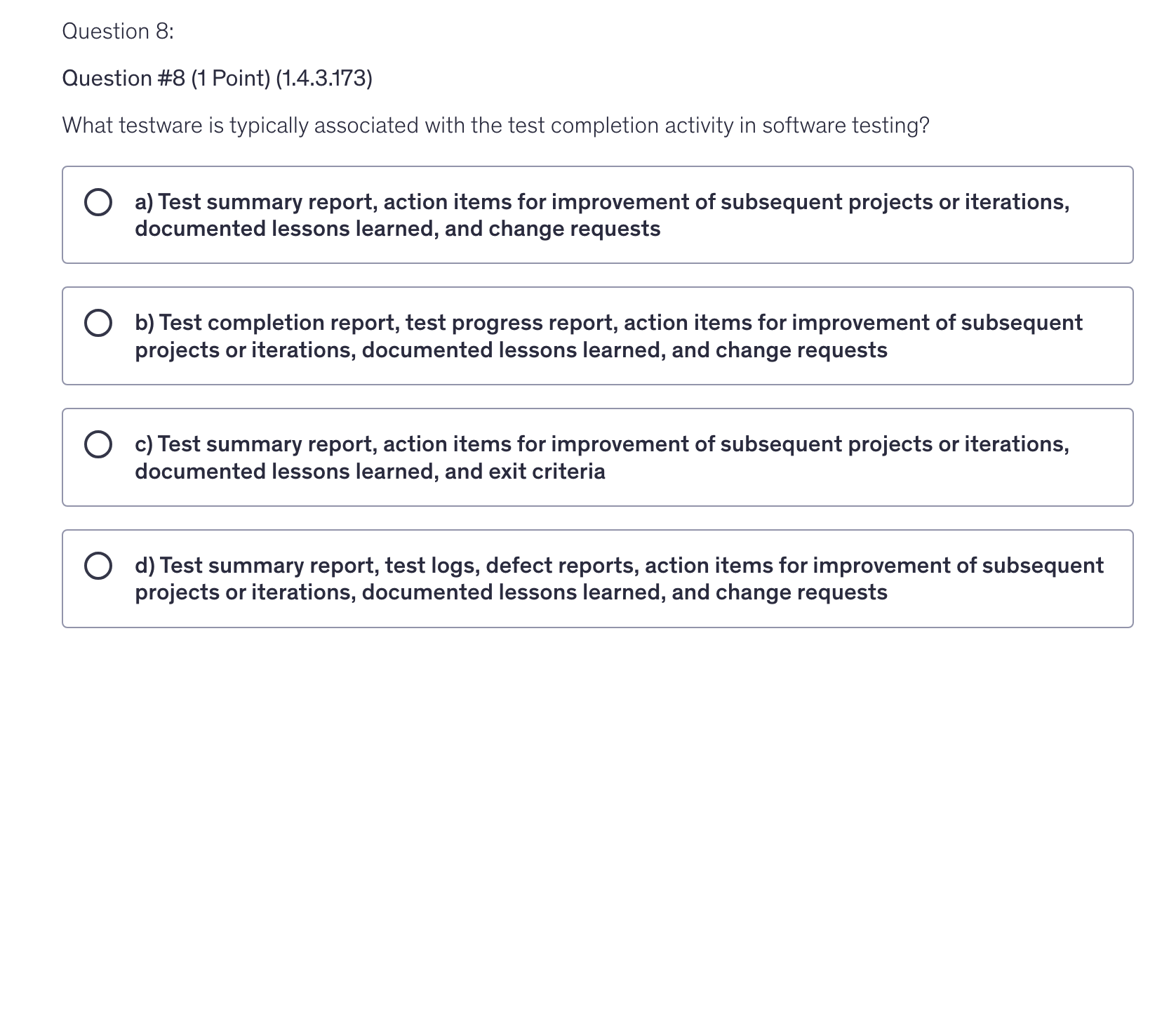
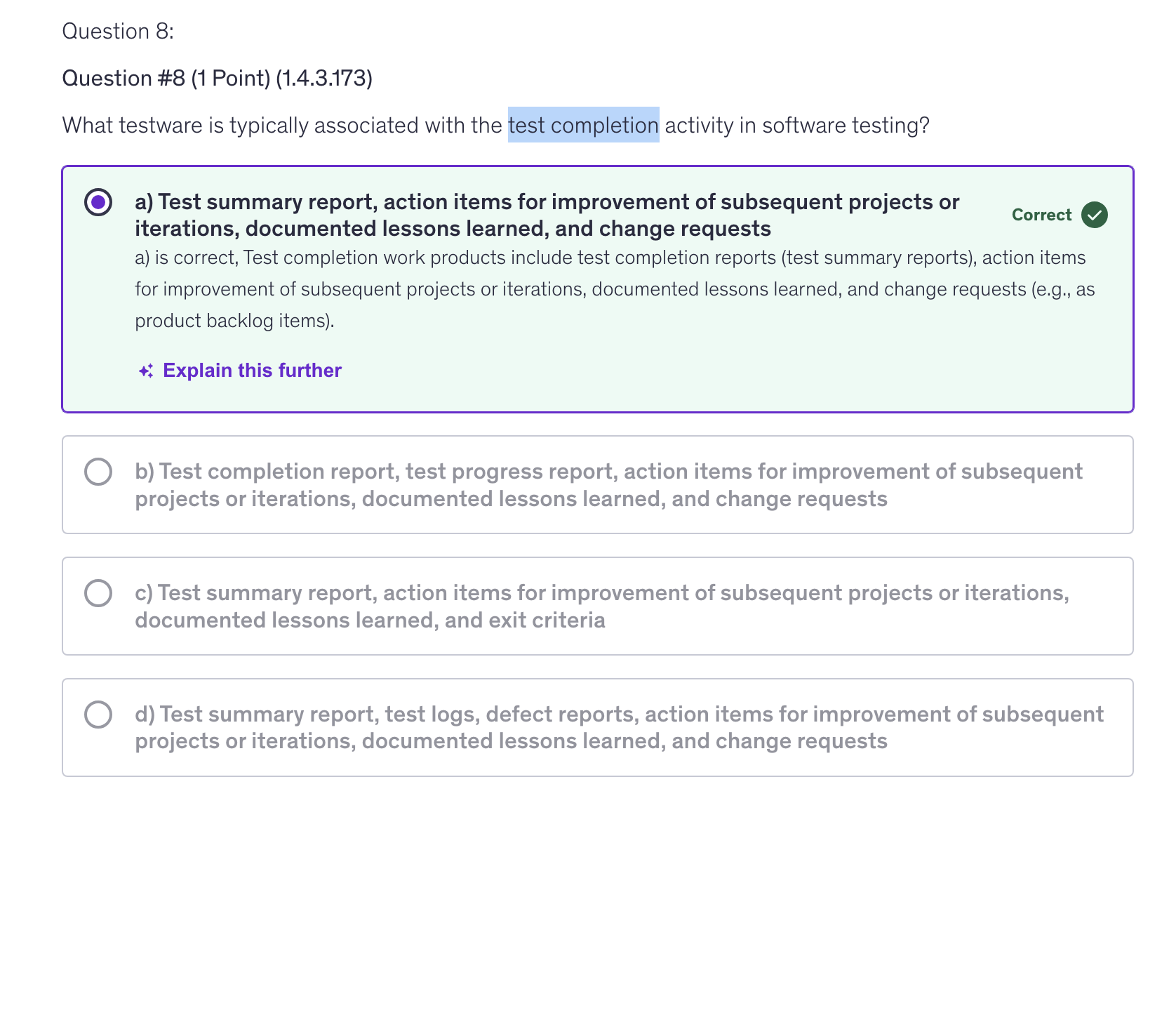
What testware is typically associated with the test completion activity in software testing?
a) Test summary report, action items for improvement of subsequent projects or iterations, documented lessons learned, and change requests
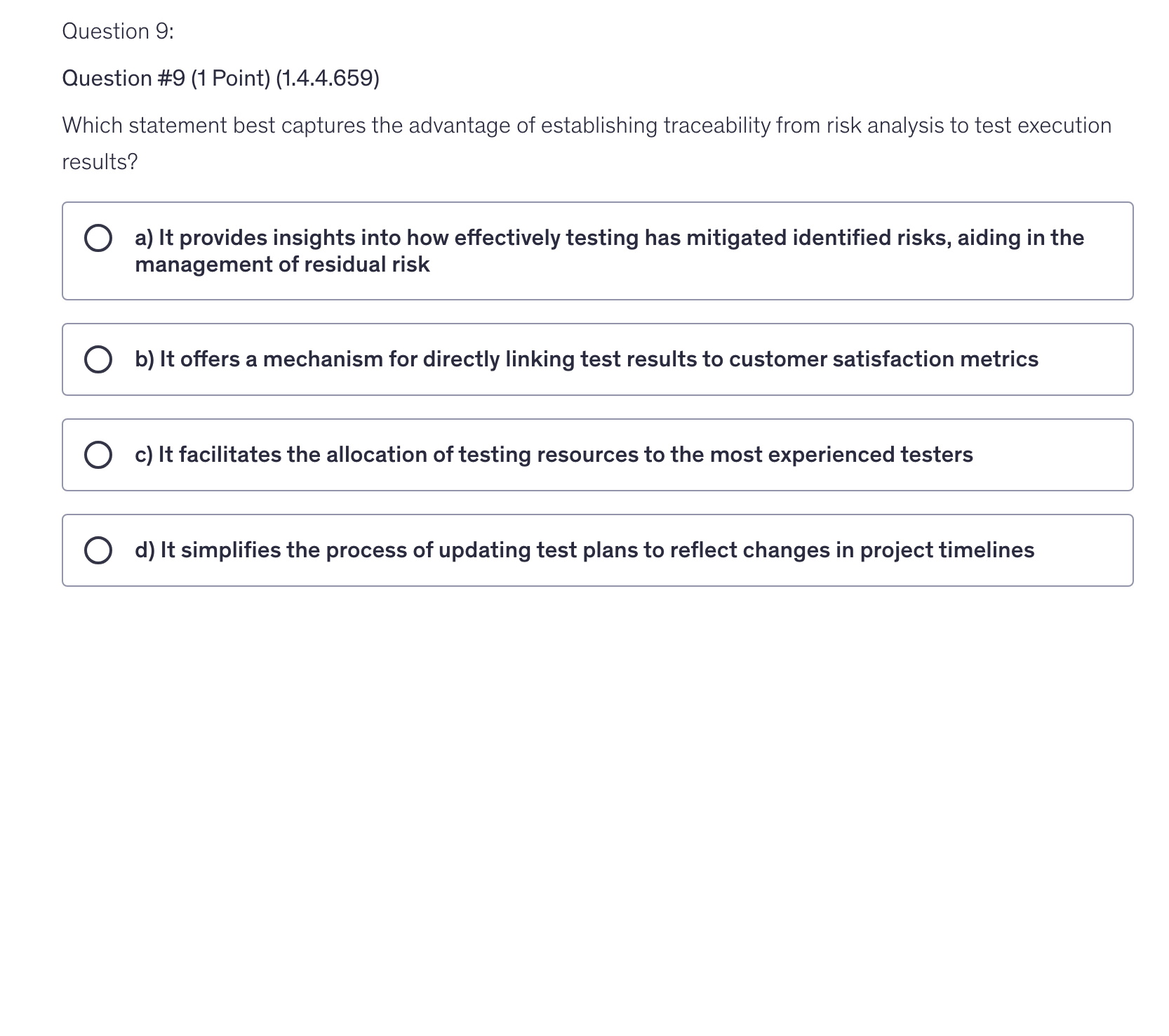
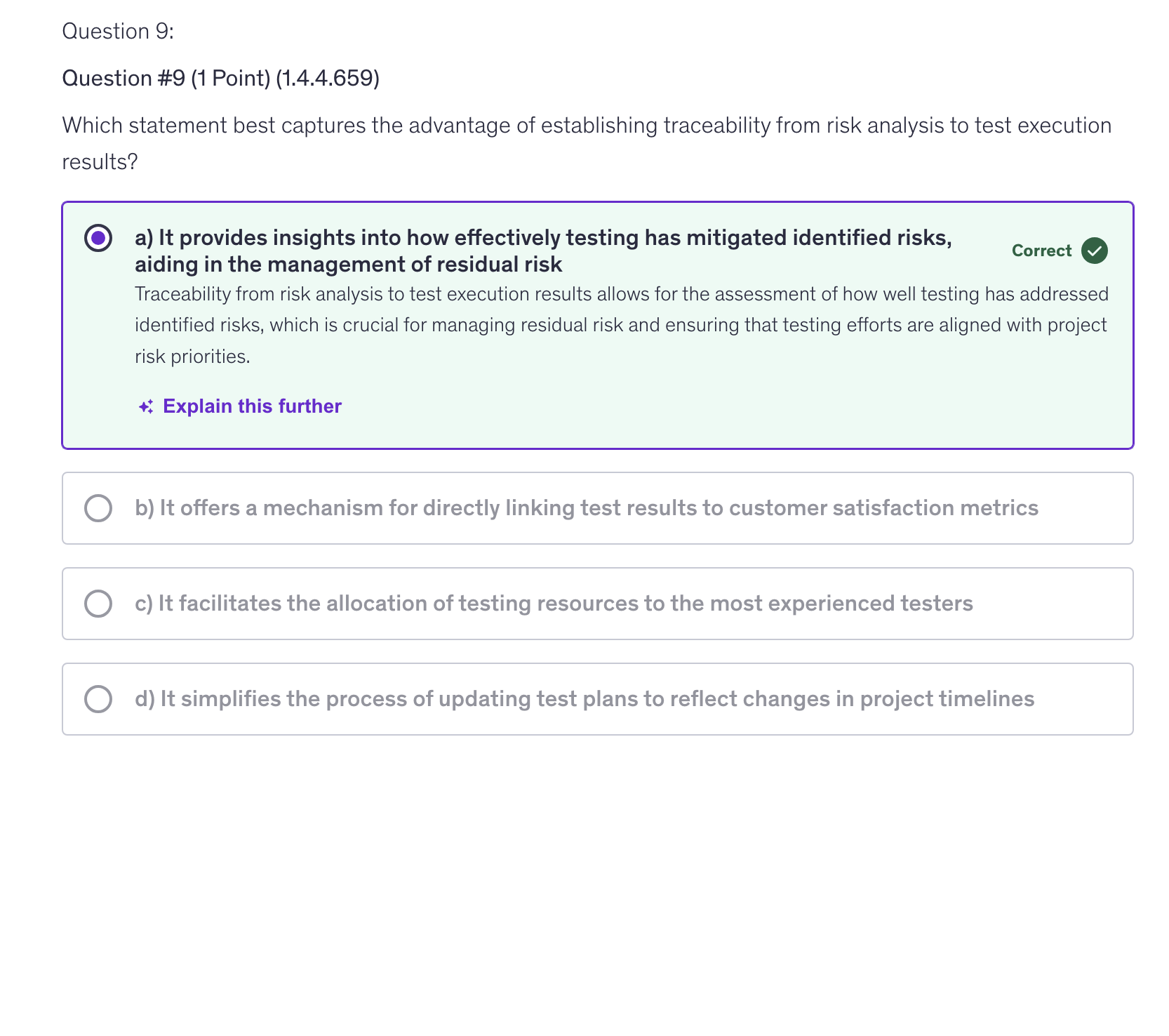
Which statement best captures the advantage of establishing traceability from risk analysis to test execution results?
a) It provides insights into how effectively testing has mitigated identified risks, aiding in the management of residual risk
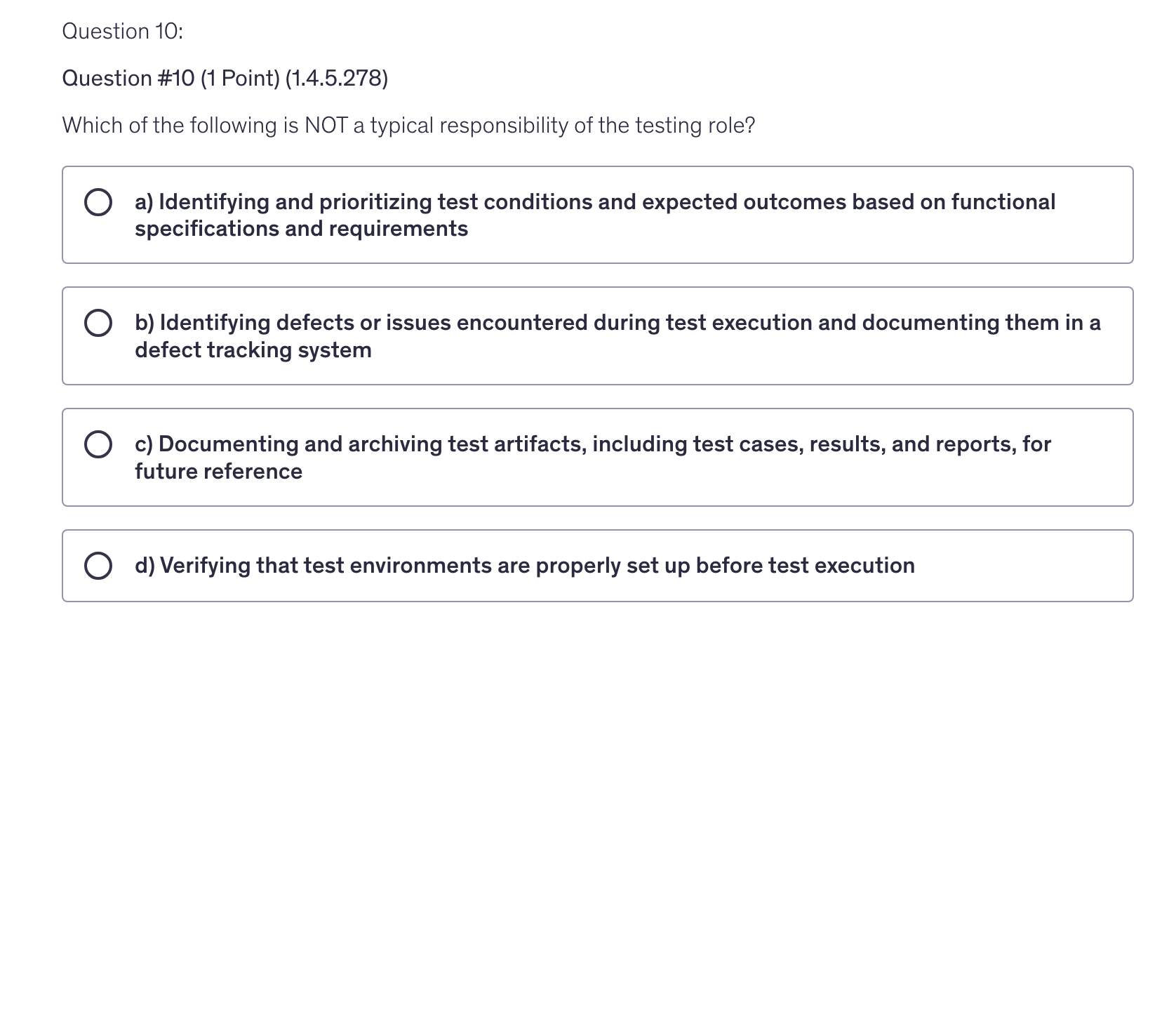
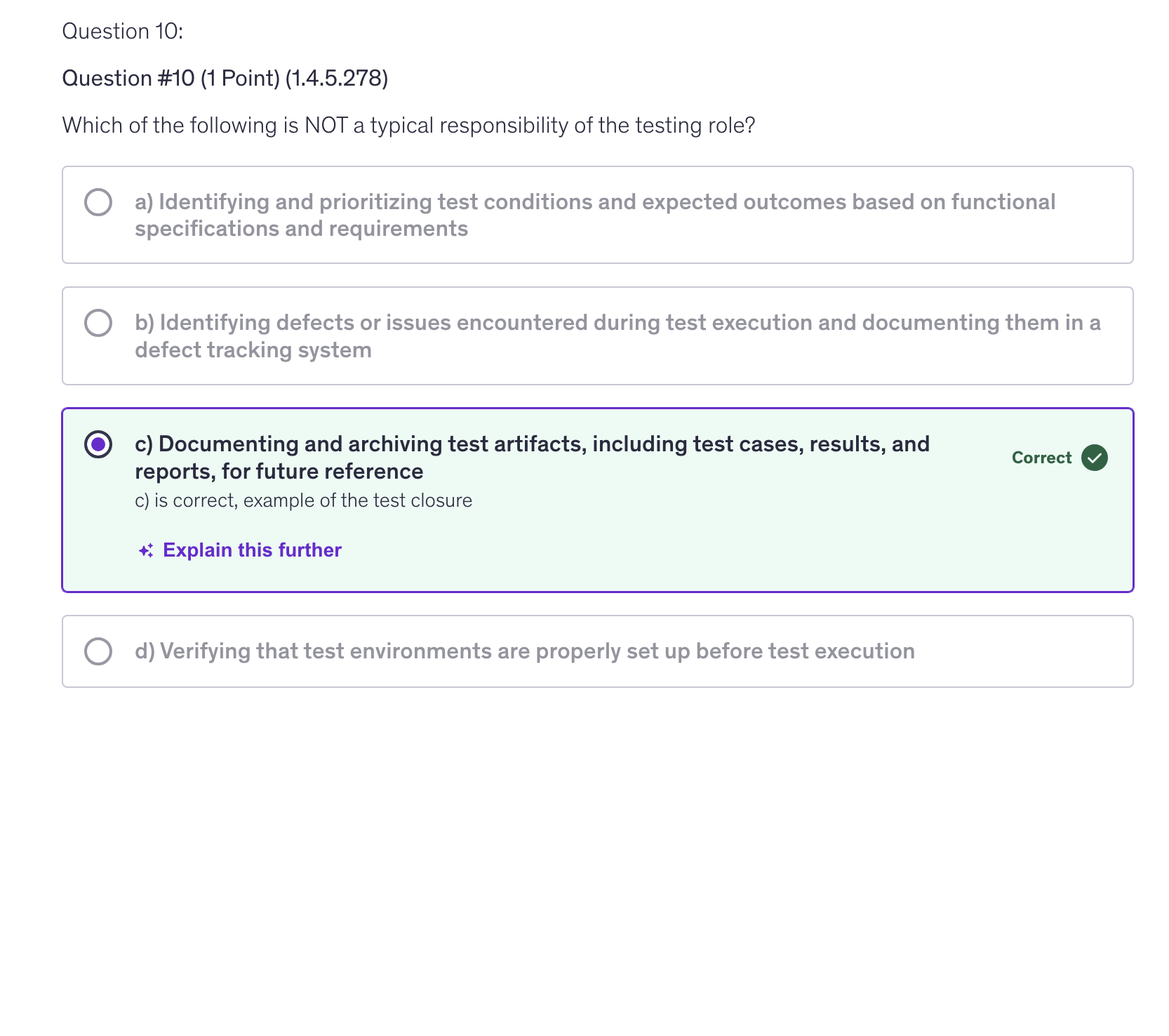
Which of the following is NOT a typical responsibility of the testing role?
c) Documenting and archiving test artifacts, including test cases, results, and reports, for future reference
Test closure activities include all of the following EXCEPT:
a) Ensuring all tests are automated
A new regulatory guideline is introduced within your industry, specifically impacting the software you're testing. What contextual factor does this change primarily relate to?
b) Business Domain
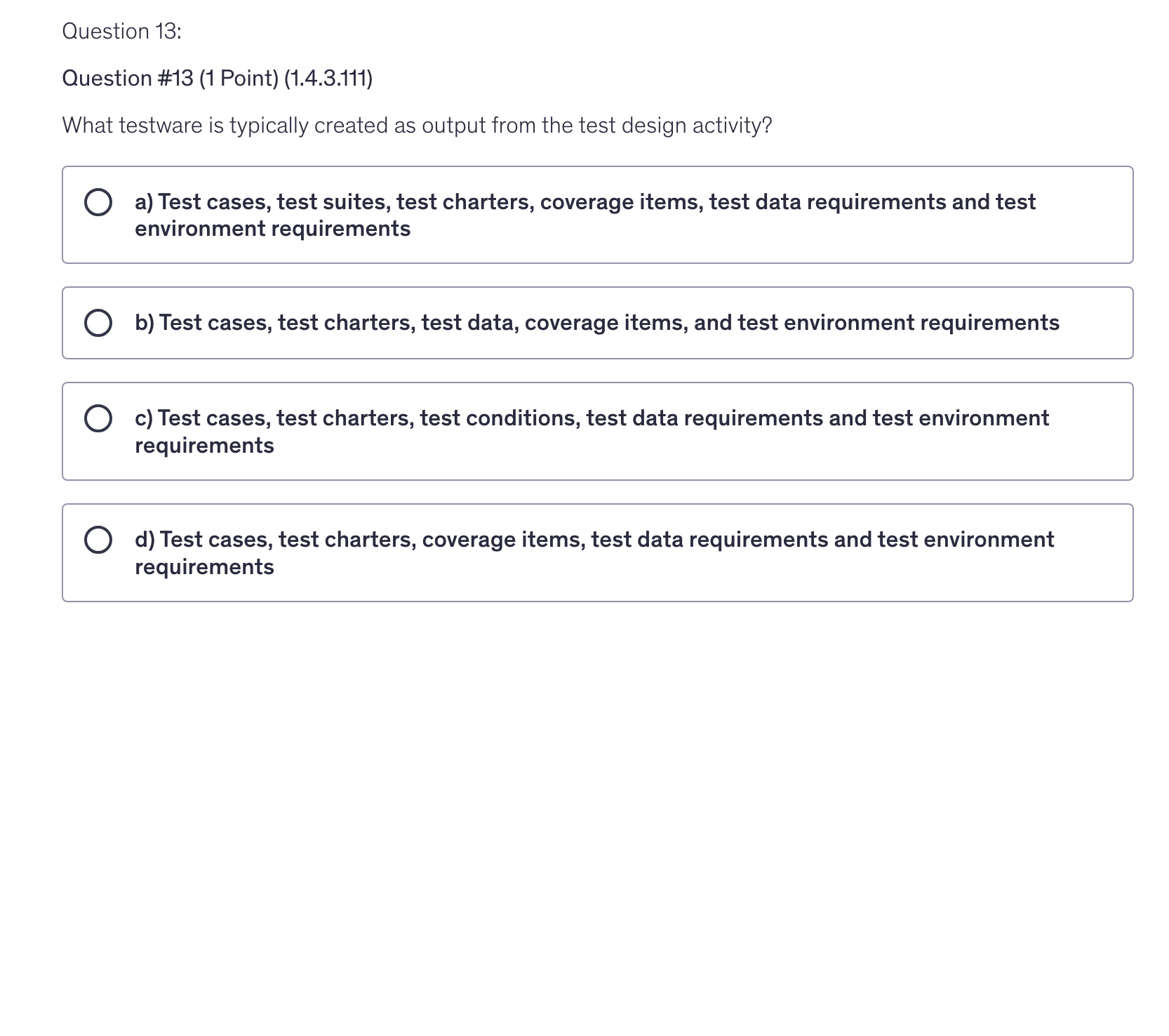
What testware is typically created as output from the test design activity?
d) Test cases, test charters, coverage items, test data requirements and test environment requirements
Which of the following does NOT accurately represent a benefit of traceability in the context of software testing?
d) Traceability allows for the automatic generation of test cases from requirements; reducing manual effort
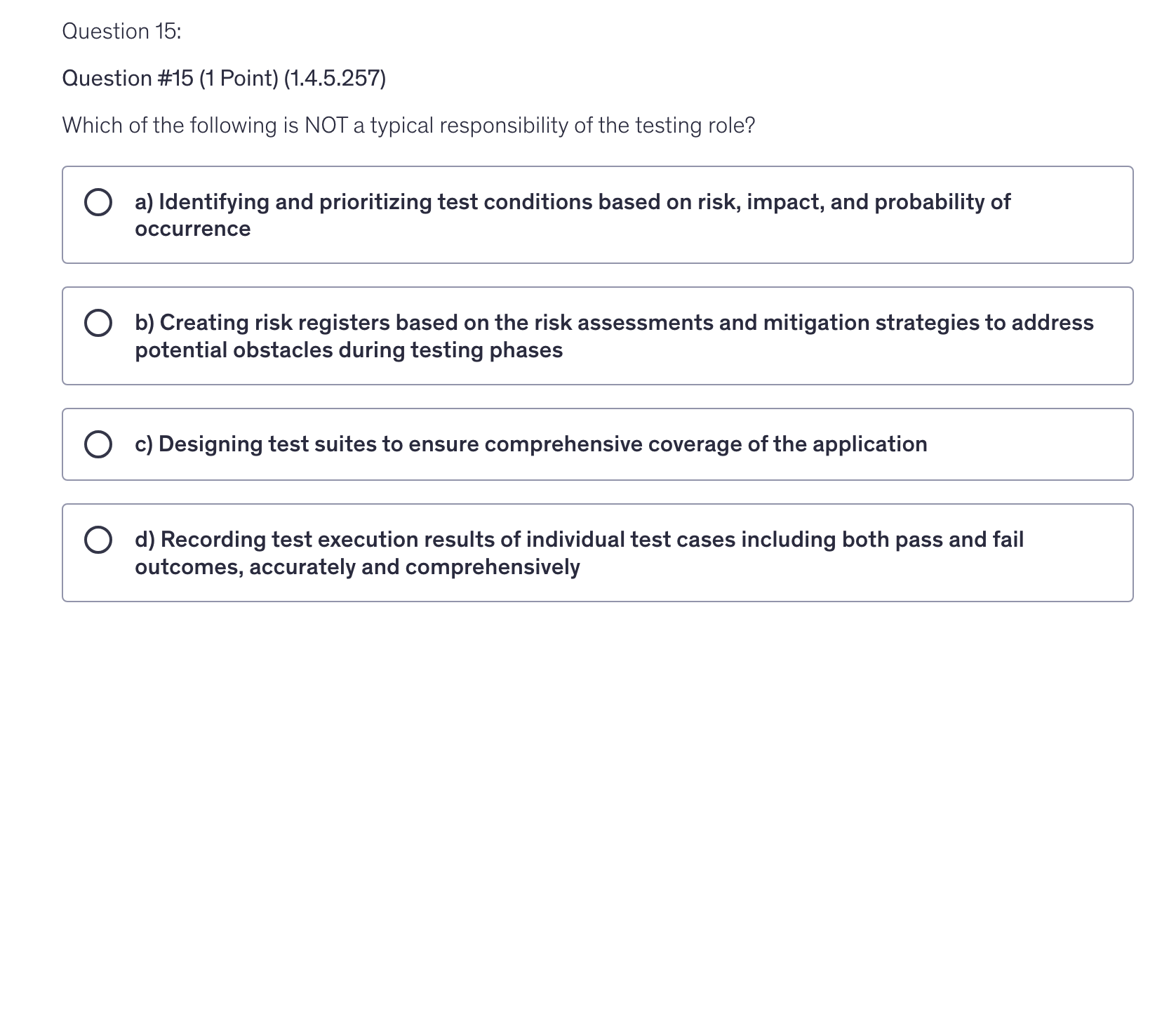
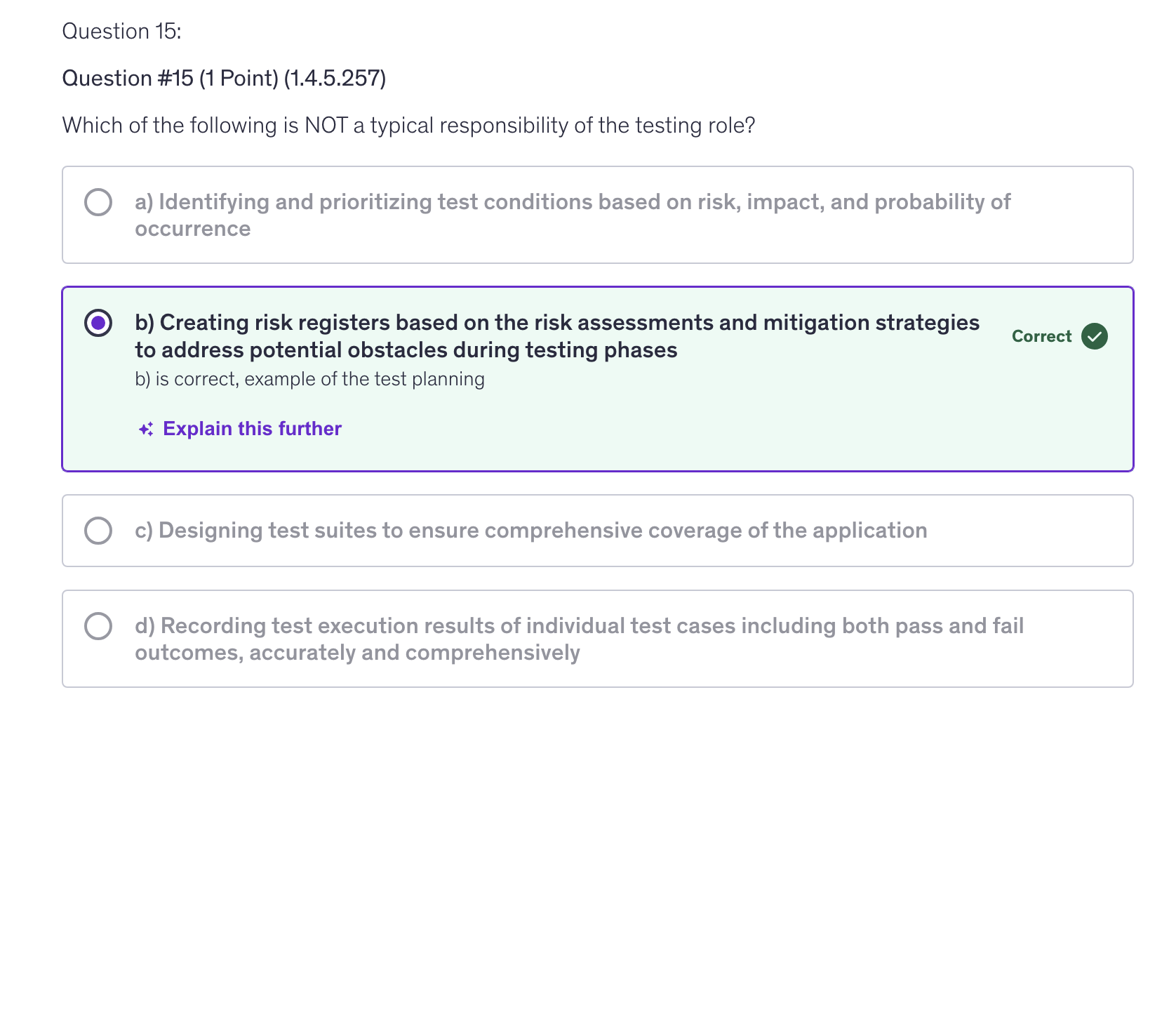
Which of the following is NOT a typical responsibility of the testing role?
b) Creating risk registers based on the risk assessments and mitigation strategies to address potential obstacles during testing phases
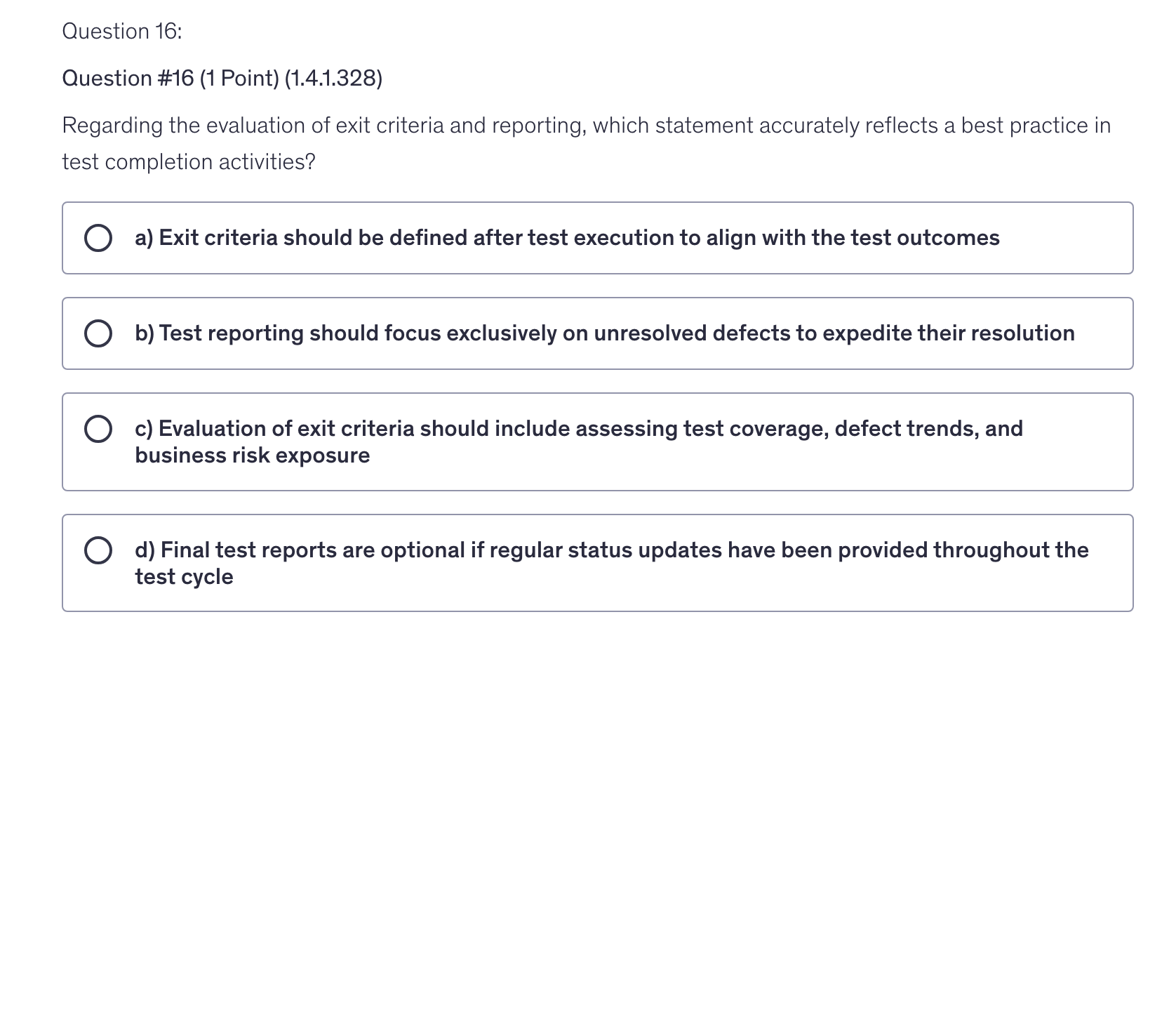
Regarding the evaluation of exit criteria and reporting, which statement accurately reflects a best practice in test completion activities?
c) Evaluation of exit criteria should include assessing test coverage, defect trends, and business exposure

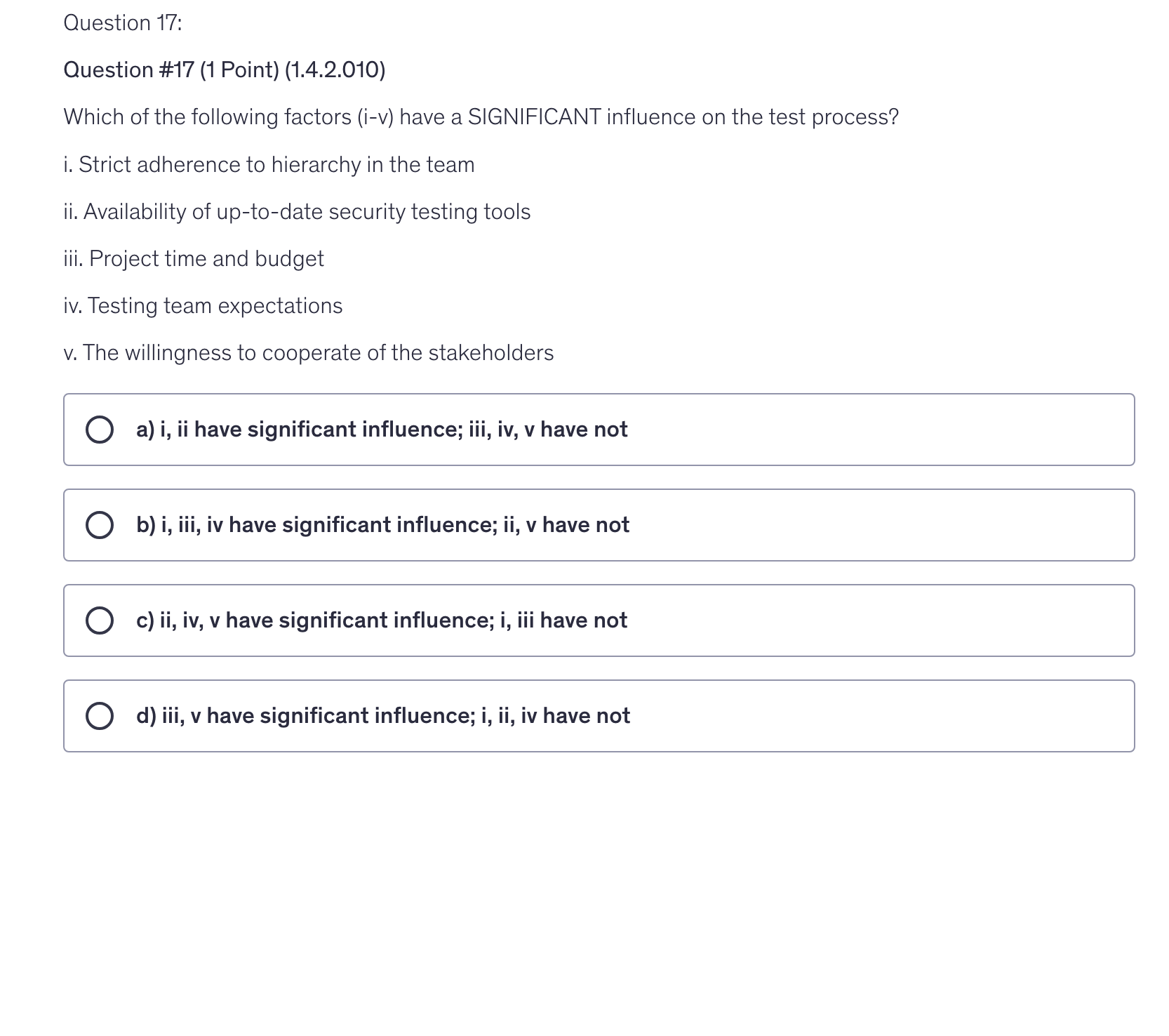
Which of the following factors (i-v) have a SIGNIFICANT influence on the test process?
i. Strict adherence to hierarchy in the team
ii. Availability of up-to-date security testing tools
iii. Project time and budget
iv. Testing team expectations
v. The willingness to cooperate of the stakeholders
d) iii, v have significant influence, while i, ii, and iv do not

Which test activity produces this testware as an output?
c) Test implementation

Which of the following best demonstrates the advantage of maintaining traceability in a software testing environment?
c) Traceability between defect reports and original test cases provides a means for evaluating the effectiveness of the testing strategy
Which of the following is NOT a typical responsibility of the test management role?
b) Defining test data requirements and generating or obtaining test data
Typical tasks carried out during this phase include analyzing the test basis to identify testable features and define associated test conditions:
d) Test analysis
How does the business domain context factor influence testing?
c) It influences the criticality of the test object, identified risks, and compliance with specific legal regulations
What testware is typically associated with the test implementation activity in software testing?
b) Test procedures, automated test scripts, test suites, test data, test execution schedule
How does traceability between change requests and test cases illustrate the value of traceability in maintaining software quality?
c) It provides a means of ensuring that all changes are verified by corresponding tests, thus maintaining software quality
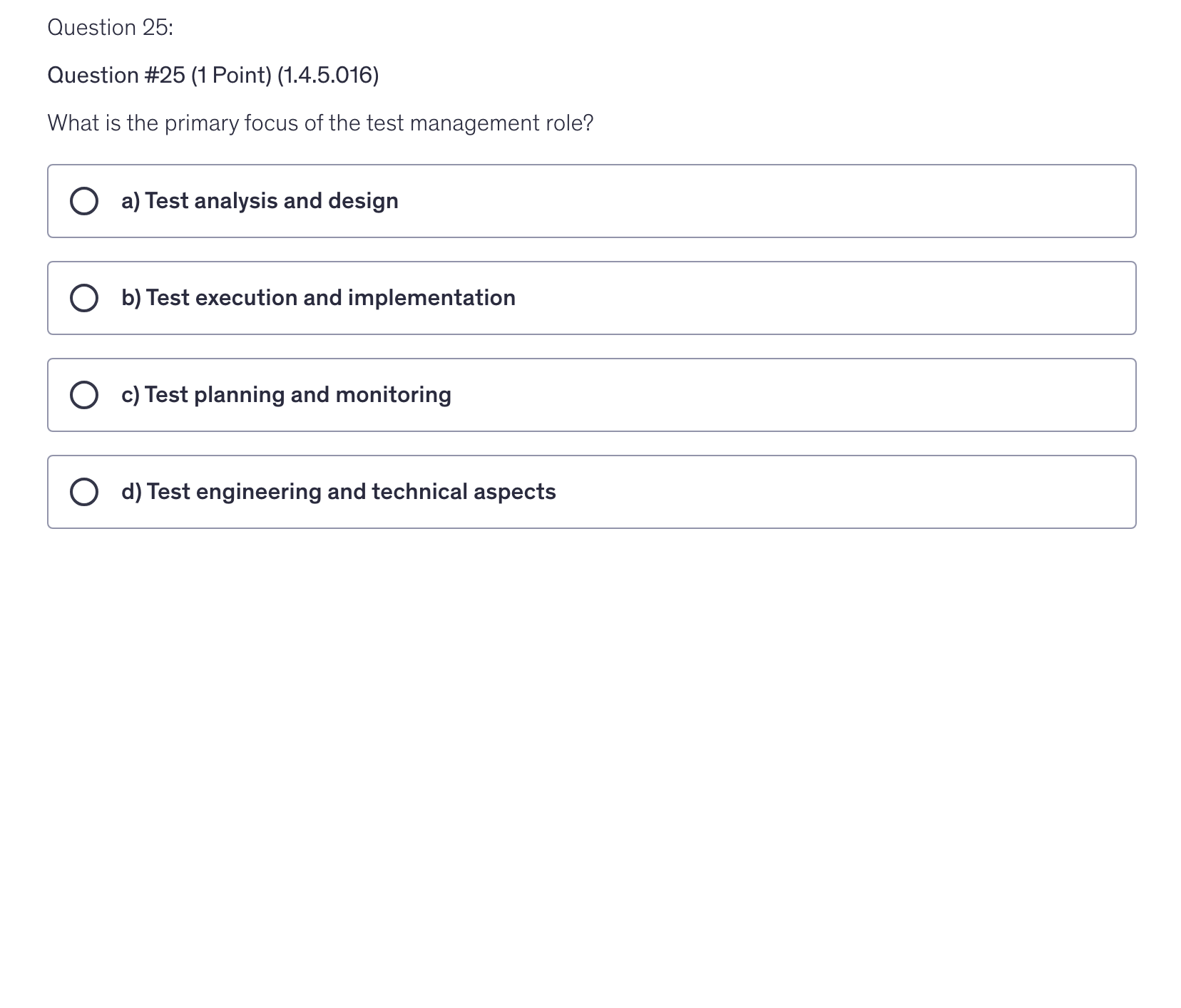
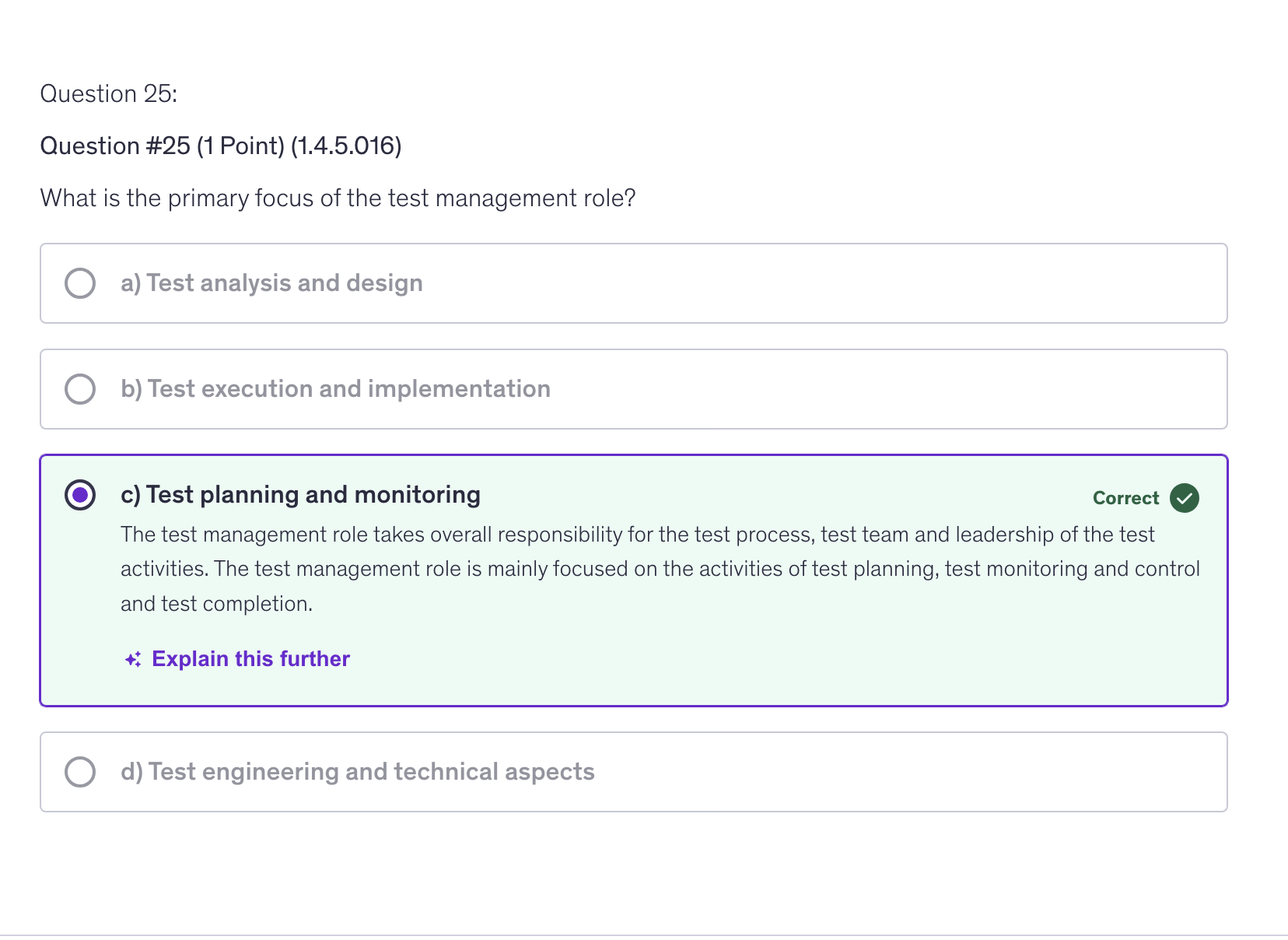
What is the primary focus of the test management role?
c) Test planning and monitoring
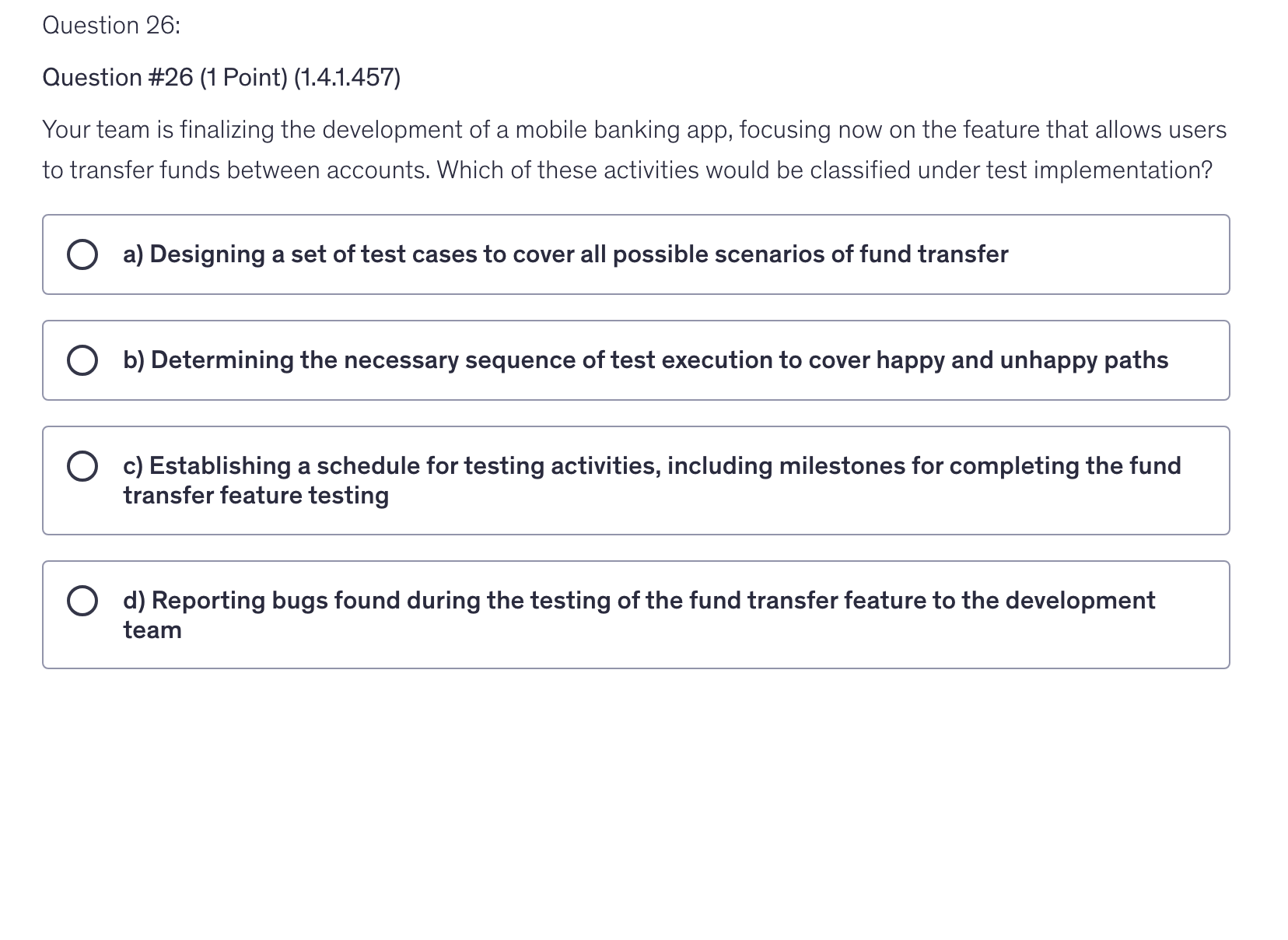
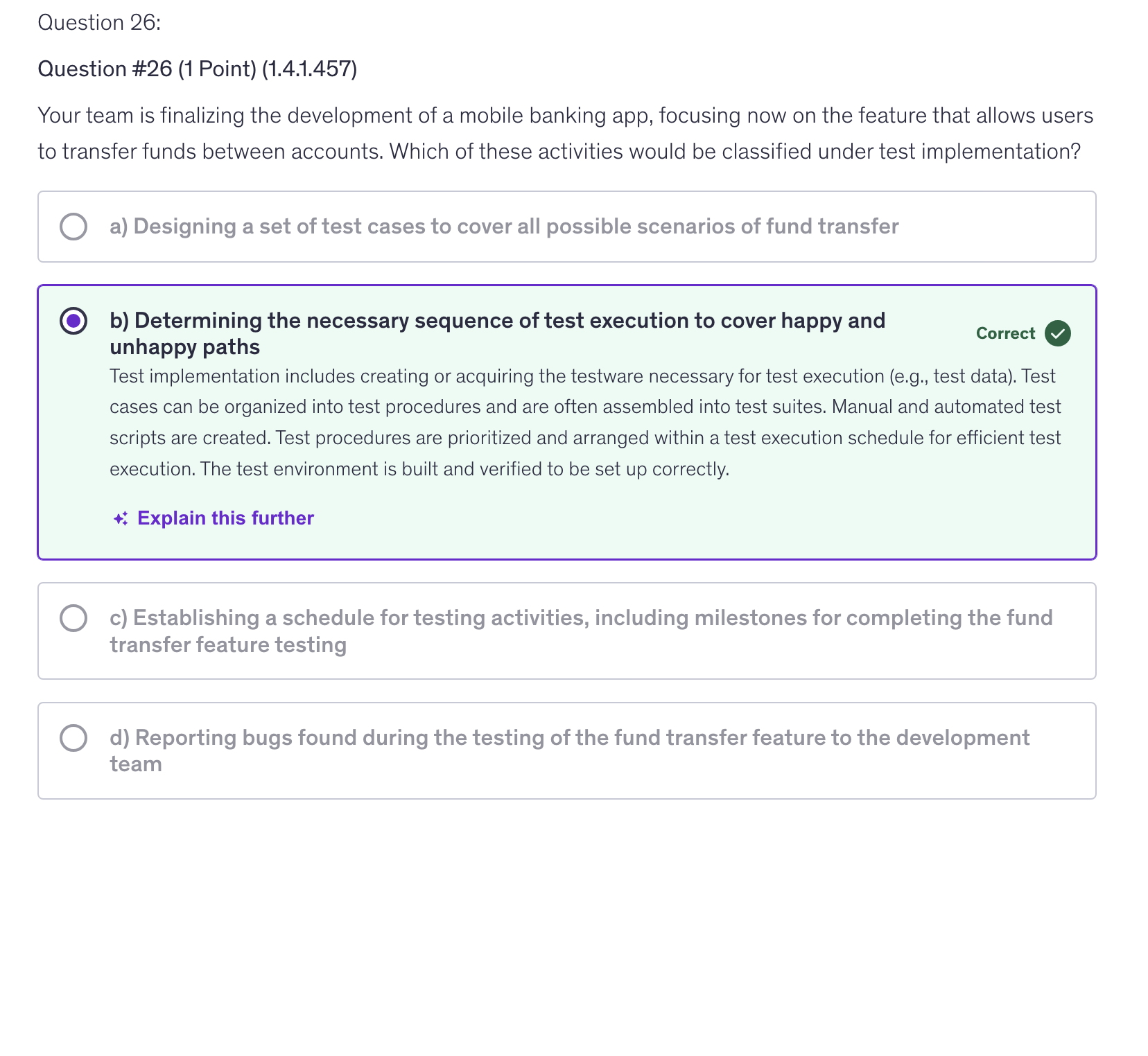
Your team is finalizing the development of a mobile banking app, focusing now on the feature that allows users to transfer funds between accounts. Which of these activities would be classified under test implementation?
b) Determining the necessary sequence of test execution to cover happy and unhappy paths
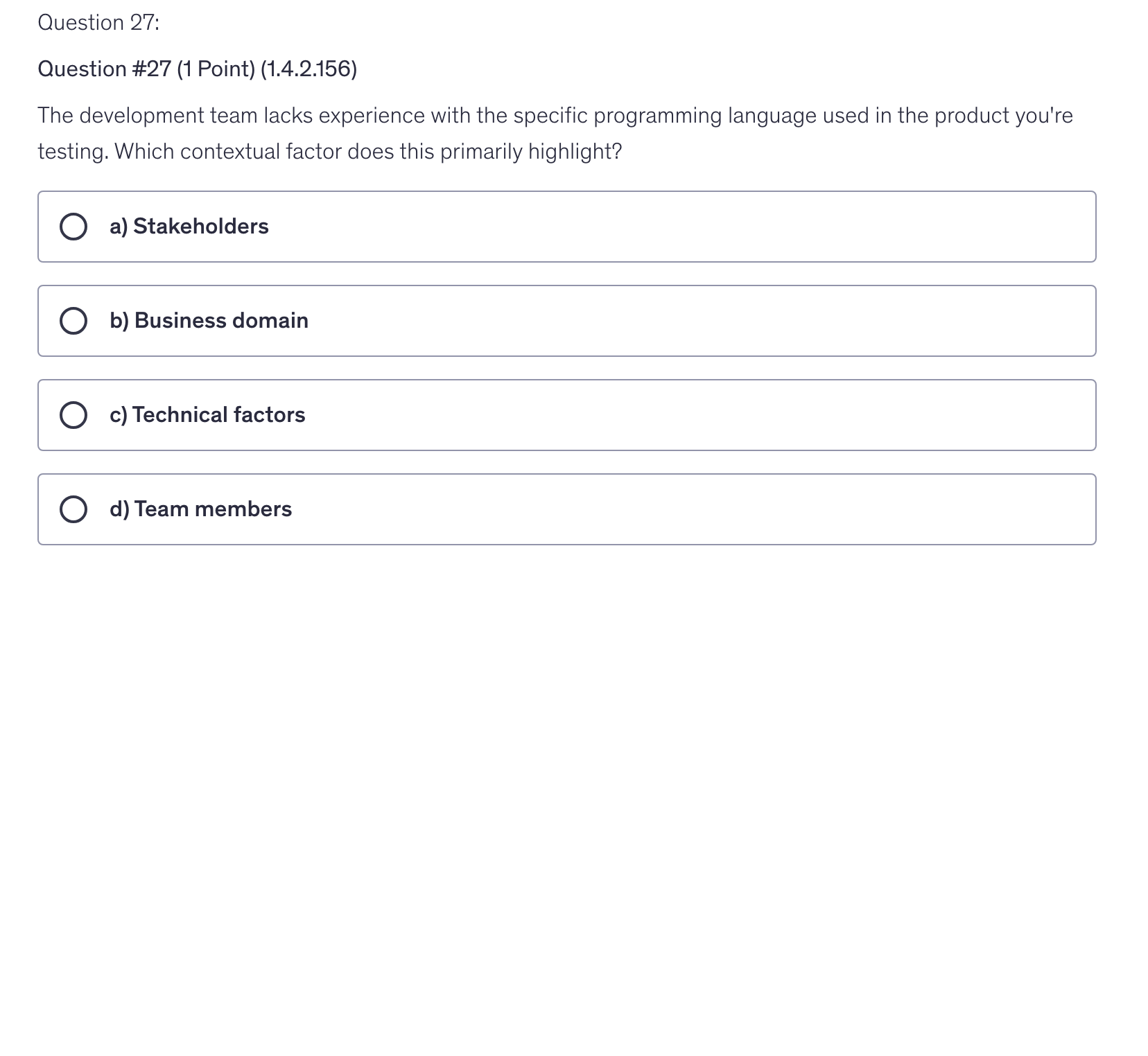
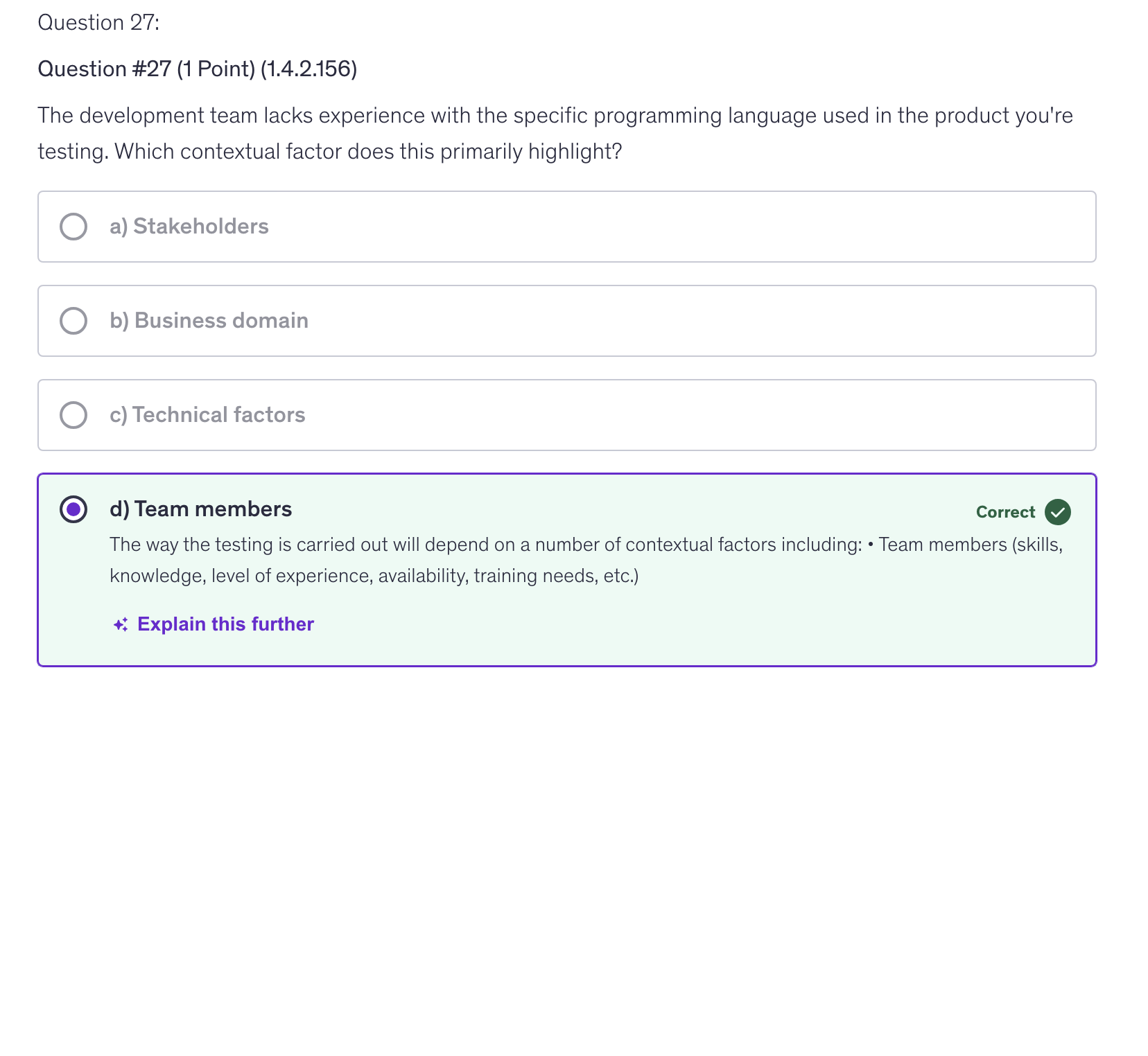
The development team lacks experience with the specific programming language used in the product you're testing. Which contextual factor does this primarily highlight?
d) Team members
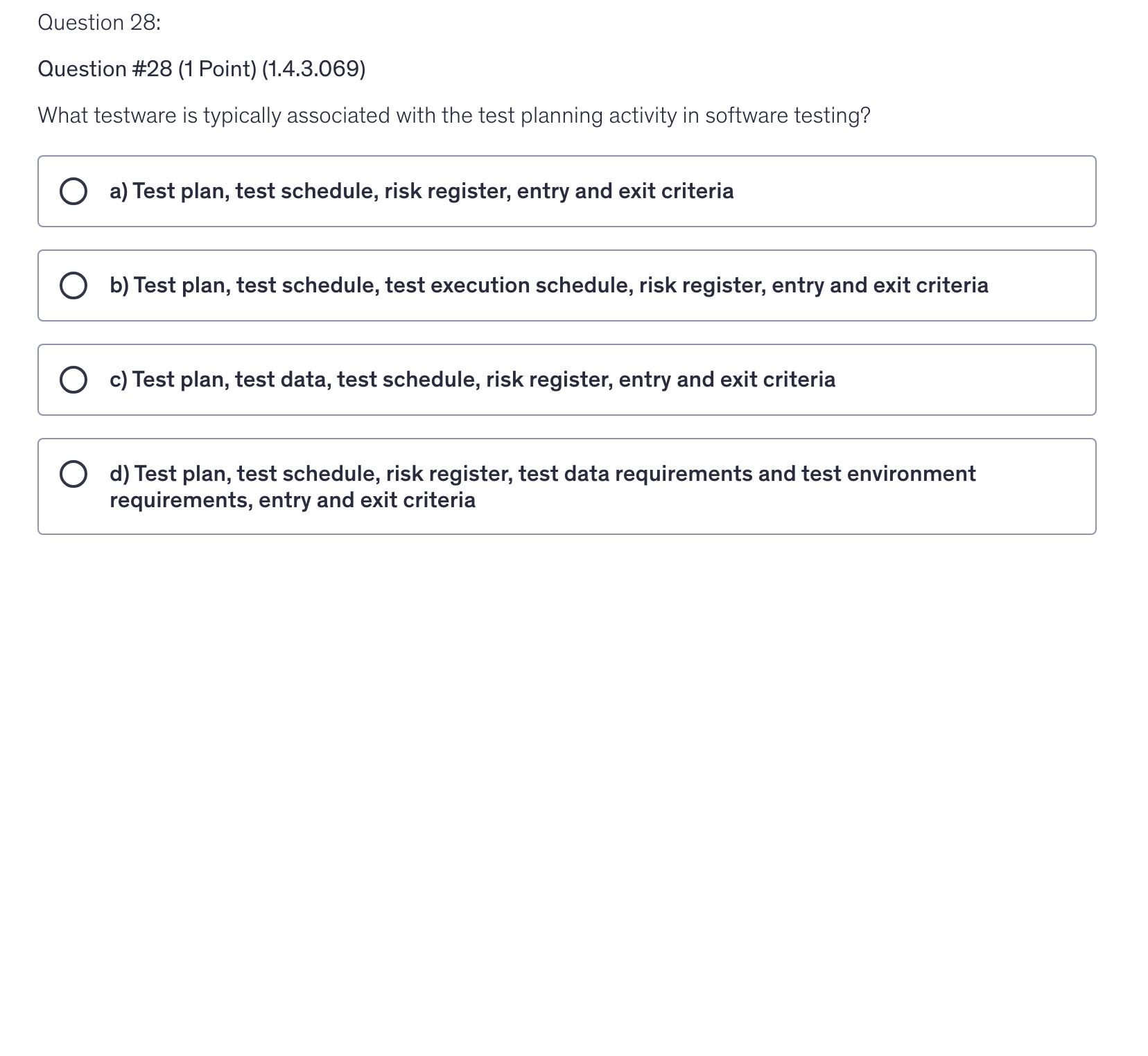
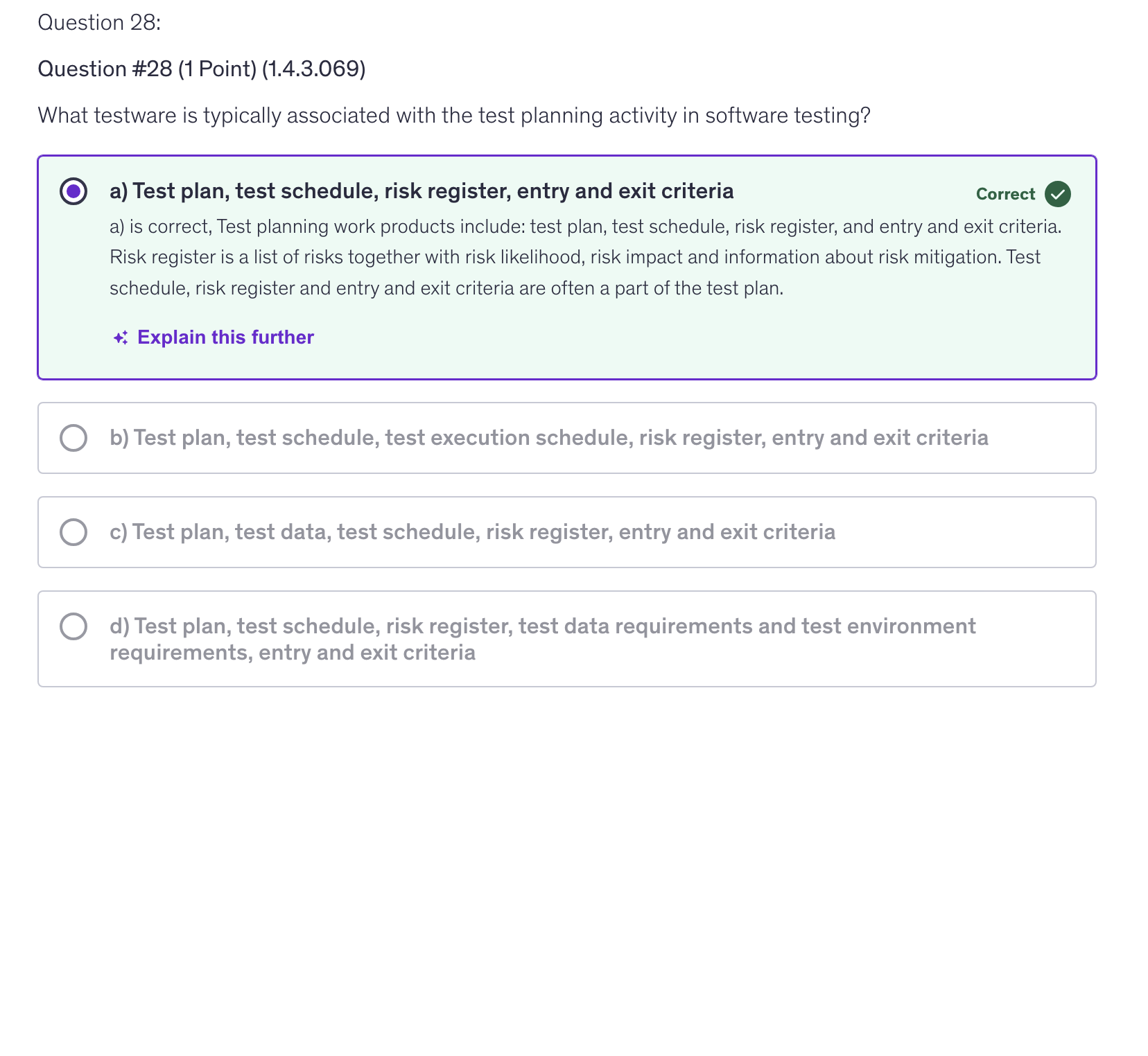
What testware is typically associated with the test planning activity in software testing?
a) Test plan, test schedule, risk register, entry and exit criteria
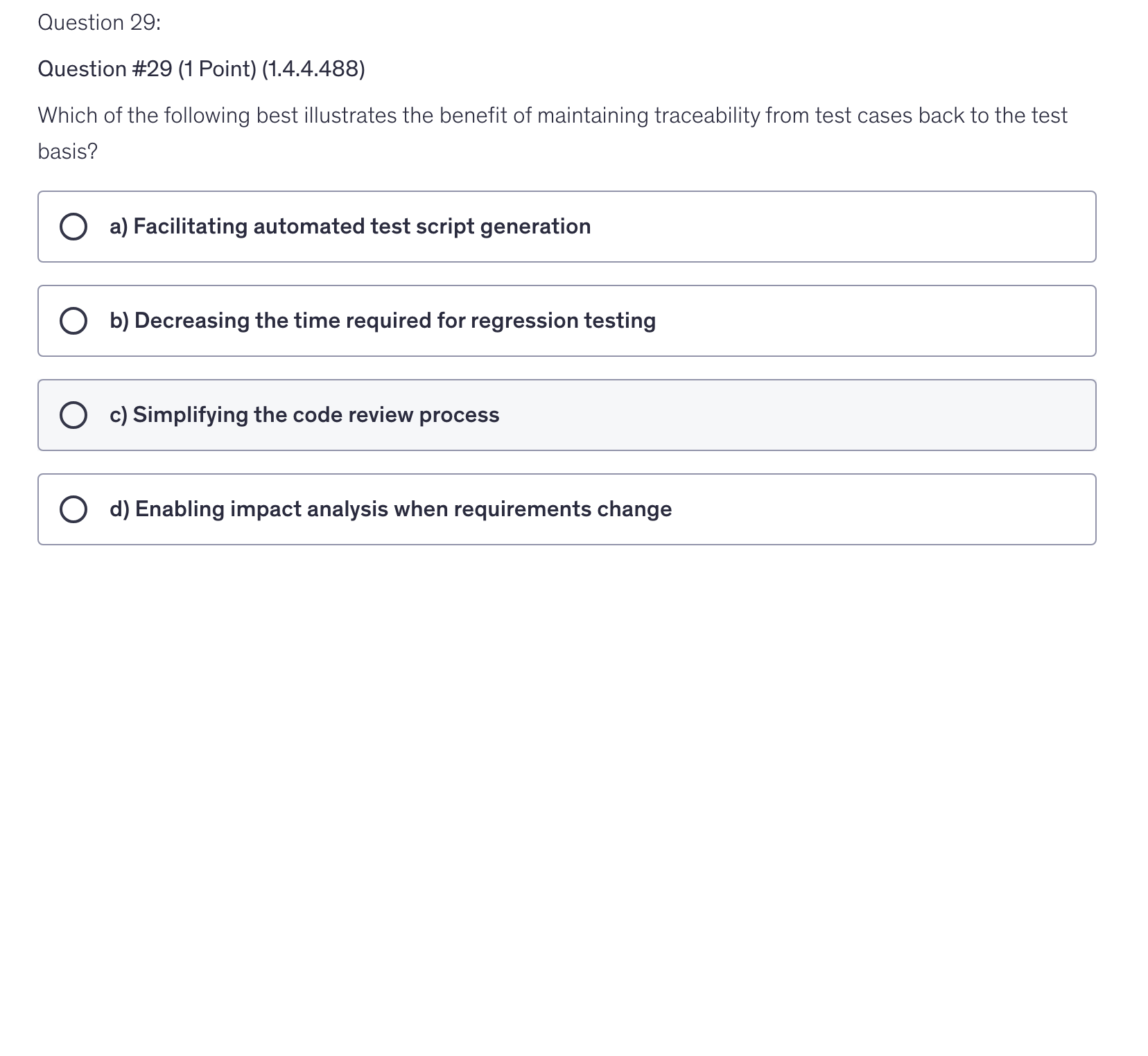
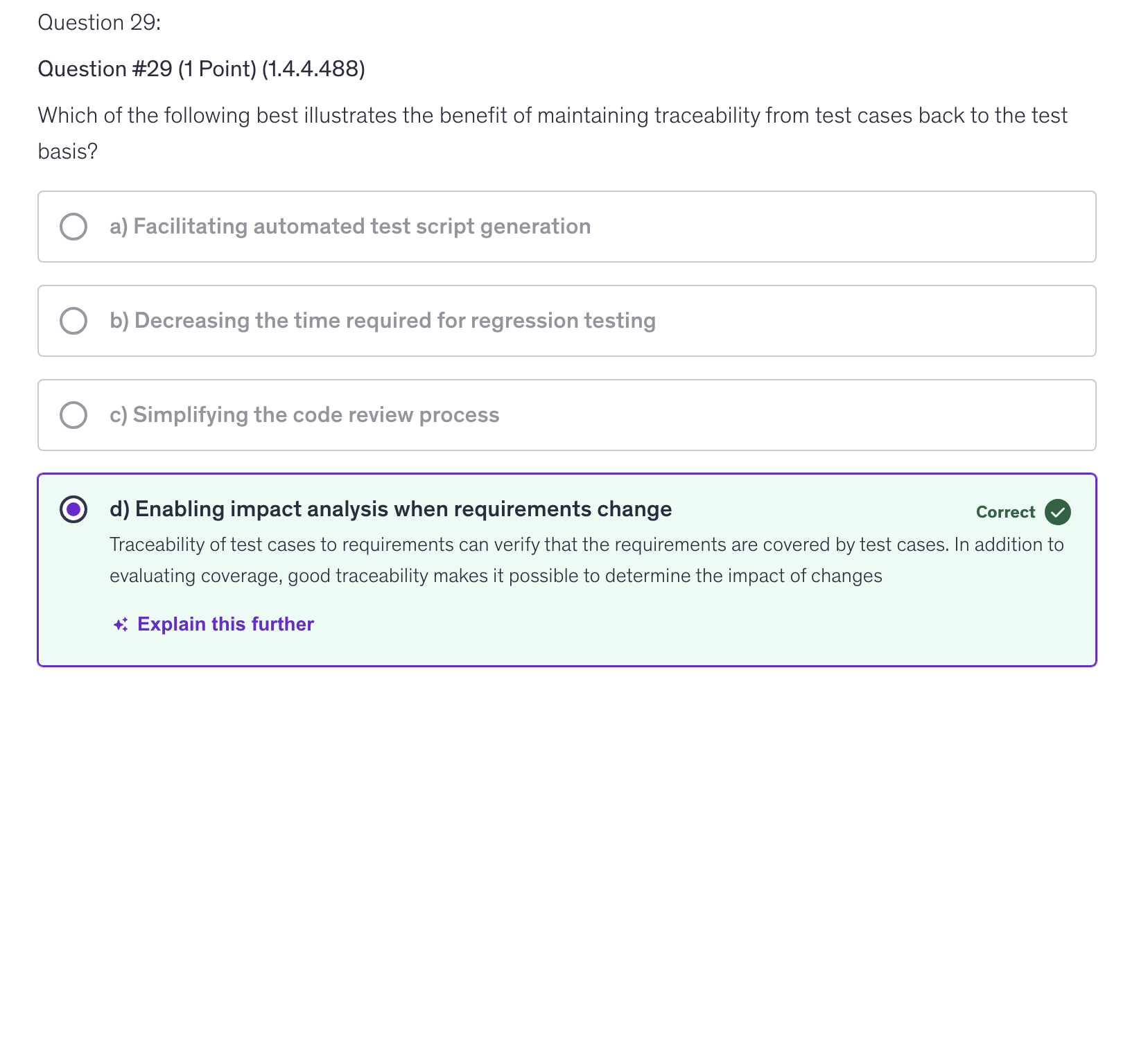
Which of the following best illustrates the benefit of maintaining traceability from test cases back to the test basis?
d) Enabling impact analysis when requirements change
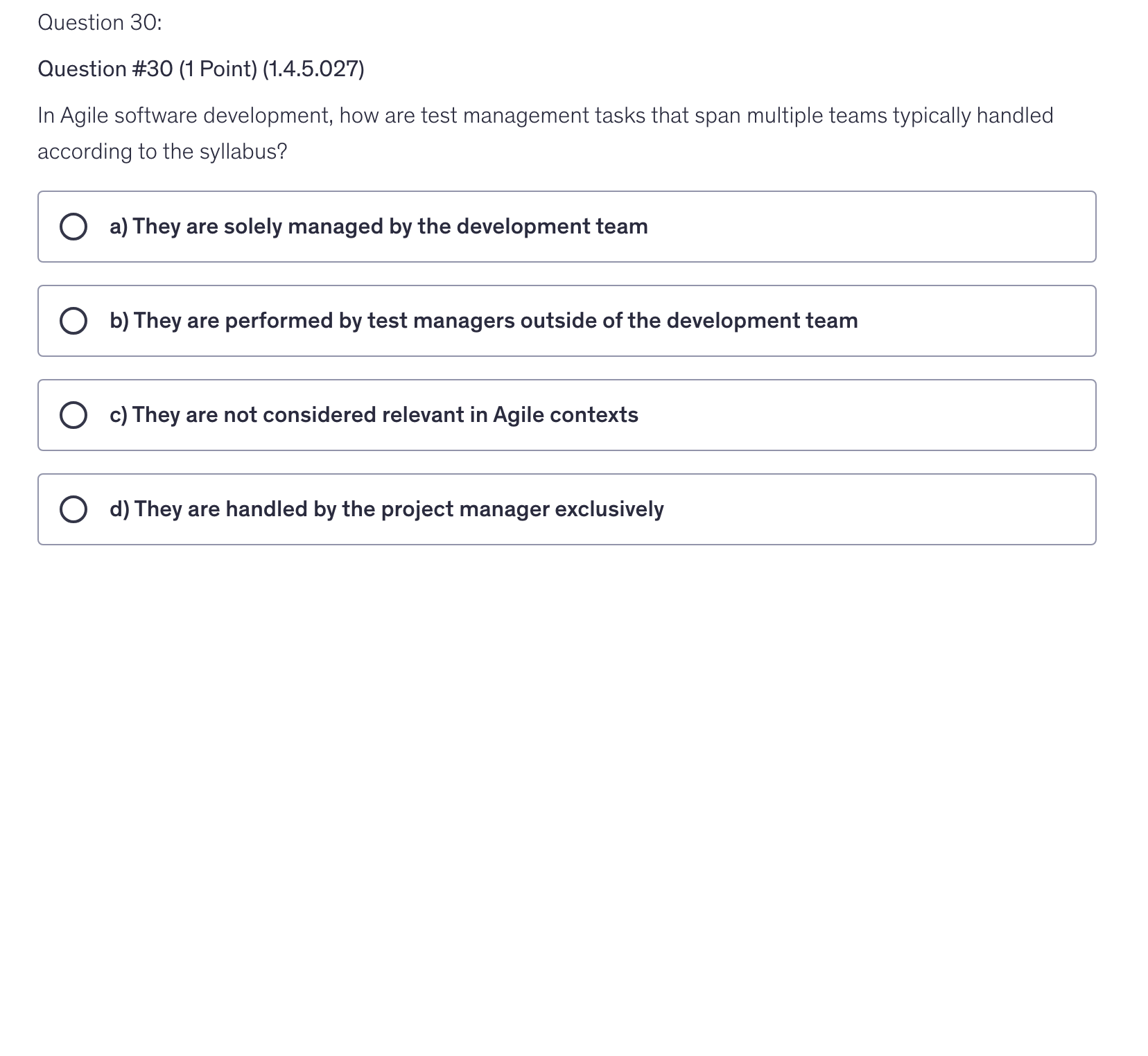
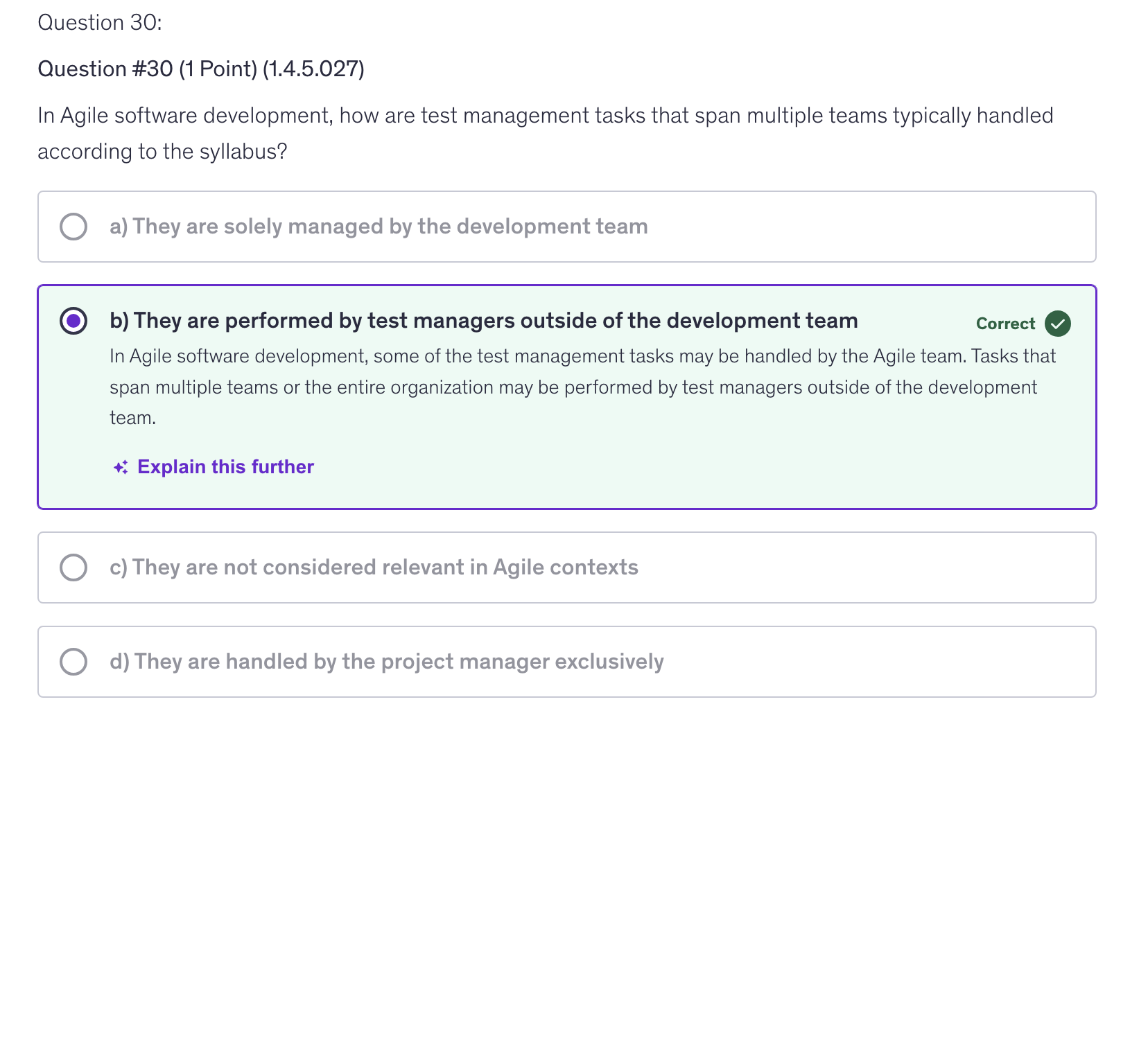
In Agile software development, how are test management tasks that span multiple teams typically handled according to the syllabus?
b) They are performed by test managers outside of the development team
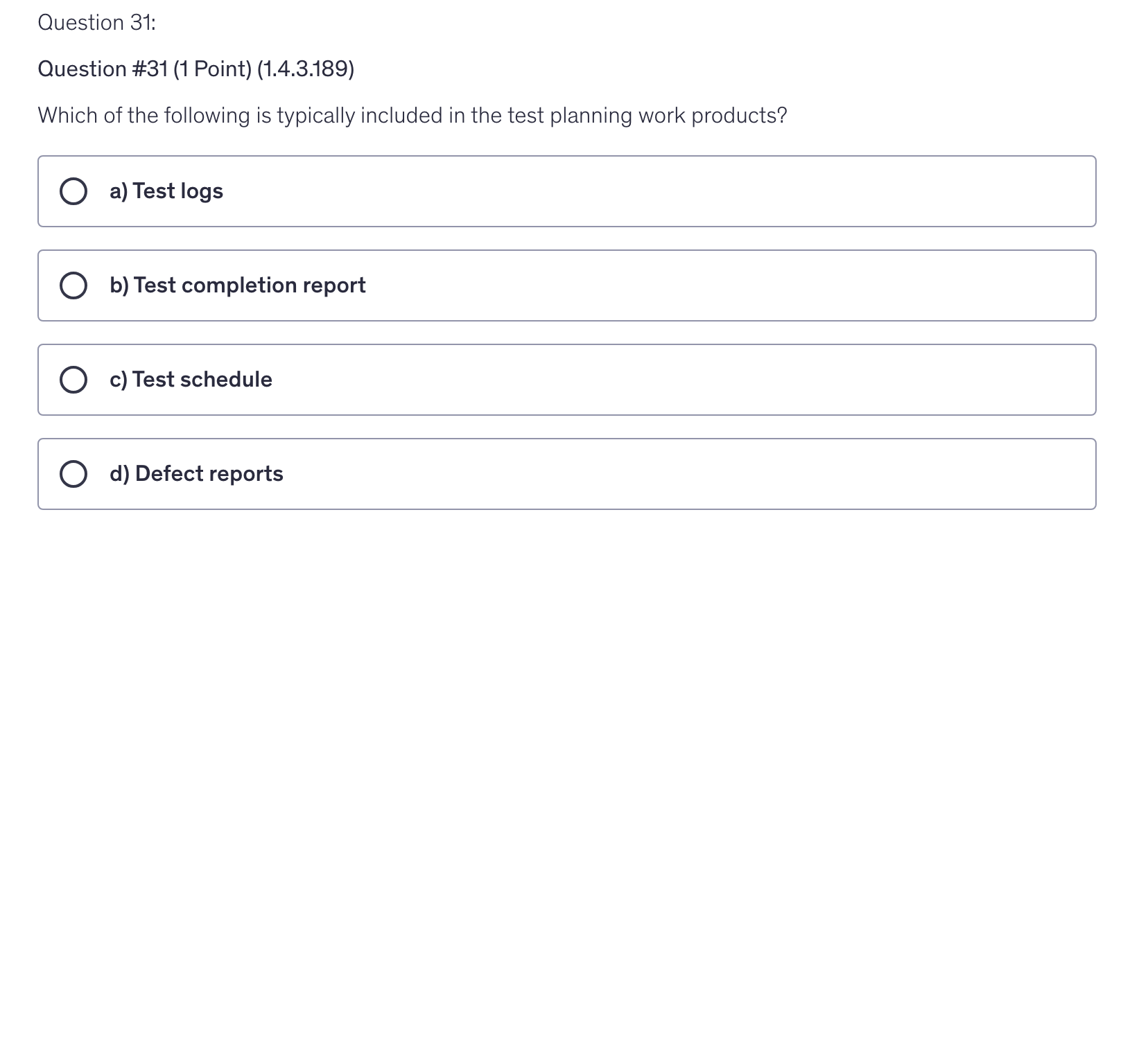
Which of the following is typically included in the test planning work products?
c) Test Schedule
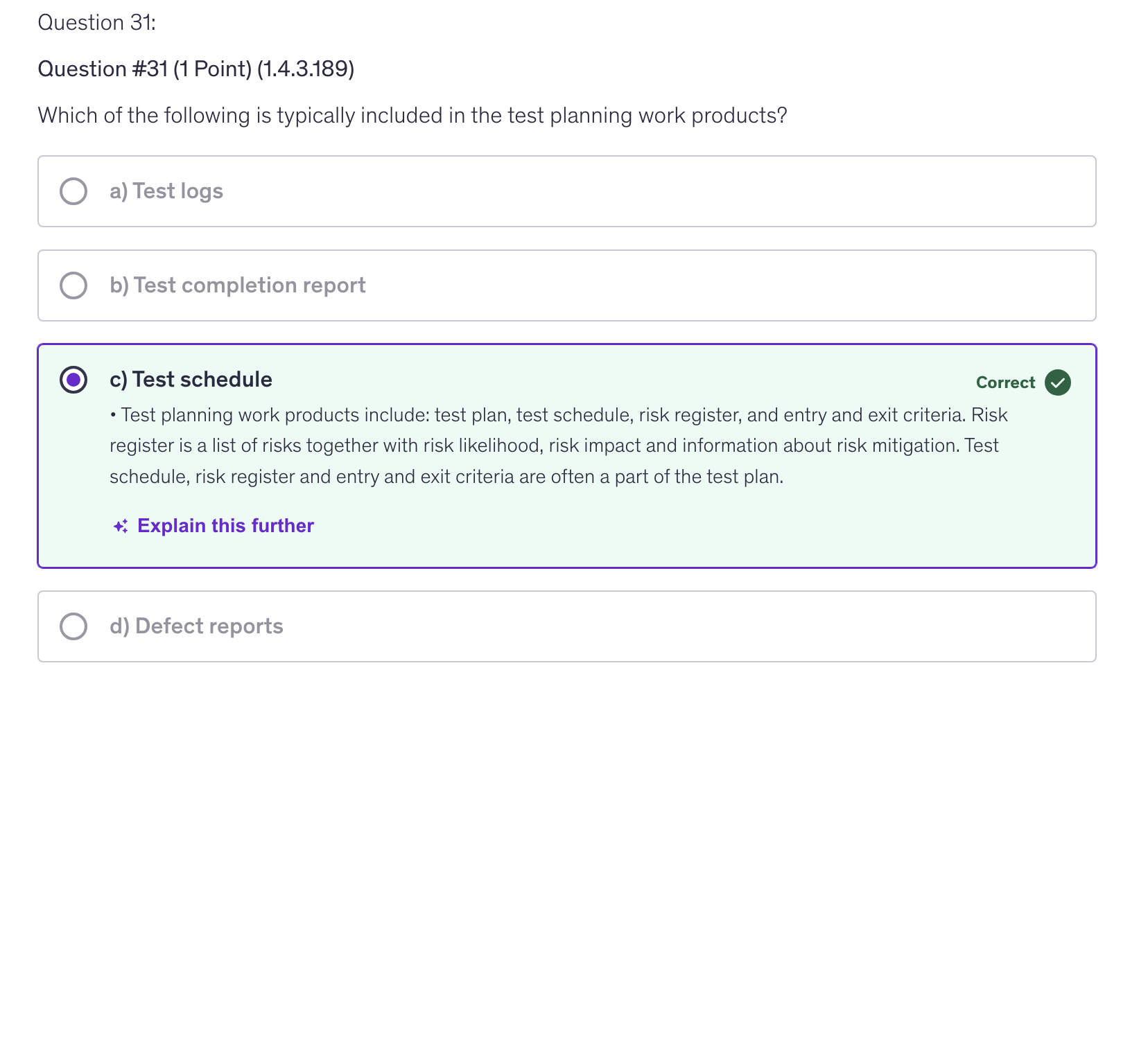

Which of the following is a primary benefit of establishing bidirectional traceability between the test basis and testware?
a) It facilitates the tracking of test coverage against requirements
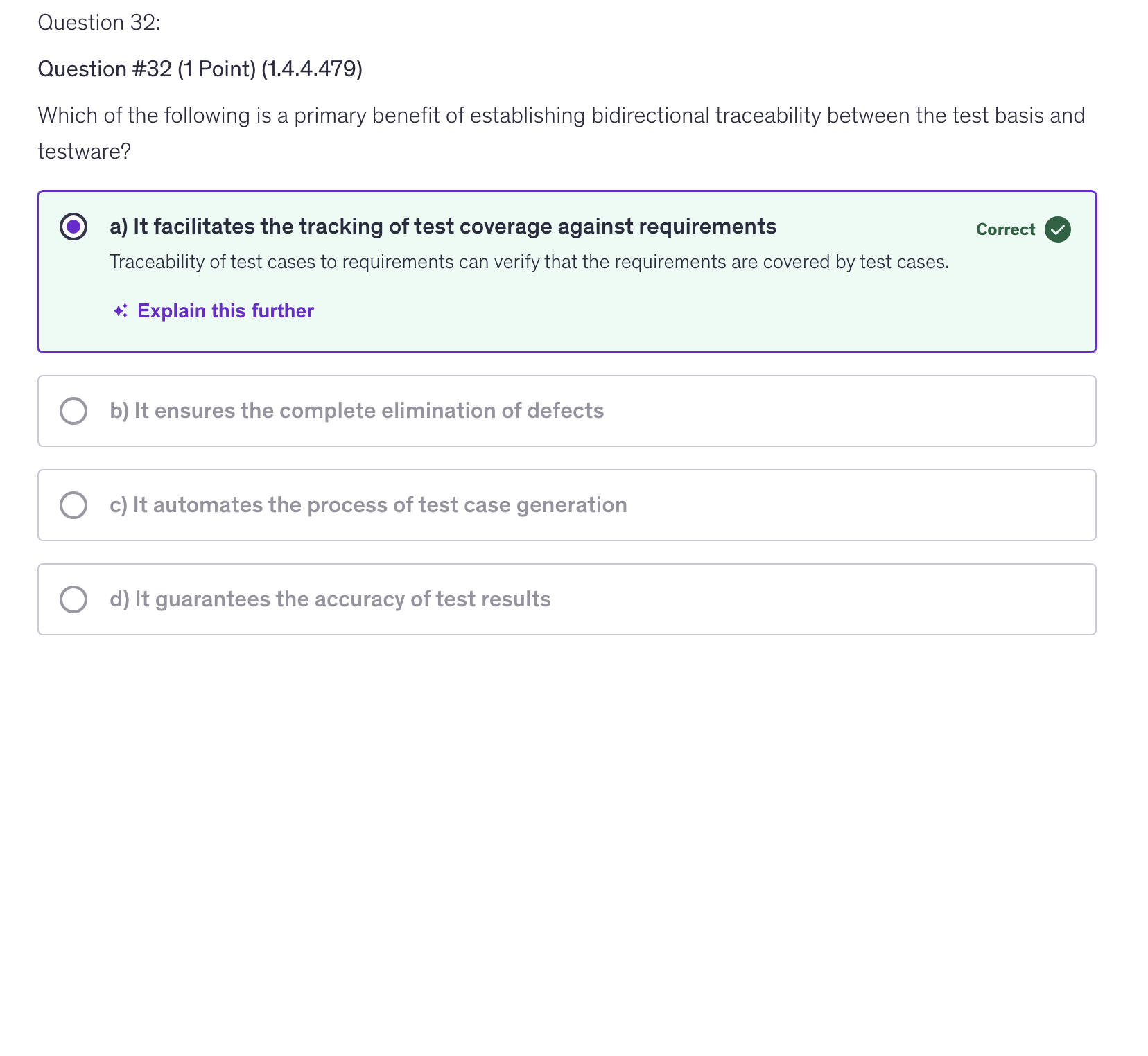
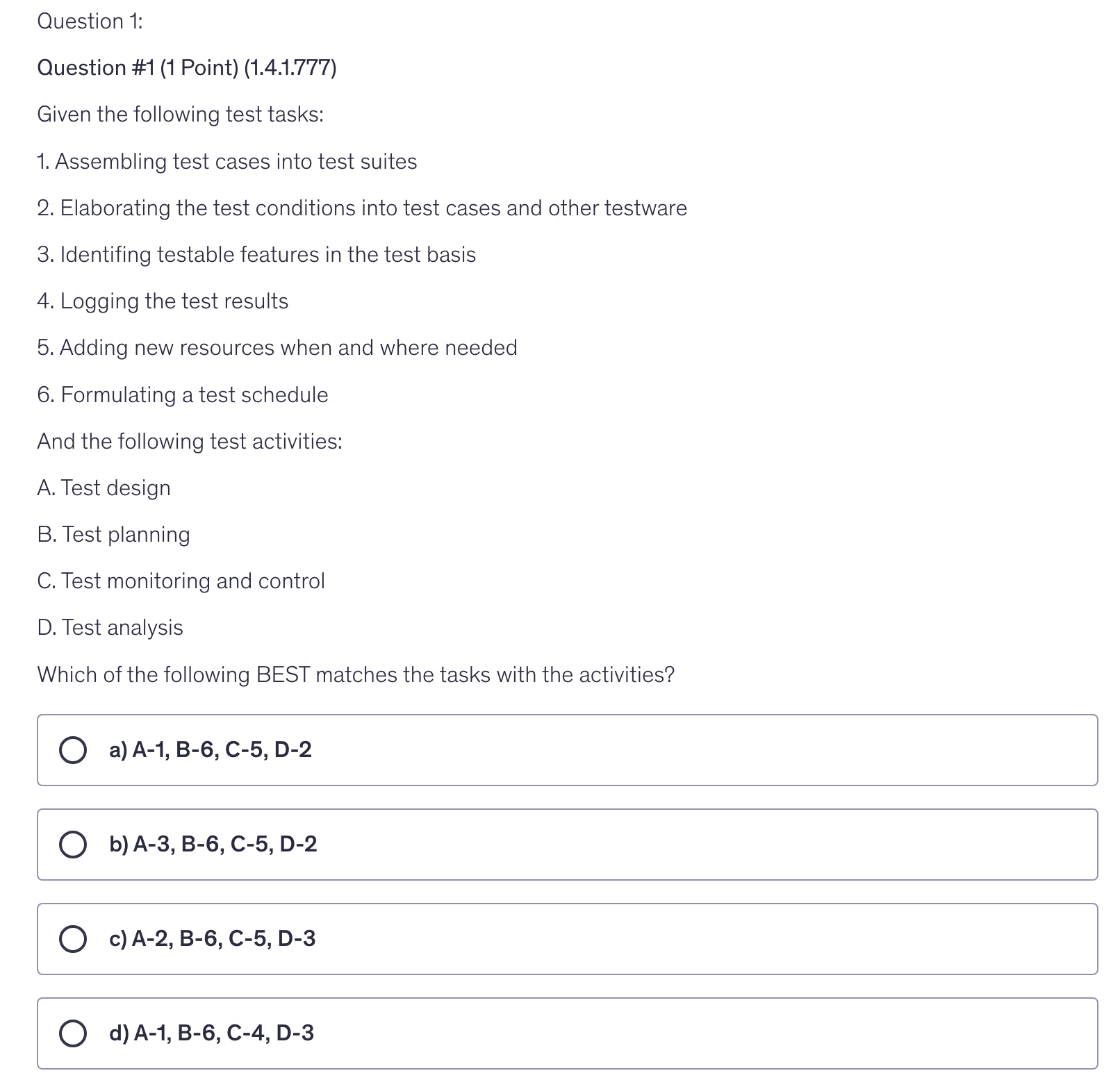
Given the following test tasks:
1. Assembling test cases into test suites
2. Elaborating the test conditions into test cases and other testware
3. Identifing testable features in the test basis
4. Logging the test results
5. Adding new resources when and where needed
6. Formulating a test schedule
And the following test activities:
A. Test design
B. Test planning
C. Test monitoring and control
D. Test analysis
Which of the following BEST matches the tasks with the activities?
c) A-2, B-6, C-5, D-3
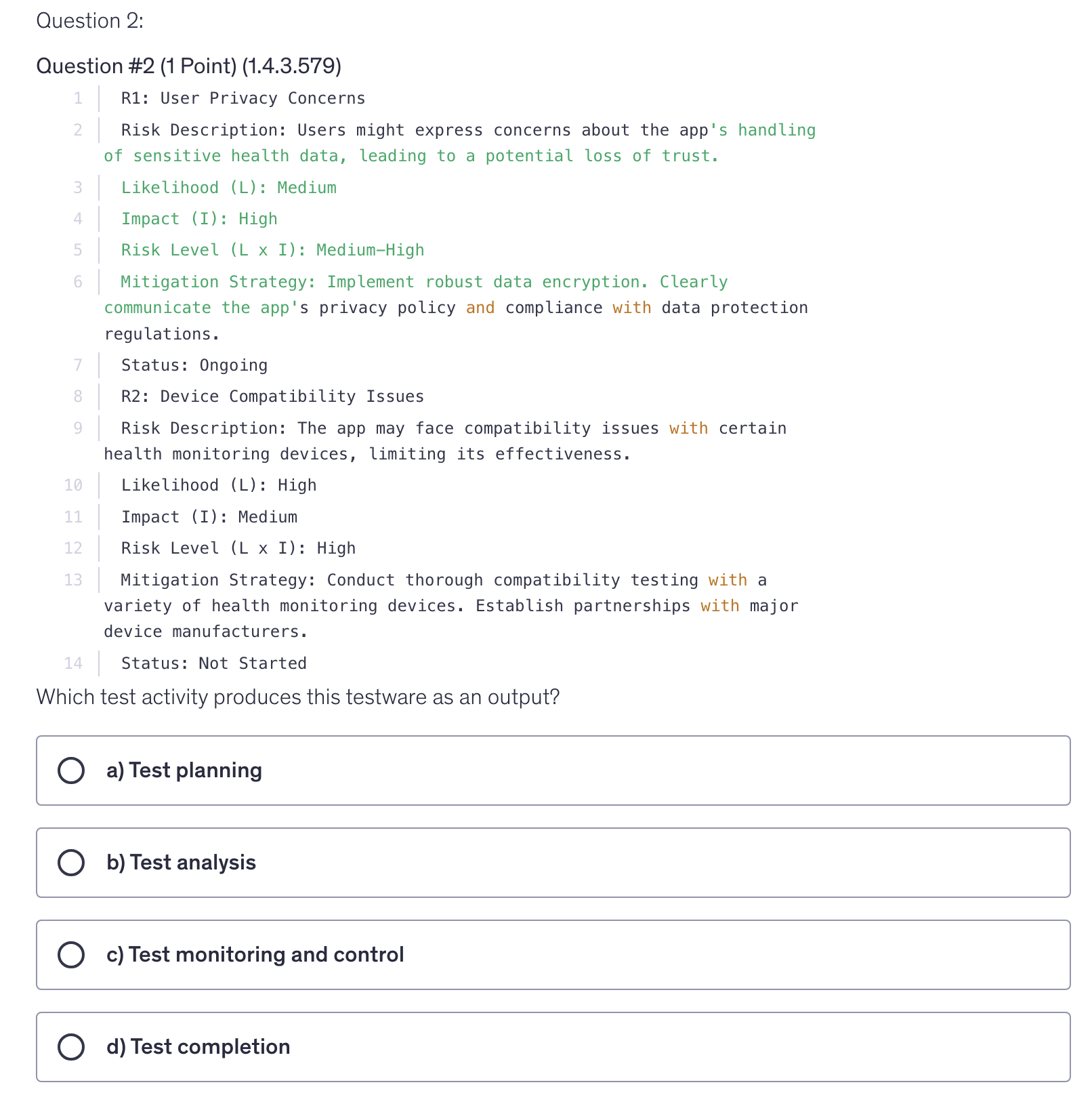
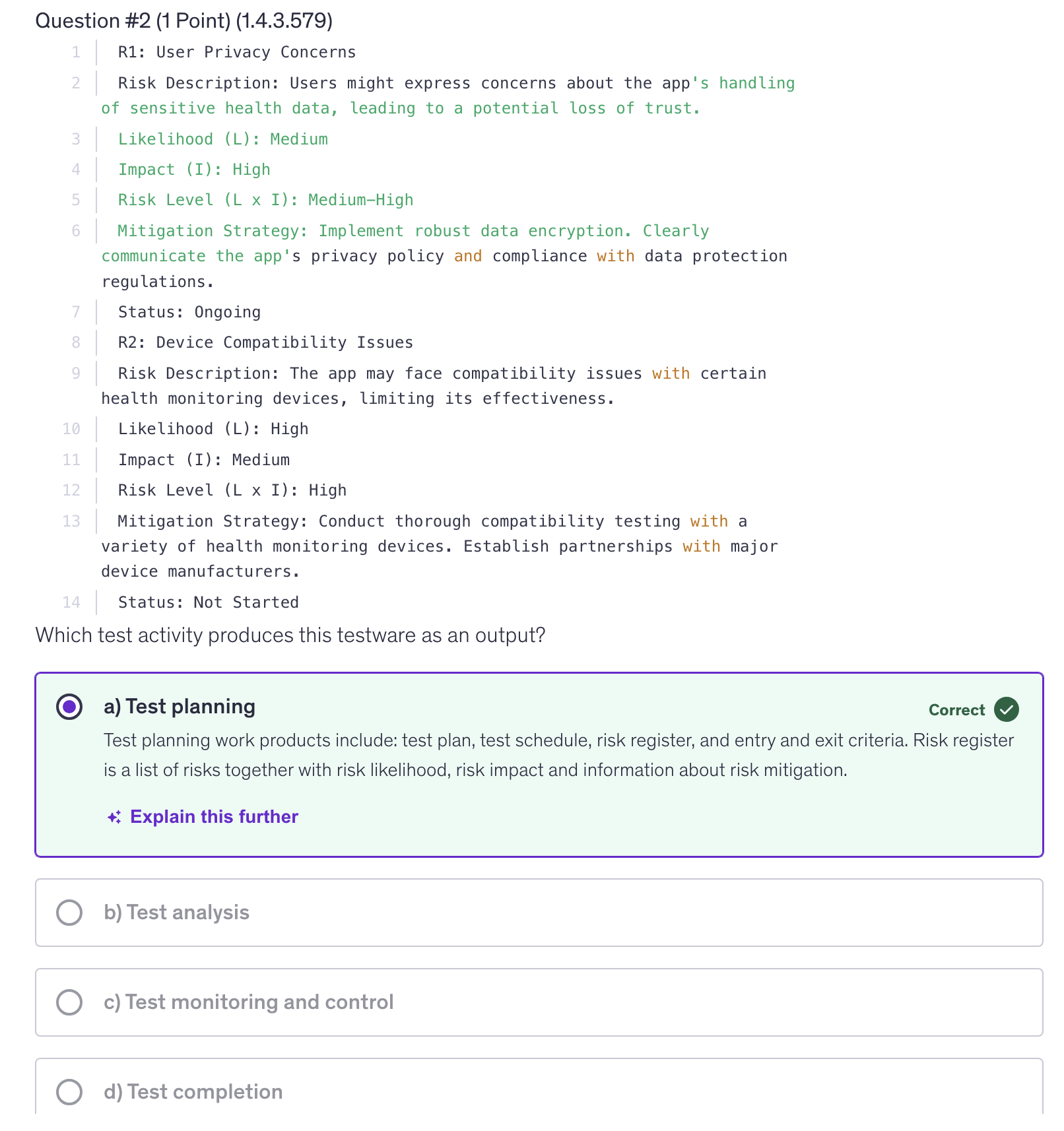
Which test activity produces this testware as an output?
a) Test planning
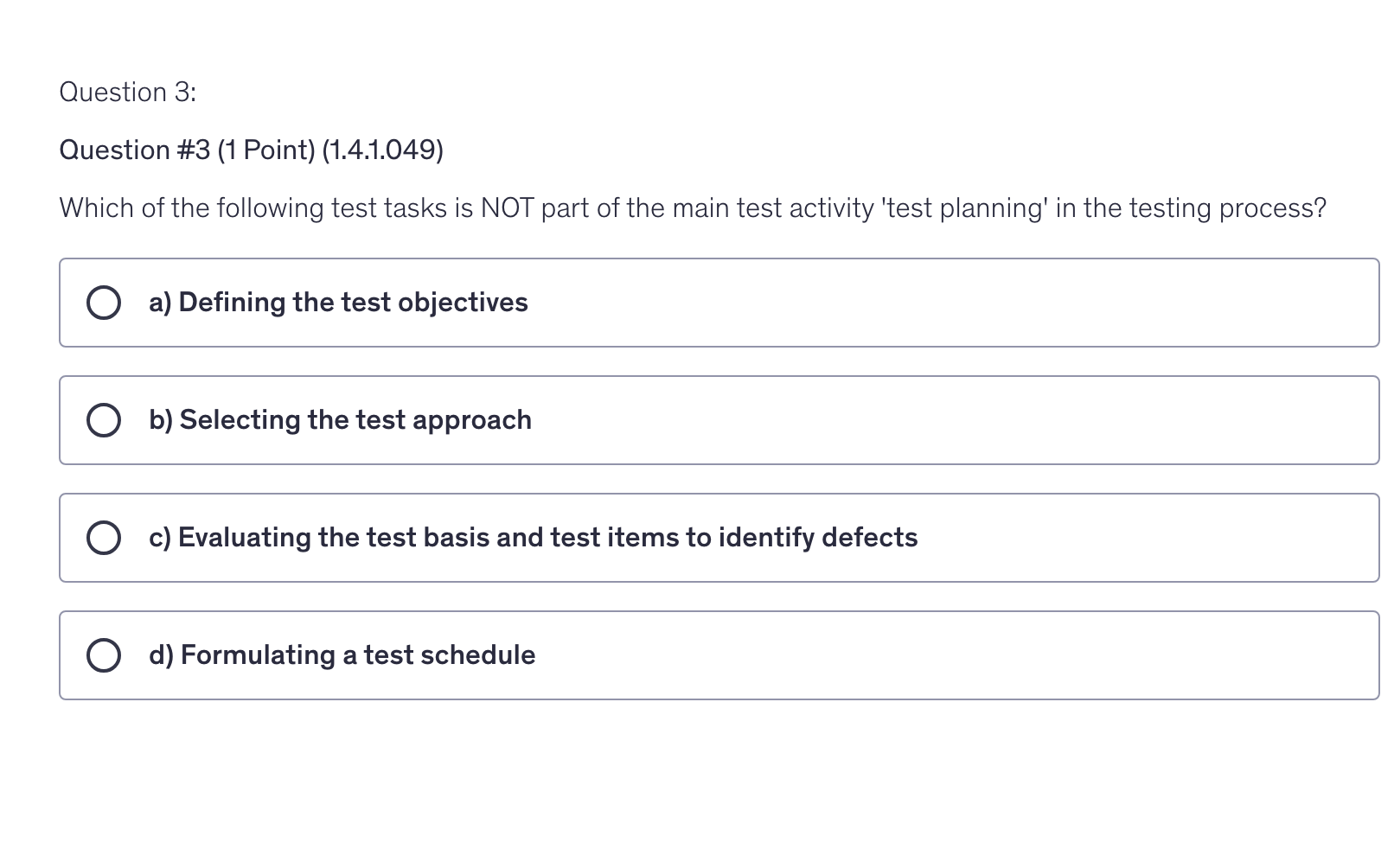
Which of the following test tasks is NOT part of the main test activity 'test planning' in the testing process?
c) Evaluating the test basis and test items to identify defects
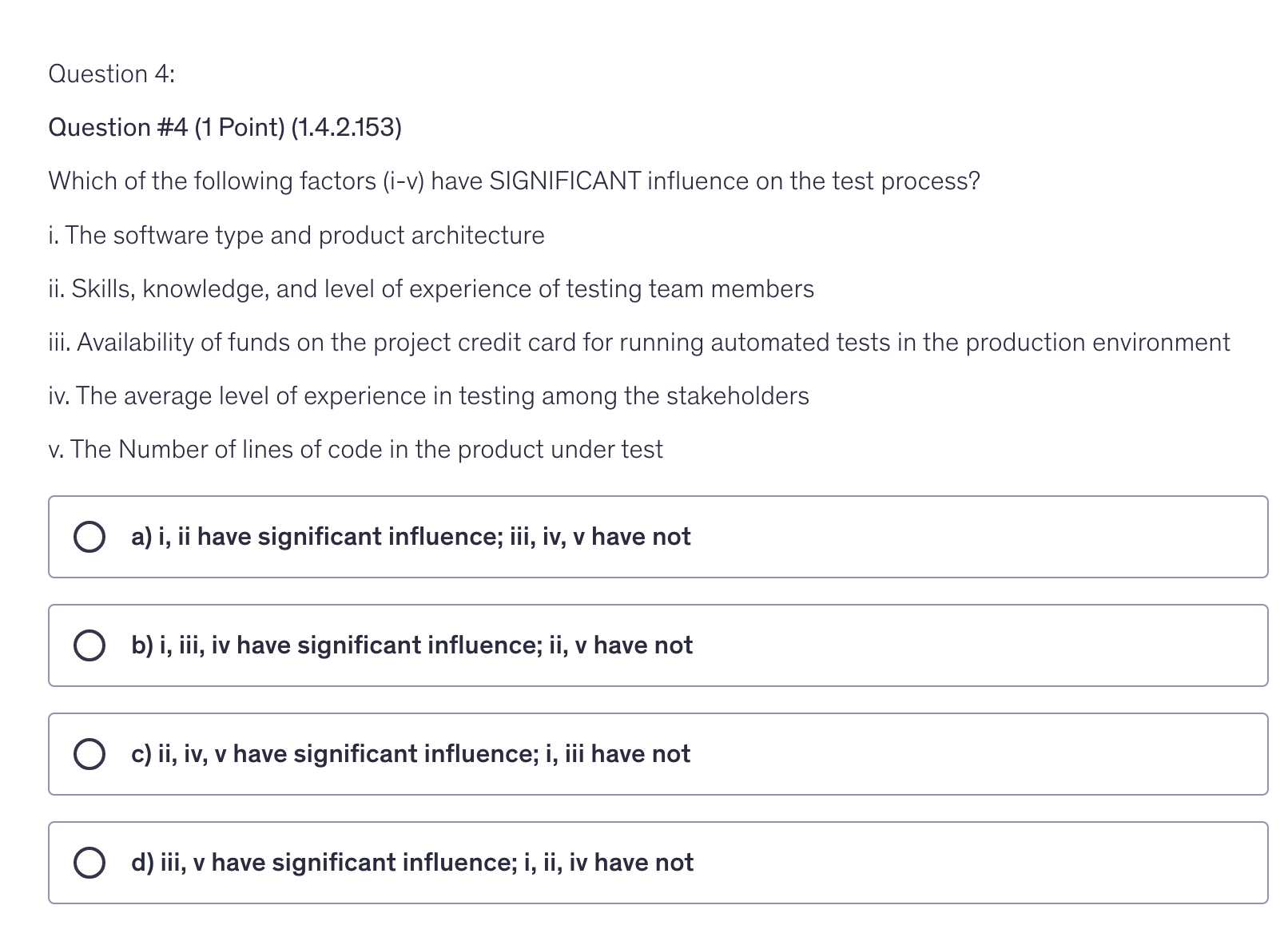
Which of the following factors (i-v) have SIGNIFICANT influence on the test process?
i. The software type and product architecture
ii. Skills, knowledge, and level of experience of testing team members
iii. Availability of funds on the project credit card for running automated tests in the production environment
iv. The average level of experience in testing among the stakeholders
v. The Number of lines of code in the product under test
a) i, ii have significant influence; iii, iv, v do not
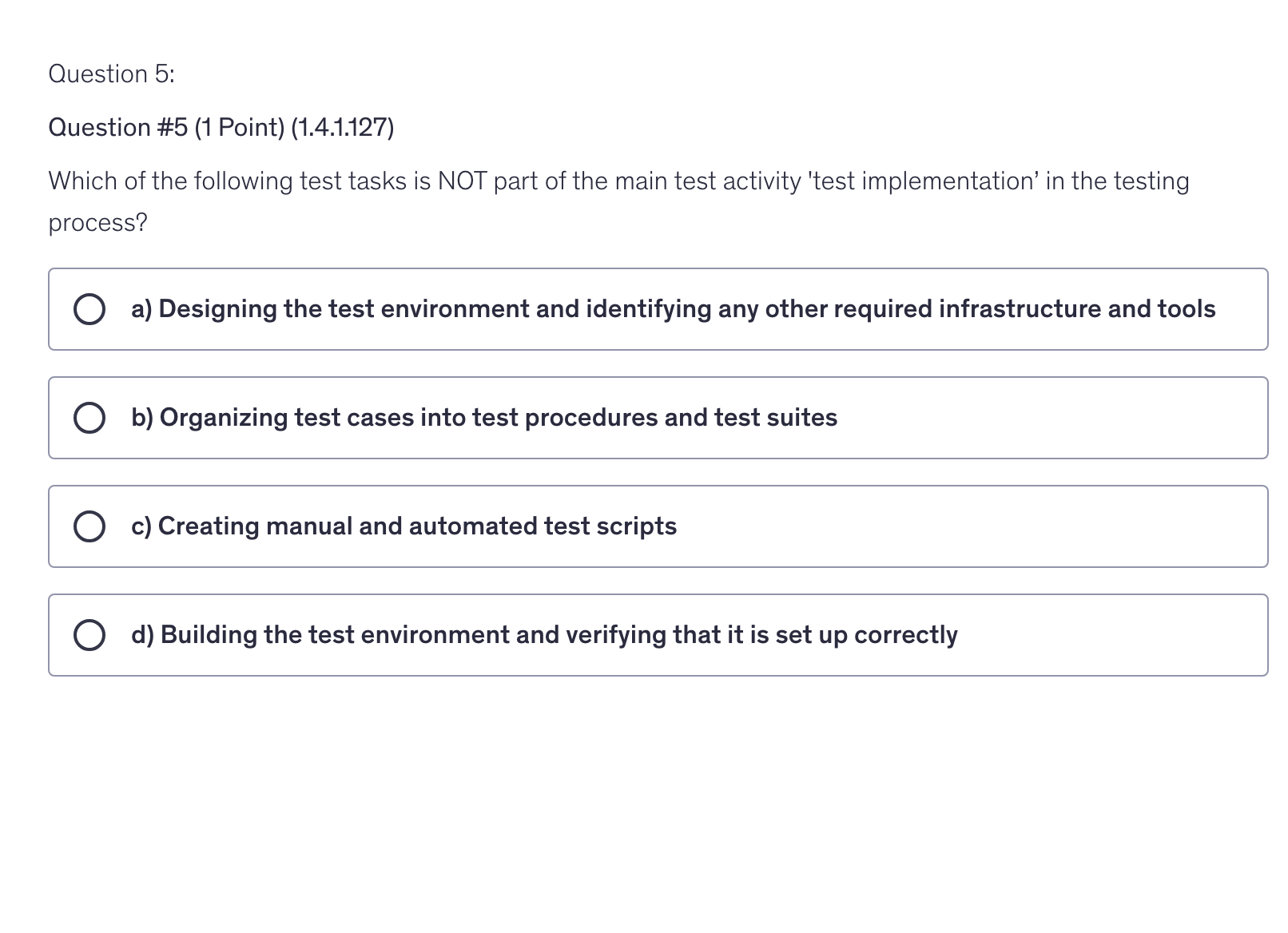
Which of the following test tasks is NOT part of the main test activity 'test implementation’ in the testing process?
a) Designing the test environment and identifying any other required infrastructure and tools
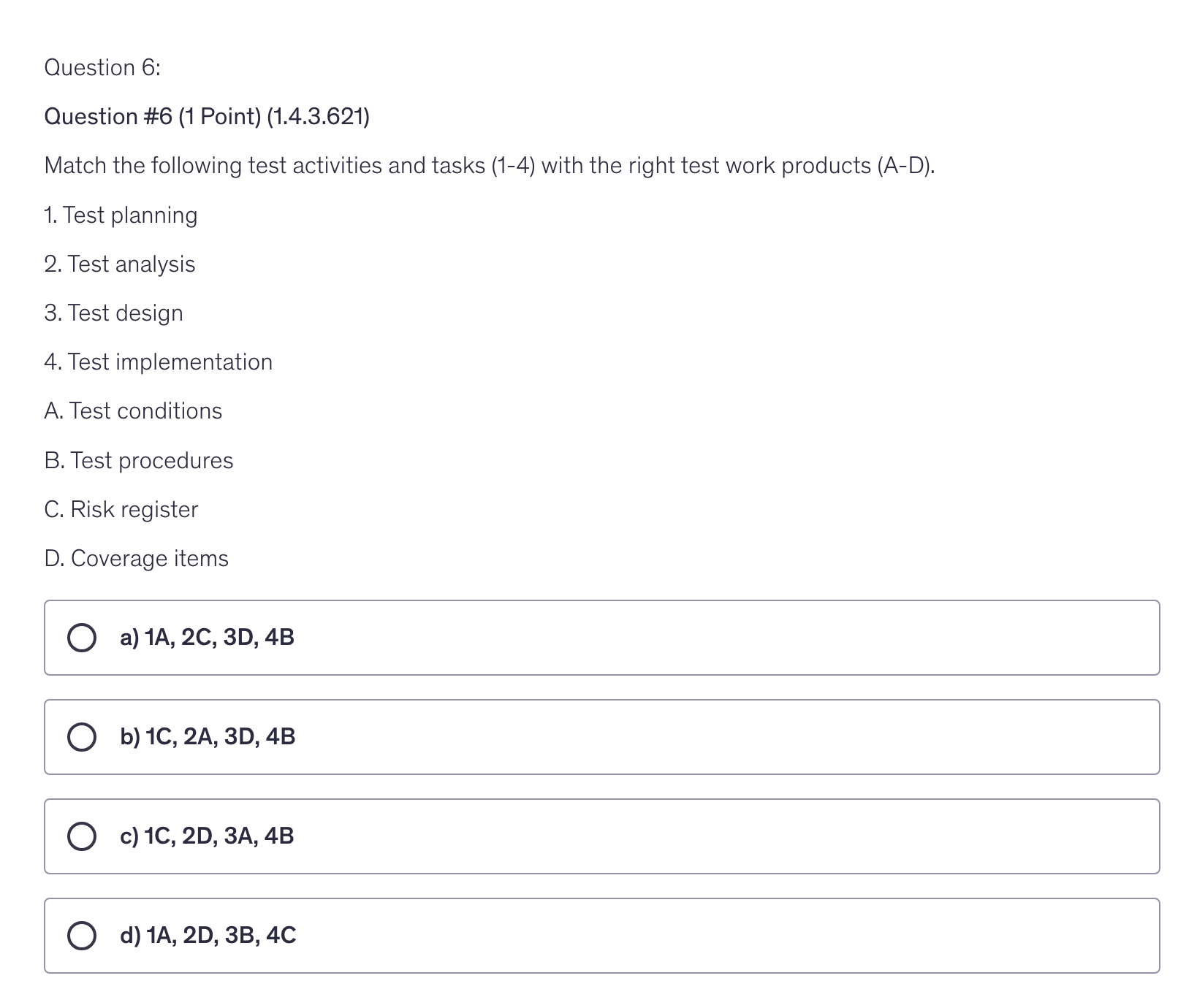
Match the following test activities and tasks (1-4) with the right test work products (A-D).
1. Test planning
2. Test analysis
3. Test design
4. Test implementation
A. Test conditions
B. Test procedures
C. Risk register
D. Coverage items
b) 1C, 2A, 3D, 4B
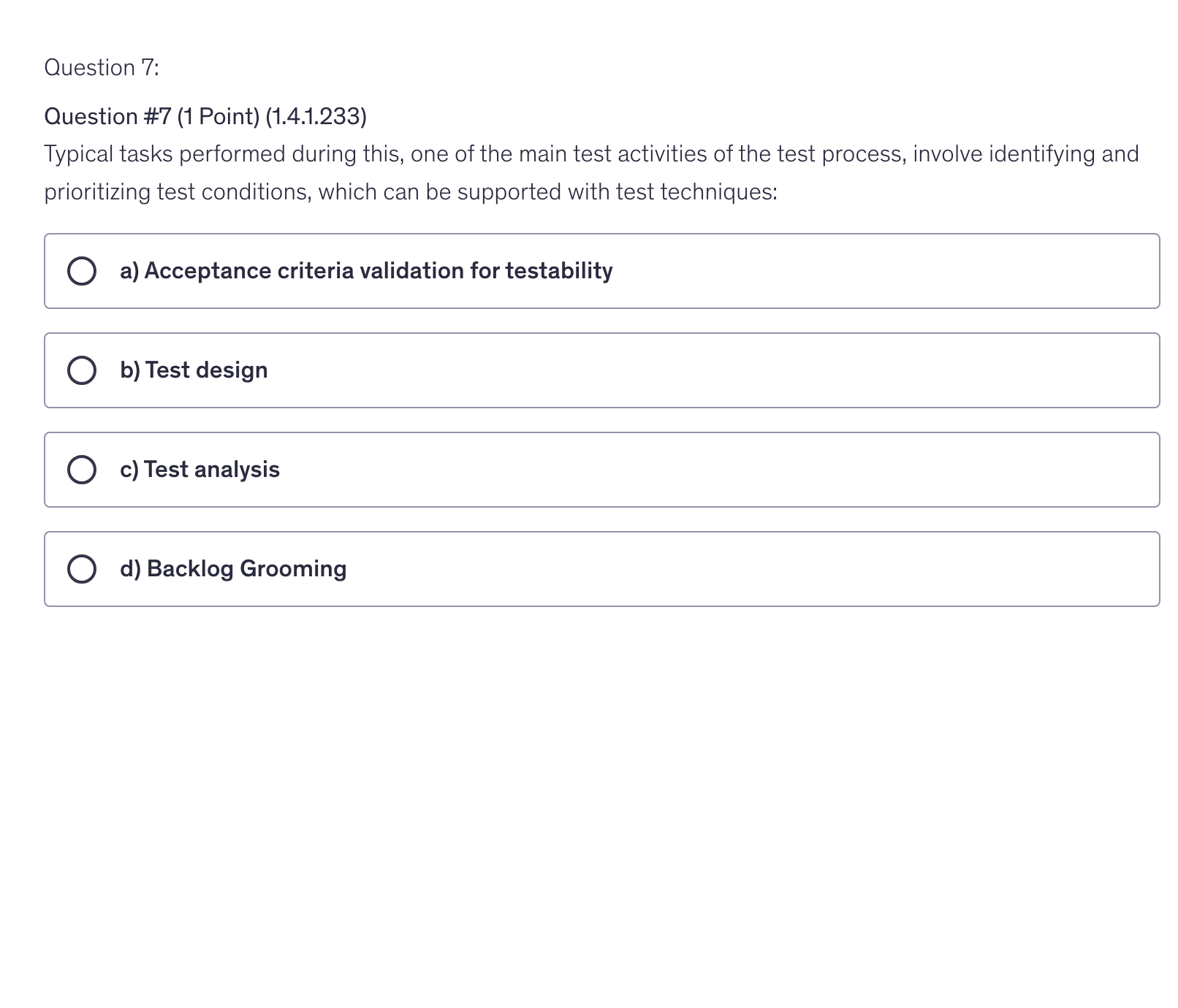
Typical tasks performed during this, one of the main test activities of the test process, involve identifying and prioritizing test conditions, which can be supported with test techniques:
c) Test Analysis
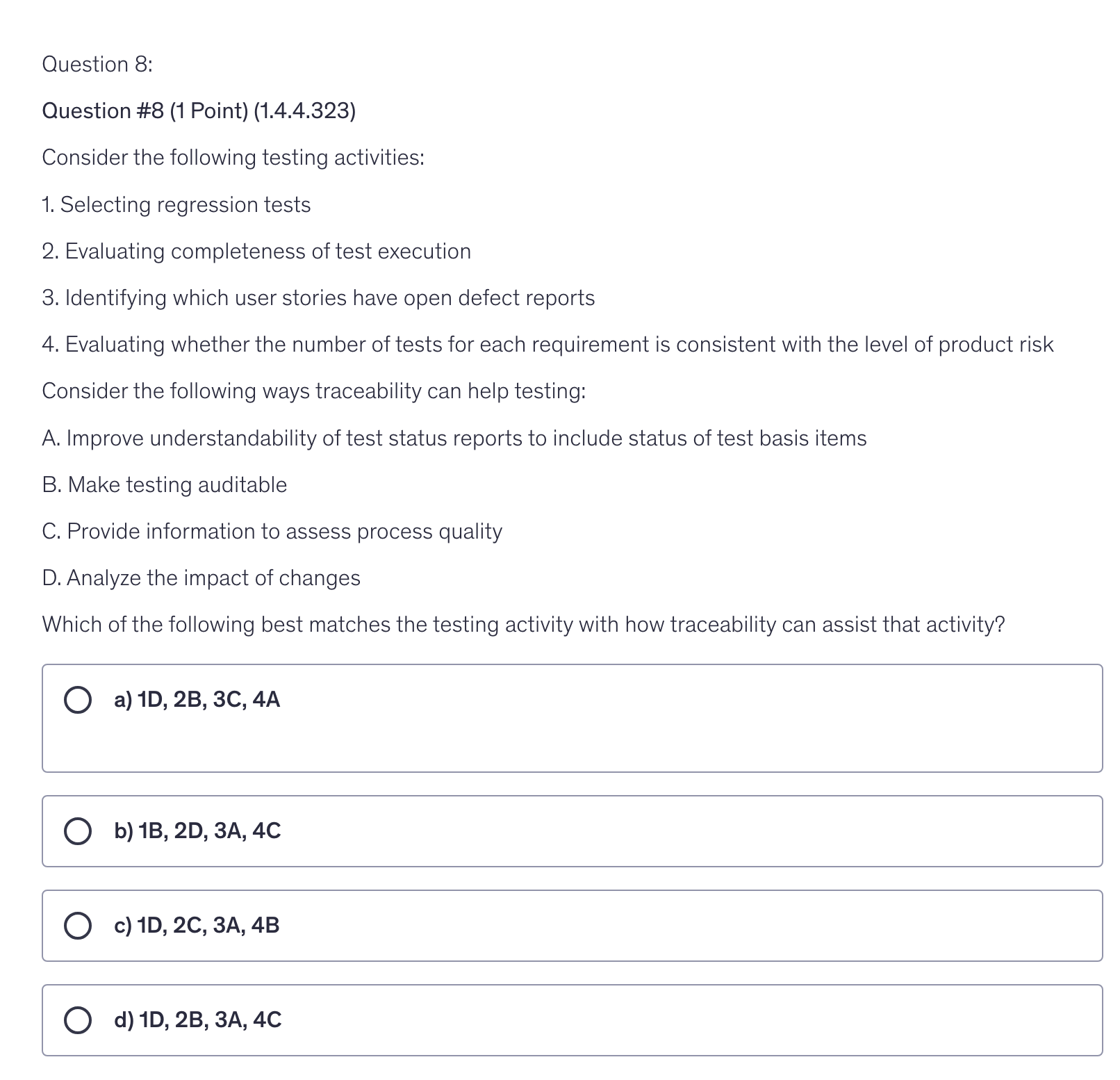
Consider the following testing activities:
1. Selecting regression tests
2. Evaluating completeness of test execution
3. Identifying which user stories have open defect reports
4. Evaluating whether the number of tests for each requirement is consistent with the level of product risk
Consider the following ways traceability can help testing:
A. Improve understandability of test status reports to include status of test basis items
B. Make testing auditable
C. Provide information to assess process quality
D. Analyze the impact of changes
Which of the following best matches the testing activity with how traceability can assist that activity?
d) 1D, 2B, 3A, 4C
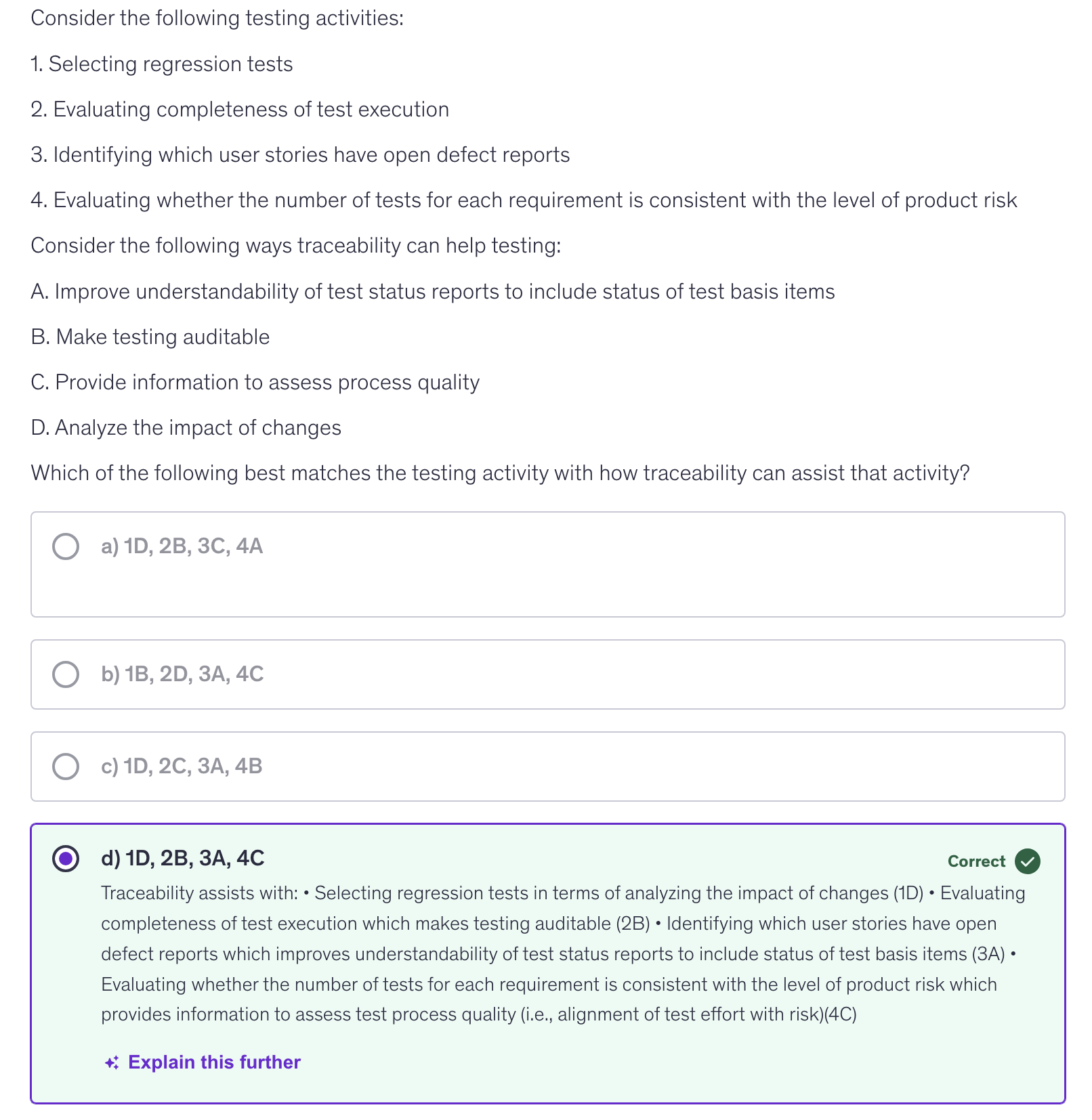
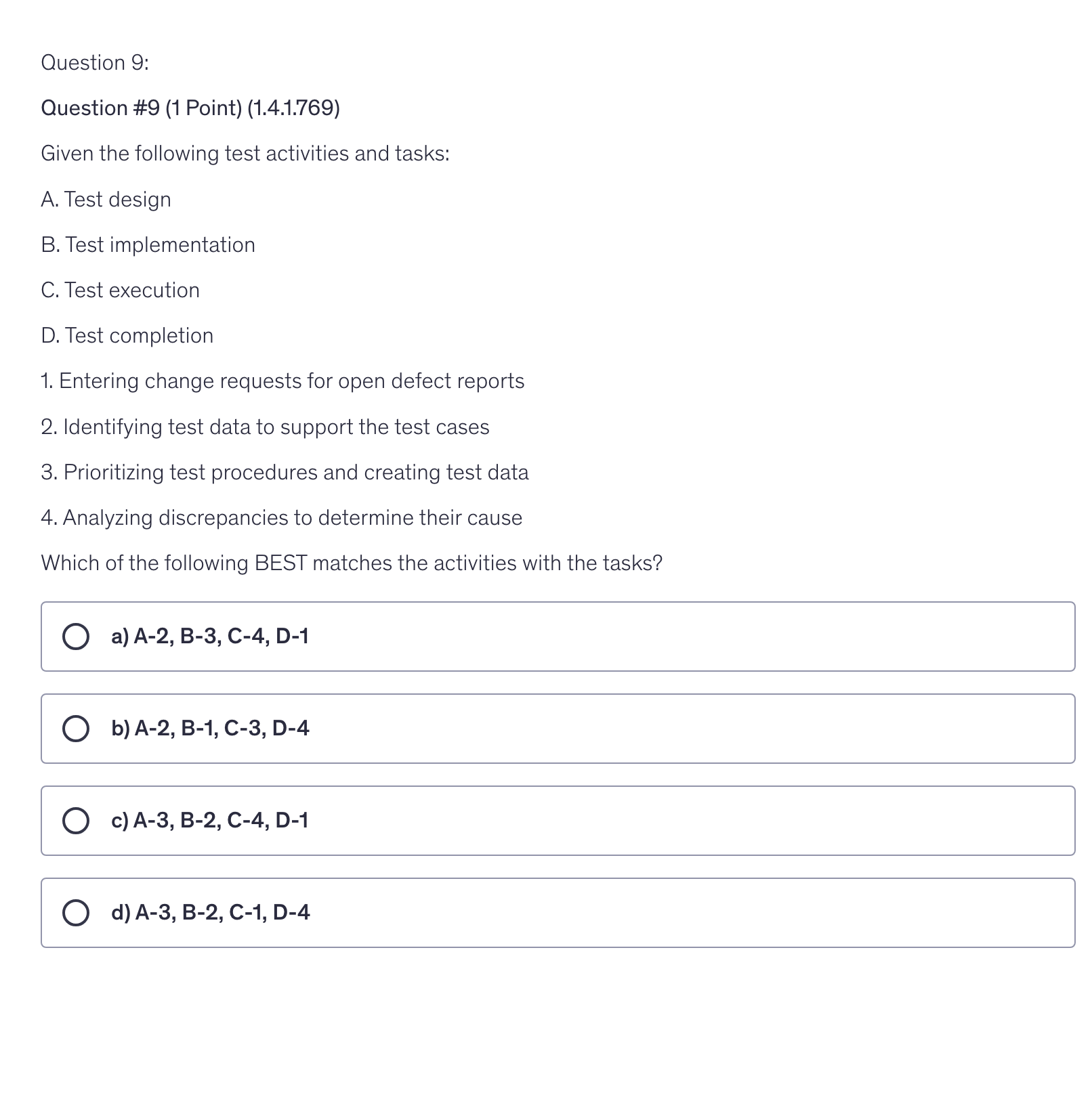
Given the following test activities and tasks:
A. Test design
B. Test implementation
C. Test execution
D. Test completion
1. Entering change requests for open defect reports
2. Identifying test data to support the test cases
3. Prioritizing test procedures and creating test data
4. Analyzing discrepancies to determine their cause
Which of the following BEST matches the activities with the tasks?
a) A-2, B-3, C-4, D-1
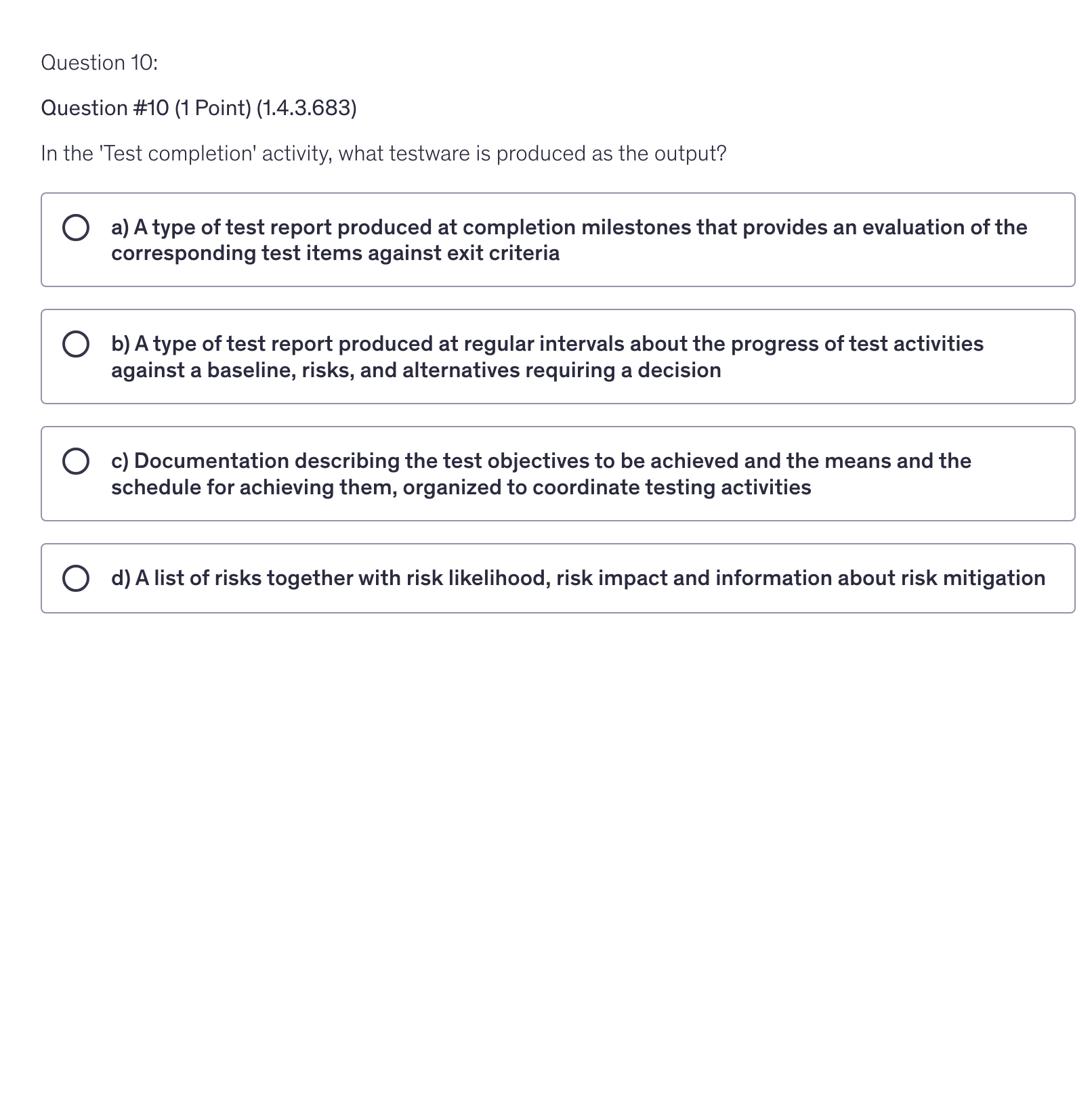
In the 'Test completion' activity, what testware is produced as the output?
a) A type of test report produced at completion milestones that provides an evaluation of the corresponding test items against exit criteria
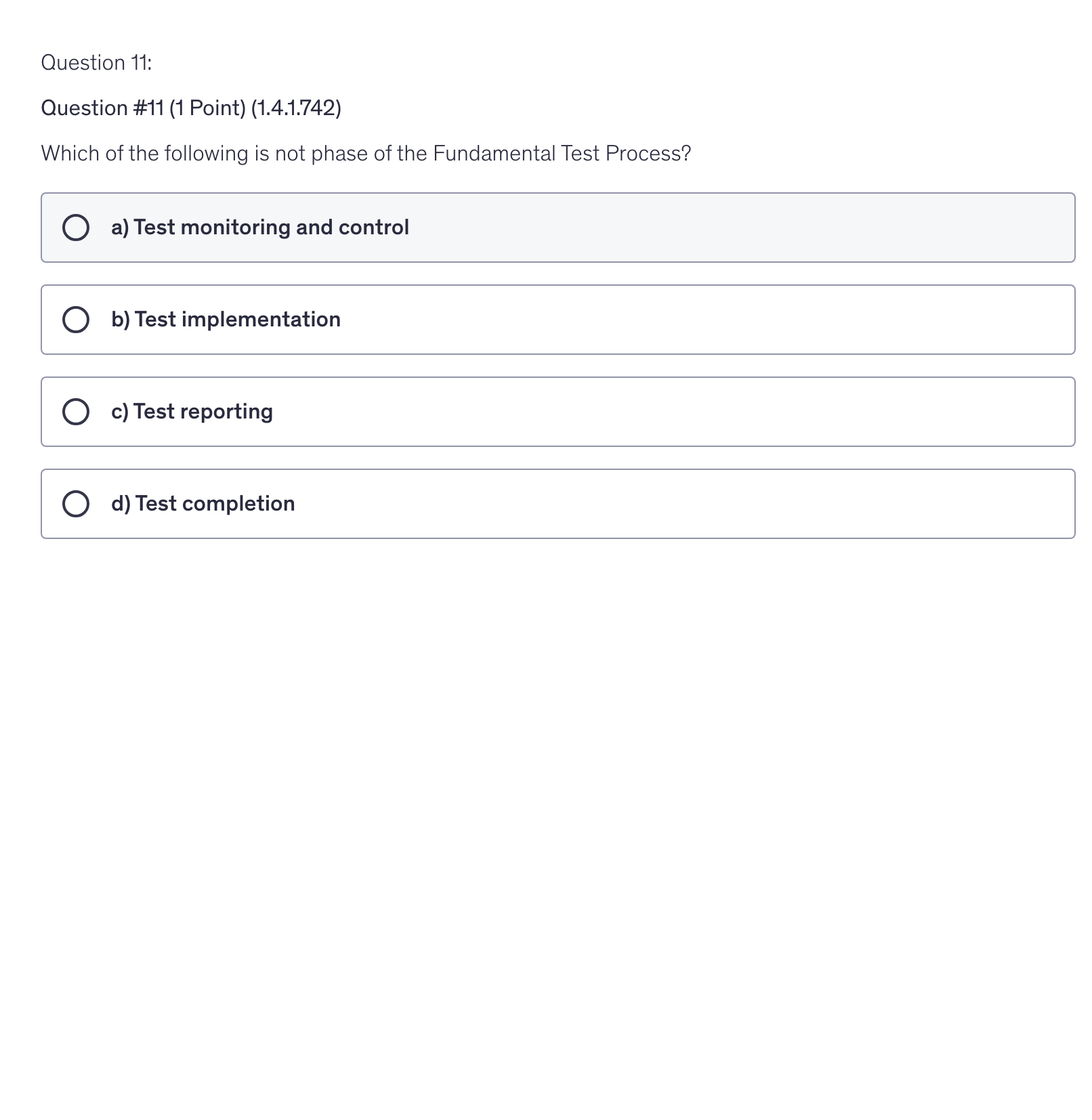
Which of the following is not phase of the Fundamental Test Process?
c) Test reporting
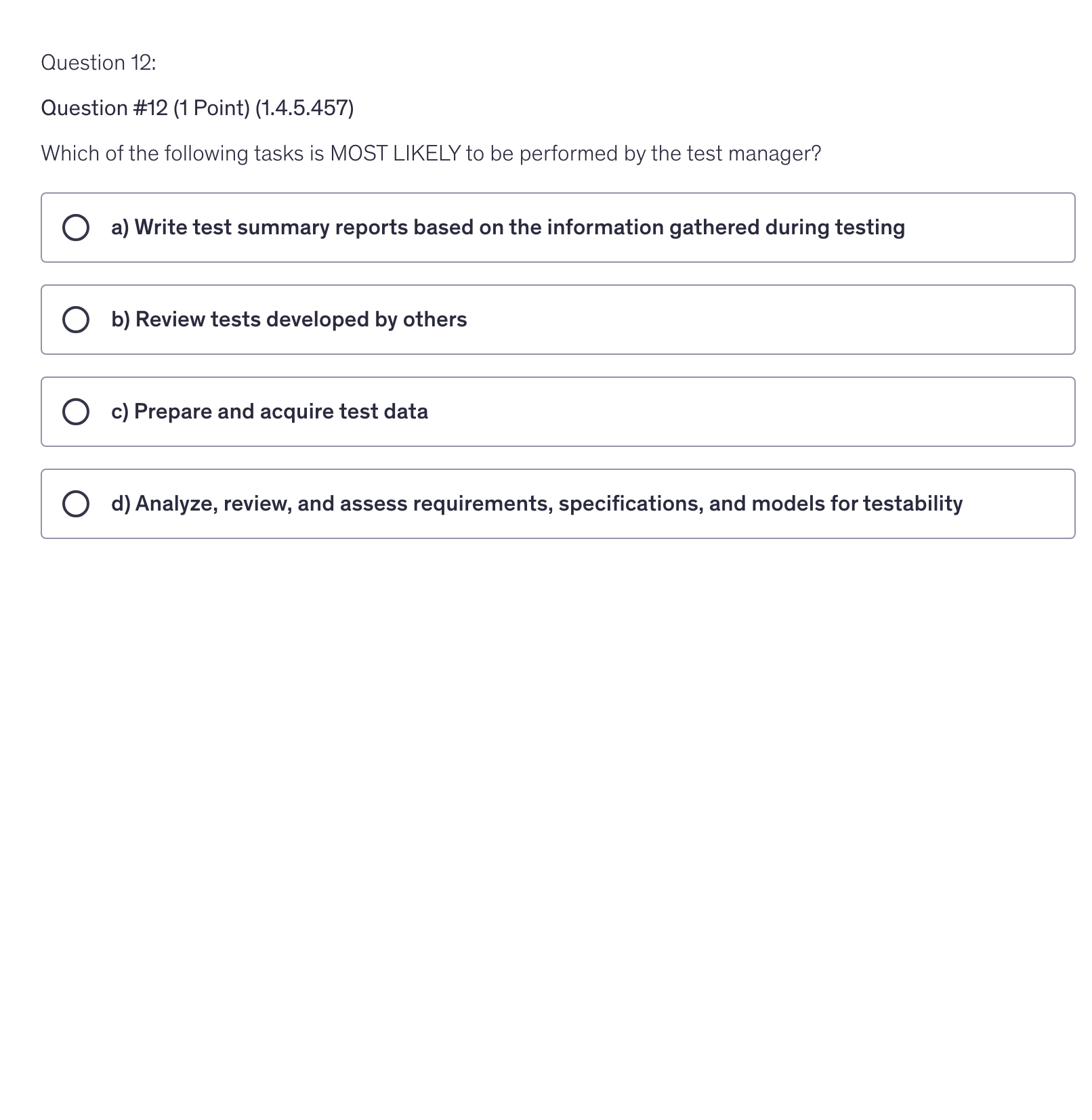
Which of the following tasks is MOST LIKELY to be performed by the test manager?
a) Write test summary reports based on the information gathered during testing

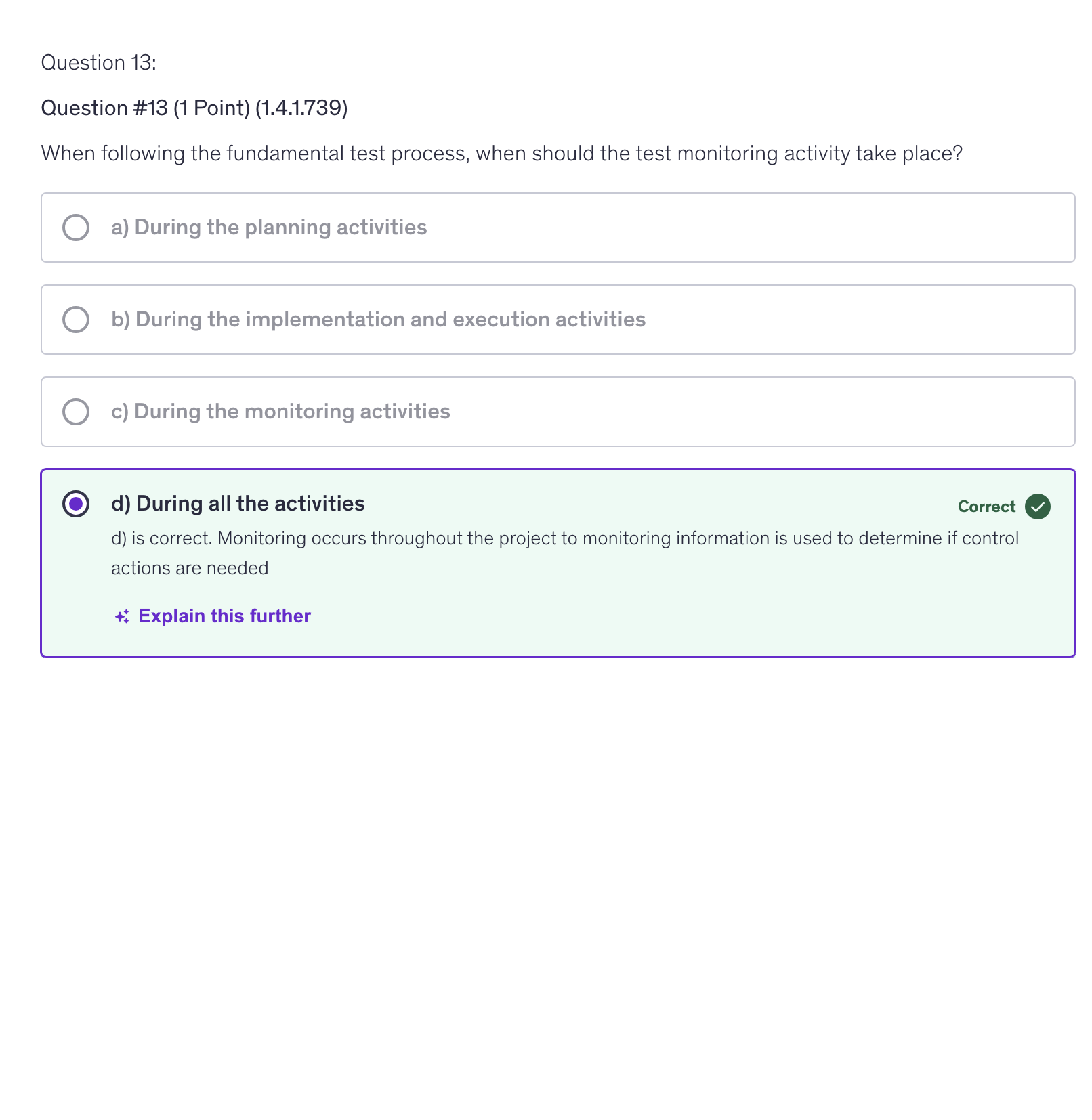
When following the fundamental test process, when should the test monitoring activity take place?
d) During all the activities
Which test activity produces 'A sequence of test cases in execution order, and any associated actions that may be required to set up the initial preconditions and any wrap-up activities post execution' as an output?
c) Test implementation
What are the two main roles in testing as described in the syllabus?
a) Test management and testing
Consider the following acceptance criteria for a user story written from the perspective of an online store owner.
• Given that the user is logged in and on the homepage,
• When the user clicks on the "Add Item" button,
• Then the "Create Item" form should appear,
• And the user should be able to input a name and price for the new item
In which test activity would this testware MOST LIKELY be created as an output work product?
b) Test analysis
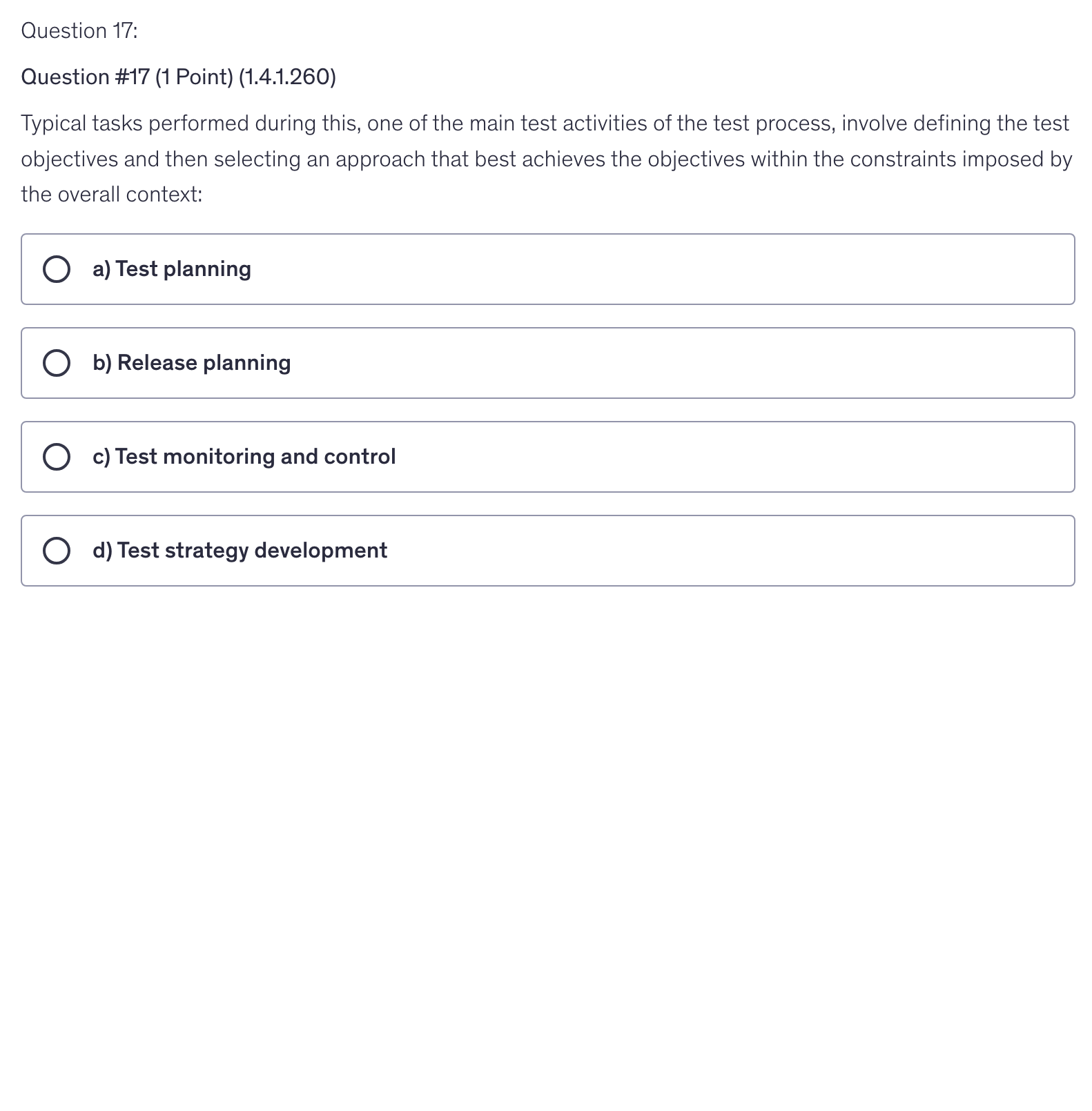
Typical tasks performed during this, one of the main test activities of the test process, involve defining the test objectives and then selecting an approach that best achieves the objectives within the constraints imposed by the overall context:
a) Test planning
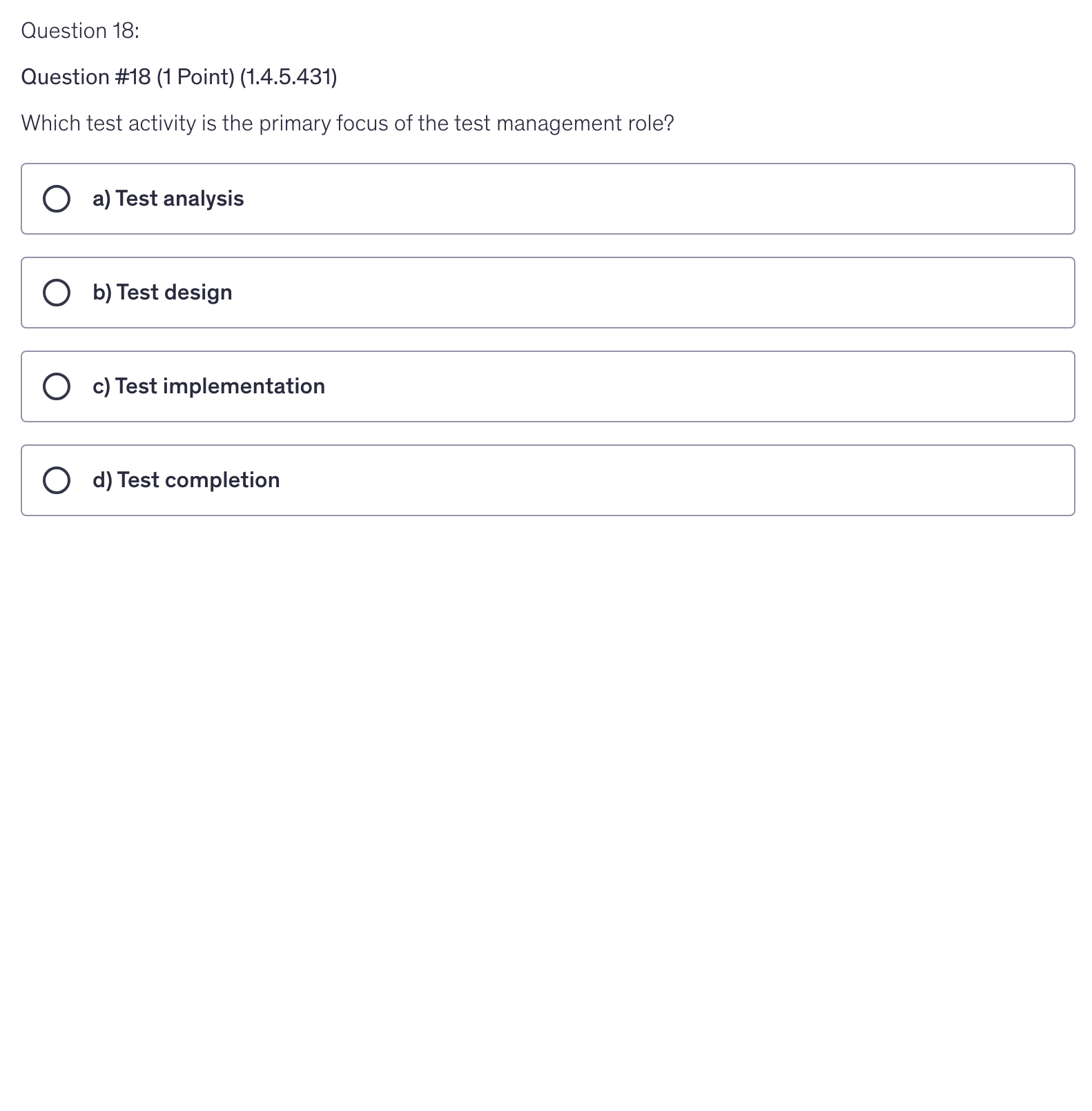
Which test activity is the primary focus of the test management role?
d) Test completion

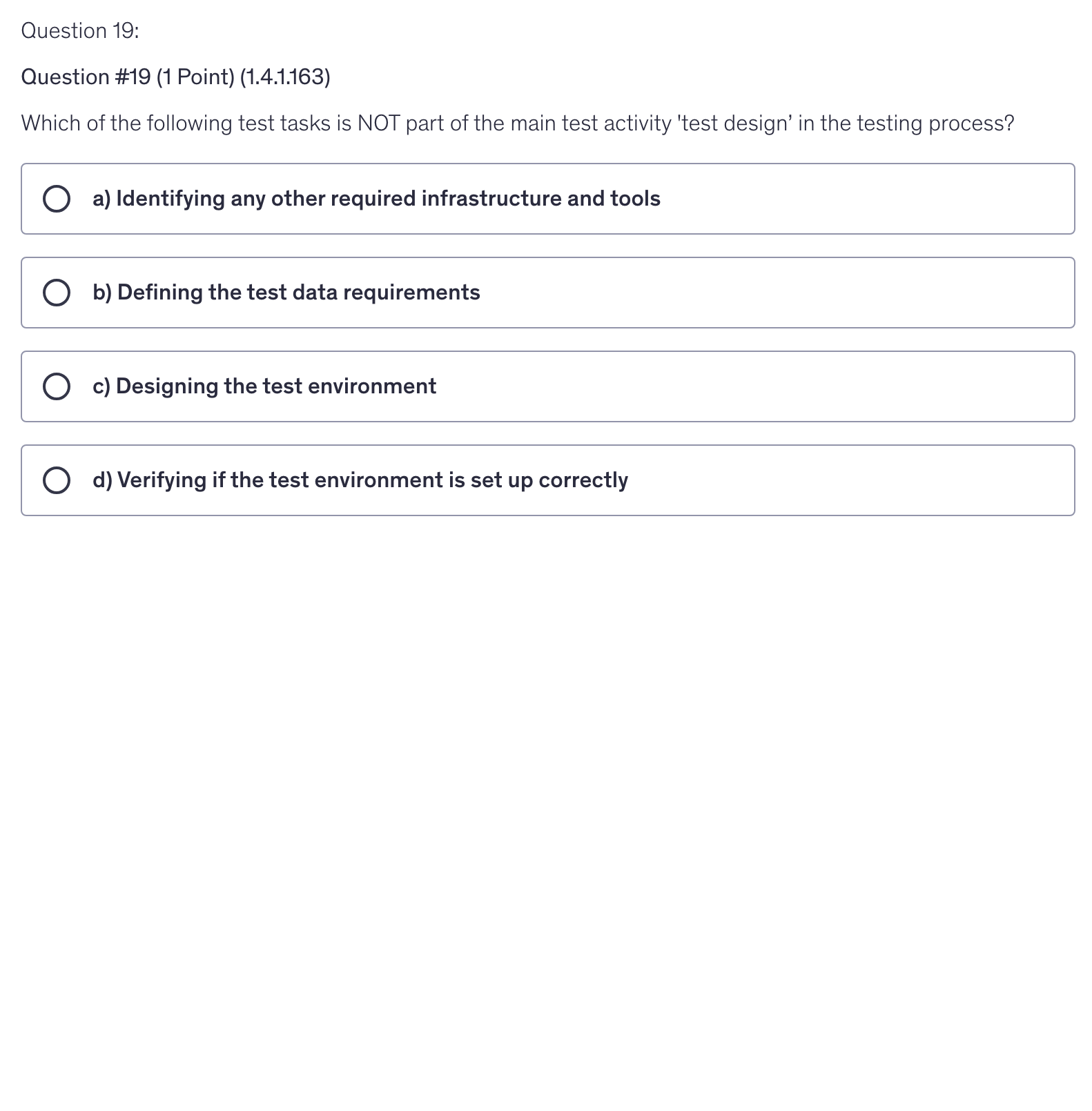
Which of the following test tasks is NOT part of the main test activity 'test design’ in the testing process?
d) Verifying if the test environment is set up correctly
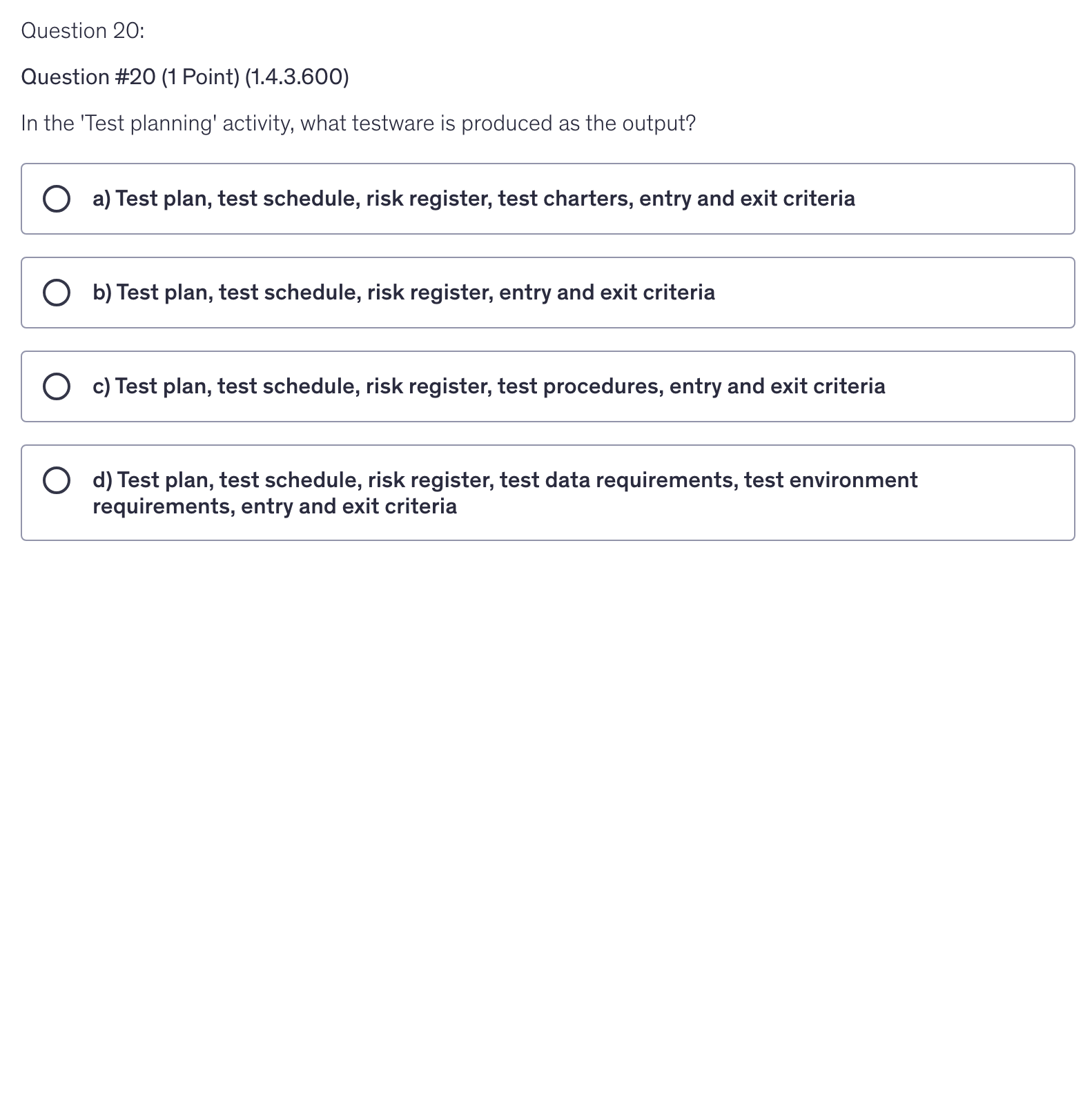
In the 'Test planning' activity, what testware is produced as the output?
b) Test plan, test schedule, risk register, entry and exit criteria

Which of the following test tasks is part of the main test activity 'test analysis' in the testing process?
c) Determine that the acceptance criteria, “The user can send a group message to everyone” is not testable
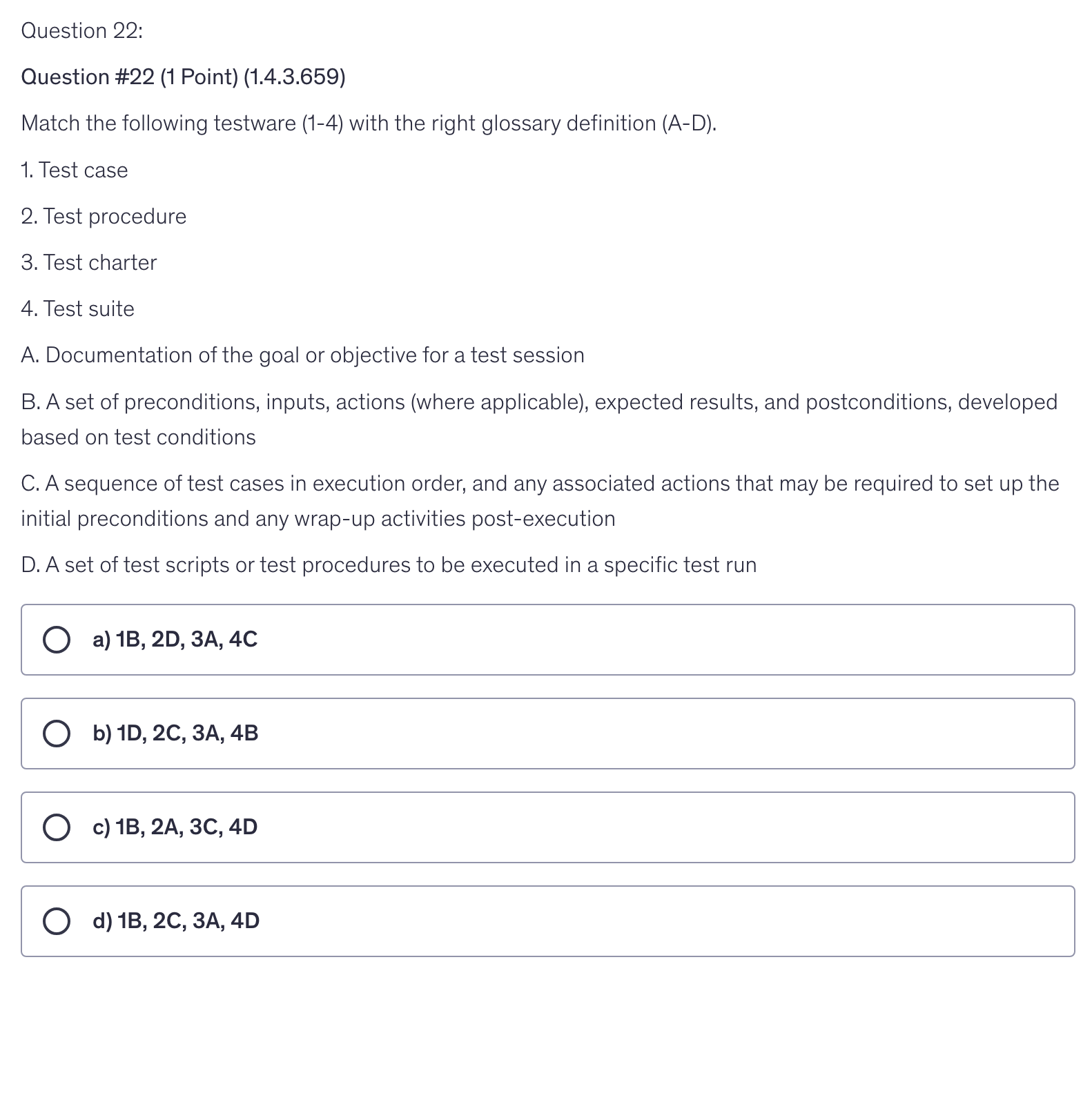
Match the following testware (1-4) with the right glossary definition (A-D).
1. Test case
2. Test procedure
3. Test charter
4. Test suite
A. Documentation of the goal or objective for a test session
B. A set of preconditions, inputs, actions (where applicable), expected results, and postconditions, developed based on test conditions
C. A sequence of test cases in execution order, and any associated actions that may be required to set up the initial preconditions and any wrap-up activities post-execution
D. A set of test scripts or test procedures to be executed in a specific test run
d) 1B, 2C, 3A, 4D
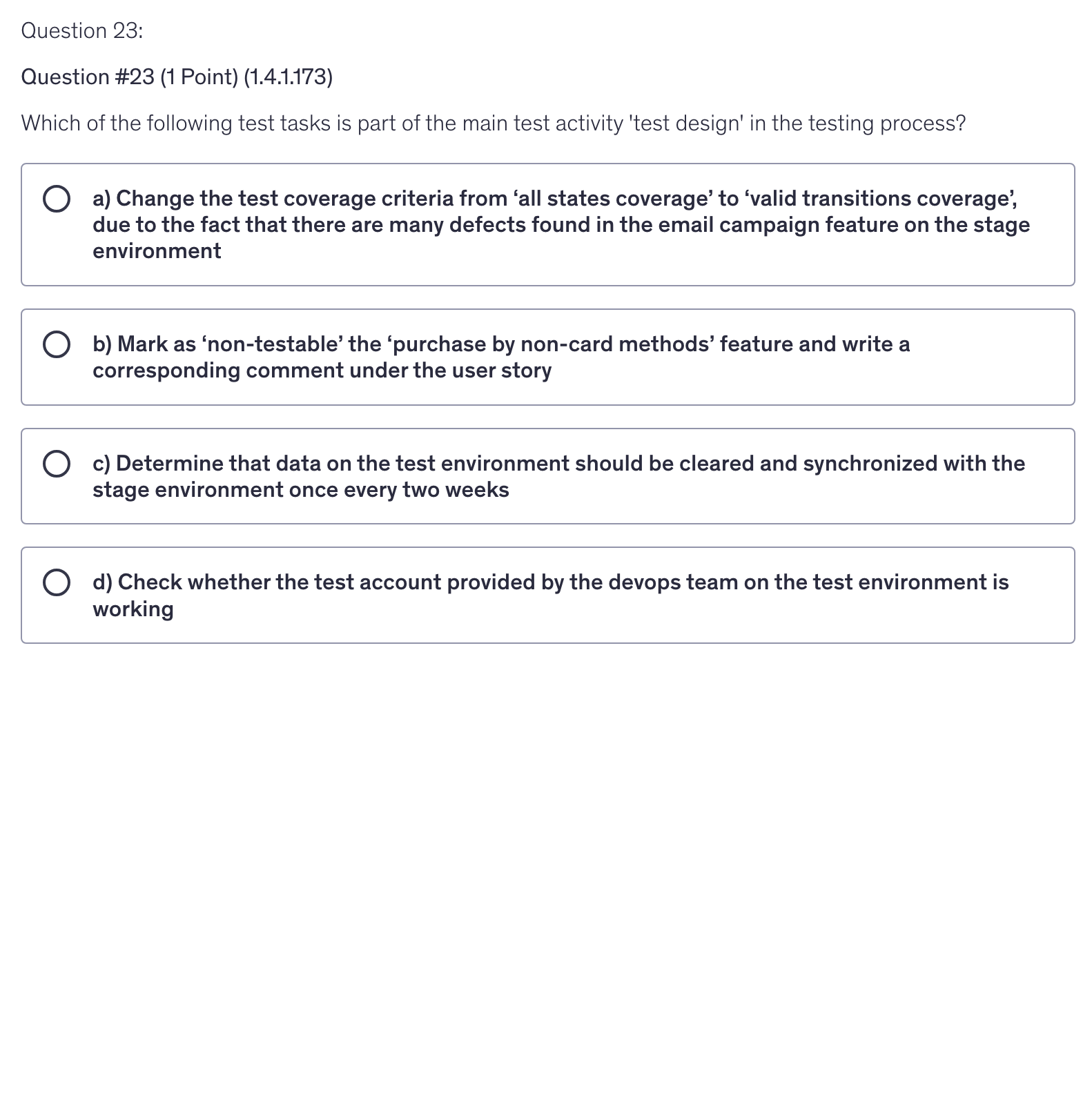
Which of the following test tasks is part of the main test activity 'test design' in the testing process?
c) Determine that data on the test environment should be cleared and synchronized with the stage environment once every two weeks
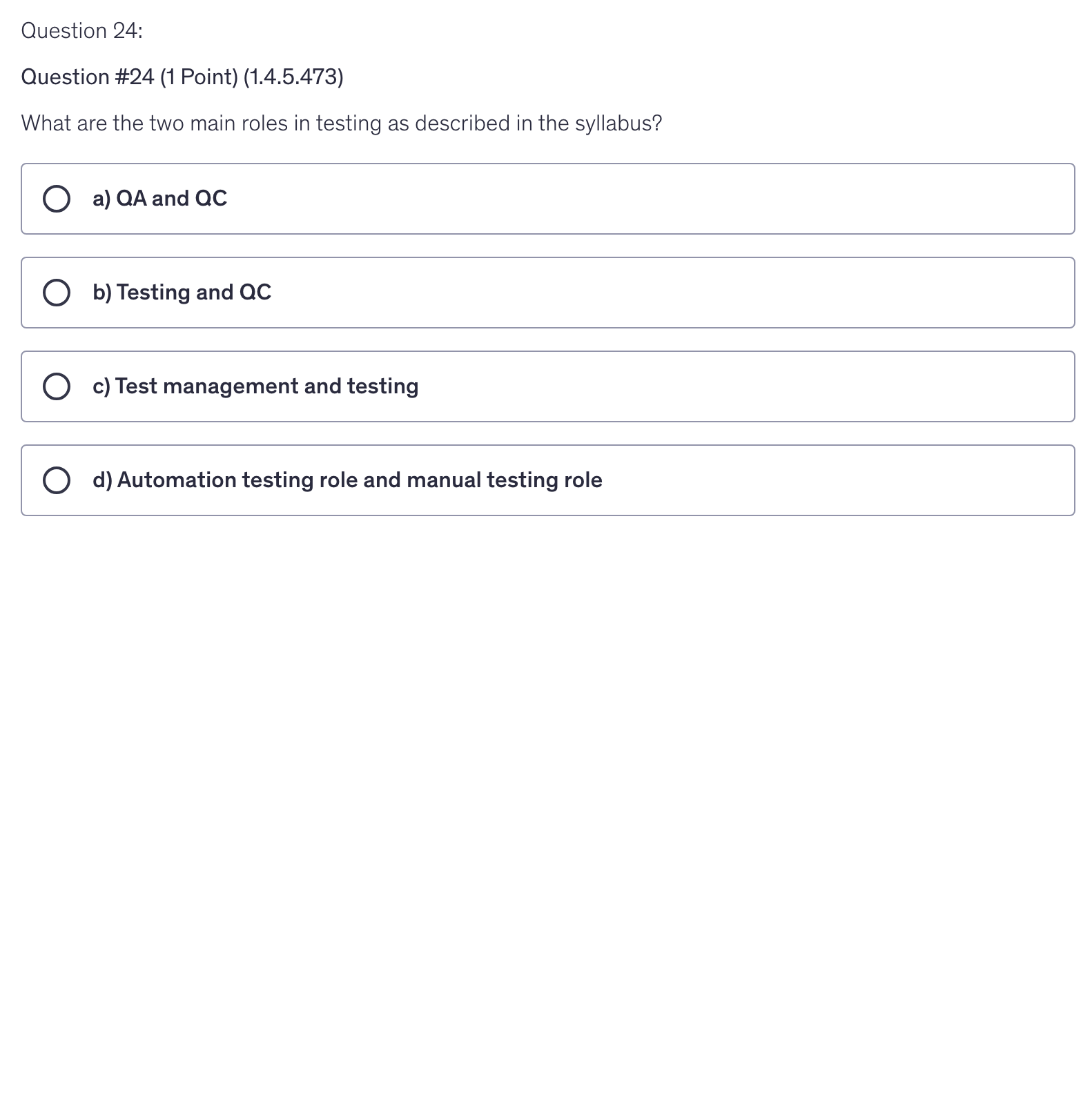
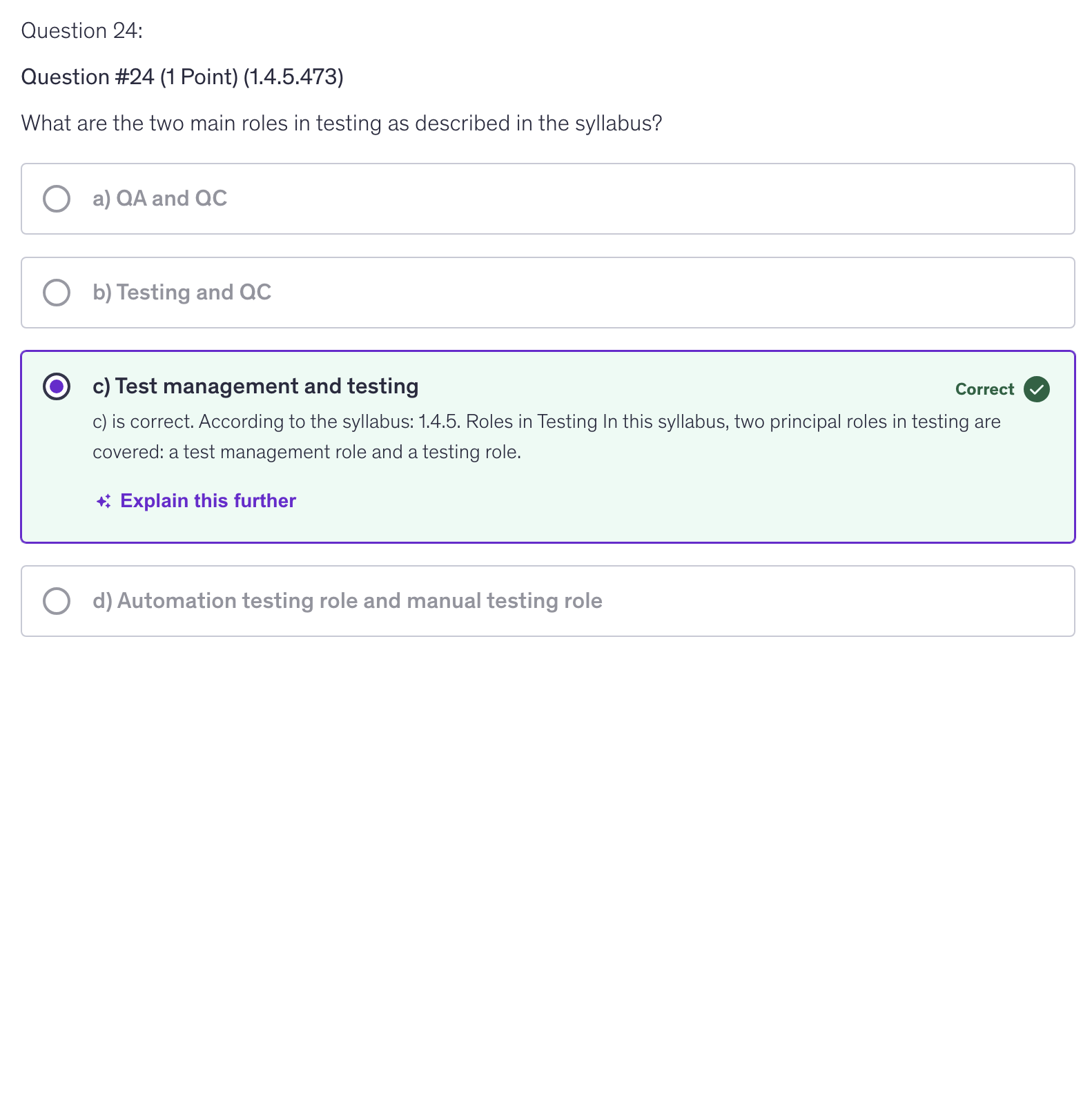
What are the two main roles in testing as described in the syllabus?
c) Test management and testing
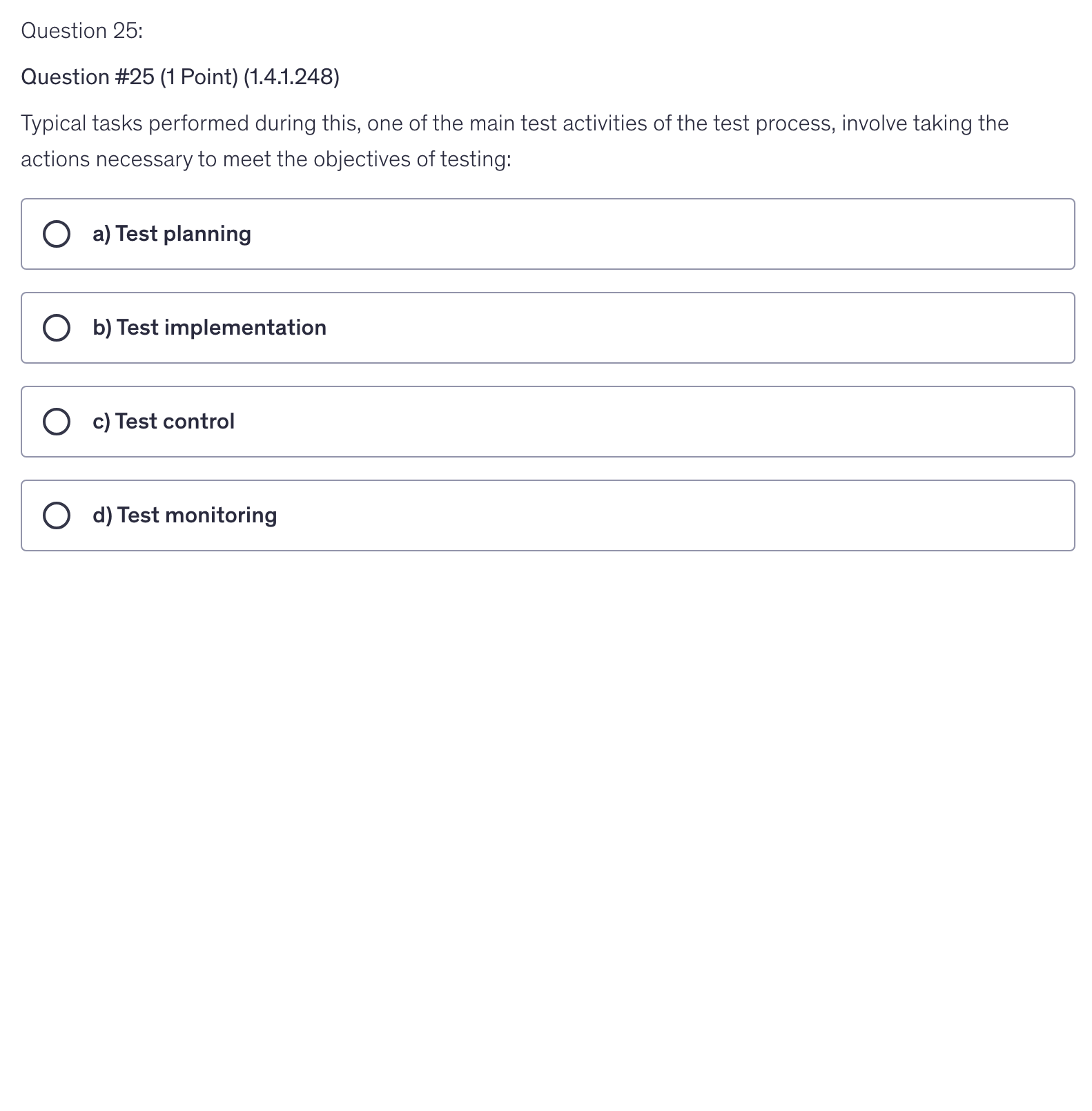
Typical tasks performed during this, one of the main test activities of the test process, involve taking the actions necessary to meet the objectives of testing:
c) Test control
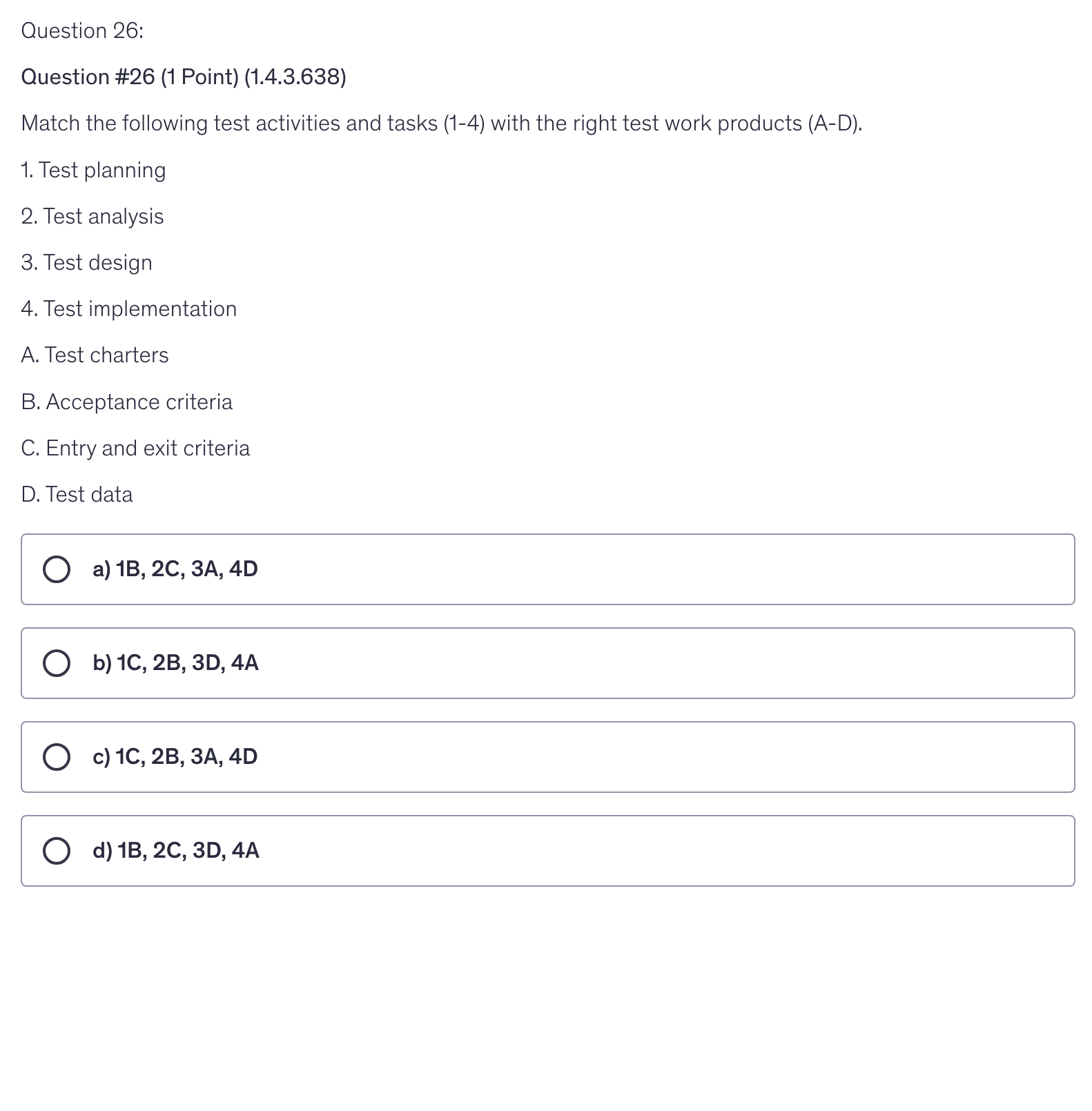
Match the following test activities and tasks (1-4) with the right test work products (A-D).
1. Test planning
2. Test analysis
3. Test design
4. Test implementation
A. Test charters
B. Acceptance criteria
C. Entry and exit criteria
D. Test data
c) 1C, 2B, 3A, 4D

Typical tasks performed during this, one of the main test activities of the test process, involve creating the product backlog items or change requests for unresolved defects:
d) Test completion
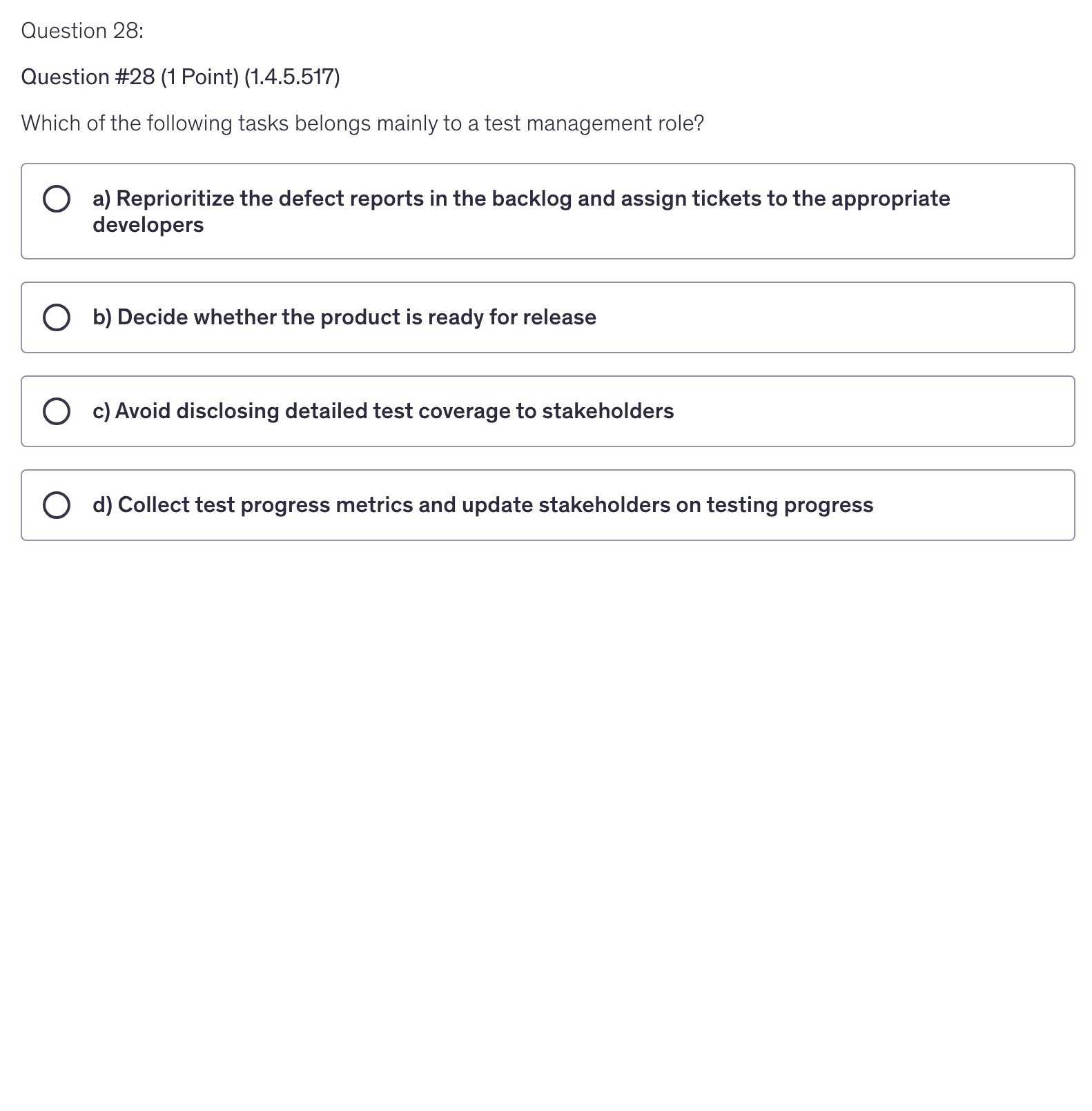
Which of the following tasks belongs mainly to a test management role?
d) Collect test progress metrics and update stakeholders on testing progress
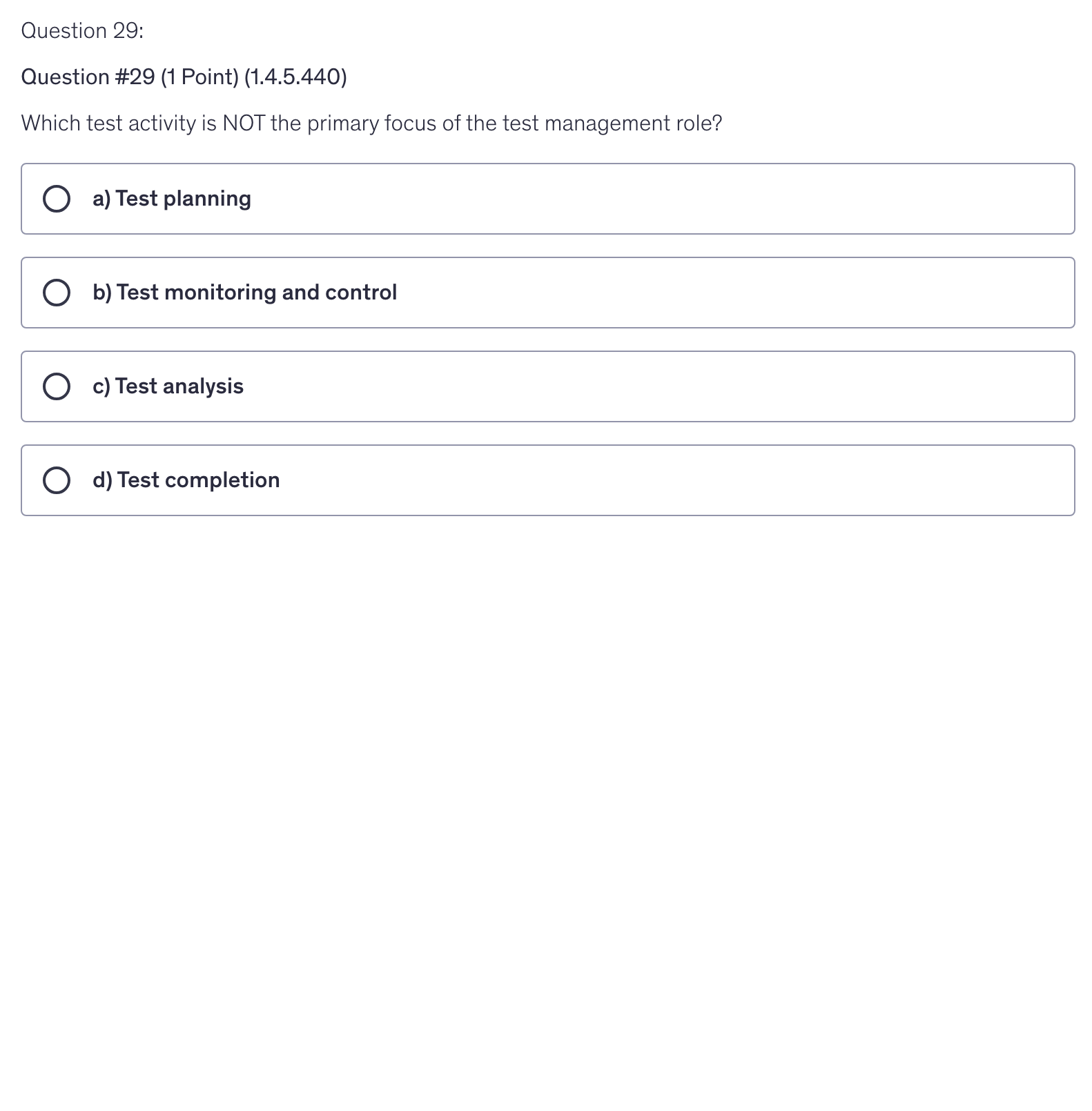
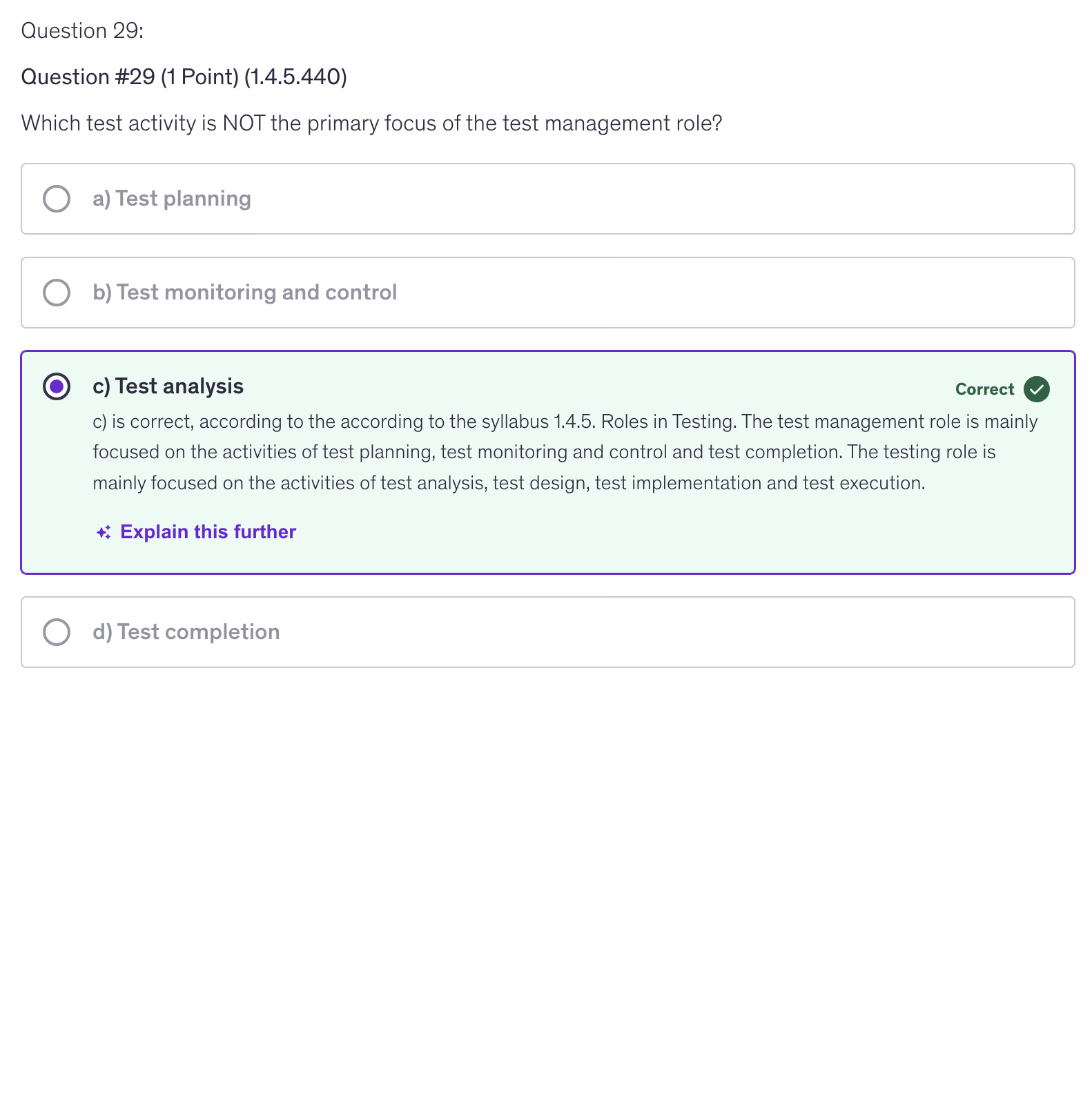
Which test activity is NOT the primary focus of the test management role?
c) Test analysis
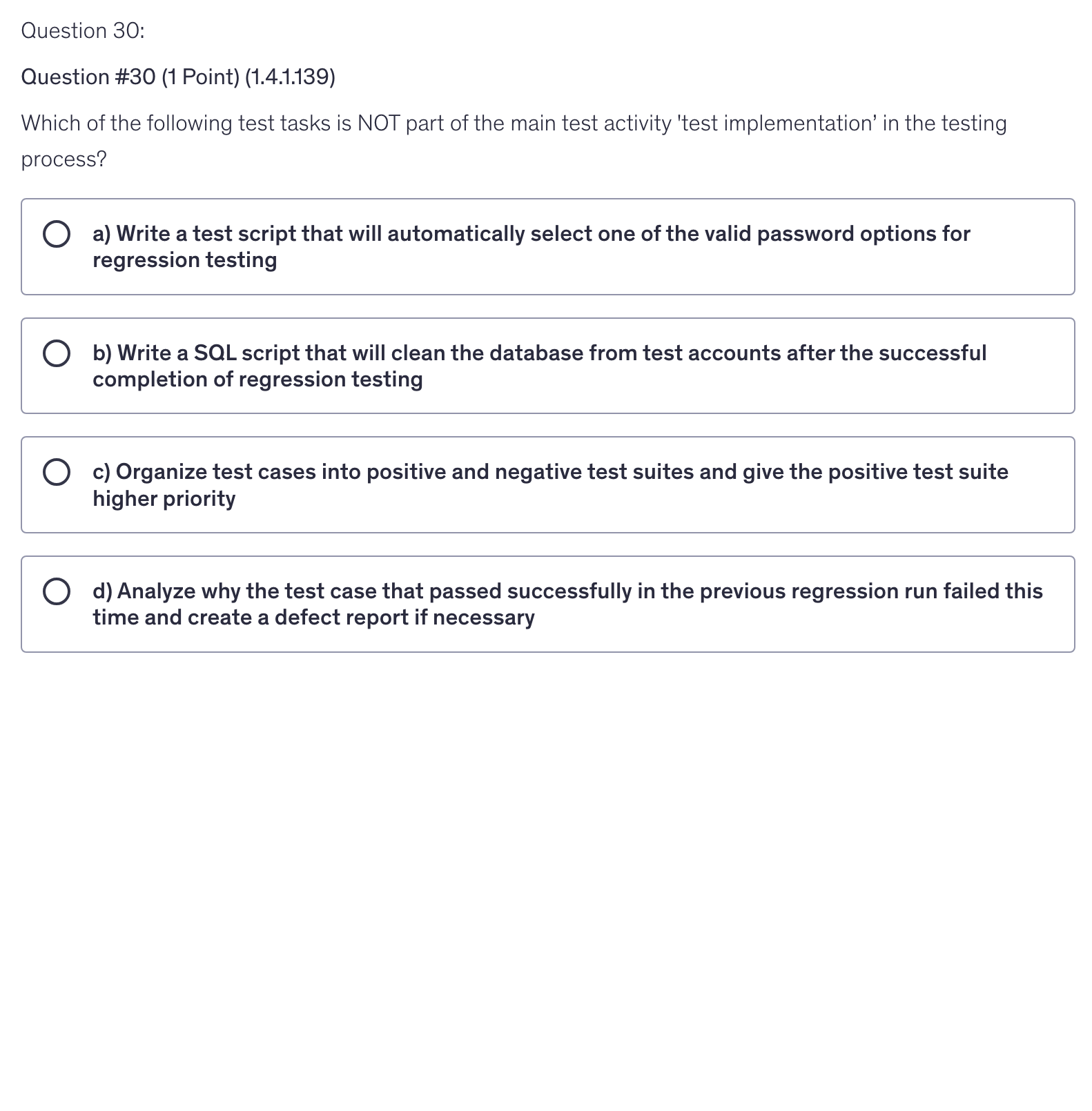
Which of the following test tasks is NOT part of the main test activity 'test implementation’ in the testing process?
d) Analyze why the test case that passed successfully in the previous regression run failed this time and create a defect report if necessary
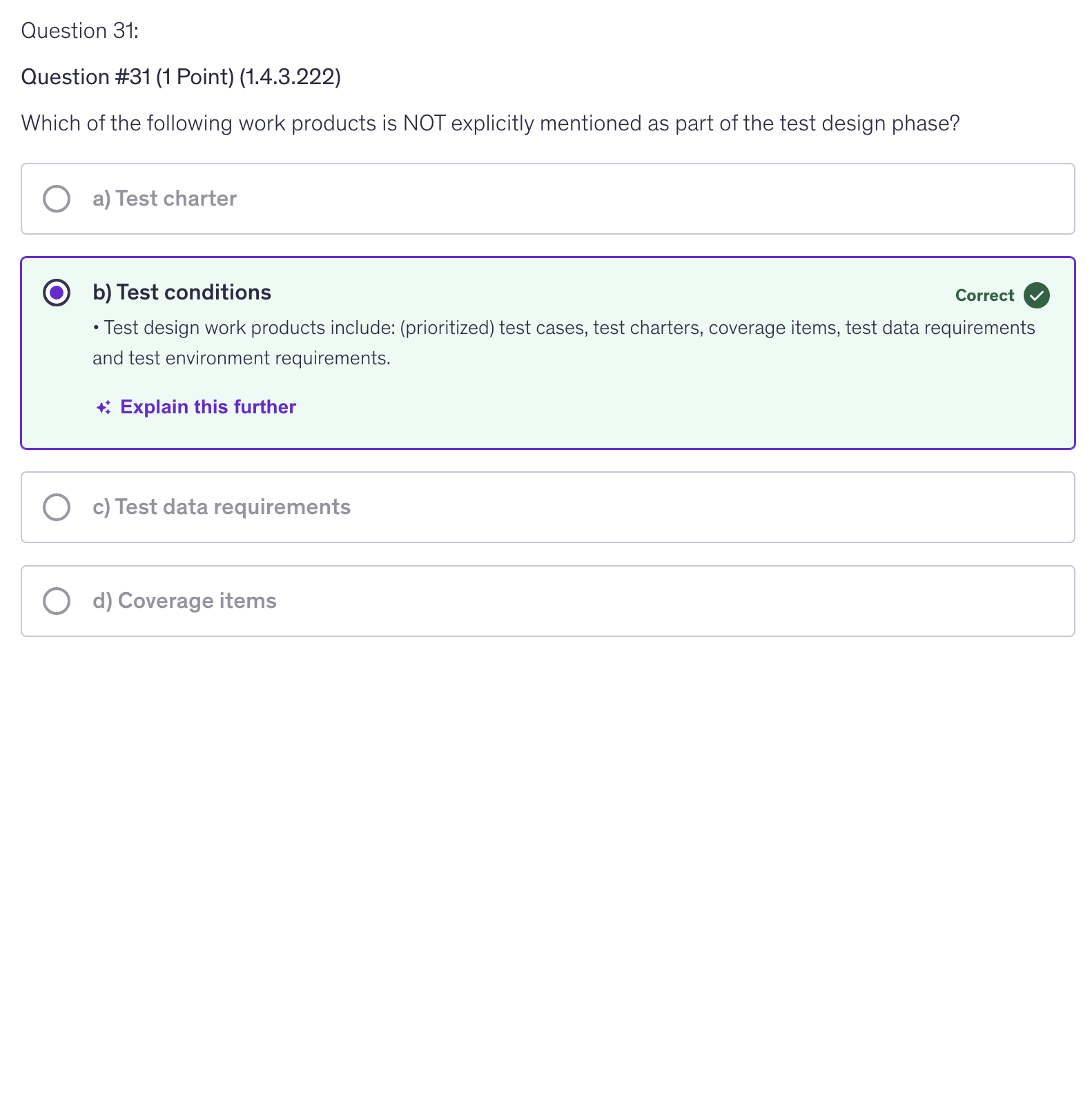
Which of the following work products is NOT explicitly mentioned as part of the test design phase?
b) Test conditions
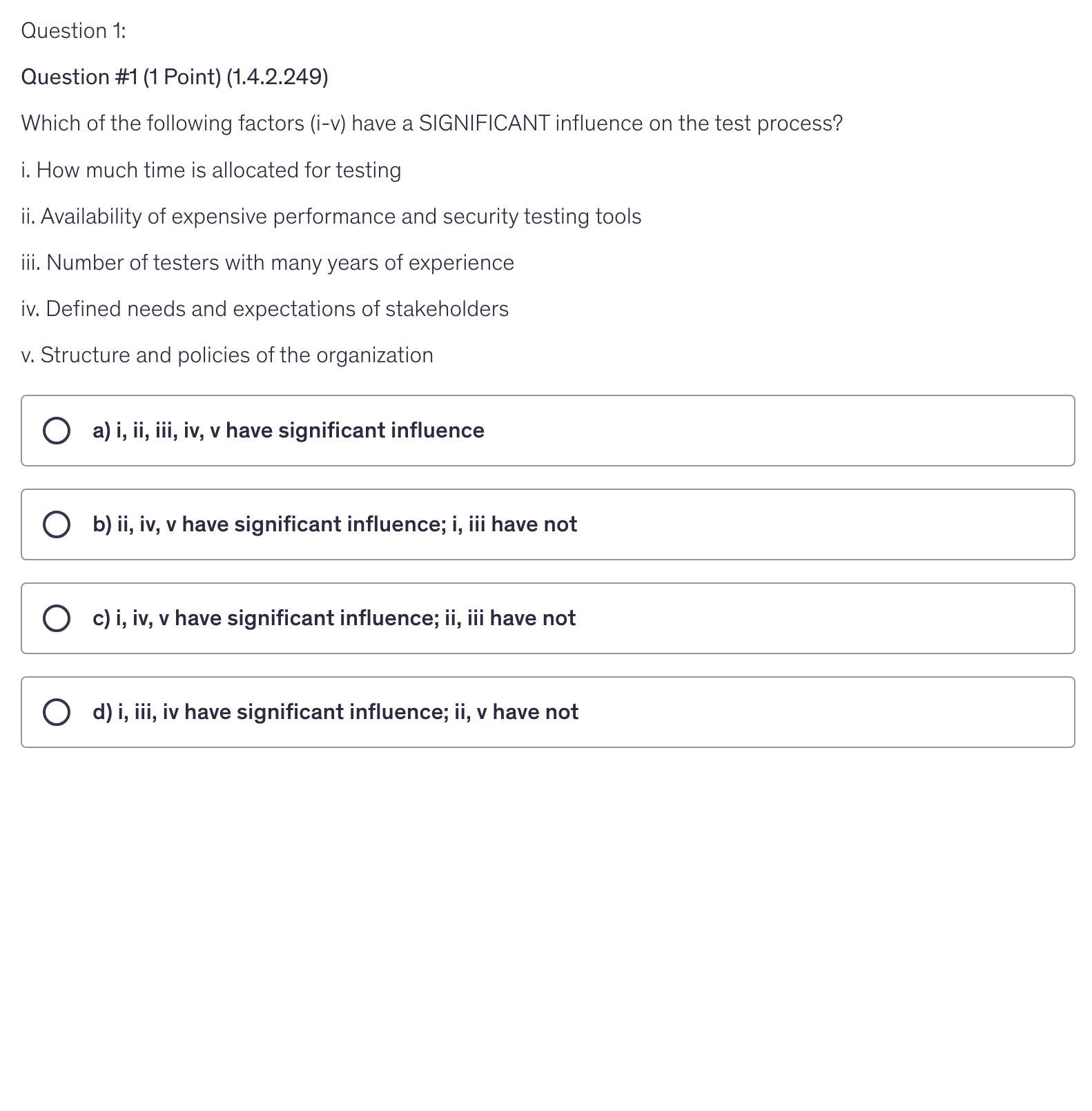
Which of the following factors (i-v) have a SIGNIFICANT influence on the test process?
i. How much time is allocated for testing
ii. Availability of expensive performance and security testing tools
iii. Number of testers with many years of experience
iv. Defined needs and expectations of stakeholders
v. Structure and policies of the organization
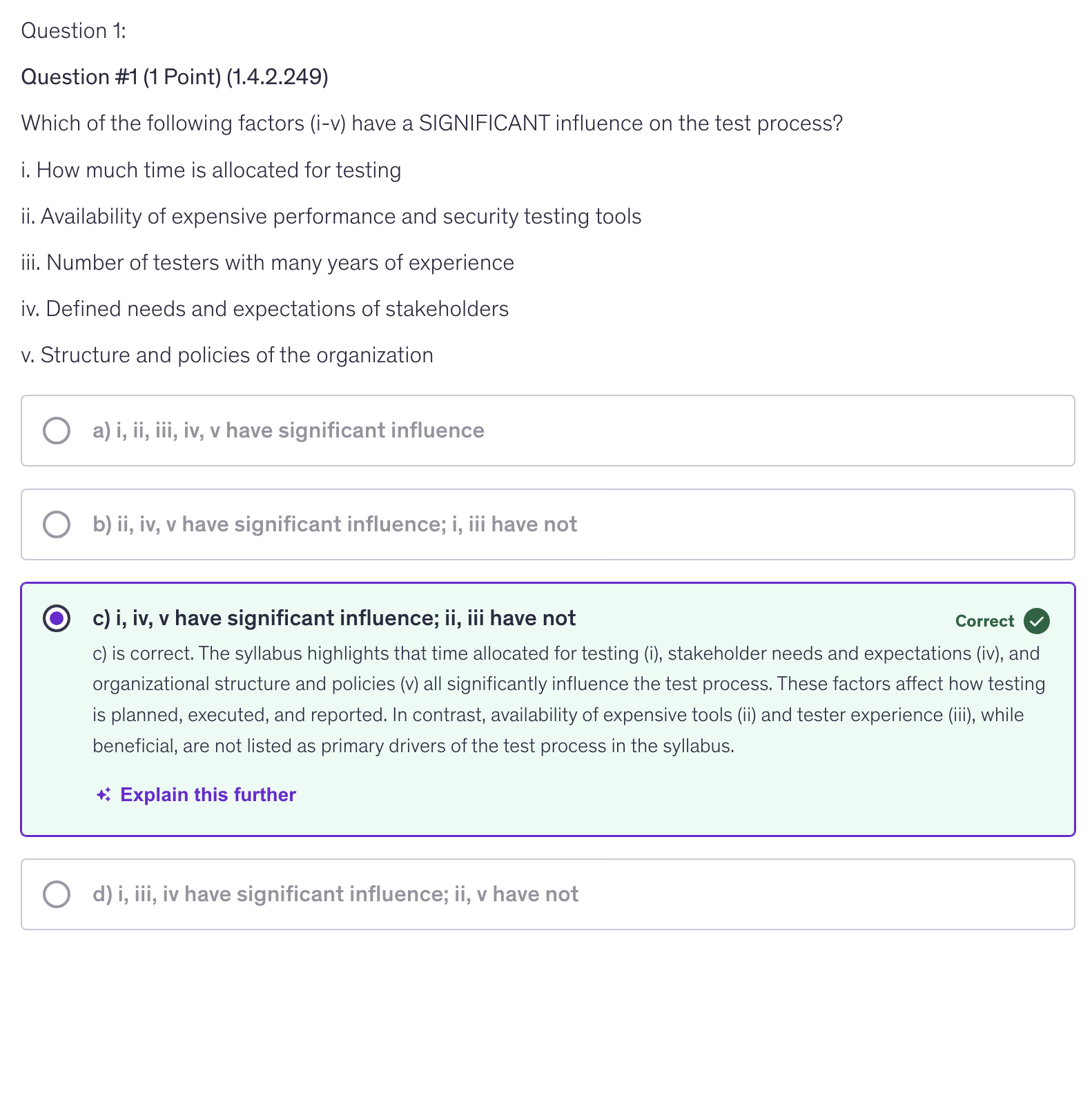
c) i, iv, v have significant influence; ii, iii do not
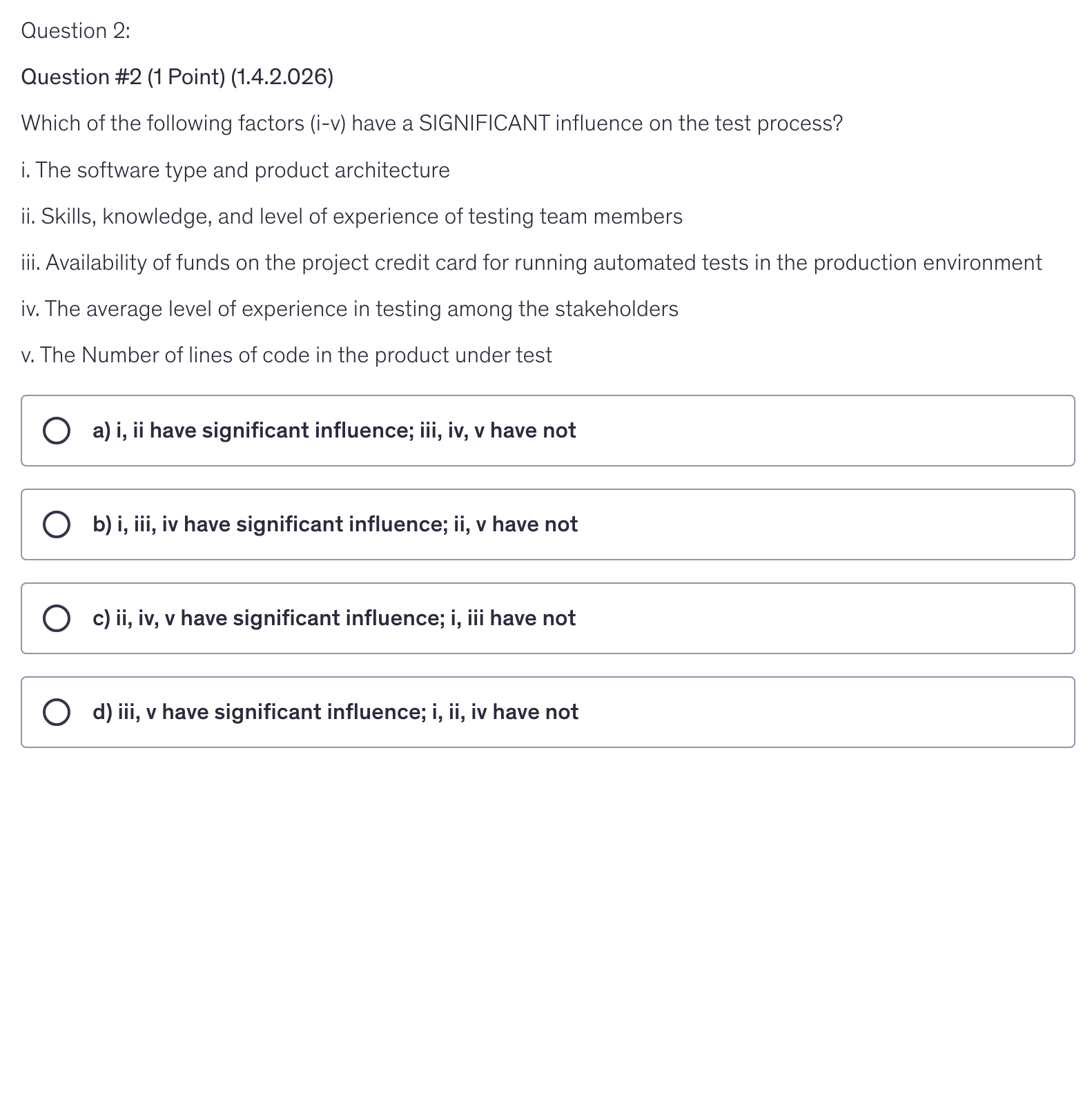
Which of the following factors (i-v) have a SIGNIFICANT influence on the test process?
i. The software type and product architecture
ii. Skills, knowledge, and level of experience of testing team members
iii. Availability of funds on the project credit card for running automated tests in the production environment
iv. The average level of experience in testing among the stakeholders
v. The Number of lines of code in the product under test
a) i, ii, have significant influence; iii, iv, v do not
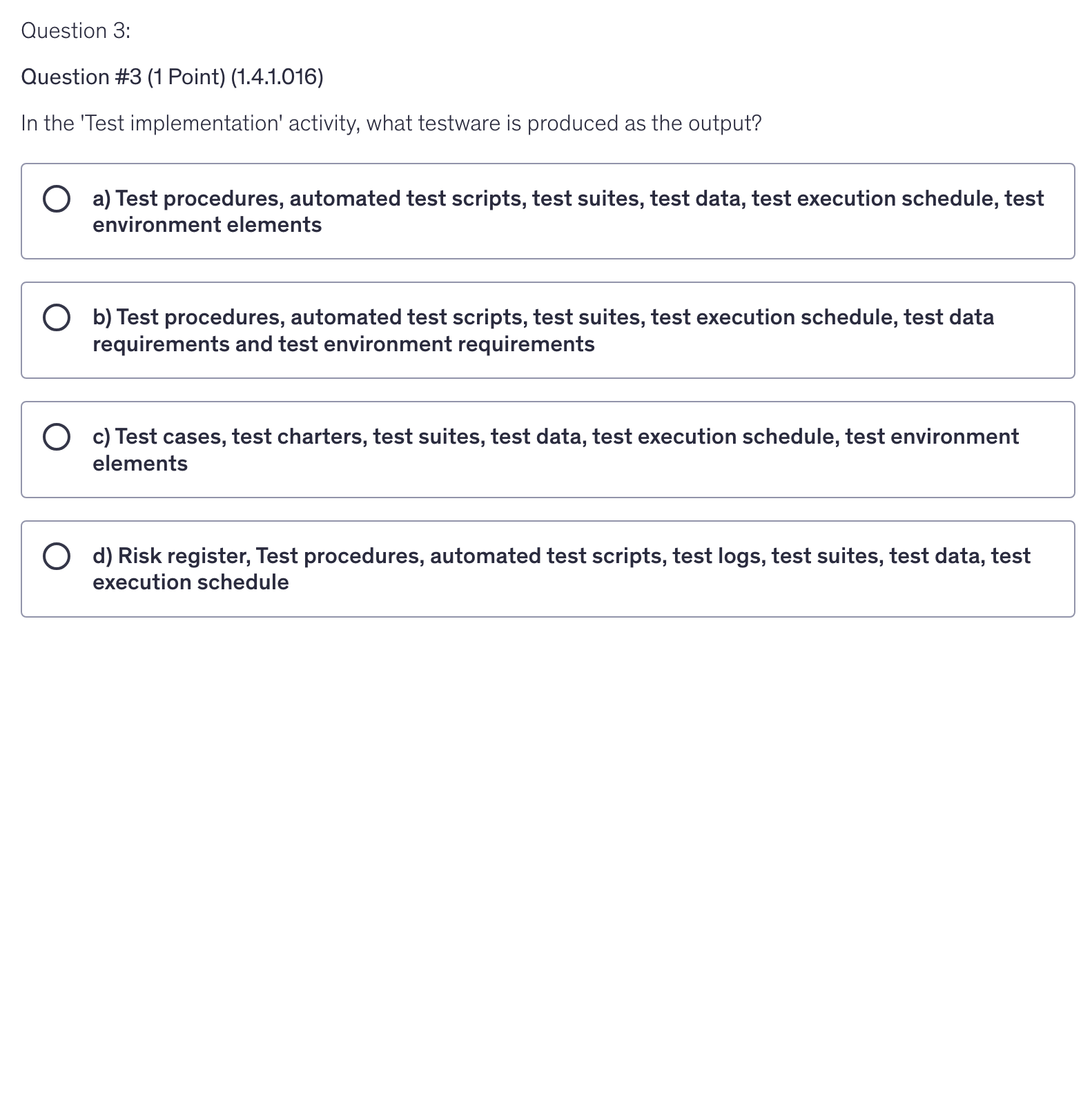
In the 'Test implementation' activity, what testware is produced as the output?
a) Test procedures, automated test scripts, test suites, test data, test execution schedule, test environment elements
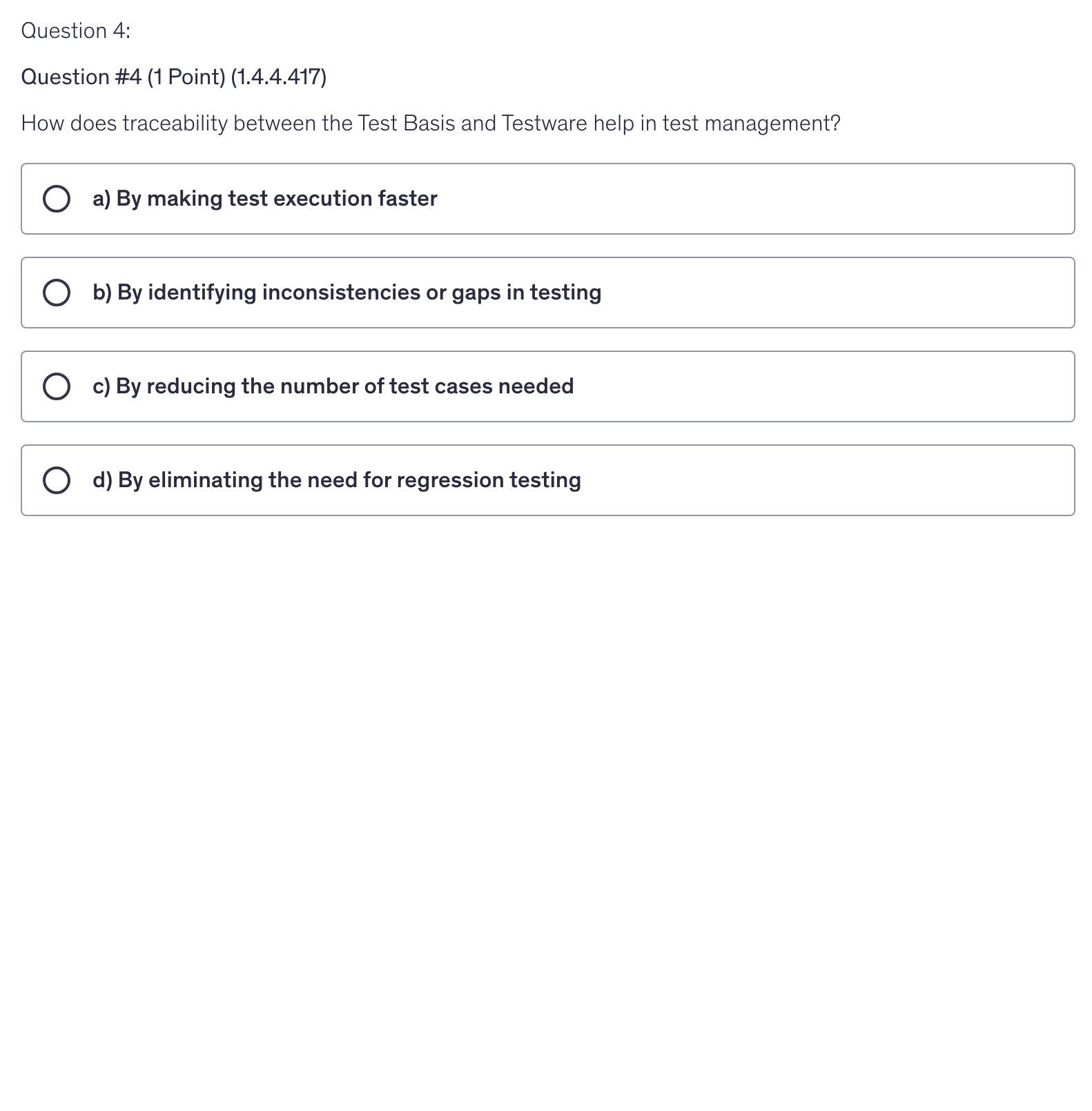
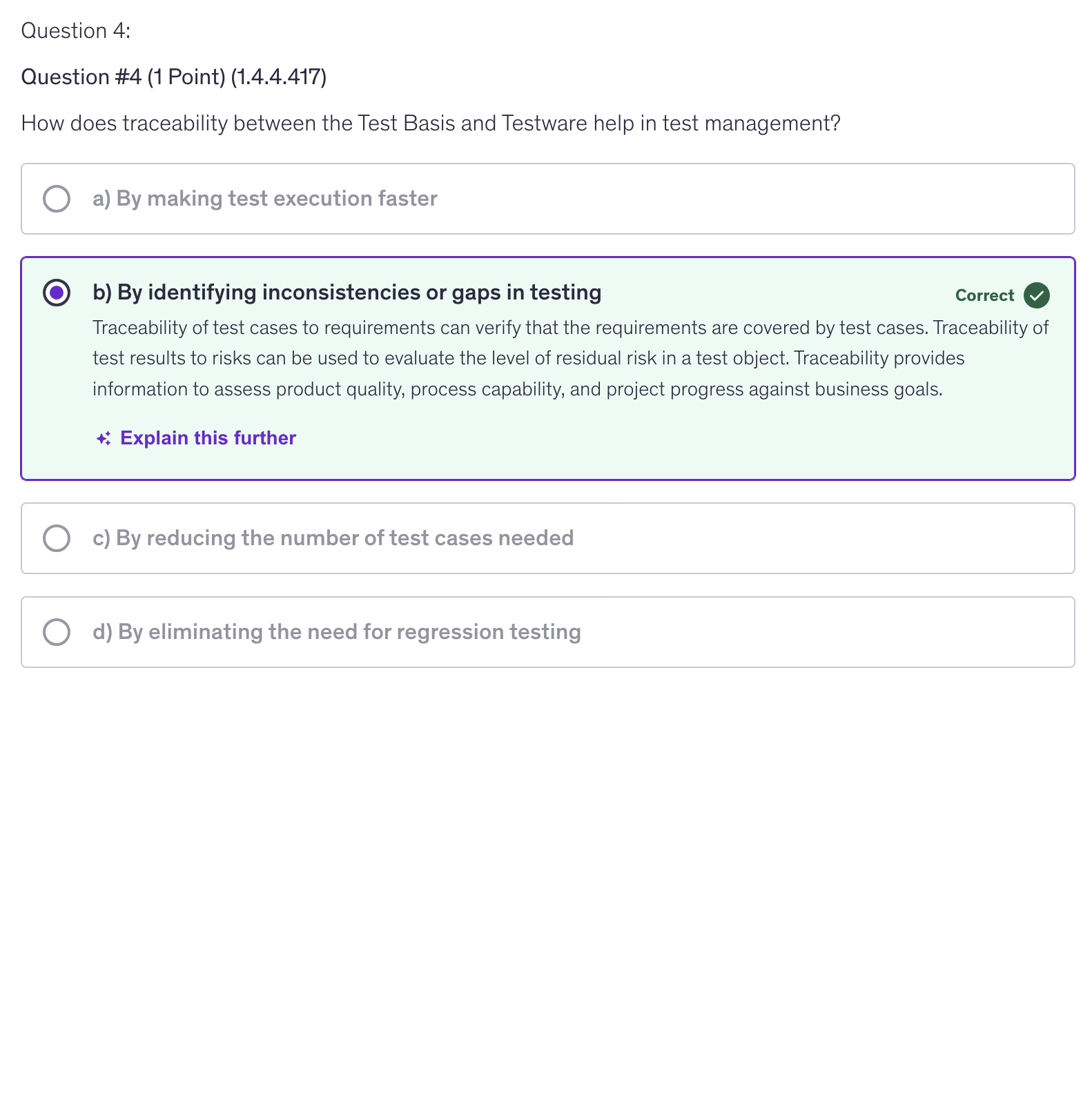
How does traceability between the Test Basis and Testware help in test management?
b) By identifying inconsistencies or gaps in testing
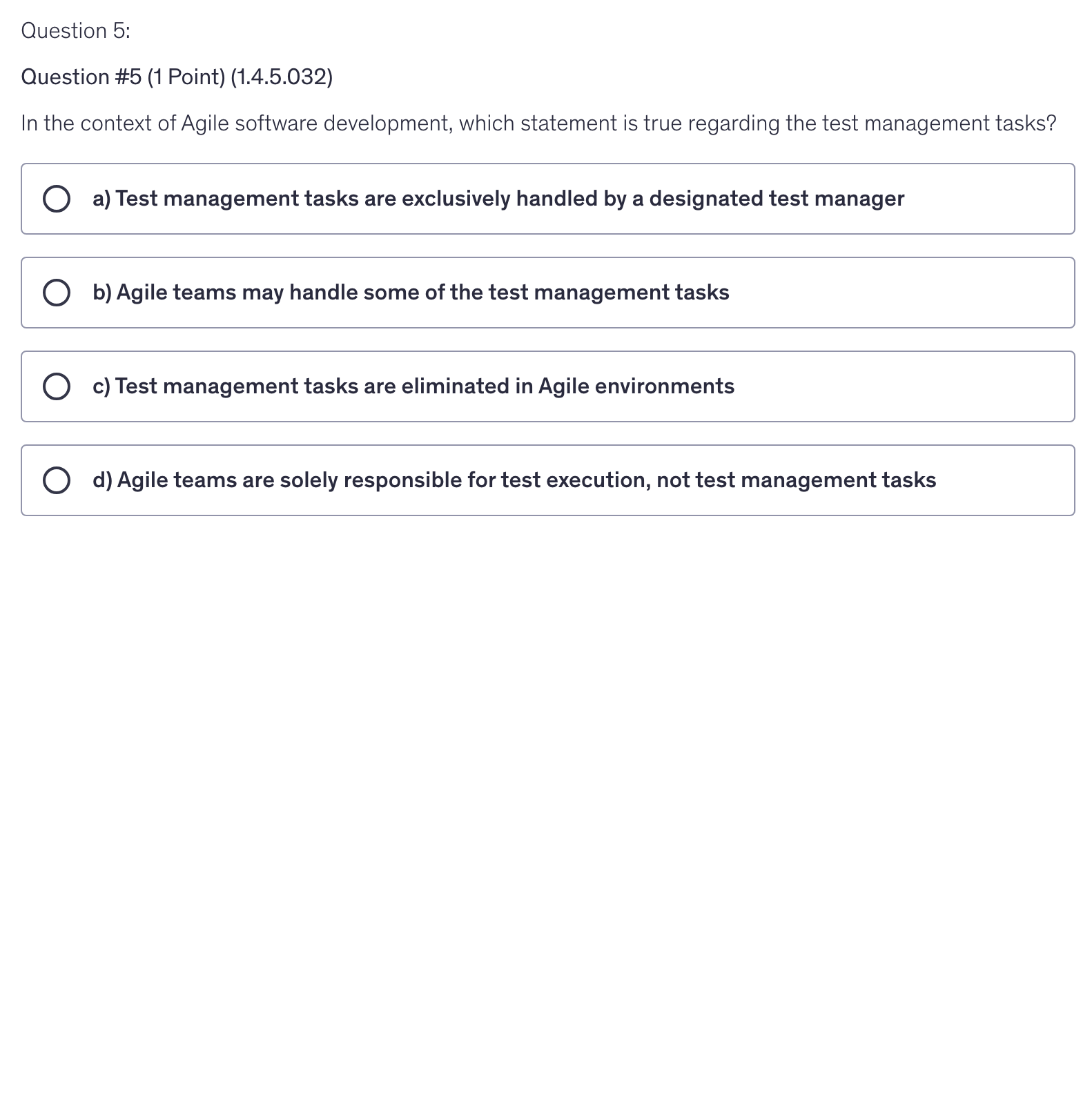
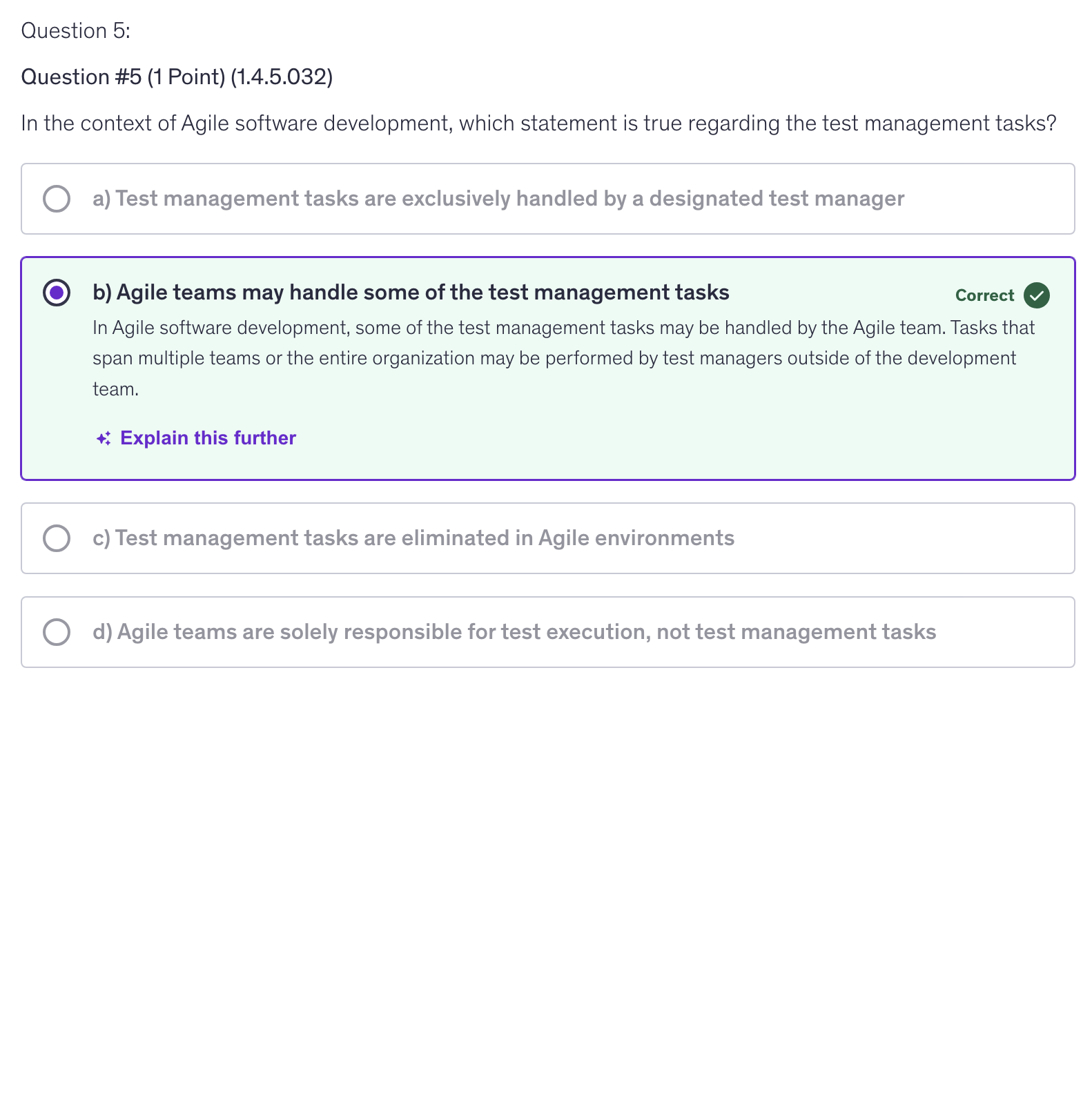
In the context of Agile software development, which statement is true regarding the test management tasks?
b) Agile teams may handle some of the test management tasks
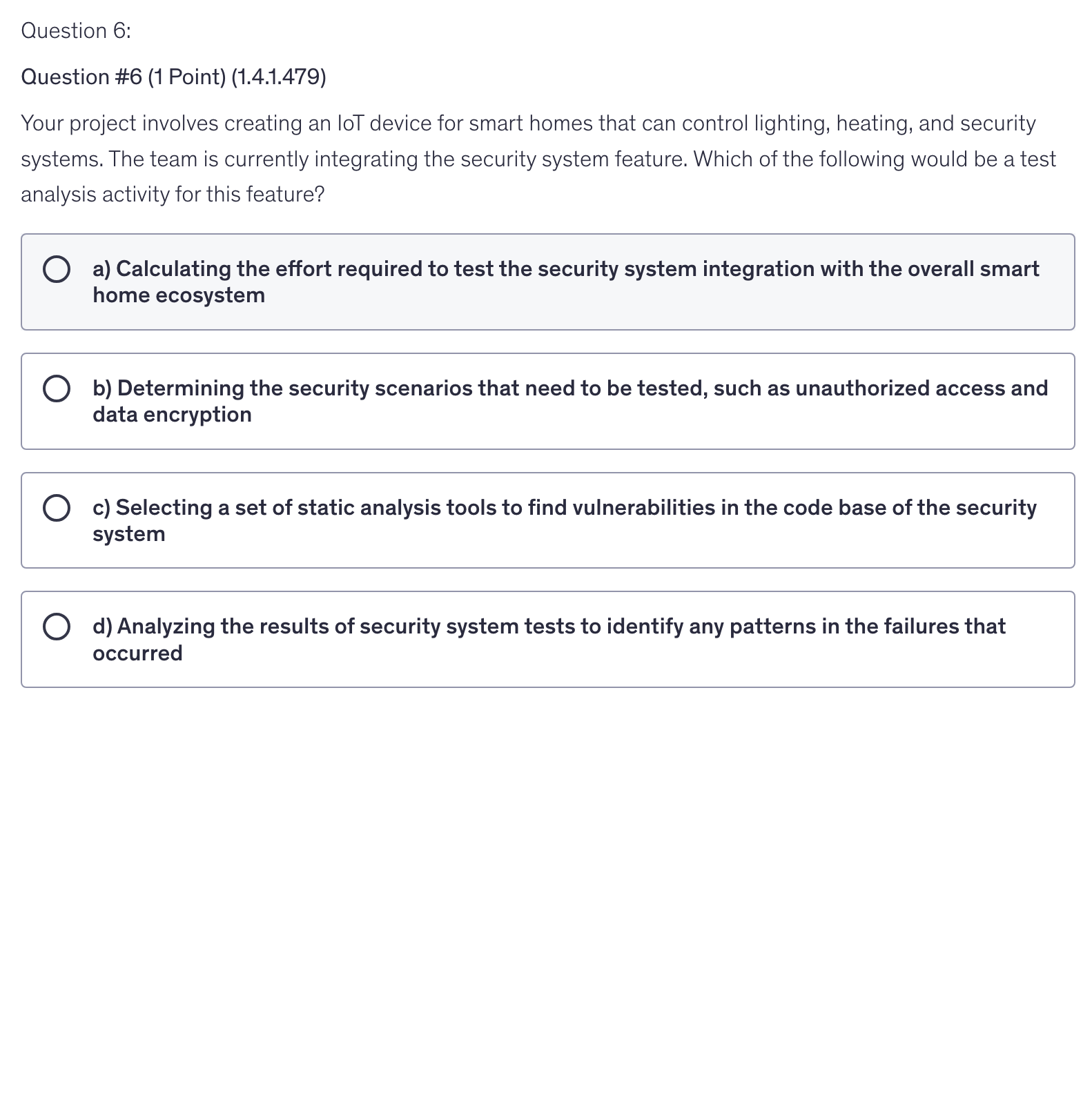
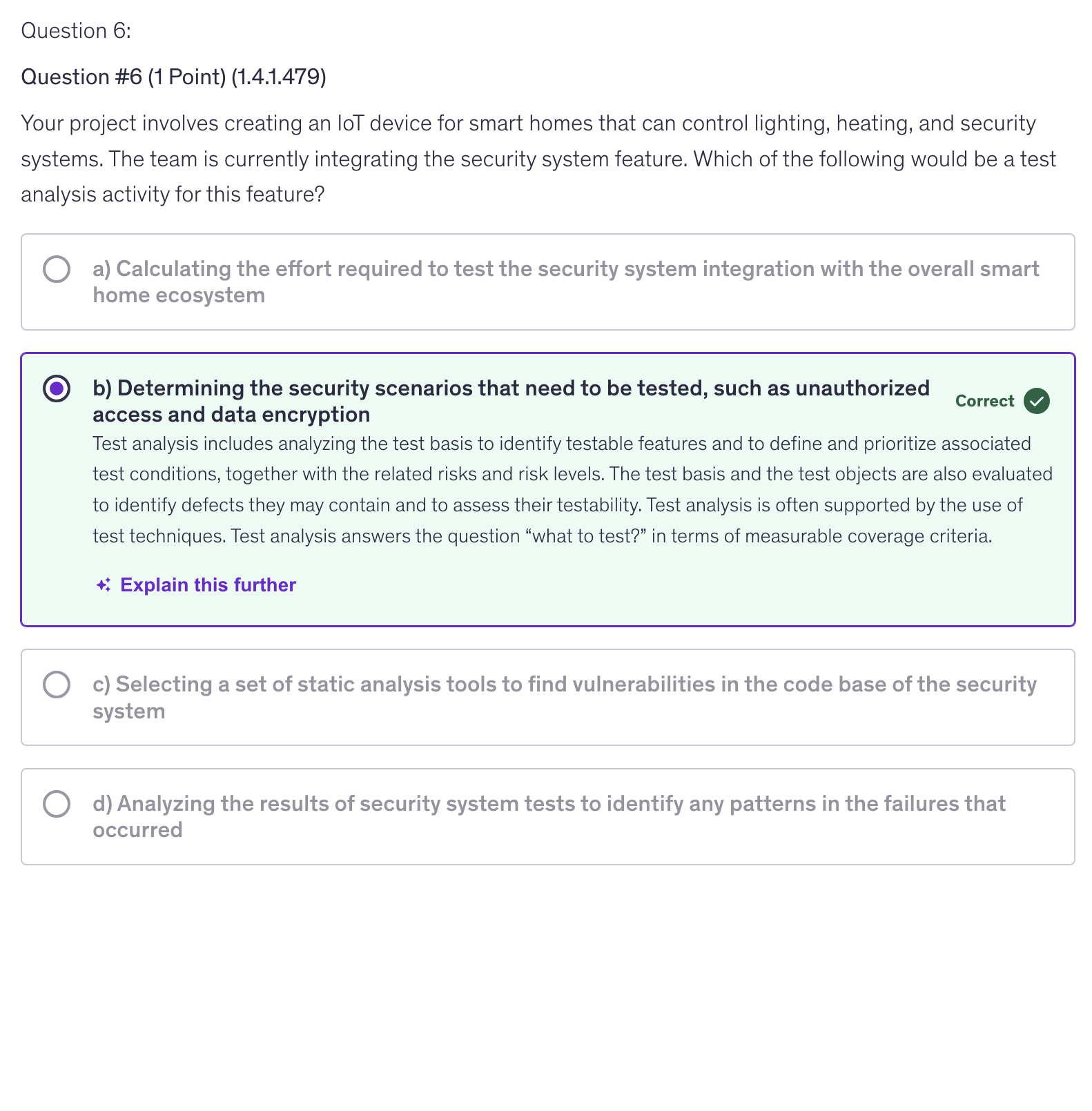
Your project involves creating an IoT device for smart homes that can control lighting, heating, and security systems. The team is currently integrating the security system feature. Which of the following would be a test analysis activity for this feature?
b) Determining the security scenarios that need to be tested, such as unauthorized access and data encryption
 Note
Note  Flashcards (590)