APHUG Midterm
 Studied by 0 people
 Call Kai
 Learn
Learn Practice Test
 Spaced Repetition
 Match
Match Flashcards
 Knowt Play
1/113

There's no tags or description
Looks like no tags are added yet.
Name | Mastery | Learn | Test | Matching | Spaced |
|---|
No study sessions yet.
114 Terms
Reference Maps
shows general locations like boundaries, features, and landmarks, focusing on "where things are" (e.g., road maps, political maps, physical maps)
Political Maps
reference maps showing human-made boundaries (countries, states, capitals, cities)
Thematic Maps
specialized maps showing specific data like (Like population, climate, economics) using colors, symbols or lines.
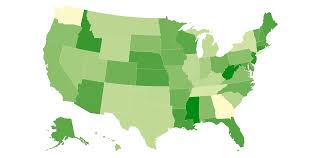
Choropleth Maps
uses color variations to express geographic variation from a certain theme.- The type of color variations can also differ. For instance, varying shades of a single color can be used to indicate the intensity of the factor happening in different regions of a large area.- Other types of color variations include using contour lines with different colors and filling in states with varying color range.
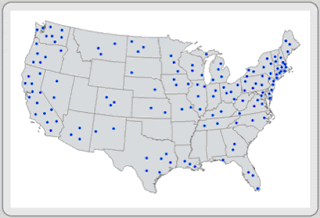
Dot Distribution Maps
shows the specific location and distribution of something using a map where a dot represent a spacial quantity
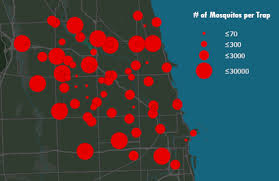
Graduated Symbol Map (Thematic Map)
A map that indicates different amounts of a certain thing using symbols of different sizes where larger=more and smaller=less
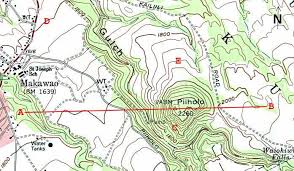
Isoline/Topographic Map (Thematic Map)
Uses lines that connect points of equal value to depict variations in the data across space
ex) a topographic map is a common form of an ____ map, that shows equal points of elevation(commonly used by hikers)
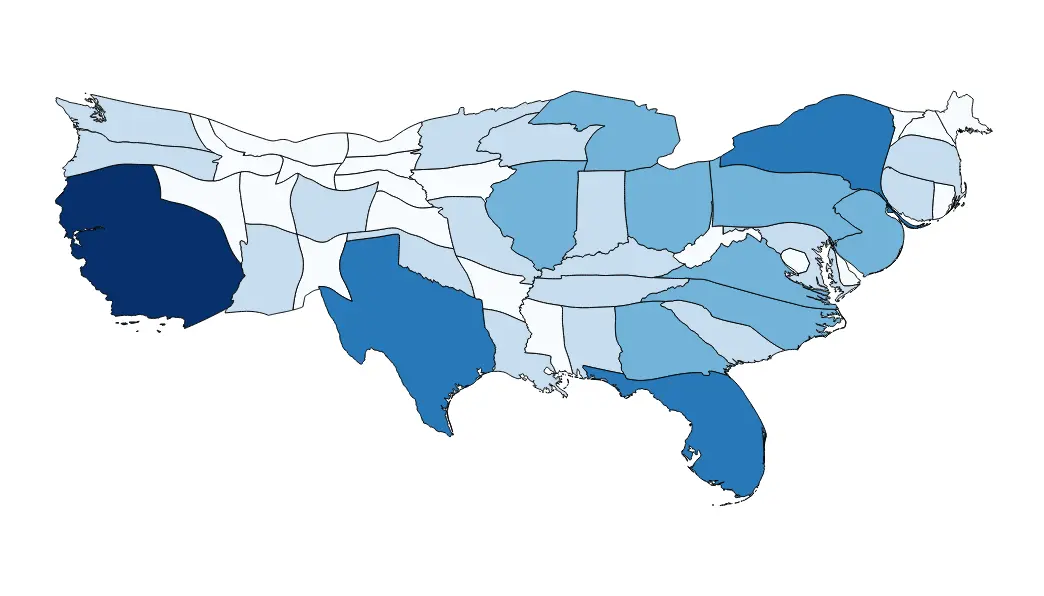
Cartograms(Thematic maps)
A map where the size of a countries are shown accordingly to a specific statistic
Absolute location
the precise, unchanging point on Earth's surface, defined by coordinates like latitude and longitude
Relative location
describes a place's position by referencing its relationship to other places, using landmarks, time, or direction (e.g., "south of Chicago," "a 10-minute drive from the river")
Time-space compression / space-time compression
Technology shrinking the world and making everything/everyone seem “closer”
Remote sensing
the science of gathering geographic data from a distance (like satellites or drones) to analyze Earth's features
Formal Region
an area defined by specific, measurable characteristics that are consistent throughout the space. These regions are often marked by uniformity in one or more physical or cultural traits, such as language, climate, or economic activity.
Perceptual/Vernacular Region
region is based on people's perceptions and cultural identity rather than formal boundaries, often varying from person to person.
Functional Region
region is defined by a specific function or activity that occurs within it, such as a metropolitan area centered around a city and its suburbs.
Expansion Diffusion
when a cultural idea, trend, or technology spreads outward from its origin (hearth) while often getting stronger or more popular in the new areas
Contagious Diffusion
the rapid, widespread spread of a cultural trait, idea, or innovation through direct, person-to-person contact, like a virus spreading, affecting everyone nearby regardless of status
Stimulus Diffusion
when an idea/culture diffuses but certain aspects of it are altered for it to be accepted
Hierarchical Diffusion
when ideas, trends, culture, innovation start from a person or a place of influence down the social ladder
Relocation Diffusion
the spread of a cultural trait (like language, religion, or food) that occurs when people move to a new location, bringing their culture with them
Migrant Diffusion
the spread of cultural elements—like food, language, traditions, or ideas—when people physically move to a new place, bringing their culture with them and blending it with the new environment
Hearth
where something originally starts/exists and spreads outward from there
Population Distribution
the pattern of human settlement, showing how people spread across Earth, influenced by physical factors (climate, landforms) and human factors (economics, history, politics)
Arithmetic Population Density
average number of people per unit of total land area, calculated by dividing total population by total land area
Physiological population density
the number of people per unit area of arable (farmable) land
Agricultural population density
measures the number of people engaged in farming per unit area of arable land.
ecumene
permanently settled land of the world
Carrying capacity
the maximum population an environment can sustainably support long-term, given available resources (food, water, shelter) and technology
Dependency ratio
the population of a place that is completely dependent upon the working class, elderly and children
Old-age dependency ratio
measures the economic burden of the elderly by comparing the number of people aged 65+ to the working-age population (typically 15-64), showing dependents per 100 workers
Child-dependency ratio
measures the economic burden of young people (ages 0-14) on the working-age population (ages 15-64) by calculating (Population 0-14 / Population 15-64) x 100
Crude Birth Rate (CBR)
the number of live births per 1,000 people in a population annually, calculated by (Live Births / Total Population) x 1,000
Crude Death Rate (CDR)
number of deaths per 1,000 people
Total Fertility Rate (TFR)
average amount of children that women are having (2.1)
Replacement Rate
the average number of children that women need to have in order to maintain a stable population size, typically set at 2.1 children per woman in developed countries.
Rate of Natural Increase (RNI)
the percentage population growth from births minus deaths, excluding migration, calculated by subtracting the crude death rate (CDR) from the crude birth rate (CBR) and dividing by 1000 (then converting to percentage)
Pro-Natalist policies
government strategies encouraging higher birth rates, common in aging Stage 5 DTM countries (like Japan, France, Sweden) to counter low TFRs, labor shortages, and support elderly populations, using financial aid (tax breaks, child allowances), paid parental leave, subsidized childcare, and media campaigns (like "Do it for Denmark") to boost population growth
Anti-Natalist policies
government strategies to reduce birth rates and slow population growth, often due to resource scarcity or economic concerns, using methods like promoting family planning, providing contraception, offering incentives for small families (like China's past One-Child Policy or Egypt's "Two is Enough" campaign), or sometimes through coercive measures, aiming for smaller families, improved quality of life, and sustainability.
MDC → LDC Spectrum
Countries are categorized along a development continuum, with More Developed Countries (MDCs) at one end and Less Developed Countries (LDCs) (also referred to as developing countries) at the other. The UN uses the Human Development Index (HDI) to measure this, considering economic, social, and demographic factors.
Key Differences (MDC vs. LDC)
The spectrum is characterized by significant differences across various indicators:
Indicator | More Developed Country (MDC) | Less Developed Country (LDC) |
|---|---|---|
Economy | Dominant manufacturing and service industries. High per capita income/GDP. | Dominant primary industries (agriculture/raw materials). Low per capita income/GDP. |
Social | High literacy rates and developed educational facilities. High percentage of urban population. | Low literacy rates and limited educational access. High percentage of rural population. |
Demographics | Low birth rates, low death rates, and high life expectancy. Low infant mortality rate (IMR). | High birth rates, high death rates, and low life expectancy. High infant mortality rate (IMR). |
Technology/Infrastructure | High levels of technology, developed infrastructure, and high energy use per capita. | Limited access to capital/markets, little developed infrastructure, and lower energy use per capita. |
Traits of Development
economic shifts (subsistence to services), social progress (health, education), and technological advancement
Traits of Underdevelopment
low per capita income, widespread poverty, high unemployment, inadequate infrastructure (roads, energy, sanitation), poor healthcare (high mortality, low life expectancy), limited education, reliance on agriculture, technological backwardness, and high birth rates
Costs of Development
involve both economic factors (labor, transport, infrastructure investment, loans) and social/environmental impacts (pollution, inequality, resource depletion)
Benefits of Development
higher living standards, better health/education (HDI), economic growth via infrastructure (roads, tech), more jobs, reduced poverty/hunger, gender empowerment, and sustainability
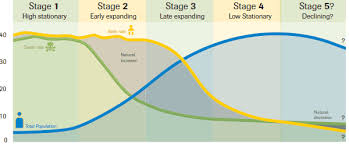
Demographic Transition Model (DTM)
explains how countries' birth rates and death rates change as they develop economically, moving from high rates in Stage 1 (pre-industrial, slow growth) through falling death rates in Stage 2 (rapid growth), falling birth rates in Stage 3 (slowing growth), low rates in Stage 4 (stable/zero growth), and sometimes very low rates in Stage 5 (population decline). It connects population dynamics to industrialization, urbanization, healthcare, and women's education, helping explain population pyramids and development, notes this study guide and another source
Population Pyramids
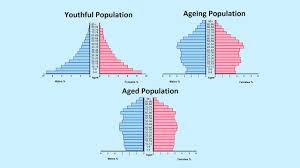
a graph showing a population's age and gender structure, revealing demographic trends like birth/death rates, migration, and development stage, with shapes like wide-based triangles (expansive/rapid growth), barrels (stationary/slow growth), or inverted pyramids (constrictive/declining growth) that inform future policy needs
Epidemiological Transition Model (ETM)
explains how societies' main causes of death shift from infectious diseases (like plague, cholera) in early stages to chronic, degenerative diseases (heart disease, cancer) as they develop
Baby boom
a massive surge in births post-WWII due to economic prosperity
baby bust
a significant, sharp decline in birth rates that follows a "Baby Boom”, mostly due to increased female education, more career opportunities, later marriages, economic shifts.
Baby echo
a temporary rise in birth rates when the children of the original Baby Boomers (born post-WWII) reach childbearing age, creating a smaller, but noticeable, surge in births, often called Generation Y or Millennials
Possibilism
the theory that humans are the main drivers of cultural and social development, not the environment
Environmental determinism
the theory that the physical environment, especially climate and geography, determines or heavily controls human societal development, culture, and behavior
Renewable Resources
natural resources that replenish quickly, like sun, wind, water, and biomass
Non-Renewable Resources
finite natural resources (like fossil fuels, minerals, and uranium) that form over millions of years, cannot be replenished quickly, and are consumed faster than nature can replace them
Built environment
all the human-made physical surroundings—buildings, roads, parks, cities, infrastructure—that provide settings for human activity, reflecting cultural, social, and economic factors, and profoundly influencing behaviors, health, and community dynamics
cultural landscape
the visible imprint of human activity on the environment, showing how a culture modifies nature through farming, building styles (vernacular/postmodern), religious sites, language (toponyms), ethnic neighborhoods, and land-use patterns, revealing societal values, history (sequent occupancy), gender roles, and economic development
Immigration
the act of permanently settling into a country
emigration
that act of permanently leaving or exiting a country
Malthus’ Theory
What is it?
Positive checks?
Negative checks?
Definition- that population grows exponentially, and food production grows linearly, therefore eventually, the amount of food we have will not be enough to sustain the population
Positive Checks- Things that increase the death rate
→war
→disease
→famine
Negative Checks- Things that decrease birth rate
→abstinence
→birth control
→marrying late
→moral restraint
Distance decay
the interaction between two places decreases as the distance between them increases.
Forced Migration
migration that is made without a choice
Voluntary Migration
migration that is optional
Ethnicity
refers to a shared cultural identity, traditions, language, religion, and sense of belonging from a common homeland or hearth, distinct from race (perceived biological traits) and nationality (legal citizenship)
Race
a social construct categorizing people by perceived physiological traits like skin color, hair texture, or bone structure, distinct from ethnicity (shared culture/origins) or nationality (legal ties)
Cultural relativism
understanding and judging another culture by its own standards, not your own, promoting empathy and objective study, contrasting with Ethnocentrism
Assimilation
the process where a minority group or individual adopts the cultural traits (language, beliefs, practices) of a dominant culture, often losing their original identity, which can happen voluntarily or through forced policies (like on Native Americans)
Acculturation
the process where two distinct cultures meet, and one (usually the less dominant) adopts traits from the other (more dominant) while still retaining elements of its original culture, leading to cultural change, adaptation, and sometimes hybrid identities
Commodification
the process of turning anything—goods, services, ideas, cultural practices, even the human body—into something with a monetary price, making it buyable and sellable in a market economy, often stripping it of original meaning while creating new economic value or cultural trends
Ethnocentrism
using your own culture as a compass/moral point to judge other culutures. “That weird compared to what we do”
Nativism
a political/social ideology favoring native-born citizens over immigrants, often leading to anti-immigrant policies, cultural preservation efforts, and concerns about national identity
Cultural appropriation
when a dominant culture adopts elements (symbols, styles, practices) from a marginalized culture, often without understanding, respect, or permission, leading to commodification, trivialization of sacred items, and reinforcing power imbalances, contrasting with mutual cultural exchange
Neolocalism
the conscious effort to embrace and promote local culture, traditions, and products to create a stronger sense of place and resist globalization's homogenizing forces
Ravenstein’s Laws of Migration
set of principles formulated by Ernst Georg Ravenstein in the late 19th century that describe migration patterns and behaviors. These laws emphasize that most migrants move only a short distance and that migration typically occurs in steps, with individuals moving from rural to urban areas, which is heavily influenced by push and pull factors that drive people to leave their homes or attract them to new locations.
The majority of people who migrate only travel a short distance. This can be classified as Friction of Distance.
Migration proceeds in steps.
Migrants who travel long distances, are more likely to prefer areas that are great centers of commerce or industry
Each current of migration produces a compensating counter-current.
People in rural areas are more likely to migrate than people in cities.
Men migrate over longer distances than women.
Most migrants are young adult males; families rarely migrate out of their country of birth
Large towns grow more by migration then by natural increase
Migration increases in volume as industries and commerce develop and transport improves
Migration is mostly due to economic causes.
Women are more likely to migrate within the local area.
Cyclic Movement
Types
Definition
short, repetitive journeys returning to a home base, like daily commutes or seasonal snowbird migrations
Periodic Movement
Types
Definition
Periodic Movement involves longer absences (college, military)
Chain migration
the pattern where earlier migrants encourage family and friends to follow them to a new place, creating a continuous flow to specific locations, often leading to ethnic enclaves and support networks, driven by pull factors like existing family/community and often tied to family reunification laws. It's a key concept in understanding voluntary migration, diaspora, and the social/economic impacts on both origin and destination areas, linking to Ravenstein's Laws of Migration and Topic 2.11: Forced & Voluntary Migration.
Step migration
a gradual, multi-stage journey where migrants move from rural to urban areas, making stops in smaller towns or intermediate locations before reaching their final, often larger, destination, driven by economic improvement at each step and influenced by factors like finding jobs or saving money, illustrating a common pattern of rural-urban flow and the impact of intervening opportunities.
Refugee
someone forced to flee their country due to persecution, conflict, or disaster, crossing an international border for safety, distinct from voluntary migrants, and protected under international law
asylum
international protection a state grants someone fleeing persecution (race, religion, politics, etc.) in their home country
Selective immigration
a country's policy of choosing which migrants to admit, often based on skills, education, family, health, or security, rather than open migration, impacting demographics, labor, and culture, and creating debates over fairness, brain drain, and integration
Migrating selectively
refers to the demographic traits (age, education, gender, status) that make certain people more likely to migrate, often younger, educated adults seeking economic opportunities, leading to phenomena like brain drain or chain migration as specific groups move in patterns
Remittances
money sent from immigrants back to their family from their home country
Folk culture
the traditional practices, customs, and beliefs of small, homogeneous, and often rural communities
Popular culture
mainstream ideas, practices, and objects like music, fashion, and media that are widely accepted and disseminated through modern technology
Push factors
factors that push people to emigrate out of a country
pull factors
factors that cause people to immigrate into a country
Material culture
the tangible, physical objects, resources, and spaces that a society or group creates, uses, and values, like buildings, clothing, tools, art, and technology, reflecting their beliefs, practices, and identity
Nonmaterial culture
the intangible aspects of a society—its beliefs, values, norms, customs, language, and traditions—that shape behavior and identity
Placelessness
placing lacking uniqueness and everything feeling the same because of the spread of popular culture
Sequent occupance
a human geography concept describing how successive human societies leave their cultural imprints on a place, creating layers on the landscape that build upon, modify, or replace previous ones, revealing a region's layered cultural history through its architecture, land use, and features
Christianity
Text- Old/New Testament
Symbols- The cross(represents Jesus’s death and resurrection, The Dove(Holy Spirit), The Fish(Greek origin)
Architecture- Steeples, Domes, slanted roofs, stained glass
Major tenets- The 10 commandments, Belief in the Holy Trinity, Baptism
Burial Practices- Most Christian denominations believe in burial(Cemeteries, Catacombs, Mausoleums). Some denominations have begun to accept cremation
Location- About 90% of the western hemisphere identifies as Christian. Latin America=95% Roman Catholic. North America=40% Protestant. Spread through relocation expansion(contagious, hierarchical) diffusion.
Sacred Spaces- Mt.Sinai(where Moses received the 10 commandments). Jerusalem(Church of the Holy sepulchre→ Resurrection of Christ, and Temple Mount→Western Wall). Church of Naturity(Bethlehem).
Hinduism
Major Tenets and Beliefs-
→No central or set religious text
→ Bhagavad Gita( Guide for purposeful life, Karma)
→Mahabatra( Epic Poem about conflict)
→Vedas( Hymns, Rituals, Philosophy
→Can choose which manifestation to venerate
70% Vishnu
25% Shiva
→Most Hindu’s do not eat beef since cows symbolize life and motherhood
→Trimurti:Reflects the 3 Powers
Creator→Brahaman
Preserver→Vishnu
Destroyer/Transformer→Shiva
All 3 are deeply connected and together, keeps order and balances.
→ 4 Goals in Life:
Dharma→Ethnic values living in a righteous way
Artha→Prosperity and Sucsess
Karma→Love
Moksha→Enlightenment
Kama→ cause and effect(focus on intention)
Samsara→ cycle of rebirth(reincarnation)
Ahimsa→non violence/non-injury, many Hindu’s are vegetarian
Symbols- Om-symbol of spiritually divine, Sacred Lotus-beatuy and fertility
Architecture- No Space for socialization(non-congregational). Can be for a particular deity or deities. Often located near rivers for ritual cleansing(Ganges River).
Burial Practices-
→Ritual of cleansing and bathing(within 24-48hrs)
→Final Rites are performed by the eldest son or predominant male family member
→Funeral Pyre(burning)
→Cremation that releases the soul
→Sati(outlawed by British 1829), where Wife throws herself on the funeral pyre of her dead husband
→Ashes are spread in sacred space
Sacred Spaces-
→Rivers: Ganges, Yamuna, Sarasvati
→Seven Sacred Cities: Reflects significant events an encourage Moksha and the cycle of reincarnation(samsara) to and end.
→Varanasi: City of Shiva
Locations-
→97% of Hindus live in India
→2% live in Nepal
→Spread through migration
→Around 3.6 Million Hindu’s in U.S., migration, economic oppurtunity, refugees, etc
Islam
Text- Qu’ran→(Old testament, Torah-first 5 books of olf testament)
Hadith→(teachings directly from Muhhamed)
Symbols- The star and crescent, Allah symbol
Architecture- Domes and Minarets, No iconography
Major Tenets and beliefs-
→ Shahadu(Profesion of Faith)- “There is no god but God. Muhhamed is the messenger of God”
→Salah(Prayer)- 5 times a day facing Mecca
→Zakat(Charity)- basically a tithe around 2.5% of wealth
→Sawm(Fasting)- Ramadan-- seek nearness to god
→Hajj(Pilgrimage to Mecca)- Required once must visit Mecca as a respect to the sacred space
Burial Practices- Washing shrouding, burial within 24 hours(white cloths, no embalming). Buried facing Mecca(on right side) → directly in earth. No cremation → resurrection of the physical body. Simple grave markers
Location- Northern Africa, Middle East, Pakistan, India, Bangladesh, and Indonesia. Spread through expansion diffusion and relocation diffusion(Trade Networks). Chain migration → Ethnic Enclaves. Dearborn Michigan has hold the largest population of Arab Americans in the U.S. 4 Million Muslims are in the U.S.
Sacred Spaces-
→The Great Mosque(Mecca, Kaaba)
→Phrophet’s Mosque(Medina, built by Muhhamad)
→ Mt Sinai
→Temple Mount Jerusalem
Two Main Branches-
Sunni→(most prominent about 85%), Choses Abu Bakr(closest friend to Muhhamad) as Caliph, Located in North Africa, Saudia Arabia, Oman
Shia→ Ali(cousin of Muhammad) as Caliph. Located in Iran, Iraq, Turkey, Syria.
Judaism
Major Tenets and Belief-
Three main divisions:
Orthodox(most strict)
Reform(uses laws as guidelines)
Conservative(adaptable, most prominent)
Divisions are based on:
Adherence to traditions
Method of practice
Secularism
Interpretational of Jewish Law
Religious Texts:
Torah(first 5 books of old testament, 613 mitzot
Tanakh(Hebrew Bible)
Talmud(Interpretation of Jewish Law, Sabbath observance)
Major Religious Figures:
Moses
Abraham
Isaac
King David
God “Adonai”
No belief in the Holy Trinity
Covenant between God and the Jewish people
Protection in return for faith and following
No physical God(spiritual manifestation):
They do not belief in Jesus as the Mesiah, they believe the messiah or a prophet, as they belive the messiah is still coming
613 Mitzovot:
Commandments
laws/guidelines for life
Kosher:
No pork
No Shellfish
No birds of prey
Meat and dairy must be consumed prepared separately
No sciatic nerve
Shabat:
Sabbath
Sundown Friday→sundown saturday
Prayer, no work, celebrating with loved ones
Locations-
→Relocation due to:
Voluntary Immigration, Forced Immigration, Jewish Diaspora
Establishment of Isreal on May 14, 1948→Bulfour Decleration(1917)
Vote in the U.N. in 1947
Cease fire 1949
Sybmols-
→Star of David
→ “El Shaddai” →God
→Menorah
→Tablets(10 Commandments)
Architecture-
→Shaped by the cultural landscape
→Unique to each areas
→Star of David
→Hebrew writing
→Mikveh-clean water for ritual cleansing
Burial Practices-
→ Focus on equality-white shroud, wooden casket
→within 24 hours
→Not on sabbath
→Shiva- 7 days of mourning, cover mirrors in home
Sacred Spaces-
→The Temple Mount
Buddhism
Major Tenets and Beliefs-
Created for many reasons:
Break away from caste system
Rejects the idea of a creator/God
→Four Noble Truths:
Suffering
Origin of suffering
End of suffering
The Path
→EIghtfold Path:
End of suffering
Reach Nirvanna
Dharma(Teachings of Buddha)
Karma(intentional actions that have consequence)
Samsara(cycle of birth, death, and rebirth
Nirvana(Liberation from suffering, desire, and the cycle of rebirth)
→Three Main Branches:
Mahayrana(most prominent)
Thereveda
Vajrayna
→No Main Religious Text
Tripitaka(3 baskets)-Thereveda Buddhism
Satra-Vajrayana Buddhism-teachings of Buddhism
→Major Prophets/Figures
Siddhartha Gautama(Buddha supreme teacher)
Dalai Lama(Tibetan spiritual leader-political leader of Tibet, which has been taken over by China)
Symbols-
→The Lotus
→Dharma Wheel
→Bodhi Tree(the tree Buddha reached enlightenment under)
Architecture-
→ Stupas(domed roof)- used to store important artifacts and relics(earth,water,air and space), stairs represent accessibility. Can be used for meditation, burial or commemoration. Torri, are the gates/doorways that is usually outside of buddhist temples, represents entering a holy space.
→Pagodas- levels represent journey to enlightenment, 3 levels, or the 5 elements. Can be a tomb, used for meditation, used to store relics etc..,
Burial Practices-
→Creamation or Burial(cremation is more popular). Cremation releases the soul
→Burial sites are often used for reflection and meditation(considered sacred spaces →stupas, chortens, or gravestones)
→Amatman- belief that the soul is not permanent or unchanging, reincarnation.
Location-
→Mahayana=China, Japan, U.S.
→Thereveda=Southeast Asia
→Vajryana=Mongolia, Tibet, Nepal
Sacred Spaces-
→Lumbini, Nepal(Birthplace of Buddha)
→Bodh Gaya, India
Where Buddha reached enlightenment
Bodhi Day - 12/8
Sikhism
Sikhism is a monotheistic religion founded in the 15th century in the Punjab region of South Asia by Guru Nanak Dev Ji. It emphasizes devotion to one God, equality among all people, and community service, making it a distinct faith that arose in a context of religious diversity and internal boundaries within South Asian society.
Practice Questions for Sikhism
Confucianism
a Chinese ethical and philosophical system, developed from the teachings of Confucius (551–479 BCE), focused on social harmony, moral conduct, and proper relationships through virtues like benevolence (jen), righteousness (yi), and propriety (li). It emphasizes family loyalty (filial piety) and respect for elders, viewing the world as a set of hierarchical relationships (ruler-subject, parent-child, etc.) where individuals fulfill their roles for societal good, often considered a philosophy of life rather than a formal religion
Lingua franca
a language adopted as a common means of communication between people with different native languages, often used for trade, diplomacy, and cultural exchange
Locations of World Religions and Religions in the US
world religions have distinct global patterns (e.g., Christianity in Europe/Americas, Islam in Middle East/Asia, Hinduism/Buddhism in South/East Asia), while the US shows concentrated pockets like Mormons in Utah, French Catholics in Quebec's influence, and general Christian dominance, alongside growing Muslim, Hindu, Buddhist, and Jewish communities, reflecting diffusion and cultural landscape impact (churches, mosques, synagogues).
Creole Language
a new, stable language that forms when a pidgin (a simplified communication system) becomes the native tongue for a community, blending a colonizer's language with indigenous/African tongues, like Haitian Creole (French/African) or Louisiana Creole, serving as strong cultural identity markers from colonial history and trade.
Pidgin language
a simplified communication system that develops between groups with different native tongues, often for trade or colonization, featuring basic vocabulary and grammar from parent languages (like English + African languages) but lacking native speakers, unlike a creole which evolves into a full language with native speakers. Pidgins show how languages adapt, revealing migration patterns, colonial impacts, and cultural exchange in specific geographic areas, acting as bridges in multilingual zones.
 Note
Note  Flashcards (55)