UPPER EXTREMITY ARTERIAL ANATOMY AND DISEASE
 Call Kai
 Learn
Learn Practice Test
 Spaced Repetition
 Match
Match Flashcards
 Knowt Play
1/70

There's no tags or description
Looks like no tags are added yet.
Name | Mastery | Learn | Test | Matching | Spaced | Call with Kai |
|---|
No analytics yet
Send a link to your students to track their progress
71 Terms
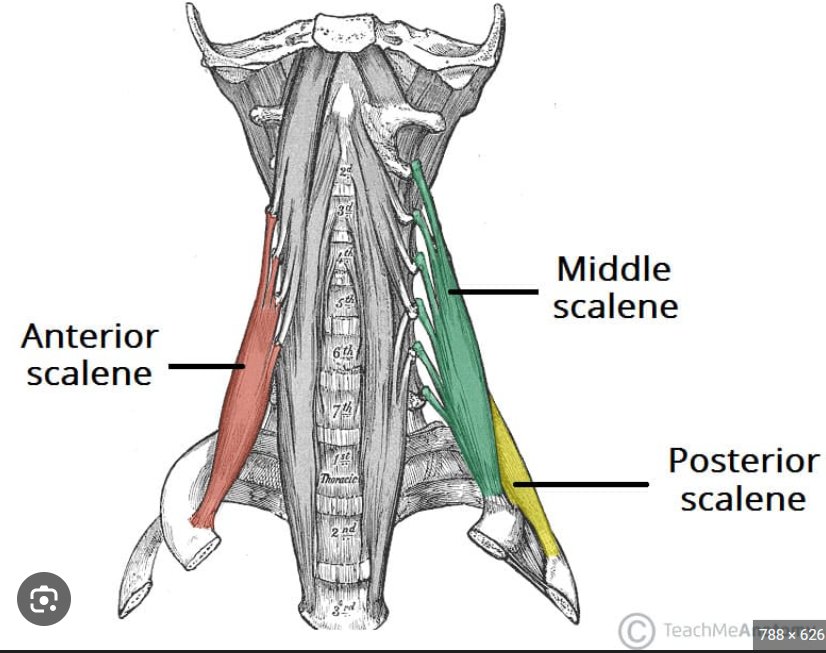
Subclavian arteries, travel how to the what bone and muscle
Travel posterior to clavicle and scalene muscle
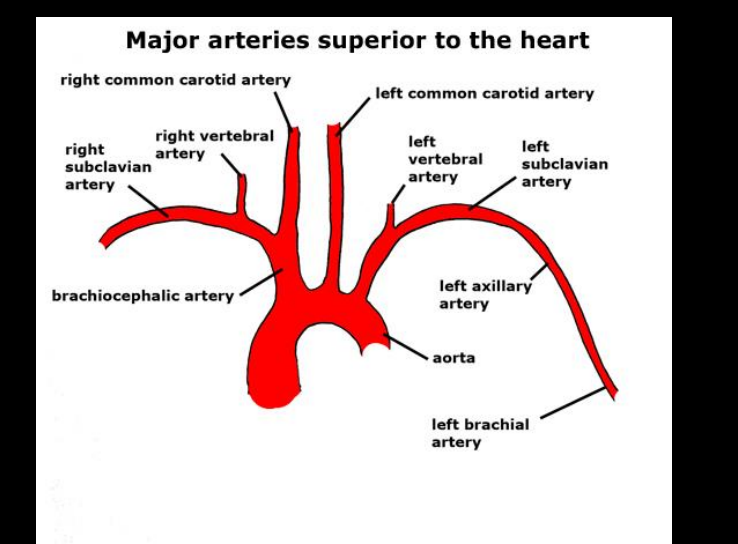
Right subclavian branches off what artery?
Right subclavian branches off brachiocephalic artery
Left subclavian arises directly from what artery?
Left subclavian arises directly from aortic arch
Subclavian arteries, Give off branches that do what for the upper limb?
Give off branches that do not supply upper limb
what’s the first branch of the Subclavian arteries?
Vertebral artery- 1 st branch
what’s the 2nd branch of the Subclavian arteries?
Thyrocervical trunk- 2 nd branch
name two other arteries of the Subclavian arteries?
Internal thoracic arteries
Costocervical arteries
After the Subclavian arteries passing beneath the clavicle, it becomes the what artery?
After passing beneath the clavicle, it becomes the axillary artery
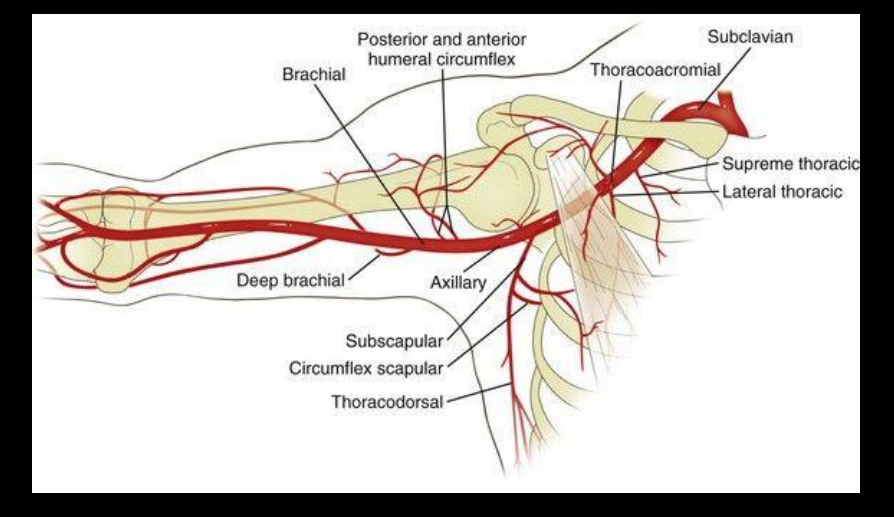
Name the Seven branches of the Axillary artery?
Superior artery
Subscapular artery
Thoracic artery
Thoracodorsal artery
Thoracoacromial artery
Lateral thoracic artery
Anterior and posterior humeral artery
The Axillary artery becomes the what artery?
Becomes the brachial artery
How does the Brachial artery courses and what does it supply?
Courses down upper arm
Supplies the muscles of the arm
The Brachial artery end about what (number and units please!) beyond the what?
Ends about 1 cm beyond the bend of the elbow
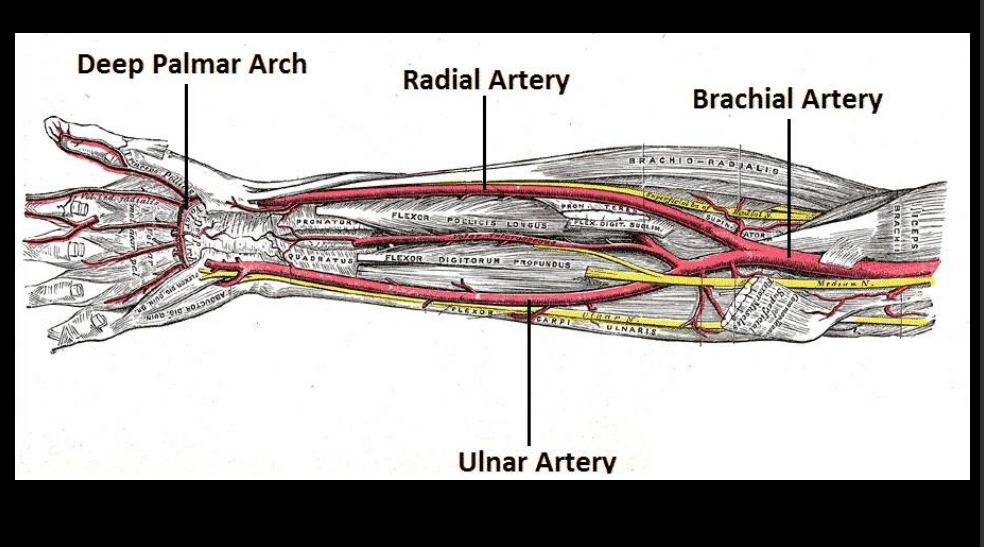
The Brachial artery divides into what arteries ?
Radial and ulnar arteries
How does the Radial artery course ?
Travels down lateral side of forearm into the hand
The Radial artery gives off branch in where forming the what?
Gives off branch in hand forming the superficial palmar arch
where does the Radial artery terminates, by joining what?
Terminates in deep palmar arch by joining the deep branch of the ulnar artery
Where does the Ulnar artery course?
Travels down the medial side of the forearm into the hand
The Ulnar artery gives off what branch?
Gives off a deep palmar branch
Where does the Ulnar artery terminates
Terminates in the superficial palmar arch
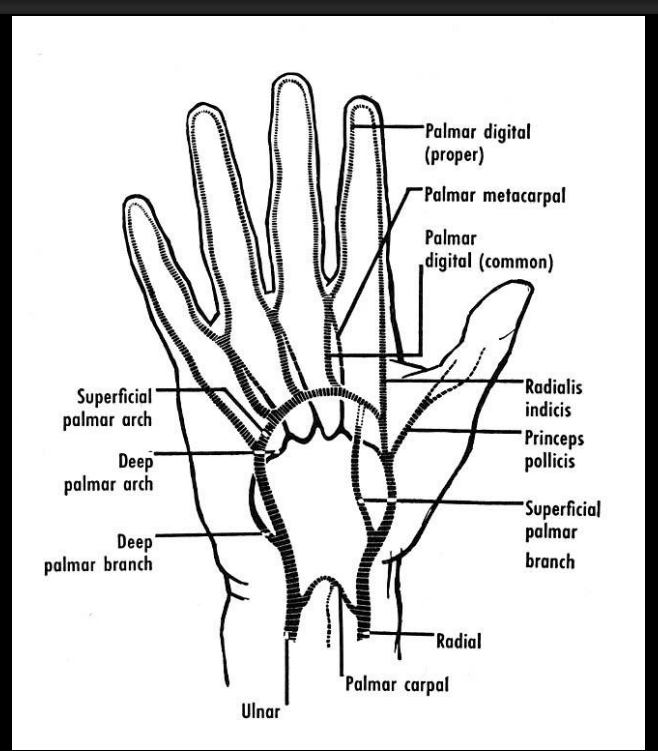
whats the Superficial palmar arch, what portion of the what artery termination and branch of what artery?
Distal portion of ulnar artery (termination); Branch of radial artery
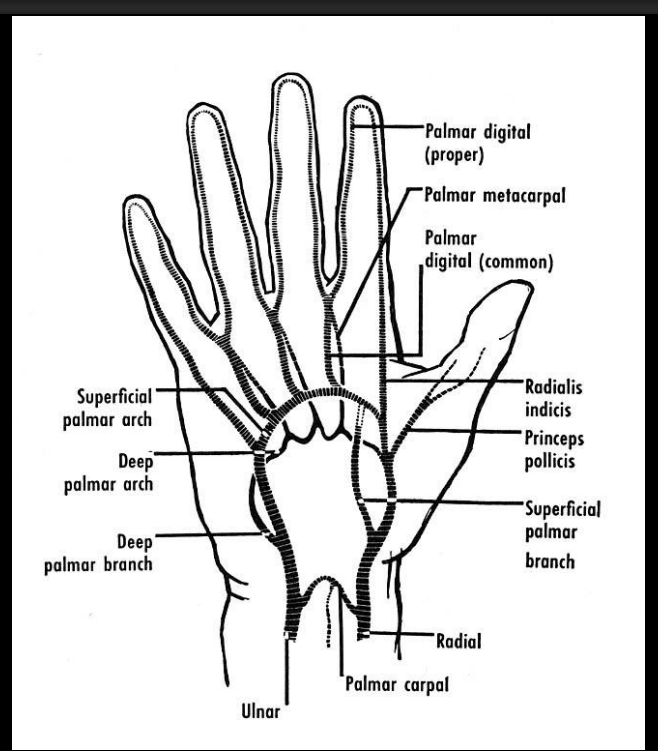
Whats the Deep palmar arch, what portion of the what artery termination and branch of what artery?
Distal portion of radial artery (termination); Branch of ulnar artery
Where does the Digital arteries arise from?
Arise from palmar arches
Digital arteries, extend into where and divide into what branches
Extend into the fingers
Divide into lateral and medial branches
For UEA anatomy how common are Anatomic variants, and familiarity with variants can prevent what during duplex sonography?
Many can occur
Familiarity with variants can prevent confusion and error during duplex sonography
Tunica Intima what layer is this and consists of what?
Innermost layer: consists of smooth endothelium and connective tissue.
Tunica Media what layer is this, describe it and composed of what?
intermediate layer, thicker and composed of smooth muscle and connective tissue.
Tunica Externa (adventitia), what layer is this, describe it and what type of tissue is this?
Tunica Externa (adventitia): Outer layer; thinner; fibrous connective tissue.
Collateral Pathways • Obstruction of proximal subclavian
flow from where to subclavian artery where to the obstruction?
Flow from cranial and/or neck arteries to subclavian artery distal to obstruction
Collateral Pathways • Obstruction of proximal subclavian
flow from what arteries to subclavian artery where to the obstruction?
Flow from pelvic, abdominal wall, & thoracic wall arteries to subclavian artery distal to obstruction
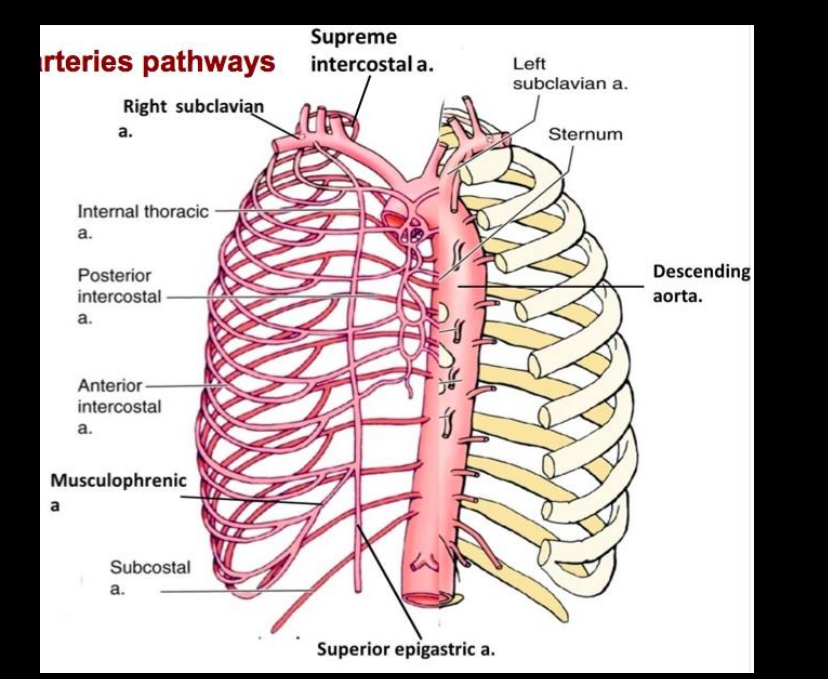
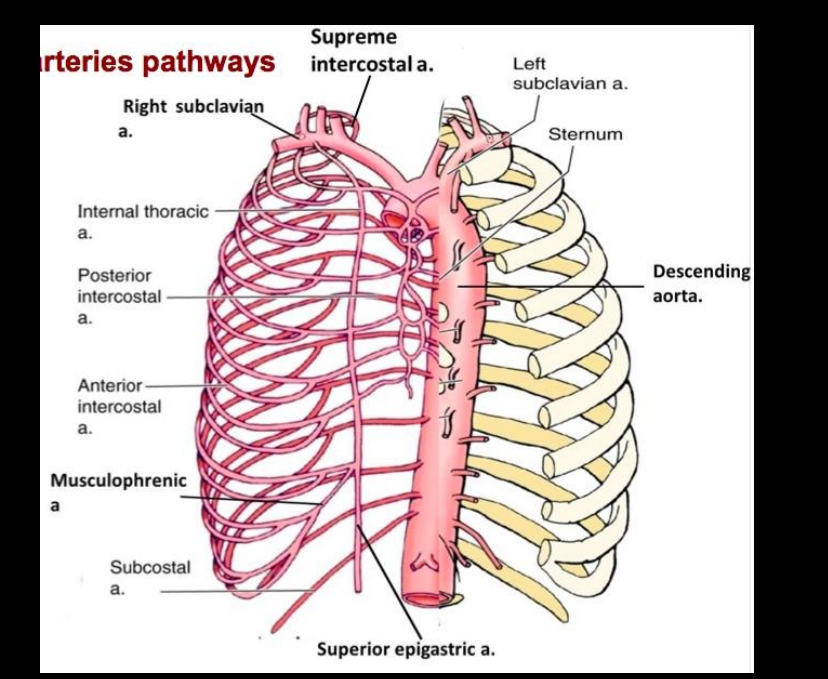
Collateral Pathways • Obstruction of distal subclavian or axillary arteries
flow from what wall of what region to what artery how to the obstruction
Flow from thoracic wall or shoulder region to axillary artery distal to obstruction
Collateral Pathways • Obstruction of the brachial artery, describe flow on the arm, and how does the flow look and filling the what
Flow from the distal arm to the proximal forearm
Flow from the mid-arm to the distal arm and/or forearm
Retrograde flow filling the palmar arches of the hand
name 6 of UEA Disease
Subclavian Steal Syndrome •
Thoracic Outlet Syndrome (TOS) •
Quadrilateral Space Syndrome •
Thromboangitis Obliterans •
Raynaud’s Phenomenon •
Hypothenar Hammer Syndrome
Subclavian Steal results from what?
Results from stenosis/occlusion in proximal subclavian or innominate artery
Subclavian Steal there is a Increased incidence on on what side? (right or left?)
Describe the flow and occurs in what artery on what side?
describe what Subclavian Steal is / does ?
Increased incidence on left
Retrograde flow occurs in the vertebral artery on the same side as occlusion
Stealing blood flow from contralateral vertebral artery which was destined to basilar artery and brain
what is Thoracic Outlet Syndrome (TOS)?
Condition caused by muscular or bony compression of the subclavian or axillary artery
TOS, Condition caused by muscular or bony compression of the subclavian or axillary artery
Describe where can these compression happen? (name 3)
Compression between 1st rib and scalene muscle
Compression between 1st rib and clavicle
Compression between coracoid process and pectoralis muscle
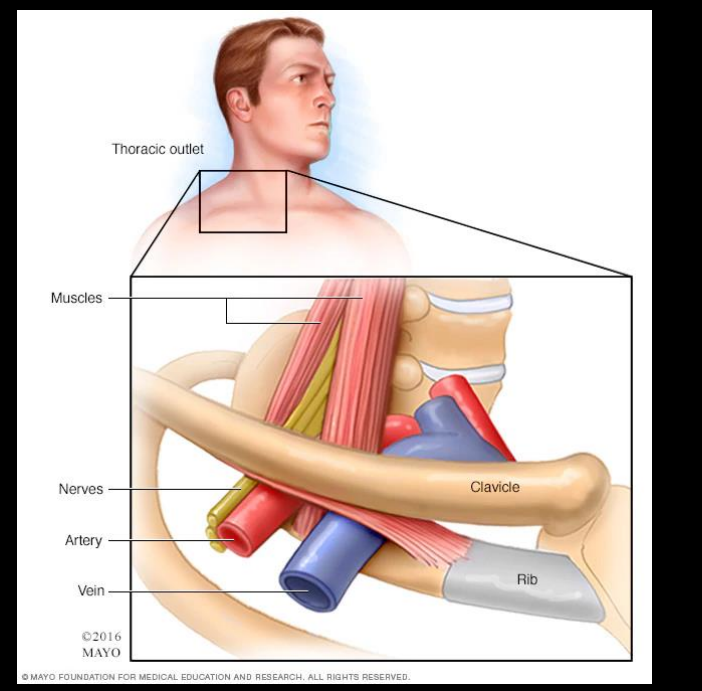
what are the TOS Symptoms
Pain or numbness and loss of sensation when upper extremity is in a predictable and reproducible position
TOS Symptoms are what related and found in patients who perform what task?
Syndrome may be job related, found in patients who perform repetitive tasks
Quadrilateral Space Syndrome, describe what this?
Impingement of the axillary nerve and posterior humeral circumflex artery
Quadrilateral Space Syndrome, the impingement due to what? and this syndrom is similar to what?
Impingement due to trauma or muscle hypertrophy
Similar to TOS
what are the Signs and symptoms Quadrilateral Space Syndrome (name 3)
Pain, paresthesia and atrophy
Quadrilateral Space Syndrome, compression of what?
Compression of either nerve, artery or both
Quadrilateral Space Syndrome, what age group does this happen and due to what motion?
Young, <40 years old, repetitive overhead motion
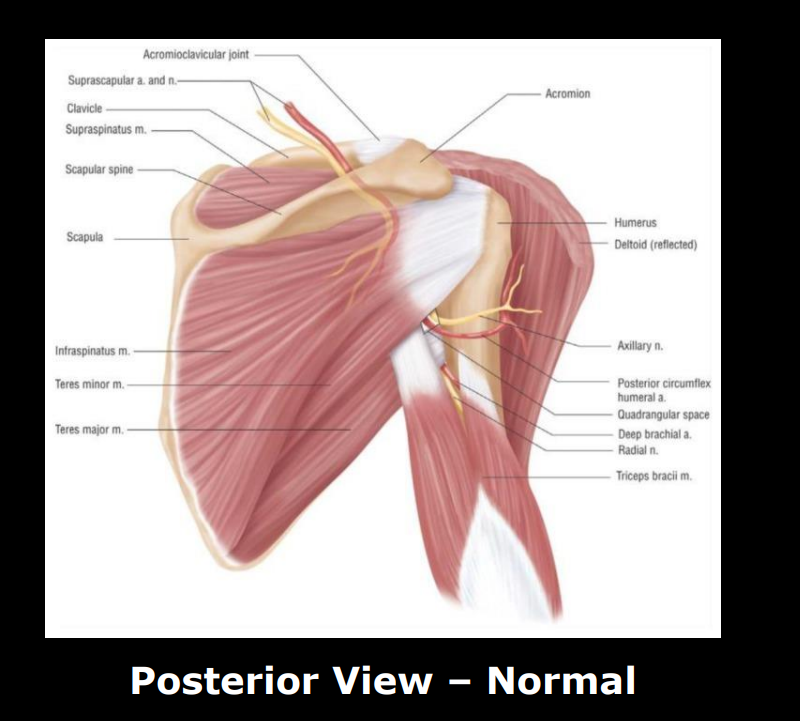
Thromboangitis Obliterans is also known as what disease?
Also known as Buerger’s Disease
Thromboangitis Obliterans is the most common form of what?
Most common form of arteritis
what arteries does Thromboangitis Obliterans effects? Leadings to what?
Effects small/medium distal extremity arteries
Leading to rest pain & ischemic ulceration
Thromboangitis Obliterans is associated with heavy with which controllable risk factor?
Associated with heavy cigarette smoking
Thromboangitis Obliterans is most common in what sex and age?
Primarily men < 40 years of age
Thromboangitis Obliterans begins where and spreads where?
Begins at palmar arch, spreads centrally up arm
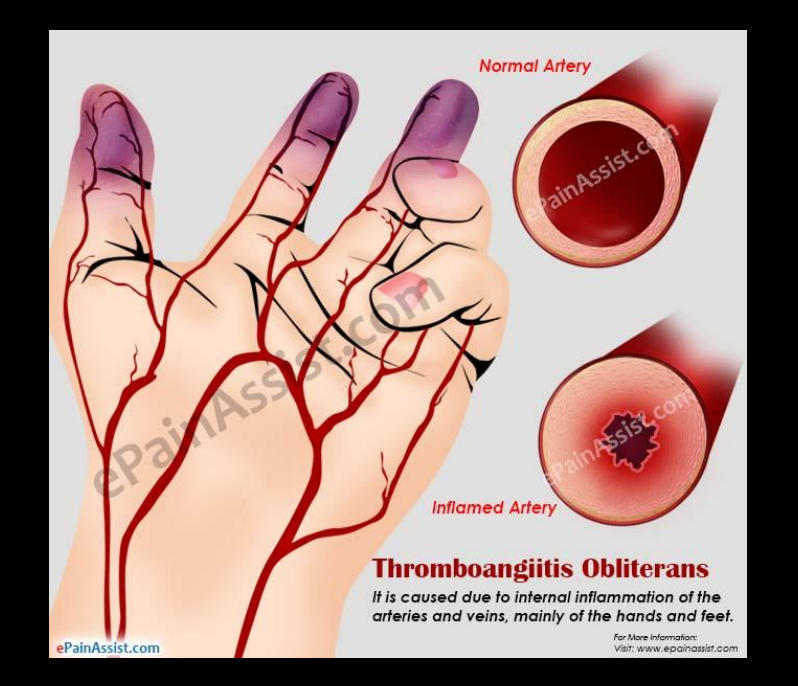
Thromboangitis Obliterans, has little opportunity for what development?
Little opportunity for collateral development
name 3 treatment options for Thromboangitis Obliterans
Eliminate smoking
Avoid vasoconstriction
Disease progresses if untreated
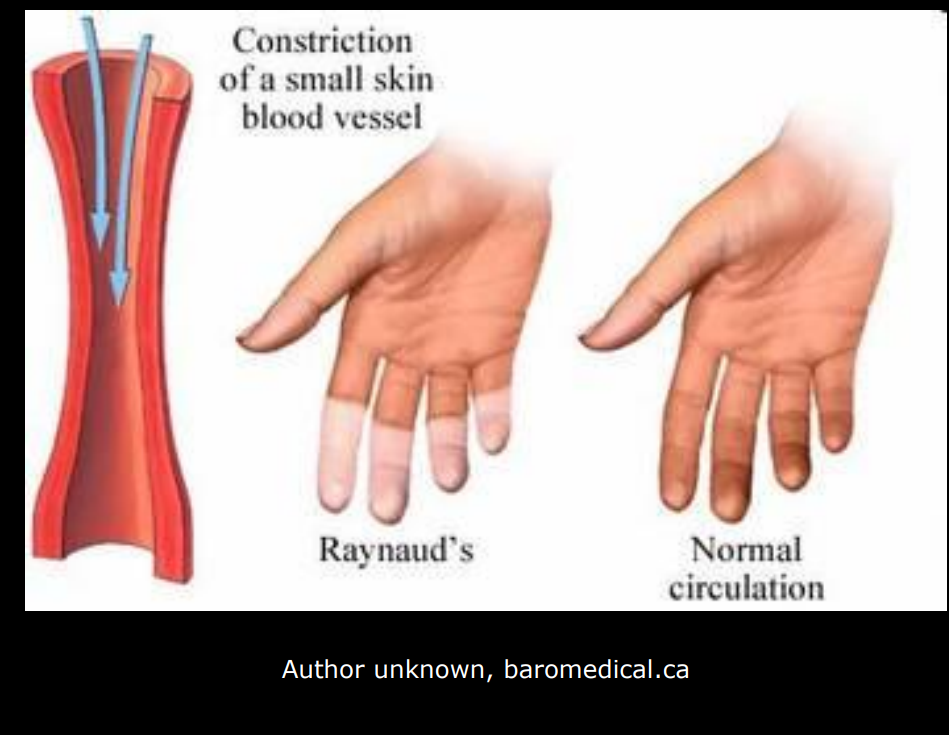
UEA Disease • Raynaud’s Phenomenon, what are the different types?
Primary Raynaud’s , Raynaud’s Disease
Secondary Raynaud’s
Primary Raynaud’s Phenomenon is also known as what disease?
Also known as Raynaud’s Disease
Primary Raynaud’s Phenomenon, is what disorder?
Innocuous vasospastic disorder , No underlying disease
Primary Raynaud’s Phenomenon - explain what this is?
Intermittent digital ischemia is caused by digital arterial spasm
Primary Raynaud’s Phenomenon is common in what sex and age?
Common in young women (under 40)
Primary Raynaud’s Phenomenon is what type of prognosis?
Good prognosis- lack of disease progression
What are the symptoms for Primary Raynaud’s Phenomenon ? what does it represent? what does testing include?
Digits display bilateral intermittent pallor, cyanosis, and rubor that is caused solely by digital arterial spasm
Represents an overreaction of vasomotor responses to cold or stress stimuli
Testing includes pre and post cold water challenge
Secondary Raynaud’s Phenomenon, is also known as what?
Also known as Secondary Raynaud’s
Secondary Raynaud’s Phenomenon- explain what this is? and give 3 example?
Vasospasm secondary to underlying systemic or vascular abnormality Arteriosclerosis
Connective tissue disorders
Thromboangitis obliterans
what is Secondary Raynaud’s?
Normal vasoconstrictive response of arterioles superimposed on a fixed arterial obstruction
Secondary Raynaud’s is more common in what sex and age?
More common in men over 40
Secondary Raynaud’s, what arms can it affect? and what does it constant of?
Bilateral or unilateral
Ischemia is constant
Secondary Raynaud’s may be first manifestation of what?
May be first manifestation of a collagen disorder or other abnormality
Hypothenar Hammer Syndrome- what is this syndrome?
Hypothenar – group of muscles that control movement of the little finger
Hypothenar Hammer Syndrome, makes up what?
Make up fleshy edge of palm
Hypothenar Hammer Syndrome, how does this happen (also explains what it damages?)
Repeated use of palm as a hammer to grind, push, and twist objects damages blood vessels of the hand especially the ulnar artery
Hypothenar Hammer Syndrome; Damage to ulnar artery results in what?
Damage to ulnar artery results in reduction of blood flow to fingers
Hypothenar Hammer Syndrome, what sex is this common in and age?
Men mean age of 40
Hypothenar Hammer Syndrome, is most common in what workers? (name 8)
Auto mechanics, metal workers, miners, machinists, butchers, bakers, carpenters, and brick layers
Hypothenar Hammer Syndrome
Symptoms include: (name 5)
Pain
Pins and needles
Loss of sensation
Difficulty holding heavy objects
Cold sensitivity

