PHYSICS 150: Fluid Dynamics
 Call Kai
 Learn
Learn Practice Test
 Spaced Repetition
 Match
Match Flashcards
 Knowt Play
1/86

Name | Mastery | Learn | Test | Matching | Spaced | Call with Kai |
|---|
No analytics yet
Send a link to your students to track their progress
87 Terms
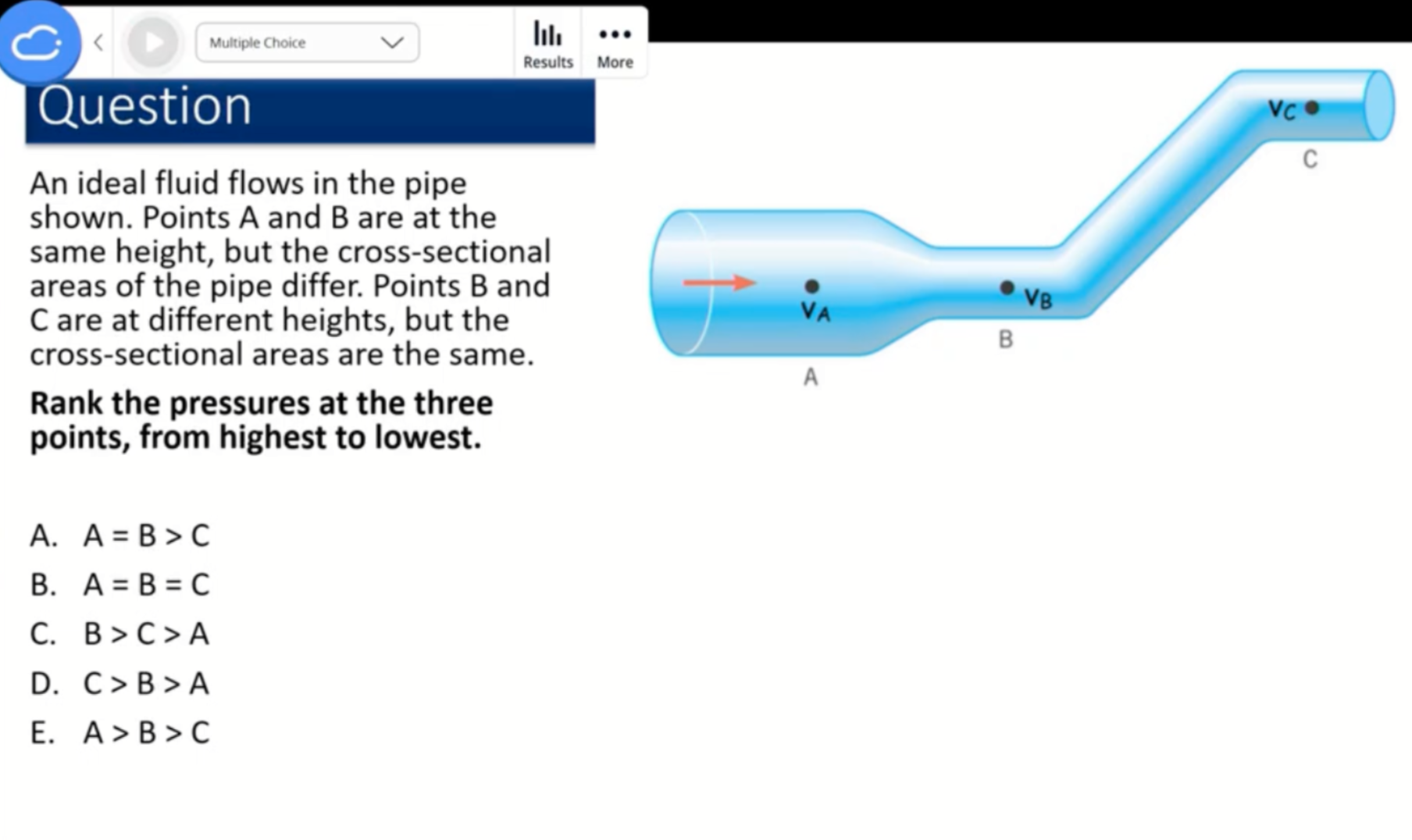
E

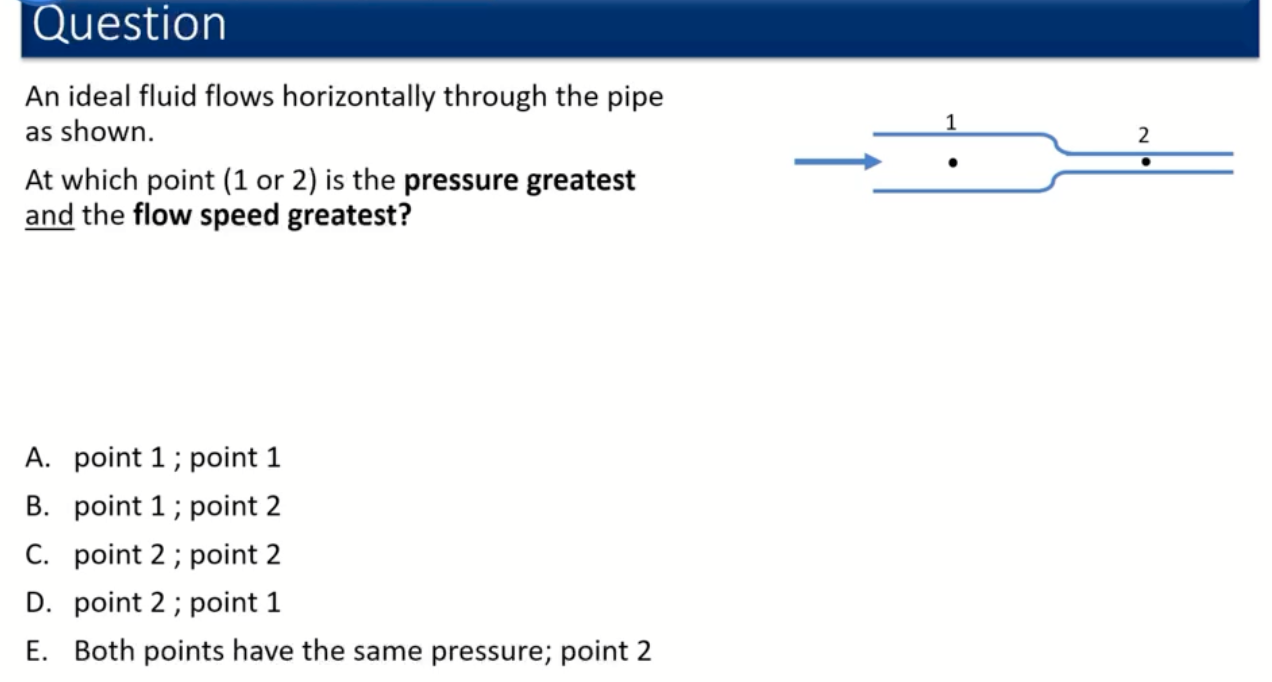
B

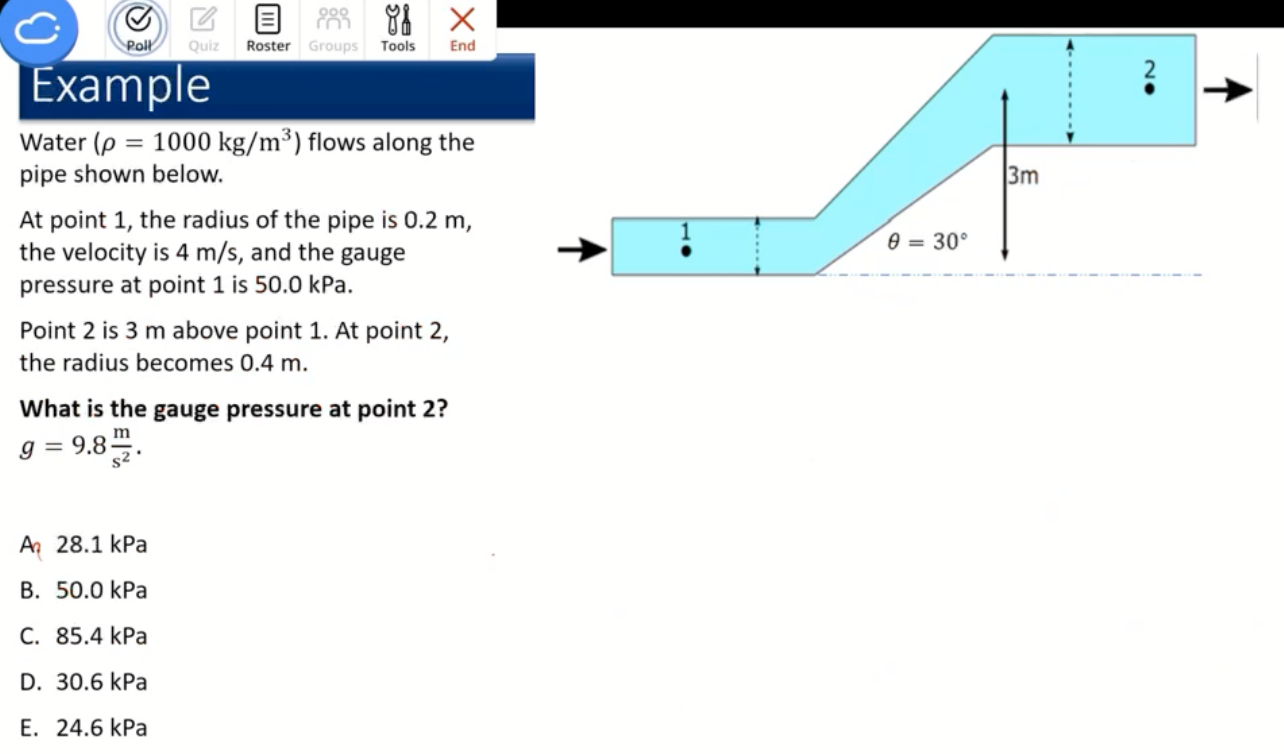
A

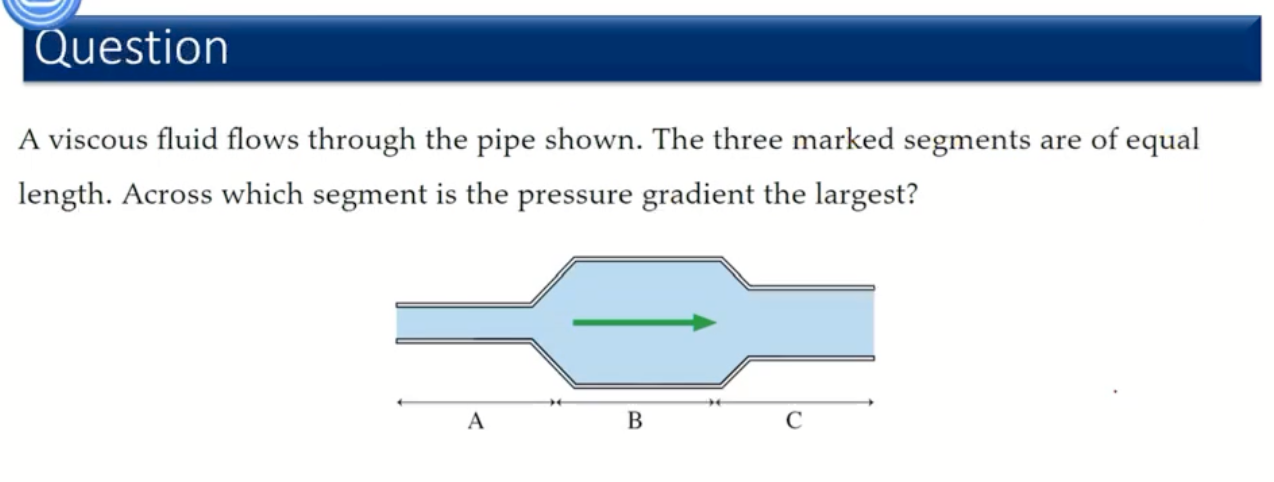
A

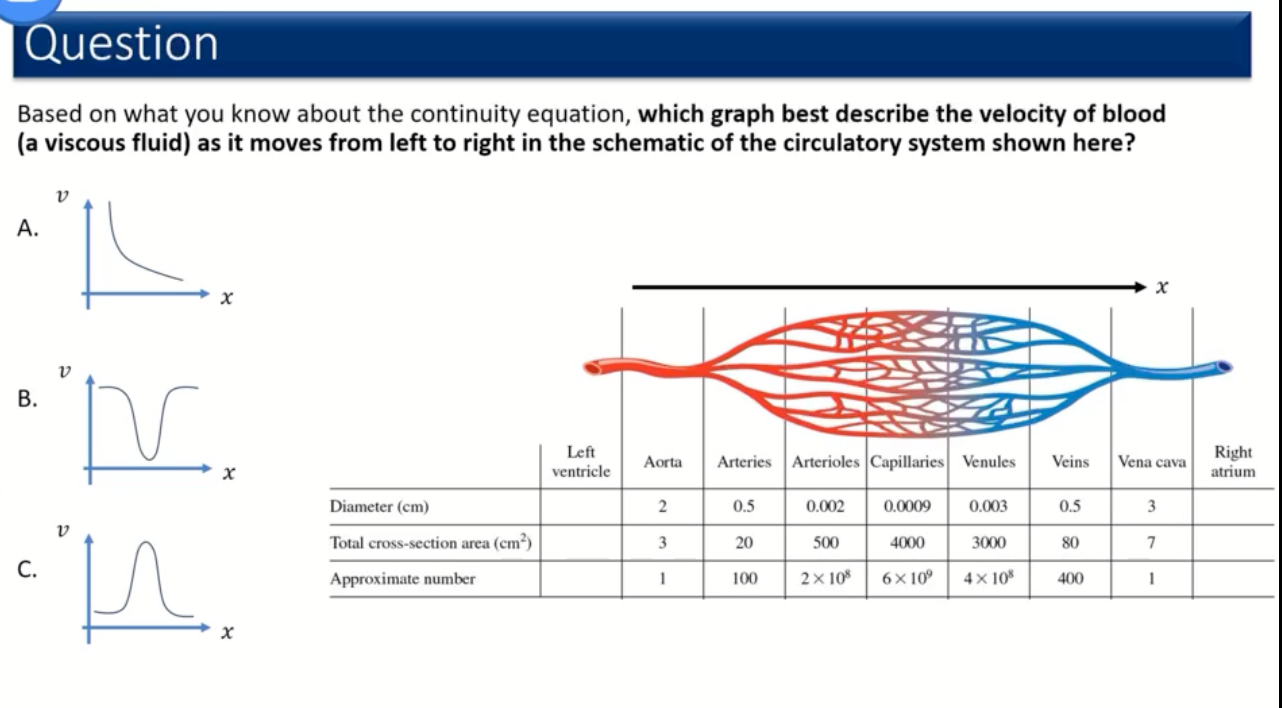
B
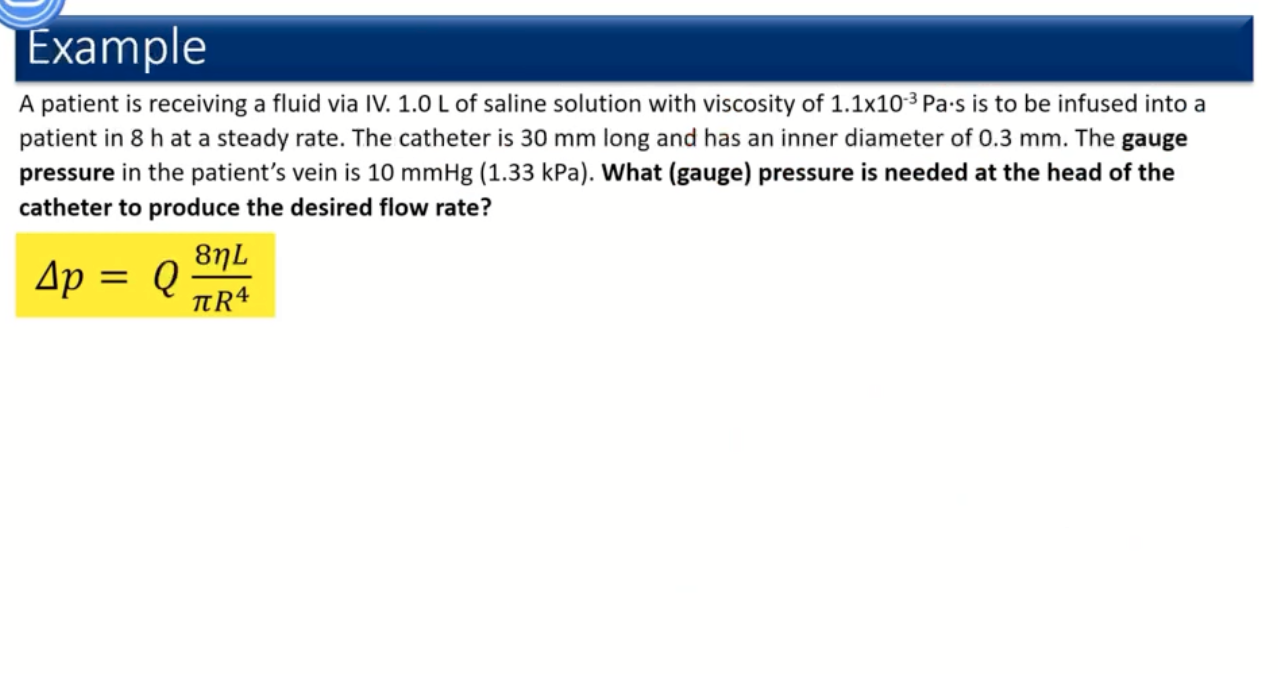
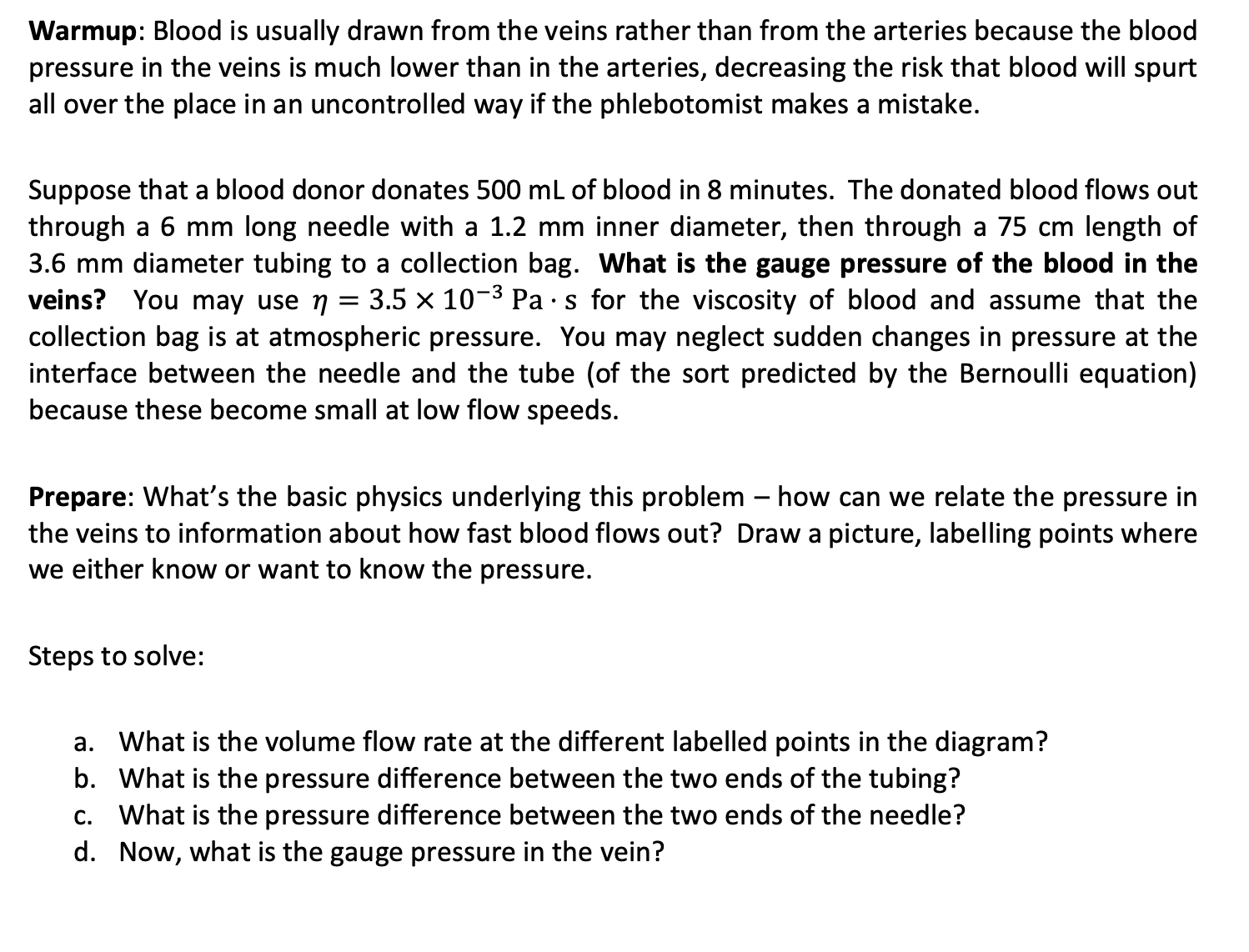
7.1 kPa
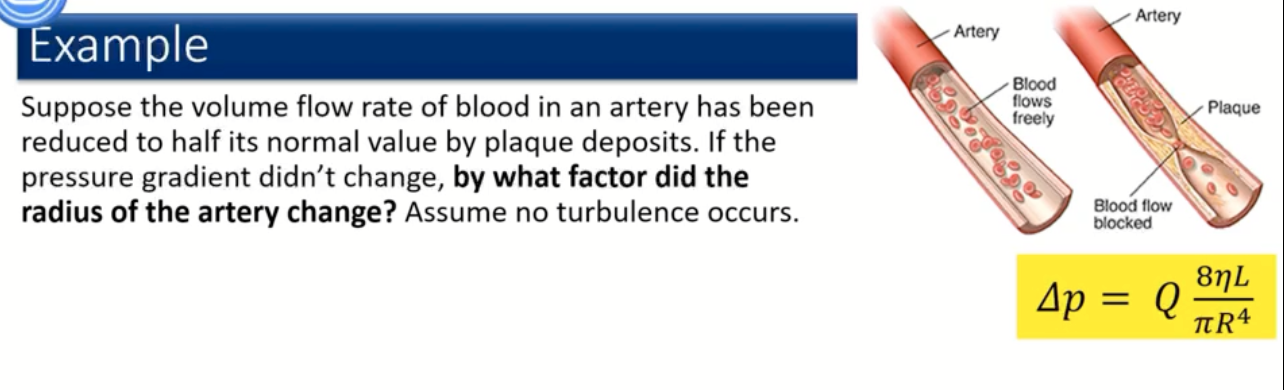
R2 = 0.841 R1
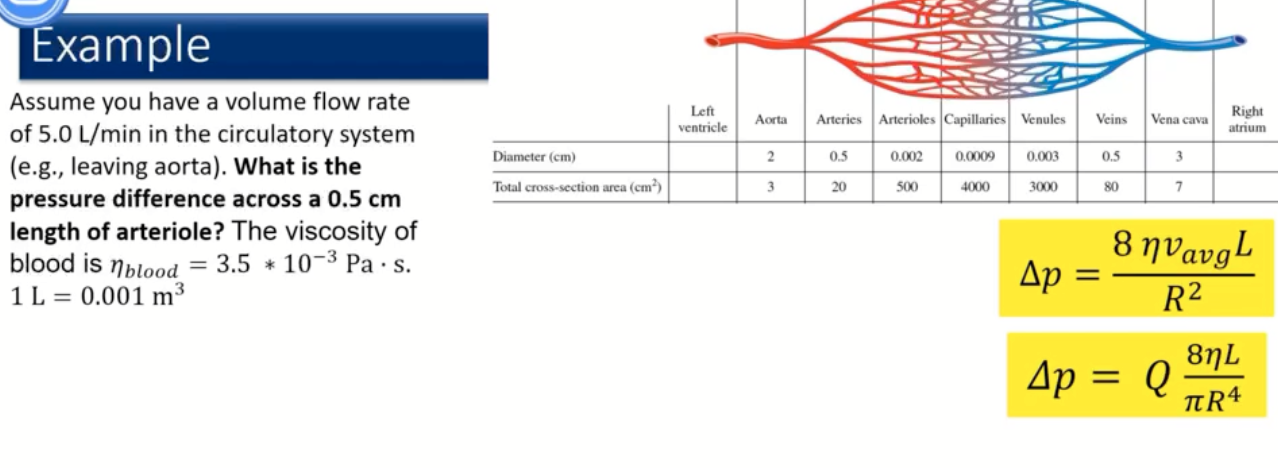
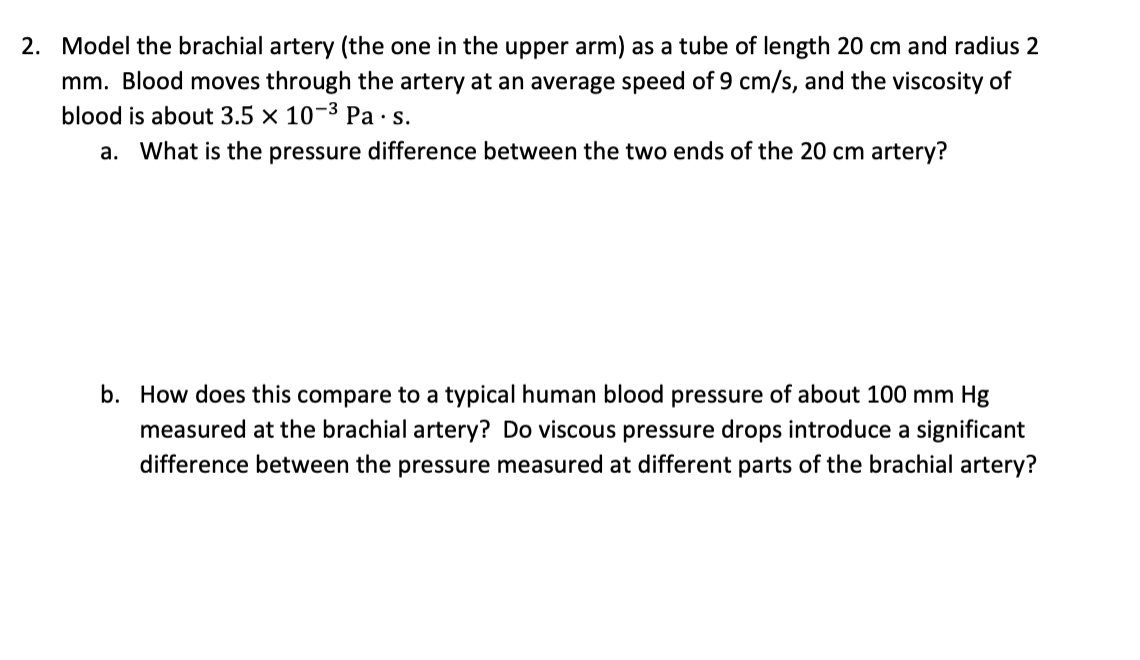
(delta)p = 2333.3 Pa
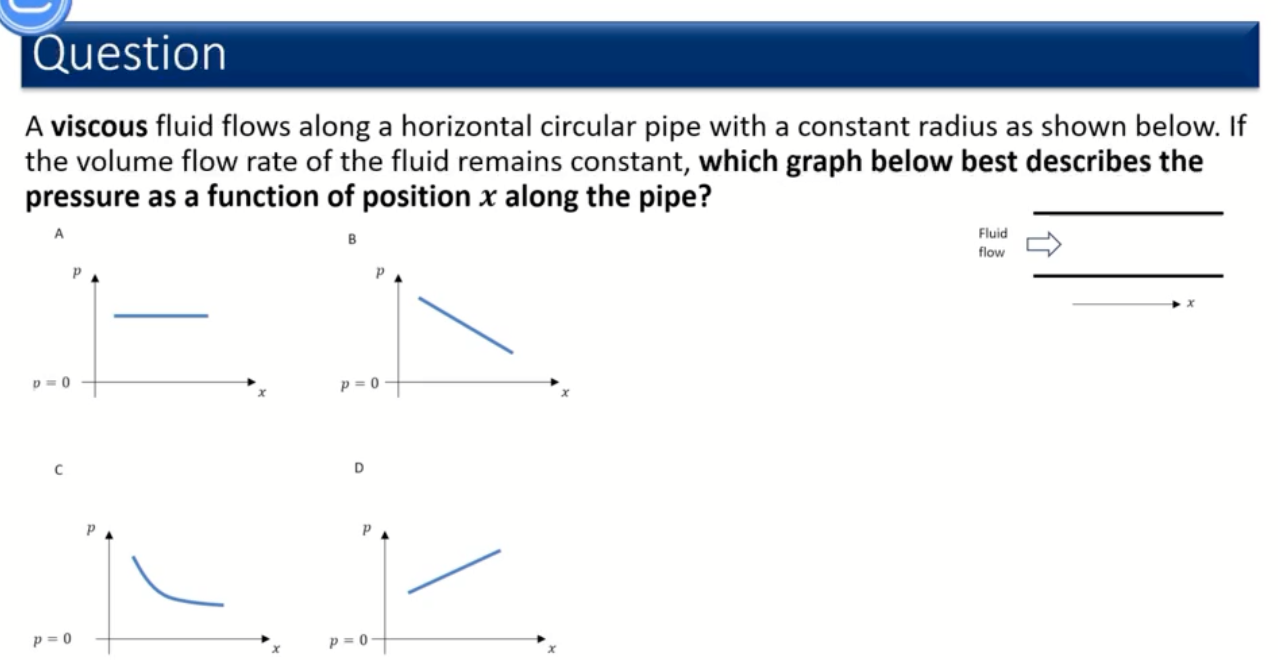
B
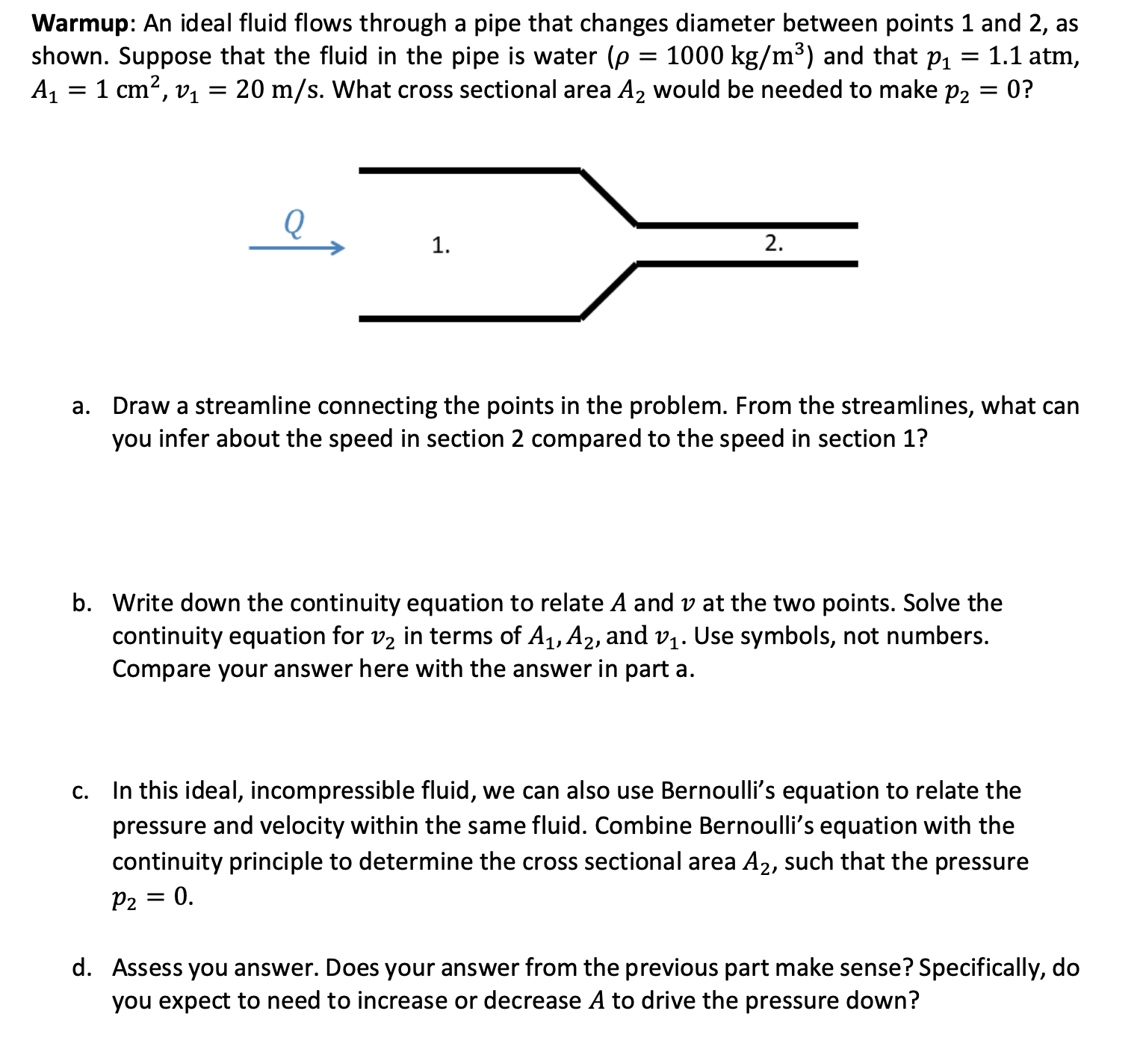
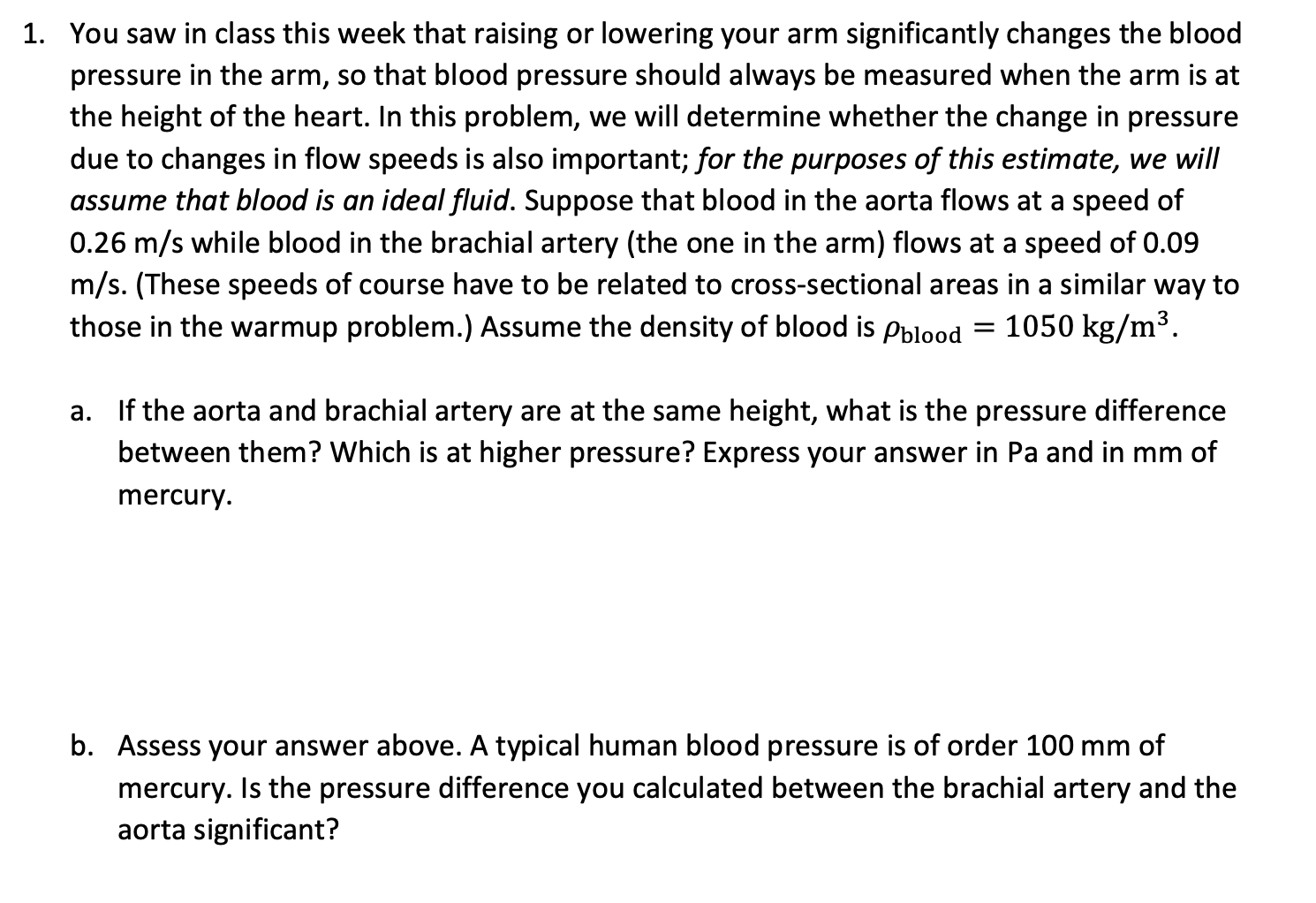
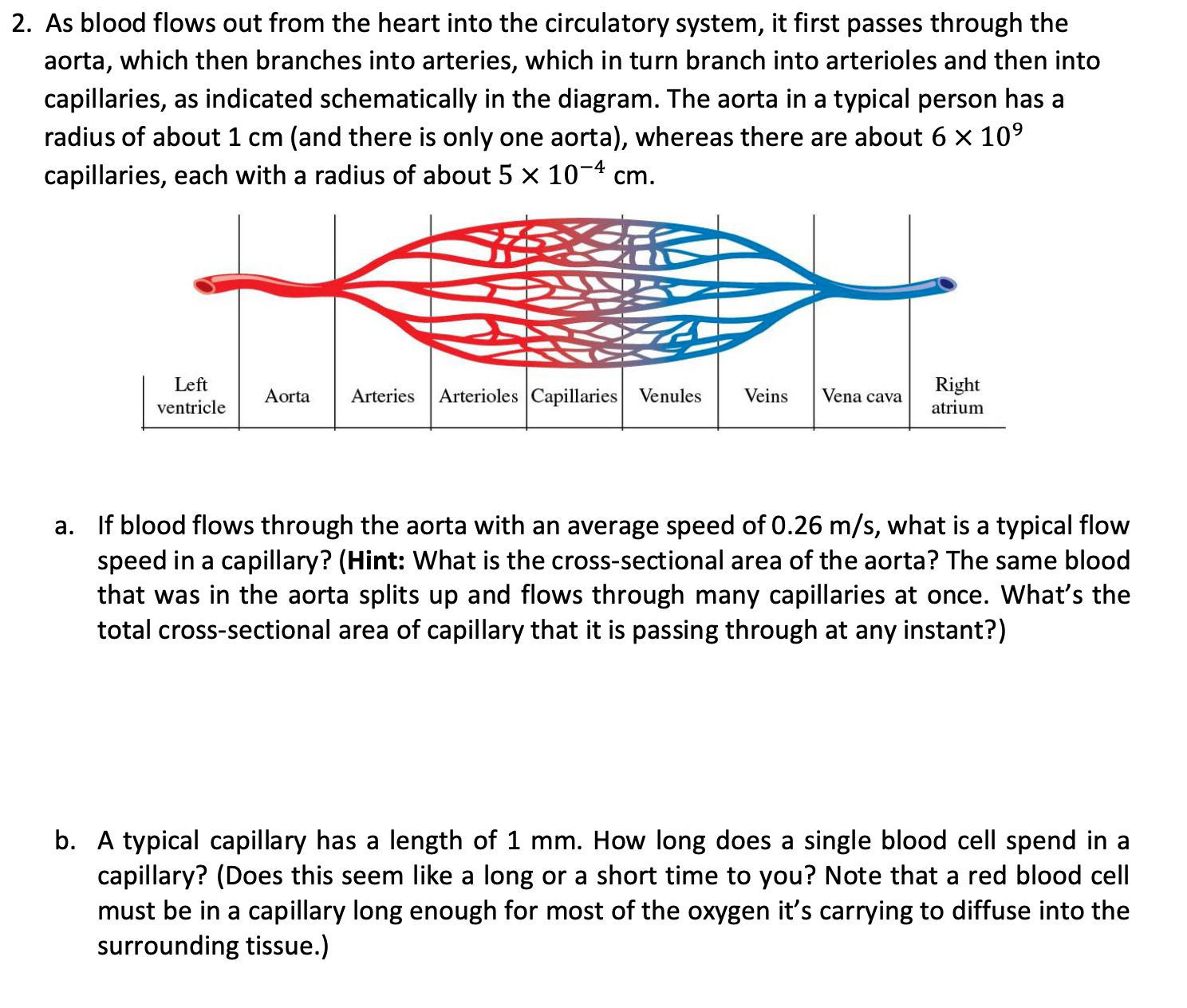

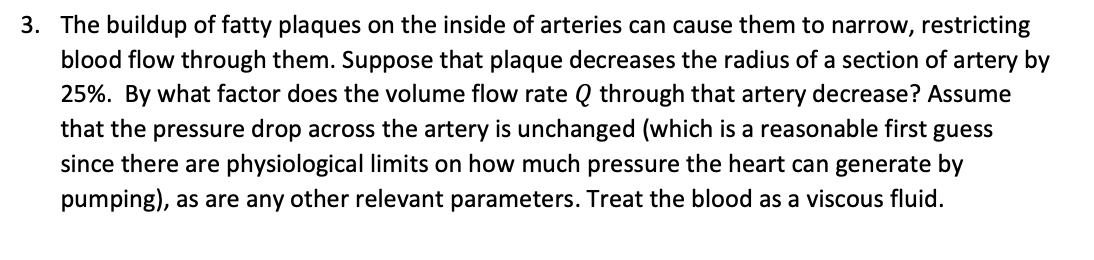
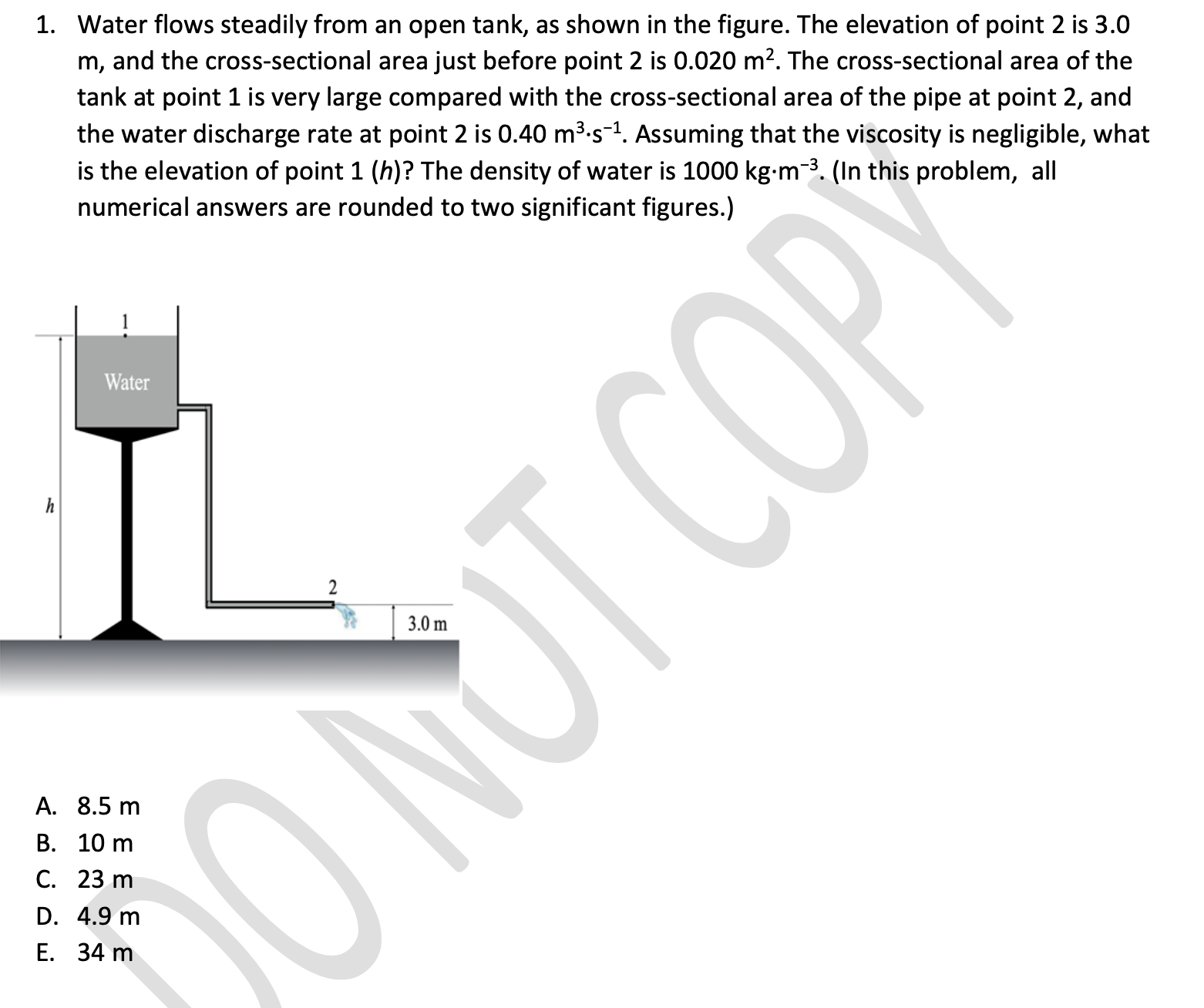
C
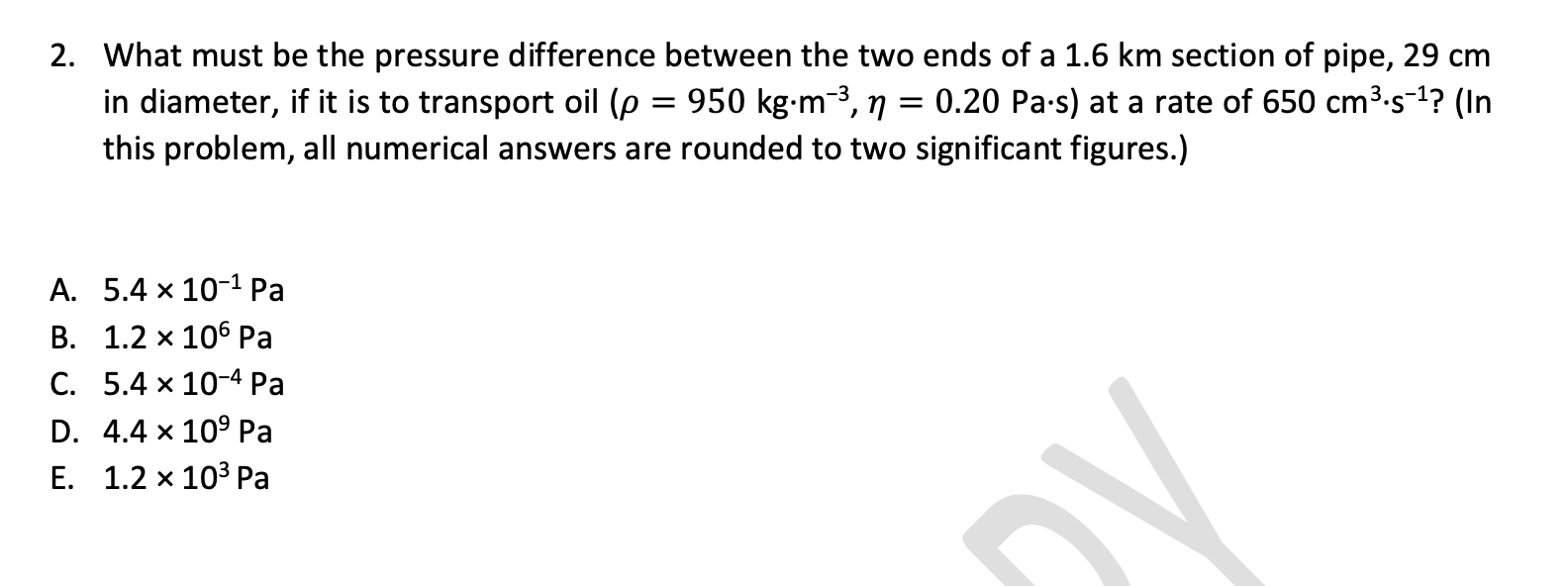
E
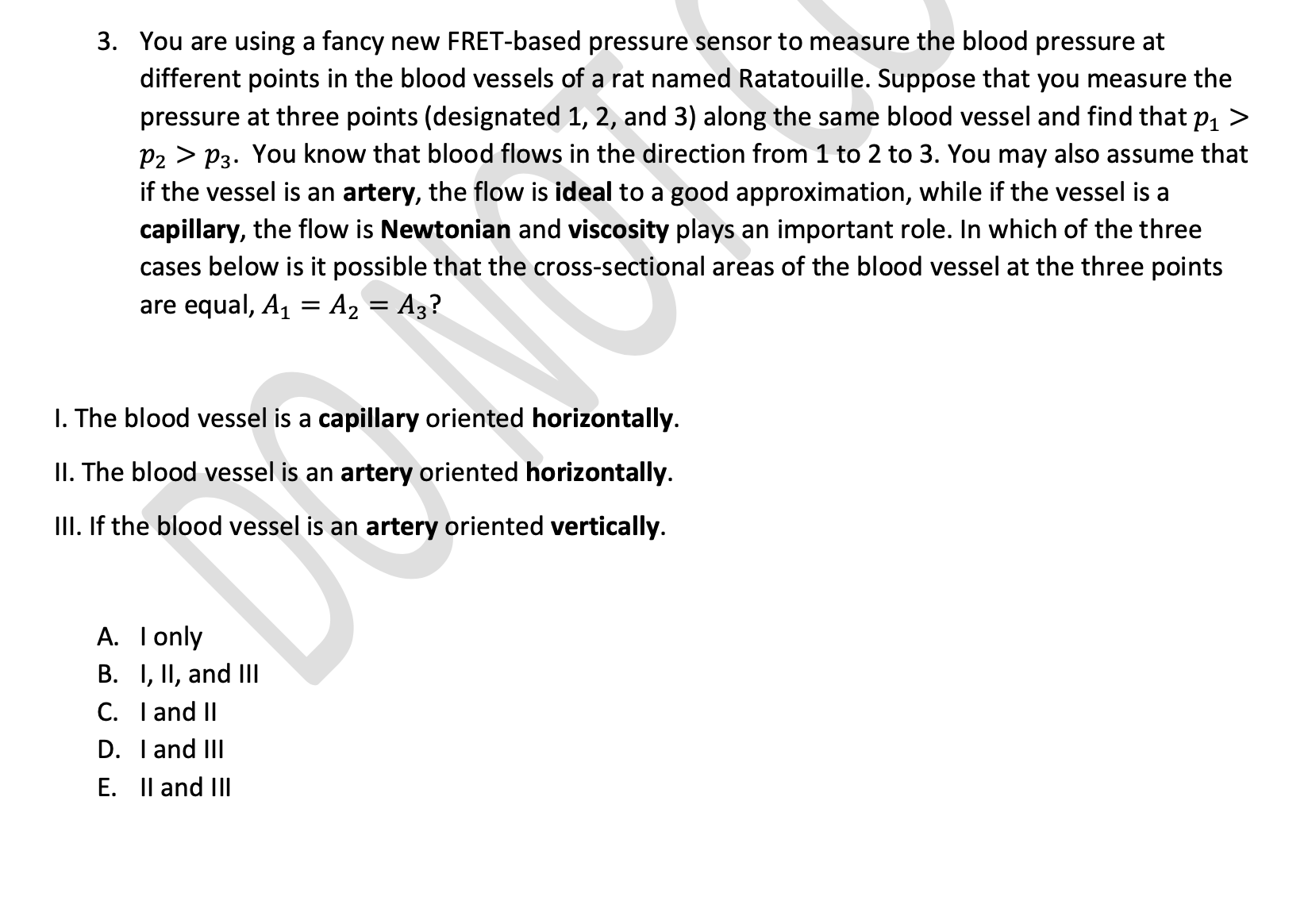
D
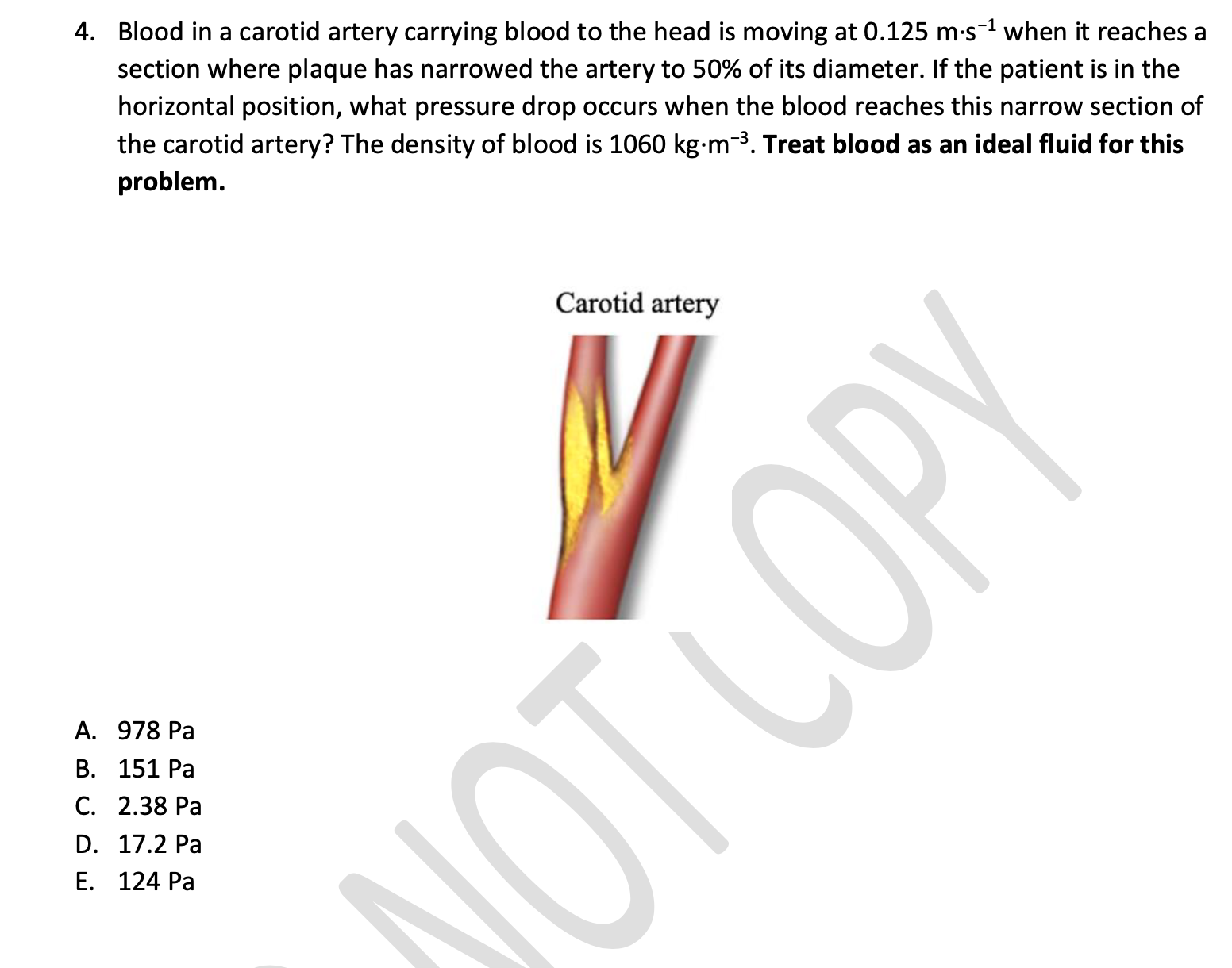
E
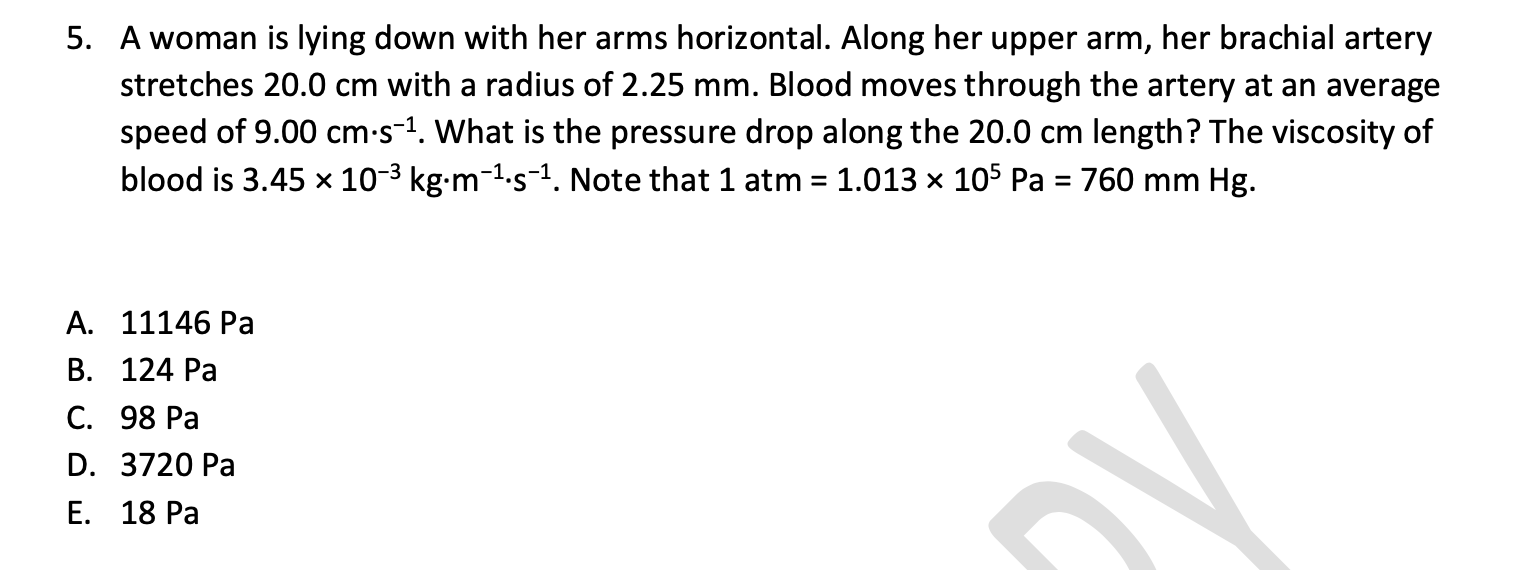
C
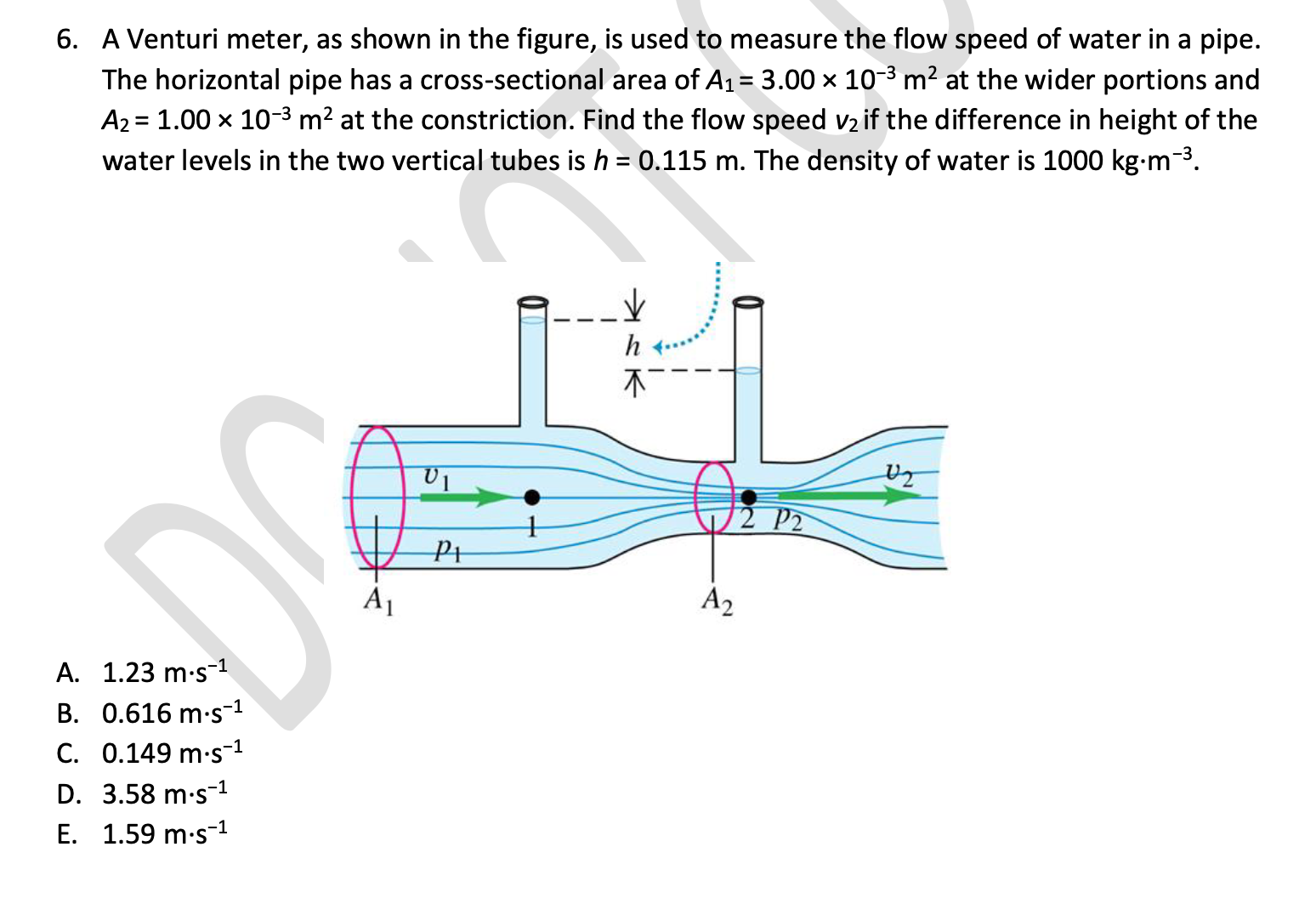
E
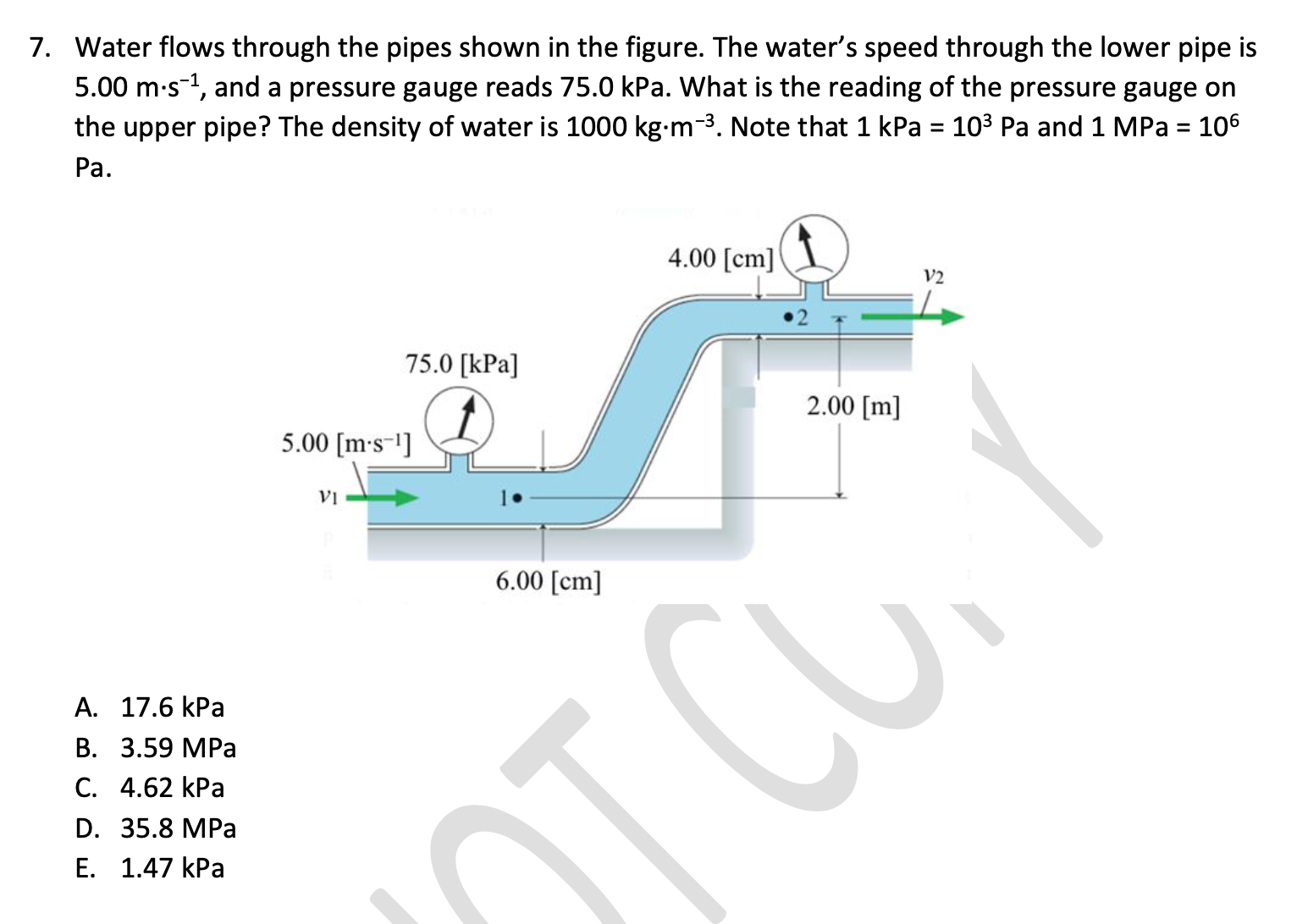
C
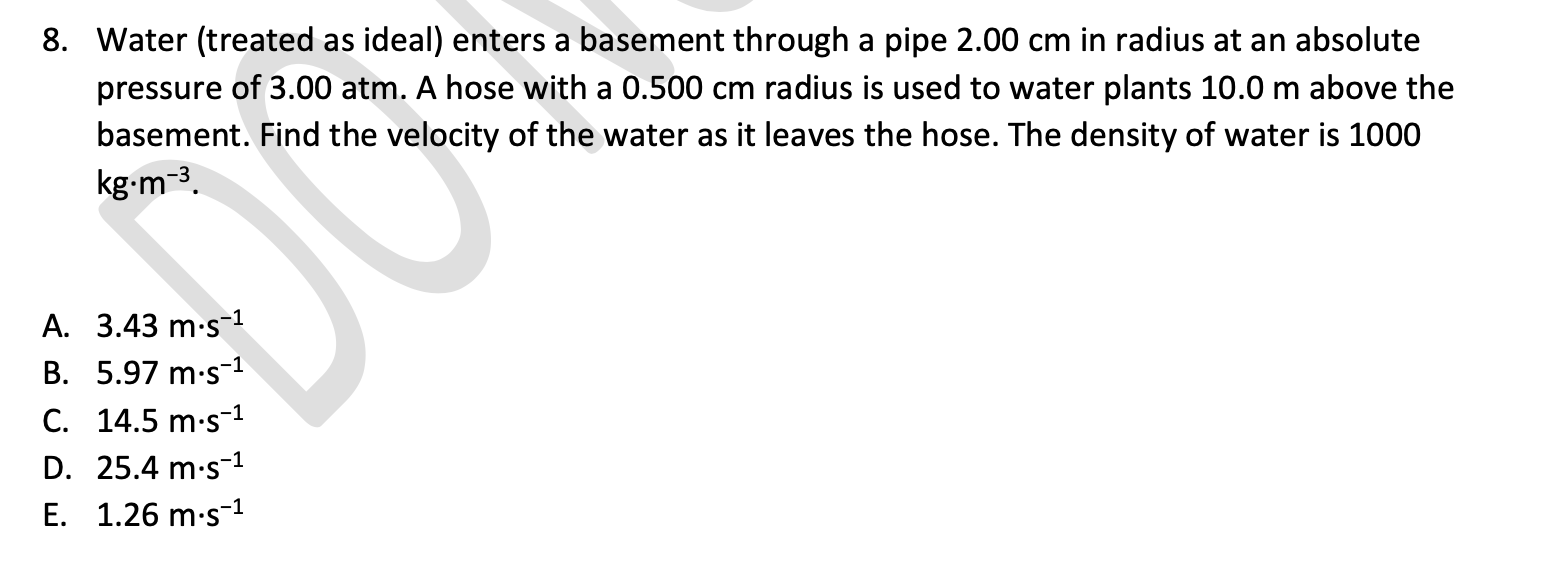
C
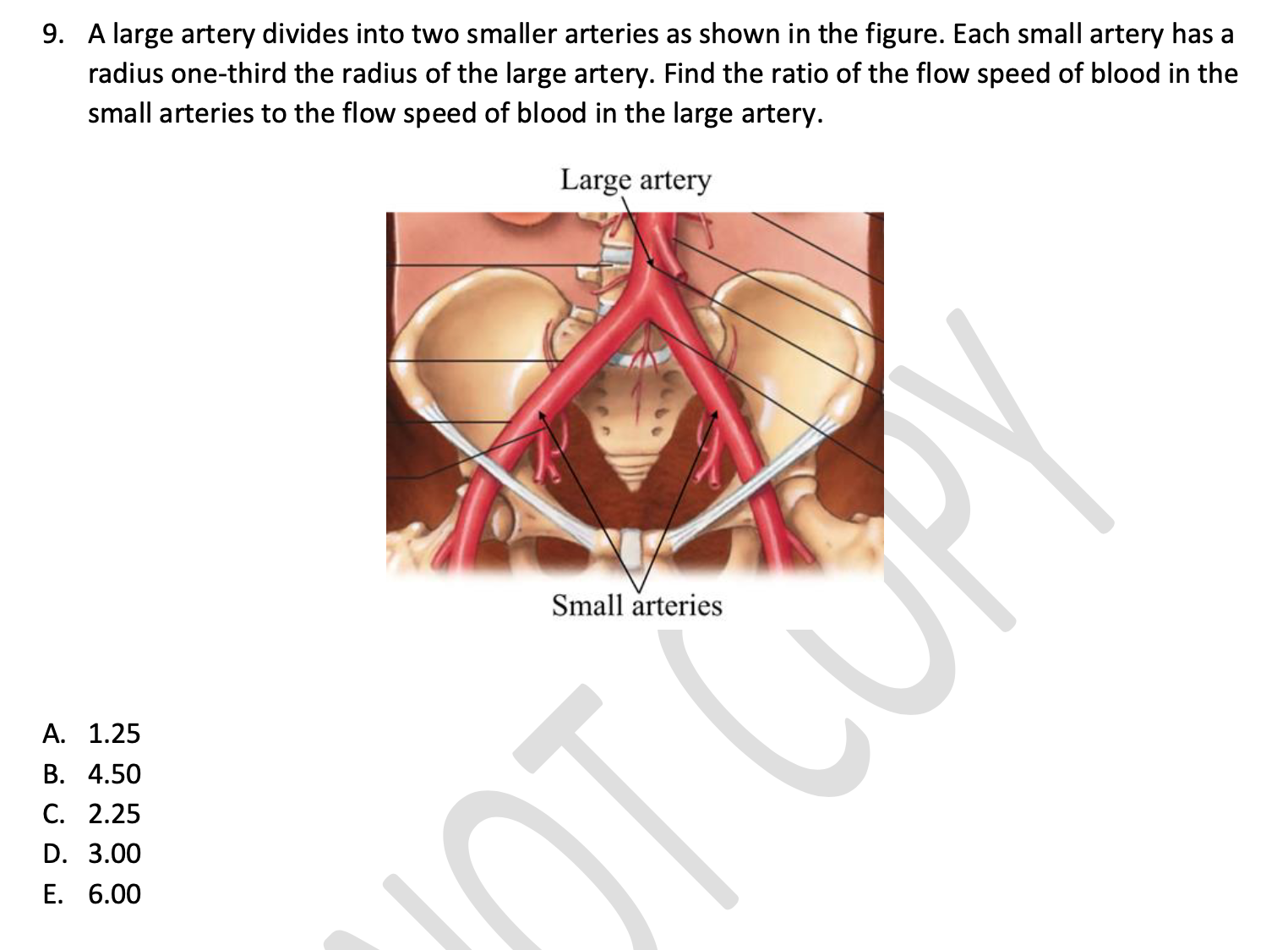
B
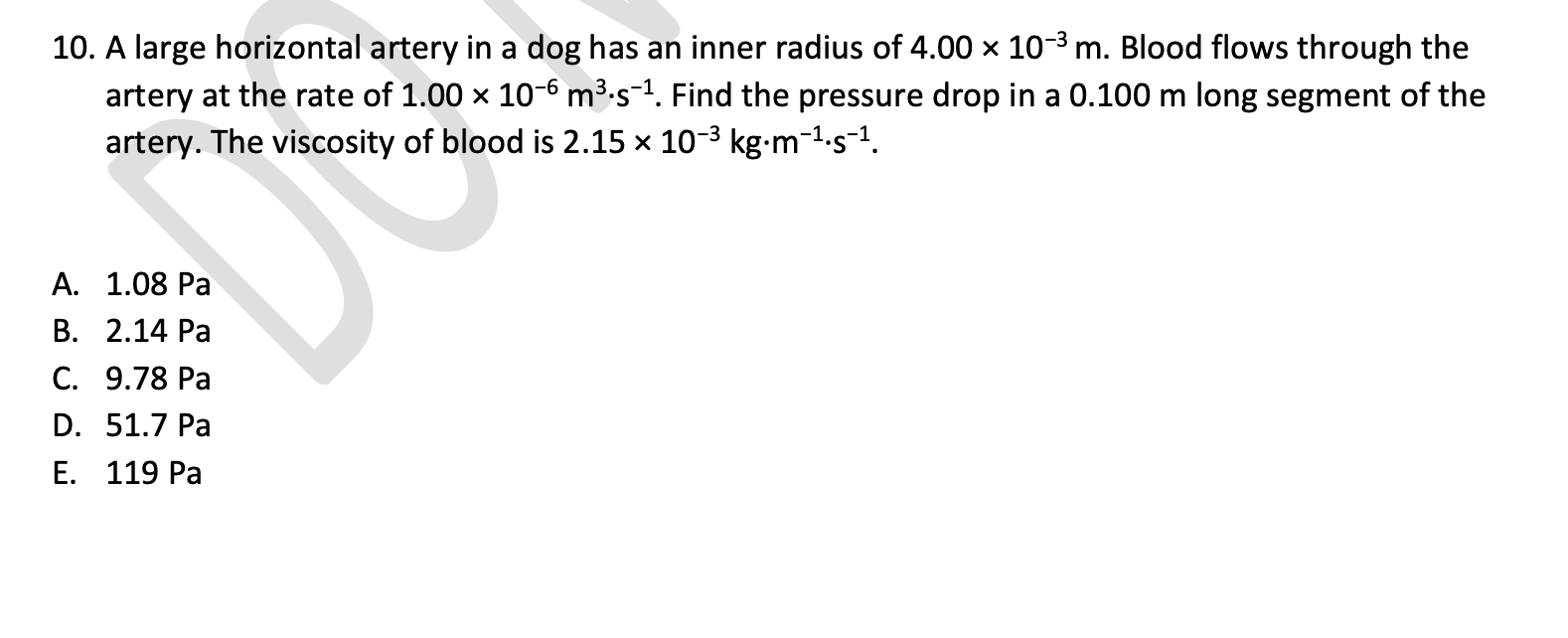
B
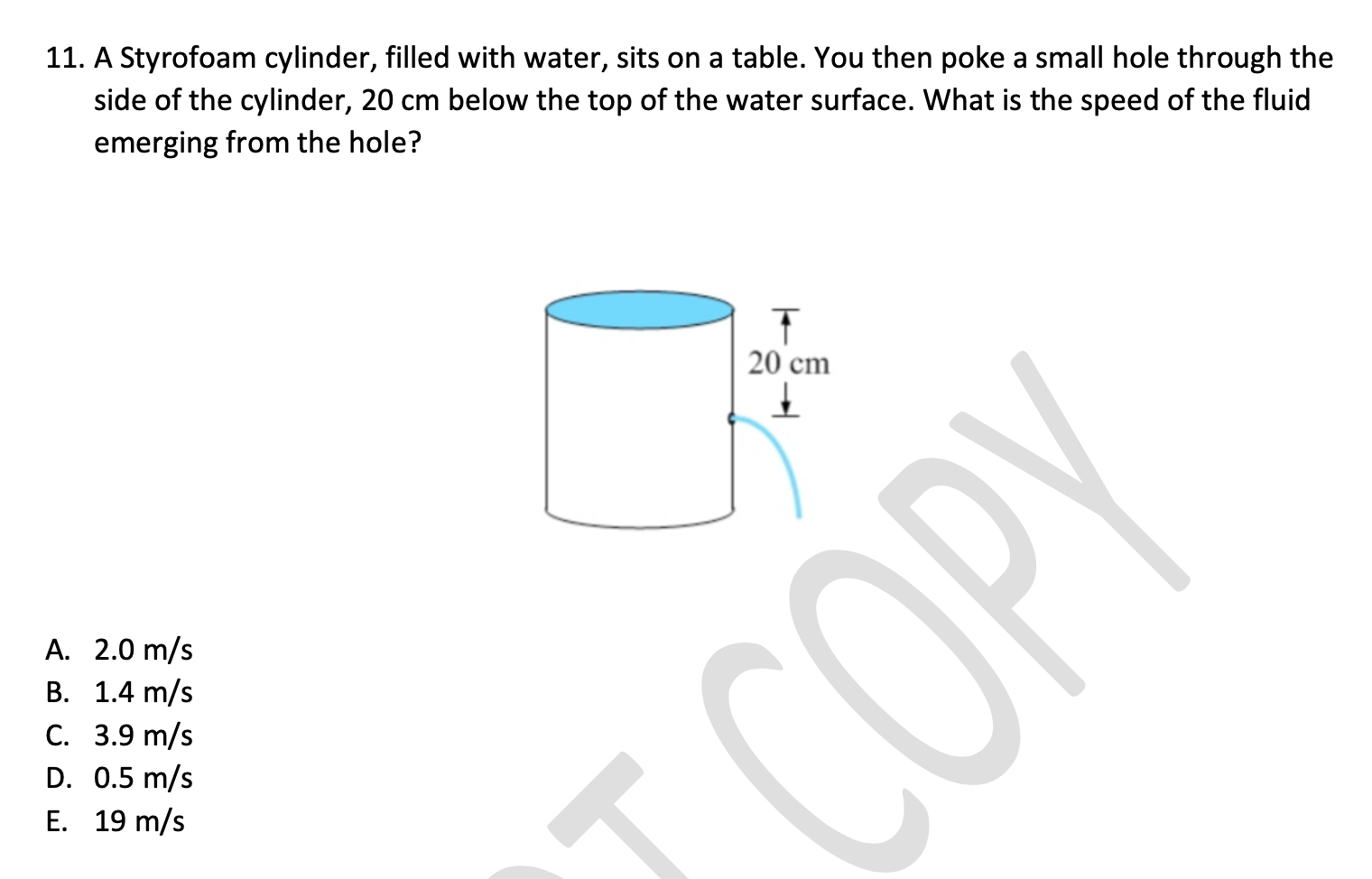
A
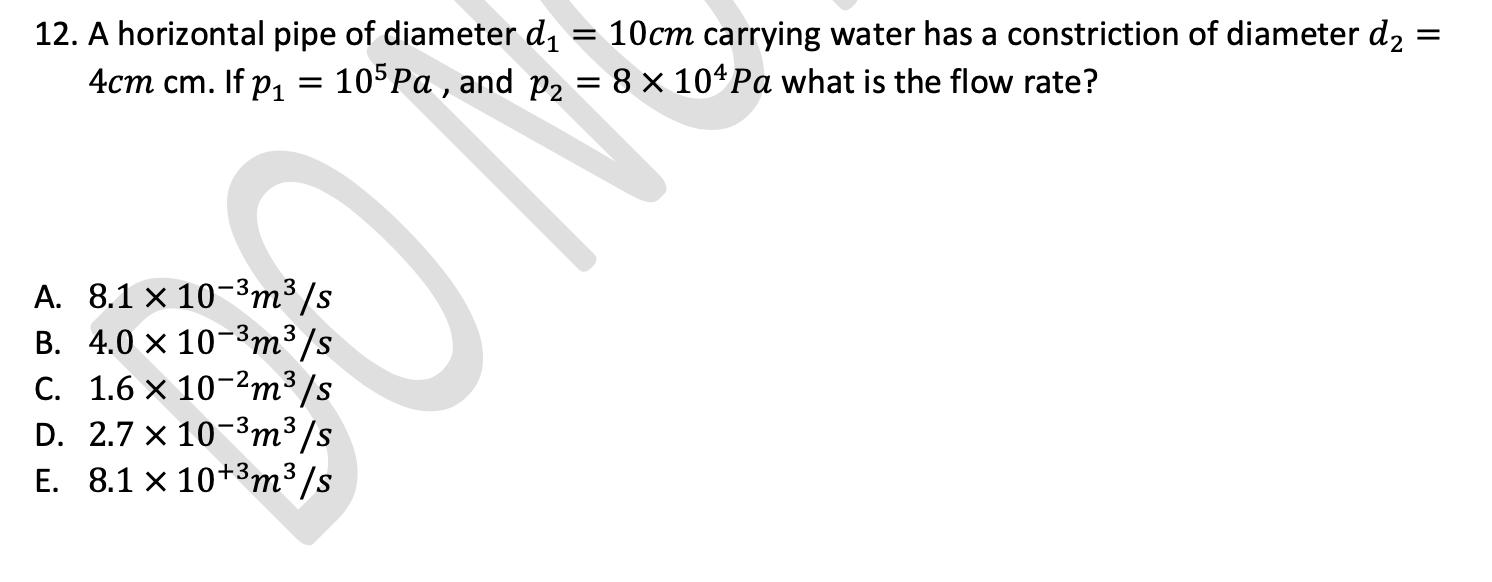
A
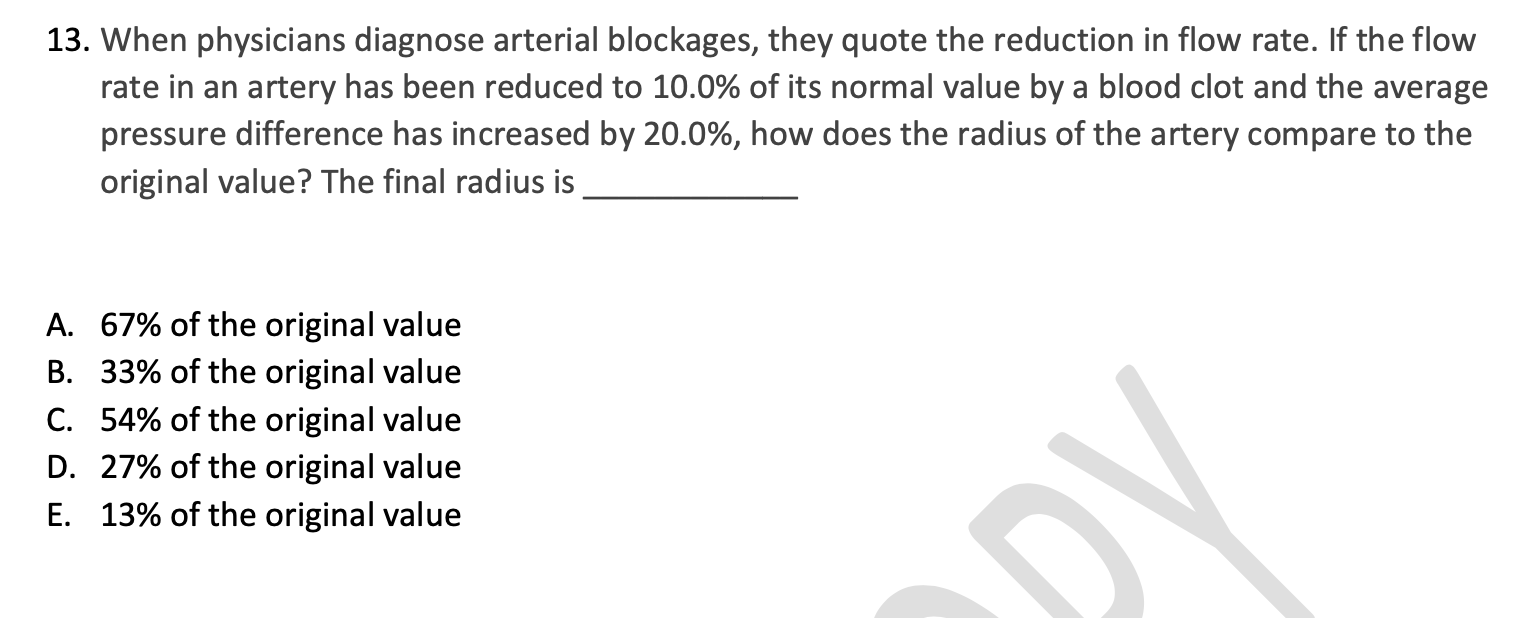
C
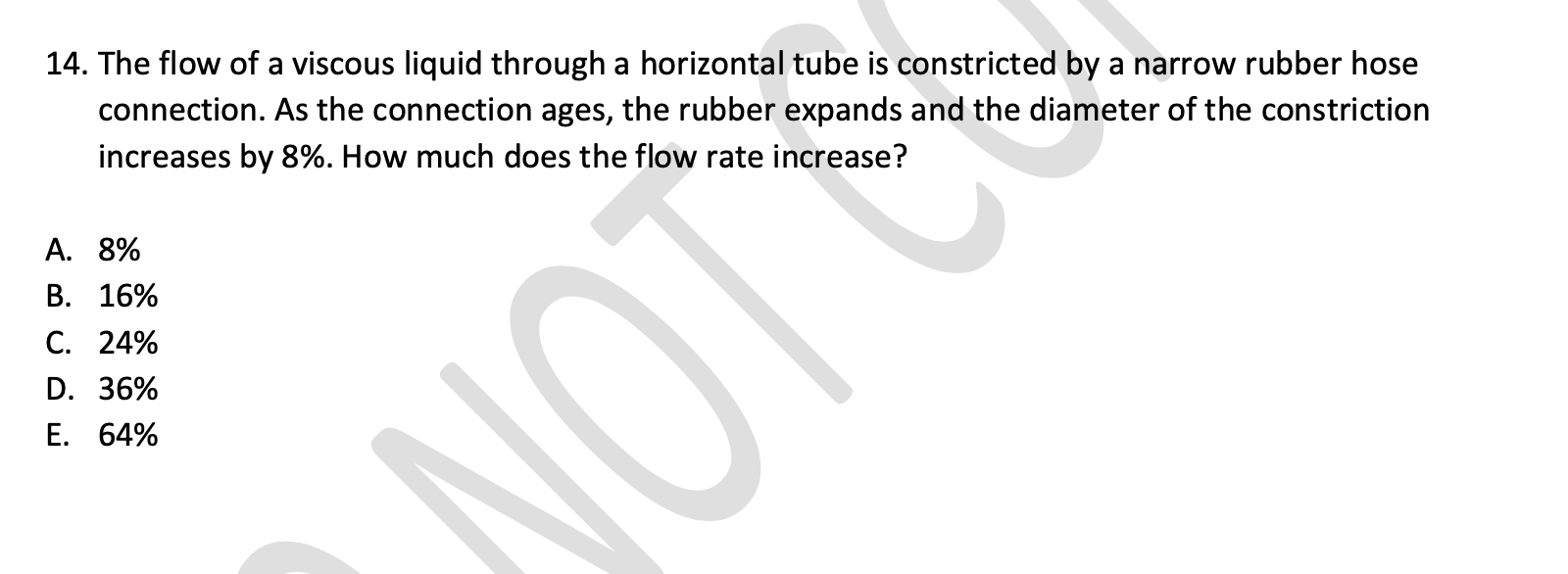
D
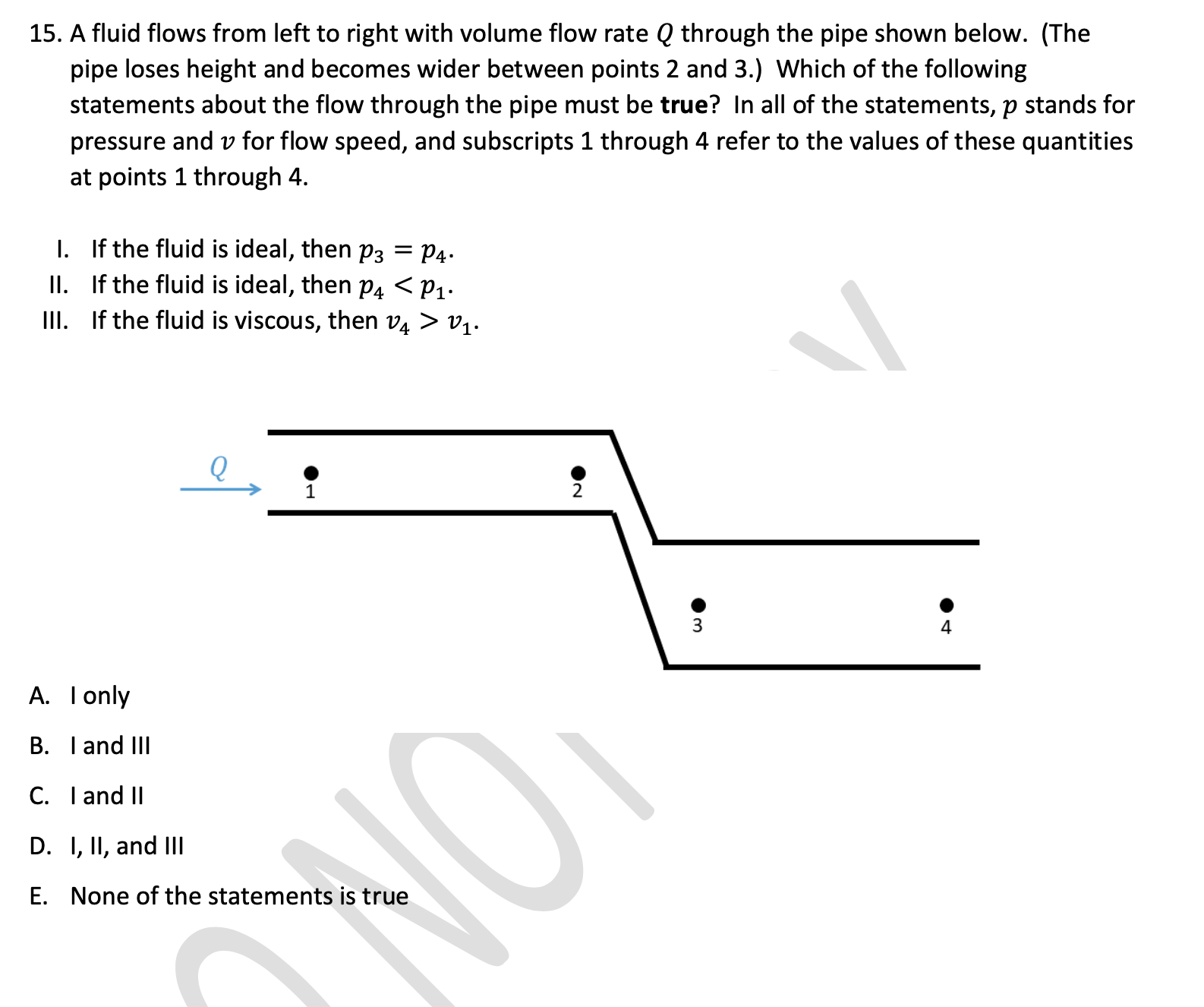
A
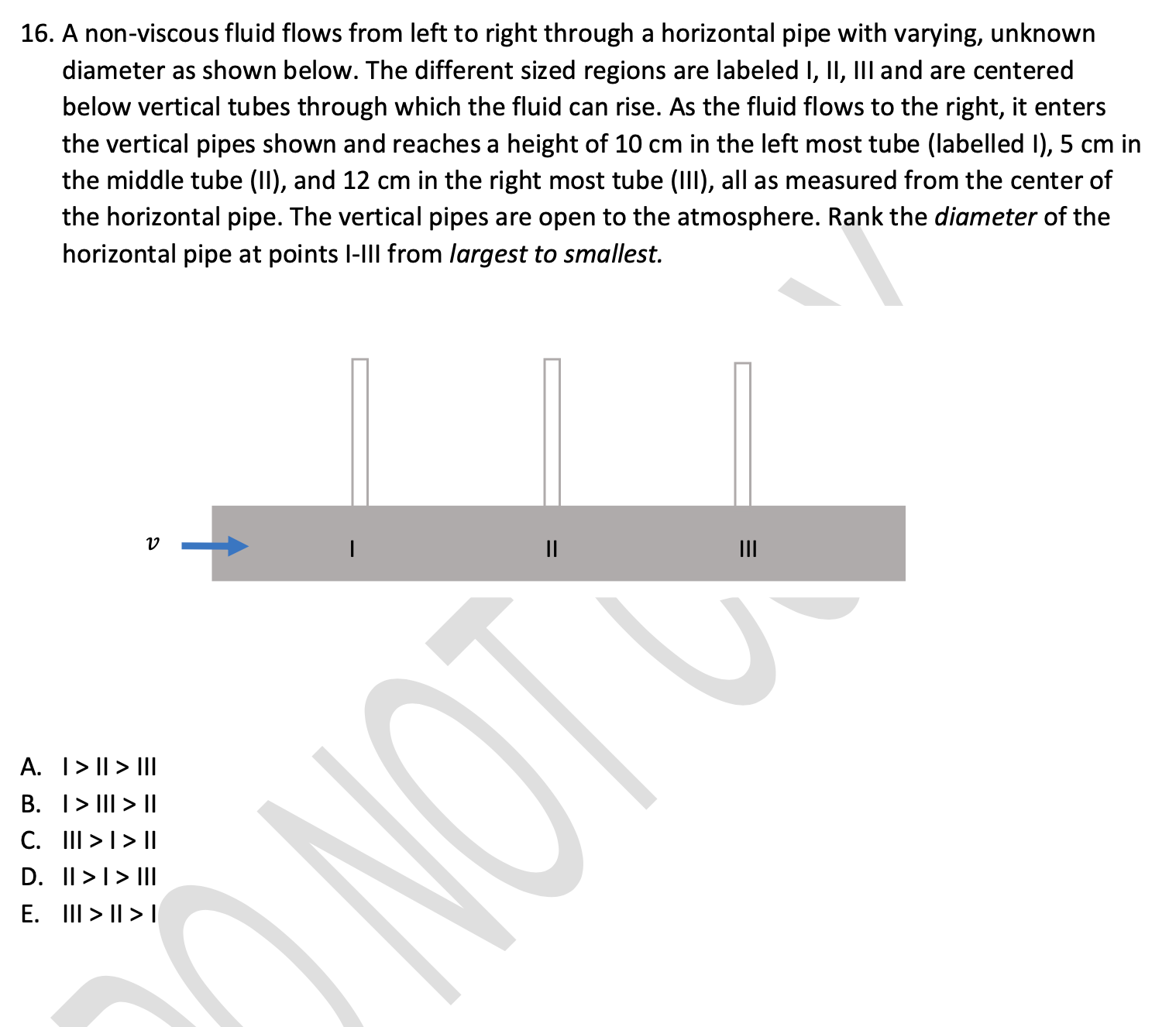
C
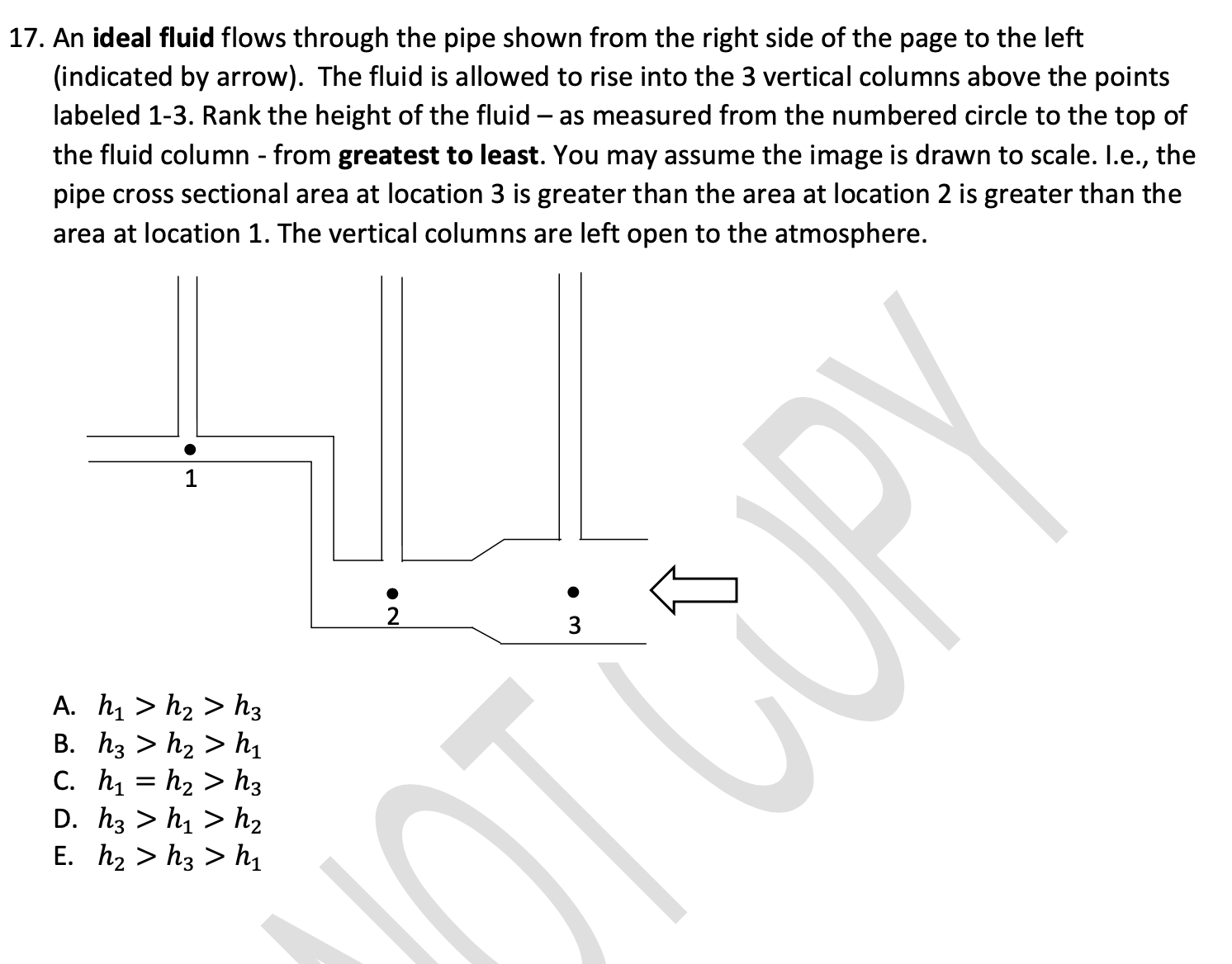
B
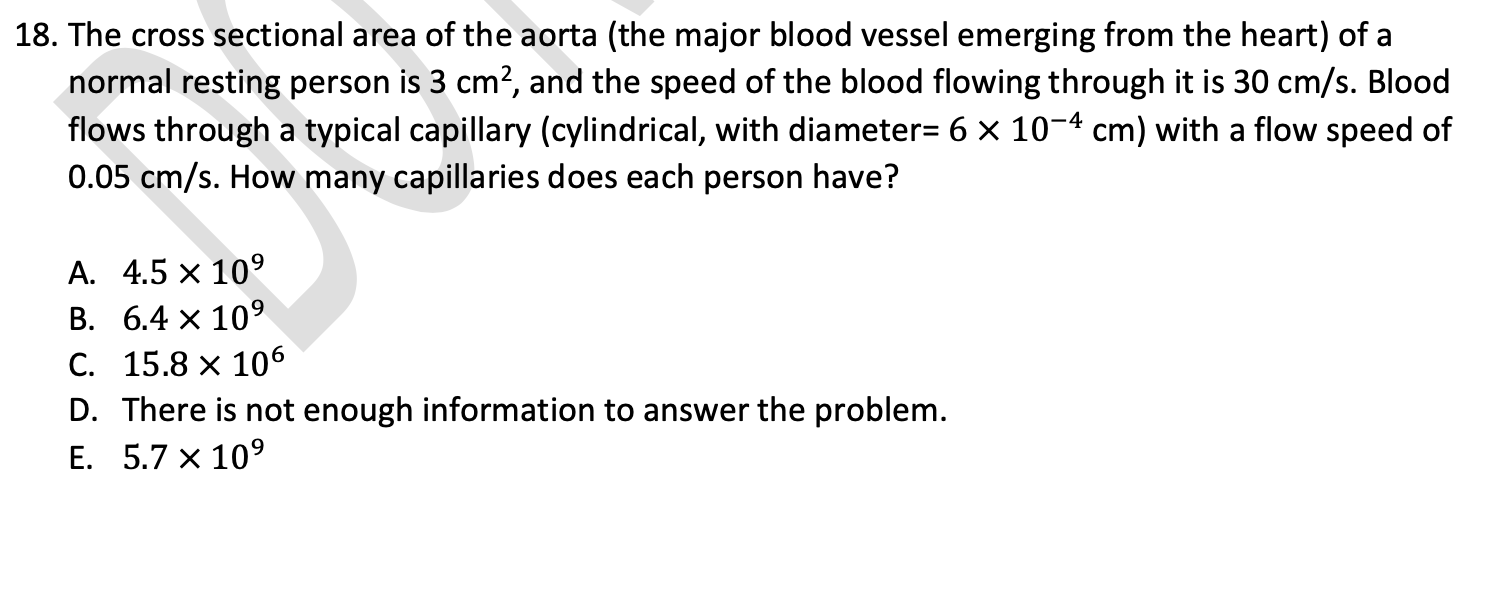
B
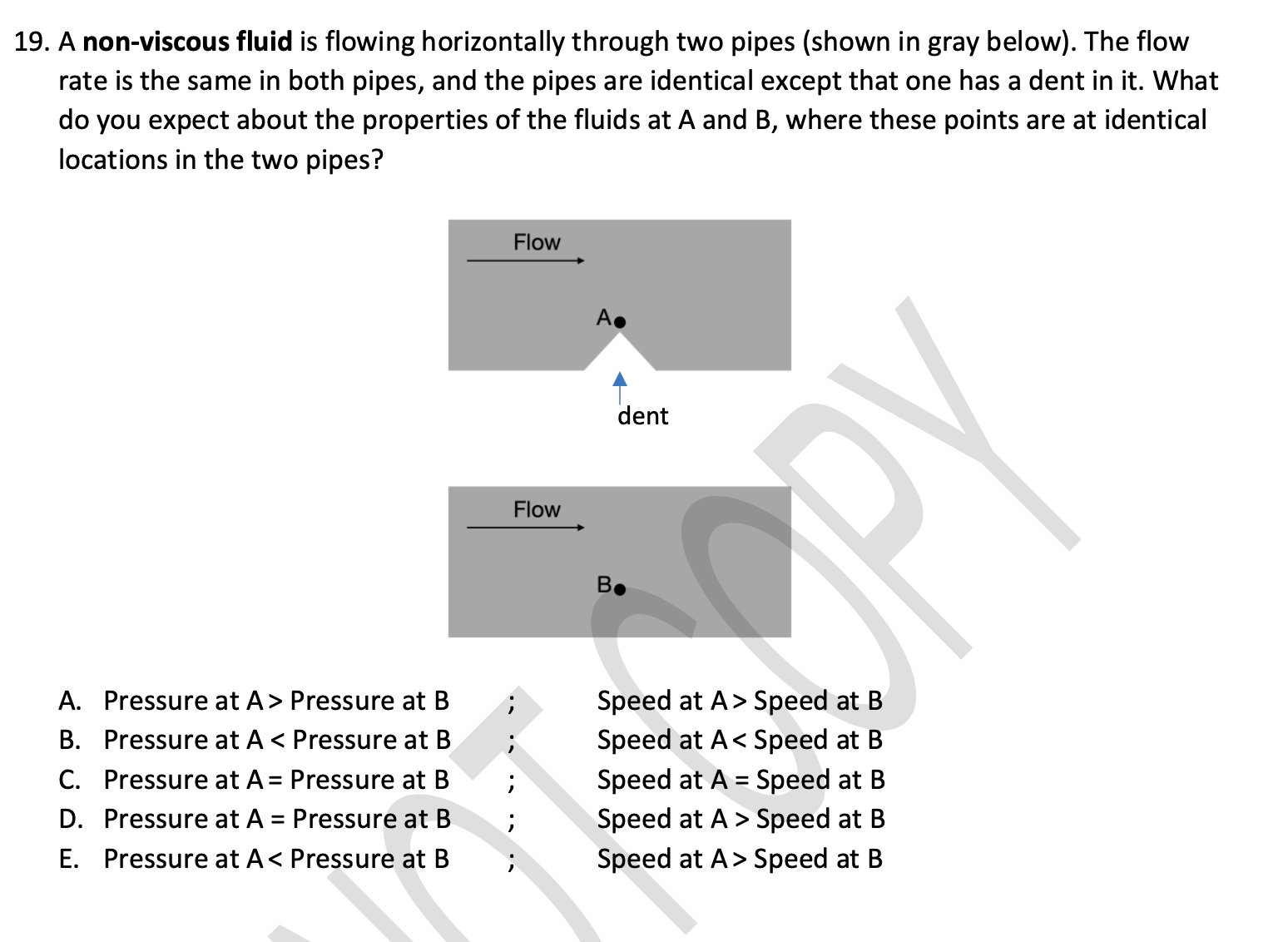
E
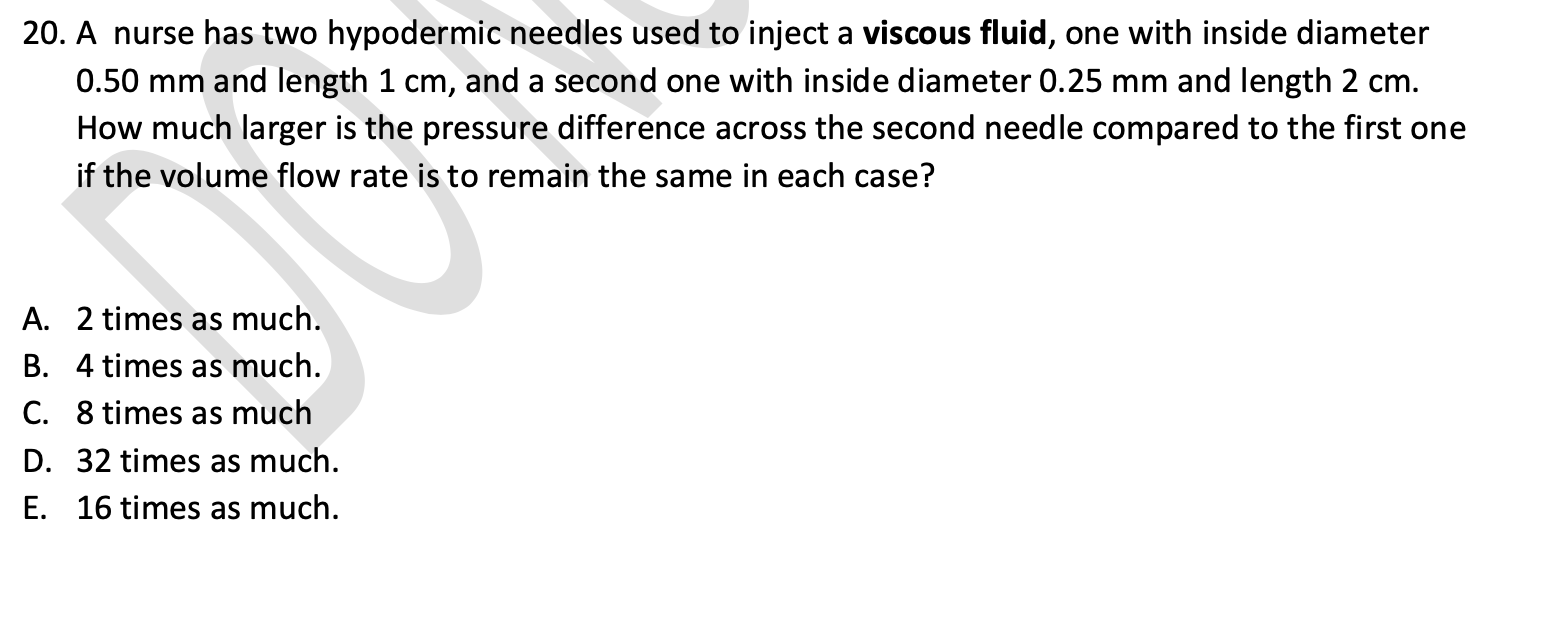
D
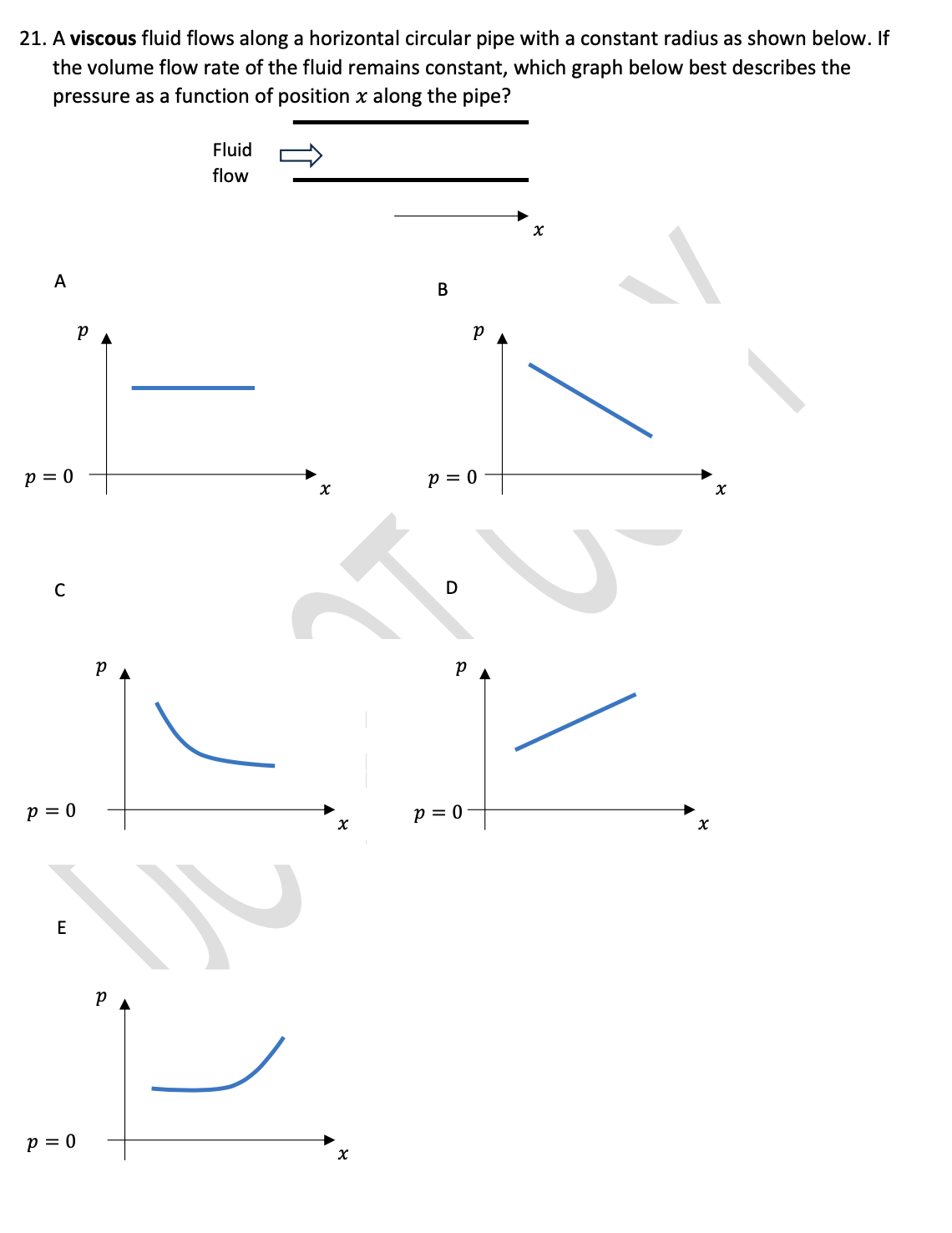
B
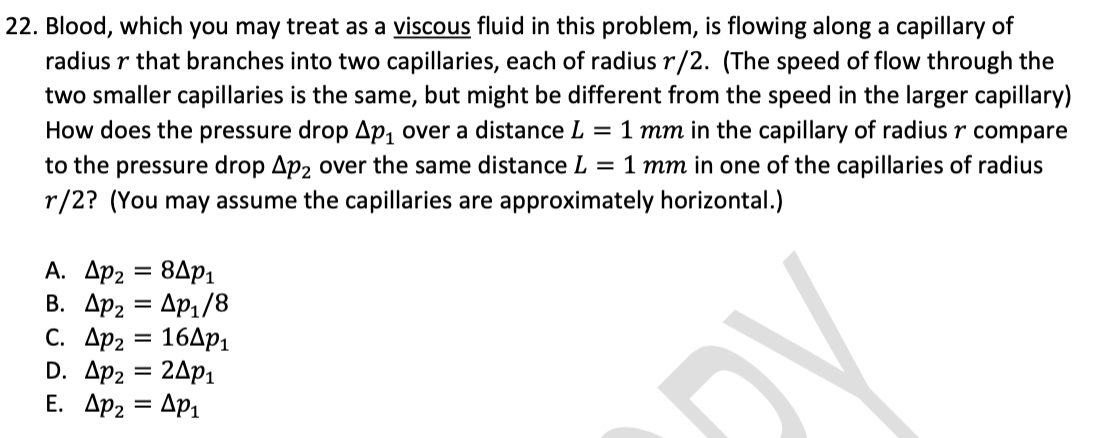
A
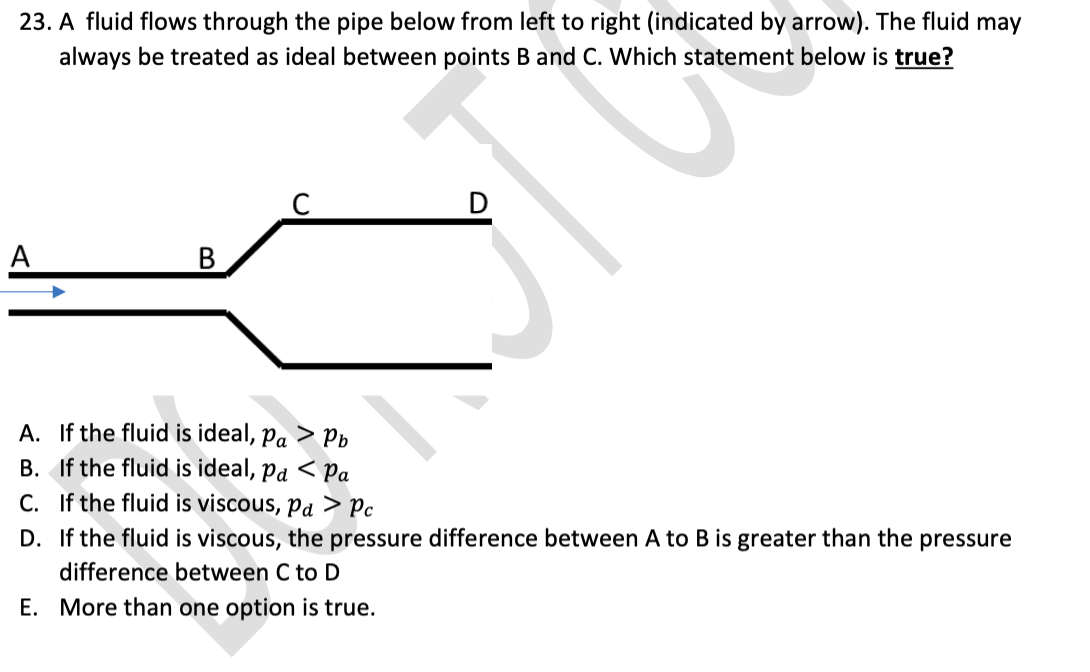
D
What does viscosity measure?
Give units for viscosity:
Provide an example of a viscous fluid system:
Movement is fastest in a viscous fluid at the ________ of a tube.
In viscous fluids, we measure the ____________ of the fluid’s different speeds.
Give the equation for measuring the speed of a viscous fluid:
(Viscous/Ideal) fluids require a pressure gradient to maintain a constant flow speed.
To maintain constant speed in this kind of fluid, the pressure needs to be higher at the (beginning/end) of the tube.
Give the equation that relates the change in pressure to the viscous drag force:
What is the Poiseuille-Hagan equation used to measure? Give its equation:
When the radius of a tube increases by a factor of 2, the volume flow rate of the fluid increases by a factor of __________.
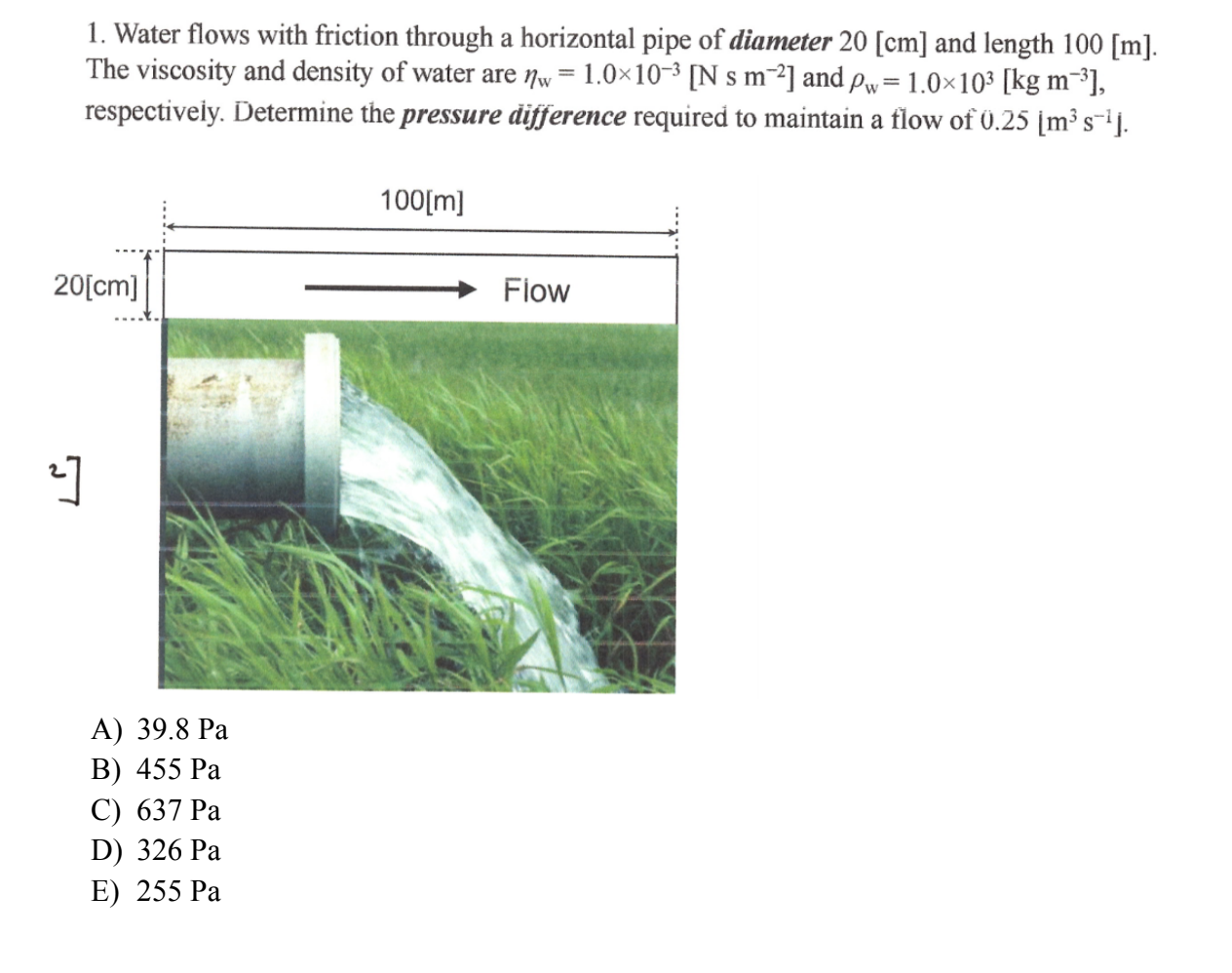
C
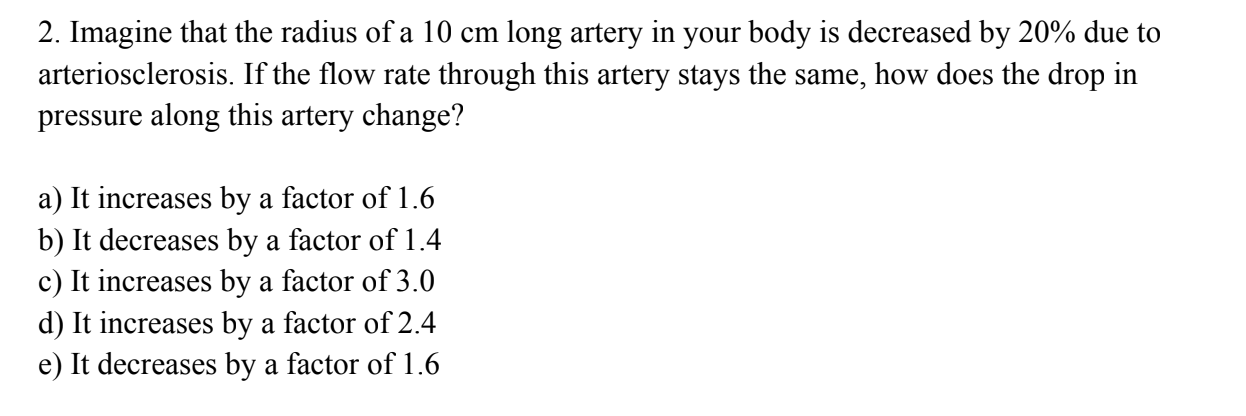
D
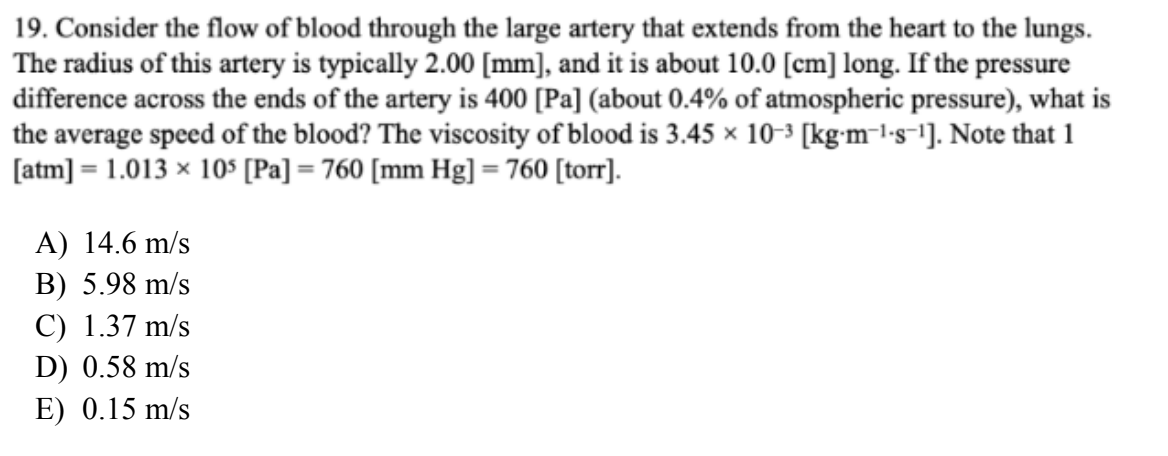
D
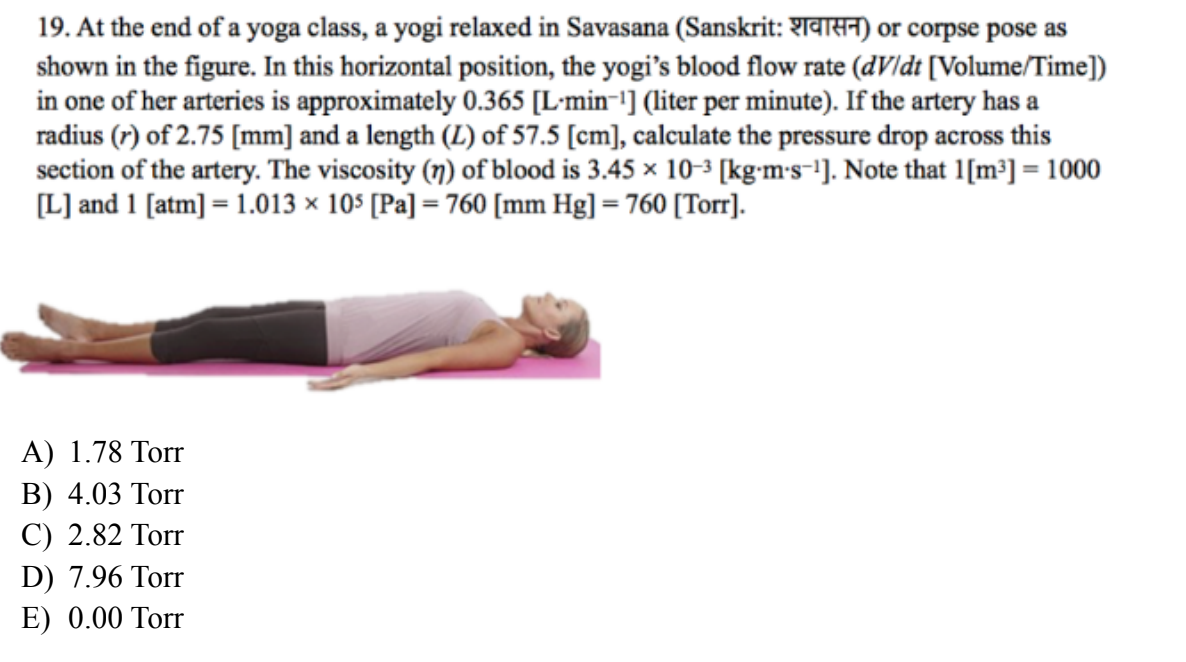
B
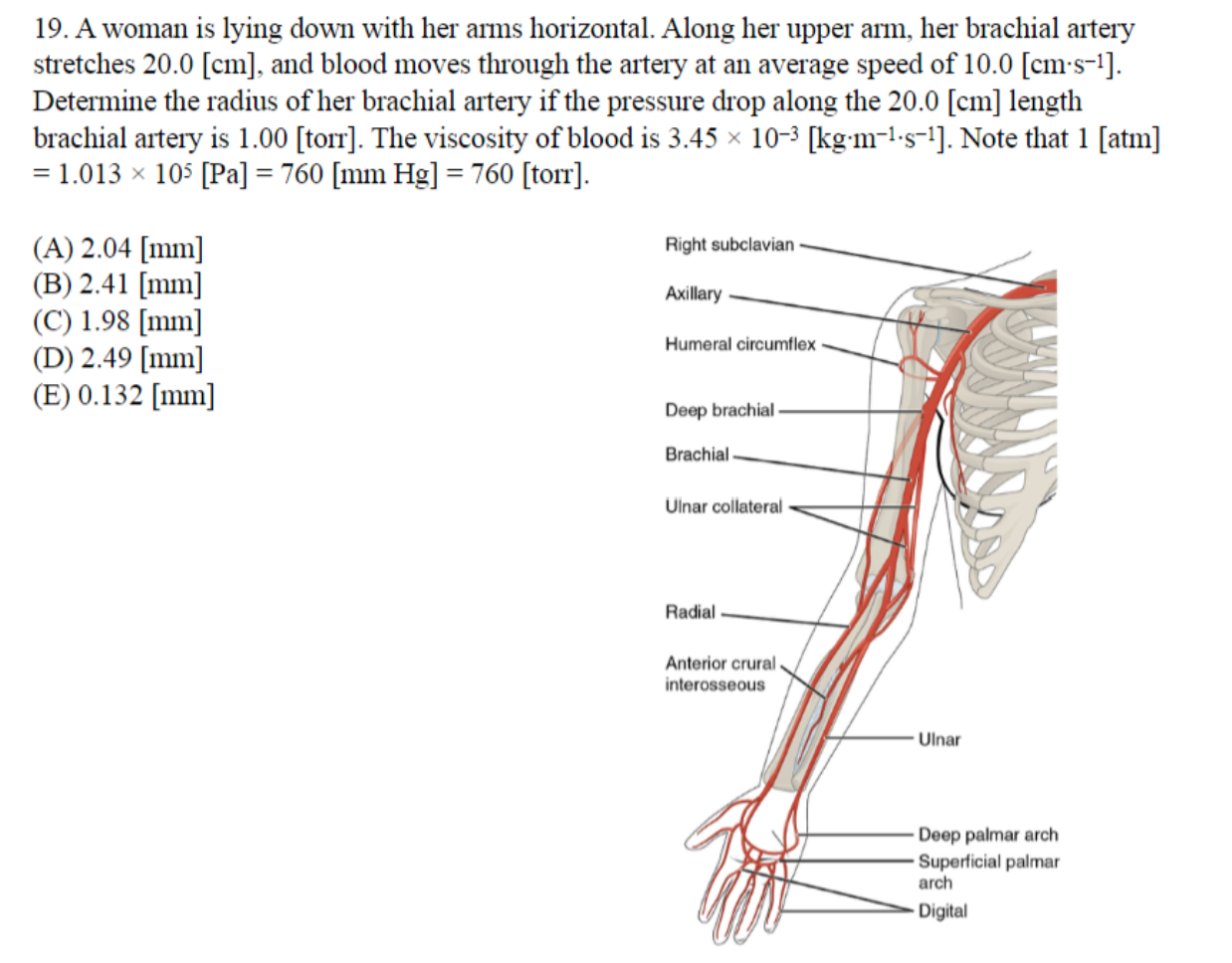
A
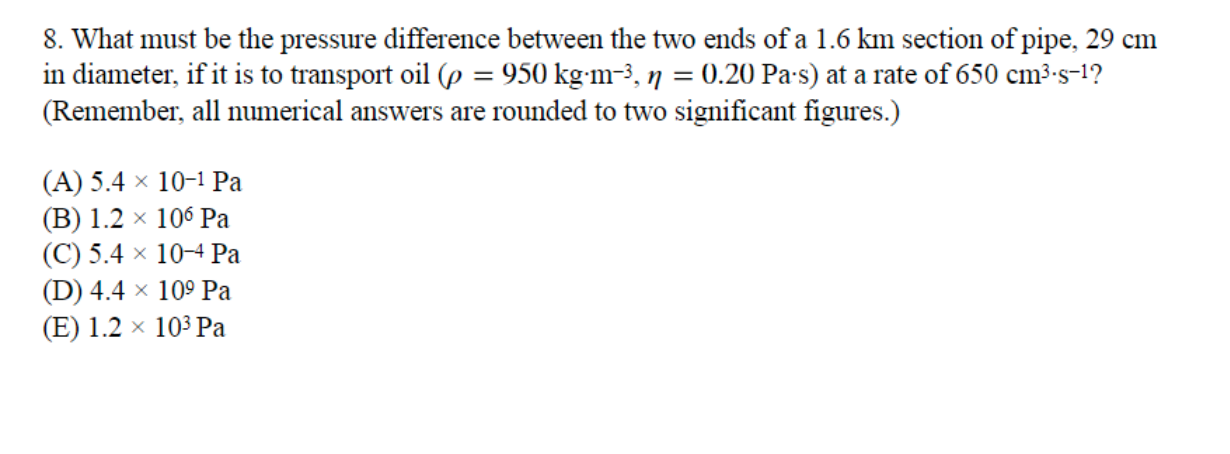
E
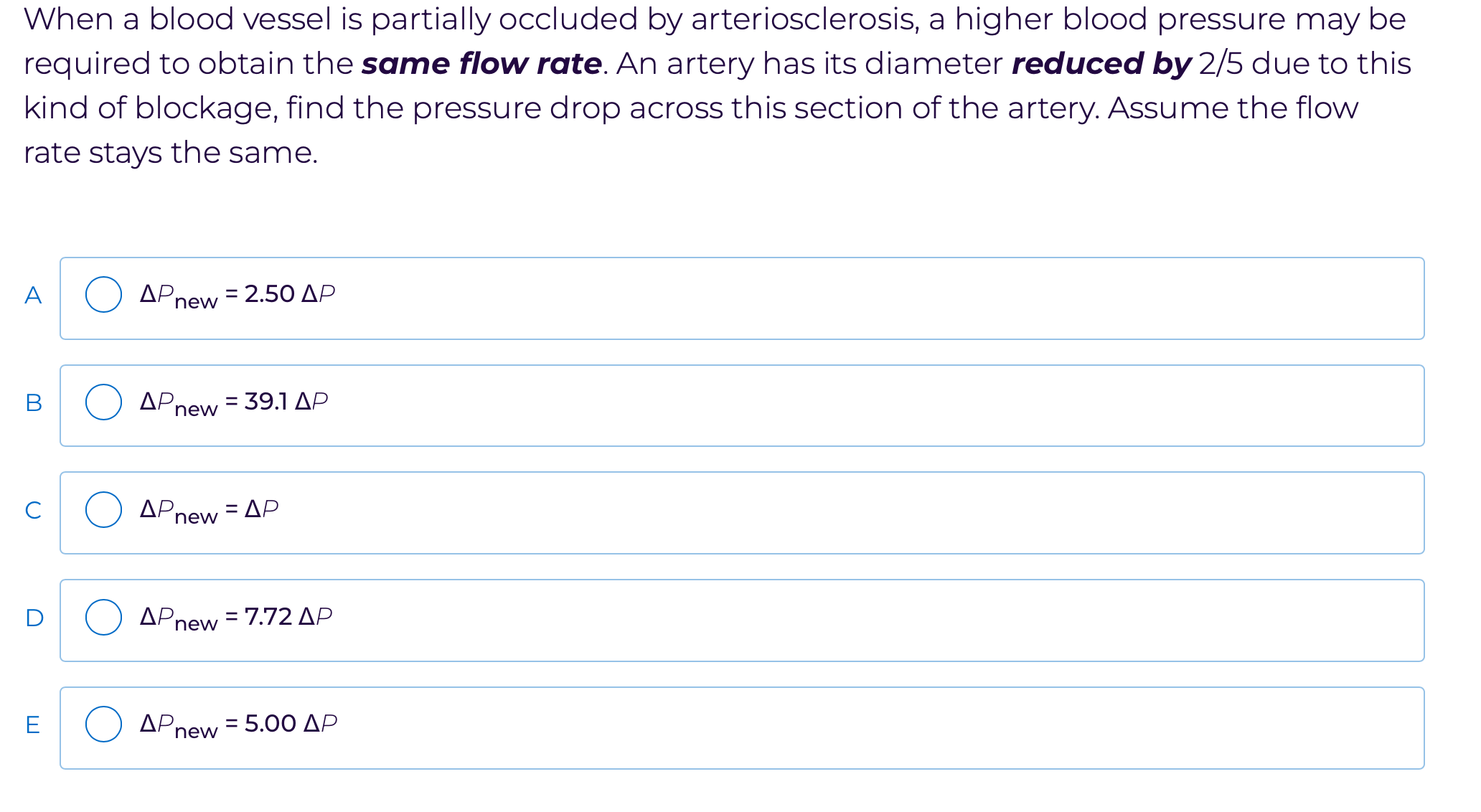
D
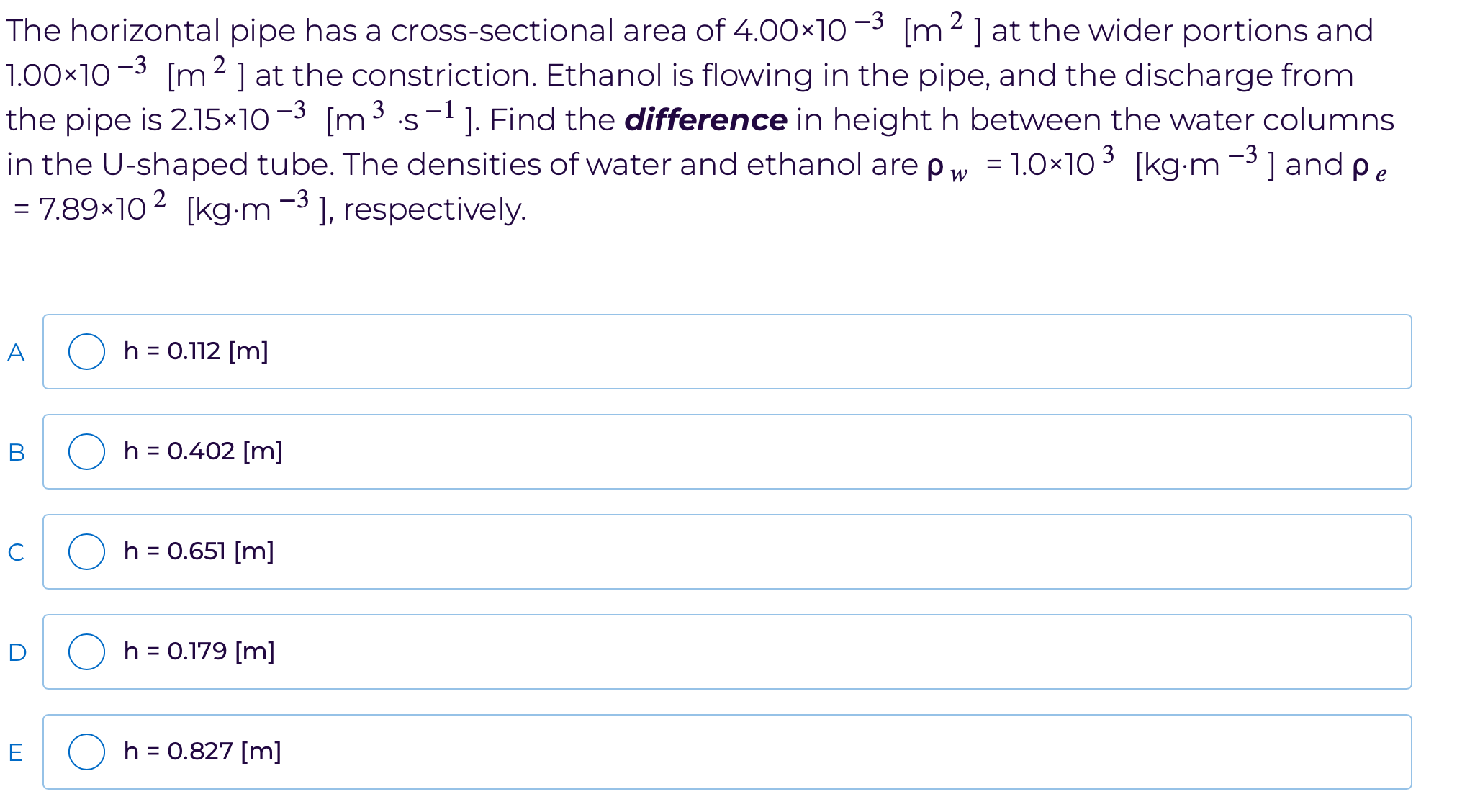
E
B
C
A
E
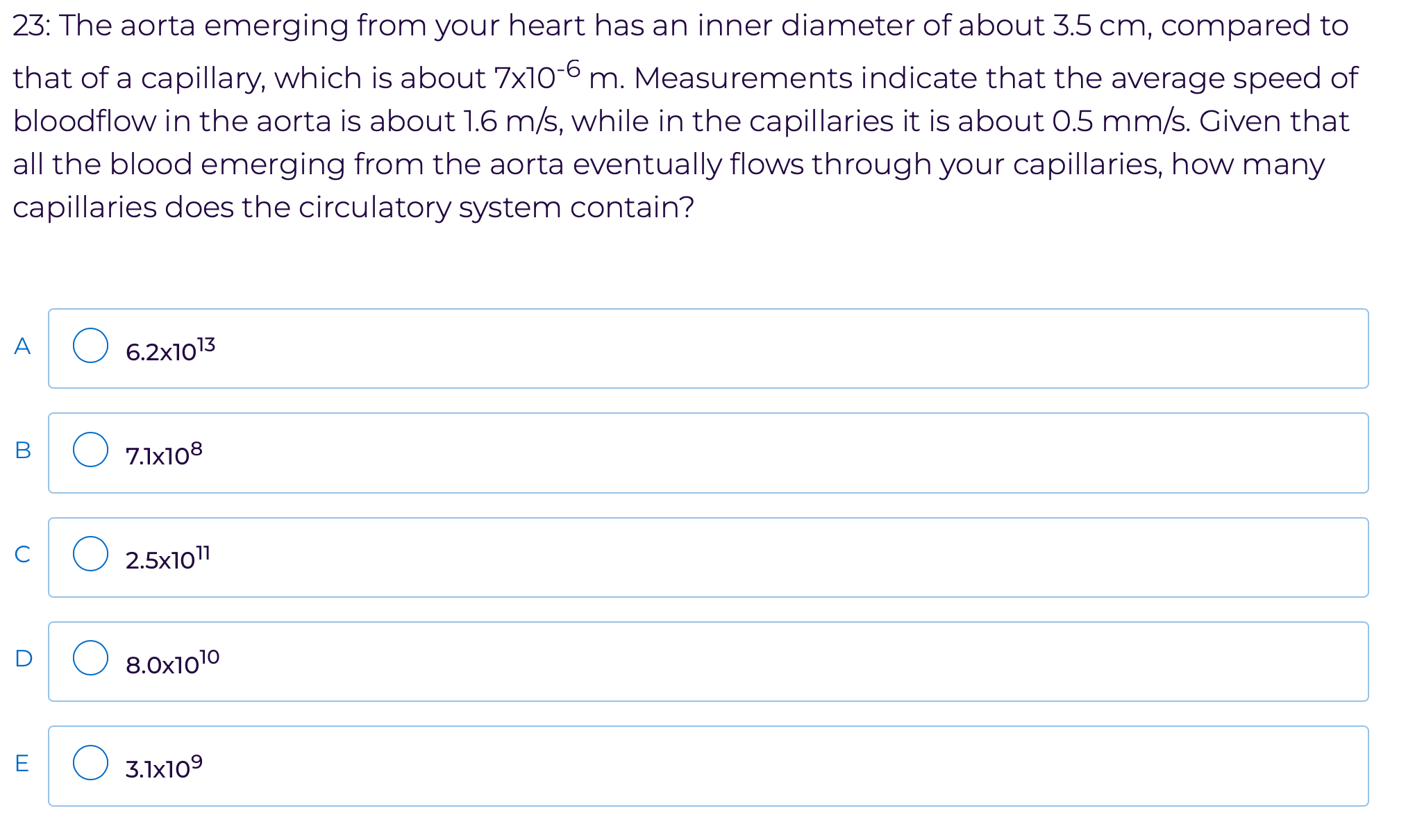
D
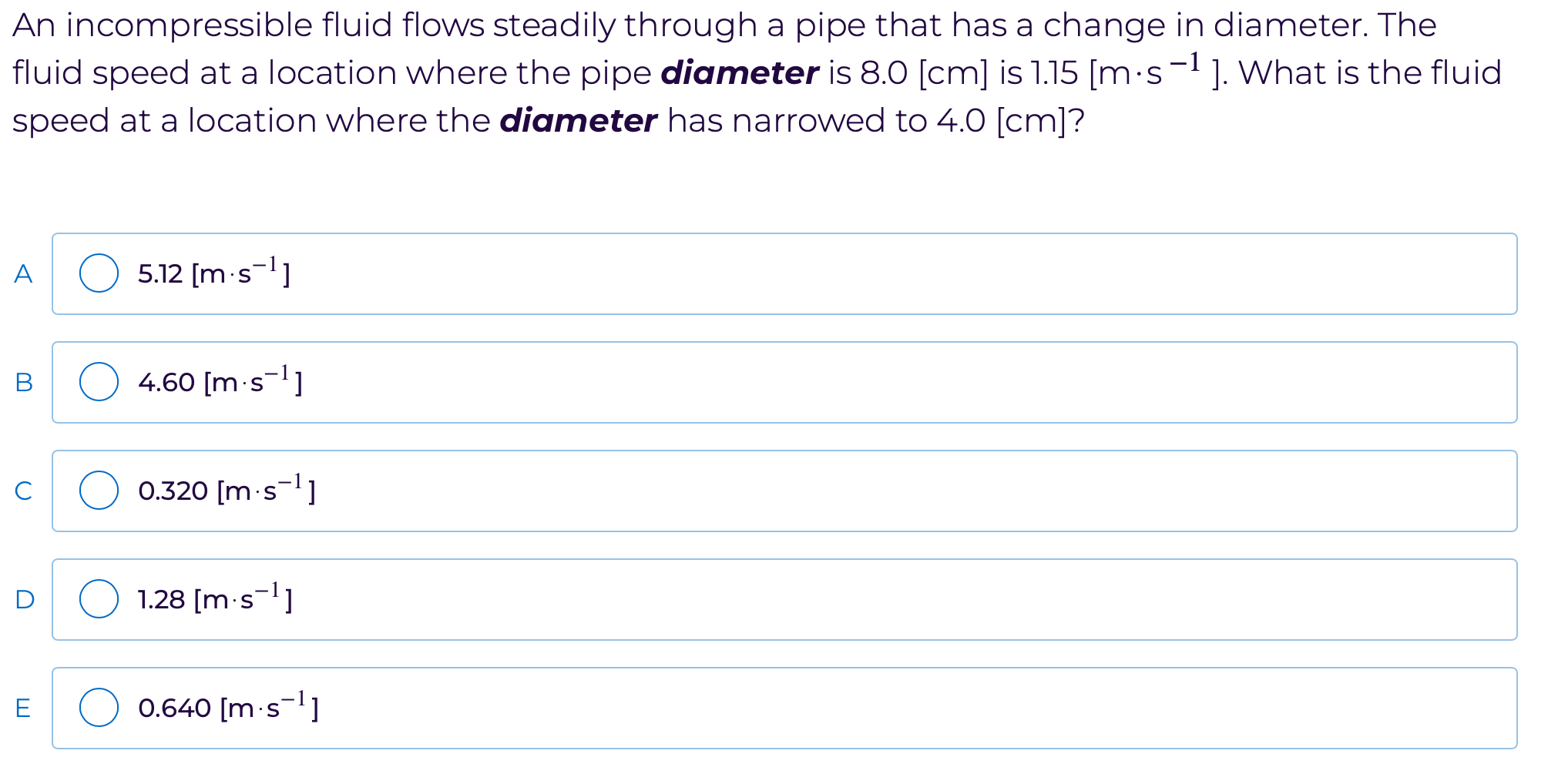
B
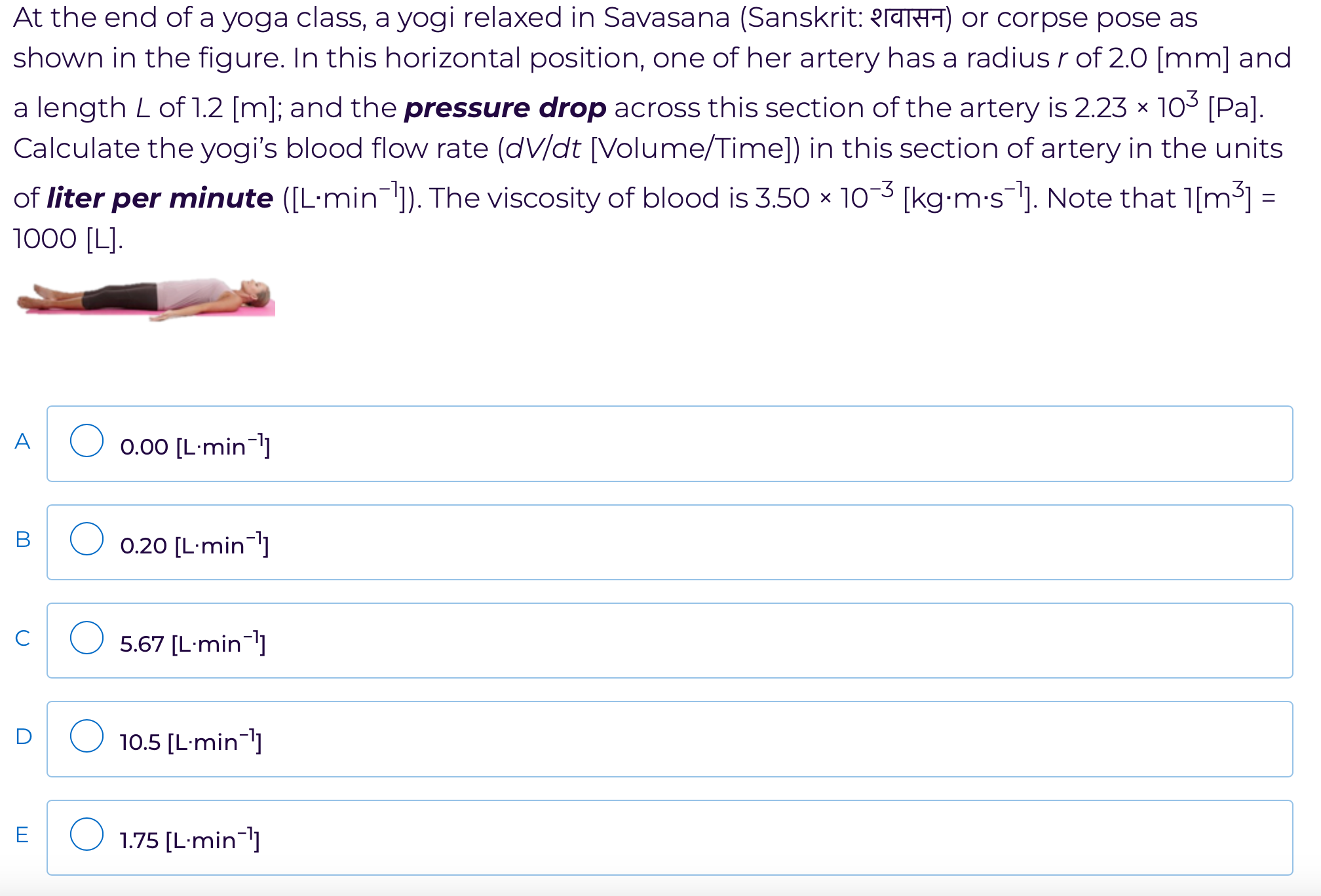
B
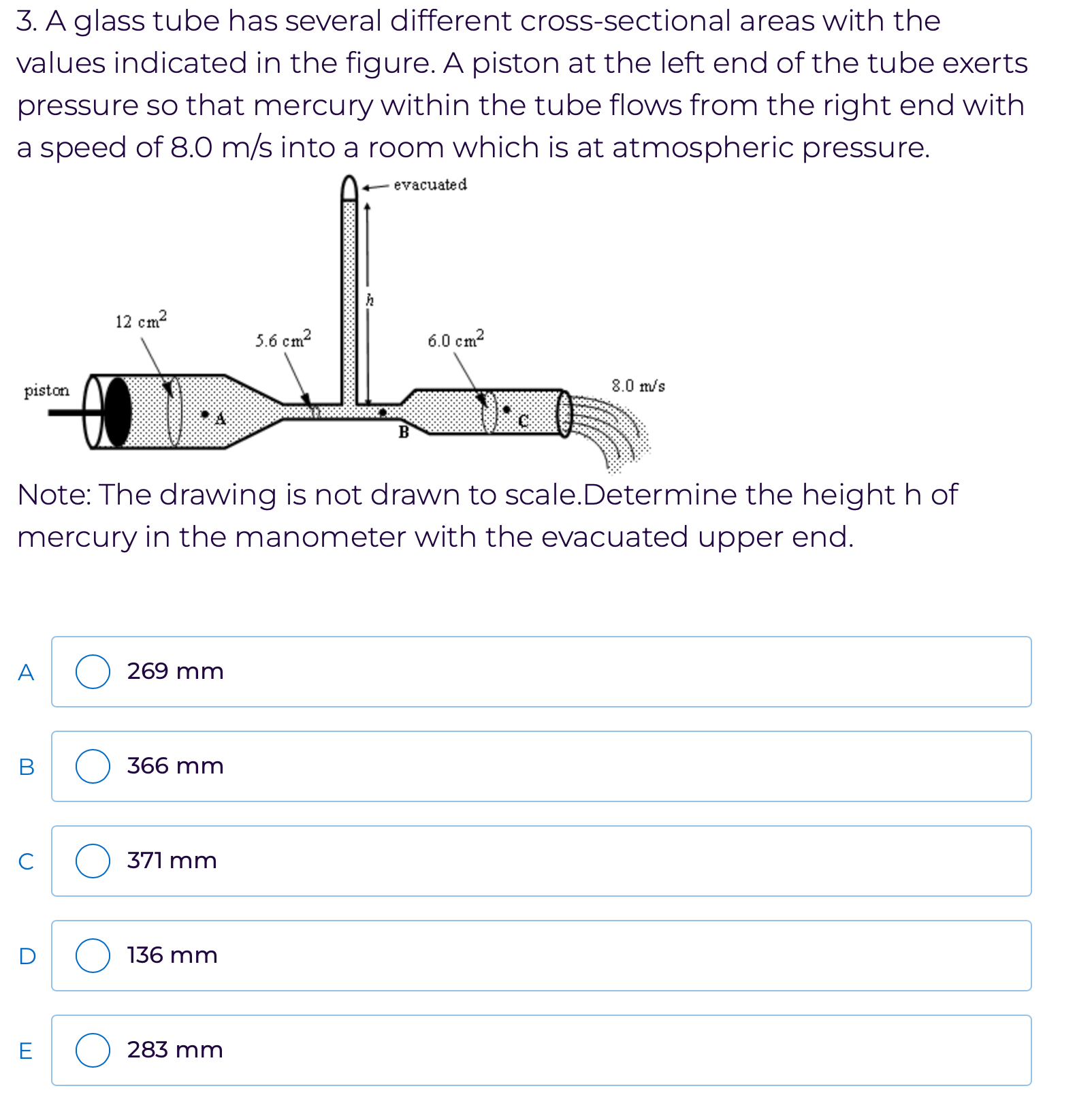
E
B
B
E
A
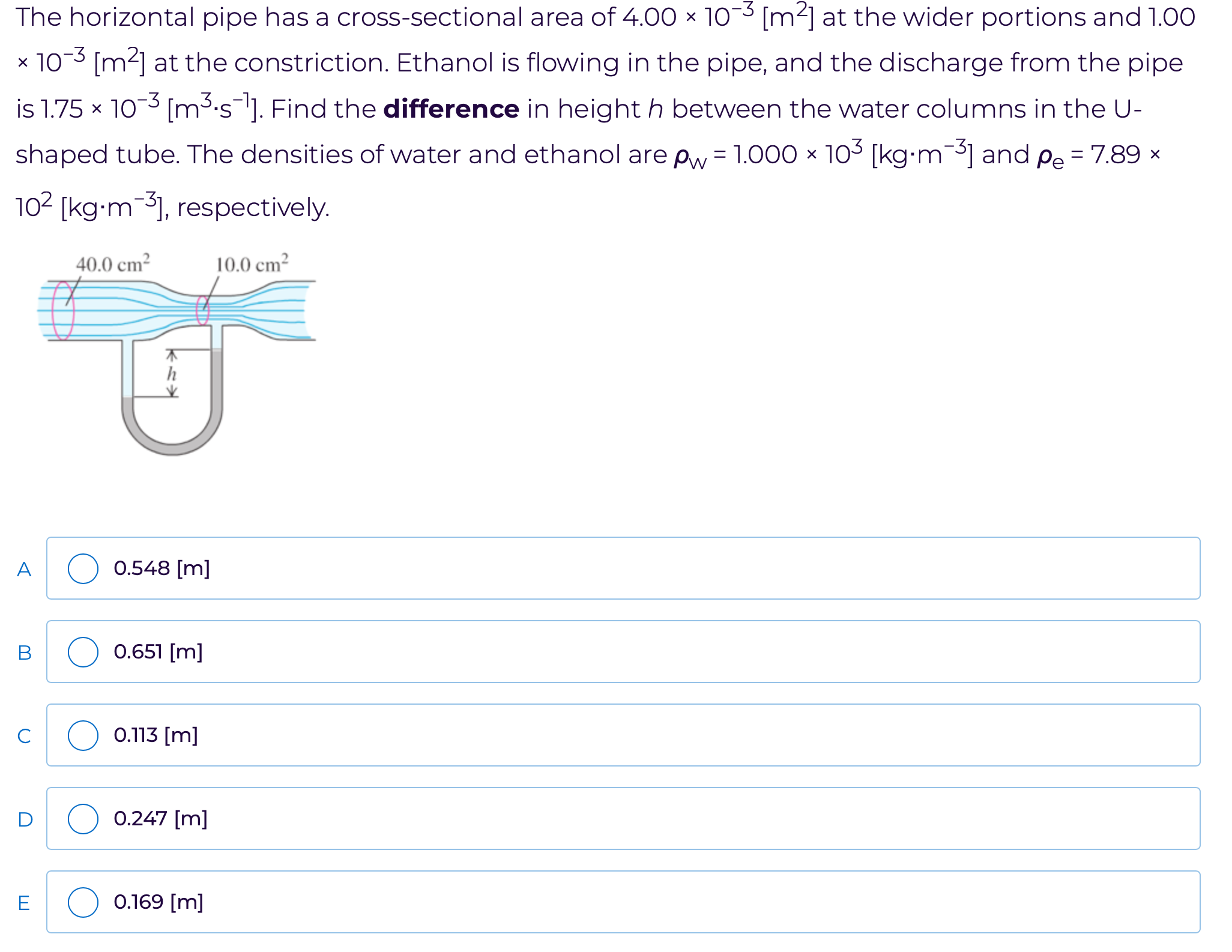
A
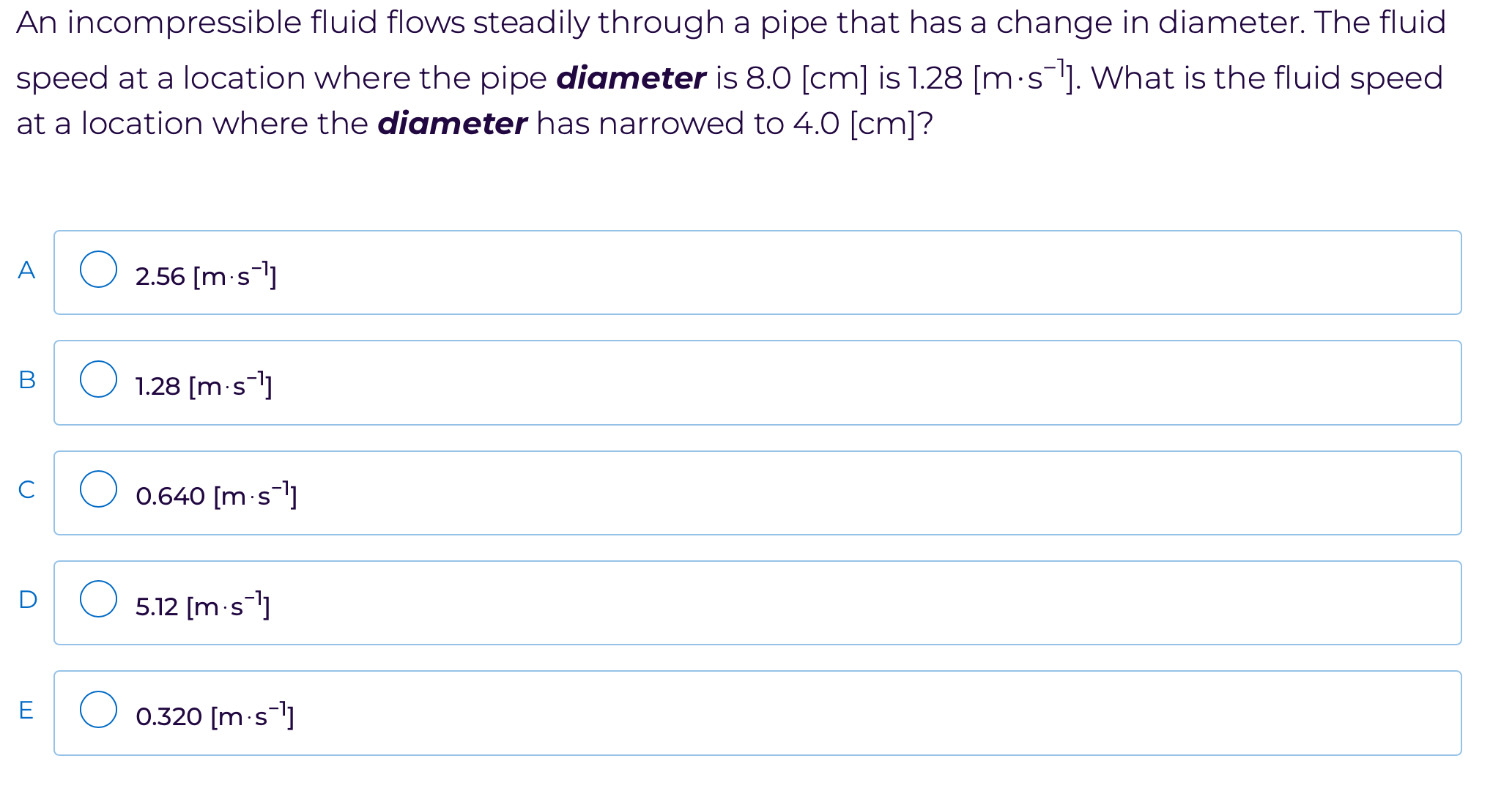
D
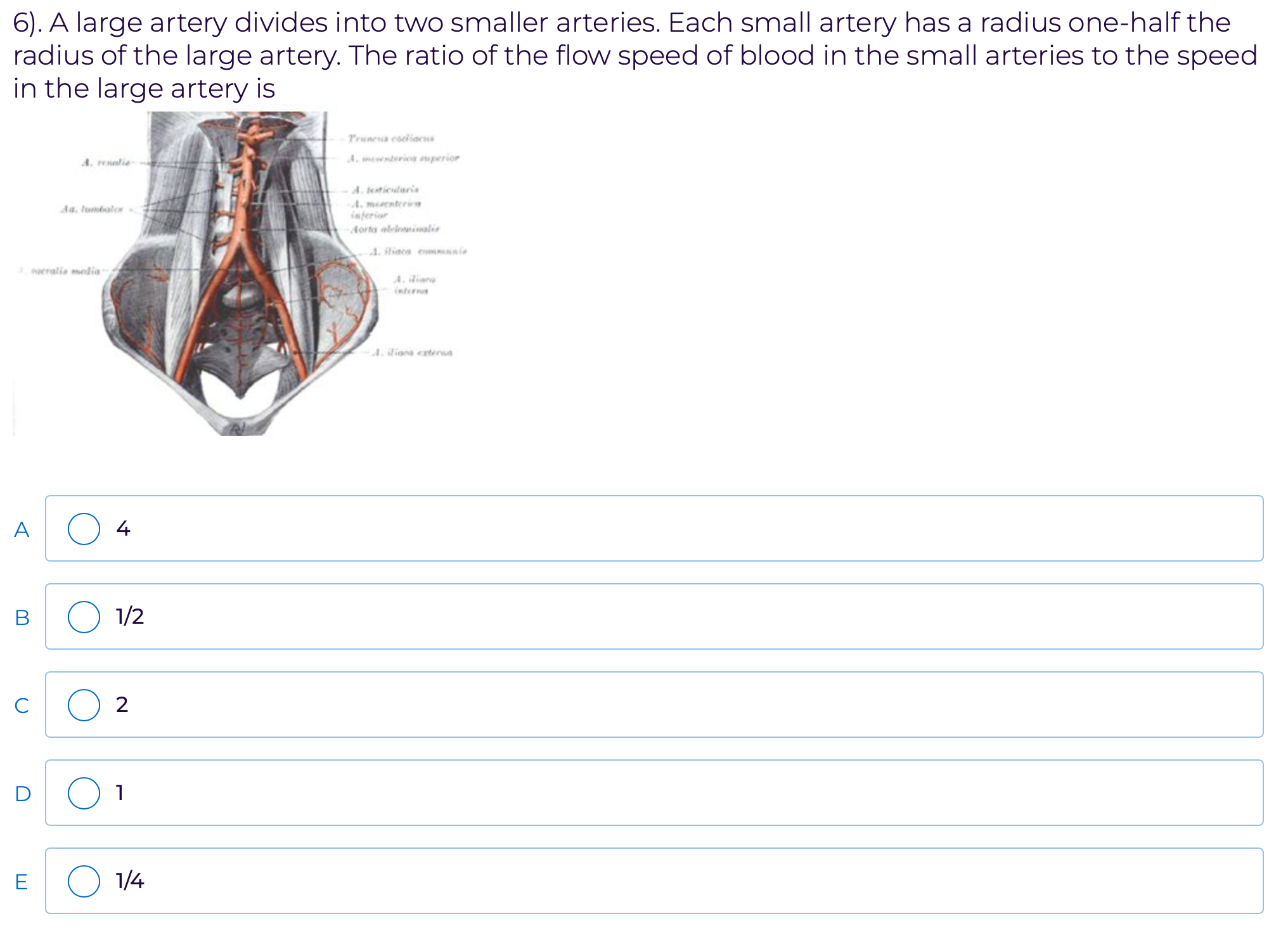
C

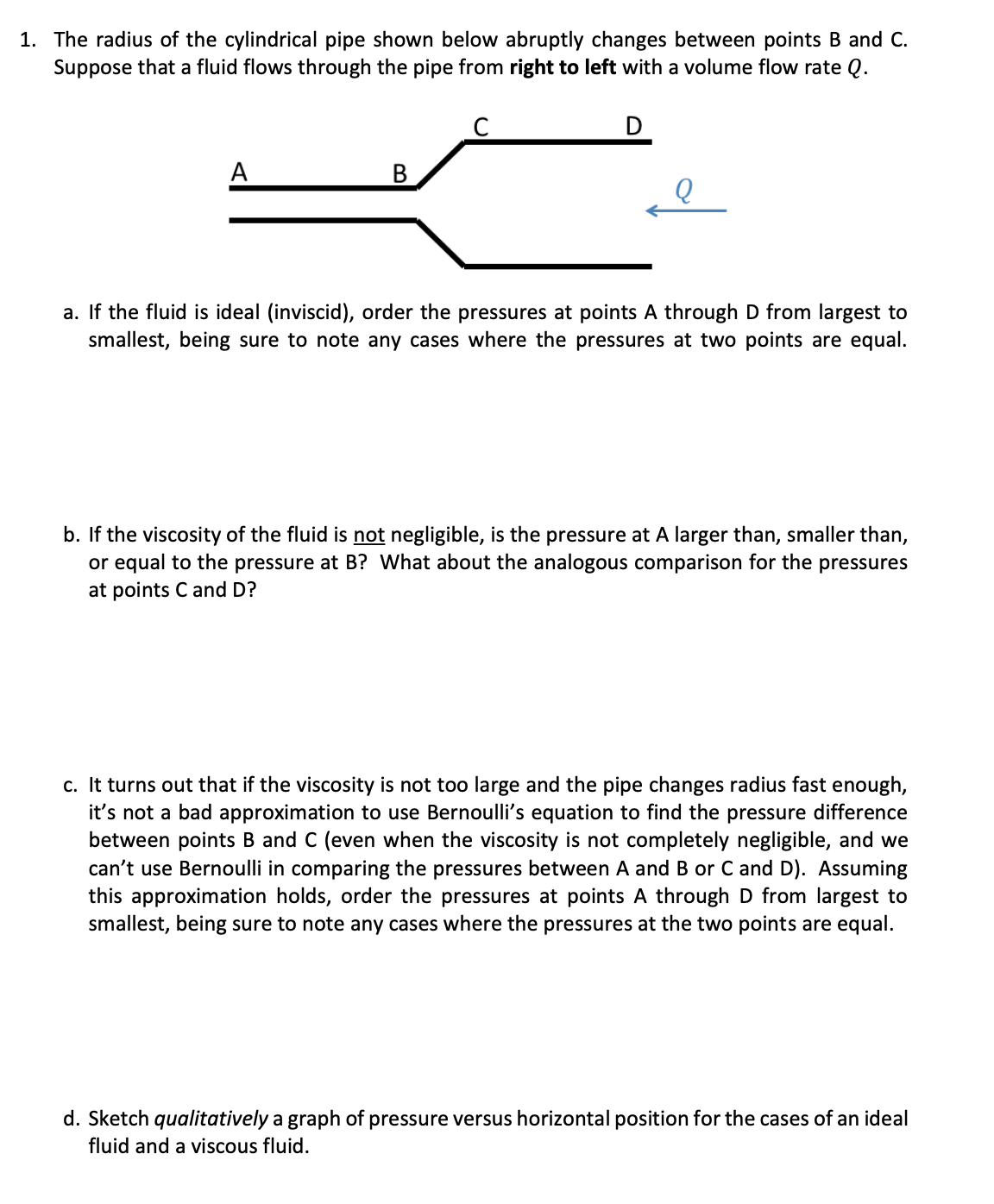
P1 > P2

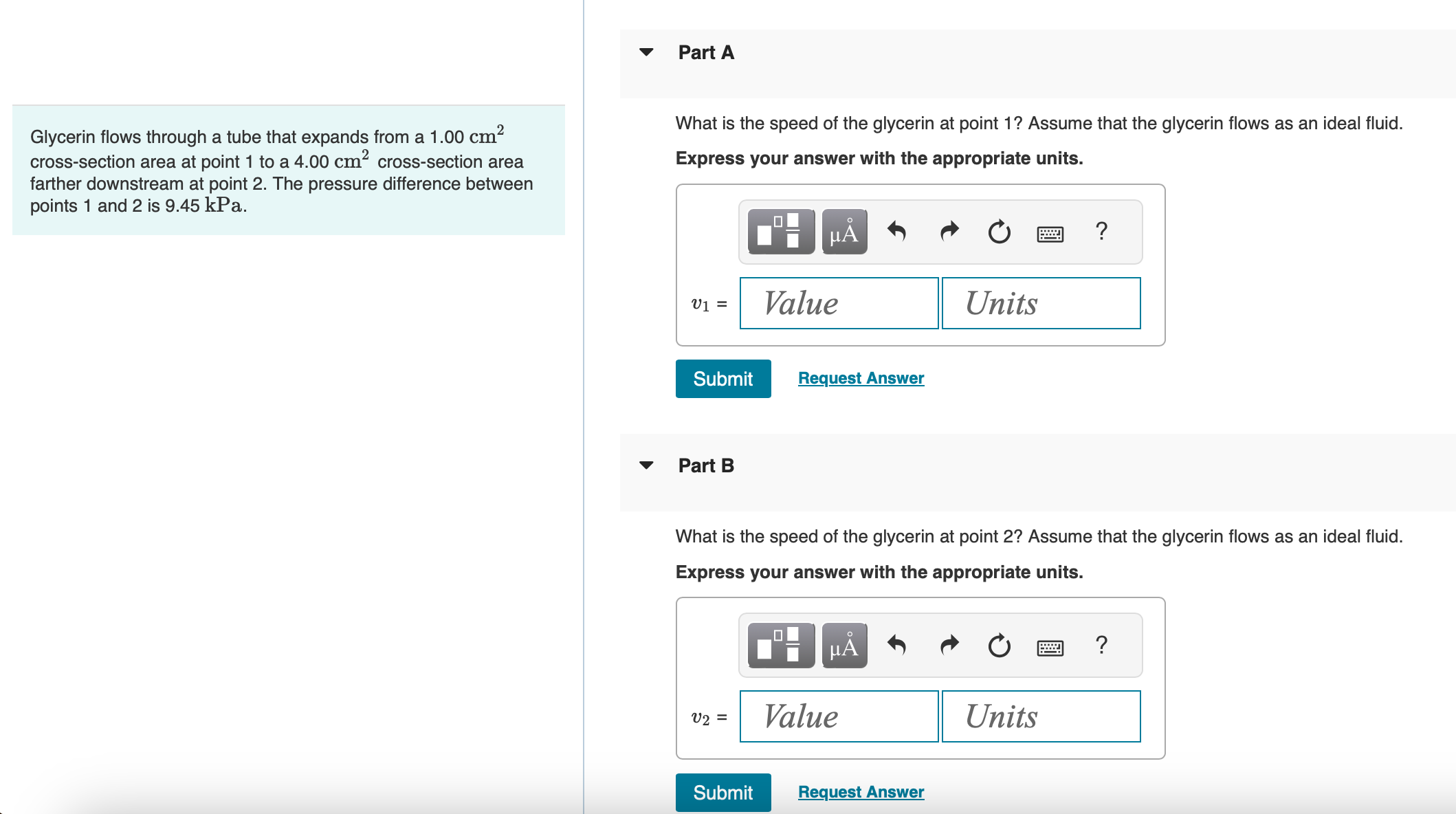
A: 4.00 m/s
B: 1.00m/s

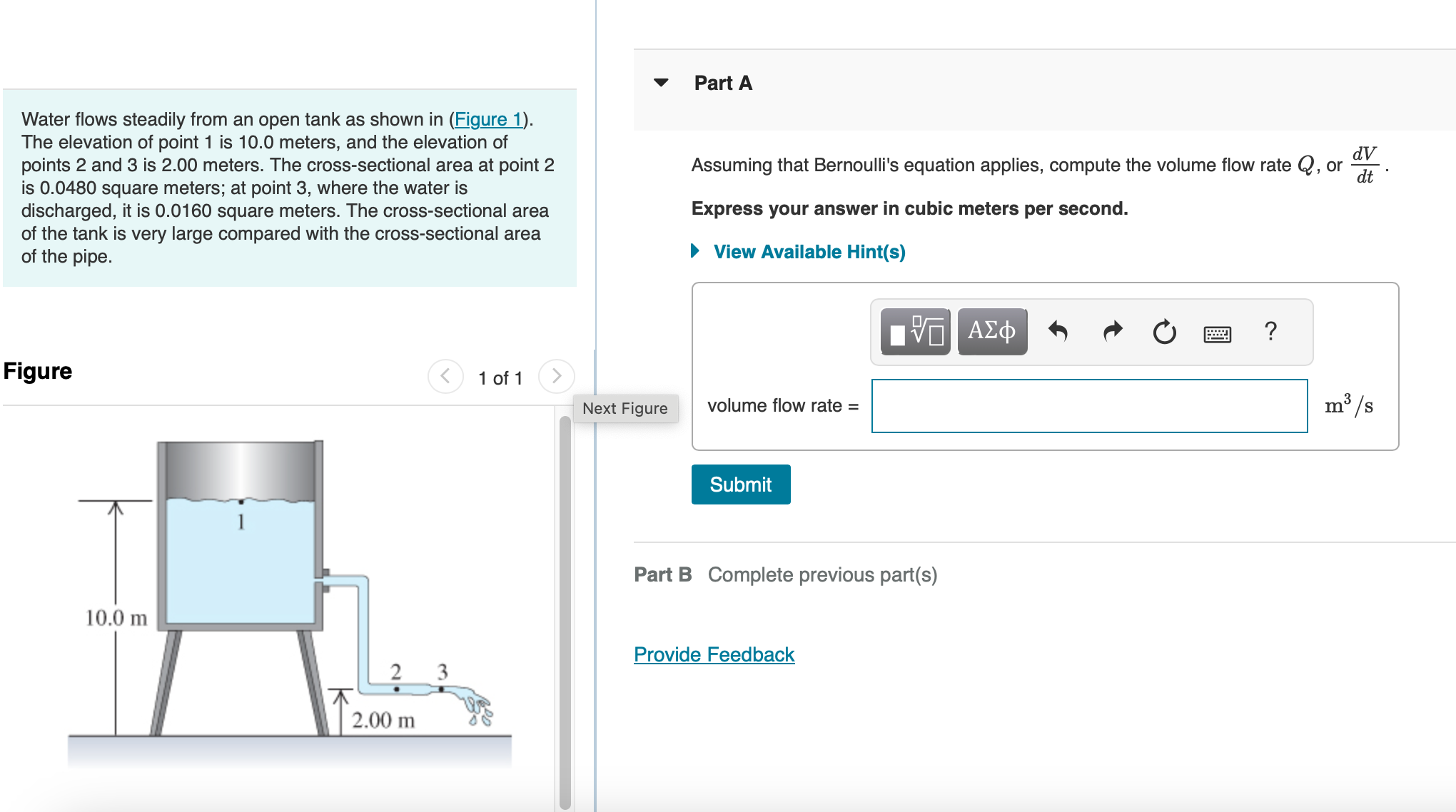
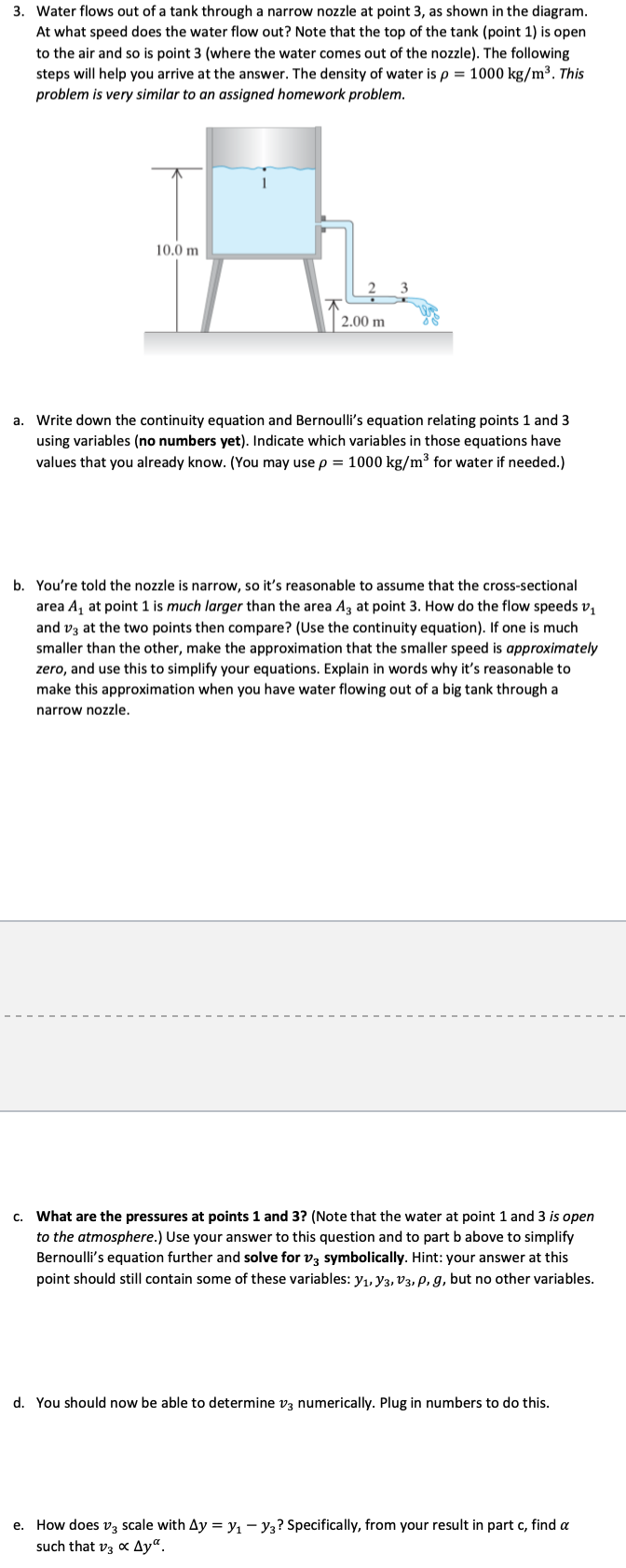
0.200 m³/s

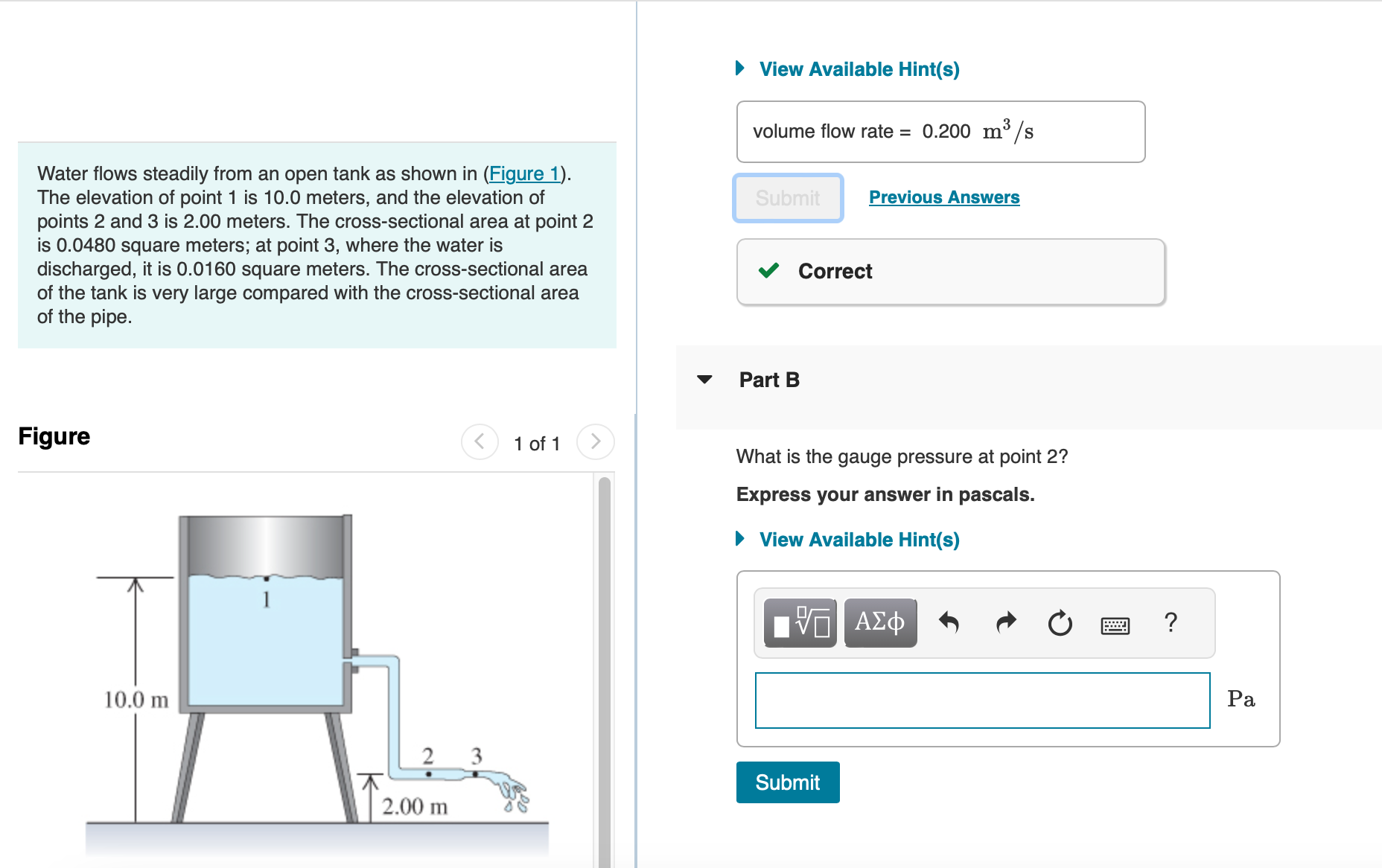
6.98×10⁴ Pa

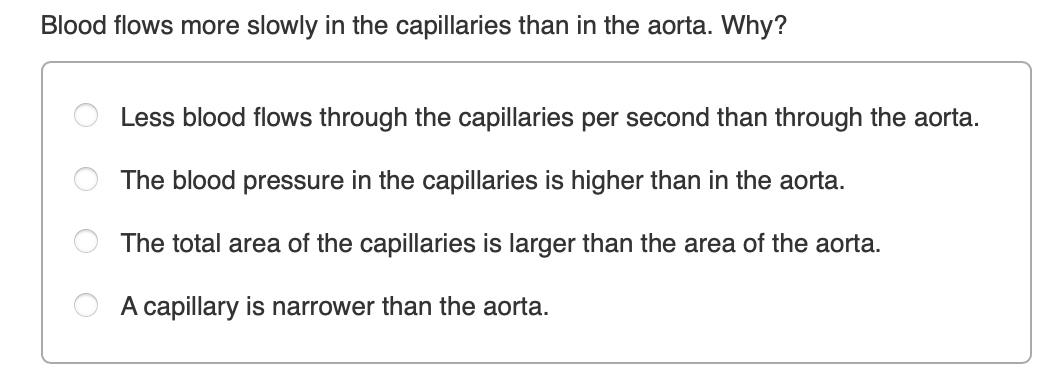
The total area of the capillaries is larger than the area of the aorta. Refer back to Lecture 17.
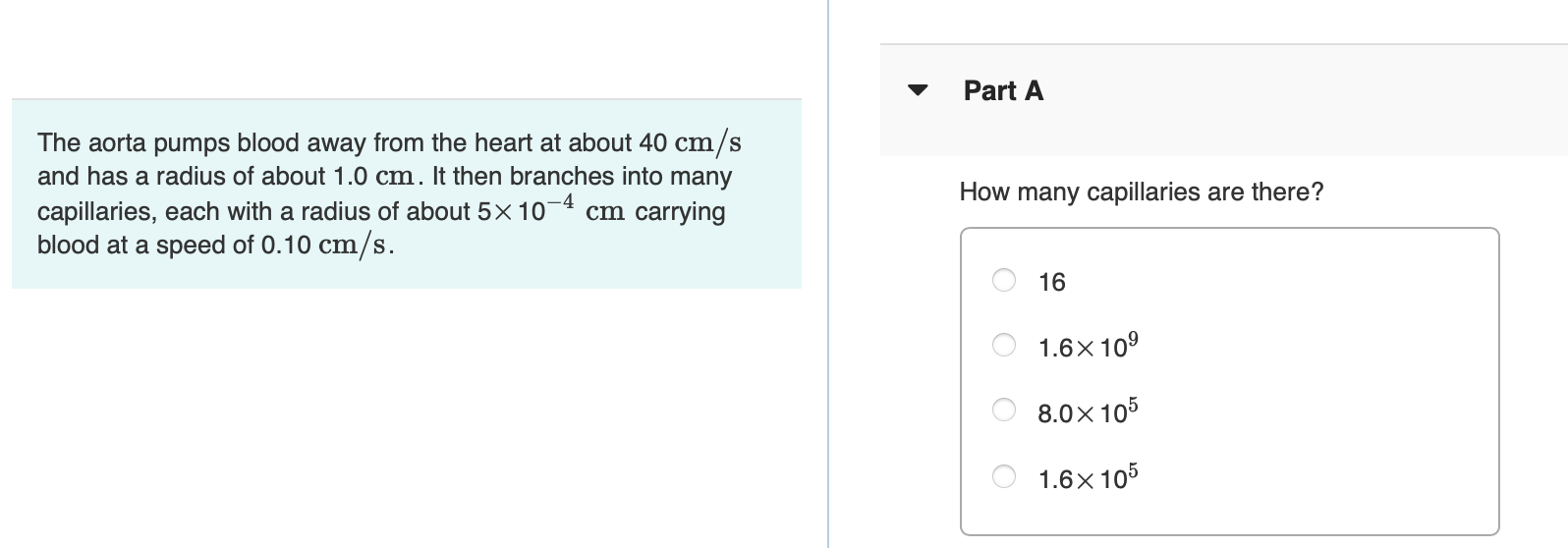
1.6×10⁹


3.0 mm

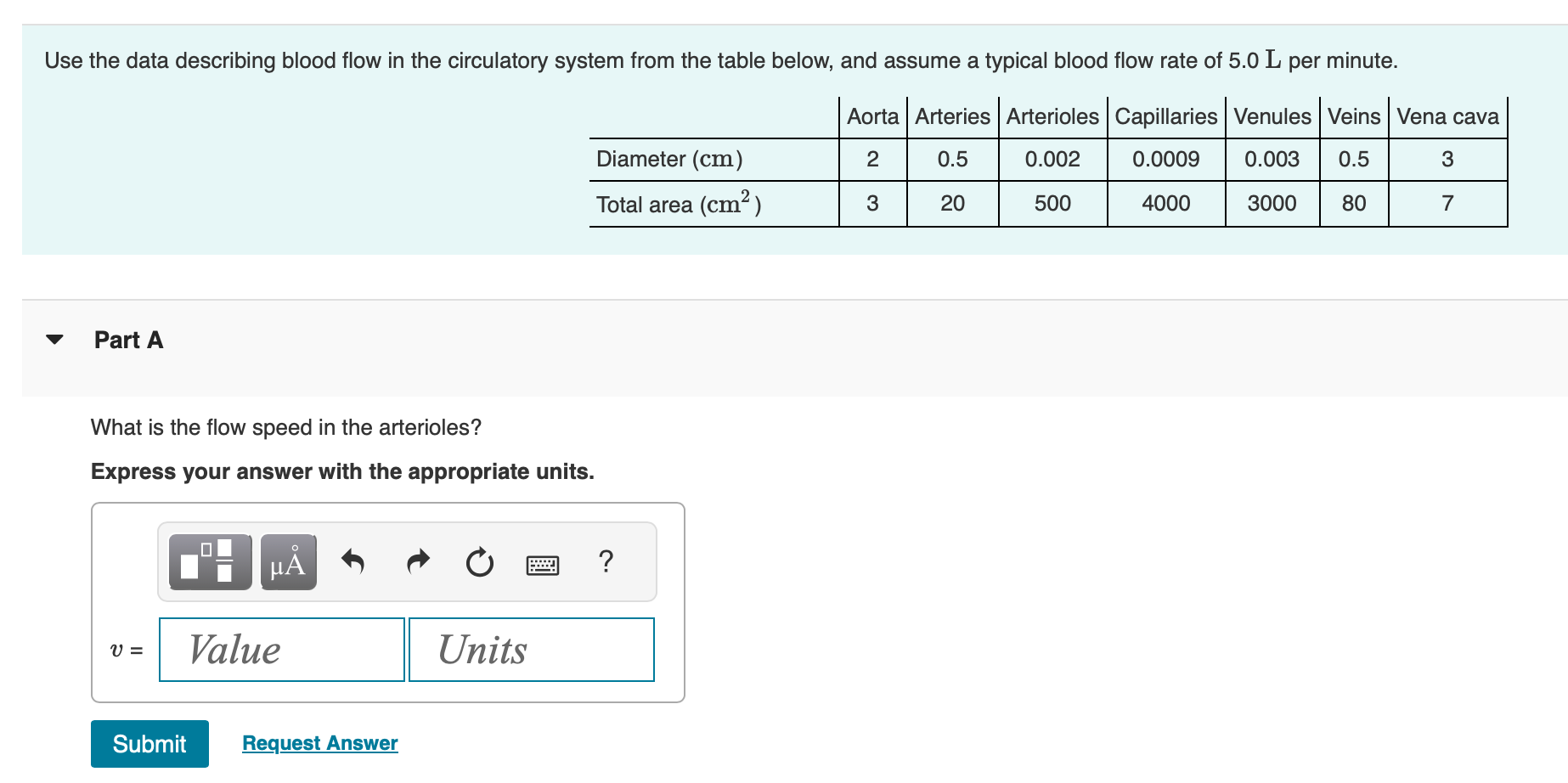
1.7×10⁻³ m/s7

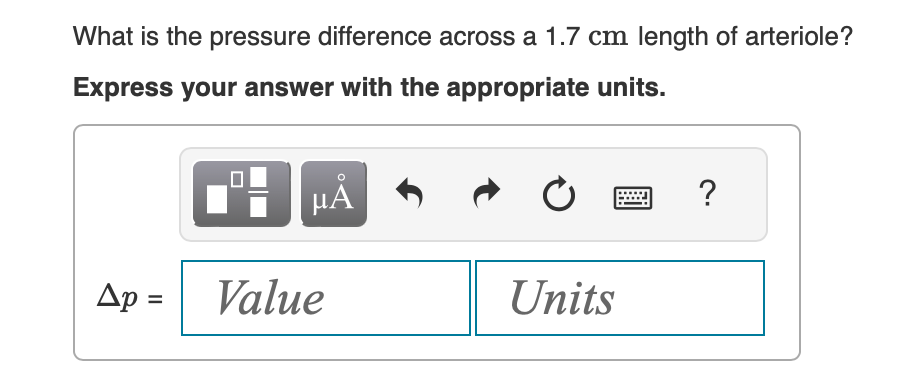
7.9×10³ Pa

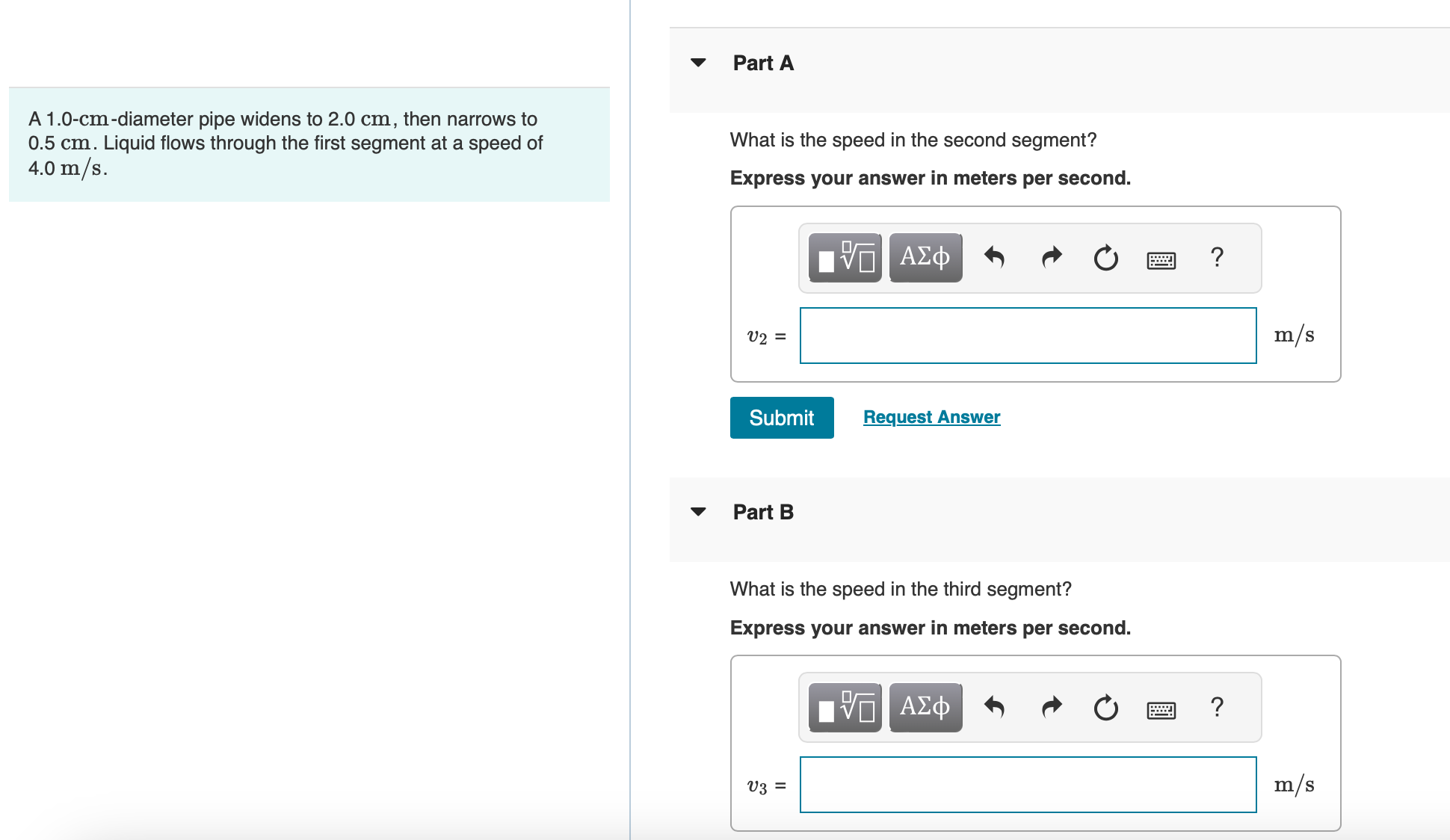
A: 1.0 m/s
B: 16 m/s
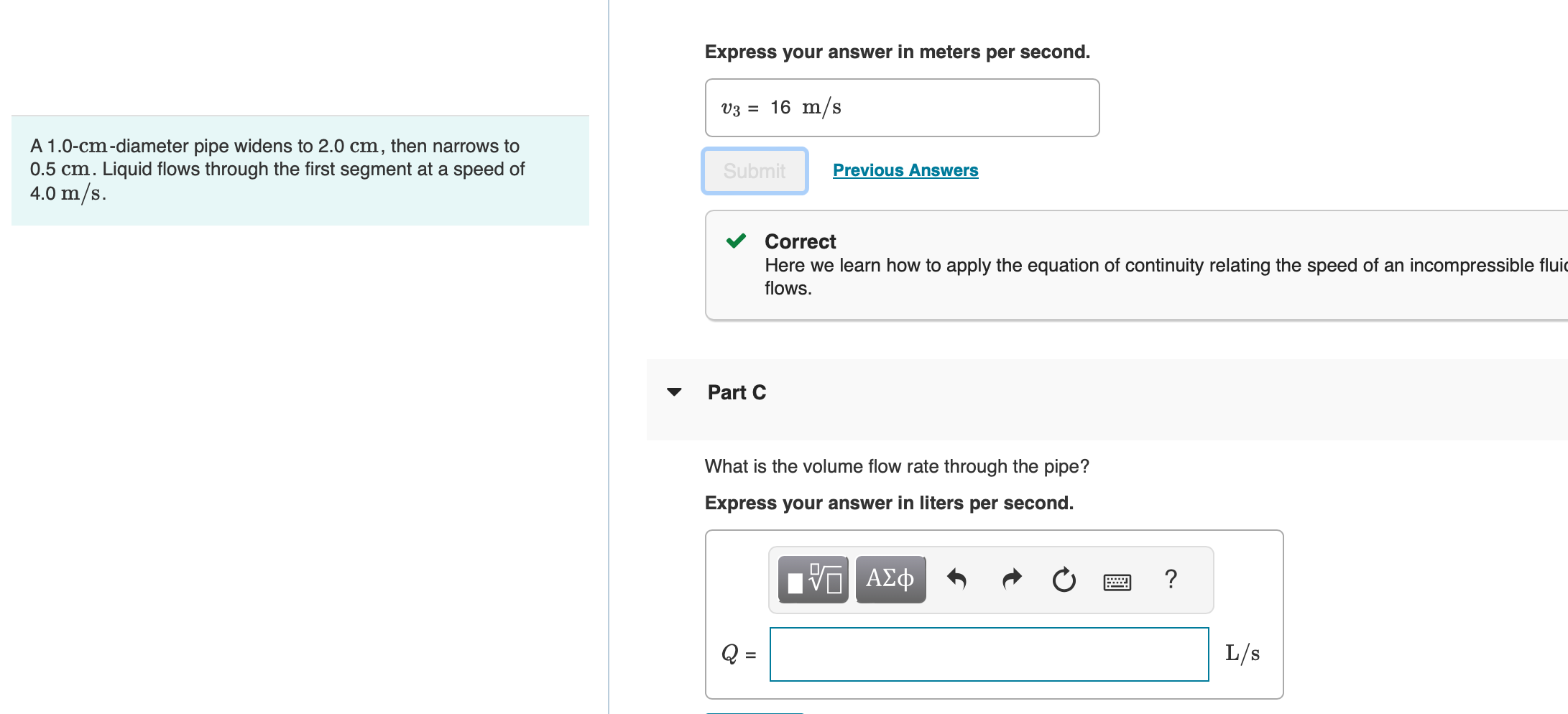
0.31 L/s

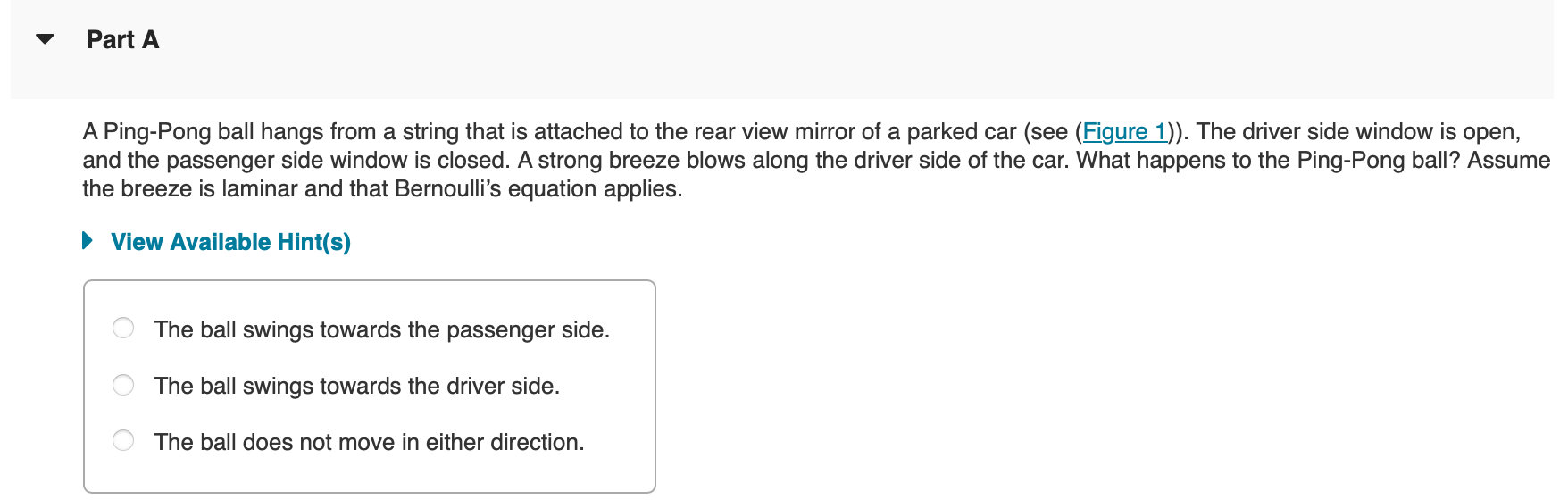
The ball swings toward the driver side.
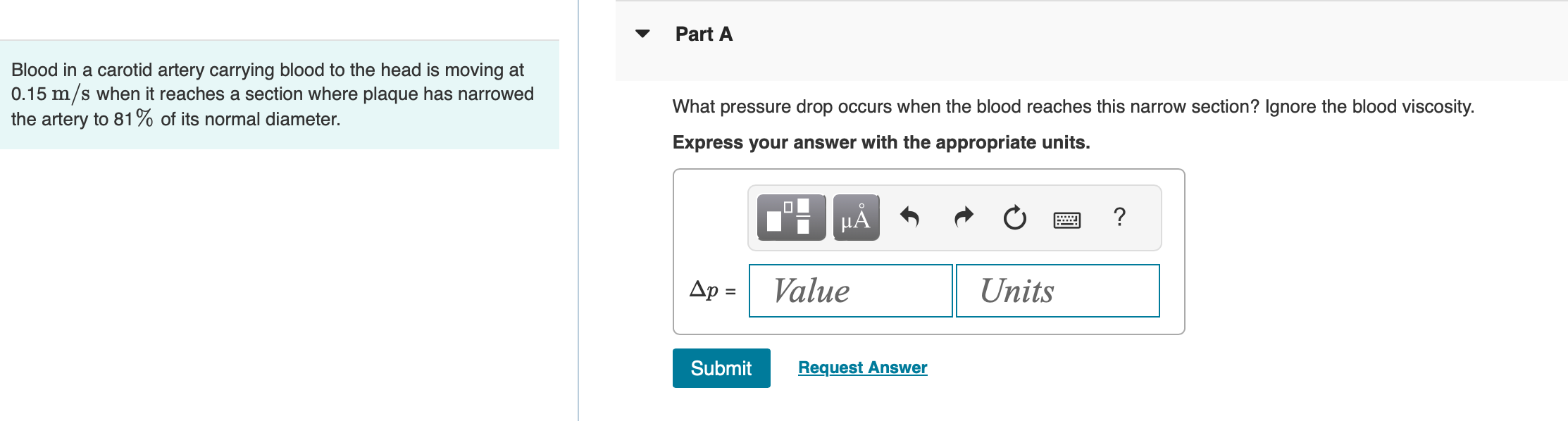
16 Pa


