Intro to Psychology
 Studied by 3 people
 Call Kai
 Learn
Learn Practice Test
 Spaced Repetition
 Match
Match Flashcards
 Knowt Play
1/445

Earn XP
Description and Tags
About: Memory, thinking, problem solving, decision-making, Language, Personality, Child development, social psychology, clinical psychology
Name | Mastery | Learn | Test | Matching | Spaced |
|---|
No study sessions yet.
446 Terms
Which activity requires memory?
silently singing yourself a lullaby
recalling what you did for your birthday last year
understanding the difference between a cat and a mous
riding a bike
Phases of Memory
ENCODING: learning new information or forming a new memory trace
STORAGE: maintaining a memory trace, a neural code in the brain
RETRIEVAL: activating a memory trace via a cue (probe for that memory)
Multi-store model of memory
sensory input
sensory memory (a second)
information lost is not transferred
short term memory (30 seconds)
information lost if not rehearsed
long term memory (+30 seconds to life)
Sensory Memory
short and specific
automatic reflection of a sense
separate and short stores for each sense
echoic memory (held for 3 sec.) & iconic memory (millisecond visual memory)
Echoic Memory
sound-byte held for about 3 seconds
located in echoic store (ear)
sound memories
delay time —> several seconds
ex. recalling the specific words someone just said to you
Iconic Memory
millisecond visual memory
located in the iconic store (eye)
delay time —> half a second
afterimages
ex. seeing a car pass by and still being able to picture it in your mind’s eye for a few seconds before it’s gone.
Afterimages
the persistence of vision

Short Term Memory
attended information moves from sensory to short term memory (unattended information is lost)
limited time capacity: 20-30 seconds
dialing a phone number
remembering the beginning of a sentence
limited capacity: magical number seven plus or minus two
Strategies to overcome short term memory limits
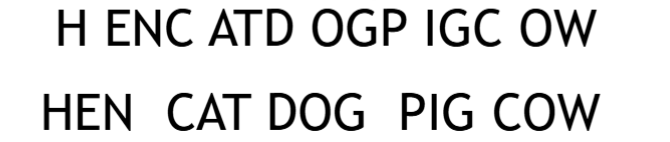
Chunking strategy:
grouping items together in a meaningful way so multiple items are perceived as one
Long Term Memory
Consciousness
2 types of long-term memory:
Implicit memory
Explicit memory
Implicit Memory
non-declarative
non-conscious
when something in the past affects you without knowing
procedural, priming, fear
ex. playing the piano, tying your shoelaces
Explicit Memory
Declarative
Conscious
when you think about something
episodic, semantic
ex. remembering your first piano lesson, knowing the French word for burrito when ordering at Taco Bell, thinking about the ski trip you took last weekend
Episodic Memory
recollecting unique events within their specific time and place
retrieving what, where, when of an event
ex. specific episode of a show
Semantic Memory
knowledge about the world or self that isn’t attached to a time and place
no retrieval of learning, just what you know
ex. fan knowledge about the show
Patient HM
—> helped our knowledge about dissociations in memory
experimental neurosurgery to reduce seizure activity; removed the medial temporal lobes of the brain (including the hippocampus)
could not remember the people, places, and objects he saw (even after repeated encounters)
forgot conversations
Result:
Intact short-term memory: can remember a short list of words for 30 seconds
intact procedural memory: could learn new skill-based tasks
Intact semantic memory: could recall major historical events of childhood
profound episodic memory loss: he couldn’t learn new information BUT could recall his past in sparse detail
Anterograde Amnesia
The inability to form new episodic memories
Retrograde Amnesia
The loss of memories from before the onset of amnesia
Ribot’s Law: Remote memories are less affected than recent memories
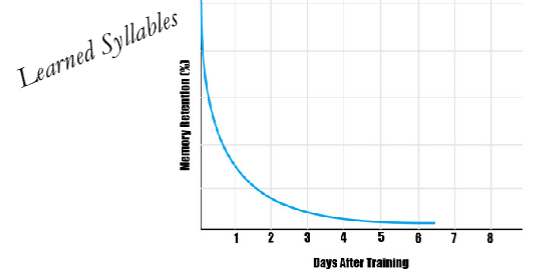
Hermann Ebbinghaus - nonsense syllables study
—> tested memory at various intervals and examined what was retained/forgotten
created over 2000 cards of nonsense syllables and learned them
learned sets of the syllables under strict testing conditions:
read the syllables without any inflection
read them at a consistently fast pace (2.5 items per second)
he did nothing else while running these experiments.
Result:
the forgetting curve is exponential
memory loss is largest early on (soon after learning) and slows down with time.
Spacing Effect
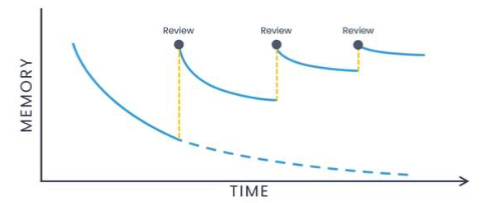
way to optimize memory
forgetting is reduced when learning is spread over time
repeated information is more valuable and stored more strongly in memory
Encoding Specificity Hypothesis
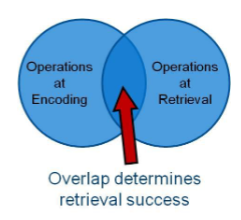
memory retrieval is better when there is overlap in some source with encoding
context overlap between learning and remembering
context: internal state (ex. mood) or external envrionment
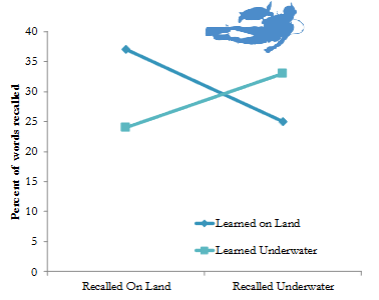
Deep Sea Divers Study
participants were separated into different environments where they were encoded and then told to recall the words.
Encoded vs retrieved words:
encode on LAND — recall on LAND
encode UNDERWATER — recall UNDERWATER
encode on LAND — recall UNDERWATER
encode UNDERWATER — recall on LAND
Result:
external context helps a lot to recall the words (meaning being encoded, the word increases the chances of recalling the words in the same environment) that
Decay Theory
memories are lost over time due to disuse
like a muscle you don’t use, a memory gets weaker
Interference theory
interference is responsible for much of forgetting
newly encoded memories are susceptible to disruption and effects of interfering information
Proactive interference
“forward in time”
prior information interferes with encoding a new memory
ex. trouble learning a new phone number because your old number keeps popping up in your memory
Retroactive interference
“backwards in time”
Newly learned information interferes with a prior encoded memory
ex. trouble remembering an older password after you formed a new password
Proactive interference study
experimental group: 1) learned recipe for Mulligatawny soup. 2) learned recipe for best ever broccoli cheese soup
control group: 1) rest. 2) learn recipe for best ever broccoli cheese soup
both were then asked: What are the ingredients for the best-ever Broccoli cheese soup?
Result:
experimental group will remember fewer ingredients than the control group
this is because prior information, other soup recipe, is interfering with the memory of the Broccoli soup
Retroactive interference study
experimental group: 1) learned recipe for vanilla cupcakes. 2) learn recipe for cheesecake
controlled group: 1) learned recipe for vanilla cupcakes. 2) rested.
both were then asked: what are the ingredients for those cupcakes?
Result:
experimental group will remember fewer ingredients than the control group
this is because new information is interfering with forming a memory for the vanilla cupcake recipe
Memory retrieval
construction of memories
process of accessing stored information from long-term memory and bringing it into conscious awareness
False memories effect
Memory “sin”
Study example:
asked people to recall childhood experiences recounted by their parents over 3 sessions
a false memory was added to these experiences by the experimenter
Result:
over time, 20% of people had a false memory during the second interview
Adaptive future thinking
memory virtue
the same brain regions that are engaged are construct the past overlap with those active when imagining the future
memory is not about the past but the future.
Congruent stimulus
one where the different components of a task or perception match or agree with each other
the word “orange” written in orange ink
easier and faster to identify

Incongruent Stimulus
experience conflict between two levels of processing
the word “orange” in blue ink
harder and slower to identify

Stroop Effect
fist observed in 1935 by John Ridley Stroop
cognitive phenomenon where it takes longer to name the ink color of a word than to read the word itself
includes congruent & incongruent stimulus
Representation
refers to a symbol or thing which represents (‘refer to’, ‘stands for’) something else
rats use some form of internal mental representation of a maze in order to navigate to a reward (cheese)
Categories (type of representation)
categories have many functions:
Classification: allows us to treat different things as the same
communication: we communicate using words that refer to more abstract ideas/concepts
conserve “mental space”
Usefulness:
if you know what you see (red, shiny, round, has a stem), you can then infer what an apple is (has seeds, sweet, edible, healthy)
Hierarchies of Categories
Superordinate level (ex. furniture)
preferred level/basic level (ex. chair)
subordinate level (ex. windsor)
The Fortress Problem
an army general wants to attack a fortress in center of forest
many roads lead to a fortress like spokes of a wagon wheel
all the roads have land mines that are triggered by heavy traffic
if the entire army travels down a road, land mines will go off.
Solution:
the general sends small groups of soldiers down each of the roads, coordinating their movement so that they all arrive at the fortress at the same time.
The Tumor Problem
patient has an abdominal tumor (in the center of the body)
radiation will kill tumor, but rays are also strong enough to kill tumor will also destroy healthy tissue that rays pass through on way to tumor
Solution:
focus several rays so that they all converge upon the tumor, providing the necessary amount of radiation at the same site.
Dual Process Theories
controlled processing system (turtle):
conscious, explicit
effortful, requires motivation
slower
often more accurate
Automatic processing system (rabbit):
often unconscious, implicit
requires little effort
fast
can be error-prone
Heuristics
process of inference by intelligent guesswork, relying on general knowledge gained by experience
using a “rule-of-thumb” or “mental shortcut”
heurstics are mental shortcuts that are quick, effortless, intuitive, and automatic
ex. availability — we tend to make estimates/judgements based on what comes to mind easily
Availability Heuristic
we tend to make inferences and estimates based on what comes to mind easily
traffic accident deaths are much more likely to be reported in mass media than stomach cancer deaths
this leads to a person deciding on the basis of availability would say death by traffic accident is more likely because that is the most accessible information we have
Representativeness heuristic
people think something is more likely if it reflects their beliefs about a situation
ex. traits given in the description of jack are representative of peple’s beliefs about engineers
The framing effect
loss framing: message emphasize the negative consequences of taking that action
involves losses of something — prefer risky option
gain framing: message focuses on the benefits of a certain behavior
involves gaining something — prefer sure thing
Choice overload
too much information to process makes people unwilling to decide between the options
too much choices can also lead to being less satisfied with their options due to regret
ex. 6 jam options vs. 24 jam options
Regret
a negative psychological state that involves blaming ourselves, feeling a sense of loss at what might have been, or wishing we could “undo” a previous choice that we made
while regret can feel unpleasant, it could be helpful for decision making
(when deciding how to act, we often try to minimize the regret that might arise from our decision in the future.
actions: tend to generate more regret in the SHORT term
inaction: tends to geerate more regret in the LONG term
Status quo bias
preference for maintaining one’s current situation (and opposing actions that may change the state of affairs)
Why? regret avoidance— greater regret for action than for inaction
ex. organ donation study
Confirmation bias
the tendency to search for, interpret, favor, and recall information in a way that confirms one’s preexisting beliefs
2-4-6 task
each subject come into the lab, figures out the lab that creates the three-number sequence
only told that the sequence 2 4 6 is produced by this unknown rule
subjects are instructed to test 3-number sequences and are told whether the rule “fits” or “does not fit”
Result:
the correct rule is: three numbers in an ascending sequence
people tend to give options that will confirm that they have the correct answer
Varieties of Intelligence
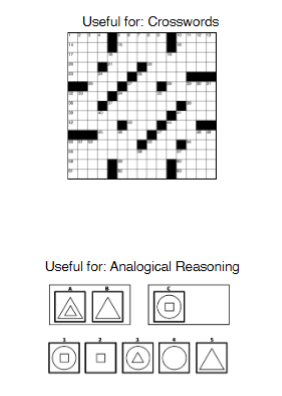
Crystallized intelligence: accumulated knwoledge over the lifetime
facts, vocabulary, language
Fluid intelligence: ability to solve new problems quickly and reason abstractly
making inferences, finding patterns
Modern Intelligence tests
a useful intelligence test satisfies 3 criteria
standardization
reliability
validity
ex. Wechsler Adult Intelligence Scale (WAIS - modern IQ test)
Criterion 1 - Standardization
a score should be interpreted in relation to some pre-tested group of people
scores on the WAIS are distributed according to a normal distribution (bell curve-symmetrical curve)
most people fall into the middle of the curve near the average
extremely high and low scores are rae (<5%)
Criterion 2 - Reliability
does a test produce consistent results when administered to the same person?
test-retest reliability: does giving a person the same test twice should result in very similar scores
spit-half reliability: does splitting the test into two parts result in similar scores between the two halves?
Criterion 3 - Validity
Predictive validity: what real-life outcomes does an intelligence test predict?
ex. elementary school achievement (GPA) predicts IQ test midlife.
Content validity: What relevant real-life behavior does a test measure?
Language
Textbook: a shared system of symbols (including spoken, written, and signed words and gestures) and a set of rules for how to combine those symbols to communicate meaning
a social act whereby we accomplish specific interpersonal goals
the neurocognitive processes involved in producing and understanding linguistic symbols
fits within all other areas of pyschology (perception & sensorimotor control, cognitive neuroscience, varieties of long-term memory like vocabulary or grammatical, different memory stores, development, social and cultural psychology, attention & decision making)psychology
Features of human language
symbols convey meaning
arbitrary symbol/referent relation
structured; rule-governed
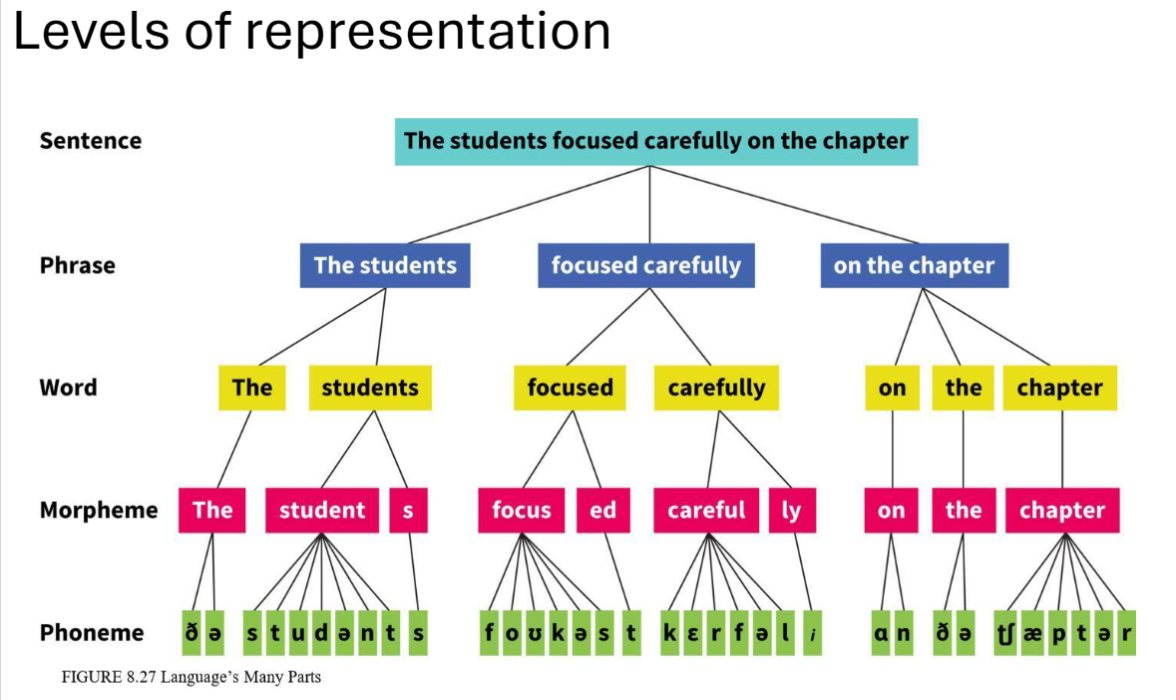
multilayered: levels of representation
productive: rules are generative
evolutionary: changes over time
Levels of representation (multilayered)
Includes:
sentence
phrase
word
morpheme
phoneme
Pragmatics
real-life use of langauge
rules that govenr the practical aspects of language use
such as:
taking turns
using intonation and gestures
talking to different types of people (ex. internet language)
Babbling (language development)
Production of speech sounds by infants
usually beginning around 6-7 months of age
often takes the form of repeated consonant-vowel combinations
Language development (after Babbling)
around 10 months of age: babbling begins to more loosely reflect the sounds of the home language
12 months: speaking single-word utterances
2 years: speaking two-word utterances
3 years: producing sentences with grammatical function words (ex. “of” and “the”)
5 years: speaking words similarly to adults in vocabulary and grammar
Overregulization error: extending the rules of word formation incorrectly to irregular exceptions. Those errors reveal children’s understanding of grammar (ex. I goed to the store)
Language acquisition
Begins with understanding and producing the phonemes of speech
Operant conditioning
researchers use this to determine whether babies differentiate between speech sounds or words
—> babies are trained to look in a certain direction when they perceive a difference
Comprehending (language development)
1-2 months: infants recognize differences between phonemes
1 year of life: babies can differentiate between the phonemes of all languages, but by 12 months, they only hear speech differences that are relevant to their home language
ex. complex speech sounds (like consonants), infants do not initially discriminate between language-specific vs. other language contrasts (L vs R in distinct english but not japanese)
6-9 months: know the meaning of many common nouns
Children track a speaker’s eye gaze to determine the referent of their words
3 years: use grammatical context to determine the referent of a word heard
Word detection
before 12 months of age, babies can determine when the words in speech begin and end
this is great feat because speech sounds are continuous, and silences are more likely to occur within words than between words.
How are we (babies) able to comprehend?
babies statistically track which syllables are likely to occur with other syllables and develop expectations for how long words should be
the segment that are initially demarcated might actually be multiword seuqnces rather than words per se
What makes human language special?
only humans recombine all sorts of linguistic elements (phonemes, morphemes, words, phrases, sentences)
humans communicate about entities not immediately present in time or space; only using contextual nuance
humans communicate with sensitivity for, and intent to alter the minds of others (ex. theory of mind, mentalizing, perspective-taking)
How do adults process language?
Three key features:
Human language processing occurs automatically, obligatorily, and below the level of conscious awareness (ex. Stroop effect, decision framing, anchoring effect)
Language processing is context sensitive across all linguistic levels,
local & global content effects can trigger automatic or controlled processing (makes us vulnerable to misunderstanding/misinformation)
multilingualism:
increases controlled processing demands; tied to sociocultural concerns
Local and Global context effects
Local coherence: how well you understand relationships between adjacent pairs of sentences
Global coherence: how well all the sentences relate to a theme
*Very vulnerable to misunderstanding & misinformation
Aphasia
loss of language function after neural insult
Traits
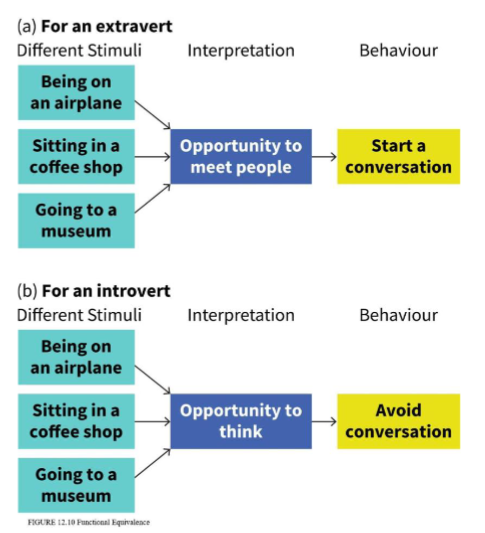
characteristics that describe who a person is and explain how they typically behave
Shape how a person interprets the world and can lead people to behave in similar ways across different situations
Gordon Allport popularized the study of personality
Types of Traits
Cardinal: those that dominate a personality
Central: general dispositions that describe a person
Secondary: relevant in only certain contexts
Lexical Hypothesis
traits that provide useful ways to differentiate among people’s personality characteristics are necessarily encoded in language
this hypothesis produces an unwieldly number of traits by which people can be described.
Factor analysis
Analyzes the interrelations among different tests to look for the common factors underlying the scores.
a statistical technique developed by Charles Spearman
Assessment
The process of developing and validating tools to accurately measure and quantify traits and other features of personality
Self-reports: measure what people are willing and able to describe about themselves
Informant reports: Rating of a person made by their family and close friends.
The Big Five-Factor Model
The dominant model in the trait approach to personality.
—> Includes (OCEAN):
Open-mindedness to experience
Conscientiousness
Extraversion
Agreeableness
Neuroticism
Facts about trait to remember:
traits are BIPOLAR
we are near the mean on most traitswe will not like our scores on some of the traits
we tend to care about and focus on EXTROVERSION
the Big 5 were designed to BE INDEPENDENT of one another
Changes in personality stability across young adulthood
increases in agreeableness, conscientiousness, and emotional stability
increases in open-mindedness
extraversion is mixed:
Social vitality stays the same
social dominance increases in adulthood.
Life changes (ex. love or work) and formal counselling can change trait levels for the better.
Cultural Variation in Personality
differences exist in the average levels of traits across cultures
political and cultural forces also shape how someone perceives average trait levels in their own culture (not always accurate)
differences also exist in how much people are trying to change some aspect of their personality
Key concepts in developmental psychology
nature vs. nurture
continuity vs. discontinuity
stability vs. change
risk vs resilience
plasticity/neuroplasticity
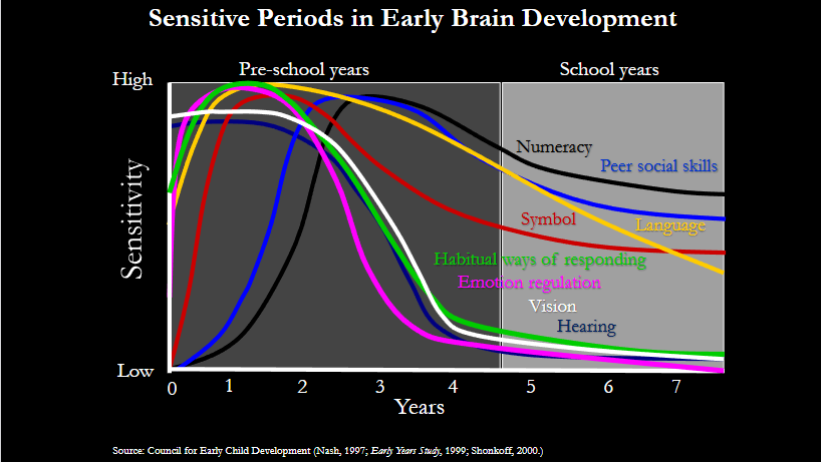
Plasticity
refers to an individual’s capacity to change and adapt in response to new experiences
neuroplasticity
refers specifically to the brain’s ability to change and reorganize in response to experiences, learning, and environmental changes
research methods for development
qualitative & quantitative research
experimental and correlational designs
cross-sectional, longitudinal & sequential designs
Longitudinal designs
individual or group is observed over time
Pro: Most powerful design for studying developmental changes
Cons: Research question might require lengthy observations over months or years; susceptible to period effects
Cross-sectional designs
individuals or groups of different ages are observed over a short period of time
pros: studies take less time to complete
cons: developmental change is inferred but not actually observed; age differences are confounded with period and cohort effects
Example of period effect
“Sesame Street” first aired in 1969 & revolutionized children’s television
Blended entertainment with structured, researched-based educational content
suddenly, millions of children were exposed to high-quality early learning through television
this is a period effect —> improved school readiness & early educational outcomes; narrowed achievement gaps among low-income children
sequential design
follow multiple cross-sectional samples over time
ex: a researcher recruits a sample of 5-9 years old in a study in 2025. they are followed over 3 years with annual assessments (6-10, 7-11)
pros: easier to separate age, period, and cohort effects; change can be observed without the wait (5 to 11 in 3yrs)
con: can still be costly an take a long time to complete
Little Albert experiment (1920)
John B. Watson & graduate wanted to show that emotional responses could be conditioned through association learning
at first 9-month-old Albert showed no fear of a white-rat, dog, rabbit, or other furry animals
researchers then paired a rat with a loud noise
after several pairings, Albert would cry and when seeing the rat than any other animal.
it gets worse: Albert’s fear was never systematically deconditioned
there was no informed consent by parents, nor protection from harm
died at age 6 from hydrocephalus, indicating neurological impairment before the study
—> therefore these kind of studies requires consent (from child or parent) and an oversight by IRB
stage theories of development
Jean Piaget’s stage theory of Cognitive development
Erik Erikson’s stages of psychosocial development
Lawrence Kohlberg’s stages of moral development
Cognitive Development
Jean Piaget (1896-1980), Swiss psychologist
children are not simply “little adults” with less knowledge; they are unique thinkers who actively construct an understanding of the world
Key concept: object permanence, assimilation, and accommodation
identified stages of cognitive development, each characterized by specific ways of thinking and understanding
Different stages of cognitive development
Sensorimotor
preoperational
concrete operational
formal operational
Sensorimotor
0-2 year old
coordination of senses with motor responses
sensory curiosity about the world
language used for demands and cataloguing
object permanence is developed
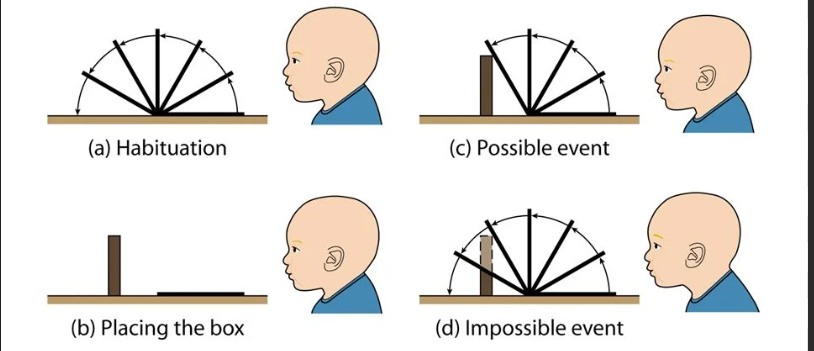
Preoperational
2-7 years old
symbolic thinking
use of proper syntax and grammar to express concepts
imagination and intuition are strong
complex, abstract thoughts are still difficult
conservation is developed
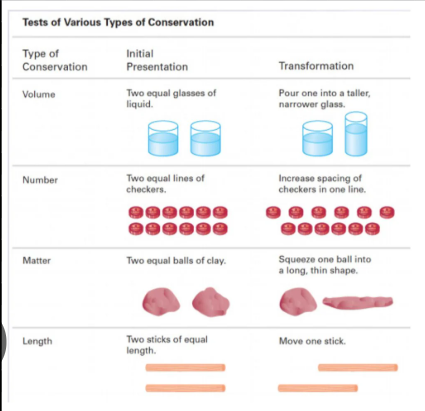
Concrete Operational
7-11 years old
concepts attached to concrete situations
time, space, and quantity are understood and can be applied, but not as independent concepts (theory of mind)
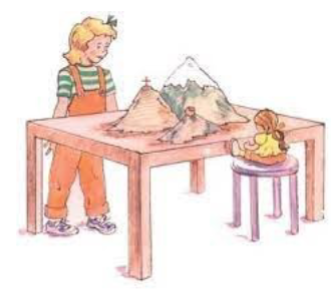
Formal Operational
11 years old and older
theoretical, hypothetical, and counterfactual thinking
abstract logic and reasoning
strategy and planning become possible
concepts learned in one context can be applied to another
Criticism of Piaget’s theory
underestimated children’s ability
overemphasis on stages
neglected cultural and social influences
relied on small, non-representative samples
ignored later cognitive development in adolescence and adulthood
neglected emotion and motivation
Psychosocial development
Erik Erikson (1902-1994) trained in psychoanalysis but rejected Freud’s focus on the primary caregiver
Key concepts: identity crisis, lifespan development
proposed that throughout the life course, we encounter certain crises that contribute to our psychosocial development
he presented these crises as 8 stages of psychosocial conflicts.
8 stages of psychosocial conflicts
Approximate age; crisis; virtue developed
infant-18 months; trust vs mistrust —> hope
18-month-3 years; autonomy vs shame/doubt —> will
3-5 years; initiative vs guilt —> purpose
5-13 years; industry vs inferiority —> competency
13-21 years: identity vs confusion —> fidelity
21-39 years; intimacy vs isolation —> love
40-65 years; generativity vs stagnation —> care
65 and older; integrity vs despair —> wisdom
Moral development
Lawrence Kohlberg (1927-1987), an American psychologist, was inspired by Piaget’s work and was interested in children’s reactions to moral dilemmas
identified 3 stages of moral development:
preconventional
conventional
postconventional
Preconventional
3-7 years
moral reasoning focused on avoiding punishment and personal gain
conventional
8-13 years
moral reasoning focused on conforming to social norms and maintaining social order
law and order morality, good boy attitude
 Note
Note  Flashcards (69)