Mktg test 2
 Call Kai
 Learn
Learn Practice Test
 Spaced Repetition
 Match
Match Flashcards
 Knowt Play
1/175

Earn XP
Description and Tags
Mktg 351 Barfield marketing Test 2, Chapters 6,7,8, and 9.
Name | Mastery | Learn | Test | Matching | Spaced | Call with Kai |
|---|
No analytics yet
Send a link to your students to track their progress
176 Terms
Consumer behavior
process consumers use to make purchase decisions as well as to use and dispose of purchased goods or services
it’s the full pattern of how people choose, buy, use, and get rid of products, plus what affects those choices.
value
a personal assessment of the net worth one obtains from making a purchase, or the enduring belief that a specific mode of conduct is personally or socially preferable to another mode of conduct
it is what the customer thinks they get compared with what they give up
(benefits - sacrifice = value)
perceived value
the value the customer expects to obtain from a purchase
what the buyer thinks the purchase will be worth before actually using it
utilitarian value
a value derived from a product or service that helps the consumer solve problems and acomplish tasks
practical usefulness
hedonic value
a value that acts as an end in itself rather than as a means to an end
pleasure, enjoyment, feelings, and experience
ex: spa day or a steak dinner
consumer decision-making process
five-step process consumers use when buying goods and services
Need recognition.
information search
evaluation of alternatives
purchase
postpurchase behavior
need recognition
a result of an imbalance between actual and desired states
want
recognition of an unfulfilled need and a product that will satisfy that need
stimulus
any input affecting one or more of the five senses
want got gap
the diffirence between what you have and what you want
Internal information search
recalling information stored in memory
external information search
seeking information in the outside environment
non-marketing-controlled information source
an objective information source not associated with ads or promotion
marketing-controlled information source
a product information source that originates with marketers promoting the product
the extent of an external search depends on _____
Perceived risk: Higher percived risk = more searching
Knowledge: more prior knowledge/experience = less searching
Prior experience
levels of interest in the good or service: more interest = more searching, less confidence = more searching even if the person knows a lot
Evaluation of alternatives
consumers compare options using criteria they develop from memory and outside information.
Not always perfectly rational
Nudge
a small intervention that can change a person’s behavior
subtle push that influences choice without forcing it. Ex: shelf placement, checkout snacks, app prompts
Purchase
The consumer must decide:
Whether to buy
when to buy
what to buy
where to buy
how to pay
Planned purchase
Lots of information gathered first
ex: buying a home or a car
Partially planned purchase
product category known but the specific brand/style is decided in the store.
ex: buying clothes or furniture
Impulse/unplanned purchase
little planning, often low price or sale item
often triggered by a nudge
psychological ownership
The consumer feels the product is “theirs“ before or during purchase, which makes them more willing to pay more and talk positively about it.
This phenomenon happens when the consumer controls it, invests themselves in it or know it intimately.
Jilting effect
anticipation of receiving a highly desirable option only to have it become inaccessible.
cognitive dissonance
inner tension that a consumer experiences after recognizing an inconsistency between behavior and values or opinions
“Did I make the right choice?” feeling after a purchase
Can be reduced with: Post-purchase communication, excellent post-purchase customer service, reassurance, guarantees/returns, testimonials/social proof
involvement
the amount of time and effort a buyer invests in the search, evaluation, and decision process of consumer behavior
routine response behavior
frequently purchased, low-cost goods
little search and decision time
Limited decision-making
moderate time spent
often unfamiliar brands in a familiar category
Extensive decision-making
most complex;
unfamiliar, expensive or infrequently bought item
heavy information search required and multiple evaluative criteria
Five factors are used to describe involvement categories.
level of involvement
length of time to make decision
cost
degree of information search
number of alternatives considered
Factors affecting the level of involvement
Previous experience
interest
perceived risk of negative consequences
social visibility
showrooming
examining merchandise in a physical store but then buying it online for a better price
reconceptualized consumer journey
Digital tech has shifted power from marketers to consumers. Consumers can compare prices, read reviews, sort through recommendations, and get products delivered quickly.
The consumer decision journey (classic)
Consider
evaluate
buy
maybe enter loyalty loop or start over.
The consumer decision journey (New)
the consider stage is compressed
The evaluation stage is shortened or even eliminated.
The customer is moved directly into the loyalty loop if the experience is strong enough.
Loyalty loop
enjoy
advocate
bond
How marketers shorten the consumer decision journey
Firms need four capabilities:
automation
proactive personalization
contextual interaction
journey innovation
Two loyalty levels
Satisfied: loyal largely from habit and dependable performance
committed: Emotionally attached, more expressive, more likely to advocate for the brand
Churning
When a significant number of customers are switching brands.
Culture
the set of values, norms, attitudes, and other meaningful symbols that shape human behavior and the artifacts or products of that behavior as they are transmitted from one generation to the next
subculture
a homogeneous group of people who share elements of the overall culture as well as unique elements of their own group
social class
a group of people in society who are considered nearly equal in status or community esteem, who regularly socialize among themselves both formally and informally, and who share behavioral norms.
reference group
all ofthe formal and informal groups in society that influence an individual’s purchasing behavior the
Primary membership group
family, friends, coworkers
infromal and frequent interaction
secondary membership group
More formal and less frequent
clubs, professional groups, religious groups
aspirational reference group
a group someone wants to join
nonaspirational reference group
a group someone does not want to associate with
Norm
a value or attitude deemed acceptable by a group
opinion leader
an individual who influences the opinions of others
Socialization process
how cultural values and norms are passed down to children
Family roles to know
Initiator
influencer
decision maker
purchaser
consumer/end user
separated self-schema
consumer sees self as distinct from others.
connected self-schema
The consumer sees themself as part of a group.
Important individual influences
Gender
age
life-cycle stage
personality
self-concept
lifestyle
personality
a way of organizing and grouping the consistencies of an individuals reactions to situations
Self-Concept
How consumers perceive themselves in terms of attitudes, perceptions, beliefs, and evaluations
Ideal self-image
how a person would like to be perceived
Real self-image
how a person actually perceives themselves
Perception
The process by which people select, organize, and interpret stimuli into a meaningful and coherent picture
Selective exposure
Noticing some stimuli and ignoring others
Selective distortion
changing or distorting information that conflicts with beliefs
Selective retention
remembering only the information that supports personal beliefs
Motive
a driving force that causes a person to take action to satisfy specific needs
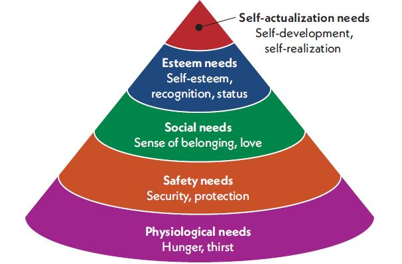
Maslow's hierarchy of needs
physiological needs
safety needs
social needs
esteem needs
self-actualization needs
learning
a process that creates changes in behavior, immediate or expected, through experience and practice
Two types of learning:
experiential learning
Conceptual learning
Experiential learning
Learning by experiencing something
an experience changes your behavior
Conceptual learning
Learning based on reasoning
not acquired through direct experience
Stimulus generalization
extending one response to a similar stimulus.
ex: getting burned on a stove, you know that stoves can burn now
stimulus discrimination
Learned ability to differentiate among similar products
Business marketing (b2b)
marketing of goods and services to individuals and organizations for purposes other than personal consumption
business product
a product used to manufacture other goods or services, to facilitate an organizations operations, or to resell to other customers
Consumer product
a product bought to satisfy an individual’s personal wants or needs
Content marketing
a strategic marketing approach that focuses on creating and distributing content that is valuable, relevant, and consistent
Useful metrics for social media campaigns
Awareness: Attention, followers, fans
engagement: Comments, reposts, shares, Searches
conversions: Desired responses, from downloads to purchases
Relationship marketing
a strategy that entails seeking and establishing ongoing partnerships with customers
Strategic alliances
a cooperative agreement between business firms
Built on:
relationship commitment
Trust
kiretsu
A network of interlocking corporate affiliates.
japanese relationship-based network concept
major categories of business customers
Producers: use goods/services to make other products or support operations
OEMs: Buy business goods and incorporate them into products they sell.
Resellers: Retail and wholesale businesses that buy finished goods and resell for profit
Governments
Institutions: schools, hospitals, churches, nonprofits, etc.
Derived Demand
Business demand comes from the consumer demand.
Joint demand
Demand for items used together in the final product
Multiplier effect
Small consumer demand changes create much larger changes in business demand.
Reciprocity
A practice where business purchasers buy from their own customers
Purchase volume
Business customers tend to buy in large quantities
Number of customers
Business marketers usually have far fewer customers than consumer marketers
concentration of customers
business marketers are more geographically concentrated in large metropolitan areas areas.
Distribution structure
Shorter/ direct distribution chanels
Nature of buying
more formal, business buyers are typically professionally trained purchasing agents.
how business marketing negotiations are different than consumer
Much more negotiation than consumer buying
use of reciprocittyreciprocity
Reciprocity may matter if you are trying to maintain a good relationship
use of leasing
Leasing is very common in business marketing.
Primary promotional method
personal selling is the main promotional method for business marketing
seven categories of business products
Major equipment
accessory equipment
raw materials
Component parts: usually retain identity in final product
Processed materials: usually do not retain identity.
supplies: MRO-type consumables that do not become part of final product
business services: Expensive items, not part of final product
Buying center
all the people in an organization who become involved in the purchase decision
Roles:
Initiator
Influencer/evaluators
gatekeepers
deciders
purchasers
users
successful selling strategies
Identify who actually matters in the decision unit.
determine each member’s relative influence
tailor the sales presentation to the criteria most important to those members.
Get involved early and stay visible to executives throughout the process.
Four characteristics executives want in sales reps
Ability to marshal resources
understanding of the buyers business goals
responsiveness to requests
willingness to be held accountable
Three evaluative criteria business buyers use
Quality - technical suitability and the seller’s reputation
Service - Prepurchase and postpurchase support
Price - Pushing price too low can damage quality or supplier relationships.
Buying situations
New buy - First ime purchase
Modified rebuy - some change desired
straight rebuy - reorder the same good/service without new search
market
people or organizations with needs or wants and the ability and willingness to buy.
If any of those four is missing, it’s not a market.
market segment
subgroup of people or organizations sharing one or more characteristics that cause them to have similar product needs
Market segmentation
the process of dividing a market into meaningful, relatively similar, and identifiable groups.
3 Important reasons for market segmentation
Identify customers with similar needs and behaviors
design marketing mixes that fit those segments
support the marketing concept by satisfying wants and needs while meeting firm objectives

