Civic 2nd Term
 Call Kai
 Learn
Learn Practice Test
 Spaced Repetition
 Match
Match Flashcards
 Knowt Play
1/23

Earn XP
Description and Tags
everything civic 2nd term
Name | Mastery | Learn | Test | Matching | Spaced | Call with Kai |
|---|
No analytics yet
Send a link to your students to track their progress
24 Terms
What is a constitution?
This is the supreme law of a country. It is a document that defines how a country is governed, the power of the leaders and the rights of the citizens.
What is governance?
Governance is simply the act or process of ruling. It refers to how the government uses its power to manage the countrys resources and affairs.
What are key features of the nigerian constitution?
Nigeria is operating under the 1999 constitution. Here are its main characteristics
Written: the rues are gathered into a single written document
Rigid: its not easy to change. to change it you need two-thirds a majority in the national assembly and support from two-thirds of the state houses of assembly
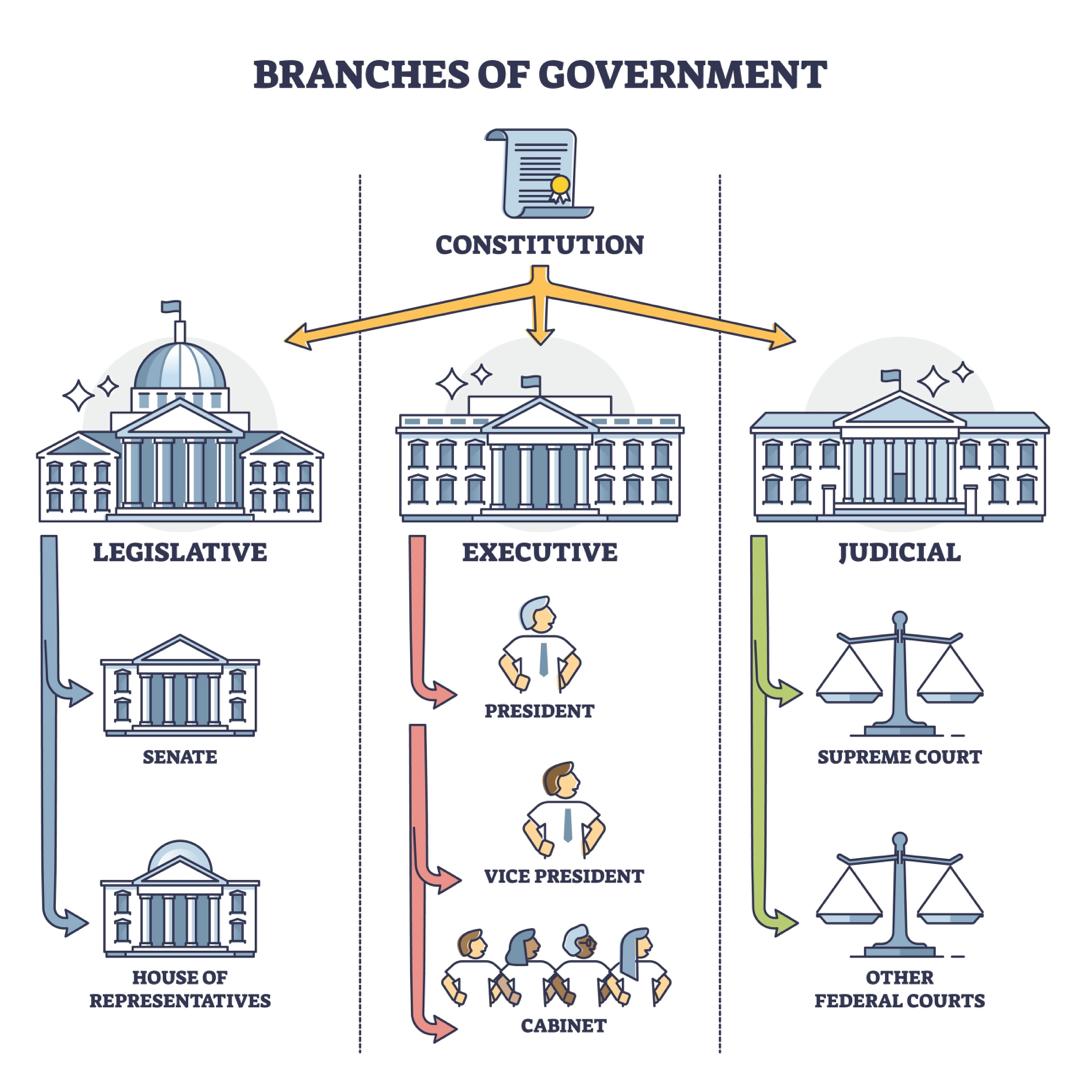
Federalism: It divides the government into three distinct branches to prevent tyranny:
Legisature: Makes laws (national assembly)
Executive: Enforces laws (the president/ministers)
Judiciary: Interprets laws (the court)
The president is the head of state and the head of government
What is the importance of the constitution for good governance?
Prevents dictatorship: It sets limits on what the president or governors can do. Nobody is above the law
Protects human rights: It contains the “fundamental human rights” chapter 4 which ensures citizens cannot be treated unfairly
Ensures stability: It clearly explains how leaders are chosen which prevents chaos during transitions of power
Promotes accountability: It gives the judiciary and legislature the power to check the executive branch
What is political participation?
These are the voluntary activities by which citizens take part in the selection of their leaders and the formation of public policy
Why is political participation important?
Legitimacy: When people participate it shows they support the system making the government “legal” in the eyes of the world
Accountability: It keeps leaders on their toes. If citizens are active leaders know they can be voted out or criticized
Inclusivity: It endures that the interests of different groups are heard
Political education: It helps citizens understand how their country works and what their rights are
What are ways citizens can participate in politics?
Voting: The most common form (Universal Adult Suffrage).
Contesting Elections: Running for office (e.g., House of Reps, Local Government Chairman).
Joining a Political Party: Becoming a card-carrying member to help choose candidates.
Campaigning: Helping a candidate spread their message.
Protest/Pressure Groups: Joining groups (like NLC or ASUU) to influence government decisions.
Public Debates: Discussing government policies on the radio, TV, or social media.
Registration: Ensuring you have your Voter’s Card (PVC).
What are some roles of citizens in promoting democratic governance?
Obedience to Law: Democracy fails if citizens don't follow the rules set by the constitution.
Paying Taxes: The government needs funds to provide the services that make democracy work (roads, schools, hospitals).
Vigilance: "Eternal vigilance is the price of liberty." Citizens must watch the government to ensure they don't become corrupt.
Tolerance: Respecting the views of others, even if they belong to a different party or tribe.
Reporting Crimes: Helping security agencies by providing information to maintain peace.
What is conflict?
Conflict is a disagreement or clash between two or more people, groups, or nations.
What is peace building?
Peacebuilding refers to long-term processes that aim to prevent the start or return of conflict.
What are some common causes of conflict?
Selfishness: Putting personal interest above the group.
Resource Scarcity: Fighting over land, water, or oil (very common in Nigeria).
Tribalism/Ethnicity: Discriminating against others because of where they come from.
Religious Intolerance: Refusing to respect others' beliefs.
Political Ambition: Leaders struggling for power by any means.
Poor Communication: Misunderstanding someone's intentions.
What are some common consequences of conflict?
Loss of Lives and Property: People die and houses/businesses are destroyed.
Displacement: People become Internally Displaced Persons (IDPs) or refugees.
Economic Stagnation: Investors run away, and the economy stops growing.
Hatred and Suspicion: It breaks the bond of unity between neighbors.
What are the importances of conflict resolution in national development?
Promotes Unity: It encourages citizens to see themselves as "One Nigeria" rather than separate tribes.
Attracts Investment: Foreigners are only willing to build companies in a country that is peaceful.
Saves Resources: Instead of spending billions on weapons or fixing destroyed buildings, the government can spend money on education and health.
Ensures Continuity: Good policies can be finished without being interrupted by civil unrest.
What are some methods of conflict resolution?
Dialogue: Talking it out.
Mediation: Using a neutral third party (a "mediator") to help people agree.
Litigation: Going to court.
Arbitration: Giving a third party the power to make a final decision for both sides.
What is economic development?

