6.4.3 Control of blood water potential
 Call Kai
 Learn
Learn Practice Test
 Spaced Repetition
 Match
Match Flashcards
 Knowt Play
1/15

There's no tags or description
Looks like no tags are added yet.
Name | Mastery | Learn | Test | Matching | Spaced | Call with Kai |
|---|
No analytics yet
Send a link to your students to track their progress
16 Terms
Describe the structure of a nephron
nephron = basic structure and functional unit of the kidney millions in the kidney)
associated with each nephron are a network of blood vessels
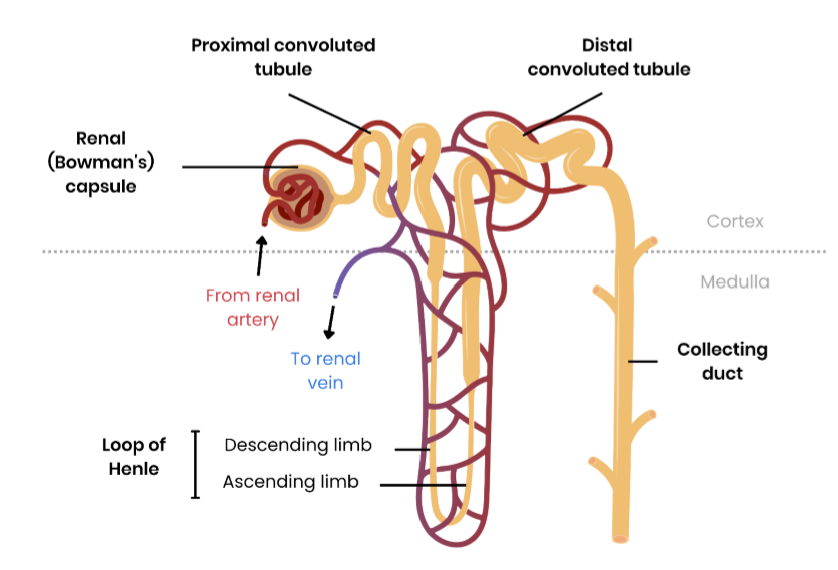
Summarise the role of different parts of the nephron
Bowman’s / renal capsule:
formation of glomerular filtrate (ultrafiltration)
Proximal convoluted tubule:
reabsorption of water and glucose (selective reabsorption)
Loop of Henle:
maintenance of a gradient of sodium ions in the medulla
Distil convoluted tubule + Collecting duct:
reabsorption of water (permeability controlled by ADH)
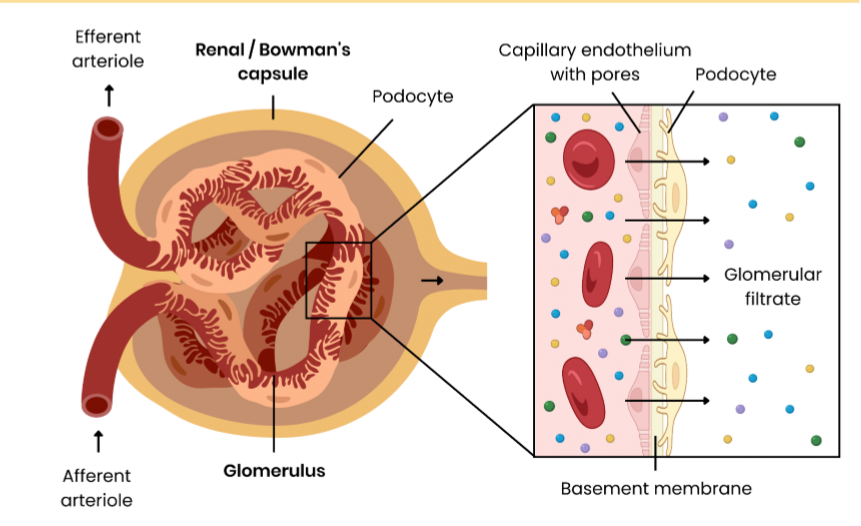
Describe the formation of glomerular filtrate
high hydrostatic pressure in glomerulus
as diameter of afferent arteriole (in) is wider than the efferent arteriole (out)
small substances e.g. water, glucose, ions, urea, forced into glomerular filtrate, filtered by:
a) pores / fenestrations between capillary endothelial cells
b) capillary basement membrane
c) podocytes
large proteins / blood cells remain in blood
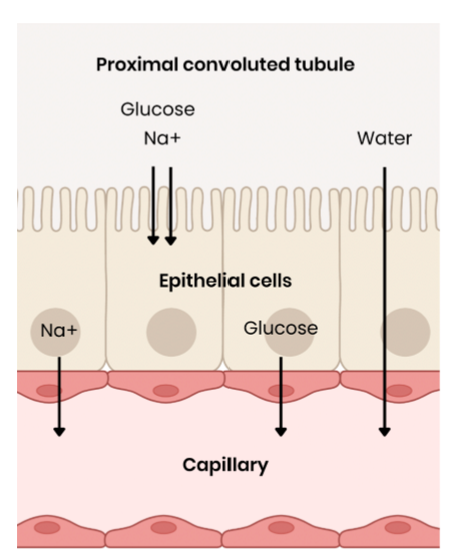
Describe the reabsorption of glucose by the proximal convoluted tubule
Na+ actively transported out of epithelial cells to capillary
Na+ moves by facilitated diffusion into epithelial cells down a concentration gradient, bringing glucose against its concentration gradient
glucose moves into capillary by facilitated diffusion down its concentration gradient
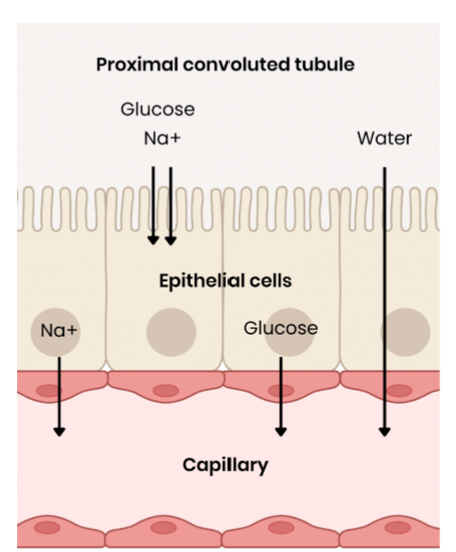
Describe the reabsorption of water by the proximal convoluted tubule
glucose etc in capillaries lower water potential
water moves by osmosis down a water potential gradient
Describe and explain how features of the cells in the PCT allow the rapid reabsorption of glucose into the blood
microvilli / folded cell-surface membrane → provides a large surface area
many channel / carrier proteins → for facilitated diffusion / co-transport
many carrier proteins → for active transport
many mitochondria → produce ATP for active transport
many ribosomes → produce carrier / channel proteins
Suggest why glucose is found in the urine of an untreated diabetic person
blood glucose concentration is high so not all glucose is reabsorbed at the PCT
as glucose carrier / cotransporter proteins are saturated / working at maximum rate
Explain the importance of maintaining a gradient of sodium ions in the medulla (concentration increases further down)
so water potential decreases down the medulla (compared to filtrate in collecting duct)
so a water potential gradient is maintained between the collecting duct and the medulla
to maximise reabsorption of water by osmosis from filtrate
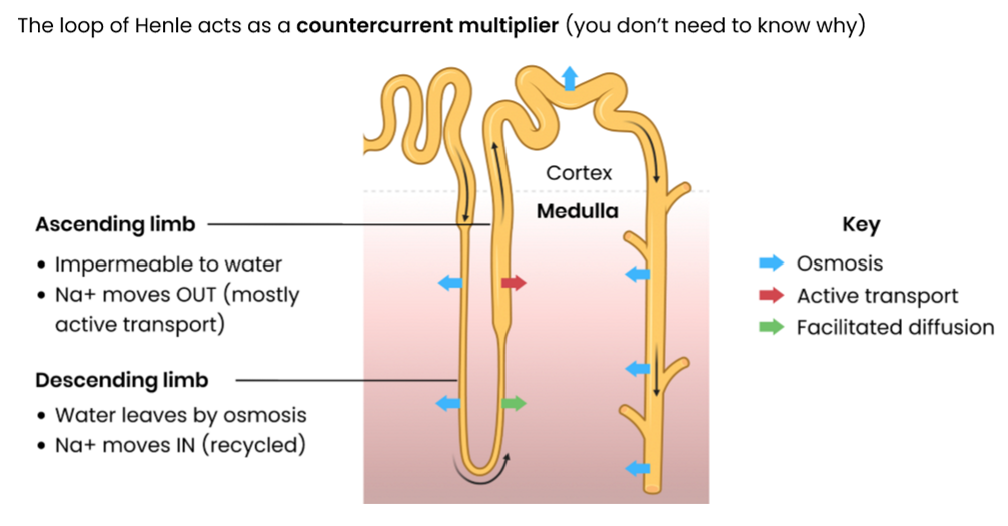
Describe the role of the loop of Henle in maintaining a gradient of sodium ions in the medulla
In the ascending limb:
Na+ actively transported out (so filtrate concentration decreases)
water remains as ascending limb is impermeable to water
this increases the concentration of Na+ in the medulla, lowering water potential
In the descending limb:
water moves out by osmosis then reabsorbed by capillaries (so filtrate concentration increases)
Na+ ‘recycled’ → diffuses back in
Suggest why animals needing to conserve water have long loops of Henle (thick medulla)
more Na+ moved out → Na+ gradient is maintained for longer in medulla / higher Na+ concentration
so water potential gradient is maintained for longer
so more water can be reabsorbed from collecting duct by osmosis
Describe the reabsorption of water by the distal convoluted tubule and collecting ducts
water moves out of distal convoluted tubule and collecting duct by osmosis down a water potential gradient
controlled by ADH which increases their permeability
What is osmoregulation?
control of water potential of the blood (by negative feedback)
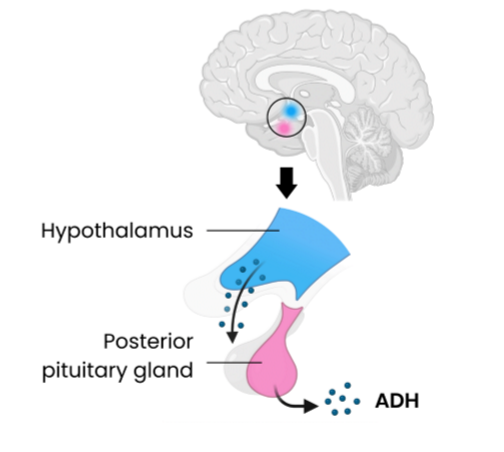
Describe the role of the hypothalamus in osmoregulation
contains osmoreceptors which detect increase OR decrease in blood water potential
produces more ADH when water potential is low OR less ADH when water potential is high
Describe the role of the posterior pituitary gland in osmoregulation
secretes (more/less) ADH into blood due to signals from the hypothalamus
Describe the role of the antidiuretic hormone (ADH) in osmoregulation
attaches to receptors on collecting duct (and distal convoluted tubule)
stimulating addition of channel proteins (aquaporins) into cell-surface membrane
so increases permeability of cells of collecting duct and DCT to water
so increases water reabsorption from collecting duct / DCT (back into blood) by osmosis
so decreases volume and increases concentration of urine produced
The above applies to a decrease in water potential of the blood (e.g. increased sweating, reduced water intake, increased salt intake). The body responds to an increase in water potential in the opposite way (less ADH secreted, less attaches to receptors, less addition of channel proteins, permeability remains low, less water reabsorption, higher volumes and increased concentration of urine etc).
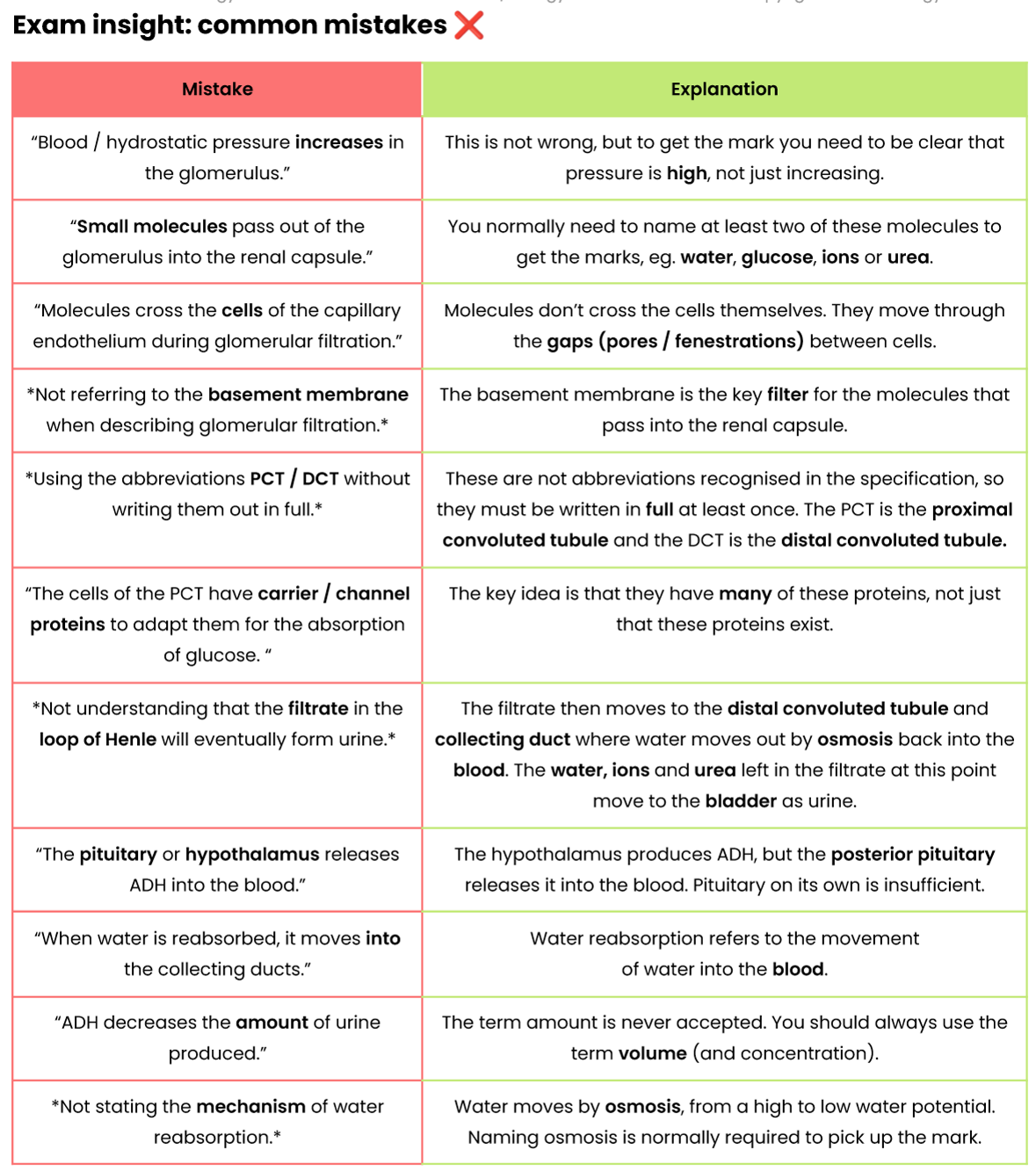
Exam Insight: Common Mistakes