Topic 2 - how do we conduct/interpret research in sport and exercise psychology (9qs)
 Call Kai
 Learn
Learn Practice Test
 Spaced Repetition
 Match
Match Flashcards
 Knowt Play
1/27

There's no tags or description
Looks like no tags are added yet.
Name | Mastery | Learn | Test | Matching | Spaced | Call with Kai |
|---|
No analytics yet
Send a link to your students to track their progress
28 Terms
antecedent vs consequences
Antecendets
Things that happen in ur brain that lead to the decision to do or not do exercise
Consequences
How exercise affects ur brain
How do we know the antecedents and consequences? what is the spectrum of research knowledge from very confident to basically clueless
via...
- the scientific method
- systematic observation
-single case study
- shared public experience
- introspection - when u examine thoughts and feelings
- intuition
what r the 4 objectives of science? what are examples of this applied to exercise psychology science
1. Describe: Accurately describe what the phenomenon is
eg. describe low exercise adherance rates
2. Explain why the phenomenon exists
eg. identify barriers and facilitstorss
3. Predict: Anticipate an event prior to its occurrence
eg. identify people at risk for low rates of exercise adherence - e.g., girls > boys)
4. Control: Ability ti manipulate the antecedent conditions (independant variable) that determine the occurrence of a given event
- (e.g., design and test an intervention to support increased exercise adherence among girls)
5 steps of the scientific method
1. develop the problec
2 make a hypothesis
3. design the study
4. gather the data
5 analyze and interpet the results
step 1 of scientific method Developing the problem:
this is where ur making ur research question
how?
- by identifying ur IV and DV
step 2 - formulating the hypothesis (when do we need a hypothesis and what is it)
it is the expected result/prediction, must be testable!!
- not needed during exploratory or qualitative research
how to generate?
- based on lived expereince, other research studies or theories
step 3 designing the study - types of studies
1. observational study: just observing a population. without manipulating variables
eg. looking at teh trajectory of particpation of girls in sport
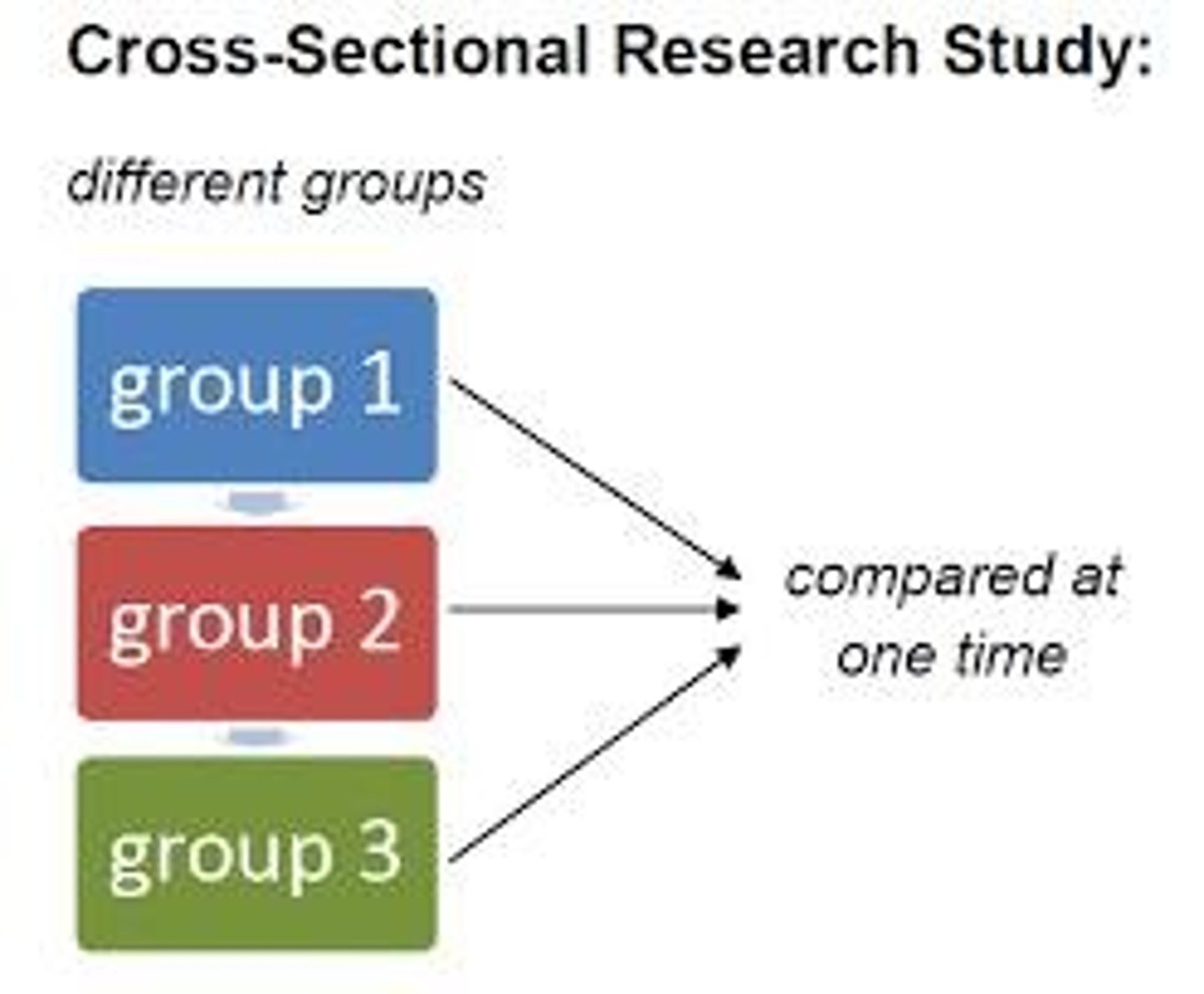
2. Cross sectional dtify: comparing dif groups at one point in time w/o manipulating IV
eg. comparing body image bw exercisers, non exerc iser and athlets
3. experiemental designs: you do manipulate the IV to test cause and effect
exaple designs of observational studies
- Describe/Compare/Observe
- Cohort studies (following people over time)
- Case control studies
pros and cons of cross sectional designs
pros:
- low administation
- quick
- can observe meanigful differences
cons:
- common to assume causation when it is just a correlation your abserving
examples of experiemental designs
- Pre-Post Design: Measure outcomes before and after an intervention
• Quasi-Experimental: Manipulation of the independent variable
No control group
- quasi-experimental longitudinal: Manipulate independent variable, Observe the same group over time (eg, week 0,5, 10)
• Randomized Controlled Trial (gold star): Participants are randomly assigned to groups, Includes both manipulation and control
Longitudinal Randomized Controlled Trial (RCT): - Manipulate AND control independent variable (exercise) and observe over time
pros and cons of quasi experiemntal longitudinal designs
Pros • Change can be observed across time
Cons • High administration • Drop out • No control condition
pros and cons of RCT
pro
- con observe change over time
- can be confident in causation of the intervention
cons:
- HIGH ADMN
- high drop out especially from control
types of Synthesis and Review Designs
**Used to draw conclusions across multiple studies
Systematic review
Very rigourous
• Meta-Analysis
Systematic review that include mathematical calculations
• Narrative review
Less rigorous
Allows researcher to reflect on the data
• Rapid review
Less rigorous
how do we define exercise to mesure it in research?
define: PA, leisure time PA, exercise, organized sport and copetitive sport
Physical Activity
Any movement that results in an increased energy expenditure
Leisure Time Physical Activity
Physical activity done in one's leisure time
Exercise
A form of leisure time physical activity done to achieve a specific objective
Organized Sport
Physical activity setting that involves sport (may or may not be competitive)
Competitive Sport
Physical activity setting that involves competitive sport
what do we use to meaure PA and exercie
FITT principle
- frequency
- intesnity
- time
- type
When measuring exercise we use these fitt prinicpal in thinking about how we design our study:
Eg. diff intensities or frequencies af exercise can effect body image differently
Eg. your antecedent will be difference for a 10k run vs a 15 min run
step 4 of scientific method: gatherin the data - types of measures used in research
- self report/survey (can be logged or recalled after)
- objective/technical (eg. accelerometer or HR monitors)
- observational
types of measures for atecdents vs concequence
atendedents (eg. motovation) can be measured w:
- survey/questionare
- self report
- obsercational *not the best
consequences (eg. depession, body image)
- survey/questionaire
- medical diagnoses
- symptoms/medication
- observation of behaviour
what is an operational definition
clearly and concise define what your variable are and how theyll be measured (with what units)
Eg. what is physical activity? Physical activity will be measured by accelerometers as number of steps taken per day
HOW measured:
• Objective - accelerometer (fit bit)
WHAT units:
• Number of steps per day
2 types of validity
interna validity: how well the results of a DV can be attributed to the manipulation of the IV and not other factors
external validity: how well the results of the dv can be generalized beyond the research setting
how to maximize btoh tyeps of validity
internal:
- control for confounding variables either through design or statistics
eg. make sure all students get same sleep and food before test so exercise is only contributer to grade
eg. have them tell us how much sleep, screen time, breakfast etc to consider them in analysis **more realistic
- ensure ur using appropiate mesurment
- use a control group
- make a standardized protocol
external:
- make sure sample is generalizable and representative (eg. use dif genders, races,aages)
- have study relfect real life conditions
- follow up to see if effect last over time
- replicate results
step 5 of scientific method: analysing and interpreting results
why?
The describe the observations (eg in qualitative data)
Support or refute the hypotheses
To compare with other research, theories or other sources of info
**Must avoid overgneralizing result and REMEMBER: correlation ≠ causation
what is effect size
used in quatitative data that quantifies the SIZE of the difference bw 2 means and HOW significant the difference is (dif from p-value which just tells you if there is a sig dif)
unit = COHENS D
scientific vs practical meaning of effect size
Scientificlaly: Only variable that qaultifies the size fo that difference eg. SD, samples size
Practically: if we want to make decisions based on a just a pvalue can be risky because you wnat to be sure there is enough of a different practically depending on the research quesrion
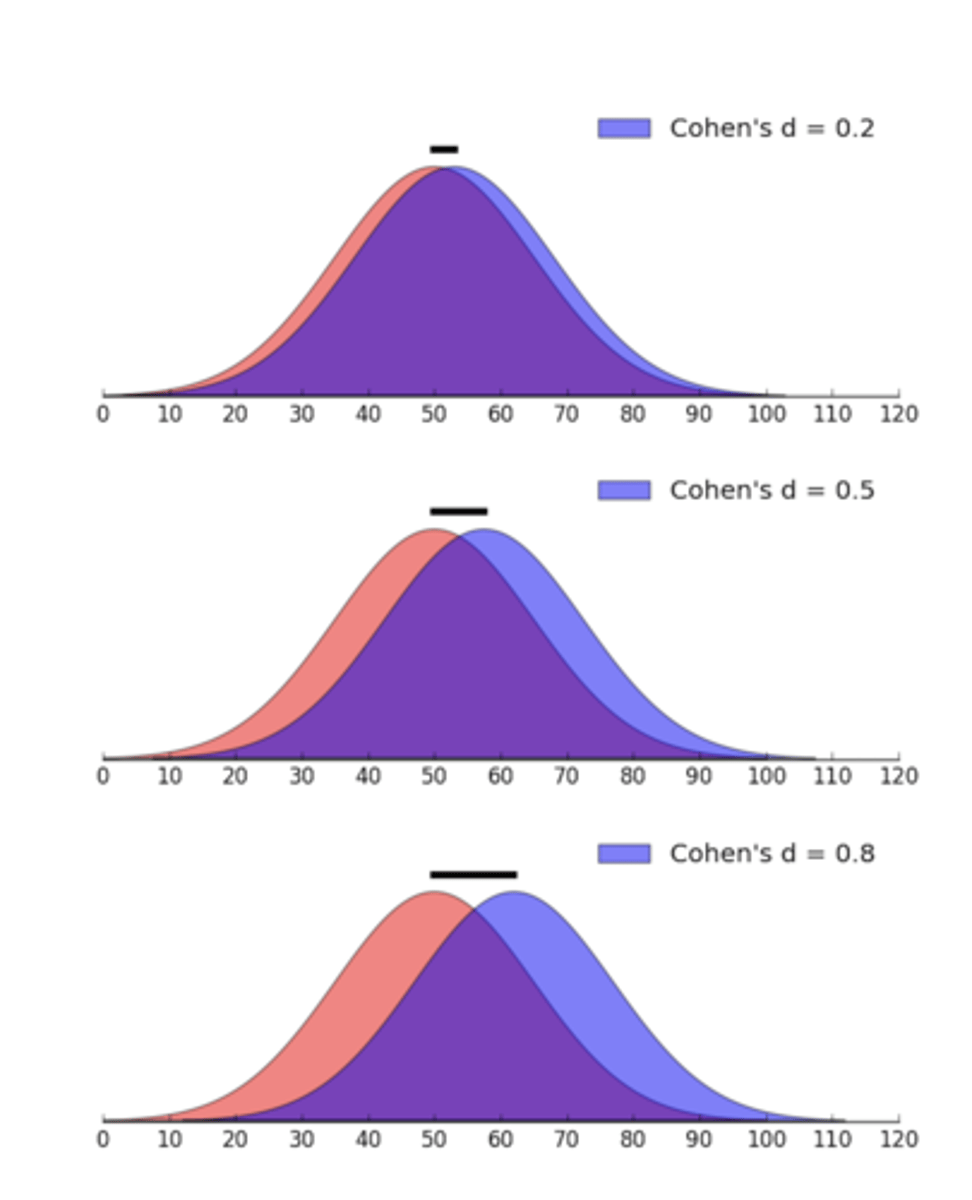
Cohens D
= tells us HOW much of a significant difference tehre is bw 2 means (in unit of standard deviations)
= mean 1 - mean 2/ pooled SD
interpretation of cohens d
*the larger the effect size the more likley the intervention works
SMALL ~0.2
MEDIUM ~0.5
LARGE ~0.8
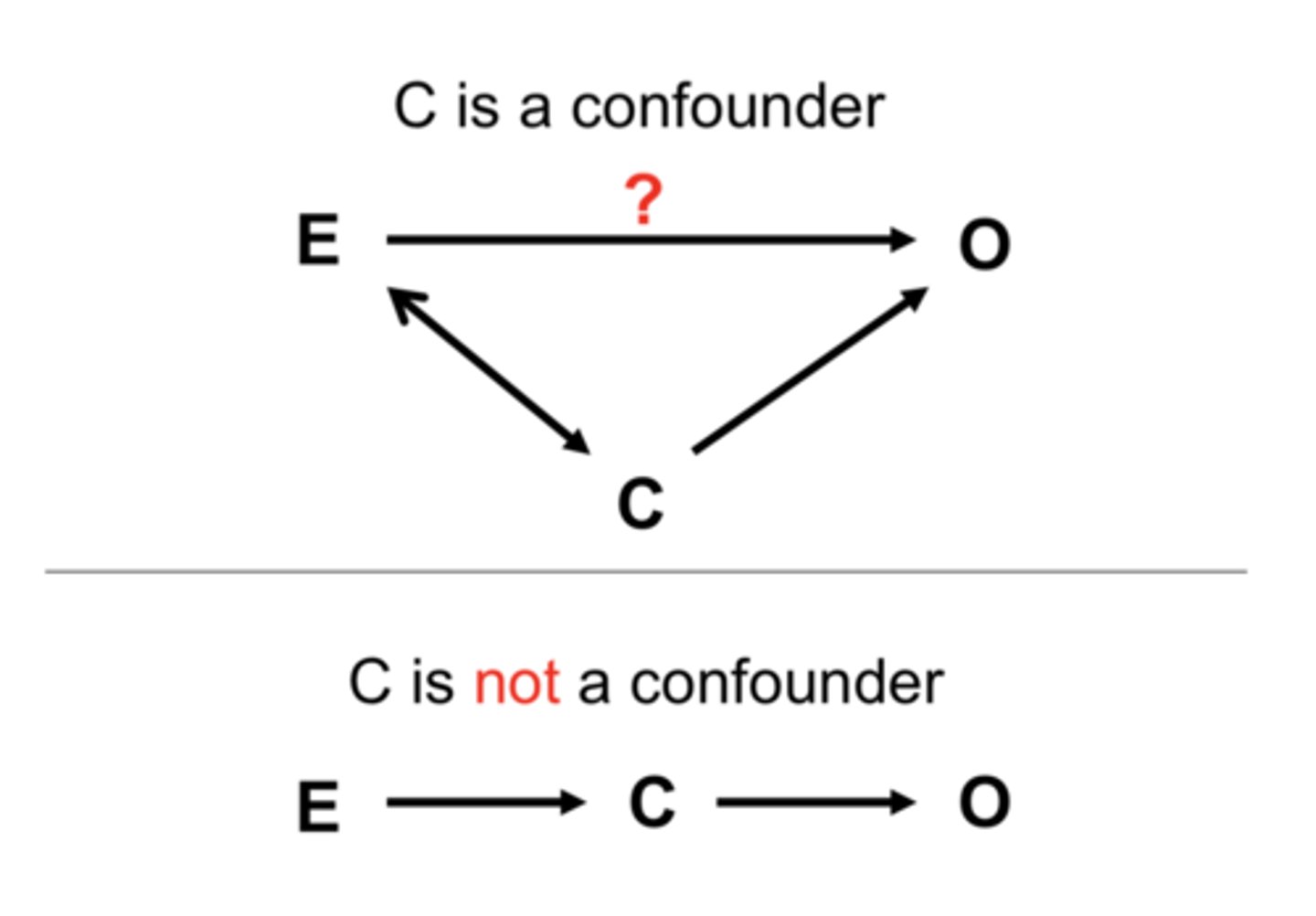
What is a Confounding Variable?
variable that affects the variables being studied so the results do not reflect the true relationship between IV and DV
- can be measured or unmeasured
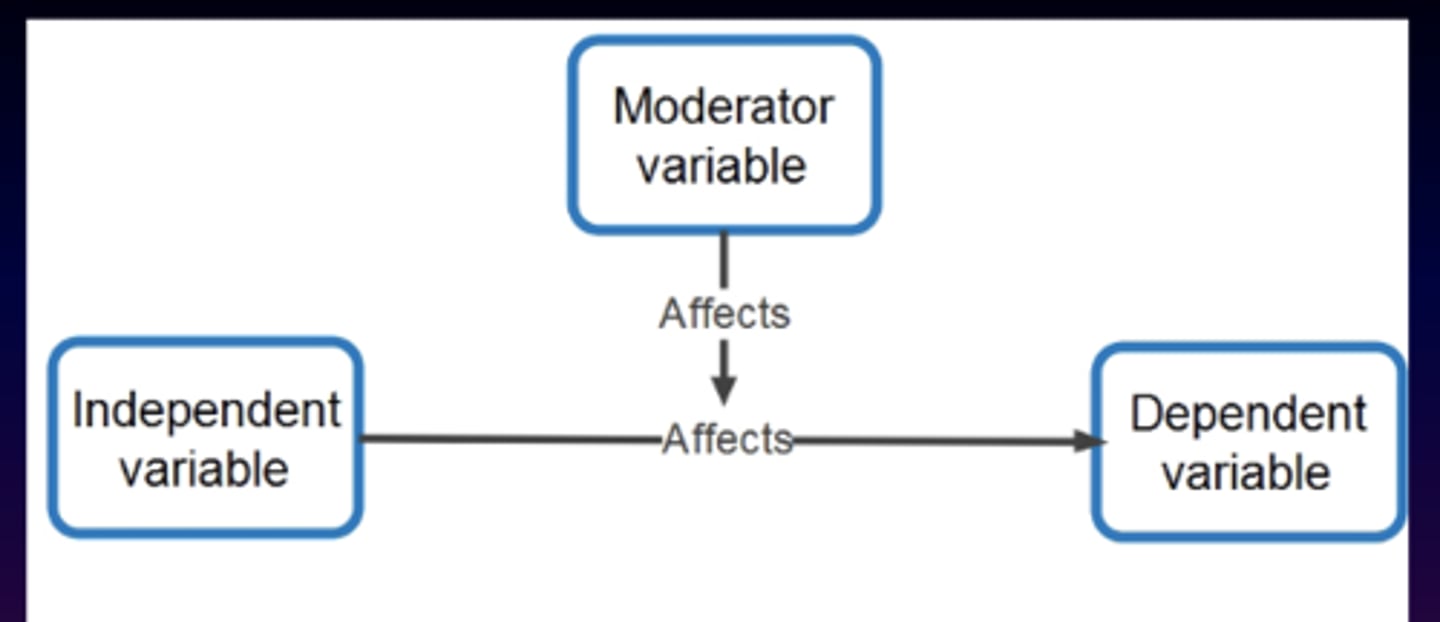
What is a moderator?
A variable that alters the direction or strength of the relationship between IV and DV
Eg. IV = body weight, DV = body satisfaction
Moderator = what your satisfied with, ur current body, who and when you measure
Moderator Questions:
When?
For whom?
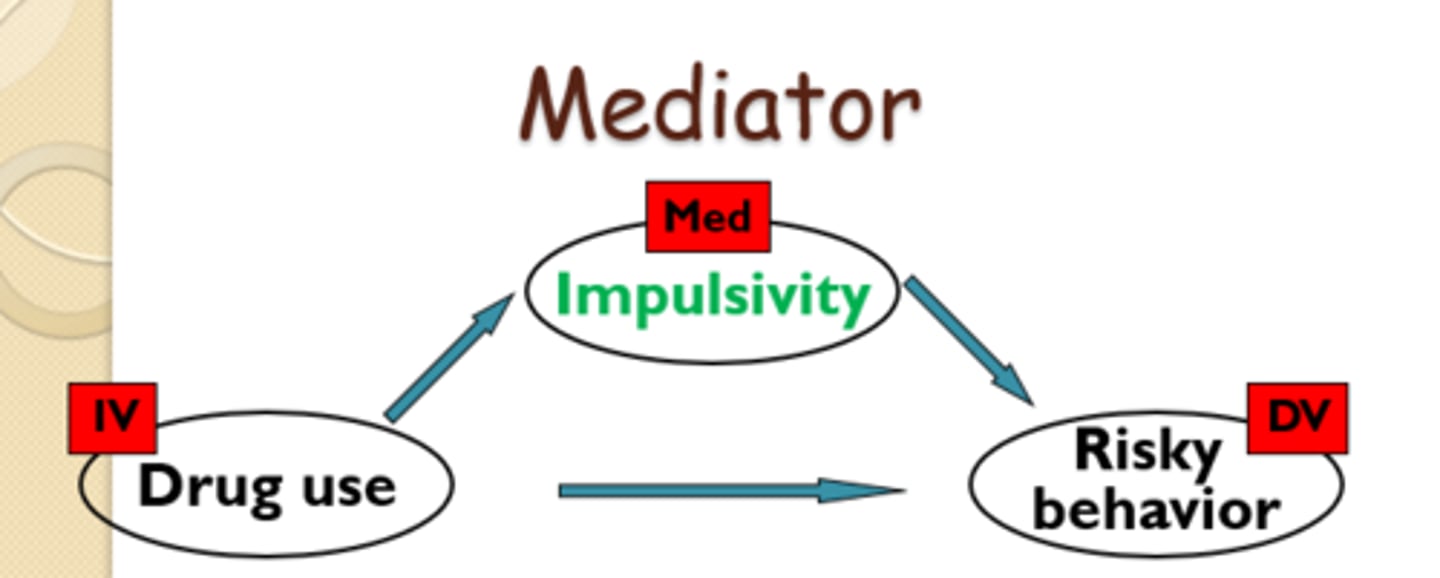
What is a MEdiator
Mediator = mechanism
a variable that explains the effects of the independent variable on the dependent variable
Eg. incr blood flow to brain (mediator) bc of exercise (IV) incr grades (DV)
Mediator Questions:
How?
What mechanisms?