CHP 18 BLOOD
 Call Kai
 Learn
Learn Practice Test
 Spaced Repetition
 Match
Match Flashcards
 Knowt Play
1/68

There's no tags or description
Looks like no tags are added yet.
Name | Mastery | Learn | Test | Matching | Spaced | Call with Kai |
|---|
No analytics yet
Send a link to your students to track their progress
69 Terms
Hematology
the study of blood
myths about blood
-the “4 humors” keep in balance = heathy body
-drain “bad blood”
where were the first blood cells first seen?
in the 1st microscopes
circulatory vs cardiovascular system
CIRCULATORY = heart, blood vessels, AND BLOOD
CARDIOVASCULAR = heart and blood vessels ONLY
Functions of Circulatory System
-Transport
-Protection
-Regulation; homeostasis
What is blood?
Liquid connective tissue + cells + extracellular matrix
What are the two main components of blood
1) Blood Plasma = liquid portion = matrix
2) Formed Elements = solid stuff = blood cells/fragments (SEVEN OF THEM)
What are the 7 kinds of formed elements in blood?
1) Erythrocytes = RBCs
2) Thrombocytes = platelets (cell fragments from bone marrow)
3) Leukocytes = WBCs
Granulocytes
Neutrophils
Eosinophils
Basophils
Agranulocytes
lymphocytes
monocytes
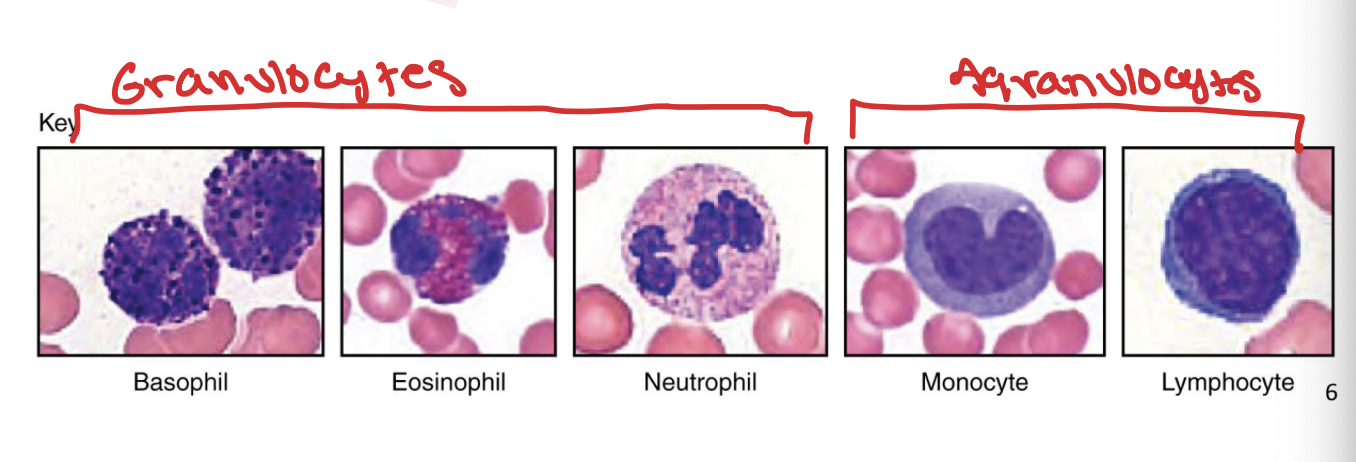
How to remember most common to least common leukocytes
NEVER
LET
MONKEYS
EAT
BANANAS
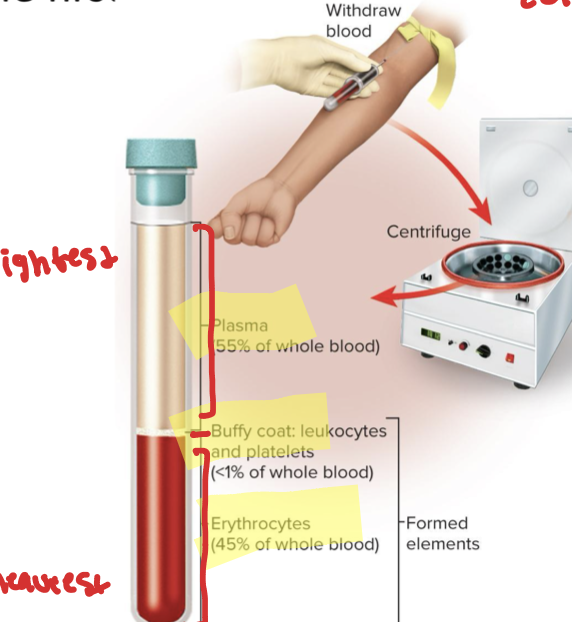
What is a hematocrit
centrifuge blood to separate components (how much plasma compared to blood cells?)
therefore how much oxygen blood can carry
levels of hematocrit in the bottle:
HEAVIEST to LIGHTEST
-Erythrocytes (RBCs)
-Leukocytes (WBCs) + platelets (*BUFFY COAT*)
-Plasma
The main categories of STUFF in plasma
-Plasma Proteins (Albumins, Globulins, Fibrinogen)
-Nitrogenous compounds (free amino acids or nitrogenous wastes from catabolism)
-nutrients
-gases (O2 + CO2 + nitrogen)
-electrolytes (Na+)
what are the plasma proteins?
1) Albumins = smallest most abundant, viscosity, flow, osmolarity
2) Globulins (antibodies) = immune functions
alpha
Beta
Gamma
3) Fibrinogen (PRE PROTEIN) = precursor of fibrin (that will help form blood clots)
how are plasma proteins made
albumins and fibrinogen by the LIVER
globulins by plasma cells
What is Viscosity?
“how thick is the fluid?”
-resistance to flow
-plasma + whole blood is more viscous than water (IMPORTANT FOR CIRCULATORY FUNCTION)
Osmolarity of Blood
the total molarity of dissolved particles that cannot pass through blood vessel wall
ex: NaCl (2 osmolar)
ex: MgCl2 (3 osmolar)
levels of osmolarity and impacts
TOO HIGH = BLOOD absorbs TOO MUCH WATER, blood pressure increases
TOO LOW = TOO MUCH WATER in TISSUE, blood pressure drops = edema
PERFECT= body regulating sodium ions, proteins, red blood cells effectively
Hemopoiesis
(Hemogenesis)
production of blood
where does hemopoiesis occur
-Hemopoietic tissues (AKA preembryonic/fetus tissues)
-hemocytoblasts
Hemopoiesis in Hemopoietic tissues
1) Yolk Sac = stem cells turn into red blood cells
2) liver = stops making RBCs at birth
3) Spleen = remains involved w lymphocyte (one of the 7 formed elements) production
hemopoiesis in red bone marrow
*MAKES ALL 7 FORMED ELEMENTS
a) Mulipotent stem cells (many kinds) called HEMOCYTOBLASTS (cells that build blood)
b) Colony-forming unit = specialized, forms only one class of formed elements
Myeloid Hemopoiesis
Blood formation in the bone marrow
Lymphoid Hemopoiesis
Blood formation in the lymphatic organs (beyond infancy only includes lymphocytes)
the main function of Erythrocytes
THE PIZZA DELIVERY GUY
GAS TRANSPORT
carry oxygen FROM lungs to cell tissues
carry CO2 from cells TO lungs
why are erythrocytes shaped the way they are
-biconcave shape (lost nearly all organelles during development)
-we don’t want to loose oxygen (cause they are the main gas transport guys);
Anaerobic fermentation to make ATP (no oxygen use)
no nucleus + DNA (no protein synthesis or mitosis bc that uses high amounts of ATP)
How do blood cells keep their shape?
cytoskeletal proteins (spectrin and actin) give membrane durability and reliance so the blood cells can squeeze through small capillaries
TWO IMPORTANT guys that assist in gas transport in blood cells
Hemoglobin = deliver oxygen to tissues and CO2 to the lungs
Carbonic anhydrase (in the cytoplasm) = takes CO2 and makes carbonic acid = NO BUBBLES
Hemoglobin contains:
FOUR PROTEIN CHAINS
-adult = 2 beta + 2 alpha
-fetus = 2 gamma + 2 alpha
FOUR HEME GROUPS
-bind to Fe (iron) in the middle
-what oxygen clings to giving the red color to blood
Why hematocrit levels lower in women?
-men have more ANDROGENS (testosterone) that stimulate RBC cycle
-menstrual losses
-higher % of body fat (cause less androgens in women)
Erythropoiesis (PROCESS!!!!)
A Type of hemopoiesis specially for red blood cells
1)hemopoietic stem cell
2) erythrocyte colony forming unit (stimulated by erythropoietin = MAKE BLASTS)
3)erythroblast
4) shrinks + looses nucleus = reticulocyte (immature cell)
5) erythrocyte
Process of Liver Metabolism (PROCESS!!!)
1) EAT IRON
2)stomach acid takes Fe3 to Fe2
3)Fe2 binds to gastroferritin
4)transport to small intestine (highly acidic to mildly basic = RELEASE IRON)
5) iron binds again to transferrin
6) goes to liver
7) binds to apoferritin to be stored as ferritin OR remaining transferrin keeps going past liver to make hemoglobin, myoglobin, etc
How and why do we store iron?
iron = allows us to store oxygen in our cells and not have bacterial growth
Liver apoferritin binds to make ferritin (YAY WE CAN STORE IRON!)
Erythrocyte Homeostasis (PROCESS!!!)
TO MAKE OR DONT MAKE BLOOD CELLS (negative feedback loop)
1) DROP in RBCs = hypoxemia detected by kidneys
2)produces erythropoietin
3)release it
4) stimulates growth of red bone marrow
5) increases erythropoiesis= more RBCs= more O2= happy body
why might we increase erythropoiesis?
-hypoxemia (low levels of O2)
-high altitude
-increase in exercise
-loss of lung tissue in emphysema
Erythrocyte Death (PROCESS!!!)
- circulate for 120 days until death starts
1) IN THE SPLEEN AND LIVER, separate Heme from Globin
2) Globin into amino acids, iron removed from heme
3) Heme into biliverdin (green)
4) converted into bilirubin (yellow)
either out as urine
or continues to liver
5) remove bilirubin into bile
6) into small intestine to make urobilinogen (brown) = feces
Polycythemia
having an excessive amount of RBCs
-DANGERS; increase in blood volume, pressure, viscosity (clotting) = stroke, heart failure, embolism
Primary Polycythemia
BAD
cancer of erythropoietic cell line In red bone marrow
too high RBC= too viscous= too hard on the heart
Secondary Polycythemia
Eh its not too horrible
from dehydration, high altitude, physical conditioning, emphysema
Anemia
low RBC concentration
3 consequences:
1) tissue hypoxia and necrosis (low oxygen and death)
2) tissue edema (too much water weight)
3) blood viscosity low (cardiac failure)
3 causes of Anemia
1) Inadequate erthropoeisis (We don’t make enough)
Iron-Deficiency anemia
pernicious anemia (autoimmune attack on stomach = not enough B12)
hypoplastic anemia (slowing of erythropoiesis)
aplastic anemia (complete STOP of erythropoiesis)
2) Hemorrhagic anemias (we loose too many, bleeding)
3) Hemolytic anemias (we destroy too many)
Blood Antigens (Agglutinogens)
-sit on cell surface of blood cells
-determine blood type
-over 200 known, 3 specific (A,B,Rh)
Blood Antibodies (Agglutinins)
-proteins secreted by plasma cells to bind to antigens and MARK them for destruction
-found in plasma
Agglutination
“clumping”
antibody binded to antigen
= incompatible transfusion = BAD
What determines RBC antigens
glycolipids on RBC surface
Universal donor and receive is:
donor = O-
receiver = AB+
Hemolytic disease of the newborn
Rogam given to mom to give her antibodies to neutralize Rh factor
so even if the second pregnancy is Rh+, baby won’t be attacked by moms antibodies
Leukocytes functions
-least abundant formed element
-protect against pathogens and microorganisms
-roam around mostly and do not stay in the bloodstream
-have organells for protein synthesis
-ALL have lysosomes (nonspecific granules)
-granulocytes or agranulocytes
Neutrophils
-granulocyte leukocyte
-msot common
-antibacterial
think "pus”
Eosinophils
-granulocyte leukocyte
-parasitic infections, destroy large
Basophils
-granulocyte leukocyte
-”allergies”
-histamine = increases blood flow to injured area
-heparin = anticlogging, let more WBCs into the area
Lymphocytes
agranulocyte leukocyte
-most complicated
-destory human cells
-coordinate actions of other immune cells
-’the big guy’
monocytes
agranulocyte leukocyte
transform into macrophages
“sprinkle” cells with antibodies to dsestory them
Leukopoiesis
type of hemopoiesis specific to production of white blood cells
hemopoietic stem cells turn into:
1) myeoblasts = granulocytes (in bone red bone marrow)
2) monoblasts = monocytes (in red bone marrow)
3) lymphoblasts = lymphocytes
Thrombocytes
-platelets
-fragments of megakaryocytes
-HUGE can be seen w naked eye
Functions of thrombocytes
vasoconstrictors (smaller pipes)
Stick together (plugs)
Secrete clotting factors (so fibrin can make clots)
attract neutrophils and monocytes to inflammation sites to phagocytize bacteria
secrete growth factors (HEAL)
Thrombopoiesis
type of hemopoiesis specific to making thrombocytes
stem cells to megakaryoblasts to megakaryocytes
Hemostasis (PROCESS!!!)
STOPPING bleeding
1) vascular spasm
pain sensed = constrict the blood vessel
platelets release serotonin = “time to repair”
2) platelet plug formation
broken vessels expose collagen
STICKYYYY makes the platelets stick together = plug
releasing of a lot of stuff as the platelets stick together
Positive feedback loop continues until the vessel is sealed
3) blood clotting (coagulation)
converting plasma protein (fibrinogen) into fibrin to make framework of CLOT
procoagulants (clotting factors) activate a reaction cascade
IF AN EXTERNAL CONFLICT = extrinsic pathway = two proteins = fast
IF INTERNAL CONFLICT = intrinsic pathway = four proteins = complicated
BOTH CONVERGE on common pathway at Factor X, AND BOTH NEED CALCIUM
then it goes to Factor V (take prothrombin and convert to thrombin)
makes fibrinogen
convert to fibrin
make a fibrin polymer
BLOOD CLOT HORRAY
hemorrhage
excessive bleeding
Fibrinolysis
dissolution of a clot
-Factor XII speeds up kallikrein enzyme that converts plasminogen into plasmin (BREAKS UP THE CLOT)
how to prevent random clotting
1) Platelet repulsion (non stickiness)
2) Thrombin Dilution (blood flows rapidly)
3) natural anticoagulants
Heparin = interferes with prothrombin activator
Antithrombin = deactivates thrombin
hemophilia (3 types)
hereditary diseases w messed up factors
1) SEX LINKED (recessive X chromosome)
Hemophilia A = missing factor IX, bleed out easily
Hemophilia B = missing factor IX
2) AUTOSOMAL
Hemophilia C = missing factor XI
hematoma
masses of clotted blood in the tissues (bruises)
Thrombosis
abnormal clotting in UNBROKEN vessels
thrombus
stationary clot
embolus
clot that moves around
Pulmonary embolism
clot breaks free, travels from veins to lungs
Infarction
tissues death that can occur is clot blocks blood supply to an organ
How to prevent clots
1) Have less Vitamin K in your diet (because Vitamin K is required for formation of clotting factors)
2)Aspirin = suppresses thromboxane A2
3) anticoagulants: medical leeches snake venom
how to get rid of clots clinically?
1) Dissolving clots that have already formed
Streptokinase = enzyme made by streptococci bacteria
Tissue Plasminogen activator (TPA) = faster, more specific, transgenic bacteria
Hementin = produced by giant amazon leech

