Carburetor/Amp, Magnetos, Manifold Pressure, Alt/Master Switch, Preignition
 Call Kai
 Learn
Learn Practice Test
 Spaced Repetition
 Match
Match Flashcards
 Knowt Play
1/18

There's no tags or description
Looks like no tags are added yet.
Name | Mastery | Learn | Test | Matching | Spaced | Call with Kai |
|---|
No analytics yet
Send a link to your students to track their progress
19 Terms
When to turn carburetor heat on / how it works
carburetor is an induction system (fuel to air mixture) that uses a venturi. The speed in the venturi when descending can cause ice to form.
pre-flight: pull carburetor out then lean the power. Propeller should continue to spin.
(pull the carb heat out to adjust for the lack of power)
don’t turn carb heat on the ground through unfiltered air that can allow debris into the engine
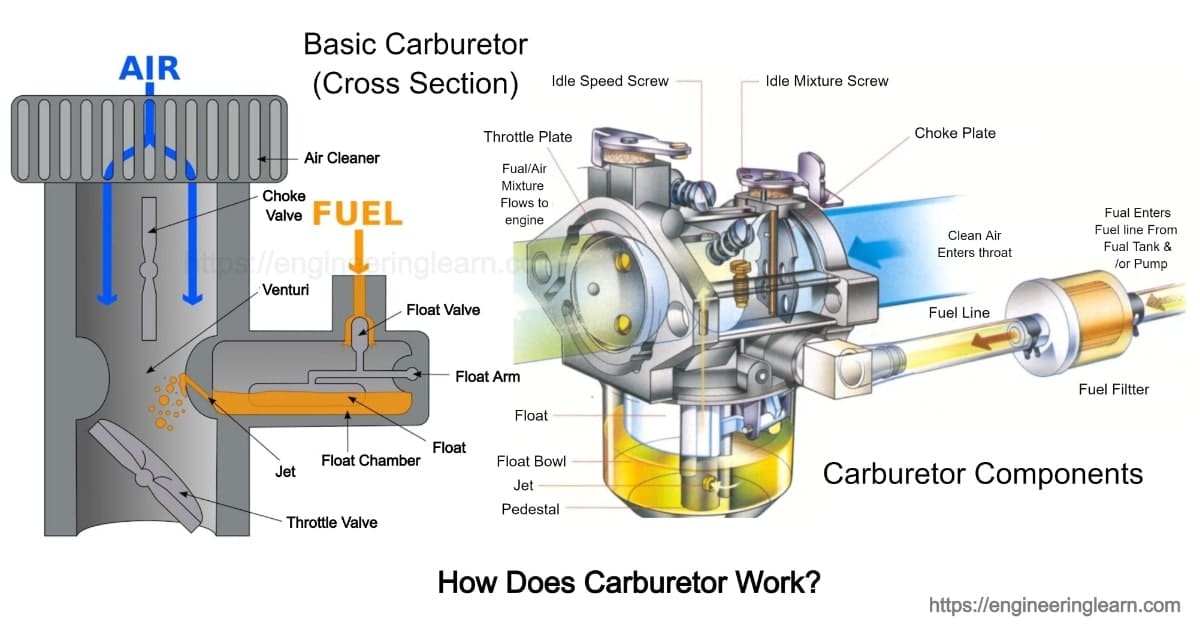
Applying carburetor heat will
enrich the fuel/air mixture
If carb ice is present, how will you know?
Reduction in power and rough running engine - rpms drop
power/throttle vs mixture
mixture is the ratio, enrich is to add more air
throttle controls the overall flow of the mixture
Practicing PTT
How to Talk to ATC (Beginner's Guide) - Pilot Institute
Who you’re addressing, who you are, what direction you’re coming with how many statue miles out, what you plan to do, repeat who you’re addressing
What is an alternating current AC/DC
Alternating current generated by the alternators converting mechanical energy into direct energy.
ALT/Master
two different levers next to each other
ALT controls the alternator
An alternator is an electrical generator that converts mechanical energy into electrical energy in the form of alternating current (AC). - does this in part by using the alternator belt. Powers the battery.
Master controls electrical power and alt. It draws energy from the battery that the alternator produces.
What are amps?
Amps are a rate at which electrons are measured through a current circuit
Amp in the positive / high voltage
We want a positive amp in preflight - means alternator is charging the battery
If high voltage appears it means the amp is pulling energy from the battery and that the alternator is not helping to produce maintain the batteries lifespan.
This is important because we don’t want an electrical failure. Could affect our lights, radios, navigation
What is manifold?
Pre-ignition
ignition of fuel prior to normal ignition or before the electrical arcing occurs at the spark plugs. May be caused by excessively hot exhaust valves, carbon particles, or spark plugs and electrodes heated to an incandescent, or glowing, state. These hot spots are usually caused by hot temperatures encountered during detonation. The different between preignition and dentation, is that if detonation conditions exist in one cylinder, they usually exist in all cylinders, but preignitions only takes place in one or two cylinders.
Can cause you to experience a loss in power and engine roughness
Hobbs Vs Tach
Hobbs is what pilots use to log hours. From when the engine starts and stops. (when master switch is on?) It starts first.
Tach time is measured in RPMs and is for maintenance.
How much max should magnetos dip when checking during startup?
150-175 RPM (fact check this)
The difference in each dip should not exceed 50RPM
Suction gage check
essential for gyroscopic instruments to ensure they have a normal level of suction between 4.5-5.4 inches of mercury
Suction vs Vacuum
Strobe lights
white flashing lights usually on tail and tips of wings to outline aircraft
What airspeed should you be at during takeoff and landing?
Take off 70-80 KIAS (knots of indicated airspeed), landing with flaps 60-70 KIAS, landing without flaps 65-75 KIAS
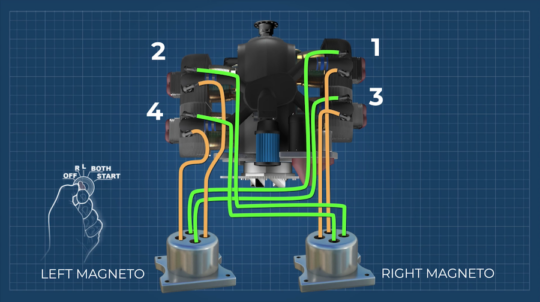
Magnetos
Is part of what causes the ignition to start. As the engine runs, the crankshaft is open which leads the rotors to spin and come into contact with the stator creating electric current. At this time, when the ignition turns on, the breaker is opened causing a disruption in this energy. So, the energy is sent to the distributor that directs the energy to the spark plugs and starts the engine.
Explore top notes

