08. AVMA euthanasia guideline 2020
 Call Kai
 Learn
Learn Practice Test
 Spaced Repetition
 Match
Match Flashcards
 Knowt Play
1/225

There's no tags or description
Looks like no tags are added yet.
Name | Mastery | Learn | Test | Matching | Spaced | Call with Kai |
|---|
No analytics yet
Send a link to your students to track their progress
226 Terms
Adjunctive methods of euthanasia for swine
exsanguination, pithing
Electrocution is Acceptable With Conditions in swine euthanasia, what is the age indication?
If >3 days of age
What are the acceptable methods for euthanasia for lab fish (specifically zebrafish)
o MS 222 immersion
§ Adults & at or > 14dpf – for 30 minutes **NEW** following loss of rhythmic opercular movement
§ MS 222 alone NOT effective for ZF eggs, embryos, or larvae (< 14 days old)
o Rapid chilling @ 2-4C
§ Adults - 10 m past loss of opercular movement
§ Fry (4-14 dpf) - 20 min past
§ Not effective if <3dpf
o Immersion in dilute sodium or calcium hypochlorite – up to 7dpf
Rapid chilling is acceptable with conditions for other lab fish, specifically which ones?
tropical & subtropical sternothermic
Acceptable methods for euthanizing lab frogs (xenopus and rana)
· physical method while anesthetized.
· **NEW** sodium pentobarbital IV, intracelomically, or in the lymph spaces – acceptable
o CAVEAT – high doses often required & inconsistent time to loss of consciousness
Who is responsible for training personnel to perform euthanasia?
Each facility or institution where euthanasia is performed (whether a clinic, laboratory, or other setting) is responsible for training its personnel adequately to ensure the facility or institution operates in compliance with federal, state, and local laws.
define acceptable with conditions euthanasia method
May require certain conditions to be met to consistently produce humane death, may have greater potential for operator hazard, are not well documented in the scientific literature, or may require a secondary method to ensure death.
define unacceptable euthanasia method
o Methods deemed inhumane under any condition or the POE found posed a substantial risk to the human operator
define adjunctive methods of euthanasia
o that should not be used as a sole method, but that can be used in conjunction with other methods
What sign is use to gauge unconsciousness in animals?
loss of righting reflex
Agents that induce ____ prior to unconsciousness are unacceptable
convulsions
What cannot determine exact onset of unconscious ness?
EEG or electroencephalogram
What 3 signs must be present to confirm unconsciousness?
absence of corneal reflex, eyelash reflex, or rhythmic breathing
What sign can be used as the only sign to confirm death?
Rigor mortis
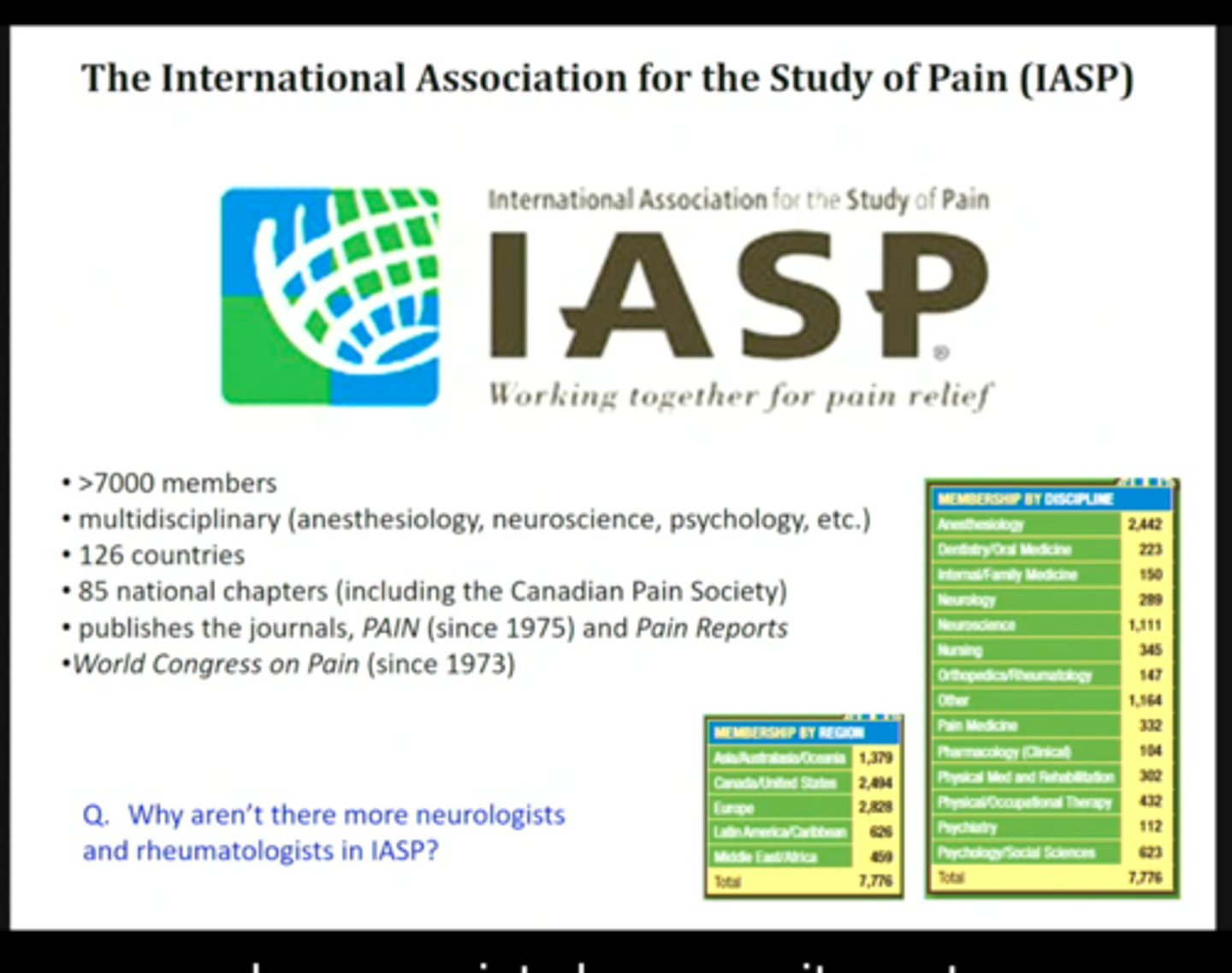
What is the definition of pain according to International Association for the Study of Pain (IASP)?
An unpleasant sensory and emotional experience associated with actual or potential tissue damage or described in terms of such damage.
Activity induced in the nociceptor and nociceptive pathways by a noxious stimulus is not pain, which is always a psychological state, even though we may well appreciate that pain most often has a proximate physical cause."
What agents should not be relied on to produce a truly unresponsive, disconnected, unconscious state, regardless of dose administered?
immobilizing, tranquilizing, or sedatives
What are the 3 main mechanism of euthanasia and examples of them?
depression of neurons - pentobarbital
hypoxia - displace oxygen with other gas
physical disruption of brain activity
What act protects wild animals and scavenging species from secondary poisonings (pentobarbital in animal tissue)
The Migratory Bird Treaty, the Endangered Species Act & the Bald and Golden Eagle Protection Act carry civil and criminal penalties
What are some recommendations from UFW to ensure scavengers cannot eat poisoned tissue?
o Incinerate/cremate animal remains whenever possible
o Immediately bury deeply according to local/state laws
o If ground is frozen, securely cover
o Review/modify local landfill practices to prevent access of scavengers
o Educate client on proper disposal, include warning on disposal of remains on euth consent form, tag bag with ‘poison’
Rendered ruminants cannot what?
be fed to ruminants
Magnesium salts are _________ as sole agent for euthanasia in many invertebrates
acceptable
2 multiple choice options
When using gas, unconsciousness depends on?
displacement rate, container volume, and gas concentration
If you habe a high initial gas concentration, uncinsouness happens faster but?
its more distressful
Inhaled agents for euthanizing Reptiles, amphibians, and diving birds and mammals is less than ideal because?
have a great capacity for holding their breath and for anaerobic metabolism
Noninhaled methods of euthanasia should be considered for these species and a secondary method is required to kill the unconscious animal.
What is the shortcoming of using Enflurane to euthanize animals?
At deep anesthetic planes, convulsions may occur. Enflurane is an effective agent for euthanasia, but the associated seizure activity may be disturbing to personnel.
Why can't nitrous oxide be used as sole gas agent for euthanasia?
effective dose is >100% so cannot be used alone or will produce hypoxia prior to respiratory or cardiac arrest
what gas is explosive and flammable?
diethyl ether
What is the solubility of Nitrous oxide, Methoxyflurane, Iso, Halothane, Enflurane and Desflurane in the order of most to least soluble?
Solubility: “Man HE Is Not Dead:
Methoxyflurane > Halothane > Enflurane > Iso > Nitrous oxide > Desflurane
What is the maximum exposure of halogenated inhaled anesthetics to personnel?
concentrations for halogenated inhaled anesthetics are not to exceed 2 ppm (1-hour ceiling) when used alone, or 0.5 ppm for halogenated anesthetics combined with 25-ppm N2O
What is the 8hr time limit cap for N2O, halothane, and enflurane?
50ppm
50ppm
75ppm
Inhaled Anesthetics are useful to be used in animals < ____ kg?
7
What is the order of preference for using inhalant in euthanasia?
Order of preference is isoflurane, halothane, sevoflurane, enflurane, methoxyflurane, and desflurane, with or without N2O.
“I Hate Seeing Every Mouse Die”
What gas is not acceptable at all?
Ether
what is the human risk associated with very low chronic exposure to CO?
CV disease and teratogenic
When using CO must ensure electrical equipment is?
spark free and explosion proof
CO is an acceptable euthanasia method with condition. What CO concentration should be inside the chamber after animals are placed in?
The CO flow rate should be adequate to rapidly achieve a uniform CO concentration of at least 6% after animals are placed in the chamber (unless neonate pig - less agitating if gradual rise)
N2 and Ar are aversive in rats, minks and dogs. They are not aversive in which two animal species?
chickens or turkeys
less head shaking and open-beak breathing than birds exposed to CO2
N2 and Argon is acceptable with conditions for what two species?
chickens and turkeys
Ar or N2-CO2 gas mixtures is acceptable with conditions for euthanasia of pigs, provided animals can be directly placed into a < ______% O2 atmosphere and exposures times > _____ minutes
< 2% O2 atmosphere and exposure times > 7 minutes are used.
Use of Ar or N2 is unacceptable for other mammals.
Carbon dioxide has the potential to cause distress in animals via three different mechanisms
(1) pain due to formation of carbonic acid on respiratory and ocular membranes,
(2) production of so-called air hunger and a feeling of breathlessness, and
(3) direct stimulation of ion channels within
the amygdala associated with the fear response
When do nociceptors respond to CO2 with pain?
40%
What pigs are excitable and react poorly to CO2 stunning?
Hampshire, german, landrace
What is the recommended displacement of Carbon dioxide?
a displacement rate from 30% to 70% of the chamber volume/min is recommended
How long should CO2 flow be maintained after respiratory arrest?
Whenever gradual displacement methods are used, CO2 flow should be maintained for at least 1 minute after respiratory arrest.
Can conscious rodents be immerged into a container prefilled with 100% CO2?
The practice of immersion, where conscious rodents are placed directly into a container prefilled with 100% CO2, is unacceptable.
What are some special considerations for CO2?
D0 mice and rats?
Newly hatched chicks?
adult minks?
Rabbits?
o D-0 mice & rats – 100% CO2 for 35-50 min
o Newly hatched chicks - >60% CO2 for > 5 m
o Adult mink – 5 m of 100% works but not 70% CO2
long exposure times
What species is CO2 euthanasia not acceptable for?
Rabbits at all
Should you expose animals to O2 when using CO2?
No, no advantage and not recommended
If an animal is anesthetized w/ inhaled anesthetics before should they be exposed to CO2 for euthanasia?
- there is no advantage for using CO2 after inhaled anesthetic exposure, also need to prevent rapid recovery during wash in of CO2 and wash out of anesthetic
Can animals euth by injectables enter food chain?
No
The only time you can use a paralytic FIRST (on awake animal) is if ______ and this must be followed up immediately by another euthanasia method.
wild or feral and otherwise “uncapturable”
You cannot combine euthanasia drug and _____ into 1 syringe
paralytic - paralytic works before euth
IF IV is not an option:
§ IP or intracoelomic of a _____ is acceptable
· intracoelomic MS222 is acceptable for some poikilotherms
· these routes will make stages I & II slower.
§ Intra-abdominal is acceptable for invertebrates with ____ circulatory systems.
§ Retro-orbital in mice of no more _____ – death within 5 seconds = acceptable with cond.
§ IO injections awake can be painful due to solution viscosity.
· Reduce pain w/
-“non-irritating barbiturate or other approved solution is acceptable”
-open
-200 ul of ket/xy, must be w/in 5 s
-analgesics, slower injection, etc. must be in preexisting IO catheter
What method is unacceptable in awake mammals and birds?
What are the 2 exceptions?
- intracardiac, IO or IO catheter placement, intrasplenic, intrahepatic or intrarenal
-intrahepatic in cats and IC in snakes and reptiles (if heart is standard area of venous access)
What methods are unacceptable in all awake animals?
IM (except ultrapotent opioids like etorphine & carfentanil and IM-approved inject anesthetics), SC, intrathoracic, intrapulmonary, intrathecal & other nonvascular injections
What drugs are FDA approved to be used to euthanize aquatic animals?
No FDA approved drugs for euthanasia of aquatic animals
When can a topical agent be used to euthanize an animal?
When skin is highly permeable and substance is nonirritating and rapidly absorbed (amphibians & 20% topical benzocaine)
All barbituric acid derivatives used for anesthesia are _________ for euthanasia when administered IV. Which barbiturate is the most commonly used euthanasia agent?
acceptable; Sodium pentobarbital (Schedule II)
2 multiple choice options
What are the general recommendations for barbuturic acid derivatives/pentobarbital combos?
o Preferred method for dogs, cats, small animals, horses
o IP or ICoelom used only if IV would be stressful or dangerous
o ICardiac, IM, IH, IRenal – only if unconscious or anesthetized (except IH for cats)
What tissue artifacts occur due to barbuturic acid derivatives/pento combos?
splenomegaly
Tributame(schedule III-controlled) is an ____________ euthanasia drug for ____. When is it acceptable for cats? Why? What is the only method of delivery?
acceptable, dogs
-only if pento not available - breathe agonally
IV
_______ has been used transmucosally in a lollipop form to euthanize captive ____________
Carfentanil (opioids); large apes
act on μ receptors to cause profound CNS depression, with death secondary to respiratory arrest.
Etorphine is another ultrapotent opioids
Ultrapotent opioids are only acceptable with what conditions?
-other method is dangerous/not possible
-second person must be available
T61 - not available in US - disadvantage?, acceptable only if given?
slow IV injection to avoid dysphoria, must restrain
IV only
Dissociative and alpha two agonists are acceptable with conditions. What are the conditions?
§ euth dose has been established
§ 1st step of 2 step.
§ Secondary means in already anesthetized animals
IV preferred, IM okay if IV not option
Potassium Chloride and Magnesium Salts are ______ when used in conscious vertebrate animals; _________ if injected IV or intracardially in an unconscious animal or animal under general anesthesia to induce cardiac arrest and death.
Unacceptable; Acceptable
acceptable only when other methods are unavailble or not feasible
Chloral Hydrate & α-chloralose(1,1,1-trichloro-2,2,-dihydroxy-ethane)
Unacceptable - sedate but unless combined w/ other drugs anesthesia is delayed
-better products out there
Death caused by hypoxemia
When is alcohol acceptable?
-step 2 in finfish (after rendered insensible)
-IP in mice used for antibody production
---mice at or >35d of age (if less than not acceptable)
---NOT for rats - too large volume needed and prolonged time
Tribromoethanol is acceptable under what conditions?
AVERTIN!!!
-low concentration as second step for finfish (immersion in 70% is NOT acceptable)
-mice >35d of age (never larger animals)
What species can Tricaine Methanesulfonate (MS 222, TMS) be used on?
FDA approved (Finquel and Tricaine-S only) for temporary immobilization of finfish, amphibians, and other aquatic, cold-blooded animals.
How should MS222 be prepared and stored?
buffered with sodium bicarbonate to pH of 7 to 7.5
The stock solution should be protected from light and refrigerated or frozen if possible. The solution should be replaced monthly and any time a brown color is observed.
How does the potency of MS 222 change in respect to water temperature?
Potency is increased in warm water and decreased in cold water.
When using MS222, how long do you have to wait after loss of rhythmic opercular movement to ensure death?
Immersion of finfish in solutions of MS 222 for 30 minutes following loss of rhythmic opercular movement
Death is due to decreased nervous and cardiovascular function.
Intracoelomic injection of MS 222 is __________ method of euthanasia for X. laevis and possibly other amphibians.
not an acceptable
Injection of MS 222 is not appropriate for finfish as rapid excretion via the gills renders it ineffective by this route.
2 multiple choice options
What is the withdrawal time for food fish with MS222
21 days
What Occupational hazard can MS 222 cause in human?
Occupational exposure to MS 222 has been associated with retinal toxicity in humans. Can't go into food chain
mechanism of action for benzocaine?
base blocks voltage gated Na+ channel (CNS and CV
Benzocaine hydrochloride is water soluble and can be used directly for either anesthesia or euthanasia of finfish and amphibians. Does it need to be buffered?
Topical 7.5-20% benzocaine HCL gel on amphibian’s ventrum is effective for anesthesia and euthanasia in some species and doesn’t require buffering (if it's HCL)
Benzocaine hydrochloride gel and solutions are ________ agents for euthanasia for NON FOOD finfish and amphibians.
acceptable
2 multiple choice options
Clove Oil, Isoeugenol, and Eugenol are ___________ agents of euthanasia for finfish.
acceptable with conditions
2 multiple choice options
What is the mechanism of Clove Oil, Isoeugenol, and Eugenol ?
inhibition of voltage-sensitive sodium channels within the nervous system
Clove oil is a human risk as it's a ______
carcinogen and possible paralytic
What species is it acceptable for
non-food fish
2-phenoxyethanol is an acceptable method of euthanasia for non-food finfish under certain circumstances
1 step immersion
Finfish should remain in solution for at least 10 min after cessation of opercular movement
MOA is unknown
Quinaldine is an _________ method of euthanasia for non-food finfish under certain circumstances (1 step immersion)
acceptable
2 multiple choice options
Quinaldine has lower water solubility it must be dissolved in what? It also must be buffered
ethanol or acetone
Metomidate- its listing in the Index makes extralabel use (eg, its use for euthanasia) ________
illegal.
1 multiple choice option
Sodium hypochlorite has been used to euthanize ________ and ________ zebrafish up to _____ days after fertilization
unhatched and hatched zebrafish up to 7 days after fertilization
Hypochlorites are ________ as the sole means of euthanasia of organisms beyond these embryonic and larval stages.
unacceptable
2 multiple choice options
What are the recommendations for sodium hypochlorite?
o Acceptable at 1-10% conc for embryos and <7 dpf larva.
o Can only be used as 2nd step in 2 step method > 7 dpf.
o Once the develop nociceptive abilities – no longer acceptable as sole agent
Formaldehyde acceptable for _______ as these invertebrates lack nervous tissue
Porifera (sponges)
Formaldehyde acceptable as an adjunct for ________ and ______ AFTER they are unconscious ( using MgCL)
Coelenterates (comb jellies, corals, anemones) & Gatropod mollusks (snails & slugs)
Formaldehyde unacceptable as adjunct or primary for which species?
all others
Lidocaine hydrochloride given ______ is acceptable as a secondary method in anesthetized animals with what conditions?
intrathecal
-other methods unavailable, cost prohibitive, and proper carcass disposal can be assured
What injectables are only acceptable AFTER the animal is already unconscious?
magnesium sulfate, KCl, NMBs
What 3 physical methods of euthanasia can only be done as adjuncts?
exsanguination, stunning & pithing
Thoracic compression is only an ______ method.
adjunctive
1 multiple choice option
What are the signs of an effective Penetrating Captive Bolt?
immediate collapse and a several-second period of tetanic spasm, followed by slow hind limb movements of increasing frequency.
The corneal reflex must be absent and the eyes must open into a wide blank stare and not be rotated.
Where should the captive bold be placed?
directly against head
aim the same way you would for a gun shot
Penetrating Captive Bolt is _________ for horses, ruminants, swine, rabbits, dogs, and poultry.
Acceptable with conditions
2 multiple choice options

