Western Art II 1
 Studied by 0 people
 Call Kai
 Learn
Learn Practice Test
 Spaced Repetition
 Match
Match Flashcards
 Knowt Play
1/46

There's no tags or description
Looks like no tags are added yet.
Name | Mastery | Learn | Test | Matching | Spaced | Call with Kai |
|---|
No analytics yet
Send a link to your students to track their progress
47 Terms
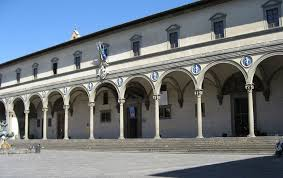
Foundling Hospital, Filippo Brunelleschi, Florence, 1420, Architecture, Early Renaissance in Italy, silk and gold manufacturers commissioned this
Subject: it is an orphanage - promotes charity and contributes to buildings to take care of the unfortunate children
Form: row of arches (arcade) in the front, advertisement in roundels on arches with relief sculpture of babies - directly from ancient Rome, relief sculpture that has the image project from the wall, columns have capitals and bases, pediment, taking classical forms and making them decorative, Corinthian order for columns, symmetry and order are very balanced, module - basic unit of measure repeated throughout a structure to help determine major divisions and proportions of the building (cube for this building),
Function: first fully Italian Renaissance building, features both classical forms and a focus on modern values (math, precision)!! very humanist
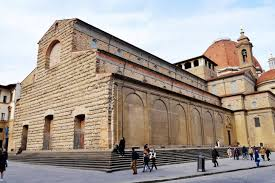
Church of San Lorenzo, Filippo Brunelleschi, Florence, 1420, architecture, early Renaissance in Italy
Subject: church dedicated to Saint Laurence
Form: is a Basilica plan church, simple exterior, round arch windows in clerestory, formed after Old. St. Peters, rectangular layout with cross arm (transept), modular cube plan also used here, apse/sanctuary, nave, chapels on the side, side aisles, dome is created above the crossing by round arches all around, coffers on ceiling, large Corinthian columns, arcade on the inside, oculus as part of dome, beautiful painting within it, somewhat triumphal arch feeling - triumph of the church/Christianity,
Function: public religious building, wanted to go back to early church designs in Rome, scaled down from Gothic vertical growth to emphasis of human achievement with Christ
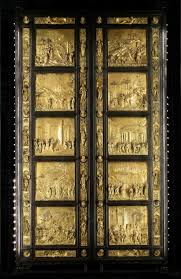
Gates of Paradise, Lorenzo Ghiberti, Baptistry of San Giovanni, Florence, 1420, sculpture, early Renaissance in Italy, commissioned by wool merchants guild
Subject: Florence Baptistry, doors that led into the building, “gates of paradise” show OT rebirth stories that have critical importance
Form: gold gilded, bronze large doors, deep relief and light relief to show closeness, square panels to show scenes, Ghiberti - growing awareness of artist’ impact on art and individuality (claiming the work with self portrait as a roundal)
Function: place for baptizing the faithful, important building, needed to be adorned
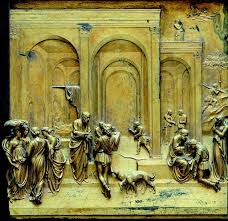
Jacob and Esau panel, Lorenzo Ghiberti, Baptistry of San Giovanni, Florence, 1420, sculpture, early Renaissance in Italy
Subject: Florence Baptistry, doors that led into the building, “gates of paradise” show OT rebirth stories that have critical importance, scene displayed is the story of Jacob and Esau
Form: deeper relief is closer to the present while the very light relief is the farthest moment in the past, lot of Roman architecture with rounded arches, pilaster columns (flat and square that projects slightly), capitals, and paneled floor to show depth, lot of folds in clothing like classical figures, movement back into space, conflated narrative - several different scenes are shown at the same time (7 separate events), moves back and forth from top left, to middle left moving right then moving to the bottom left and across the left, one point linear perspective used (mathematical equations to create lines that go back to one source to organize space symmetrically, orthogonals are the lines used to find vanishing point), humanist - vanishing point is at human eye level, lot of body underneath drapery, figures are scaled down accurately
Function: show a rebirth story and the redemption of those who were sinful but came back to God
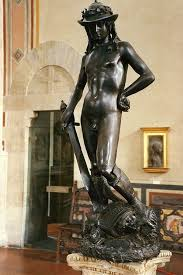
David, Donatello, 1420, sculpture, early Renaissance in Italy, commissioned by Cosimo de Medici
Subject: biblical story of David after he fought Goliath, made of bronze
Form: seen as a child standing on Goliath’s head with a sword in his hand and a hand on his hip standing triumphantly, naked because armor wasn’t him and to show human form, kind of cocky pose, nudity is heroic and not shameful anymore, idealized body, fit and athletic, youthful body, has boots and a hat - shepherd’s cap, has a stone in hand on hip, contrapposto stance, on top of laurel wreaths - symbol of triumph, free standing sculpture
Function: shows the triumph of humanity and how, with Christ, a person can be naked with no armor and still win against a terrible foe, David becomes Florence’s patron saint and hold him up as an inspiring image, first life sized, free standing nude sculpture since the fall of Rome in the 5th cent!!
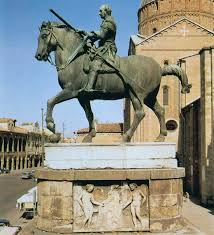
Equestrian Monument of Erasmo da Narni (Gattamelata), Donatello, Padua, 1440, sculpture, early Renaissance in Italy, commissioned just outside of Venice
Subject: 12 ft tall equestrian statue in the square of Padua, real life person named Erasmo da Narni, mercenary soldier
Form: bronze statue, horse is standing on a globe/earth, highly admired for efforts to protect Padua and Venice, very accomplished - humanist!!, revives ancient roman form (equestrian portrait to celebrate emperors), warhorse looks solid, dynamic in movement, commanding staff in right hand and sword hilt on left side, face is hard set and commanding vibe, sits proud and straight/confident, diagonal movement of moving forward, in control of beast - also very classical, portrait like face, very individualized serious face, armor being worn is classically inspired as well as contemporary
Function: appreciate the hard work of da Narni to protect the city and to inspire the people to believe that he will always protect them, monumental, elevate the individual
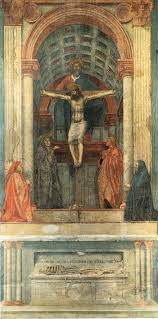
Trinity, Masaccio, Santa Maria Novella, Florence, 1420, painting, early Renaissance in Italy, commissioned by Domenico Lenzi and his wife
Subject: on the wall of Santa Maria Novella,
Form: spatial illusion created by Masaccio, one point linear perspective, stepped chapel space, deep composition, coffers in ceiling, wanted to create private chapel space of two donors who are represented praying in the piece, large columns, capital, full trinity present (God is above, Holy Spirit in the middle, and Christ below on the cross, roundels, Corinthian columns, foreshortening figures, bodies are somewhat visible underneath drapery, Mary is on Christ’s right and John the Evangelist is on the left, Mary’s gesture presents the Trinity to us the viewer, painted stone sarcophagus projects into space of viewer, true fresco, triumphal arch, ionic columns, barrel vault ceiling, Corinthian pilasters, architrave
Function: one of the earliest Italian paintings to incorporate one point linear perspective, shows how death is always a prevalent thought for the Christian so that they can be focused on Christ’s sacrifice and how material life is not forever
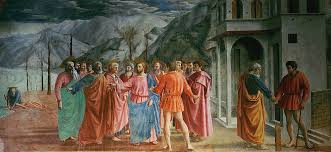
Tribute Money, Masaccio, Brancacci Chapel, Santa Maria del Carmine, Florence, 1420, painting, early Renaissance in Italy, commissioned by Felice Brancacci
Subject: part of a large series of frescos that Masaccio was commissioned to make for a private chapel, St. Peter’s life is the focus of these compositions, scene displayed
Form: fresco, shadows of figures are reflective of the window of the chapel, conflated narrative, story where Roman tax collector says they can’t enter without paying tax, Christ says he will pay the tax and has Peter go over to the river and was able to get enough money to pay the tax, halos are on the holy figures, bodies are somewhat visible underneath drapery, extensive background, story starts in middle, moves to left, and then to right, somewhat naturalistic water, lot of blues and greens, arches and clothing of the time period, Corinthian columns on the sides to frame the image, standing in contrapposto, focus is on Christ’s face with linear perspective, atmospheric perspective used (changes in geography and nature), lot of individuality in faces and poses
Function: meant to honor patriarch of their family who is named after St. Peter, subject is chosen because they wanted support for a new tax introduced that would help keep up their treasury, people weren’t happy but this scene reinforces the idea that Jesus paid His taxes, so should you (no one is exempt from the tax)
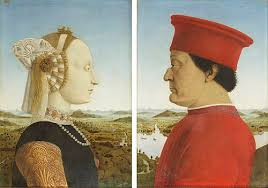
Battista Sforza and Federico da Montefeltro, Piero della Francesca, 1480, painting, early Renaissance in Italy
Subject: private commission by the Duke of Urbino, important patron, was a major proponent of the arts, this is a portrait of him and his wife
Form: figures facing one another - helps marriage identification, celebrates the individuals - humanist, expansive background, port city, uses atmospheric perspective, soft colors in back, strong facial details, wife passed away so this was done posthumously, he loved her greatly, clothing is very ornate and luxurious - pearl necklace, ribbon, fanciful leaves and collar), duke is wearing garb of his office, very light face for wife and darker skin for the duke with warts and crooked nose, back is also painted which displays roman chariots, victory and virtue figures, pelican piercing breast - charity, latin text below speaks to their virtue, original frame is very classical, Corinthian pilasters supporting a full entablature, both shown in profile (roman connections)
Function: show their importance and wealth through landscape, glorification of the two sitters
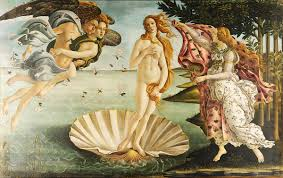
The Birth of Venus, Sandro Botticelli, 1480, painting, early Renaissance in Italy
Subject: mythological subject, Venus’ birth, private commission from the Medici family
Form: classical past, points of discussion for learning and debate, addresses the birth of beauty in the world, scallop shell, about to be covered by an attendant, personifications of breezes (north wind), little flowers around the breezes, reacting to environment, stands in contrapposto, very floral drapery, ideal female form in ancient Greece - shows appreciation for the female body but also maintain modesty (covering up body slightly), beautiful adorned gold long hair, somewhat developed background, gold on wings, edge of scallop shell, and on the sand, robust figures
Function: showcase their knowledge and education as well as wealth, modesty and appreciation for womanly form, status of the patron highlighted
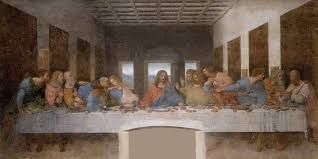
Last Supper, Leonardo da Vinci, Santa Maria delle Grazie, Milan, 1500, Central Italy, high Renaissance in Italy, commissioned by refectory in church, Duke of Milan - Ludovico Sforza
Subject: religious subject, scene from the Last Supper where Christ has just revealed that someone will betray Him and the disciples are reacting to the news, large scale
Form: anatomy is correct, one point linear perspective focused on Christ, windows frame figures, groups look natural and help order composition, Roman room with coffers and open doorways, slight landscape seen in background, fresco, monumental presence, gestures direct eyes, diagonals, new way of showing the scene with everyone on one side and having feet visible, atmospheric perspective, vanishing point at Christ’s head, figures all engage with one another connecting with gesture, Judas is not by himself and has a money bag to signify who he is
Function: show the Last Supper scene in a new way, a place for the monks to eat
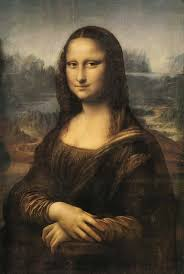
Mona Lisa, Leonardo da Vinci, 1500, Central Italy, High Renaissance in Italy
Subject: portraiture of a woman - very humanist
Form: atmospheric perspective, oil, wood panel, extensive landscape but unrecognizable, sfumato is used - soft blurring of edges, no lines and borders like smoke, soft hair edges, softness of clothing and hair on shoulders, term of respect (mona), wife of Florentine Banker, mysterious nature of her smile, gives character/personality - confidence, wanted her to be more natural/lifelike, one point perspective, ¾ view, green, brown, and yellow/beige colors, not just a bust shot, goes down to her hands - shows her confidence and presence, goes against societal norms by directly engaging with viewer, triangular form - unity and order, smaller painting than original, columns were on both sides of her, connect nature to humanity, mysterious and complex qualities of woman is mirrored in the landscape, face is illuminated, darker parts of her hair help frame her face - chiaroscuro
Function: commission is unknown, assumed to be a marriage gift, innovative display of portraiture, show the importance of sitter
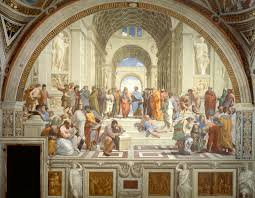
School of Athens, Raphael, 1500, Stanza della Segnatura, Vatican, central Italy, high Renaissance in Italy
Subject: scene where tons of classical figures come together to debate and discuss all kinds of ideas, knowledge, wisdom, art, theology, law, poetry, philosophy - humanist theme
Form: ideal beauty, fresco technique, creates painted sculpture, space is expansive within piece, barrel vaults, coffers, classical motifs everywhere, bright colors, grid flood, triumphant art, columns, large figures that represent art and wisdom, ancient Greek philosophers - Plato and Aristotle, Christian, Muslim, Jewish, and Atheist philosophers, portraits/figures of contemporary visionaries - humanist, engaged columns, pilasters, Doric columns, teachers talking to students, mathematicians, self portrait of Raphael, Pythagoras, Euclid, Donato Bramante is in image - THE architect of the High Renaissance, Ptolemy, natural poses, major gestures, classical forms - slender canon, individualized appearances, one point linear perspective, vanishing point sits between Aristotle and Plato, Heraclitus/Michelangelo - bulky and is resting on a block of stone (two point linear perspective)
Function: done for the papacy, private room of debate and signing important documents
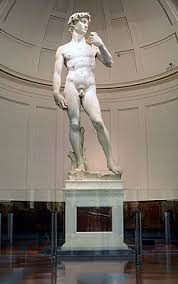
David, Michelangelo, 1500, central Italy, high Renaissance in Italy
Subject: religious subject, marble, moment as David enters the battlefield and is preparing for the task of defeating Goliath, Florence commissioned this statue
Form: monumental presence, naked, idealized body type, complex pose in some areas, contrapposto, all parts of the body are sculpted to human perfection, curly hair, heroic figure, veins, muscles seen in neck, makes him older so he can have more of an athletic body, physical and psychological charging taking place, hand seems to be fidgety, eyes are carved interesting - seems to be nervous, blood is coursing through body and neck is tense, looks like he will move forward and engage, furrowed brow, no fear/complete focus
Function: placed in the town hall, wanted to have an inspiration figure right in view and engage with, looks like he is ready to protect the people against threats
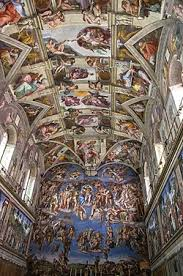
Sistine Ceiling, Michelangelo, 1500, Vatican, central Italy, high Renaissance in Italy
Subject: religious subject, displays a ton of scenes from history that are mostly religious but has secular figures who all predicted the coming of Christ
Form: ordered composition, 300 figures, everything fits in boxes, figures move out of spaces though to interact with each other, major scenes of OT are in the center area and significant figures are in the outside, fresco, seen in Genesis, Creation of Man, Banishment from the Garden of Eden, Flood of Noah/Drunkenness of Noah - major scenes that predict Christ’s coming and purpose, order and balance everywhere in complexity, move back in time as we approach the altar, figures are all idealized and unique (like statues), male prophets and female sibyls - all with distinguishable objects, little angels all over composition, important, OT scenes in the corners and ancestors over the windows, illusionistically display architecture with columns, bronze medallions, and sculpted figures, incredibly complex poses of figures - twisting and turning to show muscles and body parts in different poses than ever before, Creation of Adam: very direct in composition, monumental heroic figures, Jonah is above the altar - Jesus rebirth image, responding to God separating light from dark, God is larger than life, Adam is huge, landscape is boring, Adam is very detailed, leaning on his shoulder and strengthless even though he has lots of muscle, needs to touch God to get strength, emphatic gesture, God has entourage of angels and figures, Mary and Christ are present, in the shape of a brain, for us to be alive, God has to “touch” us, Hellenistic Greek type (heavily bulky), God is covered respectfully but is also a large figure
Function: called to Rome by the Pope to paint the ceiling
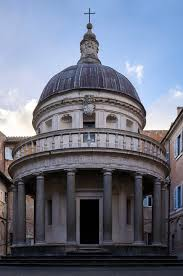
Tempietto, Donato Bramante, 1500, San Pietro in Montorio, Rome, central Italy, high Renaissance in Italy
Subject: “little temple,” cloister - garden space within the courtyard of a church
Form: central plan, circular designed structure, two leveled structure, circle - shape of perfection, associated high renaissance concept of God - cosmic mind containing a sphere of the entire universe, steps leading up to central structure, capped by a dome, reflection of Roman/Greek temple designs, Doric columns (frieze has triglyphs and metopes), elements to help it stand out as Christian: cross and globe on top, relief sculptures of crosses, chalices, and bibles
Function: reflection of motivations to build churches by early Christians, believed to be the cite where st. Peter was believed to be crucified - keep the focus on St. Peter and what he did for the church,
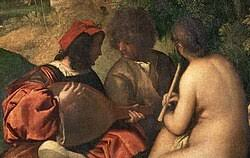
The Pastoral Concert, Titian, 1510, Venice, high Renaissance in Italy
Subject: inventive subject, not religious, focus is on two men playing instruments, wealthy dress, with two women around them
Form: vast countryside landscape, creating music, oil creates saturated deep reds, deep greens, softer yellows, details in grass and nature in the foreground, reflection of light on the glass jar, play of light on the bodies, effects of light hitting parts of the trees (aware of directional nature of light as it enters the landscape), soft atmospheric quality, women are idealized, atmospheric perspective in the distance with blue sky and the softening of details, individuals seem to be affected by air, slightly humid, classically inspired women, embracing nudity - men do not pay any attention, idea is that these are not real women but instead are allegory - symbolizes an idea, actually represent the Greek muses
Function: sense of harmony and nature, mood is contemplative, somber, quiet, show of growth and life
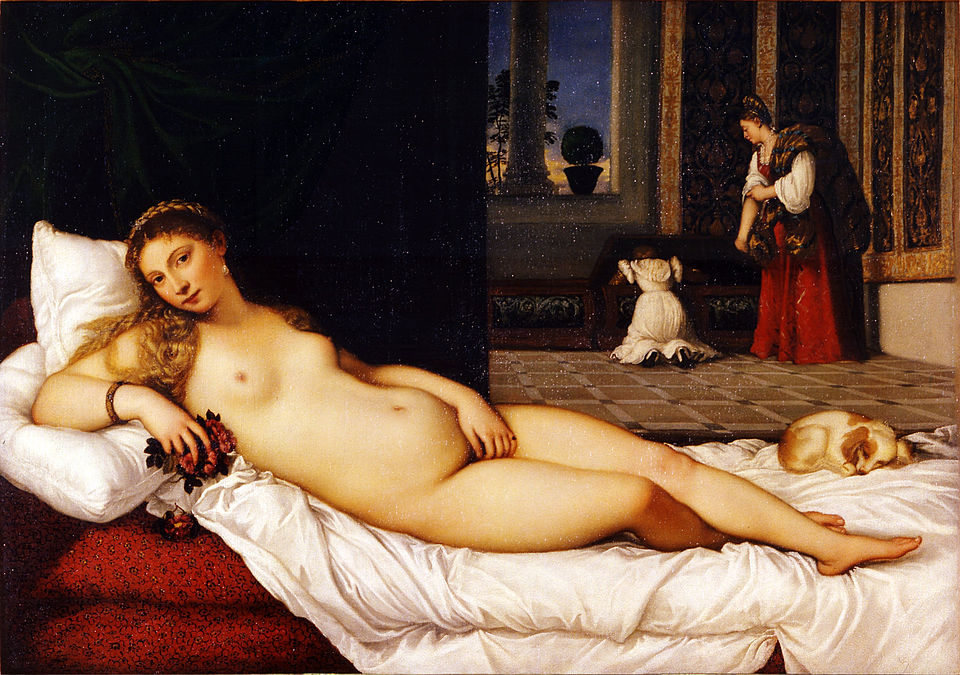
Venus of Urbino, Titian, 1530, Venice, high renaissance in Italy
Subject: unique subject, private commission - Duke of Urbino, “a beautiful nude”, a celebration of beauty meant for the male gaze, woman might be a prostitute,
Form: richness of color, pattern of cushion, tapestries in the background, curling of green velvety fabric, atmospheric background, grid like floor, paleness of skin, loose hair, intense detail in the folds of white drapery and pillows, dog is sleeping - represents relaxation and unprotected, full figured lady with soft skin and sense of warmth (idealized), woman is looking at viewer, attendants/assistants are rummaging through a chest for clothes for her (shows her wealth and status), one point linear perspective system, different levels of space, placed in a contemporary setting, not really mythological
Function: growing desire for paintings of reclining female nudes, uses the name venus to “allow” for more people to buy/create it and keep it slightly more respectable
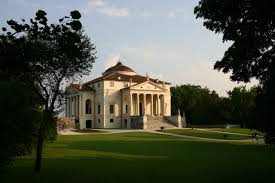
Villa Rotunda, Palladio, 1560, Vicenza, Venice, high Renaissance in Italy
Subject: example of a country home to escape city life, party and relax for the wealthy, unusual dome - wouldn’t normally put it on a private home
Form: taken inspiration from High Renaissance and classical buildings, familiar with ancient Roman architect - Vitruvius, classical temple porch - Roman staircase, ionic order, full entablature, triangular pediment, raised structure, rotunda/dome over the structure - direct inspiration from Pantheon, symmetry on all sides, lots of classical sculpture, porches are all the way around, balanced composition, central planned structure, atmosphere/view is different for each porch to give it variety
Function: take an inventive leap for architecture and create a classically inspired structure that went against modern and classical conventions
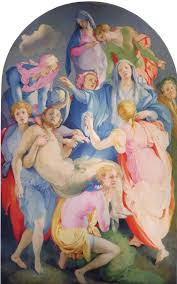
Entombment, Pontormo, 1530, Mannerism, high Renaissance in Italy
Subject: religious painting, Christ has been lowered from the cross and the figures are in grief
Form: oil, very saturated colors, crazy poses that are inaccurate, pinks and blues are major colors, hard to tell specifically what is happening since there is no tomb or cross, lot of women figures crying and grasping at each other, figures don’t seem to be standing firmly on the ground, the figures are so crowded together, no balance and symmetry, chaotic image, feels like a lot of figures are in the space, outfits are out of place too, some figures are huge (like Mary and Christ), dramatic gestures, lot of hands with no connecting bodies/confusion in limbs, bodies are stretching in unnatural ways and are not accurately colored, different light sources coming in which creates confusion, supporting weight is not really rendered well, continued line creates problems too - Christ’s back is a little too long, figures seem to be standing in air, stacked on top of each other, acidic colors, melodramatic faces - all the same kind of sad, elongated limbs!!
Function: rejection of classical tradition, trade anatomical correctness for beauty and elegance
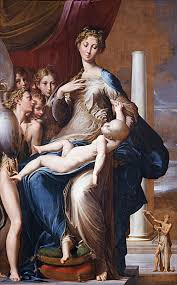
Madonna with the Long Neck, Parmigianino, 1530, Mannerism, high Renaissance in Italy
Subject: classic subject of Madonna and child but very different representation of the scene
Form: very elongated forms, twisting forms, doesn’t feel sweet and loving, holding the baby recklessly, not respectful to baby Jesus, also looks way older to be held like that, Mary’s proportions are long too, huge body but small shoulders, tiny person to the right of her - has a scroll and must be very far back to be so small, assuming a throne, hair feels wealthy, helpers to the side, not symmetrical - crowding of figures all crammed to Mary’s right, bodies are twisting but are very elegant, drapery in back is drawn accurately, not sure if they are angels, saints, or something else, classical column supports nothing in the back
Function: rejection of classical tradition, trade anatomical correctness for beauty and elegance
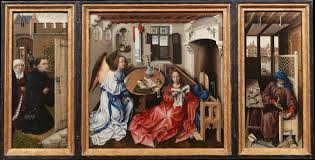
Merode Altarpiece, Workshop of the Master of Flemalle, 1420, early Renaissance in the North
Subject: traditional altarpiece, triptych, man and woman have come home to see Mary praying while Gabriel reveals the news of Christ’s birth to her, domestic interior, Annunciation scene
Form: anatomy is accurate, really wanted to capture fine details of various surfaces/textures, portrait of patrons is within the piece, figures are kneeling, body might be underneath drapery but not anatomically correct, meant to display their divine nature while in a scene that is relatable to the people, wings on Gabriel are interesting, towel in background highlights her purity, brick buildings, tall piers, awkward spatial depth, long bench, one point linear perspective not used, book shows her knowledge and piety with praying, intuitive perspective used, white lilies, drapery is her color, basin in background speaks to purity, roundel windows up top show a little baby Jesus flying through the window on golden rays with a cross - shows how she is pure, intact, and immaculately conceived Christ, pooling drapery, on the right panel is a scene of Joseph the carpenter engaged in wood carving - provide for his growing family, making mousetraps - used to draw reference to Christ’s role as the bait to trap the devil, grape press - blood of Christ, celebration of the holy Eucharist
Function: wanted to inspire personal devotion outside of the church within their homes,
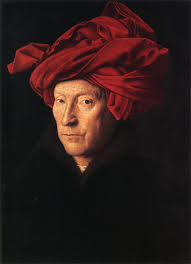
Man in a Red Turban, Jan van Eyck, 1430, early Renaissance in the North
Subject: self portrait of the artist, Jan van Eyck
Form: signed the painting at the bottom, 10 in by 7 in, fully utilizes oil on wooden panel, done with egg tempera - had to move fast, very detailed, deep reds, blacks, and oranges, ¾ perspective, staring right at viewer, greater sense of depth and life, intensity in eyes and gaze, incredible red turban on his head, wearing a garment that shows wealth and accomplishment, turban has so much detail and frames his face incredibly, background is black which blends into his coat, complexity in turban speaks to the complex thoughts and ideas he might have had in his head, eyes are very detailed, skin is super realistic with creases/wrinkles, real immediacy of presence,
Function: says at the top: “the best I can do,” way of being modest but also saying he is amazing at what he does
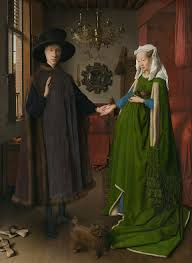
Double Portrait of Giovanni Arnolfini and His Wife, Jan van Eyck, 1430, early Renaissance in the North
Subject: portrait of celebrated individuals, Italian merchant that is very wealthy that settled in Flanders,
Form: domestic interior, interaction is curious, holding hands but he has his hand up as an oath (promise to get married), lots of objects that show symbolic meanings with marriage, little dog shows loyalty, mirror in the background is so detailed that you can see the backs of the individuals as well as other members, there is a signature right above it (signature of Jan Van Eyck as a witness to the betrothal), rosary beads on the back wall - speaks to piety along with mirror, chandelier is incredibly detailed, deep reds, greens, and browns, both wealthy individuals, every different texture displayed is very detailed, has taken his shoes off which are highlighted in the foreground - sacred ground, oranges on the side cabinet and windowsill - speak of wealth and exotic taste/ fruit and fertility, not a lot of body and anatomy under garments but they are really detailed drapery
Function: painting acts as an official document to say they are getting married
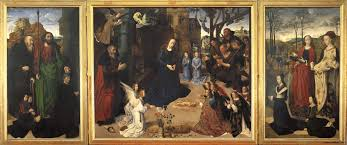
Portinari Altarpiece, Hugo van der Goes, 1470, early Renaissance in the North
Subject: altarpiece, triptych, huge display, Portinari family patroned this piece - connected to the Medici, nativity scene, the patrons are on the side panels
Form: patrons are in a state of piety and prayer while witnessing the nativity scene, males are on left and females are on the right, hierarchical scale, some are very large figures like Mary, saints are also big, little angels, somewhat developed background, subtle halos, St. Thomas is patron saint of the family, Saint Anthony for the little boy, St. Margaret is standing above woman and Mary Magdalene above the other girl, very detailed garments and surfaces, oil on panel, extensive images on the sides combine with central image, conflated narrative - left side has the trek to Bethlehem, middle is after Christ is born, and right side is the three magi who are making their way to where the star guides them (lost on their journey) - humanist, atmospheric and intuitive perspective used, little baby Jesus on the ground, Mary is before him, pooling drapery, shepherds, angels in all different clothing, oxen and donkeys, Flemish architecture in the background, lot of shadow work, shoes are off to show sacred ground, flowers in the front show Mary’s love, sorrows, and humility, also speaks to Christ’s passion, wheat is connected to Eucharist, grapes are rendered on the jar
Function: influenced Italian artists with oil and complex composition styles, good example of Northern European Renaissance Art
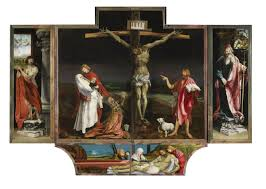
Isenheim Altarpiece, Matthias Grunewald, 1500, Germany, high Renaissance in the North
Subject: commissioned to serve as the main altarpiece for a monastic hospital, center scene is Christ being crucified, St. Sebastian (plague/health saint on the left), below is Christ being entombed, and St. Anthony Abbott (plague/health saint on the right)
Form: oil medium on wooden panel, thoughtful about his audience and how it would be viewed everyday, polyptych, harsh outside imagery, body types are thinner, not monumental besides Christ - random sizes, Mary Magdalene, John, John the Baptist, and Mary are all grieving - emotional focus of Germans Christ as sacrificial lamb holding a cross and chest is pierced to bleed into a chalice (holy Eucharist), near John the Baptist, dark background makes the figures really stand out, emotional grief while burying Christ, both outside saints are on pedestals, reference to Gothic figures, St. Anthony had internal problems like visions of demons (seen in upper corner in stained glass), great rendering of objects, Christ’s extremities are ugly and harsh - wants everyone to see the harshness of His suffering, thorns sticking out of his body, the twisting of having spikes driven through feet and hands, blood and grey lips, interior are scenes of cleansing and positiveness, complex details and architecture, arms are dislocated, a bit imaginative since the artist could not view examples directly
Function: image is not idealized and meant to fully show the pain and suffering of Christ, hospital treated skin diseases, plague, leprosy, and ergotism (fungus) so the figures on the sides would be called upon to help the people - St. Anthony is also the founder of the order, patients can feel better through Christ and they can know they are not alone (better things will come)
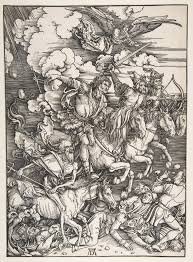
Four Horsemen of the Apocalypse, Albrecht Durer, woodcut, 1500, Germany, high Renaissance in the North
Subject: printmaking, woodcuts - introduction of the printing press, fully developed in the Northern Renaissance way - lots of wonderfully complex busy detail, very small composition, humanity is being knocked down and trampled by the Four Horsemen
Form: one point linear perspective, interested in the scientific rendering of nature, exposed to Italian art, precise carving, uses lines to create shadows, parallel lines to create modeling for forms, 3D forms, figures can stand out from dark background, curly hair, stippling to create texture with dots, shadows created, lot of horses, fear and anger represented, angel from heaven coming down, heaven is represented in top left - divine light coming down, varied aspects of scale and incredibly powerful and dynamic, lion like monster draws reference to the devil, emaciated bodies, plague and famine, war, conquest, and death, sense of urgency and overwhelming - destruction of world
Function: show the masses what the end times may look like according to Biblical prediction (Revelation),
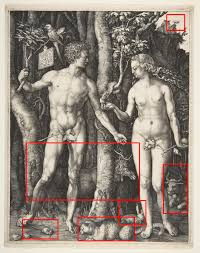
Adam and Eve, Albrecht Durer, engraving, 1500, Germany, high Renaissance in the North
Subject: print engraving, biblical scene where Adam and Eve are taking the apple of the tree of knowledge from the serpent against God’s wishes
Form: reflects the Northern and Southern art elements, hyper realistic people and animals, trees are accurate, extreme detail in all forms, naturesque background, wonderfully fine lines, creates shadow and dimension with ink, dense German forest, slightly idealized with muscles and strong forms (Adam is reminiscent of Apollo sculpture and Eve is reminiscent of Venus sculpture), stand firm on the ground in contrapposto, Adam is holding a branch with a bird and a sign on it - sign with his signature and the date of completion, curly hair, goat standing on a peak in the background, releasing of the bodily humors (fluids within bodies that affect our temperaments), animals are symbols (ox - phlegmatic, bunny - sanguine, mouse and serpent - devil, cat - choleric, elk - melancholy, parrot - ability to speak but not from own intellect (false wisdom)
Function: desire to add symbols and imagery to an Old Testament scene, connect Northern art
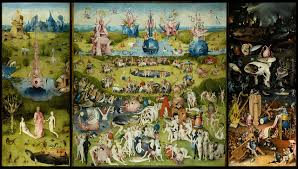
Garden of Earthly Delights, Hieronymus Bosch, 1500, Netherlands, high Renaissance in the North
Subject: made in Flanders, continued interest in Northern Renaissance, oil, religious subject that goes through the garden of Eden, to an excess of sinful behaviors, and then to hell
Form: very creative, saturated brilliant colors, triptych format, moves from left to right, largest scene is the excess of sin, left panel: Eden, God has just created Eve from Adam, lot of animals, rest is the rendering of paradise, very futuristic landscape, animals are attacking other animals which didn’t happen in Eden, middle panel: sinful behavior everywhere, water, landscape, futuristic scene with all kinds of people committing sin, lots of birds - have more order and sense of control than the humans, seed pods with thorns, lustful behavior, humans are acting like animals instead of sophisticated people, eating like animals, giant fruits, all naked people - not anatomically great, right panel: representation of what hell would be like, dark black, green, town at top is filled with smoke and grody river, moves down to weird imagery, sinful people are being tortured by demons, take the pleasurable things and make them torture devices - musical instruments have large scale and are being used to hurt people, people who engorge themselves in excess have to eat and drink so much so that they have to puke, women guilty of lust are being groped
Function: wants to comment on the sinfulness of humanity and the consequences of sin
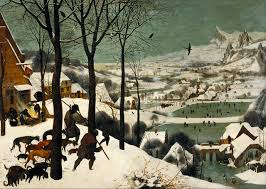
Return of the Hunters, Pieter Bruegel, 1560, Netherlands, high Renaissance in the North
Subject: a scene where a group of hunters are returning back to their town, oil on panel, part of a group that all show the seasons
Form: detail is lost, color change on horizon, winter scene, activities of winter with hunters, skaters on the ice, coldness is felt, people making fires, mountainscape, dogs, speaks to the relationships of humans and nature, seems like pure genre but not exactly, birds are in active motion, brick houses, fire is bright yellow, dark trees at the front, found from prayer books - slightly religious topic, true to winter in Netherlands
Function: promote the idea of genre painting and pure landscape
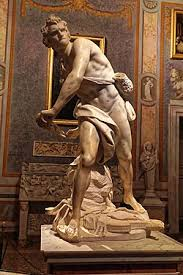
David, Gianlorenzo Bernini, 1632, Italy, Baroque art and architecture
Subject: commissioned by Scipione Borghese, religious subject, David as he slings the stone towards Goliath, marble medium
Form: face of struggle, mouth is small in a strained effort to sling the rock, directly engaged in the action, a moment in time, large scale, monumental presence, very muscular, hands are clearly in motion, objects on the ground: armor, harp, scene to show the value of God being on his side (faith in God’s strength), flesh looks real and soft/responding to twisting motion, bones are anatomically correct, focus on the difficult task in front of him, narrowed eye brows, curly hair, placement is purposeful
Function: emphasis on drama, intended to promote an emotional response from the viewer, clear meaning, realistic rendering, incite devotion and impact emotions, dramatic subject, should teach a lesson, direct and engaging
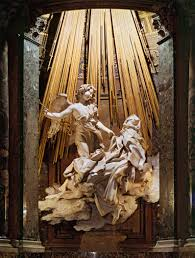
Ecstasy of St. Theresa, Gianlorenzo Bernini, 1632, Cornaro Chapel, Santa Maria della Vittoria, Rome, Italy, Baroque art and architecture
Subject: commissioned by Federico Cornaro, religious subject, scene where St. Theresa is having a religious experience, counter reformation saint, had a mystical vision where a saint came down from heaven to pierce her heart, spiritual experience of pain and love
Form: realism, believability, larger than life sized, unify painting, sculpture, and architecture, painted fresco at top - scene of heaven opening up and descending into the space of the viewer, figures are within the clouds, dove of the holy spirit - divine light, uses theatrical devices to add dimension, looks like actual three dimensional figures are coming down, believable element, middle scene: framing architectural stage focusing attention on main event, distinct white figures stand out from green columns, aware of classical types, organic sense of architecture, sense of energy and life, bronze covered in gold leaf, intensity of divine light entering the scene, direct counter to the protestants who did not want images of saints to be created, dynamic figures, golden spear with a point of fire, woman is in a state of unconscious with a thrown back head and eyes closed, limp body, loose arms, filling her with the spirit of God, angel has wings, light presence, beautiful thin garment, drapery is filled with an intense wind (spirit of God), woman’s drapery is very heavy, beams of light come down to create a dramatic background, two windows, dramatic lighting is key feature of the baroque, side theater boxes - sculptures of the Cornaro family, very detailed figures that have individualized features, roman architecture in background
Function: emphasis on drama, intended to promote an emotional response from the viewer, clear meaning, realistic rendering, incite devotion and impact emotions, dramatic subject, should teach a lesson, direct and engaging
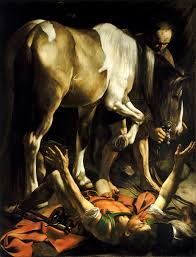
The Conversion of St. Paul, Caravaggio, 1600, Cerasi Chapel, Santa Maria del Popolo, Rome, Italy, Baroque art and architecture
Subject: religious subject, Saul, a figure who hunted down Christians, was on his way to Damascus and fell off his horse as the light of Christ blinds him (becomes Paul and converts)
Form: extreme contrast of light and dark, tenebrism, large presence of horse, dark intensity of light - divine light, transformation is a very Baroque image, dramatic gesture of Paul reaching up towards the heavens, horse has monumental presence, desire to impose a sense of immediacy and come into the space of the viewer, diagonal motion is very present - pulls us in, beautiful expression on face - communicating he has “seen the light,” man attending to the horse does not seem to be aware of the horse, armor and helmet, crowded image, groomer is sun burnt, red noses, wrinkled, dirt in fingernails, not idealized figures, horse is very beautiful, dynamic motion of horse, horse’s behind pops out at viewer
Function: emphasis on drama, intended to promote an emotional response from the viewer, clear meaning, realistic rendering, incite devotion and impact emotions, dramatic subject, should teach a lesson, direct and engaging
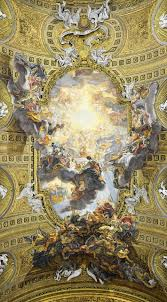
Triumph of the Name of Jesus, Giovanni Battista Gaulli, 1670, Il Gesu, Rome, Italy, Baroque art and architecture
Subject: ceiling fresco, over the nave of the church, heavens are descending into the earth,
Form: uses theatrical devices, Il Gesu is the headquarters for the Jesuits - worked hard to reassert authority, simple barrel vault, adorns the ceiling like it has three dimensional coffers with plaster, creates frame with plaster too - did this so that the figures can break out of the frame, shadows are created, elements within frame are divinely beautiful, tangling of forms, enhance light forms, dramatic lighting with divine light presence, not a dove but letters (IHS - Greek letters for Jesus’ name, symbolic presence of Christ), dynamic gestures of the people, di sotto in su perspective - as if seen from below, underparts of the clouds, naked figures, lot of dimension, arranges figures to create an embracing motion (semi circle), chaotic parts too of the sinners, tumbling/falling out of heaven, cluster of figures tumbling towards the earth where we stand, demons present to bring down the damned
Function: emphasis on drama, intended to promote an emotional response from the viewer, clear meaning, realistic rendering, incite devotion and impact emotions, dramatic subject, should teach a lesson, direct and engaging
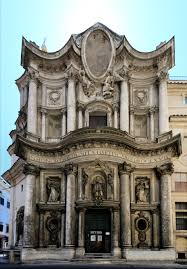
San Carlo alle Quattro Fontane, 1632, Francesco Borromini, Rome, Italy, Baroque art and architecture
Subject: St. Charles of the Four Fountains, architecture should be based in nature and have a sense of the organic, not rigid and geometric or mathematic, religious church, placed in the corner of two streets in Rome and fountains are there
Form: create a design that embracing preexisting elements, main facade and side facade, want to engage with the viewer, extend into our space, fountain is side facade - , not straight and rigid, full blown organic forms that make it feel alive, impact the emotions, experience of the church - excite passion, concave, convex, serpentine quality, carried through entirety of facade, tilted outward toward space of the viewer, maintained organic sense of energy on the inside, central plan design, caped by a dome, main facade facing the Neptune, octagons and crosses as coffers, illusion of expansion and contraction,
Function: emphasis on drama, intended to promote an emotional response from the viewer, clear meaning, realistic rendering, incite devotion and impact emotions, dramatic subject, should teach a lesson, direct and engaging
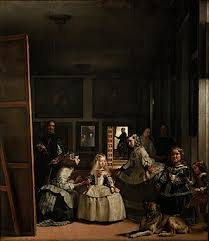
Las Meninas, Diego Velazquez, 1660, Spain, Baroque art and architecture
subject: monumental painting, 10 ½ by 9 ft, complex in subject, self portrait, group, and genre scene of everyday life in the royal court, seems to be a moment in their lives, not posed at all
form: figure in center is daughter, only living heir at the time, attended by maids, court dwarfs, dog, and other members of the court - nun chaperone, bodyguard, queen’s chamberlain, people are slightly blurred to show movement, very close to picture plane, dog is sleeping, everyone’s attention is drawn in direction that princess is looking, lot of interactions, something they need to react to outside of frame, king and queen seen in the reflection of the mirror on the back wall - this is who the rest of them were looking at, lot of complexity in movement and poses, reaching, bowing, stopped in motion, lot of light sources, front, back, and side, portrait is placed in Velazquez’ studio where he is working on a huge painting, they have come to see him, everyone to engage - says a lot about position in court, prestigious order of knighthood, reflects interest, paintings on back wall are mythological subjects painted by Rubens, divine participation in the arts, painting a subject of importance, brushes and pallets, maul stick, steadies his hand - heavy focus on him as a painter, dressed as a court officiant with keys
function: shows the status of Velazquez and the connections that he has with the royal family on a day to day basis, identifies painting as a liberal art - elevates the status of the artist, seen as craftsmen and not intellectual in the past, emphasis on drama, intended to promote an emotional response from the viewer,
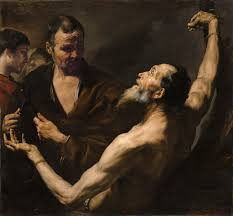
Martyrdom of St. Bartholomew, Jusepe de Ribera, 1632, Spain, Baroque art and architecture
subject: realistic portrayal of torture, 3 by 3 ½ feet, St. Bart, executioner, and witnesses (makes viewer think about their action), St. Bart is one of the 12 apostles, Golden Legend says he was martyred in Armenia and was flayed alive
form: uses Caravaggio’s early style to put this in viewer’s space: threatening to fall out of picture plane, like you are a part of the scene, executioner is sharpening knife to cut skin off of body while he is tied to a tree (effort to turn him away from God), executioner is focused, has a mask, unaffected, coarse figure, sun burnt, grungy, stubble, dirty, rough hands, Bart’s hands are also dirty, nude, stretched painfully across picture plane, pull on muscles, sagging flesh, image of old man, faces heaven, turns toward divine light - very effective, bathing him in strength to persevere, mouth is open and begs question of what is he looking at, eyes and face are dramatic, very light paint, wrinkles, hair, soft beard, an auto-de-fe
function: shows the devotion to God that St. Bart had and how he paid the price physically with his body, self sacrifice, emphasis on drama, intended to promote an emotional response from the viewer,
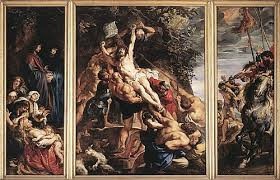
The Raising of the Cross, Peter Paul Rubens,1620, Flanders, Baroque art and architecture
subject: patron is Archduke Albert and Archduchess Isabella, large altarpiece, monumental piece above the high alter, triptych altarpiece - 3 panels, housed inelaborate frame 30 ft tall, image above is God flanked by angels, story of Christ being put on the cross and raised up
form: probably required by Church, old fashioned - replace destroyed images, oil sketched first, central panel has a great diagonal from the bottom right to top left to top right - engages with God outside of the frame, uses large tree to create immediacy - focus of scene, does not adopt traditional format and is an unusual subject - more baroque and dynamic composition, Christ attached to the cross interestingly, Christ and cross are threatening to pop out of the picture plane along with the figures, 9 men are all struggling to lift Christ and the cross, distinct sides form a semi circle and a sharp wedge, weeping women, Mary, and John the Baptist on right (acceptance yet grief), soldiers on other side are armed, aggressive, diagonal movement against Christ, two thieves also present, Christ is idealized/very classical, St. Longinus is helping put Christ up on the cross and is wearing armor while not looking aggressive, uses dramatic effects of lighting, Christ is pale, areas are dark, solar eclipse happening, contemporarily dressed
function: Christ is carrying all of our sins on Him so the men who are super strong struggle to lift Him, theme of Christ in the center with His followers to the right of Him and His aggressors to the left, elevation of the body of Christ helps fuel transubstantiation ideas against Reformation, emphasis on drama, intended to promote an emotional response from the viewer,
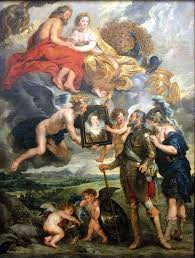
Henri IV Receiving the Portrait of Marie de Medici, Peter Paul Rubens, 1620, Flanders, Baroque art and architecture
subject: arranged wedding to Henry 4th who is presented with her portrait (politically wealthy marriage)
form: traditional to send a portrait, he looks lovingly at her while he is in the middle of a war on a battlefield, group of gods bring portrait, overseen by leaders of Roman gods (Jupiter and Juno), different from actual myth since they are displayed as the epitome of marriage and shown in love, Jupiter: lightning and eagle, Juno: peacock, marriage, chariot, big clouds coming in, additional figures involved: little baby as cupid, Hymen the god of marriage, below are more putti figures to show love, personification of France: female, portrayed with colors and symbols of France, boots, helmet, don’t look cold, full of life actually
function: France is telling him to take her as his wife, very dramatic, shows how Henry received the portrait of Marie de Medici, emphasis on drama, intended to promote an emotional response from the viewer
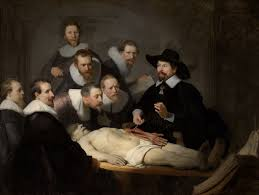
The Anatomy Lesson of Dr. Nicolaes Tulp, Rembrandt, 1640, Dutch Republic, Baroque art and architecture
Subject:
Form:
Function: emphasis on drama, intended to promote an emotional response from the viewer
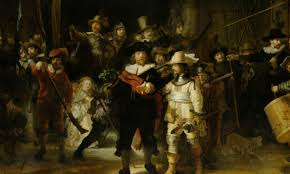
The Night Watch, Rembrandt, 1640, Dutch Republic, Baroque art and architecture
Subject:
Form:
Function: emphasis on drama, intended to promote an emotional response from the viewer
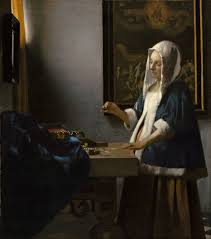
Woman Holding a Balance, Jan Vermeer, 1660, Dutch Republic, Baroque art and architecture
Subject:
Form:
Function: emphasis on drama, intended to promote an emotional response from the viewer
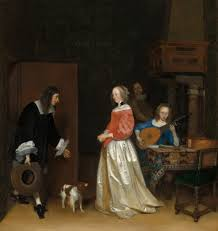
The Suitor’s Visit, Gerard ter Borch, 1660, Dutch Republic, Baroque art and architecture
Subject:
Form:
Function: emphasis on drama, intended to promote an emotional response from the viewer
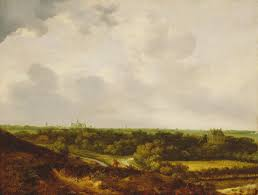
View of Haarlem from the Dunes at Overveen, Jacob van Ruisdael, 1660, Dutch Republic, Baroque art and architecture
Subject:
Form:
Function:
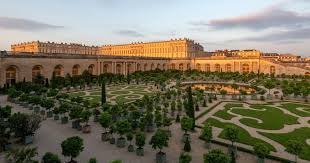
Palace of Versailles, Louis Le Vau and Jules Hardouin-Mansart, 1660, France, Baroque art and architecture
Subject:
Form:
Function:
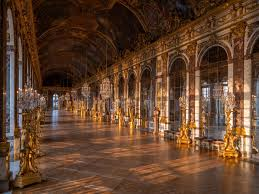
Hall of Mirrors, Hardouin-Mansart and Le Brun, 1670, Palace of Versailles, France, Baroque art and architecture
Subject:
Form:
Function:
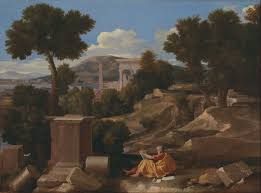
Landscape with St. John on Patmos, Nicolas Poussin, 1640, France, Baroque art and architecture
Subject:
Form:
Function:
 Note
Note  Flashcards (84)