Week 2 - Special Senses - Smell
 Call Kai
 Learn
Learn Practice Test
 Spaced Repetition
 Match
Match Flashcards
 Knowt Play
1/11

There's no tags or description
Looks like no tags are added yet.
Name | Mastery | Learn | Test | Matching | Spaced | Call with Kai |
|---|
No analytics yet
Send a link to your students to track their progress
12 Terms
Special Senses breakdown
All special senses have corresponding ORGANS:
Organ → special sense → stimuli → neural sensation
eye → vision → light → colour
Ear & cochlea → hearing → sound waves → pitch
Vestibular apparatus → balance → head movement → motion
Noes & olfactory epithelium → smell → airborne chemicals → smell
Tongue & taste buds → gustation → tastants → flavour
Taste & Smell: Definitions
Both taste and smell are primitive senses that influence if nearby substances should be savoured (eaten) or avoided (possible toxicity).
Both senses influence digestive secretions; apetite
People have varying degrees of taste & smell acuity (sharpness)
Taste vs Smell
Smell is less important and sensitive than taste in humans
Taste & Smell: Function
Smell comtributes to 80% of taste
Both stimulated by chemoreceptors, often working in tandem
Taste receptors → excited by food chemicals dissolved in saliva
Smell receptors → airborne chemicals coating nasal membrane
Both receptor cells can be continuously renewed
Smell receptors can be damaged by toxic fumes
Taste receptors can be damaged by hot foods, rigorous mechanical action
Old people have a decreased ability to replace these neurons, hence they prefer to salt their foods more, and bitter foods they disliked when young
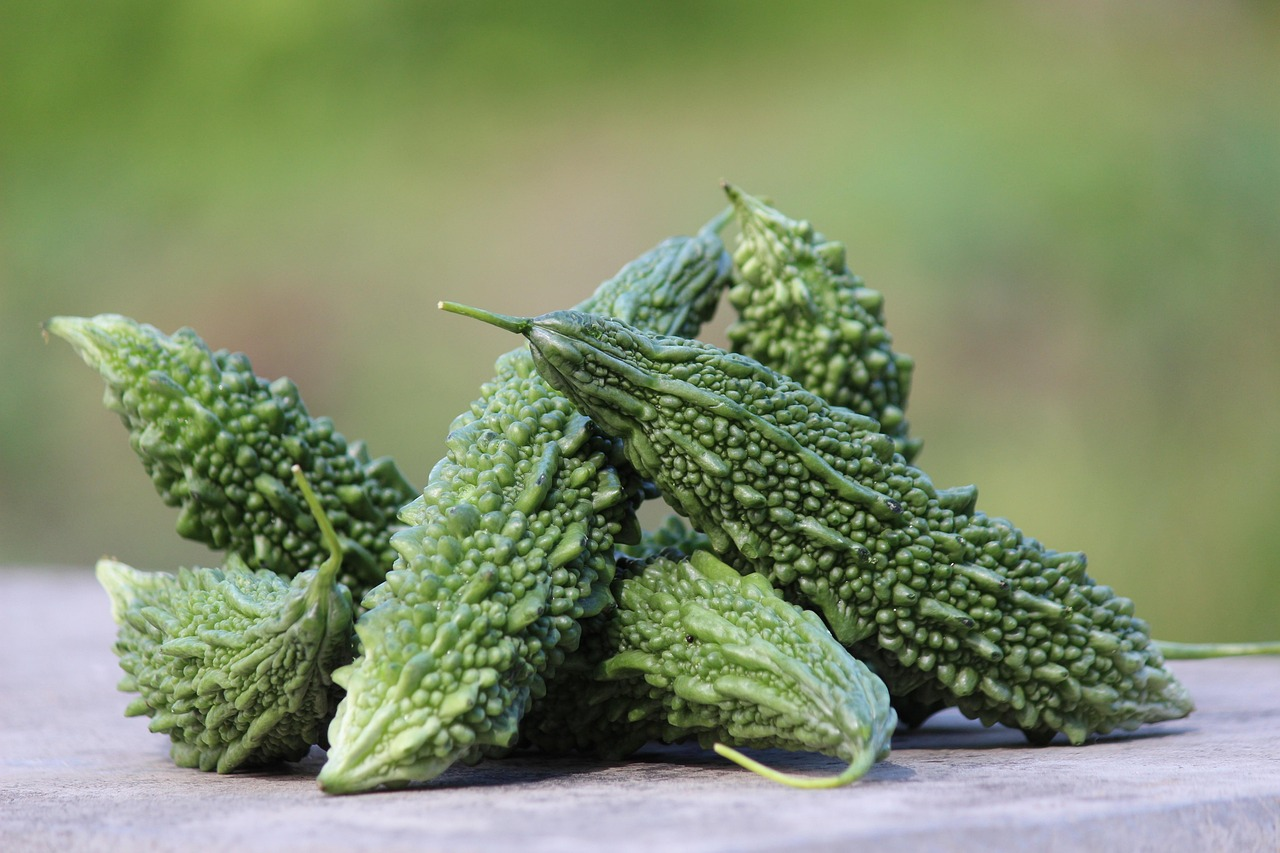
THIS IS WHY DAD IS SO OBSESSED WITH COROLLA / BITTER MELON
Smell/Olfaction: Nose anatomy
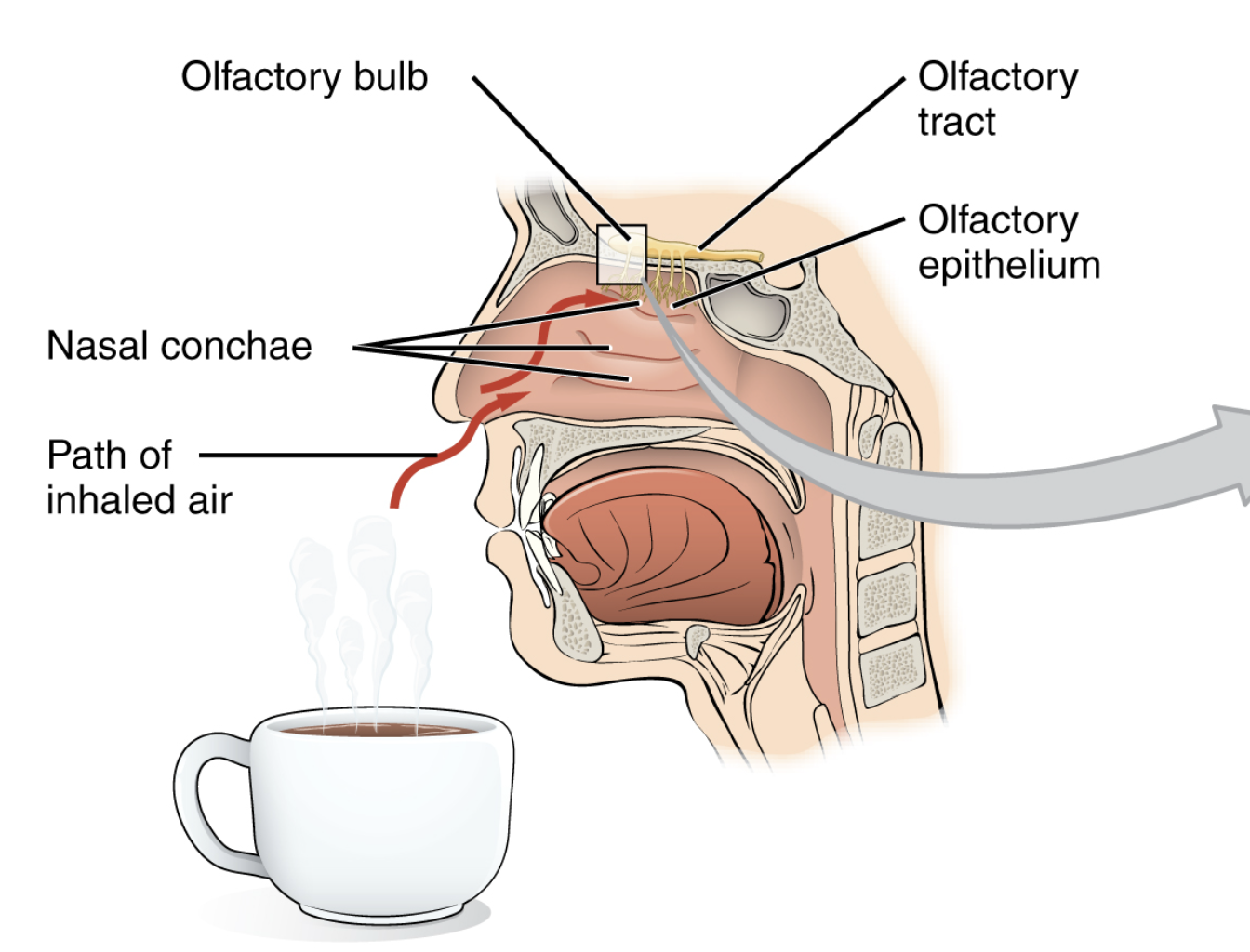
Olfactory receptor neurons (chemoreceptors) are located in the superior nasal cavity, termed the “olfactory epithelium”.
Smell/Olfaction: Olfactory epithelium anatomy
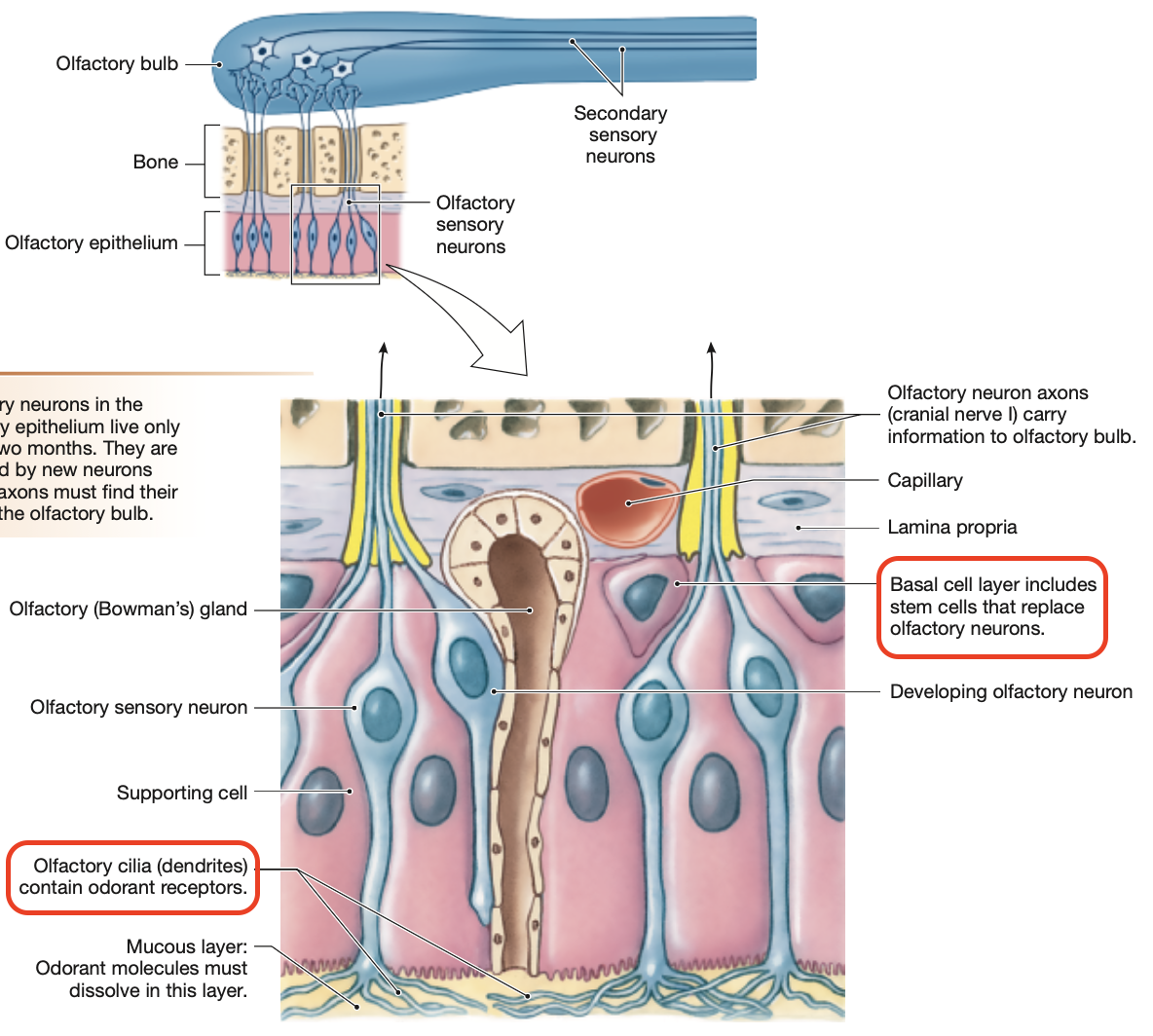
Contains sensory neurons (chemoreceptors) & supporting cells.
Dendrites of olfactory receptor neurons extend into the mucosal lining of the nasal cavity.
Basal cells act as stem cells and constantly differentiate to replace olfactory receptor cells.
Gaseous chemicals are inhaled (odorants) that dissolved into the mucus lining the olfactory epithelium
If noxious airborne chemicals are inhaled, it can damage the olfactory epithelium, including the olfactory receptor cells, hence the need for basal cells.
Smell/Olfaction: Smell
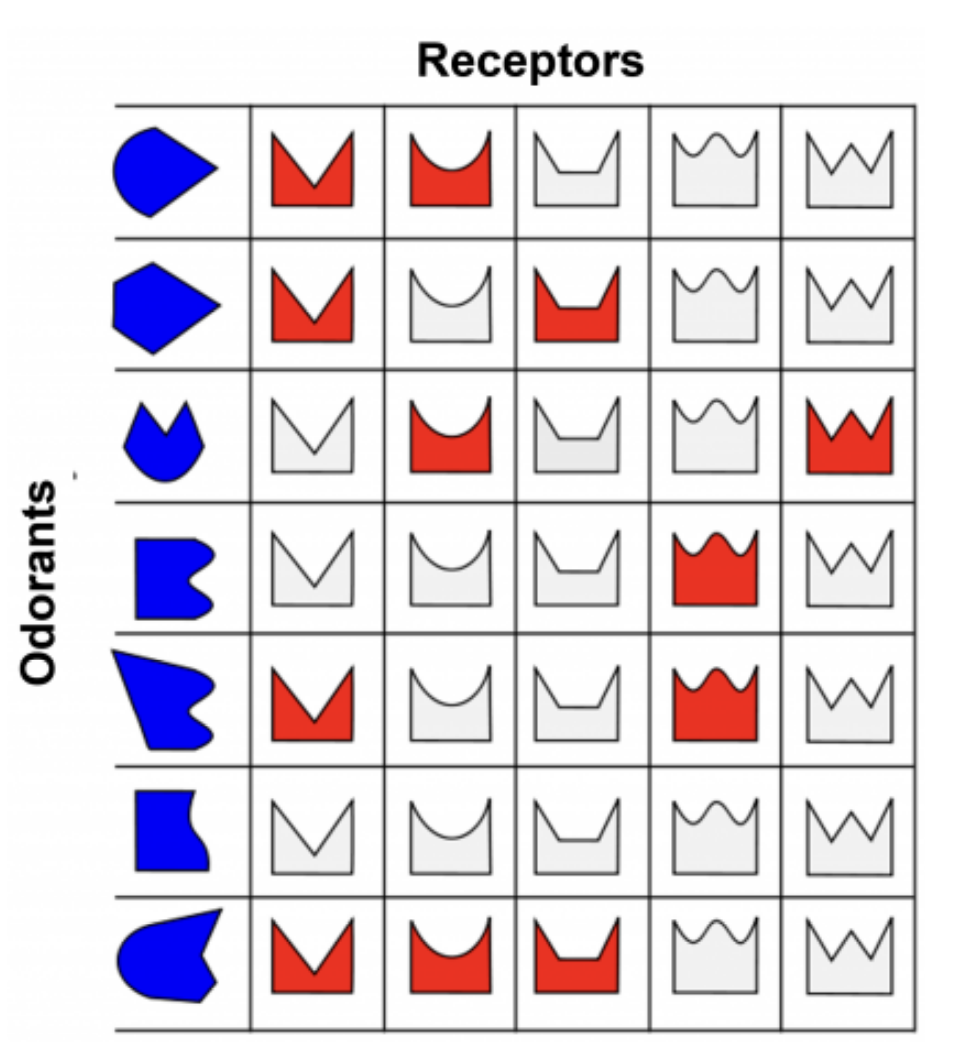
Any scent can contain hundreds of different odorants/chemicals.
Humans can distinguish ~10,000 odours
There are ~400 olfactory receptor types
Smell is perceived by the pattern of activation in these receptors.
Smell/Olfaction: Olfactory receptor cells
Each olfactory receptor cell can only respond to only one molecular feature of a chemical/odorant compound.
Hence, allows one odorant to stimulate multiple olfactory receptor cells
Thus, allows a unique pattern of stimulation to form, which can be perceived by the brain
The intensity of the smell, will increase/decrease the presence of odorants, thus sending more/less action potentials to the brain.
Smell/Olfaction: Sensation
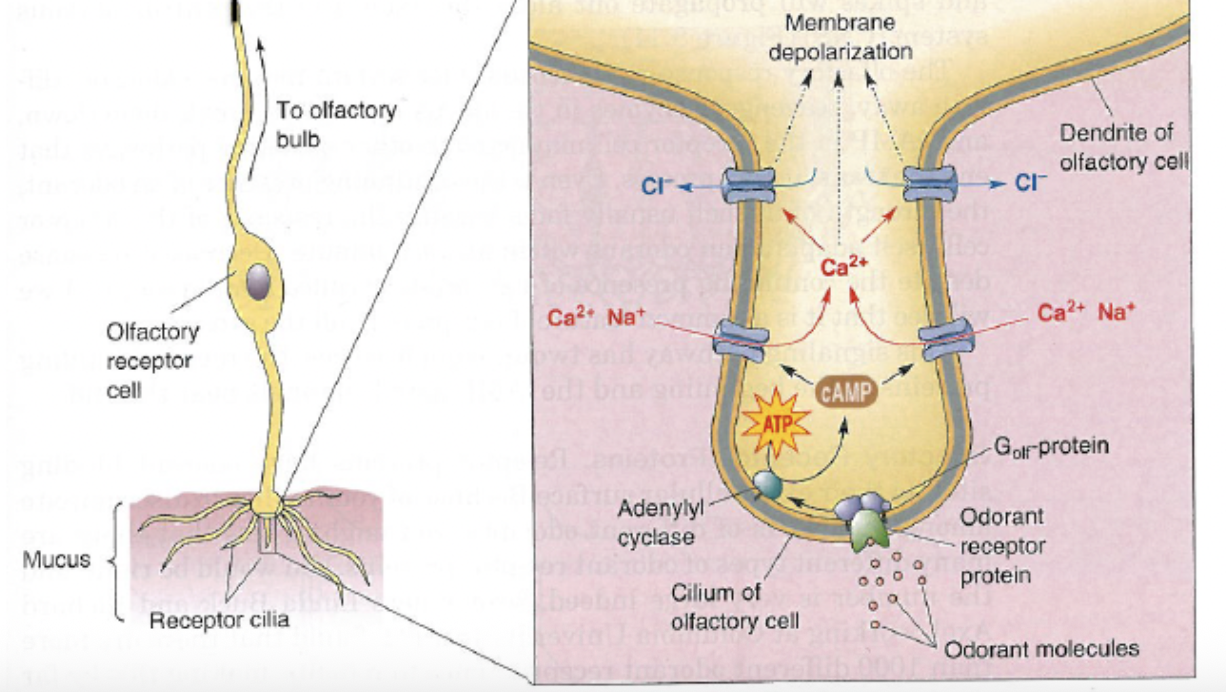
Chemicals are inhaled (odorants) in a gaseous state
Odorants dissolve into the mucus lining the olfactory epithelium
Odorant binds to olfactory receptor cell (chemoreceptor) dendrite’s cilia
Second messenger activated
Second messenger opens Na+ & Ca2+ channels
Na+ & Ca2+ flood the olfactory receptor cell
Na+ & Ca2+ entry leads to opening of calcium-activated chloride channels
Cl- leaves the cell
Cell depolarises from high membrane potential (Na+ & Ca+ enter, Cl- exits), leading to an action potential
Smell/Olfaction: Neural pathways
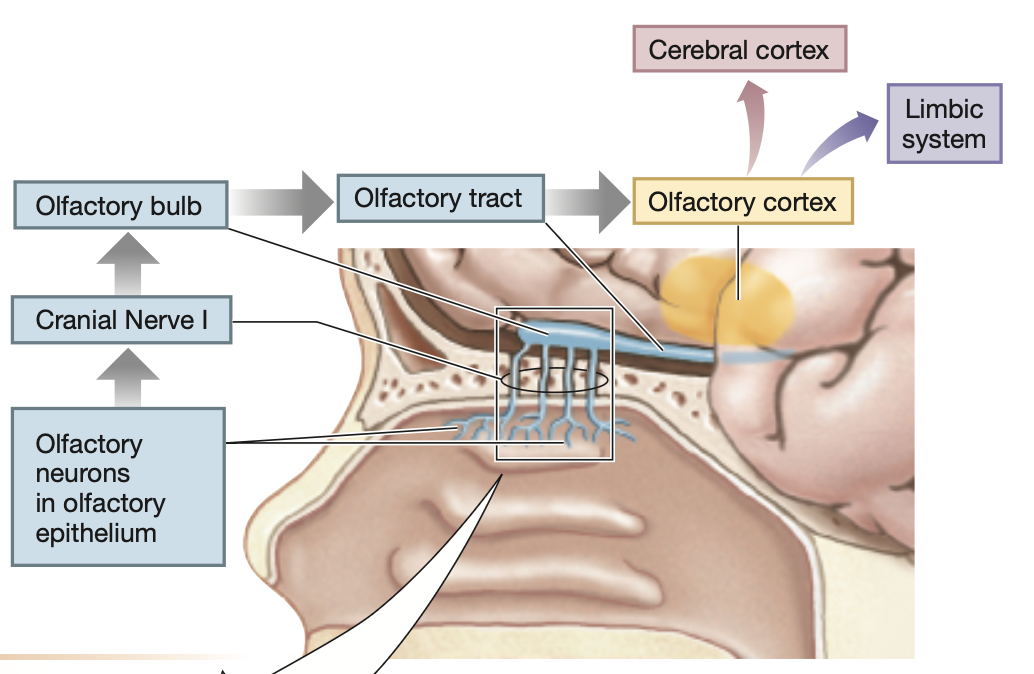
Axons of olfactory receptor cells travel through the olfactory foramen (ethmoid bone)
Olfactory receptor cells synapse with neurons within the olfactory bulb on the ventral surface of the frontal lobe
Here, olfactory nerve (Cranial Nerve 1) begins
Axons of olfactory nerve (Cranial Nerve 1) travel to:
Primary olfactory cortex in the frontal lobe
Limbic system & hypothalamus to be integrated into long-term memory and sentimental emotional responses
Smell/Olfaction: Changes to sense of smell
Sense of smell is ever changing, with a constant turnover of new olfactory receptor cells
Factors that influence sense of smell:
Attentiveness of smell due to hunger
Females are more sensitive
Smoking decreases sensitivity (damage to olfactory epithelium)
State of olfactory epithelium (can be impacted due to illness such as colds)
Pregnant women have a heightened sense of smell
Smell/Olfaction Disorders: Anosmia
Loss of sense of smell
Cause: Damage to olfactory nerves/tracts
Blunt force trauma
Some pharmaceuticals can kill olfactory neurons
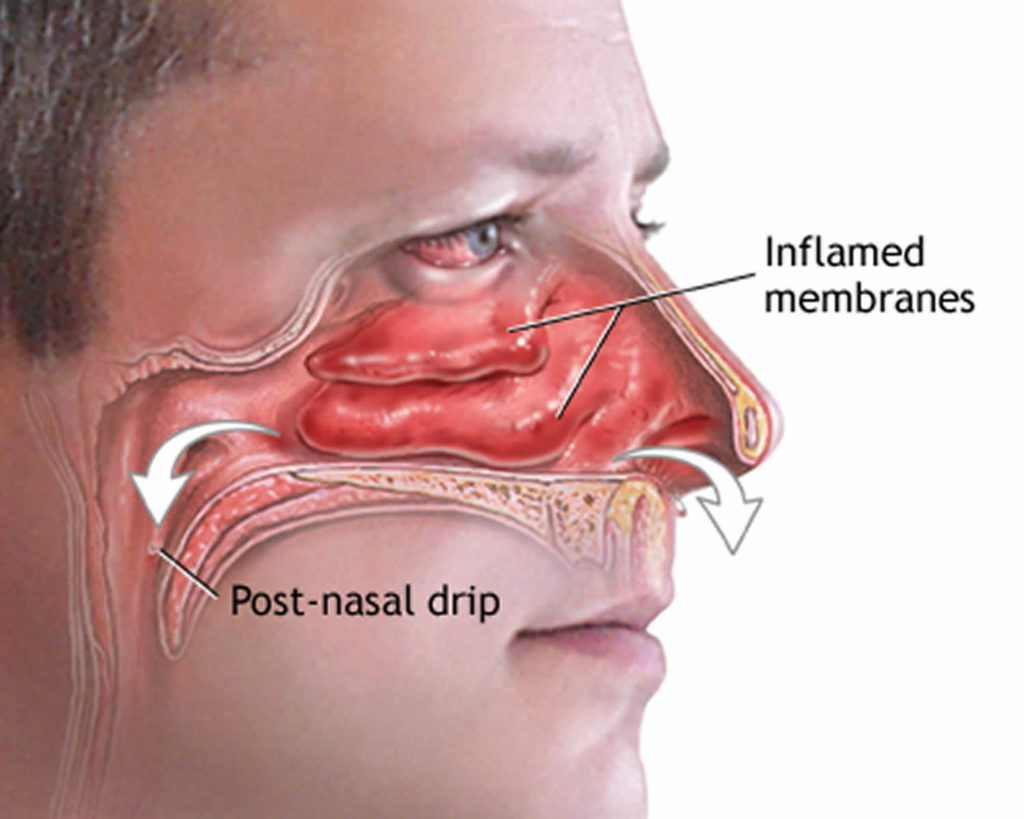
Temporary loss of smell due to inflammation from respiratory illness/allergies
Effect:
Food tastes bland (taste is 80% smell)
person may need more spice in food
May lead to some depression, as loss of enjoying food can effect emotional state