Histology of Salivary Glands (Quiz 1)
 Studied by 0 people
 Call with Kai
 Learn
Learn Practice Test
 Spaced Repetition
 Match
Match Flashcards
 Knowt Play
1/56

There's no tags or description
Looks like no tags are added yet.
Name | Mastery | Learn | Test | Matching | Spaced | Call with Kai |
|---|
No analytics yet
Send a link to your students to track their progress
57 Terms
Primary functions of saliva:
Protection
buffer __ of the oral cavity
________ formation
maintenance of tooth ______
_____________ action
_______ repair
digestion begins in oral cavity
taste
pH
pellicle
integrity
antimicrobial
tissue
What are the three pairs of major salivary glands?
Parotid, submandibular, and sublingual glands.
Which is the largest major salivary gland?
The parotid gland.
The parotid gland is associated with ______ nerve
facial
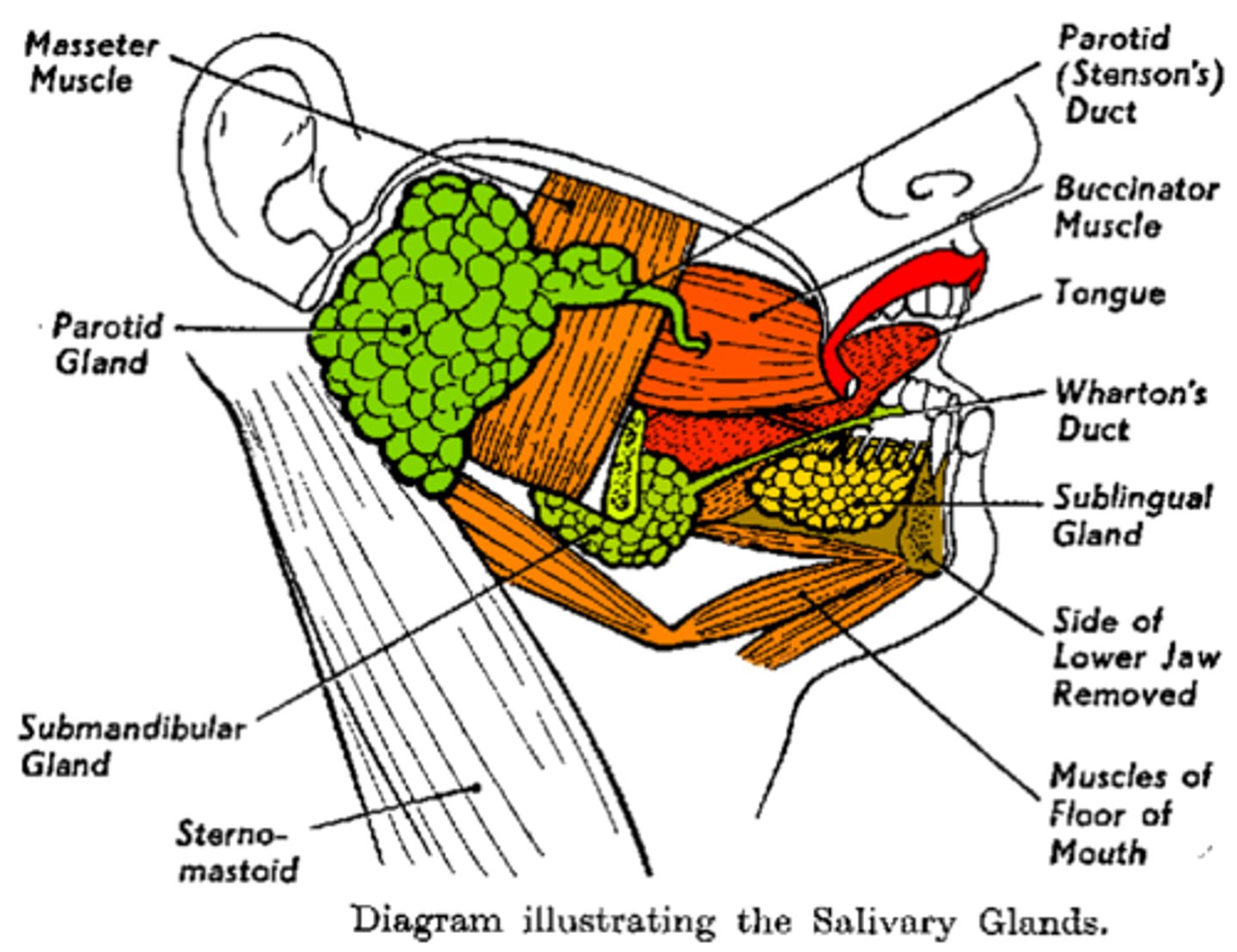
The innervation pathway of the parotid gland:
______________ (parasympathetic or sympathetic) nerves travel with CN __ (Glossopharyngeal Nerve).
___________ (preganglionic or postganglionic) parasympathetic nerves will synapse in the ____ ganglion
___________ (preganglionic or postganglionic) parasympathetic nerves will synapse in the _______________ nerve.
Parasympathetic
IX
otic
auriculotemporal
Where are the submandibular glands located?
In the posterior floor of the mouth.
Which is the second largest major salivary gland?
submandibular glands
How do the ducts of the submandibular glands open into the mouth?
Via the sublingual caruncles (2)
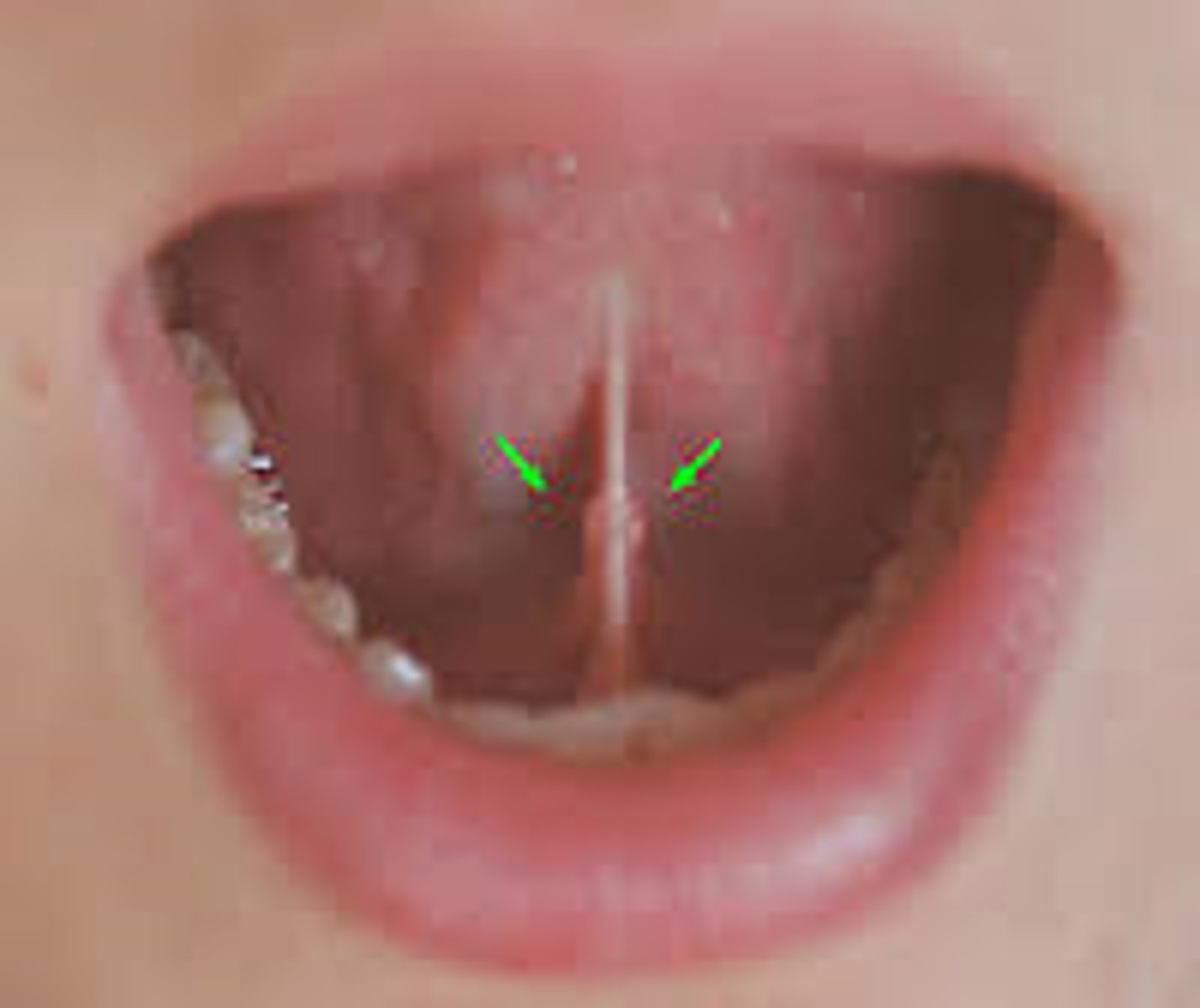
Innervation pathway for the submandibular glands:
_______________ (preganglionic or postganglionic) ______________ (parasympathetic or sympathetic) nerves run with facial nerve ___, and the branch that comes off of the facial nerve, which is called the ______ tympani, will join the _______ nerve, then synapse in the submandibular ganglion.
_______________ (preganglionic or postganglionic) will go to the submandibular gland
preganglionic
parasympathetic
VII
chorda
lingual
postganglionic
What is unique about the sublingual glands?
They are the smallest of the major salivary glands and open into the floor of the mouth via many small ducts, and at the sublingual caruncle
Innervation of the sublingual glands is exactly the same as the _____________ glands, both receiving parasympathetic secretomotor fibers from the facial nerve (via the chorda tympani)
Submandibular + Sublingual = CN VII (chorda tympani → lingual nerve → submandibular ganglion)
submandibular
How many minor salivary glands are there approximately?
600-1000 in number.
Minor salivary glands are present throughout the oral muscosa, except for the _________ palate and the ________
anterior
gingiva
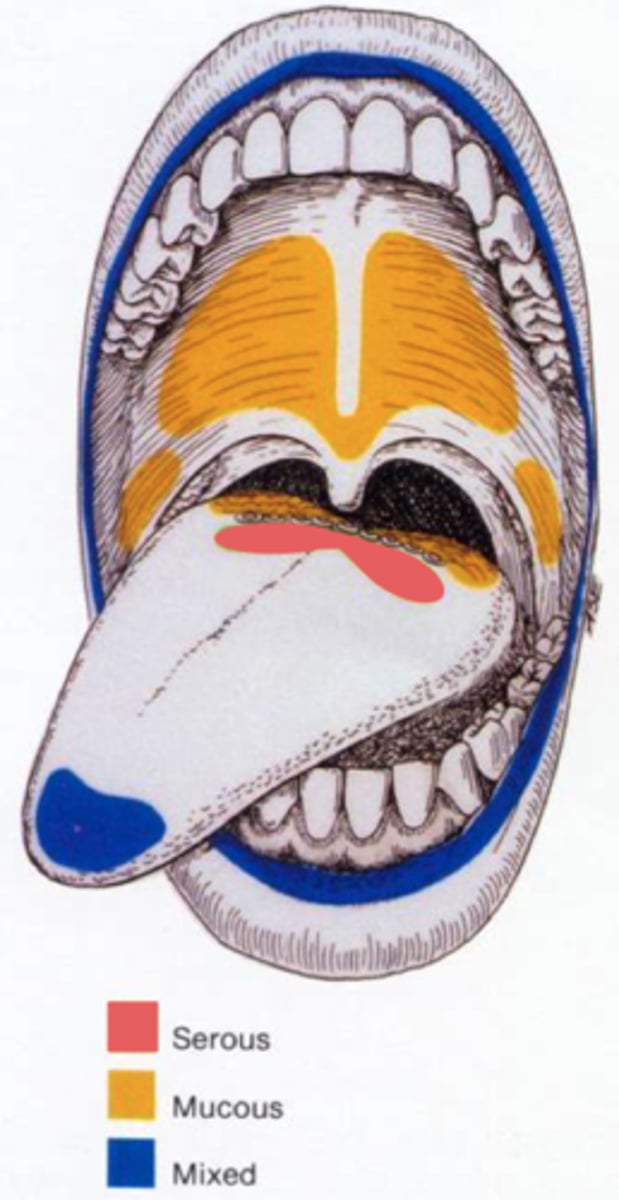
Most of the minor salivary glands are _______ (mucous or serous)
EXCEPT: ____ ______ glands, which are found on the ________, are pure _______ (mucous or serous) glands
COMMONLY ASKED QUESTION
mucous
Von Ebnar's
tongue
serous
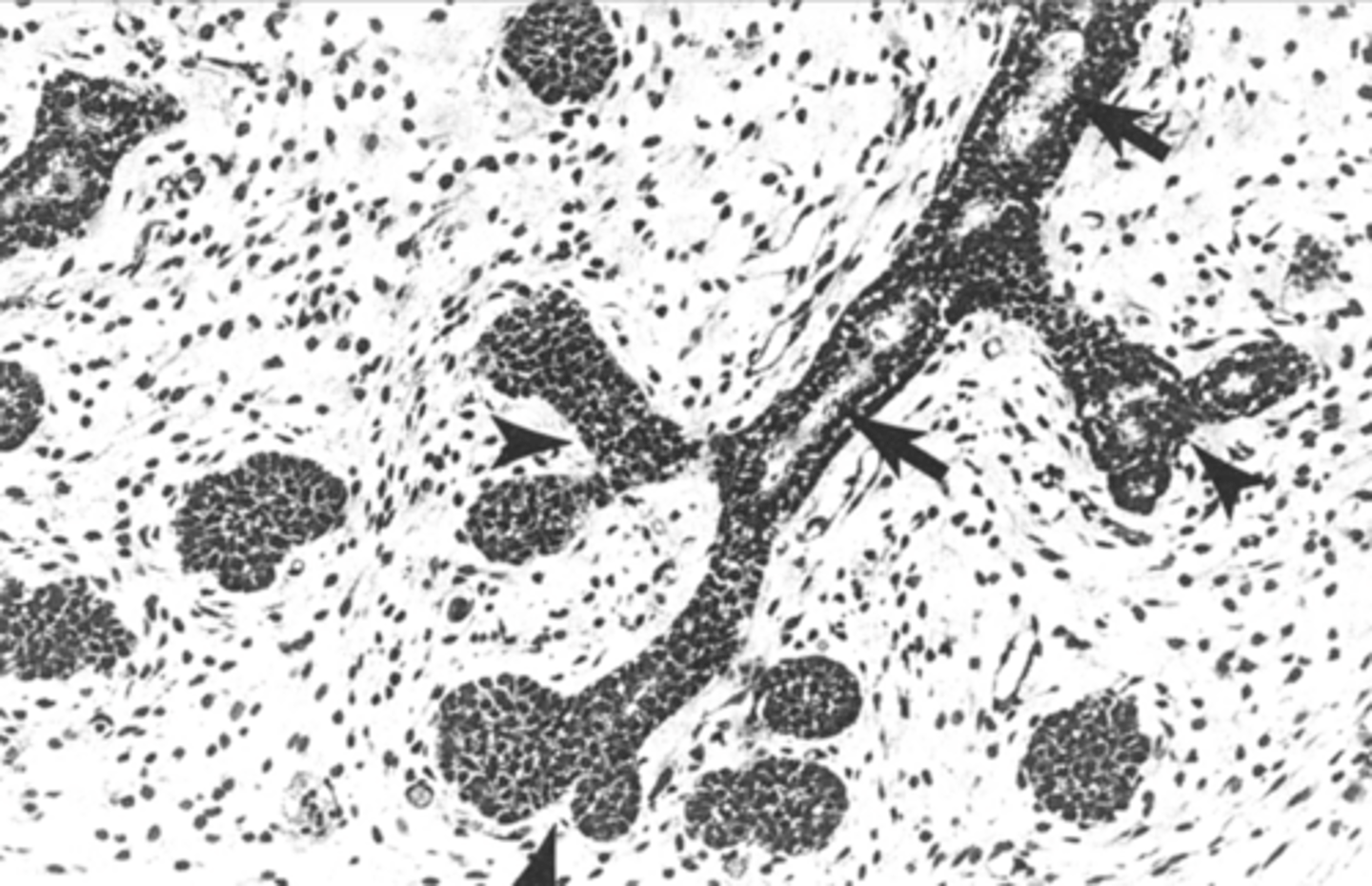
Development of Salivary Glands:
- As the oral cavity is first developing, it is lined by a layer of ____ epithelium sitting on a basement membrane, and on the other side of that membrane is surrounding ______________
- As the salivary glands develop, they remain connected to the surface epithelium by ______ or epithelial cells
- mesenchymal cells will _________ around the gland
- Then they go through __________ ____________
- Theres no ______ when these cells first develop
oral
ectomesnchyme
cords
condense
branching morphogenesis
lumen
Development of Salivary Glands:
- Eventually, the lumen will appear first in the _____ part of these cord cells and the branches, then in the _________ cord, and then in the _______ of the main cord
distal
proximal
central
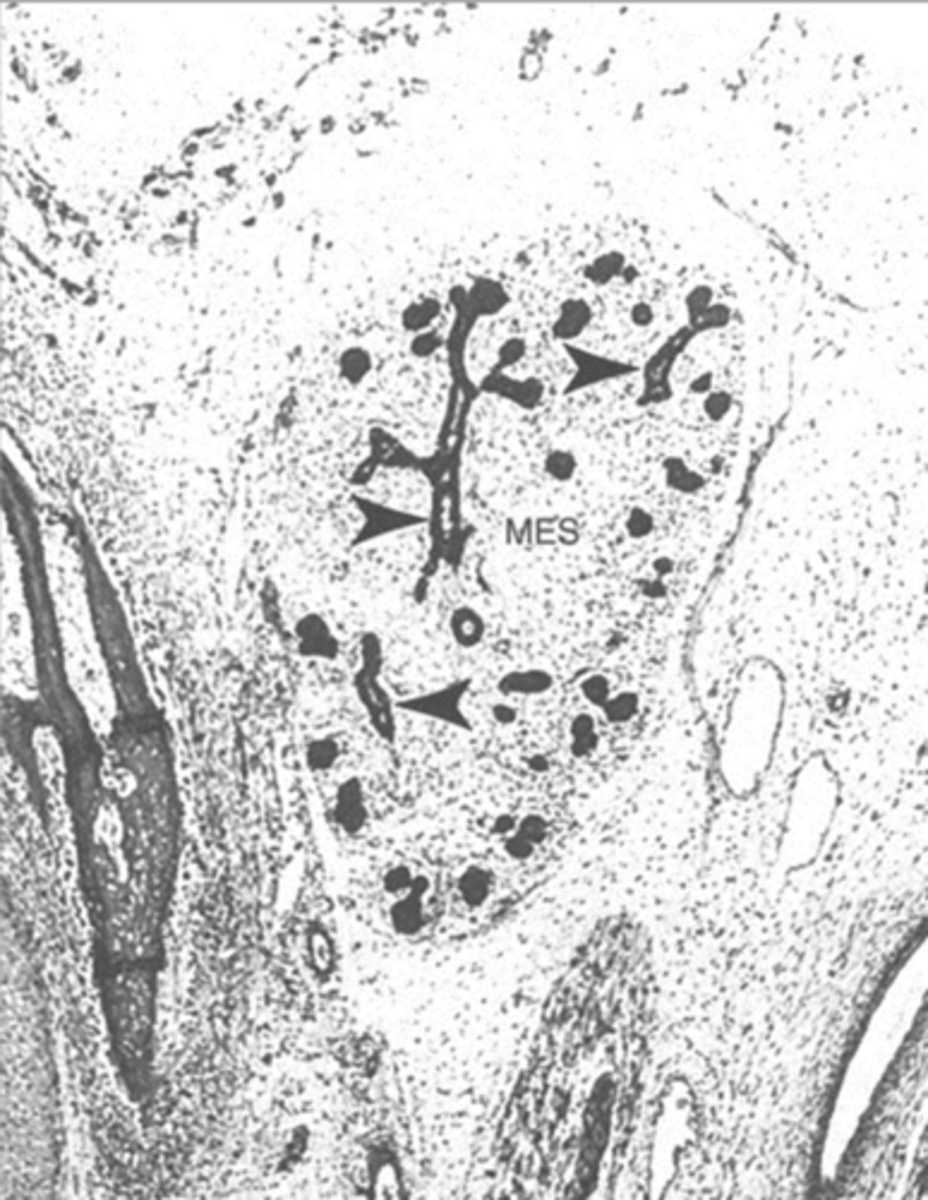
Development of Salivary Glands:
You end up with two layers of cells:
• ______ (inner or outer) layer differentiates into secretory cells
• ______ (inner or outer) layer differentiates into myoepithelial cells, capsule and septa
inner
outer
What do secretory cells produce?
saliva
Histology of salivary glands
• _________ end pieces, or acini (singular: acinus*)
• cluster of secretory cells
• resemble clusters of grapes, each “grape” made up of a group of 8-10 cells, which secrete _________ _______ into a common lumen
secretory
primary saliva
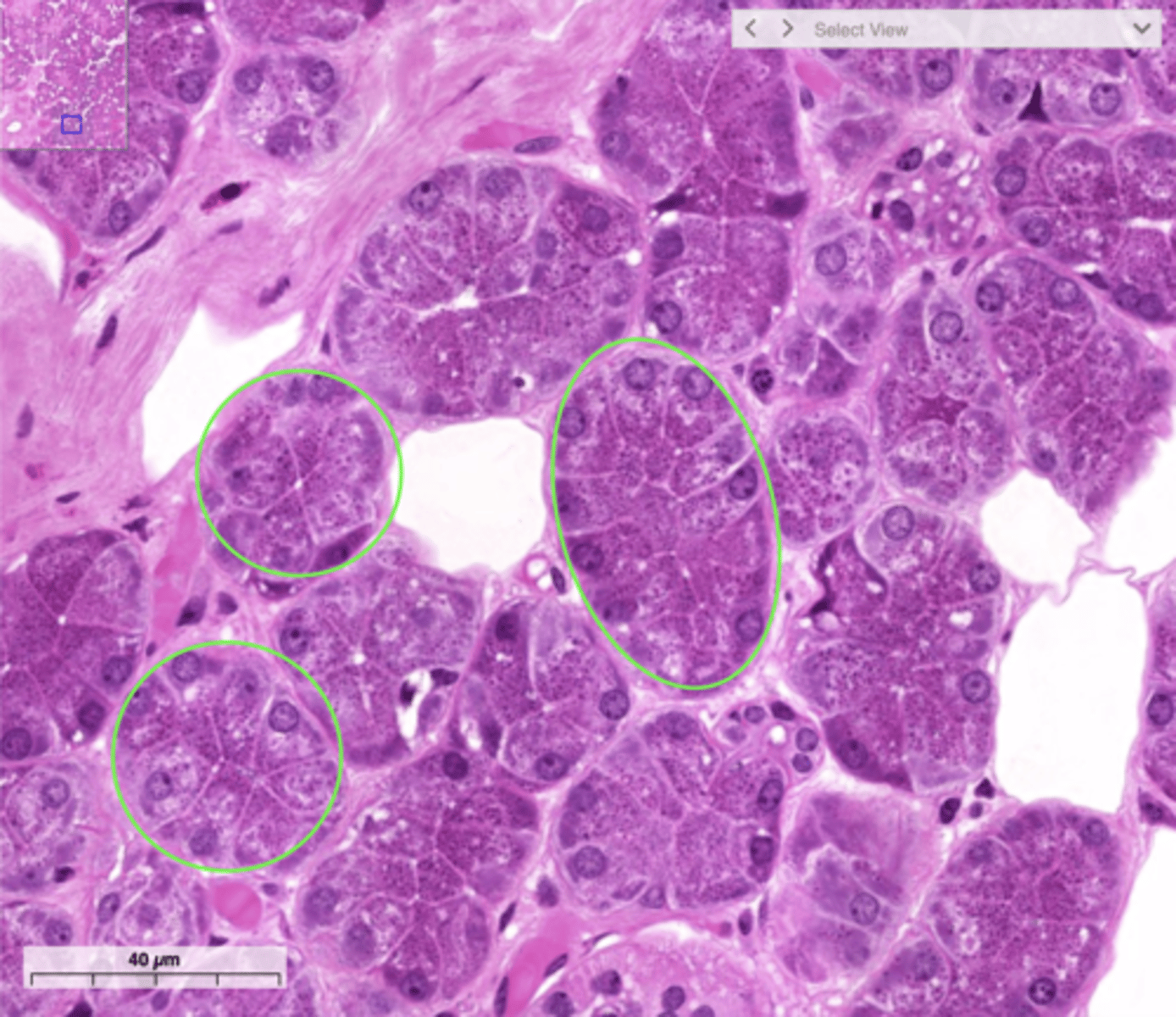
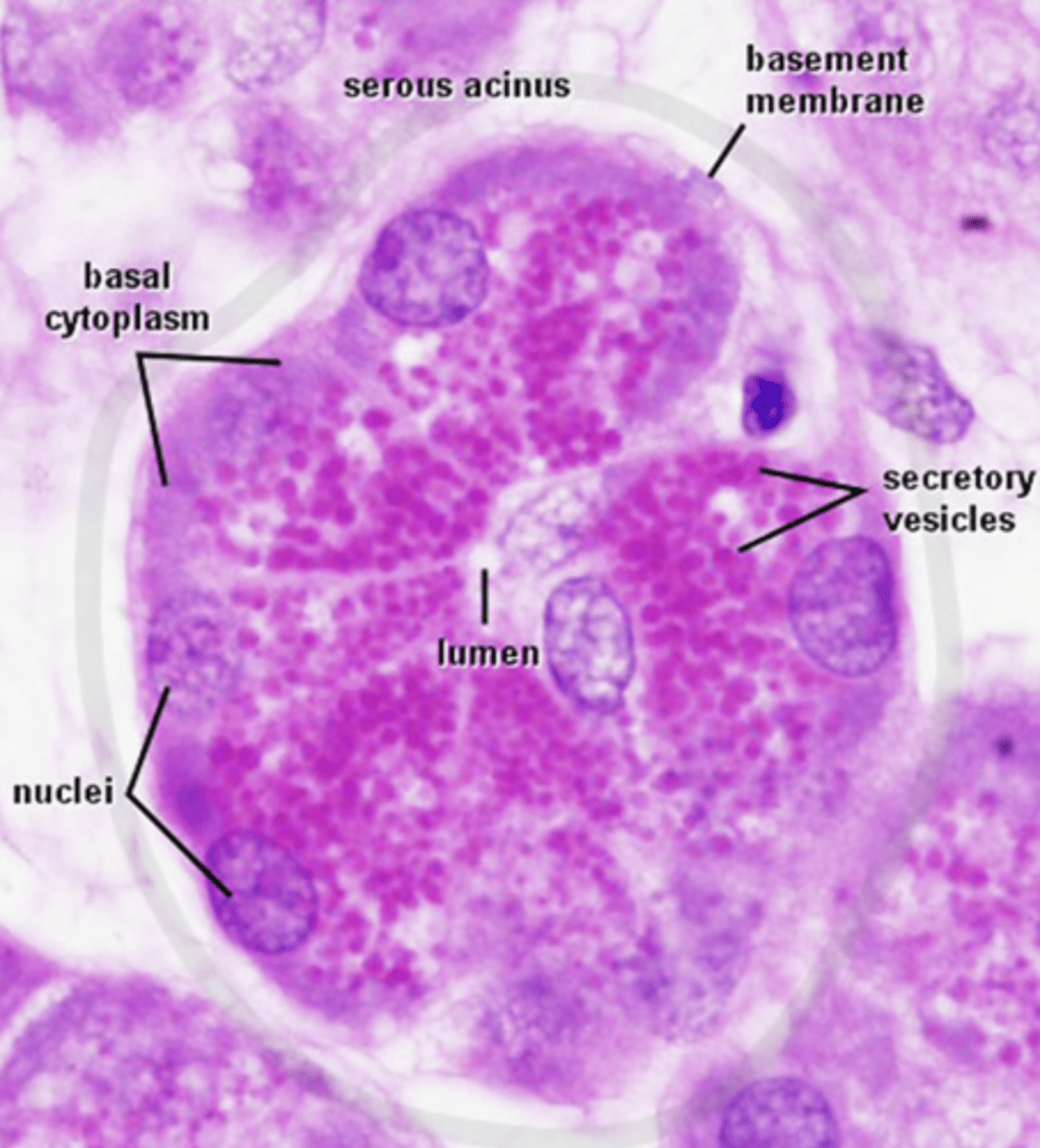
The composition of serous saliva is fluid rich in _______ and ____________
proteins
glycoproteins
Serous acini are more _________ in shape, with __________-shaped cells and _________ located nuclei
- secretory granules (sacs that store and transport) located ________/at the apex of each cell, and contain ______________
• The serous cell contains a lot of rER, Golgi, mitochondria, lysosomes, etc., located in _____ part of cell
Spherical
pyramid
basally
apically
macromolecules
basal
What is the function of mucins in saliva?
They lubricate and form a surface barrier, binding and aggregating microorganisms.
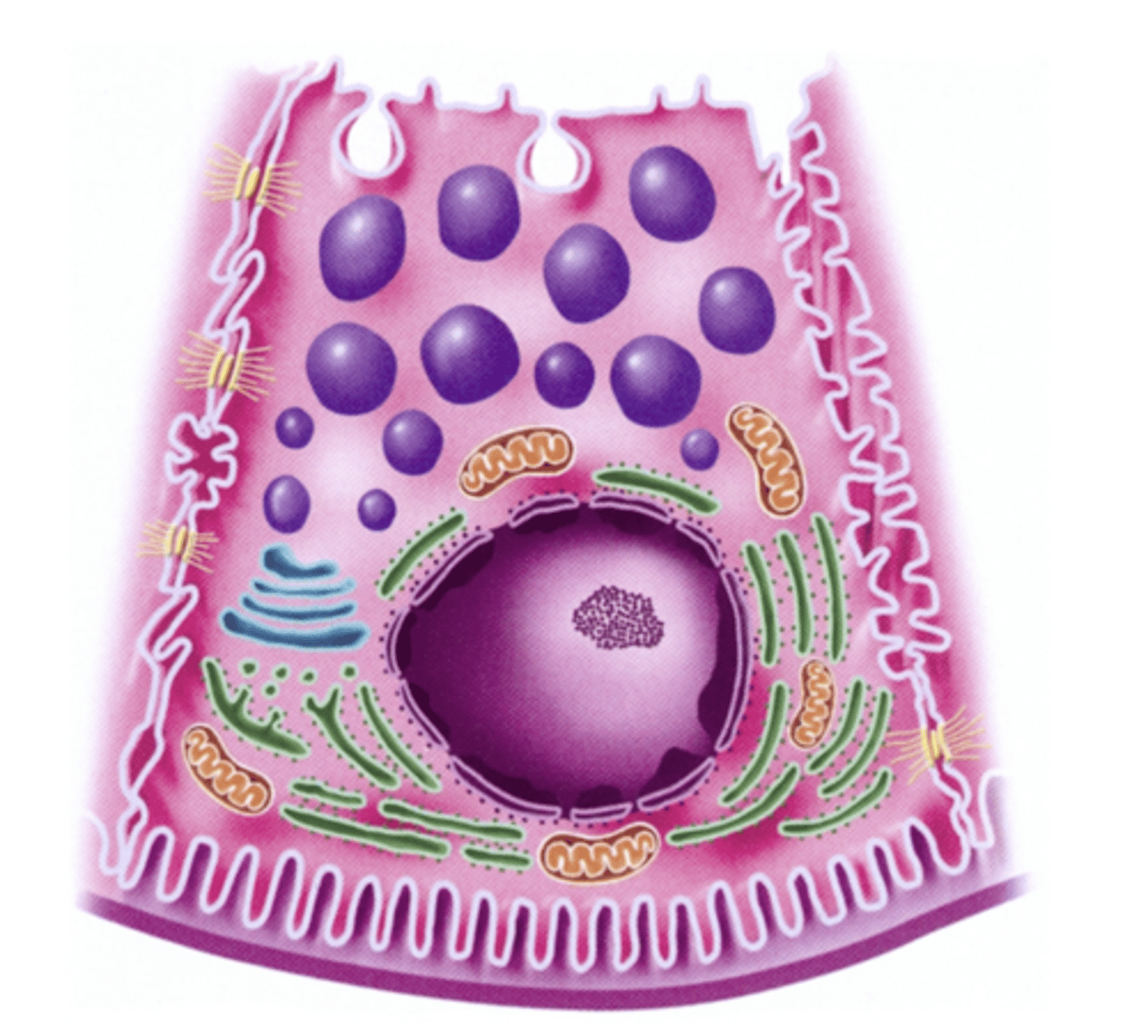
serous cells
• have short _________
• lateral _______________ (folding of the lateral walls)
• basal membrane ________, which allows for the movement of fluid by increasing the surface area
• cells held together by _________ complexes, ____________, ___ junctions
• intercellular _________ are finger-like projections of lumen
between adjacent cells – increase lumen surface area
microvilli
interdigitations
infolding
junctional
hemidesmosomes
gap
canaliculi
- folded membrane at the bottom of cell, vesicles at the top, nucleus located basally,
Mucous cells produce, ______, which are rich in ______________.
Mucins
glycoproteins
mucous cells
• secretory end pieces are ________
• sometimes you'll have pure serous acini, sometimes pure mucous acini
• other times, you can have acini with both serous and mucous cells
• when this happens, the mucous cells are found in the _______, and the serous cells are found in the __________
tubular
center
periphery
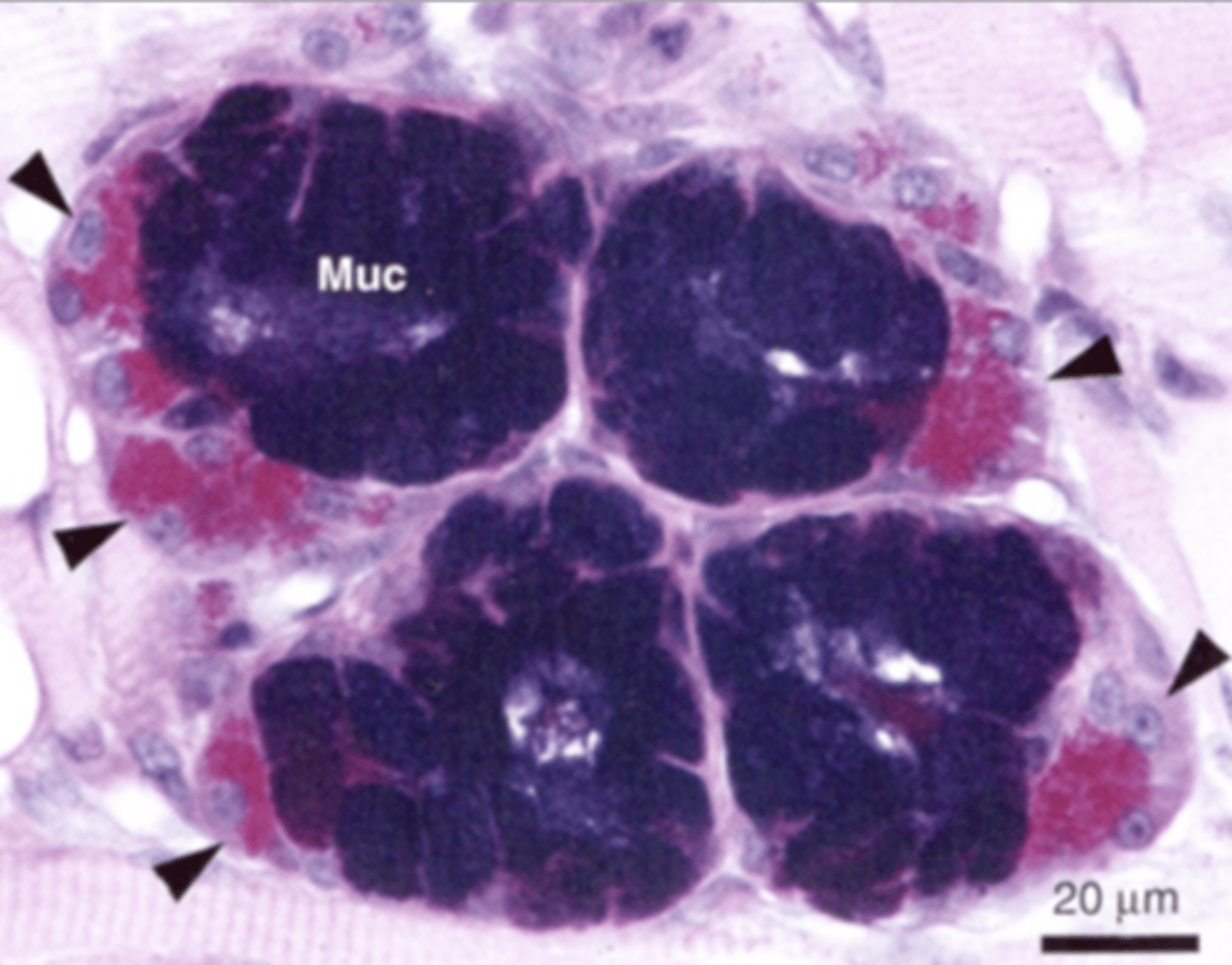
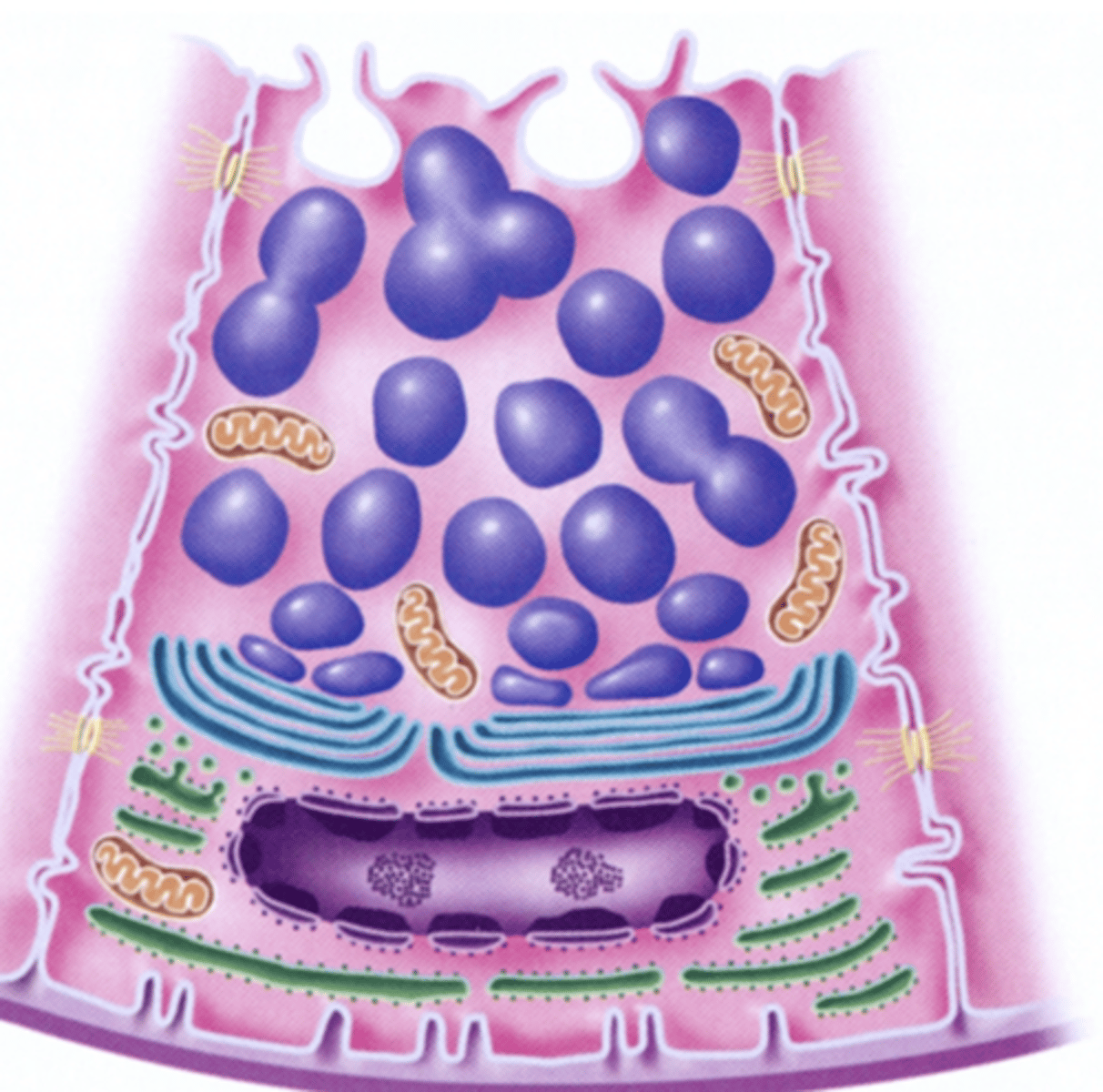
mucous cells
• apical part of cell contains large quantities of ______
• nucleus, rER compressed _______ basal membrane
• in routine H&E, cells appear _______; special stains reveal mucous content
• cells joined by _________ complexes
• cells lack intercellular _________
mucins
against
empty
junctional
canaliculi
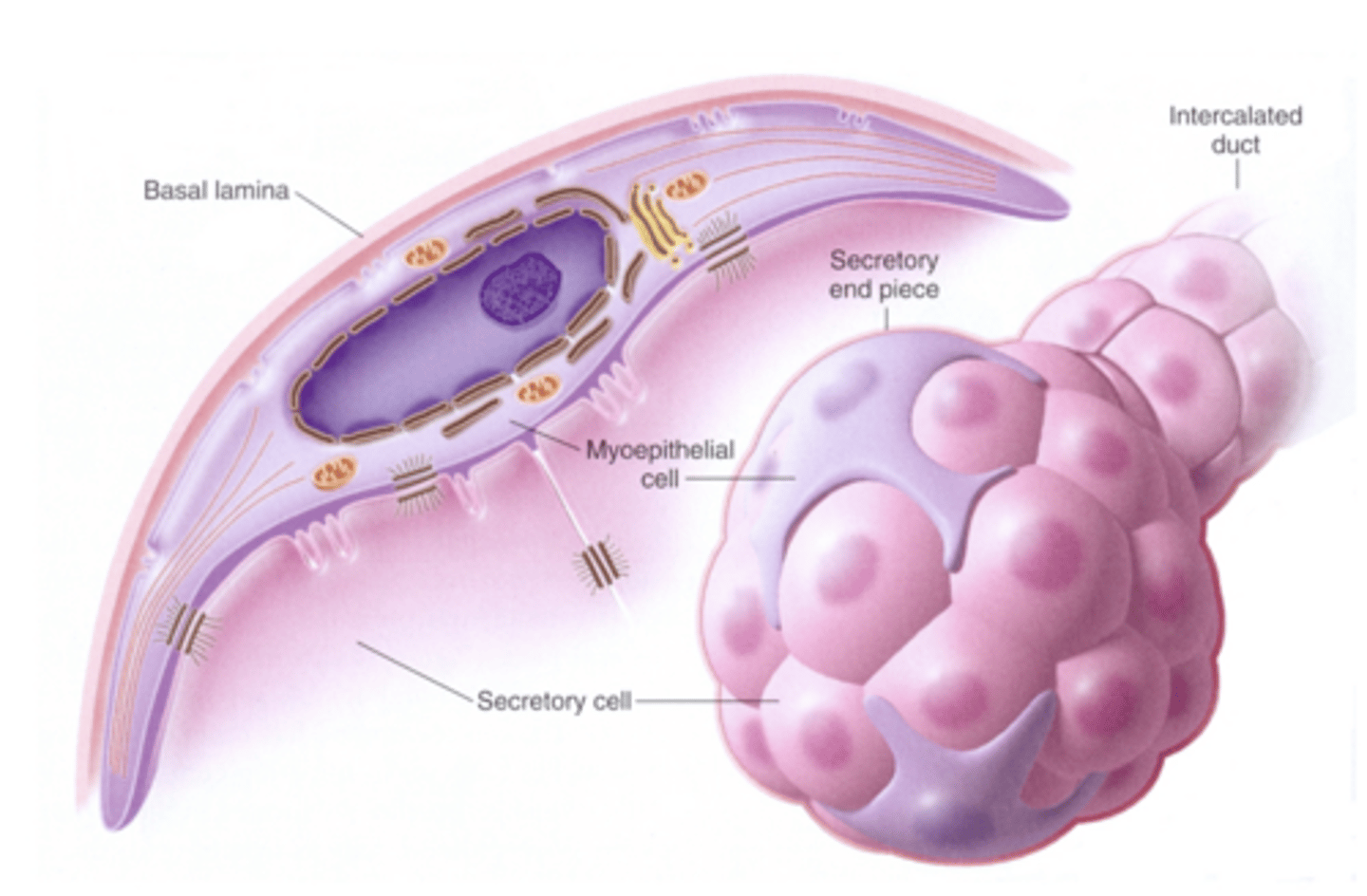
myoepithelial cells
• ___________ – similar to ________ muscle, but derived from __________ rather than mesenchyme
• surround _____ and intercalated ducts
• located between basal lamina and secretory cells or ducts – attach by _____________
• have multiple processes containing actin and myosin, with caveolae
smooth
contractile
epithelium
acini
hemidesmosomes
myoepithelial cells roles
• support secretory cells – help expel ________ saliva by contracting
• help maintain duct patency (hold them open)
• provide ______ to acinar cells
• might have tumor suppressor activity
• proteinase inhibitors
• anti-angiogenesis factors
primary
signals
Intercalated ducts
• receive _______ saliva from secretory cells
• lined by simple _______/cuboidal epithelium
• centrally located nucleus
• surrounded by ___________ cells
• have typical organelles, connected by junctional complexes, desmosomes and gap junctions
• the ducts add ________ and ________ to the saliva (antimicrobial proteins)
primary
squamous
myoepithelial
lysozyme
lactoferrin
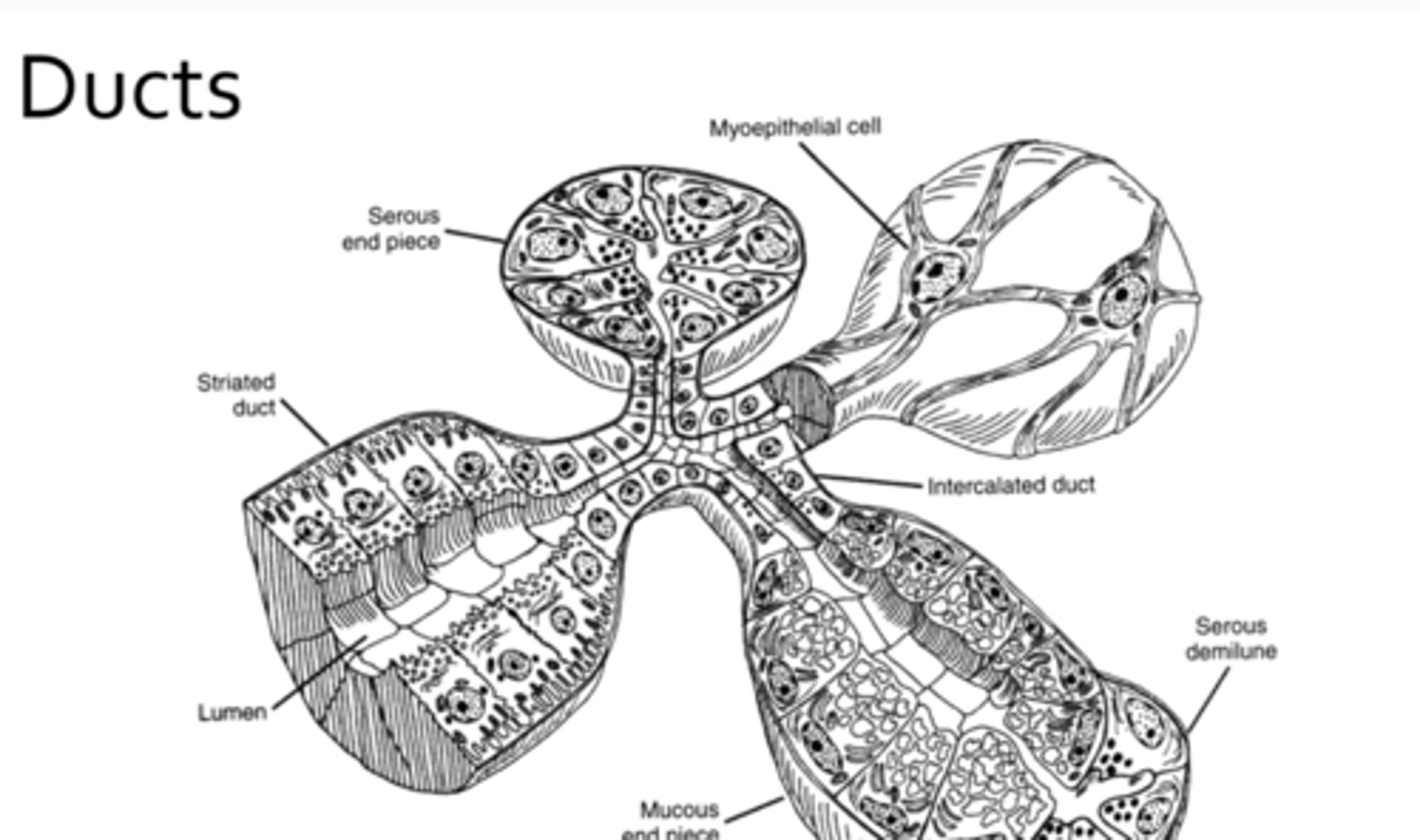
striated ducts
• receive ________ saliva from intercalated ducts
• form major portion of duct system
• cells _________ in shape
• __________ located nucleus, acidophilic cytoplasm
• basal striations (highly folded) = mitochondria + membrane infoldings
• surrounded by basal lamina and _______ plexus
• contain secretory granules, lysosomes, peroxisomes, glycogen
• tight junctions, junctional complexes; no gap
- the composition of _________ is changed in the striated ducts
primary
columnar
centrally
capillary
saliva
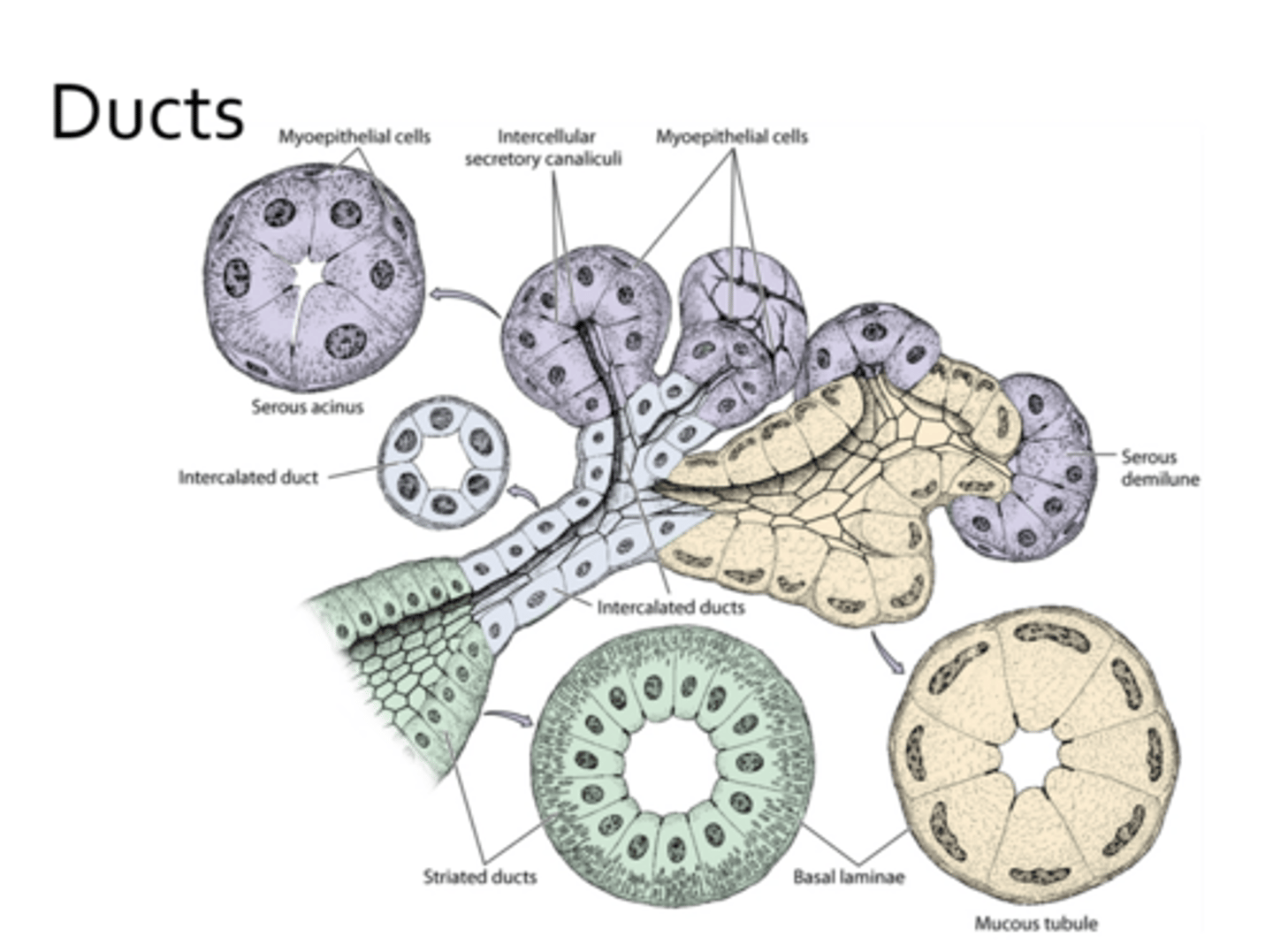
What is the largest duct called?
excretory duct
excretory ducts
• _______ ducts lead to excretory ducts
• located in CT septa between lobules
• pseudostratified to stratified epithelium, attached to
basal lamina by hemidesmosomes
• ____ cells with long stiff microvilli and apical vesicles - might be receptor cells: associated with nerve endings
• lymphocytes, macrophages, dendritic cells - found in _____ of duct epithelium
striated
tuft
base
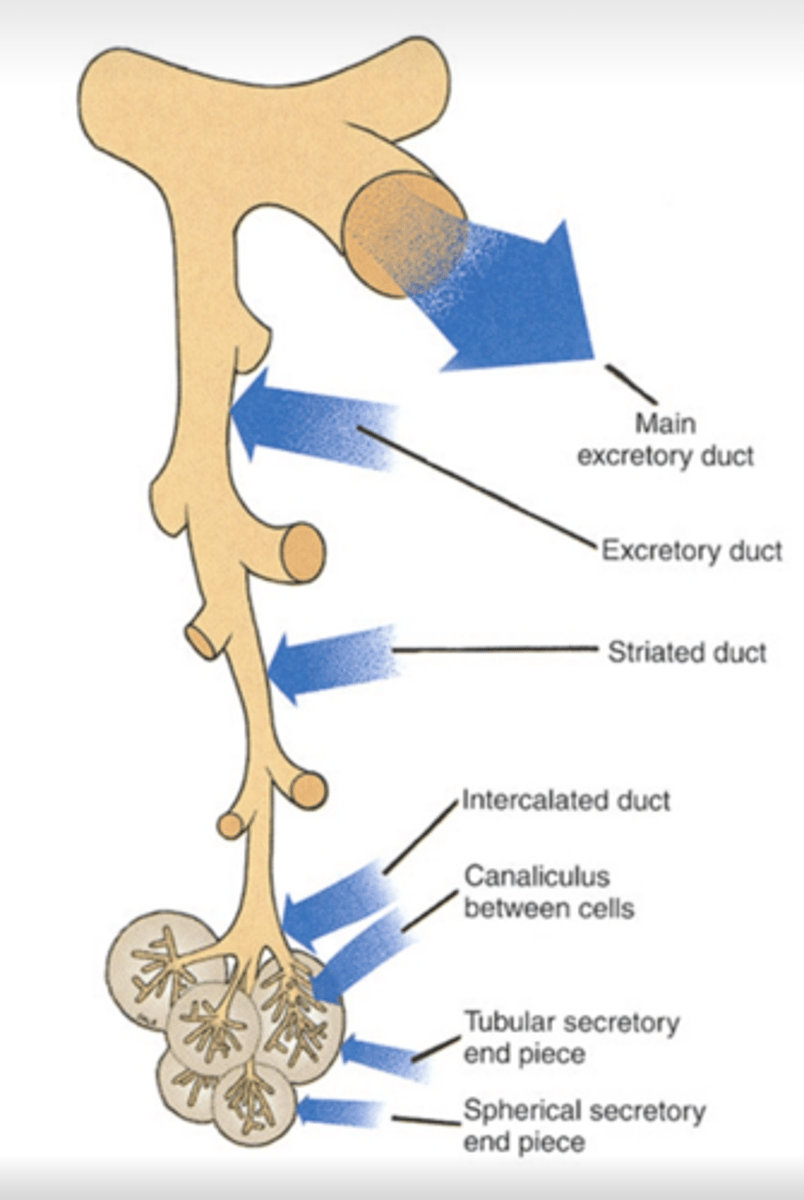
Surrounding the entire salivary gland is a _______. Extending into the gland from the capsule are _____, which divide the gland into ______, and transmit blood vessels and nerves.
• there are also fibroblasts, macrophages, dendritic cells, mast cells, plasma cells (IgA), adipose cells, some granulocytes and lymphocytes (lost of immune type cells bc oral cavity is exposed)
•collagen and elastic fibers
capsule
septa
lobules
The superior salivatory nuclei is going to supply the ____________ ganglion
submandibular
The inferior salivatory nuclei is going to supply the ____________ ganglion
otic
nerve supply
parasympathetics
-> preganglionics
• from superior and inferior ________ nuclei in the brainstem
• run with ___ and __
-> postganglionics
• synapse in submandibular or otic ganglion
• run with lingual or auriculotemporal (parotid) nerve
salivatory
VII
XI
VII -> _________ salivatory nucleus
XI -> _________ salivatory nucleus
superior
inferior
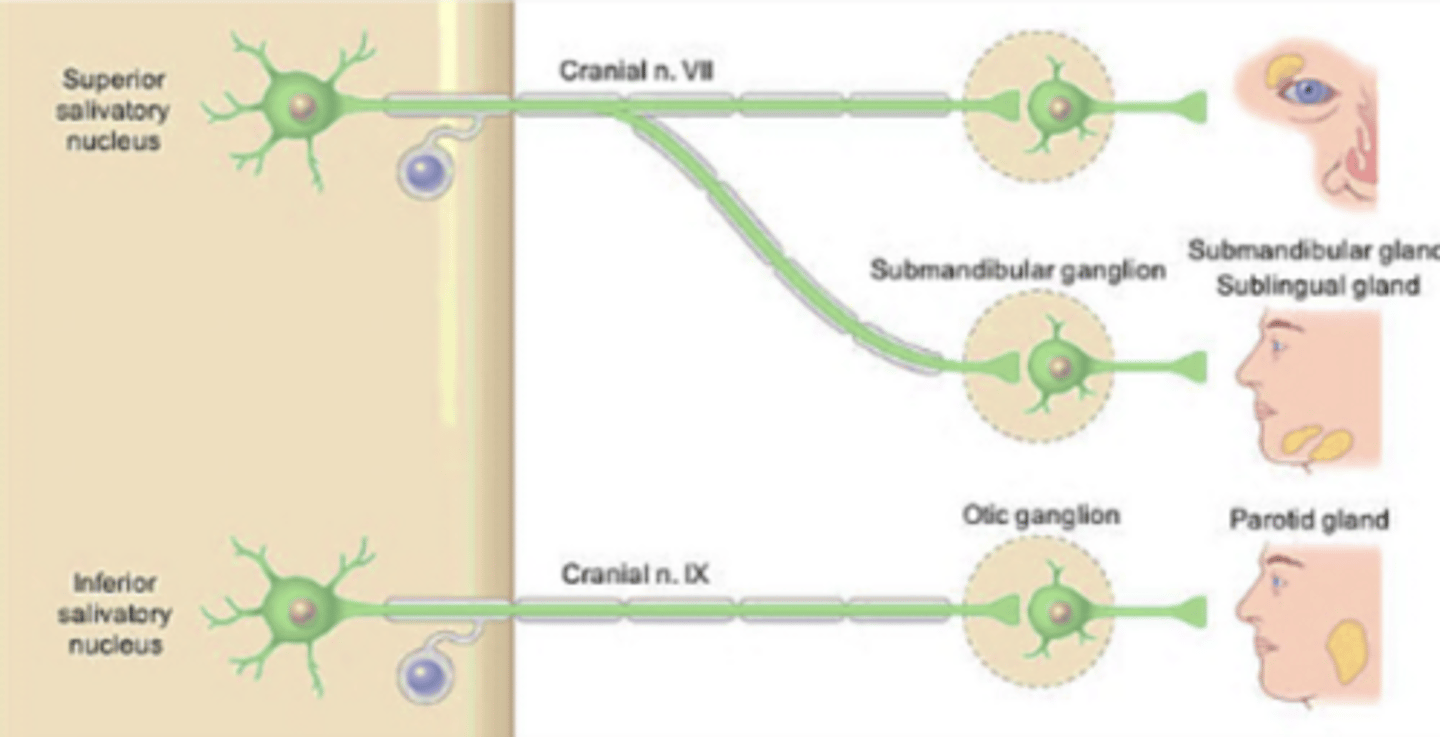
The superior salivatory nuclei is going to supply the ____________ and ____________ glands
submadibular and sublingual
The superior salivatory nuclei is going to supply the __________ gland
parotid
The sympathetic innervation is going to _______ the production of saliva or produce a more _______ saliva
- Scared or nervous = mouth goes ___
inhibit
viscous
dry
nerve supply
sympathetics
• follow blood vessels out to the glands
• modulate secretion by __________ blood flow to glands = DEC BF
neurotransmitters:
• ____________ (pregang) and ____________ (postgang)
• substance P and VIP: induce secretion, modulate effects of acetylcholine and norepinephrine, might affect blood flow
• neuropeptide Y and CGRP: _______ blood flow
controlling
acetylcholine
norepinephrine
regulate
• blood is the source of ____ and ___________
• arterioles lead to capillary networks
• blood flow to glands ________ during secretion
• ___________ (inc or dec) pressure in capillaries and venules causes increased production of saliva
fluid
electrolytes
increases
increased
What type of acini does the parotid gland have (+which 2 ducts)?
Pure serous acini
+ fat cells
+ many long intercalated ducts
+ numerous striated ducts
What type of acini do submandibular glands have (+what's different about their ducts?)?
Mixed acini, mostly serous.
+ intercalated and striated ducts less numerous than in parotids
What type of acini do sublingual glands have (+what's different about their ducts?)?
Mixed, predominantly mucous acini.
+ ducts short and difficult to see
What is the primary saliva produced by acinar cells?
Isotonic fluid that contains macromolecular components.
What type of acini do minor glands have (+what's different about their ducts?)?
• mostly mucous
+ short ducts
• secretions rich in mucins, antibacterial proteins, immunoglobulins
• von Ebner’s glands
• located on posterior part of tongue, associated with circumvallate papillae
• secrete enzymes and proteins that impact taste
The fluid and electrolyte portions of saliva come from ______
blood
Water secretion is regulated by ____________ innervation
parasympathetic
What is xerostomia?
Dry mouth due to loss of salivary function or reduction of saliva volume.
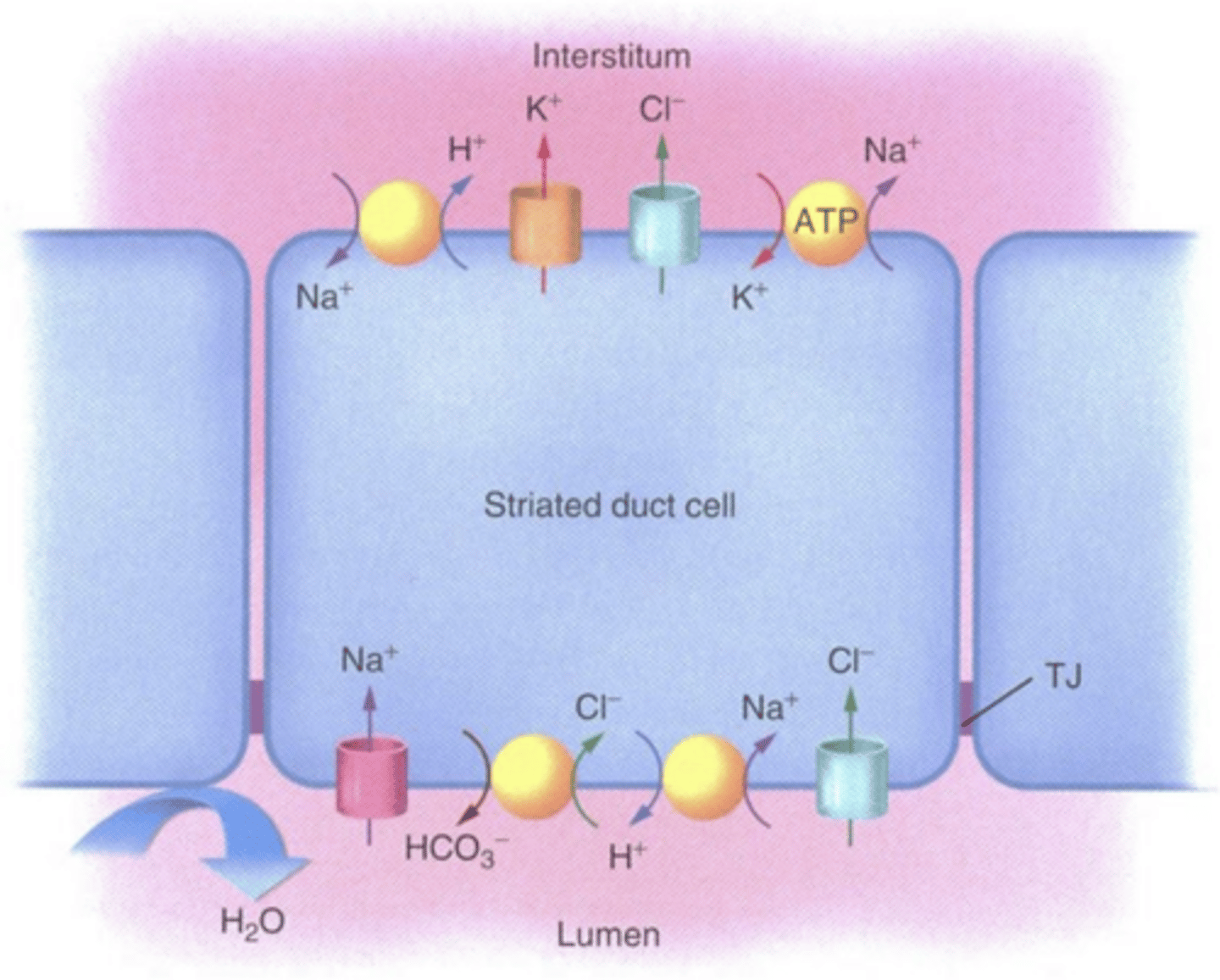
What modifications occur to saliva in duct cells?
• transporters cause reabsorption of ___ and ___
• ___ and ___ are secreted
regulation of these actions by
• autonomic nerves
• mineralocorticoids
Na+ and Cl-
K+ and HCO3-
What can cause xerostomia?
Medications, radiation therapy, chemotherapy, and autoimmune diseases.
clinical considerations
•effects of age
• loss of salivary gland parenchymal tissue
• replaced by ________ tissue
• reduced ______ production
adipose
saliva
clinical considerations
disease
• some viruses infect and replicate within salivary gland cells:
• ______________
• __________ virus
• _______ viruses 6 & 7
• _______
• some bacterial infections cause _______ and _______ of salivary glands
cytomegalovirus
Epstein-Barr
herpes
mumps
inflammation
swelling
clinical considerations
disease
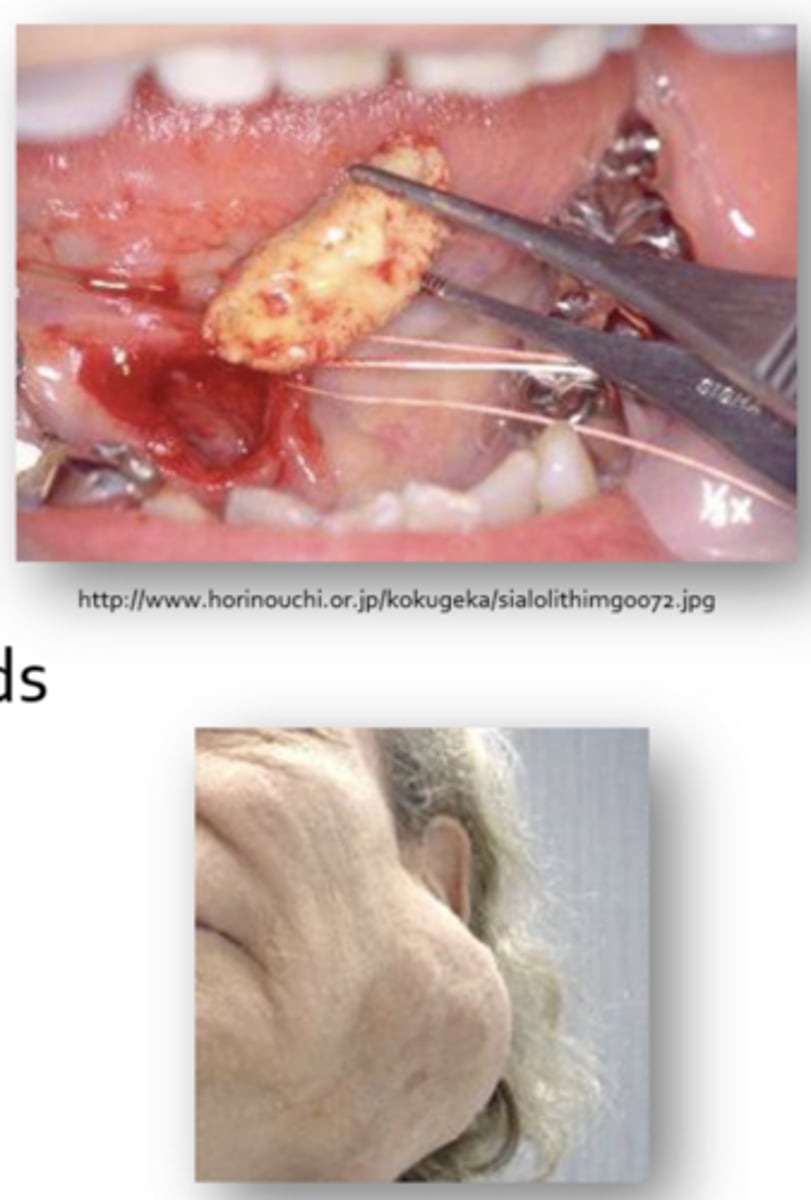
ducts can be obstructed by:
• _________ (salivary stones, calculi)
• ______ plugs
• _______ to the ducts
• various _______ can affect the glands
• pleomorphic adenoma
• Warthin’s tumor
sialoliths
mucus
trauma
tumors
clinical considerations
other diseases can affect salivary gland function:
• diabetes
• Sjögren syndrome
• rheumatoid arthritis
• adrenal disease
• AIDS
xerostomia - dry mouth
results:
• dryness of mouth
• loss of protective effects of salivary ________, proteins and mucins
• oral tissues becoming more __________ to infections
• speech, eating and swallowing to become difficult
• teeth become more susceptible to ______
buffers
susceptible
caries
 Note
Note  Flashcards (24)