Chapter 8: Energy Balance & Body Weight Reduction
 Call Kai
 Learn
Learn Practice Test
 Spaced Repetition
 Match
Match Flashcards
 Knowt Play
1/40

There's no tags or description
Looks like no tags are added yet.
Name | Mastery | Learn | Test | Matching | Spaced | Call with Kai |
|---|
No analytics yet
Send a link to your students to track their progress
41 Terms
When does energy balance occur?
when energy intake = energy expenditure
Positive energy balance
occurs when energy intake > energy expenditure
Negative energy balance
occurs when energy expenditure > energy intake
An example of a hormone produced by adipose tissue is ____.
adipokines
Adipokines
hormones released by adipose tissue that allow for communication between fat cells
The primary function of adipokines is to:
regulate immune and inflammatory responses
What are the two types of adipose tissue?
visceral adipose tissue (VAT): essential fat surrounding organs
subcutaneous adipose tissue (SCAT): fat under the skin
Adipose tissue can experience ___ or ___ growth.
hypertropic or hyperplastic
Hypertropic Growth
occurs when the size of adipocytes increase (S —> L)
Hyperplastic Growth
occurs when the number of adipocytes increases (1 —> 2)
What happens to adipocytes during weight loss?
they decrease in size
What determines energy intake?
hunger
appetite
satiety
Hunger
the physiological drive to consume food
Appetite
the desire to eat a particular food (ex: hamburger)
Satiety
the feeling of fullness
Hunger, satiey, and appetite are all products of ____ between the gut and the brain.
neural connections
Regarding energy intake, the hypothalamus regulates ___ and ___.
hunger and satiety
______ neurotransmitters released by the hypothalamus promote satiety.
Catabolic
_____ neurotransmitters released by the hypothalamus promote hunger.
Anabolic
What three things regulate short-term food intake?
gastric stretching
circulating nutrient levels
gastrointestinal hormones
Gastric stretching
as the stomach fills with food, stretch receptors in the stomach relay info to the brain via neural signals to inhibit further food intake
Circulating nutrient levels
when nutrient (glucose, AA, FAs) concentrations are high in the bloodstream they can signal satiety
when nutrient concentrations are low in the bloodstream they can signal hunger
GI hormones
GI hormones are released in the presence or absence of food to regulate food intake (ex: ghrelin stimulates food intake)
Bariatric Surgery
A medical procedure that helps those with obesity lose weight by modifying the digestive system
Types of bariatric surgery
gastric banding
gastric sleeve
gastric bypass
Gastric banding surgery
reduces the size of the stomach by wrapping an adjustable band around the upper portion of the stomach. This creates a small stomach pouch that fills quickly with food, triggering satiety
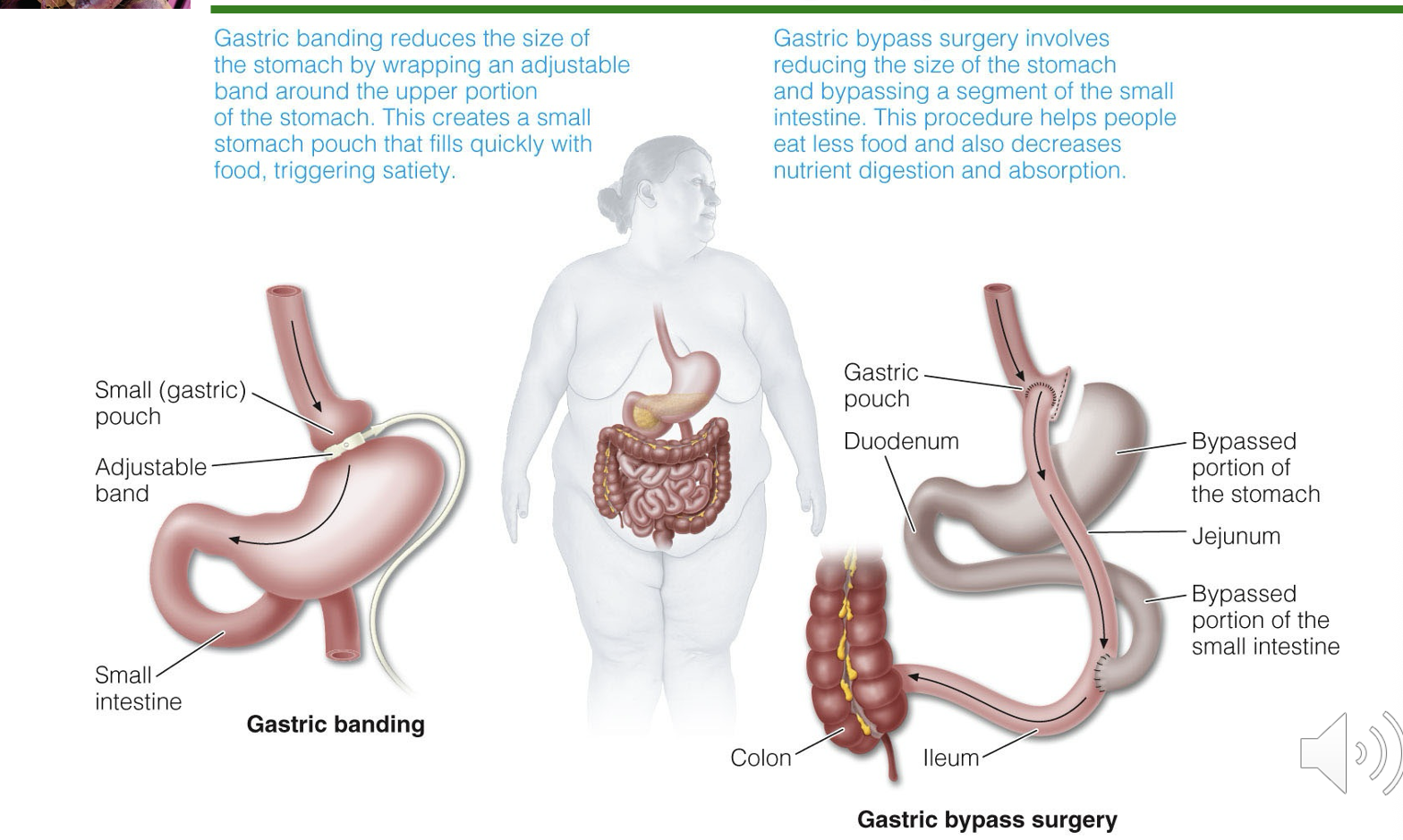
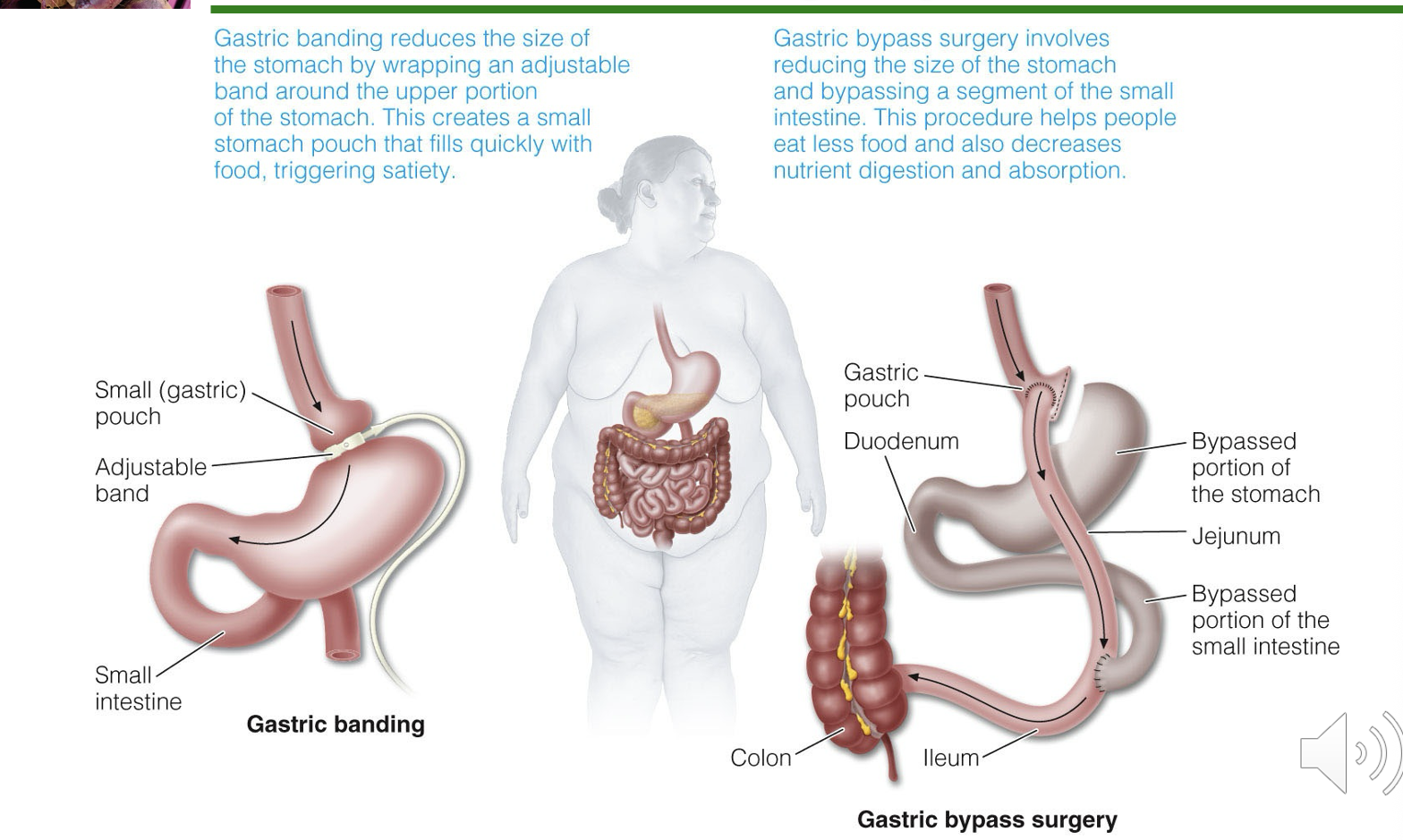
Gastric bypass surgery
reduces the size of the stomach and bypasses a segment of the small intestine. This procedure helps people eat less food and also decreases nutrient absorption
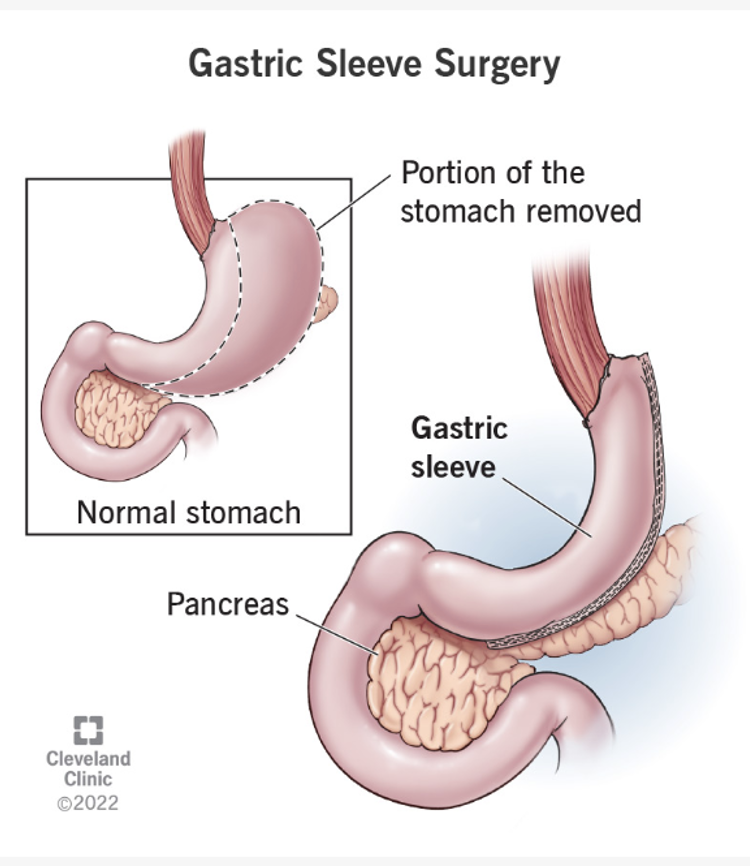
Gastric sleeve surgery
removes a large portion of the stomach, creating a tube-like structure. This limits food intake and results in hormonal changes that help with weight loss.
Name 4 GI hormones?
CCK
Glucagon-like peptide 1 (GLP-1)
ghrelin
peptide YY
What effect does CCK, GLP-1s, and peptide YY have on food intake?
they decrease food intake
Ghrelin ___ food intake.
increase
What are examples of GLP-1 medications?
Mounjaro
Wegovy
Ozempic
Zepbound
True or False: GLP-1s alone can’t treat Type II diabetes or obesity.
True, GLP-1 medications need to be combined with lifestyle and dietary changes to effectively lose weight and manage diabetes
How do GLP-1 medications work?
GLP-1 medications mimic actual GLP-1 hormones and bind to their receptors. They then trigger the effects of the hormone.
Effects of GLP-1 medications:
triggers insulin release
blocks glucagon secretions
slows gastric emptying
increases feelings of satiety
GLP-1 agonists are generally safe. But there are a few risks to consider when taking them. What are those risks?
allergic reactions
hypoglycemia (low blood sugar)
GI issues
muscle loss
Total energy expenditure (TEE)
the total amount of energy used by the body
Total energy expenditure (or caloric use) is measured by:
basal metabolism
physical activity
thermic effect of food
Basal metabolism
the energy required to perform for basic life functions (accounts for 50-70% of TEE)
Physical activity
the energy required to move (accounts for 15-30% of TEE)
Thermic effect of food
the energy required to process food (accounts for 10% of TEE)

