(2) Rome / Byzantines: Military History (inc. Wars, Battles, Treaties, etc.) and Notable Events (inc. Natural Disasters, Diseases, Destructions of Cities, Periods of a series of Events, etc.)
 Call Kai
 Learn
Learn Practice Test
 Spaced Repetition
 Match
Match Flashcards
 Knowt Play
1/255

Earn XP
Description and Tags
Fictional Images applied where necessary; Maps applied where necessary
Name | Mastery | Learn | Test | Matching | Spaced | Call with Kai |
|---|
No analytics yet
Send a link to your students to track their progress
256 Terms
495 BCE - 287 BCE - Conflict of Orders (All Facts)
Period in Roman history during the Roman Republic in which Plebeians rebelled against Roman Patricians and aristocrats and fought for and successfully gained more and more rights with the goal of achieving political equality with the Patricians
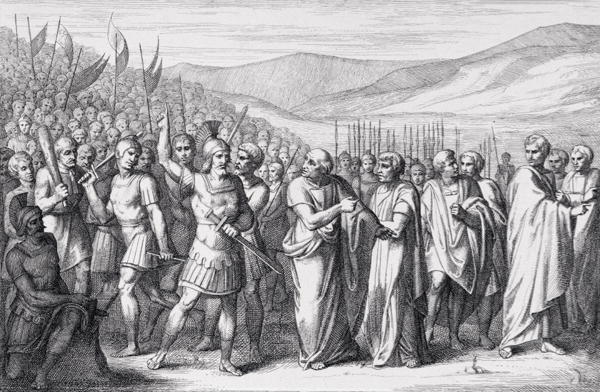
Began when the Plebeians withdrew to the Aventine Hill (one of the Seven Founding Hills of Rome), a working-class stronghold outside the city of Rome, where they protested the “weighting” of voting rights, which gave the well-to-do patricians far greater power than the plebeians within the Popular Assemblies
It was here that the Plebeians swore a corporate oath of mutual support and bore arms
This was the first of many Plebeian “secessions” or Secessio Plebis
During this time, the Plebeians
Clamored against the Patricians to obtain certain rights and privileges by making several complaints against their Patrician overseers in that they
Had no officials to look out for their interests
Did not know what the laws were
Did not know how to prosecute court cases
Had no realistic chance of being elected to office or becoming Senator
Were sold into slavery if they defaulted on loans made by their Patrician counterparts
Argued that high interest rates on loans have forced more and more of them into near-slavery, as debtors were frequently forced to pledge their bodies if they could not meet their debts and thus that collective protest was the only answer
Argued that ignorance of the law had led to the poor being enslaved for debt and being deprived of any say in the government, thus leading to the creation by the Patricians of the “Twelve Tables” by 450 BCE
Organized and used class solidarity in order to gain power given the close ties that bound Roman society together at the time
Took advantage of the Clientela System and received the benefits from it
Worked their way up and eventually had clients of their own within the Clientela System
Became good at business and commerce and became extremely wealthy and influential, but still could not enter the Patrician class
Won a major victory in their fight for a bigger say in the government of Rome when they passed the Licinian-Sextian Rogations, a series of three laws which gave them more political and economic equality with the Patricians
Gained the rights to fill more and more offices including
The Office of Dictator, in which the first of them was appointed dictator in 356 BCE
The Office of Censor, opened to them in 351 BCE
The Office of Praetor, opened to them in 337 BCE
Won the ultimate victory in their fight against the Patricians when they passed the Hortensian Law, which finally secured equal political rights between them and the Patricians
Up until this time, the Patricians had made increasing demands onto the Plebeians because of the Patricians’ heavy financial losses from waging foreign wars
During this time, in response, the Plebeians became more and more vocal in their insistence on a bigger say in government
406 BCE - 396 BCE - Siege of Veii (All Facts)
Battle in which the Romans defeated the Etruscans, which saw their namesake city captured and taken
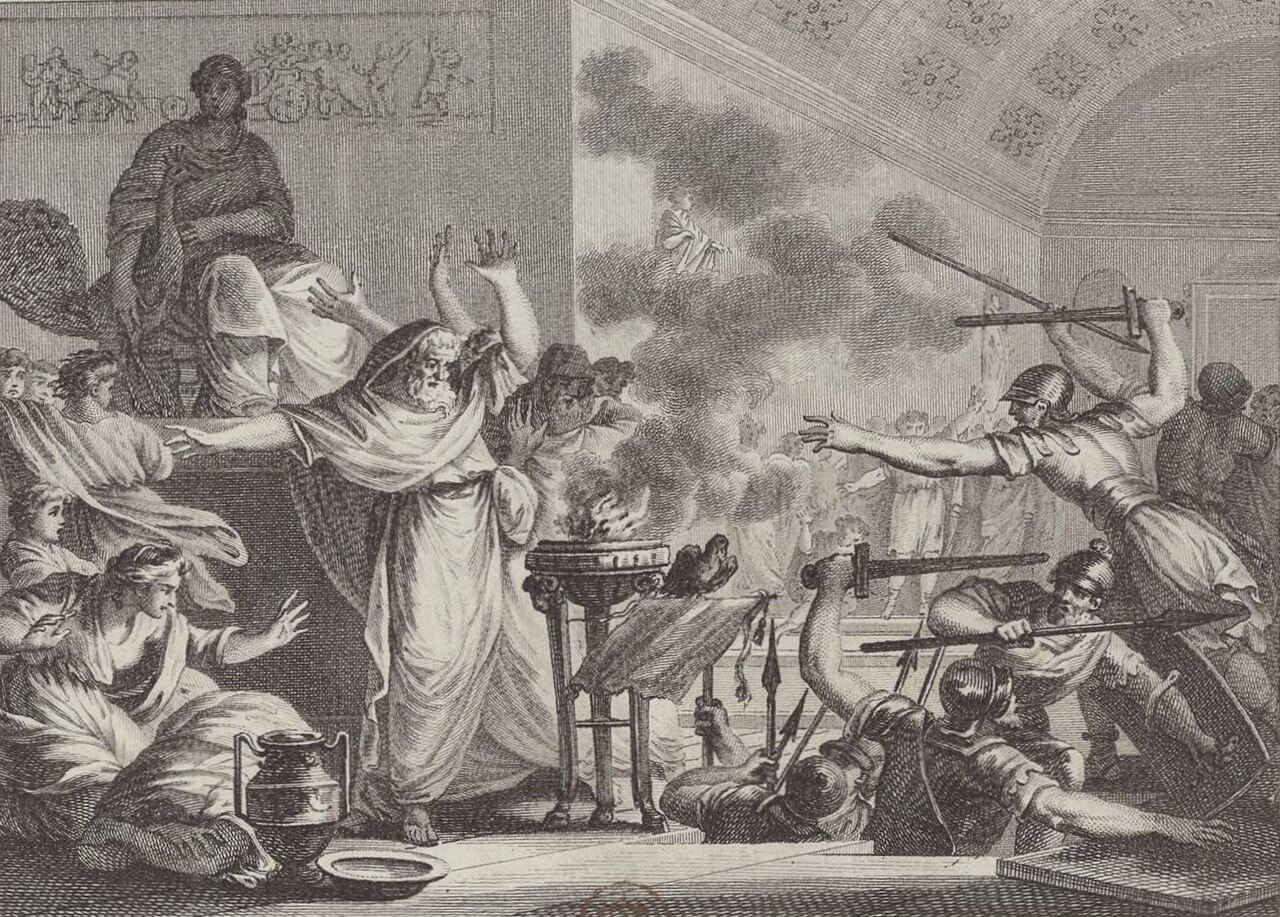
Occurred when Roman soldiers led by Furius Camillus tunneled their way into the very center of the city’s Temple of Juno and systematically sacked it
Camillus organized his men in 6-hour shifts, digging continually until his sappers were close enough to hear the king of the namesake city preparing to offer a sacrifice to victory in the temple above them
It was a bloody conflict, in which Etruscan women and slaves hurled stones down from the rooftops onto Roman soldiers only for them to then be burned alive
It thus brought an end to over 200 years of intermittent warfare between the Romans and the Etruscans in which fortunes see-sawed continually
The newly won land was distributed to landless plebeians in order to
Make them eligible for military service
Remove a potential source of unrest from Rome
However, these gains did not last long
Nevertheless, it defeat served as a launchpad for Roman expansion in the coming decades
Additionally, despite it causing the decline in Etruscan civilizations, Romans adopted certain elements of Etruscan culture including
Its “century” system of organizing its armies
Its gladiatorial games
Its military “triumphs”
390 BCE / 387 BCE - Battle of The Allia (All Facts)
Battle in which the Romans are defeated by Brennus and the Gauls
Battle in which Rome’s army of 10,000 men - the biggest ever in Rome’s history up to that point - were defeated by the Gauls and scattered throughout the province
Battle in which the Gauls fought naked and drove their war chariots into the city to find only its senators sitting quietly on their thrones awaiting their deaths with dignity
390 BCE - Gallic Sack of Rome (All Facts)
Battle in which the Romans are defeated by Brennus and the Gauls
Romans are defeated by the undisciplined howling charge of the Celtic warriors
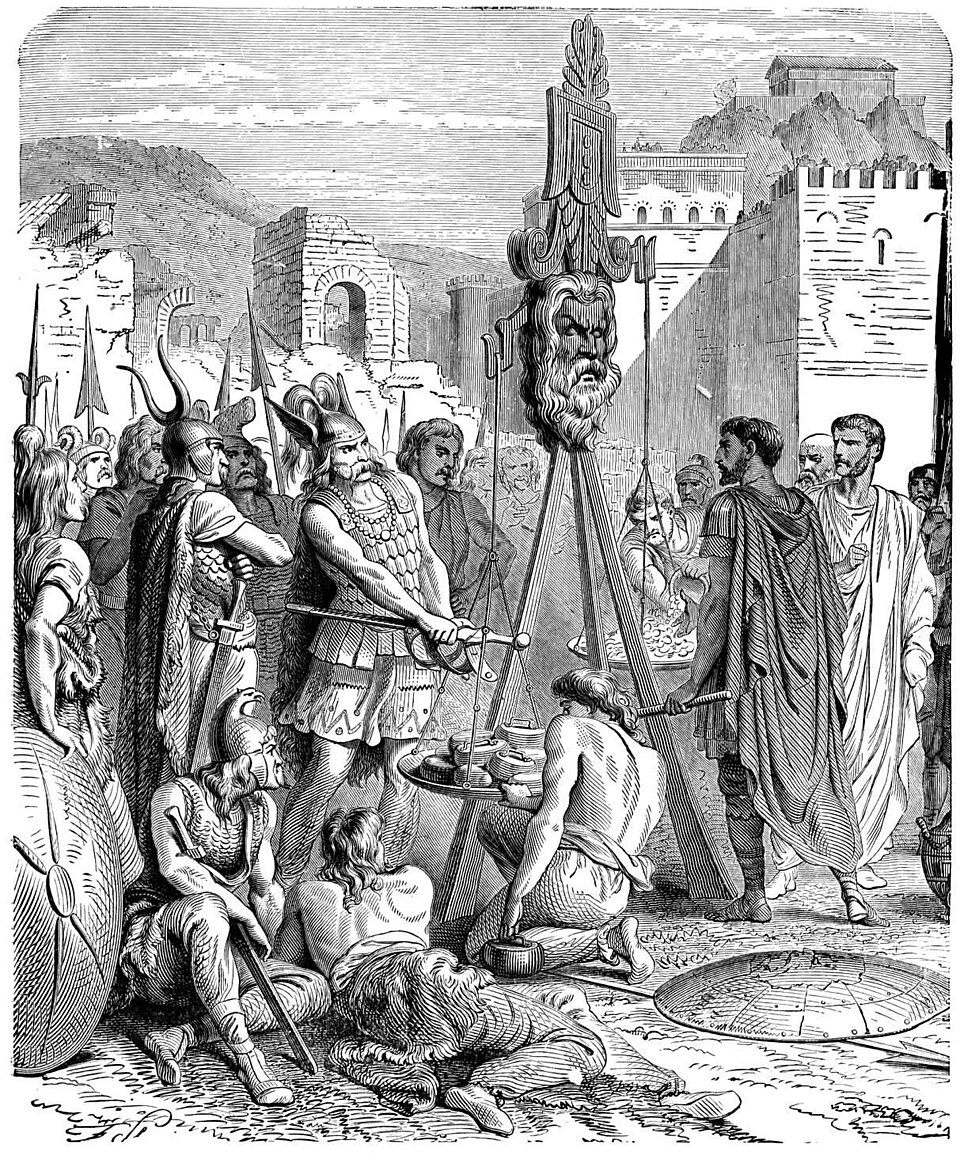
Retreated, allowing them to occupy, sack, and burn the city of Rome
Destroyed any records including (the original copy that existed of) the Twelve Tables
Were only done away with by the Romans after a large ransom was paid to them
First major Roman defeat in its history; it was commemorated thereafter annually on “dark day”
Romans thus swear that such a humiliation would never happen again
Forced the Patricians to settle with Plebeians for the sake of unification and thus agreed to the fact that one Consul could be Plebeian
After this attack, the Romans were back on the defensive as their neighbors attempted to benefit from their defeat at the hands of the Gauls
Took Rome about 40 years to recover from it, recovering around 350 BCE
Was the biggest disaster and most humiliating defeat of the Romans, a “dark day”
350 BCE - 270 BCE - Conquest of Italy / Italian Alliance / Alliance System (All Facts)
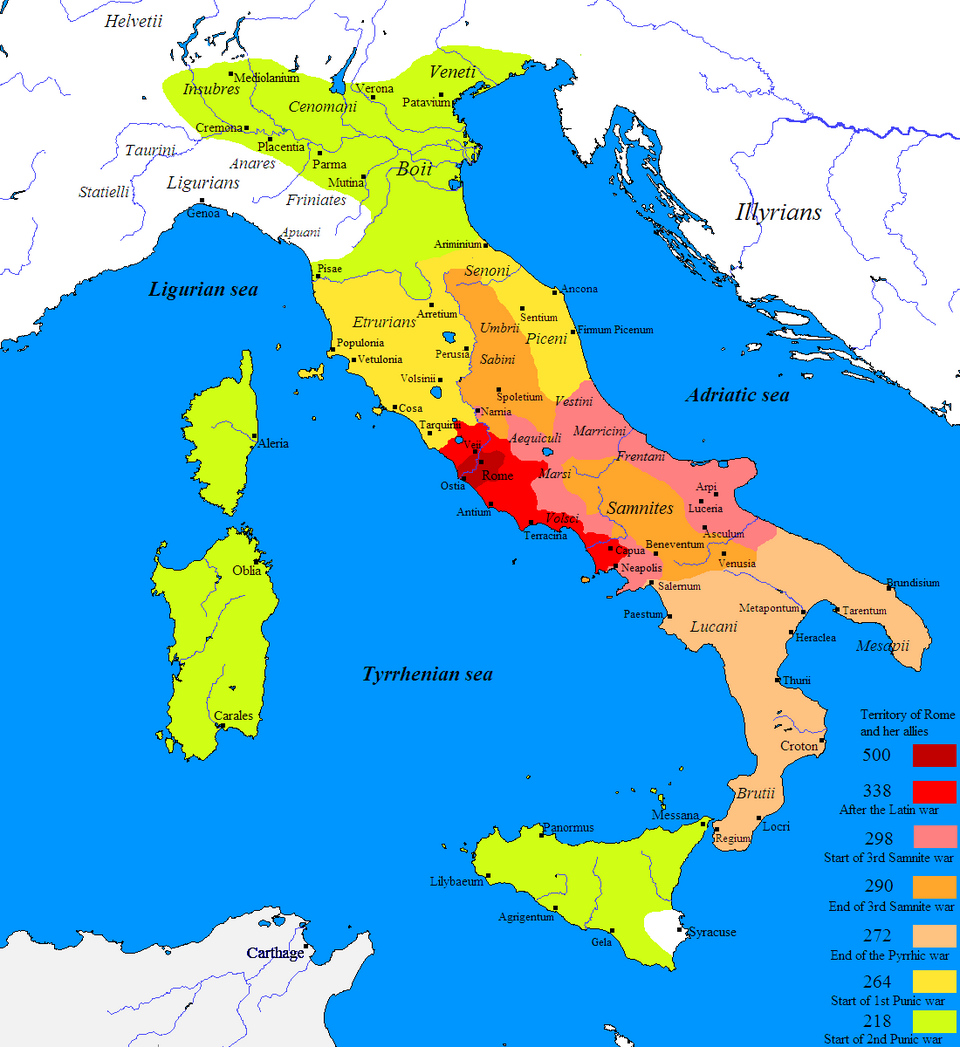
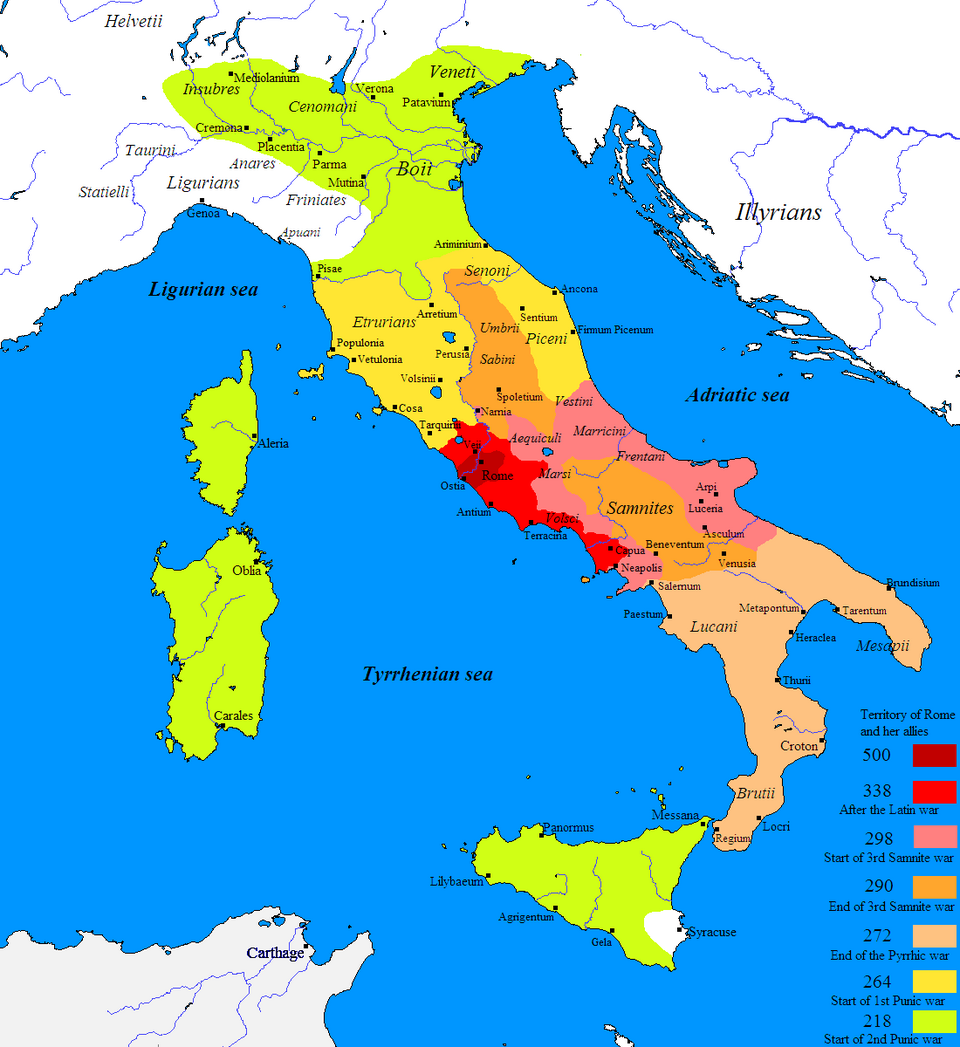
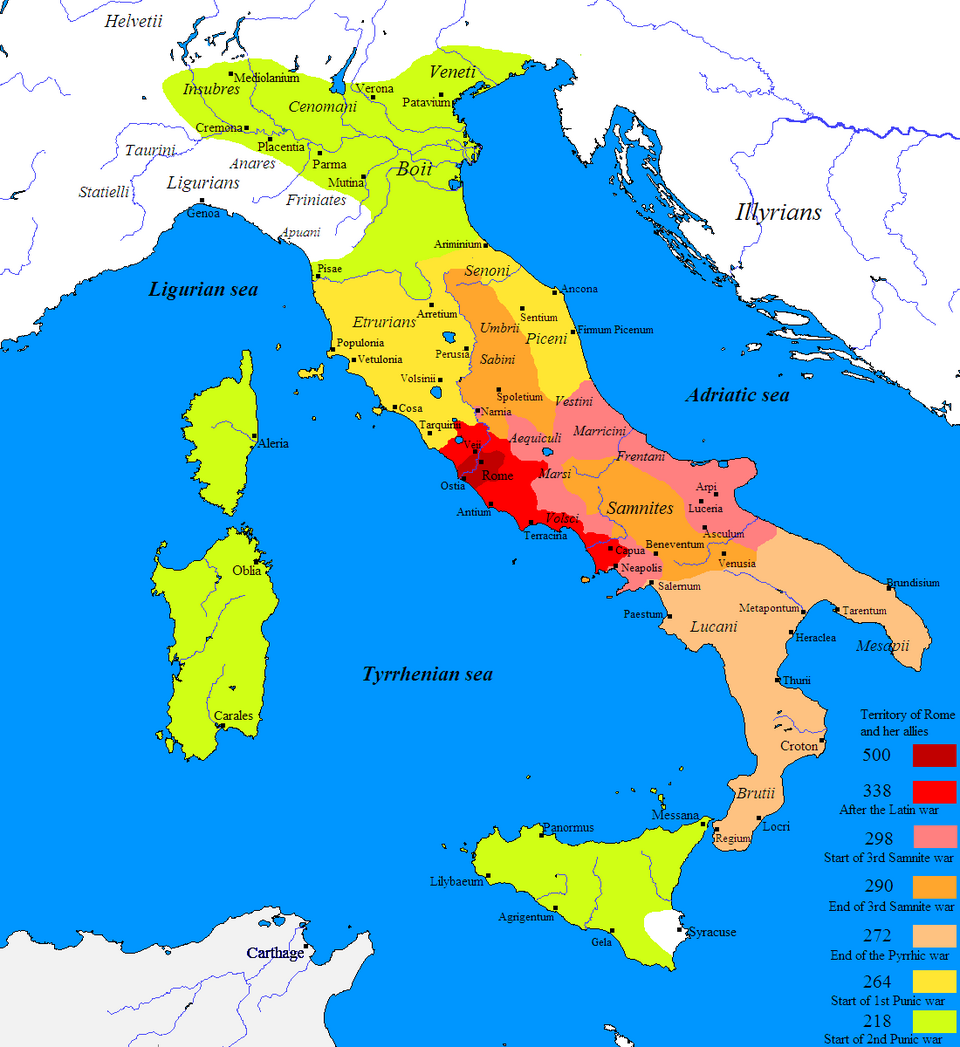
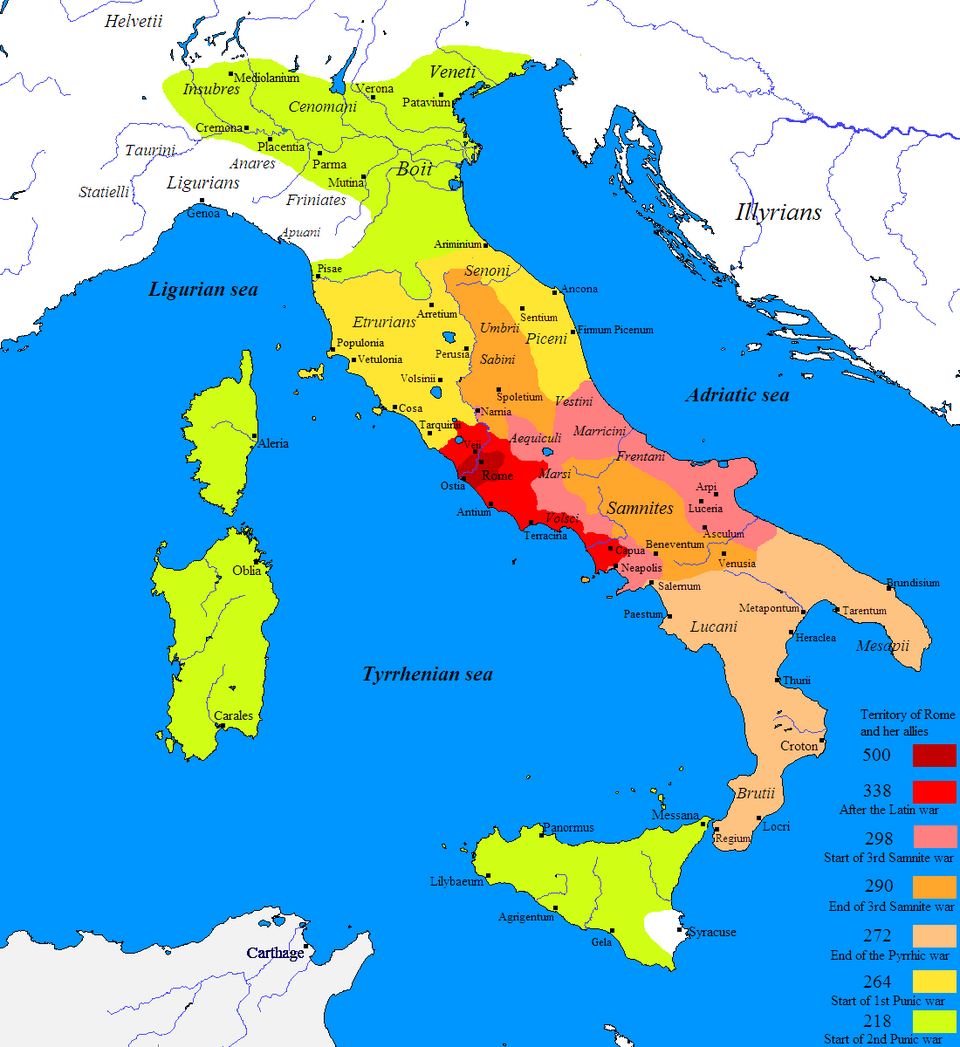
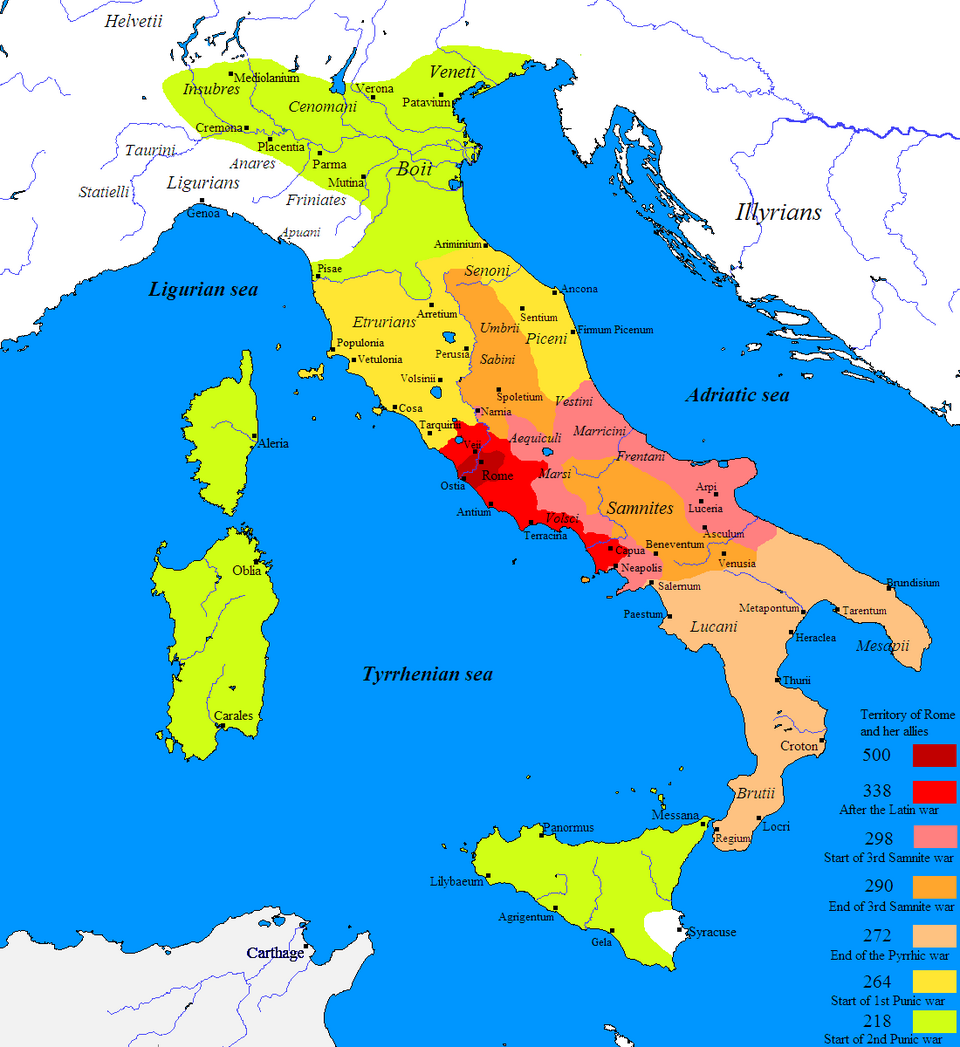
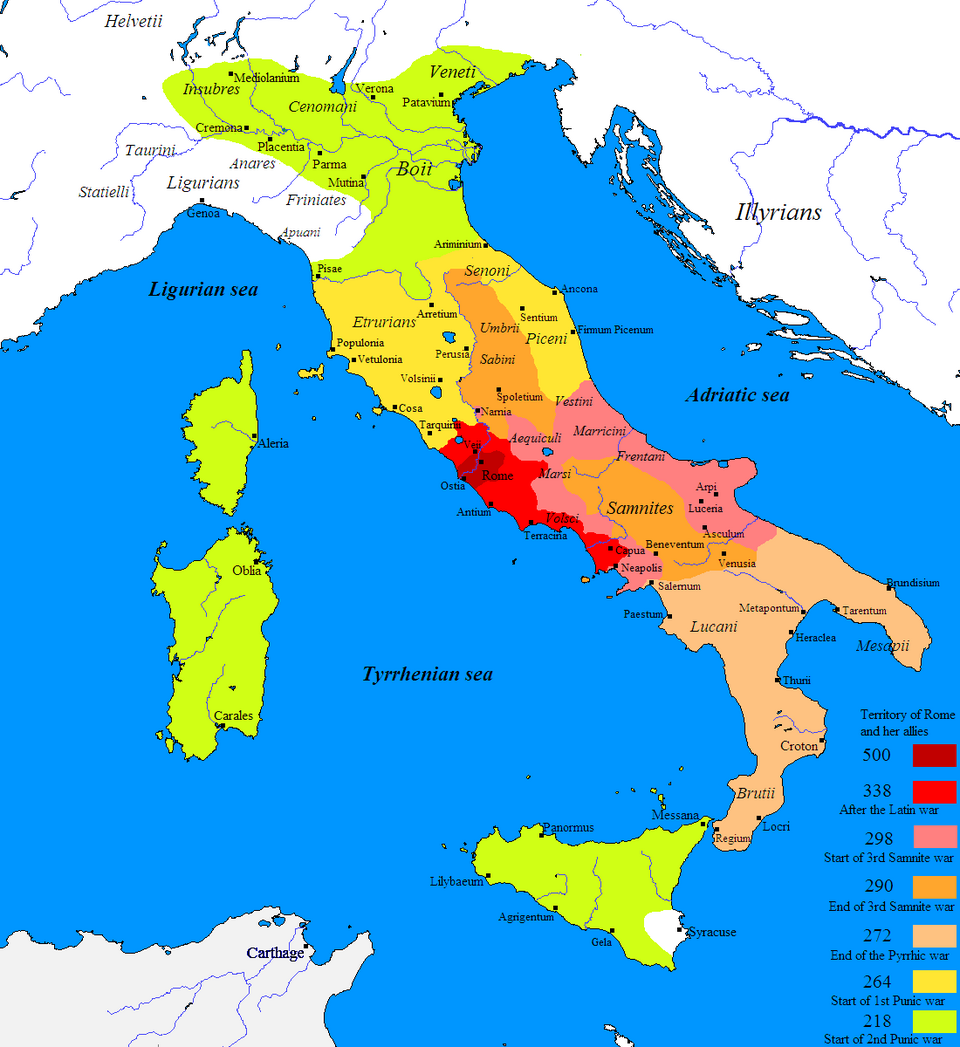
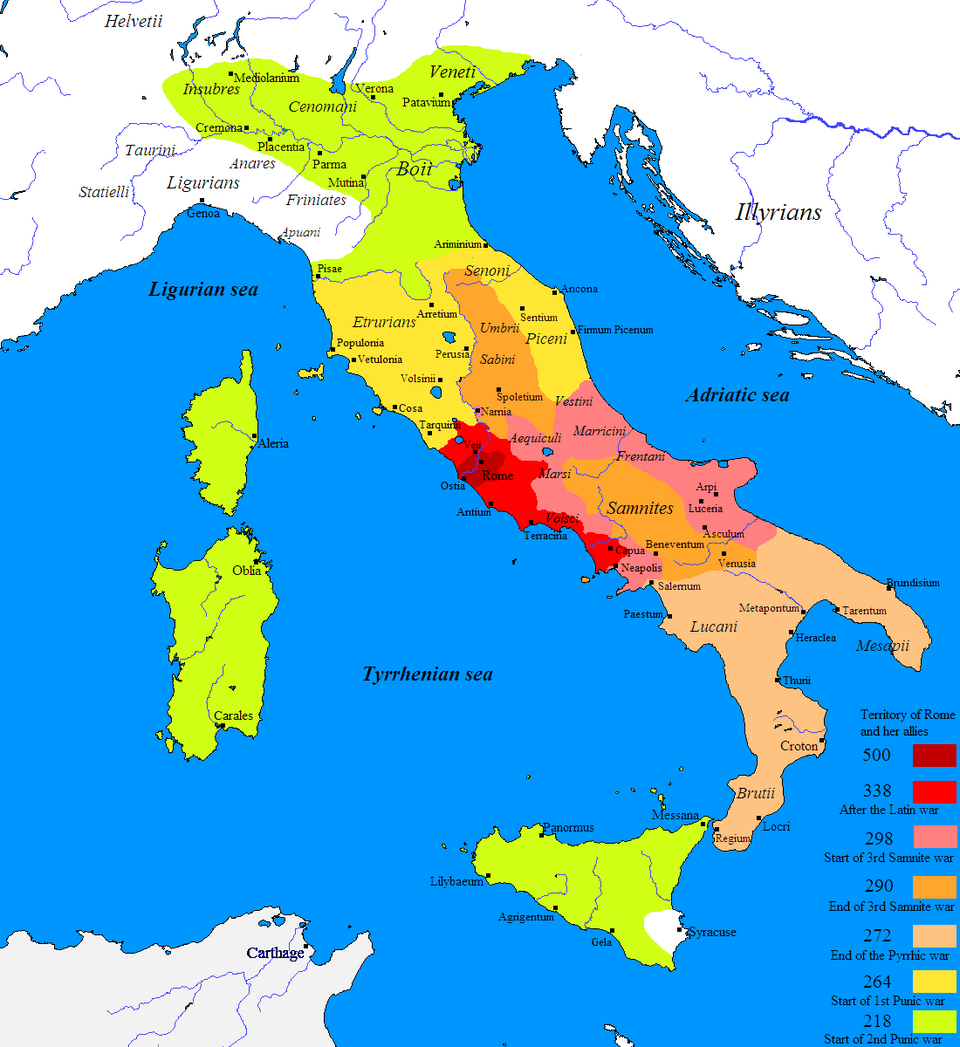
Series of Italian military conflicts that eventually gave them control of all of Italy south of the Po River (Southern Italy) and established the namesake system and manifested the namesake concept
As a result of the namesake event, they gained incredible manpower reserves which they used for all future wars and conflicts after 264 BCE
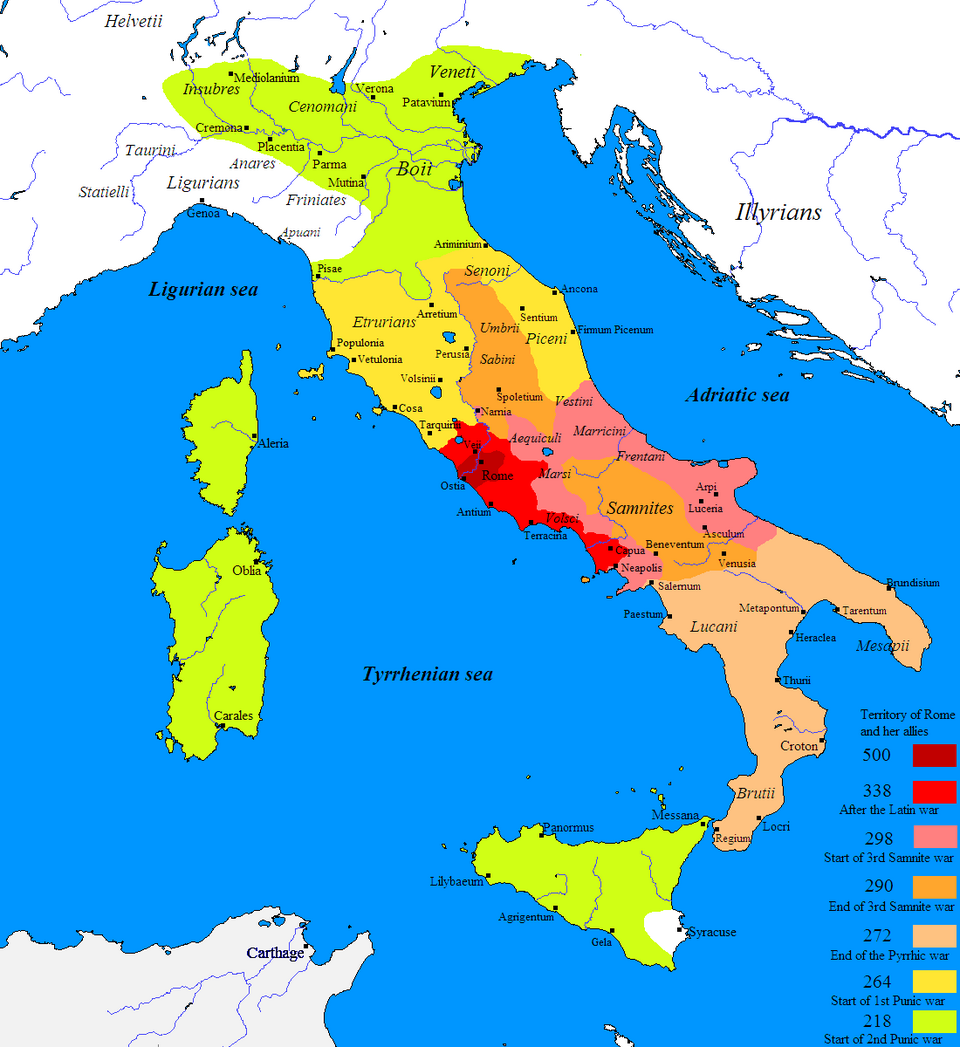
340 BCE - 338 BCE - The Great Latin Revolt / Second Latin War (All Facts)
Latins felt that they were being drawn into Rome’s wars and that the terms of the Cassian Treaty they had previously made with them were not being observed
Romans suppress the revolt and defeat them
Romans
Dissolve the Latin League
Annex the Latin towns
Give the Latins partial Roman citizenship depending on how close the Latins lived relative to Rome
Unite Latium
Thus, from this point onwards, Rome conquered, controlled, and unified Italy
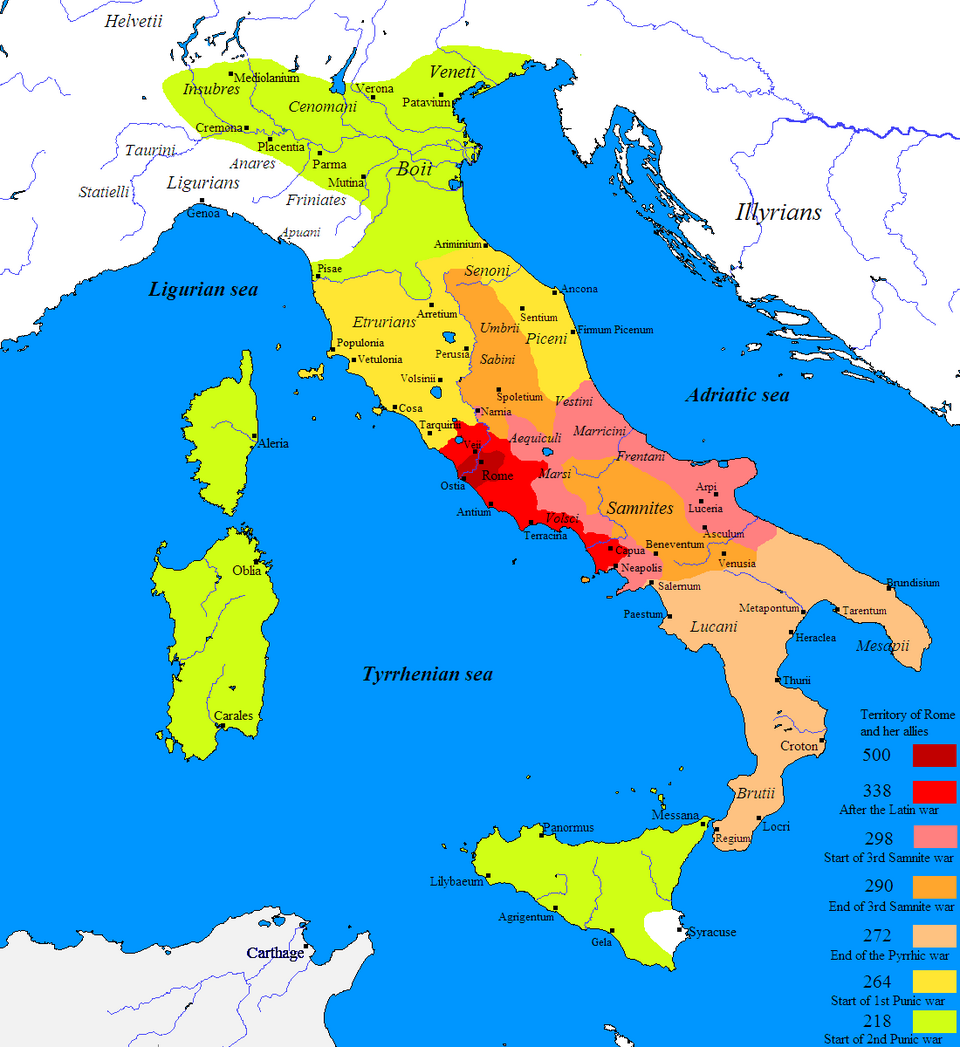
343 BCE - 341 BCE - First Samnite War (All Facts)
Starts when the city of Capua in Campania (near Naples) requests Roman assistances against attacks by the Samnites
Romans attack the Samnites only for it to end in a draw because the Romans had to withdraw because there was a mutiny among their own soldiers since they were unhappy since they were away from home for so long
Nevertheless, the Romans now found themselves committed to maintaining a presence wherever they initially involved themselves, in this case, in Campania
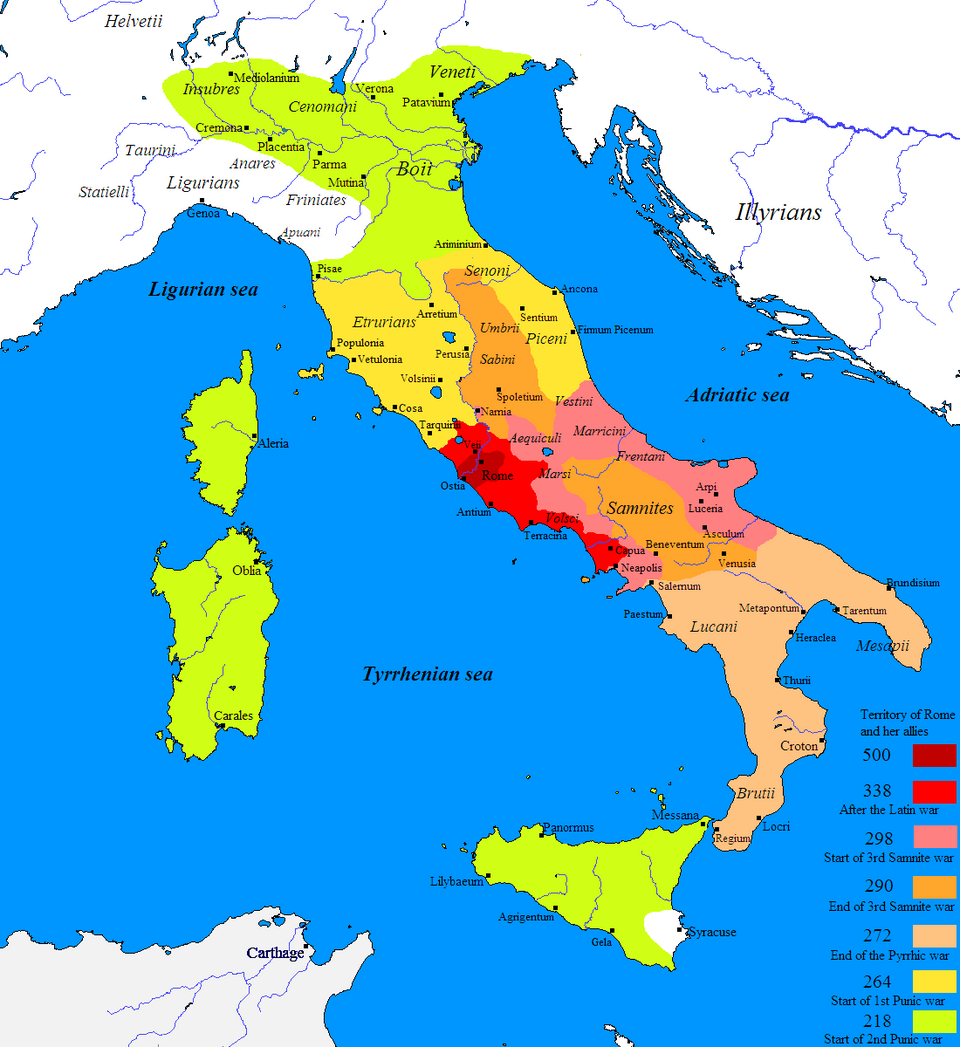
326 BCE - 304 BCE - Second Samnite War (All Facts)
Begins when the Samnites move to occupy Naples
Marked by some major Roman defeats, however as they were losing battles, they were establishing “strategic superiority” and eventually recaptured territory gained by the Samnites (outside of Samnium)
During this war, Rome began construction of military colonies on the borders of Samnium where destitute Roman citizens gave up their citizenship in exchange for the opportunity to receive land grants and a new start
It was during this war that the “Appian Way” was constructed
Ends when the Samnites, exhausted, sue for peace

321 BCE - Battle of Caudine Forks (All Facts)
Battle in which the Romans were defeated in humiliating fashion by Gavius Pontius and the Samnites (from the southern Apennines) during the Second Samnite War
Was not actually a battle but a negotiation to surrender where the Romans were humiliated to be like “beasts of burden”
Battle in which an entire Roman legion was led by its officers through the namesake pass in the Apennines near Caudium in Campania, only to find the namesake path blocked by boulders and felled trees and an entire Samnite army at their rear
The Roman army was helpless
Its leaders
were impotent to make decisions
displayed their frustration to the soldiers under their command
Its soldiers
were angry with the surrender-or-die situation in which they found themselves
frequently came close to mutiny
Everyone was
threatened to be slaughtered by Pontius and the Samnites
forced to pass beneath a yoke of spears erected by the enemy
forced to follow 600 aristocratic Romans taken hostage by Pontius and the Samnites
Its officers were
stripped of their finery
Forced to walk half-naked through the throngs of the jeering Samnites
Its legionnaires were
given similar treatment
hacked down if they showed pride or contempt
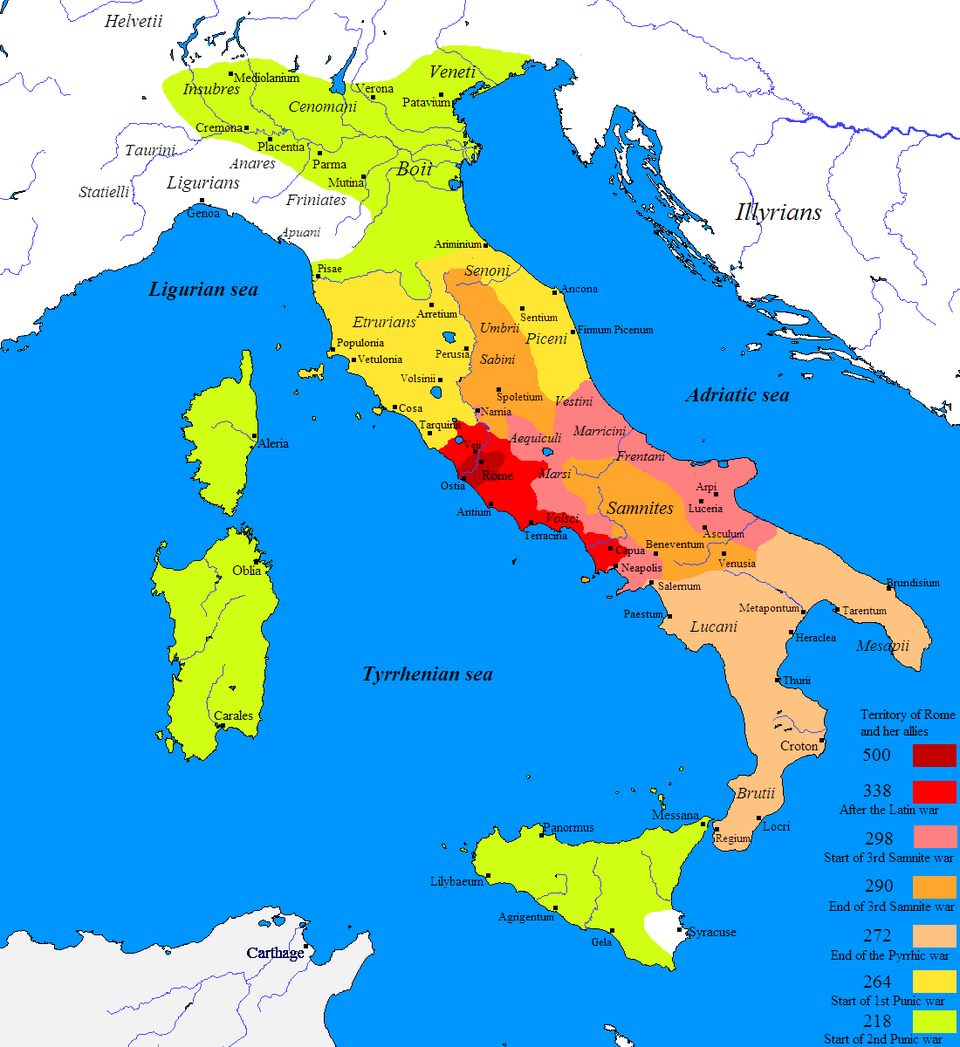
315 BCE - Battle of Lautulae (All Facts)
Battle in which the Romans were defeated by the Samnites during the Second Samnite War
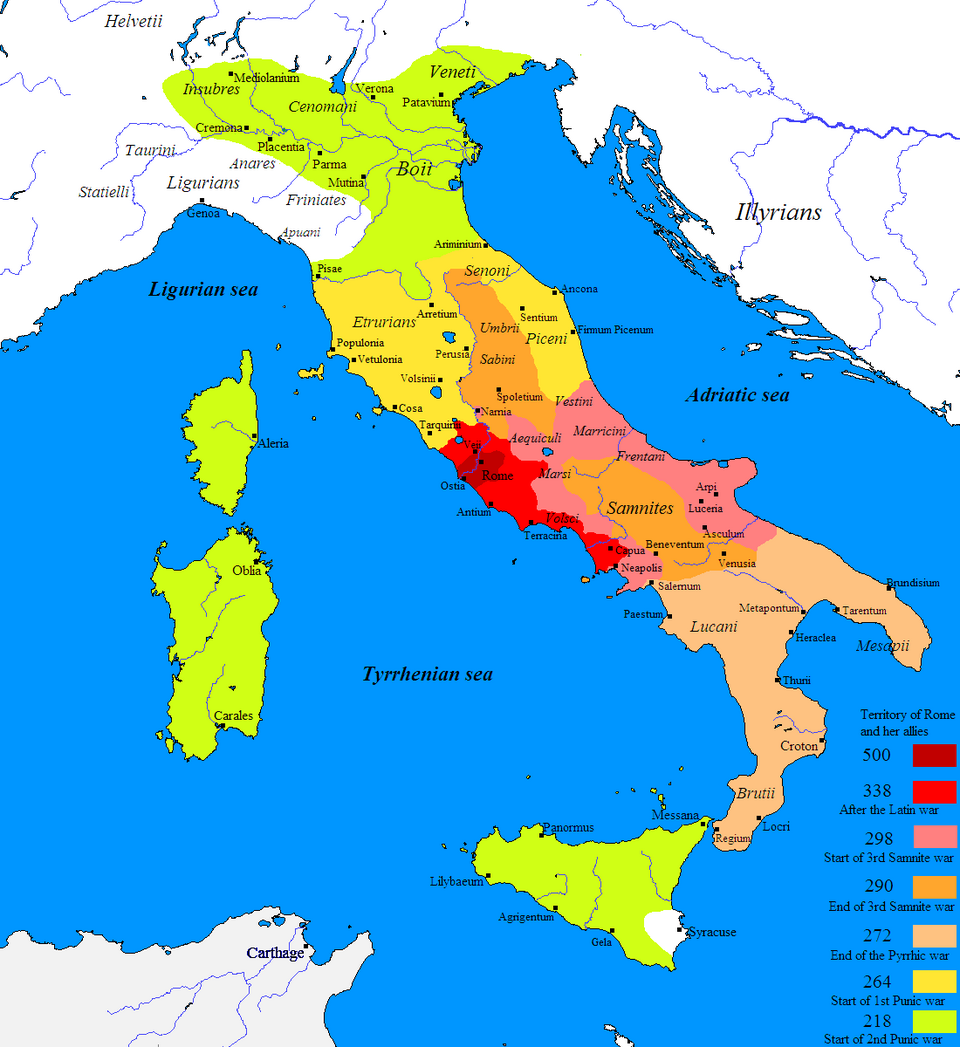
310 BCE - Battle of Lake Vadimo (All Facts)
Battle in which the Romans defeated the Etruscans (an ally of the Samnites) during the Second Samnite War
They did not take over Etruscan territory, but made them into allies instead via the Alliance System
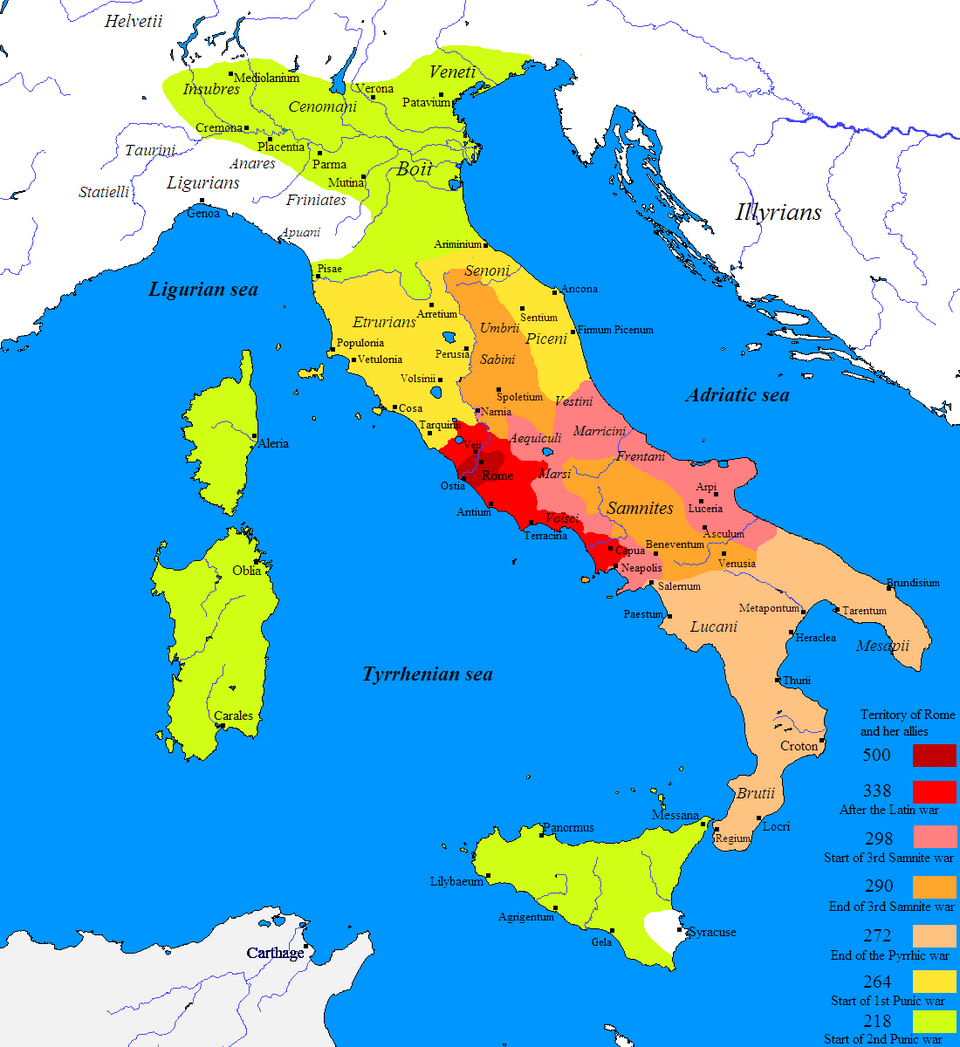
298 BCE - 290 BCE - Third Samnite War (All Facts)
Starts when the Samnites form a “great Italian coalition” against the Romans that included the Samnites, Etruscans, and Gauls; all of which nearly came to defeating the Romans
It is in this war that the Romans defeat the Samnites once and for all
From this war, they made the Samnites independent but were still considered dependent allies of Rome via the Alliance System
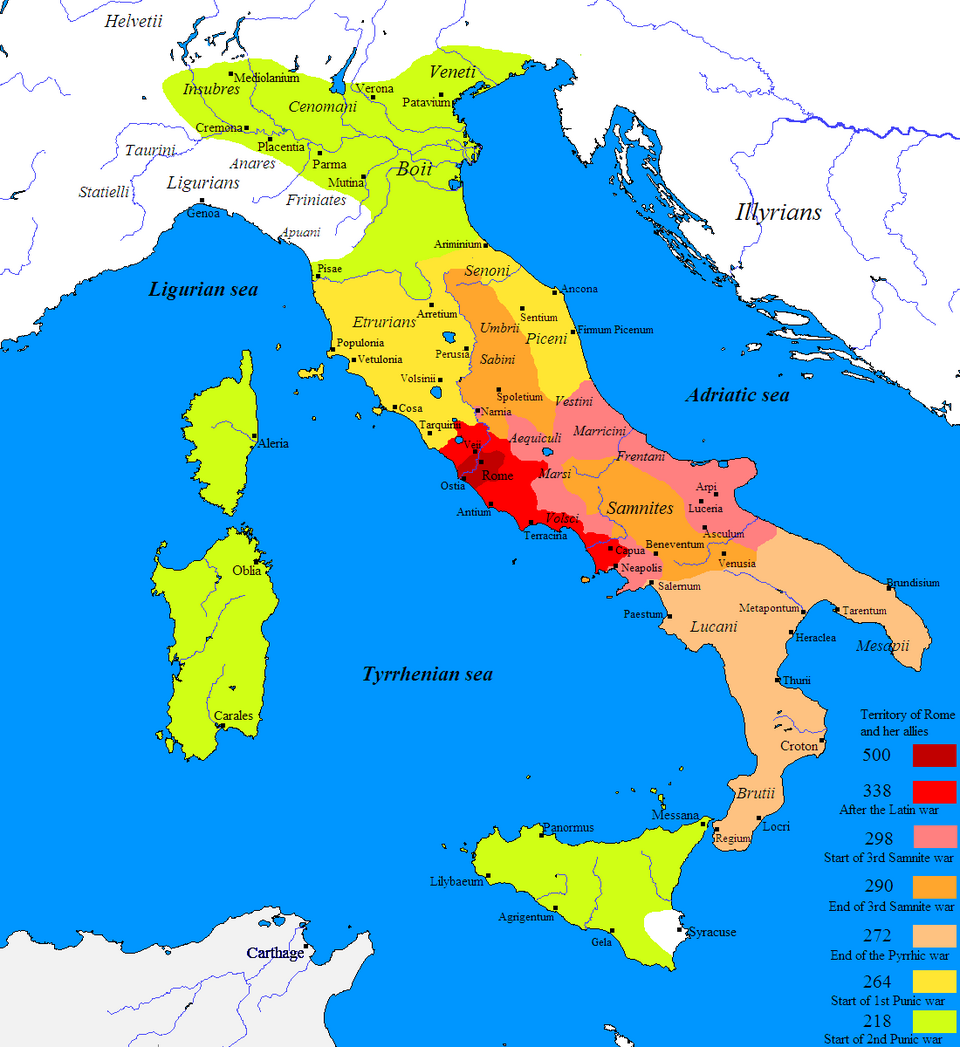
295 BCE - Battle of Sentium (All Facts)
Battle in which Publius Decius Mus and Quintus Fabius Maximus Rullianus and the Romans defeated a large army of the Gauls and Samnites and forced the Etruscans to accept peace during the Third Samnite War
In the battle,
a wolf chased a hind across the battlefield and then escaped through the Roman lines
This was seen as a lucky omen by the Roman legionnaires
Publius Decius Mus, a Roman Consul,
fought offensively, having attacked the enemy at once with his cavalry, only to see them beaten back in confusion by Gallic war chariots
prayed to the gods through the ritual of devotion, making a deal with the gods and dedicating himself to the gods, charging into the enemy, and was killed, having died with his infantry
This act gave courage to his soldiers, who, confident that the gods now would do their part, rallied to defeat the enemy, and gave the Romans victory
His “devotion” to the Gods meant that the Gods were duty-bound to fulfill their part of the deal to give the Romans victory in exchange for the death of their general
This was unlike most other ancient battles where if the general is killed, the army would disintegrate
Quintus Fabius Maximus Rullianus, a Roman consul,
fought defensively, advancing prudently until his army was able to drive a wedge between the enemy and attack the Gauls from the rear
Battle in which the Romans avenged themselves against the Samnites from the Battle of Caudine Forks
8K Roman soldiers died while 25K coalition soldiers died
Etruria was finally cut off from its allies, putting Rome in a position to control most of its neighboring states in Italy
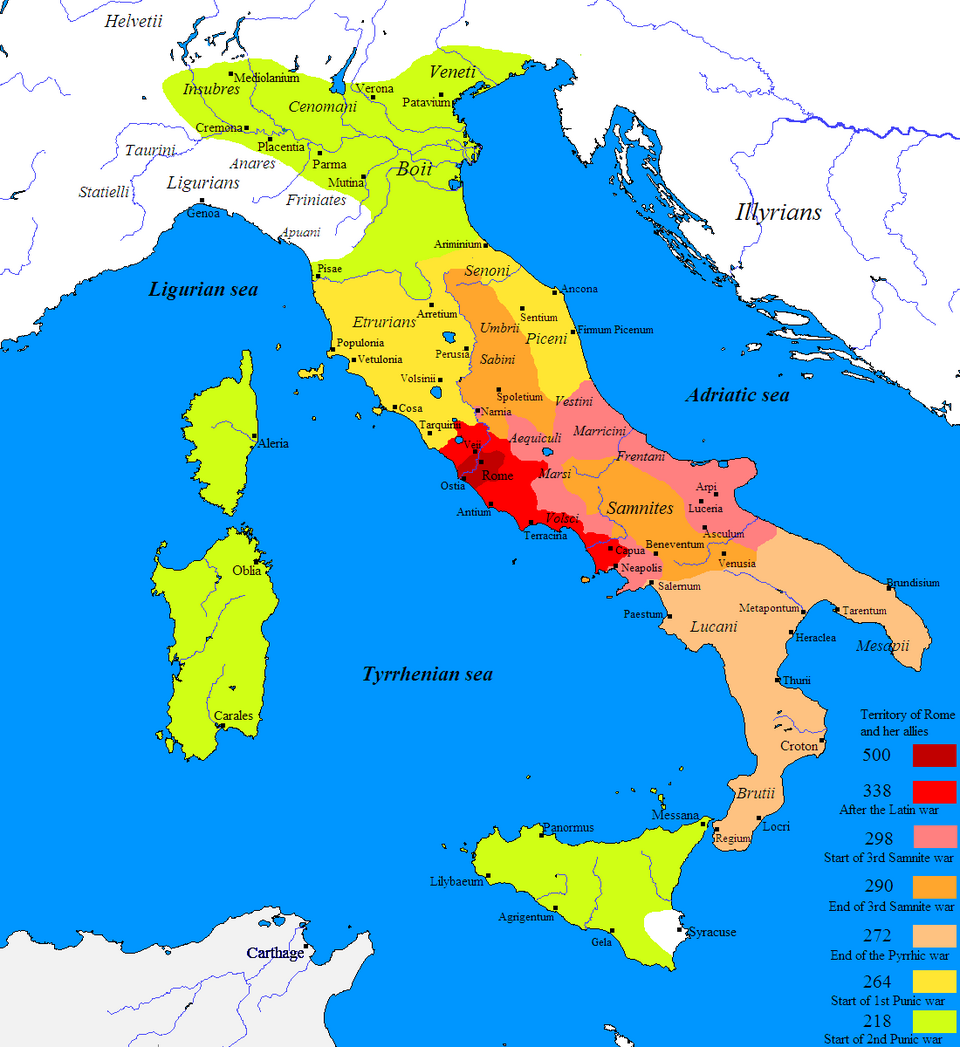
283 BCE - Second Battle of Lake Vadimo (All Facts)
Battle in which the Romans defeated the Gauls (an ally of the Samnites) during the Third Samnite War
The Romans massacred the Senones and Boii, peoples of the Gauls, in retaliation for their annihilation of a Roman army beneath the walls of Arretium (Arezzo) two years ago
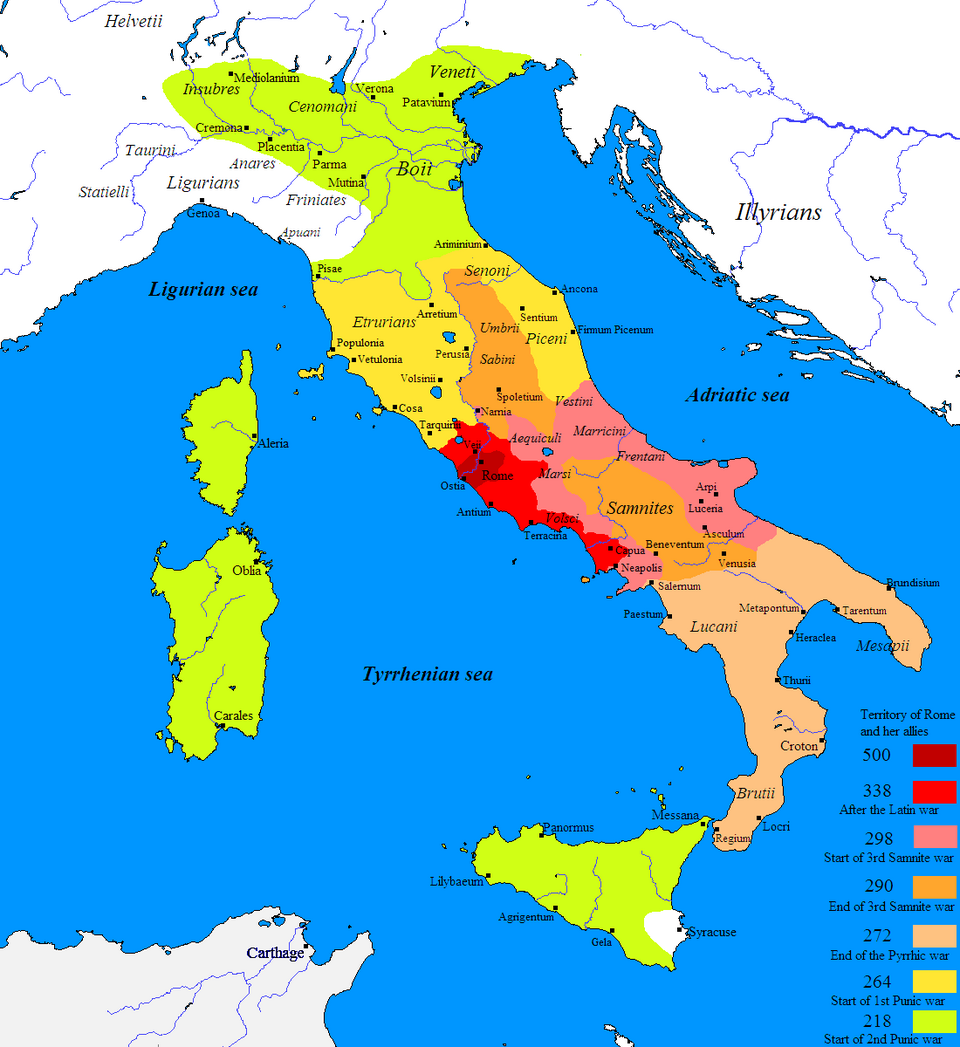
280 BCE - 275 BCE - Pyrrhic War (All Facts)
Fought between the namesake King of Epirus and the Greeks and Tarentines against the Romans
Starts when the city of Tarentum in Italy sank a small Roman scouting fleet, splatting mud on the togas of the Roman ambassadors in it, which the Romans take as a serious offense to their dignity, so they declare war on the Tarentines
However, it does not end there, since the namesake King of Epirus, who led the Greek armies at this time, are requested for help by the Tarentines; and because the king was as ambitious as ATG - wanting to create an empire (in the West) and wanting to conquer southern Italy and Sicily - the Romans got scared of him, believing him to be a genuine threat, so they declared war against him and the Tarentines
It is in this war that the Romans learn how to deal with “Italian Cows” (War Elephants) for the first time; they were the namesake king’s “secret weapon;” because the elephants had just one charge, the Romans learned that if they just got out of the way of the elephants and they just let the elephants charge on their own, they found that these elephants would eventually charge in any which direction, and eventually, in the direction of their own (the enemy’s) troops
When the namesake Greek king surrendered 7 years after the end of this war and leaves, he causes the Greeks in Southern Italy to not be able to resist the Romans any longer and causes them to surrender Southern Italy to Rome
As a result, Rome becomes the dominant power in southern Italy
By willing to last out their enemies, the Romans were able to win the eventual victory against the Tarentines (and Samnites) and then, over time, took all those Greek cities under their wing as alliances via the Alliance System (not taking over their territory)
These last developments are how Rome gained control of all of southern Italy, but they did not take their territory leaving it instead to be run by the peoples and cities already there, and thus culminated in the “Italian Alliance”
It is from the battles of this war that the term for the namesake type of “victory” is derived
As a result of this war, Rome became the dominant power in southern Italy
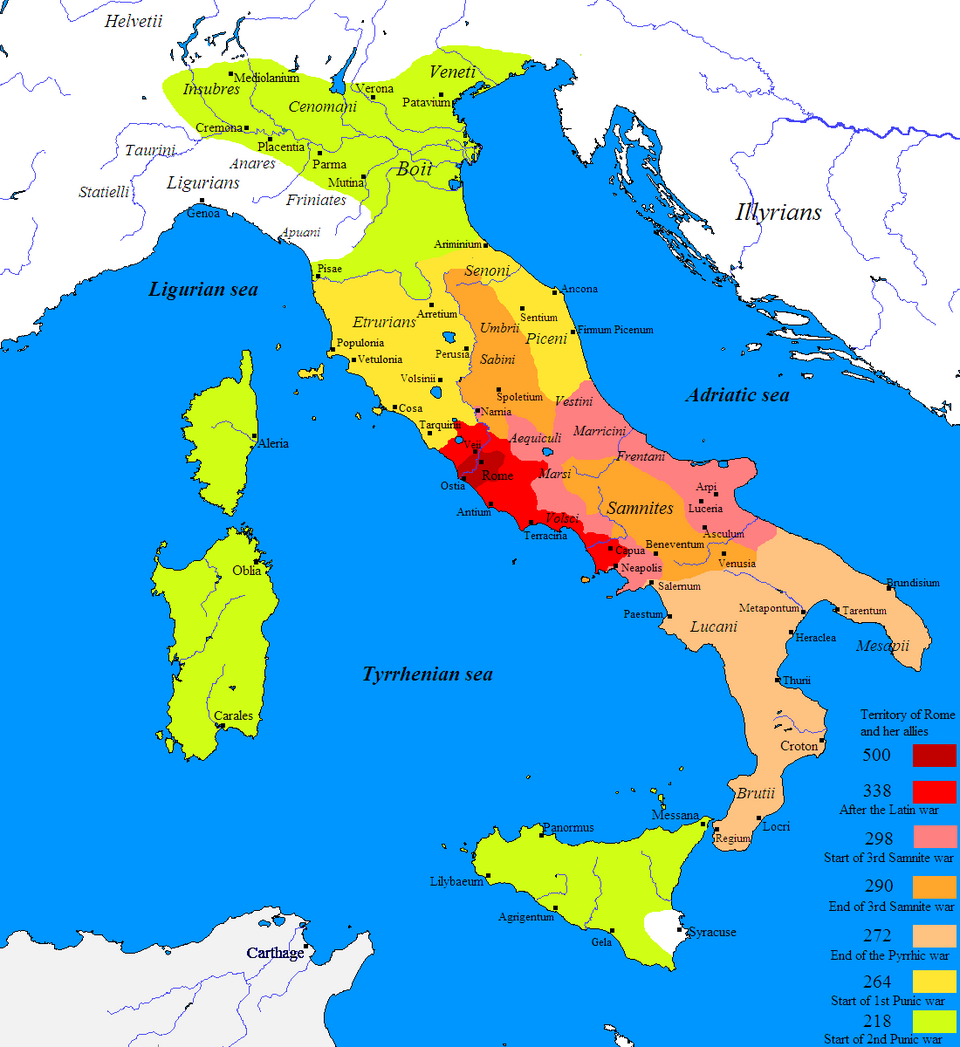
280 BCE - Battle of Heraclea (All Facts)
Battle in which Rome is defeated by King Pyrrhus and the Greeks
Battle in which King Pyrrhus’s elephants terrorized the scattered the Roman cavalry
Battle in which the long Greek spears out-maneuvered the the short Roman swords
Both sides incur heavy losses, with the Greeks losing 4K men (after starting off with 25K men) and the Romans losing 7K Men
King Pyrrhus sent embassy to Rome asking for peace, but the Roman Senate declined
Pyrrhus followed up his victory with a dash to Rome, hoping to gain support on the way from other states
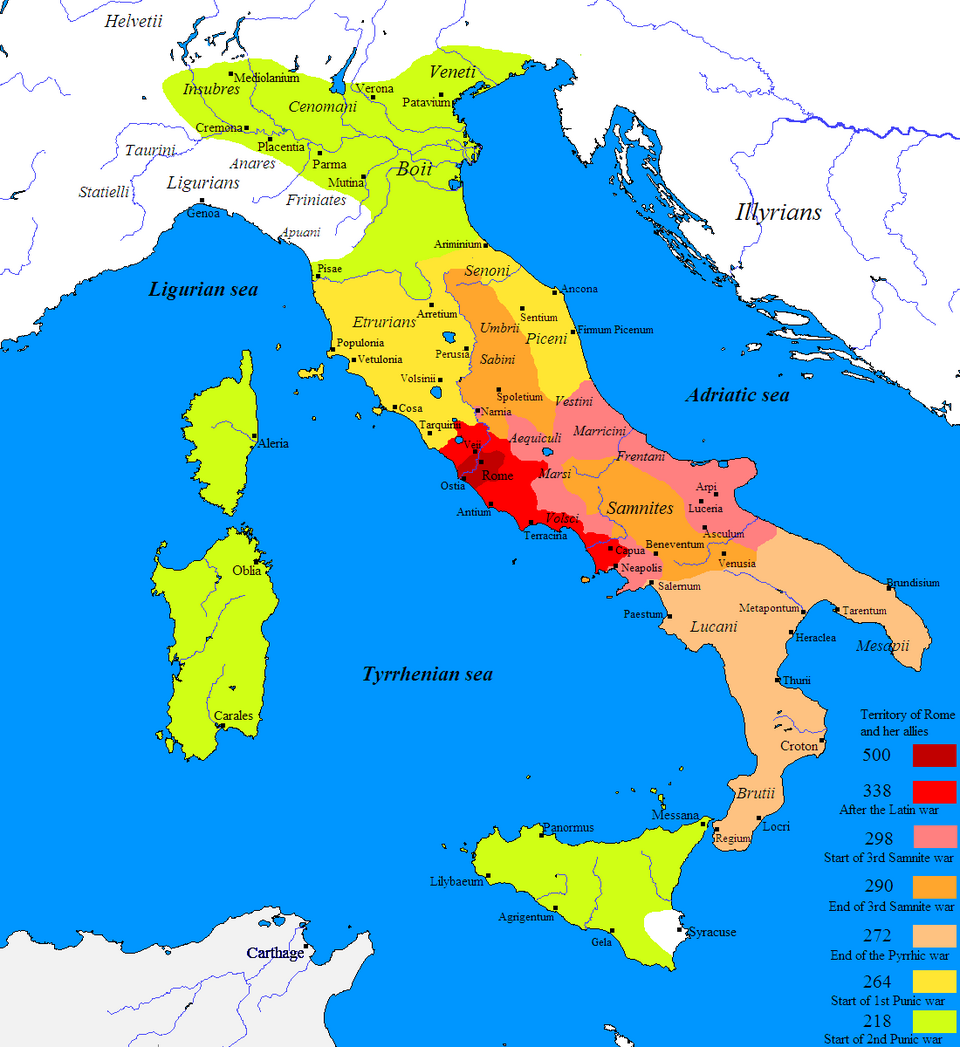
279 BCE - Battle of Asculum (All Facts)
Battle in which Rome is defeated by King Pyrrhus and the Greeks
Both sides incur heavy losses, but the Romans incurred the heavier loss
King Pyrrhus sends embassy to Rome asking for peace, but the Roman Senate declined
Battle in which rough ground made fighting difficult for his phalanx until King Pyrrhus moved the fight to level ground, which ultimately allowed him and his army to defeat the Romans
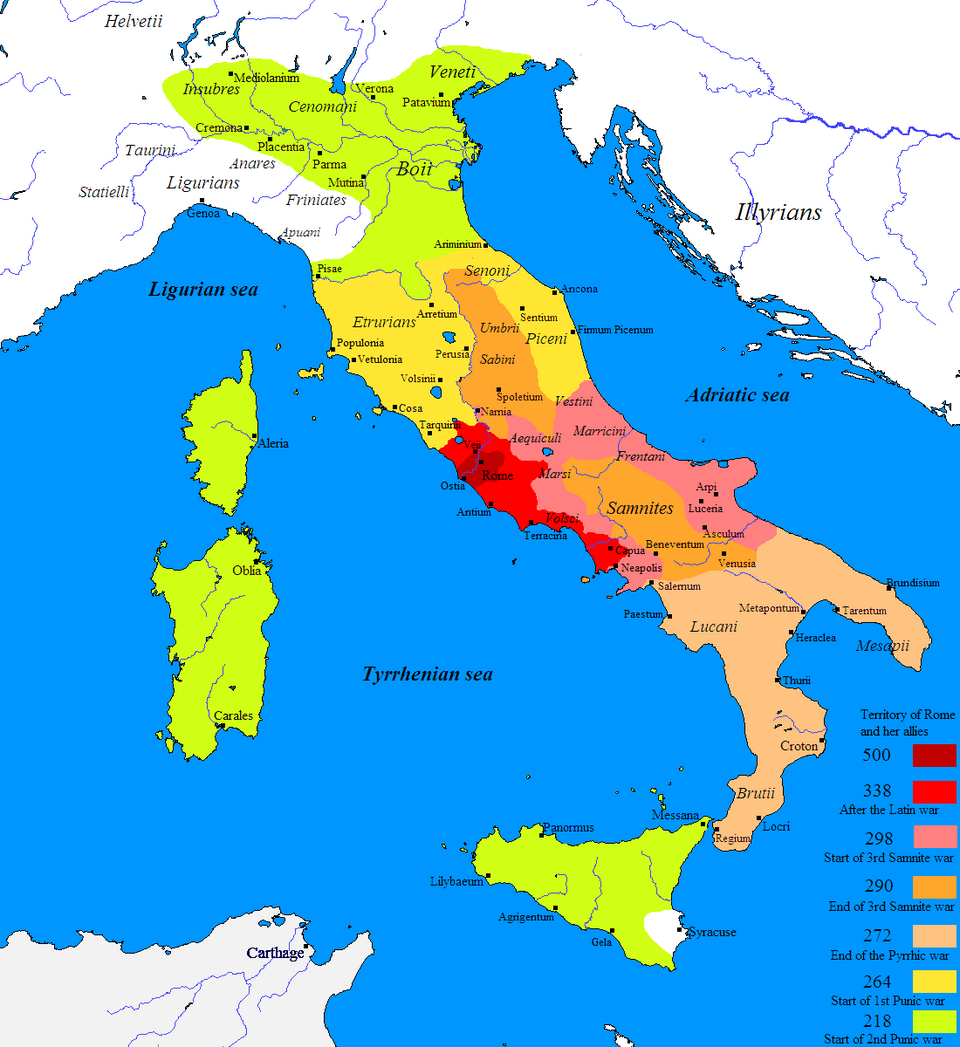
275 BCE - Battle of Beneventum (All Facts)
Battle in which neither the Romans nor the Greeks win, but in which Pyrrhus and the Greeks “give up”
Both sides incur heavy losses, but the Romans incurred the heavier loss
Romans refused to negotiate
King Pyrrhus realizes if he wins again, his losses will be too many, so he took his army home and “lost” to the Romans
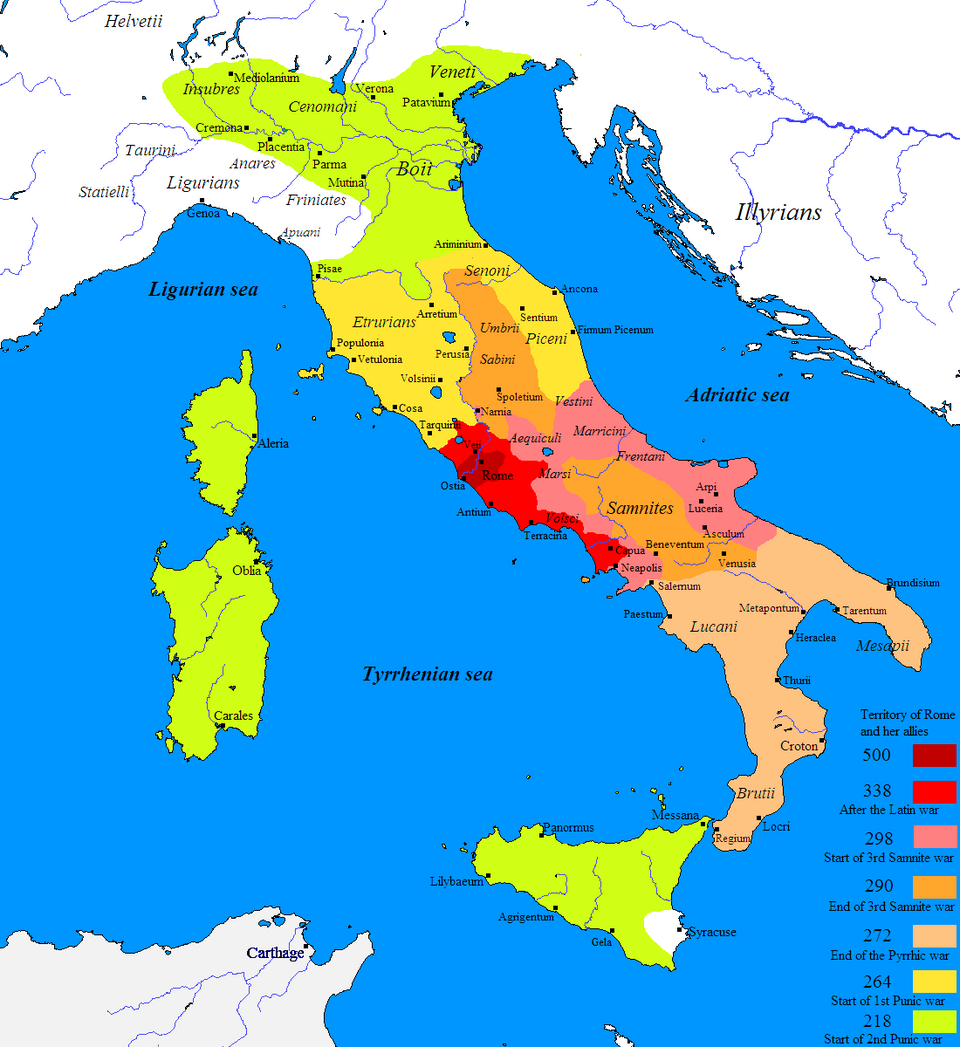
272 BCE - Siege of Tarentum (All Facts)
Battle in which the namesake city is captured by the Romans after they defeated the Samnites
It fell after King Pyrrhus of Epirus had withdrawn his support from them
The Romans pillaged the namesake city and garnered a taste of Hellenistic Greek luxury
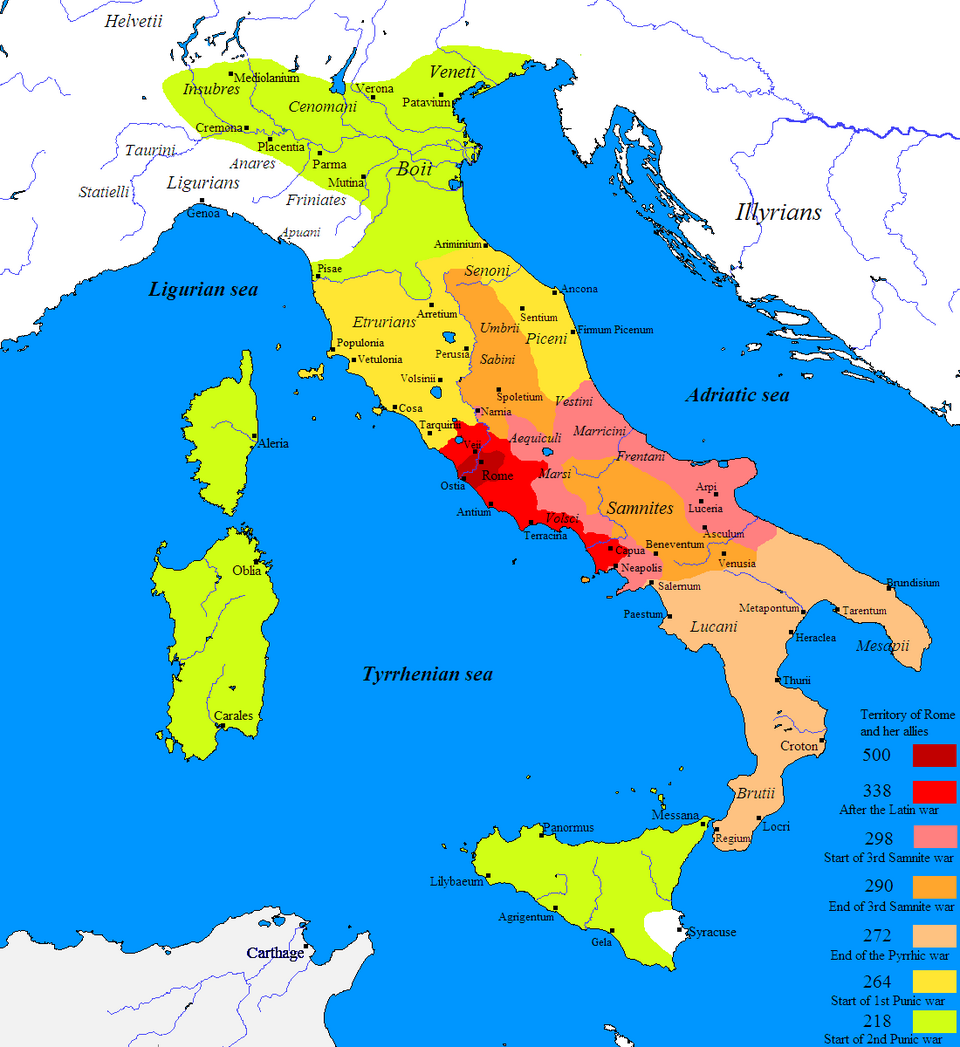
264 BCE - 201 BCE - Punic Wars (All Facts)
Also known as the Carthaginian Wars, these were wars fought by Rome against Carthage (the most powerful state in the Western Mediterranean)
Rome previously had made treaties and heavily traded with Carthage, and up to this point each had recognized the sphere of influence of the other: Rome in Italy and Carthage in the Mediterranean
Carthage was interested in expanding its authority over Greek cities in Sicily, and it was this ambition that put Rome and Carthage against each other
War which began when the Mamertines, Campanian mercenaries, occupied Messana (in Sicily)
They were then besieged by the Syracusans
They appealed to the Carthaginians for help
The Carthaginians came to help them, but some dissident Mamertines expelled them and invited the Romans instead
Because Rome feared that Carthaginian control at Messana posed a threat to Roman interests in southern Italy, the Romans quickly came to Messana
Inevitably, this led to fighting between the Romans and Carthaginians, thus sparking the wars
This series of wars marks the first in many series of wars in Rome expanded outside of Italy

264 BCE - 241 BCE - First Punic War (All Facts)
Caused by consul-elect Appius Claudius Pulcher, who was eager to win personal glory in a war, and played on fears of strong neighbors and ruined the Roman-Carthaginian relationship established prior
He essentially convinced the Romans to go to war with the Carthaginians, but the Romans got more than they bargained for as this was Rome’s first overseas conflict and they had little to no seafaring experience
The Roman Senate had hesitated at first in allowing Rome to occupy Messana, which effectively started the war
Nevertheless, the Assembly was concerned about Carthage’s activities being so close to the Roman mainland that they voted for action
The Romans had to construct a navy from scratch, so they reverse-engineered a wrecked Carthaginian warship that had washed up on shore and so they practiced rowing on benches set up on the beach
Crews were trained in wooden “mock-ups” on the shore
By 261 BCE, Rome set about building a fleet of 100 heavy quinqueremes and 20 triremes
Rome’s naval strategists even devised a boarding gateway in the bows
The major tactic Rome used was to turn a sea battle into a land battle by attaching a corvus to the front of their ships so they could stab Carthaginian ships and overwhelm their soldiers in foot combat
In this way, they never improved their seafaring skills but used this as a means to gain a serious advantage
This war marks the first of many in which Rome expanded outside of Italy
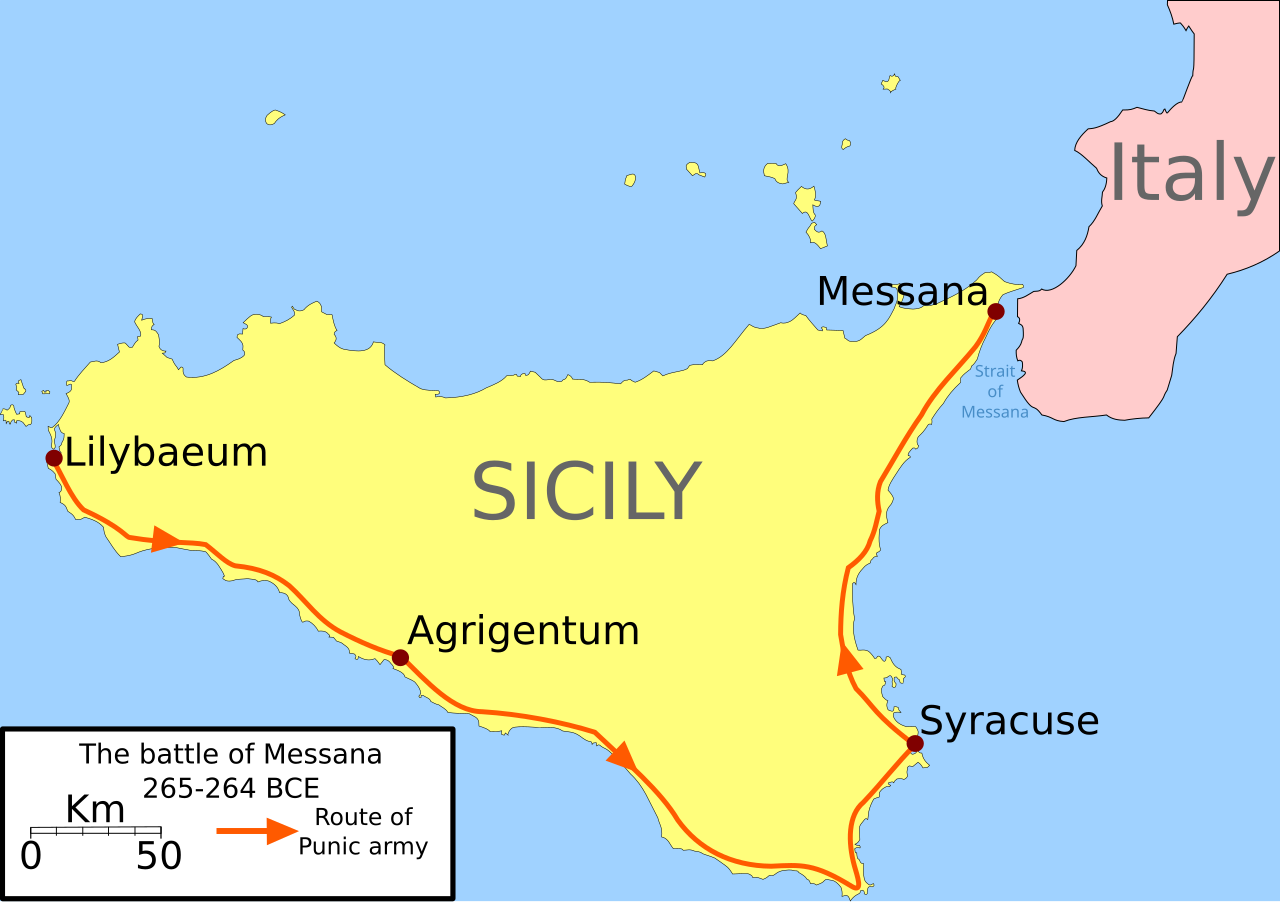
264 BCE - Battle of Messana (All Facts)
Battle in which the Romans defeated the Carthaginians in the First Punic War, controlling Sicily
First Battle of the Punic War, in which Rome occupied the namesake Sicilian port city
260 BCE - Battle of Mylae (All Facts)
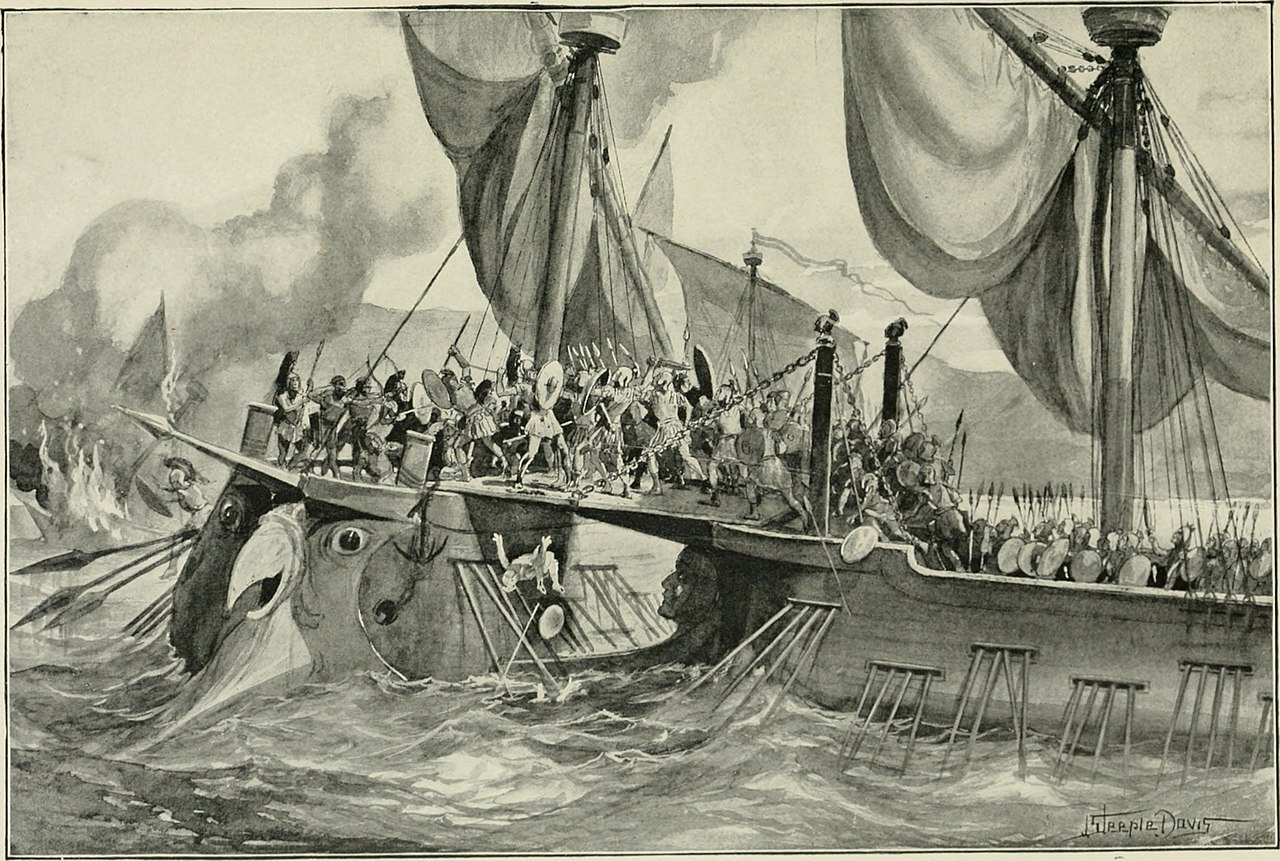
Battle in which the Romans defeated the Carthaginians in the First Punic War
Considered to be one of the largest military upsets in history in which the land-loving farmer Romans beat the sea-loving warrior Carthaginians
Largely attributed to the tactic of using corvi to turn sea combat into land combat
The corvus was used for the first time in this battle
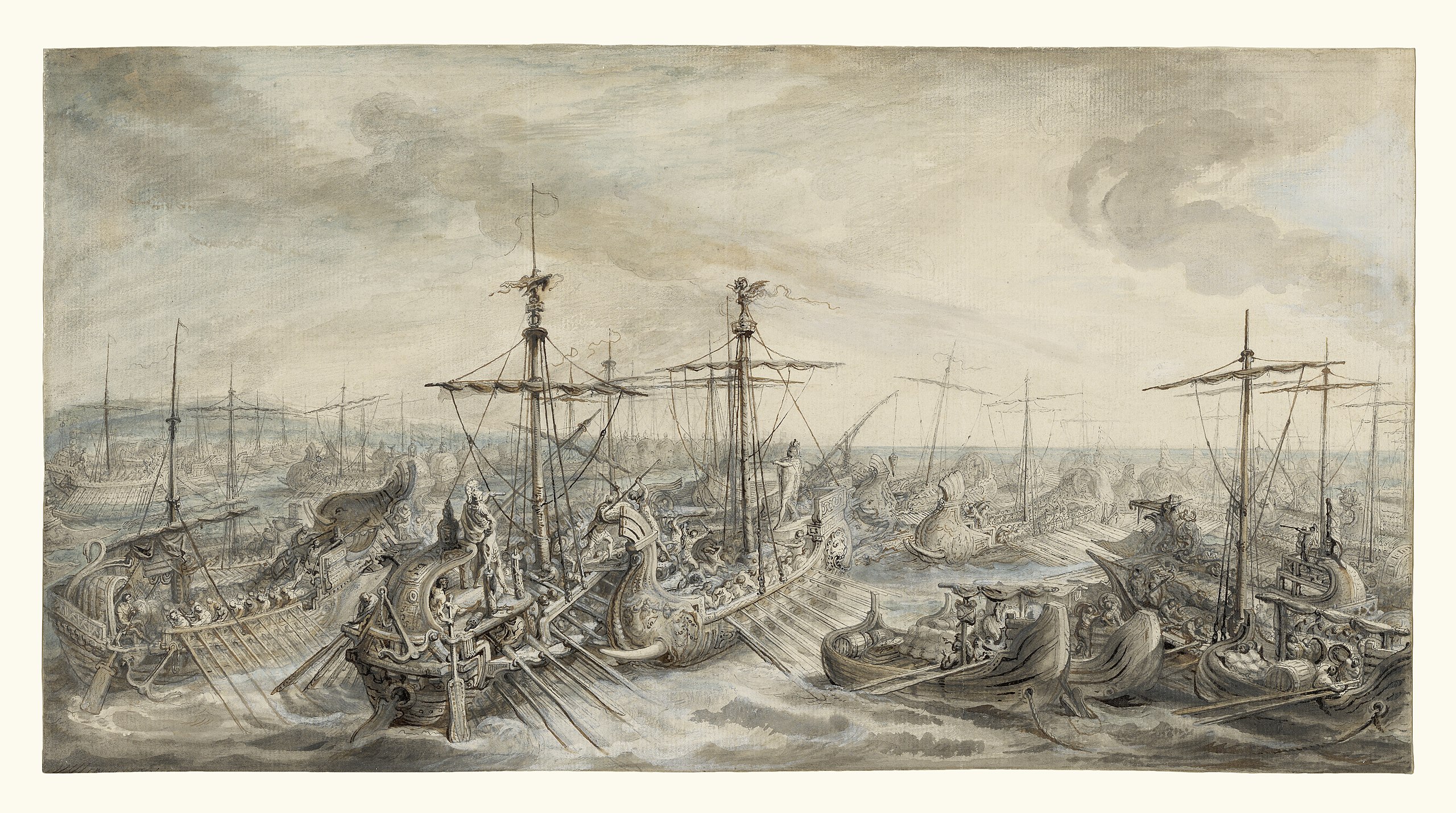
256 BCE - Invasion of Carthaginian Africa (All Facts)
In an attempt to invade Africa, the Romans, under Marcus Regulus, are defeated by Xanthippus and Hamilcar Barca; who outwitted the Romans the entire time
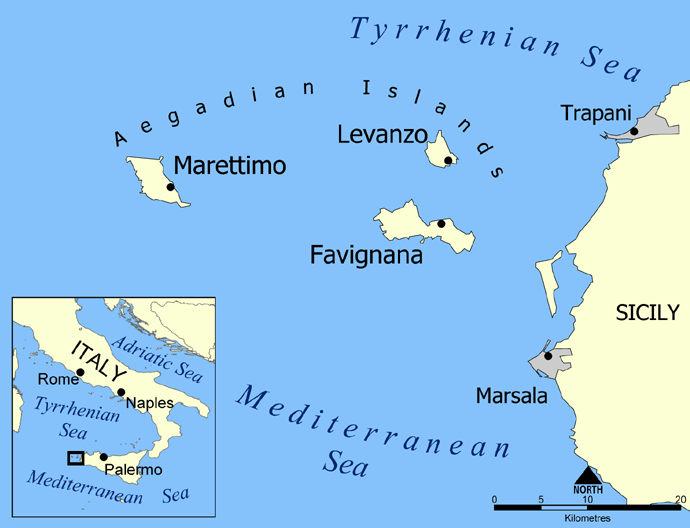
241 BCE - Battle of the Aegates (All Facts)
Battle in which the Romans defeated the Carthaginians
The Romans destroyed the Carthaginian supply fleet, so the Carthaginians had to settle for peace
They settle with Rome and agree to evacuate Sicily and pay a war indemnity of lots of silver
From this point onward, Rome would vie for control of Sicily
226 BCE - Treaty of Ebro (All Facts)
Treaty which fixed the namesake river in Iberia as the boundary between Rome and Carthage after the First Punic War
Treaty in which Rome recognized the Carthaginian authority of Spain south of the Ebro River
Treaty signed by Hasdrubal the Fair of Carthage and the Roman Republic

218 BCE - 201 BCE - Second Punic War (All Facts)
Caused by Hannibal refusing to withdraw his troops on the city of Saguntum in Spain, which was being invaded by Hannibal and his troops and which appealed to Rome for help as Hannibal and his troops ensued and besieged the city
Hannibal captures and loots the city, killing everyone in it
This was essentially a declaration of war on Rome
When the Romans sent an ambassador to the Carthaginian Senate demanding that Hannibal be handed to Rome, the Carthaginians blame the Romans for the violation of the Ebro Treaty and so Rome eventually just decides to go to war with them again
So, Hannibal led his mercenary army, accompanied by 17 war elephants, out of Spain, through the Alps, and into Cisalpine Gaul coming in from the North of Italy with the tactic of trying to catch the Romans off-guard
The Romans had tried to arrest him in Spain but when they got there they were too late as he had already left for North Italy
The Romans thus diverted all their resources northwards towards his army considering how grave of a threat Hannibal posed
After the defeat at Cannae, the Romans showed their commitment to persevere by raising additional armies and expanding to a four-front war; sending their armies to Sicily, Spain (the source of Carthage’s financial and manpower reserves), and Greece as well
Main turning points of the war:
In 212 BCE, Syracuse is sacked
In 210 BCE, Publius Cornelius Scipio is given command over Spain
In 206 BCE, Publius Cornelius Scipio mimics Hannibal’s tactics to achieve victory in Spain
In 205 BCE, Romans exit Greece by negotiating the Peace of Phoenice, the only Roman loss settled by treaty
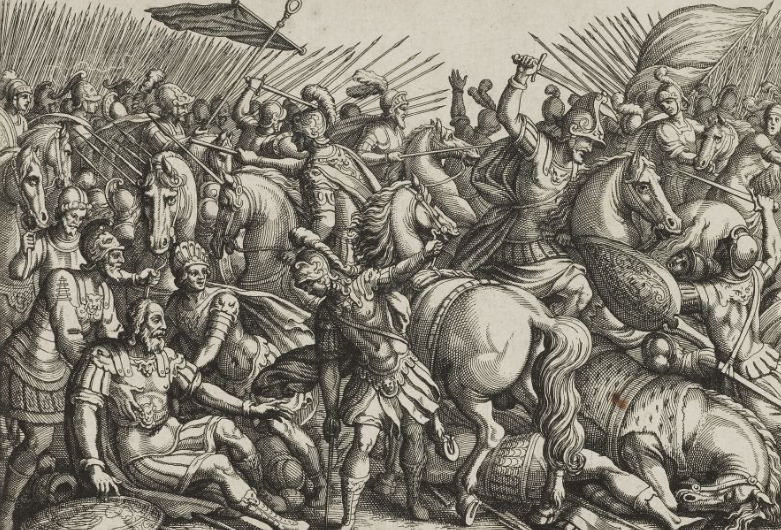
218 BCE - Battle of the Trebia (River in Cisalpine Gaul) (All Facts)
Battle in which the Romans are swiftly defeated by Hannibal and the Carthaginians
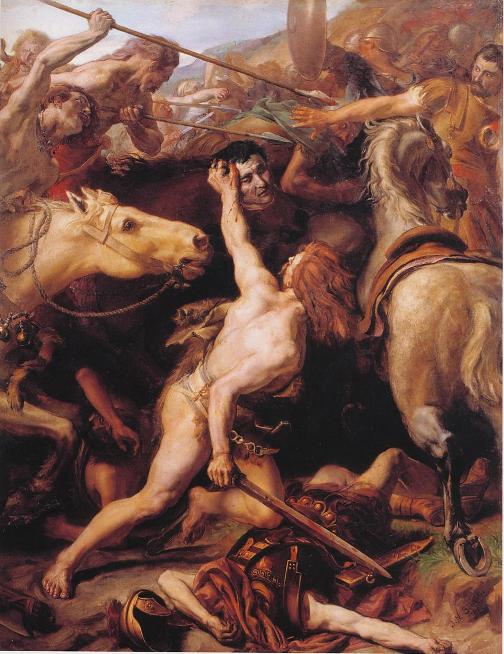
217 BCE - Battle of Lake Trasimene (in Umbria, Etruria) (All Facts)
Battle in which Gaius Flaminius and the Romans are swiftly defeated by Hannibal and the Carthaginians
Hannibal took the Roman general Gaius Flaminius by surprise
Battle in which 15K Romans were killed and 15K were taken prisoner
As a result of this battle, in Rome itself, in anticipation of imminent assault, the bridges over the Tiber River were cut and its city walls were repaired
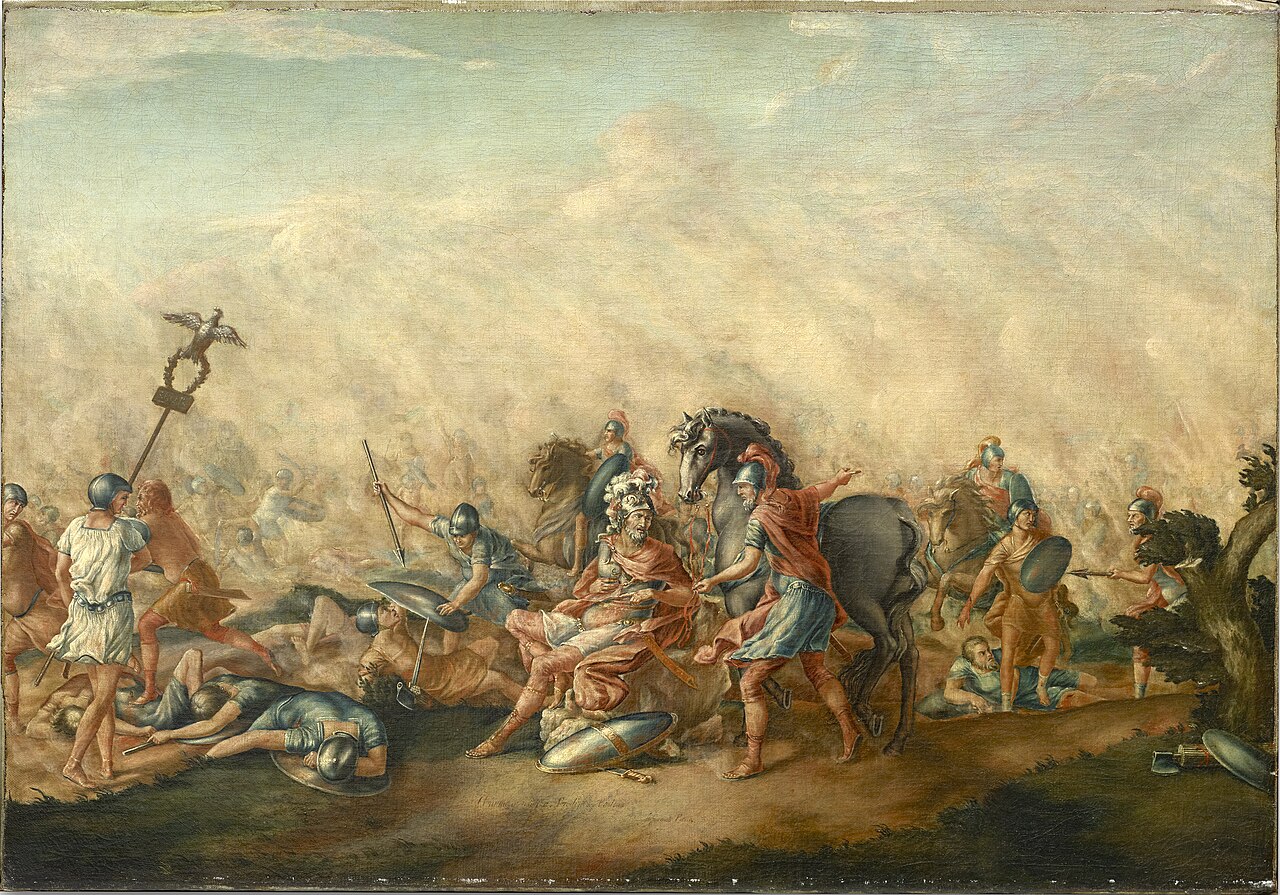
216 BCE - Battle of Cannae (All Facts)
Battle in which the Romans are swiftly defeated by Hannibal and the Carthaginians
Considered the worst military disaster Rome ever suffered since the Gallic Sack of Rome in 390 BCE
This caused many Gauls to join his cause
This caused many former Roman allies to defect to Hannibal and the Carthaginians
Of the 65K Romans that fought
45K Romans died on the battlefield
20K Romans were captured
Considered Hannibal’s greatest victory against Rome ever, this battle
Featured some of his most famous deceptive tactics including
His having tied torches to the horns of a herd of cattle at night to simulate his army on the move, while he and his army moved from camp in the opposite direction, successfully fooling the Romans into pursuing his simulated army of cattle and thus reversing direction and pursuing the Romans from behind
His having his infantry deliberately retreat in the center to allow the cavalry on the flanks to encircle the Romans
His having used the dust of the battle to his advantage in which it blinded the Romans, which he proceeded to outmaneuver and outgeneral
Featured Hannibal’s
Gauls fighting naked from the waist up with long spears
Spanish mercenaries, who were dressed in red and white
This battle left the Romans in a frenzy
Romans thus appoint a dictator: Quintus Fabius Maximus
From it, Romans refused to fight Hannibal in the field but shadowed him closely and stayed safe behind the Servian Wall
Quintus Fabius Maximus and the army carefully avoided direct confrontation with the Carthaginian invaders, in which they harassed the enemy until they could be attacked in their winter quarters
Romans raised a double consular army of 60K+ men but their operations were halted by inner-quarreling and were eventually annihilated by Hannibal’s smaller force of men
So grave was the news of this loss for Rome that back in Rome, human sacrifices were being offered for the first time in Roman history
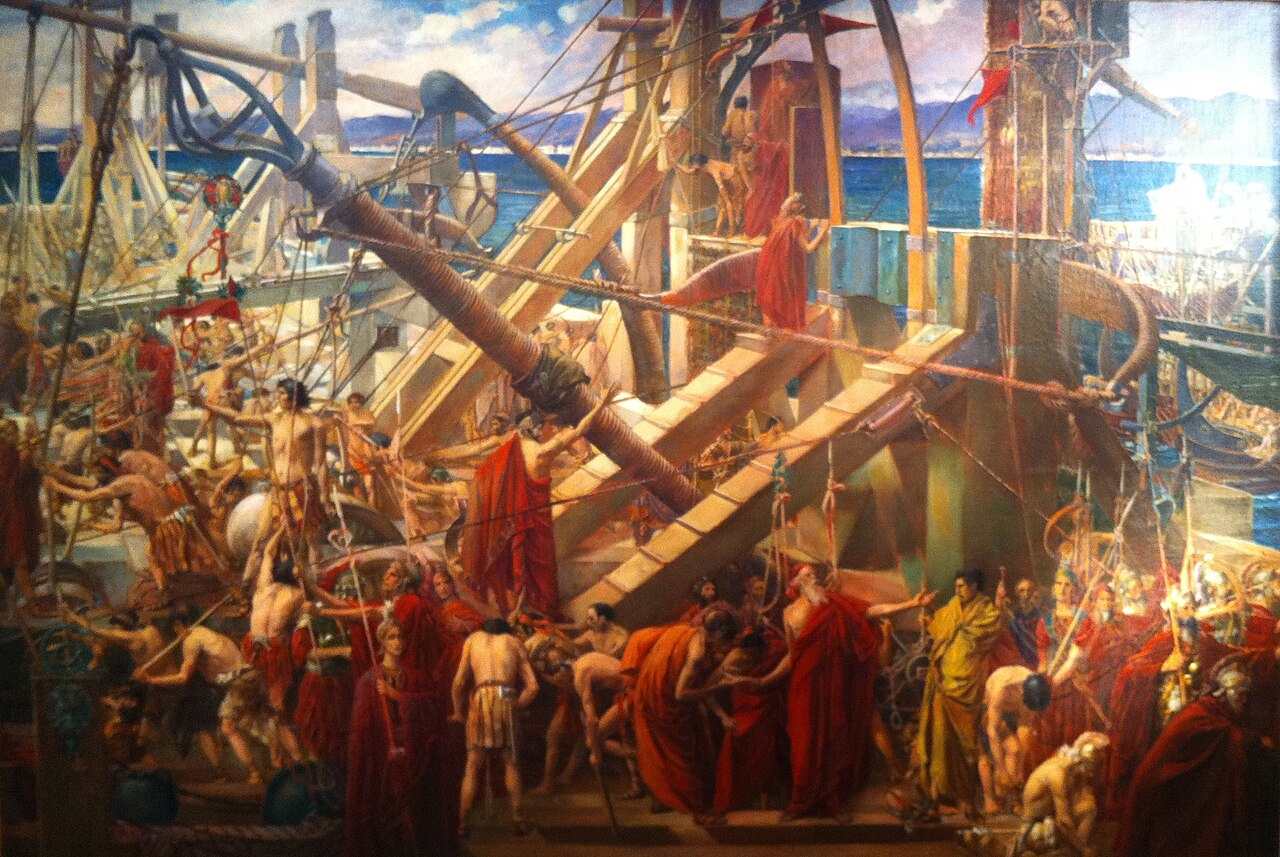
213 BCE - 212 BCE - Siege of Syracuse (All Facts)
Battle in which Marcus Claudius Marcellus and the Romans defeated and captured the namesake city allied with the Carthaginians during the Second Punic War, and thus secured Sicily
Battle in which the infamous Archimedes used his expertise to construct formidable war machines to resist the Roman onslaught but died in battle
The namesake city, an ally of Carthage at the time, hoped to negotiate with the Romans, but their pro-Carthaginian factions vetoed this proposition
Thus, from this point onwards, Rome conquered and controlled Sicily
211 BCE - Siege of Capua (All Facts)
Battle in which the Romans defeated the namesake city in Campania during the Second Punic War
This occurred despite an attempt by Hannibal to protect the city by marching on Rome
209 BCE - Battle of Tarentum (All Facts)
Battle in which Quintus Fabius Maximus and the Romans defeated the namesake Syracusan city, which was previously captured by Carthage three years prior
209 BCE - Battle of New Carthage (All Facts)
Battle in which Scipio Africanus and the Romans defeated Mago and the Carthaginians during the Second Punic War in the namesake city, the capital of Carthaginian Iberia
208 BCE - Battle of Baecula (All Facts)
Battle in which Scipio Africanus and the Romans defeated Hasdrubal Barca and the Carthaginians
After this battle, however, Scipio Africanus unwisely withdrew his troops from the Pyrenees, allowing his defeated opponent, Hasdrubal Barca, to take Gaul

207 BCE - Battle of the Metaurus (All Facts)
Battle in which Gaius Claudius Nero and Marcus Livius and the Romans defeated Hasdrubal and the Carthaginians
Battle in which the Carthaginians failed to fox the Romans by attacking from both sides
Battle in which Hasdrubal of Carthage crossed the Alps and threatened northern Italy
206 BCE - Battle of Ilpia (All Facts)
Battle in which Scipio Africanus and the Romans defeated the Carthaginians
Considered by many as Scipio Africanus’s most brilliant victory in his military career during the Second Punic War
Though it may not seem to be as original as Hannibal’s tactic at Cannae, Scipio's pre-battle maneuver and his reverse Cannae formation stands as the acme of his tactical ability, in which he permanently broke the Carthaginian hold in Iberia, thus denying any further land invasion into Italy and cutting off a rich base for the Barca dynasty both in silver and manpower
203 BCE - Battle of the Great Plains (at Massinissa) (All Facts)
Scipio Africanus and the Romans defeat the Carthaginians with the help of the Numidian Cavalry at Massinissa
202 BCE - Battle of Zama (Regia) (All Facts)
Battle in which Scipio Africanus and the Romans and the Numidian Cavalry defeated Hannibal and the Carthaginians once and for all
Battle in which Scipio Africanus slipped behind and surrounded the Carthaginian army
Battle which caused Scipio to gain the title of “Africanus” (conqueror of Africa)
Thus the Carthaginians had no choice but to make peace
Battle which represented the culmination of knowledge Scipio Africanus and the Romans had gained from mirroring Hannibal’s tactics over the years, which he then used against Hannibal, especially with regards to his cavalry tactics when used on the flanks
Battle in which Hannibal’s elephants were of no avail to Scipio Africanus and the Romans as the elephants panicked and scattered back into their own infantry (the Carthaginians), contributing to the collapse of the Carthaginian army
201 BCE - Second Punic War Treaty (All Facts)
Treaty in which the Carthaginians:
Were compelled to relinquish all claims to Spain
Reduced their navy to ten warships, forcing to surrender almost all of their fleet
Forced to surrender all the elephants which made their army such a formidable fighting force
Paid a hefty indemnity / massive reparations to Rome
Prohibited from making war or even defending themselves without Rome’s consent
Treaty in which the Carthaginians
Were allowed to retain control of its cities in Africa as well as its slaves, herds, flocks, and other property
Were promised that no Roman garrison would be based in the city of Carthage itself
As a result of the Roman victory, Carthage would never again be a strong military power
201 BCE - Second Punic War (Effects) (All Facts)
Involved the entire western Mediterranean
Rome becomes the strongest power in the Mediterranean as a result of its victory
As a result, the great Carthaginian Empire faded into the dust of the North African deserts from that point onward
Demonstrated the strength of Rome’s “Italian Alliance,” for nearly all of Rome’s Italian Allies had held firm
Became the defining moment for Rome as they never forgot their defeat of Hannibal and the Carthaginians
Rome acquired foreign provinces
Romans compelled to lay claim to Spain for no other reason than to keep the Carthaginians away from it
Provinces created were “Nearer Spain” and “Further Spain,” governed by two additional Praetors
Its end found Rome absolutely drained
Tens of thousands of soldiers had been killed
Property losses in Italy were staggering
Thus, from this point onwards, Rome conquered and controlled Carthage and all of its territories in the Mediterranean, thus conquering and controlling all of the Mediterranean; as well as Spain
Thus, Rome reigned over all of Italy, Sicily, Spain, and the Mediterranean up to this point
229 BCE - 146 BCE - Wars in the East (All Facts)
After the fall of ATG, the Hellenistic successor states (Antigonids of Macedonia, Ptolemies of Egypt, and Seleucids of Syria and the East) had drawn themselves into conflict with Rome
As a result of these wars, Rome gained more provinces, having created a network of overseas provinces that extended across the Mediterranean
The Romans’ lenient treatment of defeated peoples in Italy gave them access to a huge military recruiting pool that they could use for future conflicts
229 BCE - First Illyrian War (All Facts)
Caused by pirates from Albania having killed a Roman ambassador on the Adriatic Sea and Rome declaring war on them in response
Their leader, Queen Teuta, promises Rome that it will not happen again and prates will not be killing Roman ambassadors; so Rome backs off
225 BCE - Battle of Telamon (All Facts)
Battle in which Gaius Atilius Regulus and Lucius Aemilius Papus and the Romans defeated Gaesatae kings Concolitanus and Aneroëstes and the Celts
Battle in which a powerful army of Gallic tribes were defeated
40K Gauls were killed
Panic occurred in Rome prior when Gallic tribes joined forces and invaded Etruria with 70K men until they were trapped between two armies at the site of this battle
Battle which permanently removed the Celtic threat from Rome and allowed the Romans to extend their influence over northern Italy
219 BCE - Second Illyrian War (All Facts)
Caused by another incident of piracy against Rome
Because Queen Teuta’s promise was broken, Rome returns and devastates it
This war had the effect of giving the Romans a precedent for future involvements on the Greek mainland
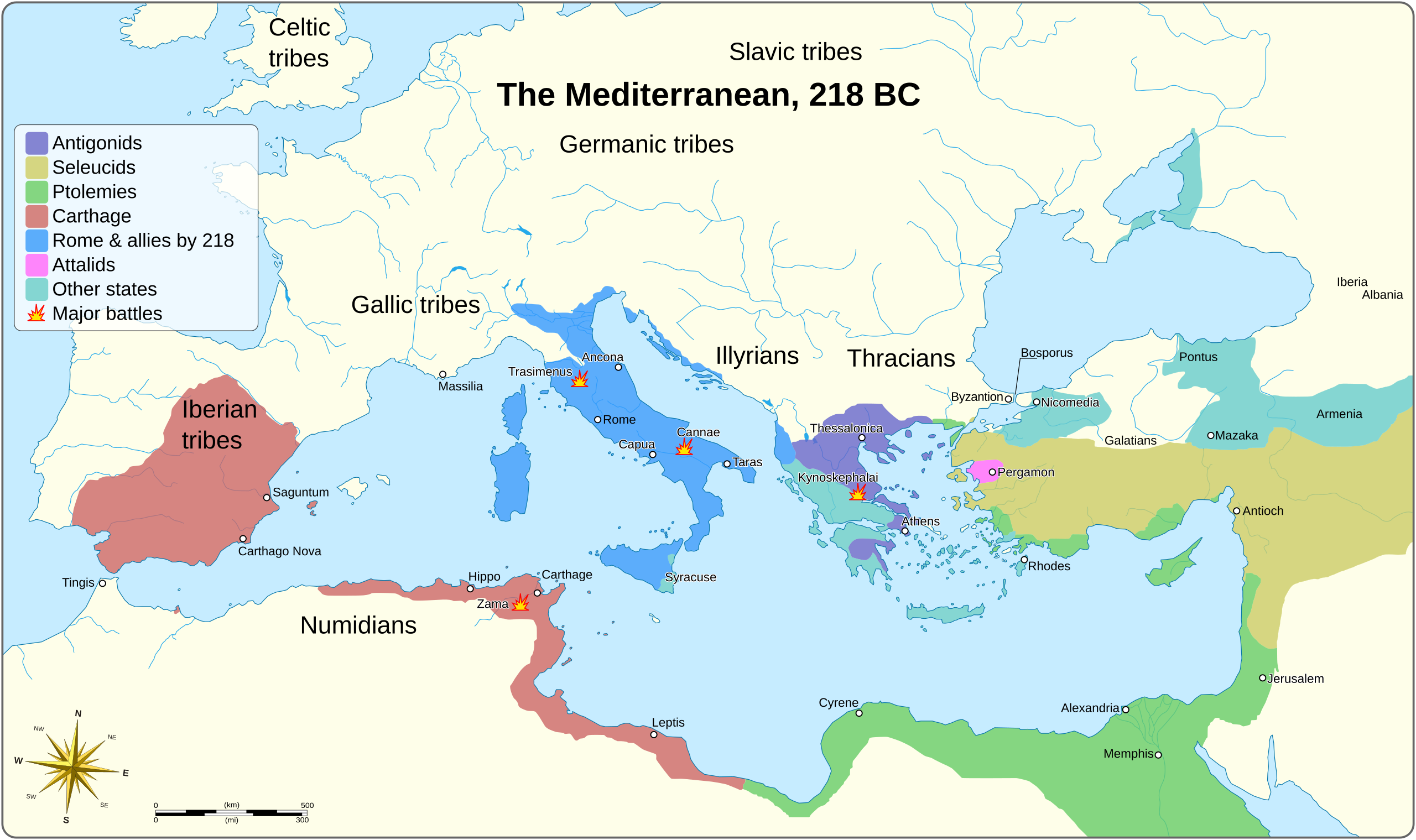
215 BCE - 205 BCE - First Macedonian War (All Facts)
Rome tried to invade Greece to stop King Philip V of Macedon from taking it (employing their policy of “defensive aggression”)
King Philip V of Macedon allied himself with Hannibal, and intended to gain control of Illyria and the Greek cities along the Adriatic coast, which he knew was an area of strong Roman influence
In response, Rome declared war on Philip V of Macedon and Greece
Rome formed an alliance with the Aetolians, promising them to cede to them any land which they jointly conquer in the region
Ends when Rome and Greece settle via the Peace of Phoenice with the Macedonians realizing Philip V had no intention of invading Italy
This was the only Roman Republican war settled by treaty that Rome had lost
205 BCE - Treaty of Phoenice (All Facts)
Treaty which puts an end to the First Macedonian War
It allows for Rome and Macedonia to share the protectorate of Illyria
The only treaty ending a war that Rome lost, Rome signed it in order to concentrate all of its efforts against Hannibal in the Second Punic War
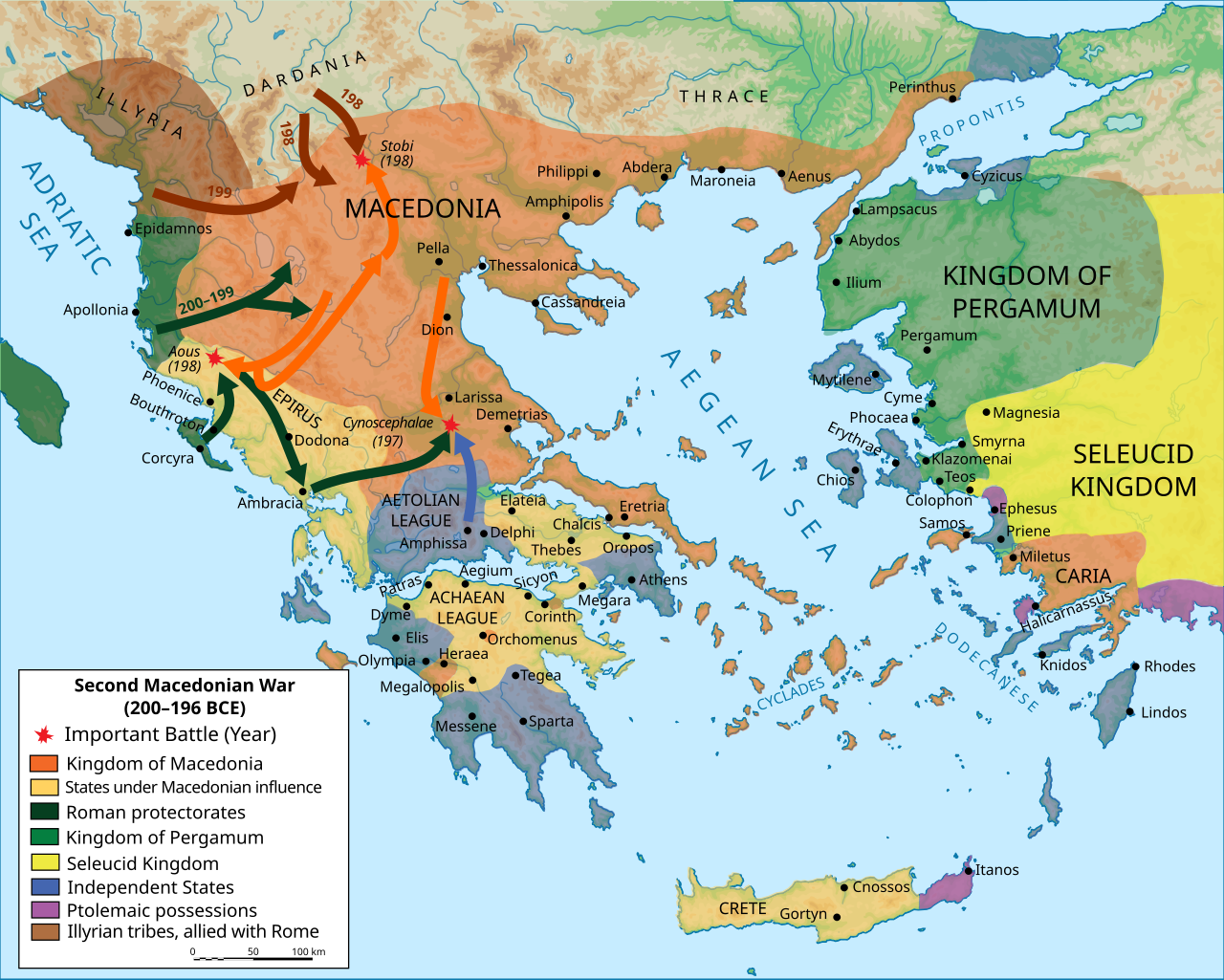
200 BCE - 197 BCE - Second Macedonian War (All Facts)
War which began when When King Philip V of Macedon and King Antiochus III of the Seleucid Empire had made a pact together to carve up the Ptolemaic Kingdom of Egypt for themselves
This action would severely threaten the balance of power in the region at the time
Eventually, Rhodes and Pergamum made an alliance against a potential invasion by the Macedonian-Seleucid Alliance and declared war on Philip V and the Macedonians in effort to halt his conquest of their independent states
They eventually had to appeal to Rome for assistance in thwarting the Macedonians and Seleucids, however
The Roman Senate thus effectively declared war on the Macedonian-Seleucid Alliance when they had answered the appeal of the Rhodes-Pergamum alliance
However, the assembly of the people, exhausted by the Punic Wars, voted heavily against military action against the Macedonians and Seleucids
This was the first time in Roman history that this happened
Despite this, the warlike Senate overruled the assembly of the people and declared war anyway
Some say it was only after a revised motion exempting military veterans from service that the war was effectively declared by the Senate
Thus, Roman legions were dispatched to fight on Greek soil
War in which the Romans would use the flexible tactics devised by Scipio Africanus, that had worked so well against Carthage and Spain, against the Macedonian phalanxes, which were invincible up to that point
War whose initial stages saw a poorly disciplined and poorly led Roman army
Moreover, not all Greeks supported the Roman campaign
However, the Macedonians had held their own until Titus Quintus Flaminius arrived
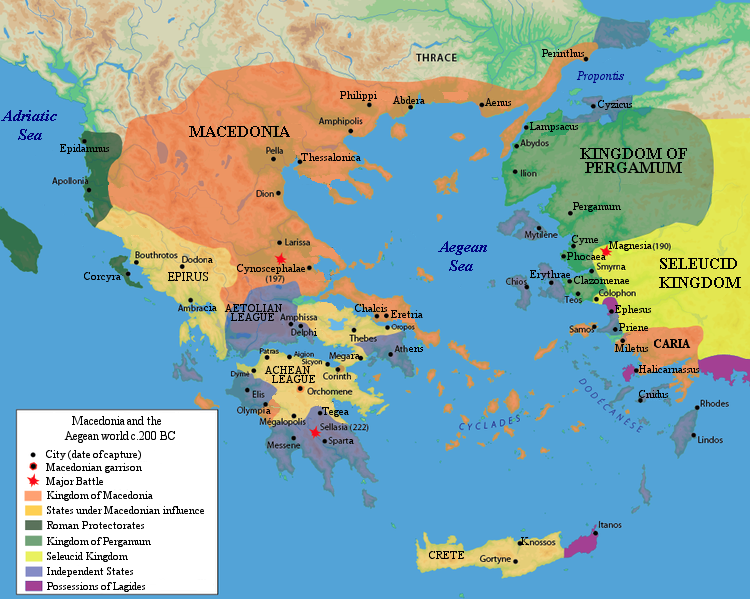
197 BCE - Battle of Cynoscephalae (All Facts)
Battle in which Titus Quintius Flaminius and the Romans defeated Philip V of Macedon, thus ending the Second Macedonian War
Rather than occupy any Greek territory, the Romans were content to weaken Macedonia after this battle by requiring Philip V to
Pay a war indemnity
Give up his navy
Evacuate his holdings in Greece, in order that they could declare these Greek cities “free” (and then they returned home)
In response to this, the Greeks celebrated at their Isthmian Games that year after freedom and autonomy was declared for them after their Macedonian overlords were defeated by Rome
192 BCE - 188 BCE - Syrian / Roman-Seleucid War (All Facts)
Caused by King Antiochus III and the Seleucid invasion of Greece, which compelled Rome to send another army to deal with what they perceived as a genuine threat posed by the Seleucids
191 BCE - Battle of Thermopylae (All Facts)
Battle in which Manius Glabrio and the Romans defeated Antiochus III the Great and the Seleucids during the Roman-Seleucid War
Battle in which the Romans defeated the Seleucids and forced Antiochus III out of Greece
190 BCE - Battle of Magnesia (All Facts)
Battle in which Publius Cornelius Scipio and Publius Scipio Africanus and the Romans defeated Antiochus III the Great and the Seleucids during the Roman-Seleucid War
Publius Cornelius Scipio and Publius Scipio Africanus were both sent by Rome to Greece and then to Anatolia in order to finally settle the Seleucid Problem Rome was having
Battle in which the Romans were supported by the Kingdom of Pergamum
Battle in which a well-trained 30K-man Roman army demolished a 70K-man Seleucid army
Would be the turning point in the Syrian War and would eventually lead to their defeat
188 BCE - Treaty of Apamea (All Facts)
Treaty signed between the Romans and Antiochus III and the Seleucids, it ended the Roman-Seleucid Wars or Syrian Wars
Treaty that effectively put an end to Seleucid influence in the Mediterranean
The Thracian peninsula and most of Seleucid Anatolia were then controlled by Pergamum
Treaty in which the Romans did not occupy new territory but compelled the Seleucids to
Pay a heavy war indemnity
Evacuate all their holdings in Anatolia
171 BCE - 168 BCE - Third Macedonian War (All Facts)
Macedon, which, after having regained its strength it lost in the previous war with Rome, began to expand its influence again under a new king named Perseus
Due to a rumor made that Perseus planned to attack Rome, Rome grew fearful and ended up declaring war on them once again
Played out much like the previous war
War which saw
Perseus and his anti-Roman coalition fight at Epirus
After the war, Rome divided Macedonia into four closely supervised federations
It was from the end of this war onwards that the Romans went about restoring order in Greece
Any pro-Macedonians were
hunted down remorselessly
exiled
executed
forced to reside in Italy
Every course was pursued to eliminate even the slightest opposition
The Roman victory in the namesake war ended the Antigonid Dynasty / Macedonian Empire
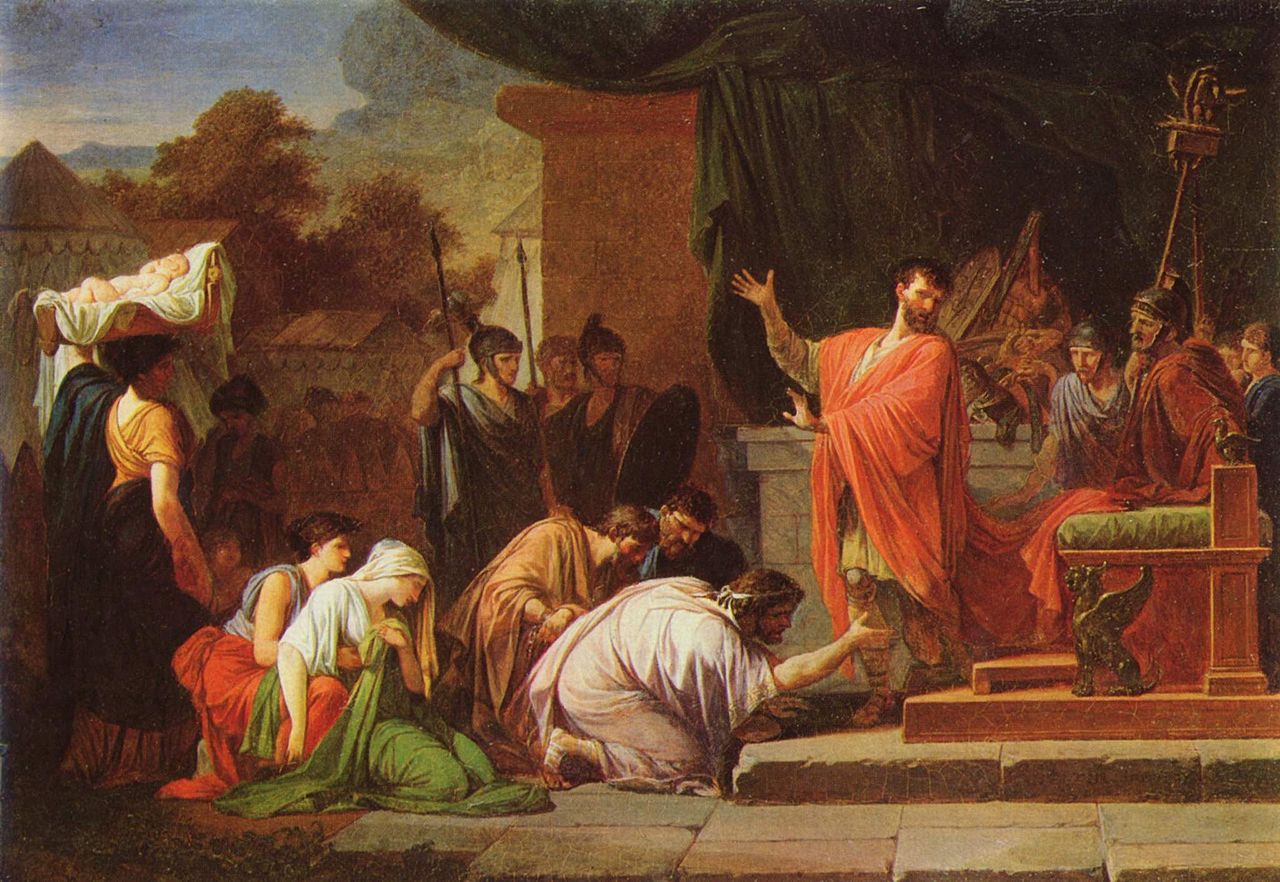
168 BCE - Battle of Pydna (All Facts)
Battle in which Lucius Aemiulus Paulus and the Romans defeated Perseus and the Macedonians, ending the Third Macedonian War
From this point forward, Rome controlled Macedonia, which was no longer an independent entity
Battle that definitely demonstrated the superiority of the Roman legions over the Macedonian phalanxes
20K Macedonians died
As a result of their victory, Rome took more serious measures to prevent future problems: they did not take over any territory, but rather divided Macedonia up into 4 independent republics, which were forbidden to contact each other
By the end of this battle, which ended the Third Macedonian War, the successor (diadochi) states of Alexander the Great had disintegrated and the Hellenistic Empire was no more
The Roman victory in the namesake battle ended the Antigonid Dynasty / Macedonian Empire
156 BCE - 155 BCE - (First) Dalmatian War (All Facts)
War in which the Romans invaded the namesake region of the Balkans in relation for the region’s prior attacks on Roman allies located on the eastern coast of the Adriatic
War in which the namesake region’s capital of Delminium was destroyed
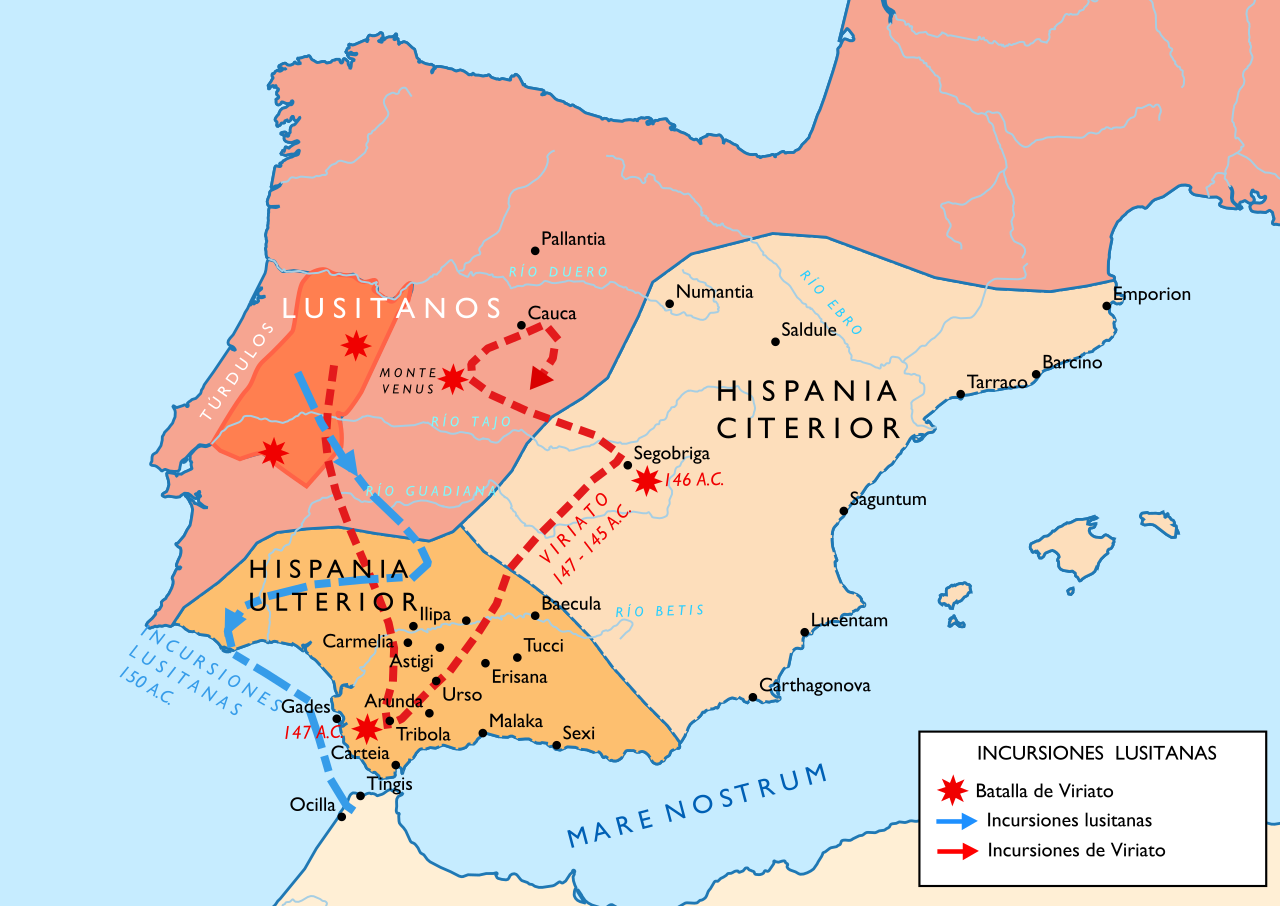
155 BCE - 139 BCE - Lusitanian Wars (All Facts)
Series of wars fought between Rome and the namesake tribes of Spain
These tribes resisted and/or revolted against Roman conquest in Spain
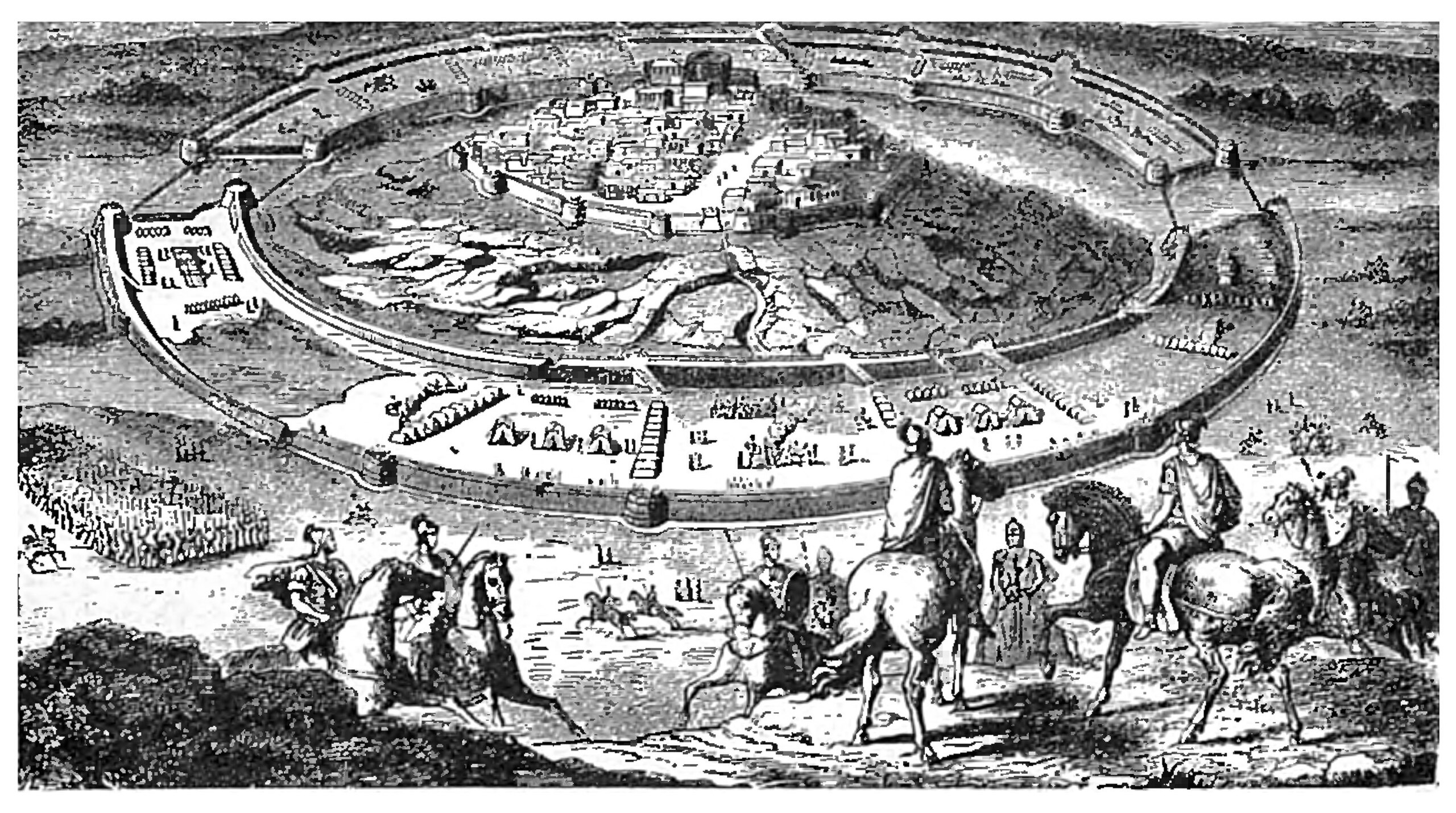
154 BCE - 133 BCE - Numantine War (All Facts)
War fought between Rome and the Celtiberian tribes of Spain
Ultimately led to the integration of Portugal into the Roman and Latin-speaking world
The namesake city of northern Spain was captured by the Romans after a long siege
This marked the turning point in the guerilla war which Rome fought in the mountains with the namesake Celtiberian peoples
Put an end to Celtiberian and Lusitanian revolts as well
149 BCE - 148 BCE - Fourth Macedonian War (All Facts)
Macedonian throne is usurped by Andriscus, who called himself Philip, and his plan was to reconstitute the Kingdom
Swiftly defeated, with the Romans having vigorously responded, but it causes the Achaean league to revolt
The Achaean Revolt is then swiftly suppressed by the Roman general Mummius
149 BCE - 146 BCE - Third Punic War / Destruction of Carthage in 146 BCE (All Facts)
By 150 BCE, the Carthaginians paid off their last debts they incurred in the 201 BCE treaty that ended the Second Punic War
Caused by the Romans declaring war on them after they violated the treaty of 201 BCE by defending themselves against attacks by their Numidian neighbors
As per the treaty of the Second Punic War, the Carthaginians were not allowed to declare war or defend themselves against any other neighbor without Rome’s approval
Thus, Rome declared war on them for being provoked by the Romans’ Numidian allies and attacking them which thus violated the terms of the treaty that ended the Second Punic War
Rome’s decision to intervene in the dispute between Carthage and Numidia thus started this war
The Romans decided that a “lesson” had to be provided to those who contemplated resisting the will of Rome in the future
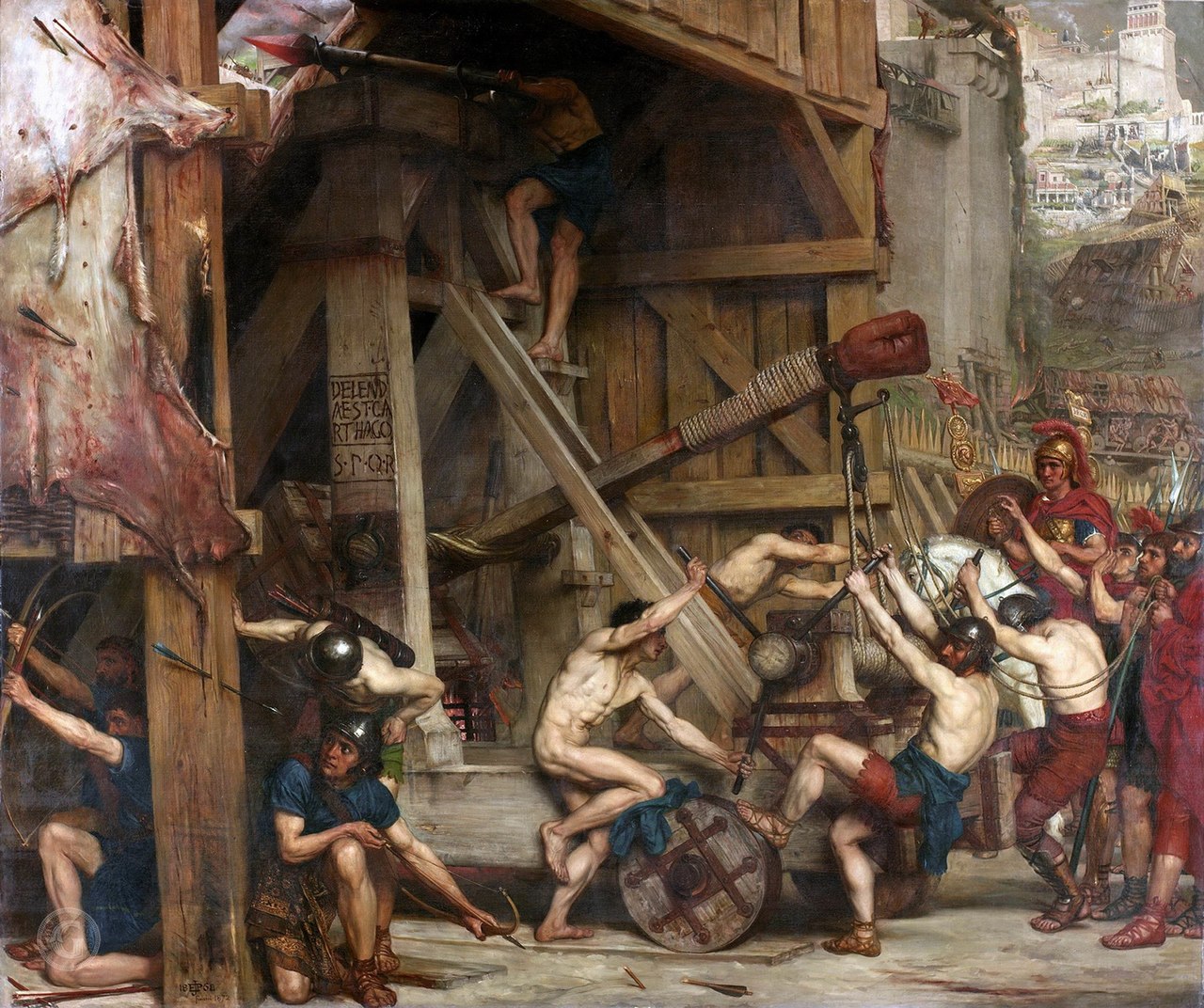
War that decisively destroyed Carthage in 146 BCE in which
Hasdrubal and the Carthaginians bloodily and bitterly battled against the Romans
The Roman campaign began badly at first, due to the Roman army having been dispirited and lacking experience
The Romans suffered several defeats
Scipio reformed the army
Scipio led the army to capturing a strategic fort
Scipio led the army to begin a lengthy blockade of Carthage
A vast mole was built across the Carthaginian harbor to stop supplies arriving by sea
When Carthage responded by building 50 ships, they were smashed by the Roman fleet
Scipio led the army to Hasdrubal, who refused to surrender his garrisons to him
For six days, the Romans fought from house to house, until the citadel of Carthage itself capitulated
900 Roman deserters occupied the Temple of Aesculapius, knowing the death penalty was certain if they surrendered
The Romans fought on for several days until they set fire to the temple, burning themselves to death
Hasdrubal brought an olive branch to the Roman leader, only for Aemilianus to order him to sit at his feet
Hasdrubal’s wife, with contempt for her husband’s surrender, threw herself and her children into the flames of the temple
The city of Carthage was captured and thrown into a frenzy in which people threw themselves into the burning Temple of Tanit rather than be taken alive captive
War that decisively destroyed Corinth in 146 BCE
In addition, Macedonia and Achaea were annexed to the province of Macedonia and Carthage became a province of Africa
Thus, after this war, the Roman “lesson” was finally learned and there was no further serious resistance against the Romans in the Mediterranean
After the war, they established the province of Africa (northern Tunisia)
The Roman victory in the namesake war ended the Carthaginian Empire
146 BCE - Destruction of Corinth (All Facts)
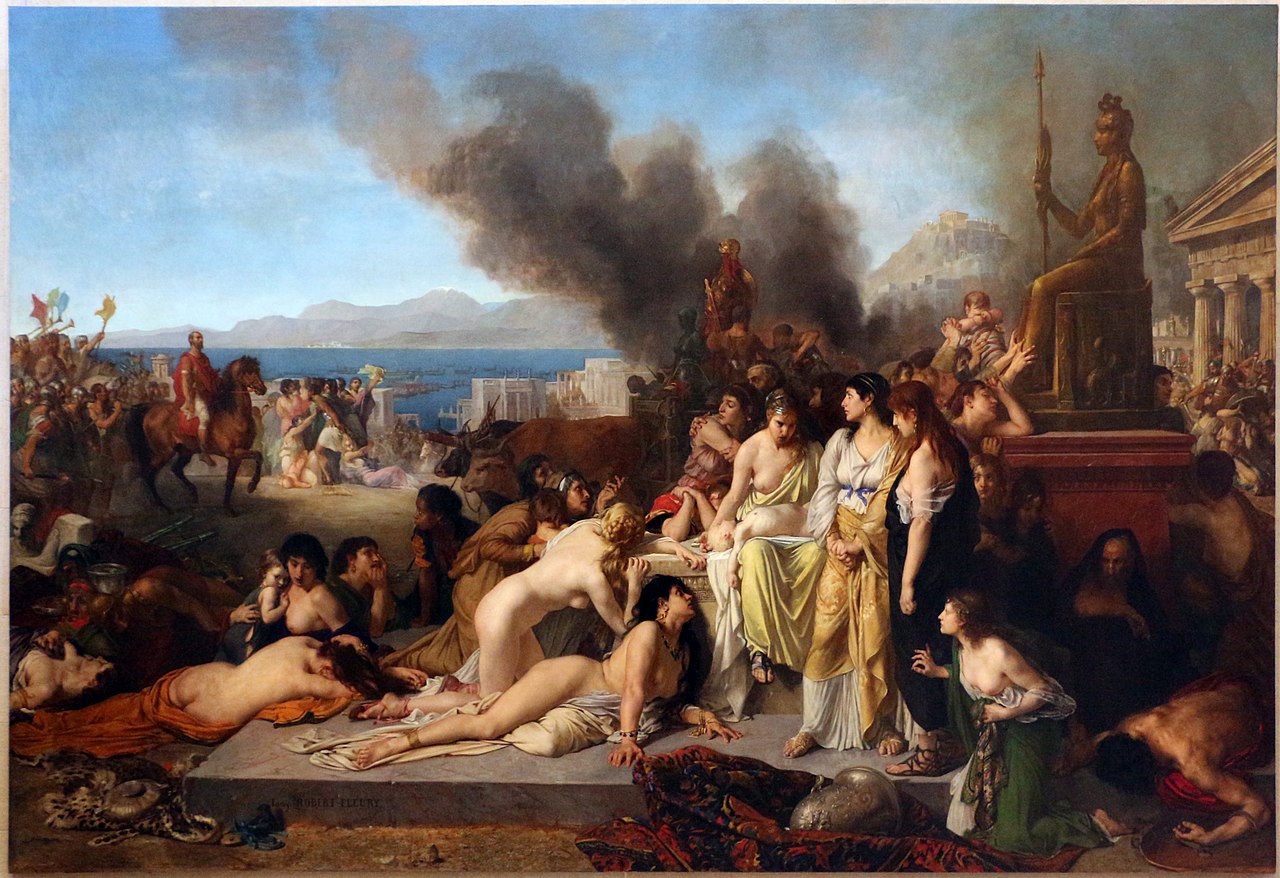
The namesake city, which was sacked and destroyed by the Romans, marks the final defeat of the Ancient Greeks by the Romans
The namesake city’s
male inhabitants were slaughtered
women, children, and slaves were sold
masterpieces were removed and taken by Romans to Rome
Caused by the Greek’s Achaean League revolting against Rome after the end of the Fourth Macedonian War
The Achaean league continued to agitate against the detention of 1,000 deported prisoners and fanned the flames of revolt in Greece
Opposed Roman orders to free Sparta, Corinth, and Argos; having believed that Rome was fully occupied in Africa and Spain
When the namesake city protested against Rome in demonstrations, Rome came to attack
Its inhabitants held off the first Roman force that came to attack, led by Metellus
Its inhabitants lose to the Roman force that came to attack, led by Mummius
Then, Mummius and the Romans began their systematic destruction of the namesake city
The Roman victory in the namesake event ended the Greek / Hellenistic Empire
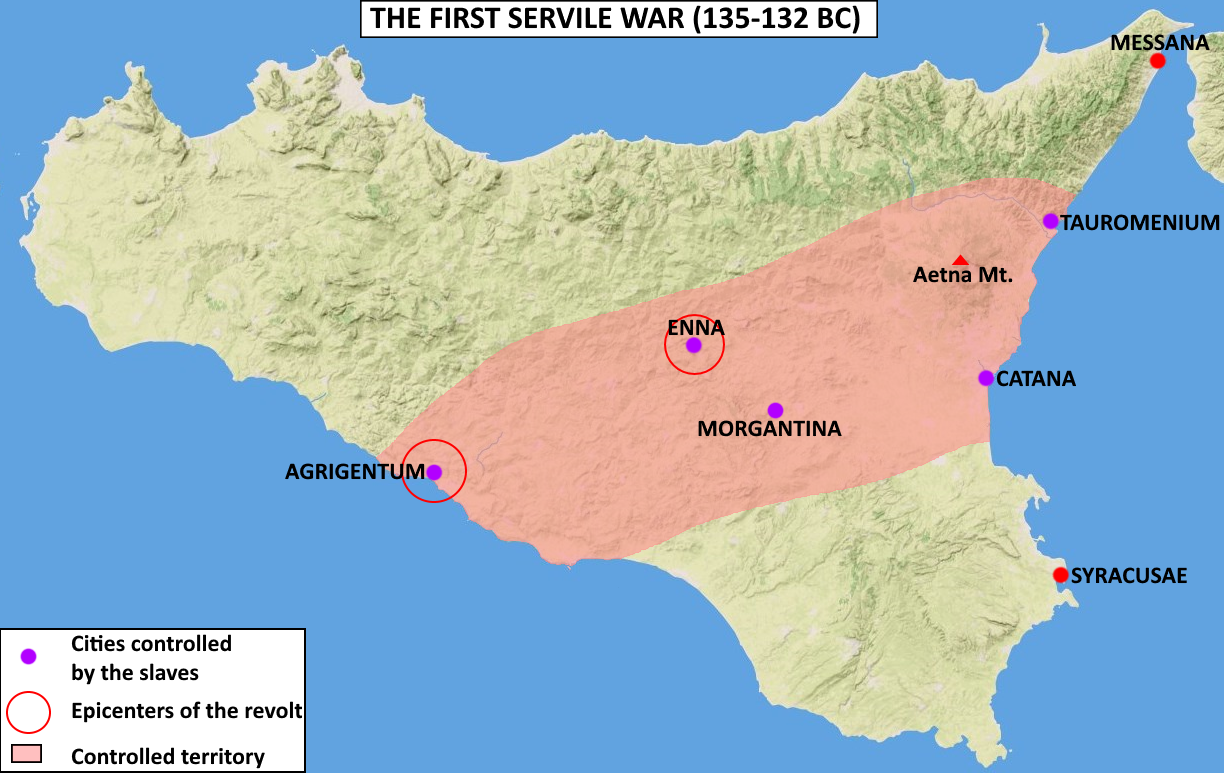
135 BCE - 132 BCE - First Sicilian Slave Revolt / First Servile War (All Facts)
Massive rebellion of 70K+ slaves led by Eunus that fought in a guerrilla war against General Rupilius and their Roman captors, which they won at first, inflicting heavy defeats on the Romans, but which they eventually lost
This revolt turned into an orgy of rape, murder, and looting
They helped Rome’s labor-intensive estates in that they
Grew bigger
More cost-effective
More profitable
However, these advances came at a cost, which this revolt had demonstrated
Crassus had suppressed the revolt
The lessons of this revolt were clear and a motto developed that said “every slave [they] own is an enemy [they] harbor”
118 BCE - 117 BCE - (Second) Dalmatian War (All Facts)
War in which Lucius Caecilius Metellus Delmaticus led an expedition against the Dalmatae for which he was awarded the title "Delmaticus" as a military triumph
War was declared in order to procure another triumph for the Metelli family, which it did
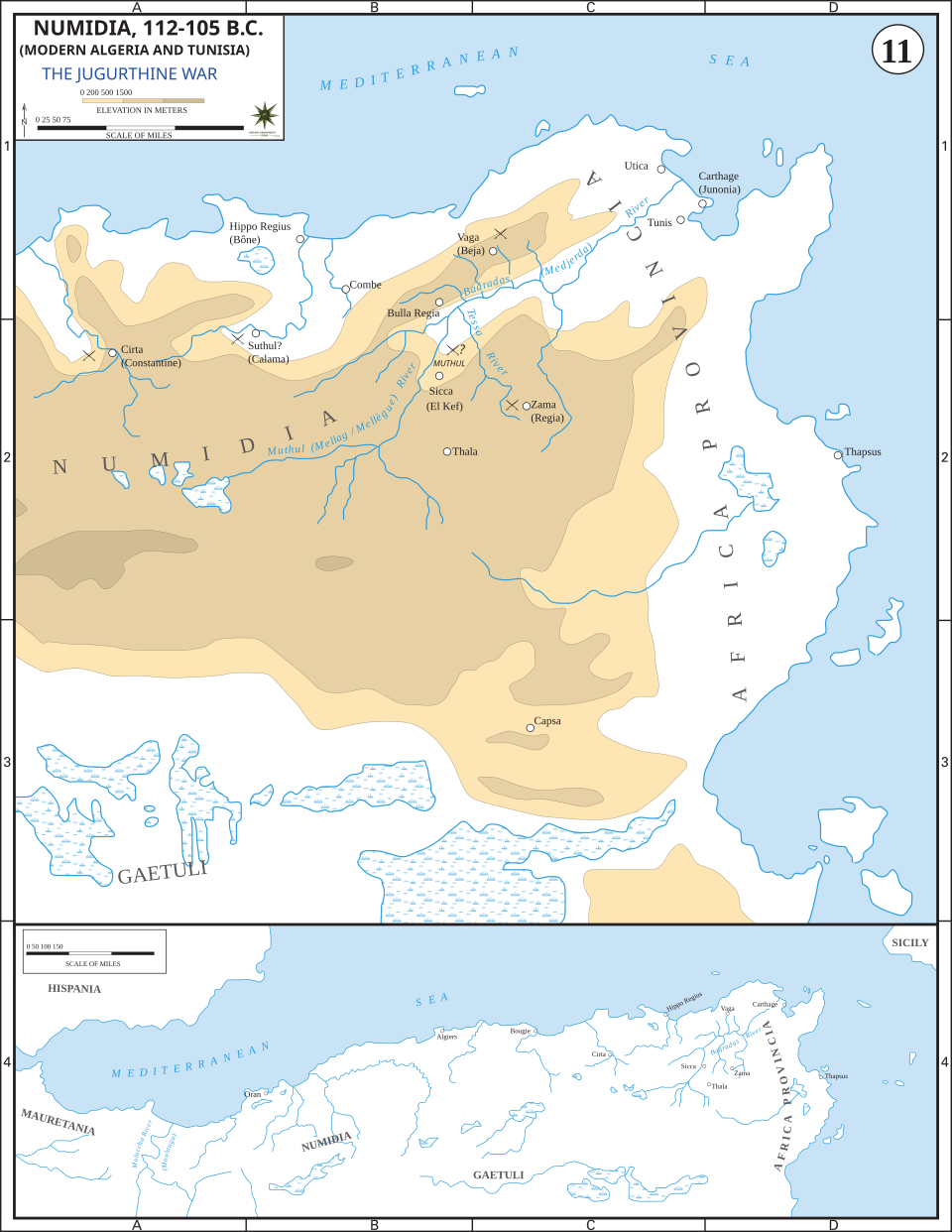
112 BCE - 106 BCE - Jugurthine War (All Facts)
War in which Gaius Marius and the Romans defeated the namesake ruler and the Numidians
Marius’s army systematically destroyed the rebel fortresses until the namesake ruler was beaten
Despite the rebellion having been swiftly defeated, this war was very important to Rome for two reasons:
First, the Senate, to the fury of other Roman nobles in North Africa, initially did not take punitive action when it was demanded against the namesake ruler by Roman equestrians
Thus, this, for the first time among the upper classes of Rome, dented the credibility of the Senate
It set the precedent of public disagreement in Rome’s ruling elite about running a foreign war
Second, it showed the Roman world who Gaius Marius was and gave him a kind of power and stardom that would transform Rome in the following years
104 BCE - 100 BCE - Second Sicilian Slave Revolt / Second Servile War (All Facts)
Revolt in which 14K Romans were sent to quell it in the namesake region
There were no further rebellions of this kind after Manius Aquillius had suppressed it
However, the treatment of slaves improved because Rome had learned its lesson about what could happen if slaves were treated too badly
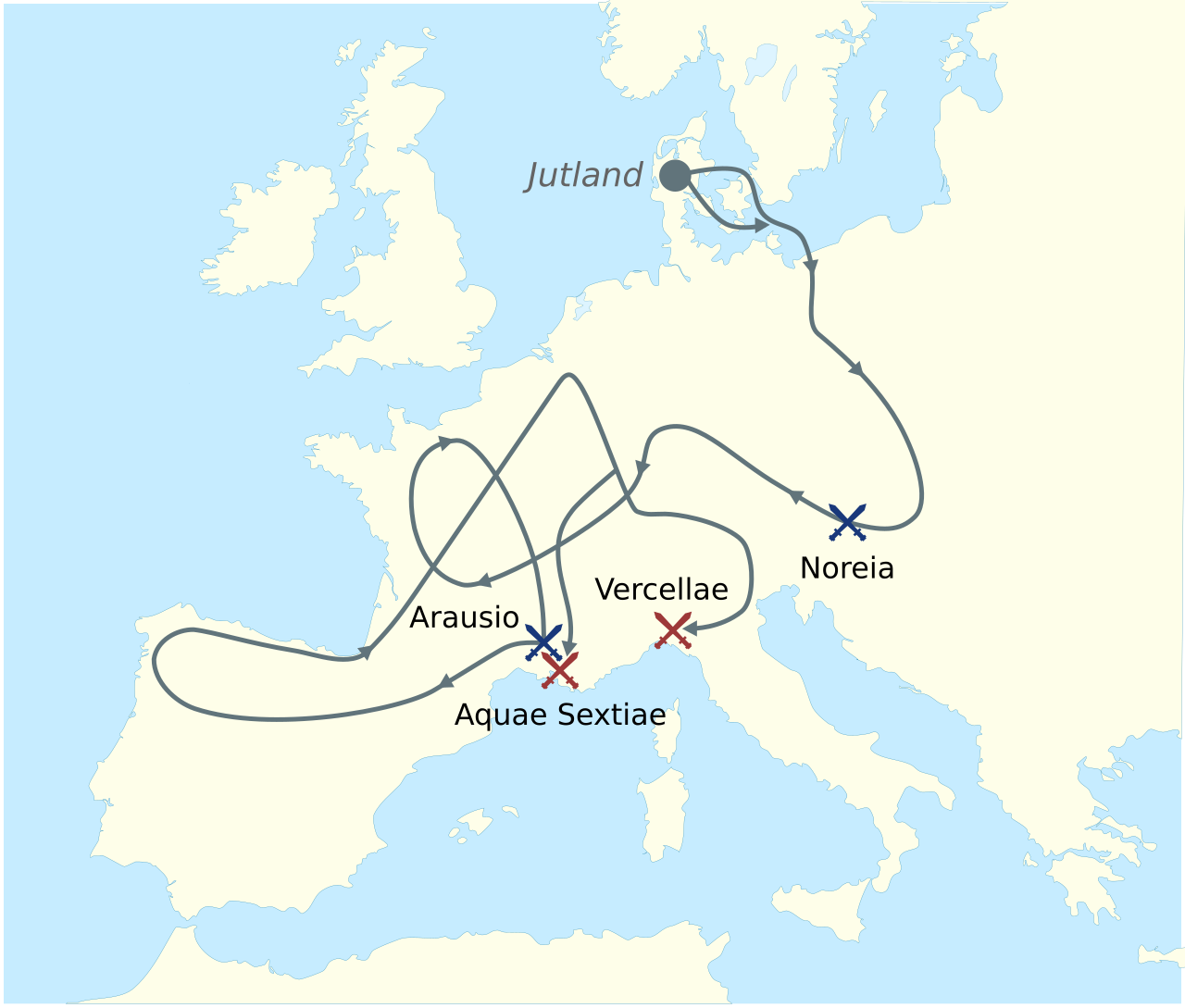
113 BCE - 101 BCE - Cimbrian War (All Facts)
War in which the two large namesake Celtic groups were ultimately defeated by Gaius Marius and Quintus Catulus and the Romans
War which
Began when the the namesake Celtic subtribe and the Teutones, another Celtic subtribe, left their homes at the time and went looking for new homes in Southern Gaul / northern Italy
The Romans sent several armies north to deal with them
In 109 BCE, the namesake subtribe and Teutones requested land to settle on in exchange for military service
However, Rome refused their offer and thus took a loss at one of its armies being destroyed as a result and then another army later on
War which marked the end of the Germanic threat to the Roman Republic
113 BCE - Battle of Noreia (All Facts)
Battle in which the Romans were defeated by the Cimbri and Teutones, it began the Cimbrian War
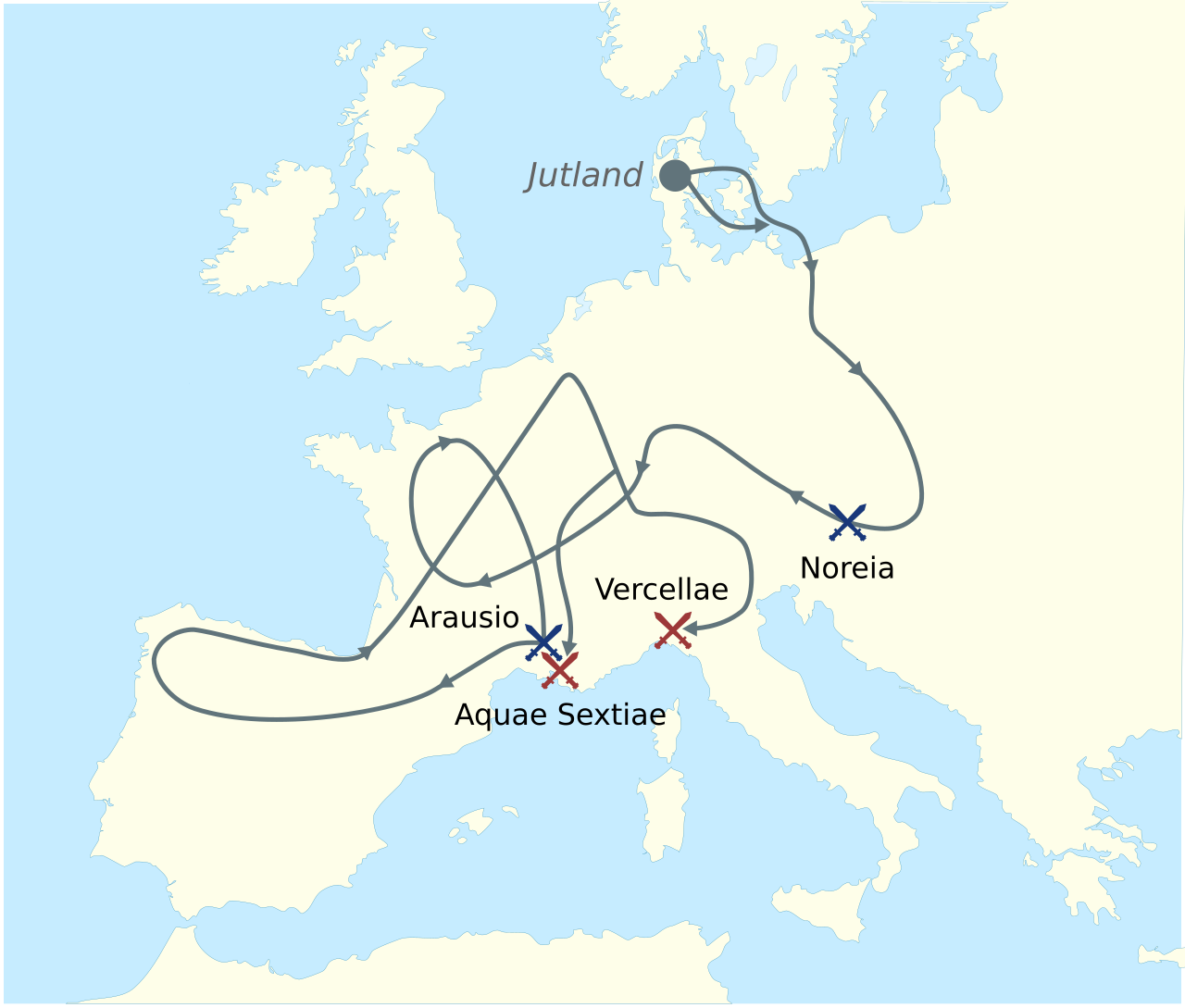
105 BCE - Battle of Arausio (All Facts)
Battle in which the Romans were defeated by the Cimbri, Teutones, and Ambrones, during the Cimbrian War
Battle regarded as the worst defeat in the history of ancient Rome surpassing the Battle of Cannae, in terms of Romans killed
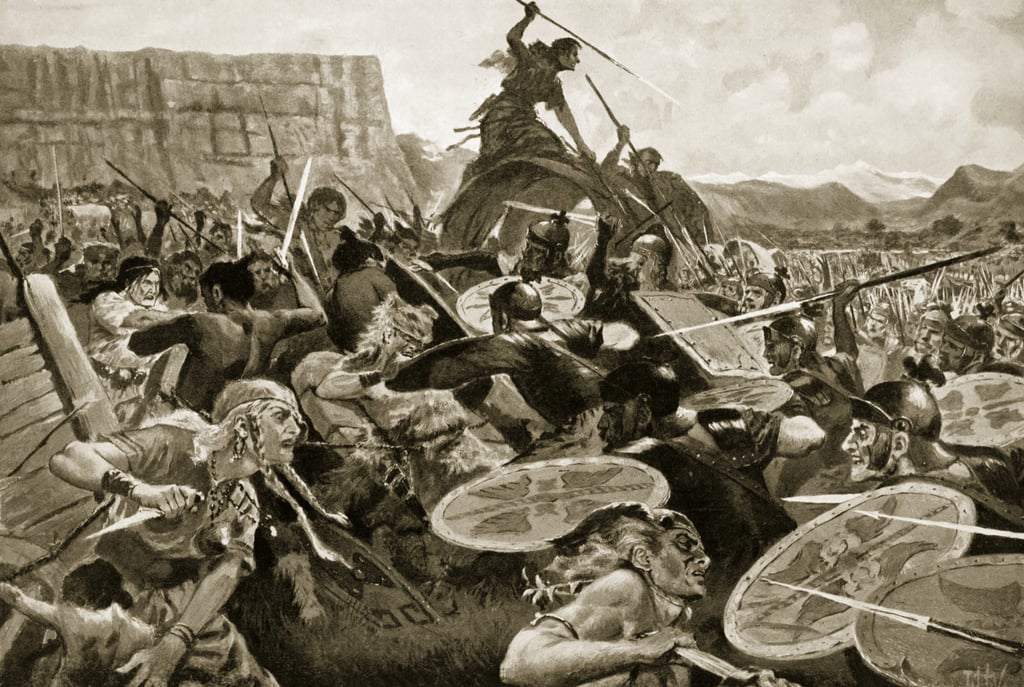
102 BCE - Battle of Aquae Sextiae (All Facts)
Battle in which Gaius Marius and the Romans defeated the Teutones and Cimbri, subtribes of Celts that were advancing into Italy and southern Gaul, during the Cimbrian War
200K Teutones were killed
90K Teutones were taken prisoner
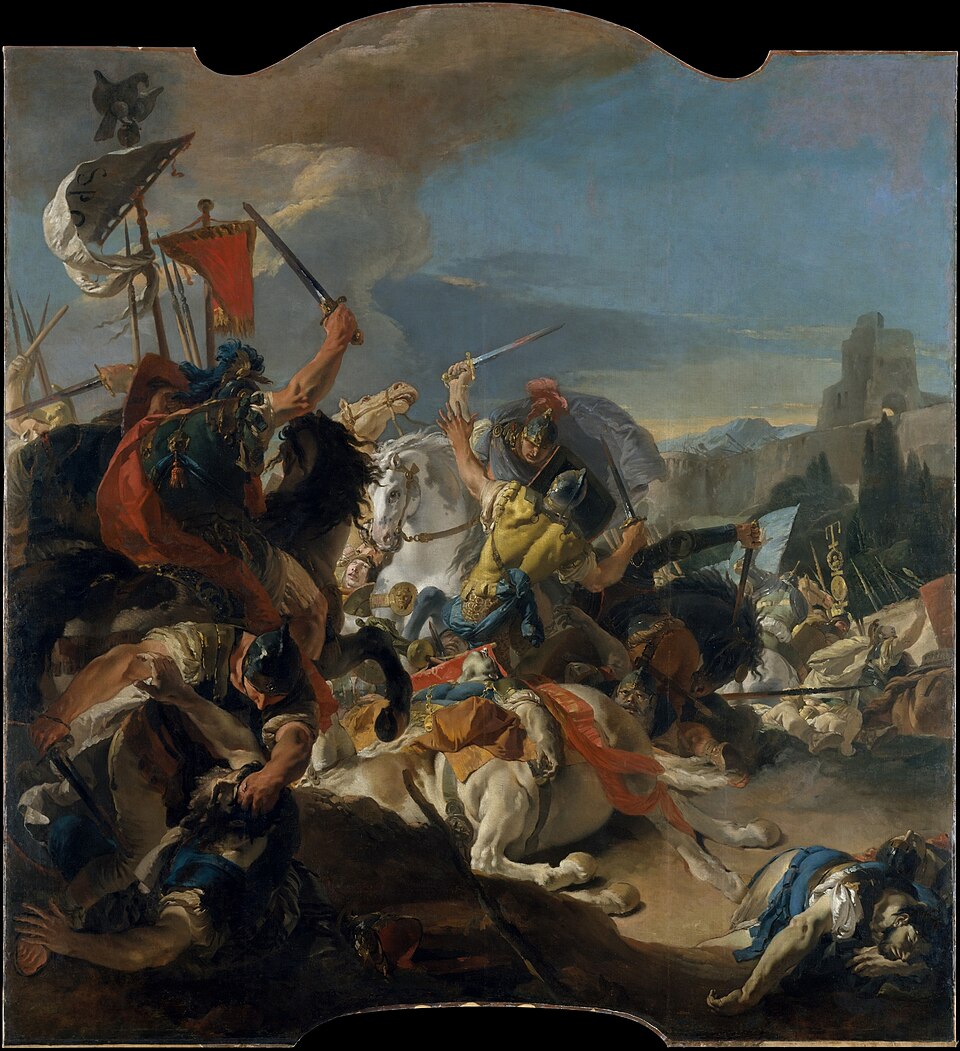
101 BCE - Battle of Vercellae (All Facts)
Battle in which Gaius Marius and Quintus Catulus and the Romans defeated the Cimbri and Teutones, subtribes of Celts that were advancing into Italy and southern Gaul, thus ending the Cimbrian War
140K Cimbri were killed
Many Teutones women were enslaved after this battle
Thus, the invincible barbarians from the north who had Italy at their mercy were invincible no more when faced, for the first time, with the toughened Volunteer Army of Marius
Battle which marked the end of the Germanic threat and defeat of the Cimbri to the Roman Republic
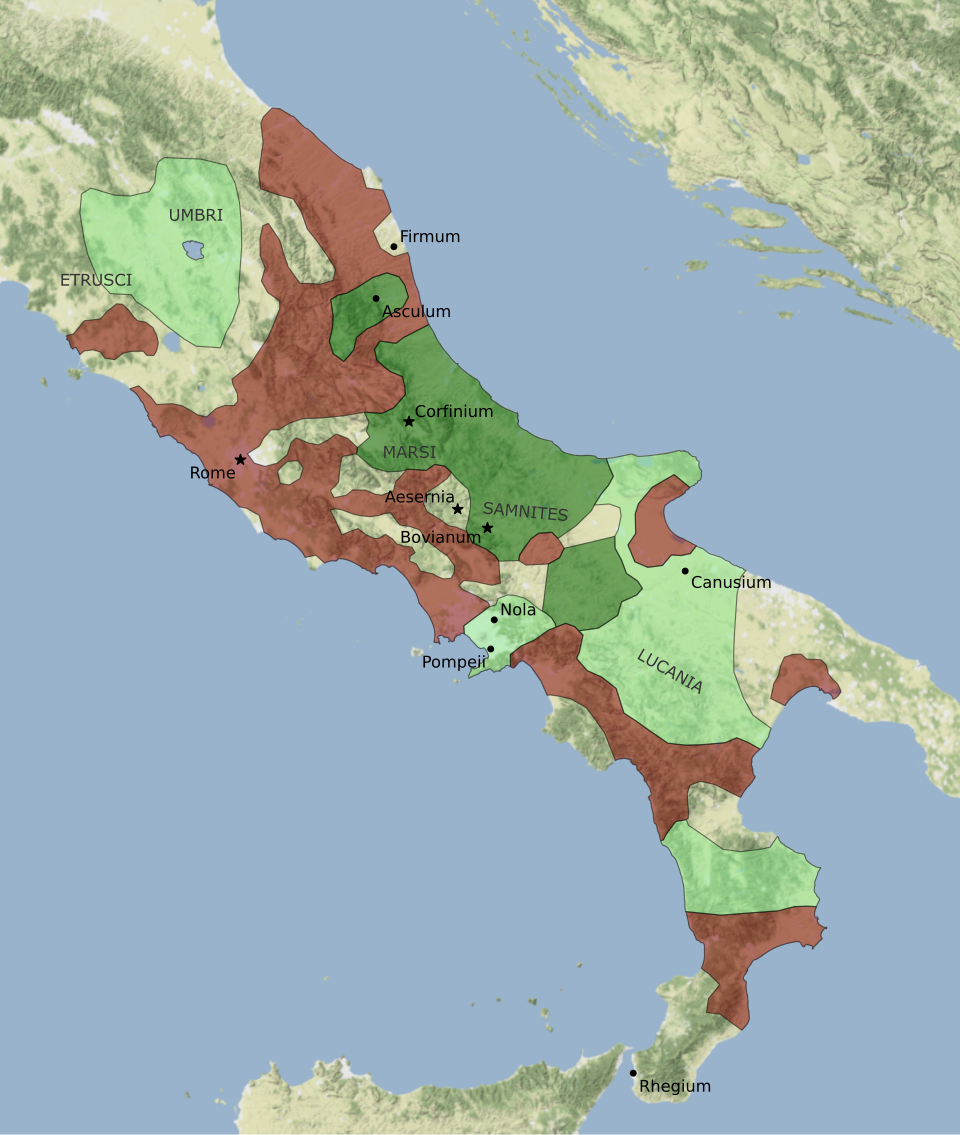
91 BCE - 87 BCE - Social War / Italian War / Marsic War (All Facts)
Massive coordinated revolt of the Italian Allies / Socii, especially in central and southern Italy
100K men of the socii were fielded
Many of them were battle-hardened veterans who had fought alongside Roman legions, thus causing Rome and the Senate to panic upon their mobilization
They certainly gave the Romans a run for their money
Revolt which began after Marcus Livius Drusus had been assassinated
Drusus had proposed that the Senate extend citizenship and rights to the Italian Allies / Socii who for a long time were non-citizens via the Alliance System
When he was assassinated, the Italian Allies / Socii took that to mean the Senate rejected the idea of giving the Italians citizenship and the right to vote
Thus, their revolt forced the Senate to consider giving the Italians citizenship and thus the right to vote
Revolt which ended when they successfully seceded to create their own state of Italica as a result
It would have its own mock / rebel Senate
Revolt which thus forced the Roman Senate to pass laws bestowing Roman citizenship on all those who wished to receive it, a development which was spearheaded by Lucius Julius Caesar
91 BCE - 89 BCE - Rebellion / Siege of Asculum (All Facts)
Rebellion in which in an enraged mob lynched a Roman official who was visiting the namesake city
It signaled that all hope of a peaceful settlement between the Roman provinces and the Roman citizens was lost
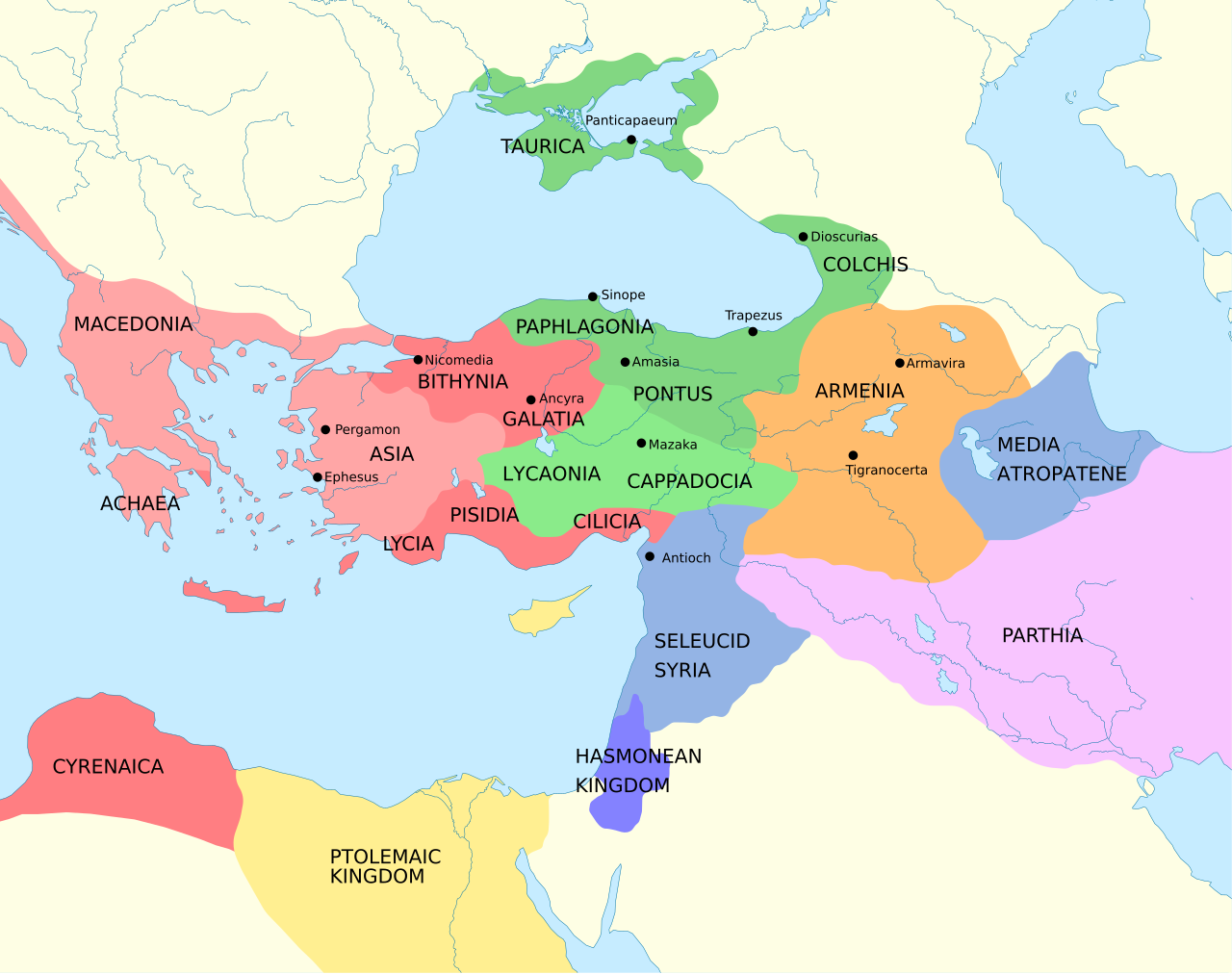
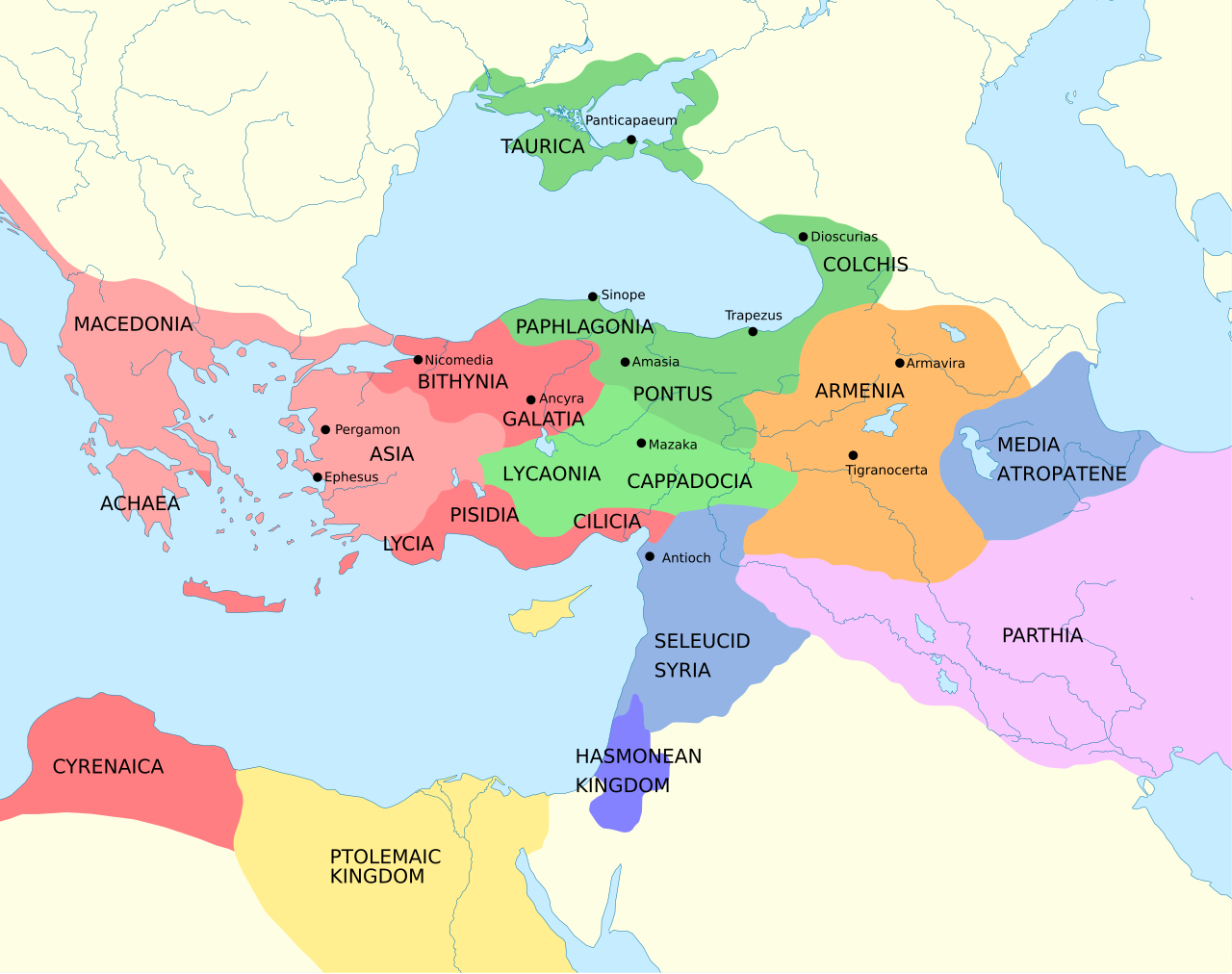
89 BCE - 85 BCE - First Mithridatic War (All Facts)
Series of wars in which Sulla and the Romans defeated Mithridates VI of Pontus
By its end, Mithridates VI made peace with the Romans on Sulla’s terms at Dardanus, in which he gave up all the territories he had previously conquered
88 BCE - Asiatic Vespers (All Facts)
Event which refers to the massacres of Roman and other Latin-speaking peoples living in parts of western Anatolia led by Mithridates of Pontus
Event in which Mithridates of Pontus routs Nicomedes of Bitynia in Anatolia, then proceeds to invade the Roman province of Asia and massacre 80K Romans and Italians
Event in which Mithridates of Pontus laid siege to Delos, in which his troops killed 20K of the island’s inhabitants
86 BCE - Battle of Chaeronea (All Facts)
Battle in which Sulla and the Romans defeated Mithridates VI of Pontus and his army general Archelaus during the First Mithridatic War
83 BCE - 81 BCE - Second Mithridatic War (All Facts)
War in which Lucius Licinius Murena and the Romans were defeated by Mithridates VI of Pontus in Asia Minor in which Rome signed a peace treaty and agreed to Mithridates VI’s terms
82 BCE - Battle of the Colline Gate (All Facts)
Battle in which Sulla defeated the Samnites and followers of his rival, Marius, in the namesake location in the northeastern end of Rome, having thus secured control of Italy
It is this battle in which Sulla ordered the slaughter of the followers of Marius and after this battle in which Sulla began his proscriptions
Battle which represents the culmination of a brilliant campaign by Sulla to subdue his opponents, whom he severely punished before having himself appointed Dictator
73 BCE - 71 BCE - Third Servile War (All Facts)
War in which Spartacus and his slave army of 70K+ men were defeated by Crassus “the Rich” and the Romans
Nevertheless, he inflicted heavy defeats on the Romans
War in which Spartacus
had bought himself time to escape to a better life
did not escape the brigands in his own ranks
was still in southern Italy when two Roman armies trapped him
and his army fragmented after having to face two fronts of Roman armies
lost three successive battles to Crassus “the Rich”
died like a gladiator while his legion hung like meat along the Appian Way
Crassus “the Rich” had brutally punished Spartacus and his slave army with the help of Pompey “the Great”
He crucified the remaining 6K slaves as a grim warning to any slave who thought about rebellion against Rome
However, Pompey had accredited himself for the victory, thereby making an enemy of Crassus “the Rich”
73 BCE - 63 BCE - Third Mithridatic War (All Facts)
War in which Pompey “the Great” of Rome and Phraates III of Parthia fight against King Mithridates of Pontus, which they won
War in which the Romans drove back Mithridates VI of Pontus, during which he fled to the court of Tigranes in Armenia
War in which Pompey “the Great” captured Tigranes of Armenia and conquered all his territories except for Armenia including Cappadocia and Syria (thus controlling the Seleucid Empire)
War which marked the defeat of Mithridates VI and the Kingdom of Pontus, the rump state of the Seleucid Empire, and the kingdom of Armenia and all three regions’ incorporation into the Roman Republic
66 BCE - Battle of Lycus (All Facts)
Battle in which Pompey “the Great” of Rome defeated King Mithridates of Pontus
63 BCE - Catilinarian Conspiracy (All Facts)
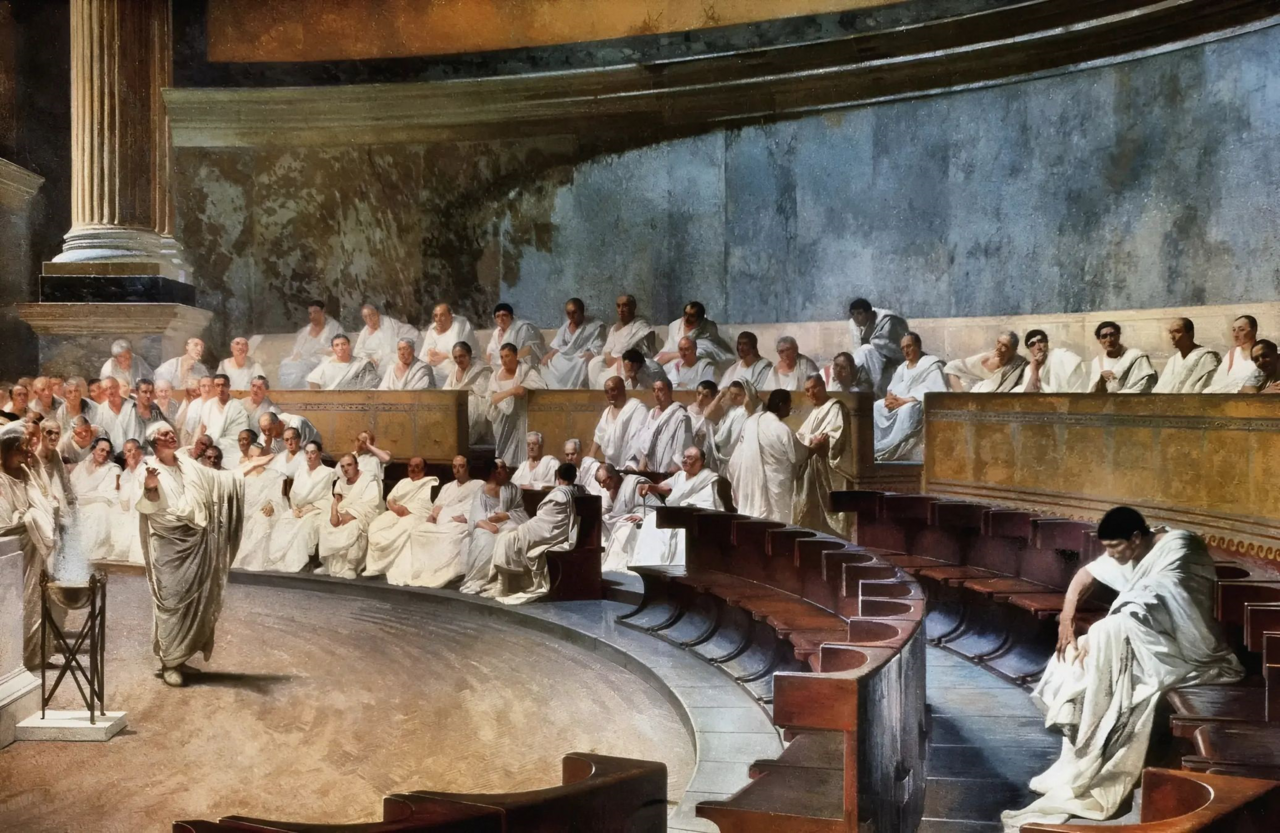
Attempted coup d'état by Lucius Sergius Catilina (Catiline) to overthrow the Roman consuls of 63 BC - Marcus Tullius Cicero and Gaius Antonius Hybrida - and forcibly assume control of the state in their stead
Was a plot and attempted coup by Catiline, former governor of the Roman province of Africa, to overthrow the state and achieve the consulship
He and his conspirators were
Plotting to seize power in Rome
Relentlessly pursued by Cicero
Condemned to death and executed, despite a moving plea for moderation by Julius Caesar
Catiline and his men continued their activities in Rome despite Cicero’s scathing speeches, which in and of themselves offered no evidence that could arrest him
However, shortly after Cicero’s speech had taken place, in an attempt to involve a deputation from the Allobroges, a Gallic tribe, the deputy reported everything to Cicero and set up an ambush in which he and the plotters were caught red-handed and executed
62 BCE - Battle of Pistoria (All Facts)
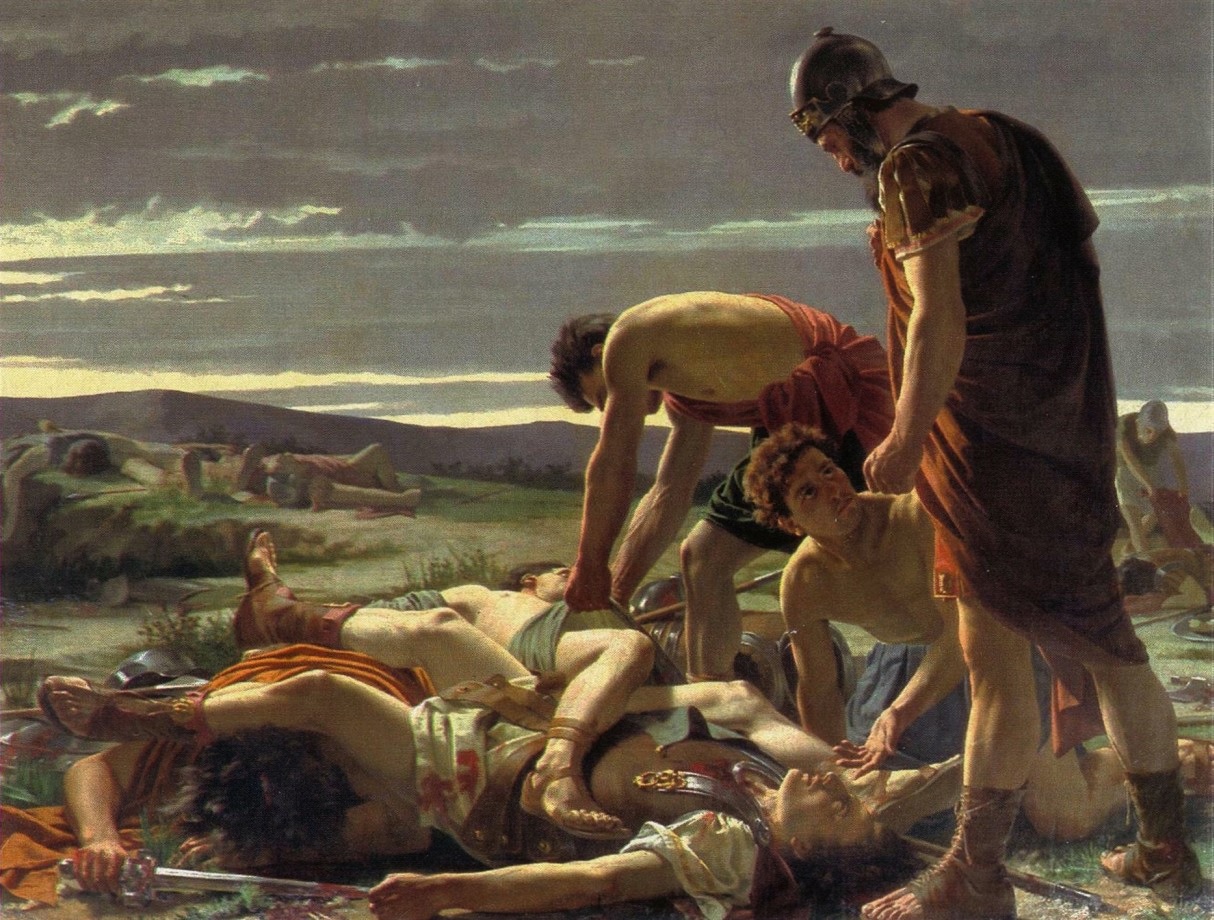
Battle in which the Roman Republic defeated Catiline and thus ended the Catilinarian Conspiracy
Catiline was slain and his troops were routed
53 BCE - Battle of Carrhae (All Facts)
Battle in which Marcus Licinius Crassus “the Rich” and the Romans were defeated by Surena and the Parthians
40K Romans lost to 10K Parthians
Humiliating loss which rippled throughout Rome
Was one of the bloodiest Roman losses
Led to the end of the Roman Republic
Battle in which the Parthian hoses, fitted with equine armor and bearing mail-clad warriors equipped with lances long enough to skewer two men, systematically tore the Roman column of Crassus to pieces
Mounted Parthian archers brought down Roman soldiers who fled the battle
When Crassus and his forces began to lose, he attempted to negotiate with the Parthians but he is butchered and beheaded instead
Crassus’s head was used as a theatrical prop during after-dinner entertainments at an Armenian banquet attended by Pomaxathres, the Parthian who killed him
Publius, Crassus’s son, was also beheaded and later taunted by the Parthians by parading past him with his head on a spear
A Roman prisoner who resembled Crassus was forced to imitate him at a Parthian victory parade
Battle which Crassus had sought out for a victory famous enough to compare to those of his fellow consuls and triumvirate heads Pompey and Caesar
He initially fought on having led his troops into the Mesopotamian desert in the hope of reaching and conquering Seleucia despite his being deserted by the Armenians, his former allies
However, his loss and death was a high price he paid for this supposed goal
Following his defeat, there were rumors of civil disorder in the capital
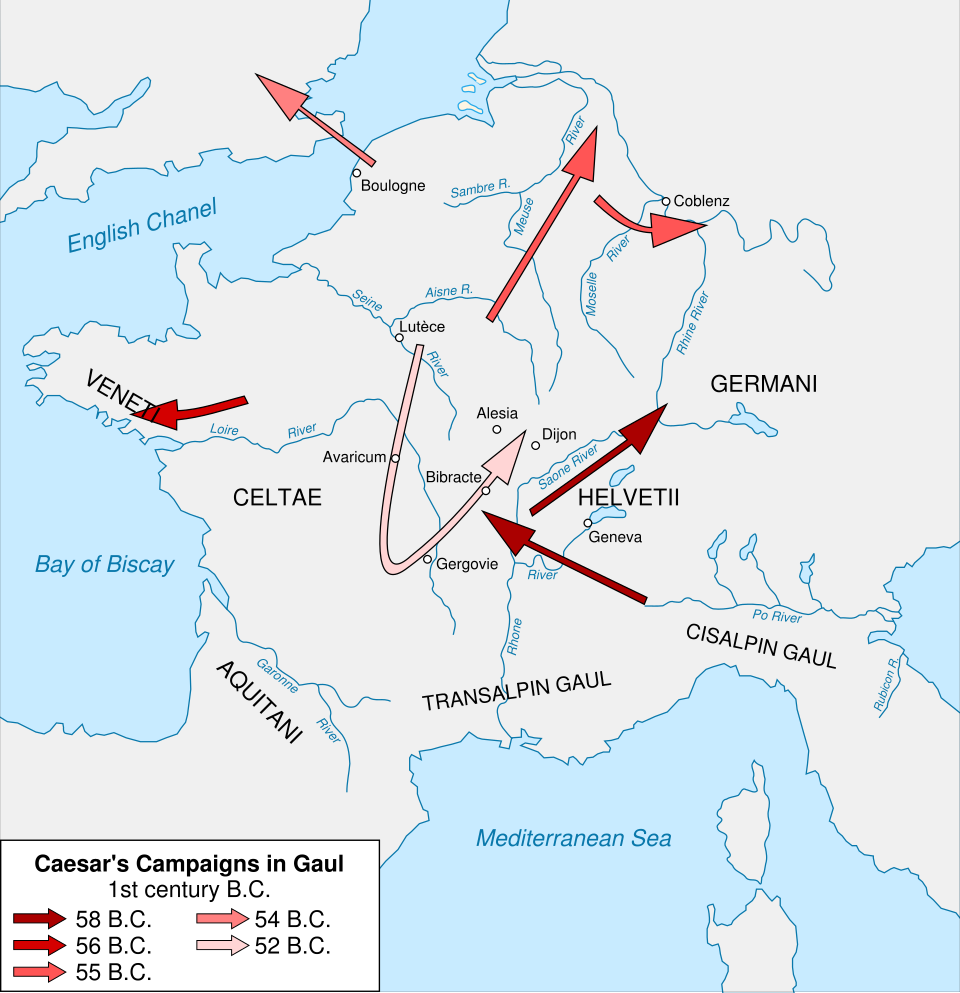
58 BCE - 49 BCE - Gallic Wars (All Facts)
Series of wars and battles in which Julius Caesar and the Romans defeated and conquered the Gauls and Celts
Wars which began when Gauls revolted against their Roman overlords by murdering Roman merchants who had set up business in Orleans
58 BCE - Won control of the provinces of Cisalpine Gaul, Transalpine Gaul, and Illyricum
58 BCE - The Helvetii (Ancient Swiss-Gaul immigrants) and the Suebi (Germanic people who settled in northern Gaul) were defeated
57 BCE - The Belgae and Nervii were defeated and the Belgic League in Alsace and Belgium was defeated
56 BCE - Western Gallic peoples, including the Veneti and peoples of Brittany and Normandy, were defeated
55 BCE - Caesar raided across the Rhine River against the Suevi and “Germans” building a bridge there to impress Germanic peoples with Roman engineering and burning a few villages to show the force of the Romans
55 BCE - England failed to be invaded after the Romans had crossed the Channel, having withdrawn after failing to secure a firm foothold there, in which the Belgic people there defeated Caesar and his army
54 BCE - England was invaded but failed to be occupied
However, many of its British tribes were defeated, such as Cassivellaunus of the Catuvellauni, commander of the southeastern Britons, who, along with his army, was defeated by Caesar and the Romans
Permanent client kings of the Romans were installed there
Set the precedent for future Roman intervention there
As a result of these wars and campaigns, Caesar built up not only a massive amount of wealth but also a battle-hardened army and many clients of the namesake
53 BCE - Ambiorix and the Eburones revolted against their Roman overlords, but were defeated
Vercingetorix tried using scorched earth tactics to drive out Caesar and his legions, who were wintering at Ravenna
However, he failed because Caesar eluded him and the Gauls refused to burn their crops
52 BCE - Vercingetorix and the Gauls defeat Julius Caesar and their Roman overlords at the Battle of Gergovia
52 BCE - Julius Caesar and the Romans defeated Vercingetorix and the Gauls at the Battle of Alesia
Wars in in which Caesar made effective use of the Roman maxim “divide and conquer” by playing off one Celtic people against another
The Roman victory in the namesake event ended the Gauls and Celts’ threat to Rome in which Gaul (and Celtic tribes) were decisively conquered
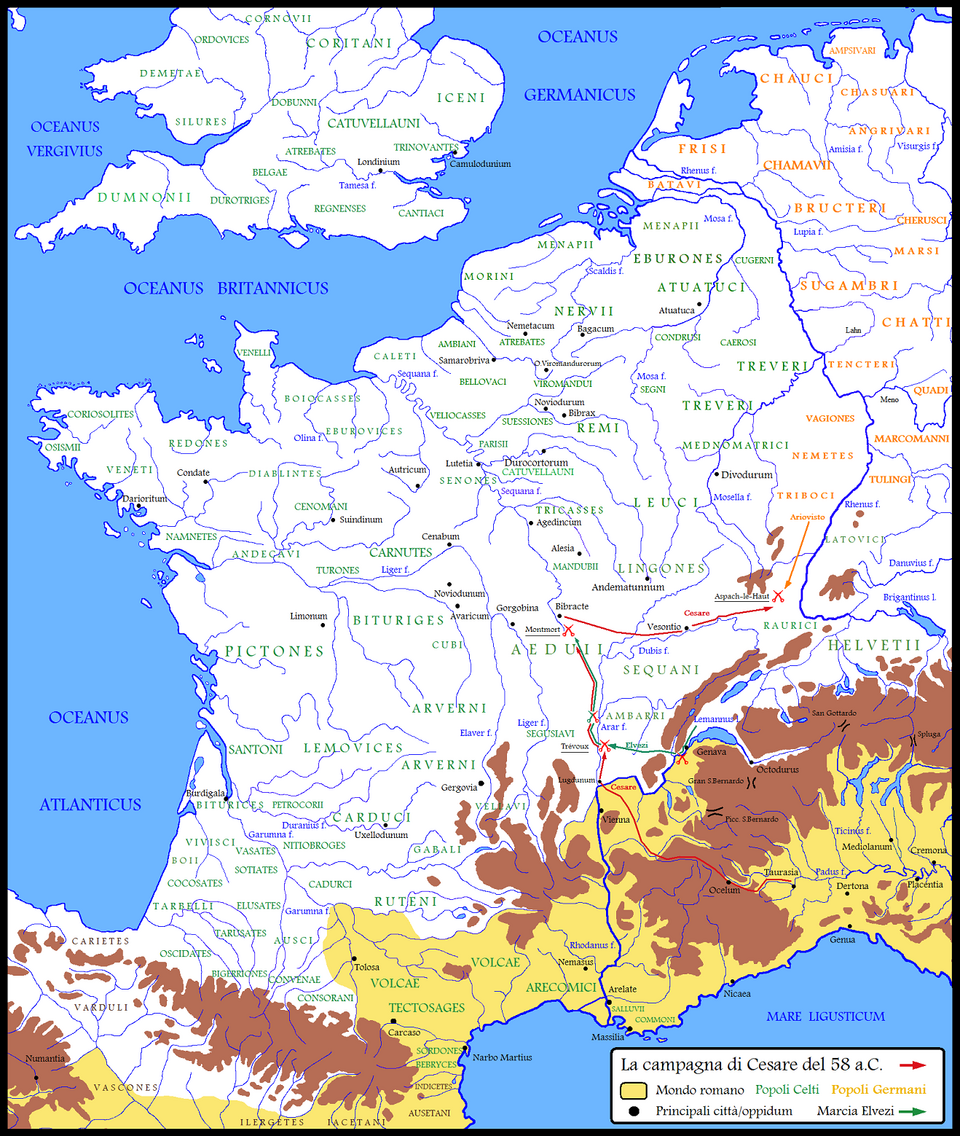
58 BCE - Battle of Bibracte (All Facts)
Battle in which Julius Caesar and the Romans defeated the Helvetii, a subtribe of Celts, during the Gallic Wars
At this battle, Vercingetorix of the Averni was declared supreme commander of the Gauls for the remainder of the Gallic Wars against Rome
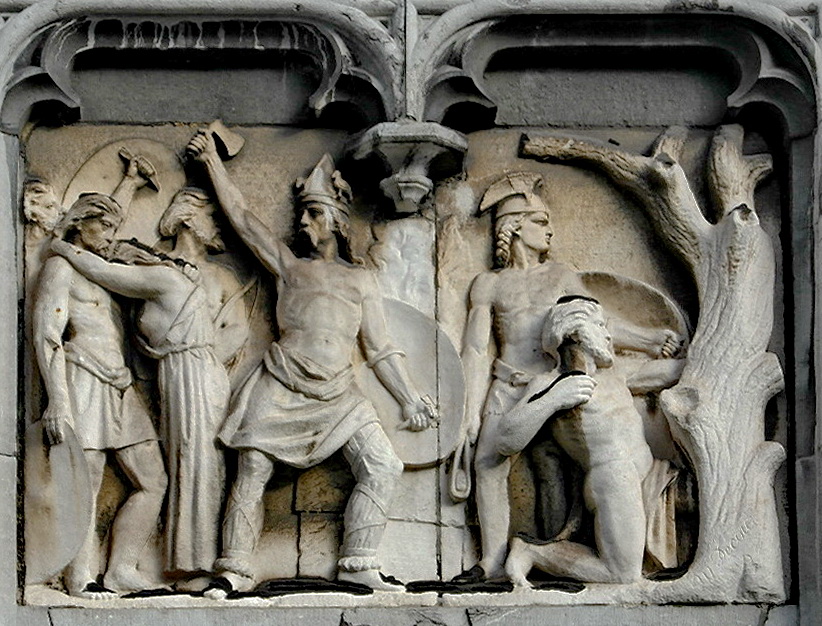
53 BCE - Ambiorix’s Revolt (All Facts)
Battle in which the namesake chief leader of the Eburones, a subtribe of the Gauls, revolts against Rome, during the Gallic Wars
The namesake leader and his army
destroyed one Roman camp and killed its troops
massacred a legion and a half of Romans
persuaded the Belgic Nervii to besiege another Roman camp in their territory
Was brutally suppressed by Caesar, especially after he had received reinforcements following the massacre
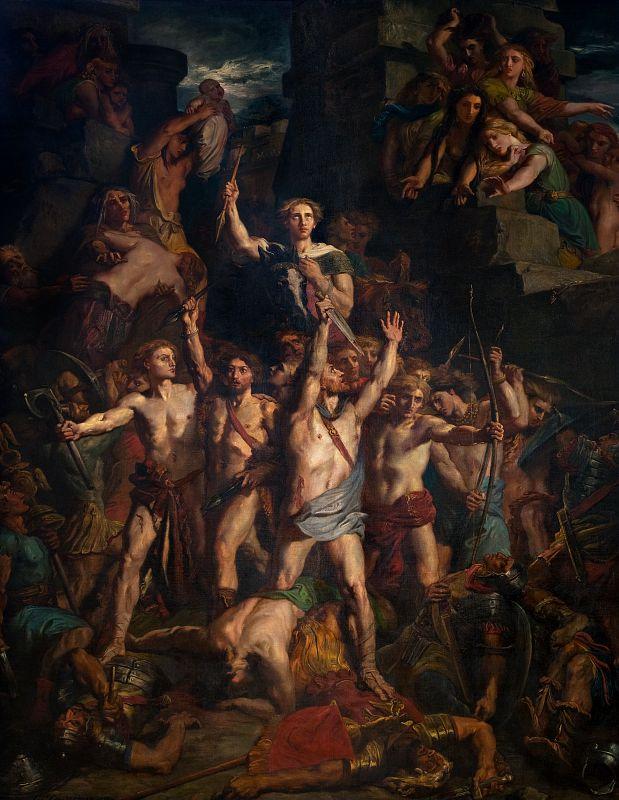
52 BCE - Battle of Gergovia (All Facts)
Battle in which Caesar and the Romans were defeated by Vercingetorix and the Gauls, during the Gallic Wars
Battle which led some of Rome’s allies defected to the Gauls
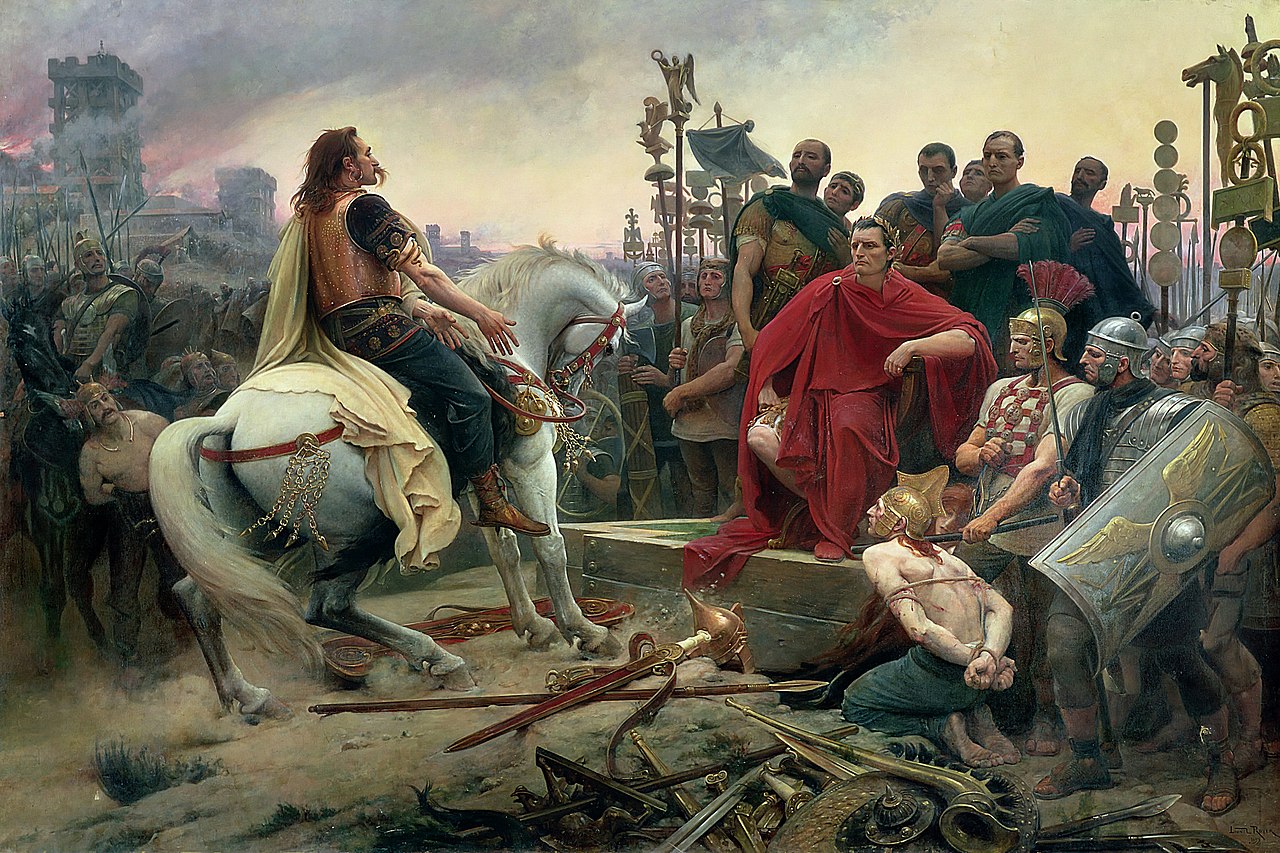
52 BCE - Battle of Alesia (All Facts)
Battle in which Julius Caesar and the Romans defeated Vercingetorix of the Arverni and the Gauls, after they had revolted against Rome, during the Gallic Wars
Battle in which
Caesar drove the Gauls into the namesake hill-town and laid siege to them with a double row of fortifications, with strong points protected by pits studded with sharp stakes
Caesar’s inner ring faced the namesake hill-town, the other pointed outward to hold off the warriors who were gathering to raise the siege
Despite attacking in great strength with 250K troops, Caesar and his men were initially beaten off and dispersed
Vercingetorix tried to break out in which his man advanced with great courage but, under the cover of darkness, fell into the pits previously dug by Caesar and his army
Vercingetorix and his army sustained many casualties from spears thrown from Caesar’s ramparts
When it grew light again the Gauls tried again, this time filling in the pits with brushwood, but they took too long
The Romans eventually got amongst them with their swords and they forced them to retreat into the namesake town
Vercingetorix then had chosen 60K of his best fighters to creep out at night and hide themselves, ready to attack the most vulnerable point in the Roman lines
Then, they rose from their hiding places and attacked at midday
Then, Vercingetorix led his main force out and fighting raged all along the line
Although at times it seemed the Romans would be broken, Caesar, distinctive in his scarlet cloak, conducted the battle brilliantly and drove off the Gauls
After the Romans laid siege to Vercingetorix, the fighting took only a day, but it was quite fierce
By its end, Vercingetorix surrendered as he was anxious to save his men, and was taken prisoner by Caesar
The Roman victory in the namesake battle ended the Gauls and Celts’ threat to Rome in which Gaul (and Celtic tribes) were decisively conquered
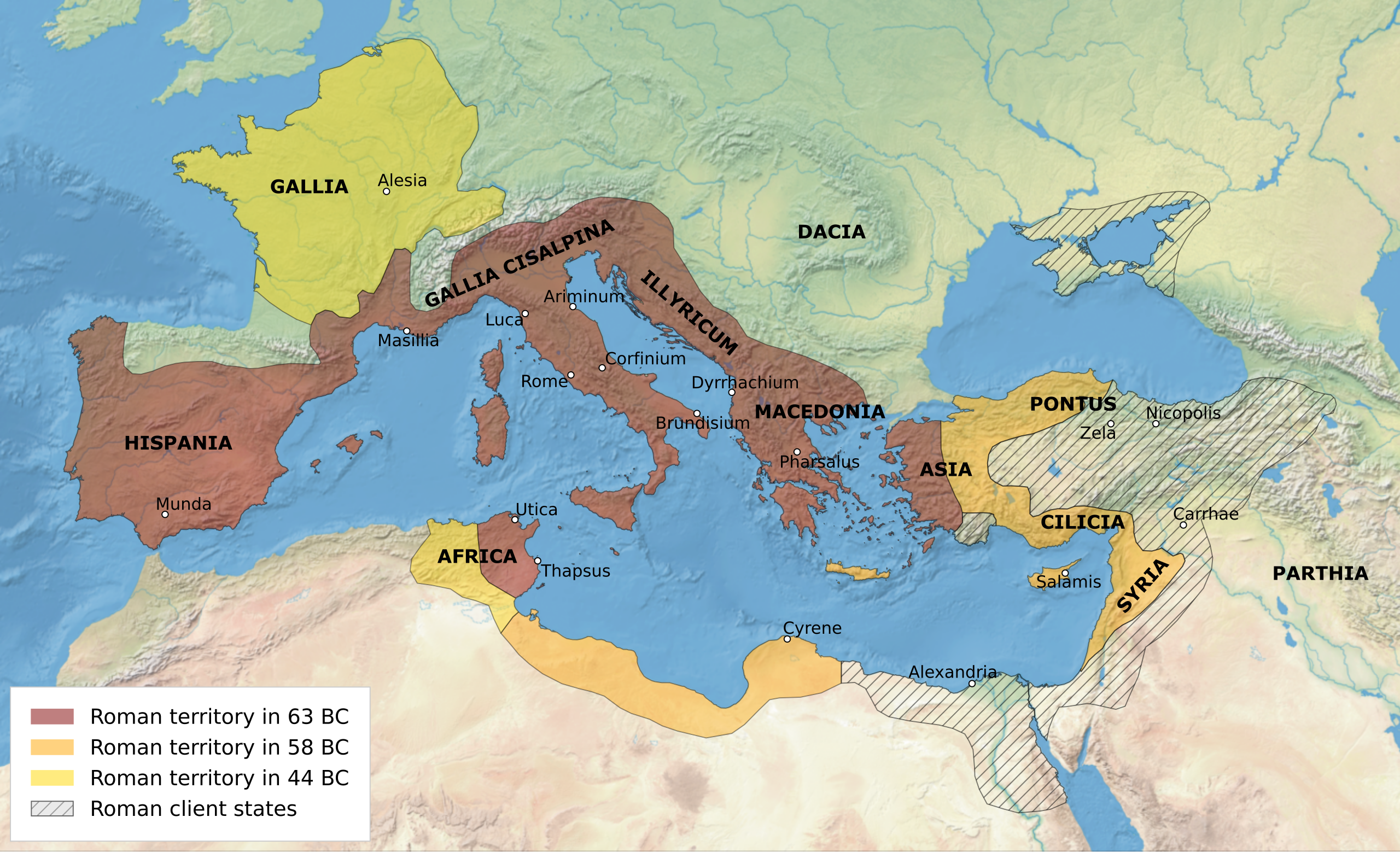
49 BCE - 45 BCE - Roman Civil War / Caesar’s Civil War (All Facts)
Civil War in Rome that occurred between Caesar and his faction and Pompey and his faction, caused by
Political tensions arising from Caesar’s military successes in Gaul, which fueled jealousy and fear in Pompey and the Roman Senate, which was influenced by Pompey
The Senate having demanded Caesar disband his army and return to Rome, but Caesar refusing and instead crossing the Rubicon into Italy with his army, initiating the conflict
Caesar had crossed over the Rubicon River, from Gaul to Italy, with the rest of his men that comprised the 13th legion
This was a direct violation of Roman law at the time and thus, in effect, a declaration of war against the Roman Senate
Moreover, when Caesar proposed himself be elected as Consul, a series of motions against him in the Senate were passed, which culminated in his enemies having forced through a motion making him a public enemy if he did not lay down his command
The Senate declared him to be a public enemy unless he disband his army in Gaul
When Caesar’s friends Quintius Cassius and Marcus Antonius vetoed the motion as tribunes, the Senate replied by declaring martial law
Thus these two tribunes who supported him flee to Ravenna, where he waited for them there
Thus, Caesar would rather give up his right to consulship than returned to Rome as a private citizen
Because he was refused the right to run for Consul in absentia and was ordered to return to Rome as a private citizen, he felt he had no choice but to rebel rather than commit political suicide, thus he crossed the Rubicon River
A number of other concurrent developments including
Both having been pushed into war by the feuding factions within Rome
The death of Crassus “the Rich” in the Battle of Carrhae
The death of Julia, Caesar’s daughter and Pompey’s wife; which broke the marriage alliance between the two
Began when, fearing his return to Rome from Gaul, his opponents wanted him to come home as a private citizen, without his loyal legions, but that would have put him at the mercy of his enemies
Alarmed by his desire to remain in Gaul in command of his army and the province, his opponents in the Senate strive to get him recalled to face charges of wrongdoing during his consulship
War during which the province of Massilia surrendered to Caesar and his forces on his way back to Gaul after his victorious campaign in Spain that culminated in the Battle of Ilerda
War during which Julius Caesar quelled a mutiny back in Rome
49 BCE - Siege of Corfinium (All Facts)
Siege in which Julius Caesar’s forces defeated Lucius Domitius Ahenobarbus and his troops, during the Roman Civil War of Julius Caesar
Was the first significant military confrontation of the Roman Civil War of Julius Caesar
49 BCE - Battle of Ilerda (All Facts)
Battle in which Julius Caesar and his forces defeated Pompey “the Great’s” generals Afranius and Petreius, during the Roman Civil War of Julius Caesar
Battle which took place north of the Ebro River in Spain
After this victorious battle in Spain, on Caesar’s return back to Gaul, Massilia surrendered to him
48 BCE - Battle of Pharsalus (All Facts)
Battle in which Julius Caesar and his forces overwhelmingly defeated Pompey “the Great” and Metellus Scipio and their combined forces, during the Roman Civil War of Julius Caesar
This occurred despite Pompey’s forces outnumbering Caesar’s and Pompey having the advantage of sea power and a greater navy
Pompey “the Great” could have starved Caesar into submission but instead he chose glory on the battlefield and was later defeated as a result
Battle in which, by its end, Pompey “the Great” fled to Egypt
47 BCE - Siege of Alexandria (All Facts)
Siege in which Julius Caesar and his forces defeated Ptolemy XII and the Egyptians, during the Roman Civil War of Julius Caesar
After having been besieged in the namesake location over the winter by an Egyptian force, he was relieved by an army from Asia
Ptolemy XII was killed during the fighting
Ptolemy XIII was installed by Julius Caesar to replace Ptolemy XII
47 BCE - Battle of Zela (All Facts)
Battle in which Julius Caesar and his forces defeated Pharnaces II (son of Mithridates VI) of Pontus, during the Roman Civil War of Julius Caesar
Battle in which Caesar says his most iconic line “I Came, I Saw, I Conquered” (or in Latin, “Veni, Vidi, Vici”)
46 BCE - Battle of Thapsus (All Facts)
Battle in which Julius Caesar and his forces defeated Metellus Scipio and the Optimates (his political rivals), during the Roman Civil War of Julius Caesar
Battle in which Afranius was killed and in which suicide was committed by Metellus Scipio, Cato the Younger, Marcus Petreius, and the Numidian King Juba
After this battle, Julius Caesar takes control of the rest of Numidia
After this battle, Pompey “the Great’s” son, Sextus Pompey, fled to Spain to join his brother Gnaeus
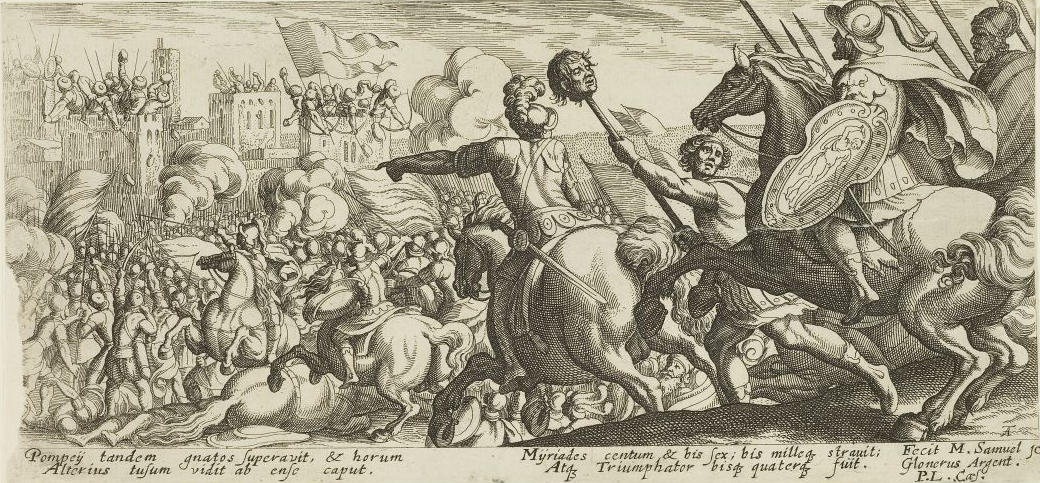
45 BCE - Battle of Munda (All Facts)
Battle in which Julius Caesar and his forces defeated Sextus, Gnaeus, and the remainder of Pompey’s armies, along with the remainder of the Optimates, Caesar’s political rivals, thus ending the Roman Civil War of Julius Caesar and allowing him to assume the throne of Rome
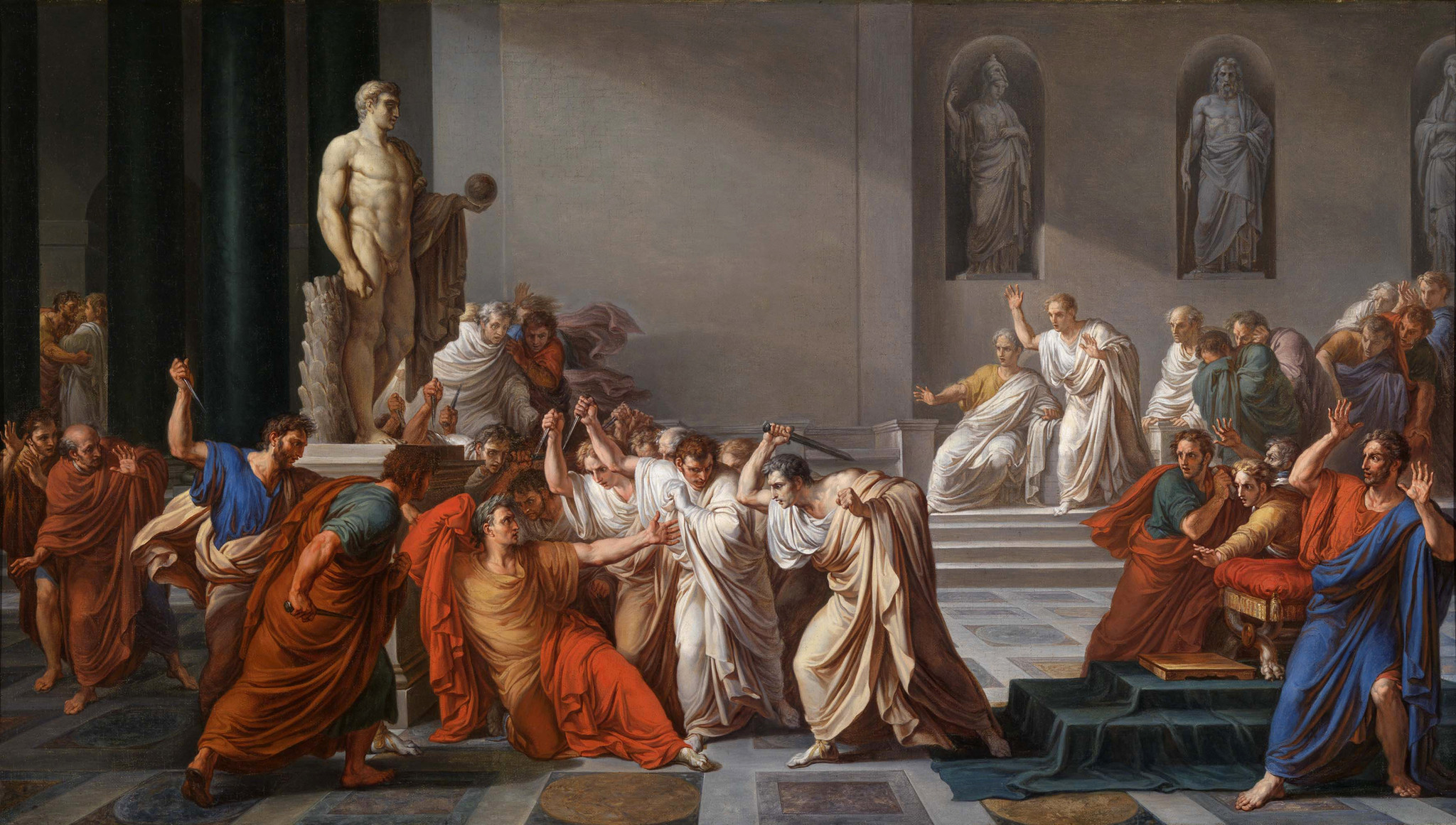
44 BCE - Ides of March (All Facts)
Assassination of Julius Caesar in which
Caesar was stabbed to death by a group of 60+ conspirators led by Brutus and Cassius, some of which included Caesar’s closest friends
Caesar had given both men clemency in which he raised Brutus to high rank and promised the governorship of Syria to Cassius
A soothsayer named Spurinna had warned Caesar of danger that would come to him not later than that very day, but he ignored Spurinna’s warning calling Spurinna a false prophet
Caesar died in a theater built by Pompey at the feet of Pompey’s statue
His murderers thought of themselves as tyrannicides instead, duty bound to rid Rome of the “Dictator for Life” who they feared was about make himself king of Rome, a fear which was reasonable given that Caesar had
Accepted emblems of royalty such as
a purple robe
statues of himself
his head being embossed in coins
Given his power a religious basis by organizing his own cult in which he was thus feared not just as impending king but potential god
Event in which
Tillius Cimber, pretending to plead the cause of his brother whom Caesar had exiled, made the first move as the assassins gathered round Caesar
When Caesar waved him away, Cimber seized hold of his toga as if to insist
Caesar thus protested at this indignity and, as he did so, Casca struck the first blow
This wound was not serious and Caesar struck back with his stylus, driving it into Casca’s arm
Caesar tried to get to his feet, but another dagger thrust drove him down
Then they all thrust at Caesar, for they had decided that no one man should be responsible for his death
When Caesar saw the daggers he pulled the top part of his toga off his face and let the lower part fall so that he would die with his legs decently covered
Caesar said nothing while 23 daggers thrust home until, as Marcus Junius Brutus prepared to strike him a second time, Caesar reproached him in Greek and said, “you too, my son?”
Caesar died at the foot of Pompey’s statue, laying there for some time, with no one daring to approach his body, until three common slaves carried him to his home in a litter
Caesar’s assassins planned to throw his body into the Tiber River, confiscate his property, and revoke all his decrees but failed to do so because they feared the revenge of Marcus Antonious and Lepidus, which made them run away
After this event
Caesar’s murderers fled including
Decimus Brutus to Cisalpine Gaul
Marcus Brutus to Macedonia
Cassius to Syria
The Senate
gave superior commands to Caesar’s murderers so that they could raise armies against Marcus Antonius
gave Caesar’s murderers governorship of the provinces which they fled to
However, Marcus Antonius would quickly take back Cisalpine Gaul and Macedonia from the Brutus brothers and give Syria to Publius Cornelius Dolabella thus stripping all three of Caesar’s murderers of their remaining political power
43 BCE - Battle of Mutina (All Facts)
Battle in which Octavian (Augustus) and his forces defeated Marcus Antonius and his forces
Battle in which Decimus Brutus, one of Caesar’s murderers in the Ides of March, was defeated and killed
Battle in which the new Roman consuls loyal to the Roman Senate at the time, Hirtius and Pansa, were killed
This occurred shortly before the formation of the Second Triumvirate, which explains why the two would ally together to defeat Caesar’s murderers the following year
42 BCE - Battle of Philippi (All Facts)
Battle in which Marcus Antonius and Octavian (Augustus) and their combined forces defeated and killed Marcus Brutus and Cassius and their (Republican) armies to avenge Caesar’s death at the namesake Macedonian town
Caesar’s murder in the Ides of March had thus been avenged by his adopted son Octavian (Augustus) and his chief lieutenant Marc Antony
Battle in which
Fighting was confused and lasted for several days
Cassius was routed on the first day and his camp was sacked and, having thought that Brutus was also defeated, ordered his shield-bearer to cut his throat, thus committing suicide to prevent capture
Brutus had
inflicted severe casualties on Octavian’s legions
mourned over the body of Cassius, declaring him to be “the last of all the Romans”
Brutus eventually got trapped in the mountains with a small force, where he accepted defeat and died on the sword of his friend Strato, thus committing suicide to prevent capture
He was considered by Marc Antony, his enemy, to be “the noblest Roman of them all”
41 BCE - 40 BCE - Perusine War / Perusinian War / War of the Veterans (All Facts)
War in which Lucius Antonius, brother of Marcus Antonius, with the help of Fulvia, wife of Marcus Antonius, took advantage of a revolt of peasants dispossessed of their land to further the struggle against Octavian (Augustus)