Ch 10 Energy Balance - LOs
 Studied by 1 person
 Call Kai
 Learn
Learn Practice Test
 Spaced Repetition
 Match
Match Flashcards
 Knowt Play
1/71

Earn XP
Description and Tags
Name | Mastery | Learn | Test | Matching | Spaced | Call with Kai |
|---|
No analytics yet
Send a link to your students to track their progress
72 Terms
energy balance
the relationship between energy intake and energy expenditure
energy equilibrium
when calories consumed matches the amount of energy expended
positive energy balance
when energy exceeds energy expenditure = weight gain
negative energy balance
when energy intake is less than energy expenditure = weight loss
situations where positive energy balance is desired
pregnancy, childhood growth
calorie
heat required to raise 1 g of water by 1 degree C
kilocalorie
heat required to raise 1 kg of water by 1 degree C
energy is lost as heat or used for digestion process
calories in/out rule of weight regulation is true but oversimplified
why do humans not digest all the calories they eat?
obesity trends among US adults
rise over the past 30 years
basal metabolic rate (BMR)
minimum amount of energy expended in fasting to keep a resting, awake body alive in a warm quiet environment
“cost of living” ~ heartbeat, respiration, etc.
resting metabolic rate
same as BMR, but not fasting
BMR for women
0.9 kcal/kg per hr
BMR for men
1.0 kcal/kg per hr
BMR amount of total energy expenditure
60-70%
how much does BMR vary?
25-30%
factors that contribute to variance in BMR
muscle mass
hormones
body surface area
etc.
how much BMR declines after age 30
1-2%
physical activity (exercise)
calories burned from deliberate exercise
can range from 0 to several hundred per day
thermic effect of food
energy used to digest, absorb, transport, store and metabolize
percentage thermic effect of food in energy consumed
5-10% (100-300 calories)
TEF for protein rich meal
20-30%
TEF for carbohydrate rich meal
5-10%
TEF for fat rich meal
0-3%
non-exercise activity thermogenesis (NEAT)
varies greatly, but accounts for hundreds of calories burned per day
includes non-deliberate physical activity
fidgeting, shivering, posture, stairs, housework
brown adipose tissue
source of NEAT, mainly in infants
small amount in adults
heat generating tissue that is 5% of infant body weight
direct calorimetry
person in a sealed chamber where you measure heat
indirect calorimetry
measure gases ~ O2 in and CO2 out
hunger
physiological drive to find and eat food
appetite
psychological drive to eat
hypothalamus
communicates with endocrine and nervous system
integrates internal clues of blood glucose levels, hormone secretions, and sympathetic nervous system
signals stimulate satiety center
stop eating
signals stimulate feeding centers
eat more
satiety process
flavor of food
knowing a meal was just eaten
influence of stomach and intestinal expansion and activity
influence of nutrient use in the liver and related communication with hypothalamus and other brain regions
conscious thinking takes place in the brain’s cortex and can overcome hunger and satiety signals
factors that contribute to satiety (fullness)
sensory aspects of food
knowledge that food was eaten
chewing
expansion of stomach and intestines
effects of digestion, absorption, and metabolism
hormones
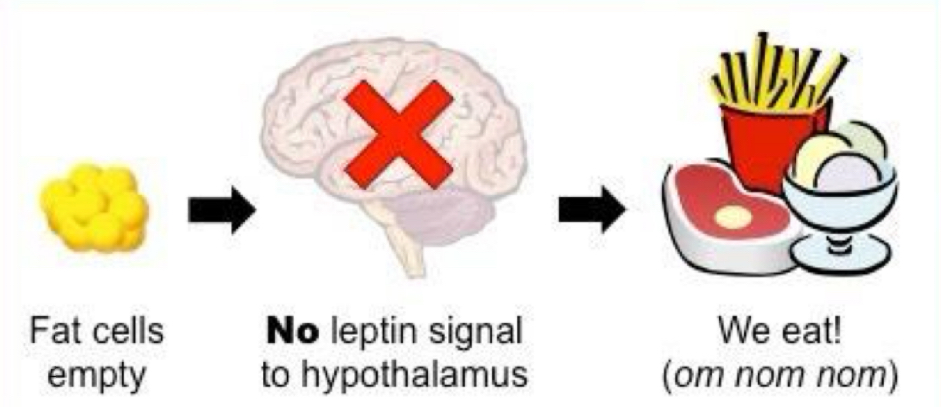
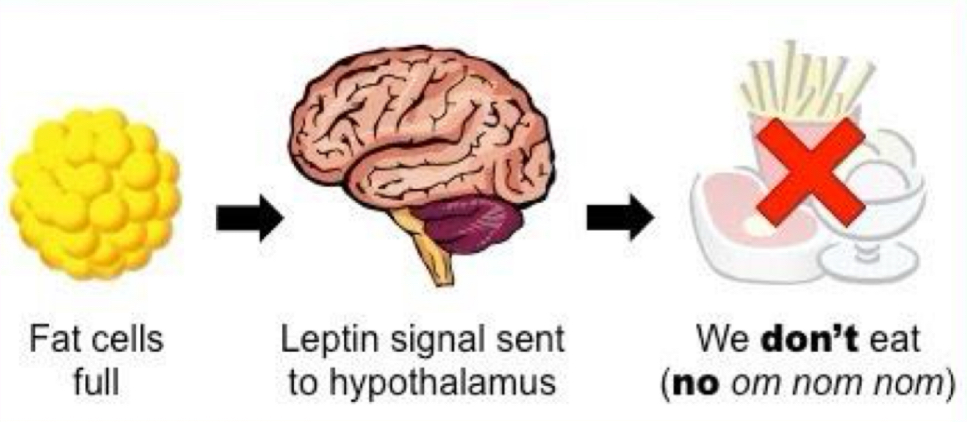
leptin
hormone produced by adipose
helps monitor stored energy
hunger response
empty fat cells » no leptin » appetite
satiety response
full fat cells » leptin increase » no appetite
body mass index (BMI)
weight for height standard
convenient
used for males and females
body weight (kg)/height2 (m) OR body weight (lb) *703/height2 (in)
underweight
BMI <18.5
healthy weight
BMI 18.5 to <25
overweight
BMI 25 to <30
health risks may be seen
not necessarily a marker of excess fat
obese
> 30
limitations of BMI
does not account for many factors:
sex
age
bone/muscle density and mass
genetics
ethnicity
body roundness index
uses height and waist circumference
pros of the body roundness index
might be better at assessing risk in different body types
visceral adipose tissue is strongly associated with disease risk (diabetes, CVD, etc.)
cons of body roundness index
measuring waist is harder than you think
needs more validation (recent findings)
desirable amount of body fat in men
8-24%
desirable amount of body fat in women
21-35% = need more fat to support pregnancy/lactation
body fat content measurement methods
dual energy x-ray absorptiometry (DEXA) - most accurate
water or air displacement
skin folds
bioelectric impedance
obesity risk for children with no obese parents
10%
obesity risk for children with one obese parent
40%
obesity risk for children with two obese parents
80%
role of genetics in weight gain
genes account for 40-70% of weight differences
body type, metabolic rate, factors that affect hunger and satiety
even when identical twins are raised apart, they show similar weight gain patterns
“thrifty metabolism”
some people may use energy more frugally; store fat more readily
set point theory
the body appears to have a genetically predetermined body weight or fat content that is closely regulated
when energy intake is reduced:
thyroid hormone secretions fall, slowing metabolism
body becomes more efficient at storing fat
body is somewhat resistant to weight gain, but is weaker mechanism
percentage of people who go on a diet and maintain weight loss for 3-5 years after the diet ends
5%
roles of the environment on weight
couples and friends tend toward similar weights
many factors play a role in food intake (cultural, economic, etc.)
genes and environment both matter
amount of time that commercial diets leave lasting weight loss
5%
how quickly people return to original weight after a commercial diet
3-5 years
characteristics of a successful diet
1-2 lbs a week
normal food and activity levels
reasonable and sustainable
500 kcal/day
energy intake decrease required to lose 1 pound a week
can be done through calorie restriction, physical activity or combination
3500 calories
deficit required to lose one pound
low energy density foods
most successful long-term diets
regular physical activity
does not need to be high intensity
good to add some resistance/higher impact exercise
behaviors of people who maintain a healthy weight
eat a low-fat, high-carb diet
25% fat intake
56% carb intake from fruits, vegetables, and grains
eat a healthy breakfast
may cause body to burn more fat
less tendency to overeat due to hunger
self monitor
regularly weigh yourself
keep a food jurnal
physical activity: 1hr/day
fat diet signs
promises a quick fix
dire warnings of danger from single product or regimen
claims that sound too good to be true
simplistic conclusions drawn from a complex study
recommendations based on a single study
dramatic statements refuted by reputable scientific organizations
list of “good” and “bad” foods
recommendations made to help sell a product
recommendations based on studies without peer review
recommendations that ignore differences among individuals or groups
lorcaserin (Belviq)
acts on a specific type of serotonin receptor in the hypothalamus
thought to activate satiety pathways
weight loss in clinical trials was modest (half lost 5% body weight)
controlled substance because very high doses can cause hallucinations
orlistat
MECHANISM: inhibits lipase » lowers fat digestion
BENFITS: 65% of participants lose 5% of weight; placebo 50%
SIDE EFFECTS: GI issues, steatorrhea
GLP -1
treatment for T2 diabetes
semaglutide (Ozempic, Wegovy)
Tirzepatide (Mounjaro, Zepbound)
produce 20% weight loss
nausea, vomiting, diarrhea are common
can cause hypoglycemia
warning about thyroid cancer
gastroplasty
can be very effective 75% of patients lose 50% of body weight
requires significant lifestyle changes
carries risks of major surgery
anorexia nervosa
restriction of energy intake to create low body weight
fear of gaining weight and persistent behaviors that interfere with gaining weight
disturbance in a person’s weight or shape, lack of recognition of risks of low body weight
bulimia nervosa
recurrent episodes of binge eating with purging following
lack of control over an eating episode
recurrent compensatory behavior to prevent weight gain
 Note
Note  Flashcards (20)