Pop Art Primary Sources
 Call Kai
 Learn
Learn Practice Test
 Spaced Repetition
 Match
Match Flashcards
 Knowt Play
1/107

There's no tags or description
Looks like no tags are added yet.
Name | Mastery | Learn | Test | Matching | Spaced | Call with Kai |
|---|
No analytics yet
Send a link to your students to track their progress
108 Terms
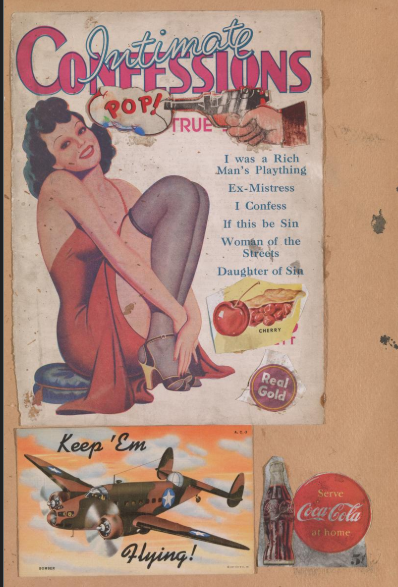
Eduardo Paolozzi, I Was a Rich Man’s Play Thing, 1947
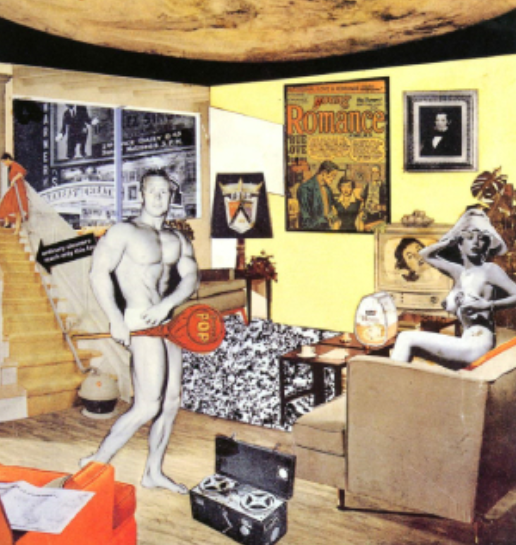
Richard Hamilton, Just What is it That Makes These Homes So Different, So
Appealing?, 1956
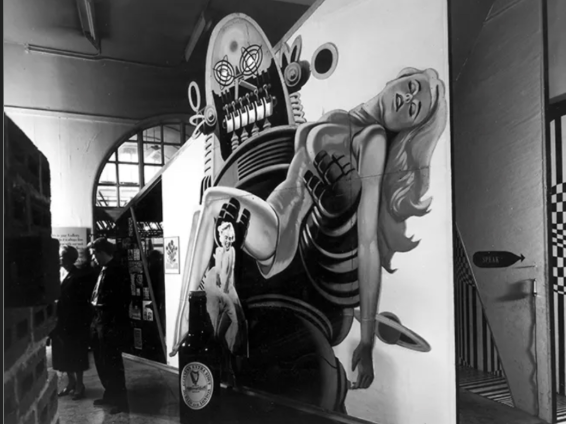
Installation view of Group Two display in This is Tomorrow exhibition, 1956.
Whitechapel Art Gallery, London.
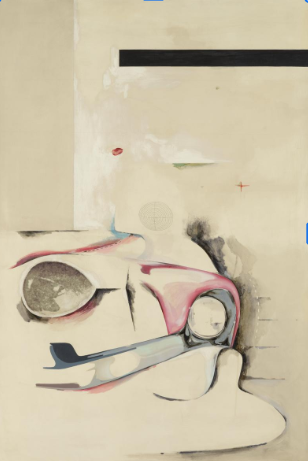
Richard Hamilton, Hommage à Chrysler Corp., 1957. Oil, metal, foil and collage on
panel. 48 x 32 in
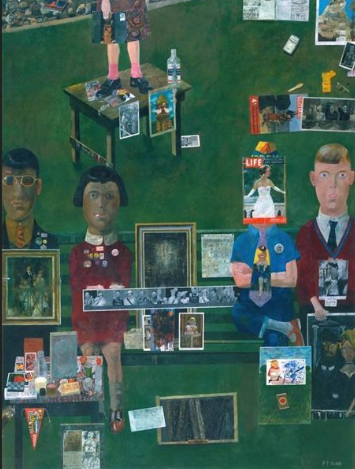
Peter Blake, On the Balcony, 1955-57. Oil on canvas. 121.3 x 90.8 cm. London, Tate
Gallery.
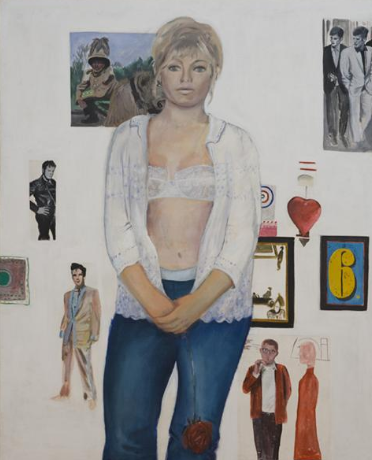
Pauline Boty, Celia with Some of her Heroes, 1963. Berardo Collection, Lisbon.
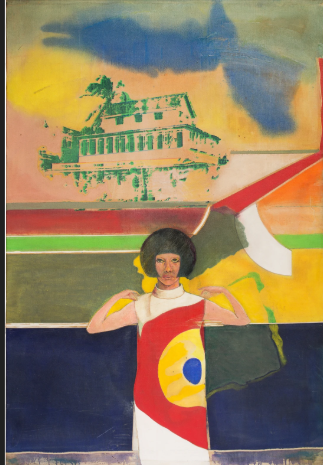
Frank Bowling, Cover Girl, 1966.
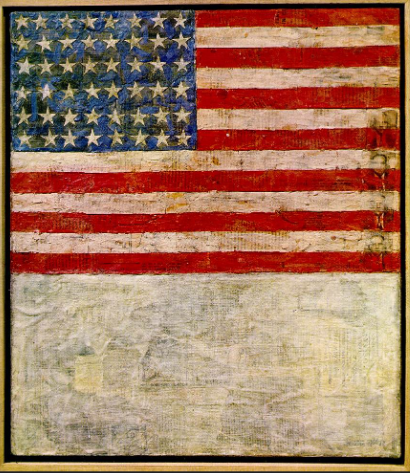
Jasper Johns, Flag Above White with Collage, 1955
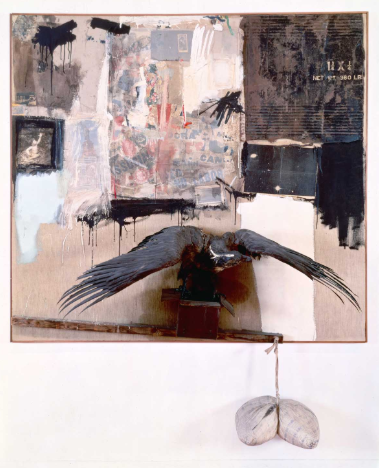
Robert Rauschenberg, Canyon, 1959. New York
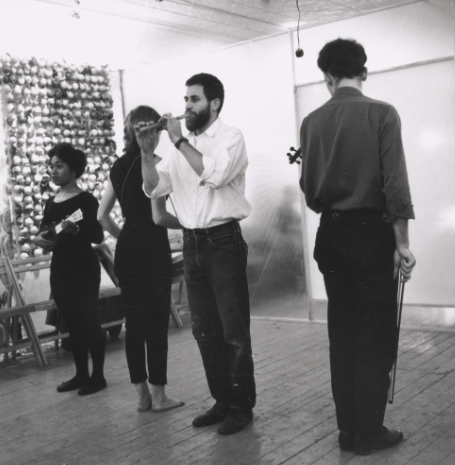
Allan Kaprow, 18 Happenings in 6 Parts, 1959.
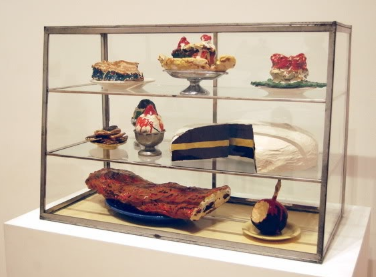
Claes Oldenburg, The Store, 1961
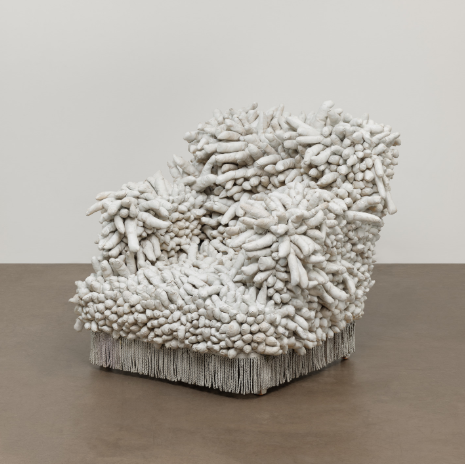
Yayoi Kusama, Accumulation No. 1, 1962
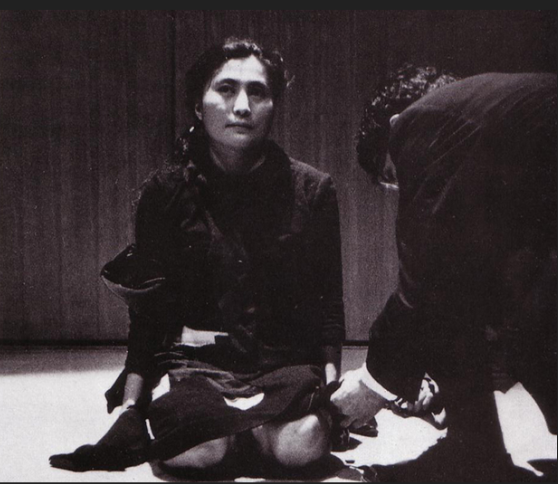
Yoko Ono, Cut Piece, performed 20 July 1964, Yamaichi Concert Hall, Kyoto.
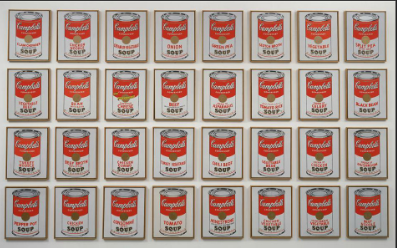
Warhol, 32 Campbell’s Soup Cans, 1962.
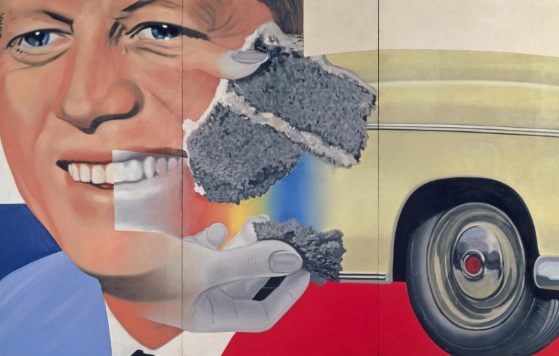
James Rosenquist, President Elect, 1960/61-1964.
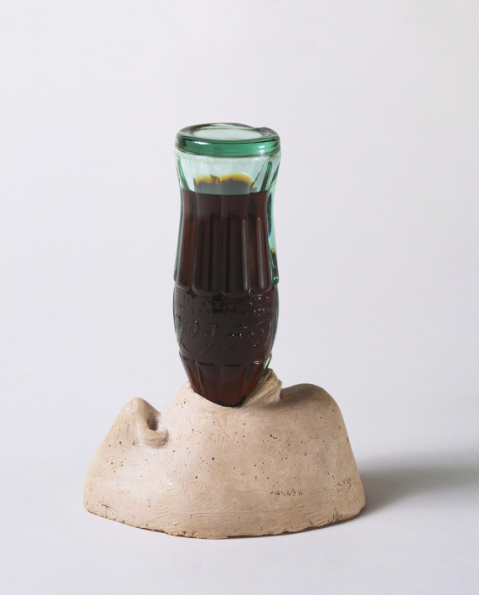
Marisol Escobar, Love, 1962

Robert Indiana, The Red Diamond: American Dream #3, 1962.
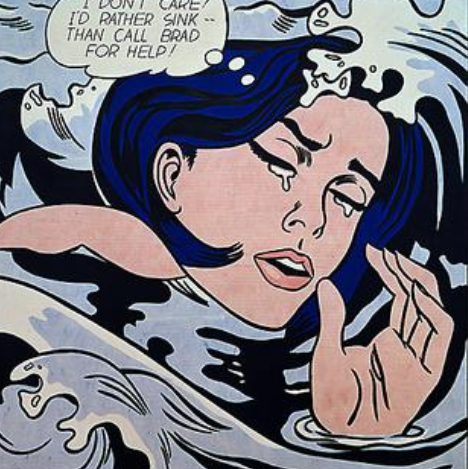
Roy Lichtenstein, Drowning Girl, 1963
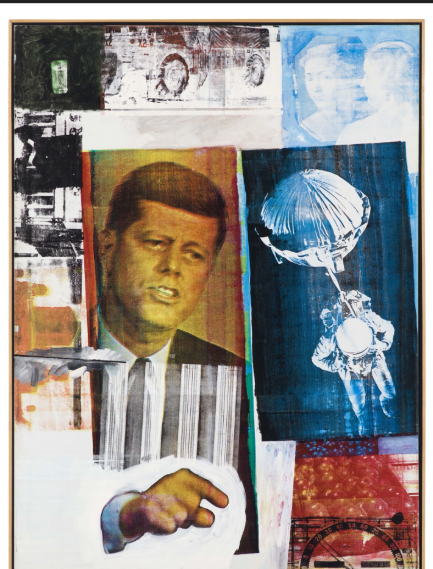
Robert Rauschenberg, Retroactive II, 1963.
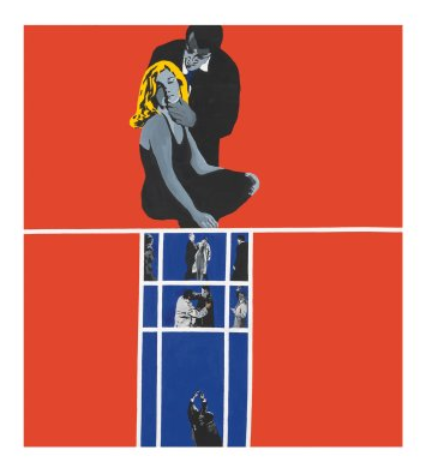
Rosalyn Drexler, Love and Violence, 1965
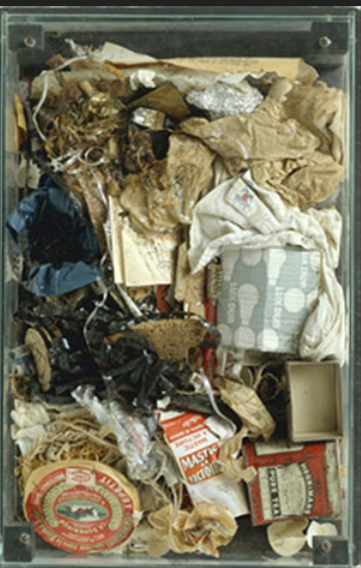
Arman, Petits déchets bourgeois, 1959
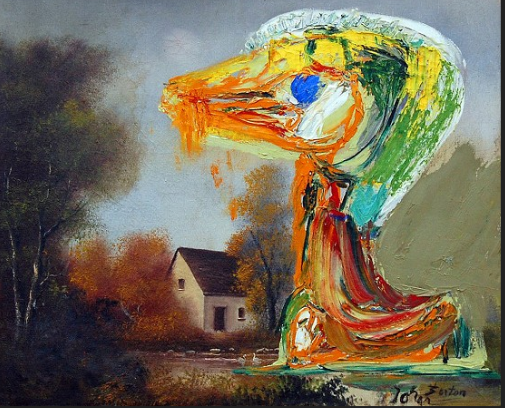
Asger Jorn, Le Canard inquiétant, 1959
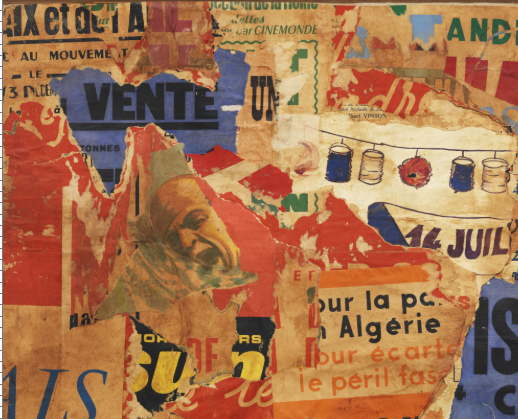
Jacques de la Villeglé, 14 juillet, décembre 1960
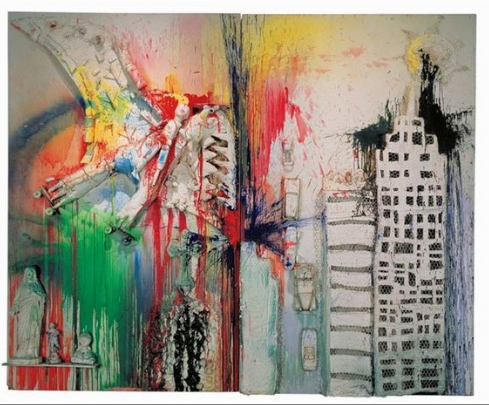
Niki de Saint Phalle, New York Alp, 1962
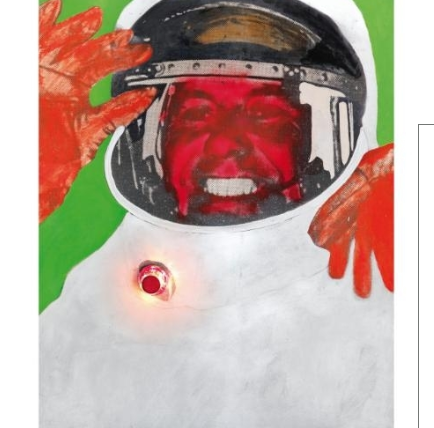
Martial Raysse, Espace zéro, 1963.
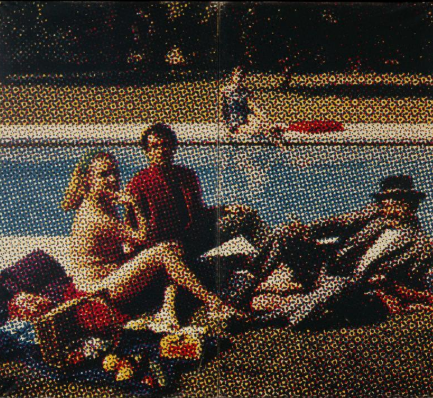
Alain Jacquet, Le Déjeuner sur l’herbe, 1964.
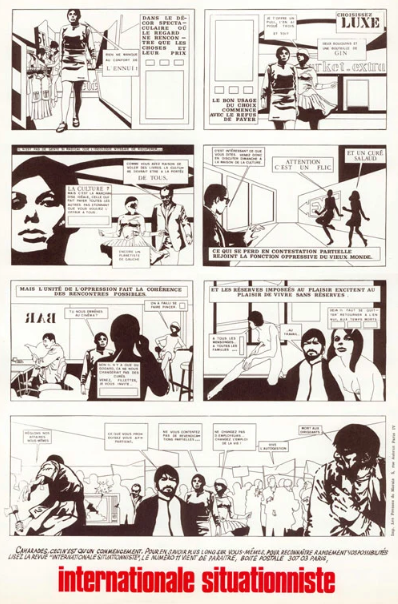
Gérard Joannès, Poster announcing the publication of Internationale situationniste
no. 11, 1967.
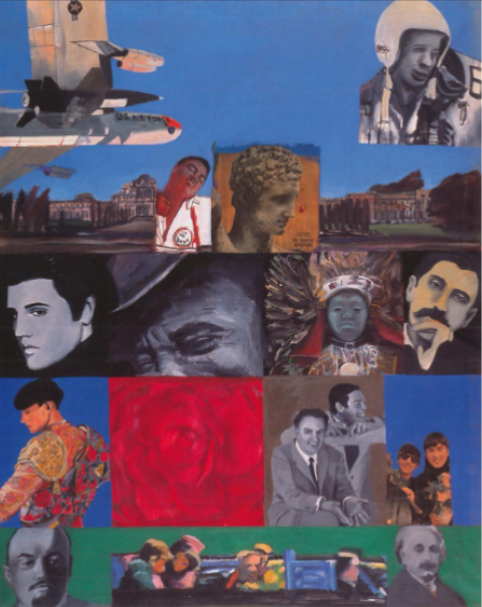
Pauline Boty, It’s a Man’s World, I, 1964
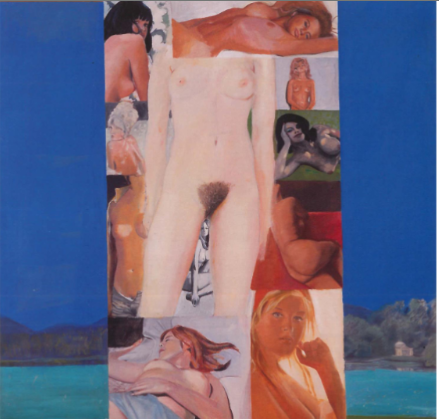
It’s a Man’s World, II, 1964-65
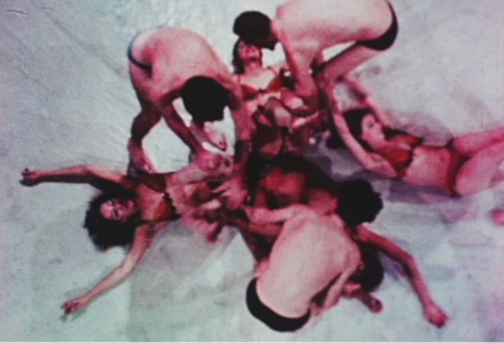
Carolee Schneemann, Meat Joy, 1964
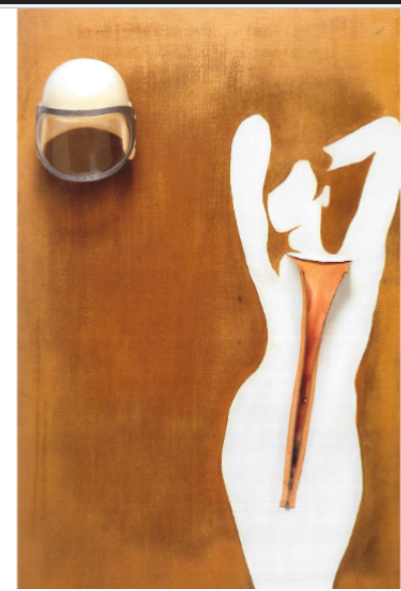
Evelyne Axell, Valentine, 1966. London, Tate Modern.
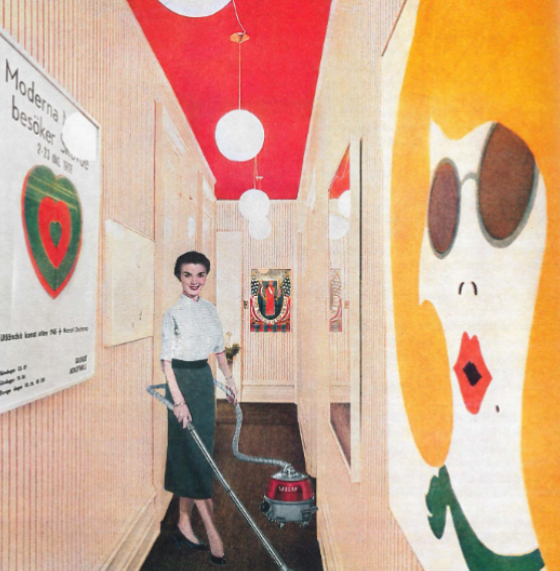
Martha Rosler, Woman With Vacuum, or Vacuuming Pop Art, c. 1966-72
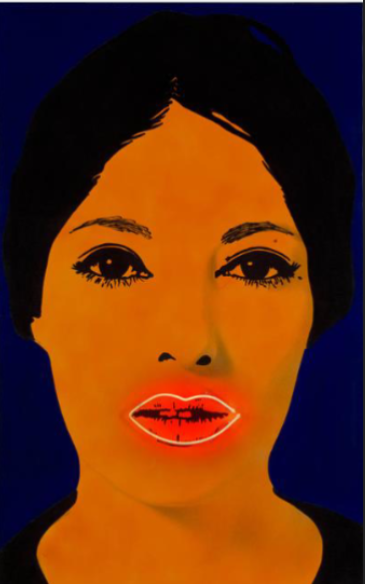
Elaine Sturtevant, Raysse High Voltage Painting, 1969
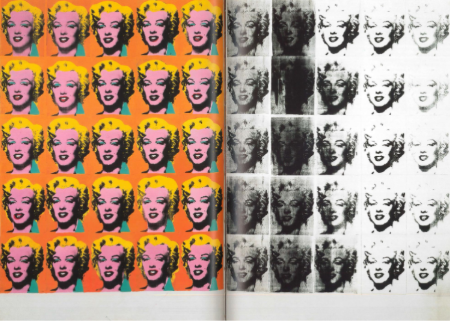
Warhol, Marilyn Diptych, 1962. Acrylic, silkscreen, pencil on canvas. 2 panels, each
205.5 x 145 cm.
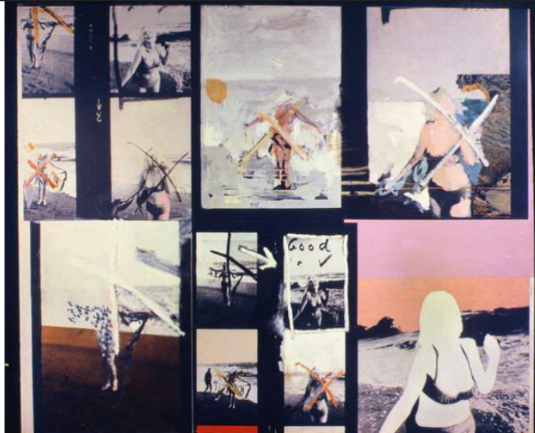
Richard Hamilton, My Marilyn, 1965.
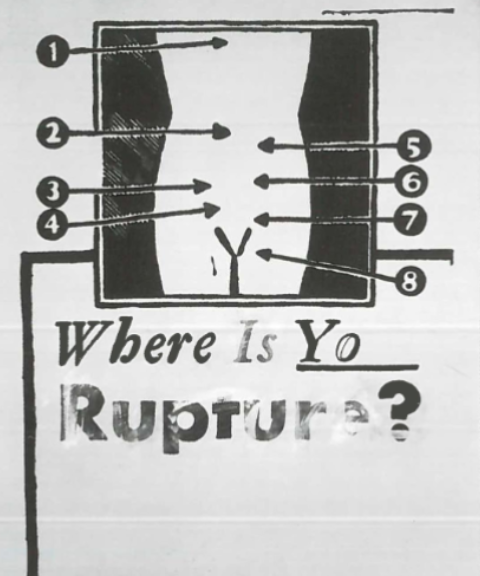
Andy Warhol, Where is Your Rupture?, 1961
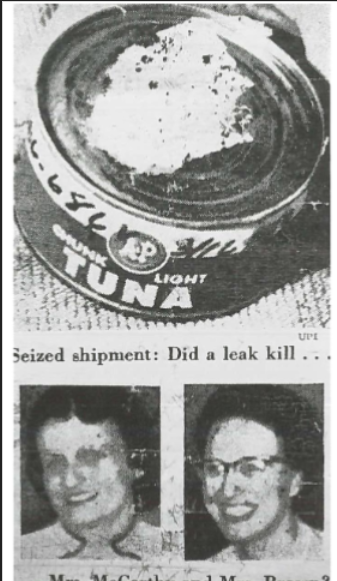
Warhol, Tunafish Disaster, 1963
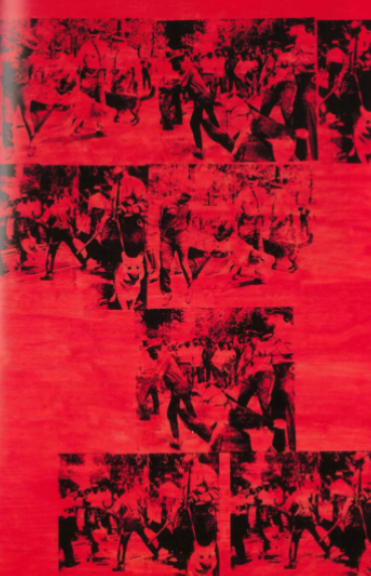
Warhol, Red Race Riot, 1963.
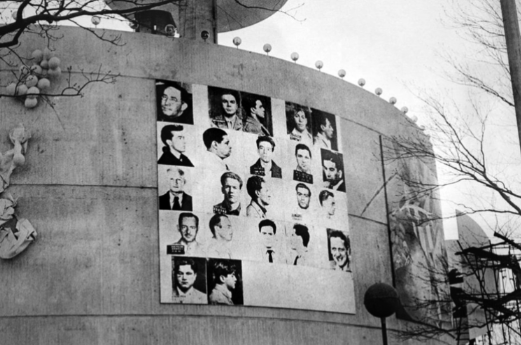
Warhol, 13 Most Wanted, 1964
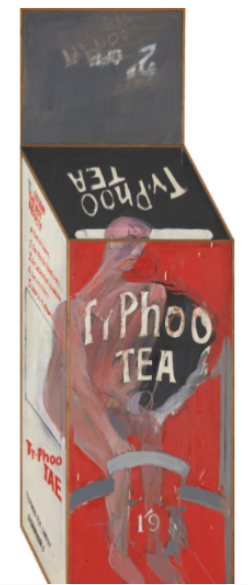
David Hockney, Tea Painting in an Illusionistic Style, 1961
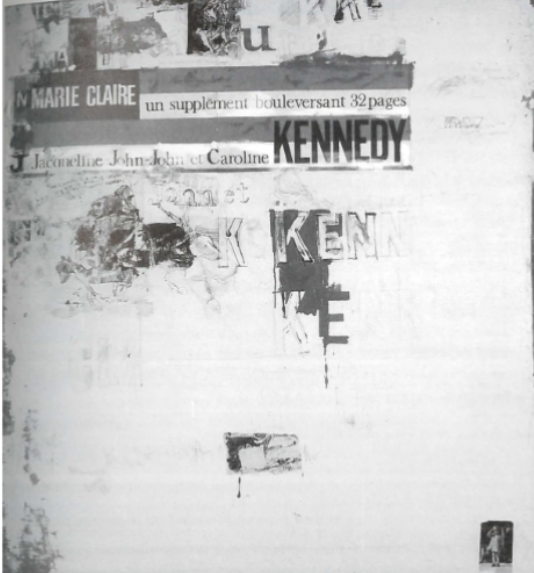
Alberto Greco, Untitled, c.1964.
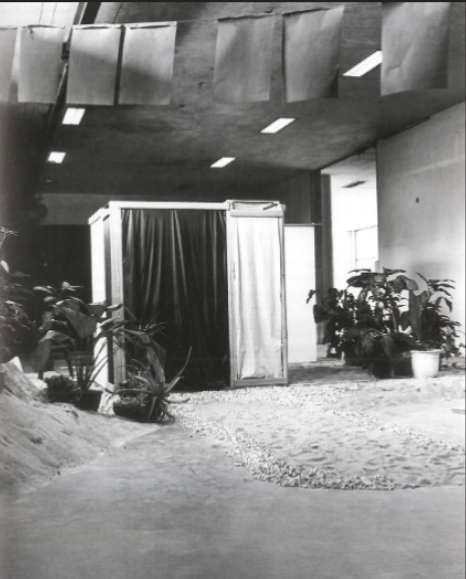
Hélio Oiticica, Tropicália, 1967, installation for ‘New Brazilian Objectivity’ at Museu de
Arte Moderna, Rio de Janeiro.
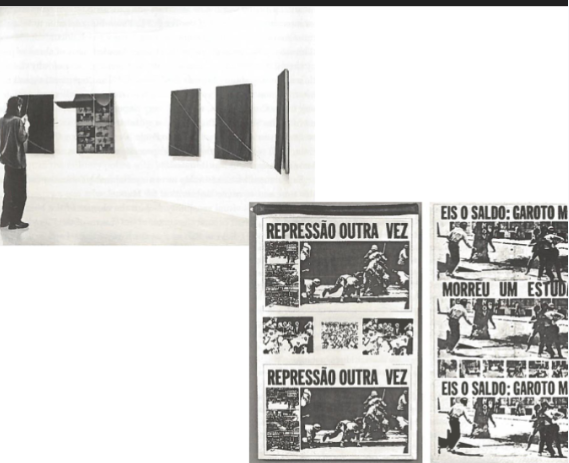
Antonio Manuel, Repression Once Again – Here is the Outcome, 1968.
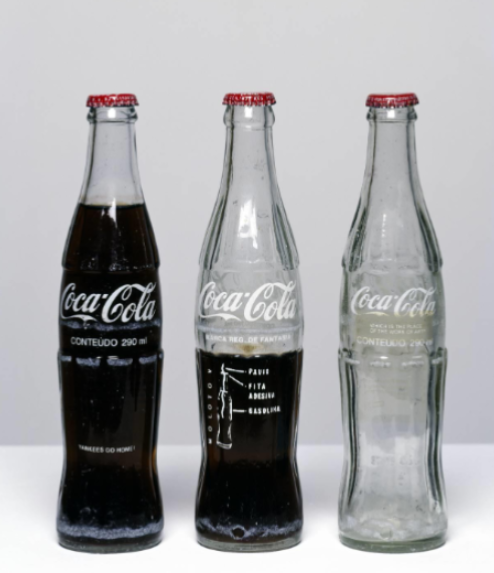
Cildo Meireles, Insertions into Ideological Circuits: Coca-Cola Project, 1970.
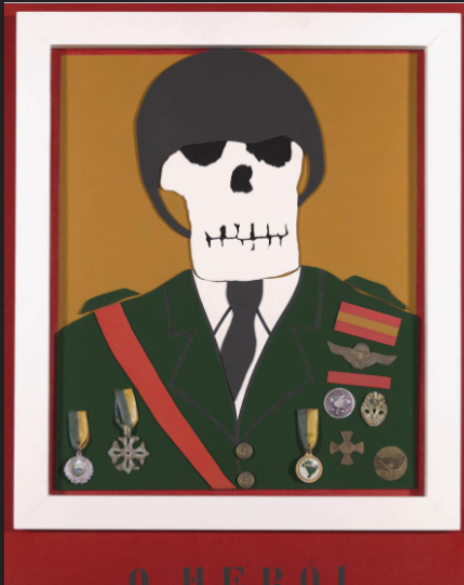
Anna Maria Maiolino, The Hero, 1966/2000
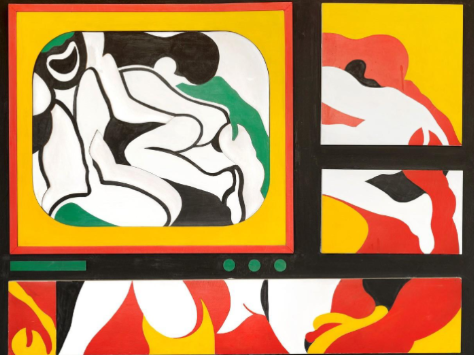
Teresinha Soares, Die Wearing the Legitimate Espadrille, 1968
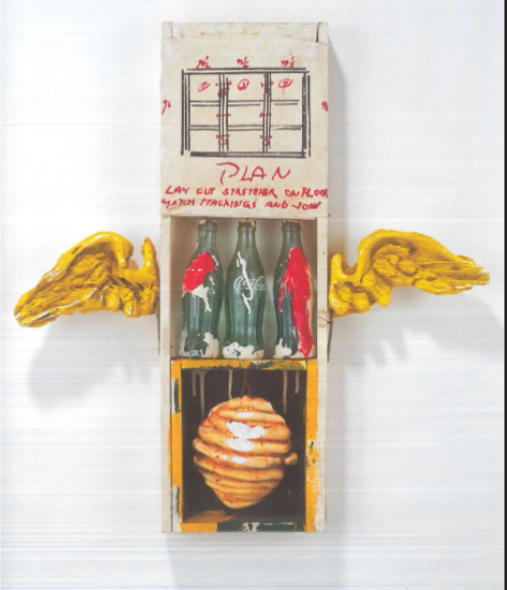
Shinohara Ushio, Coca-Cola Plan, 1964
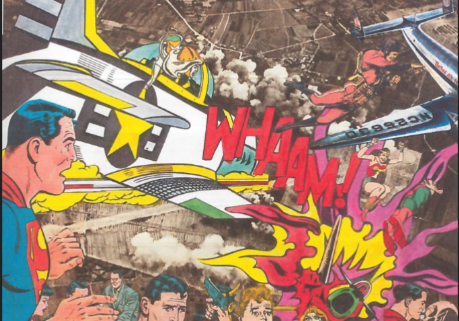
Tanaami Keiichi, Untitled (Collagebook 5_01), c. 1971.
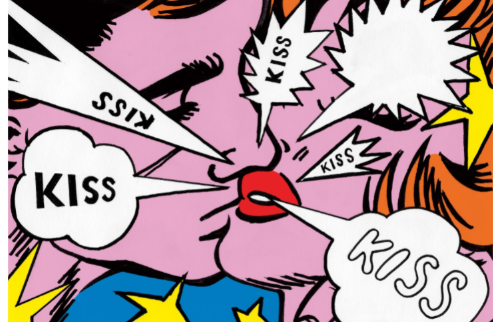
Tadanori Yokoo, Kiss Kiss Kiss, 1964 (film).
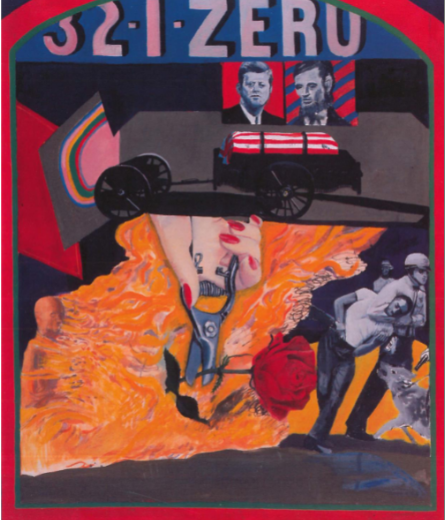
Pauline Boty, Count Down to Violence, 1964. Oil on canvas. 83 x 98 cm
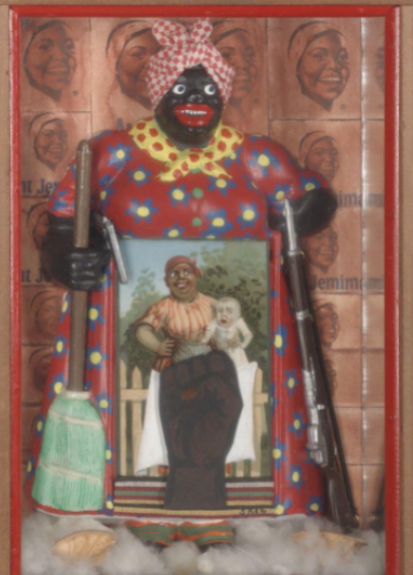
Betye Saar, The Liberation of Aunt Jemima, 1972
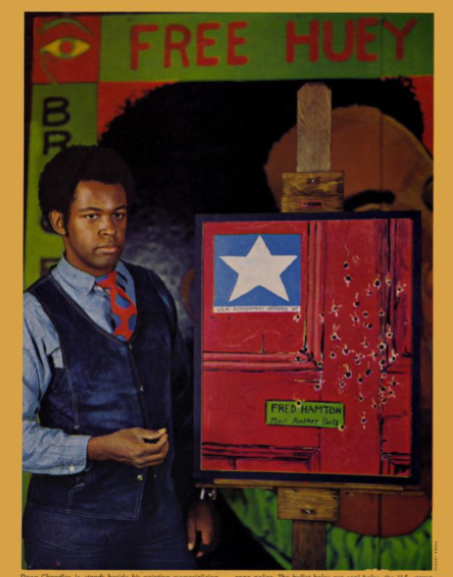
Dana C. Chandler, Jr. posing with Fred Hampton’s Door, 1970
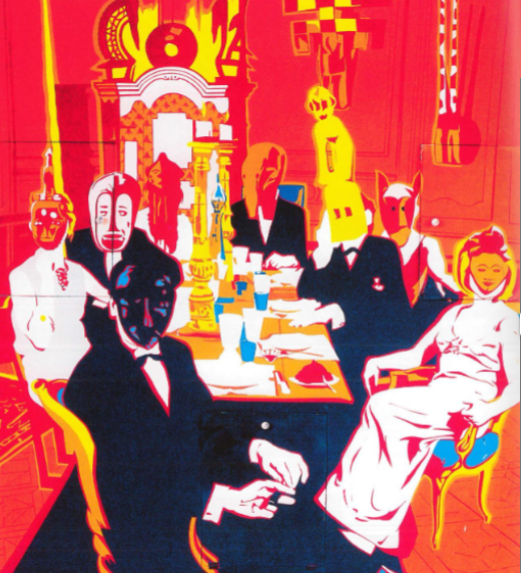
Bernard Rancillac, Dinner-Party of the Head-Hunters, 1966.
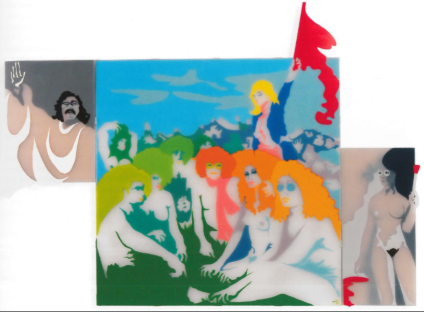
Evelyne Axell, The Pretty Month of May, 1970.
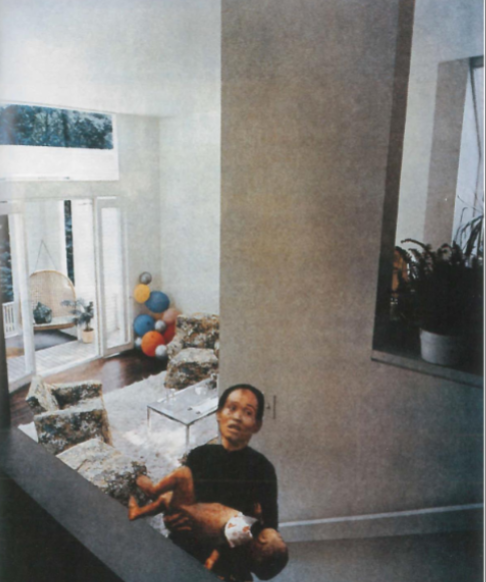
Martha Rosler, Balloons, from the series House Beautiful: Bringing the War Home,
c.1967-72. Photomontage. Chicago, Art Institute of Chicago
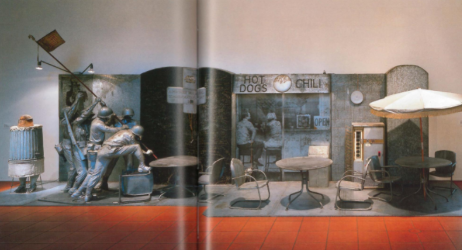
Edward Kienholz, The Portable War Memorial, 1968
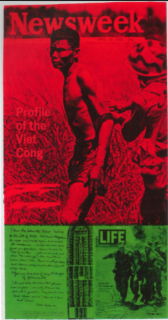
Corita Kent, news of the week, 1969, from the series Heroes and Sheroes.
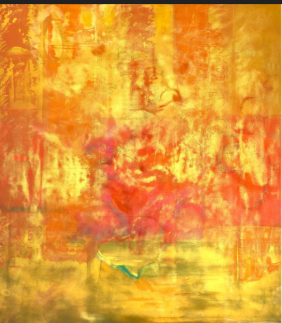
Frank Bowling, Middle Passage, 1970
Alison and Peter Smithson, ‘But Today we Collect Ads,’
This text published in Ark Magazine (mag for Royal College of Art) in 1956 decrees that ‘Advertising is making a bigger contribution to our visual climate than any of the traditionally fine arts.’ Mass production advertising is establishing our whole pattern of life- morals, principles, aims, aspirations and standards of living. Alison and Peter were part of the Independent Group, and the article emphasised a drive to open up the art world. Ads were simultaneously inventing and documenting- wider visual culture is now determining what architects and artists might want to do. The piece is a call to action to match the exciting impulses of advertising. Architects should look to the dream world created by ads and pull things out from it.
Richard Hamilton, ‘Letter to Peter and Alison Smithson’
Private letter in 1957 discussing shows such as This is Tomorrow, which he sees as too chaotic. He believes that another show should be highly disciplined and unified in concept. He states that Pop art is popular…transient…expendable, low cost, mass produced, young, witty etc. Hamilton himself becomes a very famous Pop artist, starting put at an engineering firm doing graphic work. The Smithsons were close colleagues, and they were trying to grapple with what Popular art should be.
Richard Hoggart, The Uses of Literacy: Changing Patterns in English Mass Culture
Hoggart sees rises in information for the masses, and how it lacks intellectual stimulation. He first discusses ‘mass produced’ literature, that pander to what the public wants. Leading onto weekly family magazines, he discusses how newer and glossier publications compete for people’s attention. Song writing has also changed, where it is centralised in London and, whilst for the working classes, is not produced by them anymore. Popular reading is now highly centralised - holding their readers at a level of passive acceptance - one of the greatest conserving forces in public life today. Decrees we are moving towards a ‘mass art’. Published as an academic essay, was a professor of visual culture.
‘Sensationalism has learned to wear a white collar’, ‘Puff pastry literature’, ‘The directionless and tamed helots of a machine-minding class’
Richard Hamilton, ‘Urbane Image’
Hamilton uses a lot of references to current advertising and popular culture, evoking similarities between Chrysler, space travel, and bras. It acts as a textual representation of one of his paintings- eg ‘Homage to a Chrysler corp’. Published in Living Arts Magazine, which had a short run of three issues, put out by the ICA
‘We live in an era in which the epic is realised. Dream is compounded with action. Poetry is lived by an heroic technology. Any one of a whole range of hard, handsome, mature heroes like Glenn, Titov, Kennedy and Cary Grant can match the deeds of Thesius and look as good, menswearwise’
Mr Universe takes his place by Miss World
Reyner Banham, ‘Who is this Pop?’
Article appears in 1963, in a large publication with ads, and in the text itself there are bright orange insertions of ads- how does this look compared to mainstream journals? He discusses the term ‘vidiots’ as a connoisseur of mass media, suggesting the only difference between a fine-art connoisseur and a pop art was taste. Decrees neither enjoy the Royal College of Art Pop. Analyses car styling: ‘But styling deals- as all Pop art deals- with dreams that money can JUST buy, while the summits are, by definition, dreams that money just CANT buy.’ Pop art, to Banham, comes to you- you don’t have to go to Rome, Bali etc because you can’t make those scenes as you make the coffee-bar or Palais scenes. Pop creates portable and transmissible images made by condensing the whole into a few select views.
Goodies- pop is about things to use and throw away - there is no Pop architecture because buildings are too damn permanent. Physical and symbolic consumability in Pop are equal. All consumers are experts. Vidiot is no term for abuse.
Allen Ginsberg, ‘Howl’
1954 Beat poem dedicated to Carl Soloman, sounds like a lamentation for the ‘best minds of his generation’ who were destroyed by madness. It is a continuous recounting of intense experiences. Depicts Western society as crushingly conformist, greedy and violent, and the ‘mad’ non-conformists as the only reasonable/sane ones. The people who carried the era’s most intense hunger for meaning were not merely self-destructive; they were crushed by a culture that could not tolerate their kinds of vision. In Part II, suffering is given manifestation in ‘Moloch’ - not only biblical ref but also a composite god of American power- it is architecture, war, finance and psychological invasion. The speaker is also complicit.
Substance abuse, sexuality, underbelly of NY at the time
Racial tensions- various points where racial terminology is used and certain streets are racialised- being edgy is partly about going to Harlem and getting your fix
John Cage, ‘Composition as Process Part II: Indeterminacy
Cage- precursor to Kaprow’s Happenings
The 1958 extract focuses on space in relation to performance, wanting to disrupt conventions. He is concerned with both the physical space, and the physical time of the performance. At first he hopes to separate performers to allow for their individual sounds, then advocates for unconventional architecture to integrate performer into audience and separate them from one another. He aims to give the conductor a ‘slight suggestion of time’, moving variably and not mechanically- interpenetrates into the other players in a way that will not obstruct their actions.
Claes Oldenburg, ‘I am for an Art...’
1961 piece written by early Pop artist Oldenburg, initially composed for the catalogue of ‘Environments, Situations and Spaces at the Martin Jackson Gallery. The text was revised when he opened The Store. He sees Bohemia as bourgeois, and that art is perhaps doomed to be bourgeois. He aimed to create just a thing, art would not enter into it- a charged object. A museum in B.concept equals a store in his.
He wants an art intertwined and synonymous with everyday life, evoking his later work on sculptural symbols of commercial products.
Allan Kaprow, ‘Untitled Guidelines for Happenings’
Guidelines published in 1965 suggesting art and life should be closely connected, and maybe indistinct. This is the foundation for the criteria for Happenings. For now, sources from all themes, actions etc except those of the arts and their milieu- by avoiding the arts there is a good chance a new language will develop that has its own standards.
He sets out guidelines for timings, spacing and movement in Happenings, suggesting as integrated into life as possible. Isolated points of contact may be maintained by phone or TV etc. They should be performed once only and audiences should be eliminated entirely.
The text reads like a manifesto.
Yoko Ono, ‘To the Wesleyan People’
Footnote to a 1966 lecture, where she discusses her music as a practice. She uses the word painting to describe her works, where she instructs a listener’s mind.
There is no visual object that does not exist in comparison to or simultaneously with other objects, but these characteristics can be eliminated if you wish. A sunset can go on for days. You can eat up all the clouds in the sky. You can assemble a painting with a person in the North Pole over a phone, like playing chess.
The world of construction seems to be most tangible, therefore final - this makes her nervous. After unblocking one's mind, by dispensing with visual, auditory, and kinetic perceptions, what will come out of us? Would there be anything? I wonder. And my Events are mostly spent in wonderment. Art is not merely a duplication of life. To assimilate art in life is different from art duplicating life.
What art can offer is an absence of complexity, a vacuum through which you are led to a state of complete relaxation of mind
Clement Greenberg, ‘Avant-Garde and Kitsch,’
Written for the Partisan Review in 1939, Greenberg aims to set out distinctions between ‘genuine’ culture and popular art. He was writing during rises in European fascism, where the avant-garde was suppressed- culture was appropriated by totalitarian powers into a spectacle for the masses. He sees the avant-garde as both a force for cultural critique and as something dependent on capitalism and wealthy patrons. The avant-garde is threatened by the rear-guard (kitsch) - defined as popular, commercial art and lit. Kitsch used the debased simulacra of genuine culture- it is vicarious experience and faked sensations. The urbanised proletariat was given an ersatz culture. Predicted it would become an international language, taking over indigenous folk cultures
Gilbert Sorrentino, ‘Kitch into “Art”: The New Realism,
Published in Kulchur in 1962, whilst Sorrentino himself was editor. Kulchur was largely avant-garde, with a more academic tone. He believes the New Realists to be technically proficient, but it was a bad art accelerated mostly by dealers and galleries seeking money. He sees New Realism as a trend, catering to cynical, sterile middle classes, and that it has no chance at excellence as it is not a legitimate art. New realism turns away from abstraction, but yet is not quite naturalistic- ‘social’ painting.
‘‘To be completely uncharitable, it is an art which sells you a comic strip or a hamburger for thousands of dollars and laughably succeeds’
Barbara Rose, ‘Dada, Then and Now,’
Published in Art International in 1963, and discusses the term ‘Neo Dada’. The Neo Dada artists are the inheritors of abstract expressionism for Rose, no longer fearing the tyranny of the masterpiece. If the masterpiece is no longer the enemy, then neither is the machine. The image has returned to painting, but in a form never imagined- via the TV, magazines, billboards. This generation is in love with the American Dream they see commercialised, exploited and fading before their very eyes. Although the new Dada artist does not protest his environment, he is acutely aware of it. Is this art serious? Yes, insofar as it is possible to be serious now - investing the trivial with importance- Giving us an iconography as serious, as profoundly disturbing as the infernal tortures of Bosch’s Millennium. Has the tone of someone trying to figure out what they think.
Max Kozloff, ‘American Painting during the Cold War,’
published in Artforum in 1973, Kozloff sets out to understand What can be said of American painting since 1945 in the context of American political ideology, national self images and even the history of the country. He seeks to understand how the US became such a centre for the arts, correlating it with the country’s burgeoning world hegemony. Remarkable that art searching to give form to emotional experience immediately after the most cataclysmic war in history should have been completely lacking in overt reference to the hopes or the absurdities of modern industrial power. Modern American art abandoned its support for left wing agitation and now self propagandised itself as champion of eternal humanist freedom. Pop symptomized, more than it contributed to, an age noted for visual diarrhoea. The masses at large had found an avant garde sensation with which they could appreciate on extraaesthetic grounds.
Kozloff was an American critic - this article revised version of the intro to exhibition 25 years of American painting.
Susan Sontag, ‘Against Interpretation’
Published in 1964, the essay suggests we stop asking what artworks say, and pay attention to what they do. If art is a poor representation of reality, then it must be trying to represent reality. There must, therefore, be some kind of idea or account of the world which is being presented by a work of art. The work must mean something; it must have some kind of content. Interpretation gives rise to a binary division between form and content. What is important now is to recover our senses. We must learn to see more, to hear more, to feel more. Our task is not to find the maximum amount of content in a work of art, much less to squeeze more content out of the work than is already there. Our task is to cut back content so that we can see the thing at all.
Our own experience-more, rather than less, real to us.
Susan Sontag, ‘Happenings: An Art of Radical Juxtaposition’ 1962
Suggests Happenings aren’t new, but a process in history- she maps out the lineage. She takes a very different view from Kaprow, she IS an audience member, whereas he thinks there isn’t one. Abusive involvement of the audience, appetite for violence in art is hardly a new phenomenon.
Peter Selz, Henry Geldzahler, Hilton Kramer, Dore Ashton, Leo Steinberg,
Stanley Kunitz, ‘A Symposium on Pop Art’ 1963
Symposium held at MOMA in 1963 discussing the ‘controversial’ art movement. The participants were selected for their differing points of views, and there was no expectation to define Pop, just to have lively discussion.
Geldzahler- decrees Pop inevitable ‘two dimensional landscape painting’. Unsure why ppl are so mistrusting of accepted art.
Kramer- He sees Pop as merely part of evidence of the present moment of civilisation. It is dependent on something outside art for its expressive meaning yet at the same time is dependent on myths of AH for aesthetic integrity
Peter Selz, ‘The Flaccid Art’
1963 essay in the Partisan Review that suggests Pop leaves us dissatisfied because of the lack of narrative interest of the works. He sees Pop as a passive acceptance of things as they are, as a ‘playing it cool’, non-committal idea. He sees irony in this art being presented as avant-garde, as it is cowardly - it is kitsch manufactured from above.
Interviews with G. R. Swenson, from ‘What is Pop Art?’, parts 1 and 2
Interviews published in Art News in 1963, with a series of famous Pop Artists, such as Warhol, Indiana, Lichenstien, Dine, Wesselmann, Rosenquist. Swenson constructs almost mythic personas for the artists, asking them if the movement is a fad, about the name, is it easy, what it is.
Alan R. Solomon, ‘The New Art,’
Published in Art International in 1963, he sees the ‘New Image’ as a monster- signifying man seeing himself as a contorted victim of the modern cataclysm torn by forces beyond his comprehension. Instead of rejecting the deplorable and grotesque products of the modern commercial industrial world, these new artists have turned with relish and excitement to them. The artist has a smoother time now, did not see the war and is therefore politically detached and committed to the individual experience. Not fully against, entering a new world where old art cannot function.
Robert C. Scull, ‘Re the F-111: A Collector’s Notes,’
Published in Met Bulletin in 1968, Scull justifies his acquisition of Rosenquist’s F-111. He creates a persona of the artist that makes him appear mysterious. He speaks to a more broad readership, almost justifying his acquisition of the work as a non-elite collector. It also reads as a justification of the work appearing in the Met despite criticism.
Sidney Tillim, ‘Rosenquist at the Met: Avant-Garde or Red Guard?
Published in Artforum in 1968, this essay is a critique on the Met’s choice to display Rosenquist’s F-111 painting. He sees modernism becoming a tyrant, pandering to its new governmental and industrial patrons. He criticises the work’s formalistic properties, as well as its conceptual problem. He wasn’t just a critic, but an artist as well, so may have been personally threatened by Pop’s rise.
Thomas B. Hess, ‘Pop and Public,’
Posted in Art News in 1963. He is pretty neutral and discusses how artists have remained mute about their aims, and no accurate phrases are shaken loose from their paintings.
John Canaday, ‘Pop Art Sells On and On – Why?’
Posted in the New York Times in 1964, discussing the rising popularity in Pop to a broader audience. He discusses the Venice Biennale and World Fair, and seeks to work out why there is such attention on it. He sees it as a replacement for AE as something for ‘easy come’ artists to imitate and for easy-go intellectuals to prattle about. He discusses galleries, and investment collectors. He speaks highly of Marisol because of her more personal and expressive ideas.
James Rosenquist, ‘The F-111: An Interview with James Rosenquist by G. R.
Swenson,’
Published in the Partisan Review in 1965, Swenson interviews and edits his conversation with the artist, where R reveals that the work centres on new-ness, industry and obsoletion. I see a closer tie with technology and art and a new curiosity about new methods of communication coming from all sides.
Roland Barthes, Mythologies
Series of essays published as a collection in 1957. Structuralist.
-The world of wrestling- spectacles of excess- it is a spectacle not a sport. The function of the wrestler is not to win - it is to go exactly through the motions which are expected of him. The spectator does not wish for the actual suffering of the contestant; he only enjoys the perfection of an iconography. A wrestler can irritate or disgust, he never disappoint.
-The Romans in Films - idea of Roman-ness, the mainspring of the Spectacle - the sign - operating in the open. He is unhappy with use of Roman Frings and sweat as signs, rather than them being more explicit or more subtle. Theatre that knows its artificial but tries to pass as natural- bourgeois - pretends its not ideology, pretends its nature
-The Jet Man- he jet-man is a jet pilot- nearer to the robot than to the hero. The jet-man, on the other hand, no longer seems to know either adventure or destiny, but only a condition- anthropological -s defined less by his courage than by his weight, his diet and his habits. How adverts have formed this mythology.
-The Blue Guide- Hachette World Guides, dubbed 'Guide Bleu' in French. The human life of a country disappears to the exclusive benefit of its monuments. Men only exist as types. To select only monuments suppresses at one stroke the reality of the land and that of its people, it accounts for nothing of the present, that is, nothing historical, and as a consequence, the monuments themselves become undecipherable, therefore senseless.
-The Great Family of Man- Big exhibition of photographs in Paris, aiming to show the universality of human actions. The final justification of all this Adamism is to give to the immobility of the world the alibi of a 'wisdom' and a 'lyricism' which only make the gestures of man look eternal the better to defuse them.
Guy Debord, selected writings (Writings from the Situationist International)
International Situationist Magazine. COME BACK TO
Guy Debord, Society of the Spectacle
Published in 1967, this manifesto-type text dictates that humans are alienated under capitalism. There is a separation between the representation of the concrete lives of individuals, and the actuality of those very same lives- the spectacle. They are exploited and yet think themselves free. Chapter two discusses how the consumption of goods has become the primary mode of social interaction and self-identity.
Jean Baudrillard, ‘Pop – An Art of Consumption?
Published in 1970, he sees the logic of consumption can be defined as a manipulation of signs. He is critical of art as a commodity and talks about Pop being easy to consume because it is so flat and obvious. This paper is part of sociological research, and is not aimed at a general public. He is like Debord in the sense that the spectacle is all consuming. It has a cynical edge as a past 68’ piece in Paris when the system didn’t change.
Betty Friedan, The Feminine Mystique, Chapter One: The Problem that has no Name.
In this chapter of her 1963 book, she discusses the plight of the American Housewife. She sees the housewife presented as ‘free’, yet investigates a rising dissatisfaction- a problem with no name. The chapter features anecdotes from several women. The issue cannot be understood in term of poverty, sickness, hunger, cold- these women have a hunger food cannot fill. They want something more than a home.
Gloria Steinem, ‘If no one ever calls you “gear,” here’s a guide for getting with
it: The Ins and Outs of Pop Culture,’
An 1965 article in LIFE magazine aimed at a broad, predominantly white, audience. It is a commissioned piece, that is playful and ironic in tone, teaching about Pop and Op art. She notes that all current music, dances and slang come from black culture, and tells people to borrow from it. She is aware of the limits of consumerism, but doesn’t really tackle them in much depth. Written in 1965- she can be playful about Pop, and write about Warhol and assume people know who he is. Pay attention to the surrounding adverts in the piece.
Florika, ‘Media Images 2: Body Odor and Social Order
This piece, published in the 1970 anthology Sisterhood is Powerful analyses the aerosol container, and how it shows the roles of policemen and middle-class housewives are interchangeable. She sees it as both a weapon and a product, creating new distinctions between rioters and consumers. Links Vietnam being fought with aerosol technology to the wars waged in the lawns of suburbia.
Carolee Schneemann, ‘From the Notebooks’
Written in 1963, Schneemann discusses her belief that the senses seek complex information to expand insight and empathetic-kinaesthetic vitality. The work is from her personal journals, that she then published. Schneemann was a performance artist, and discusses her painting-constructions.
New York Radical Women, ‘Principles’ and ‘No More Miss America!
Written in 1968, and Published together in Sisterhood is Powerful.
-Principles- this sets out the ideology of the New York Radical Women, in a manifesto-style way. They see the best interests of women as those of the poorest, most insulted, most despised, most abused woman on earth. Sees key to liberation in collective wisdom and collective strength
-No More Miss America- this advertises a rally at the Miss America Pageant in 1968, with women’s liberation groups, black women, high-school and college women, peace groups, social work groups and pro-abortion groups. They also called for a boycott on all products related to the pageant, such as makeup. In case of arrests they demand female officers, male reporters refused interviews.
Susan Sontag, ‘Notes on “Camp”
Published as part of her wider collection of essays in 1964, Sontag makes a list of 58 ideas of what ‘camp’ is or is not. The article has a sense of detachment, despite Sontag’s own identity. She locates Pop in relation to Camp, but sees it as more flat and dry. You need to be outside of something to analyse it, yet resonates with aspects of her own identity
John Adkins Richardson, ‘Dada, Camp, and the Mode called Pop,’
Published in the Journal of Aesthetics and Art Criticism in 1966, Richardson (a professor of History of Art in Southern Illinois) takes a logical and critical tone to camp and dada, noting a connection to homosexuality, yet not building on it at all. Taste of elite for the lowest reaches of society - Greenburgian.
He is generally anti-Pop- Warhol is doing mocking but not critical of consumer society, mocking the audience
‘“What is Pop Art?” A Revised Transcript of Gene Swenson’s 1963 Interview
with Andy Warhol
In 2016, a set of cassette tapes were uncovered in the archive of Gene Swenson. This was the raw material for interviews that were heavily edited and reconfigured for publication in ARTnews in 1964. The transcripts reveal that controversial and explicitly queer content had been removed. It is much more flippant, and Swenson is also far more unserious. Abridged interview compared to original tape- W makes conscious effort to speak about things he wants people to know about his work. Someone else cut that to perform what Warhol should be viewed as.
Gregory Battcock, ‘The Warhol Generation’
Published in 1970, the painter-turned-art-critic posits that Warhol’s work is political, and he wants us too see it as such. Warhol is a fraud- he is pretending NOT to be committed when he actually is. Battcock was openly gay and operated in Warhol’s circles- appearing in a few of his films. Wants radical change in art- art is obsolete now- we need an art that is performative and resistive to capitalism
Cildo Meireles, ‘Insertions into Ideological Circuits’
(1970-1975)
Discusses his work, where he often puts aspects of his art into systems of circulation- working not with metaphorical situations, but with the real situations themselves. As a Brazilian artist he was working against a fascist government. This essay discusses his Coca-Cola project, his Cedula project and how he uses circulation to project his ideas.
Roberto Jacoby, ‘Closed Information Circuits’
Published in 1967, Jacoby grapples with misinformation from the perspective of the regime and broadcasting. His works, that he explains in his essay, hope to make the public more critically aware of how the media system operates, focusing on the materials and technological equipment. He uses Tv-teletype, Film-TV
María Teresa Gramuglio and Nicolás Rosa, ‘Tucumán is Burning’, and ‘Buenos Aires Statement’
Both published in 1968, these Argentinian Artists had three enemies: De Tella Institute (the art world),the media, what's happening in Tucuman (Capitalism)
-Tucuman is burning- Manifestation of political content that struggles to destroy the worn out cultural systems and aesthetics of bourgeois society. Operation Tucuman - devised by government economists- disguise aggression against working class with fiction of economic development based on creation of hypothetical industries financed by US capital. Avant garde artists responding to operation silence by performing the work Tucuman Arde (Tucuman is Burning). This consists of creating an information circuit to point out surreptitious distortion of events. Their activities cumulated in a press conference, then presented in worker’s halls, and then taken to the confederation of work and Buenos Aires. Declined inclusion of their work in the official institutions.
Buenos Aires Statement- made at BA discussing the regimes violence against the working class and artists and intellectuals. How is the system able to appropriate and absorb even the most audacious and innovative artworks? How can artists stop being the servants of the bourgeoise. Art is whatever mobilizes and agitates.
Hélio Oiticica, ‘Tropicália: March 4, 1968,’
This is the artist’s statement of his installation named Tropicalia in San Paulo. His piece was presented at the Brazilian New Objectivity exhibition. Tropicalia is the very first conscious, objective attempt to impose an obviously Brazilian image upon the current context of the avant garde and national art manifestations in general. The myth of ‘tropicality’ is much more than parrots and banana trees: it is the consciousness of not being conditioned by established structures, hence highly revolutionary in its entirety.
‘For the creation of a true Brazilian culture, the American and European influence will have to be absorbed, Anthropophagically by the Black and Indian of our land, who are in reality the only significant ones’

