Renaissance
 Call Kai
 Learn
Learn Practice Test
 Spaced Repetition
 Match
Match Flashcards
 Knowt Play
1/18

There's no tags or description
Looks like no tags are added yet.
Name | Mastery | Learn | Test | Matching | Spaced | Call with Kai |
|---|
No analytics yet
Send a link to your students to track their progress
19 Terms
ITALIAN RENAISSANCE
Florence, Italy 145h-15th century
Wealthy patrons of art - the Medici Family
interest in CLASSICAL (greco-roman) art → revival
“Rebirth” of literature, science, and art
Artists enjoy high status
Humanistic belief - man is the center of the universe
Architecture is secular and less tall (less about getting close to the sky where Heaven and God is)
Appreciation of beauty - recalls the past of Classical Greek and Romes
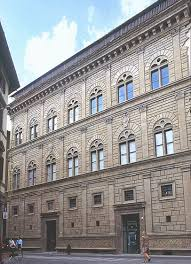
“Palazzo Rucellai” Florence, Italy; Alberti; 1450; Stone Masonry
Secular - the private home of Giovanni Rucellai
the patron = GIovanni; he was a wool merchant
Based on design of Palazzo Medici AND Colosseum → revival of classical design
4 stories
Greco-Roman = columns and barrel arches
First floor = Tuscan order columns (influenced by Doric columns)
Second and third floor = ionic and corinthian columns
Shows political loyalty to Medici family by basing it off of their Palazzo
Complete divorce from medieval - flat facade, horizontal lines
Benches - for public use
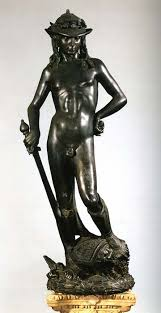
“David” Donatello; 1450; Bronze
Patron =- Medici Family
5 feet tall (freestanding)
Greek = nude, bronze, contrapposto stance
Revived the fresstanding nude (Greco-Roman)
Displayed PRIVATELY (in atrium), young, intimate
Displayed in private courtyard of Medici home
Shows the patron’s (the Medici family’s) social status
First time showing a biblical figure in nude (strange, not at first public)
Later placed in town hall for political propganda
David = up and coming city (Florence) who defeats a larger enemy (France = Goliath)
Shows David from David and Goliath - AFTER David slays Goliath - David has his foot on Goliath’s head to show dominance
People of Florence identified with David - defeated a larger enemy (France)
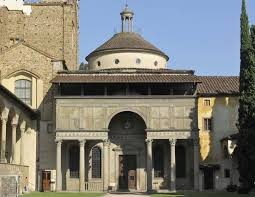
“Pazzi Chapel” Florence, Italy; 1460; Italian Renaissance; Brunelleschi
Brunelleschi - comes up with linear perspective
Patron - Pazzi family for monk’s cloister (meditation) and family funerals
Emphasizes their wealth AND piety
Modeled after the PANTHEON
Central plan
proscenium
Oculus
INTERIOR:
Grey pietra stone - emphasizes geometry
PENDENTIVE (like Hagia Sophia)
dome on a square of arches
Corinthian capitals
Roundels for artwork - used Baked clay reliefs (combines tradition -Greek Roundels- with innovation/modern materials - baked clay reliefs)
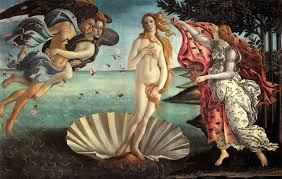
“Birth of Venus” 1485; Sandro Botticelli; Tempera on Canvas
Tempera = type of paint
Patron - Medici Family
Innovation = Canvas & PASTEL colors
Venus = Roman goddess of love (humanism - revival of classical/Greco-Roman ideals/culture)
Based on poem by HUMANIST writer Poliziano
Form is based on Greek sculpture of goddess (contrapposto stance)
Light skin color, looks like marble → Roman
Flat background - very Medieval (past), but shows innovation through canvas and pastel colors
TRIANGLE - stability and balance
Smooth contours, charoscuro
shading to look 3d (modeling)
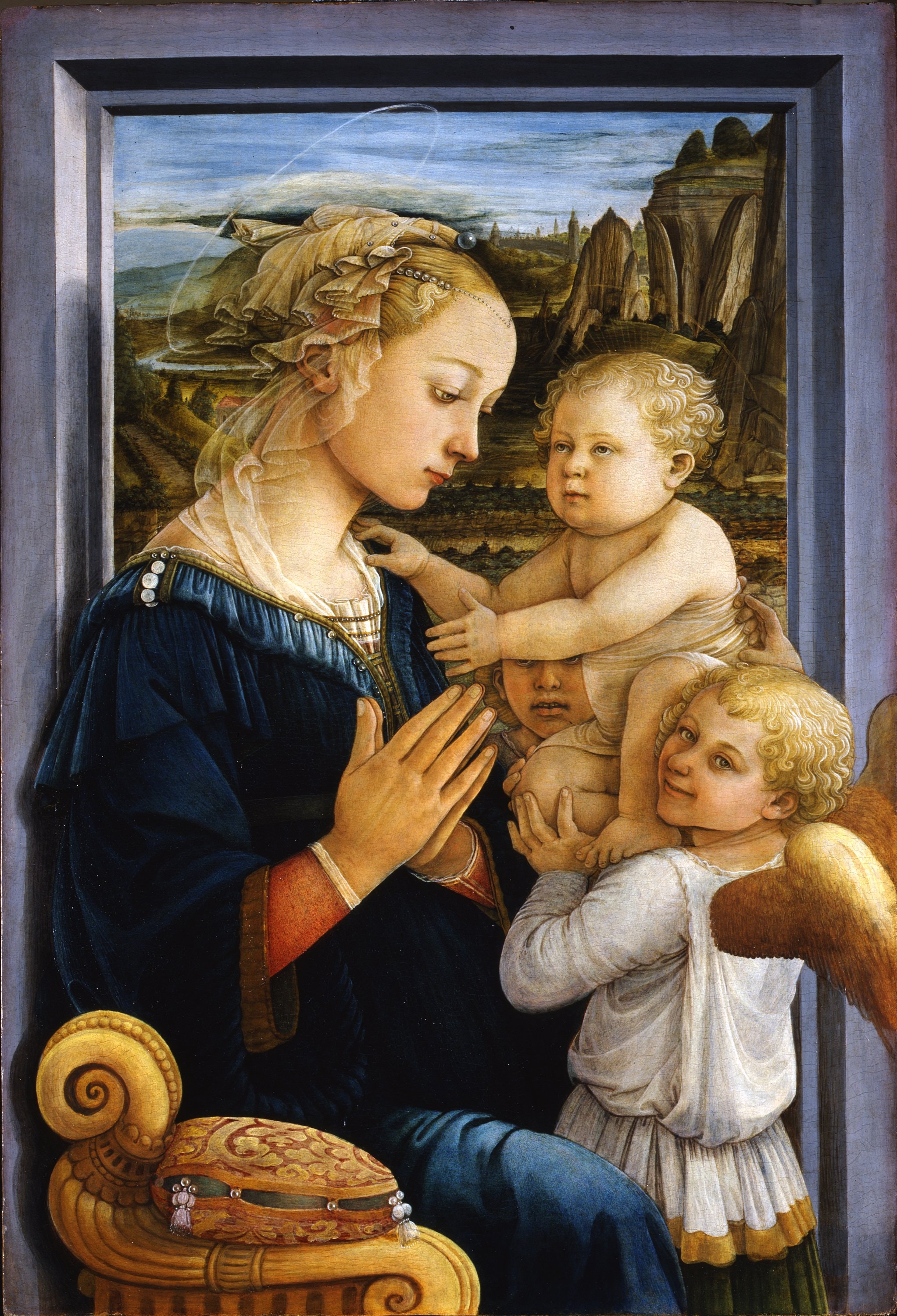
“Madonna and Child With Two Angels” Fra Filippo Lippi (artist); 1465; Tempera on Wood
Close up, theatrical scene, includes the viewer/seems like the viewer is apart of the scene/image - like Lamentation from Arena Scrovegni
Trompe Loeil - illusionistic painting
The painting is flat, but has a drawn in picture frame with figures, such as Mari and the angel, coming out
Background - showed a SPECIFIC PLACE - Arno Valley, Italy
It was a PLACE ON EARTH
Easily recognized by viewer (Florentine) and showed a specific time
Down on Earth to be more relatable to the viewer - Humanism
bg. not gold (showing timelessness and divinity) like Medieval times - reflects the humanistic focus on the human experience and the natural world
Mary - shown wearing a crown of pears and veil in hair
wearing modern Florentine clothing, appearing like a Florentine noble woman. This makes Mary, a religious figure, look more relatable, contemporary, approachable, and grounded in the human world, thus showing the humanistic focus on human experience.
Idealized naturalism - chiarscuro, empirical science
look contemporary - humanism
Rise in art status - bc they have the talent and creativity to create the work → they now control how and when they release work, but b4, the patron controlled this
HUMANIZATION OF TRADITIONAL RELIGIOUS ART
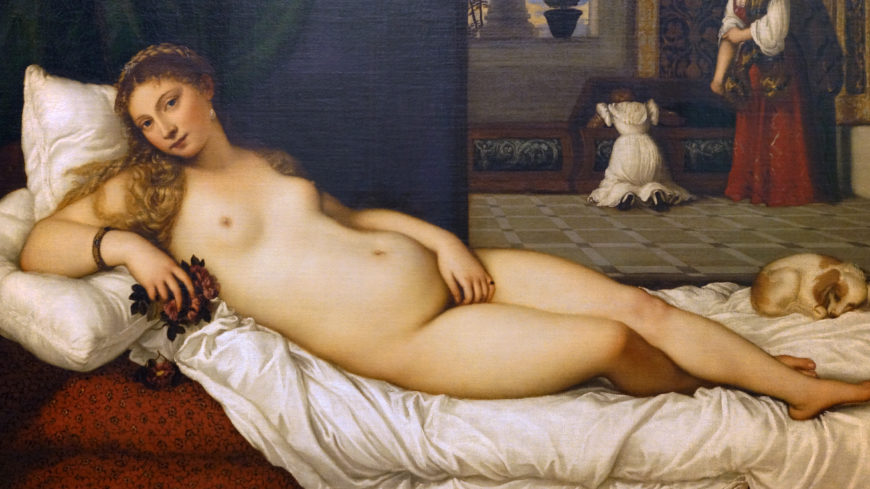
“Venus of Urbino” Titian (artist); Oil on Canvas; 1538
Patron - Duke of Urbino
Function - educate Duke of Urbino’s wife on three roles
1. be a beautiful, sensual wife and serve the husband
2. Be a doting housewife -seen by the child reaching into toy box in the back
3. Be loyal
Private viewing, likely covered in silk cloth
highly sensual → not fit to be public
Asymmetrical balance, ISOSCELES TRIANGLE (balance, stability)
balance through the PENDANT (object placed near the foot)
The pendant is a DOG, symbolizing loyalty and fidelity
Challenging gaze- Venus is looking at viewer
Belle Donne - “beautiful female” - token of love during courtship, idealized beautiful female
Venus REPRESENTS THE IDEAL WIFE, is NOT the wife
Based on Giorgione’s sleeping Venus, BUT Giorgione’s Venus…
is outside, less sensual
Closed eyes - no challenging gaze like Venus of Urbino
No pendant
Northern Renaissance
15th century, after Florence
Florence starts renaissance, but it spreads later
Belgium, Netherlands, and Luxembourg
Controlled by wealthy Dukes of Normandy (France)
Newly wealthy citizens commission art (PATRONS)
Private prayer and meditation
Farther from the Catholic Church and the Pope
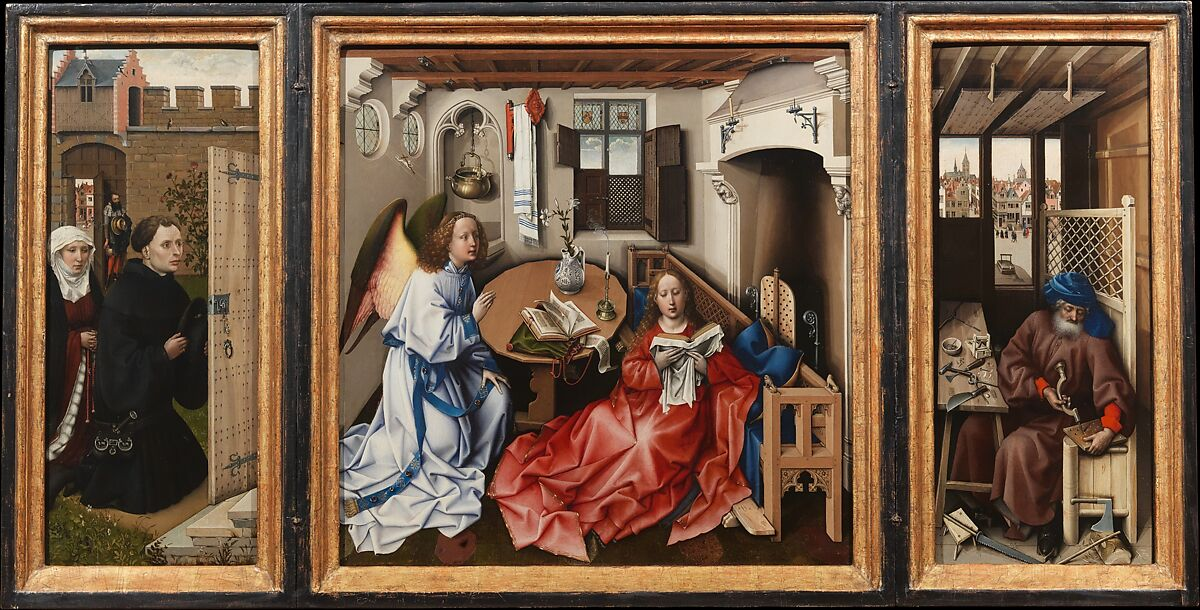
“Annunciation Triptych” (Merode Altarpiece); Workshop of Robert Campin; 1430; Oil on Wood; Northern Renaissance
Triptych - painting on 3 panels
Narrative - The Annunciation - Angel Gabriel is telling Mary she’s pregnant w/ Jesus
Setting - A CONTEMPORARY HOME
Humanism - relatable to the humans of the time
Mary is portrayed as a contemporary upper-class individual- This makes Mary, a religious figure, look more relatable, contemporary, approachable, and grounded in the human world, thus showing the humanistic focus on human experience.
Bench = Attempt at linear perspective (Brunelleschi)
Depth in overlapping
LEFT PANEL
Shows the Donor and His Wife
Using wealth to establish piety - including their image in an expensive painting of a biblical narrative
Placed in their home as a devotional image (BUT did not have healing powers)
RIGHT PANEL
Joseph in his workshop - Jesus was also a carpenter
Building a rat trap - rat trap symbolizes the Devil
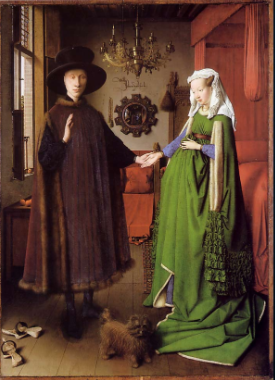
“Arnolfini Portrait” Jan Van Eyck; 1434; Oil on Wood
Content/Context: COULD BE…
1. marriage of Giovanni Arnolfini AND Giovanna Cenami
2. a memorial to dead wife
3. Could be a business merger between the two powerful merchant families
HYPPEREALISM - EXAGGERATED realism
emphasize artist talent and skill - more commissions from patrons - more money
Convex Mirror = a mirror that curves OUTWARD - would distort proportions - Eyck keeps the detail and realism even in the mirror - showcase his (the artist) talent
has roundels that show Christ’s Crucifixion
New oil-glazing technique - layers of color
3 quarter face view - super interactive
Just like Niobedes Krater
SYMBOLS
Dog = loyalty and fidelity
Clothing = shows wealth and social status
Fat Stomach = 1. could show her pregnancy AND/OR 2. Show wealth and status by showing she has enough status to access that amount of food
Single Burning Candle = represents the ever present eye of God
Oranges= wealth and status - Oranges were not native to the area, thus oranges were only accessible to the wealthy who could import it
Removed shoes - show respect by honoring a sacred area
St. Margaret Chair - patron’s Saint of child birth
Red Bed - death during child birth - the red color could indicate that the wife may have died during child birth due to bleeding out, thus this portrait could be a memorial to the dead wife
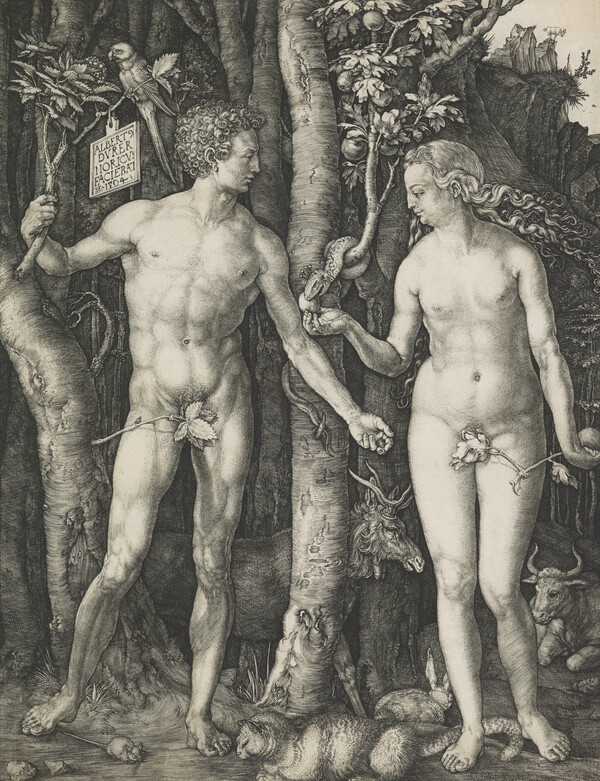
“Adam and Eve” 1505; Albrecht Durer; Engraving
Apprenticed with local painter —
artists are valued/more high status → open workshops with apprentices who help
Engraving - printmaking for MASS PRODUCTION
things are portable, for working-class merchants, cheaper
Contrapposto stance
position references Apollo and Venus
Book - Manual of Measurement (like Polykleitos’ Canon)
Idealized naturalism
4 animals = the 4 temperaments (dominant, outgoing, patient , sad)
A parrot = in Germany, the parrot was believed to make the sound “eva ave”, which translates to hail mary
Broken tree branch in Adam’s hand represents the tree of LIFE, while the fig in Eve’s hand is the TREE OF KNOWLEDGE
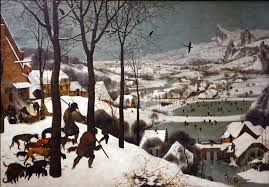
“Hunters in the Snow” Bruegel the Elder; Oil on wood; 1565; Netherlands
Commisioned by WEALTHY banker - Jongelink
Idyllic yet challenging nature = unsuccessful hunt, yet ice skating
Genre scene = scenes of everyday life
No Jesus, no patron, no King or Queen, just regular people
Atmospheric perspective - as things get farther away, they get SMALLER AND BLURRIER
Extreme depth
Blue lapis lazuli paint
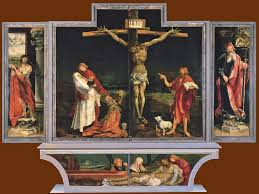
“Isenheim Altarpiece” 1515; Oil on Wood; Matthias Grunewald; German
Painted for MONASTERY of St. Anthony - church run hospital
St. Anthony = patron saint of skin diseases (shown in right panel)
the hospital treats skin diseases → Jesus is shown with skin diseases
Muted green colors contrasted with bright red - St. Luke describes a DARK sky during crucifixion
red contrasting with muted colors = like Night Attack
Catholic doctrine symbols - lamb spurting blood into chalice - represents the Eucharist
LOOK IN BINDER FOR LABELING
Mysticism (emotional connection to religion) - like Rottgen Pietta
Jesus is seen physically suffering → relates to the audience of the ill hospital patients → humanism thru this relation
Historically accurate depictions of the plague
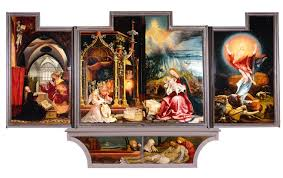
ISENHEIM ALTARPIECE OPENED:
Colors are BRIGHTER
more light
3 celebratory stories
Annunciation
the birth of Christ and celebration of Mary and Child
Ascension of Jesus
Gives HOPE because even though Jesus suffered, he resurrected and ascends to heaven → If the patients are devoted, their current suffering will not compare to the joy that comes when they enter heaven
HIGH RENAISSANCE
16th century Italy
Explosion of creative genius
Shift in patronage- the CATHOLIC CHURCH
just as it was before merchants
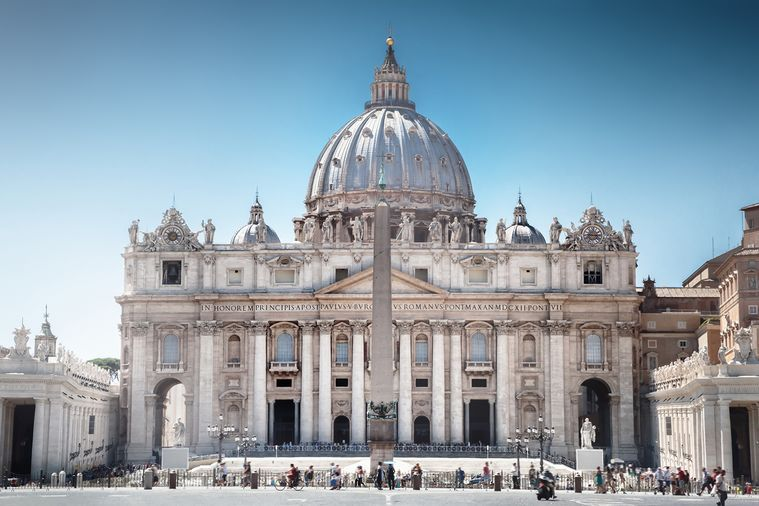
16th century - wanted to renovate St. Peter’s Basilica
Sells INDULGENCES to fund - pieces of paper marketed as a way to forgive sins and save unabptized dead family members
Michelangelo, Da Vinci, Rafael
Italian Ren Problem - spiritual figure looked TOO human, NOT divine
High Ren SOLUTION - realistic AND divine
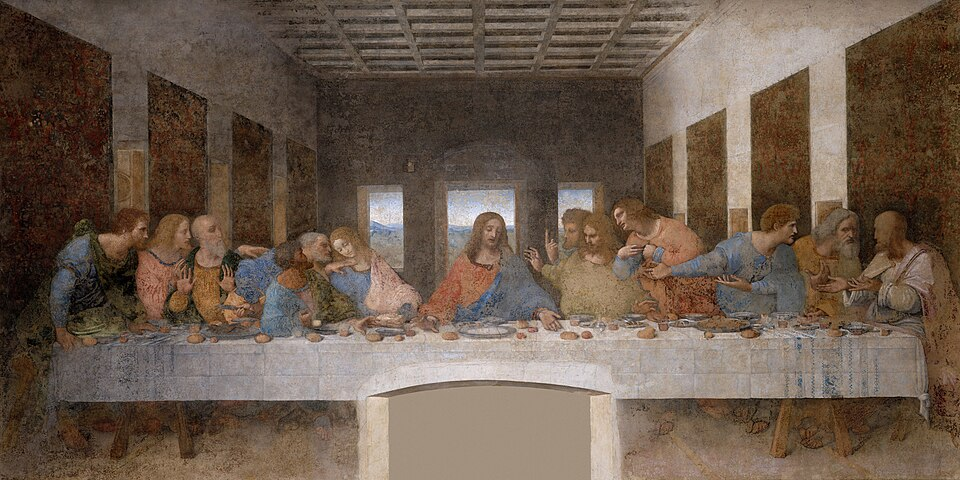
“The Last Supper” Leonardo da Vinci; 1495; Oil and Tempera
15×29 ft. - Italian’s convent’s dining hall wall → the monk also eating here js as the people are in the painting
Tempera on stone experiment - the painting didn’t last/was not permanent
Jesus seen blessing bread and wine, establishing the eucharist
Individualized emotions - like Lamentation
Judas is modelled after a real criminal - empirical science
Sfumato - smoky lines - mimic how eye sees naturally
SHOWS DIVINITY OF JESUS
Jesus seen as the calm amongst the chaos (like Palette of King Narmer and Alexander Mosaic)
Implied halo - empty space around him
Center of one point perspective - center of the universe
4 in front of window - has nature - Heaven
Equilateral triangle
SYMBOLISM
Judas = holding the bag of money that the soldiers paid him so he can identify Jesus for arrest, reachign for same plate as Jesus → will betray him
John = reflection of Jesus, will carry on teachings after death (theory = believed to have been Mary Magdalene/Jesus’ wife)
Peter = slicing hand with knife, will sever ear of Roman soldier
Nature in window - paradise/heaven, accessed only through Jesus
“Sistine Chapel Ceiling” Michelangelo; Vatican City, Italy; 16th century; Fresco
Pope Julius II’s private chapel
originally wanted geometric dots, but Michelangelo was a sculptor
Greco-Roman influence: Pediment, corinthian columns, proscenium
More ornate than usual for Renaissance - It was in Vatican City, the center of the Catholic Church and home to the Pope, and it was for the Pope
like Temple of Minerva (Etruscan) - statues on the ceiling
Michelangelo’s sculpture background - 300+ figures
Divine power to create men
Michelangelo though he had this divine power because he could make the perfect man out of marble
Contrast - Good vs. Evil; Light vs. Dark
Creation → Redemption of Man
Trompe Loeil - illusionistic painting, not carvings/sculptures, but paintings - painted the painting frames
Entrance to chapel, you see the Drunkeness of Noah, representing the sin of mankind
Shows history in reverse - man is a sinner → will be redeemed
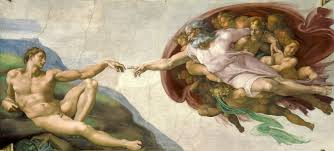
“CREATION OF ADAM”
Chiaroscuro (empirical science)
Conflict - youth (Adam; innovation) vs. Age (God; wisdom)
Billowing fabric behind God looks like a brain, representing God’s wisdom
Complementary shapes of God and Adam, convex and looked like puzzle pieces, sacred geometry, heaven
LAST JUDGEMENT ON THE BACK WALL OF SISTINE CHAPEL
you have a choice, follow Christianity and go to heaven, or do not and go to hell
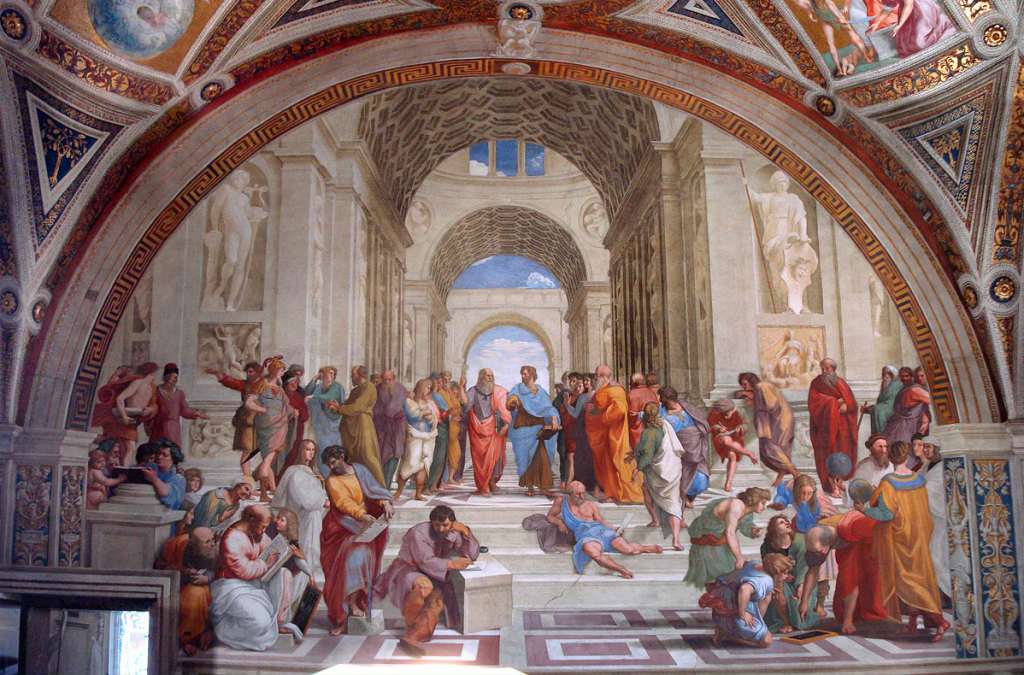
“School of Athens” Raphael; 1510; Fresco; Vatican City
Pope Julius II - demonstrate knowledge and impress with intellect - like Alexander Mosaic
Located in a secular place - Papal Apartments - Stanza della Segnatura (where the pop signed documents)
Look ODD - shows greatest mathematicians, scientists, and philosophers - non-biblical figures (Aristotle, Plato, Pythagoras) - reaches out to the Humanistic population
Setting - Roman baths
four frescoes on four walls - each fresco shows one of the four branches of human knowledge
1: Theology
2. Law
3. Poetry
4. Philosophy (this)
All participants on the bottom of the painting, emptier upper space - Humanist belief bc humans are also grounded on Earth, not up to the heavens
One point perspective (center = Plato and Aristotle)
Chiaroscuro
Combines Christianity and History
Look in notebook for labeling
MANNERISM
did NOT like Renaissance because it was too perfect, not creative and imperfect like humans
The artwork is more awkward, like a person with imperfections made it
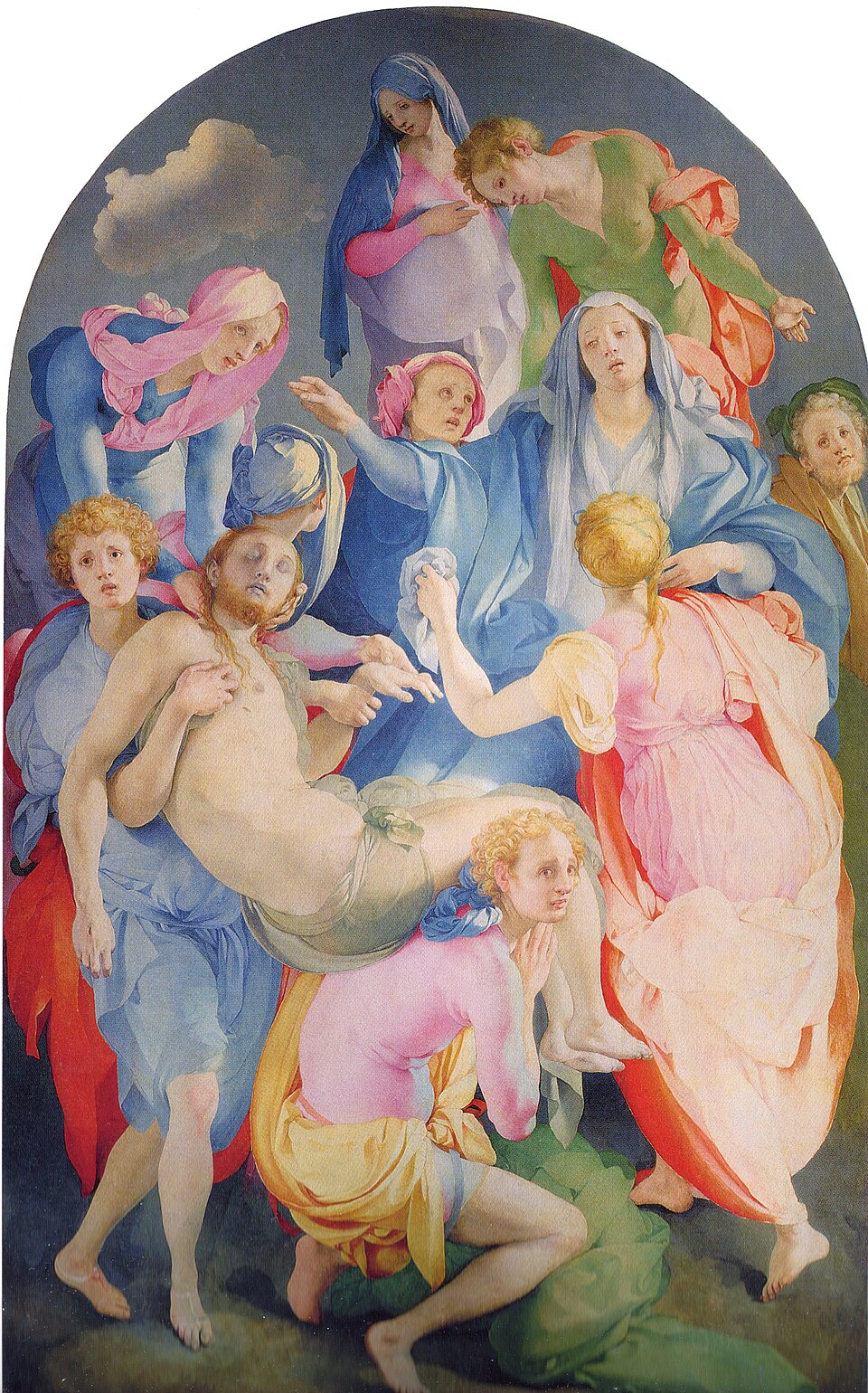
“Entombment of Christ” MANNERISM; 1528; Jacob Pontormo; Tempera on Panel
Mannerism = Rejection of Renaissance ideals - wanted to see artist’s hand in the imperfections
Psychological tension - lack of focal point, chaotic composition
Entombment OR Deposition? Lack of clues and symbols like Renaissance works would have
FLAT background, artificial colors
Soft colors = pastel = Botticelli
Awkward body positions