ESS Unit 3: Biodiversity and Conservation
 Call Kai
 Learn
Learn Practice Test
 Spaced Repetition
 Match
Match Flashcards
 Knowt Play
1/46

There's no tags or description
Looks like no tags are added yet.
Name | Mastery | Learn | Test | Matching | Spaced | Call with Kai |
|---|
No analytics yet
Send a link to your students to track their progress
47 Terms
Habitat diversity
The range of different habitats or numbers of ecological niches per unit area in an ecosystem, community or biome.
Species diversity
The variety of species per unit area and includes both the number of species present (richness) and their relative abundance (eveness)
Genetic diversity
The variety of genetic traits and characteristics within a population or species
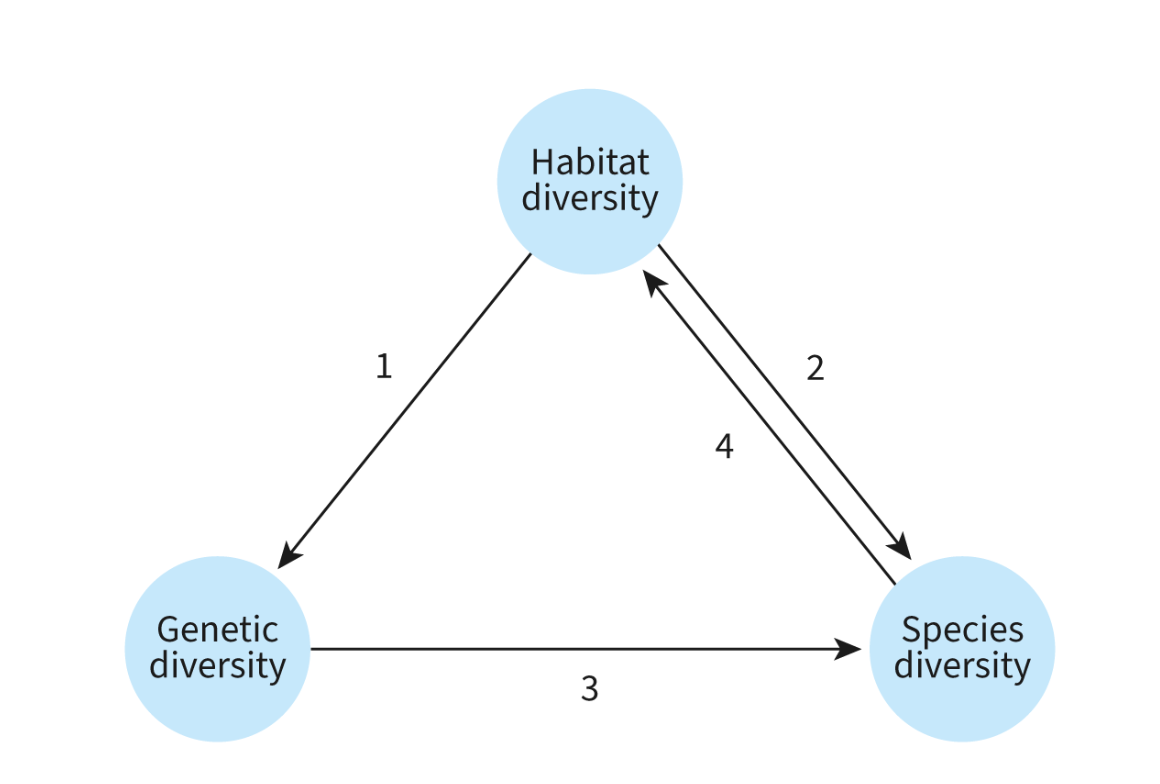
Links between habitat, genetic, and species diversity
Habitat diversity lead to genetic diversity as various habitat offer different environmental condition promoting genetic adaptation
Habitat diversity lead to species diversity as the presence of diverse habitat can support variety of species
Genetic diversity can lead to species diversity, as it allows for the emergence of unique traits and adaptations that can lead to formation of new species
Species diversity lead to habitat diversity through species interaction with their environment
Heritable traits
A characteristic that can be passed down from parents to offspring
Natural selection
A process through which organisms with characteristics that enable them to survive in their environment are more likely to reproduce and pass on beneficial genes to their offspring
Key Elements of natural selection
Genetic variation as there are individuals within species that have slightly different characteristics
Survival of the fittest: Certain variations give species advantage when competing for resources within the population
Reproduction as surviving individuals have greater chance of living longer to reproduce
Inheritance: Surviving individuals pass on beneficial genetic variation to the next generation. After offspring inherit the traits the beneficial traits will increase in frequency over a number of generations.
Speciation
New species form when a population becomes geographically isolated and evolves differently from other populations. They can no longer breed with the original species.
Richness
The number of distint species present in the ecosystem.
Higher richness indicates a more biodiverse community
Evenness
How evenly the individual within each species are distributed. It considers whether one species dominates the ecosystem.
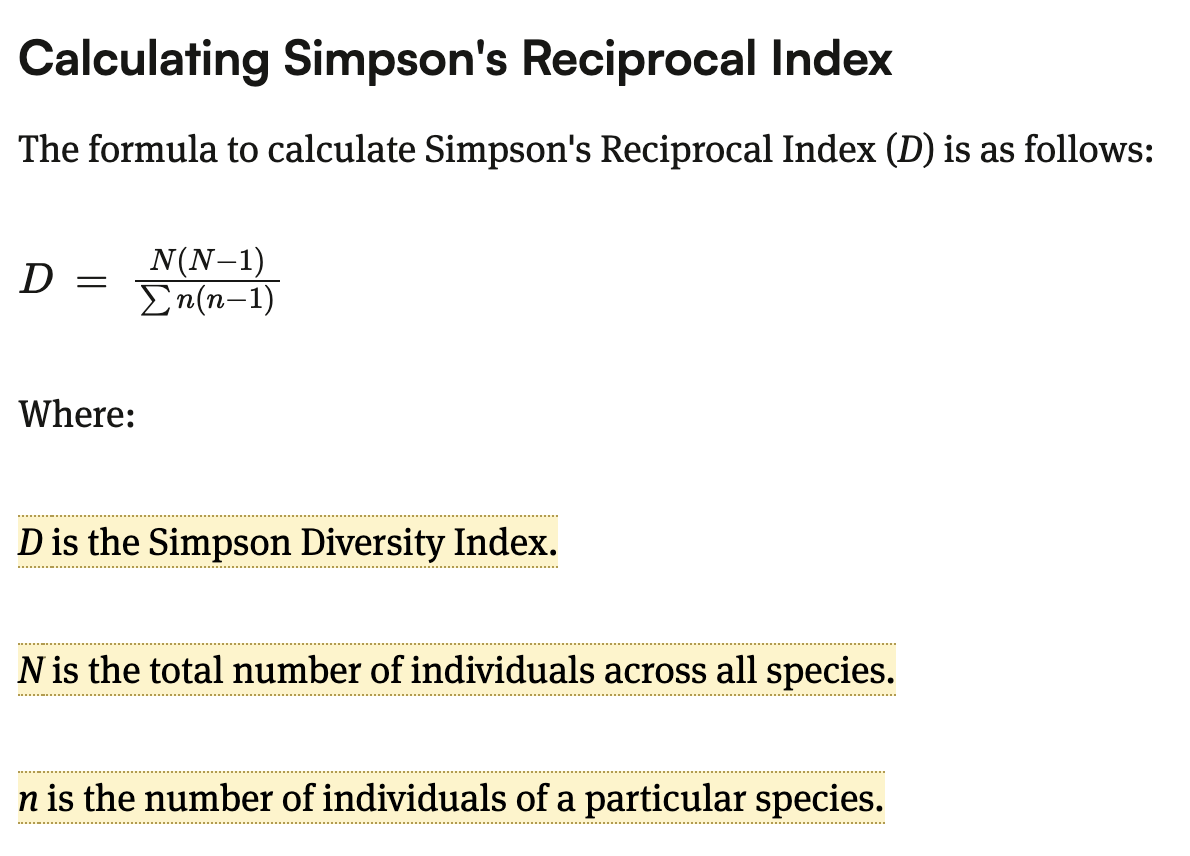
Simpson's reciprocal index
The higher the value of D, the greater the richness (number of species) and evenness (similar abundance) of an ecosystem.
One is the lowest possible value an ecosystem can have.
Instrumental value
When something has value for its use for human beings especially its economic value
Invasive species
Non-native organism introduced into a new ecosystem intentionally or unintentionally by humans.
Compeitition for limited resources: They face less limiting factor and outcompetes native spcies for essential resources like food, water, and space
Predation: Some are predators therefore causes a decline in local prey population which disrupts equilibrium in the food web
Tragedy of the common
A situation in which unmanaged open - access resources are exploited by individuals and groups
Commons
Economic provisioning system in which the resources of nature or society are managed through unpair self-organising
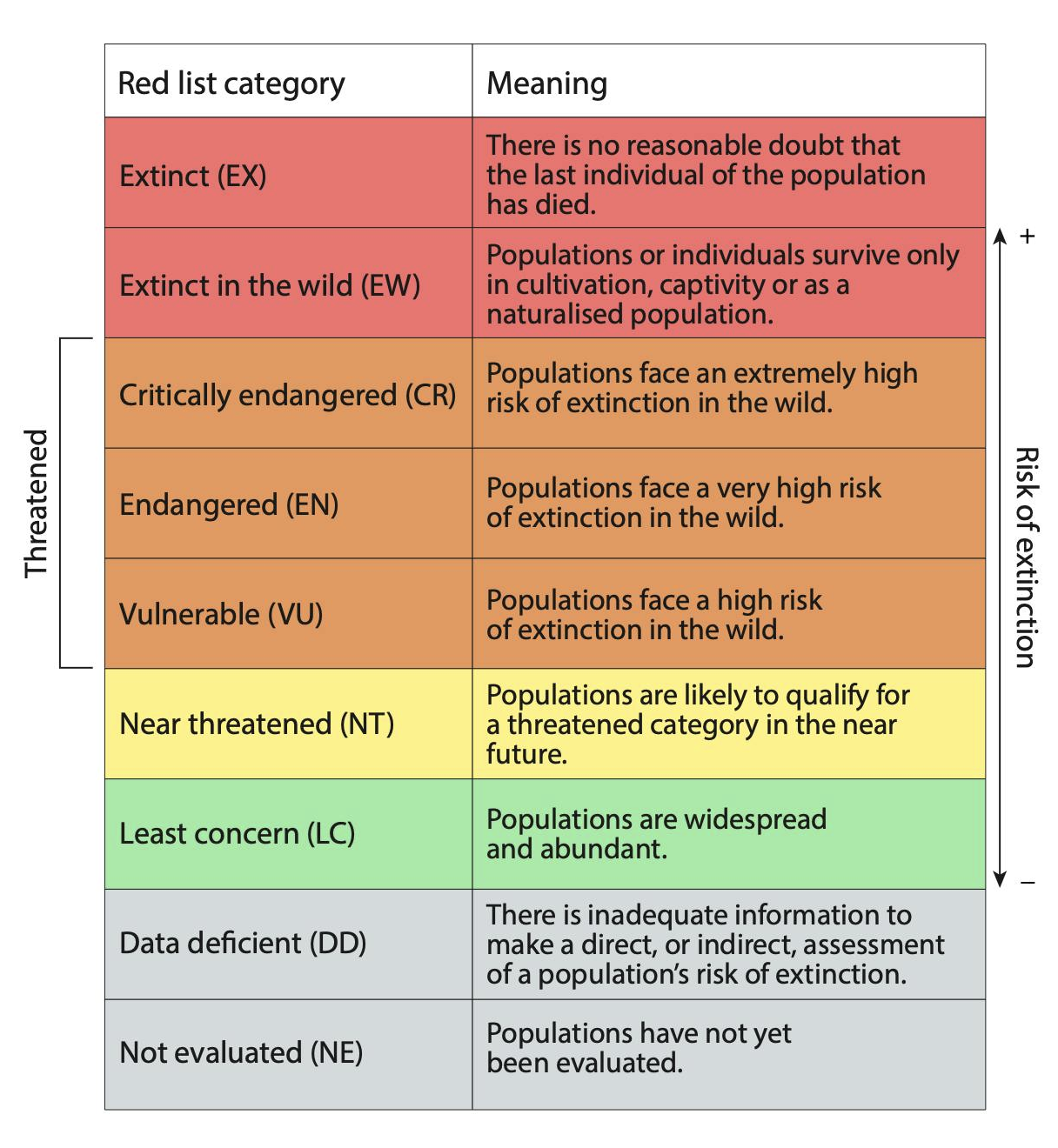
Global conservation status
An indication of whether a species still exists and how likely extinction of the species will occur in the near future. Made public through the IUCN Red List.
number of individuals
breeding potential
geographic range
Role of governments in species conservation
Policy and legislation to protect endangered species and their habitats
Resource allocation to support conservation efforts
International agreements in order to collaborate on global species conservation
Role of a businesses in species conservation
Adopting sustainable practices to help reduce habitat loss, pollution, and overexploitation of species
Innovate and create technologies and other solutions that aid in conservation, like tracking systems for wildlife monitoring and data collection
Raise consumer awareness through educating consumers about the importance of species conservation
Ecological footprints
The area of land and water required to support a defined human population at a given standard of living, and absord all the waste from that population.
Captive breeding
The process of breeding animals outside of their natural environment in restricted cinditions in farms, zoos, or other closed facilities
Reserve
An area of land that is protected in order to keep safe the animals and plants that live there
Species preservation
Protecting and maintaining specific plant or animal species to prevent their extinction and ensure their continued existence.
Habitat preservation
The conservation of species environments or ecosystems to protect the diverse species that inhibit them
Intrinsic value
The inherent worth of something regardless of the benefits it provides.
Arguements for species and habitat preservation
Ecological: focuses on the vital ecosystem services provided by diverse species, emphasizing the interconnectedness of all living organisms on earth
Economic: Valueing nature for it’s benefits to human population
Nagoya Protocol
An international agreement under the convention of biological diversity (CBD) that focuses on fair and equitable sharing of genetic resources
Perspective which influence conservation strategy selection
Ecocentrism: Prioritises the use of low-intervention, in situ conservation strategies for biodiversity conservation
Anthropocentrism and technocentrism: Focuses more on scientific interventions and ex situ conservation, such as establishing zoos, creating gene banks to safeguard genetic diversity, and promoting ecotourism.
Ex situ
Strategies to protect species outside of their natural habitat and involves using botanic garden, zoos where endangered plant and animal species are protected and studied
In situ
Conservation of a species within its natural habitat
areas set aside for protection have active management by humans to restore ecosystems
Habitat rehabilitation
Restoring a habitat to its former state by replanting and repopulating it, removing it of invasive species and removing harmful structures
Edge effects
ecological changes at the boundaries of different ecosystems or habitats for example between a protected area and human settlements
susceptible to disturbances
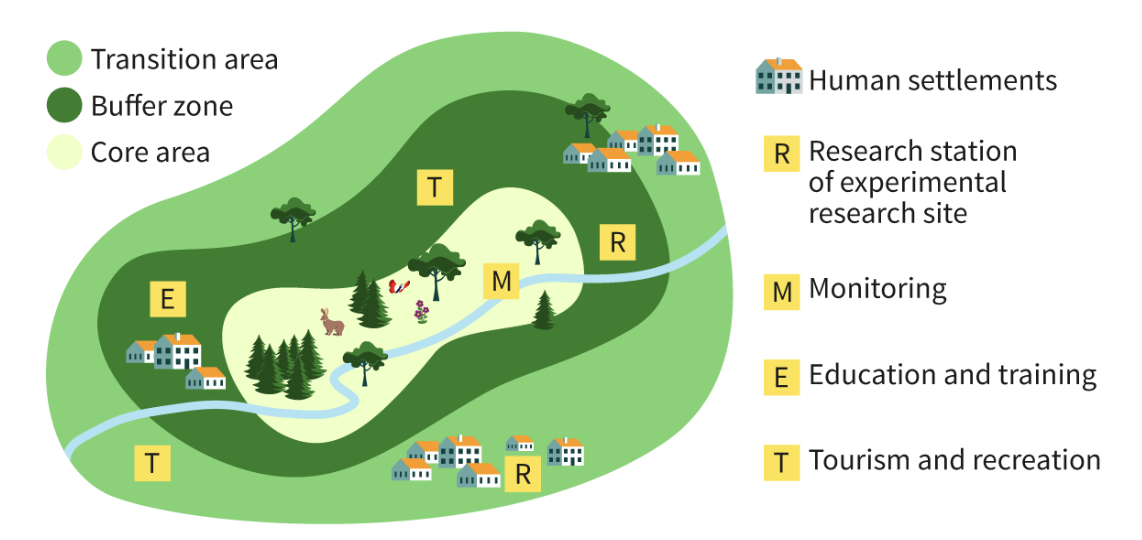
Designing protected areas
Large vs small reserves: Large reserves support more ecosystems, habitats, and species, and are suitable for larger or migratory animals that require extensive areas. Small reserves require careful management, with routes or corridors connecting them.
Shape of protected area: A circular protected area is generally better as they minimise edge effects
Wildlife corridor
An area maintained and enables species migration. reducing population isolation and enhancing gene pools through immigration
Mixed conservation approach
uses both species and habitat measures to conserve biodibersity. Often focuses on keystone species or could also focus on flagship species
Flagship species
A “charaismatic” species selected as an “ambassador” to raise support and awareness for the conservation of its habitat where other species are also threatened. ex:panda
Rewilding
A form of ecological restoration that aims to increase biodiversity and restore natural processes
Rewilding strategies
Reintroduction of apex predators and keystone species can trigger trophic cascades, fostering ecological resilience and promoting the recovery of plant and animal species
Connecting habitats over a large area through creating wildlife corridors and restoring natural landscape features,
Stopping agriculture and resource harvesting to allows the ecosystem to restore soil fertility and native plants, reestablishing ecological processes

