RELS 1000 - Buddhism
 Call Kai
 Learn
Learn Practice Test
 Spaced Repetition
 Match
Match Flashcards
 Knowt Play
1/88

There's no tags or description
Looks like no tags are added yet.
Name | Mastery | Learn | Test | Matching | Spaced | Call with Kai |
|---|
No analytics yet
Send a link to your students to track their progress
89 Terms
alms/almsgiving
early morning procession by which monks put food into the alms bowls of lay buddhists (non-monastic) as an act of charity.
Anatman Doctrine
States there is no permanent or absolute self (Atman), but moreover the self is constantly changing and a result of a combination of factors.
Arhat
the ultimate goal of monks, to become enlightened and achieve highest ideal of "worthy one"
Bhikku
fully ordained Buddhist monk and member of the Sangha. Monks conduct their lives in accord with the rules laid out in the Vinaya Pitaka.
Bikkhuni
fully ordained Buddhist nun. Subject to much stricter regulations than monks.
Bodhi Tree
peepal tree under which Siddhartha Gautama attained enlightenment.
Bodhisattva
"enlightenment being" in mahayana, one who strives to for the the fullest form of Buddhahood and for the liberation of all beings. Can be earthly or transcendent.
Bon
Tibetan animistic tradition, originally was hostile toward Buddhism but then eventually was replaced by Vajrayana Buddhism.
Padmasambhava
buddhist tantric master who contributed to the rise of buddhism in Tibet, quelling the resistance from Bon religious followers.
dependent arising
Reveals the origin of our sense of "self." • It depends in part on our perceptions, our ignorance, and our desires. • Each created self is dependent on a vast array of related phenomena. • All these are impermanent;
Pratitya-samutpada
psychological process that gives consciousness to all sentient beings and phenomena (chain of events) that gives rise to and condition our identities.
dharma
the teachings of the Buddha
Dharma Chakra
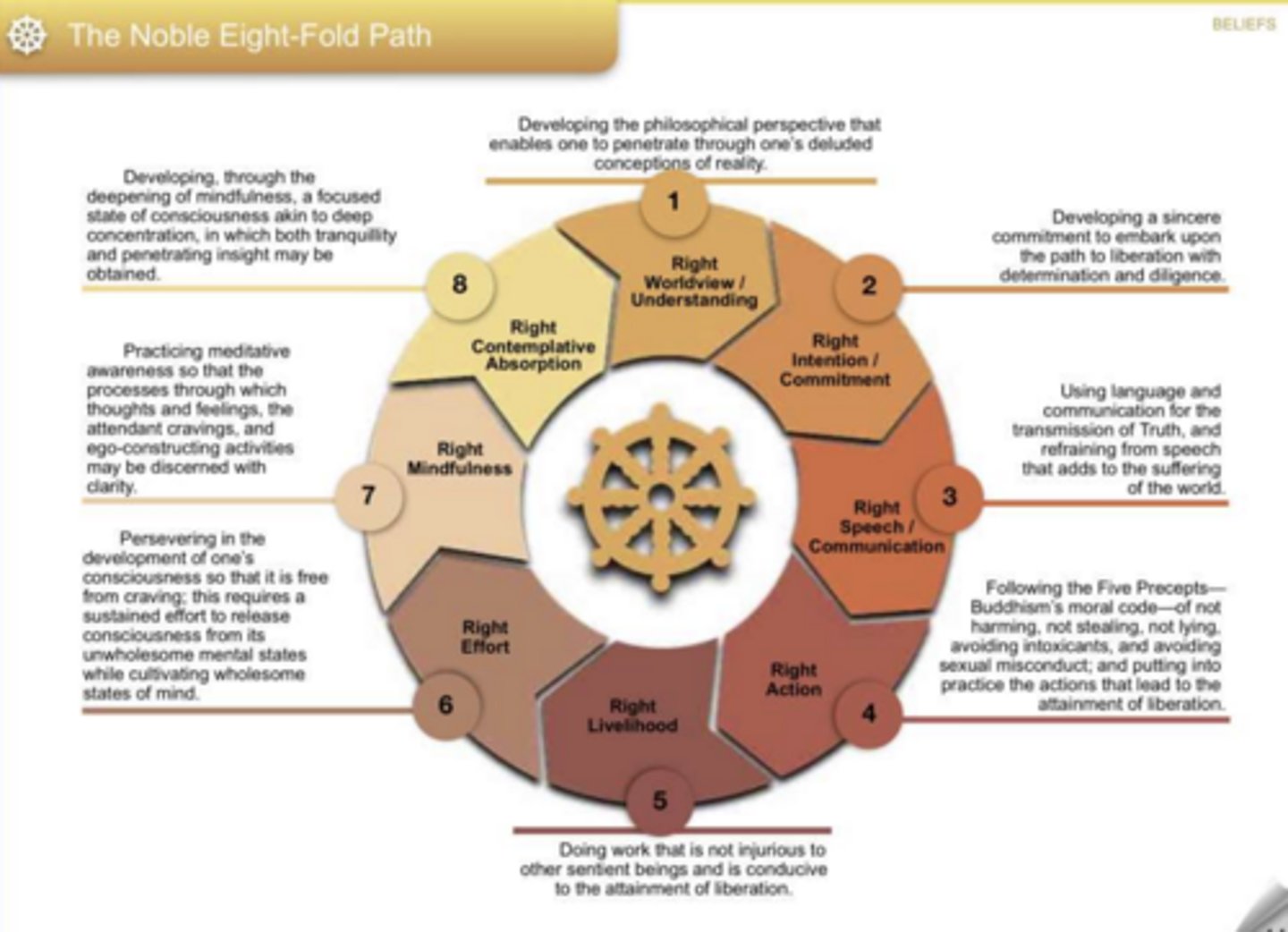
the 8 fold path:
1. Right worldview
2. Right Intention
3. Right Speech
4. Right Action
5. Right Livelihood
6. Right Effort
7. Right Mindfulness
8. Right Contemplative Absorption
Dukkha
1 of the four noble truths, suffering and sorrow
5 precepts
no sex, no stealing, no killing, no lying, no intoxicants
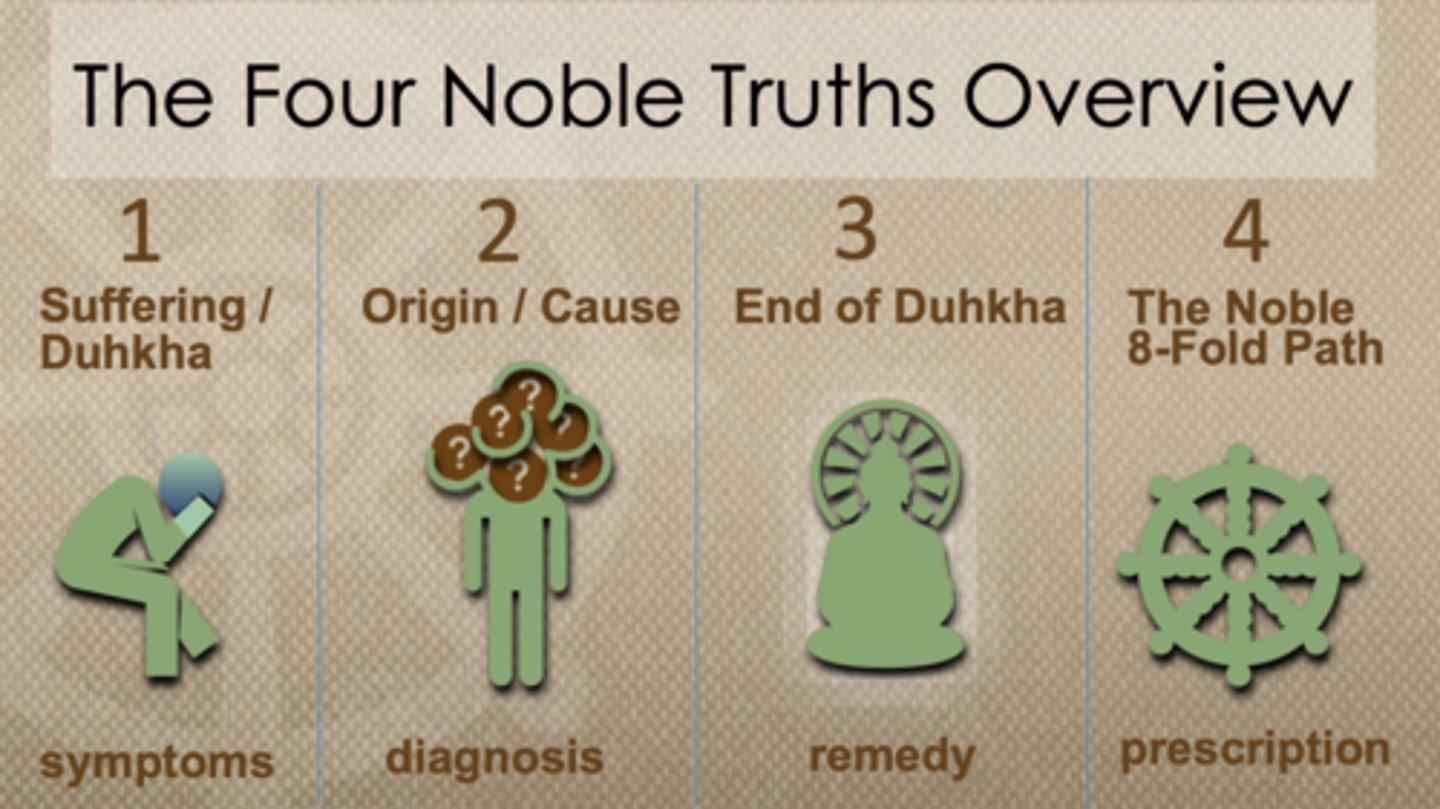
4 noble truths
Dukkha, origin/cause, cessation/ending, path (marga).
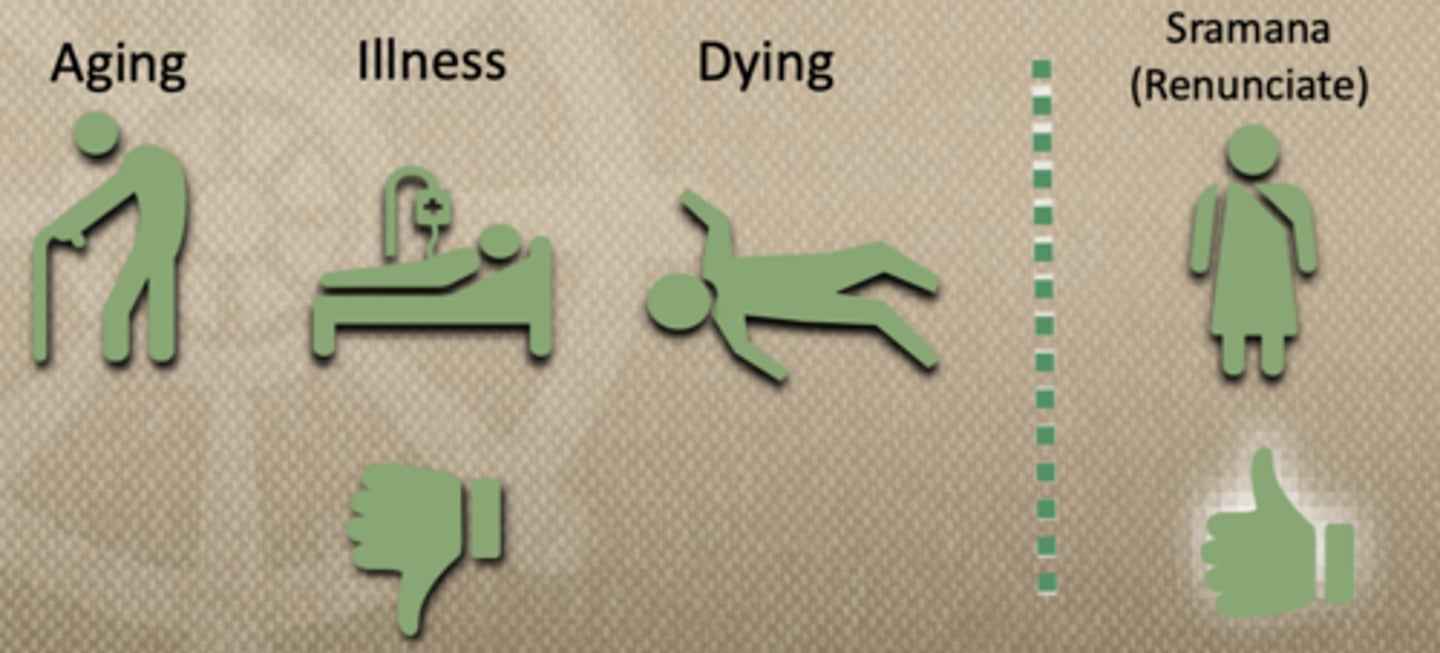
4 great sights
aging, illness, dying and sramana (renunciate)
great renunciation
The time when Buddha left his family to search for answers to suffering, cut his hair, adorned ragged robes, and renounced his royal title.
Anitya
one of the 3 marks of existence, = impermanence
3 stages of Buddha's enlightenment
1st watch: saw his previous lives •2nd watch: rebirth of others (karma) •3rd watch: destroyed desires and ignorance, realized dependent arising and Four Noble Truths
lama
religious master, often used to address Tibetan monks. Great teachers in Vajrayana buddhism.
Lay community
The community of (non-monastic) Buddhists that are not ordained monks or nuns but have a close relationship with Sangha, providing them with material necessities.
Mahayana
form of buddhism that emerged in the first century BCE and spread from northern India to China and Japan. Characterized by ideal of bodhisattva and adaptability.
Distinct forms of Mahayana Buddhism
Tantric buddhism in Tibet and devotional buddhism in China and Japan.
Mandala
intricate diagrams representing world realms, used as a focus in Mahayana and Vajrayana meditation
Dhayana
meditation
Merit
shared and earned through relationship between lay buddhists and monks. Considered central to buddhism, benefitting both oneself and others.
Middle Way
A basic Buddhist teaching that rejects both the pleasures of sensual indulgence and the self-denial of asceticism, focusing instead on a practical approach to spiritual attainment (middle ground).
Madhyamaka
Mahayana "Middle Way" school founded by Nagarjuna, centered on teachings of emptiness.
Mindfulness
7th teaching of the 8-fold path, a focused state of consciousness akin to deep concentration
5 prominent Mudras
Abhaya (Fear Not Gesture), Varada (Boon-granting gesture), Dhyana (Meditation gesture), Bhumisparsha (Earth-touching gesture), Dharmachakra (Turning the wheel of the Dharma gesture).
What gesture is this?
Abhaya Mudra (fear not gesture). Conveys blessing and protection or refuge granted by the Buddha and his teachings.
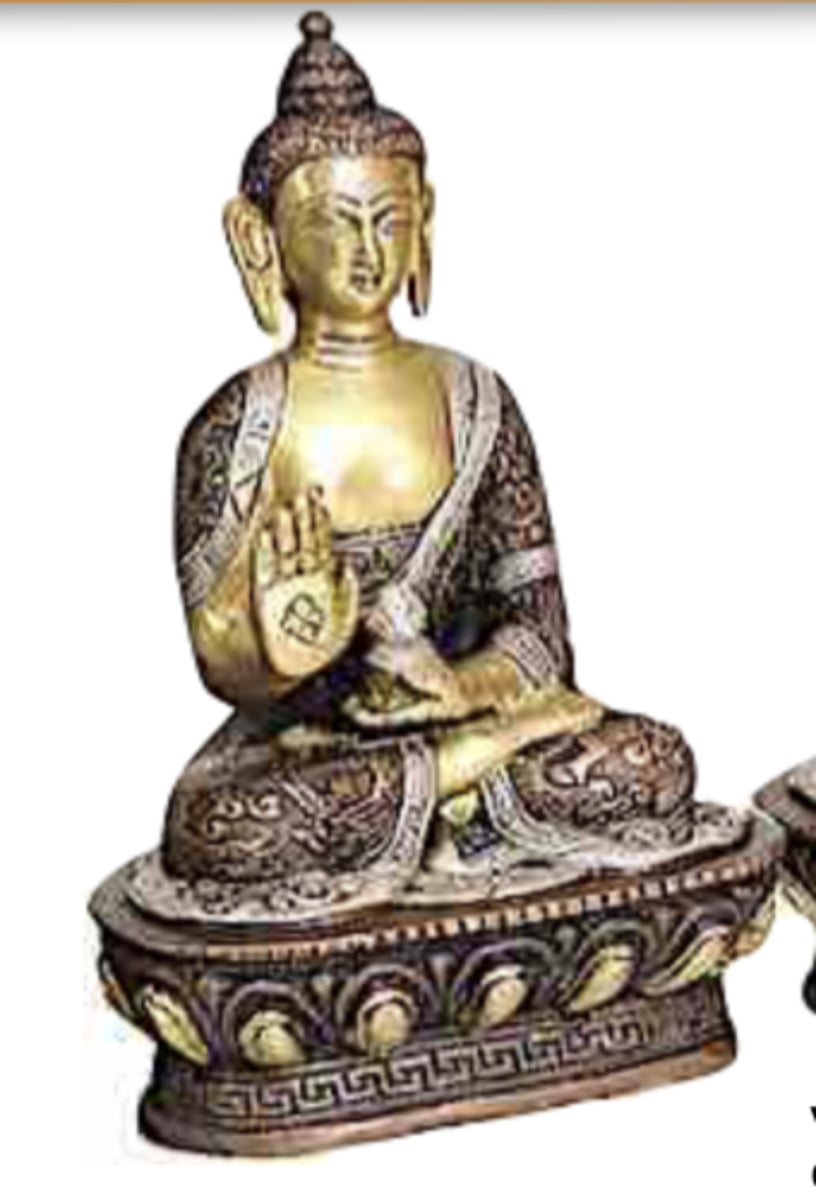
What gesture is this?
Varada Mudra (boon-granting gesture). Granting a wish or favour, evokes compassion, charitable givings, and teachings of Dharma.
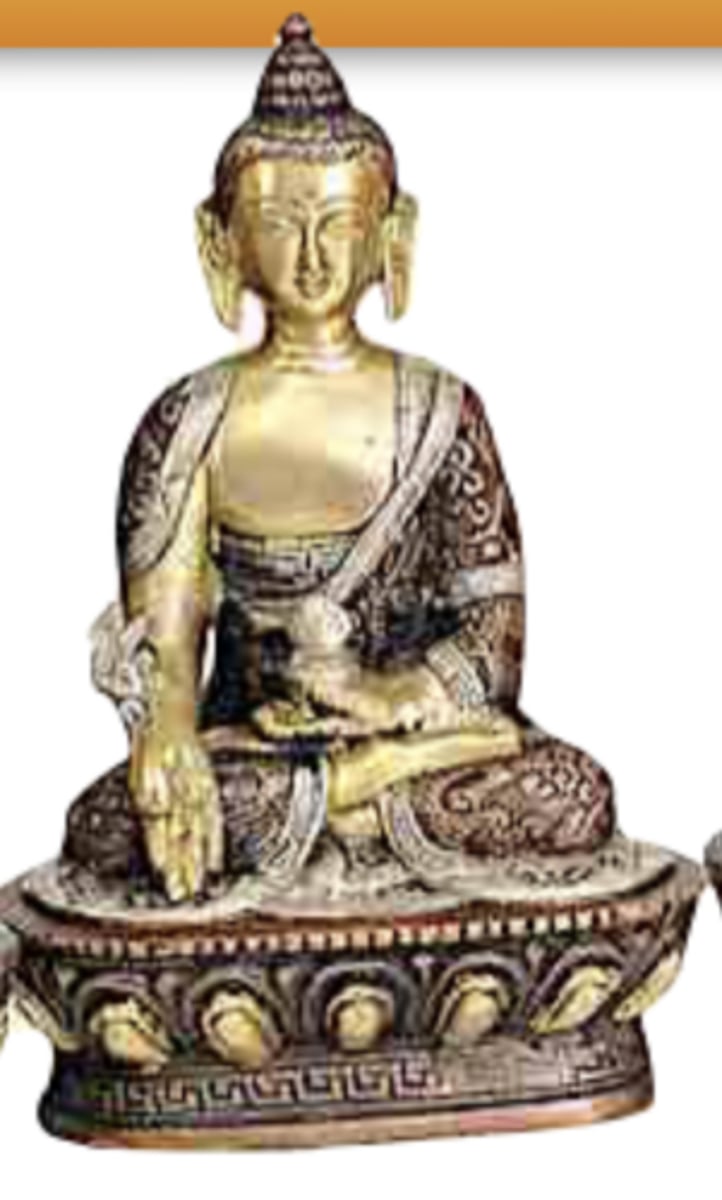
What gesture is this?
Dhyana Mudra (Meditation Gesture).
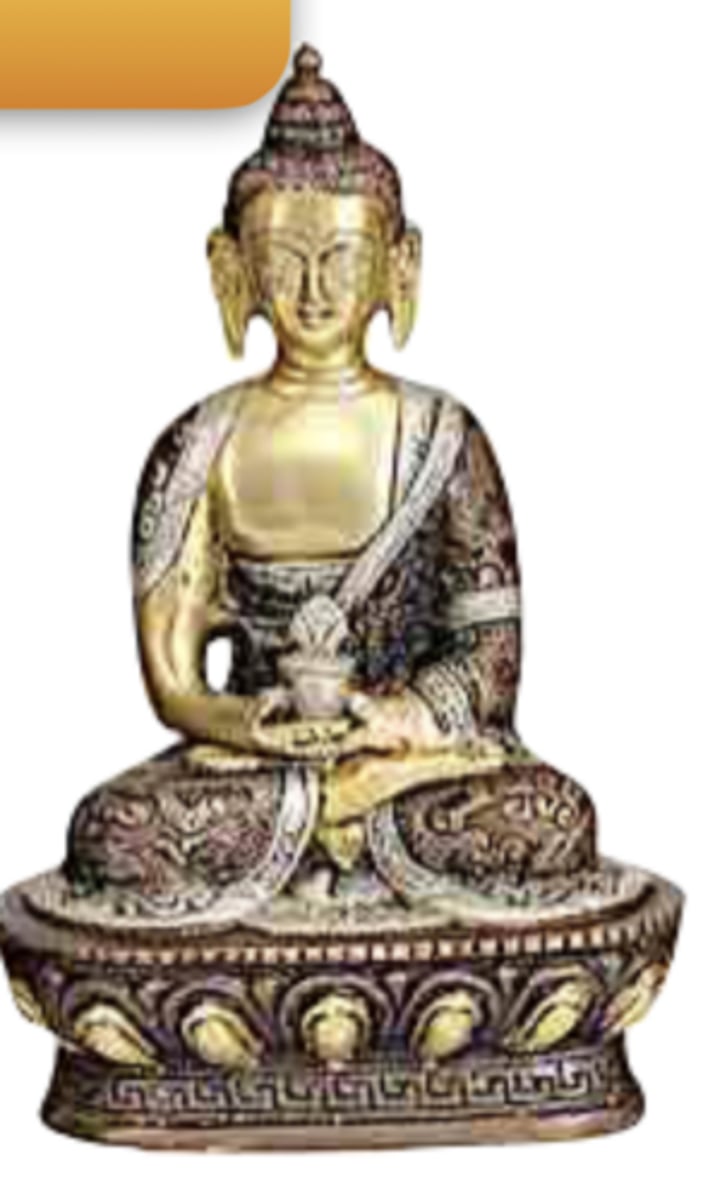
What gesture is this?
Bhumisparsha Mudra (Earth-touching Gesture). Buddha resists temptation of Mara and so he points down and calls the Earth to witness his attainment. Represents Buddha's attainment of nirvana.
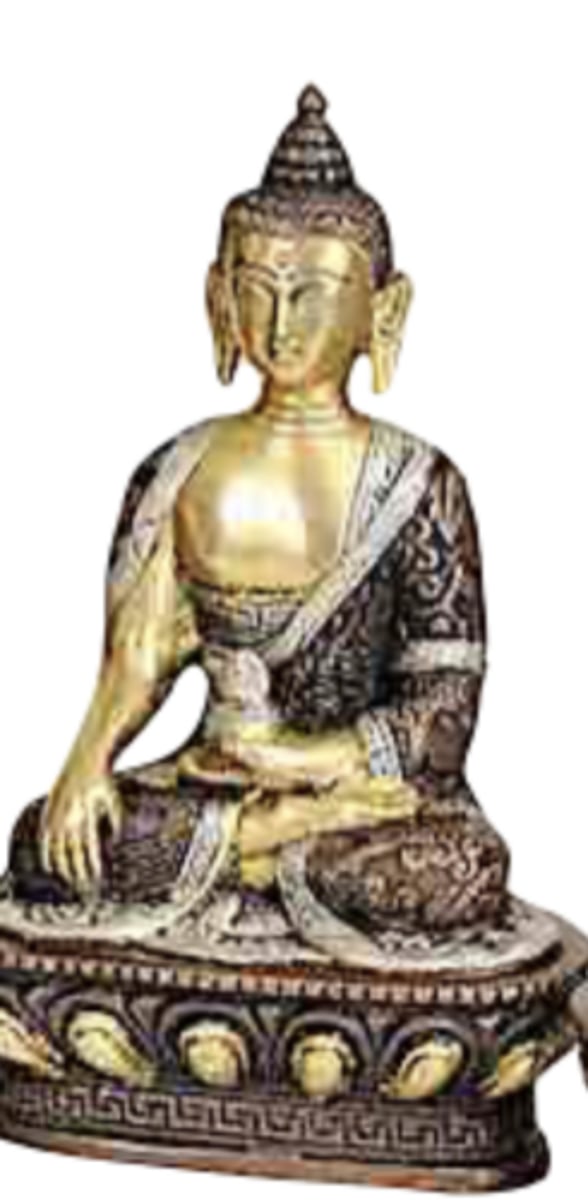
What gesture is this?
Dharmachakra Mudra (turning the wheel of the dharma gesture). Represents Buddha's first Sermon to his five ascetic friends in the Deer Park at Sarnath.
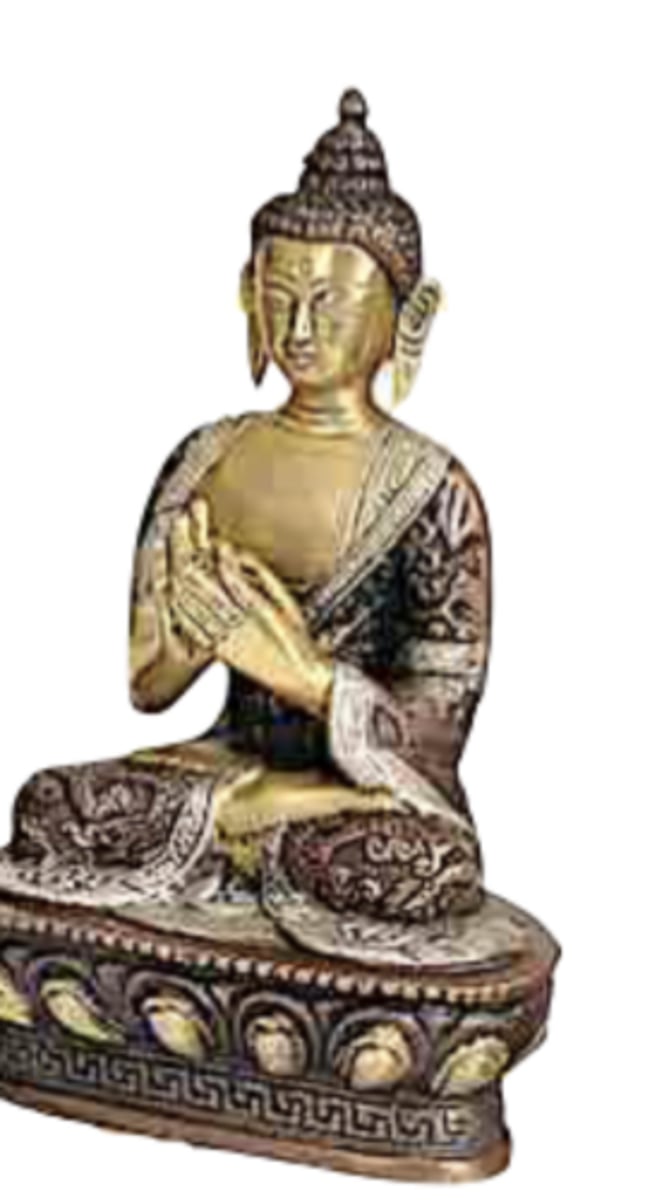
Sarnath
Stupa marking spot in the Deer Park where the Buddha set the wheel of the teachings (Dharma) in motion and gave his first sermon.
Pure Land
A school of Mahayana Buddhism characterized by faith in the compassion of the Buddha Amitabha. Adherents hope to be reborn in Amitabha's Pure Land, also known as the Western Paradise.
the three roots of evil
01. Greed, passion, desire or lust.
02. Hatred, aversion, aggression, anger or destructive urges
03. Delusion, ignorance or indifference.
parinirvana
The Buddha's passing into full nirvana and end of all phsyical existence at his death.
6 realms
Gods, Asuras -- quarrelsome lower gods, Humans, Animals, Hungry Ghosts, Hell realms
samadhi
a trancelike state in which self-consciousness is lost and the mind is absorbed into the ultimate reality; the culmination of the eight steps of Yoga.
Siddha/Siddhi
"accomplished person", supernormal powers, psychic abilities, or spiritual attainments that arise from deep meditation (samadhi), mental discipline, and, particularly in Vajrayana, Tantric practice
Stupa
contain relics, sacred texts, or are symbolic representations of Buddha consciousness. Serve as a focal point for veneration or meditation.
Tantra
an advanced, esoteric branch of Mahāyāna Buddhism that originated in India (5th–7th centuries CE) aiming for rapid enlightenment.
theravada
only surviving branch of the non-Mahayana Buddhist groups. Dominant form of Buddhism in Sri Lanka, Myanmar, Thailand and other parts of southeast Asia. Characterized by pursuit of nirvana.
Three Jewels
Buddha, Dharma and Sangha
Trishna
ignorance + craving --> cause of suffering according to the 4 noble truths
Tulku
A reincarnate lama or Tibetan teacher who often provides indications to his disciples before his death as to where he will next be reborn.
Upaya (skillful means)
intentionality of teaching different things at different times to enable seekers to learn the truth, not just a doctrine that claims impermanency or forced upon people.
Vajrayana
lit., "Diamond/ Thunderbolt Vehicle"): Form of Buddhism characterized by Tantric practices, which became dominant in Tibet and later spread to Mongolia and back into India.
vesak
major holiday that commemorates Buddha's birth, enlightenment, and parinirvana. Celebrated in Theravada countries on the full moon in May.
Wheel of Life
begins with ignorance, and moves through karmic propensities and perceptions to becoming, which is the creation of a psychological self-image, which in turn must inevitably grow old and die.
Amitabha
Japanese Buddha, buddha of purity
Made goals of Buddhism more accessible to people
Thru vow of Amitabha, nirvana is made much more attainable
Ananda
Buddha's attendant, played a crucial role in reciting and preserving the Suttas (teachings) and advocating for the establishment of the bhikkhunī (nun) order.
Ashoka
emperor who converted to Buddhists and helped to spread it across his vast Indian empire and to neighbouring countries.
Avalokiteshvara
"the lord who looks down from above", embodiment of Buddha's compassionate nature of awakened consciousness. India'd bodhisatttva.
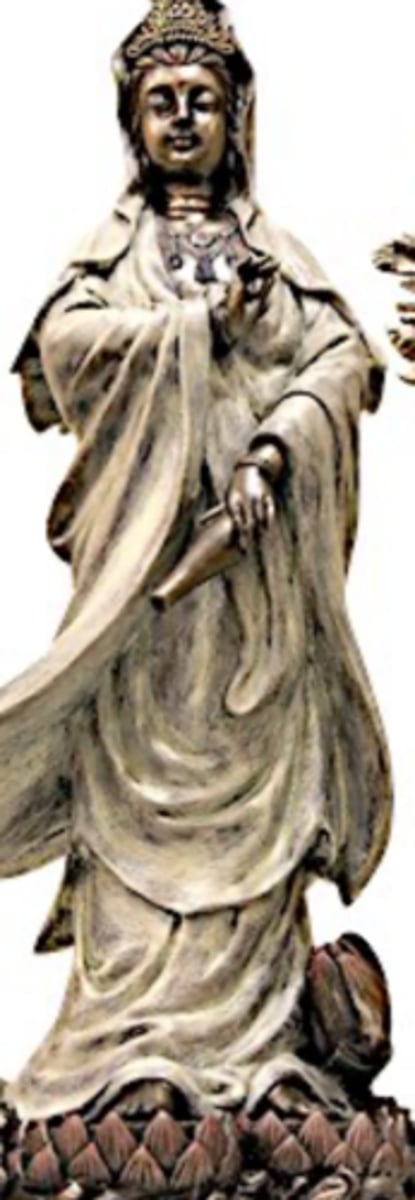
Guanyin
A popular bodhisattva of compassion in Mahayana, the female transformation of Avalokiteshvara. China's bodhisattva.
Pu-tai (Budai)
laughing buddha
Dalai Lama
("Ocean [of Wisdom] Lama"): Title and rulership of Tibet bestowed on a high lama of the Gelug Order of Tibetan Buddhism in the sixteenth century. The current Dalai Lama, who was selected as a child through a complicated search and testing procedure, is regarded as the fourteenth incarnation.
J. Kannon
Japanese bodhisattva.
Maitreya
"the loving one", or the next buddha to come/ buddha of the future who will revive dharma.
Manjushri
"sweet splendor" bodhisattva, embodies the wisdom of the Buddha mind.
Mara
the tempter figure who tries to corrupt Siddhartha during his quest for nirvana, sent his daughters to distract him, then an army to instill him with fear.
Padmasambhava
• Tantric master who helped establish Buddhism in Tibet (8th century)
• Regarded as the founder of the Nyingma school
• Known as "Guru Rinpoche" (precious teacher)
• Converted Bon forces opposing Buddhism
Prajapati
Siddhartha's stepmother, the queen. Also the first ordained nun of the Sangha.
Queen Maya
Siddhartha's mother, died shortly after his birth. Had a dream of an elephant and other auspicious symbols that were interpreted as foretelling of buddha's birth.
Lumbini
forest that Siddhartha was born in present-day Nepal. Capital of ancient Shakya Kingdom.
Shakyamuni
the historical buddha, name given to distinguish him from past and future buddhas.
Bodh gaya
In the state od Bihar, India. The Mahabodhi temple located here and reputedly marks spot where Siddhartha attained enlightenment/buddhahood.
Kushinagara
Present-day Kasia, in the state of Uttar Pradesh, India. Place where the Buddha entered parinirvana (died).
Buddhacarita
first complete life story of the Buddha, composed in verse by Ashvagosha.
Lotus Sutra
Mahayana text important in Tiantai and Nichiren Buddhism. Teaches value of faith and the possibility for all beings to attain liberation.
Kanjur and Tanjur
Tibetan Buddhist canon. Kanjur consists of 92 volumes, and the Tanjur fills 226 volumes of commentary in the Kanjur.
Bardo Thodol
Also known as the Tibetan book of the dead. Contains instructions about the after-death stage, prior to rebirth, during which time one may also obtain liberation.
Heart sutra
highly influential short text belonging to Perfection of Wisdom catgeory which emphasizes teachings on Emptiness.
Myanmar
global center of Theravada Buddhism, where it is practiced by over 90% of the population
Nalanda University
built in 427 CE, considered the world's first residential university, and the source of all Buddhist knowledge.
Abhidharma
philosophical arguments developing the Buddha's teachings, also know as the Mahayana wing of Buddhism.
Dhammapada
collection of sayings and moral teachings attributed to the Buddha, found within the Pali canon.
vinaya (pitaka)
collection of teachings of monastic discipline.
What tribe was Siddhartha born a prince into?
Shakya Tribe
known as the Doctrine/Teaching of the Elders
Theravada Buddhism
what regions is Theravada more common?
• Sri Lanka, • Burma (Myanmar) • Thailand.
Form of Buddhism that spread to China, Korea, Japan, Tibet, and Vietnam.
Mahayana
Six Perfections of Mahayana
Giving • Morality (includes 10 good actions) • Patience • Vigor • Meditation (dhyana) • Wisdom (prajna
Year Nalanda University was destroyed
1198
what 3 texts is the Tripitaka composed of?
Sutra, Vinaya and Abhidarma
Shunyata
the Mahayana notion of emptiness, meaning that the universe is empty of permanent reality

