CLAS108 Slide IDs
 Call Kai
 Learn
Learn Practice Test
 Spaced Repetition
 Match
Match Flashcards
 Knowt Play
1/24

There's no tags or description
Looks like no tags are added yet.
Name | Mastery | Learn | Test | Matching | Spaced | Call with Kai |
|---|
No analytics yet
Send a link to your students to track their progress
25 Terms
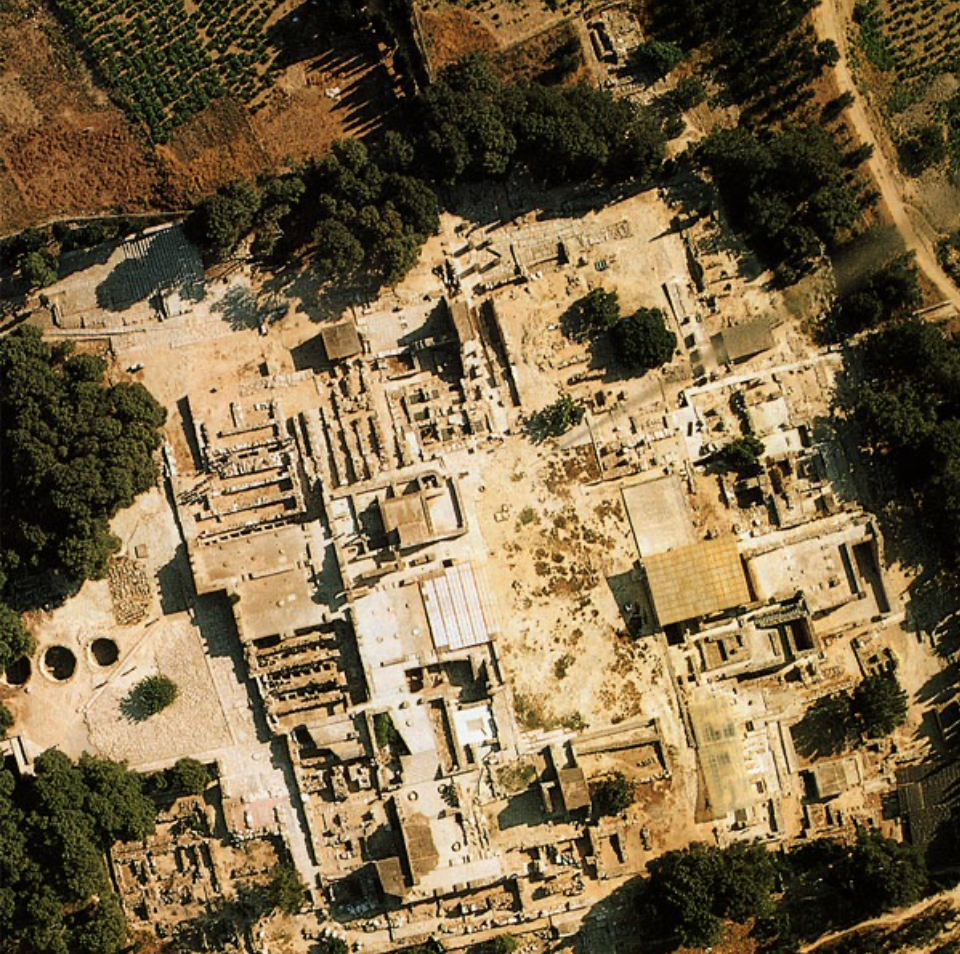
Palace of Knossos aerial view
22,000 square meters
Minoan
Stone, rubble, mud brick + framework of wooden beams
Knossos, Crete
central court, multiple rooms
mazelike, centrifugal, asymmetrical
very few entrances, 4
Straight verticals and horizontal, post-and-lintel architecture
Ceremonial/ritual center, storage/administration centre, centre of power
Major center of administration on Crete in Minoan civilization
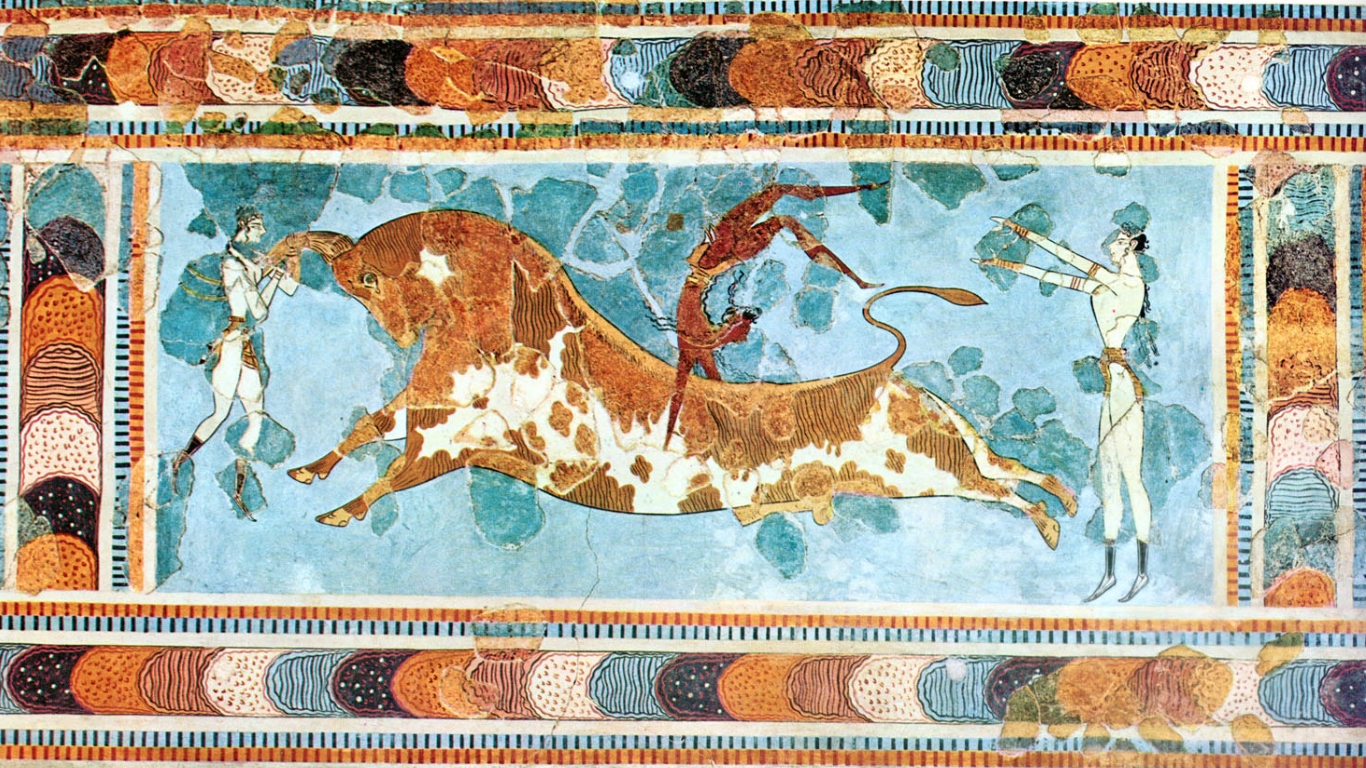
Taureador fresco east wing
Bull-vaulting scene
Late Minoan
Natural earth colours brushed on wet plaster
Palace of Knossos, east wing
Brightly coloured = characteristic of Minoan art
Decorative border of colourful ovals = rocky landscape
Distorted bull shape to emphasise power/action
Women dressed as men - white but wearing men’s clothes
Reflects importance of bulls to the Minoans + indicates religious ritual involving bull-vaulting
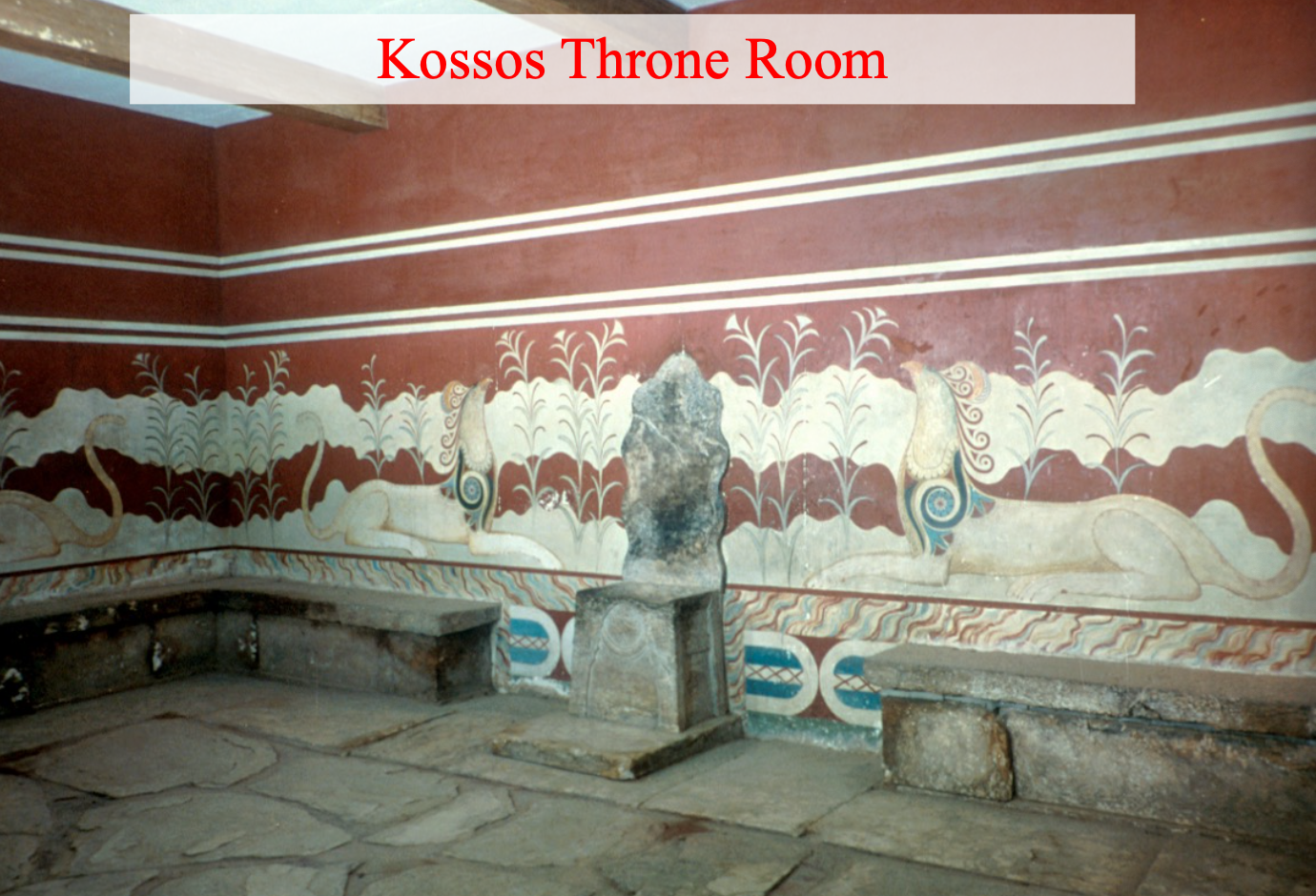
Knossos Throne Room
Minoan
Alabaster seat
Gypsum benches
Palace of Knossos
Griffins painted on either side
Lustral basin for ritual bathing
Throne up against the wall for the “king“ and benches/seats on either sides for subjects
Shows potential religious activity in the Palace of Knossos + royal authority
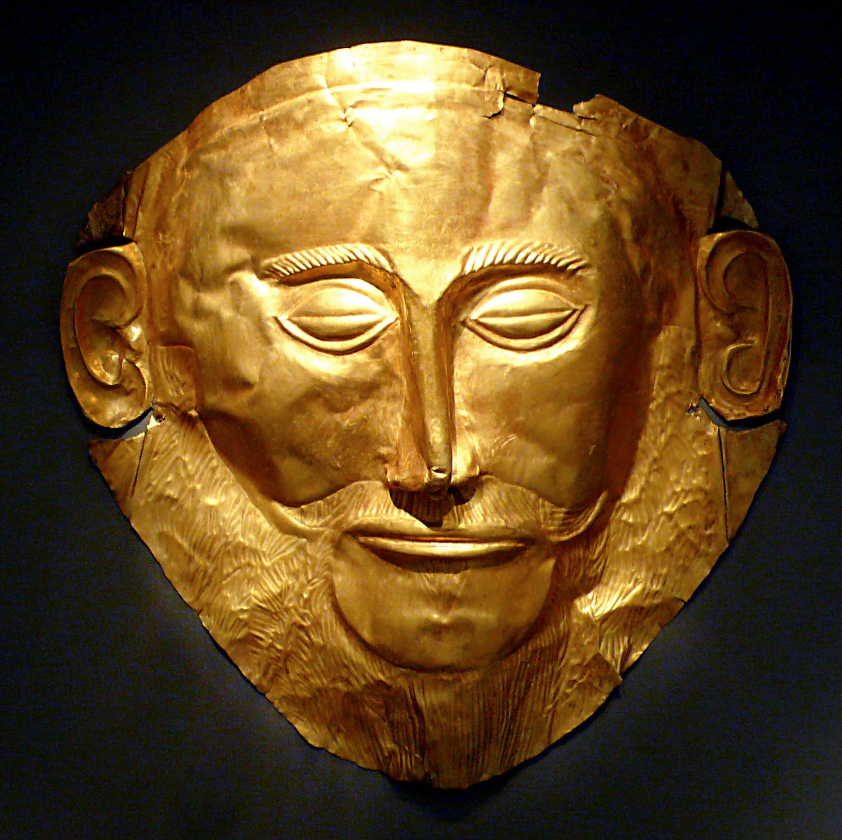
Mask of Agamemnon
Mycenaean
1550-1500 BC
Gold funerary mask, hammered over wooden form
Grave Circle A
Differs from the other masks found; suspected to be inauthentic
2 arched eyebrows
Open eyelids
Ears cut out
Mouth, lips, chin and beard don’t have semblance to other masks/Mycenaean/Minoan art
Believed to be the funerary mask of King Agamemnon from the Iliad
Shows burial of a powerful man, use of gold indicates honour, wealth and status
Could be evidence that the Trojan War was a real event
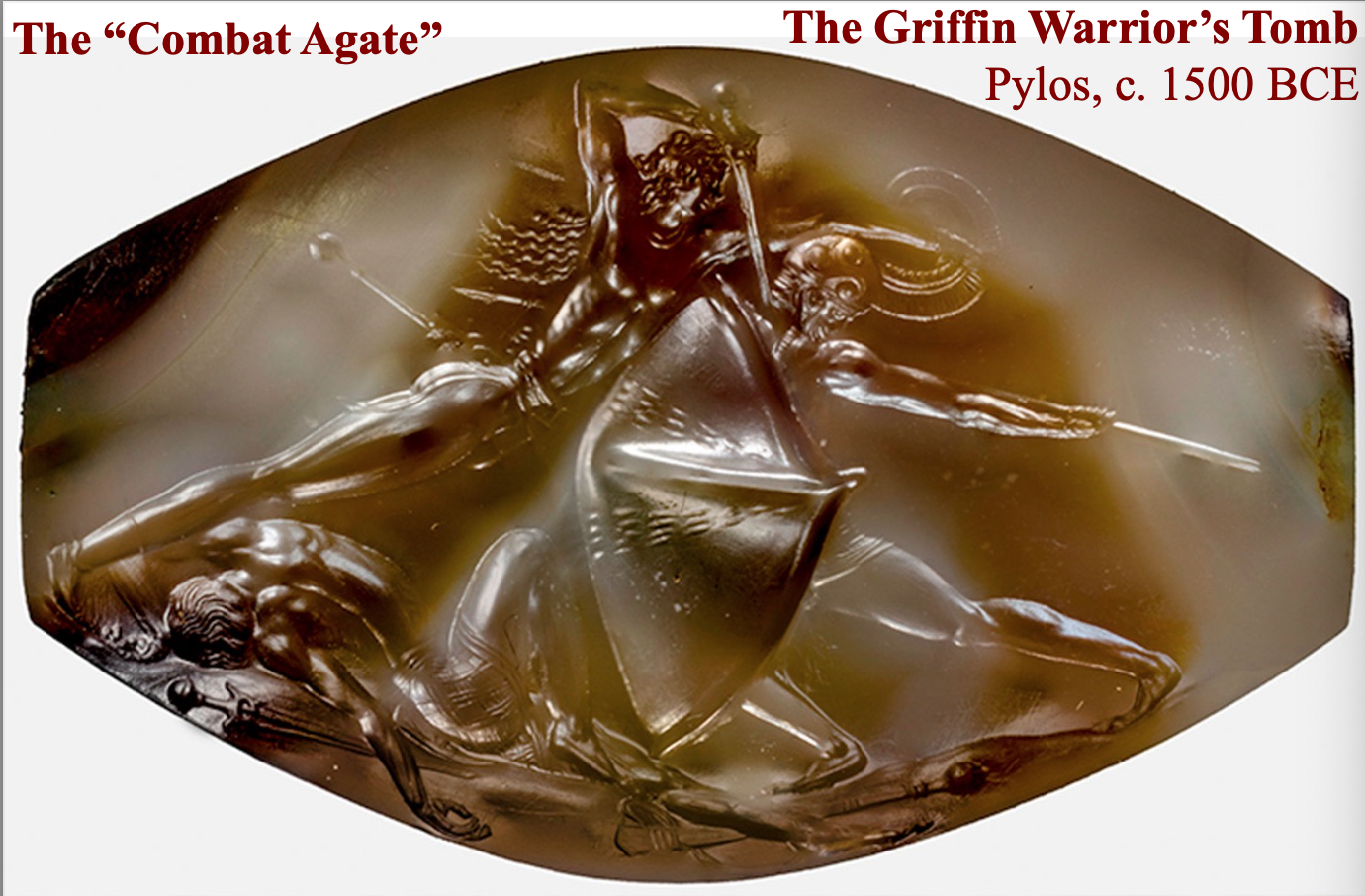
The Combat Agate
Mycenaean
3.4 cm
1450 BCE
Made of agate
Pylos, Greece, Palace of Nestor
Tomb of the Griffin Warrior
3 warriors - 2 battling, 1 on the ground
Engraving is very detailed
Evidence of Mycenaean grave goods
Shows the talent of Mycenaean artists - the level of skill shown in the miniature engraving is not seen again until hundreds of years later
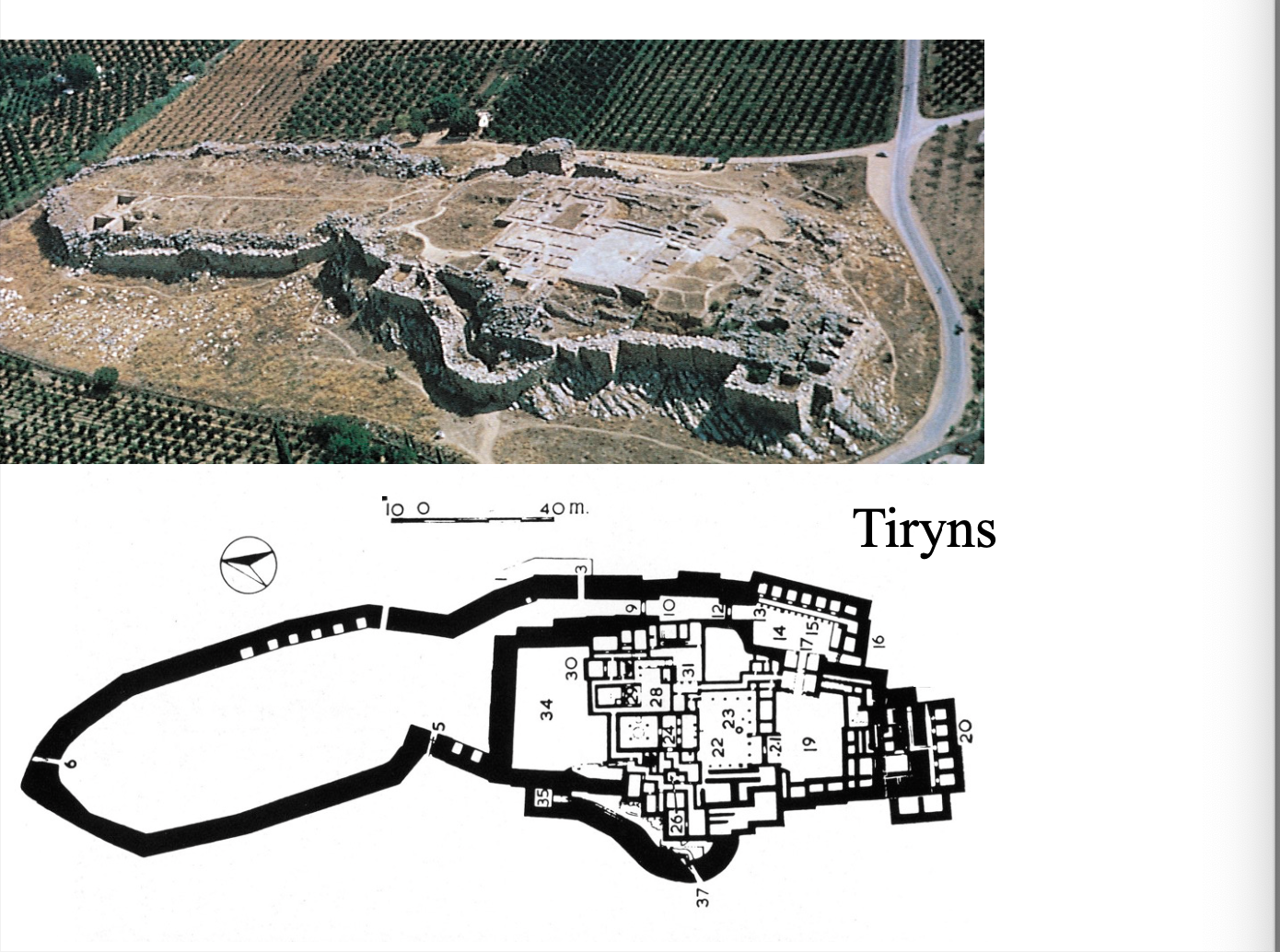
Citadel of Tiryns
Mycenaean
1400-1200 BC
Limestone boulders
Massive, heavily fortified walls, around 8 meters thick
2 megara, both facing courtyards
Significance to the time period
One of the major centres in the Mycenaean world
Example of Cyclopean masonry - Mycenaean specialty
Relevance in Homeric writing - called “great-walled Tiryns“ and thought to be made by Cyclops
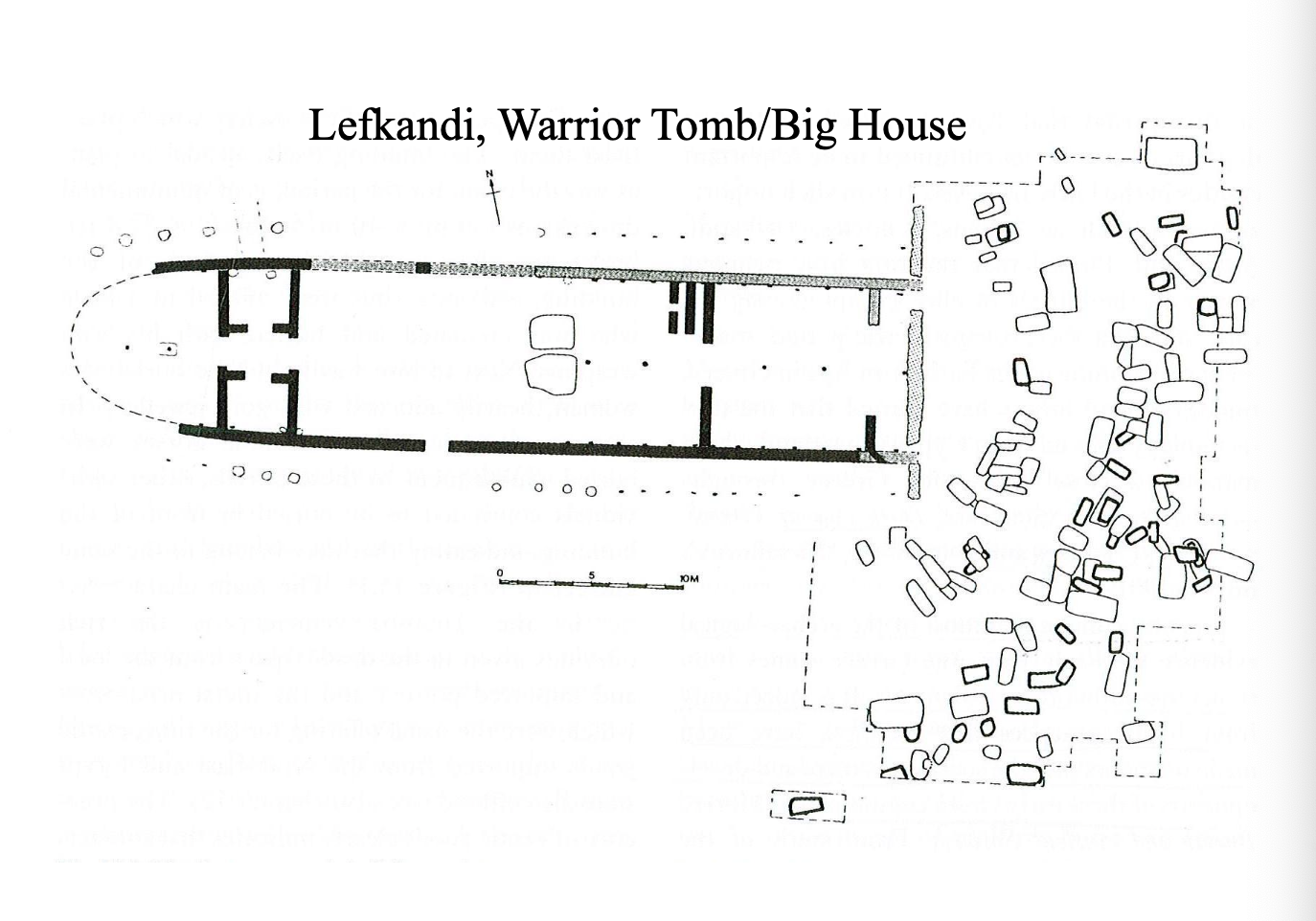
Lefkandi Warrior Tomb “Heröon“
14 meters wide, 50 meters long
The Dark Ages
1000-950 BCE
Mudbrick walls
Lefkandi, Euboia, Greece
Near a cemetery
Burial 1: Bronze vessel, weapons, cremated remains, 40 year old man
Burial 2: Inhumation, grave goods like expensive decorative materials, maybe 18 year old female
4 horses
Burials dug into the floor of the building
A lot of resources expended into the house/burials for remembrance
Evidence for cult activities in funerary traditions - huge funeral to celebrate the “hero,“ and people buried their dead close to him
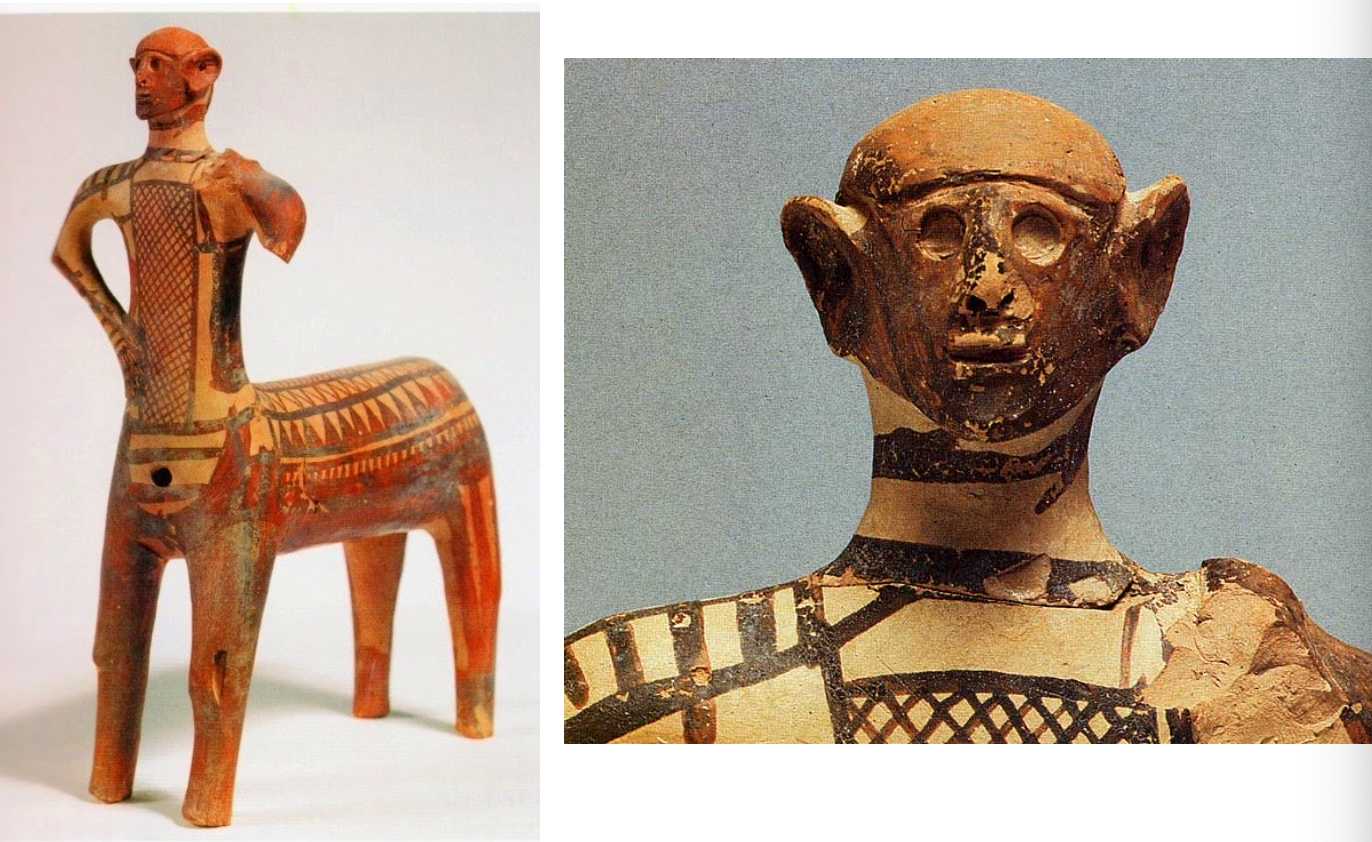
Lefkandi centaur
0.26m high
The Dark Ages
Around 950 BCE
Protogeometric decorative style
Tomb by the Lefkandi Heröon
Head and body in separate graves, maybe family ties
Could be a reference to Cheiron from myth - left knee wounded
Evidence for importance of myths to the Greeks - myth starting to circulate at this time
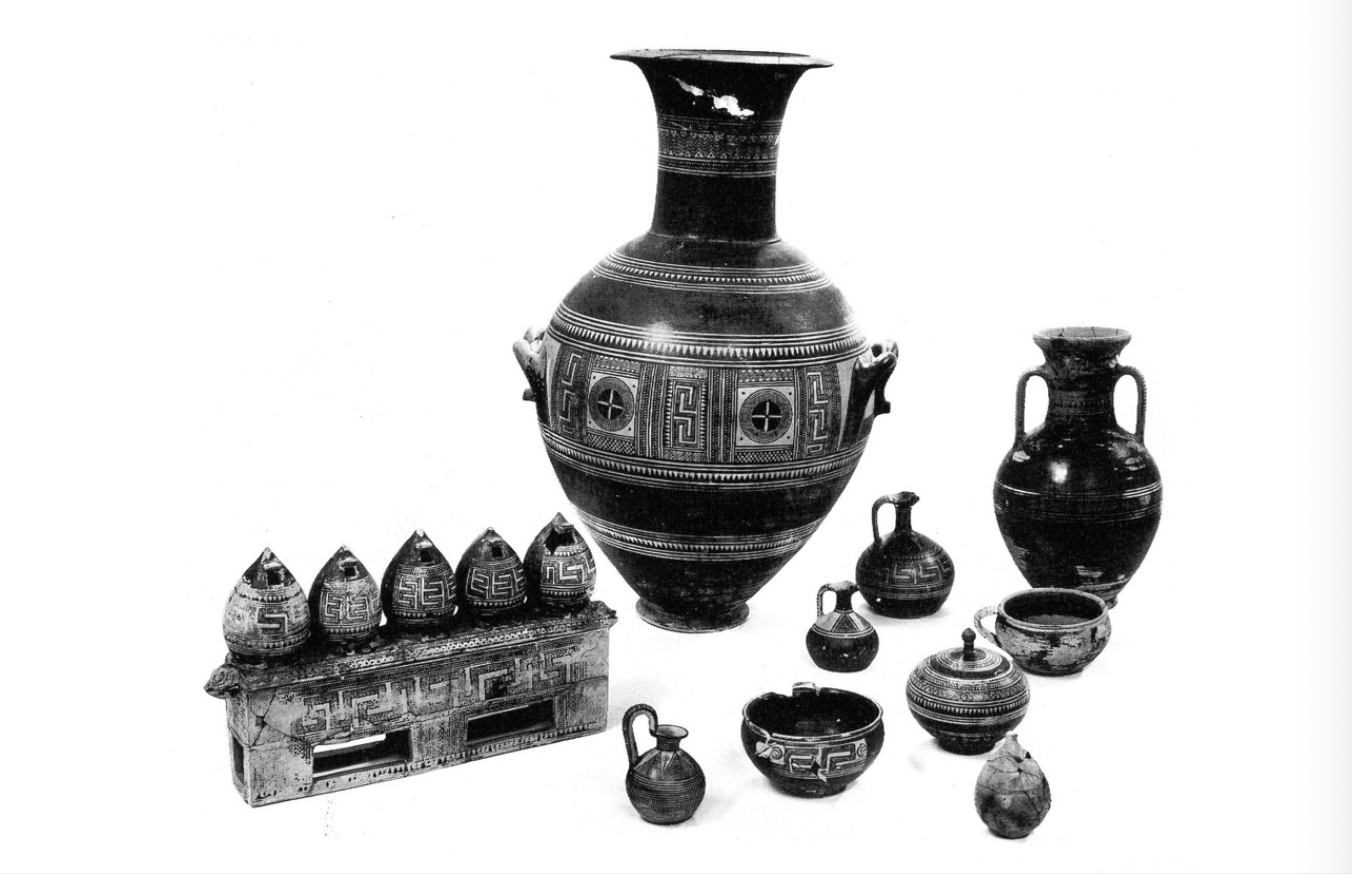
Rich Athenian Lady’s burial
Geometric period
Around 850 BCE
Belly-handled amphora - female, 30-40 years old
Neck-handled amphora - baby boy who died in childbirth
Athenian Agora, Greece - burial ground
Pottery granules to symbolise wealth - the more grain you had, the more wealthy you were
Golden earrings with details of filigree
Pyxis
Evidence for conspicuous consumption: great concern with status and showing off wealth and connecting oneself to the deceased
Evidence for grief/loss in burying the child with his mother
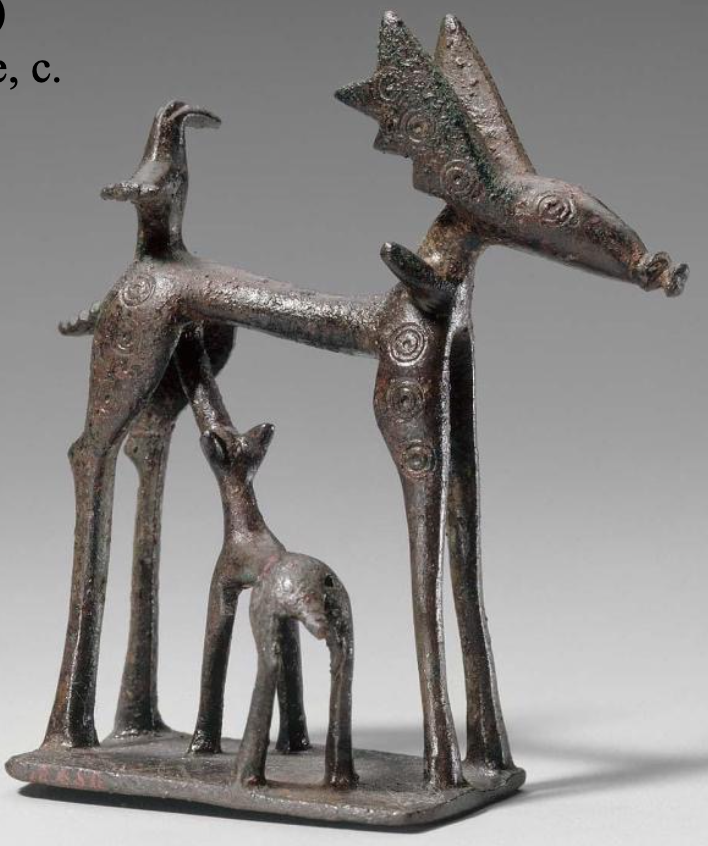
Bronze geometric votive
Geometric period
Around 700 BCE
Bronze
Deer and fawn, bird perching on deer
Meander pattern on the bottom = geometric piece
Made to stand/hang from tree branches/attaches to tripod cauldrons
Evidence for religious practices - dedicated to the gods, to gain favour from them
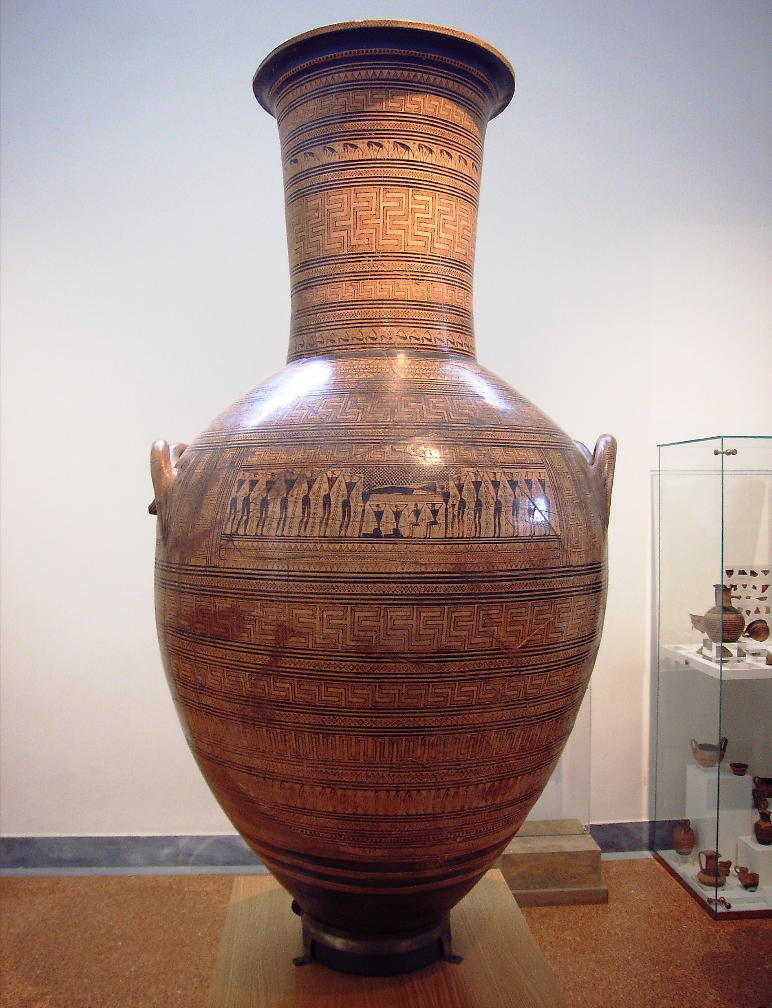
Dipylon amphora
1.55m high
Geometric period
Around 750 BCE
Dipylon cemetery, Athens, Greece
Prothesis scene
Horror vacui - fear of emptiness, no empty space because of decorations
Evidence for funeral rituals and conspicuous consumption through extravagant grave markers
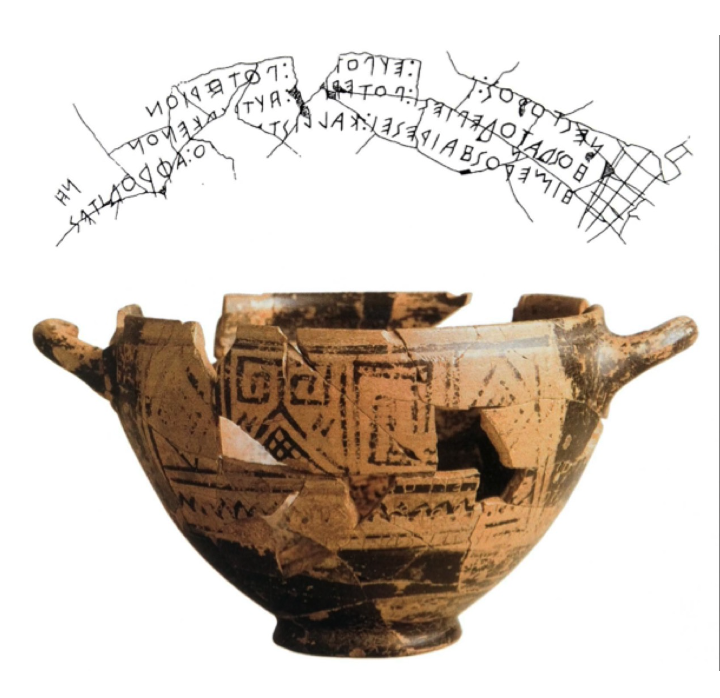
Nestor’s cup
Geometric period
Late 8th century BCE
Skyphos
Pithekoussai, Greece
Reference to Nestor’s cup from the Iliad
“I am Nestor’s cup, good to drink from. Whoever drinks from me will at once be seized by desire for fair-crowned Aphrodite.”
Inscription in epic meter scratched onto cup after firing
Iambic hexameter associated with Homeric epics
Earliest evidence of Greek writing currently known
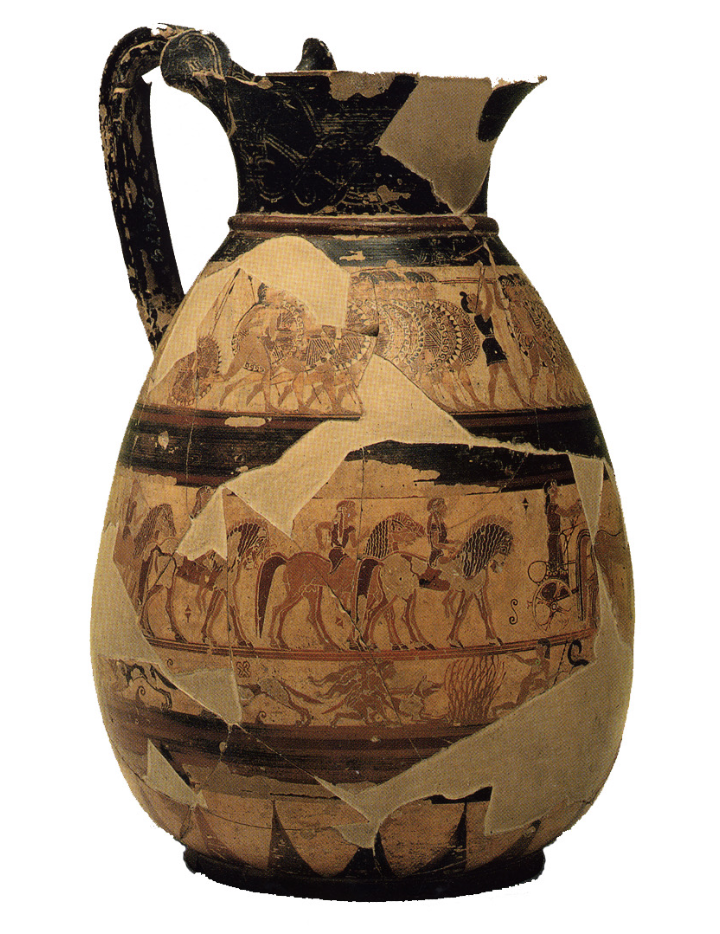
Chigi Vase
Made by Chigi Painter
26 cm
Protocorinthian
650-640
Olpe, for drinking wine
Tomb in Monte Aguzzo, ancient Etruria
Buried with the dead to show good taste and honour their memory in death
Young boys hunting hares
The horsemen, charioteer and lion hunters
Foot soldiers
Evidence for how youths in Archaic Corinth lived or were expected to live
Evidence for how to live an honorable life as a man living in that time - how to be an ideal man, a hero
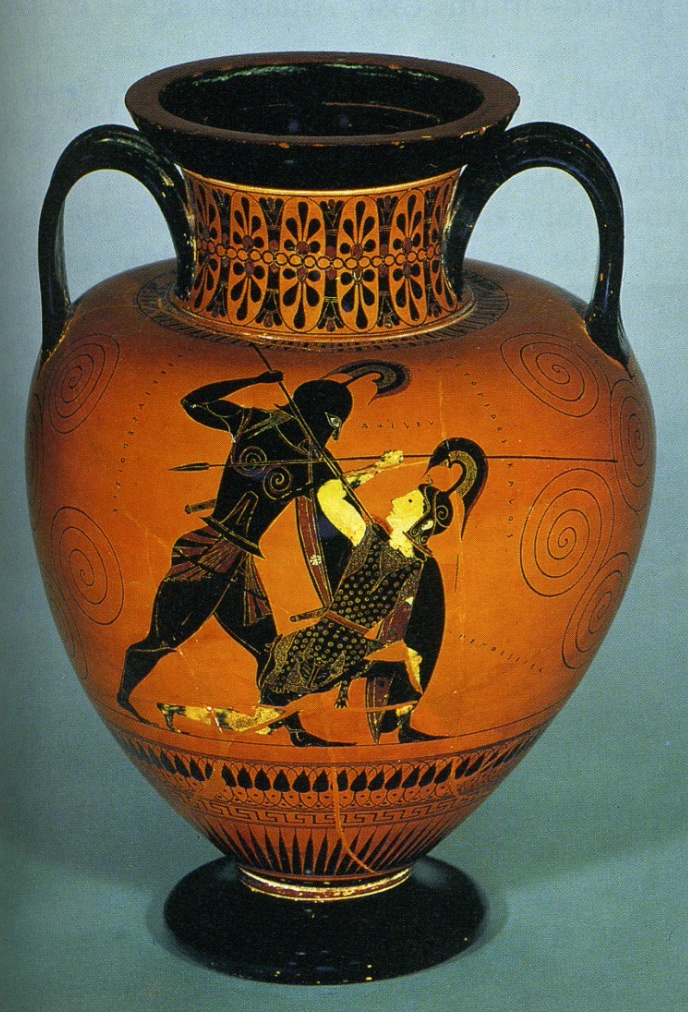
Achilles and Penthesileia by Exekias
Painted by Exekias
Archaic period
540-530 BCE
Black Figure amphora
Found in an Etruscan tomb
Achilles and Penthesileia, queen of the Amazons
Pathos: we are told Achilles falls in love with her the moment he kills her
Penthesileia has the qualities of a man which makes her evil, so she must die
Evidence of Archaic BF conventions: frontality, violence, height of action, mythological scenes
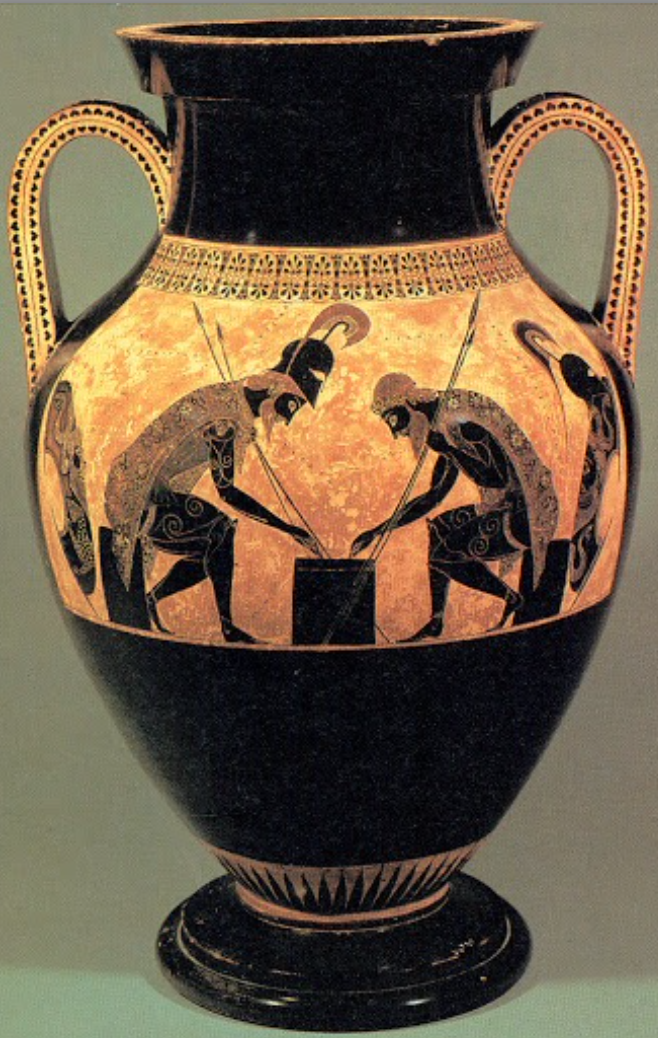
Ajax and Achilles by Exekias
Painted by Exekias
Archaic period
540-530 BCE
Black Figure amphora
Not typically Archaic, not height of action - they’re playing a tabletop game, maybe rolling dice
Evidence of moving away from Archaic BF conventions and into more everyday action
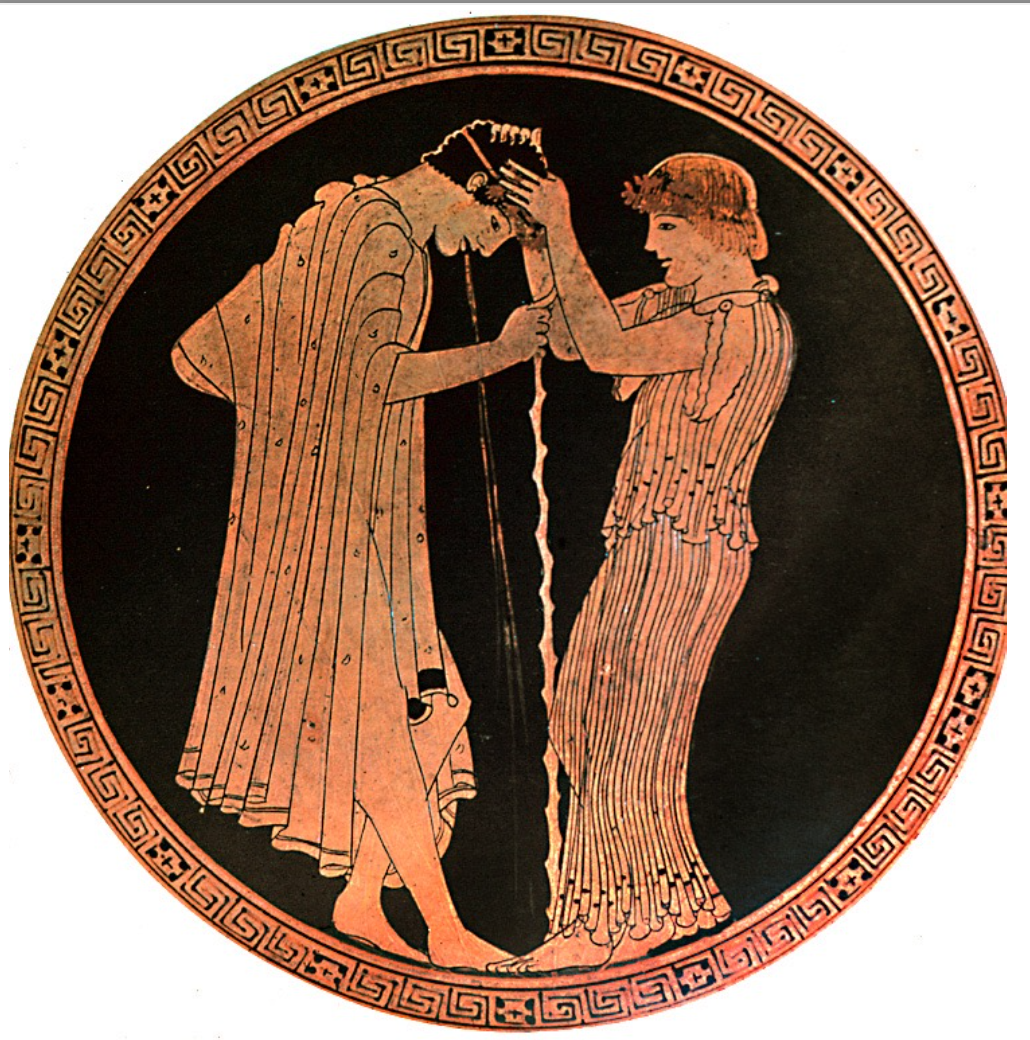
Kylix tondo by Brygos Painter
Painted by Brygos Painter
Archaic period
490-480 BCE
Red Figure kylix
Artwork at the bottom of the cup - man throws up after drinking too much, woman helping him
Intended as a joke on the drinker - once the cup is emptied, comes to face with possible future
Evidence of Archaic RF convention of typical everyday scenes, which the Brygos Painter specialised in
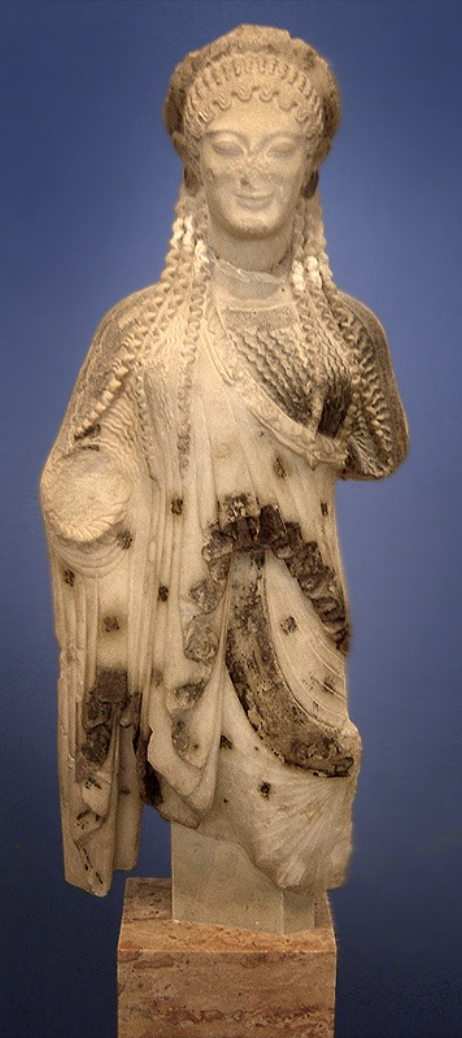
Ionian-style kore
Archaic period
Late 6th BCE
Marble/limestone
Athenian acropolis
Aristocratic dedication or grave marker
Dress is elaborate, frilly, asymmetrical = Ionian in style
Evidence of frontality and increasing realism in Greek sculpture
Evidence of Ionian style in Athens after Ionian artists fled their homeland when the Persians came
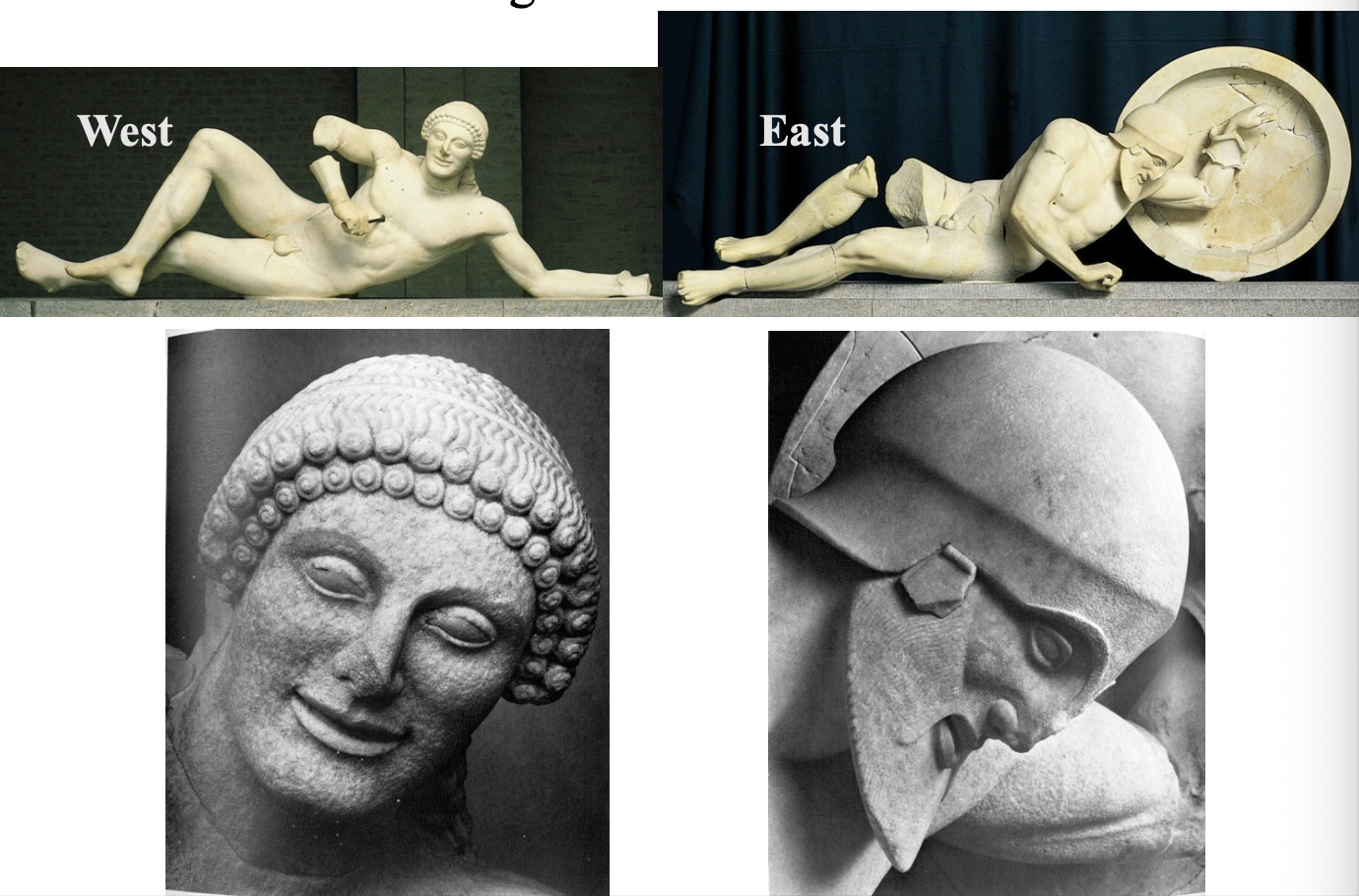
Pediments from Temple of Aphaia
15 m wide, max 1.68 tall
Late Archaic and Early Classical
West = 500-490, East = 490-480
Marble
Temple of Aphaia, Aegina
2 fallen warriors
West = Archaic smile, uncomfortable/unrealistic pose
East = Attempt at showing expression, body’s weight is better depicted, pose isn’t awkward, arm muscles tensing as he tries to move himself
Shows difference in style between Late Archaic and Early Classical sculpture - artistic convention has changed. Movement is starting to show in poses
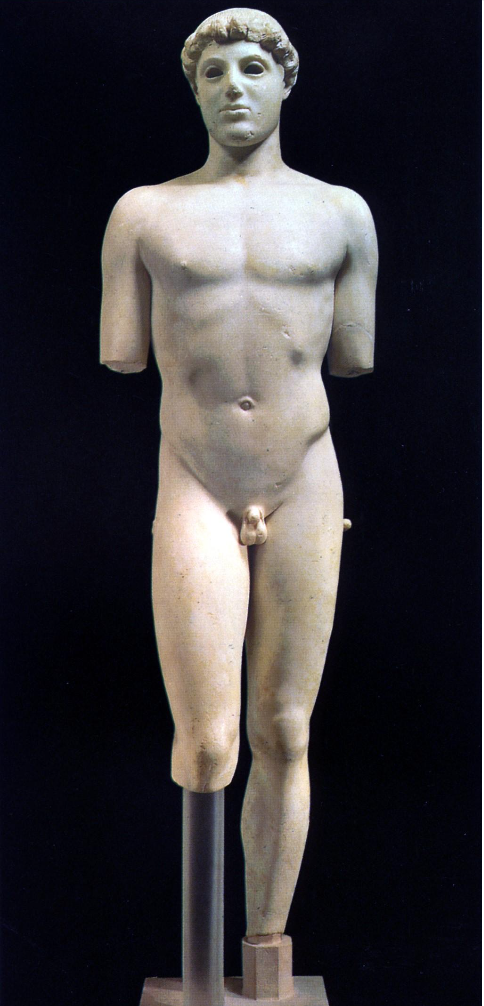
Kritios boy
Sculpted by Kritios
1.17 meters
Early Classical
Around 480 BCE
Marble
In the destruction debris left by the Persians
Idealised, youthful face typical of the Severe style
Frontality (looks good in only one angle)
Expression of serenity/thoughtfulness/calm
Broken free of the stiff kouros stance - standing relaxed, slight tilt in the hips and face slightly turned to one side, right leg bent at the knee
Showing movement and balance in the body
Evidence of Early Classical style sculpture in its earliest phases
Represents introduction of democracy to Athens - moving away from aristocratic ideals
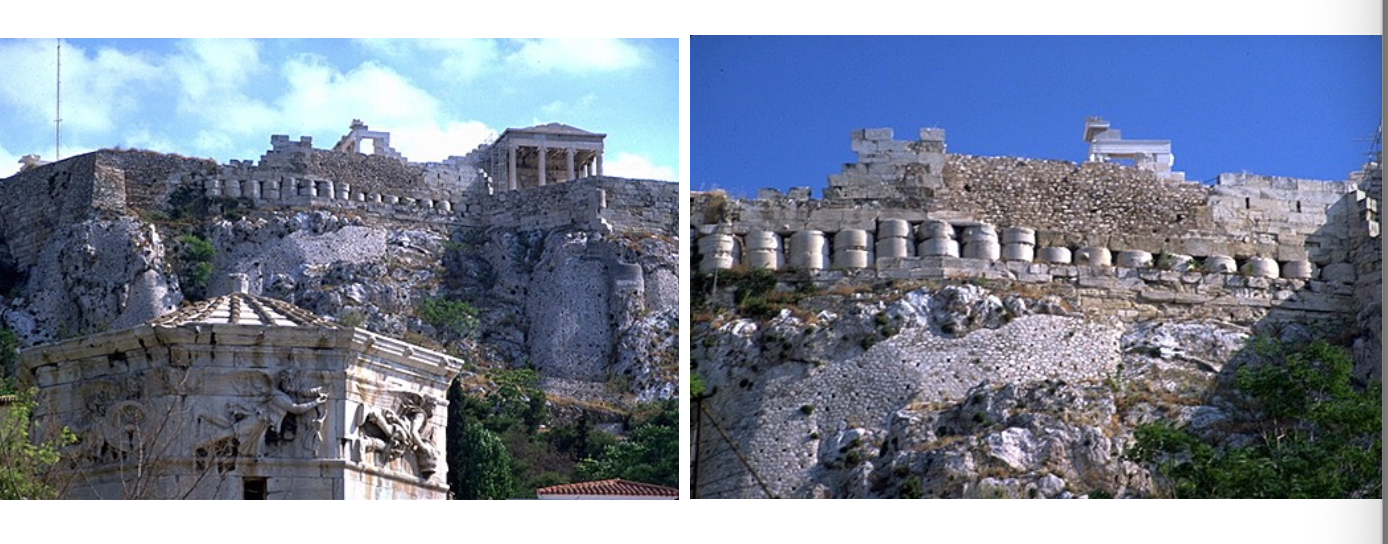
Column drums, unfinished Older Parthenon
Early Classical
Before 480 when the Persians arrived
Unfluted 29 column drums
Athens, North Wall of the Acropolis
Oath of Plataia = “We will not rebuild our temples“
Old Parthenon was destroyed - incorporated columns into fortifying the acropolis
Evidence of the Oath of Plataia taking place - cannot rebuild the Old Parthenon so they reused the column drums instead
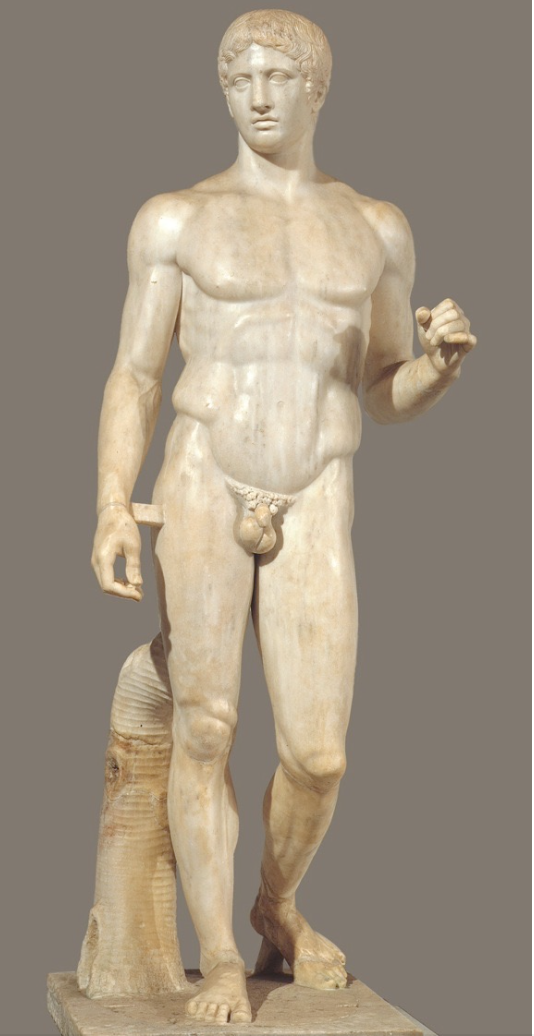
Doryphoros, “Spear-Carrier“
Sculpted by Polykleitos
2.12 meters
High Classical
Around 440 BCE
Marble copy
Youthful face, mature body
Expression of serenity/thoughtfulness/calm
Embodies Polykleitos’ ideal proportions of the standing male figure (canon) - calculated from mathematical proportions
Fits the gods and serves as a model for male Greeks
Left heel is lifted off the ground - walking
Contrapposto (Opposition to create balance) and chiastic (balance rest with movement/tension) pose
Evidence of shift from Early Classical to High Classical style
Evidence of development in Greek sculpture - advancement in depicting movement in space
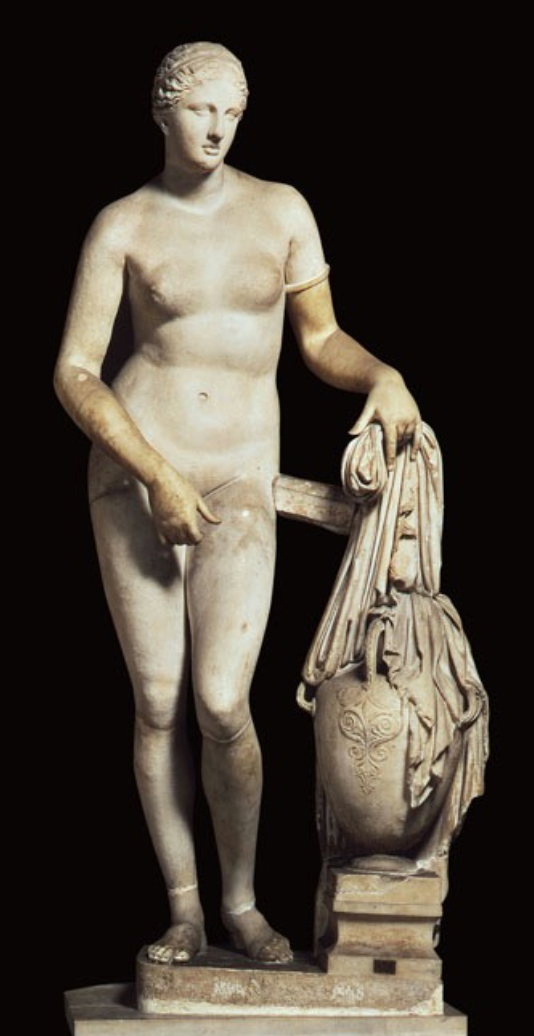
Aphrodite of Knidos
Sculpted by Praxiteles
Original is from 350 BCE
High Classical
4th century BCE
Set up in Knidos
Marble copy
S-curve body
To be viewed from all sides - no more frontality
Still need an excuse to show a female nude - it was taboo
First full-scale female nude sculpture currently known
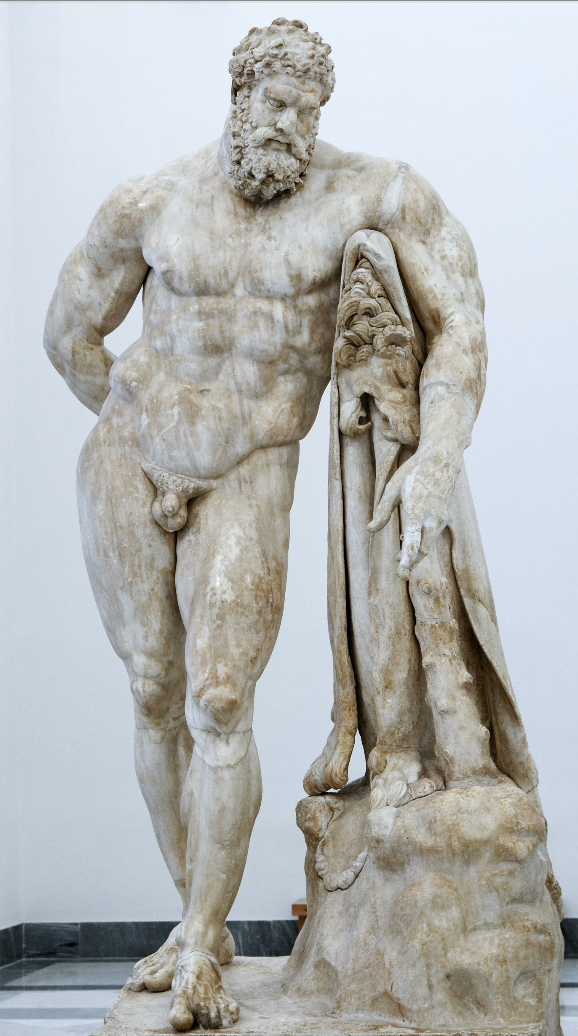
Herakles at rest, Lysippos
Sculpted by Lysippos
3.17 meters
High Classical
Around 325 BCE
Bronze original, marble copy
Found in Rome
Herakles with his lion skin and club
Weary after his labours
Holding an apple from the Hesperides behind his back - he’s almost at the end of his labours.
Meant to be seen from all sides - no frontality
Evidence of moving away from the frontality of Early Classical sculpture - now allowing the viewer to interact with the piece
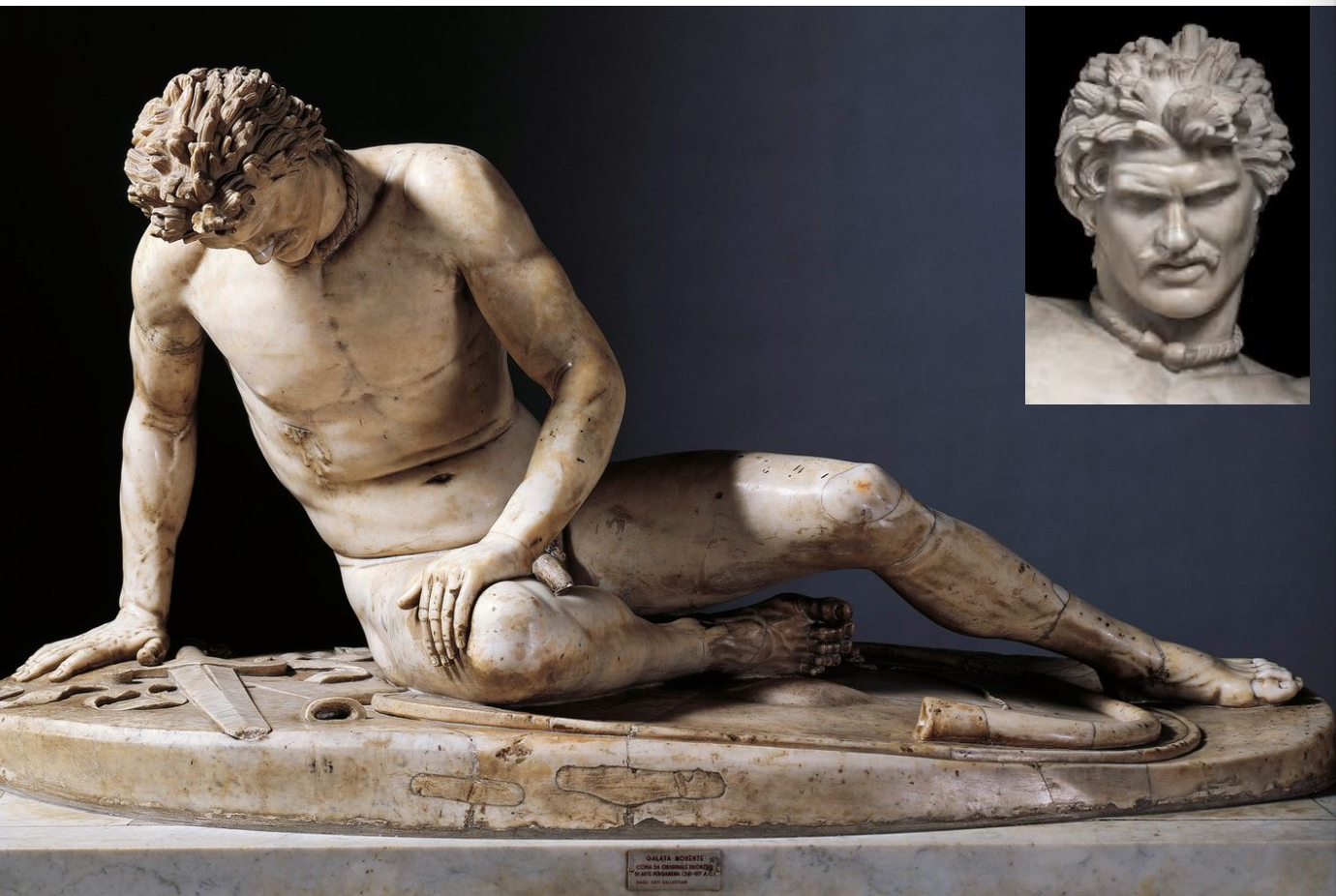
Dying Gaul (trumpeter)
0.93 meters
Hellenistic period
Around 220 BCE
Marble copy
Found in Rome
Pained, despairing expression - grimacing as if he knows he's dying - moving on from that Archaic smile
non-Greek features, stereotype of a Gaul - wild hair, moustache, torque (sign of status)
Realistically spurting blood
one of the statues the Pergamenian king had made of Gauls dying to celebrate their victory
Evidence of Hellenistic baroque style - twisting bodies, heavy musculature, and despairing faces (pathos)
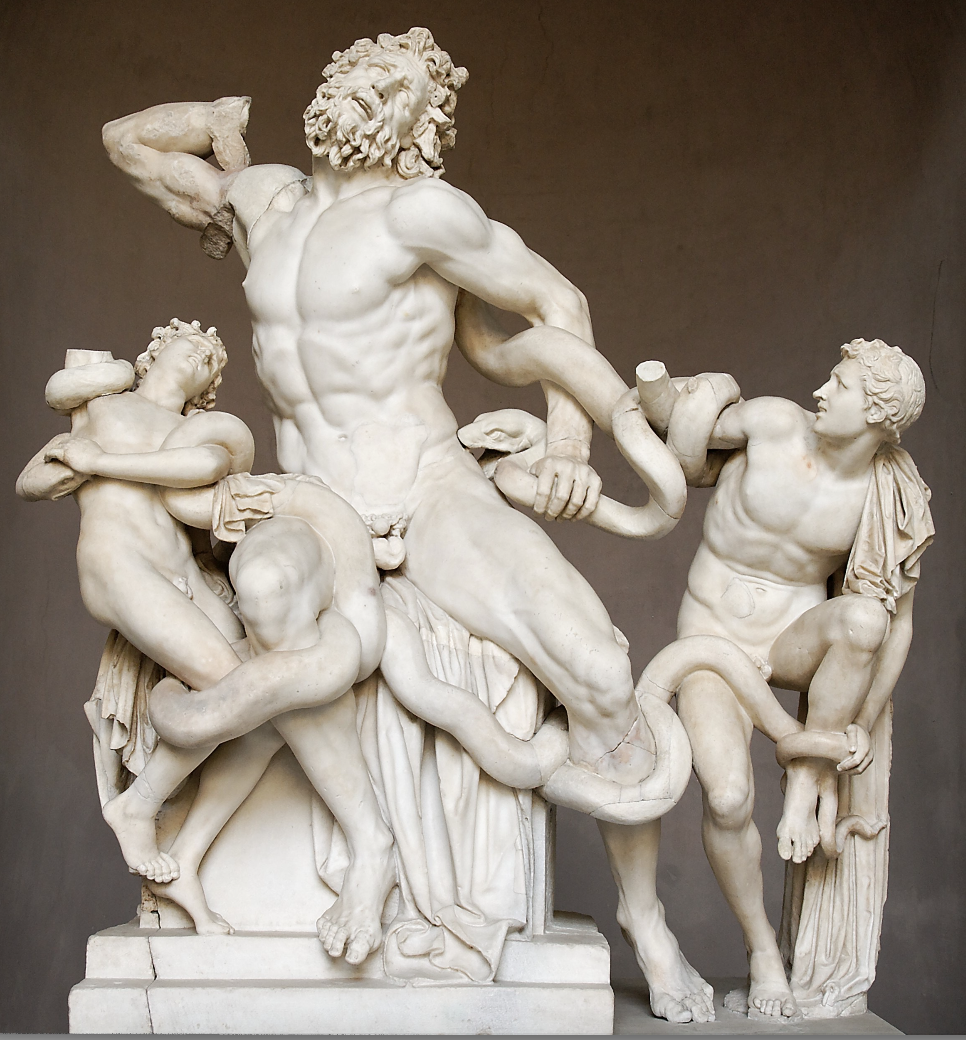
Laocoön and his sons
1.84 meters
Hellenistic period
Around 100 BCE
Marble
Found in Rome
Trojan priest and his sons being strangled by serpents, sent out by Athena
Hellenistic baroque style
Only 1 viewpoint
Evidence of Hellenistic baroque style - twisting bodies, heavy musculature, and despairing faces (pathos)

