MODULE 4 HW
 Studied by 0 people
 Call Kai
 Learn
Learn Practice Test
 Spaced Repetition
 Match
Match Flashcards
 Knowt Play
1/47

There's no tags or description
Looks like no tags are added yet.
Name | Mastery | Learn | Test | Matching | Spaced | Call with Kai |
|---|
No analytics yet
Send a link to your students to track their progress
48 Terms
Within the scope of PT
• Obesity • Excessive caloric intake • Deficient fiber intake • Deficient intake of vegetables • Excessive intake of sugars & sweets
Outside the scope of PT
• DM • Protein-Calorie malnutrition • Morbid obesity (>80-100lbs IBW)
Sum of all the interactions between an organism and the food it consumes; It is what a person eats and how the body uses it.
• NUTRITION:
Substances acted upon by an enzyme (examples: carbohydrates, fats).
• SUBSTRATES:
Organic and inorganic substances found in foods that are required for body functioning; chemical substances that are necessary for life.
o THREE MAJOR FUNCTIONS:
1. Provide energy for body processes and movement
2. Provide structural material for body tissues Regulate body processes
3. Regulate body processes
• NUTRIENTS:
Nutrient content of a specified amount of food
• NUTRITIVE VALUE:
Simple statements that give advice on the consumption of foods and food components
• NUTRITIONAL GUIDELINES:
graduated from a college/university with a degree in nutrition; passed a licensure examination; has an expertise in food and nutrition
• DIETICIAN:
no licensure requirement or minimal educational requirement; may have little or no education or practical experience in nutrition; not regulated
• NUTRITIONIST:
refers to deficiencies, excesses, or imbalances in a person’s intake of energy and/or nutrients
➢UNDERNUTRITION -insufficient intake of energy and nutrients to meet an individual's needs to maintain good health; lack of nutrients and insufficient energy supply
➢OVERNUTRITION- excess intake of macronutrients and micronutrients; excessive nutrient and energy intake
• MALNUTRITION -
a metabolic disorder that leads to an overaccumulation of fat tissue
• OBESITY -
a psychiatric illness in which a person obsesses about their weight and about food that they eat
➢s/sxs: fear of being overweight, extreme dieting, an unusual perception of body image, and depression
➢may participate in binge eating, self-induced vomiting, and purging with laxatives or enemas
• ANOREXIA NERVOSA -
a psychiatric illness characterized by episodes of eating large amounts of food followed by purging, which is accomplished by vomiting and with the use of laxatives and diuretics; often have a normal weight
➢s/sxs: fear of being overweight, extreme dieting, and bouts of excessive exercise.
• BULIMIA –
FACTORS THAT AFFECT FOOD CHOICES
• Family • Ethnic • Cultural eating patterns • Social factors • Food fads • Time constraint • Stress • Cost & availability of healthy foods
What are these
contain carbon
1. Carbohydrates –provide energy
2. Lipids (Fats) – provide energy
3. Proteins – provide energy; build & repair body tissues
4. Vitamins – regulate body processes
does not contain carbon
1. Water – regulate body processes
2. Minerals – regulate body processes
• INORGANIC NUTRIENTS:
What are these
nutrients needed in large amounts (e.g., hundreds of grams) to provide energy
1. Carbohydrates
2. Fats
3. Protein
4. WATER: body’s most basic nutrient need
• MACRONUTRIENTS:
body’s most basic nutrient need
4. WATER:
What are these
nutrients required in small amounts (e.g., milligrams or micrograms) to metabolize the energy-providing nutrients
• Vitamins
• Minerals
• MICRONUTRIENTS:
WHAT NUTRIENT IS THIS
GOOD SOURCE: Milk, cheese, eggs, liver, yellow and dark green fruits, and vegetables.
MAJOR FUNCTIONS: Required for healthy bones, teeth, skin, gums, and hair; maintenance of inner mucous membranes, thereby increasing resistance to infection; adequate vision in dim light.
DEFICIENCY SYMPTOMS: Night blindness; decreased growth; decreased resistance to infection; rough, dry skin.
Vitamin A
WHAT NUTRIENT IS THIS
GOOD SOURCE: Fortified milk, cod liver oil, salmon, tuna, egg yolk.
MAJOR FUNCTIONS: Necessary for bones and teeth; needed for calcium and phosphorus absorption.
DEFICIENCY SYMPTOMS: Rickets (bone softening), fractures, muscle spasms.
VITAMIN D
WHAT NUTRIENT IS THIS
GOOD SOURCE: Vegetable oils, yellow and green leafy vegetables, margarine, wheat germ, whole-grain breads, and cereals.
MAJOR FUNCTIONS: Related to oxidation and normal muscle and red blood cell chemistry.
DEFICIENCY SYMPTOMS: Leg cramps, red blood cell breakdown.
VITAMINE E
WHAT NUTRIENT IS THIS
GOOD SOURCE: Green leafy vegetables, cauliflower, cabbage, eggs, peas, potatoes.
MAJOR FUNCTIONS: Essential for normal blood clotting. .
DEFICIENCY SYMPTOMS: Hemorrhaging
Vitamin K
WHAT NUTRIENT IS THIS
GOOD SOURCE: Whole-grain or enriched bread, lean meats and poultry, fish, liver, pork, poultry, organ meats, legumes, nuts, dried yeast.
MAJOR FUNCTIONS: Assists in proper use of carbohydrates, normal functioning of nervous system, maintaining good appetite.
DEFICIENCY SYMPTOMS: Loss of appetite, nausea, confusion, cardiac abnormalities, muscle spasms.
Vitamin B1 (Thiamin)
WHAT NUTRIENT IS THIS
GOOD SOURCE: Eggs, milk, leafy green vegetables, whole grains, lean meats, dried beans, and peas.
MAJOR FUNCTIONS: Contributes to energy release from carbohydrates, fats, and proteins; needed for normal growth and development, good vision, and healthy skin.
DEFICIENCY SYMPTOMS: Cracking of the comers of the mouth, inflammation of the skin, impaired vision.
Vitamin B2 (Riboflavin)
WHAT NUTRIENT IS THIS
GOOD SOURCE: Vegetables, meats, whole grain cereals, soybeans, peanuts, potatoes.
MAJOR FUNCTIONS: Necessary for protein and fatty acids metabolism and for normal red blood cell formation.
DEFICIENCY SYMPTOMS: Depression, irritability, muscle spasms, nausea..
Vitamin B6 (Pyridoxine)
WHAT NUTRIENT IS THIS
GOOD SOURCE: Meat, poultry, fish, liver, organ meats, eggs, shellfish, milk, cheese.
MAJOR FUNCTIONS: Required for normal growth, red blood cell formation, nervous system, and digestive tract functioning.
DEFICIENCY SYMPTOMS: Impaired balance, weakness, drop in red blood cell count
Vitamin B12
WHAT NUTRIENT IS THIS
GOOD SOURCE: Liver and organ meats, meat, fish, poultry, whole grains, enriched breads, nuts, green vegetables, and dried beans and peas.
MAJOR FUNCTIONS: Contributes to energy release from carbohydrates, fats, and proteins; normal growth and development; and formation of hormones and nerve-regulating substances.
DEFICIENCY SYMPTOMS: Confusion, depression, weakness, weight loss
Niacin
WHAT NUTRIENT IS THIS
GOOD SOURCE: Liver, kidney, eggs, yeast, legumes, milk, nuts, dark green vegetables.
MAJOR FUNCTIONS:Essential for carbohydrate metabolism and fatty acid synthesis.
DEFICIENCY SYMPTOMS: Inflamed skin, muscle pain, depression, weight loss.
Biotin
WHAT NUTRIENT IS THIS
GOOD SOURCE: Leafy green vegetables, organ meats, whole grains and cereals, dried beans.
MAJOR FUNCTIONS: Needed for cell growth and reproduction and for red blood cell formation.
DEFICIENCY SYMPTOMS: Decreased resistance to infection.
Folic Acid
WHAT NUTRIENT IS THIS
GOOD SOURCE: All natural foods, especially liver, kidney, eggs, nuts. yeast, milk, dried peas and beans, leafy vegetables.
MAJOR FUNCTIONS: Related to carbohydrate and fat metabolism.
DEFICIENCY SYMPTOMS: Depression, low blood sugar, leg cramps, nausea. headaches.
Pantothenic Acid
WHAT NUTRIENT IS THIS
GOOD SOURCE: Fruits, vegetables.
MAJOR FUNCTIONS: Helps protect against infection; required for formation of collagenous tissue, normal blood vessels, teeth, and bones.
DEFICIENCY SYMPTOMS: Slow-healing wounds, loose teeth, hemorrhaging, rough scaly skin, irritability.
Vitamin C (Ascorbic Acid)
MAJOR FUNCTIONS OF MINERALS
WHAT NUTRIENT IS THIS
GOOD SOURCE: Milk, yogurt, cheese, green leafy vegetables, dried beans, sardines, salmon.
MAJOR FUNCTIONS: Required for strong teeth and bone formation; maintenance of good muscle tone, heartbeat. and nerve function.
DEFICIENCY SYMPTOMS: Bone pain and fractures, periodontal disease, muscle cramps.
Calcium
MAJOR FUNCTIONS OF MINERALS
WHAT NUTRIENT IS THIS
GOOD SOURCE: Seafood, meats, beans, nuts, whole grains.
MAJOR FUNCTIONS: Helps with iron absorption and hemoglobin formation; required to synthesize the enzyme cytochrome oxidase.
DEFICIENCY SYMPTOMS: Anemia (although deficiency is rare in humans).
Copper
MAJOR FUNCTIONS OF MINERALS
WHAT NUTRIENT IS THIS
GOOD SOURCE: Organ meats, lean meats, seafoods, eggs, dried peas and beans, nuts, whole and enriched grains, green leafy vegetables.
MAJOR FUNCTIONS: Major component of hemoglobin; aids in energy utilization.
DEFICIENCY SYMPTOMS: Nutritional anemia, overall weakness.
Iron
MAJOR FUNCTIONS OF MINERALS
WHAT NUTRIENT IS THIS
GOOD SOURCE: Meats, fish, milk, eggs, dried beans and peas, whole grains, processed foods.
MAJOR FUNCTIONS: Required for bone and teeth formation and for energy release regulation.
DEFICIENCY SYMPTOMS: Bone pain and fracture, weight loss, weakness.
Phosphorus
MAJOR FUNCTIONS OF MINERALS
WHAT NUTRIENT IS THIS
GOOD SOURCE: Milk, meat, seafood, whole grains, nuts, eggs, dried beans.
MAJOR FUNCTIONS: Essential component of hormones, insulin, and enzymes; used in normal growth and development.
DEFICIENCY SYMPTOMS: Loss of appetite, slow-healing wounds. skin problems.
Zinc
MAJOR FUNCTIONS OF MINERALS
WHAT NUTRIENT IS THIS
GOOD SOURCE: Green leafy vegetables, whole grains, nuts, soybeans, seafood, legumes.
MAJOR FUNCTIONS: Needed for bone growth and maintenance, carbohydrate and protein utilization, nerve function, temperature regulation.
DEFICIENCY SYMPTOMS: Irregular heartbeat, weakness, muscle spasms, sleeplessness.
Magnesium
MAJOR FUNCTIONS OF MINERALS
WHAT NUTRIENT IS THIS
GOOD SOURCE: Table salt, processed foods, meat.
MAJOR FUNCTIONS: Needed for body fluid regulation, transmission of nerve impulses, heart action.
DEFICIENCY SYMPTOMS: Rarely seen.
Sodium
MAJOR FUNCTIONS OF MINERALS
WHAT NUTRIENT IS THIS
GOOD SOURCE: Legumes, whole grains, bananas, orange juice, dried fruits, potatoes.
MAJOR FUNCTIONS: Required for heart action, bone formation and maintenance, regulation of energy release, acid-base regulation.
DEFICIENCY SYMPTOMS: Irregular heartbeat, nausea, weakness.
Potassium
MAJOR FUNCTIONS OF MINERALS
WHAT NUTRIENT IS THIS
GOOD SOURCE: Seafood, meat, whole grains.
MAJOR FUNCTIONS: Component of enzymes; functions in close association with vitamin E.
DEFICIENCY SYMPTOMS: Muscle pain, possible deterioration of heart muscle, possible hair loss and nail loss.
Selenium
NUTRITIONAL GUIDELINES FOR FILIPINOS
1. Eat _____ of food everyday to get the nutrients needed by the body.
2. Breastfeed infants exclusively from birth up to _____mos and then give appropriate complementary foods while continuing breastfeeding for _____ yrs and beyond for optimum growth and development.
3. Eat more _____ and _____ to get the essential vitamins, minerals, and fiber for regulation of body processes.
4. Consume fish, lean meat, poultry, egg, dried beans or nuts daily for _____ and repair of _____
5. Consume milk, milk products, and other calcium-rich food such as small fish and shellfish, everyday for healthy _____ and _____ .
6. Consume safe food and water to prevent _____ and other food-and water-borne diseases.
7. Use iodized salt to prevent _____
8. Limit intake of salty, fried, fatty, and sugar-rich foods to prevent _____
9. Attain normal body weight through proper diet and moderate physical activity to maintain good health and help prevent _____ .
10. Be physically active, make healthy food choices, manage stress, avoid alcoholic beverage, and do not smoke to help prevent lifestyle-related non-communicable diseases.
NUTRITIONAL GUIDELINES FOR FILIPINOS
1. Eat variety of food everyday to get the nutrients needed by the body.
2. Breastfeed infants exclusively from birth up to 6mos and then give appropriate complementary foods while continuing breastfeeding for 2 yrs and beyond for optimum growth and development.
3. Eat more vegetables and fruits to get the essential vitamins, minerals, and fiber for regulation of body processes.
4. Consume fish, lean meat, poultry, egg, dried beans or nuts daily for growth and repair of body tissues.
5. Consume milk, milk products, and other calcium-rich food such as small fish and shellfish, everyday for healthy bones and teeth.
6. Consume safe food and water to prevent diarrhea and other food-and water-borne diseases.
7. Use iodized salt to prevent Iodine Deficiency Disorders.
8. Limit intake of salty, fried, fatty, and sugar-rich foods to prevent cardiovascular diseases.
9. Attain normal body weight through proper diet and moderate physical activity to maintain good health and help prevent obesity.
10. Be physically active, make healthy food choices, manage stress, avoid alcoholic beverage, and do not smoke to help prevent lifestyle-related non-communicable diseases.
WHAT ARE THE 5 BSIC FOOD GROUPS
the DAIRY group
the FRUIT group
the VEGETABLE group
the GRAINS group
the PROTEIN FOODS group
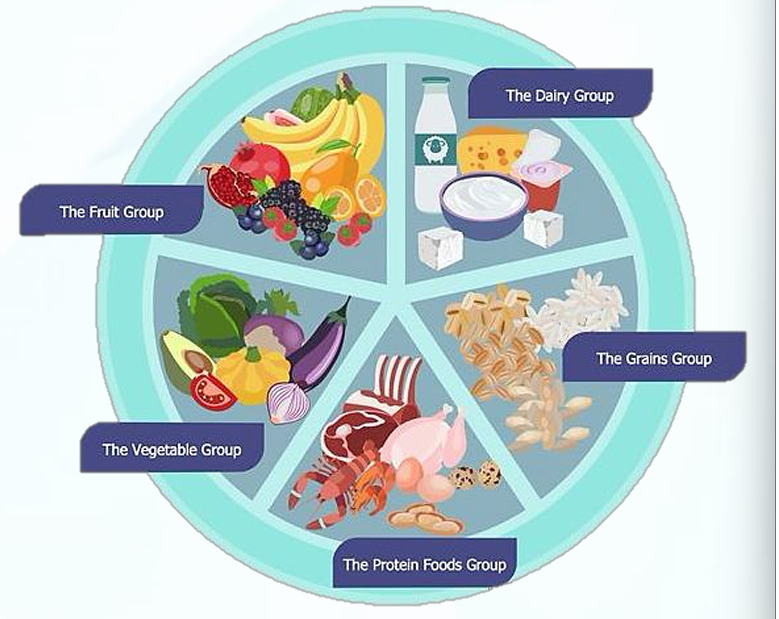
RECOMMENDED SERVING SIZE (Based on 2,000 calories per day)
FRUITS
• Wide variety of fruits; fresh, frozen, canned or dried
• _____ servings of fruit per day
• Examples of one fruit serving:
2 SERVINGS
➢ One medium whole fruit
➢ 1 cup cut-up fruit
➢ 1 cup 100% fruit juice
➢ ½ cup dried fruit
RECOMMENDED SERVING SIZE (Based on 2,000 calories per day)
VEGETABLES
• Wide variety of vegetables; fresh, frozen, canned or dried
• ______ servings of vegetables per day, including dark green, red/orange, starchy and other)
• Examples of one vegetable serving:
2 ½ SERVINGS
➢ 2 cups raw leafy salad greens
➢ 1 cup cut-up vegetables
➢ 1 cup 100% vegetable juice, low-sodium or no salt-added2
RECOMMENDED SERVING SIZE (Based on 2,000 calories per day)
GRAINS
• Whole grain rather than refined grain products
• _______ of grains per day PROTEIN
• Examples of one serving of grains:
6 OUNCES
➢ One slice bread
➢ One small tortilla
➢ 1 cup ready-to-eat cereal flakes
➢ 1 ounce (⅛ cup) uncooked pasta or rice
➢ ½ cup cooked rice, pasta or cereal
➢ 3 cups popped popcorn
RECOMMENDED SERVING SIZE (Based on 2,000 calories per day)
PROTEIN
• _____ equivalents of protein per day including:
➢ _____ of nuts, seeds, beans, peas or lentils
• ______ per week of seafood, preferably oily fish such as salmon, mackerel, cobia, striped bass, herring or sardines
• Examples of one ounce protein equivalents:
• Five and a half-ounce (5 ½ ounce) equivalents of protein per day including:
➢ 5 ounces per week of nuts, seeds, beans, peas or lentils
• 6 to 8 ounces per week of seafood, preferably oily fish such as salmon, mackerel, cobia, striped bass, herring or sardines
➢ 1/4 cup cooked beans, peas or lentils ➢ 1/4 cup or 2 ounces tofu
➢ 1/2 ounce nuts or seeds or 1 tablespoon peanut butter
➢ 1 ounce cooked seafood, meat or poultry
➢ One egg or two egg whites
RECOMMENDED SERVING SIZE (Based on 2,000 calories per day)
DAIRY
• Low-fat and fat-free
• _____ servings per day
• Examples of one dairy serving:
3 SERVINGS
➢ 1 cup milk
➢ 1 cup yogurt
➢ 1 ounce cheese
 Note
Note  Flashcards (20)