psyc 211- Drugs
 Call Kai
 Learn
Learn Practice Test
 Spaced Repetition
 Match
Match Flashcards
 Knowt Play
1/24

There's no tags or description
Looks like no tags are added yet.
Name | Mastery | Learn | Test | Matching | Spaced | Call with Kai | Chat |
|---|
No analytics yet
Send a link to your students to track their progress
25 Terms
Where does our knowledge of neurotransmitters signaling come from
It comes from studying the venom of many species
Many of these compounds interfere with neurotransmitter signaling at the neuromuscular junction, which can cause paralysis (no movement) or spasms (excessive muscle contraction)
What is Acetylcholine
it is a neuromodulator in the brain and spinal cord, often acting at axoaxonic synpapses
It is also used by neurons outside the brain
Motor neurons generally release acetylcholine as their main neurotransmitters
Sensory neurons generally release glutamate as their main neurotransmitter
What is black widow spider venom
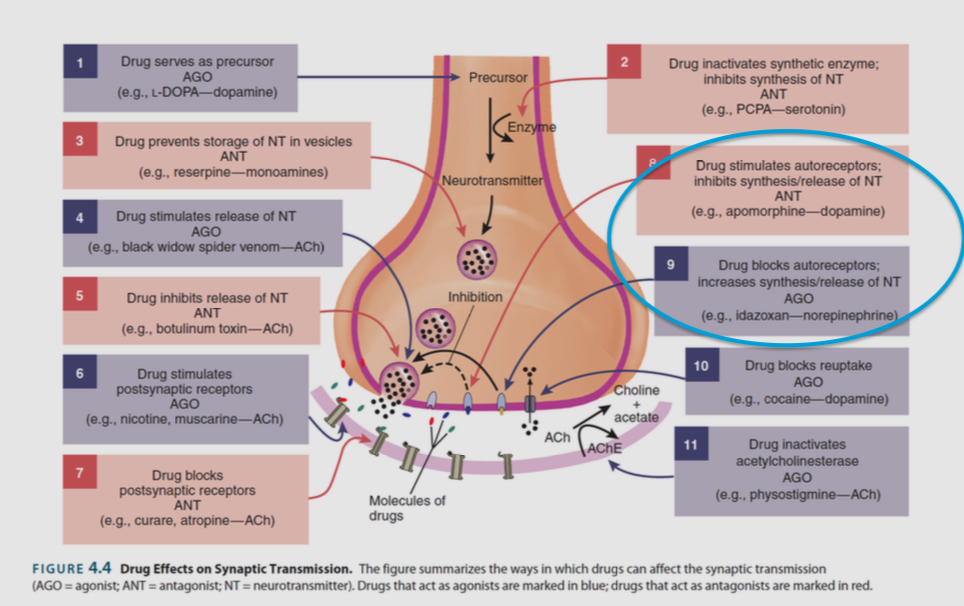
It is poison produced by the black widow spider that triggers the realse of acetylcholine from motor neurons
What is botulinum toxin
Botox
It is toxin produced by the bacteria that grow in improperly canned food. It prevents acetylcholine release from motor neurons, causing muscle paralysis
In high doses, it could kill
What is neostigime
it is a drug that inhibits acetylcholinesterase, the enzyme that breaks down acetylcholine in the synapse
Neostigmine causes acetylcholine to stay around longer in the synapse, strengthening and prolonging muscle contraction
What is the Myasthenia Gravis disorder
it is an autoimmune disorder where a person’s immune system attacks healthy acetylcholine receptors
People with this disorder become progressively weaker and weaker over time
There is still no good way to stop the immune system from doing this or a way to restore healthy acetylcholine receptors, but drugs like neostigimine can reduce fatiguability by keeping acetylcholine in the synapse longer
How are drugs categorized
a common way to classify drugs relates to how they affect post synaptic receptor activity
A receptor agonist is a drug that increases the activity of postsynaptic receptors
A receptor antagonist is a drug that decreases the activity of postsynaptic receptors
How do drugs affect the activity of postsynaptic receptors
direct agonists/ antagonists bind directly to postsynaptic receptors
Indirect agonists/ antagonists affect the activity of postsynaptic receptors in an indirect manner (i.e. They do not directly bind to postsynaptic receptors)
What is psychosis
It is a condition of the mind that results in difficulties determining what is real and what is not real
Symptoms may include delusions,hallucinations,incoherent speech ,and behaviour that is inappropriate for the situation
What are antipsychotics (dopamine receptor blockers)
it is the class of druges used to treat psychosis
they are mostly dirty drugs, which means that they bind to more than one receptor
They all directly block the dopamine D2 receptor, which is an inhibitory ,metabotropic receptor expressed by neurons all over the brain
What is the serotion in 2A receptor (serotonin receptor activators)
It is a part of the brain that is activated by a wide variety of drugs that cause hallucinations
The serotonin 2A receptor (5-HT2A) is metabotropic, and is expressed by neurons all over the brain. In some cells it is excitatory, while in other cells it is inhibitory
Although, not all agonists of the serotonin 2A receptor causes hallucinations
The see
What are the 4 drugs that directly activate the serotonin 2A receptor
Hallucinogens: mescaline, psilocybin, LSD
Not hallucinogens: lisuride
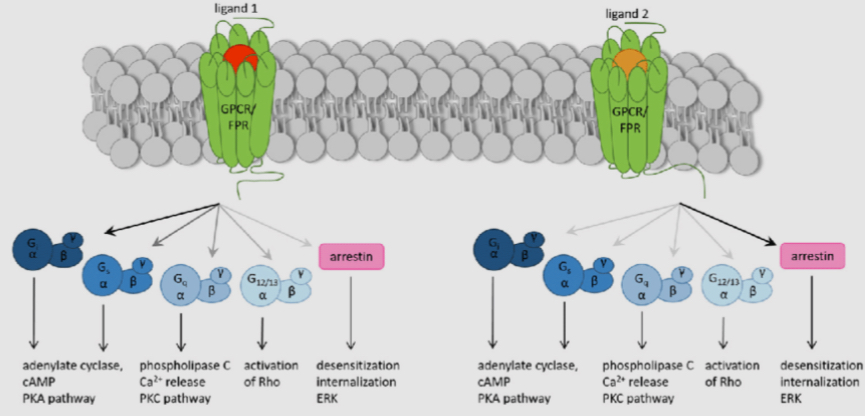
When these drugs activate the 5HT-2A receptor, they launch an intracellular signaling cascade that starts with the protein G q/11.
Serotonin activates this receptor in the same manner
Hallucinogenic drugs also trigger the receptor to activate the G i/10 protein
Hallucinations seem to be the result of this receptor activating the G i/10 protein
What is biased agomism
it is when a ligand causes a metabotropic receptor to preferentially activate one type of intracellular G protein, whereas another ligand at the same receptor might preferentially activate a different G protein
It all relates to how the ligand binds to the receptor
What is competitive binding
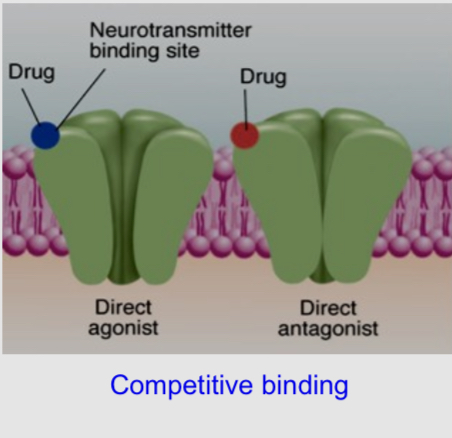
direct agonists/ antagonists can be classified as competitive or non-competitive
A competitive agonist acts similarly to the endogenous neurotransmitter. It activates the receptor by binding where the neurotransmitter normally binds. It can be full of partial agonists
A competitive antagonist attaches to the same binding where the neurotransmitter normally binds, but it doesn’t activate the receptor. Competitive antagonists are full antagonists
What is affinity
It refers to the probability and tightness of ligand-receptor binding
What is non-competitive binding
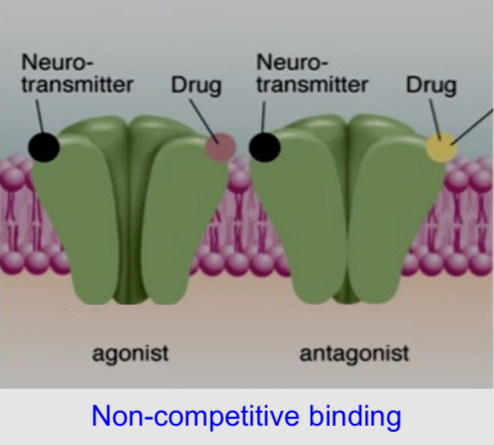
It is when a drug binds to a receptor at a site that does not interfere with the binding site of the normal ligand
It is possible for a neurotransmitter to bind to one site on a receptor while a drug binds to another site on the same receptor
A non-competitive agonist fully or partially activates the receptor
A non competitive antagonist fully blocks receptor activation. It doesn’t compete for the neurotransmitter binding site. It wins without competing by binding to an alternative site
What are allosteric modulators
they are non competitive drugs that only influence receptor activity when the neurotransmitter is also bound to the receptor
Negative allosteric modulators reduce the effect of the primary ligand
Positive allosteric modulators amplify the effect of the primary ligand
What is Parkinson’s disease and what it it’s cause
it is a neurological disorder that is characterized by tremors, rigidity of limbs, poor balance, and difficulty initiating movements
It is caused by the degeneration (death) of dopamine neurons in the midbrain
L-dopa is used as a drug to treat this disease becuas it increases dopamine production I mythe brain and acts as an indirect dopamine receptor agonit
Principles of pharmacology
conventional neurotransmitters are made in axon terminals, where an enzyme converts a precursor molecule into a neurotransmitter
Enzymes synthesize neurotransmitters from precursor molecules
Once made, neurotransmitters are packaged into synaptic vesicles
Many proteins in the axon terminal regulate neurotransmitter release (i.e. the vesicular release machinery)
The clearance of neurotransmitters from the synapse is controlled the reuptake transporters proteins and enzymatic deactivation
What are methylphenidate and cocaine
they are drugs that block catecholamine reuptake transporters, meaning that they block the reuptake of dopamine & norepinephrine
What are adderall and crystal meth
they are drugs that reverse catecholamine reuptake transporters, causing dopamine and norepinephrine to flow out of the axon terminal before being packaged into a vesicle (i.e. action potential-independent, non-vesicular release)
Ecstasy has a similar effect on all the monoamine reuptake transporters (i.e. causing the, to run backwards)
What are the categories of drugs
according to their effects on postsynaptic receptor activity
According to their behavioural effects (stimulant, depressant)
According to their physiological effects (action potential blocker)
According to their actions on specific proteins (serotonin reuptake blokcer)
How do heroin, morphine, and Imodium anti-diarrheal enter the brain
heroin easily crosses the blood-brain barrier because an enzyme in the blood makes it very lipid/ fat soluble
Morphine less easily crosses the blood barrier because it is less soluble in lipids than heroin
Imodium anti-diarrheal do not cross the blood-brain barrier
These opioid receptors all are inhibitory metabotropic receptors found throughout the body and brain. They get activated by endogenous opioid peptides that function as hormones in the body and as neuropeptides in the brain
What is tolerance
Era me
it is when a drug effect gets smaller with repeated administration
The body becomes used to the drug and actively counteracts its effects
Ex: heroin
What is sensitization
it occurs when a drug effect becomes larger with repeated use
Ex: rodents sensitize the effects of cocaine and amphetamine