components and their characteristics
 Call Kai
 Learn
Learn Practice Test
 Spaced Repetition
 Match
Match Flashcards
 Knowt Play
1/18

There's no tags or description
Looks like no tags are added yet.
Name | Mastery | Learn | Test | Matching | Spaced | Call with Kai |
|---|
No analytics yet
Send a link to your students to track their progress
19 Terms
State two ways to measure the variation of current with pd for a component
Use a potential divider to vary the pd from zero
Use a variable resistor to vary the current to a minimum
What is an advantage of using a potential divider over a variable resistor?
The pd across the component can be reduced to zero, which is not possible with a variable resistor circuit
What is an efficient way of capturing the current and pd data?
Connect an ammeter sensor and voltmeter sensor to a data logger, which will measure and record readings, and then displays the data directly on an oscilloscope or a computer
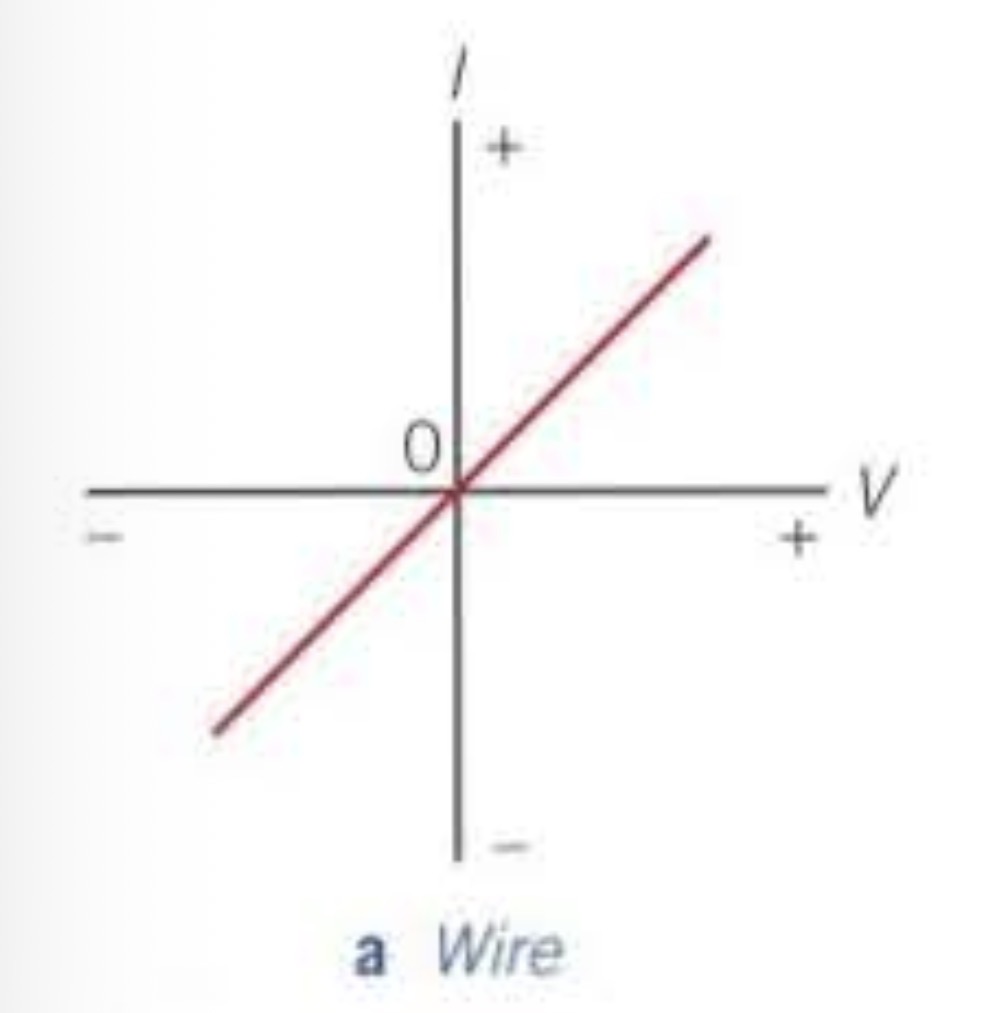
Results of this experiment on a wire
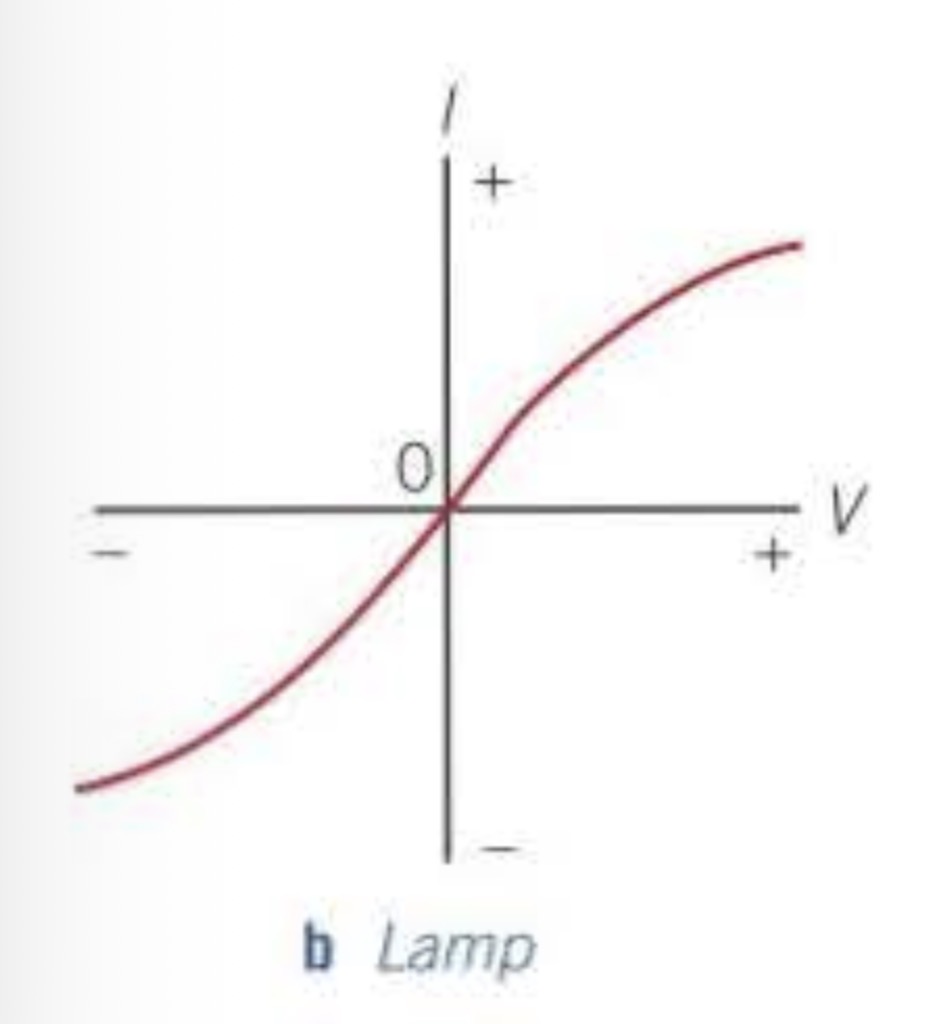
Results of this experiment for a lamp
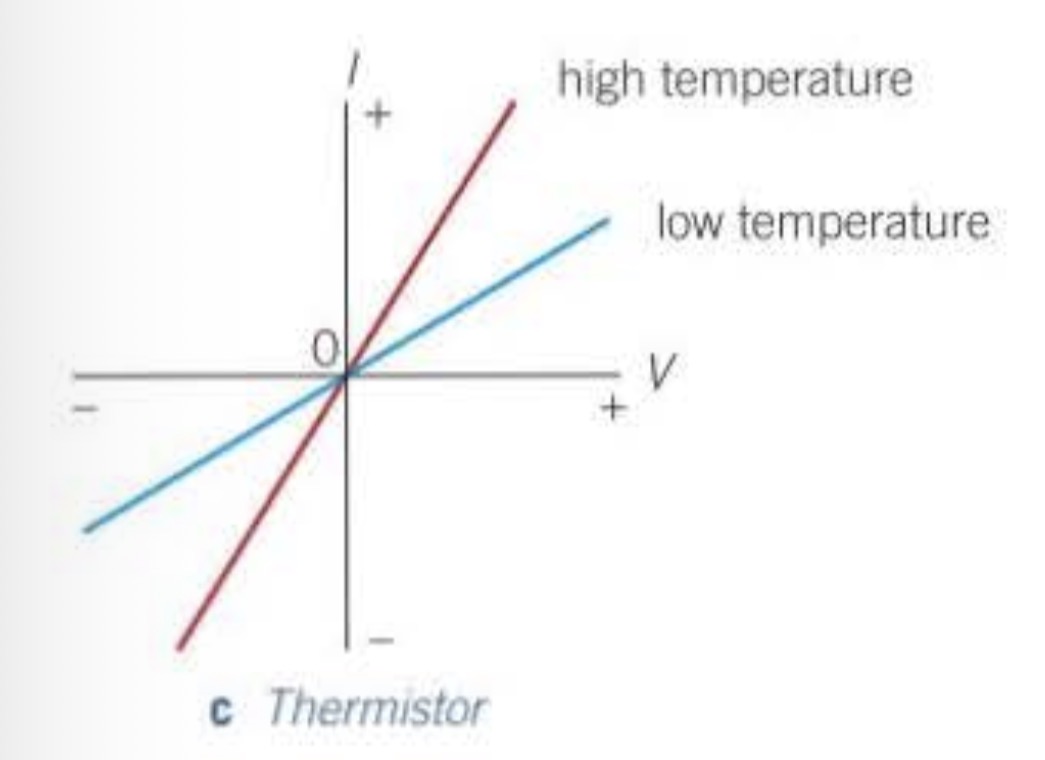
Results of this experiment for a thermistor
Why is the graph for the lamp not a straight line?
The heating effect. Resistance increases as it becomes hotter
What two sets of measurements are taken when investigating the characteristics of a diode?
One with the diode forward biased and one with it reverse biased
What is meant by forward biased?
The diode is connected in its forward direction, allowing current to flow through it
What is meant by reverse biased?
The diode is connected in its reverse direction, allowing only a very small current to flow.
How is the current measured when a diode is reverse biased and why
Using a milliammeter, because the current is very small
What do the results look like for a diode?
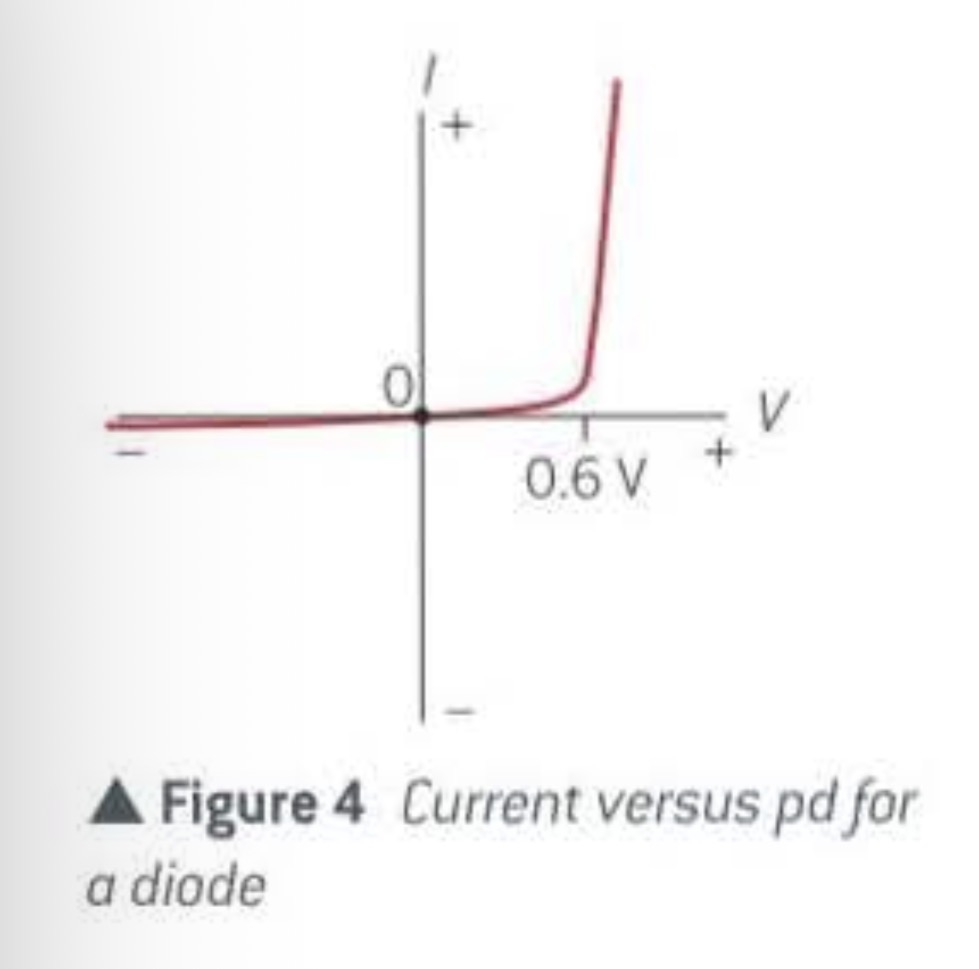
How does the resistance of a metal change with increasing temperature?
Increases
Why does the resistance of a metal increase with temperature?
The positive ions vibrate more at higher temperatures, making it harder for charge carriers to pass through when a pd is applied
What is meant by a positive temperature coefficient?
The resistance of the material increases with increasing temperature
What is meant by a negative temperature coefficient?
The resistance of a material decreases with increasing temperature
What component possesses a negative temperature coefficient?
Intrinsic semiconductors
Why does the resistance of an intrinsic semiconductor decrease with an increasing temperature?
Because the number of charge carriers increases as temperature increases
Why are thermistors preferred over metals as the temperature sensitive component in a temperature sensor?
Because the percentage change of resistance per kelvin is much greater for a thermistor than for a metal, so it is more sensitive

