BIOC 4331 Lecture 23
 Call Kai
 Learn
Learn Practice Test
 Spaced Repetition
 Match
Match Flashcards
 Knowt Play
1/19

There's no tags or description
Looks like no tags are added yet.
Name | Mastery | Learn | Test | Matching | Spaced | Call with Kai |
|---|
No analytics yet
Send a link to your students to track their progress
20 Terms
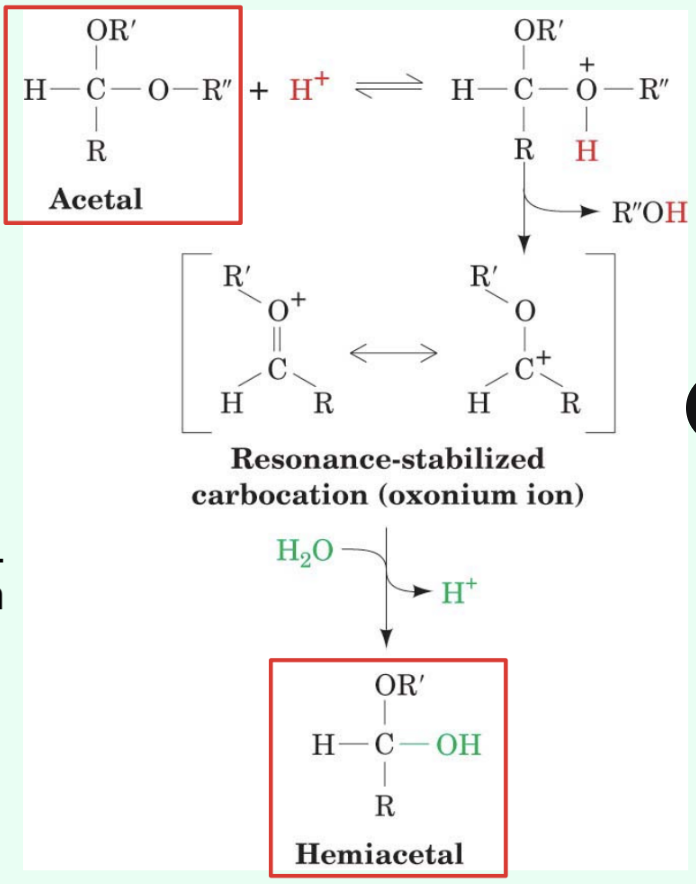
What reaction was used as the model for understanding lysozyme catalysis?
Acid-catalyzed acetal hydrolysis.
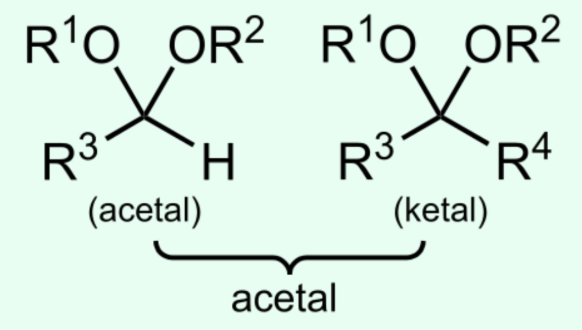
In the analogy used for lysozyme, what overall chemical transformation occurs?
An acetal is converted to a hemiacetal.
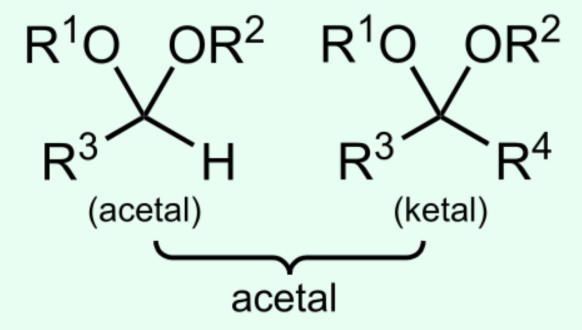
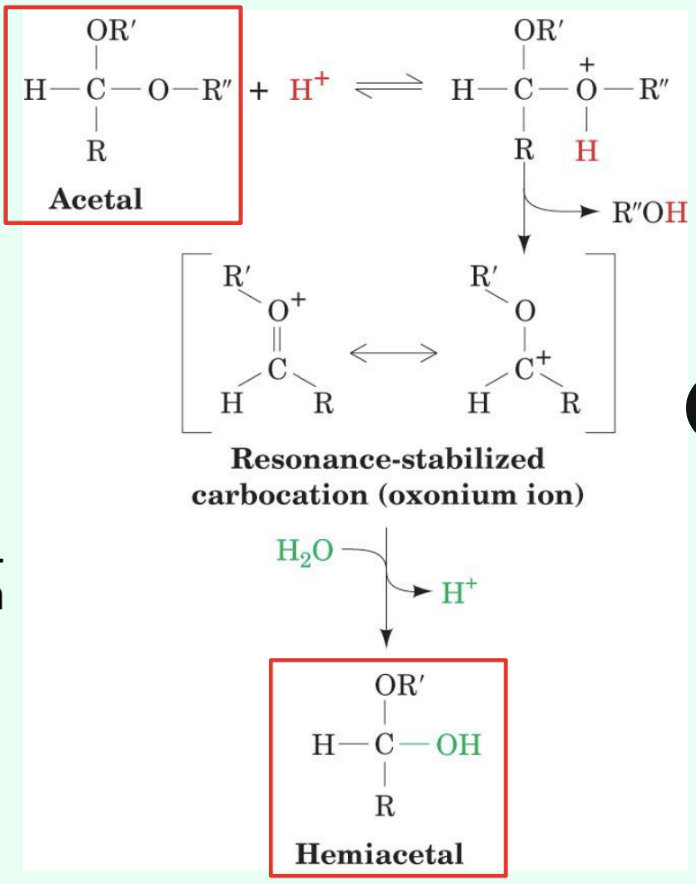
What conversion does HEWL catalyze?
Acetal → hemiacetal
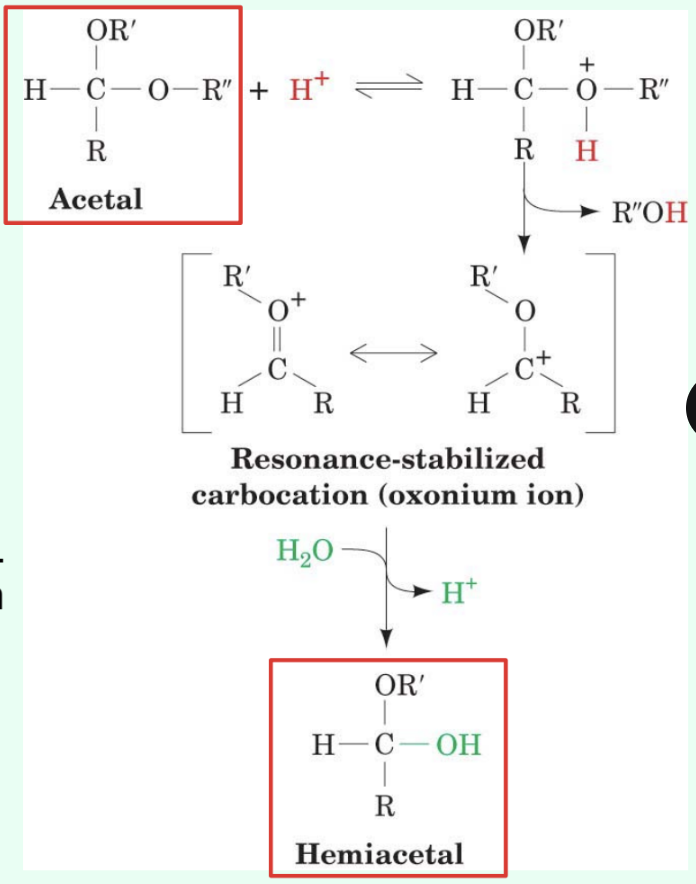
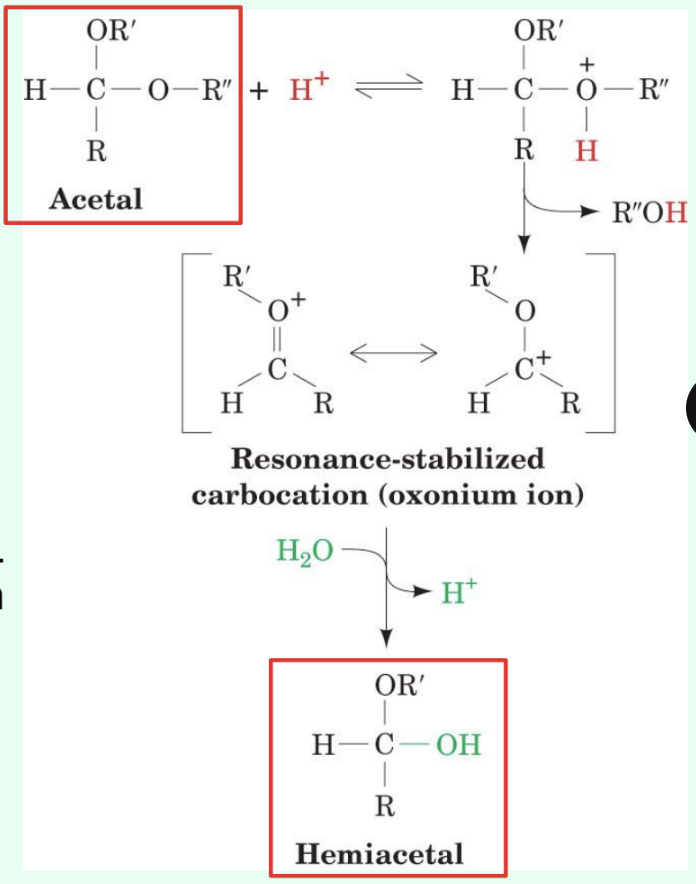
What is an oxonium ion?
An oxygen cation with 3 bonds.
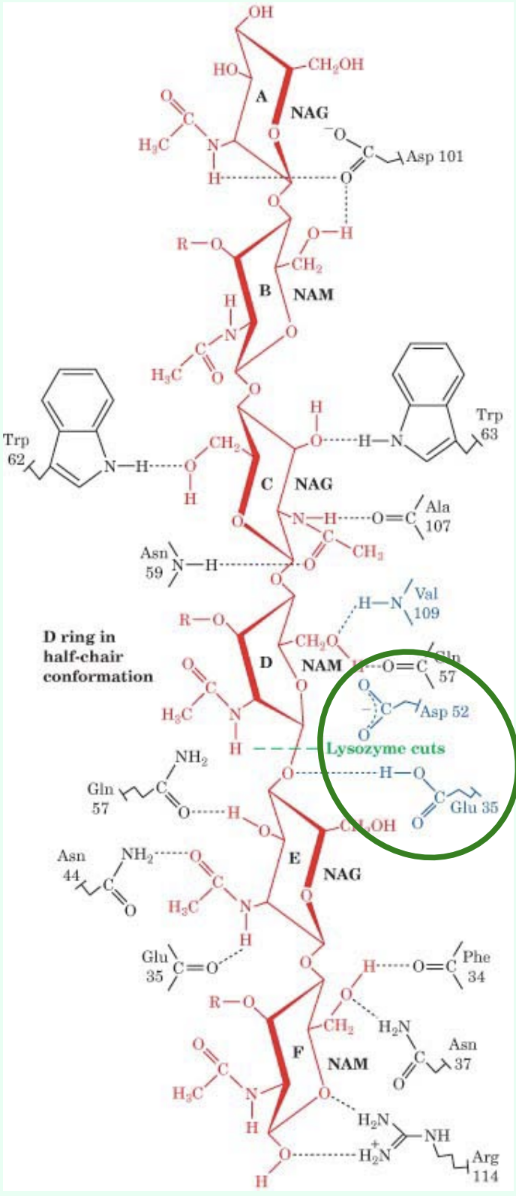
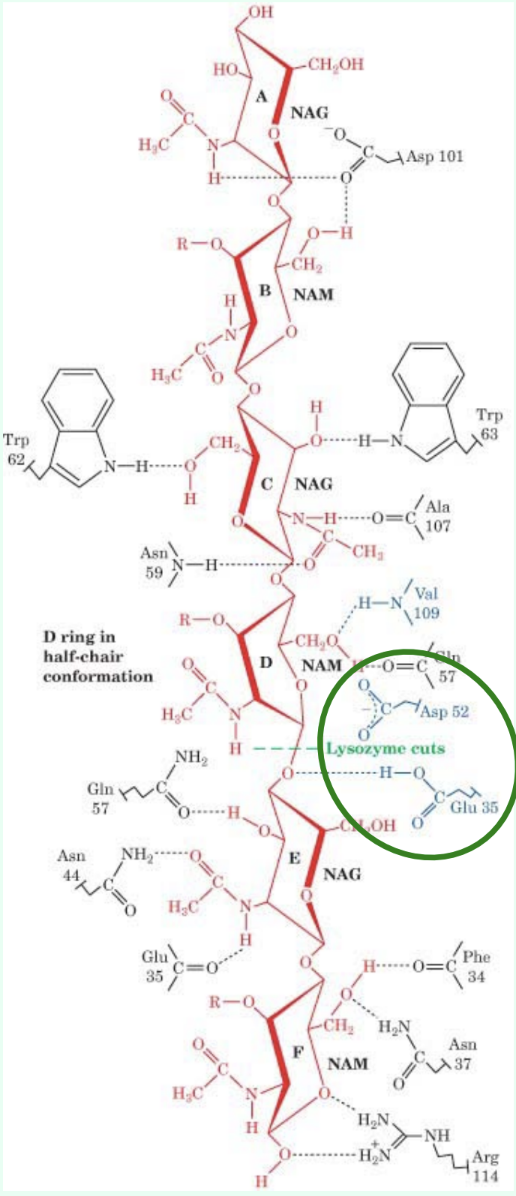
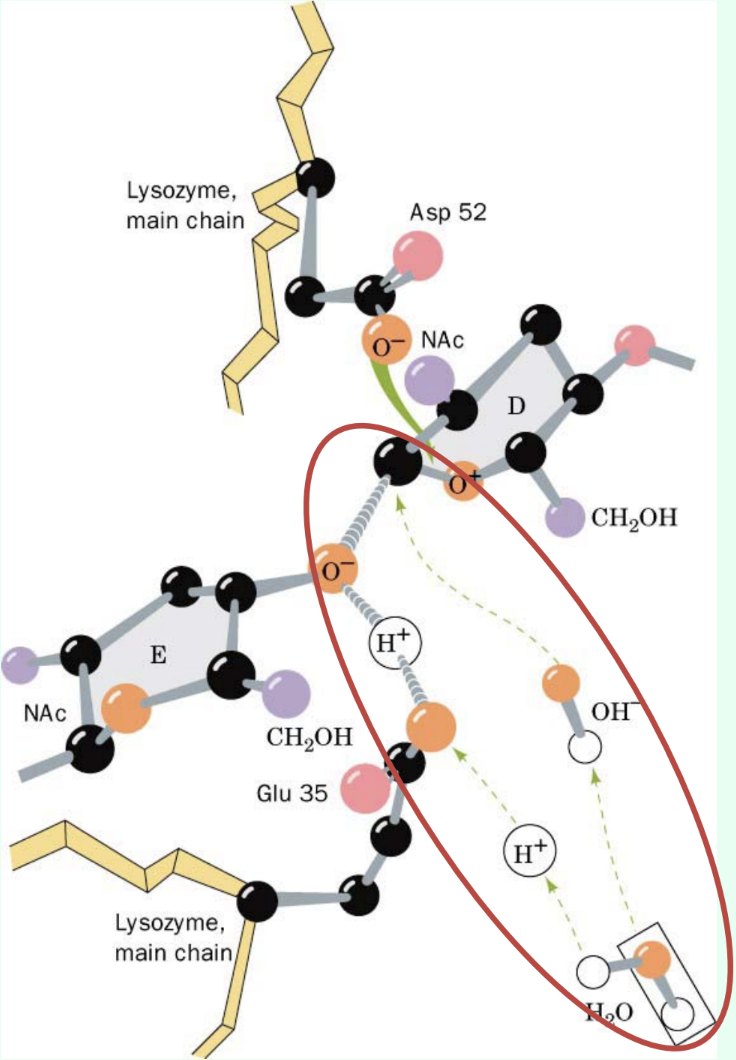
Which two catalytic residues are key in HEWL?
Glu35 and Asp52.
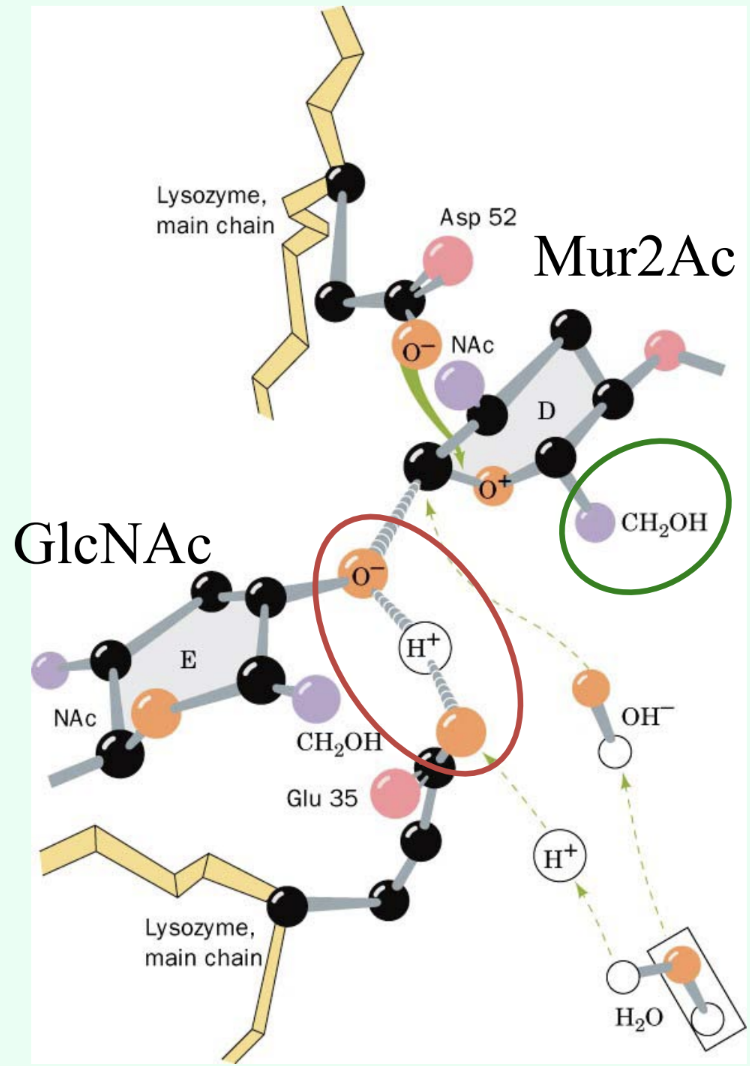
What does H+ donation by an enzyme residue indicate?
General acid catalysis
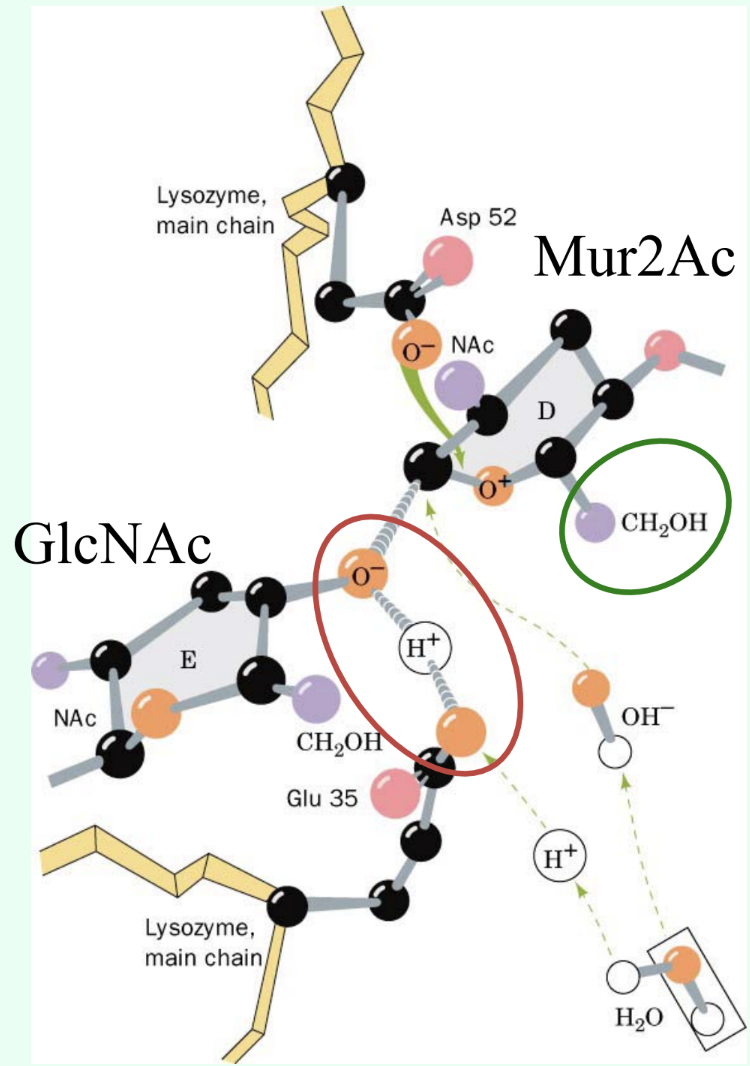
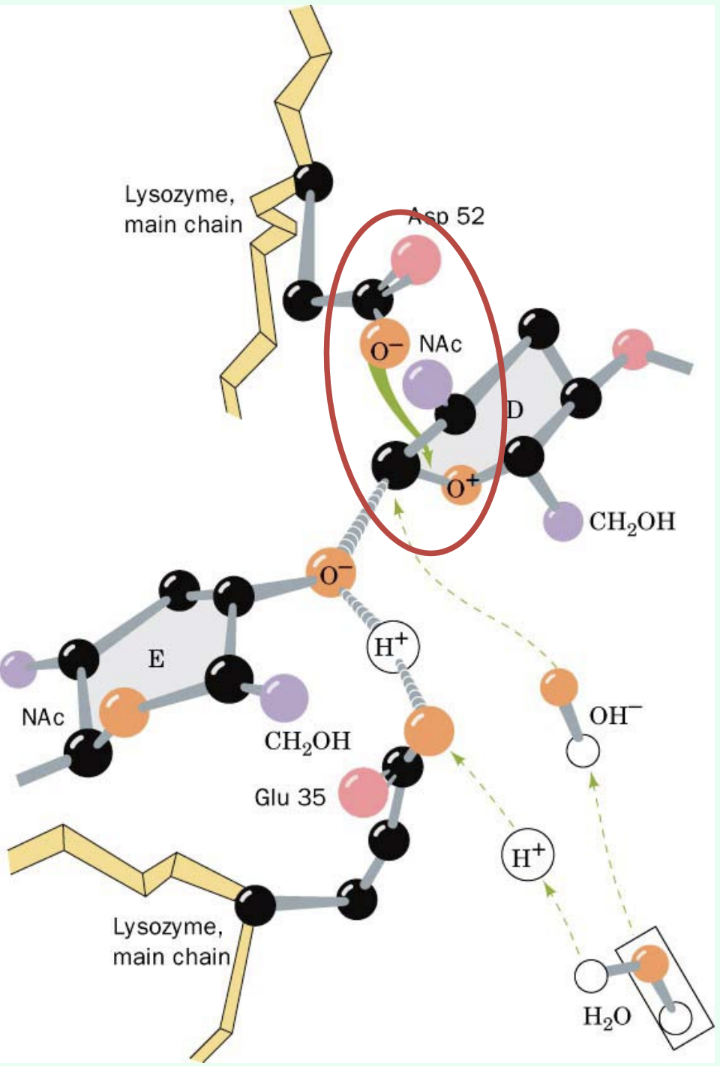
What kind of catalysis is illustrated by strain matching the half-chair transition state?
Transition state stabilization.
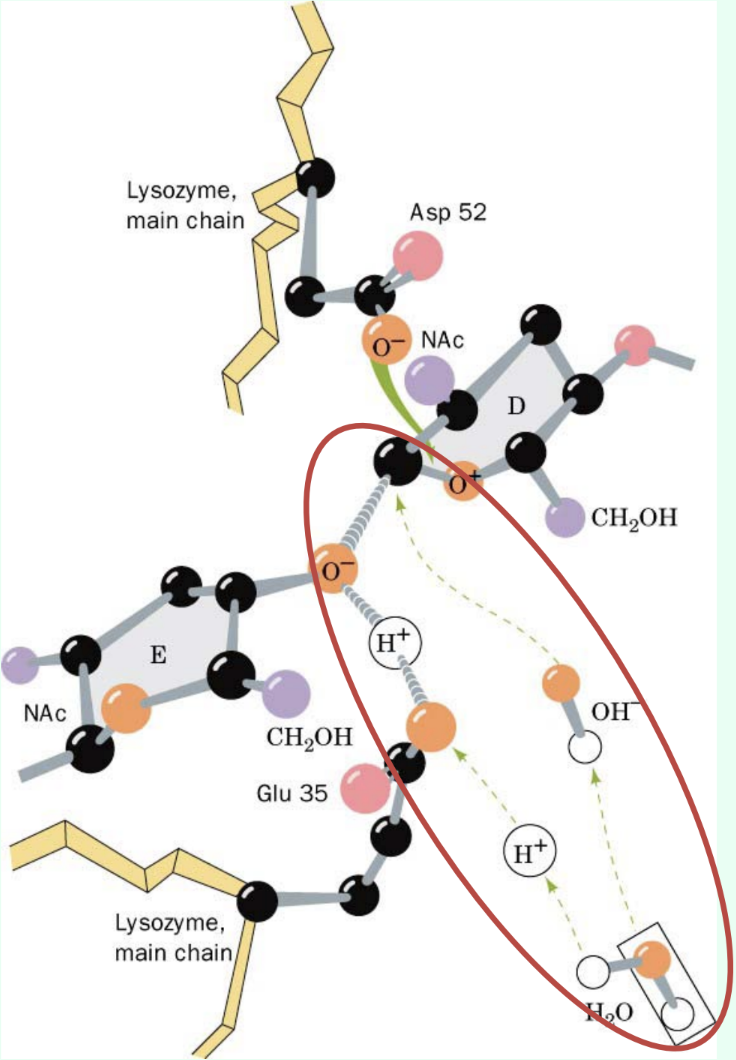
What catalytic role does Glu35 play in lysozyme?
It acts as a general acid (donates H+) first, then as a general base (accepts H+) later.
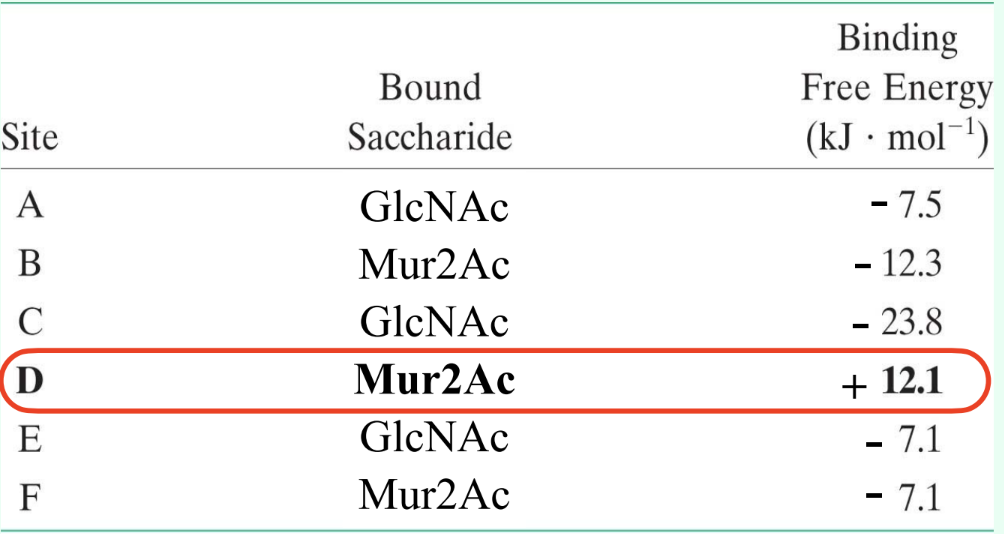
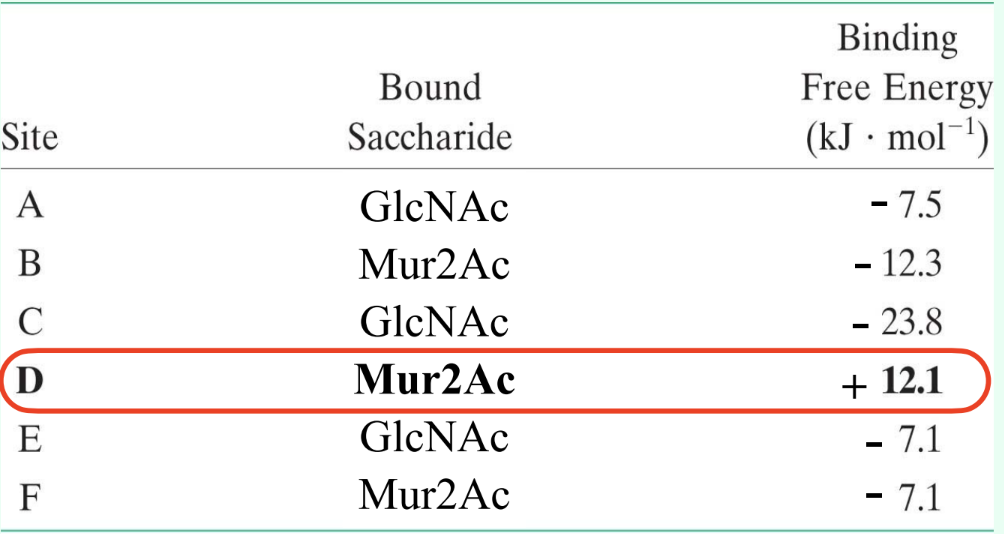
What is the binding free energy for Mur2Ac at site D?
+12.1 kJ·mol-1
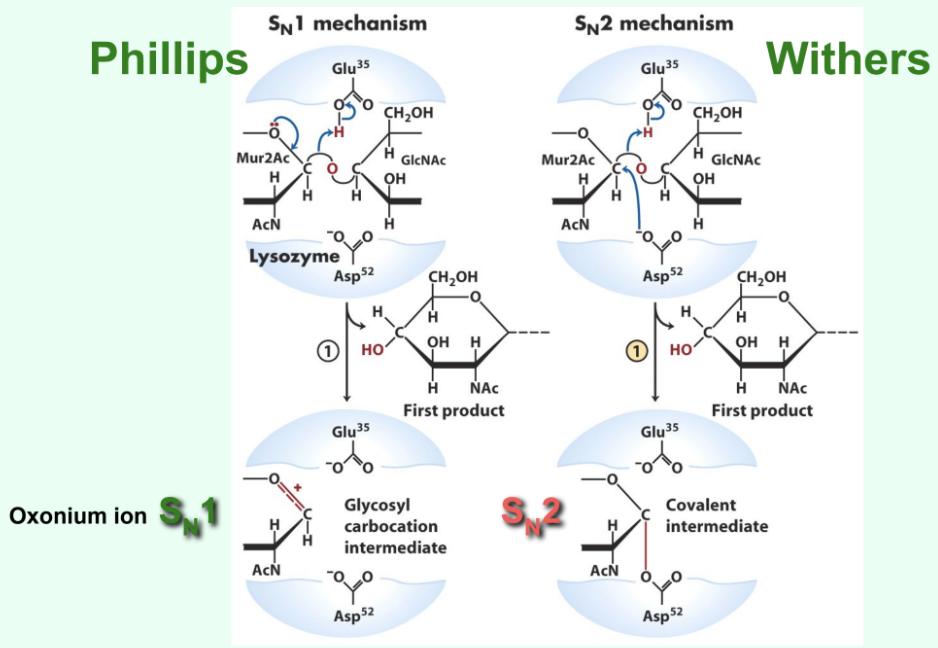
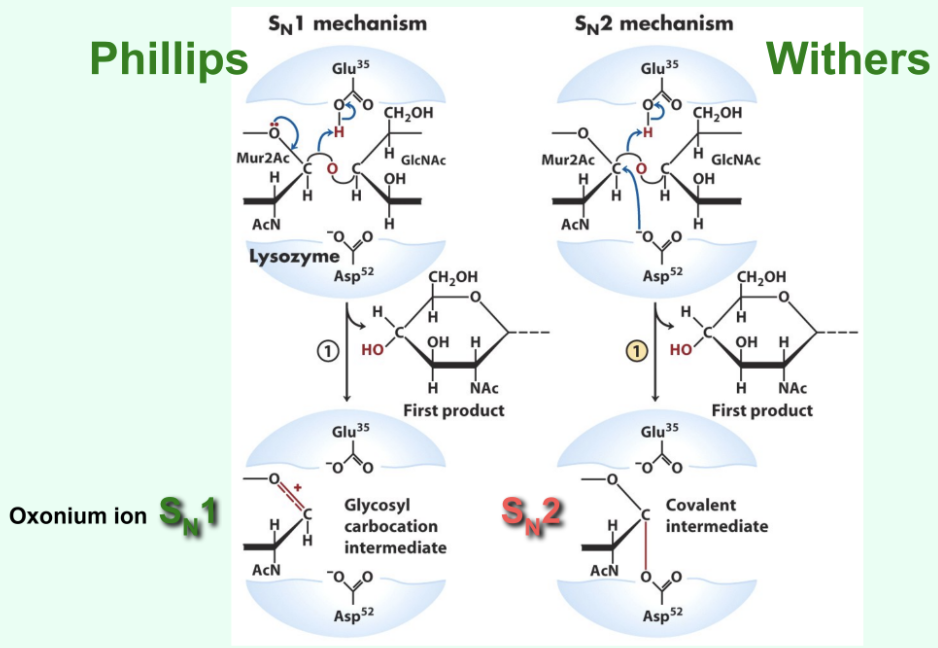
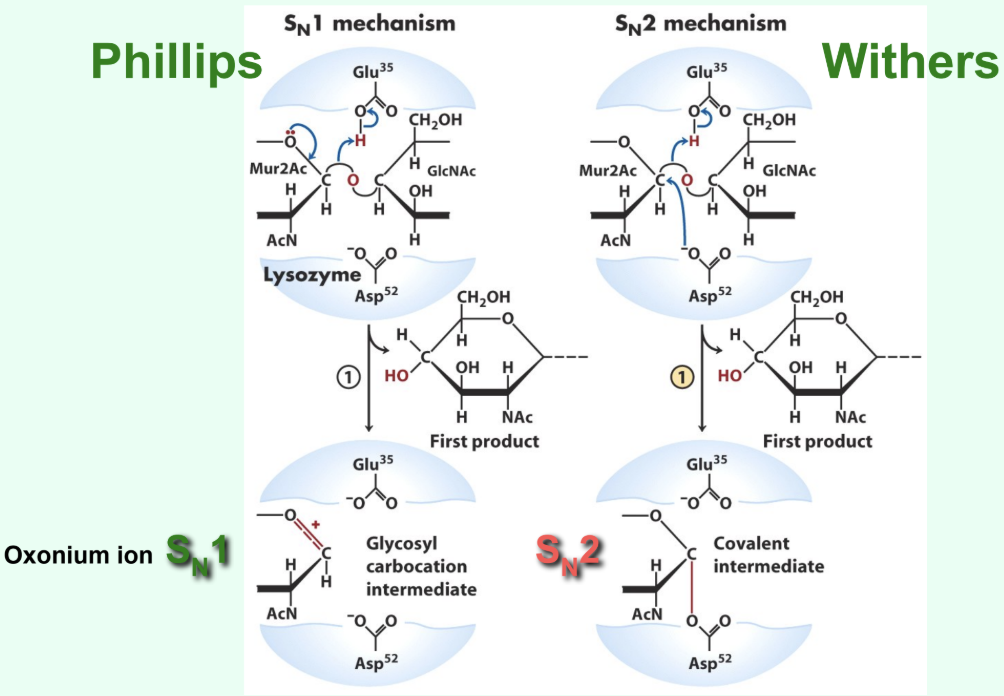
What kind of mechanism is the Phillips mechanism?
An SN1 mechanism.
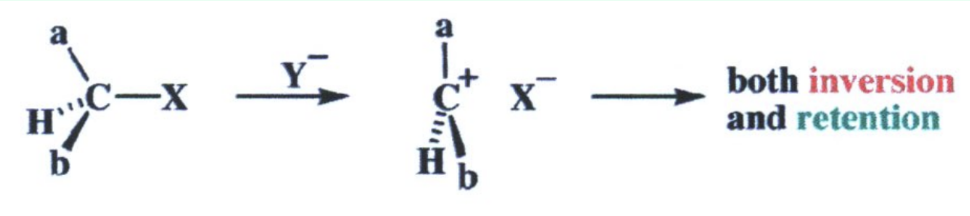
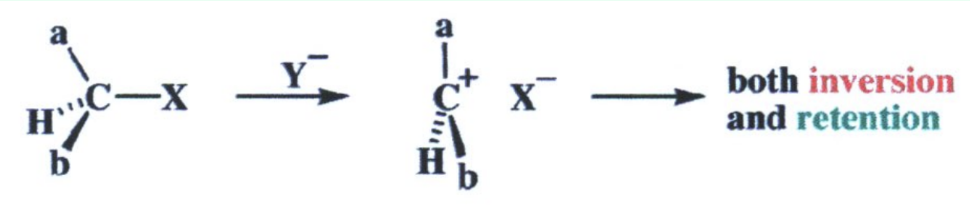
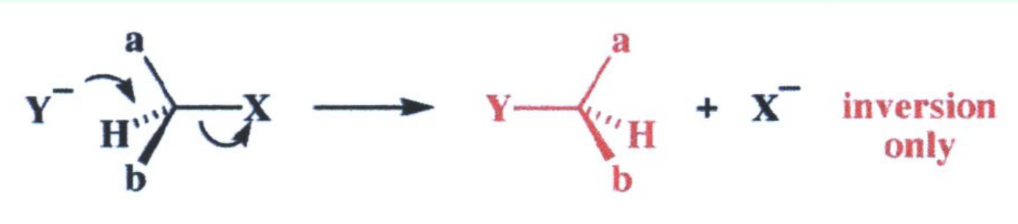
In an SN1 reaction, what are the two possible stereochemical outcomes?
Retention of configuration (same configuration as the reactant) or inversion of configuration (opposite configuration from the reactant//mirror image).
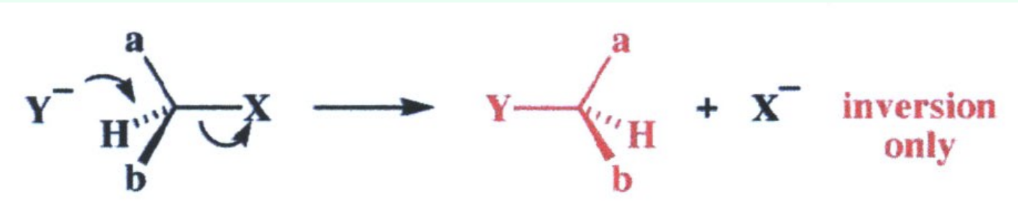
What is the core idea of the Withers mechanism?
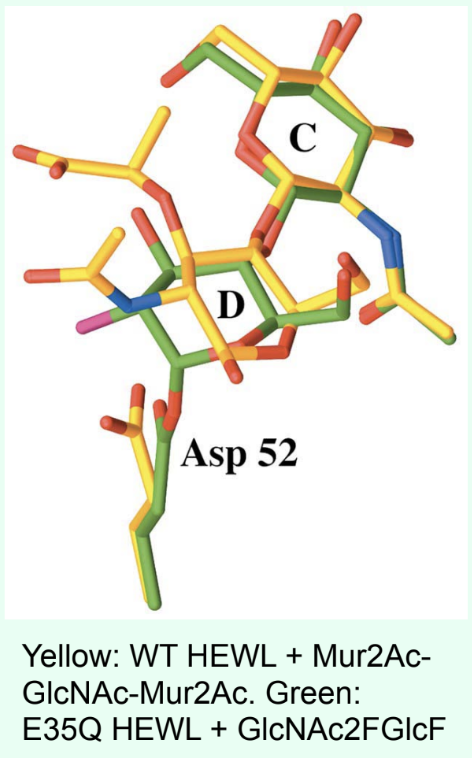
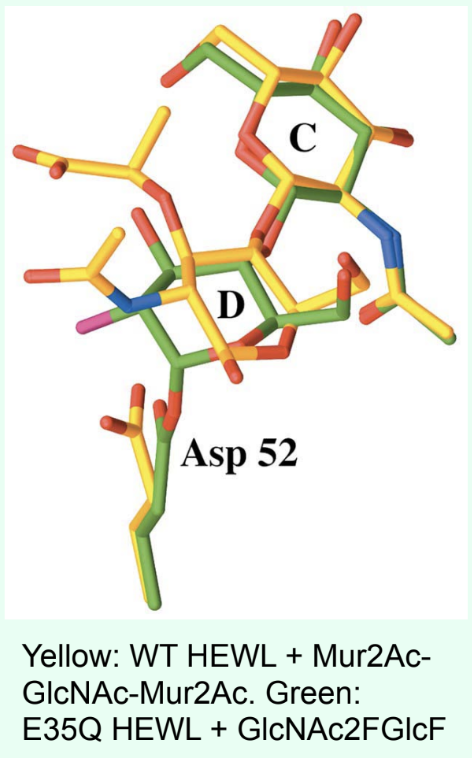
It is a double-displacement mechanism involving a covalent glycosyl-enzyme intermediate.
What bond does Asp52 form in the Withers mechanism?
A covalent bond to C1 of Mur2Ac, forming a covalent glycosyl-enzyme ester intermediate.
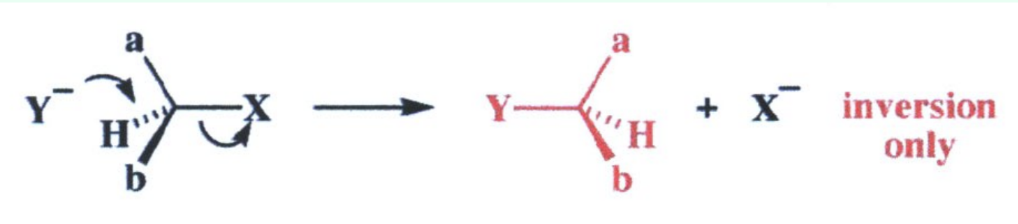
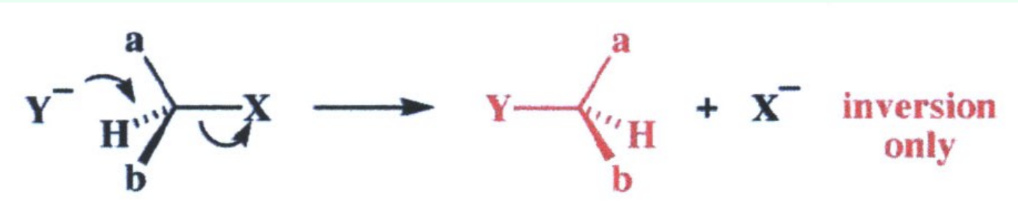
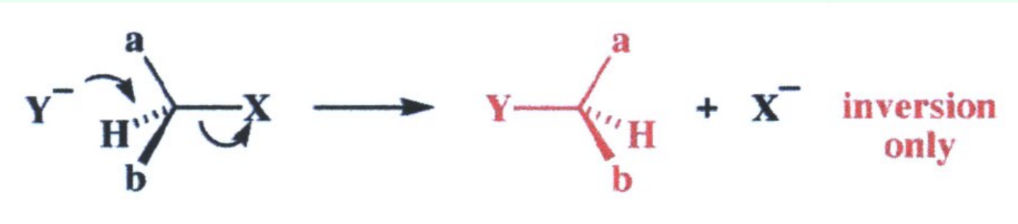
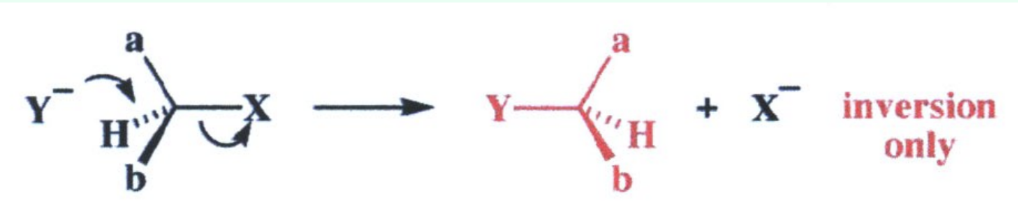
Why does the Withers mechanism still give overall retention of configuration?
Because it is a double SN2 mechanism: the first displacement gives inversion, the second displacement gives inversion, and the net result is retention.
What is the single biggest mechanistic difference between Phillips and Withers?
Phillips has no covalent intermediate and uses an SN1-like oxonium ion intermediate
Withers has a covalent Asp52 intermediate and proceeds by double SN2
How are the Phillips and Withers mechanisms similar?
Both require formation of a half-chair oxonium-like transition state.
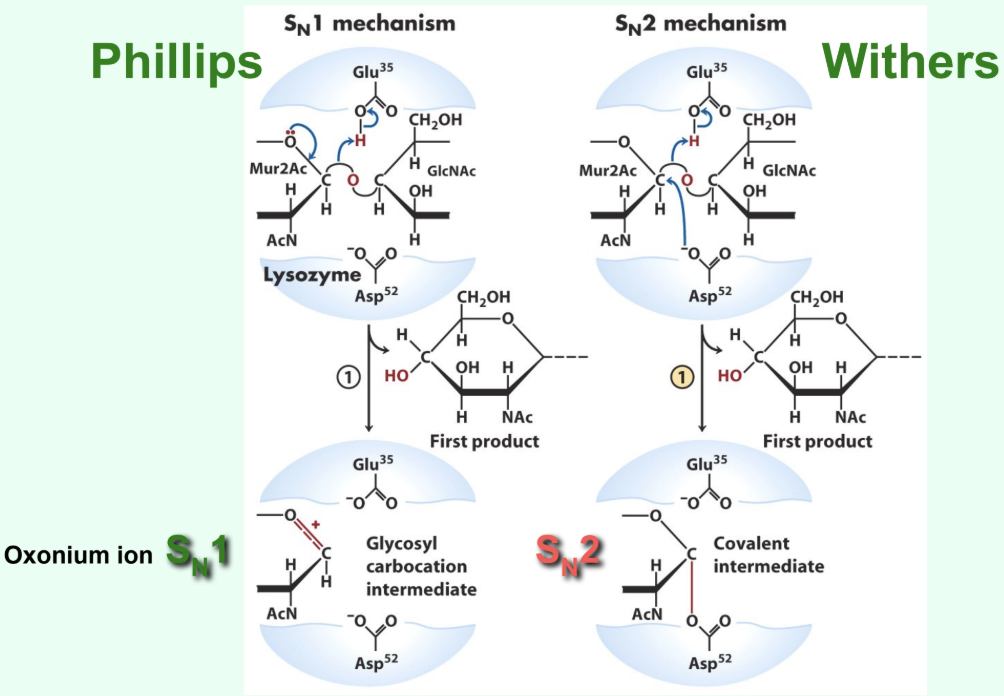
In Phillips vs. Withers, how does the oxonium species differ?
In Phillips, the oxonium ion is an intermediate
In Withers, it is a short-lived transition state on the way to the covalent intermediate
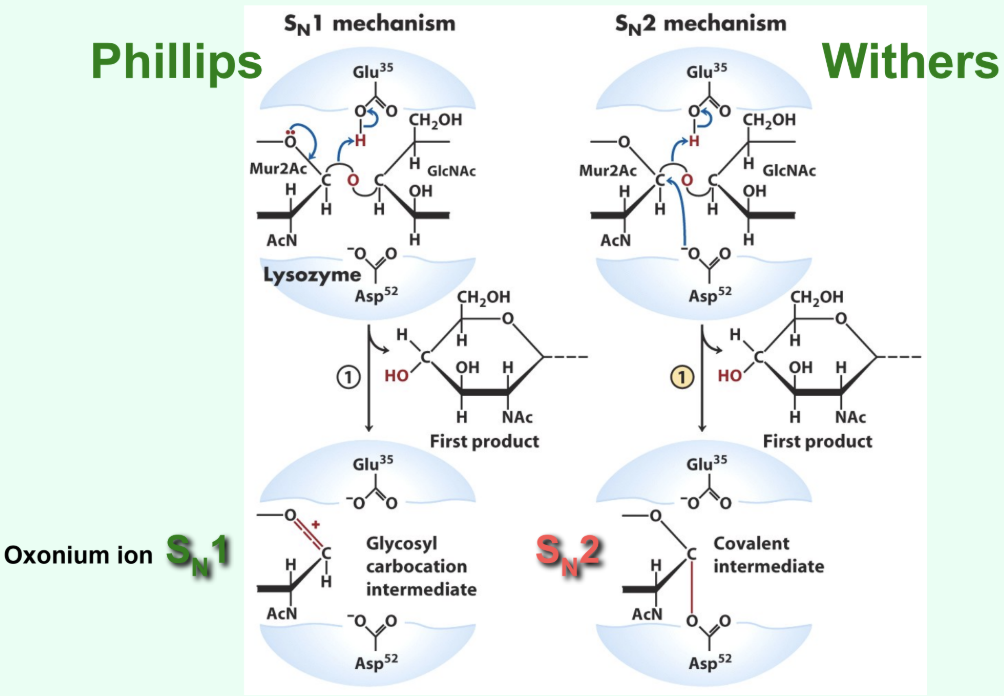
What type of catalysis is the covalent glycosyl-enzyme ester intermediate an example of?
Covalent catalysis.
Which mechanism is associated with general acid catalysis by Glu35 and electrostatic stabilization by Asp52?
The Phillips mechanism.
Which mechanism is associated with Asp52 acting as a nucleophile?
The Withers mechanism.

