BCS 172 Lecture 14
 Call Kai
 Learn
Learn Practice Test
 Spaced Repetition
 Match
Match Flashcards
 Knowt Play
1/16

There's no tags or description
Looks like no tags are added yet.
Name | Mastery | Learn | Test | Matching | Spaced | Call with Kai |
|---|
No analytics yet
Send a link to your students to track their progress
17 Terms
The Behaviorist Perspective
-
Behaviorist paradigm - ABC
A - antecedent - any event, action, or circumstance occurring immediately before a specific behavior that triggers or sets the stage for that behavior
B - behavior
C - consequence - any variable that is inserted into an individual’s experience following a behavior of interest
Example
raising your hand to ask a question (antecedent), Dan saying “yeah what’s your question” (behavior), getting an answer and maybe asking a question in the future (consequence)
Skilled behavior
Examples: learning the alphabet or driving a stick shift
Can be taught through behaviorist principles
Compromising Behavior
Example: a child sitting in a classroom with autism
Antecedent: sitting in class for 6 hours a day for 5 days a weel
Behavior: picking up and throwing a chair
Consequence: when he tosses a chair, the teaching staff might let him take a break from sitting in class
Behaviorism
Genetic + environmental contribution
In both cases, the environment is critical
The environment of the individual shapes, to a great extent, their development
Consider one’s history of reinforcement under particular antecedent conditions
B.F. Skinner
People often criticized him for being too negative and pessimistic of the human condition
Would often discuss provocative subjects
Provocative character that believed that we should approach human behavior from a very scientific framework
Implications for Culture as a Whole
We attempt to use reinforcement to shape certain behaviors
Dan visited a “utopian” society in Mexico, and he believed that the people there weren’t happy
Principles of Behaviorisms
“Conditioning” occurs through interaction with the environment
“It’s a matter of consequences”
Reinforcement drives up certain behaviors
Punishment drives down target behaviors
Also, we learn through association (consider discriminative stimuli)
By virtue of language, RULES exert control over our behavior. Focus on the OBSERVABLE
Example: when we hear the national anthem at a football game we put our right hand on our heart
Definition
Functional behavioral assessment is the process of determining why a student engages in challenging behavior and how the student’s behavior relates to the environment. Functional assessments describe the relationship between a behavior and variables that contribute to its occurrence. Functional behavioral assessments lead to hypothesis formation. Consider the work of a botanist.
Unraveling various complex patterns of human behavior
Compares it to the parts of a flower
Example: while in solitary confinement John McCain would yell obscenities at the guards which caused him to get beaten
He said having people in his cell beating him was better than loneliness
Triangle
Behaviorism: theories about behavior → applied behavior analysis: research and practice in clinical settings → experimental analysis of behavior: laboratory studies of behavior change →
Applied Behavior Analysis
“Applied Behavior Analysis (ABA) is the science in which procedures derived from the principles of behavior are systematically applied to improve socially significant behaviors to a meaningful degree and demonstrate experimentally that the…”
Applied Behavior Analysis (ABA)
Applied: using science to solve problems of social significance
Behavior: views human behavior as a variable that can be carefully defined as measured
Analysis: like any science, a key goal is the systematic analysis of phenomenon (e.g. behavior)
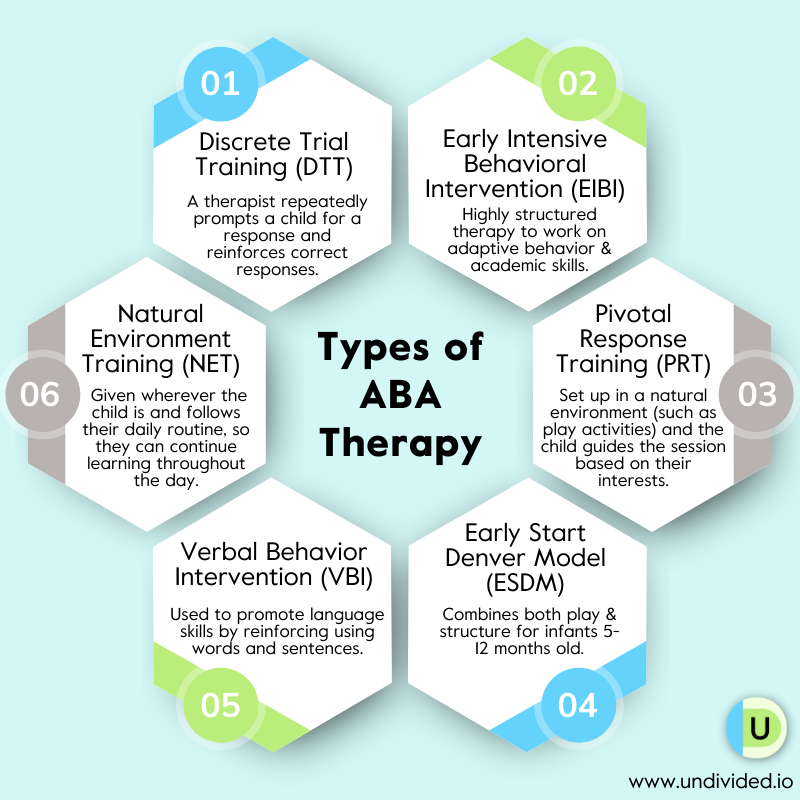
Types of ABA Therapy
“He’s got a gun!”
The autistic child with a toy gun example
The kid had G.I. Joe’s spare handgun
When he would have a panic attack, he would go to the bathroom and take out a G.I. Joe action figure and preoccupy himself with it
Reinforcement
Definition: stimulus that increases the probability that a behavior will occur again
Individualized based on assessment of each student
Given immediately after correct response
Important to avoid inadvertent reinforcement of other responses
(cont)
A consequence that accelerates or maintains preceding behavior
Intended and unintended
Idiosyncractic
Verbalized or “unrecognized”
Consider your ratio!
7:1 ratio of reinforcement to punishment (not actual concrete number lol)

