history of our planet week 10
 Studied by 0 people
 Call Kai
 Learn
Learn Practice Test
 Spaced Repetition
 Match
Match Flashcards
 Knowt Play
1/49

Earn XP
Description and Tags
the Anthropocene
Name | Mastery | Learn | Test | Matching | Spaced | Call with Kai |
|---|
No analytics yet
Send a link to your students to track their progress
50 Terms
The neolithic: dawn of the Anthropocene?
Neolithic = 6000 years ago – timings debated
These technological changes happen at different times in different places
Characterised by the ‘neolithic revolution’:
Shift from nomadic, hunter gatherers to agriculture and (semi) permanent settlement
Domestication of plants
Animal husbandry
Population increase
Much of this was facilitated as understood science and engineering
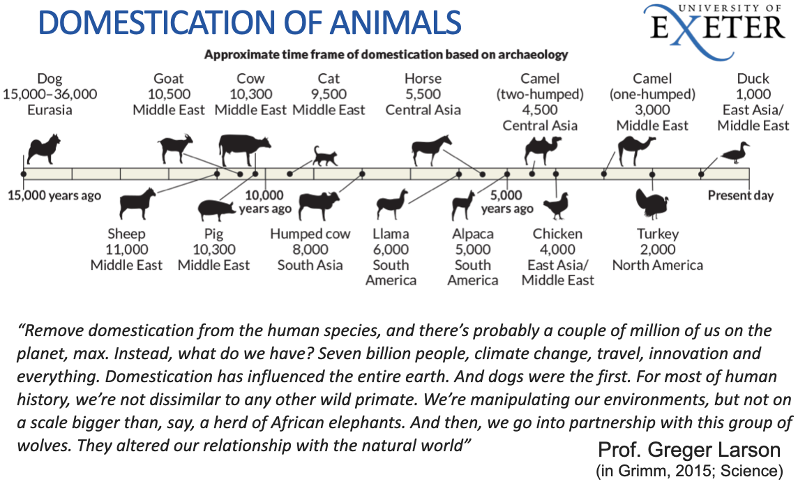
Domestication of animals:
Wolves = first animals to be domesticated
Possibly as long ago as 36,000 years ago
Undisputed evidence c. 14,700 years ago
Dog mandible found in human grave in Bonn, Germany – DNA analysis confirms direct descent of modern dogs
Suggestions that wolves picked us
Had camps, food, fire, scraps etc.
Worked together to hunt, increase efficiency
convergent evolution humans and dogs
Evidence of ‘convergent evolution’ in humans and dogs
Digestion, metabolism, neurology, cancer
Suggests subjected to same environmental mechanisms for 1000s years as humans
Cognitive similarity, greater than relatives
Dogs better than reading facial expressions etc.
domestication of animals order
ungulates first then poultry
Anthropogenic selection and evolution, during the neolithic
Primarily food, but also working animals and pets
Also, materials e.g. wool
Dawn of agriculture:
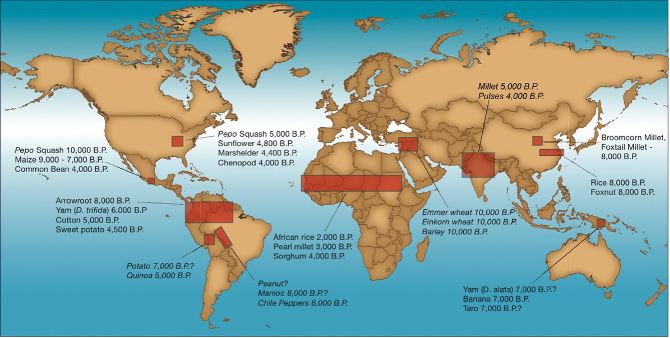
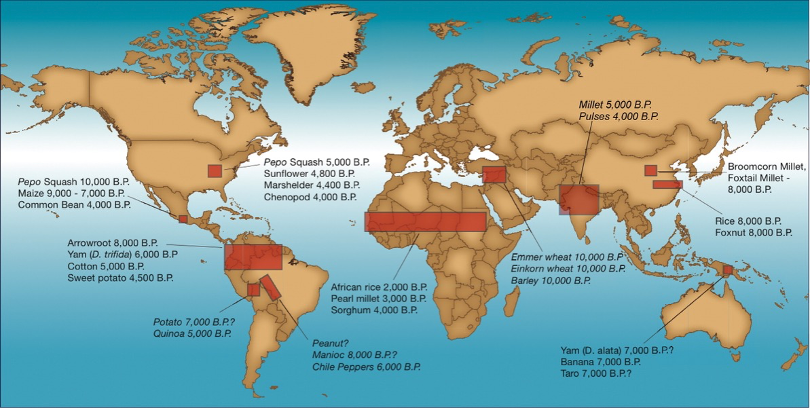
Agriculture developed independently in multiple locations and at varying times
Enabled by technological advancement – irrigation, deforestation and food storage
dawn agriculture - near east/ levant
the ‘fertile crescent’ – some of the earliest agricultural domesticates
emmer wheat and early hybridisation
legumes (lentil, pea, chickpea)
wide range of environments (locations, altitudes) – favourable climate for agriculture
dawn agriculture - far east
earlier in China, then India
millet
rice
dawn agriculture - the Americas
earliest in Mesoamerica (middle America) ,
squash, beans and maize
teosinte → maize
potatoes
later in south and north America – potatoes, sweet potato, chillies, cotton
why did agriculture develop?
Cultural Progress Hypothesis.
Environmental Change Hypothesis.
Population Pressure Hypothesis
Accident and opportunity?
Cultural Progress Hypothesis.
Agricultural life is inherently superior to foraging.
Inevitable process of evolution - bio-culturally capable.
Environmental Change Hypothesis.
Obvious correlation of agricultural origins with end of Pleistocene
BUT not only climate event AND delay across globe e.g. N, America
Population Pressure Hypothesis
Population growth forces foragers to adopt agriculture, because wild resources become so scarce that eventually farming is worth doing.
Need a ready source of food under your own control
Accident and opportunity?
Natural distribution of suitable plants and animals
The neolithic revolution:
Domestication of animals + dawn of agriculture
When grow crops need to stay near them
Shift from nomadic, hunter gatherer lifestyle to sedentary settlement
Increasing population
Complex social structure
Division of labour, trade, politics, early religion, property ownership
Increasing anthropogenic effects on natural environment
Irrigation, deforestation, waste production
Beginning of Anthropocene?
Early civilisations:
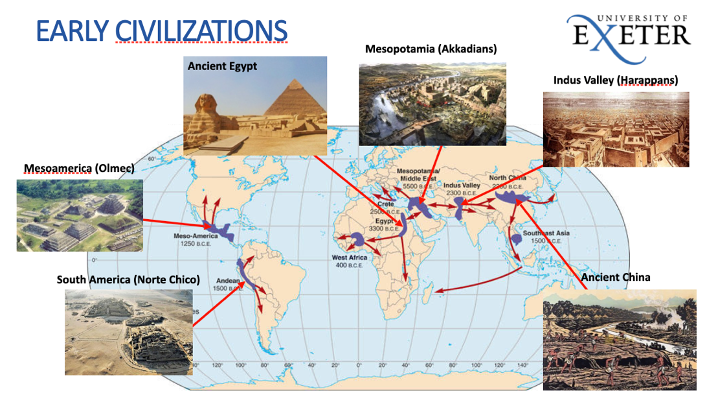
Correlation between development of agriculture and early civilisations
early civilisation developments
Cradle of civilisation?
Civilisation developed in 6 areas of the world independently
Neolithic in Britain and Ireland:
Period of monument building (e.g. Stonehenge, Newgrange) – ritual?
Archaeology: use of pottery, domestication of plants and animals
Agriculture limited to certain areas (e.g. Wessex, East Anglia, Cumbria coastal plain) (mostly southern Britain), because of primitive technology
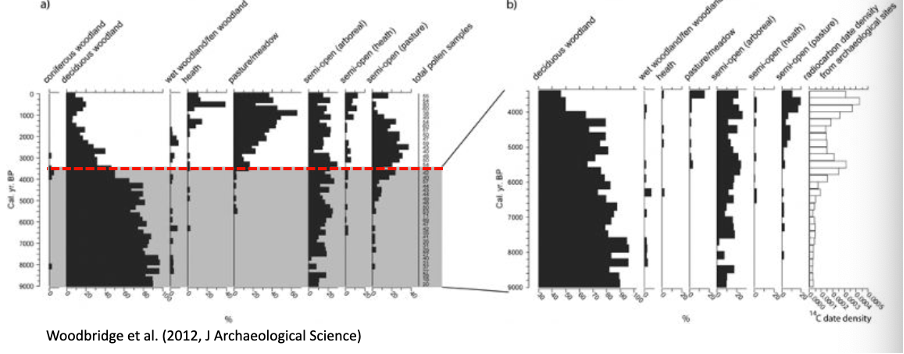
Phase of deforestation, rise in cereal pollen and agricultural weeds
Followed by period of abandonment, forests returned
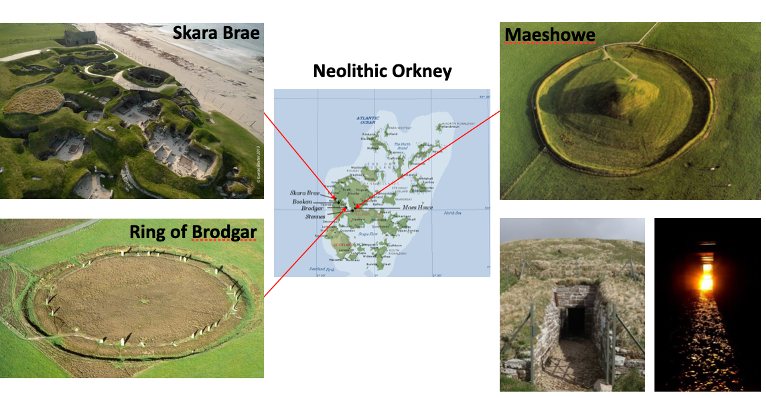
vegetation changes with neolithic
Landscape-scale transitions in vegetation cover associated with neolithic revolution are visible in the pollen record
Expansion of agriculture:
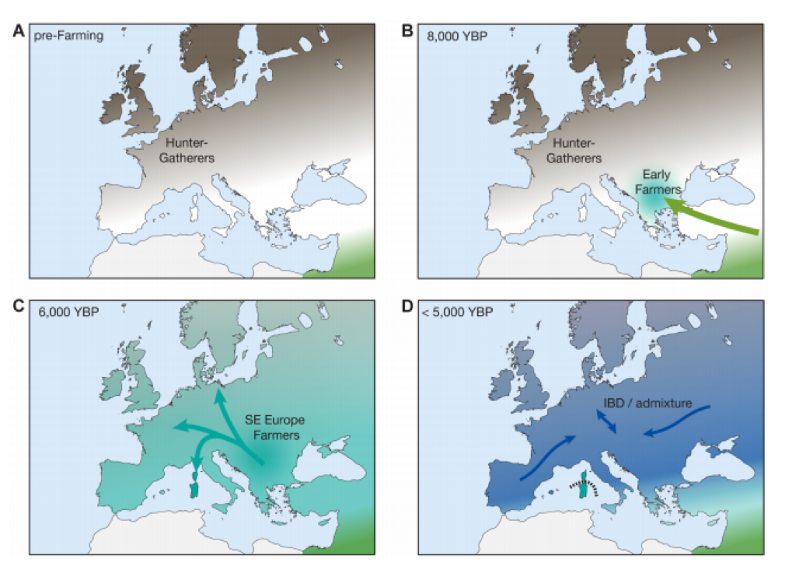
took 1000s ears for agriculture to expand across Europe – UK was behind
Modern DNA analysis can help us examine the spread of agriculture in more detail
Sikor et al (2014, PLoS Genetics)
Bronze and iron age in Britain and Ireland:
Improving technology (metal smelting) allowed greater range of environments to be farmed
First major settlements and vegetation clearance/deforestation become permanent
Start of Iron Age (c. 2,700 years ago), most of southern Britain was under agricultural use
Previously unexploited areas of Wales, southern Scotland, northern England- woodlands were cleared
1086 AD: Doomsday book - only 15% of original forests remained
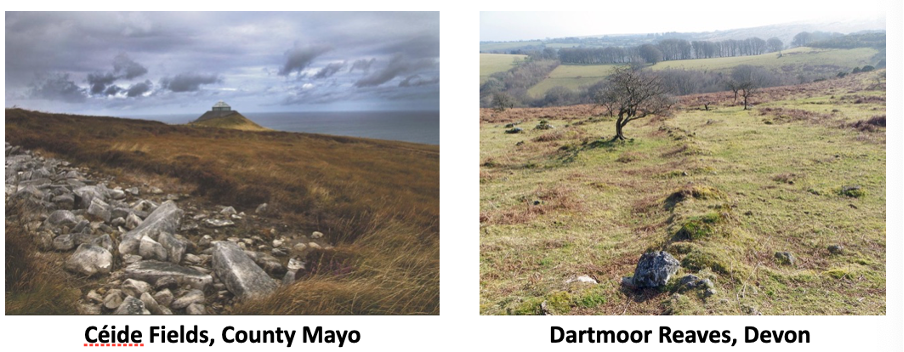
British and Irish field systems
bronze age field system in Britain and Ireland are the oldest in the world
make up co-axial field systems
the first to set up field systems this way – increase efficiency, safety of animals, who owns what
Palaeoecology and conservation:
palaeoecology can challenge perceptions, provide sustainable conservation targets
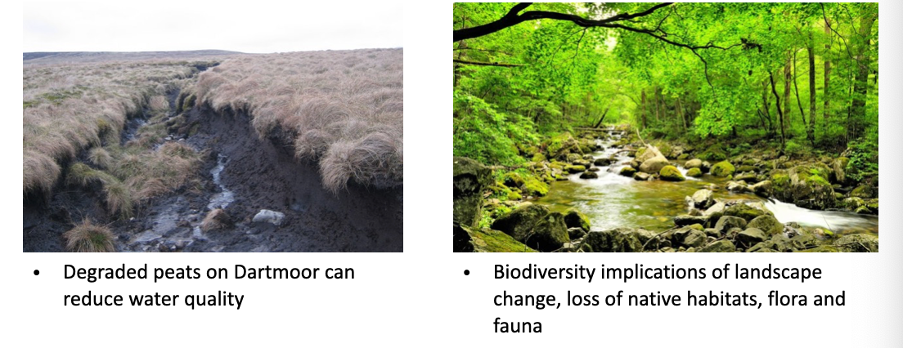
Dartmoor national park – natural wilderness or anthropogenic landscape
Prior to c. 4,500 years ago, Dartmoor was largely forested (Alder, Hazel, Oak)
4,500 – 3,000 years ago – increased evidence of anthropogenic burning
2000 years ago to present – dramatic reduction in trees, replaced by grasses
Entirely human induced
Heavily modified landscape maintained by grazing and swailing (burning)
Roman Britian:
Agriculture was imperative in roman culture
Waste and pollution were already a problem in roman cities
“As soon as I had gotten out of the heavy air of Rome and from the stink of the smoky chimneys thereof, which being stirred, poured forth whatever pestilential vapours and soot they had enclosed in them, I felt an alteration of my disposition.”
Seneca (AD 61)
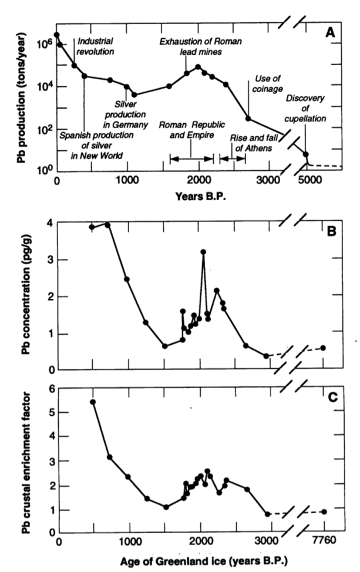
Greenland ice core record shows signs of roman pollution
Exeter:
Isca dumnoniorum
‘flowing water’ (isca)
First established c. 55 AD, town grew up around
Western most edge of roman Britain
Last 1000 years:
Temp warmer now than at any point in recent past:
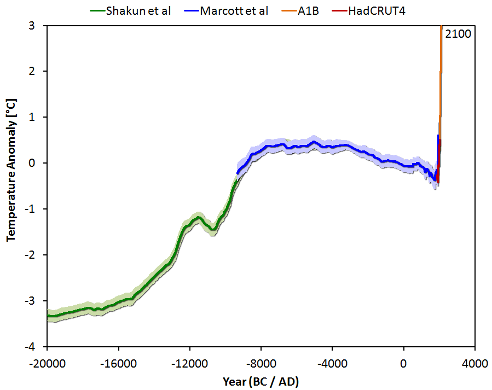
20,000 years
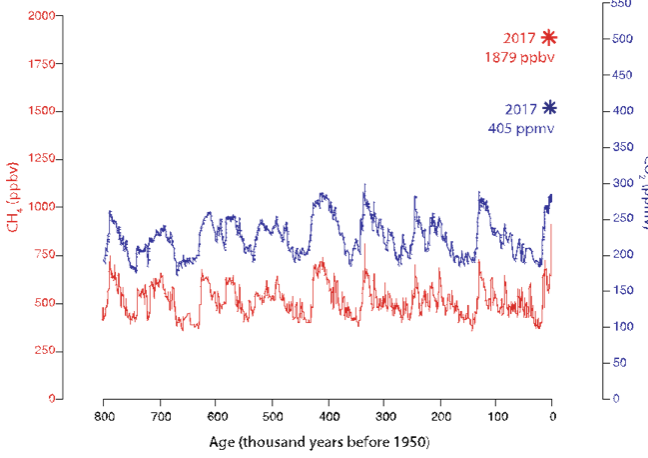
800,000 years
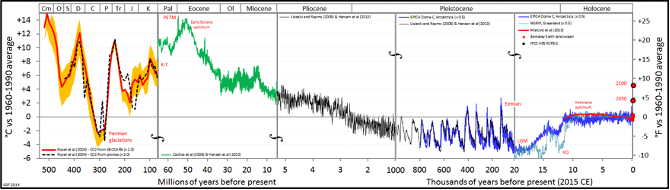
2050: 3 million?
2100: 10 million?
Medieval period onwards:
Evidence of climate variability over last 1000 years
Major climate events
Acceleration of anthropogenic environmental change
Emergence of anthropogenic climate change
1. Medieval warm period:
Wine in Scotland
Vikings to Greenland
‘discovery’ of north America
2. Little ice age:
‘frost fairs’ on Thames
Widespread famine and bread riots (basic bread crops failed); witch hunts (misogynistic product of the little ice age)
3. Recent compilations:
Some variation but generally support idea of recent T change outside of natural climate variability
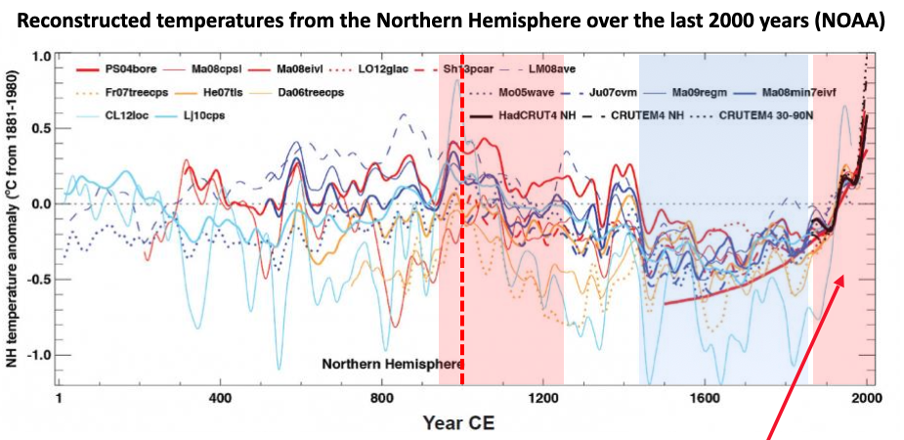
1. Medieval warm period
2. Little ice age
3. Recent compilations
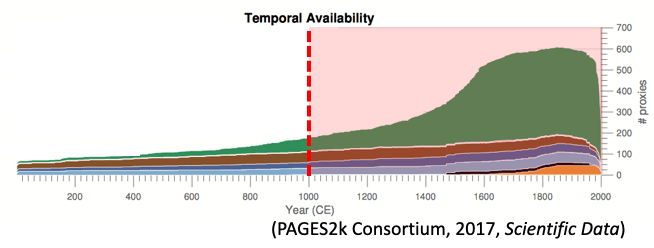
Significant increase in number of palaeoclimate and palaeoenvironmental records available
Particularly tree ring records
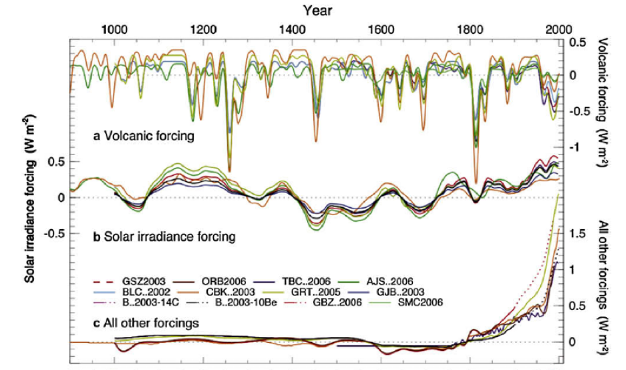
Climate forcing over last 1000 years
Anthropogenic influence:
GHGs (fossil fuels, deforestation etc)
Land cover (albedo) (reduction in ice)
Aerosols
Dawn of Anthropocene?
Dawn of the Anthropocene?
A proposed new geological epoch, separate from the Holocene, characterised by significant human impact and influence on the earth (eco)system, including but not limited to anthropogenic climate change
Crutzen, 2002 – nature
When did the Anthropocene begin?
Early Anthropocene hypothesis
Industrial revolution
Rapid acceleration period
Early Anthropocene hypothesis:
Centre around idea that, based on length of previous interglacials (e.g. ipwichian) earth should be returning to glacial
But c. 8000 years ago climate records demonstrated deviation from this trend
Greenhouse gases changed due to early agriculture (why we follow red line)
Early deforestation and agricultural expansion have been identified as a possible driver of global climate change (ruddiman 2003)
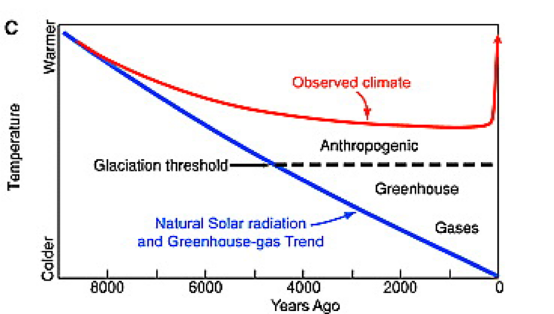
Early Anthropocene hypothesis: diagram
Blue line = if didn’t have anthropogenic hypothesis
Instead, are following the red line
Early Anthropocene hypothesis: Disputed: 1
Holocene is super interglacial
Eccentricity 400ka cycle
Previous was MIS 11 (hoxnian)
Lasted c. 31,000 years
Overdue glaciation hypothesis is invalid
Human pop 8000 years ago was few million, earth was essentially pristine – non substantial human ‘footprint’
Created vital debate on role of human in climate
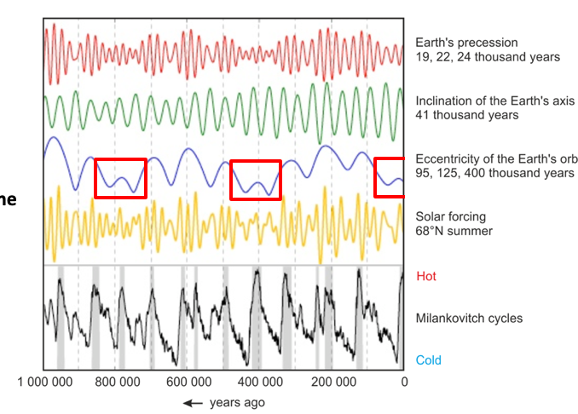
Early Anthropocene hypothesis: Disputed: 2
Early evidence of pollution
Peatland in tierra del Fuego
Trace metal evidence for pollution over last 4000 years
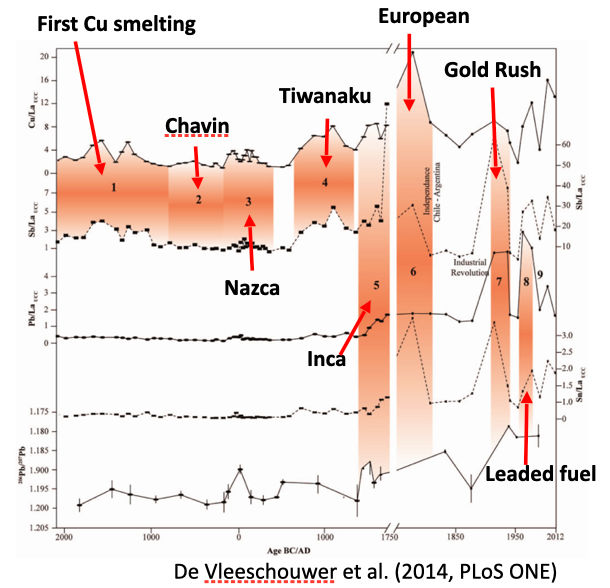
Dawn of Anthropocene – industrial revolution:
Crutzen (2002, nature) proposed industrial revolution as beginning of Anthropocene
Late 18th C – greenhouse gas concentrations in polar ice cores begun to increase
Coincides with new steam engine designs by Newcomen (1712) and Watts (1784)
Flow on effects – efficient land clearance – synthetic fertiliser, improved sanitation/ water supply etc
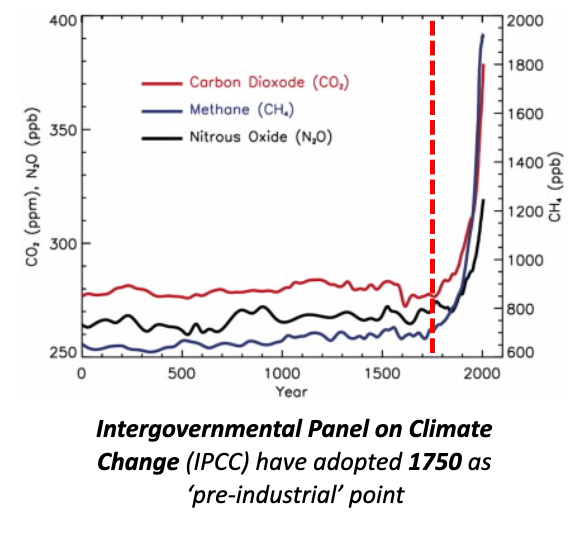
Dawn of Anthropocene – rapid pop growth
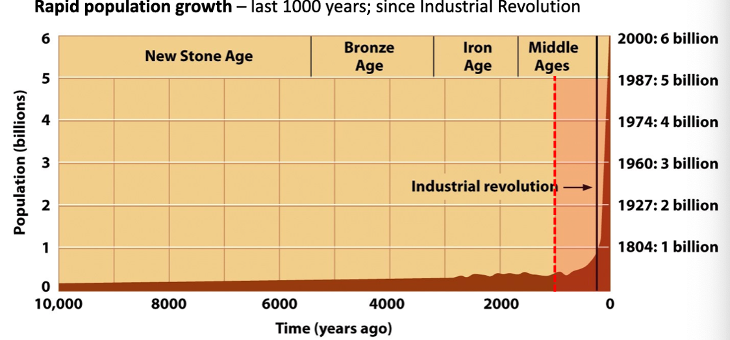
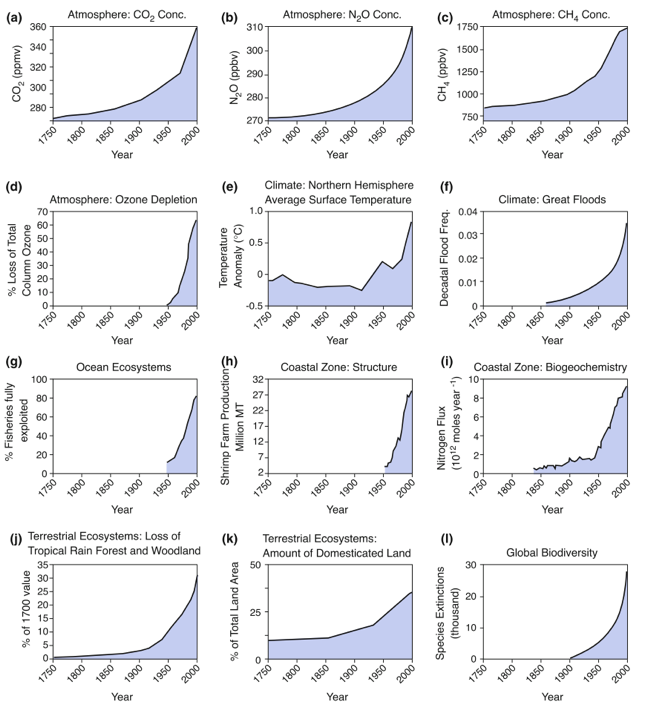
The great acceleration:
Steffan et al (2011)
Anthropocene beginning c. 1950
Shifts in population, consumption patterns
Definition needed for: consistency, Correlation, Establishment of natural baselines
Dawn of Anthropocene: humans
Humans no longer a temporary disturbance
Humans shape and influence processes across most of terrestrial biosphere and increasingly more so the ocean and atmosphere
Call for human activity as a system on a par with the biosphere, hydrosphere (anthroposphere)
Formal end to Holocene? – Anthropocene
Biodiversity: Extinction:
Rate of extinctions
5th/6th mass extinction event?
Humans are just 0.01% of all life but have destroyed 83% of wild animals
Humanity has wiped out 60% of animal populations since 1970
More than 300 mammal species have been eradicated by human activities
Biodiversity: land use change.
habitat loss
10% wilderness areas lost in last 2 decades
Coral reefs, first major ecosystem to be lost?
Biodiversity: Biogeography:
Translocation of flora and fauna through human agency - intentional (agriculture) and accidental
Homogenisation (homogenocene)
Invasive species
Biodiversity: climate
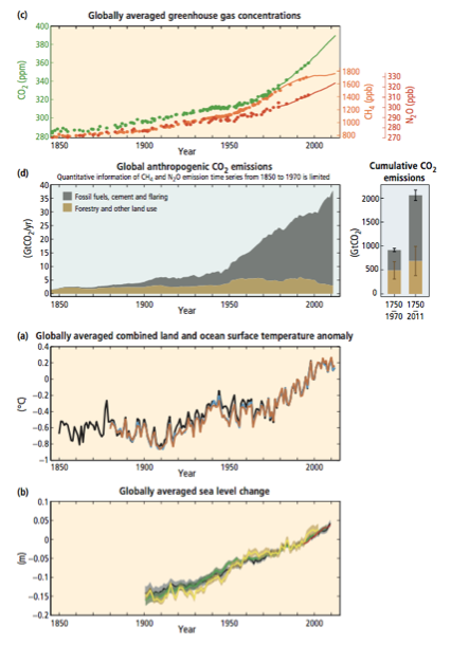
Atmospheric GHG concentration
Increases in co2 and ch4
Fossil fuels, cement production and flaring
Deforestation and land use change
Global average temperature
Ice sheets, glaciers, sea ice
Sea level rise
Permafrost
Climate driven habitat loss
 Note
Note  Flashcards (84)