geological hazards (mod #2)
 Studied by 0 people
 Call Kai
 Learn
Learn Practice Test
 Spaced Repetition
 Match
Match Flashcards
 Knowt Play
1/47

Earn XP
Description and Tags
🍂
Name | Mastery | Learn | Test | Matching | Spaced | Call with Kai |
|---|
No analytics yet
Send a link to your students to track their progress
48 Terms
human induced hazards
threats having elements of human intent, negligence, error and involving a failure of a system
Pacific Ring of Fire
string of underwater volcanoes and earthquake sites around the edges of the Pacific Ocean where most of the active volcanoes on Earth are located (underwater)
450, 25000
the Pacific Ring of Fire is composed of more than ____ volcanoes, stretches for nearly _______ miles, from the southern tip of South America, along the west coast of North America, across the Bering Strait, down through Japan, and into New Zealand
earthquake
GEOLOGIC HAZARDS:
refers to shaking of the ground caused by sudden slippage of rock masses below or at the surface of the earth;
wavelike movement of earth’s surface
natural: tectonic or volcanic
man-made: explosion or collapse
explosion, collapse
UNDER EARTHQUAKES:
from detonation of explosives
deep mining activities
foreshocks, aftershocks
UNDER EARTHQUAKES:
series of tremors that occur before the main earthquake
weaker earthquakes that follow the main shocks and can cause
further damage to weakened buildings
Moro Gulf Earthquake of Mindanao Island
UNDER EARTHQUAKES:
this is the earthquake with the strongest magnitude (M8) since 1900 in the Philippines
ground shaking
HAZARDS ASSOCIATED WITH EARTHQUAKES:
caused by the passage of seismic waves, especially surface waves near the
epicenter of the earthquake;
responsible for most damage of an earthquake
intensity
HAZARDS ASSOCIATED WITH EARTHQUAKES:
this depends on the conditions of the local geology
ex. solid bedrock is less subject to intense shaking than loose sediment
duration and intensity
HAZARDS ASSOCIATED WITH EARTHQUAKES:
these depend on the size of the earthquake and distance
ex. as the distance from the epicenter increases, the intensity of shaking decreases
True
TRUE OR FALSE:
Concrete and masonry structures are brittle and thus more susceptible to damage and collapse while damage to wood and steel structures is far less because of its flexibility.
False; should be most
TRUE OR FALSE:
Human construction and buildings crashing during earthquakes cause least
deaths.
ground rupture
HAZARDS ASSOCIATED WITH EARTHQUAKES:
only occurs where the fault zone moves;
structures built across these zones may collapse
True
TRUE OR FALSE:
Ground shaking triggers avalanches, landslides, slumps and rockslides which are often more destructive than the earthquakes.
liquefaction
HAZARDS ASSOCIATED WITH EARTHQUAKES:
occurs when groundwater, sand and soil combine during seismic shaking caused by moderate or powerful earthquakes;
results in quicksand like soil and when it occurs under buildings, the foundations sink and the building collapse
more
HAZARDS ASSOCIATED WITH EARTHQUAKES:
Areas with sandy soil and groundwater close to the surface are far _____ at risk of liquefaction.
tsunami
HAZARDS ASSOCIATED WITH EARTHQUAKES:
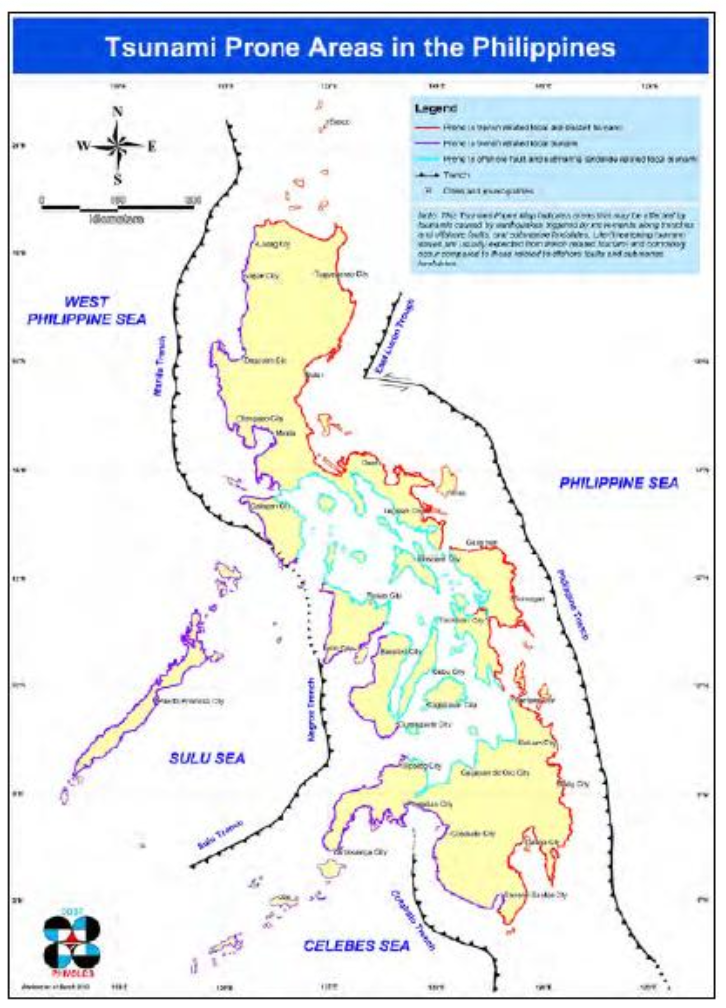
giant sea waves generated by earthquakes & volcanic eruptions under the seabed;
can be caused by submarine or coastal landslides, pyroclastic flow and large
volume debris avalanches from oceanic and partly submerged volcanoes, and
caldera collapse;
may lead to floods and in some cases may reach up to 100 feet in height.
7.0+
HAZARDS ASSOCIATED WITH EARTHQUAKES:
tsunami is one of the most dangerous effects of an earthquake but can only occur when the earthquake is strong enough (M___) to displace the seabed, creating pressures in the water above it
500-700 mph
HAZARDS ASSOCIATED WITH EARTHQUAKES:
tsunami results from sub-sea faulting of ocean floor sending seismic shocks through the water creating large waves of low amplitude but of long period, moving at ___-___ mph
(LOW AMP, LONG PERIOD)
earthquake swarm
HAZARDS ASSOCIATED WITH EARTHQUAKES:
refers to a cluster of earthquakes characterized by the absence of a single predominant large earthquake
ordinary & mainshock-aftershock
ordinary shocks
TYPES OF EARTHQUAKE SWARM:
its irregular activity lasting from hours to over a year, often seen in volcanic regions
mainshock-aftershock
TYPES OF EARTHQUAKE SWARM:
this swarm’s sequences of similar size occurs successively over several days to months
volcanic eruption
HAZARDS ASSOCIATED WITH EARTHQUAKES:
process wherein volcanic materials such as molten or hot fragmented rocks or gaseous materials are ejected from a volcano
earthquakes, fissures, tsunami, subsidence, landslide
give other hazards associated with volcanic eruption
fissures, subsidence
HAZARDS ASSOCIATED WITH VOLCANIC ERUPTION:
these are caused by the force of upward-moving magma
due to retreat of magma
False; all should be NOT ALL
TRUE OR FALSE:
All volcanoes erupt and not all eruptions are explosive.
extinct, active, dormant
CLASSIFICATION OF VOLCANOES:
will never erupt again
either erupting now or having recently erupted
currently quiet but are expected to erupt in the future
viscosity, amount of dissolved gas
UNDER VOLCANOES:
Not all volcanoes erupt explosively;
the type of eruption (either quiet lava flows or violent explosions of gases, ash, and debris) and frequency of eruption are related to the _____ and amount of _______ ___ in the magma.
stratovolcano, 2, 1991, 722
MOUNT PINATUBO ERUPTION:
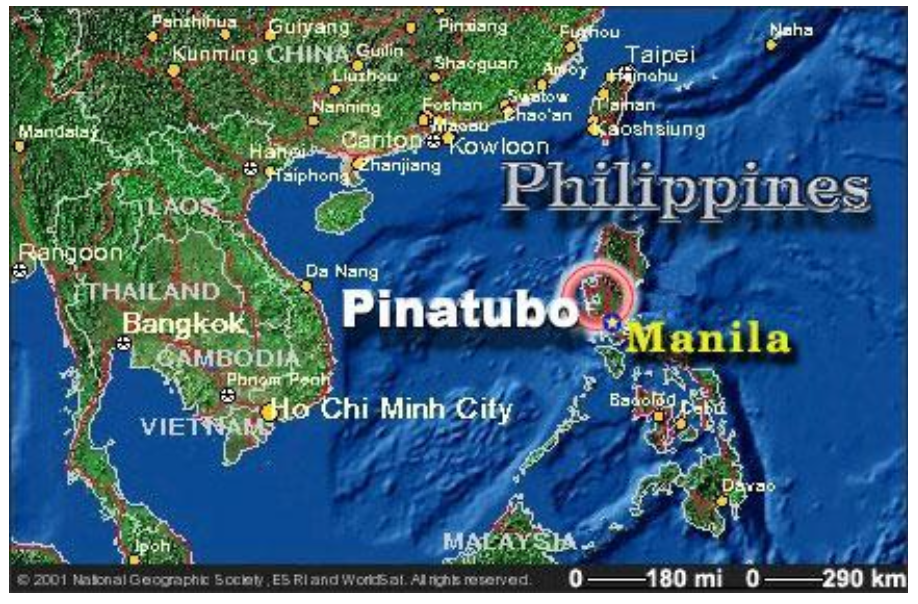
Location: Luzon, Philippines
Elevation: 1,485 m or 4,900 ft
Volcano Type: __________
Historic Eruption: 1315
Most Recent Eruption: _____
Number of Eruptions in 20th Century: 2____
Largest Eruption: _____
Notable Feature(s): Ash cloud, lahars.
Notable Statistic: Second largest eruption of the 20th Century in terms of amount of material blown out of the vent. Affect on global weather. ______ deaths.
tephra
UNDER VOLCANIC ERUPTIONS:
explosive eruption blasts solid and molten rock fragments (_) and
volcanic gases into the air with tremendous force.
bombs
UNDER VOLCANIC ERUPTIONS:
the largest rock fragments (bombs) usually fall back to the ground within 2 miles of the vent;
small fragments of volcanic grass, minerals, and rock rise high into the air, forming a huge, billowing eruption column
eruption columns
UNDER VOLCANIC ERUPTIONS:
these can grow rapidly and reach more than 12 miles above a volcano, forming an eruption cloud, which can cause ash fall
ash fall
UNDER VOLCANIC ERUPTIONS:
Large eruption clouds can extend hundreds of miles downwind, resulting in ____ ____ over enormous areas; the wind carries the smallest ash particles the farthest
fumaroles
UNDER VOLCANIC ERUPTIONS:
cracks in the ground allow gases to reach the surface through small
openings called ________
water vapor (steam)
UNDER VOLCANIC ERUPTIONS:
more than 90% of all gas is ________, most of which is heated ground
water
acid rain
UNDER VOLCANIC ERUPTIONS:
this is what happens when sulfur dioxide reactss with water
True
TRUE OR FALSE:
High CO2 concentration can be trapped in low areas in that are deadly to people and animals while
Fluorine, at high concentrations is toxic, can be adsorbed onto volcanic ash particles that later fall to the ground
lava flows
UNDER VOLCANIC ERUPTIONS:
molten rock (magma) that pours or oozes onto the Earth’s surface is called lava and forms ____ _____
higher, silica (silicon dioxide, SiO2)
UNDER VOLCANIC ERUPTIONS:
The ______ a lava’s content of _____ (_____/SiO2), the less easily it flows (more viscous).
lava domes
UNDER VOLCANIC ERUPTIONS:
flows of lava of higher silica tend to be thick and sluggish, traveling only short distances from a vent forms irregular mounds called these
pyroclastic flows
UNDER VOLCANIC ERUPTIONS:
high-speed avalanches of hot ash, rock fragments, & gas can move down the
sides of a volcano during explosive eruptions or when the steep side of a
growing lava dome collapses and breaks apart
1500F, 100-150
UNDER VOLCANIC ERUPTIONS:
pyroclastic flows can be as hot as ______ and move at speeds of ____-____ mph
pyroclastic surges
UNDER VOLCANIC ERUPTIONS:
refers to lower-density pyroclastic flows that can easily overflow ridges hundreds of feet high
volcano landslides
UNDER VOLCANIC ERUPTIONS:
rapid downhill movement of rocky material, snow, and (or) ice;
ranges from small movements to massive collapses of entire summit or sides of a volcano;
seep volcanoes are susceptible to landslides because they are built up partly of
layers of loose volcanic rock fragments
lahars
UNDER VOLCANIC ERUPTIONS:
refers to mudflows or debris flows composed mostly of volcanic materials on the flanks of a volcano;
_____ with so much rock debris (60 to 90% by weight) look like fast-moving rivers of wet concrete
land subsidence
OTHER GEOLOGIC HAZARDS:
global problem that occurs when large amounts of groundwater have been withdrawn from certain types of rocks, such as fine-grained sediments;
rock compacts because the water is partly responsible for holding the ground up;
When the water is withdrawn, the rocks falls in on itself.
True
TRUE OR FALSE:
Land subsidence is most often caused by human activities, mainly from the removal of subsurface water. principal causes are aquifer-system compaction, drainage of organic soils, underground mining, hydrocompaction, among others
sinkholes
OTHER GEOLOGIC HAZARDS:
common where the rock below the land surface is limestone, carbonate rock,
salt beds, or rocks that can naturally be dissolved by groundwater circulating
through them;
As the rock dissolves, spaces and caverns develop underground
 Note
Note  Flashcards (133)