RADIOBIOLOGY P1
 Studied by 11 people
 Call with Kai
 Learn
Learn Practice Test
 Spaced Repetition
 Match
Match Flashcards
 Knowt Play
1/162

There's no tags or description
Looks like no tags are added yet.
Name | Mastery | Learn | Test | Matching | Spaced | Call with Kai |
|---|
No study sessions yet.
163 Terms
“Radius”
radio Comes from the
Latin word
Ray
“Radius”
meaning
life
bio meaning
radiobiology

as low as reasonably achievable
alara
atomic level

high px dose
con of high mas
fog
con of high kvp
tube loading
con of high sid
quantum mottle
con of low mas
high px dose
con of low kvp
low spatial resolution
con of low sid
Ionization & Excitation
What process occurs when X-rays remove or excite electrons in atoms?
Deposition of Energy in Tissue
What happens when X-ray energy is absorbed by biological tissue?
Deterministic Effects
These occur only if radiation dose exceeds a certain level.
Stochastic Effects
These effects can occur at any dose, even very low ones.
Syndrome
– a group of symptoms which consistently
occur together, or a condition characterized by a set
of associated symptoms.
Severity increases as dose increases
What happens to severity as dose increases in deterministic effects
The chance or incidence of the effect
What increases with dose in stochastic effects
no
Does severity increase with dose in stochastic effects
Deterministic Effect
Occurs within days
after the radiation
exposure
Stochastic Effect
Not observed for
months or years
atomic composition
The character and degree of Radiation Interaction
depends on the___ of the body
atoms
The human body is composed of
molecular and tissue
composition
defines the nature
of the radiation response
Robert Hooke
In 1665, named the Cell, as
the biologic building block
1665
Robert Hooke In___, named the Cell, as
the biologic building block
Antonvan
Leeuwenhoek
In 1673, accurately described
a living cell through his
microscopic observations
1673
Antonvan
Leeuwenhoek In ___, accurately described
a living cell through his
microscopic observations,
Schneider & Swann
In 1838, showed conclusively
that in all plants and animals,
cells are the basic functional
units.
Deoxyribonucleic Acid
DNA
Watson and Crick
1953, Description of the molecular
structure of DNA as the genetic
substance of the cell
Human Genome Project
HGP
Positron Emission Tomography
PET
ingle Photon Emission Computed Tomography)
SPECT
❖Water
❖Protein
❖Lipids (fats)
❖Carbohydrates (sugars and starches)
❖Nucleic Acid
5 principal types of molecules found in the body:
macromolecules
❖Protein
❖Lipids
❖Carbohydrates
❖Nucleic Acid

Organic Molecules
❖Protein
❖Lipids
❖Carbohydrates
molecules that are Life supporting and
contains carbon
(DNA)
most critical and
radiosensitive target
molecule
❖Nucleic Acid
Rarest Molecule
❖Water
Most abundant & simplest molecule
❖Water
Plays an essential role in
delivering energy to
molecules-- Thereby
contributing to radiation
effects.
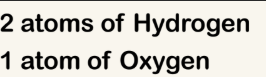
composition of water
Perspiration and Respiration
Water is lost through
Homeostasis
Relative constancy of the human body’s internal environment
Metabolism
set of chemical processes in your body's cells that
convert food and drink into energy
Catabolism
Breaking of Macromolecules to
Smaller units
Anabolism
Production of large molecules
from Small
Protein
Long-chain of macromolecules consisting of a linear sequence of Amino Acids
connected by peptide bonds
Protein
Long-chain of macromolecules consisting of a linear sequence of Amino Acids
connected by peptide bonds
Protein
Long-chain of macromolecules consisting of a linear sequence of ___
connected by ___
protein synthesis
the process by which cells make proteins
Twenty-two amino acids
How many amino acids are used in protein synthesis
At least two amino acids
What is the minimum number of amino acids needed to form a protein
Enzymes, hormones, antibodies
What are the three important functional roles of proteins in the body
Enzymes
Molecules necessary to allow continuation of biochemical
reactions.
❖ They do or do not directly enter into the reaction.
Hormones
Molecules that exercise regulatory control of some
bodily functions e.g., growth and development
Antibodies
Primary defense mechanism of the body against
infection and disease.
antigen
The precision of an antibody’s molecular configuration
varies on its design for attacking a particular type of
antigen
Invasive or infectious agent
1. Carbon
2. Hydrogen
3. Oxygen
Lipids Composed solely of:
1 Glycerol
3 Fatty Acid
Lipids Composed of 2 smaller molecules
Lipids
Present in all tissues of the body
❖ Structural components of cell membranes
❖ Concentrated just under the skin
❖ Acts as thermal insulator
❖ Serves as energy stores for body fuel
❖ Harder to extract them stored energy
❖ Excess storage may lead to OBESITY
Carbohydrates
Aside from Lipid, what
also serve as fuel for
the body by providing
energy stores?
Composed solely of:
1. Carbon
2. Hydrogen
3. Oxygen
Carbohydrates ❖ Composed solely of:
2:1
In a Carbohydrate, ___ ratio of
Hydrogen to Oxygen
Saccharides
Carbs is aka
In plants
Where is starch stored
In animals
Where is glycogen stored
glucose

DNA RNA
2 Principal Nucleic Acid Important to Human Metabolism
DNA
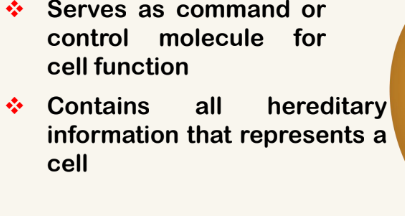
RNA

mRNA
❖ Copies the instructions from DNA
❖ It tells the factory (cell) what to make
tRNA
Brings the building blocks (amino acids)
to the factory
Deoxyribose (a sugar)
and Phosphate
DNA consists of a “backbone” composed of
alternating segments of:
1. Adenine
2. Guanine
3. Thymine
4. Cytosine
Attached to each Deoxyribose is one of four
different nitrogen-containing organic bases:
Nucleotides
– base sugar-phosphate combination
DOUBLE-HELIX
DNA exists as these 2 long chains attached
together in ladder fashion This ladder is then twisted
❖ Producing a ____
Adenine
2. Guanine
Purines
3. Thymine
4. Cytosine
Pyrimidines
Adenines bonded to Thymines
❖ Cytosines bonded to Guanines
Sequence of Base Bonding is limited to:
single
RNA is double or single helix?
Ribose
in RNA Sugar Component
is ___ instead
of Deoxyribose
uracil
WHAT replaces thymine as a base component in RNA
Nucleus, Cytoplasm
2 Major Structures of the Cell
DNA
principal
molecular component
of the Nucleus
Cytoplasm
Contains great quantities
of all molecular
components except DNA
Endoplasmic Reticulum
channel allowing nucleus to
communicate with the cytoplasm
Mitochondria
large bean-shaped structures
- site where Macromolecules are
digested to produce energy;
- engine of the cell
Ribosomes
Small, dot-like structures.
- Site of protein synthesis
- Scattered throughout the cytoplasm
or the endoplasmic reticulum.
❖ Lysosomes
Small, pea-like sacs
- Contain enzymes for digestion of
cellular fragments
- Helps control intracellular
contaminants
codon
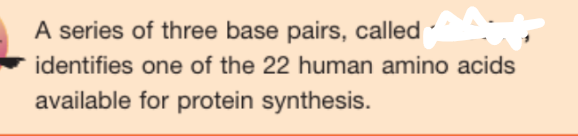
Codon
is a set of three bases on mRNA
Ribosome
reads the mRNA one codon at a time
tRNA
It has an anticodon that matches the mRNA codon
anticodon
tRNA has an___ that matches the mRNA codon
stop codon
When a ___ is reached, the protein is finished
Genetic, Somatic
2 general types of cells inside the human body
Genetic
cell that Carry hereditary information
Somatic
All other body cells that make up
tissues and organs
 Note
Note  Flashcards (58)