Lab 11- Embryonic and Fetal Development
 Studied by 0 people
 Call Kai
 Learn
Learn Practice Test
 Spaced Repetition
 Match
Match Flashcards
 Knowt Play
1/144

There's no tags or description
Looks like no tags are added yet.
Name | Mastery | Learn | Test | Matching | Spaced | Call with Kai |
|---|
No analytics yet
Send a link to your students to track their progress
145 Terms
Mature ovum
what is A?
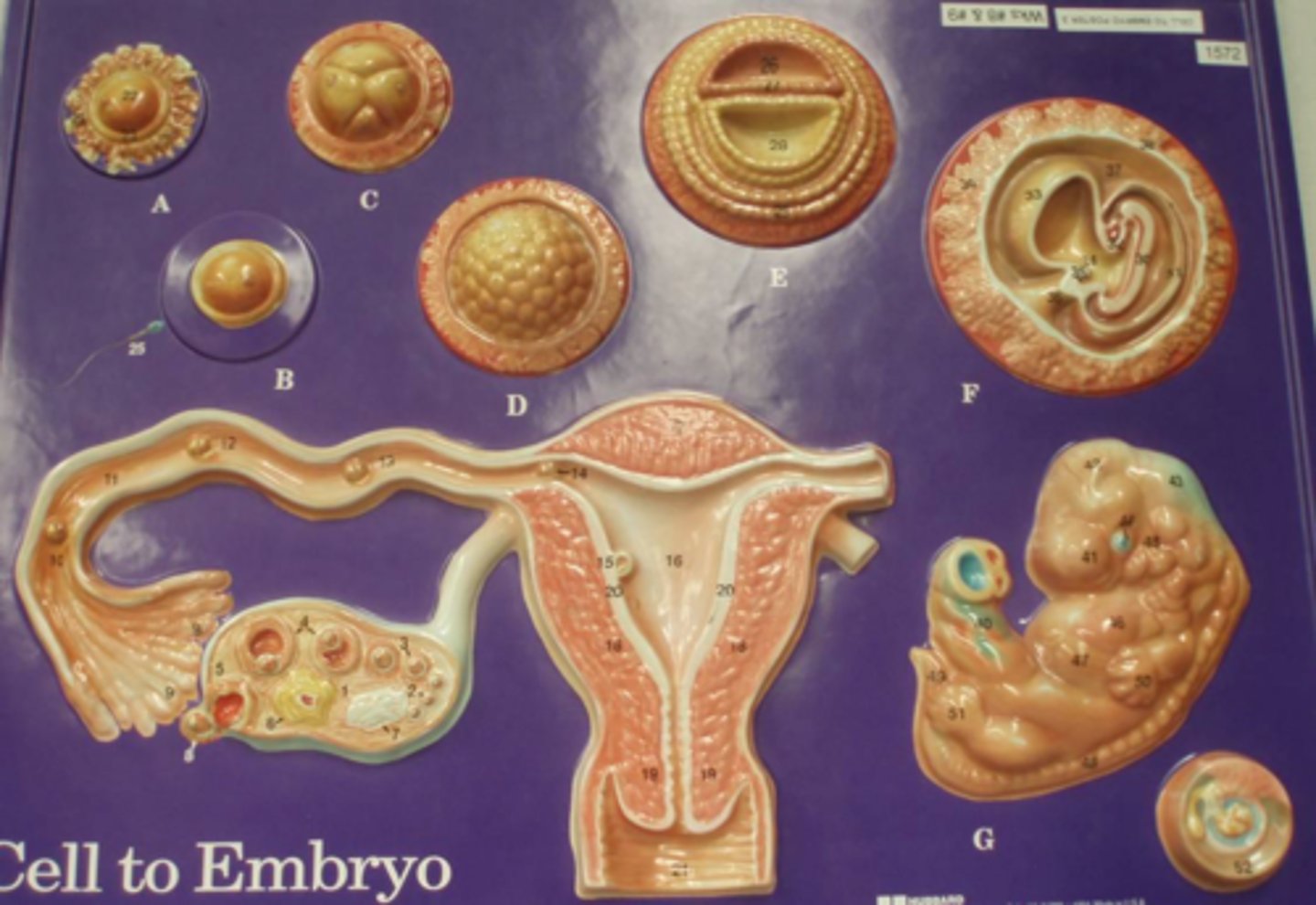
Fertilization of ovum by sperm cell
what is B?
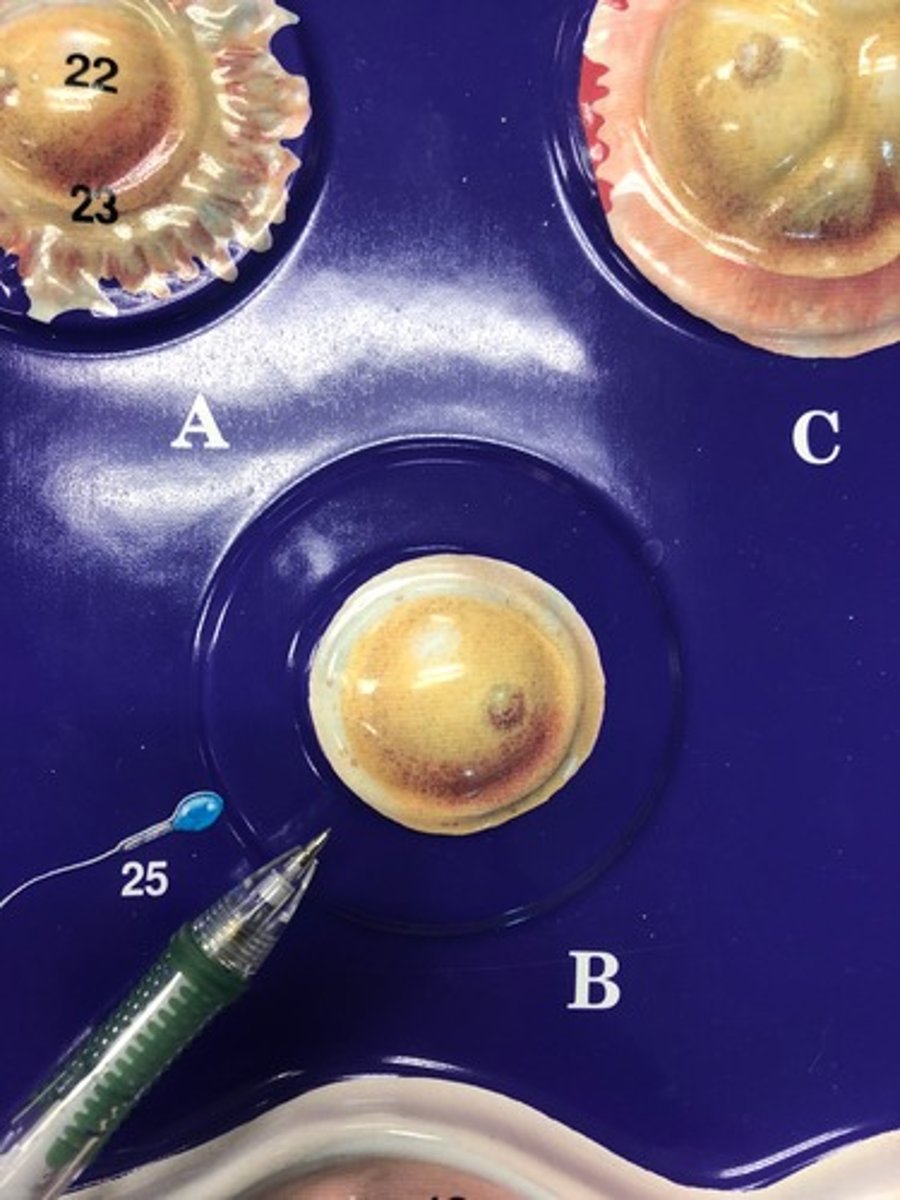
Cleavage (cell division at the four-cell stage)
what is C?
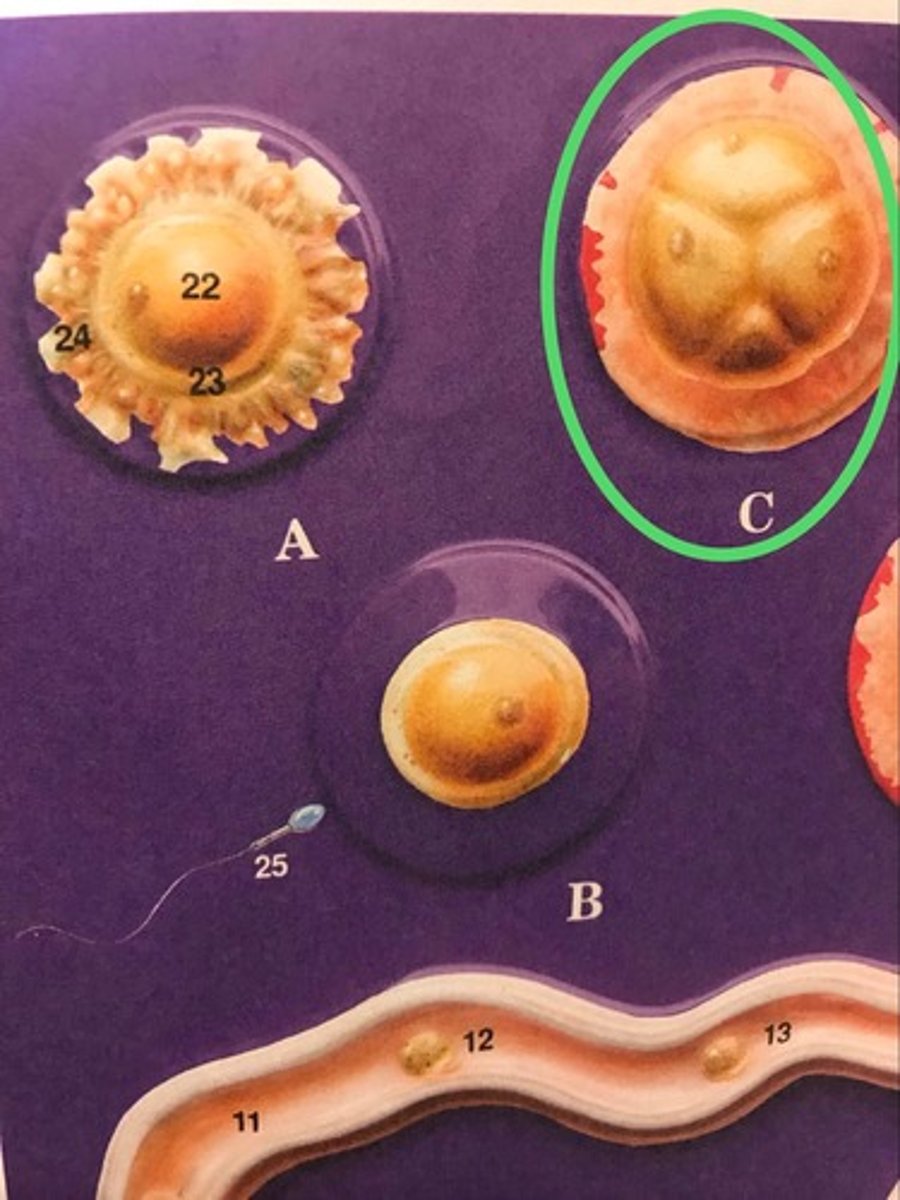
Morula (multi-cell stage of development)
what is D?
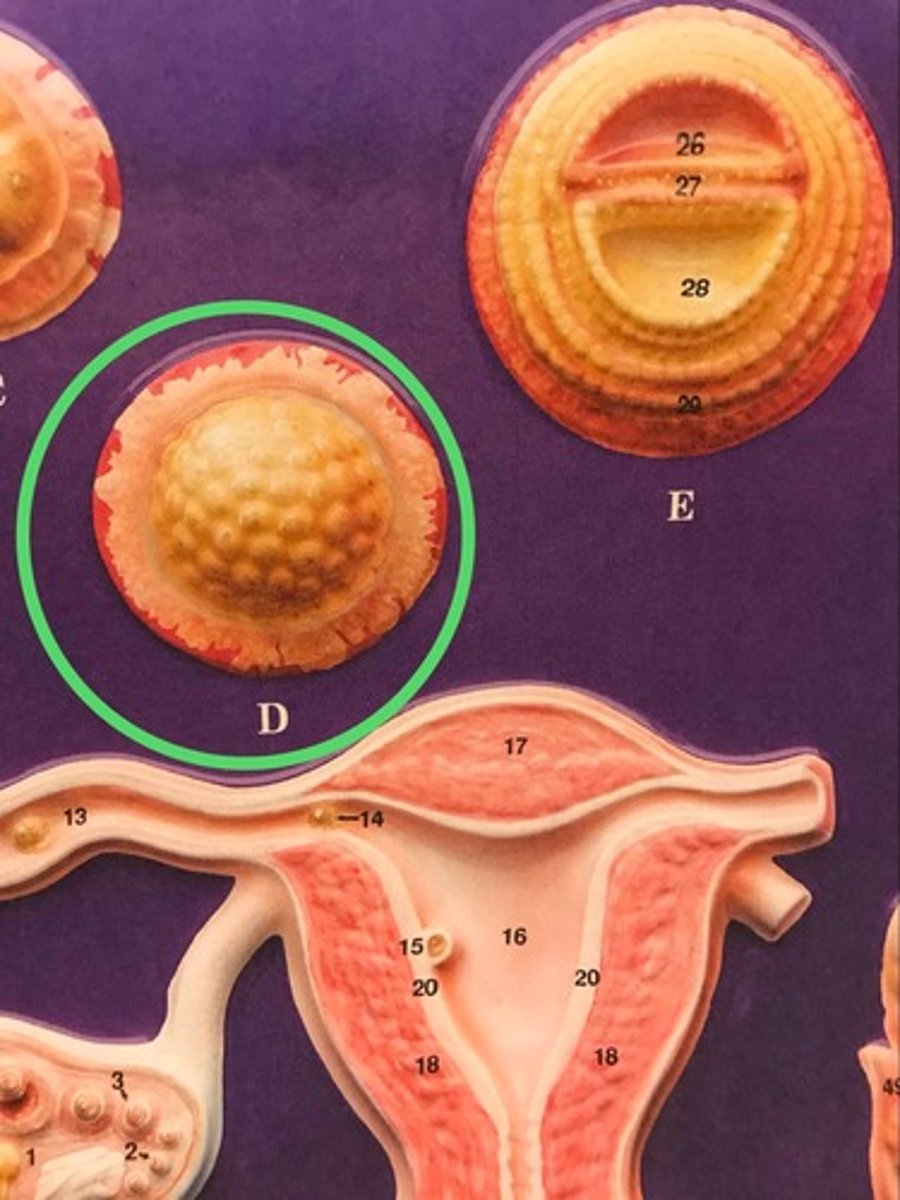
Embryonic vesicle (highly schematic)
what is E?
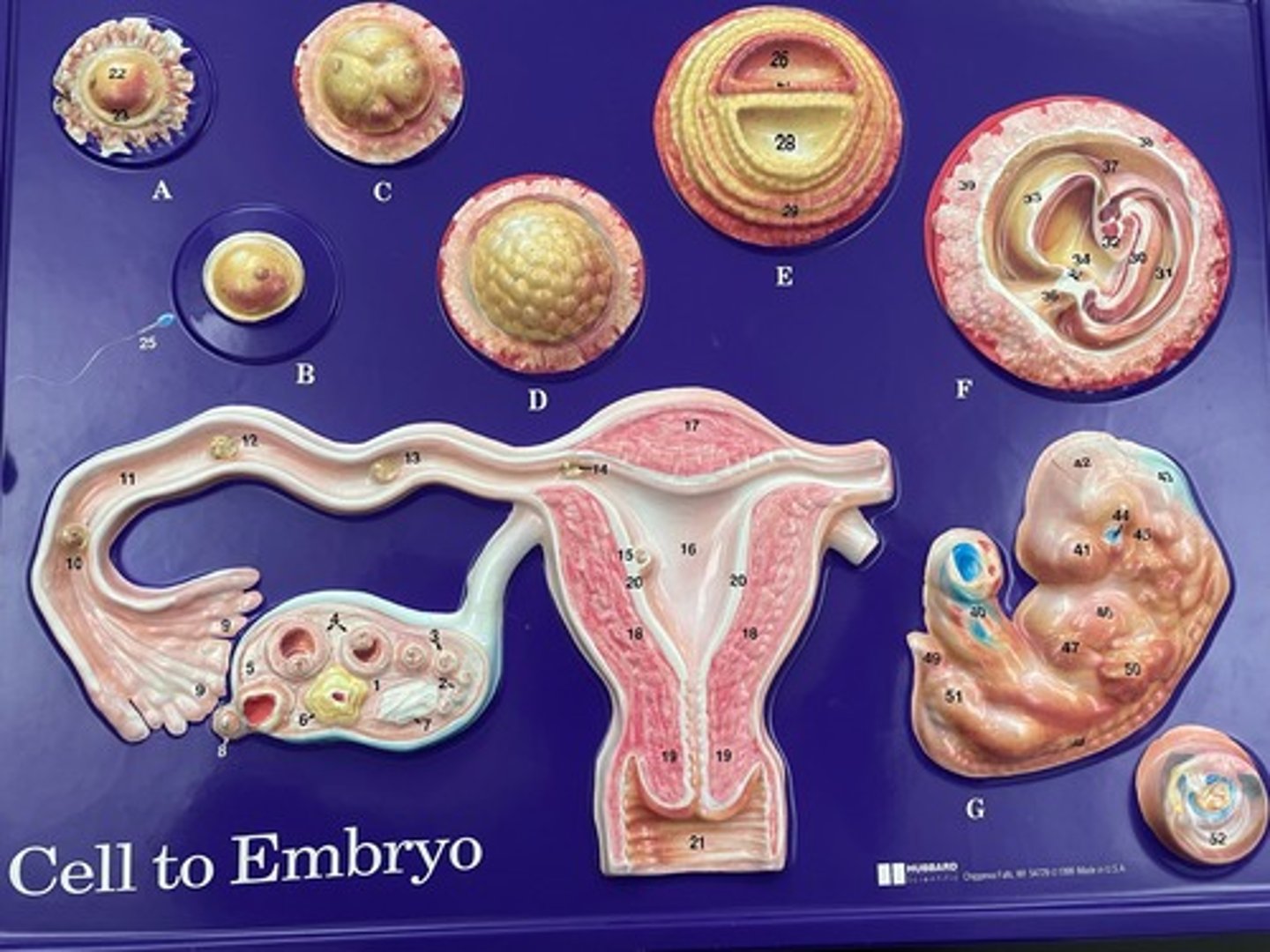
Developing embryo about 21 days
what is F?
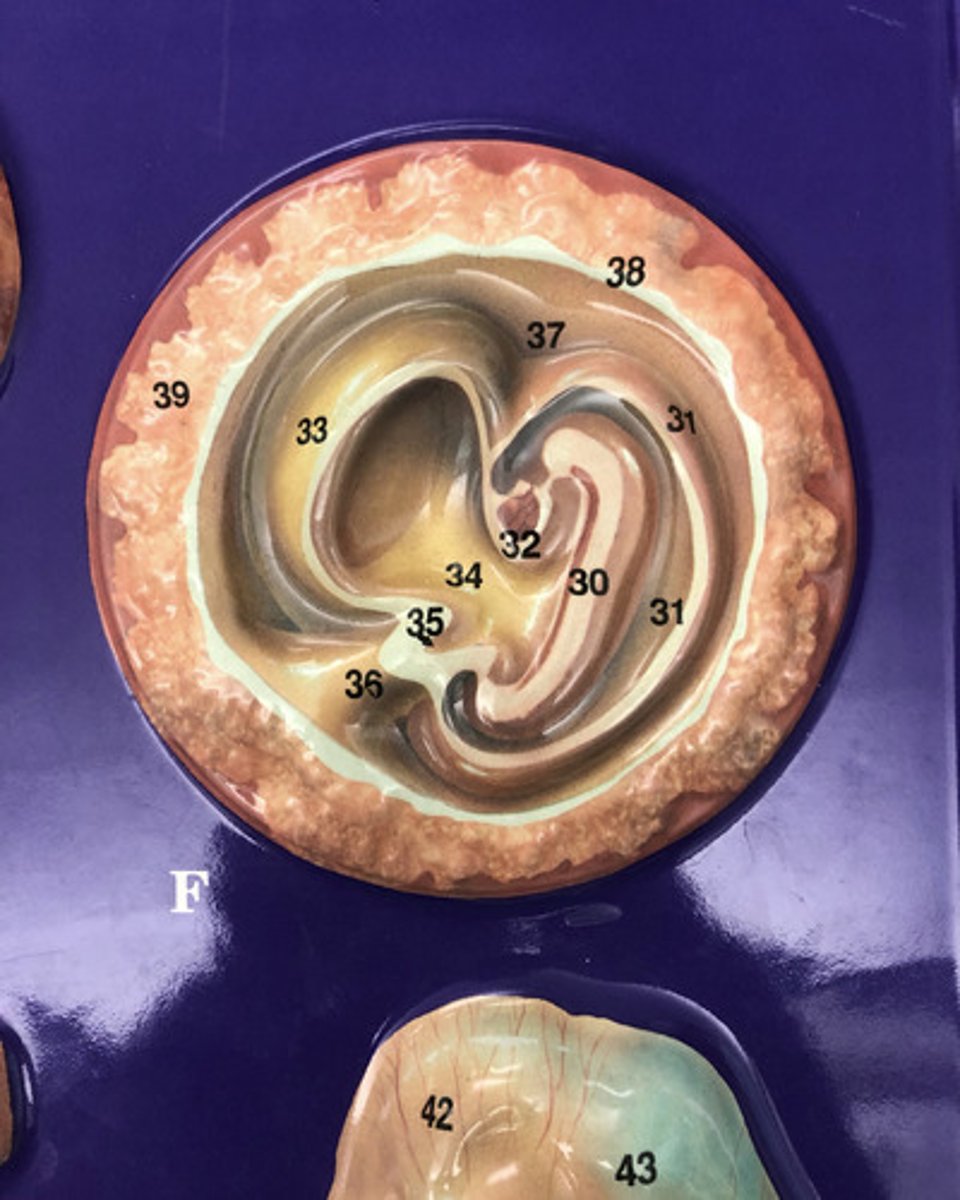
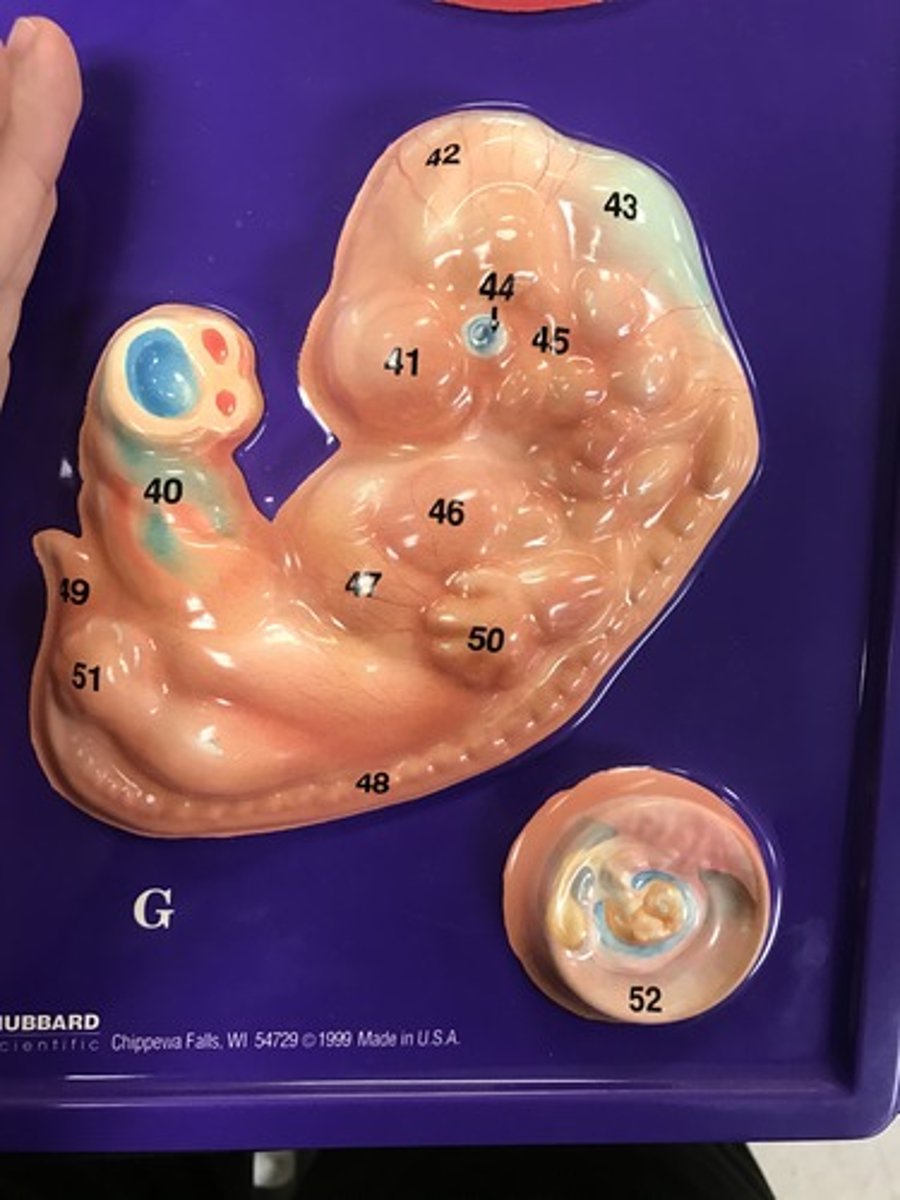
Much enlarged embryo about 5th week
what is G?
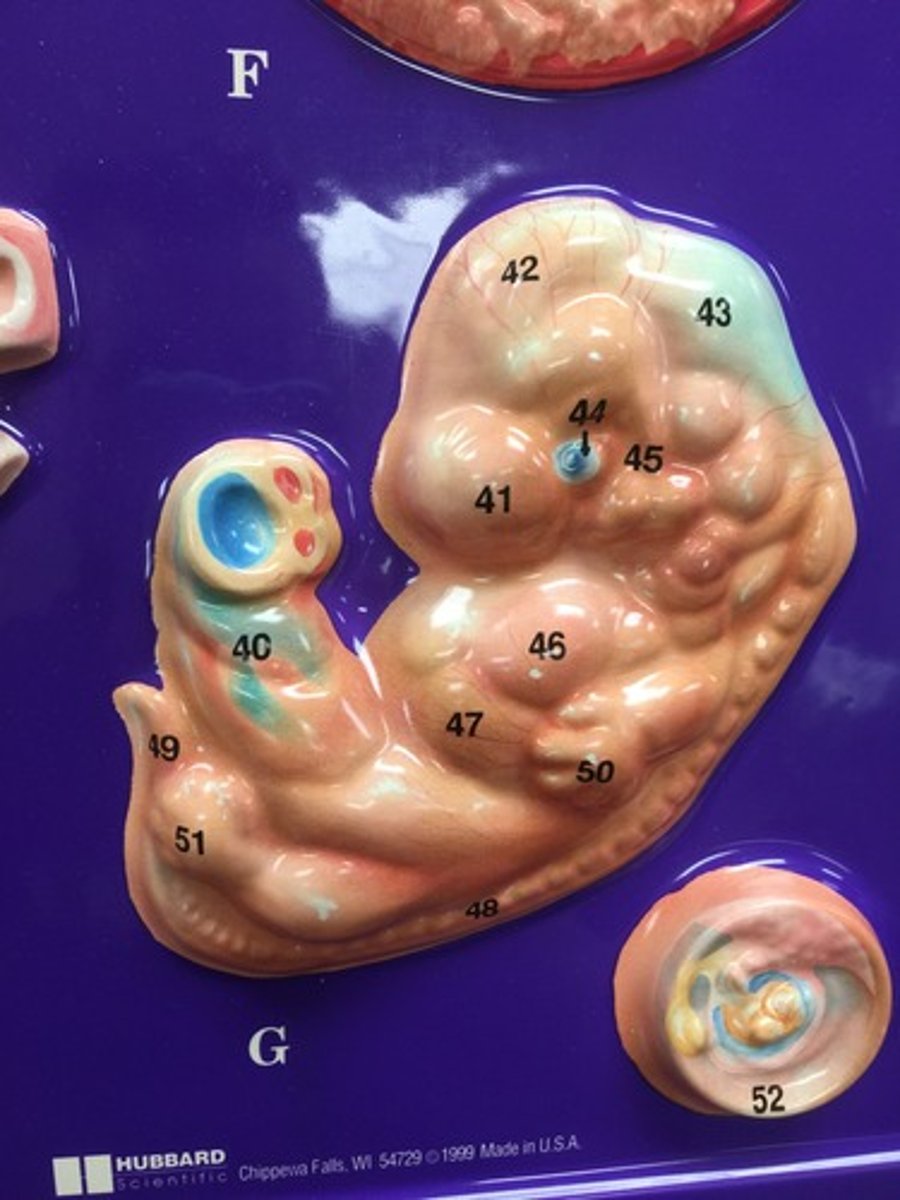
Ovary (coronal section, stroma, and associated components)
what is #1?
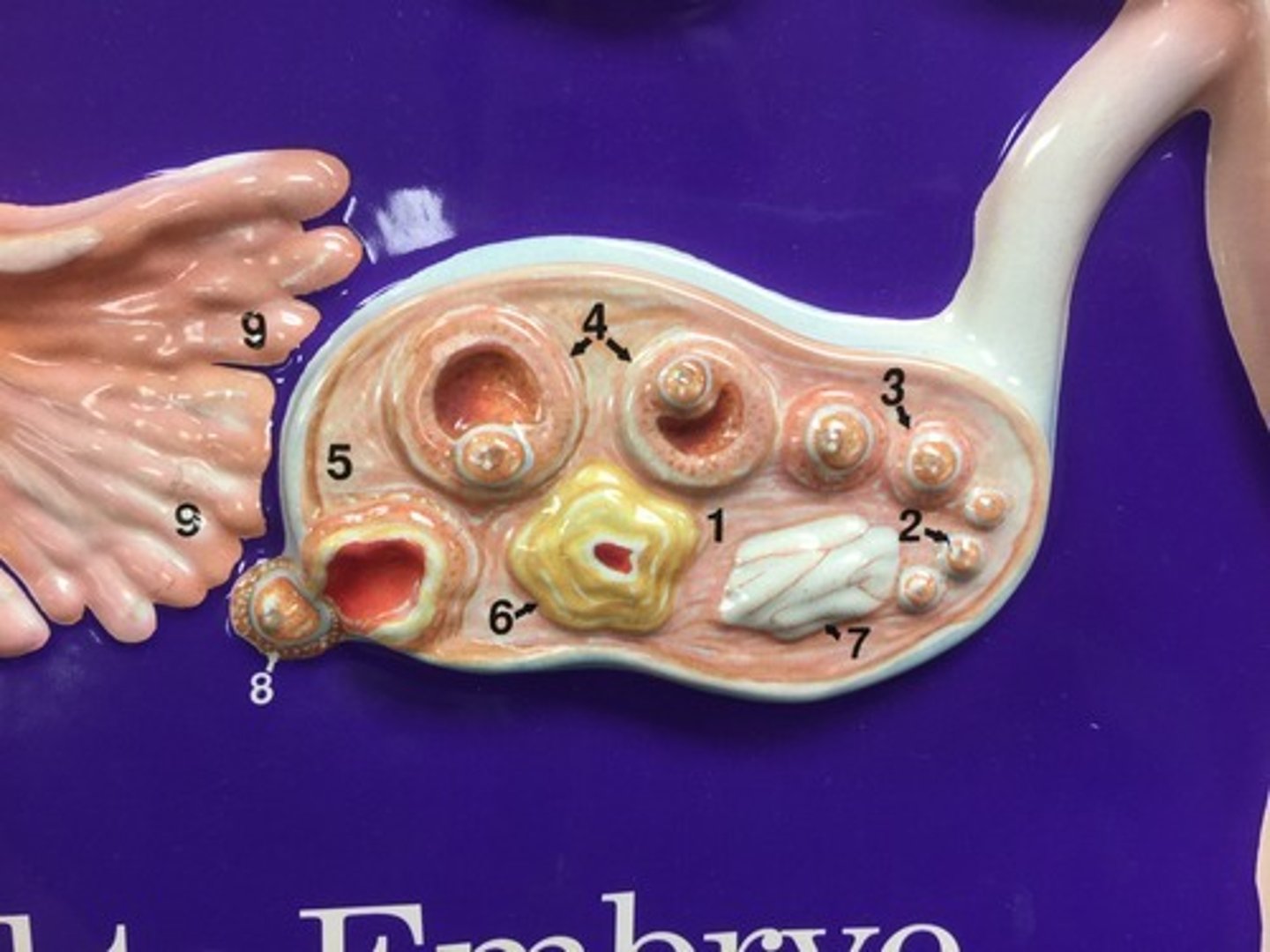
Primary oocyte (developing ovum)
what is #2?
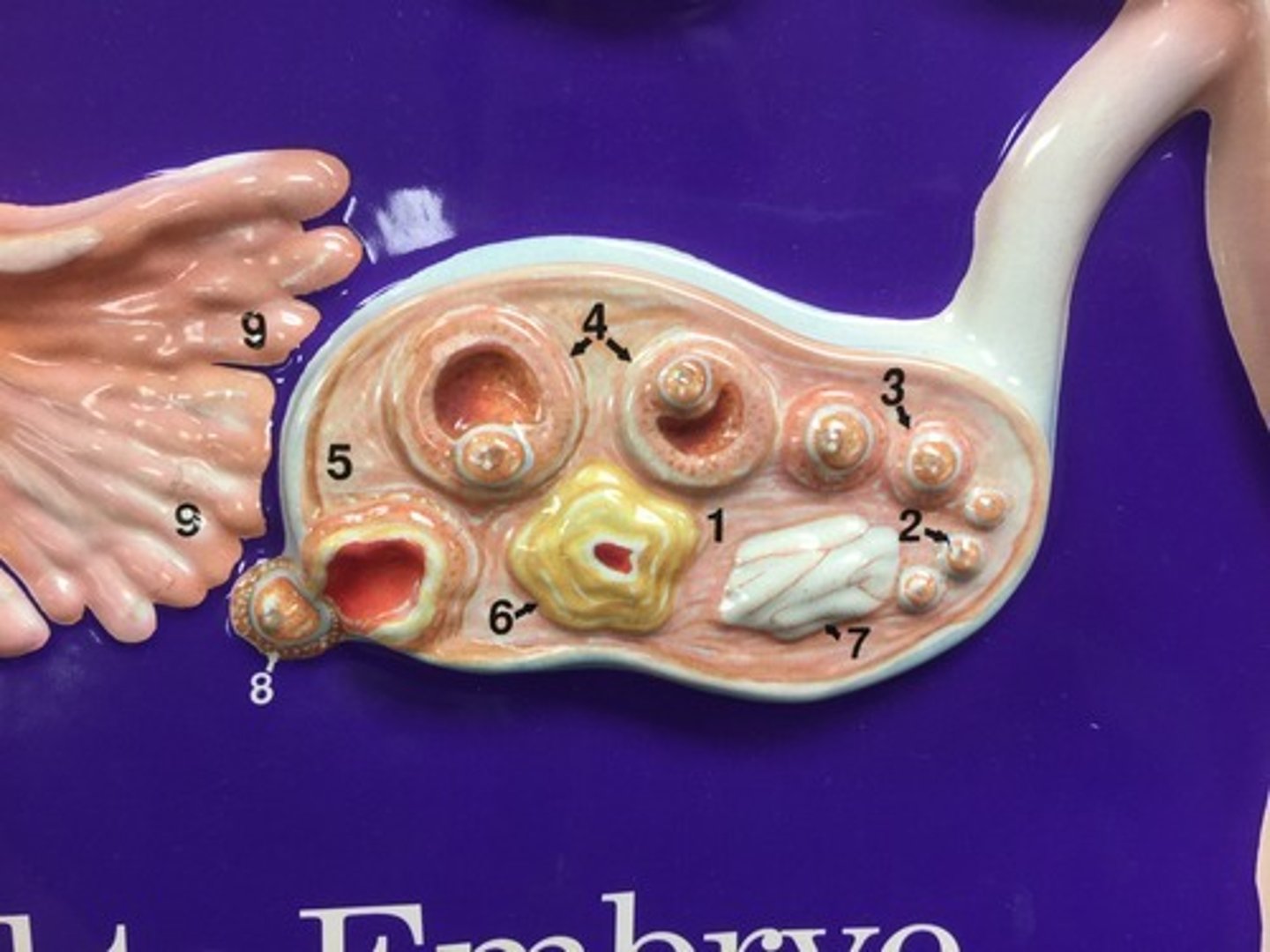
Oocyte with corona radiata
what is #3?
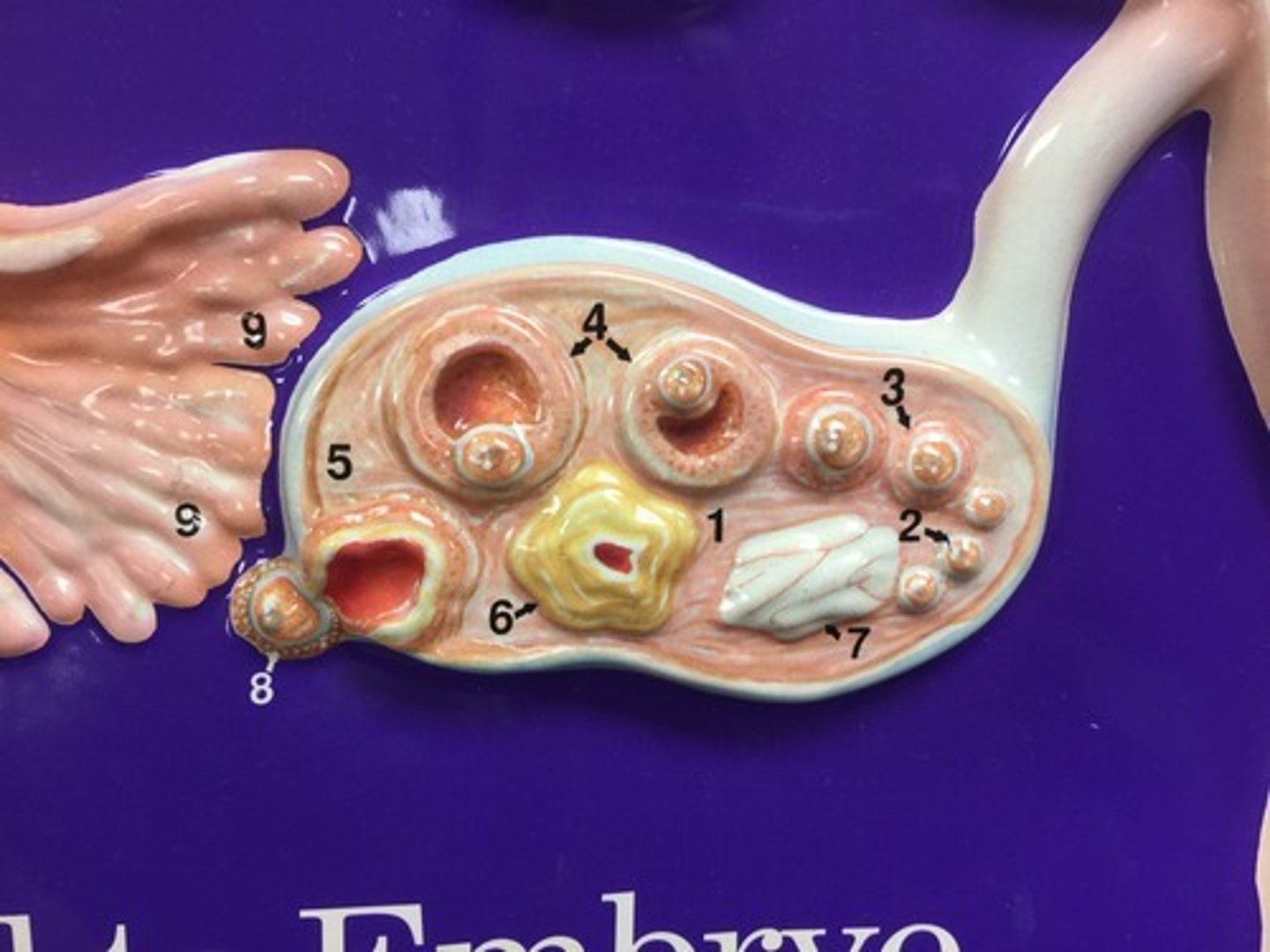
Developing fluid-filled vesicular follicles
what is #4?
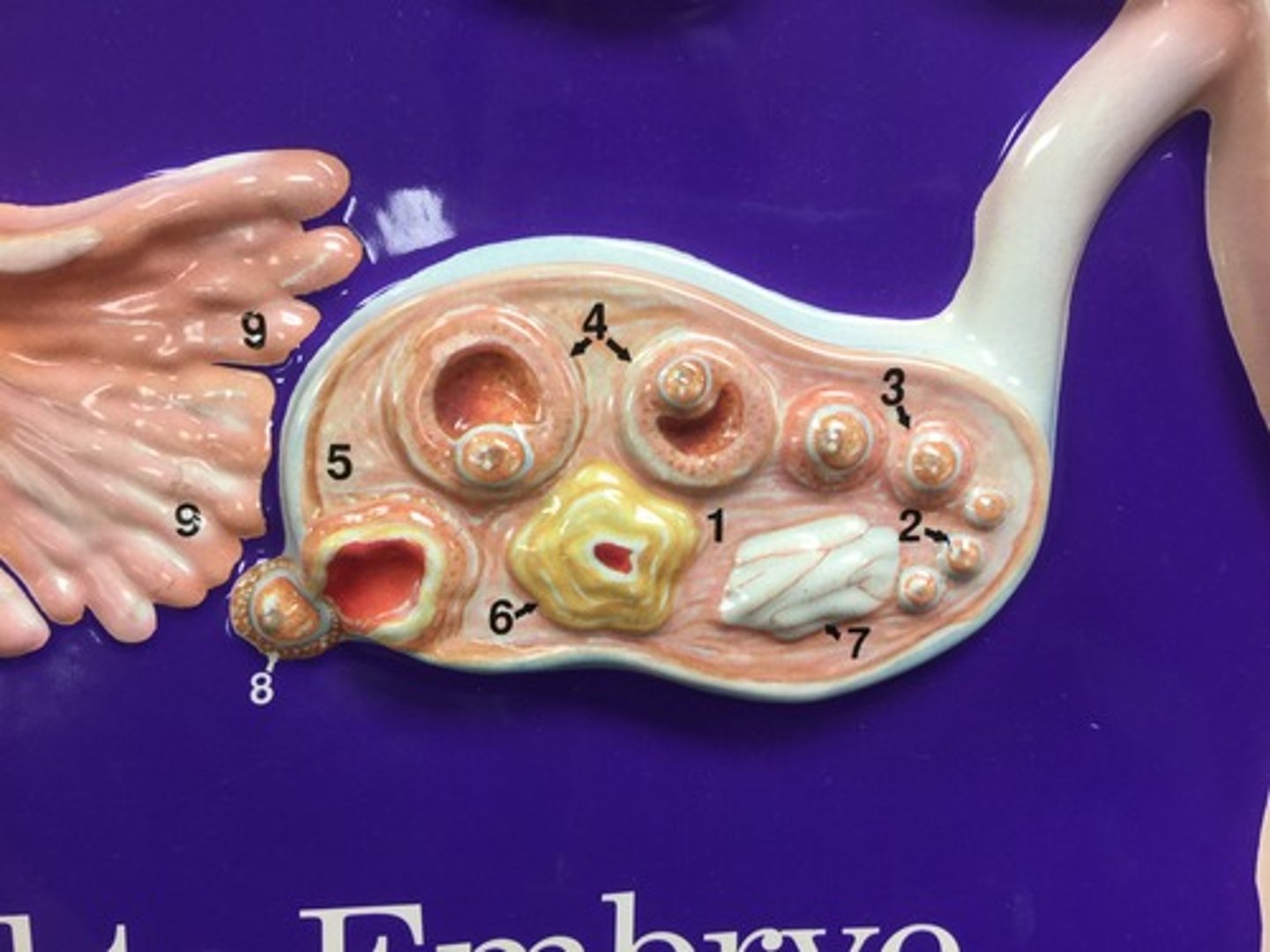
Ovulating follicle
What is #5?
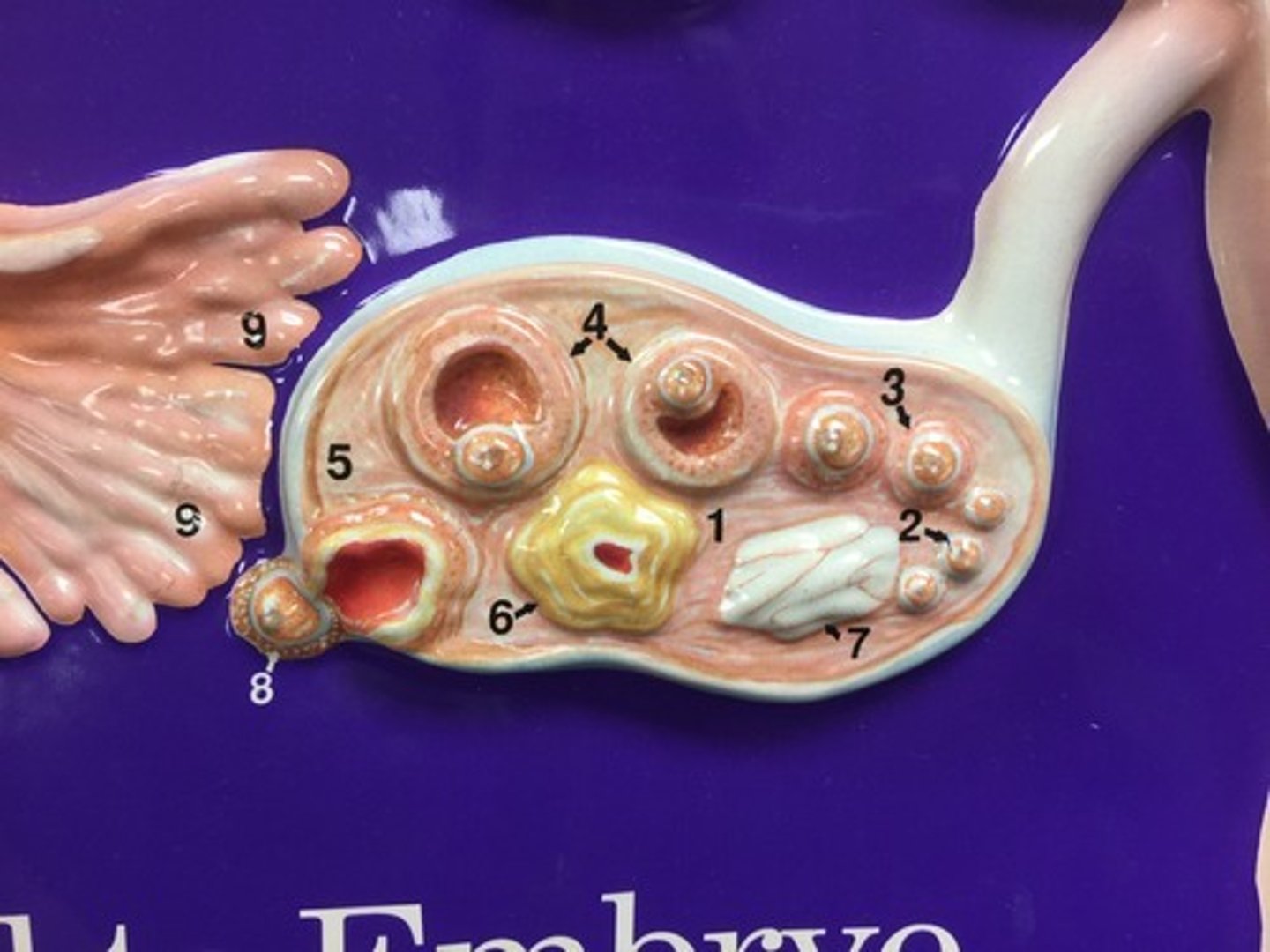
Corpus luteum
what is #6?
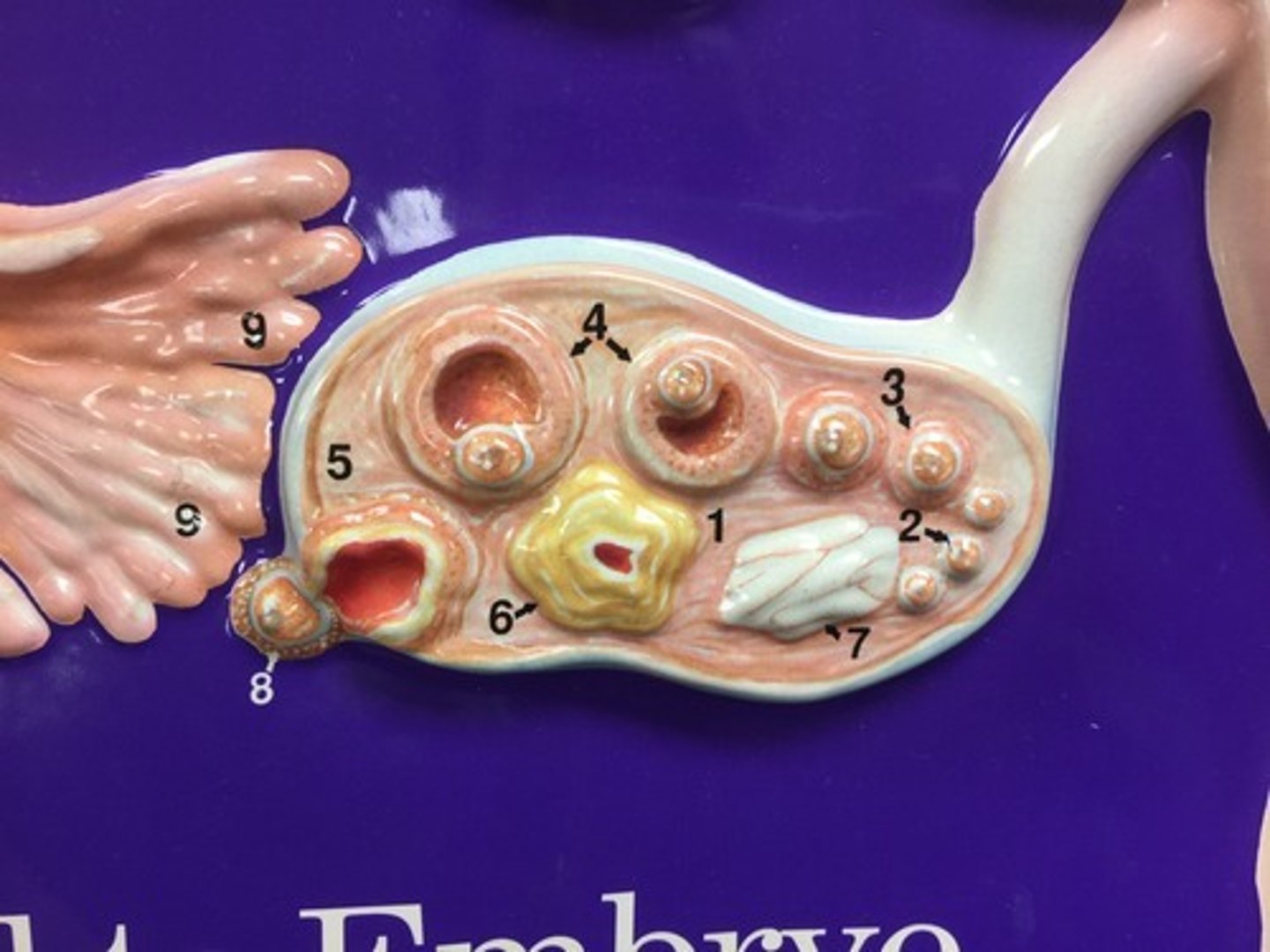
Corpus albicans (degenerative product of corpus luteum)
what is #7?
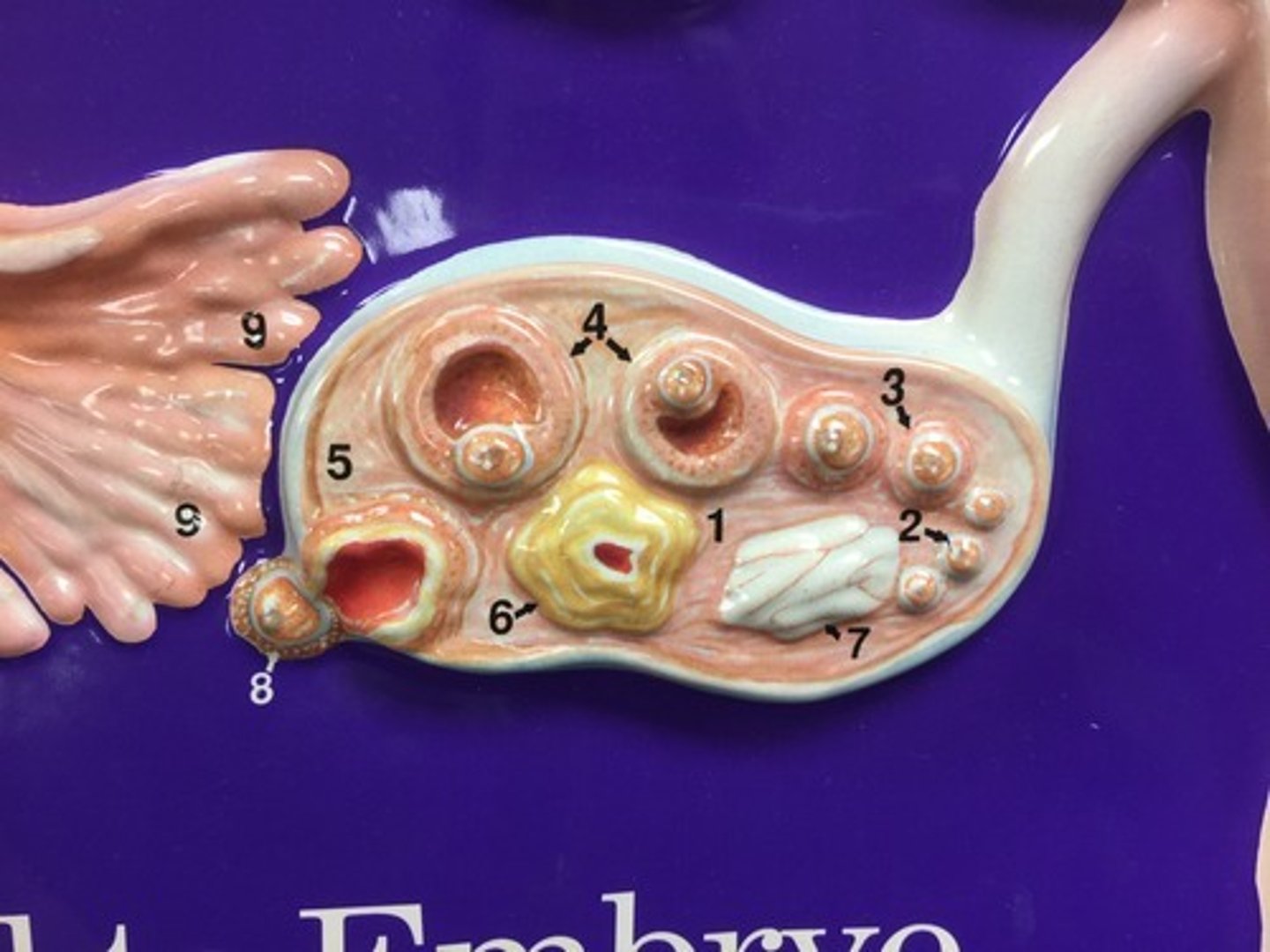
Mature ovum discharged from follicle
what is #8?
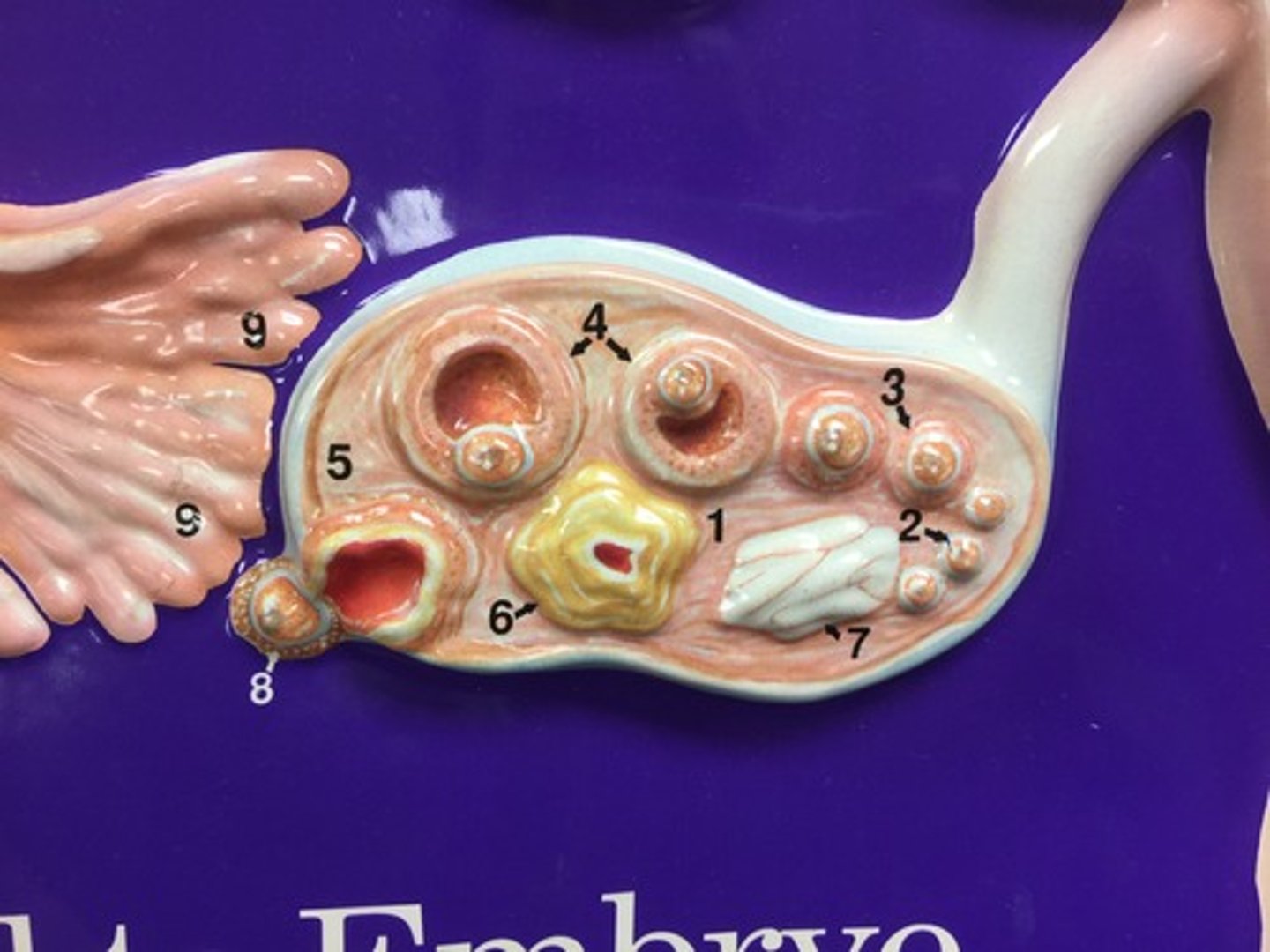
Fimbriated end of oviduct (Fallopian tube)
What is #9?
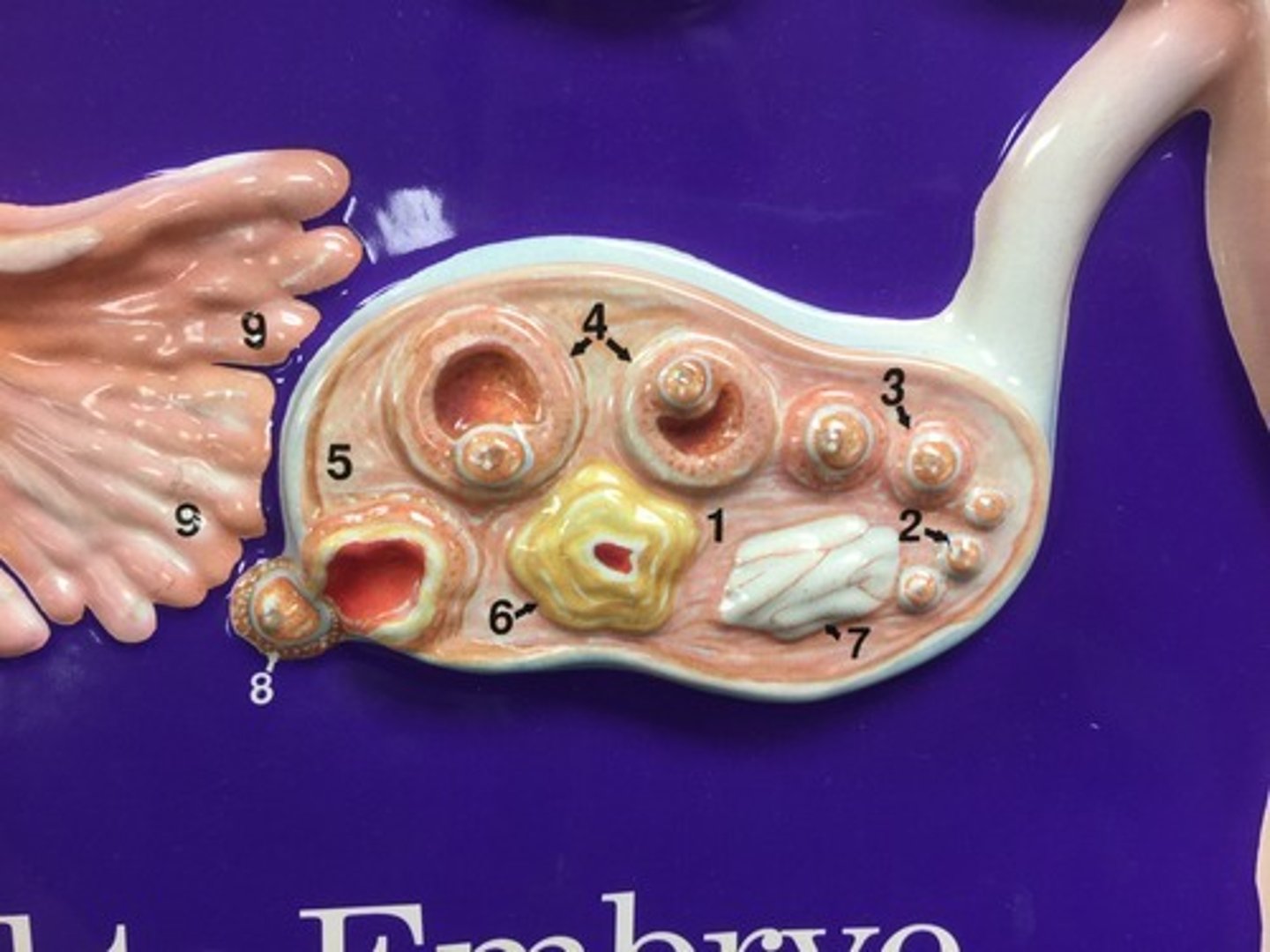
Ovum in oviduct with sperm ready to penetrate (fertilization first day; cf. B)
what is #10?
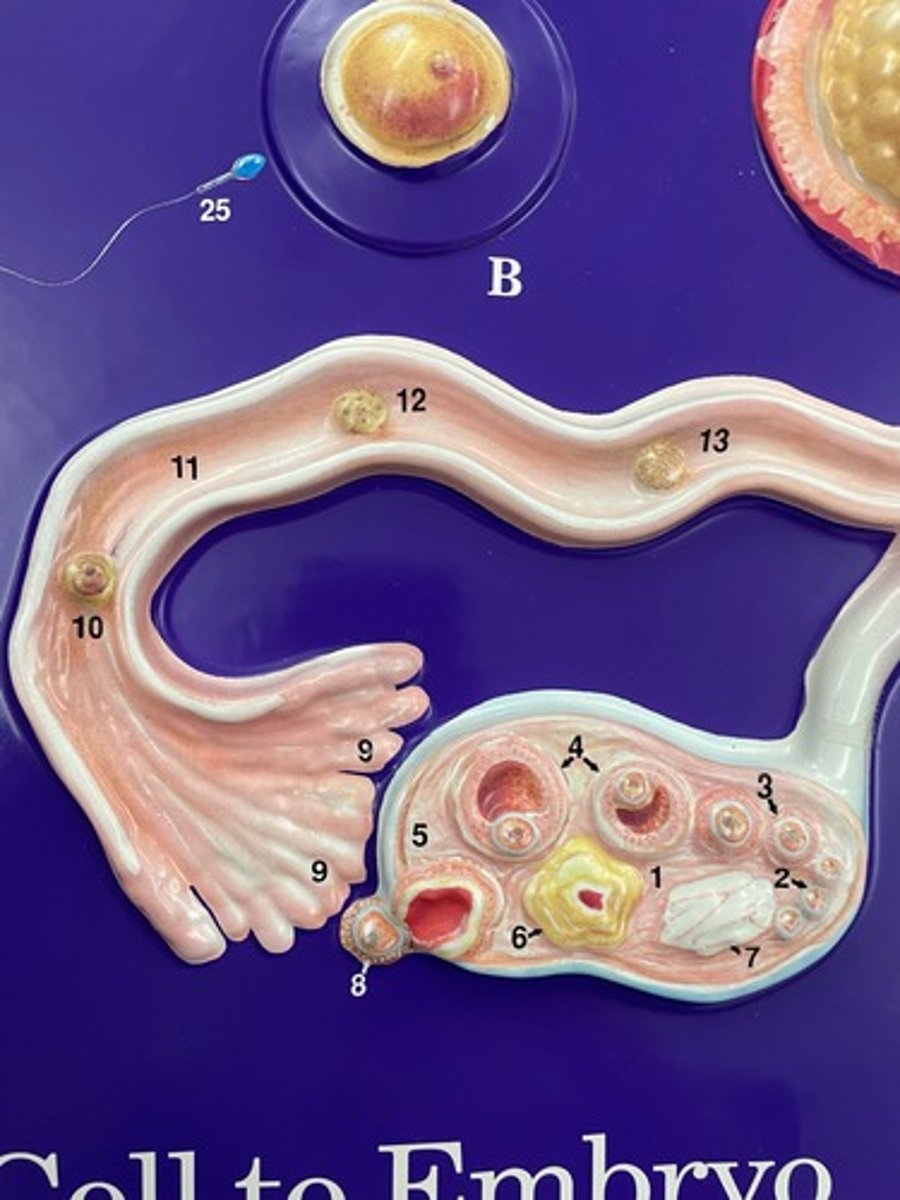
Oviduct (fallopian tube)
what is #11?
Cleavage of fertile ovum (cf. C)
what is #12?
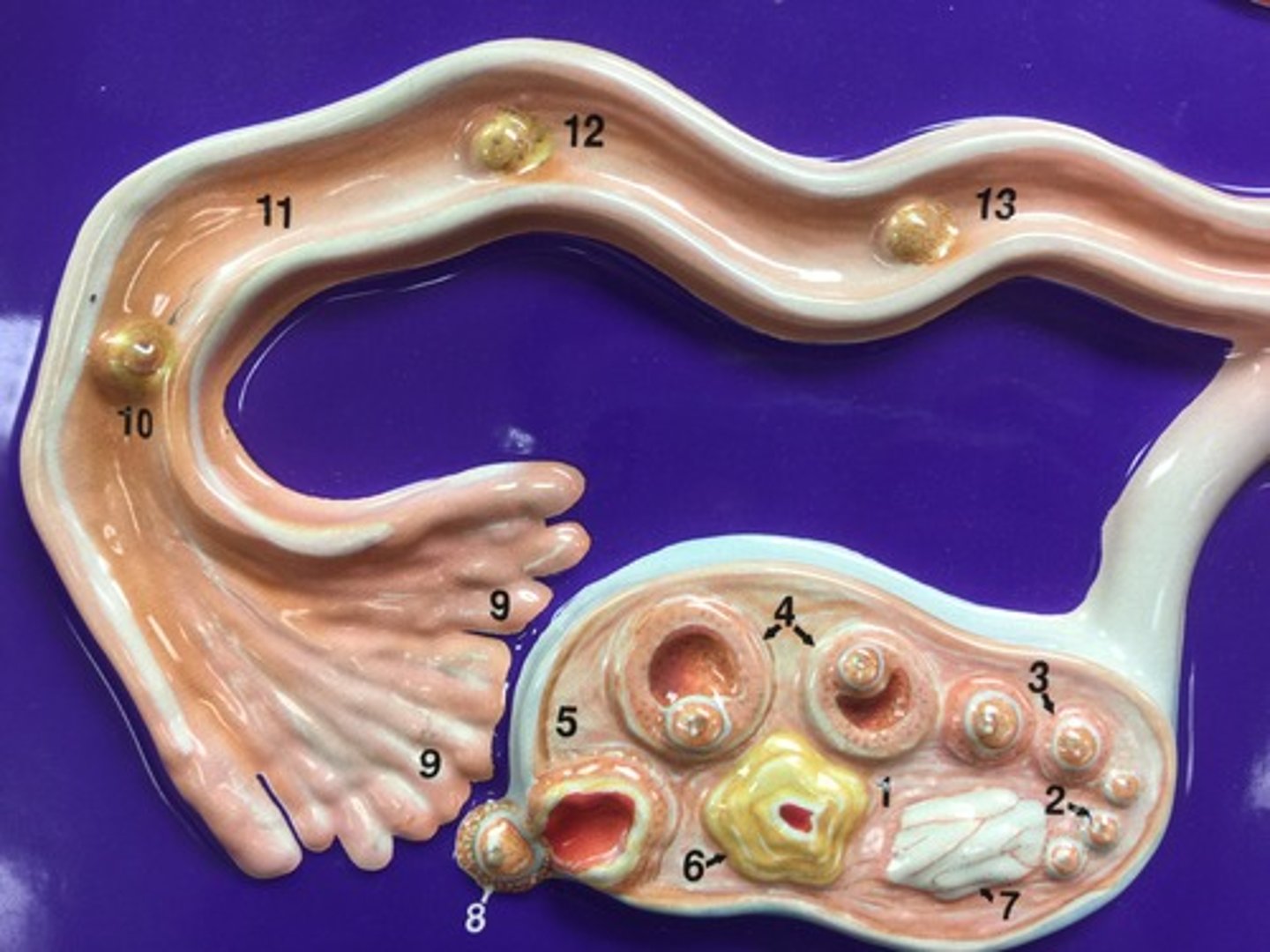
Morula or multi-celled stage (third day: cf. D)
What is #13?
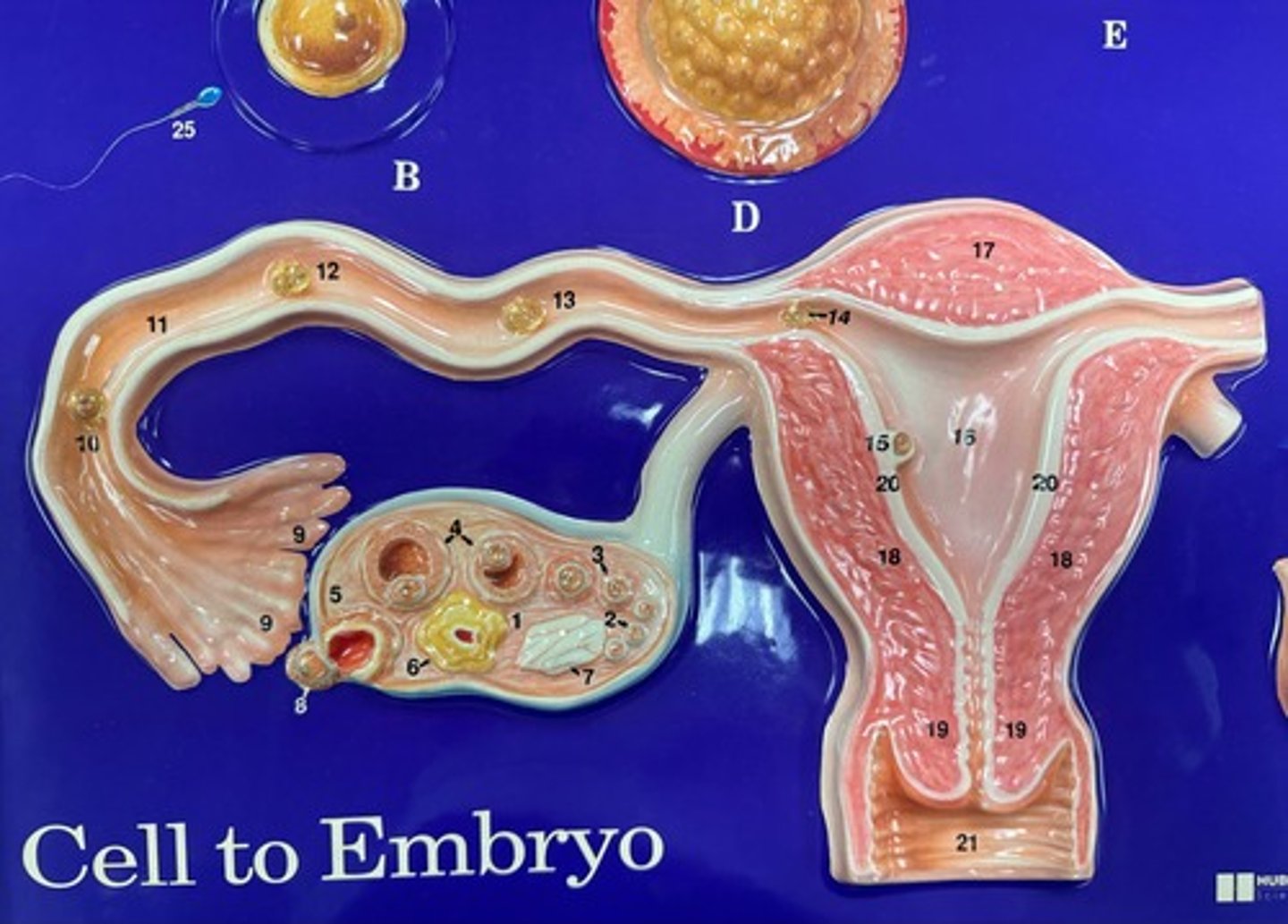
Embryonic vesicle enters uterus (fourth or fifth day)
What is #14?
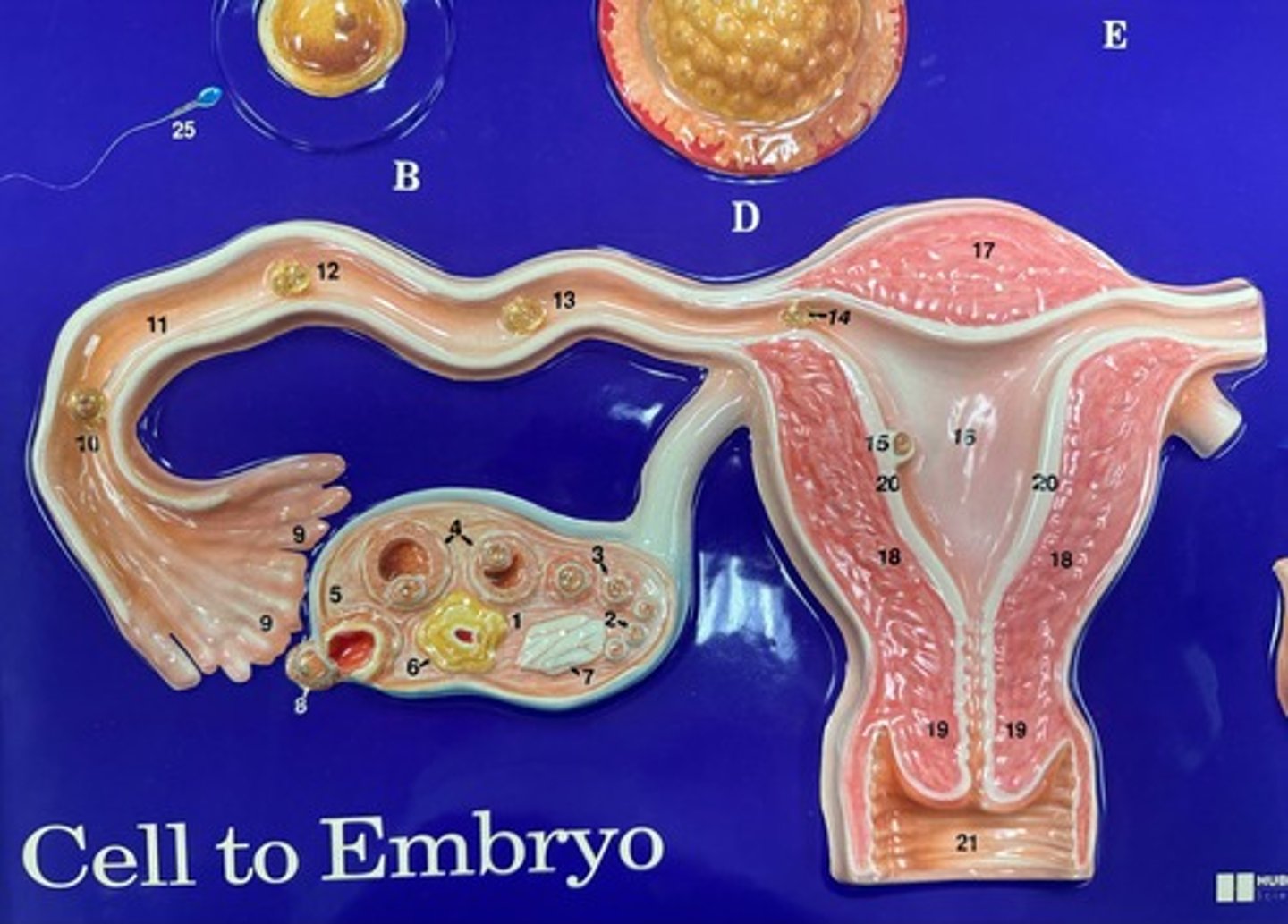
Implantation of vesicle begins in endometrial epithelium (seventh day)
what is #15?
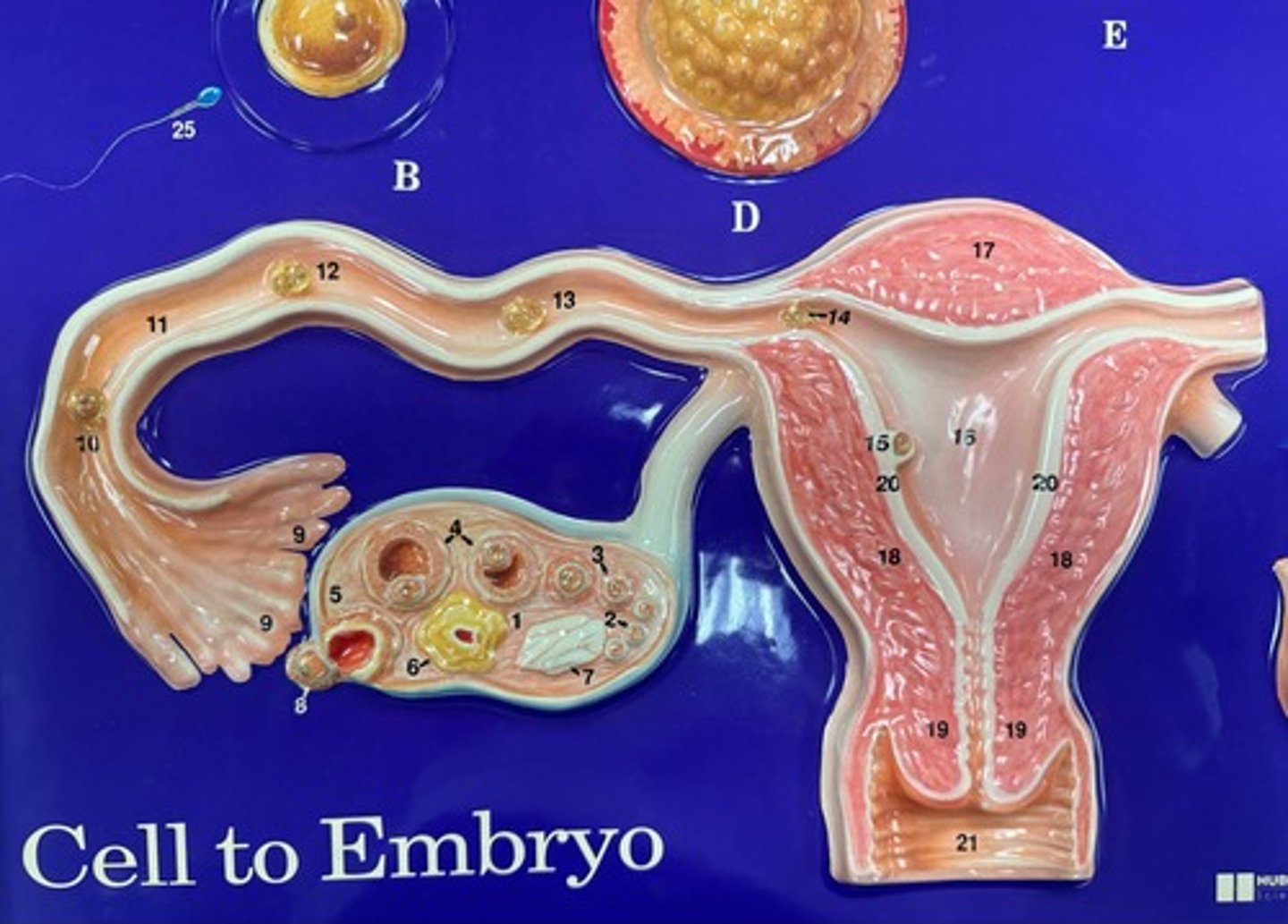
Corpus of uterus (frontal, mid-line section)
What is #16?
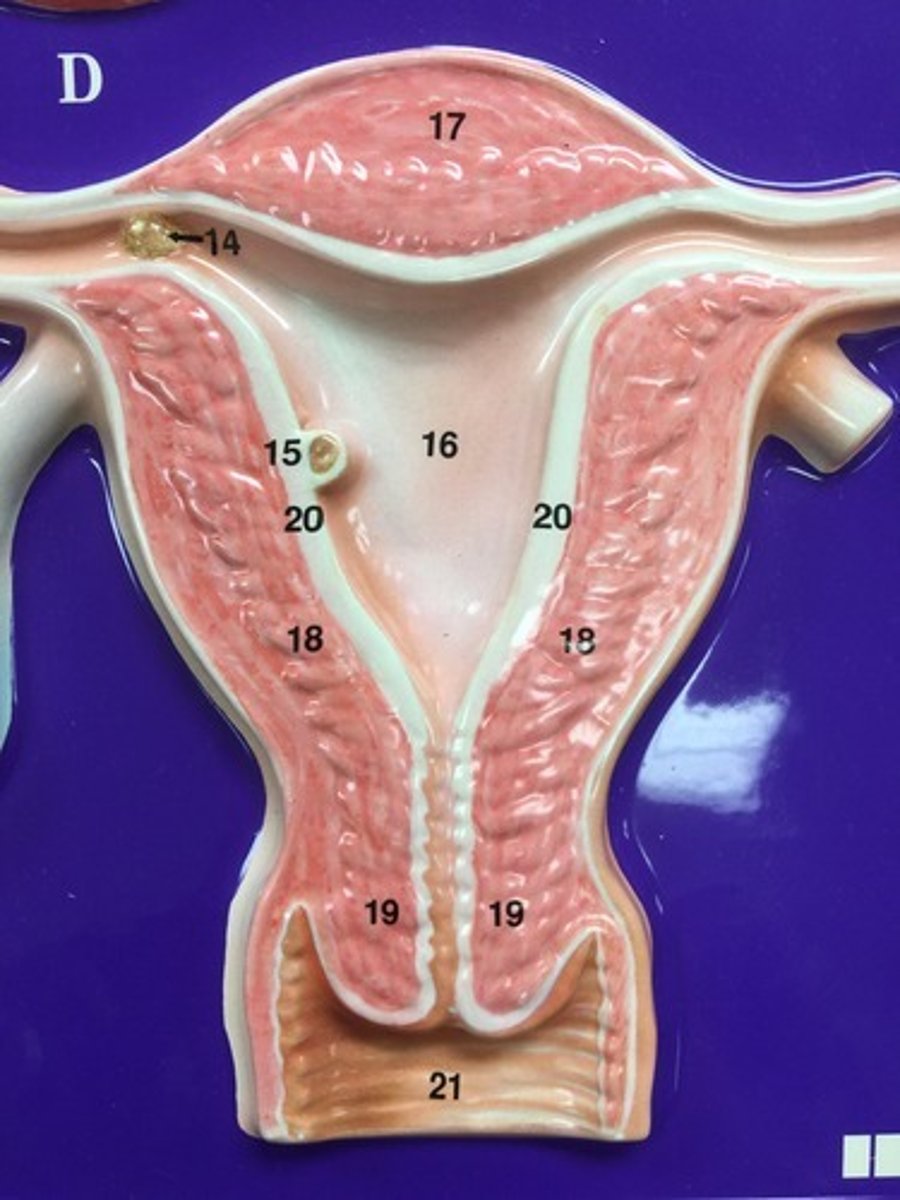
Fundus of uterus
What is #17?
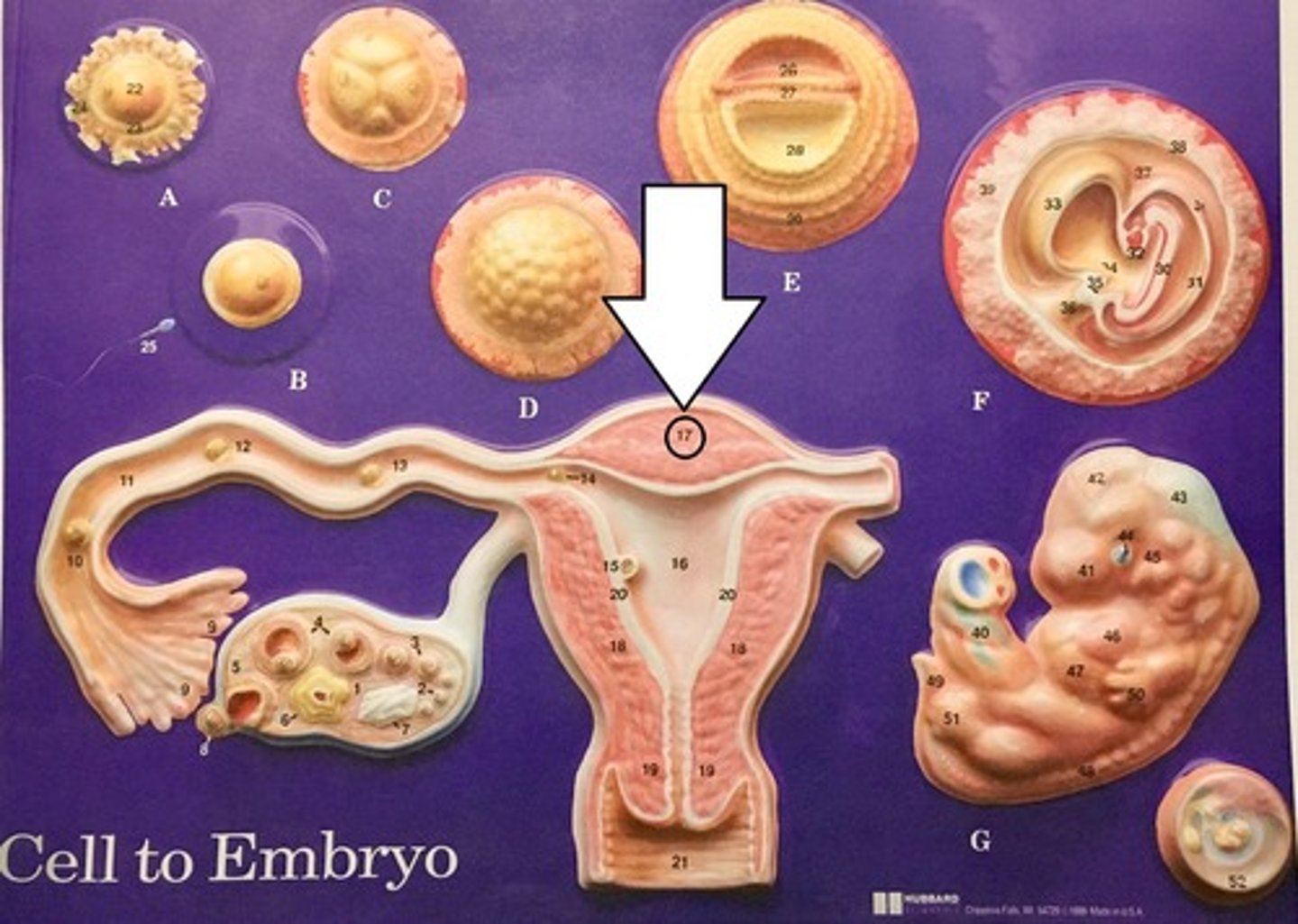
Myometrium or muscle layers of uterus
what is #18?
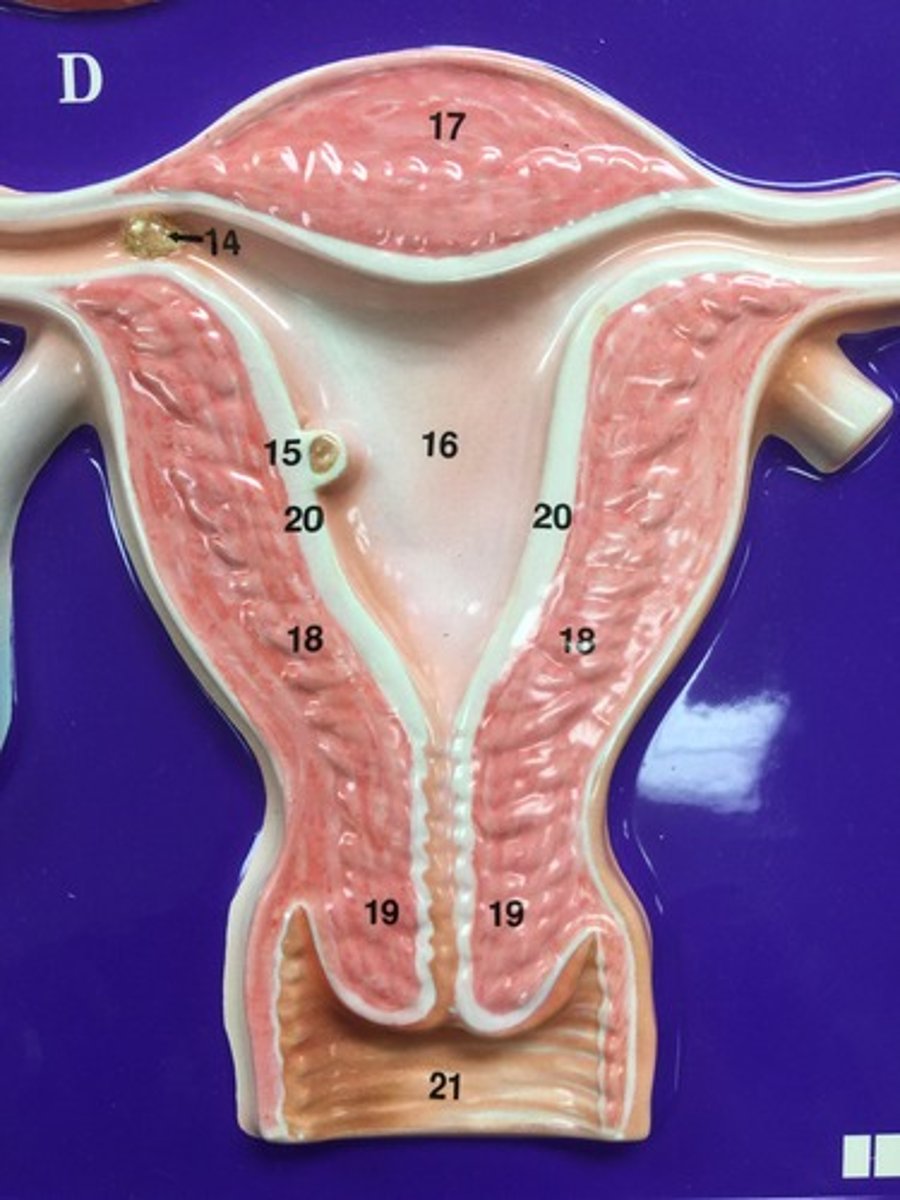
Cervix or neck of uterus
what is #19?
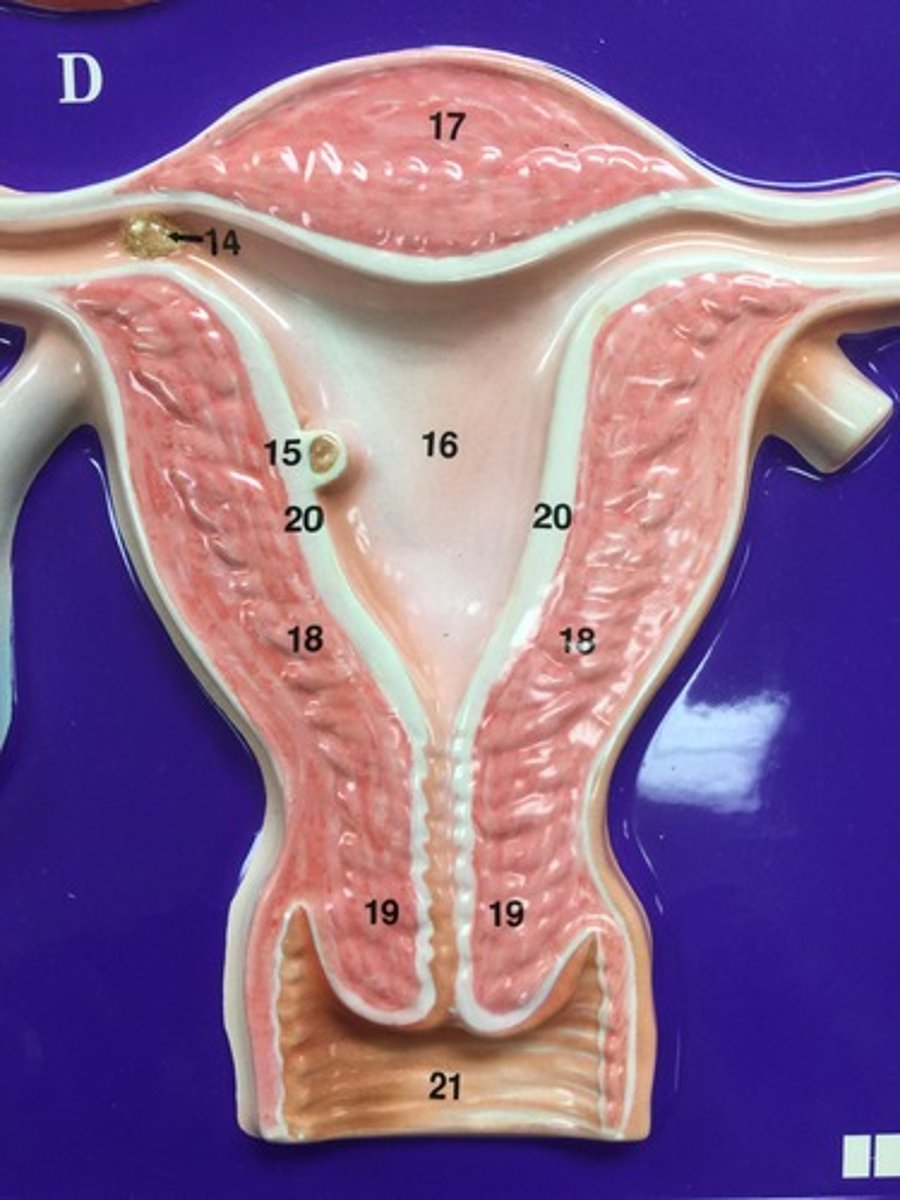
Endometrium (highly vascular mucous membrane)
what is #20?
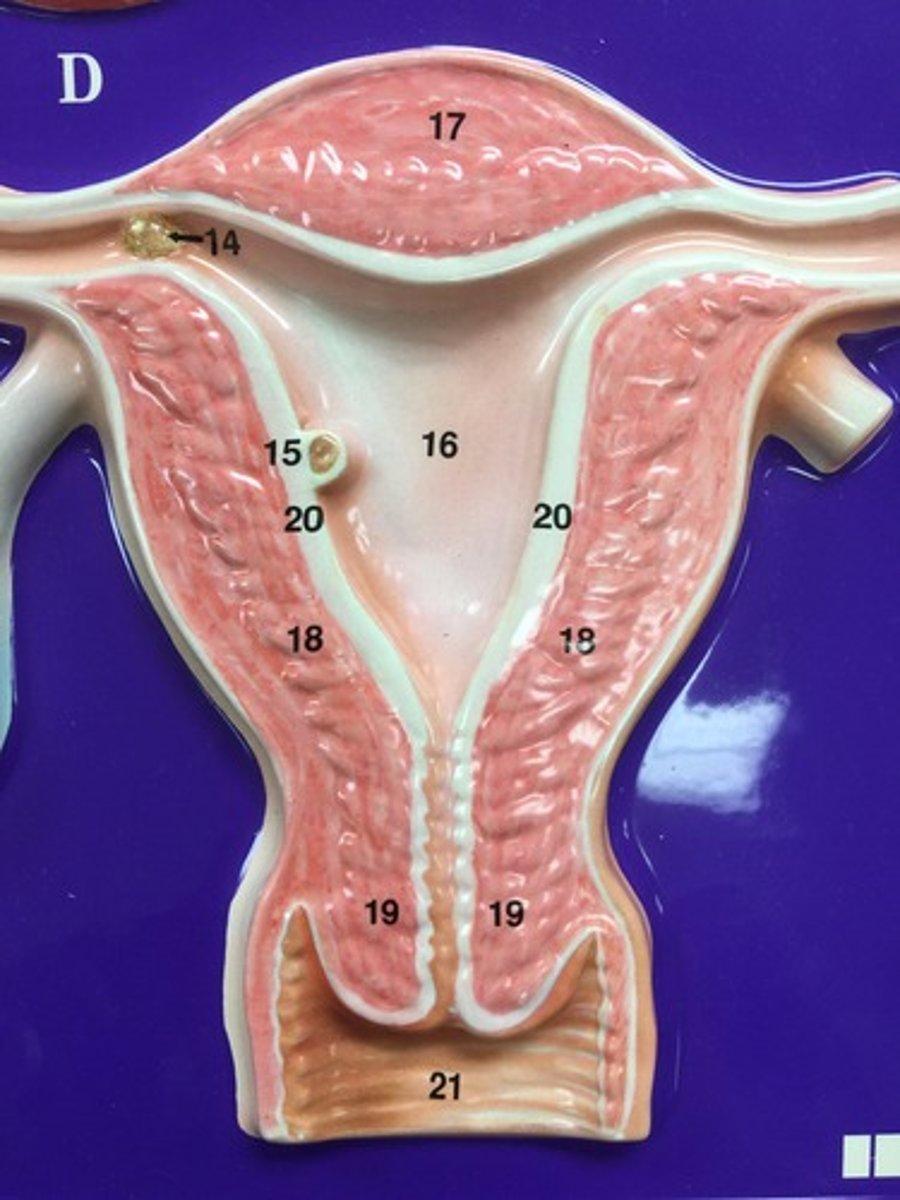
Vagina (frontal section)
what is #21?
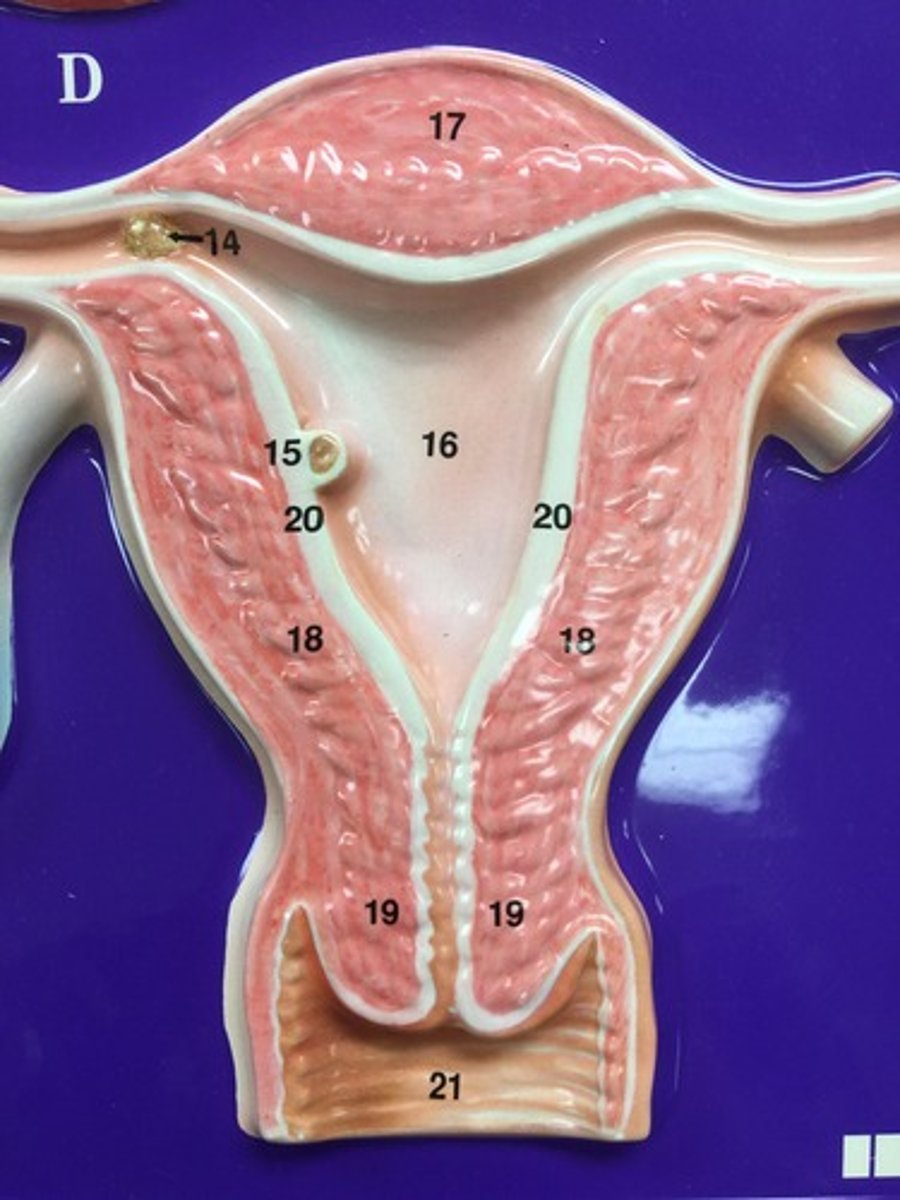
Nucleus of ovum
what is #22?
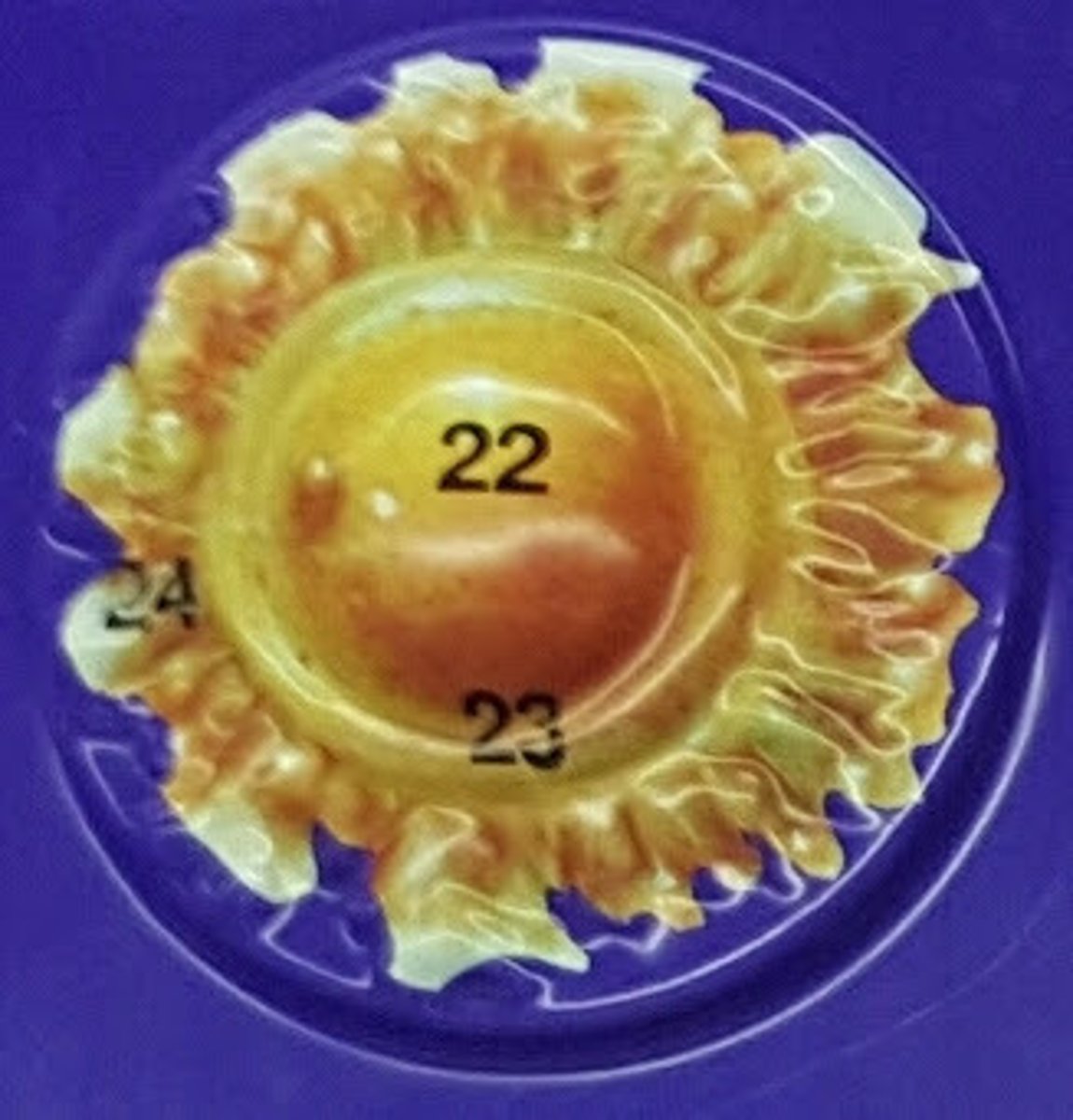
Zona pellucida of ovum
what is #23?
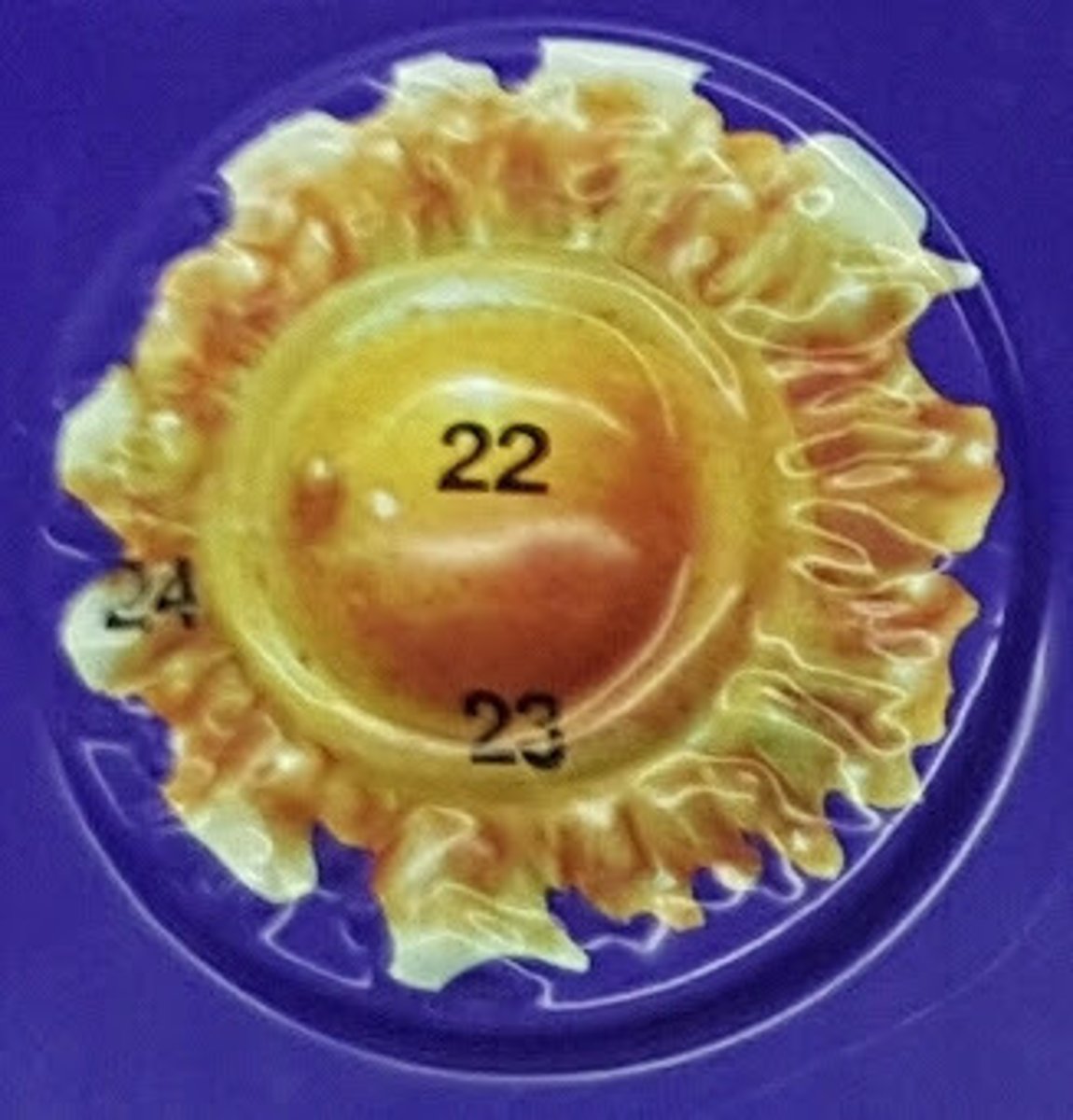
Corona radiata of ovum
what is #24
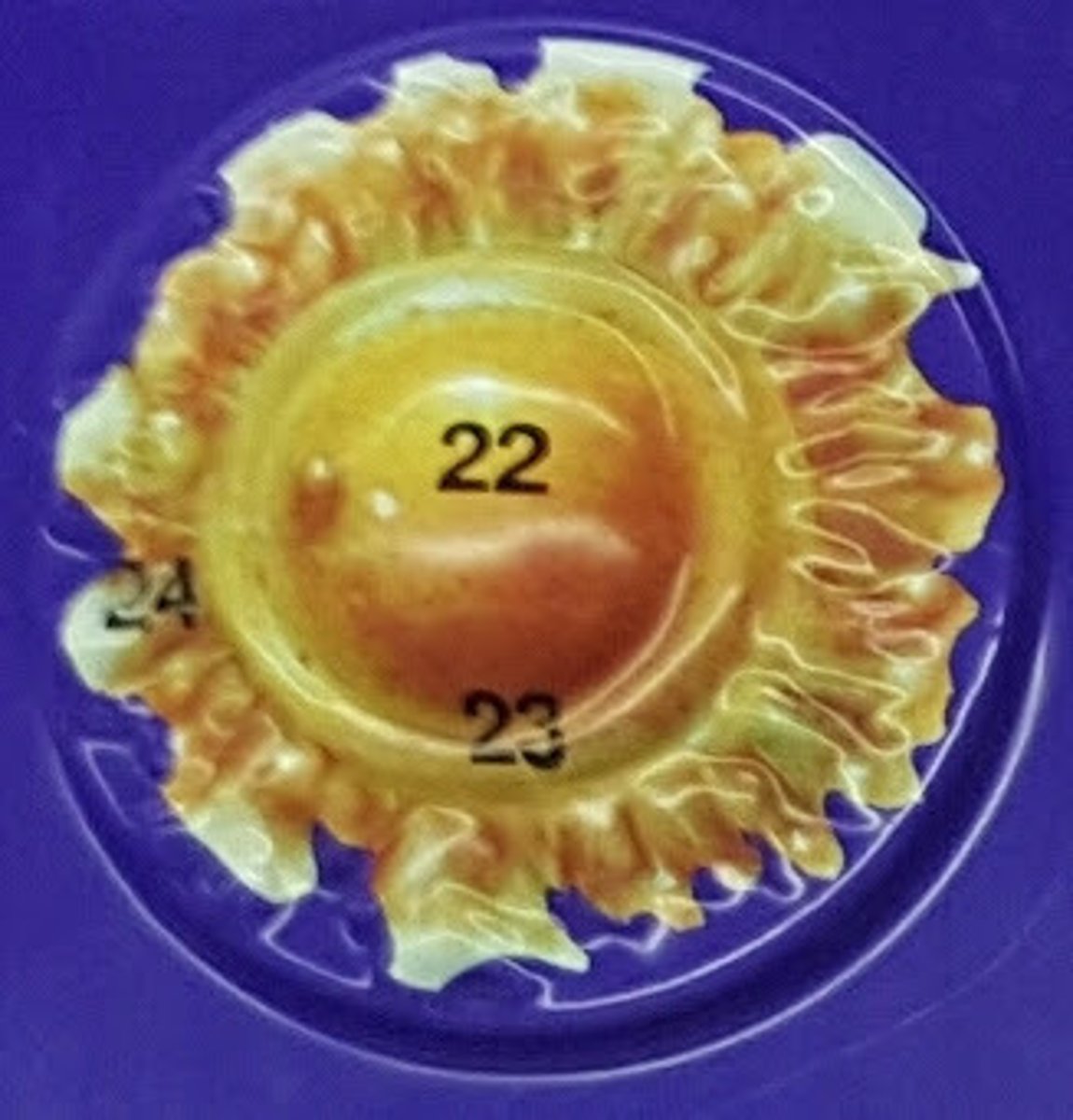
Sperm cell
what is #25?
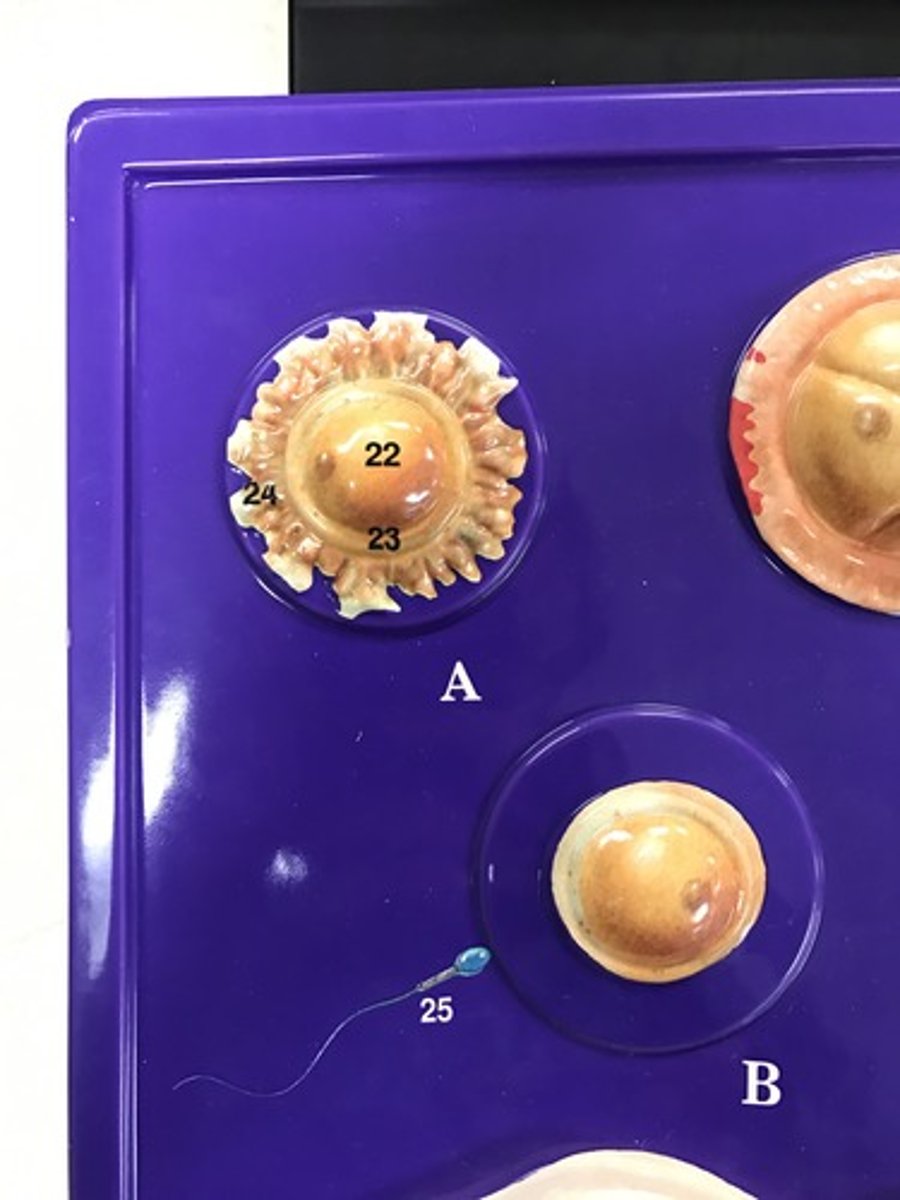
Yolk sac of developing embryo
what is #26?
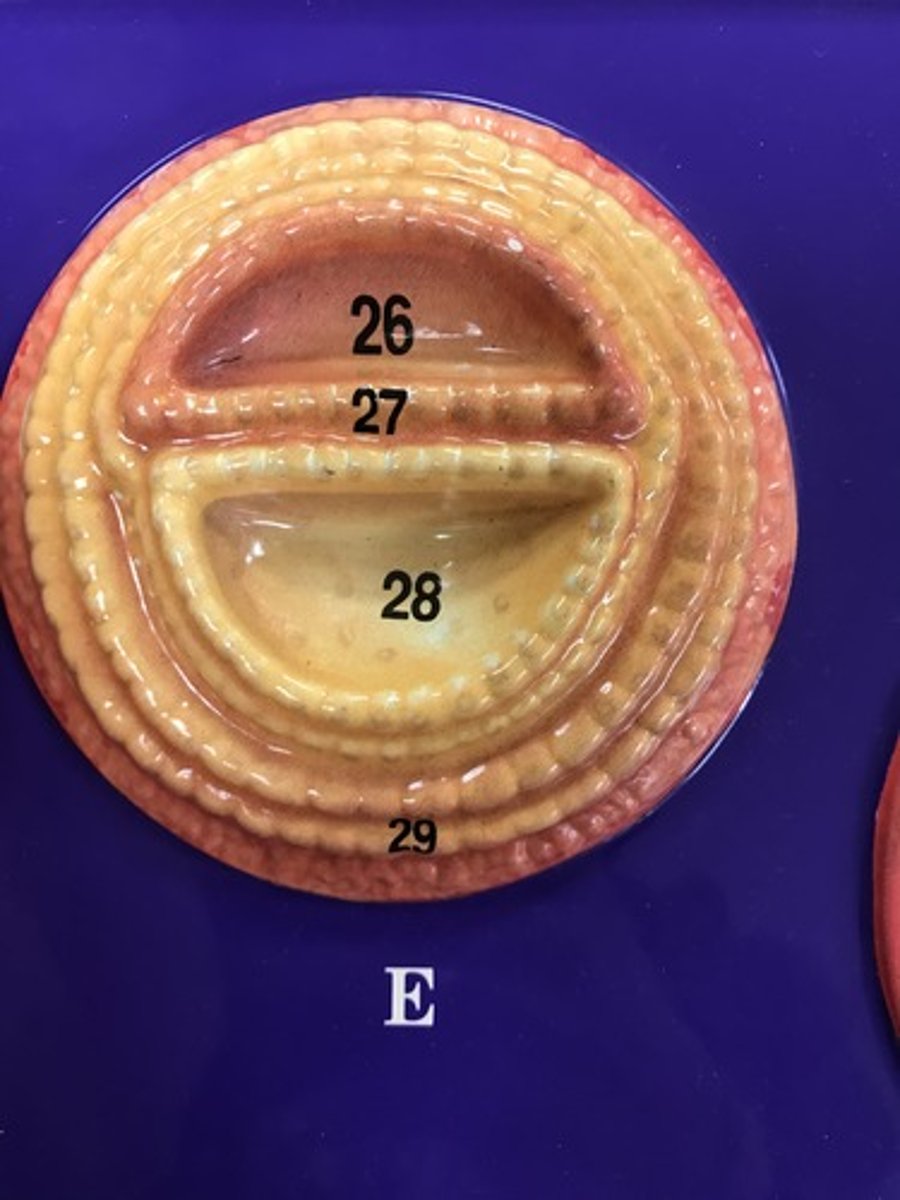
Embryonic disk
What is #27?
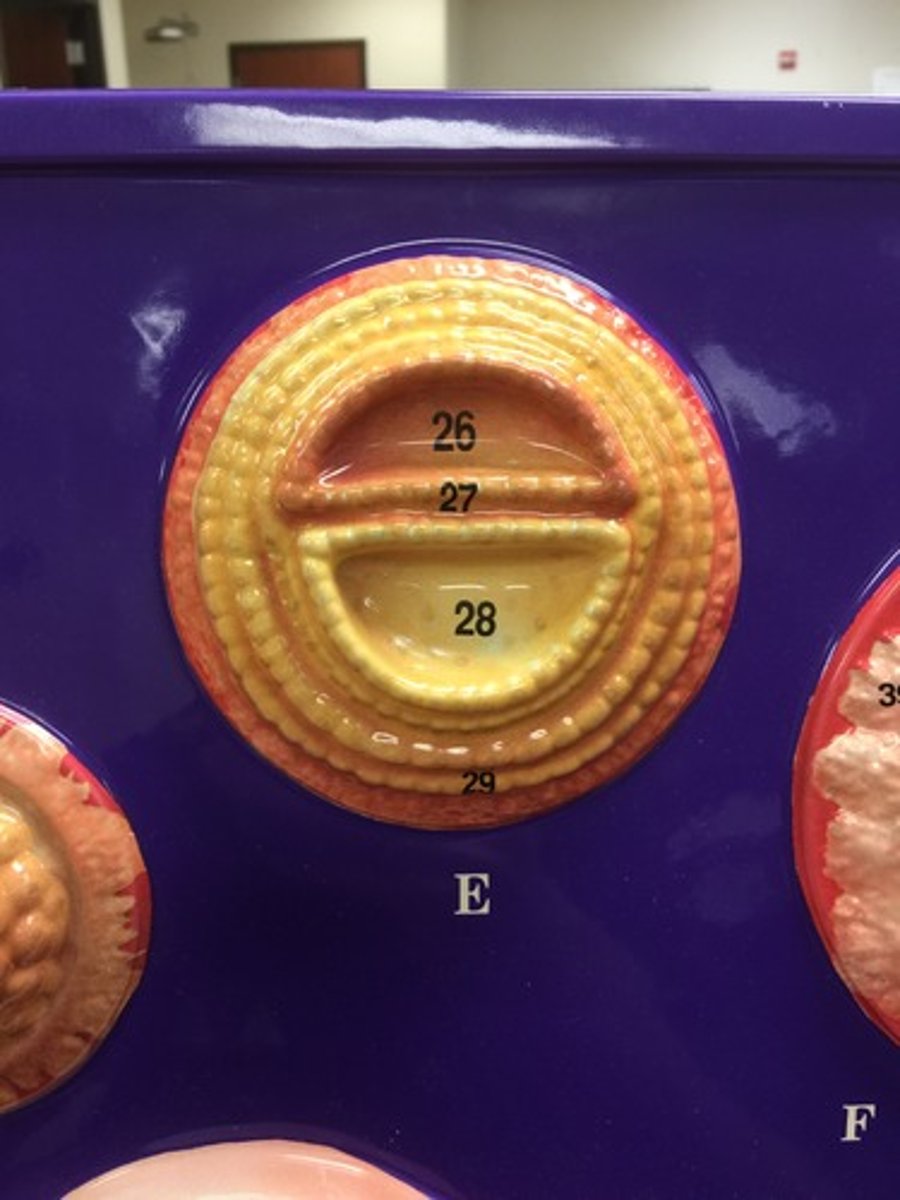
Amnion of developing embryo
what is #28?
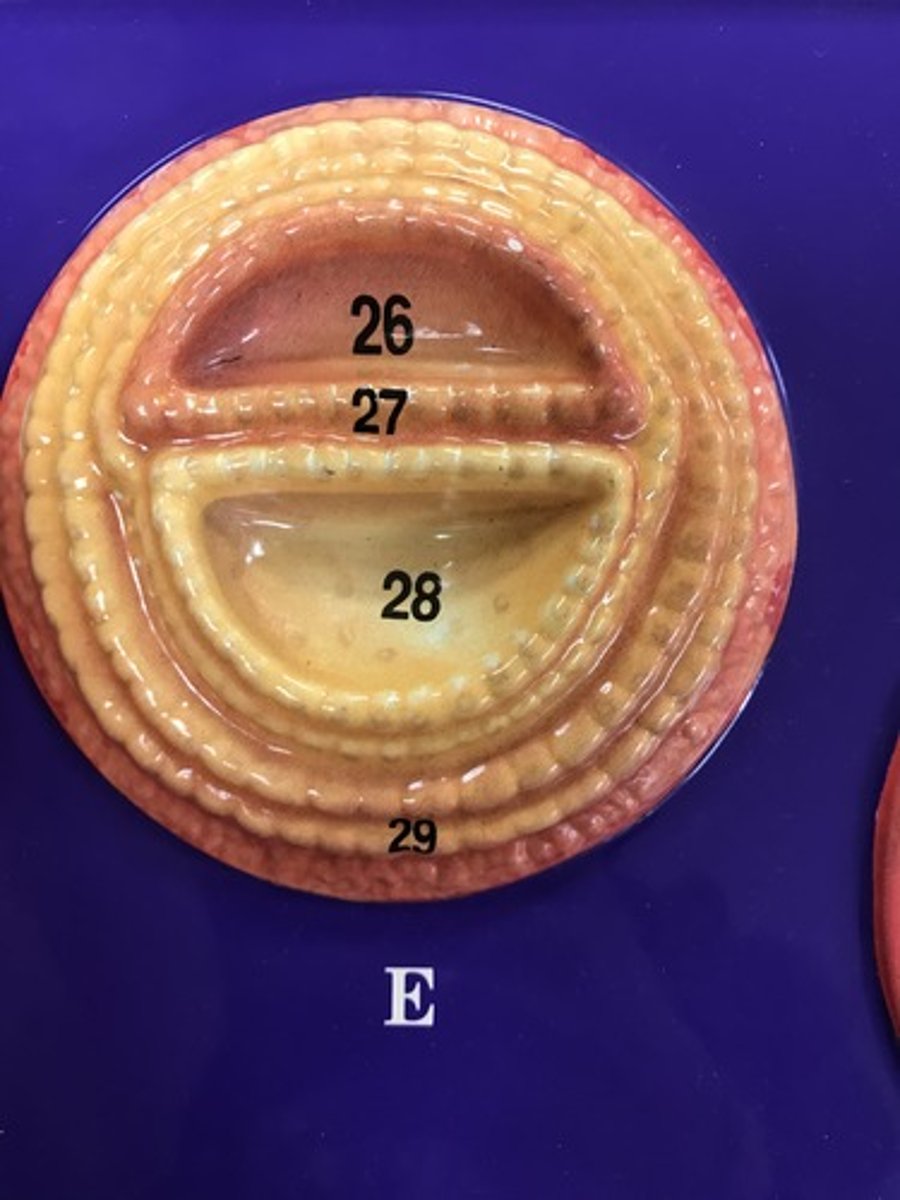
Embryonic placenta (trophoblast tissue)
what is #29?
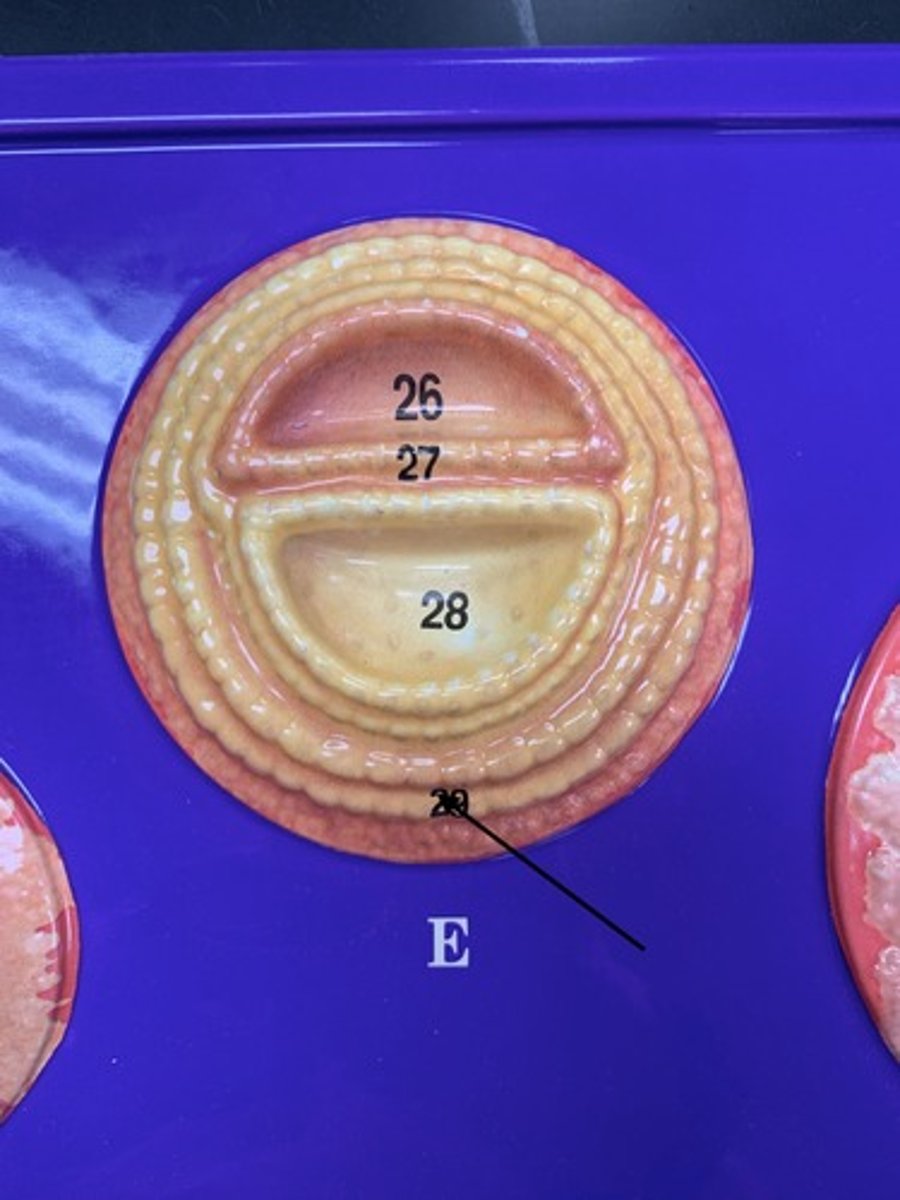
Body of embryo
what is #30?
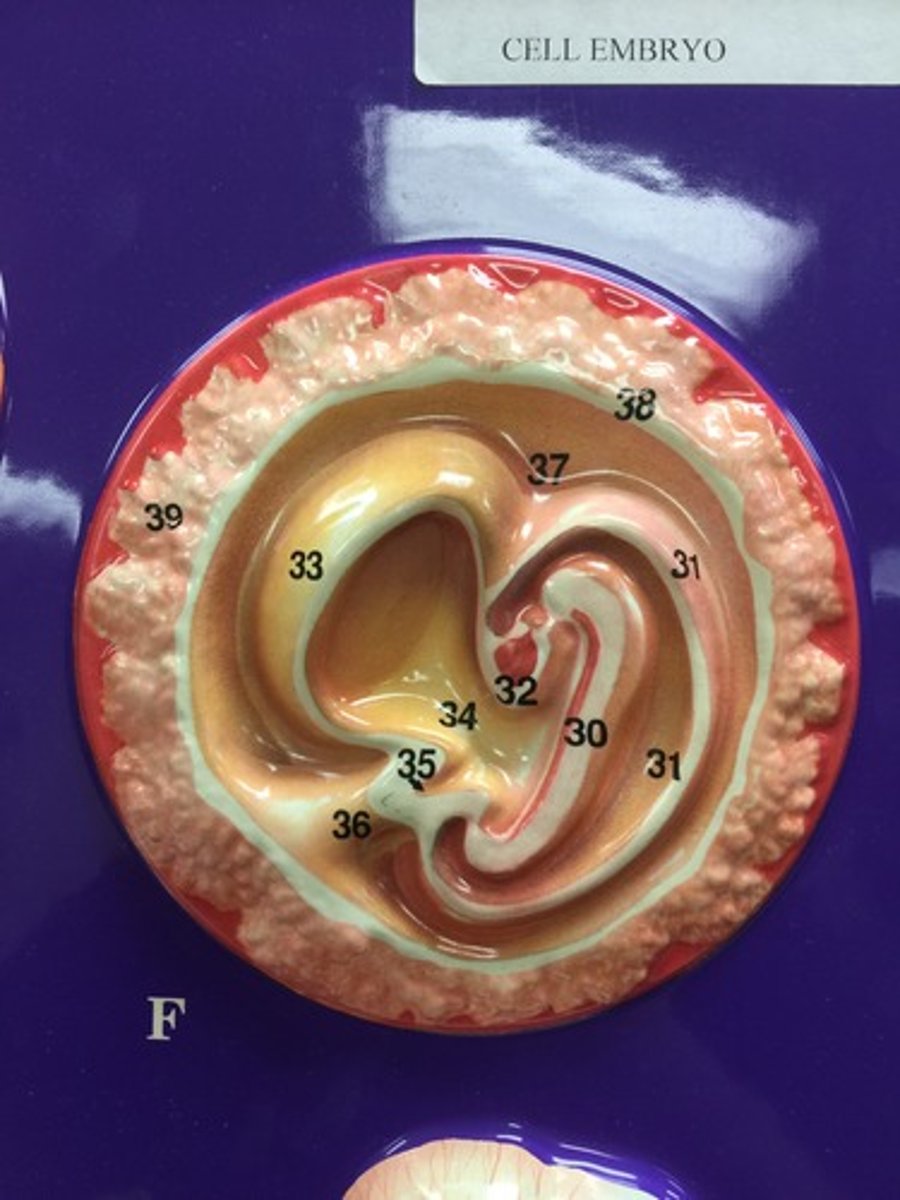
Amnion and amniotic cavity
what is #31?
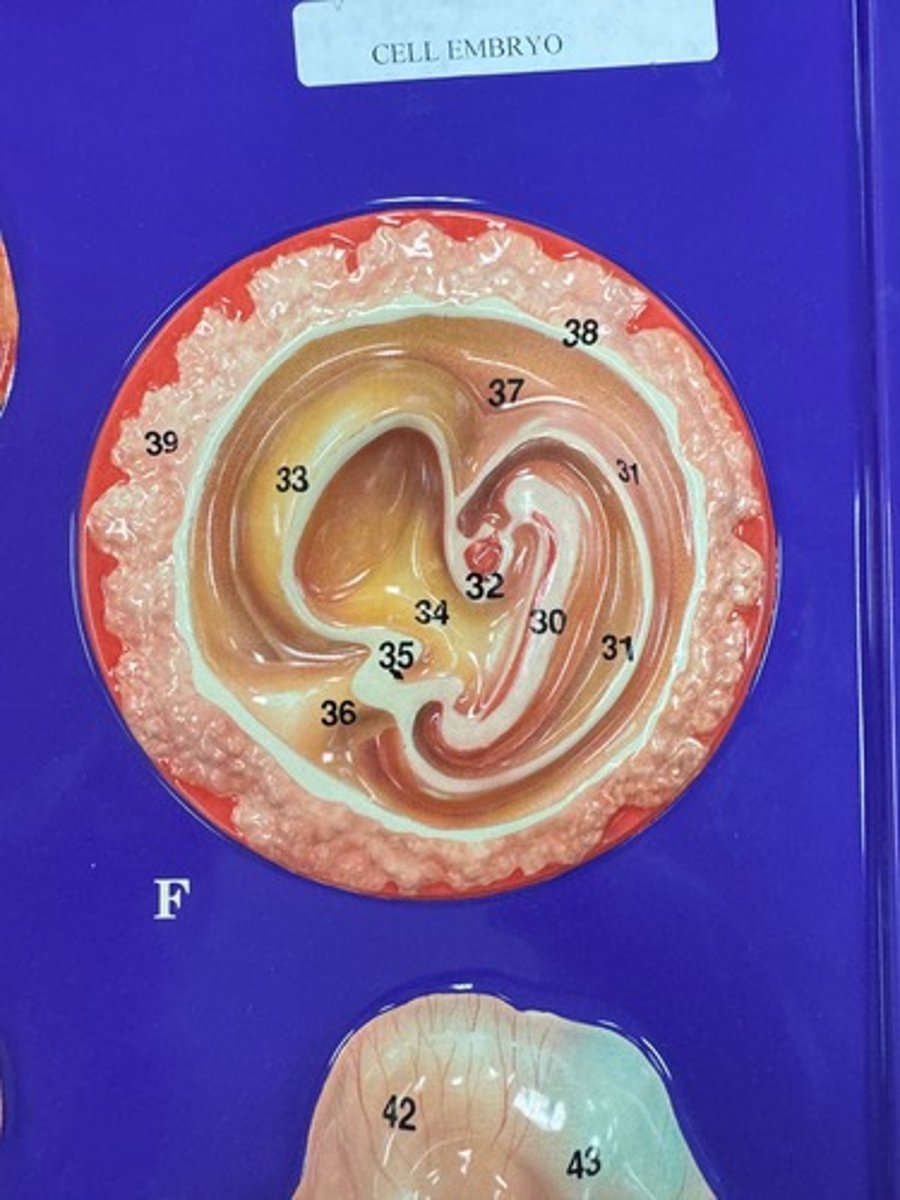
Developing heart
what is #32?
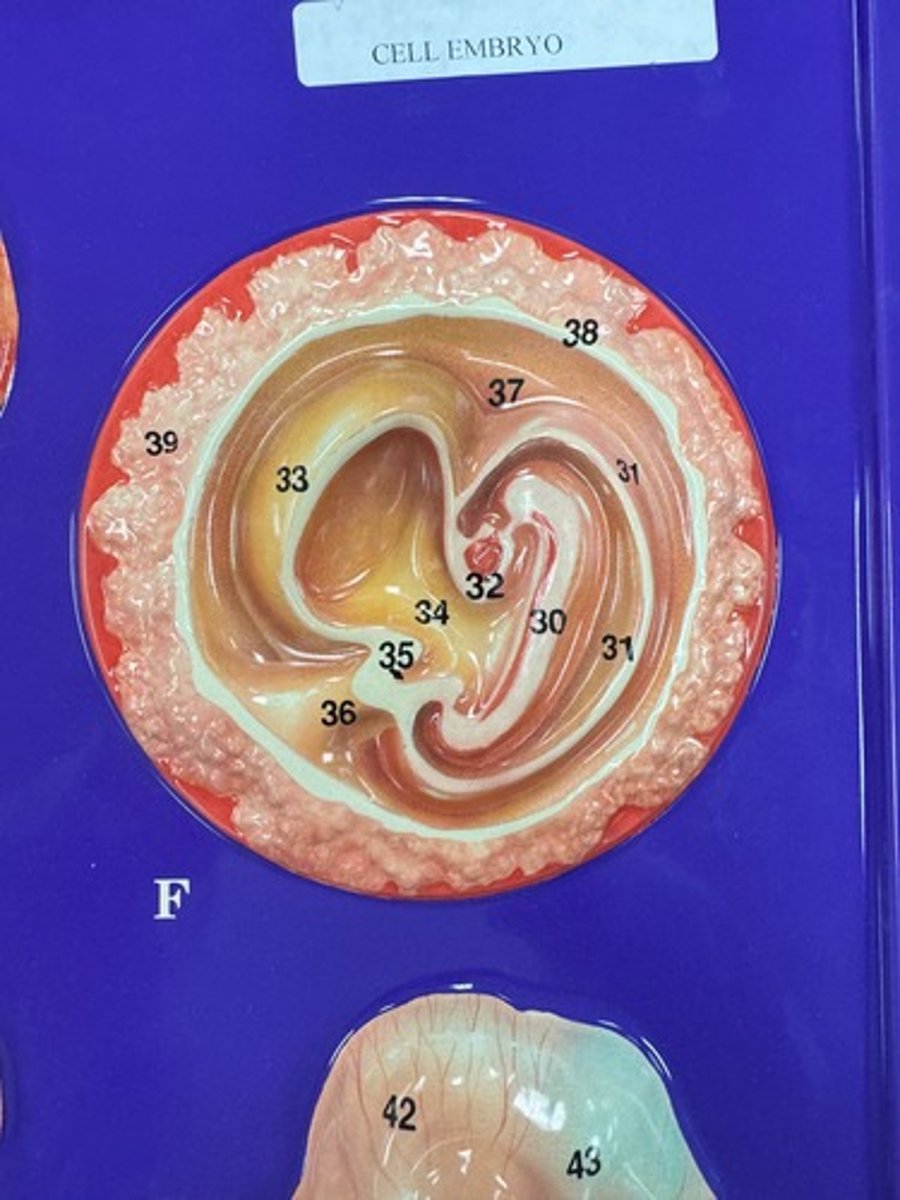
Yolk sac
what is #33?
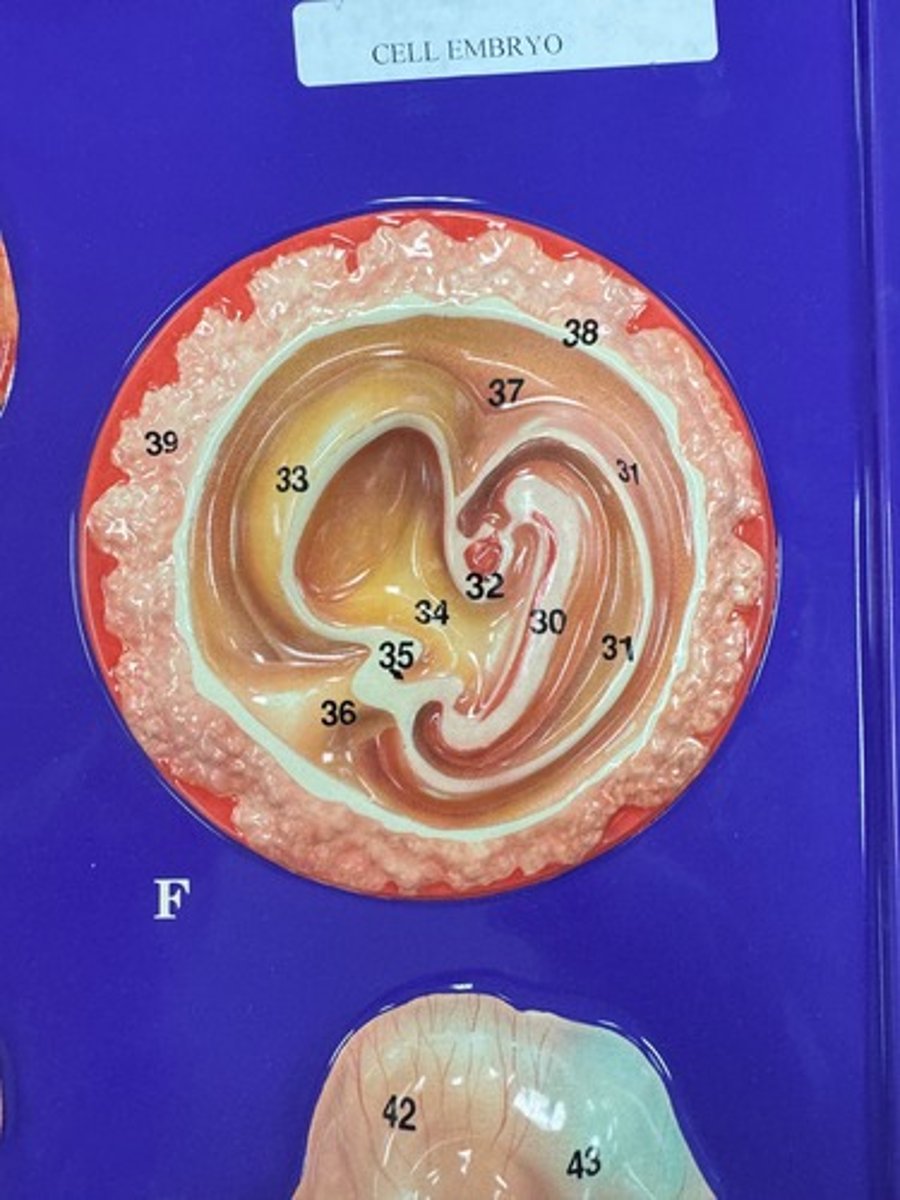
Yolk sac stalk
what is #34?
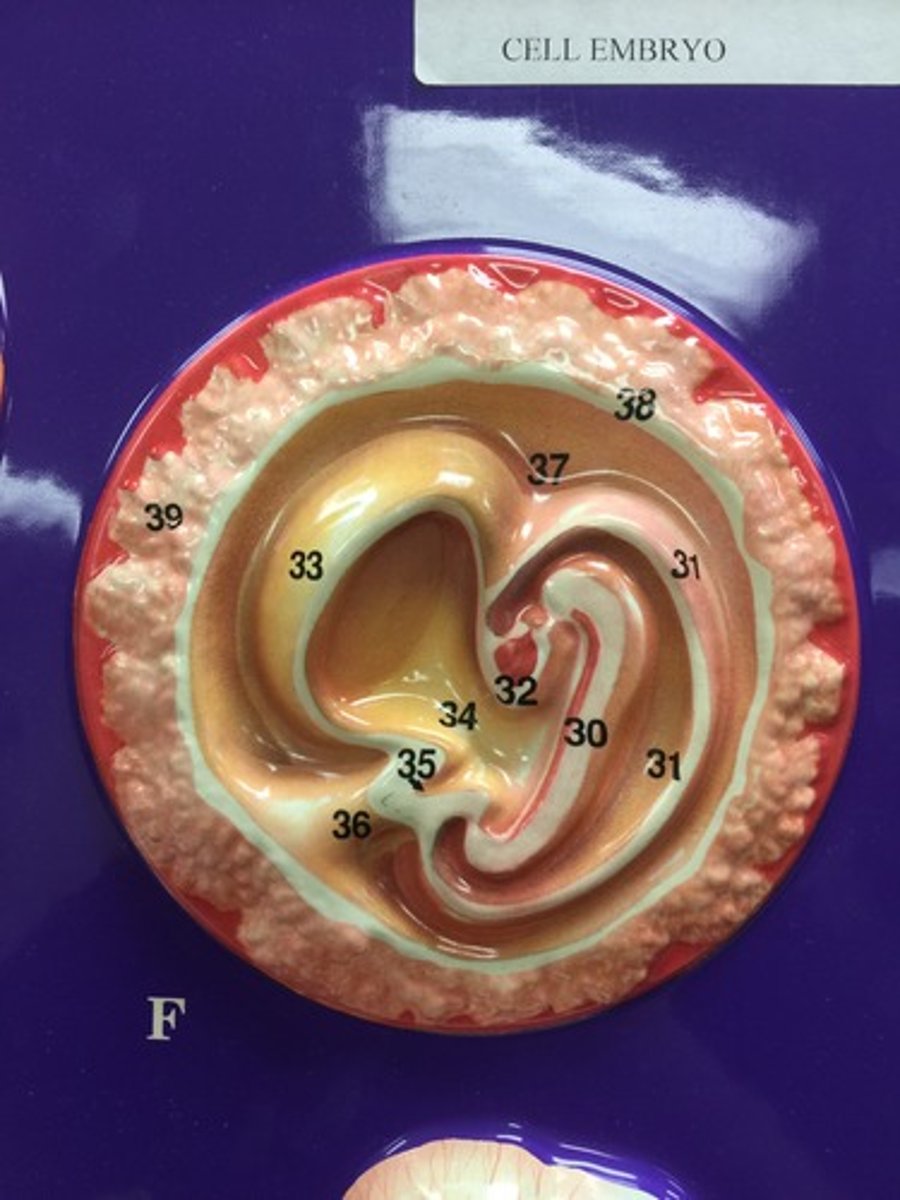
Allantoic diverticulum (allantois, origins of tissues of urinary bladder)
what is #35?
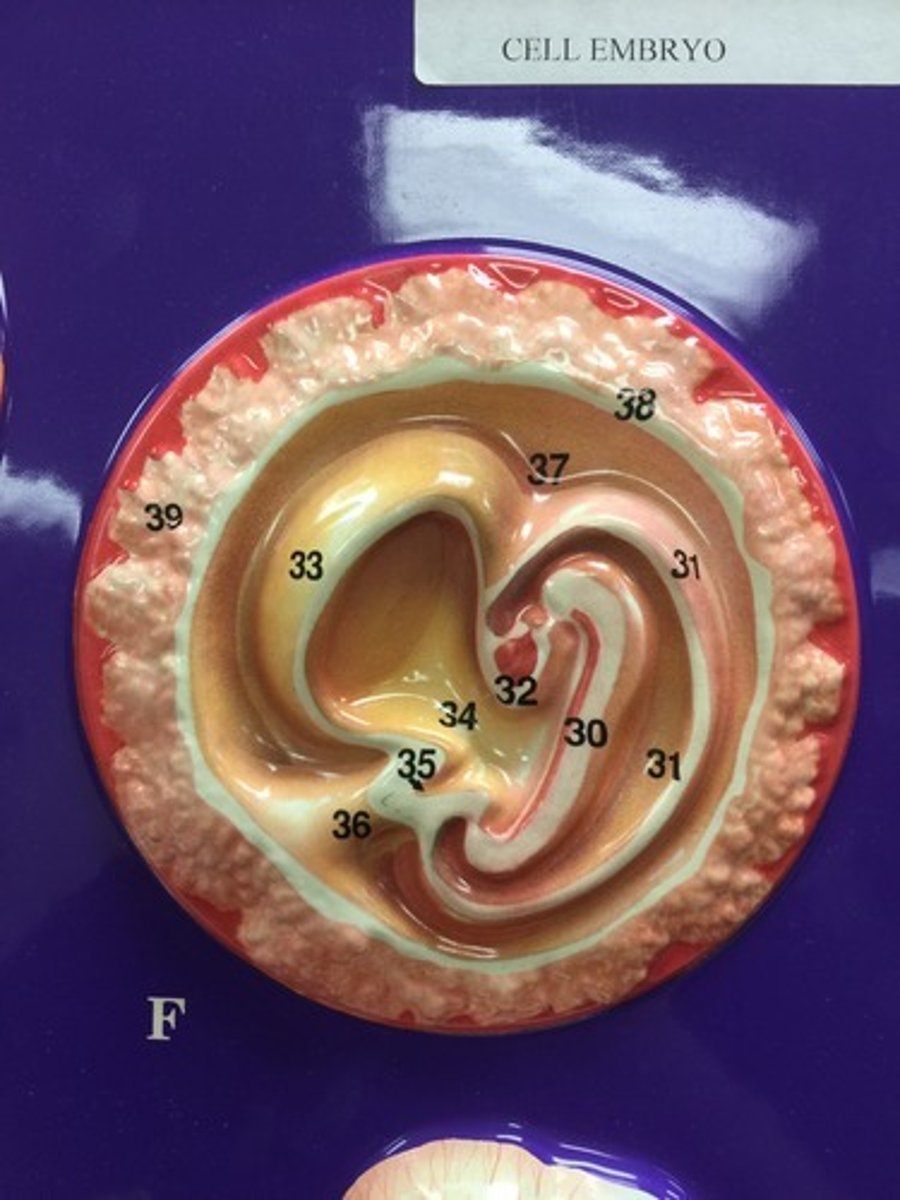
Body stalk
What is #36?
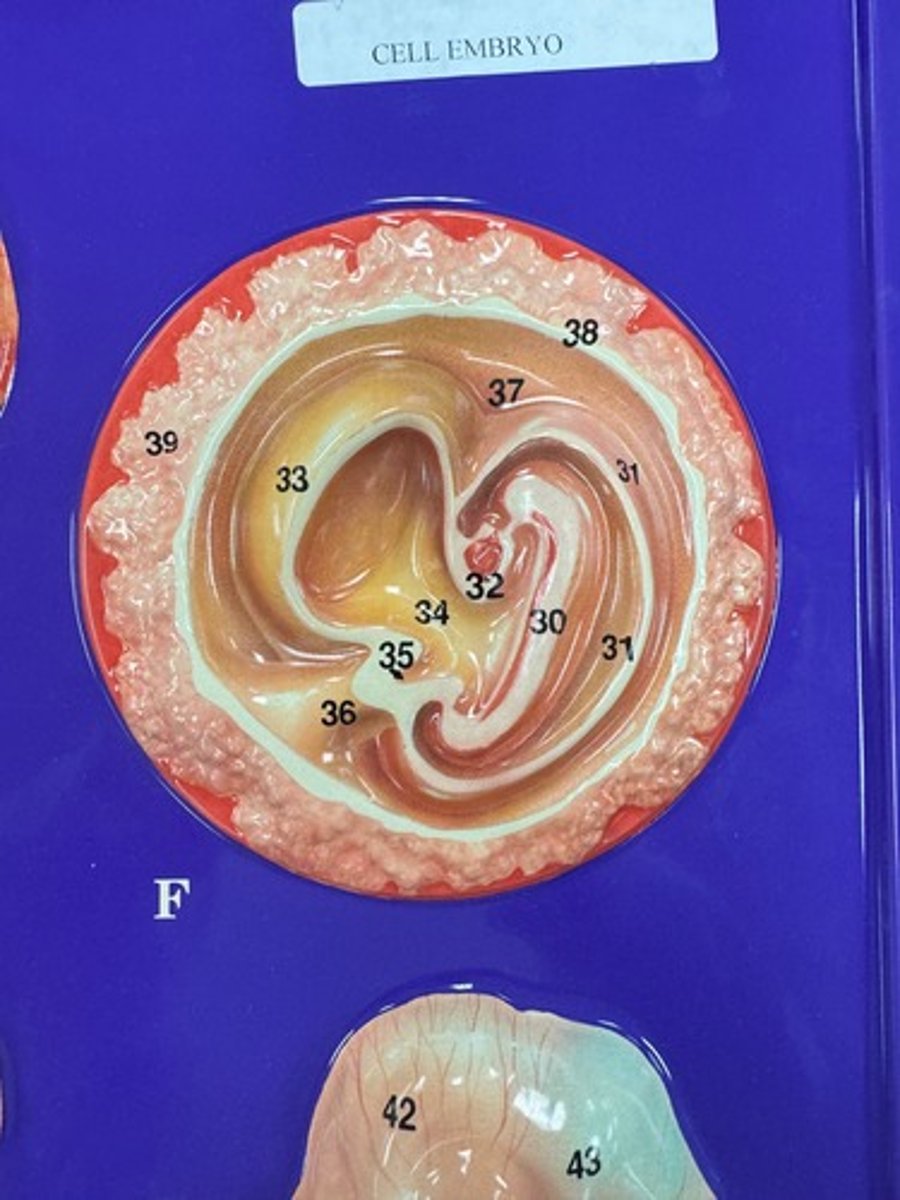
Extra embryonic coelom (cavity)
what is #37?
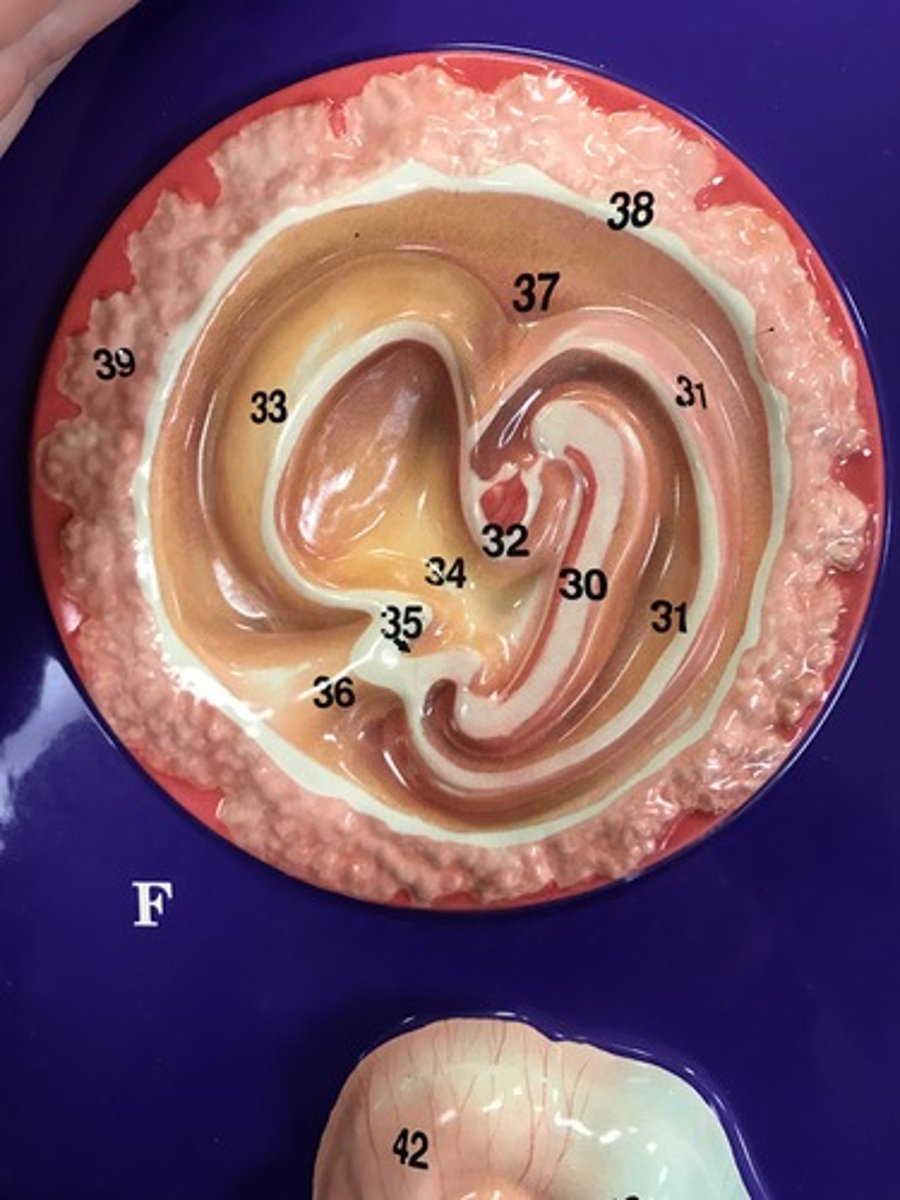
Chorion
what is #38?
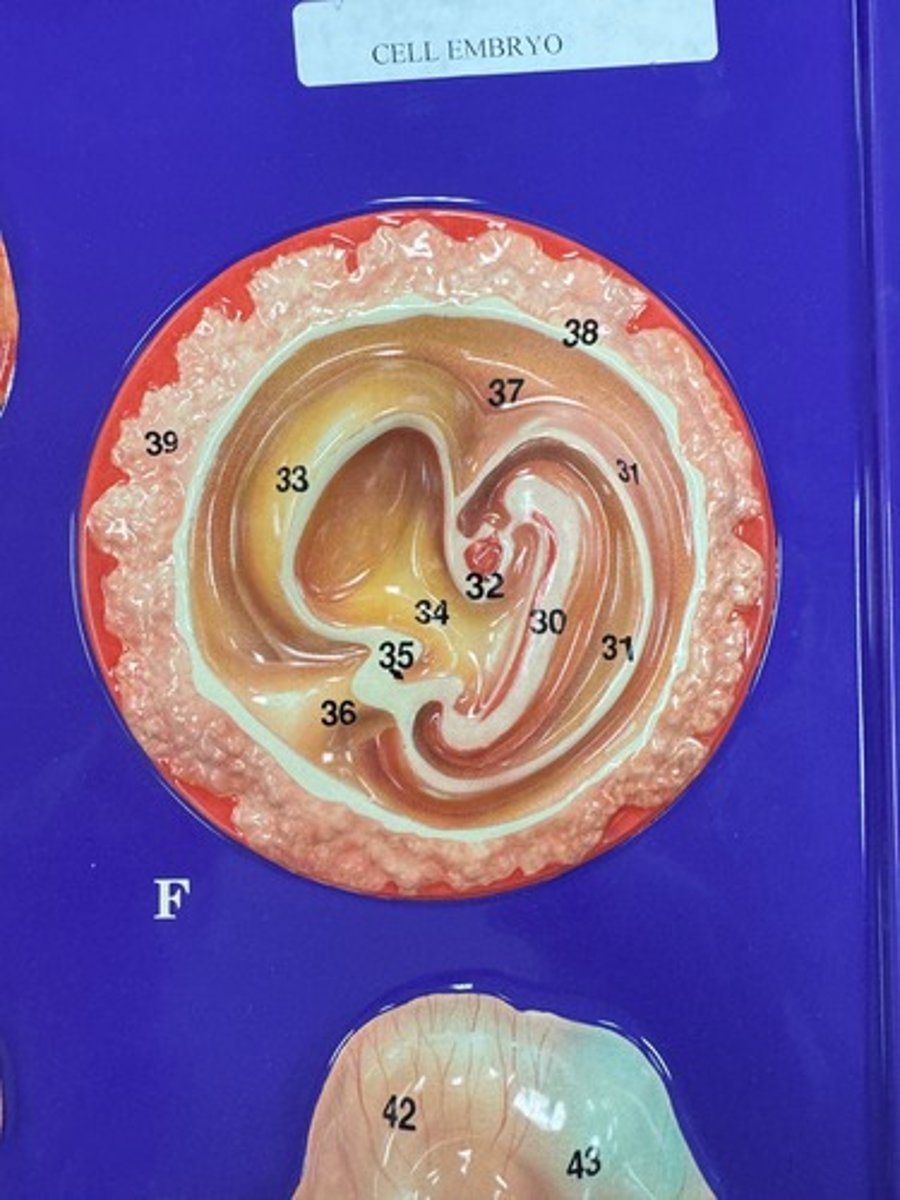
Placental villi
what is #39?
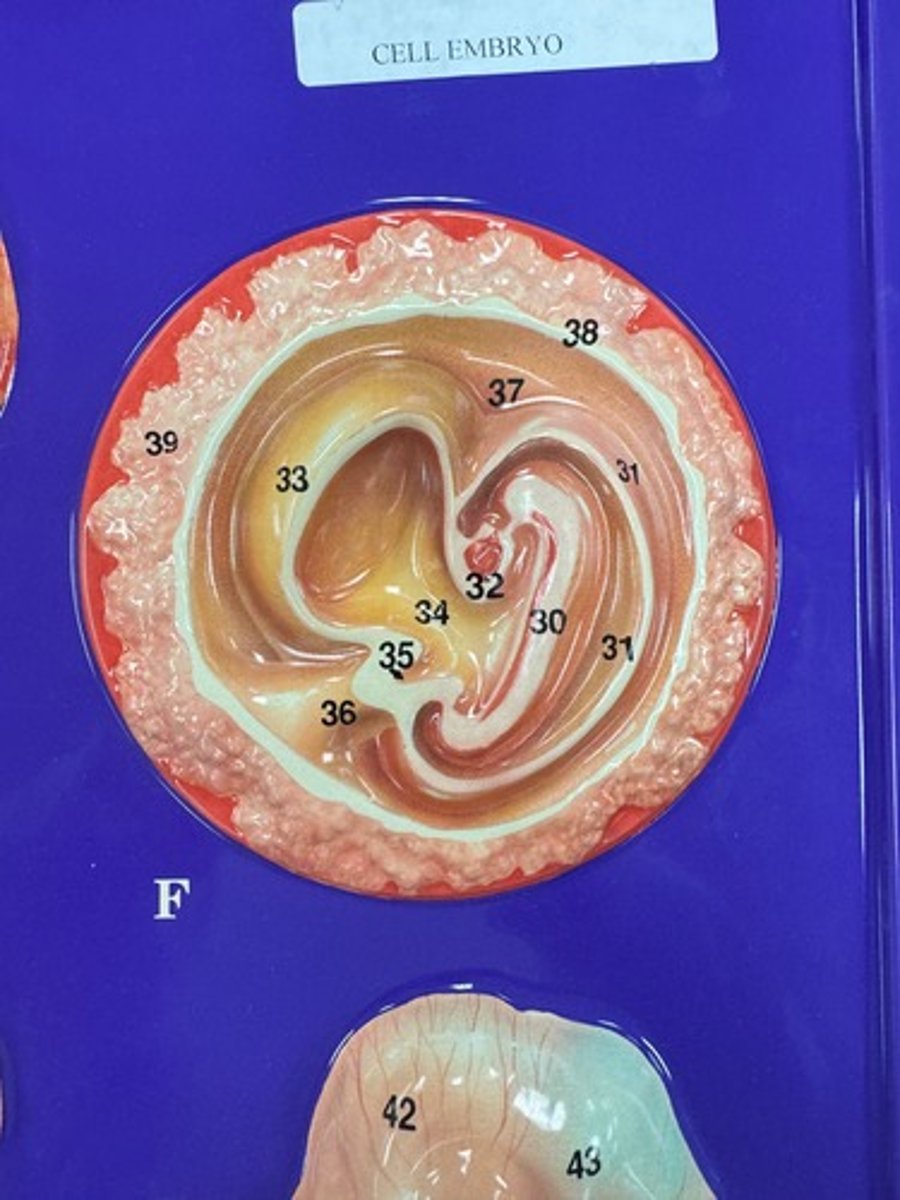
Belly stalk (developing umbilical cord)
what is #40?
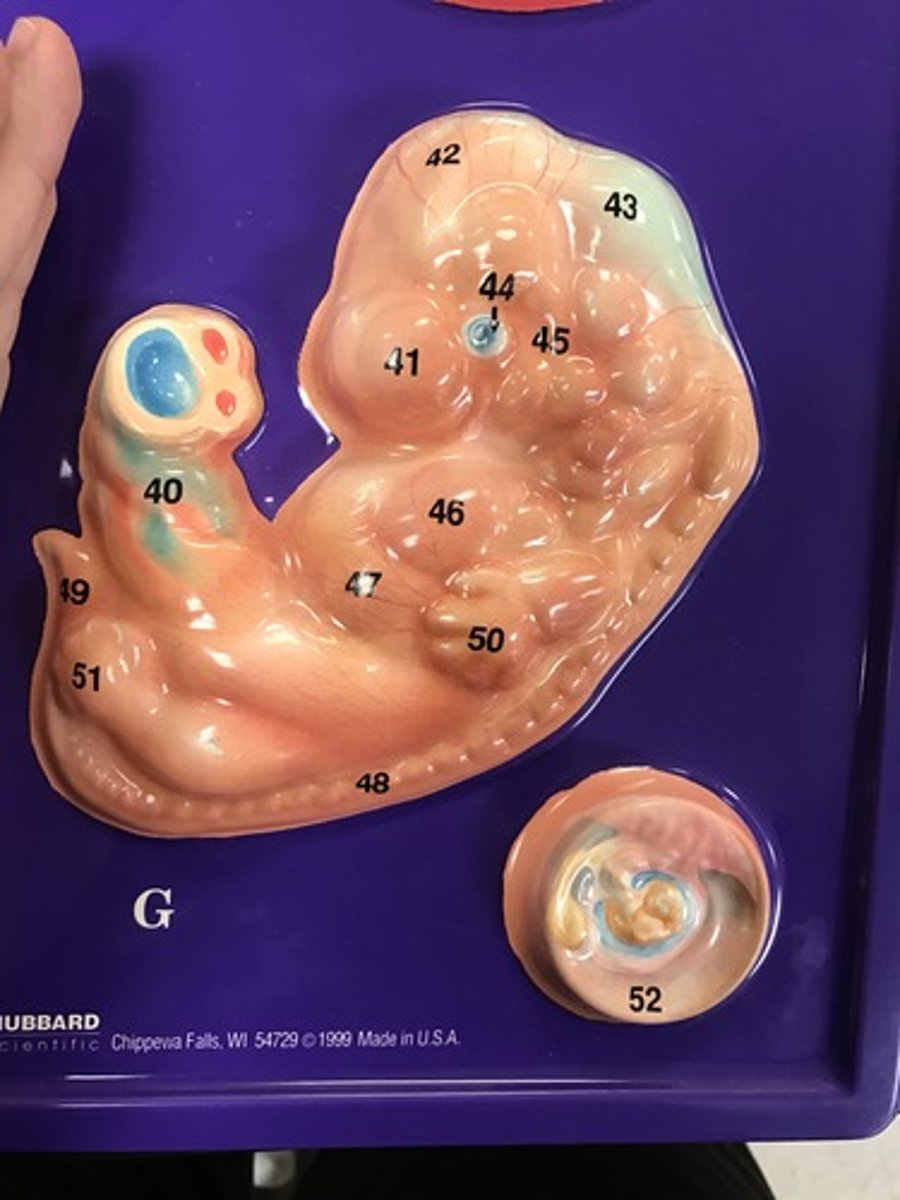
Forebrain area
what is #41?
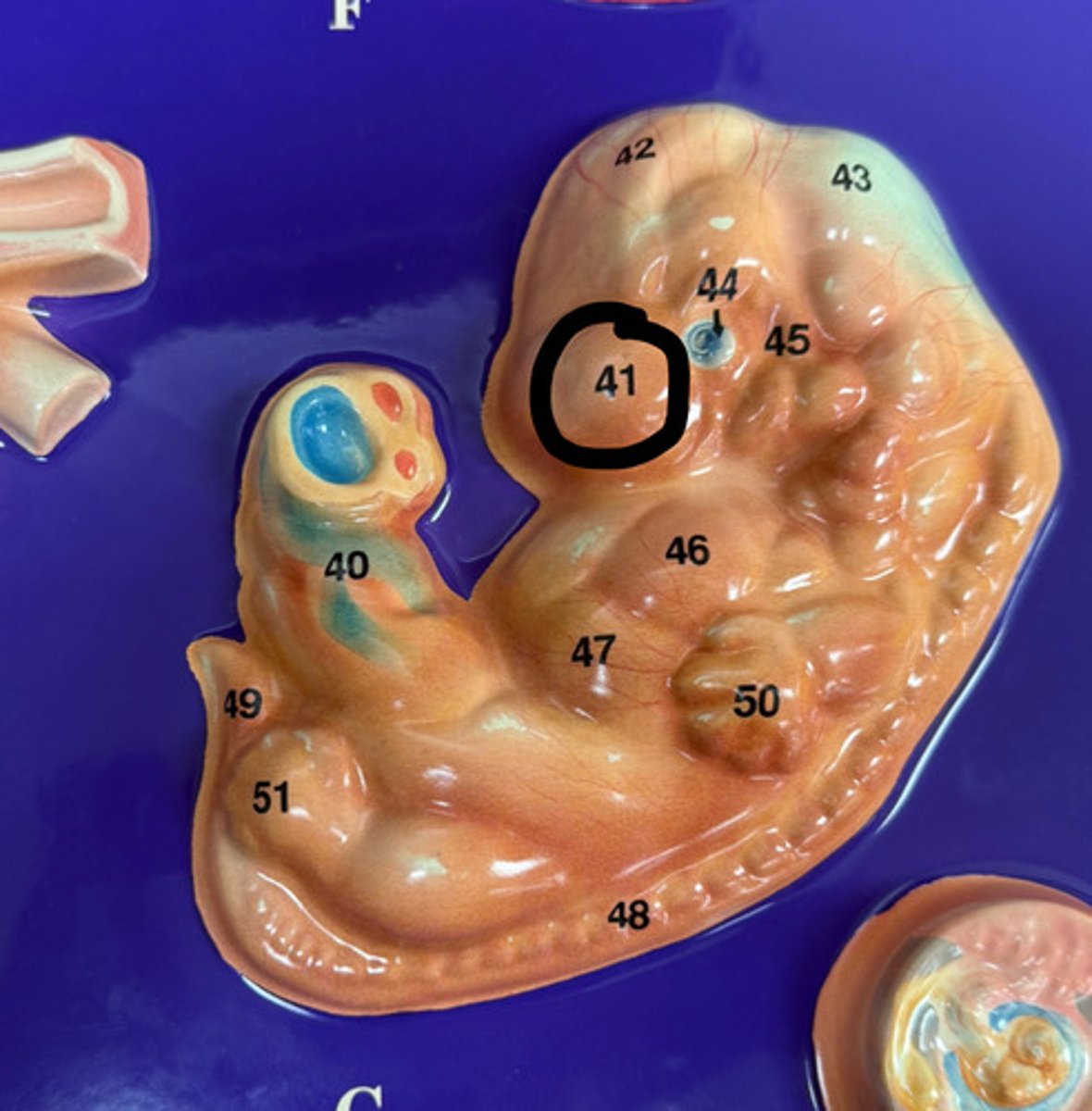
Midbrain area
what is #42?
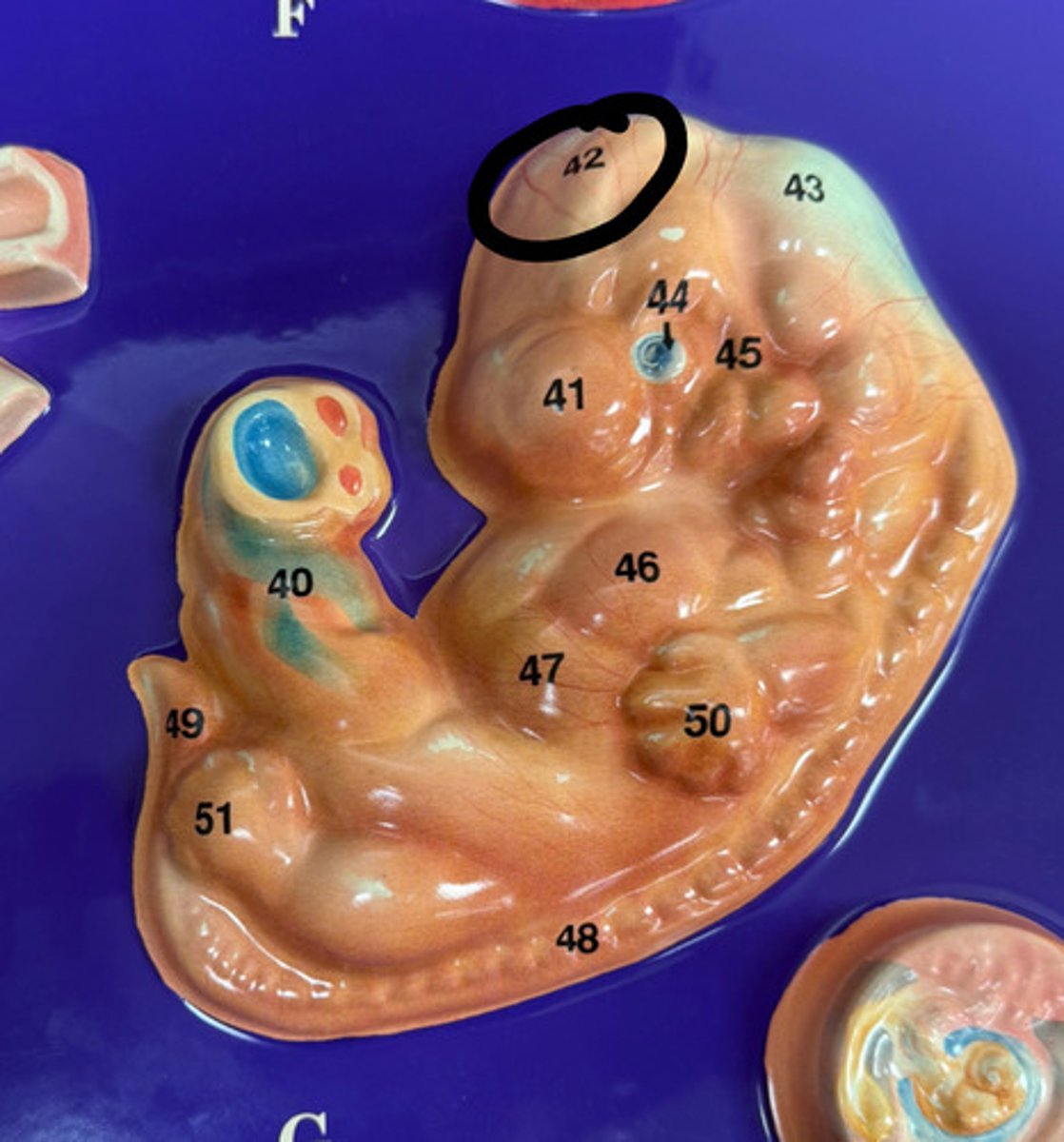
Hindbrain area
what is #43?
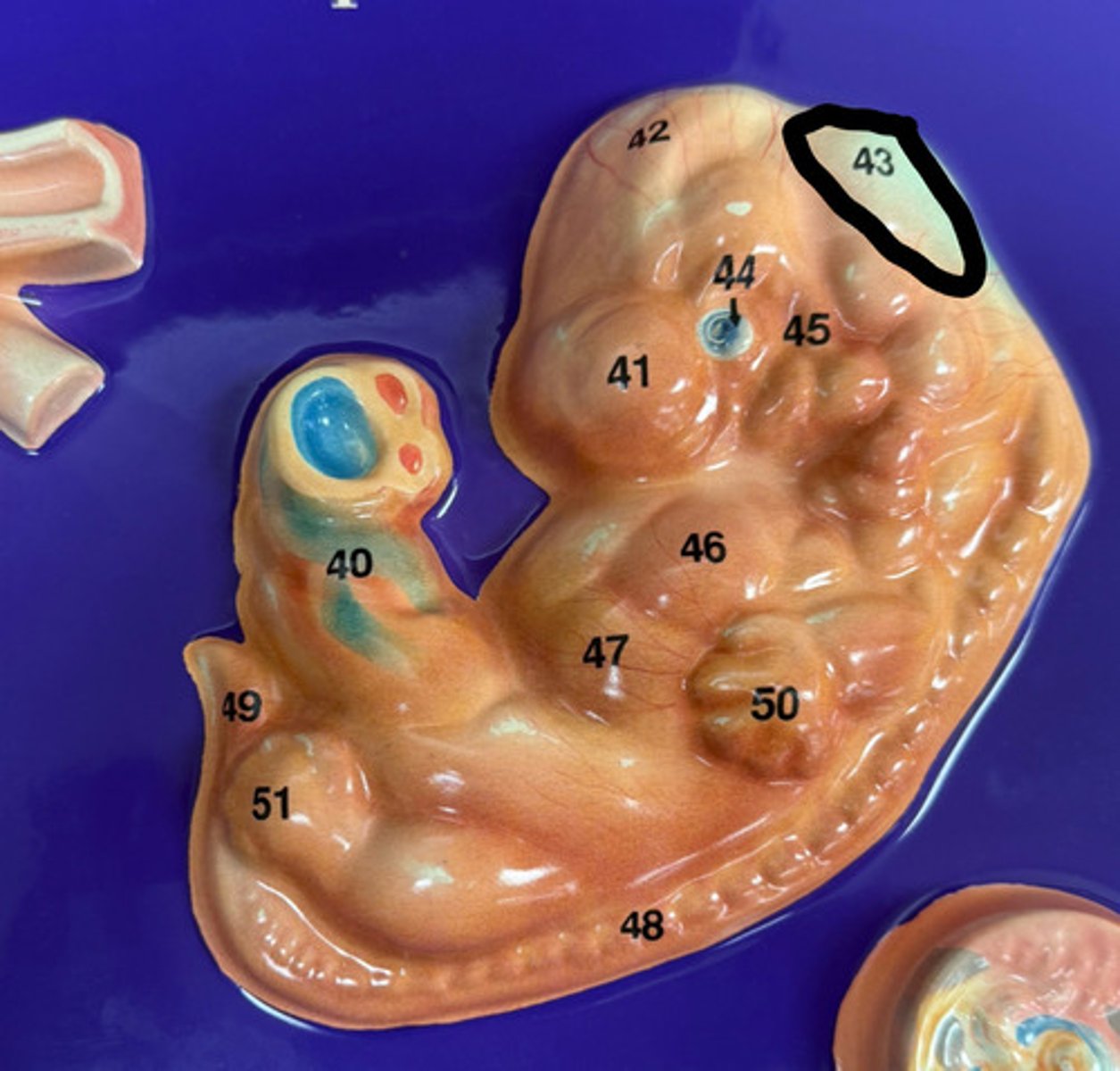
Eye
what is #44?
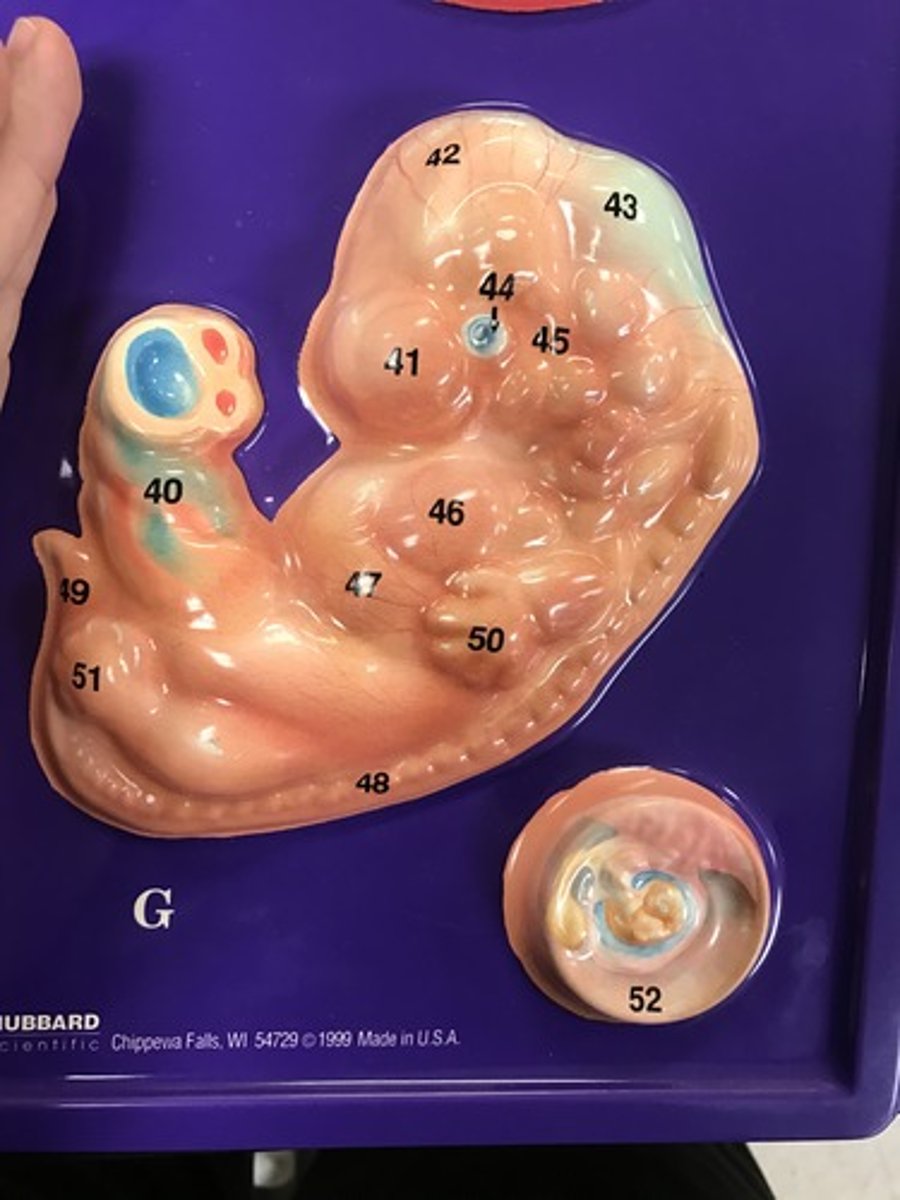
Developing outer ear
what is #45?
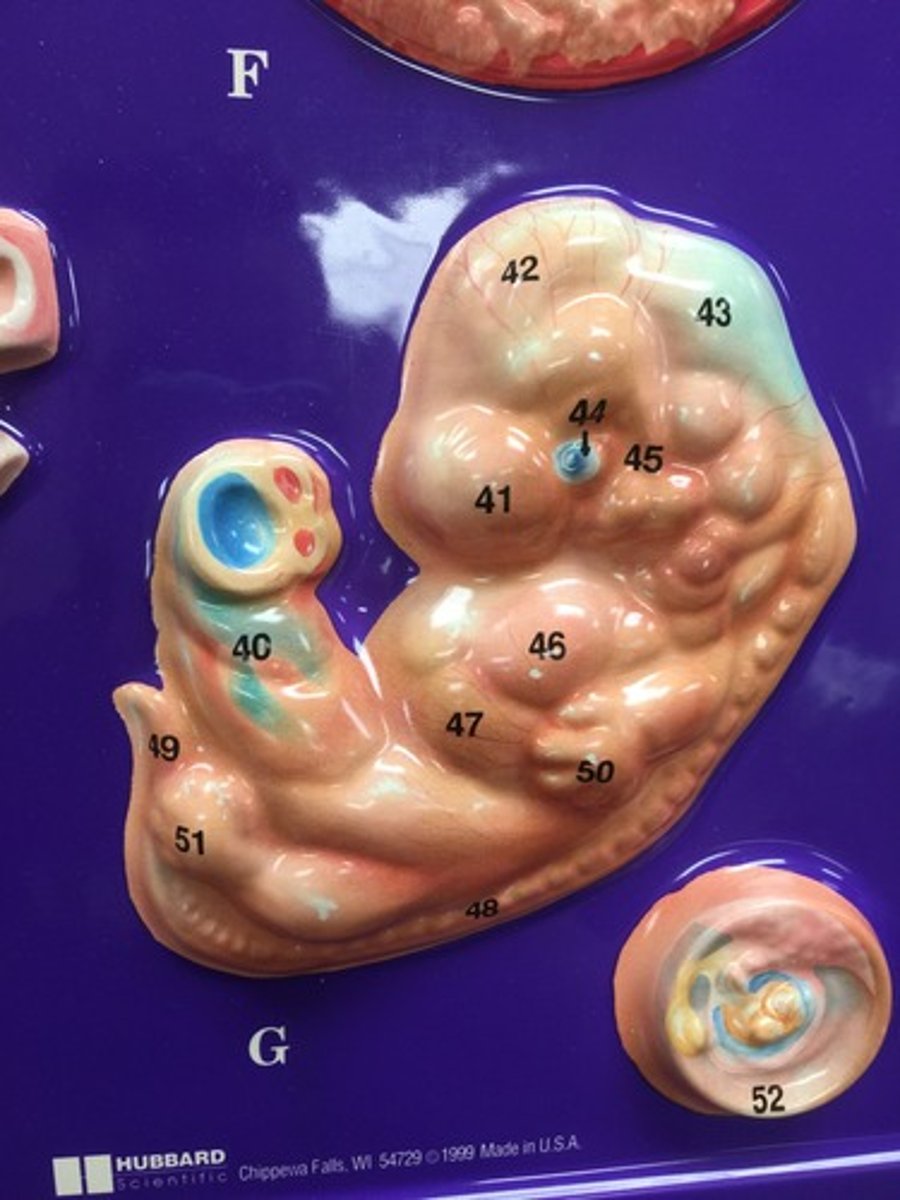
Heart prominence
what is #46?
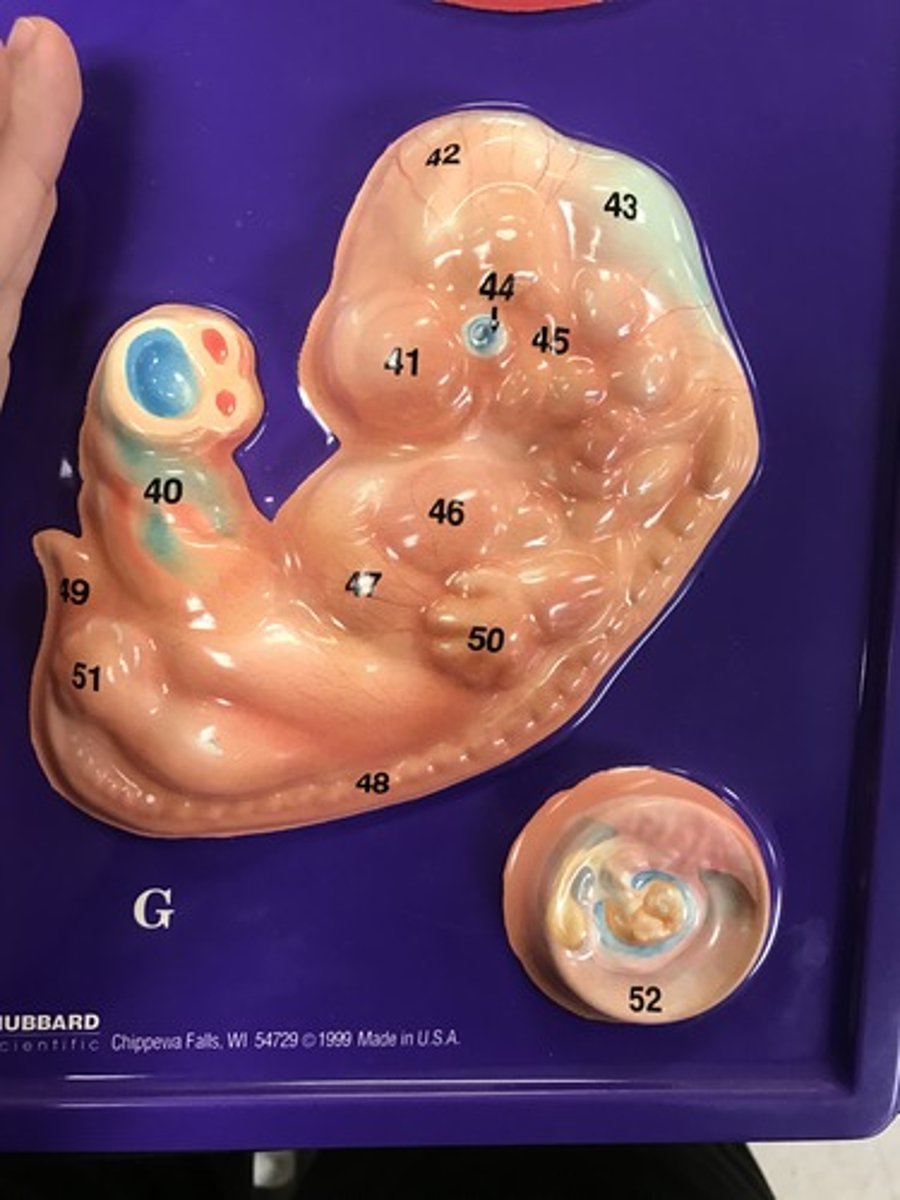
Liver prominence
what is #47?
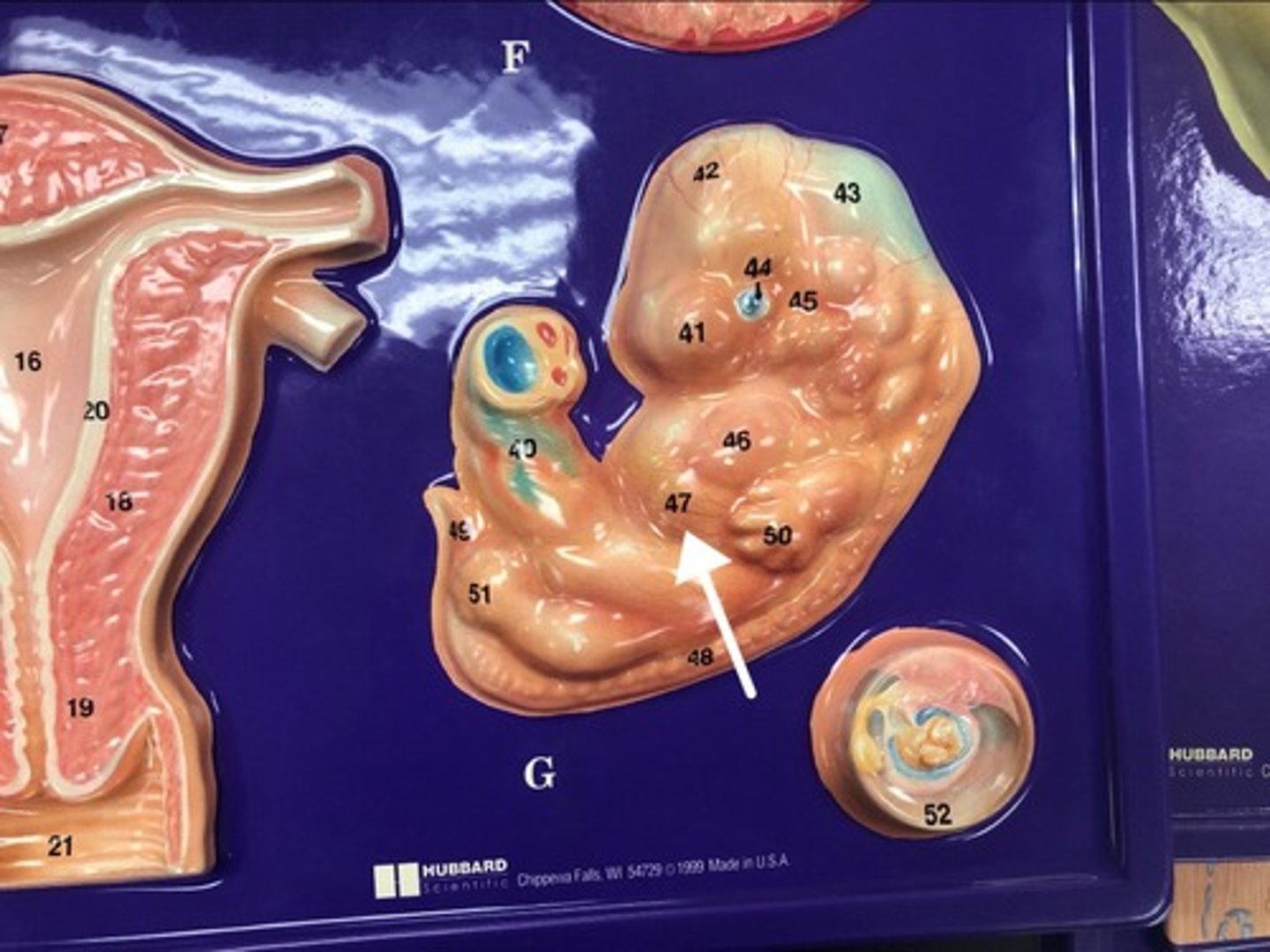
Differentiating somites
what is #48?
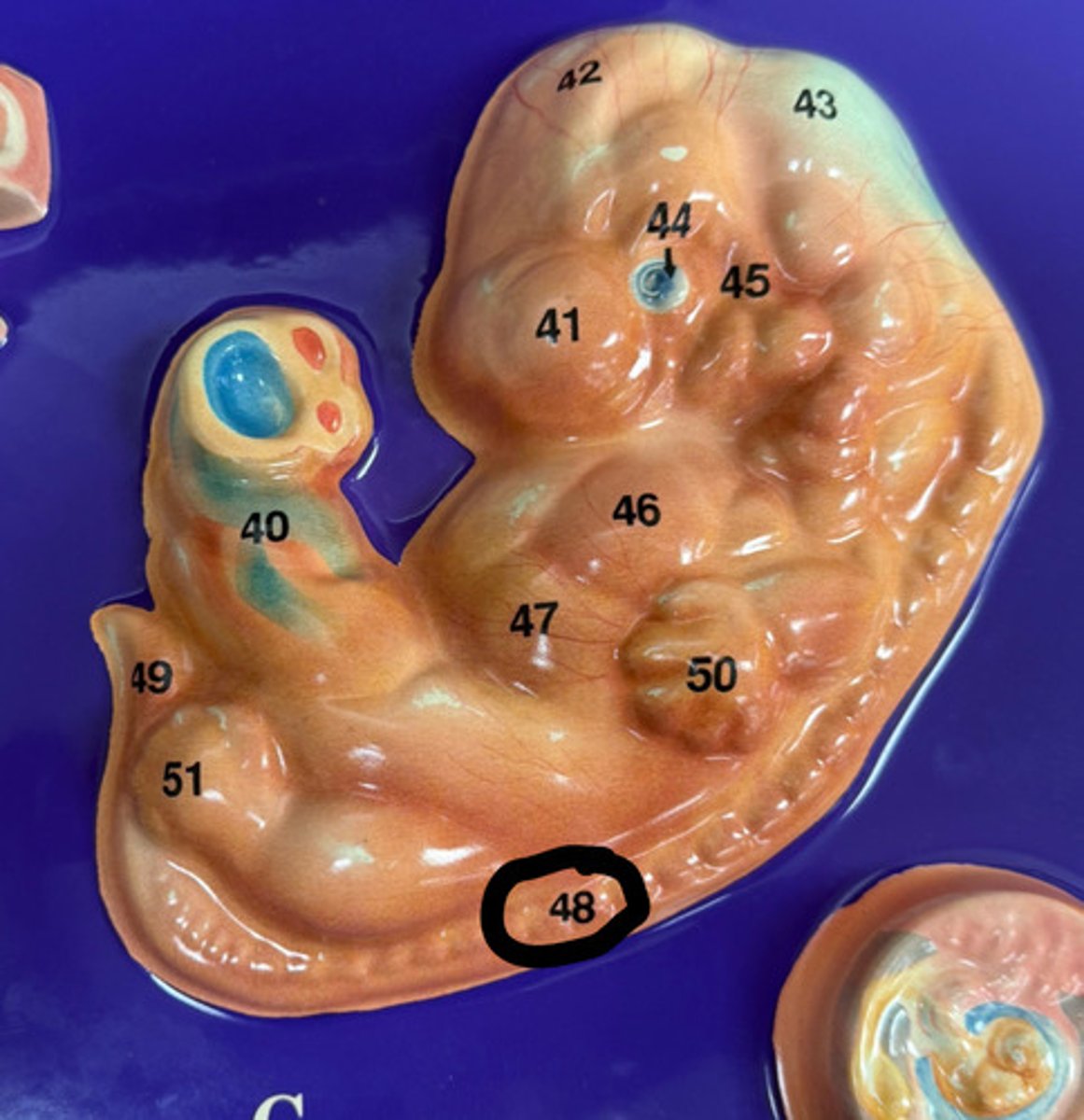
Tail
what is #49?
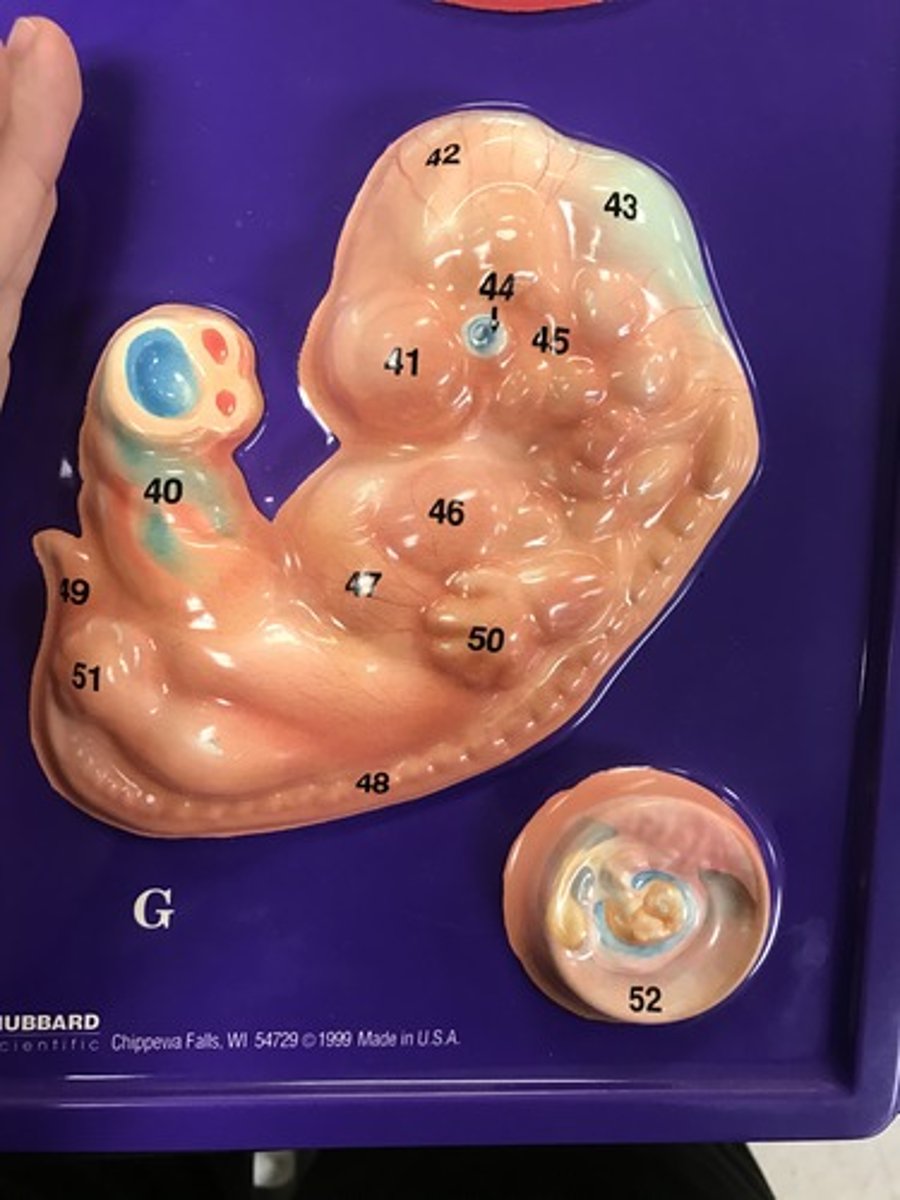
Notches between digital rays of hand
what is #50?
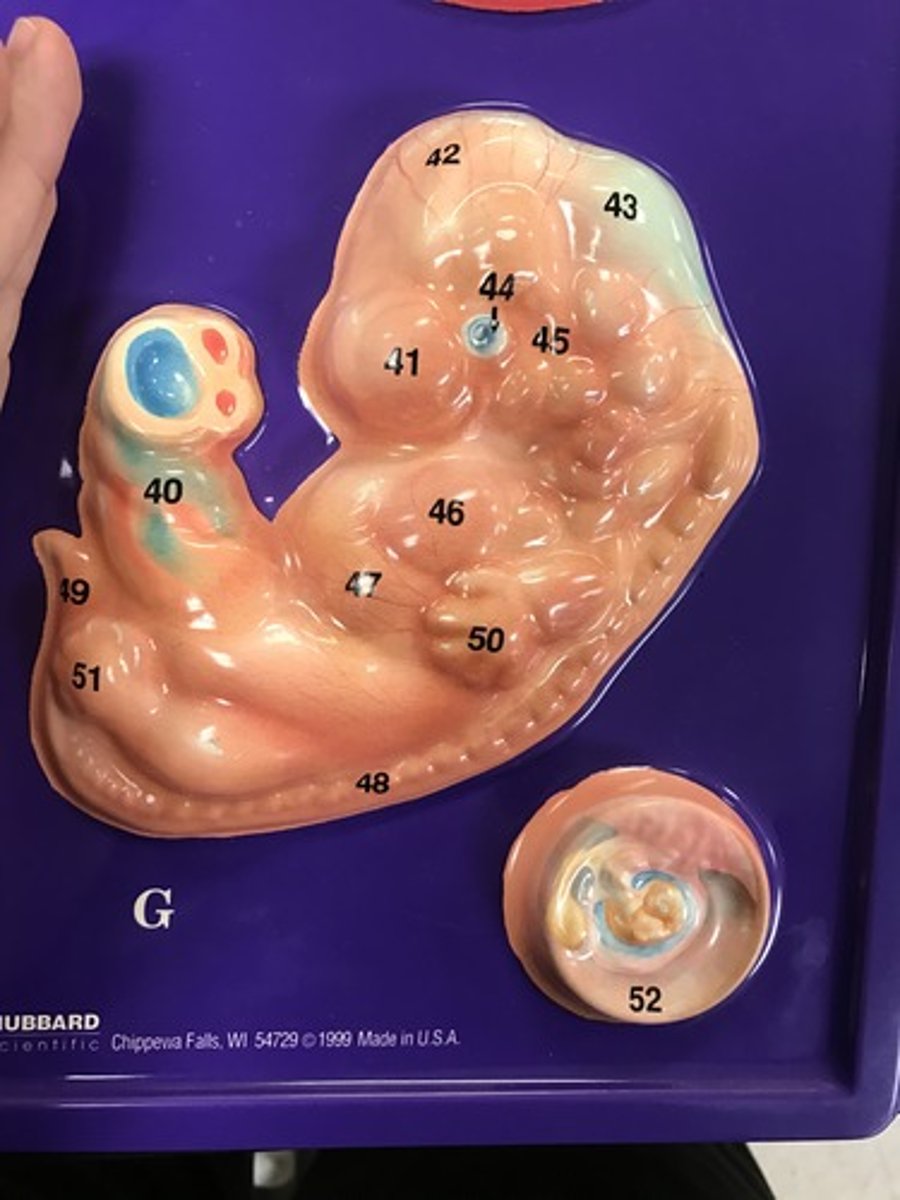
Toe rays (may be in evidence)
what is #51?
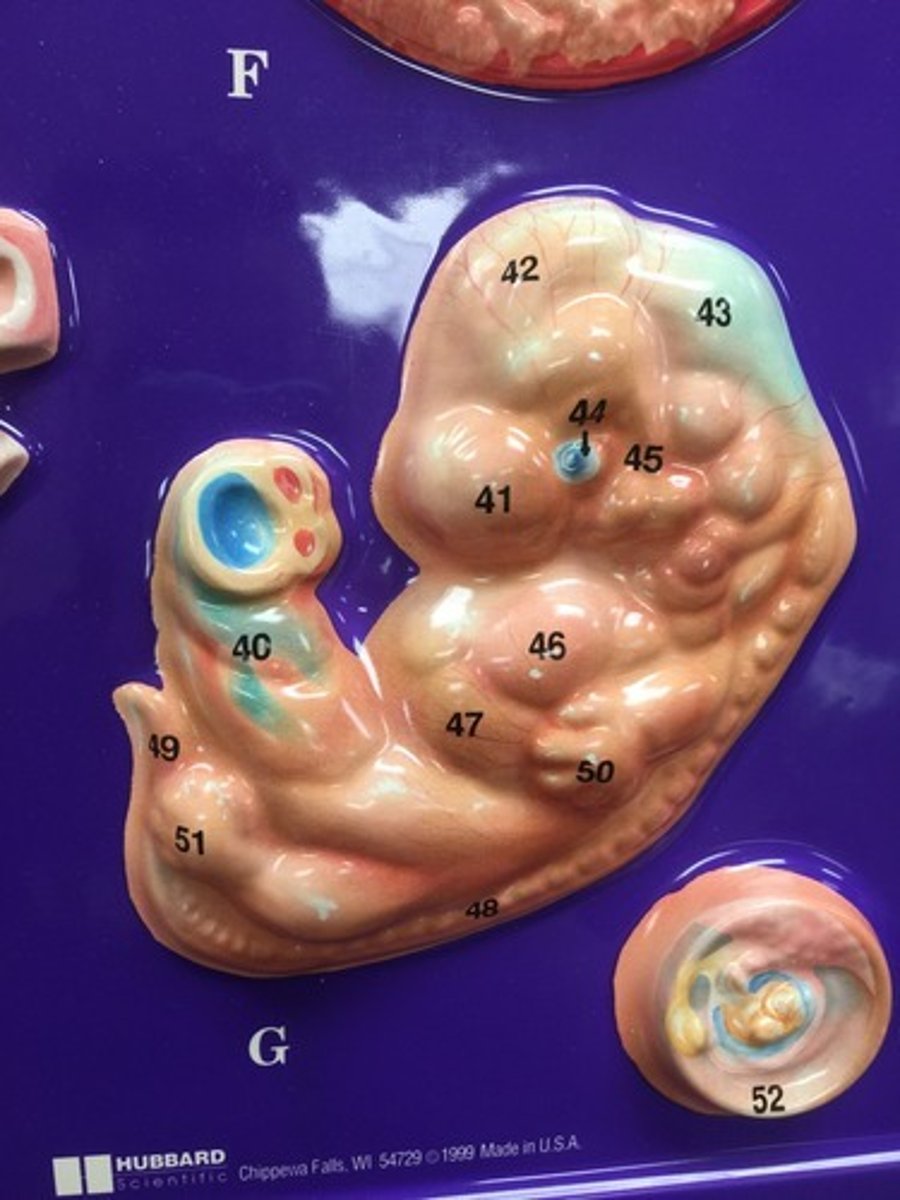
Embryo with membranes in situ
what is #52?
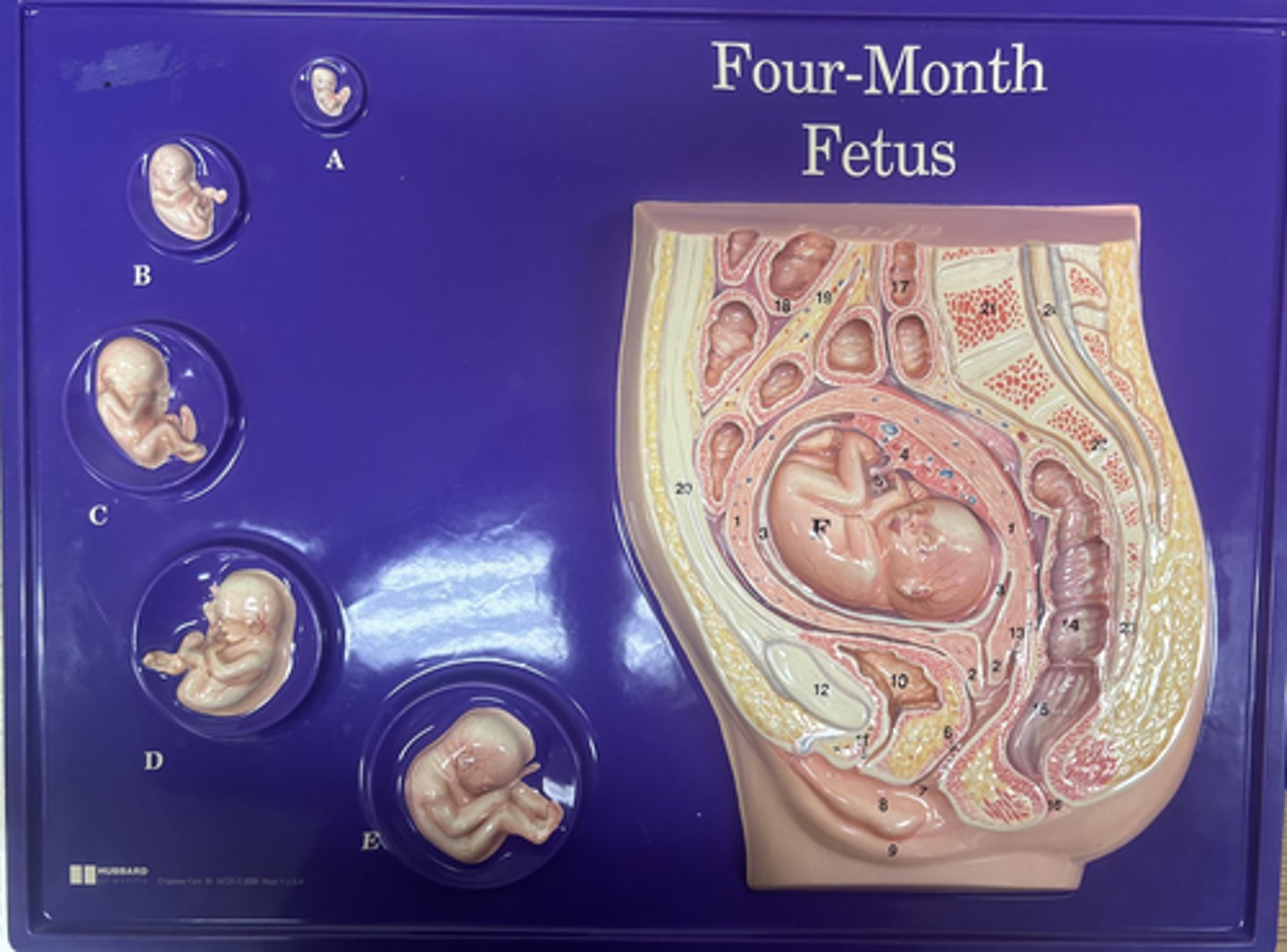
Embryo at six weeks (12 mm long crown to rump, inhuman appearance)
what is A.?
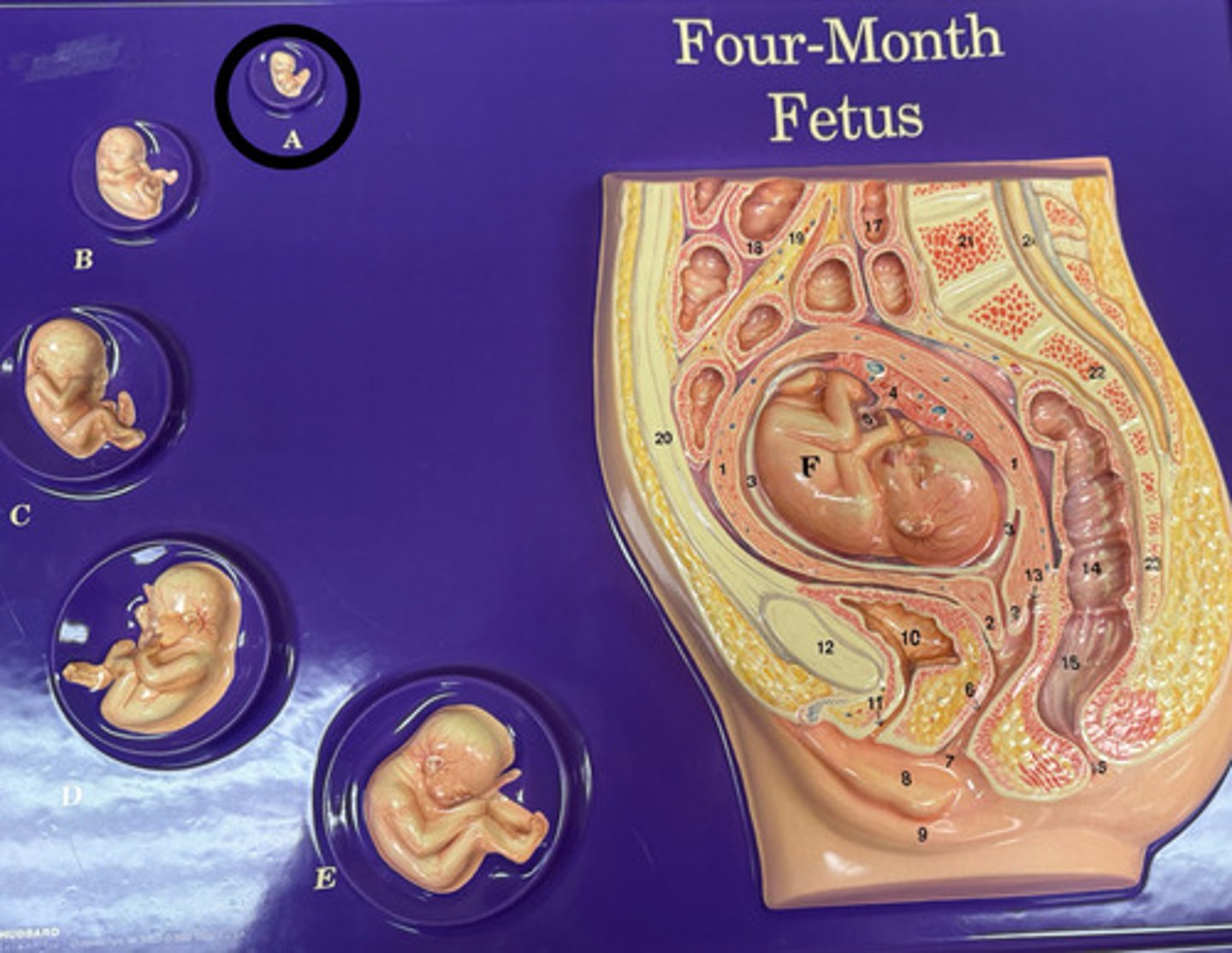
Fetus at eight weeks (Most organs are formed and it is now called a fetus, and has human appearance)
what is B.?
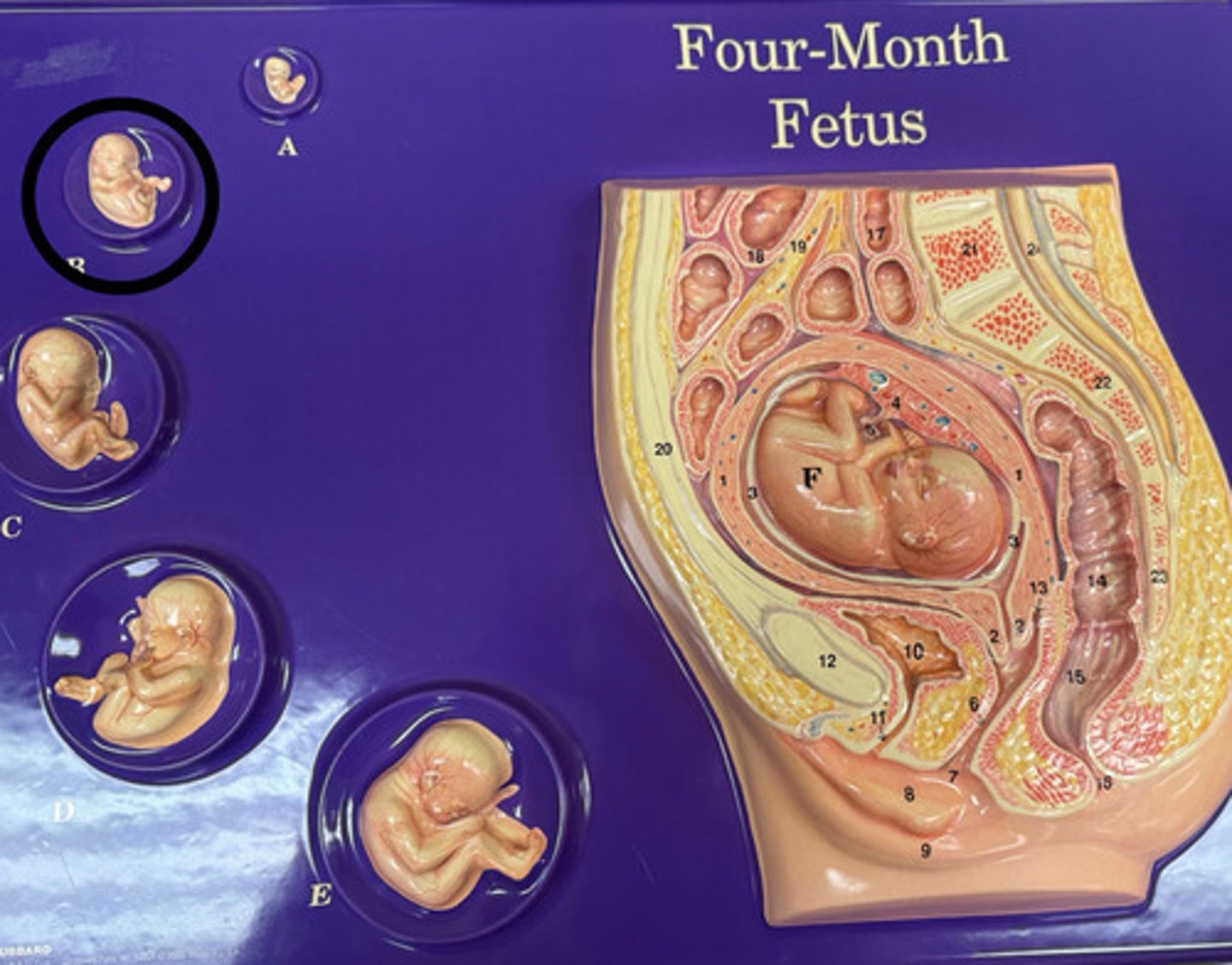
Fetus at 10 weeks (40 mm long, holds head erect)
what is C.?
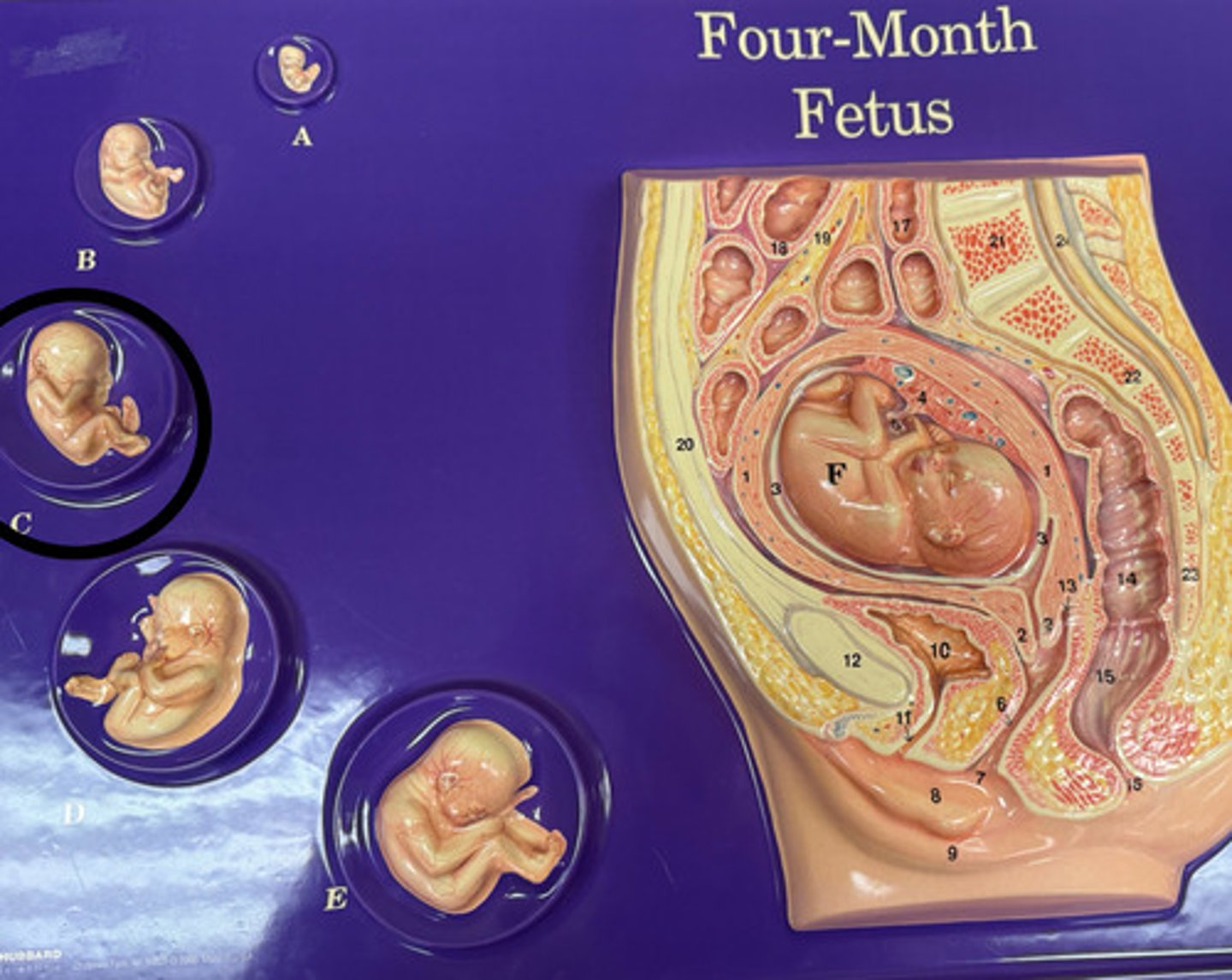
Fetus at 12 weeks (sex can be seen, skeleton is ossifying, brain has general structure)
what is D.?
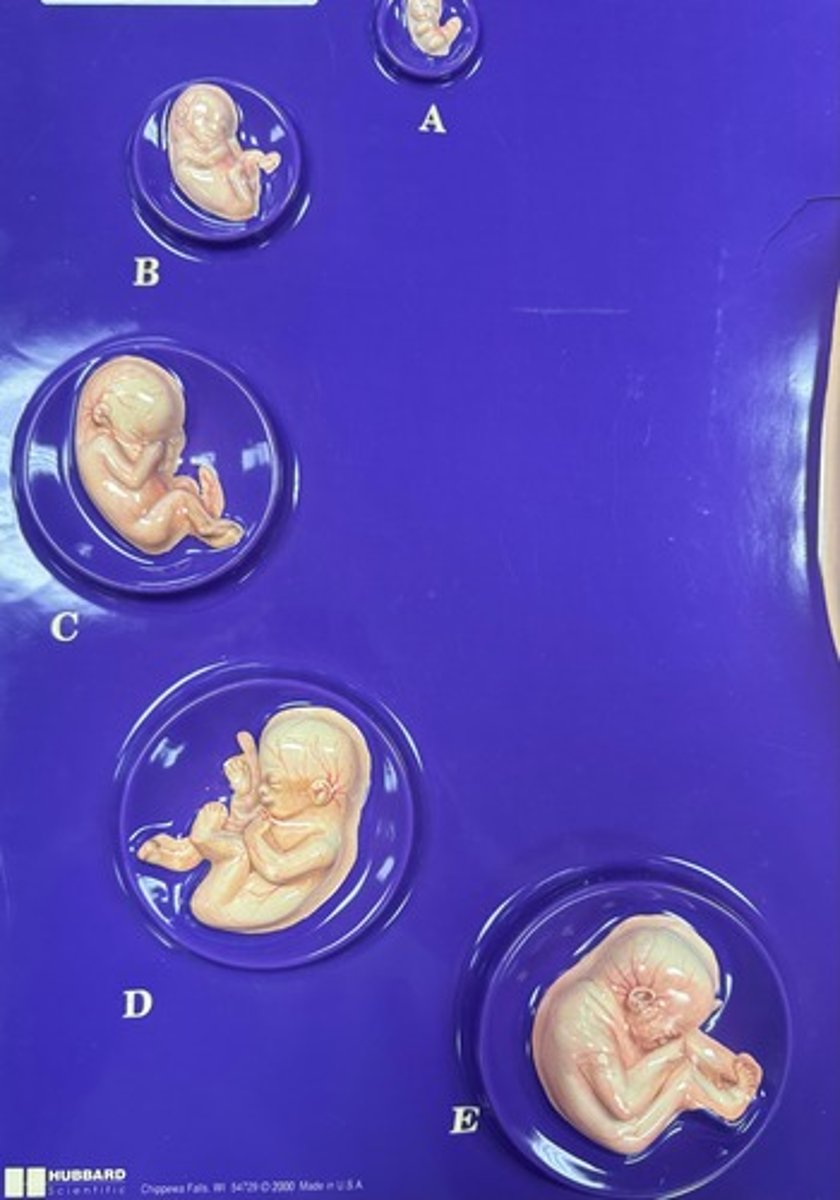
Fetus at 14 weeks (yolk sac detaches and deteriorates)
what is E.?
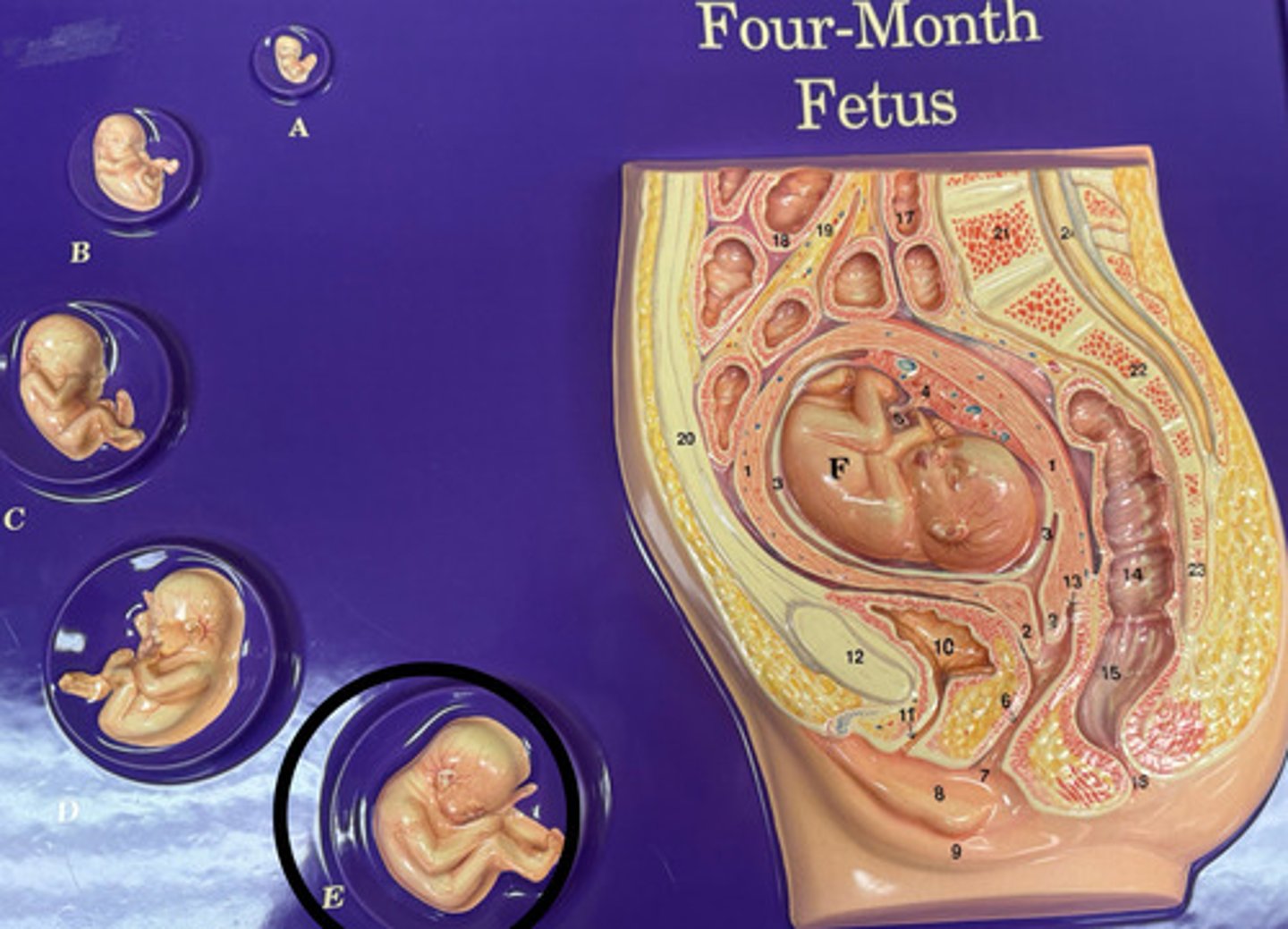
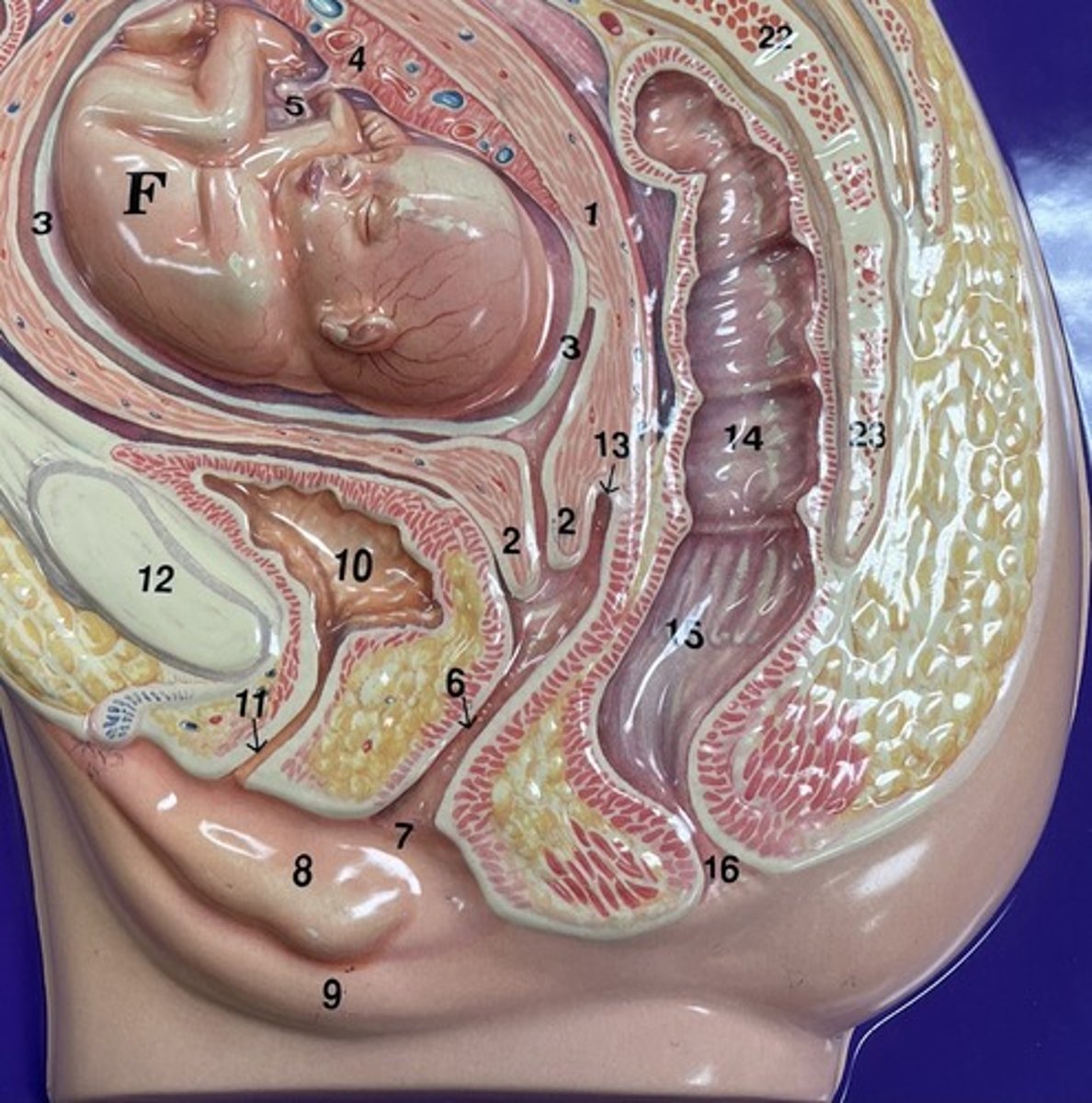
Fetus at 16 weeks (mother can feel movement, quickening)
what is F.?
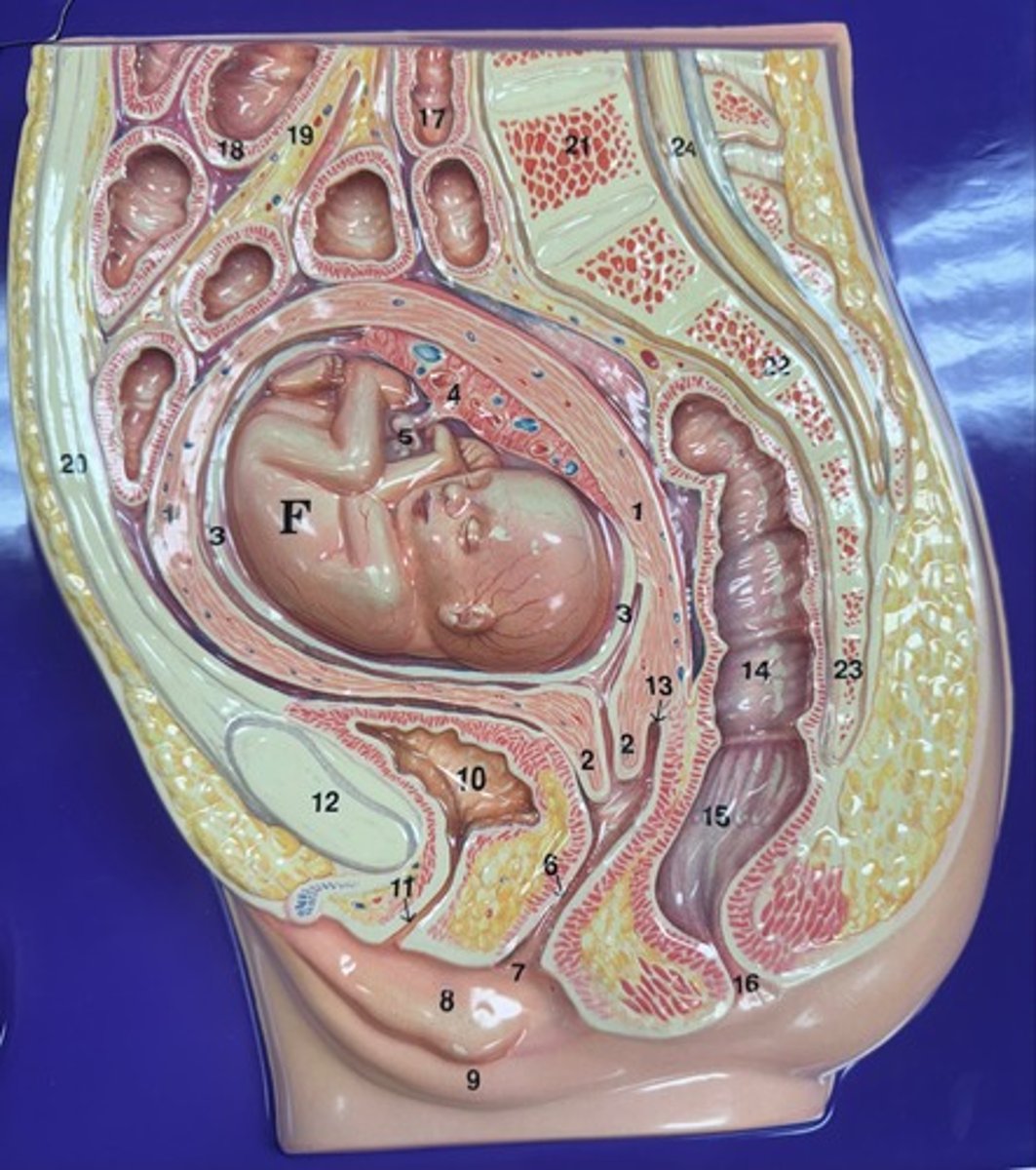
Gravid uterus (mid-line sagittal section)
What is #1?
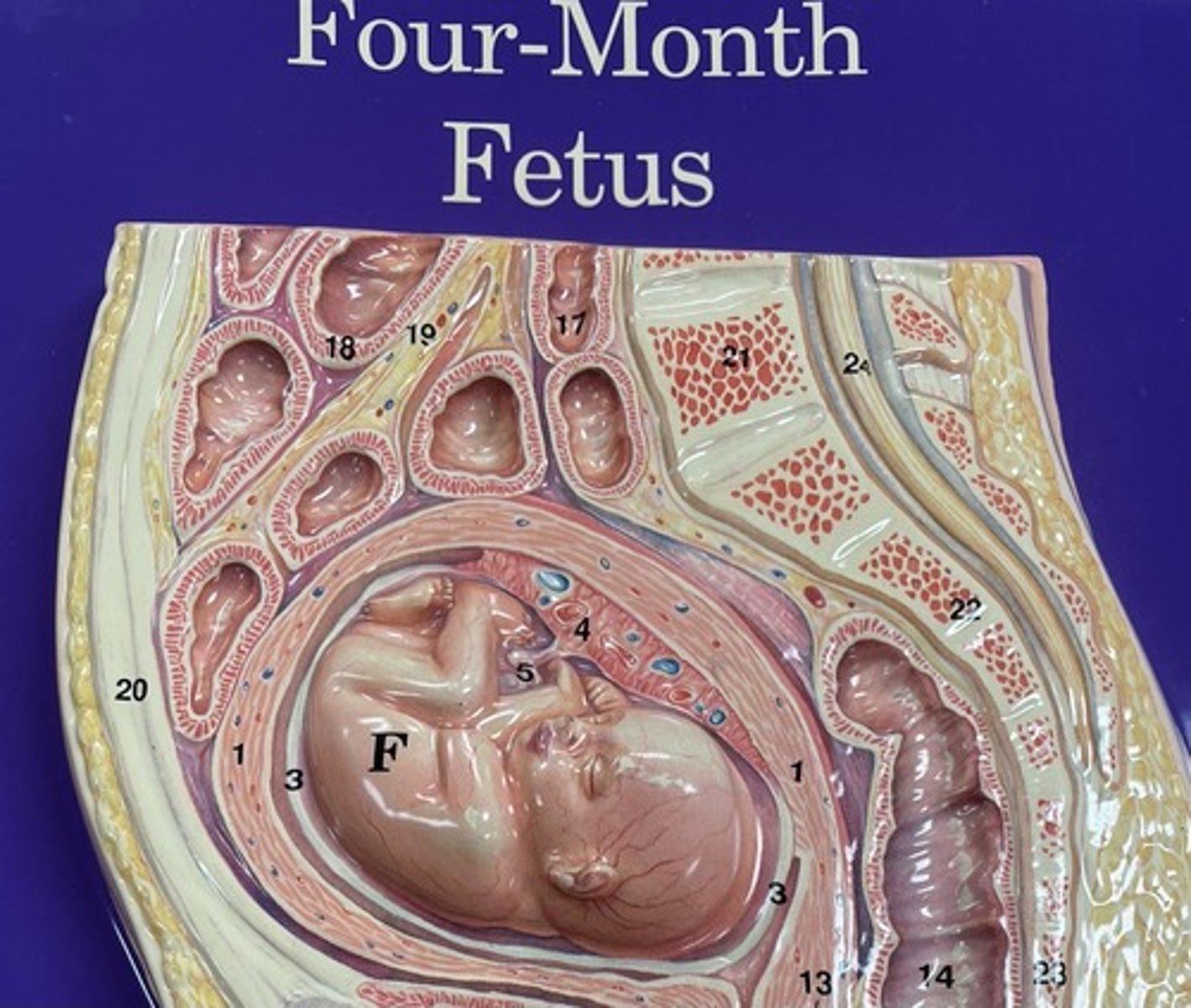
cervix or neck of uterus (section) (closed not dilated)
what is #2?
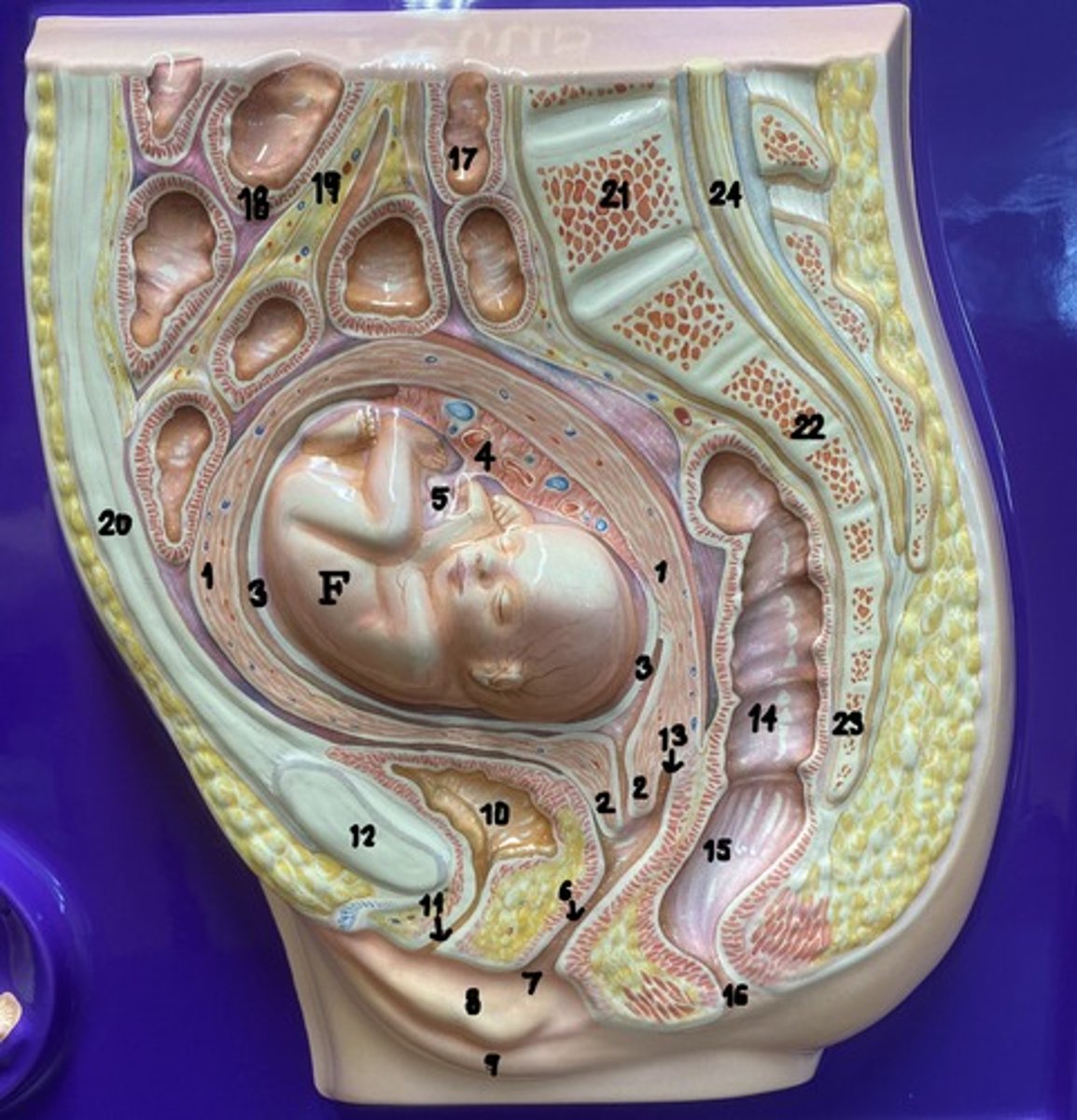
Amnion (section) or "water bag"
what is #3?
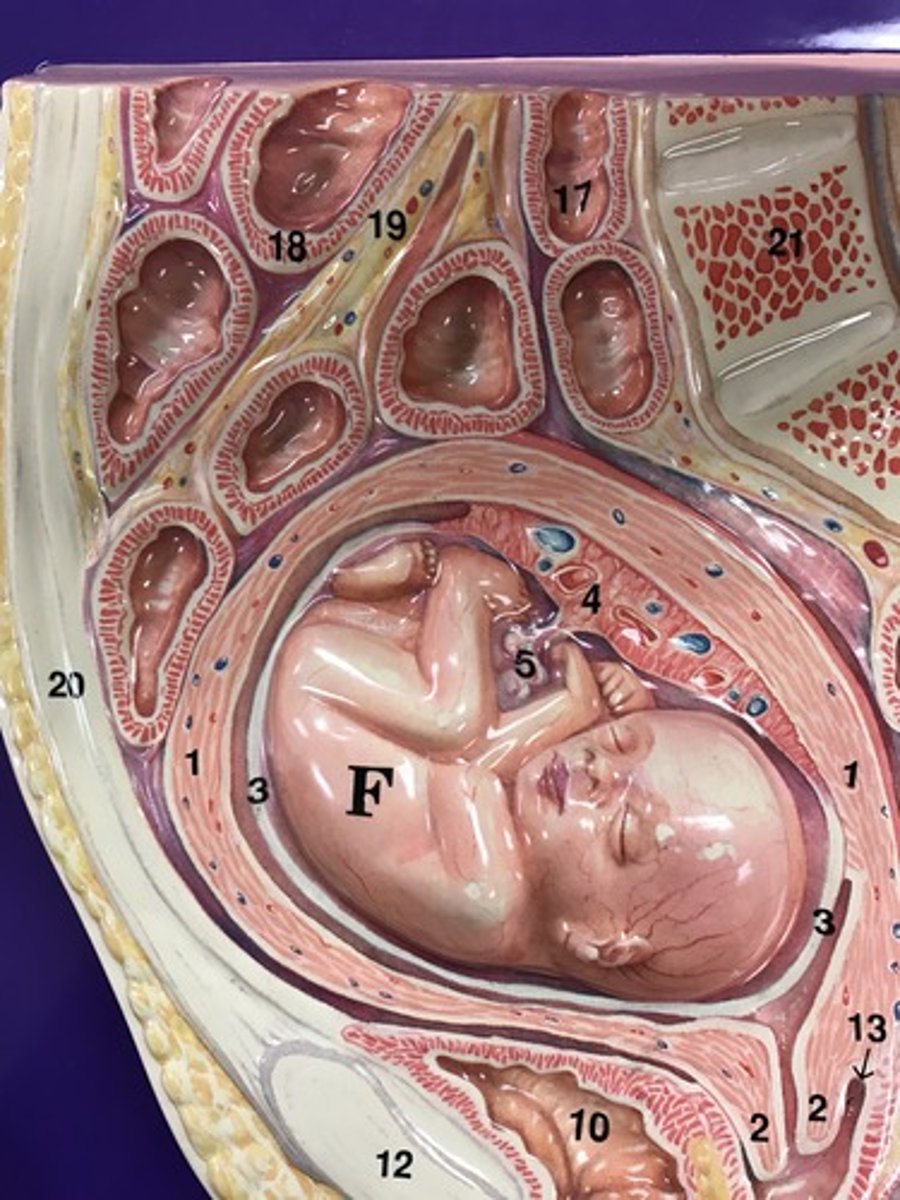
Placenta (section)
what is #4?
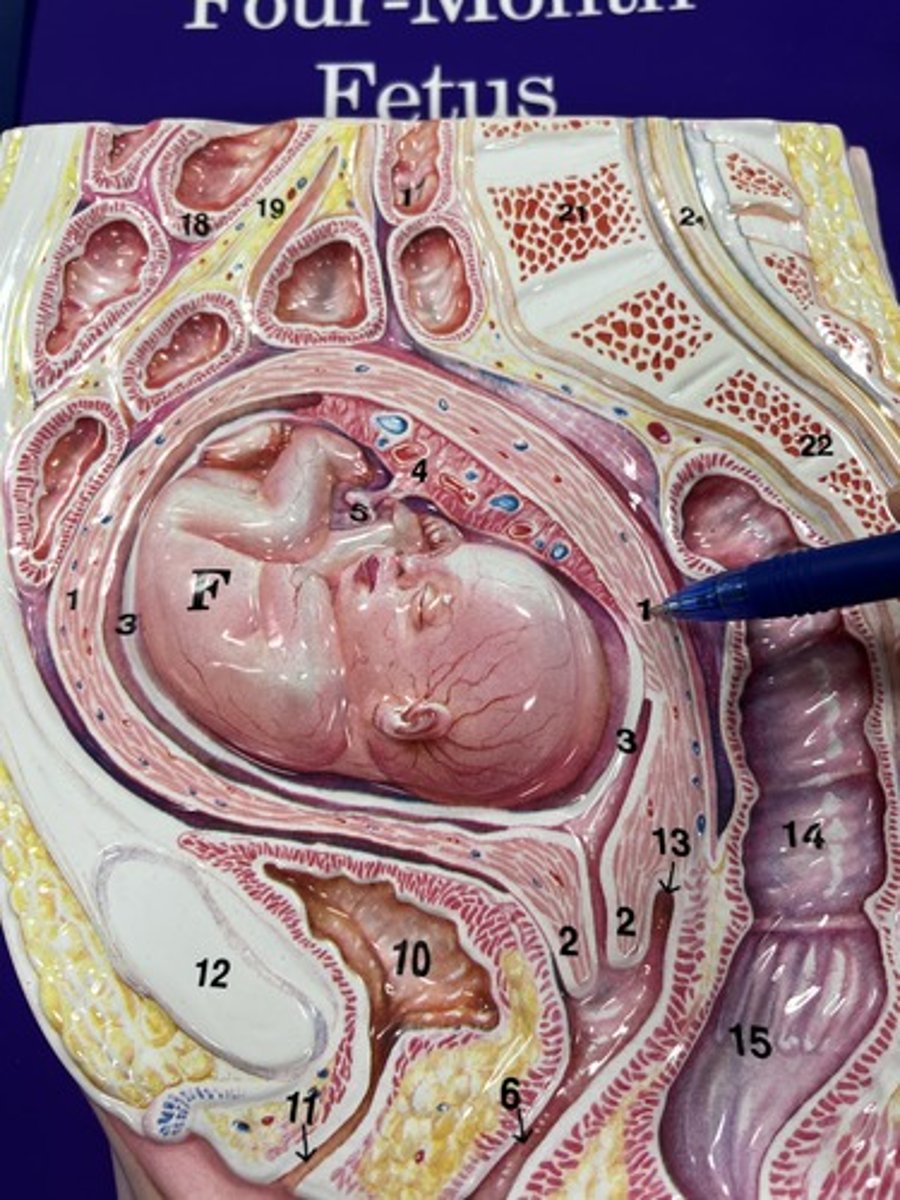
Umbilical cord
what is #5?
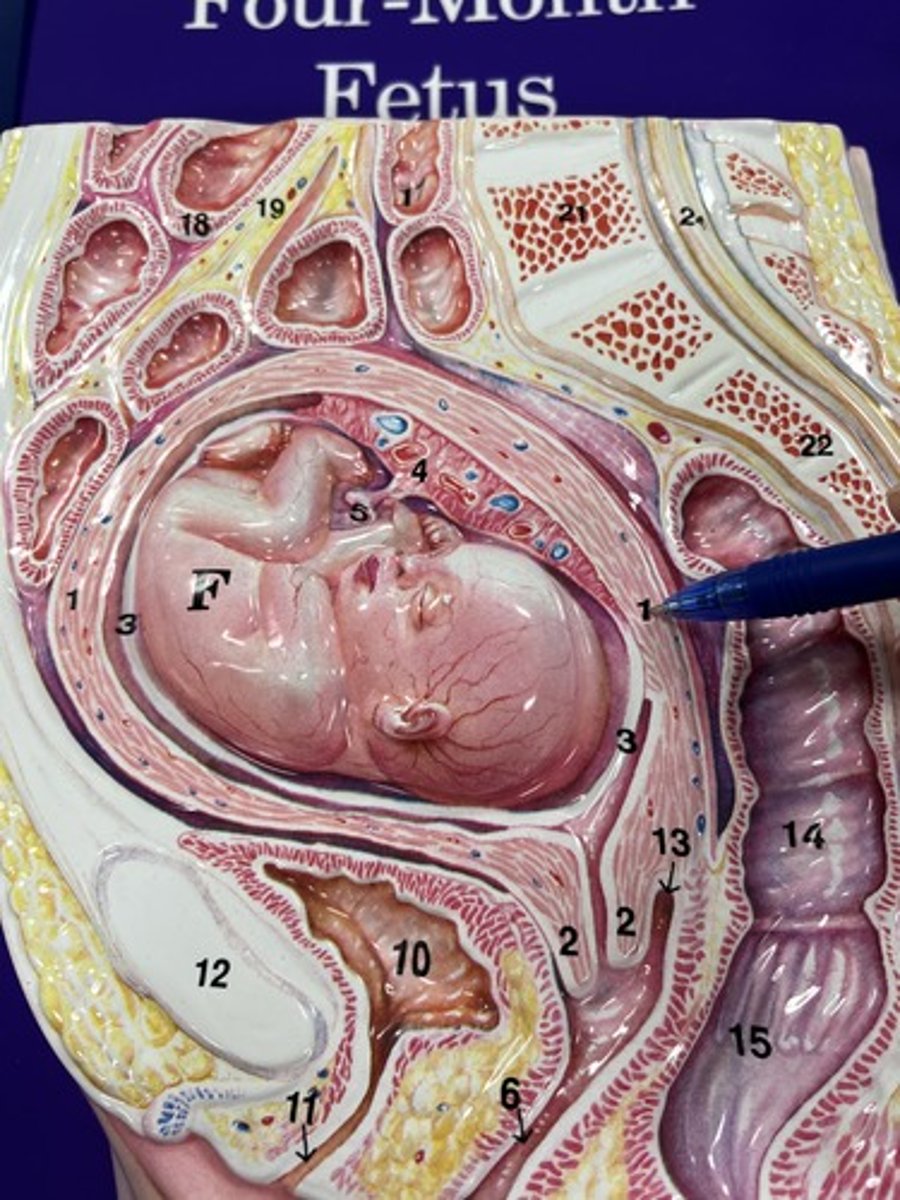
Vagina
what is #6?
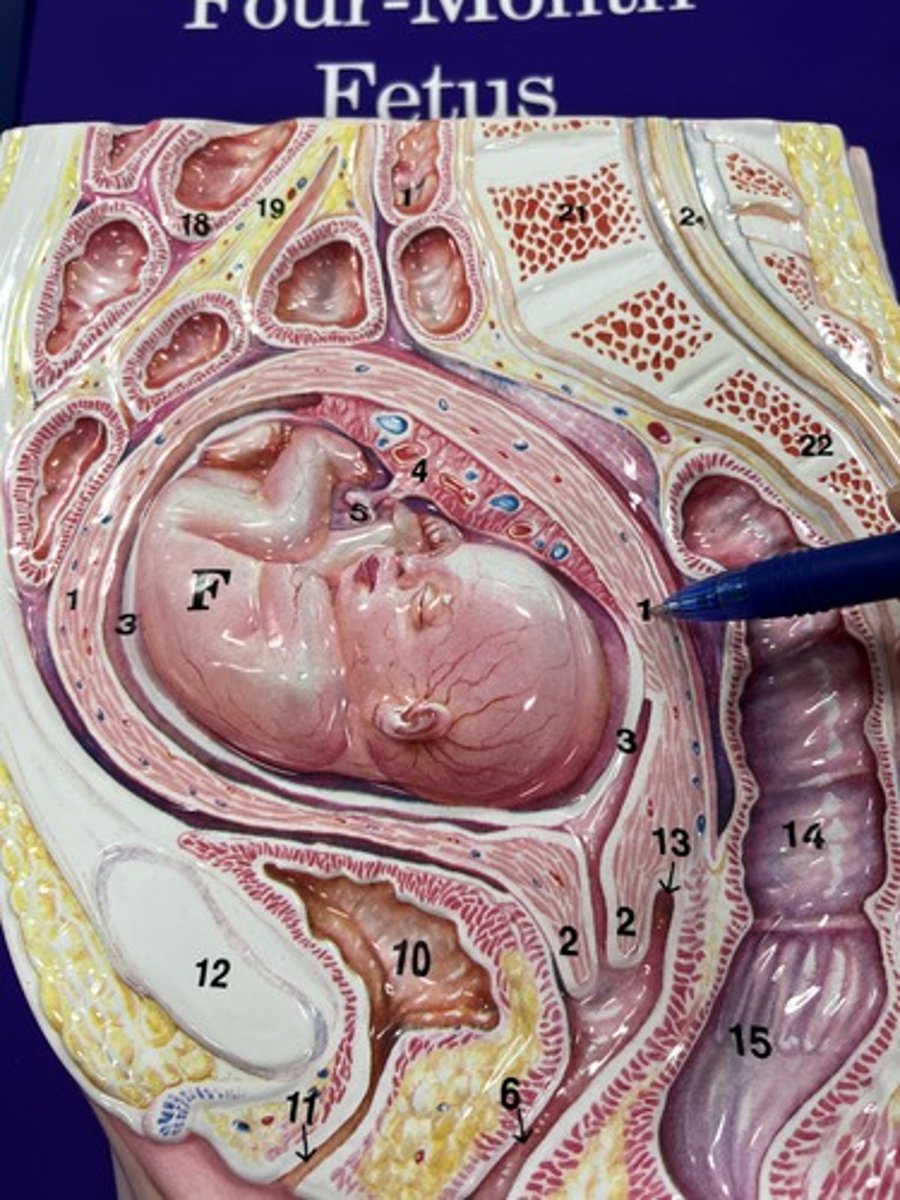
Vaginal orifice
what is #7?
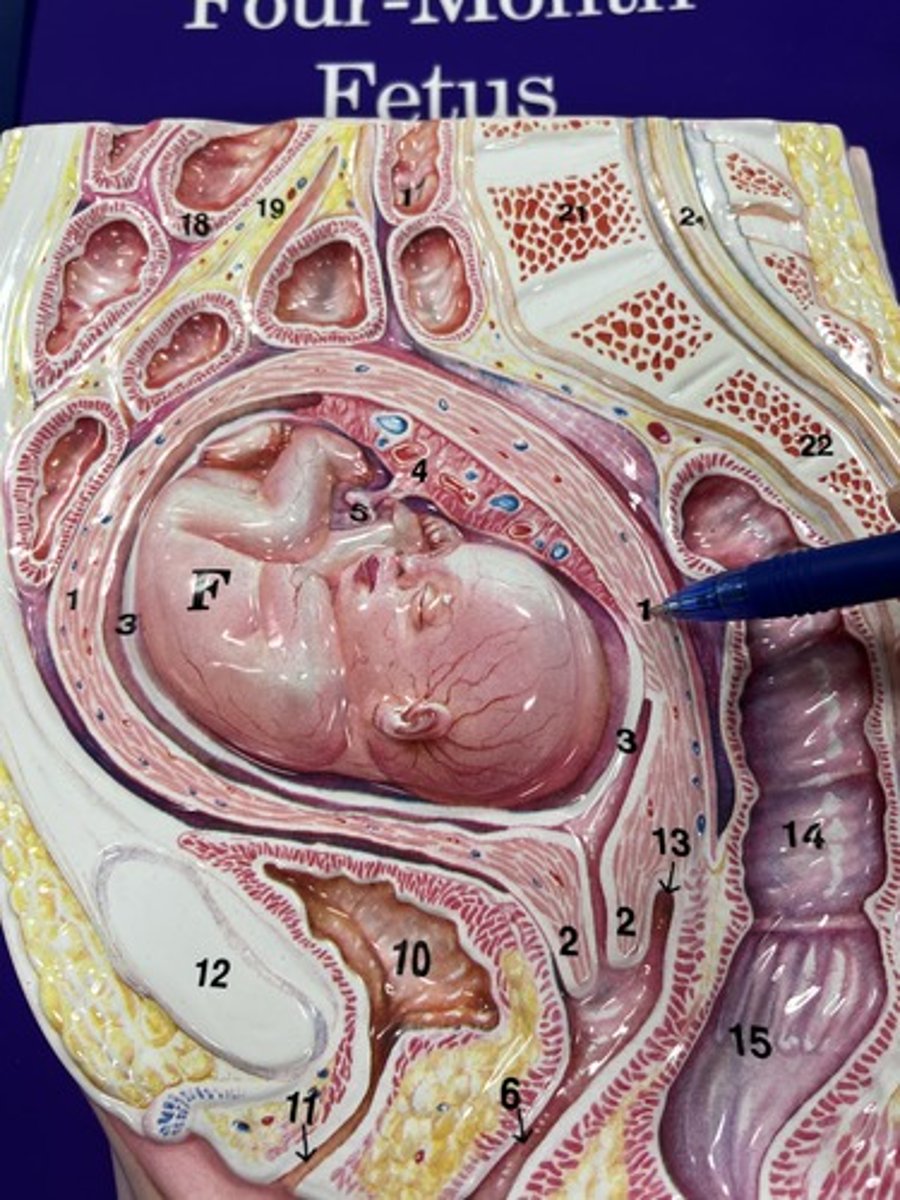
Labia minora (lesser lip of vulva)
what is #8?
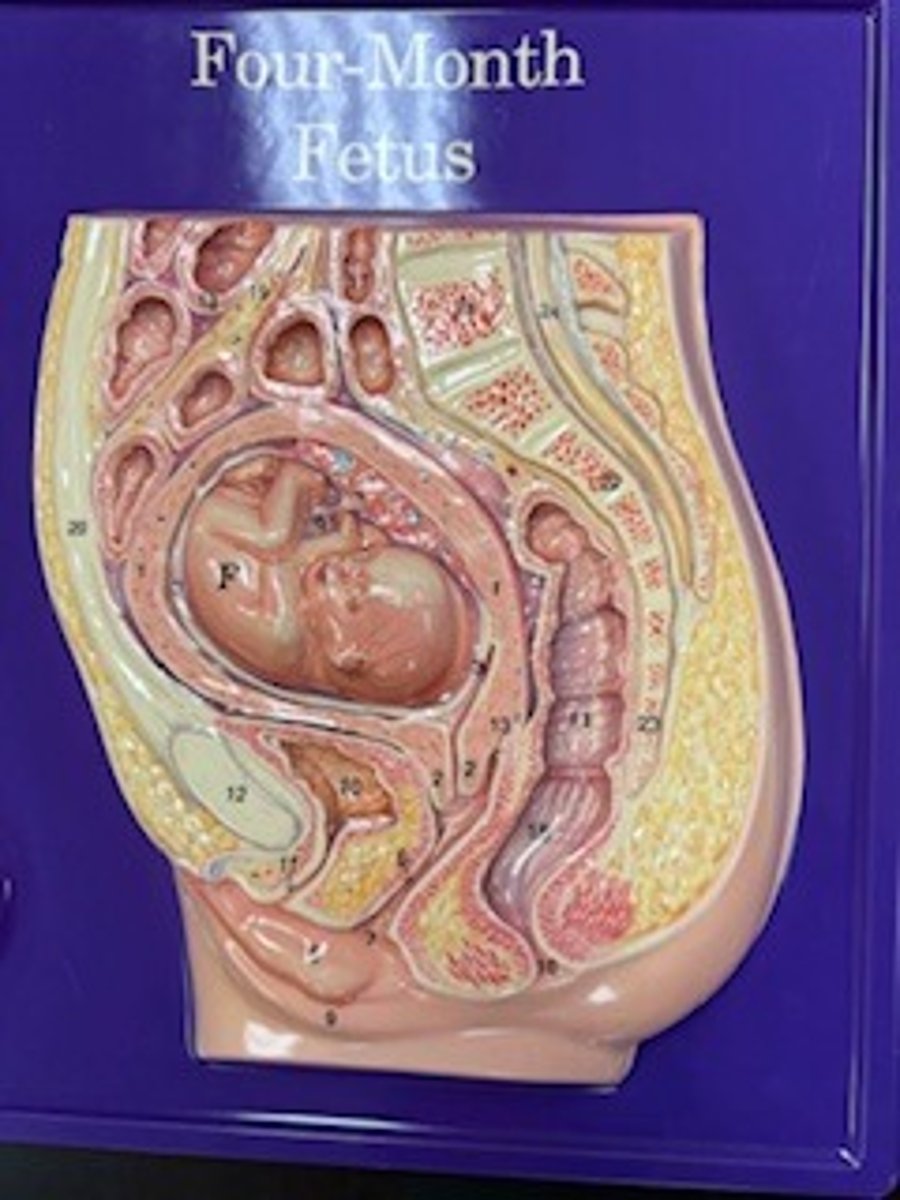
Labia majora (greater lip of vulva)
what is #9?
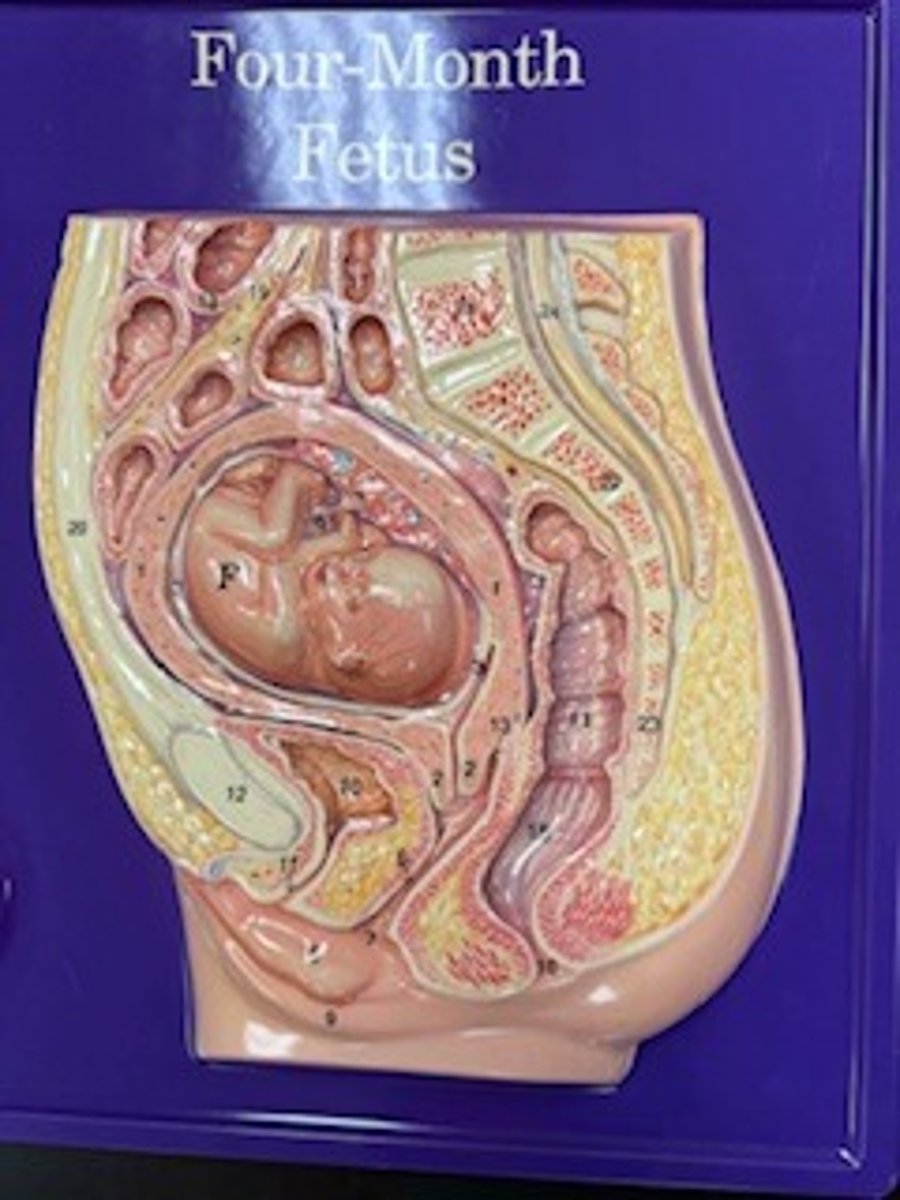
Urinary bladder (compressed by fetus)
what is #10?
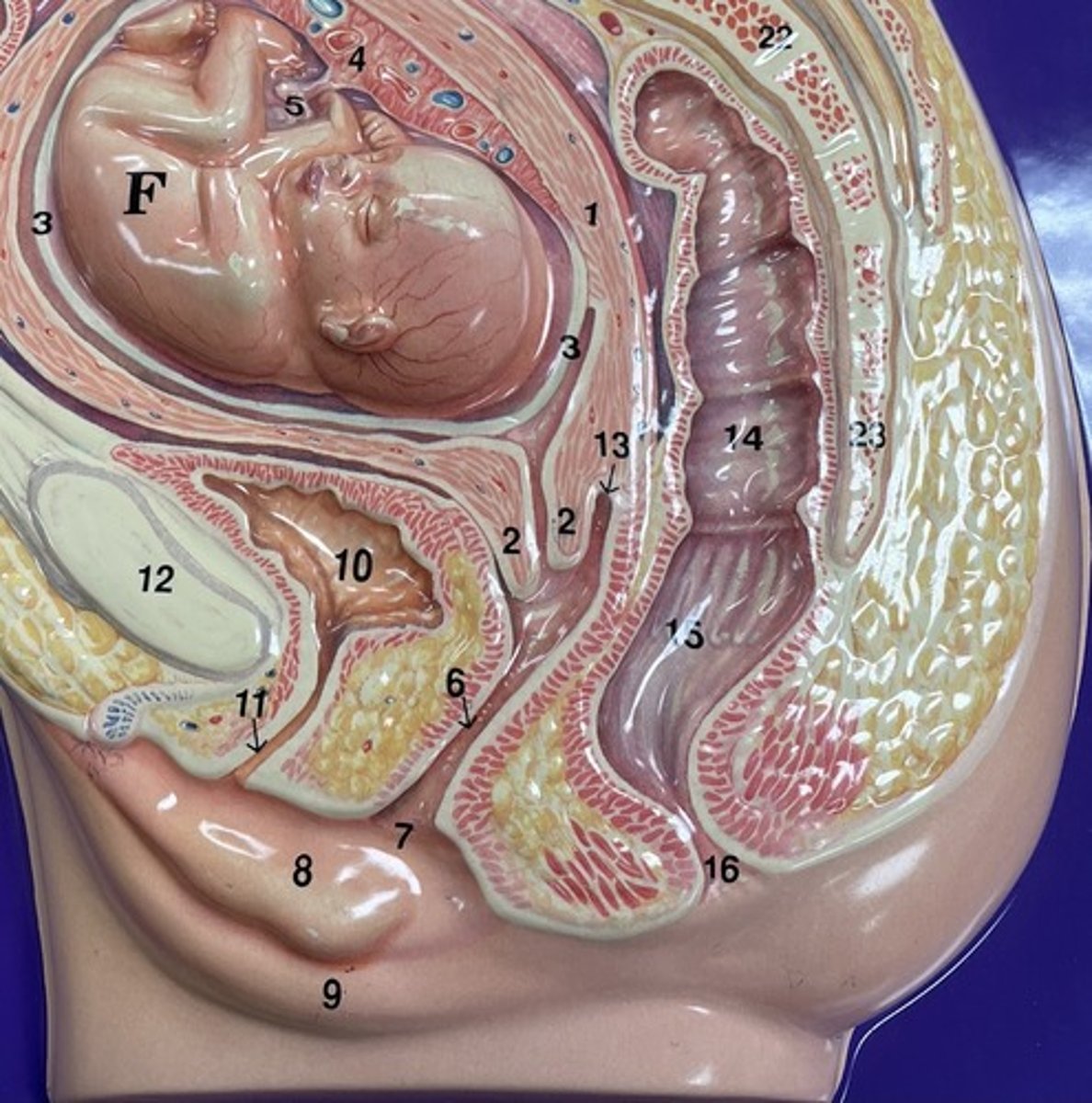
Urethra
what is #11?
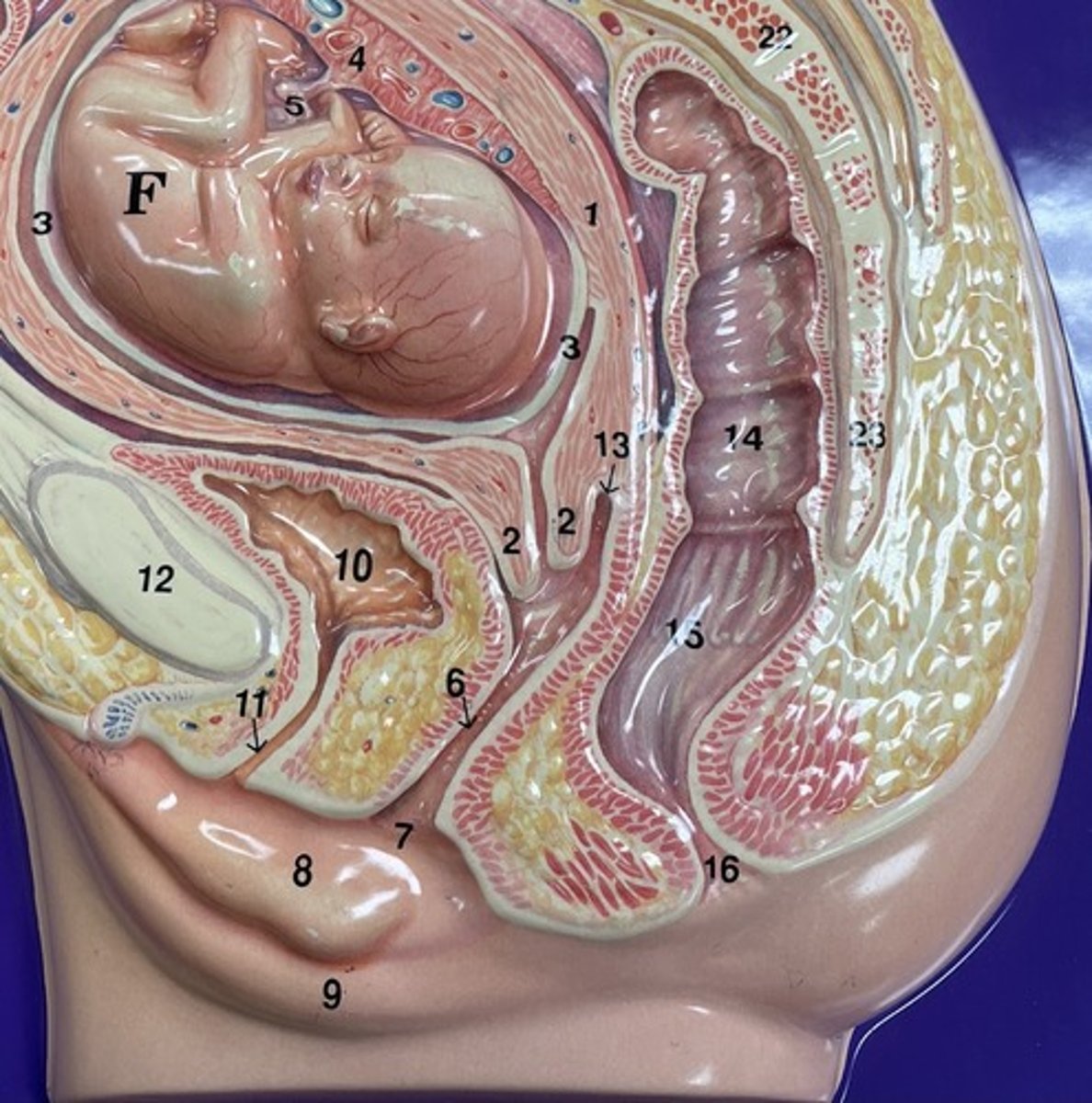
Pubic symphysis
what is #12?
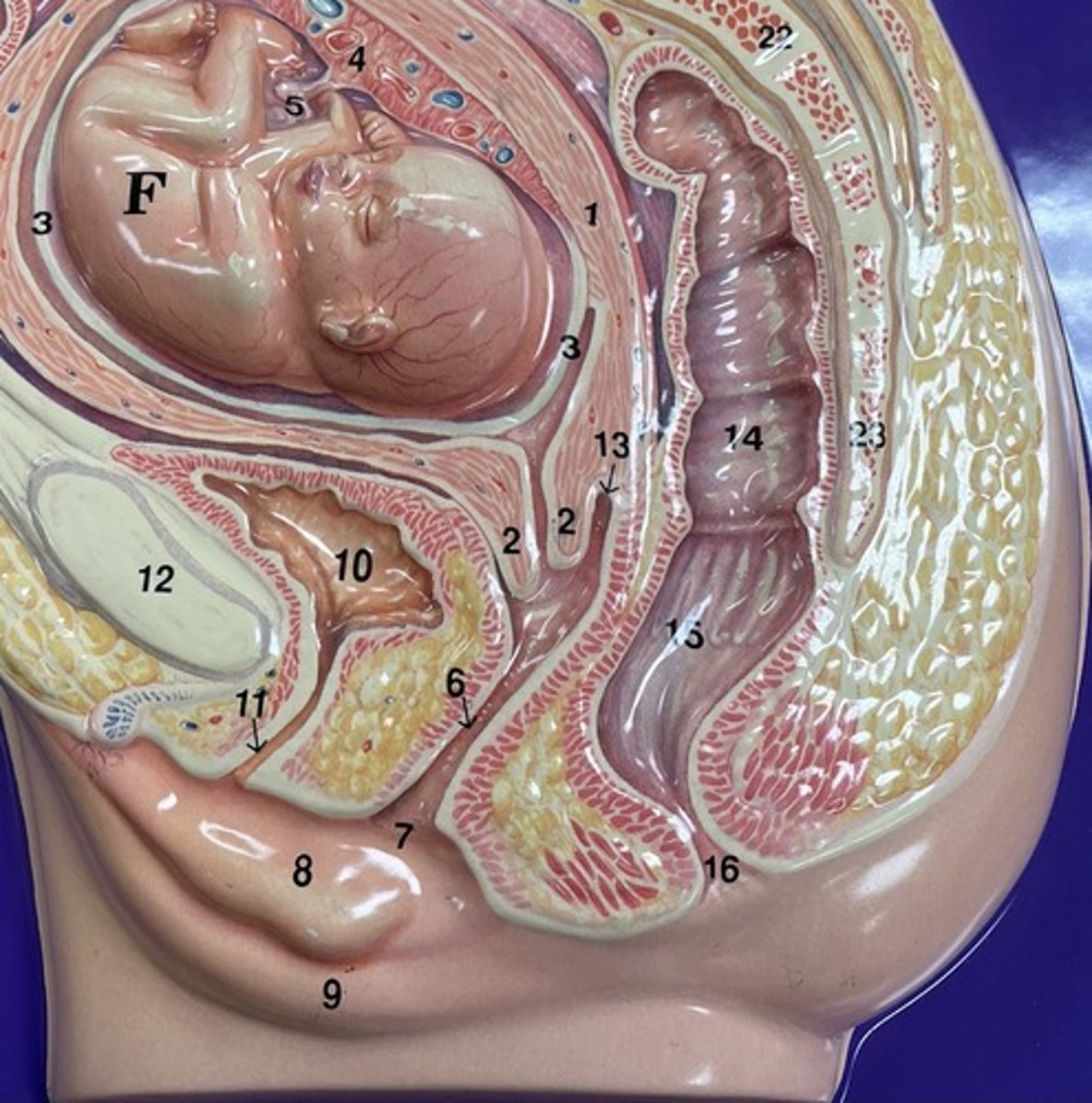
Fornix of the vagina
what is #13?
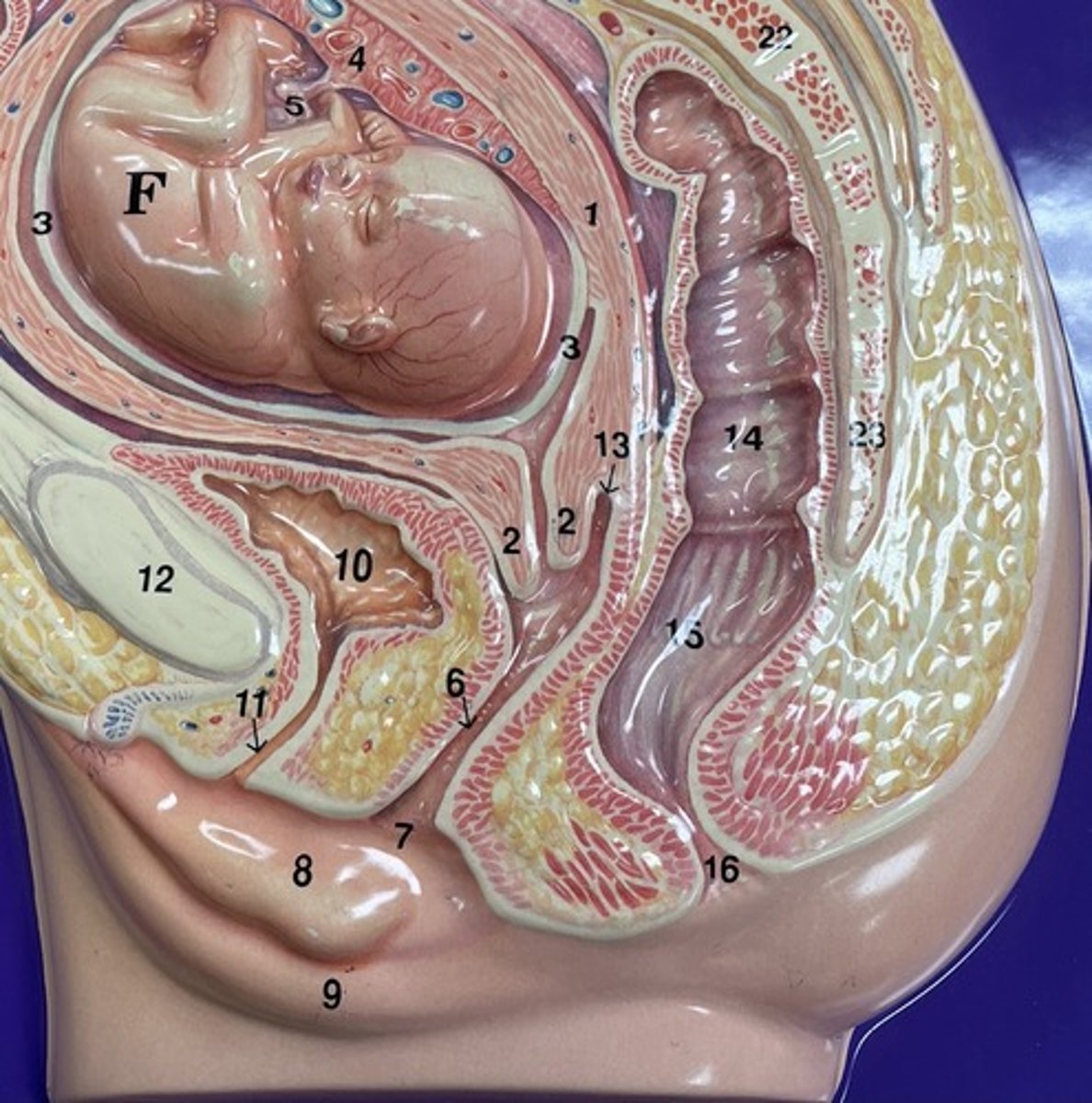
Colon (sigmoid)
what is #14?
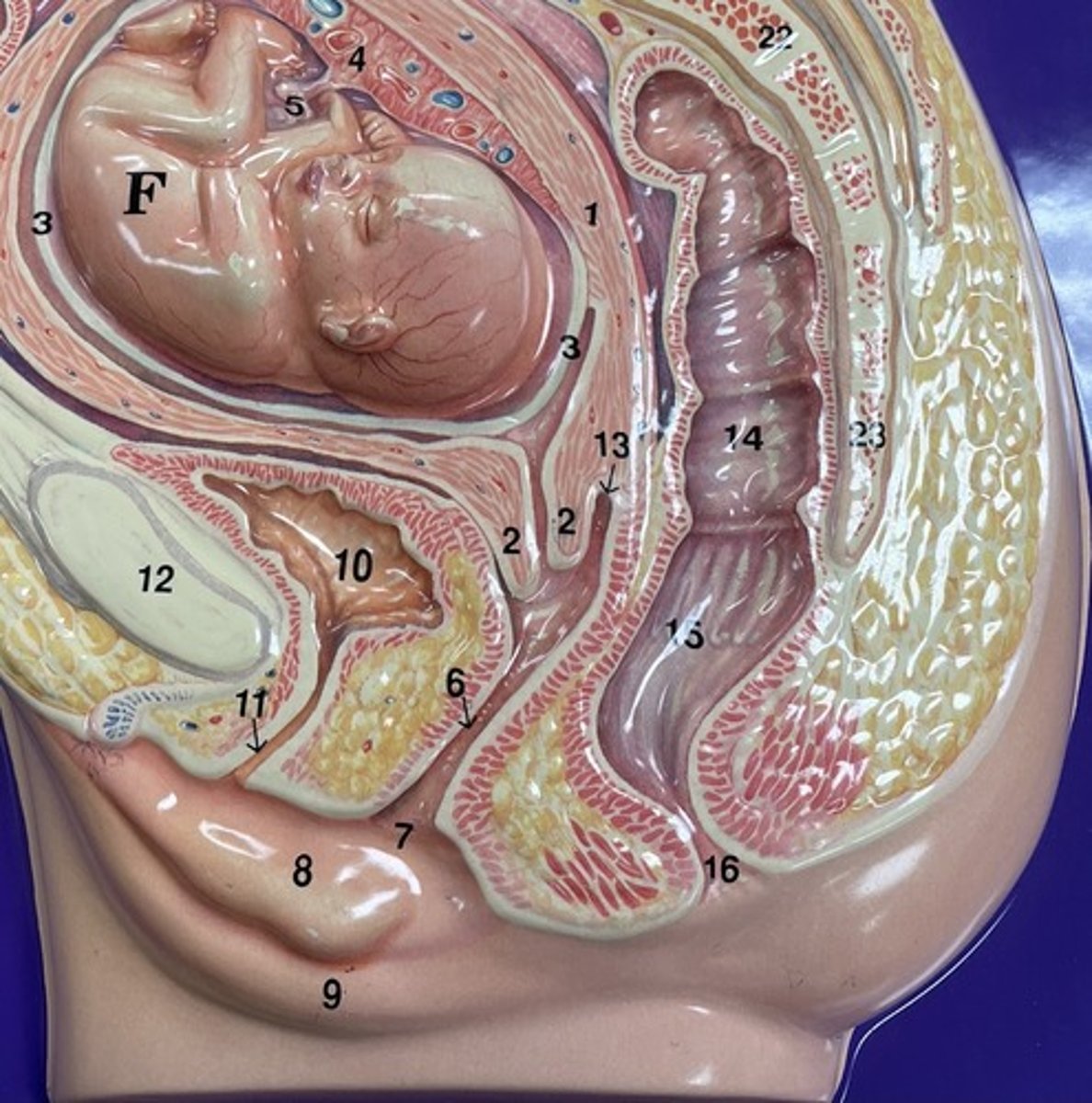
Rectum
what is #15?
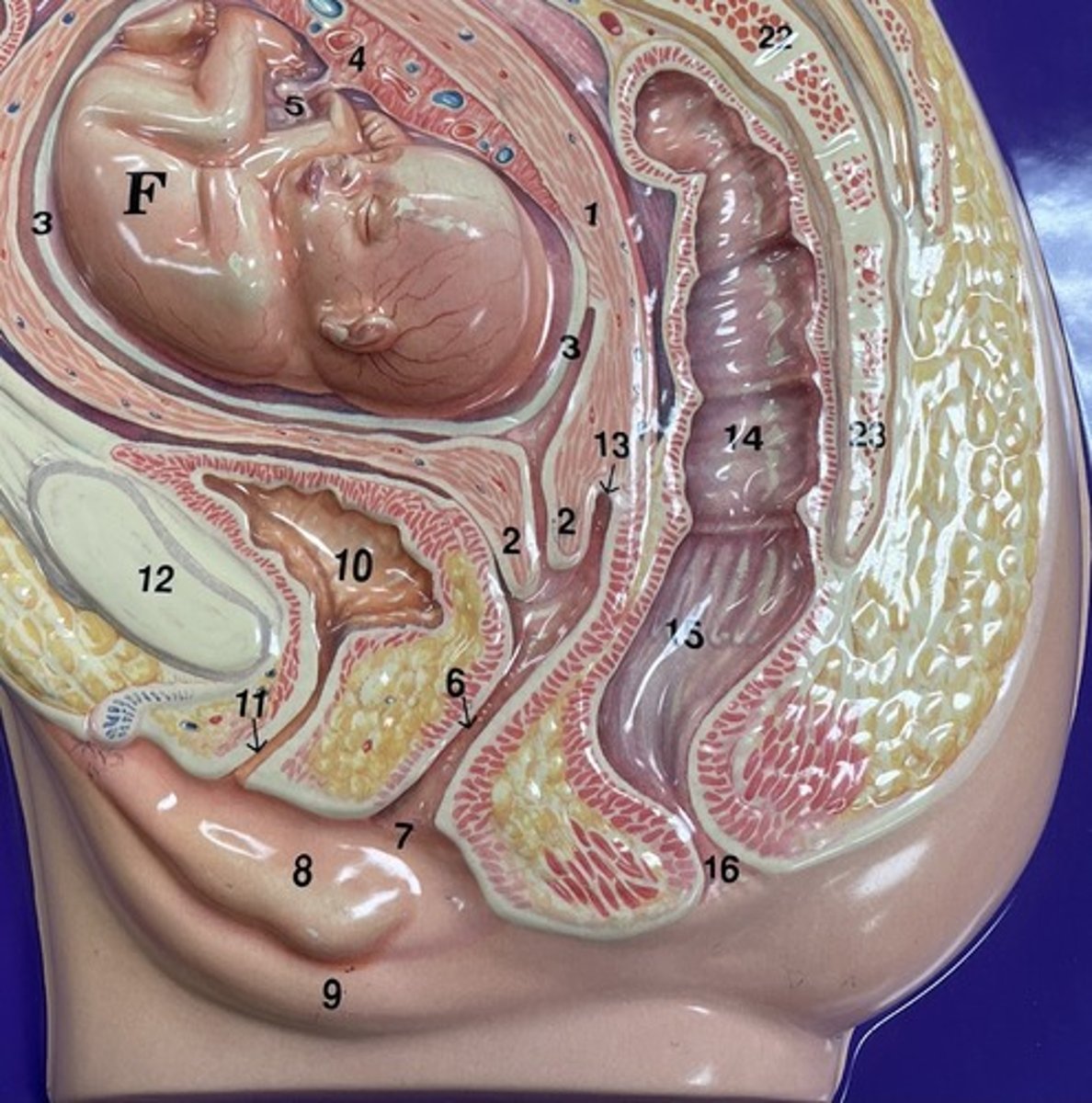
Anal canal
what is #16?
Colon (descending)
what is #17?
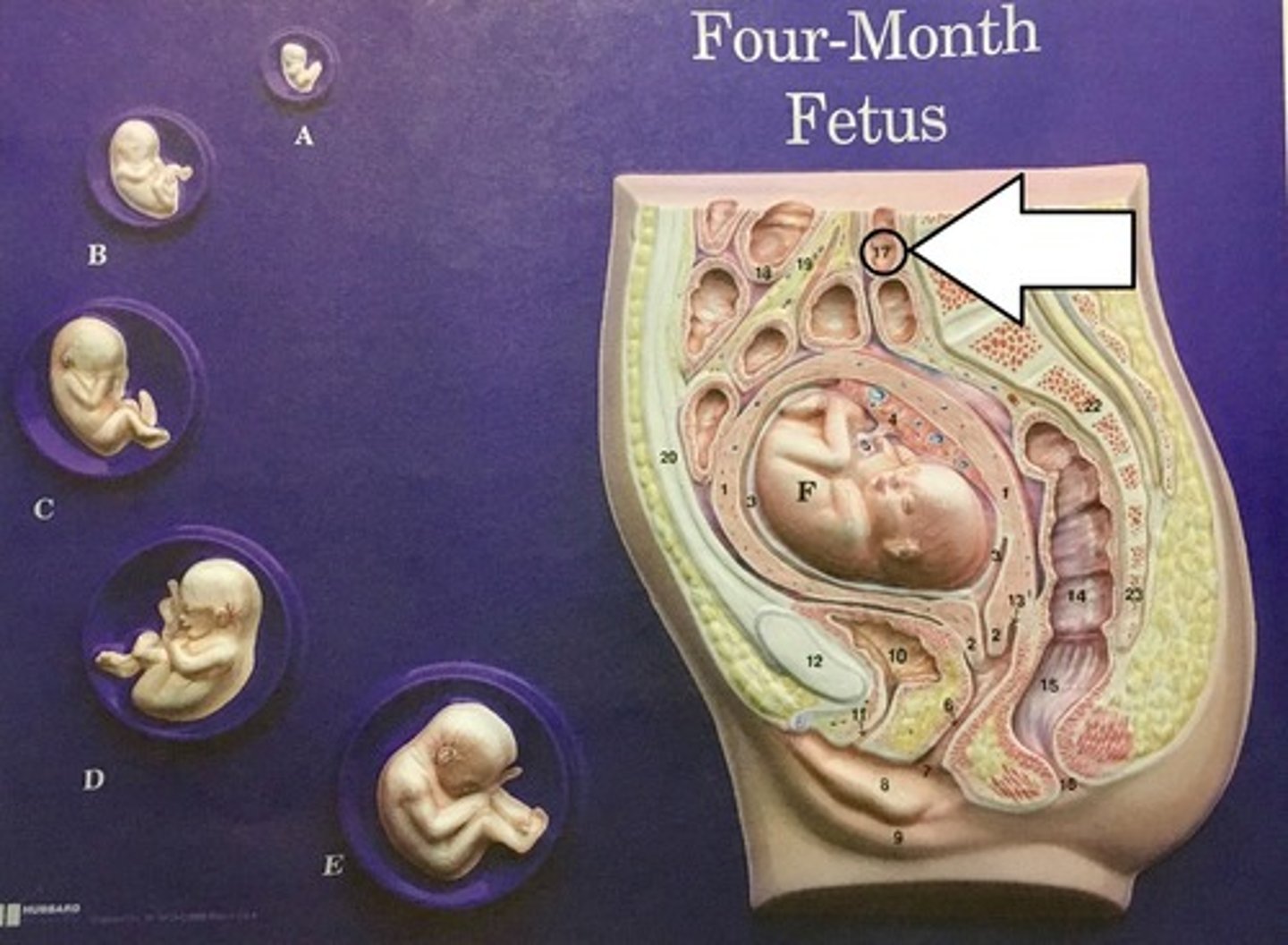
Ileum (small intestine)
what is #18?
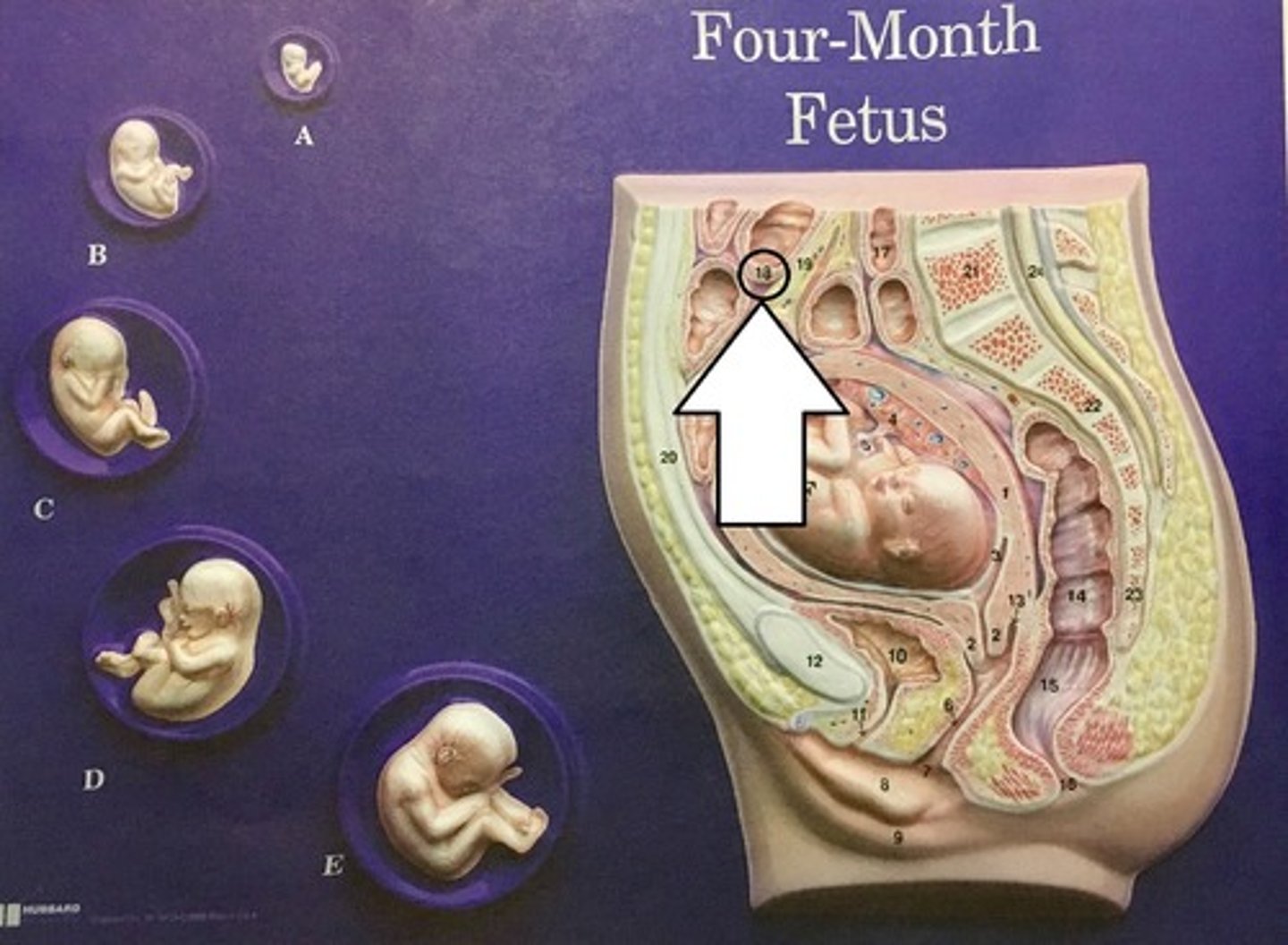
Mesentery
what is #19?
Linea alba (ligament fascia between rectus muscle)
what is #20?
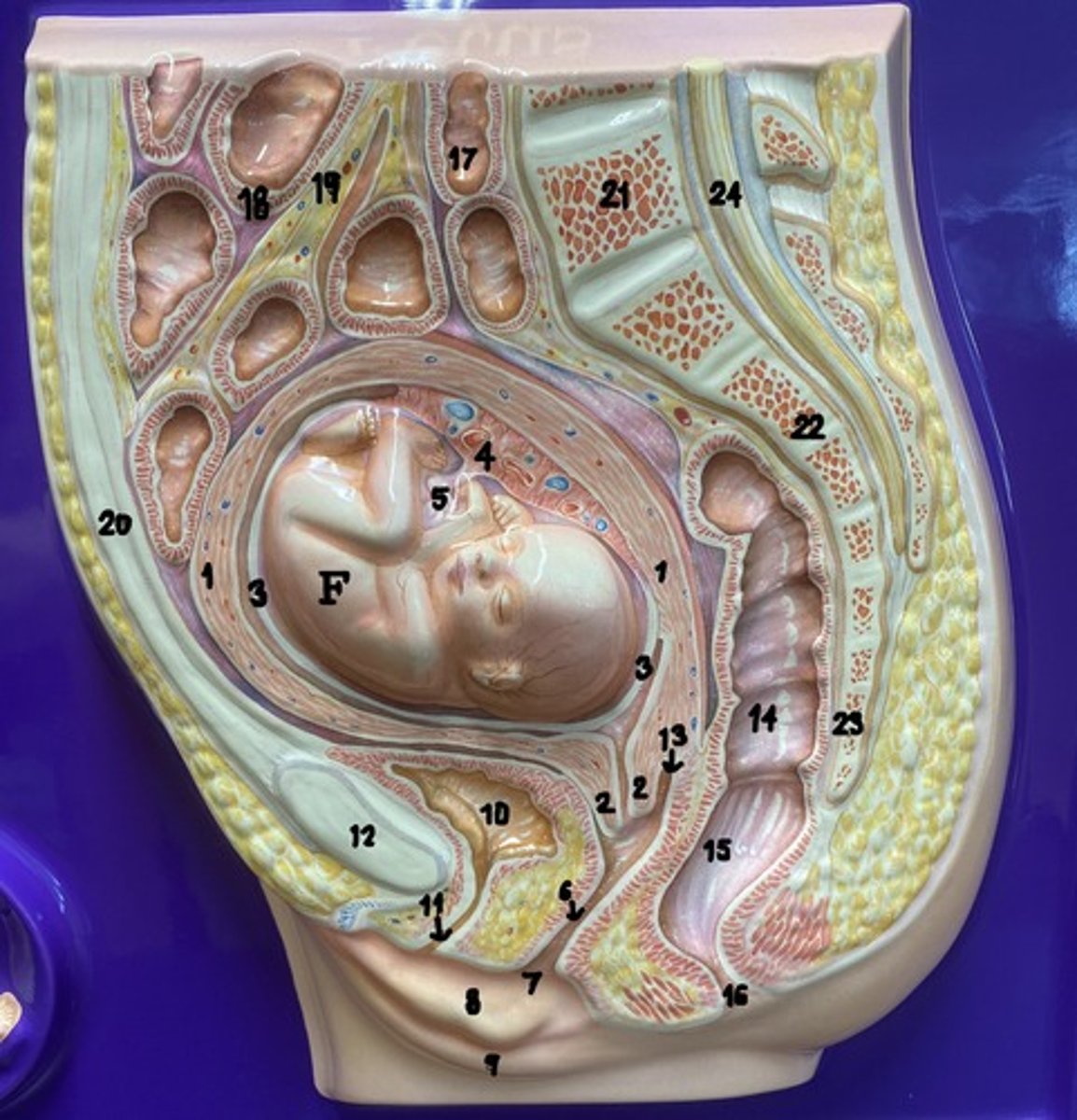
Fifth lumbar vertebra (section)
what is #21?
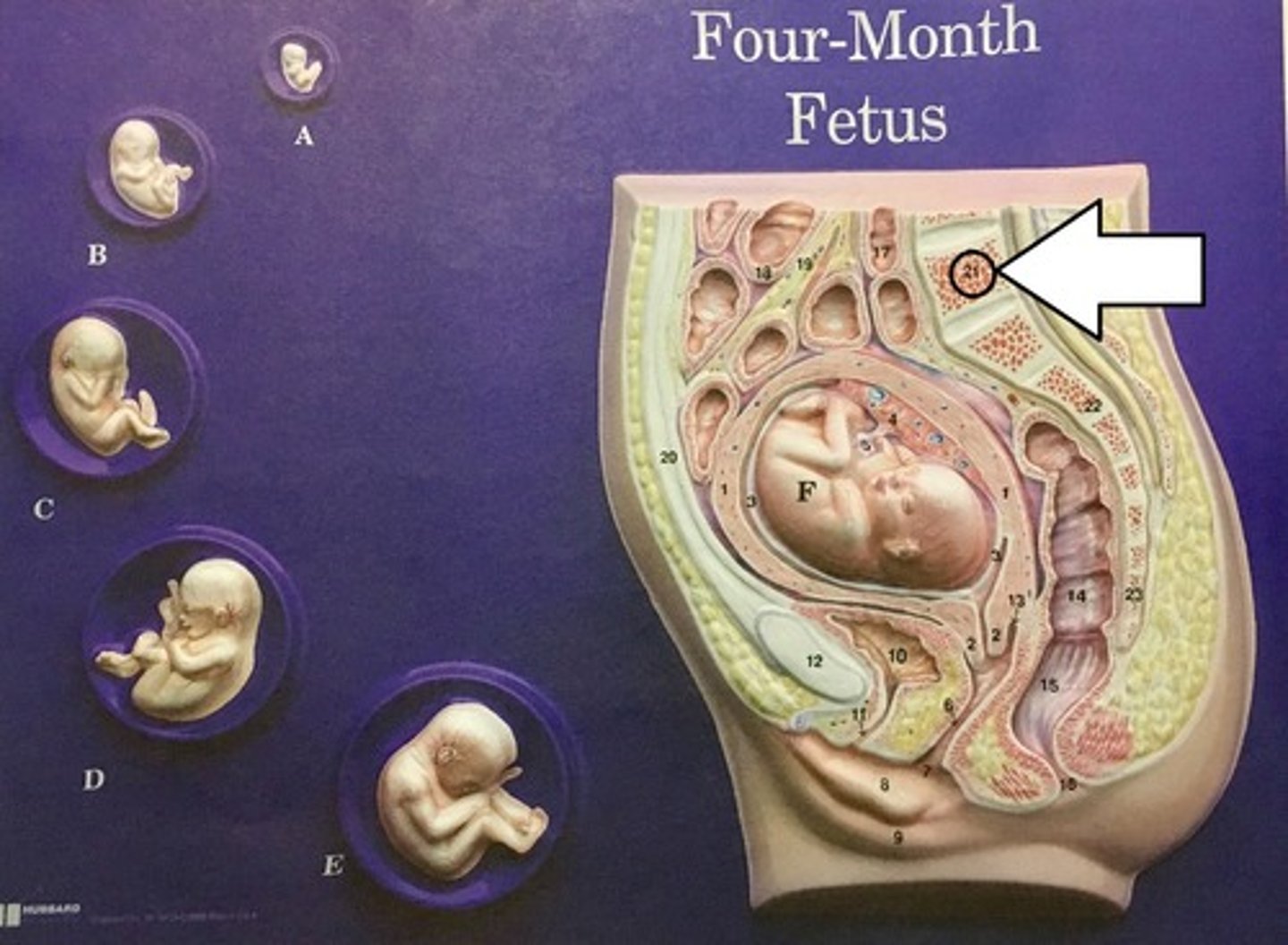
Sacrum (vertebral bones)
what is #22?
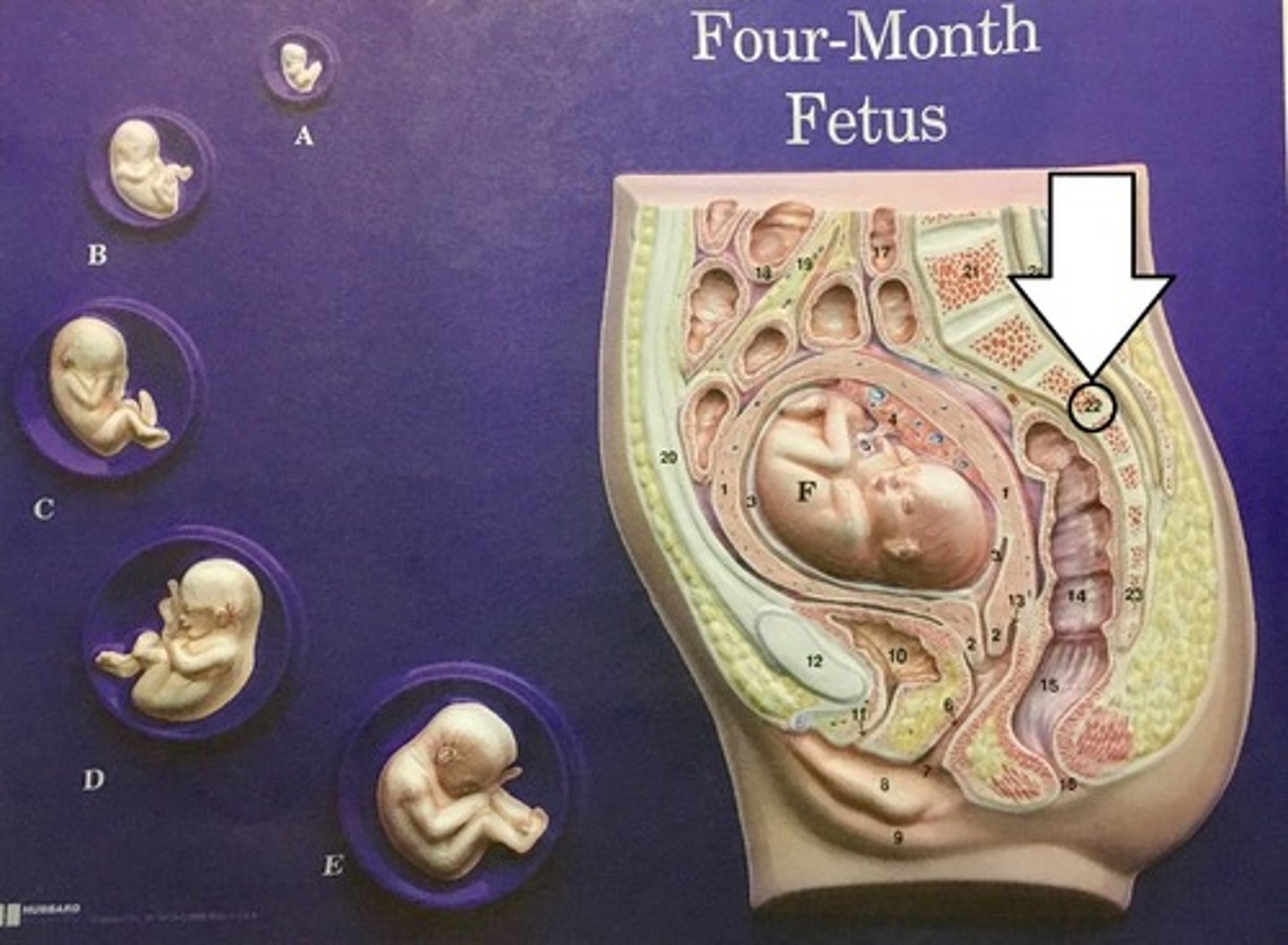
Coccyx bone
what is #23?
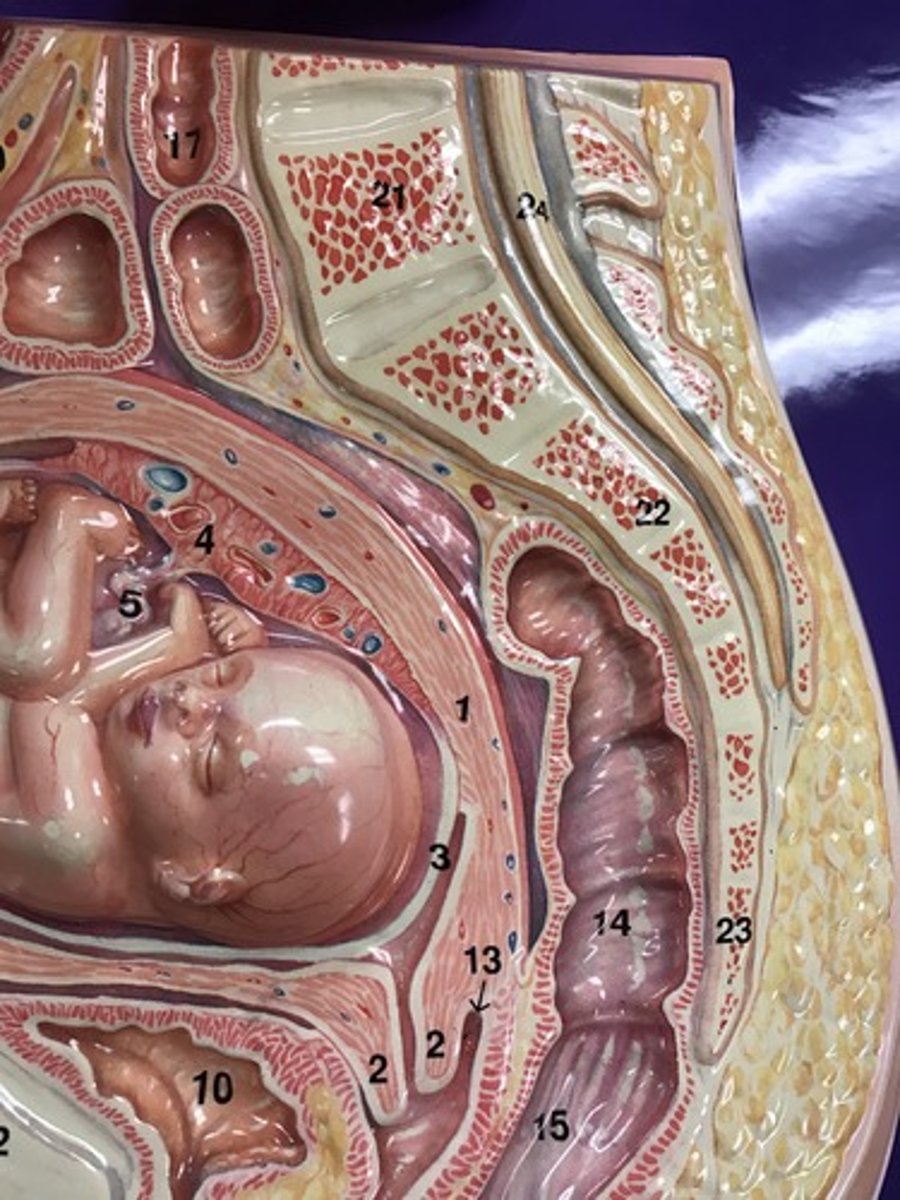
Cauda equina (sacral nerve bundle)
what is #24?
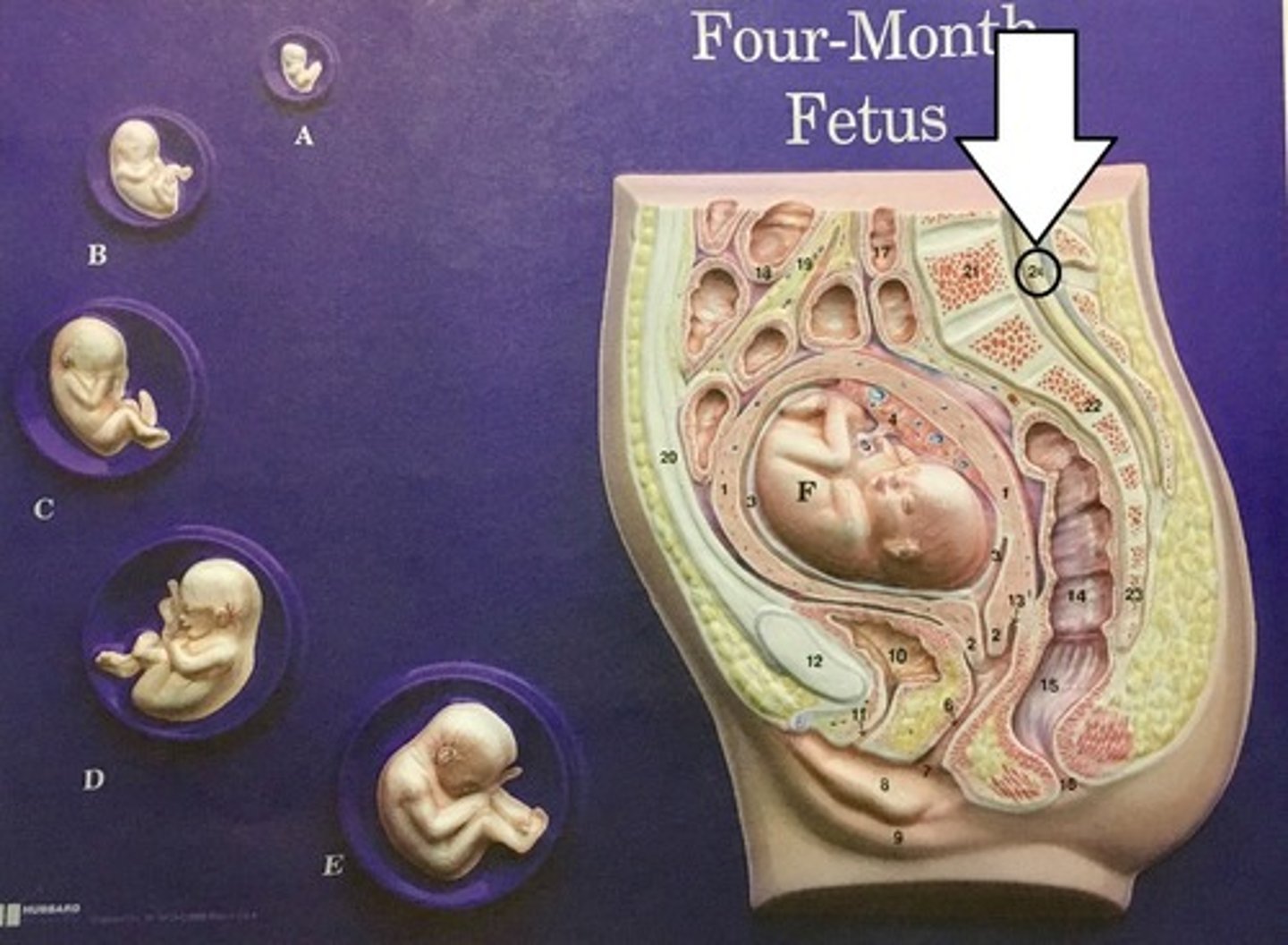
Fetus at full term ( 38 weeks gestation 6 ½ - 7 ½ lbs , 20 in long )
what is #1?
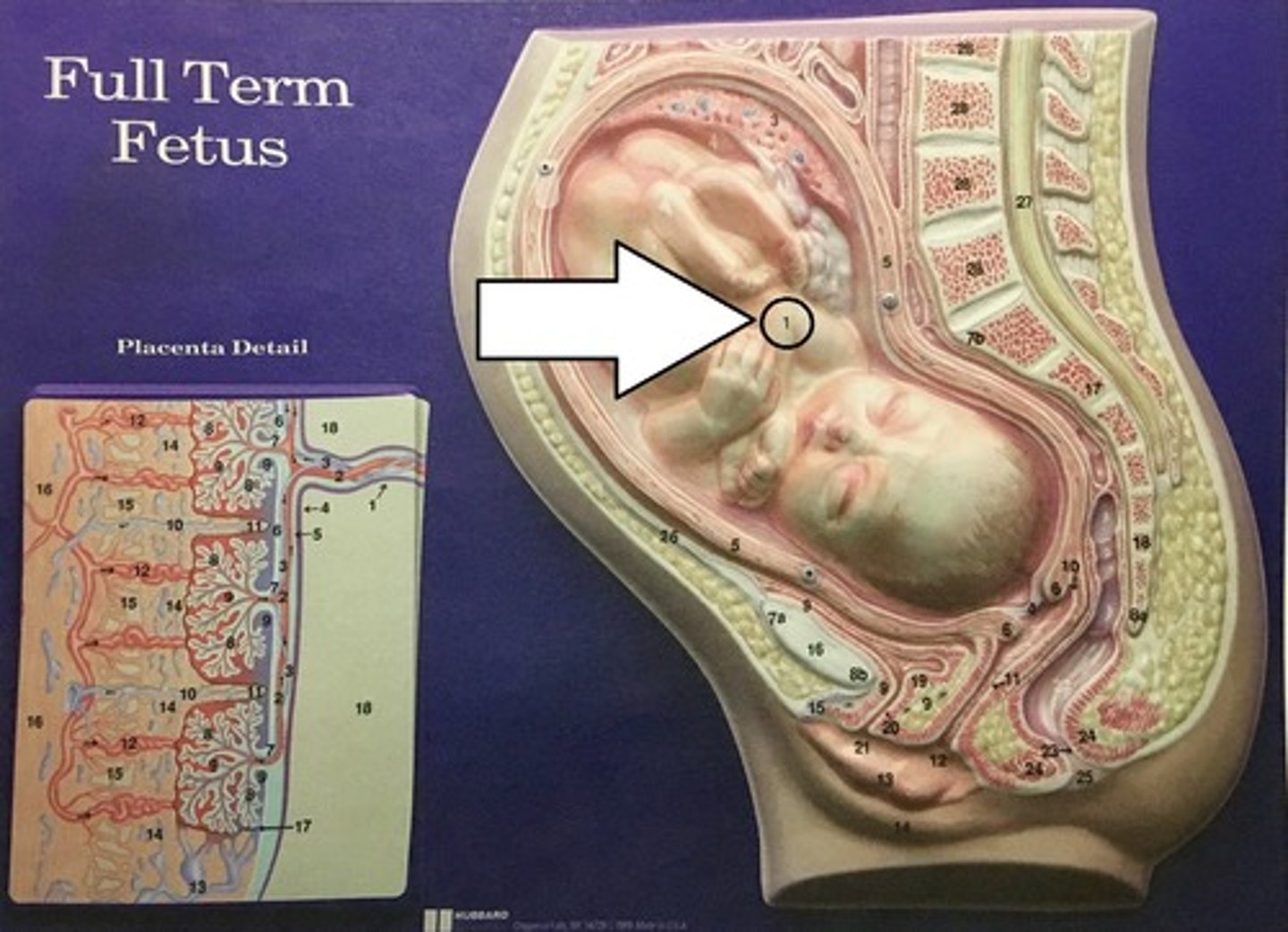
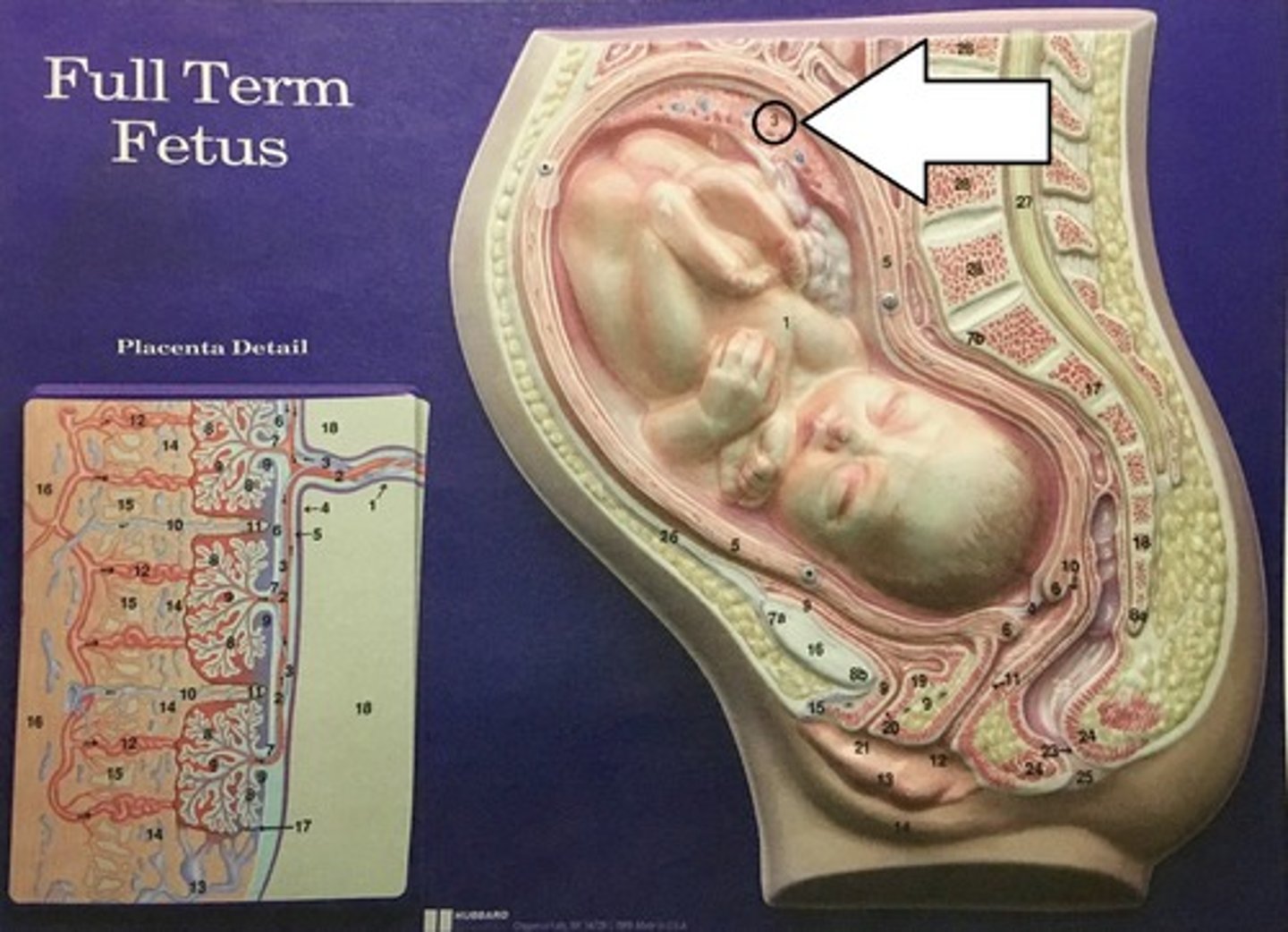
Umbilical cord
what is #2?
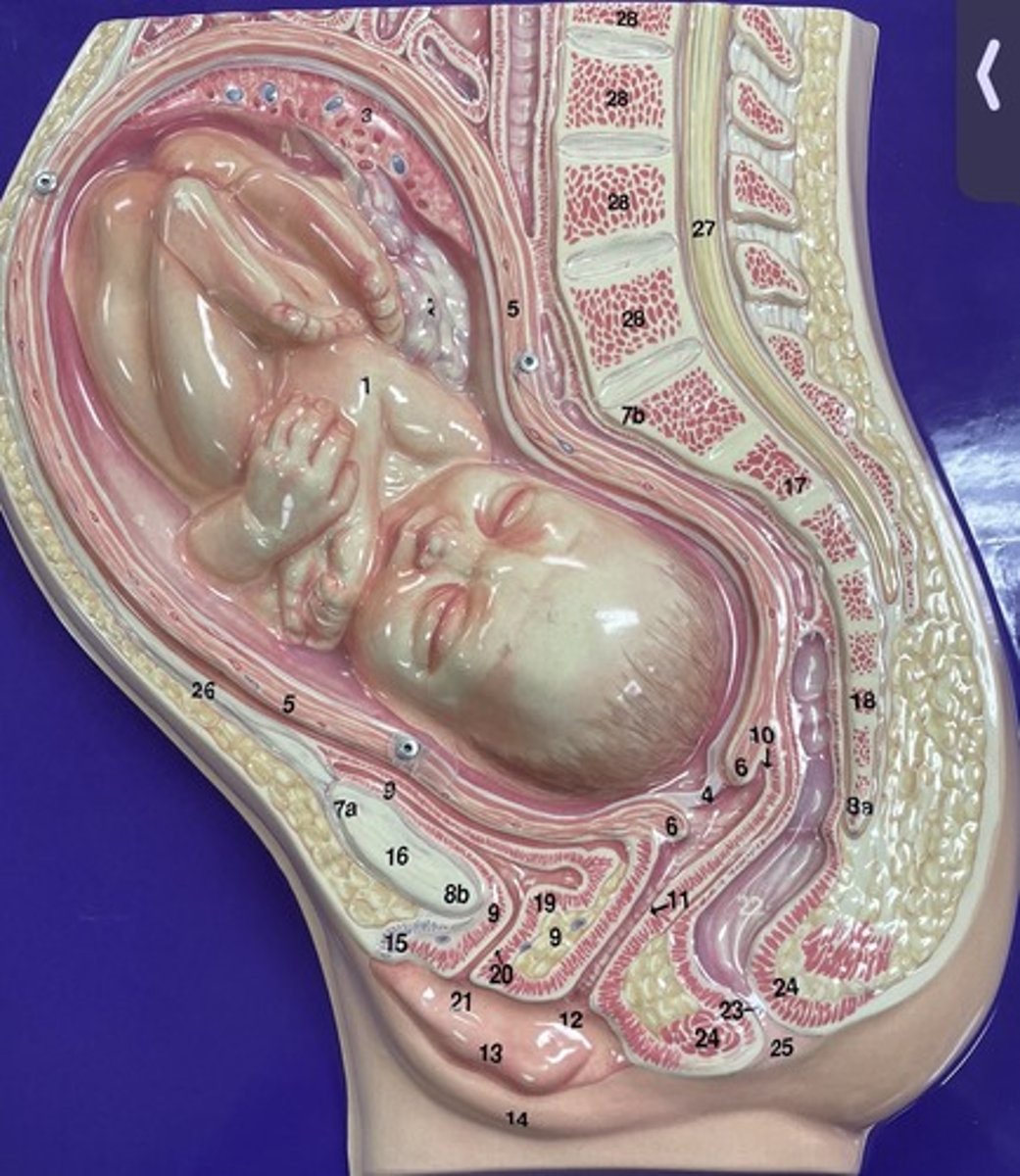
Placenta (cut surface)
what is #3?
Amniotic sac (filled with amniotic fluid)
what is #4?
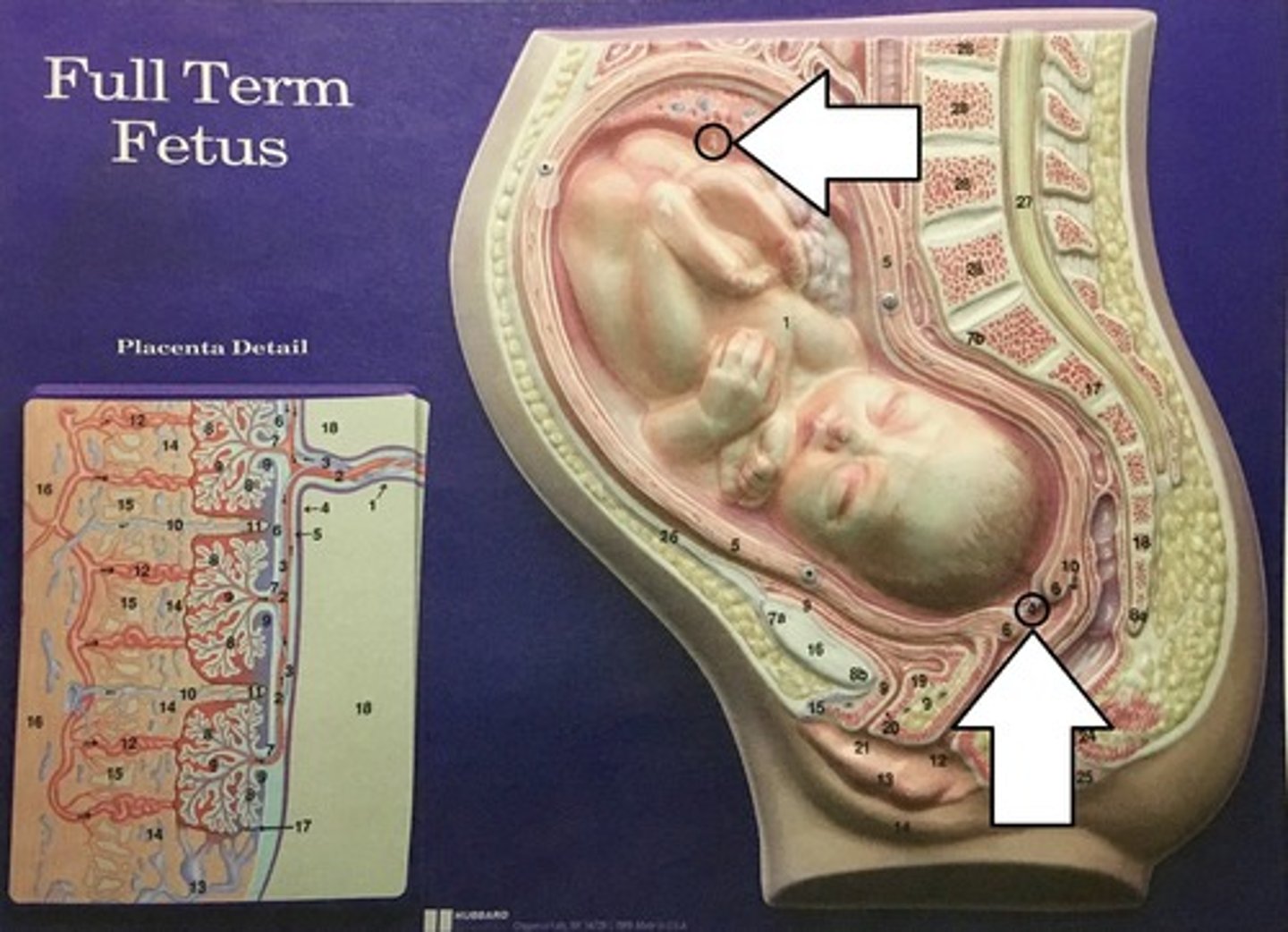
Wall of uterus (cut surface)
what is #5?
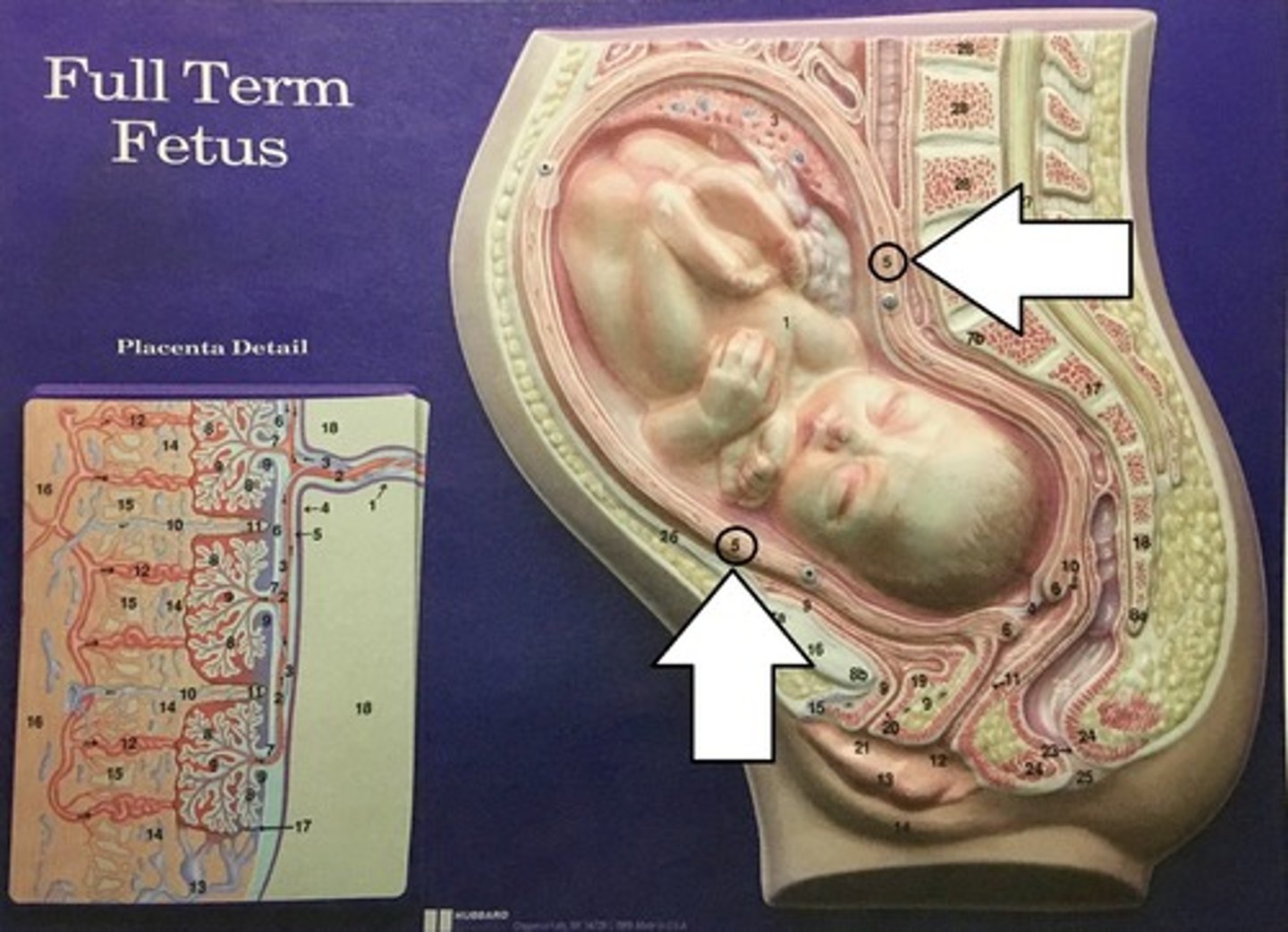
Cervix or neck of uterus (slightly dilated 1-2 cm)
what is #6?
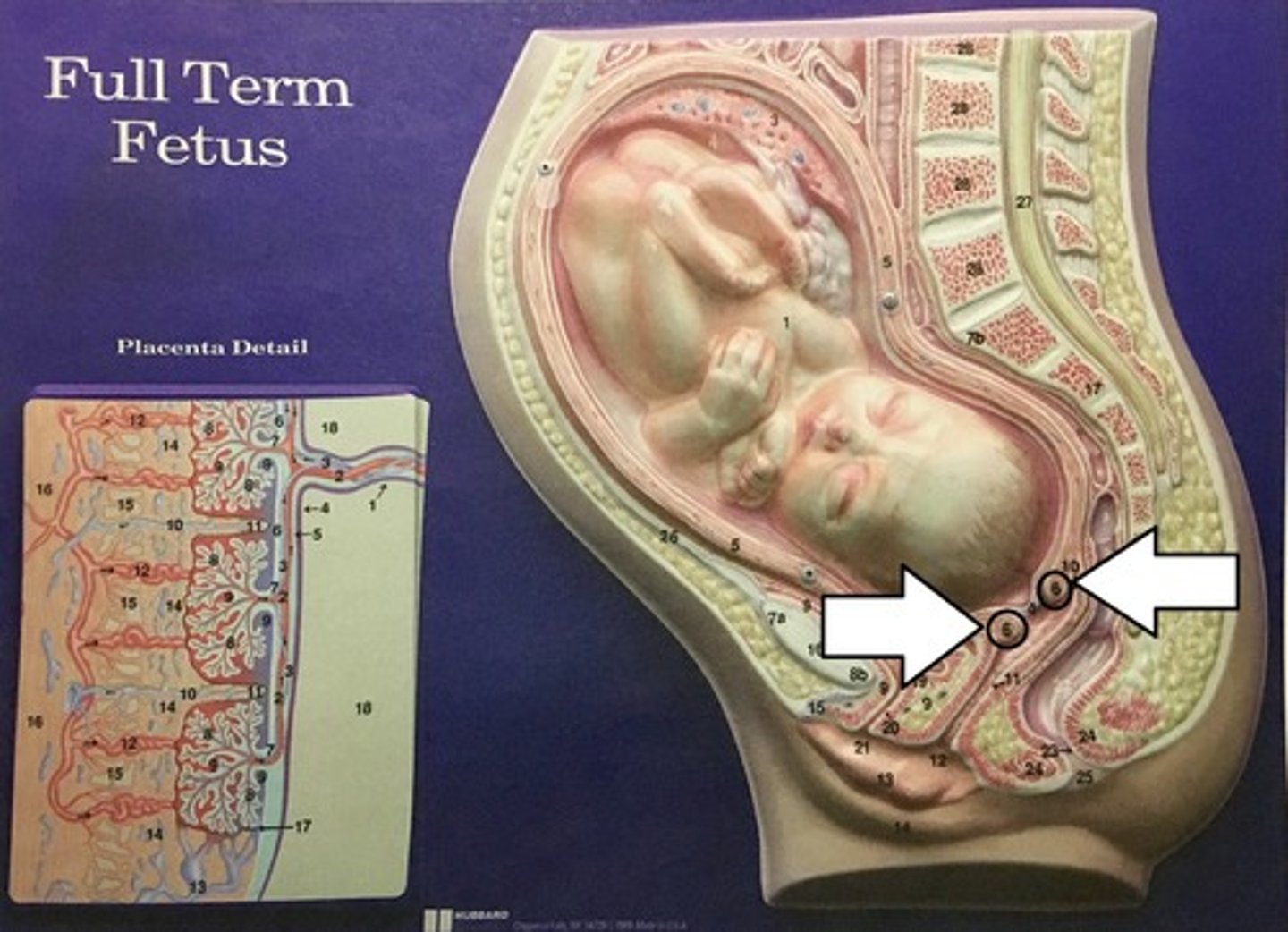
Plane of inlet of birth canal or upper opening of true pelvis includes the area between 7a located on pubic symphysis (16) and 7b located on vertebral column (28)
what is #7?
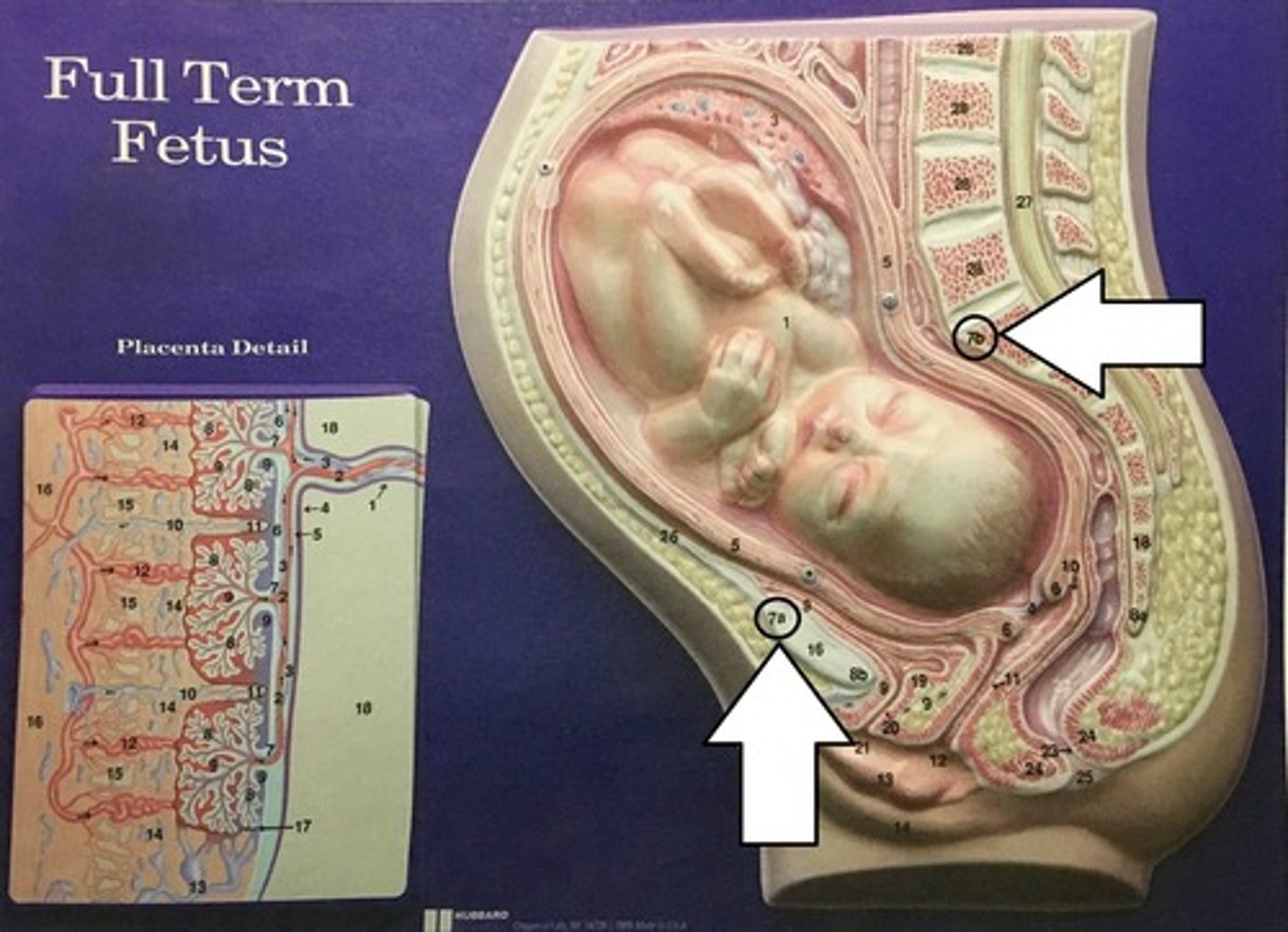
Plane out outlet of birth canal includes the area between 8a located at the tip of coccyx (18) and 8b located on the pubic symphysis (16). This is the narrowest part of the pelvis outlet through which the baby must pass
what is #8?
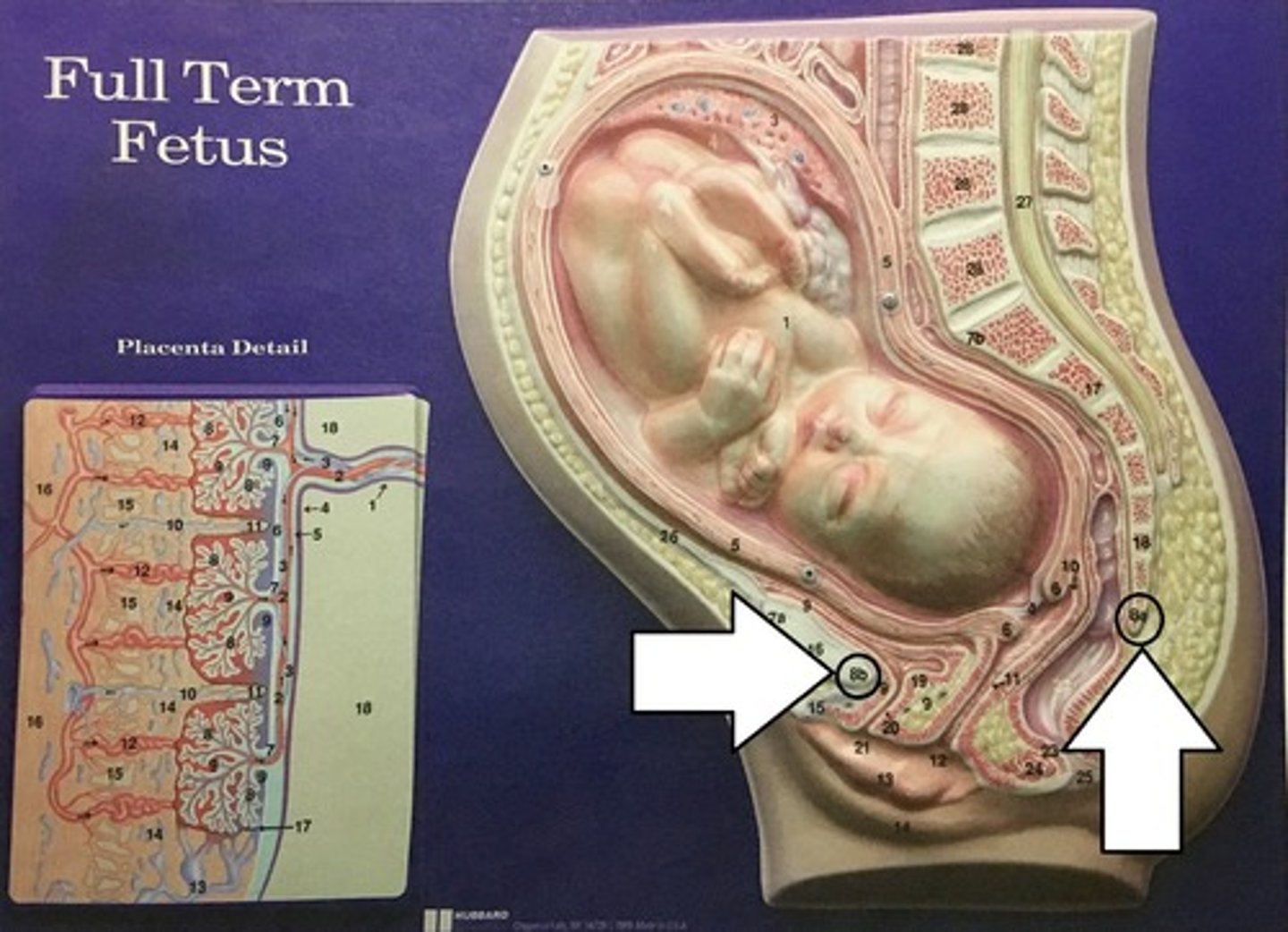
Tissues of the pelvic floor
what is #9?
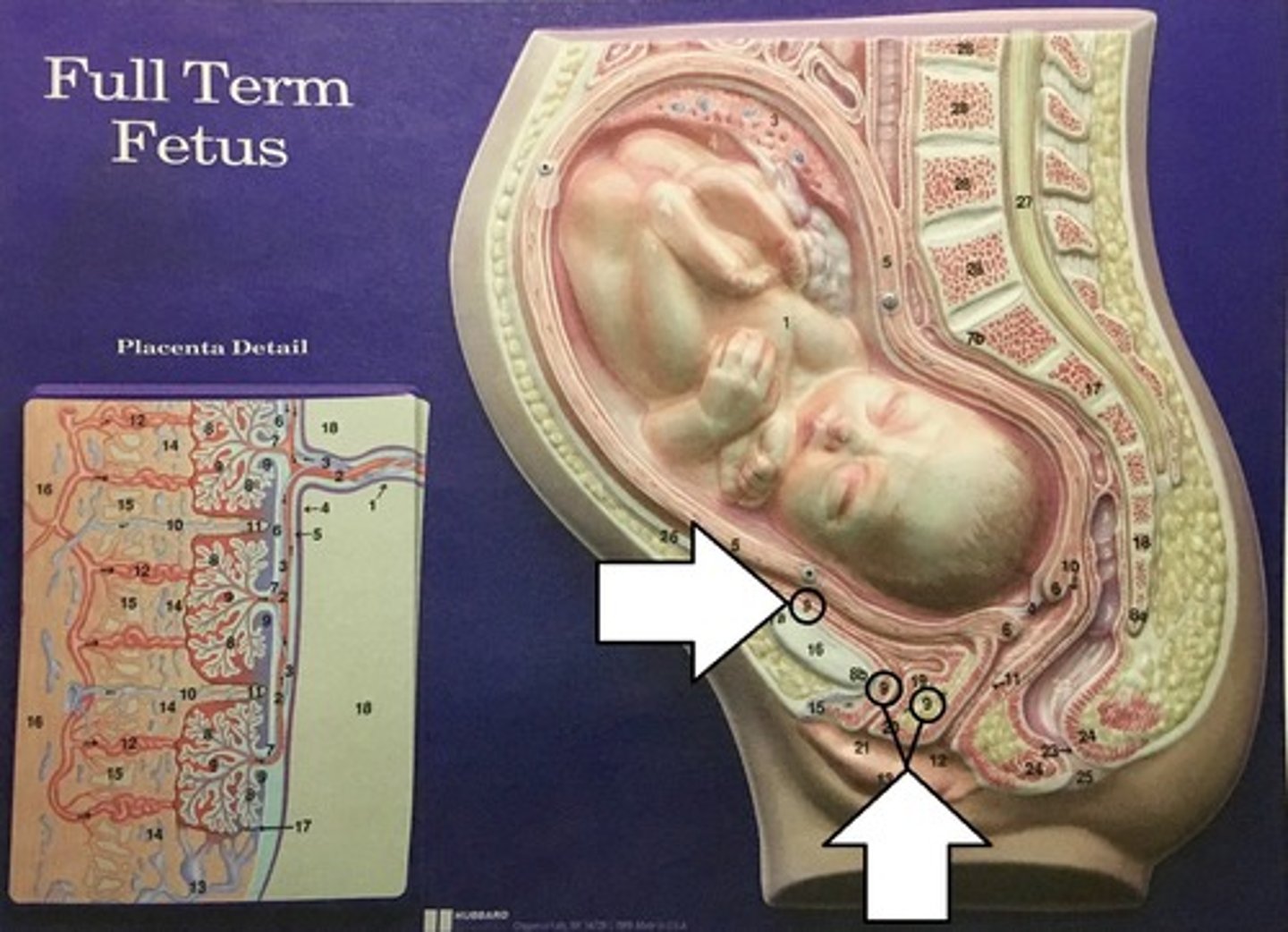
Fornix of the vagina
what is #10?
Vagina
what is #11?
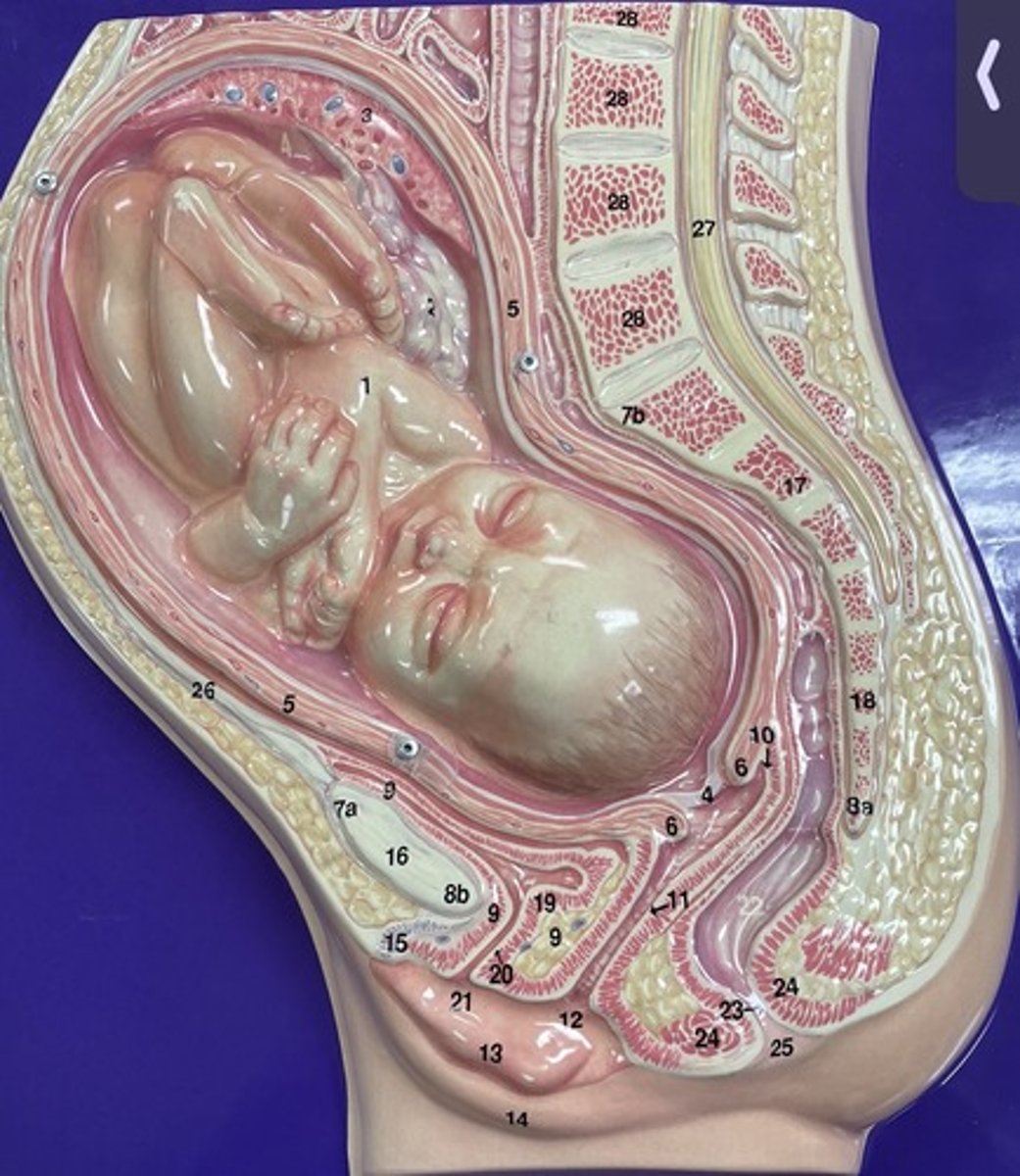
 Note
Note  Flashcards (22)