TLE - TOPIC 1
 Studied by 0 people
 Call Kai
 Learn
Learn Practice Test
 Spaced Repetition
 Match
Match Flashcards
 Knowt Play
1/29

There's no tags or description
Looks like no tags are added yet.
Name | Mastery | Learn | Test | Matching | Spaced | Call with Kai |
|---|
No analytics yet
Send a link to your students to track their progress
30 Terms
ergonomic principles
a principle of handling a delicate object or task
first aid
it implies includes all forms of remedies given immediately to
humans in order to minimize or prevent casualties or fatalities caused by
accidents or normal course of time.
hazard
particular place, thing, or situation that is a risk or danger to the
person involved.
health
overall condition of the body
injury
damage or harm caused to the structure or function of the body caused
by an outside agent or force, which may be physical or chemical.
quality standards
set of exact specifications to become patterns of actions.
sanitize
maintain high standard of housekeeping
self-discipline
refers to doing things spontaneously without being told or
ordered
standard
any established measure; an accurate type; an authoritative model
as an example or comparison
symbols
generally common illustrations printed on the signs which
sometimes carry a descriptive word or few words
waste disposal
proper discharge of any solid waste into or in any hand
workplace
office, premises or worksite where a worker is temporary or
habitually assigned
Occupational Health and Safety Commission
OHSC
Occupational Health and Safety Standards
OHSS
Personal Protective Equipment actions
PPE
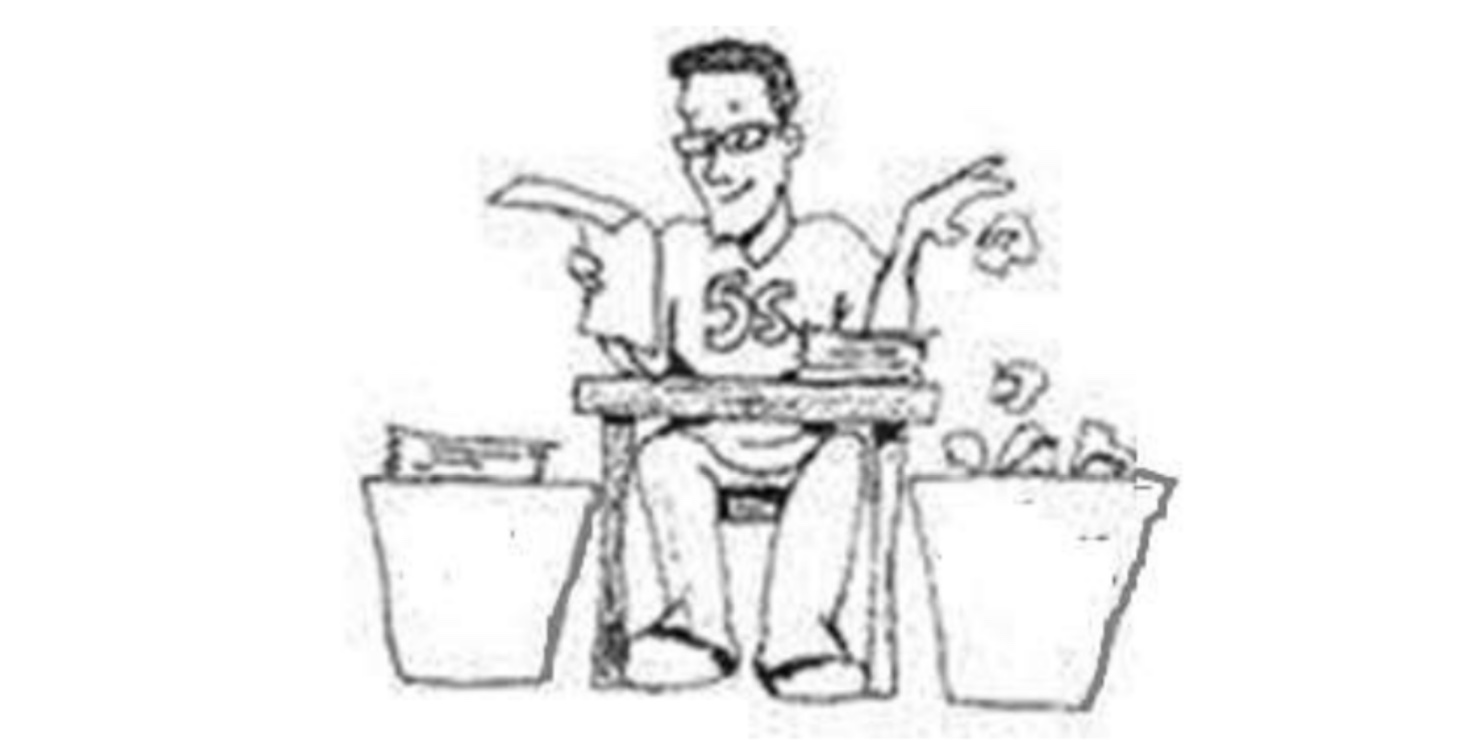
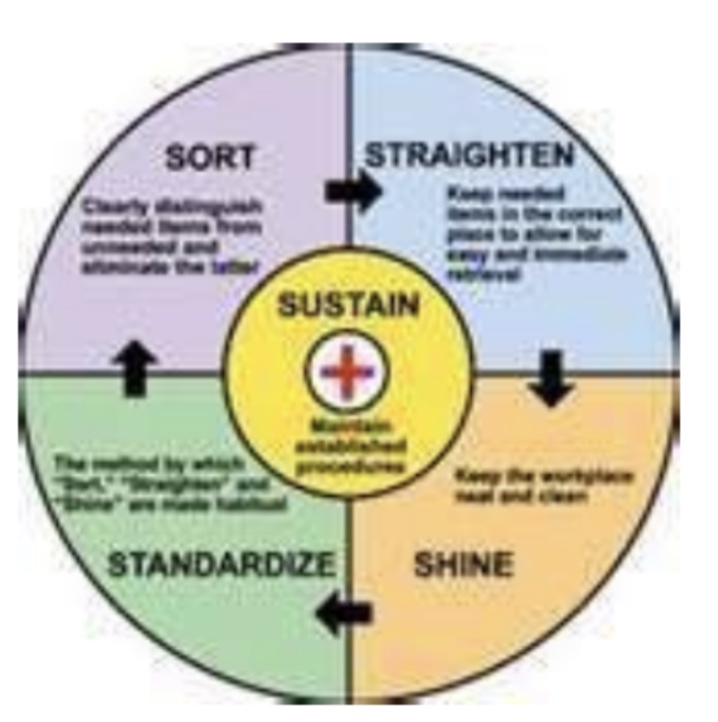
seiri (sorting)
Take out unnecessary items and dispose. Keep only the items you need at work, and
discard or store everything else.
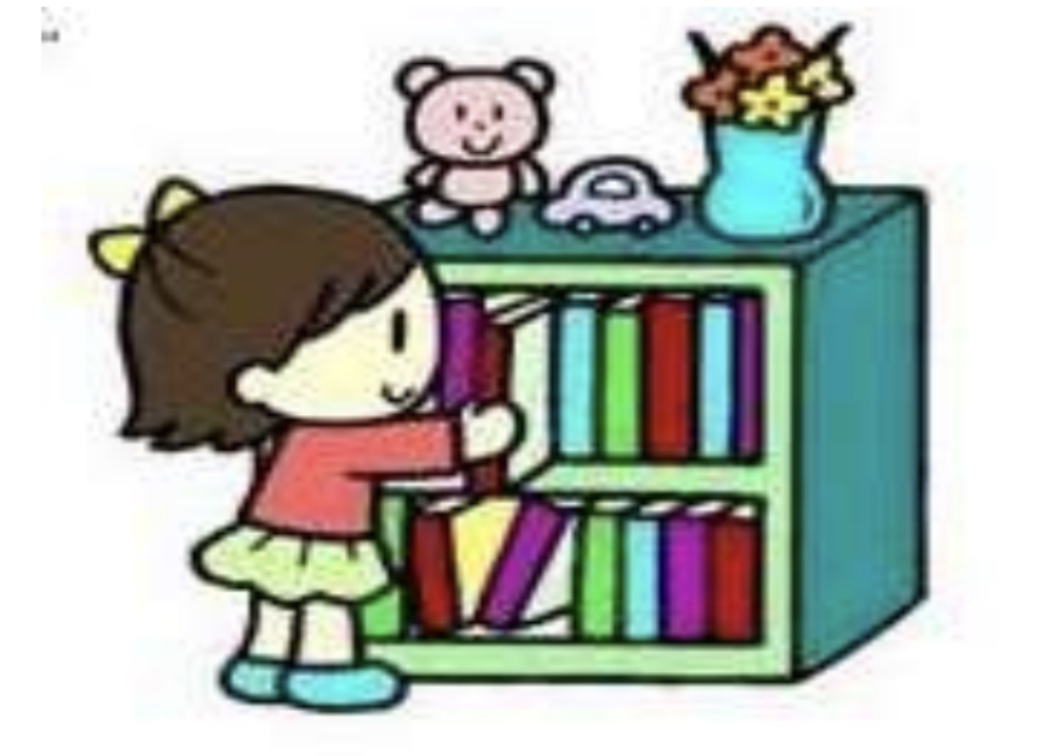
seiton (set in order)
means that there's a place for everything, and everything should be in
its place. Arrange necessary items in good order for use.
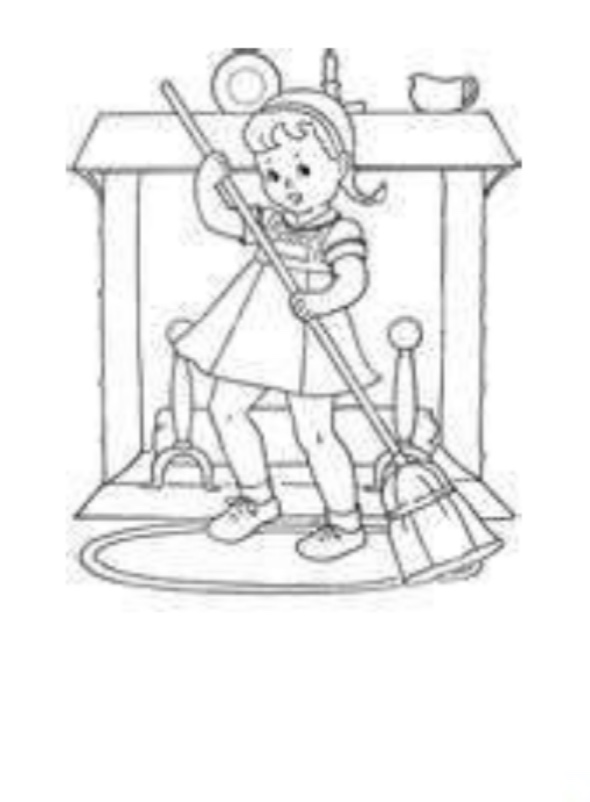
seiso (sweeping)
At the end of each working day, take time to clean up your office space. Clean up
any mess you make.
seiketsu (standardizing)
Maintain high standard of housekeeping
shitsuke (sustaining)
Do things spontaneously without being told or ordered.
A systematic and productive workplace is not a one-day-affair just because
somebody is observing you.
seiri
seiton
seiso
seiketsu
shitsuke
danger signs
shall be used only where an immediate hazard exists. It should be read
as the predominating color for the upper panel; outline on the borders ; and a white lower
panel for additional sign wording.
caution signs
shall be used only to warn against or caution against practices.
exit signs
when required, shall be lettered in legible red letters, not less than 6
inches high, on a white field and the principal stroke of the letters shall be at least three-
fourths in width.
safety instruction signs
when used, shall be with green upper panel with while letters
to convey the principal message. Any additional wording on the sign shall be black letters on
the white background.
directional signs
other than automotive traffic signs specified shall be white with a
black panel and white directional symbol. Any wording on the sign shall be black letters on
the white background.
 Note
Note  Flashcards (112)